
Korn’s debut at 32: the guitar ideas behind the 1994 album
Korn’s US debut turns 32 on October 11, 2026. Revisit Munky and Head’s seven-string ideas, DJ-like textures and the rhythm section behind the sound.
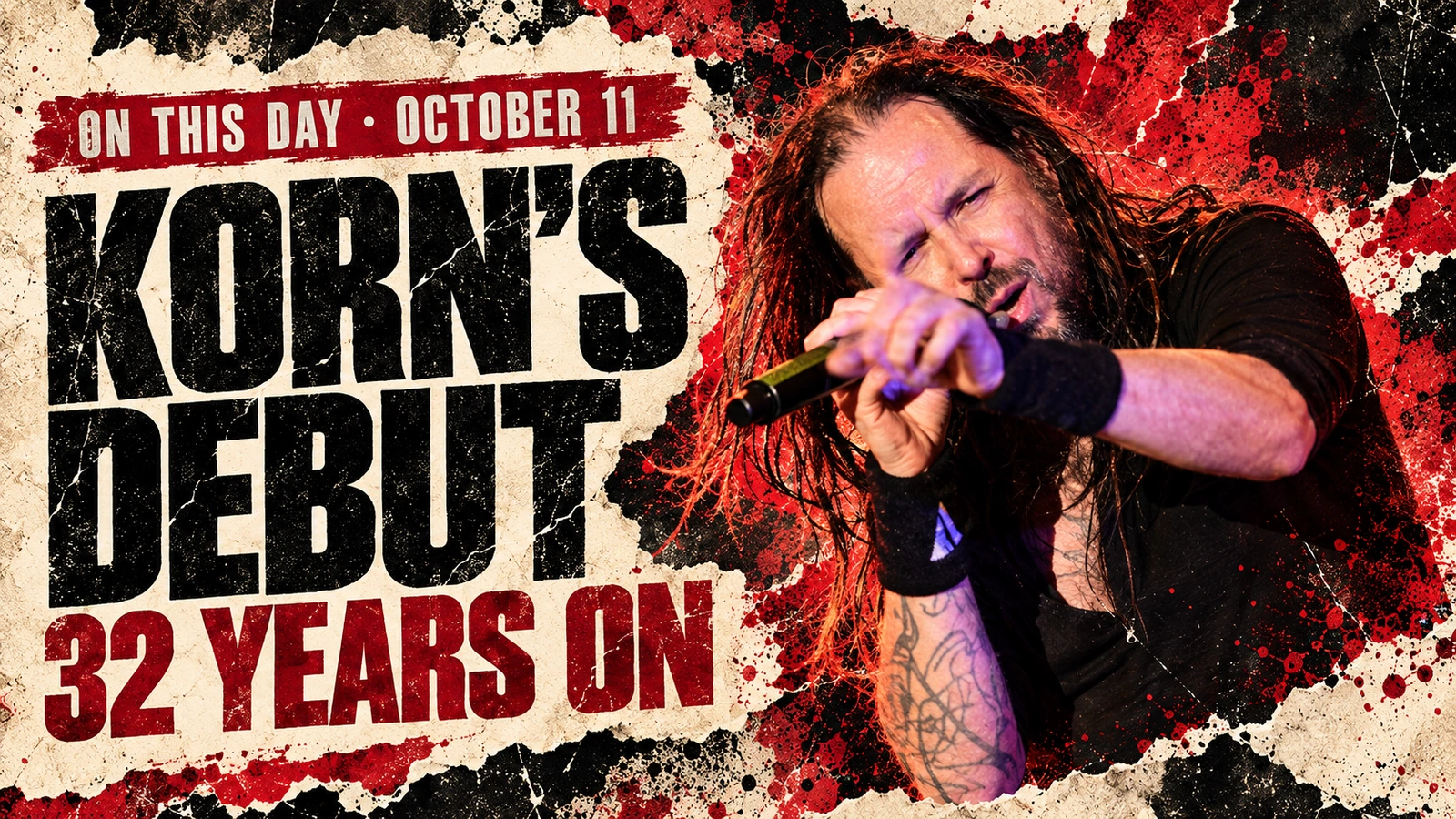
On This Day · October 11
Korn’s self-titled debut arrived in the United States on October 11, 1994. Thirty-two years later, its guitar lesson is still easy to underestimate: the extra string supplied the range, but the arrangement made that range unsettling. James “Munky” Shaffer and Brian “Head” Welch were building a language of rhythmic weight, strange upper-register sounds and deliberately uncomfortable contrast.
The anniversary belongs to the original record and its original five players: vocalist Jonathan Davis, guitarists Munky and Head, bassist Reginald “Fieldy” Arvizu and drummer David Silveria. Start there, before later signature instruments, later lineups and decades of imitation blur the picture.
A seven-string could do more than extend a solo
In his 2020 Reverb interview, Munky traced the turning point to Steve Vai’s Passion and Warfare and the Ibanez Universe. He recalled paying for his first seven-string in instalments, then finding that its tuning still did not reach the sound he wanted. He adjusted the floating bridge’s spring balance and brought the guitar down a whole step. That small setup story captures a bigger shift: adapting an instrument to the sound in his imagination.
The important connection to Vai was curiosity as much as virtuosity. Munky was interested in making the instrument suggest voices and everyday sounds. Follow that thread through our Steve Vai tone and gear guide, then return to Korn: a similar invitation to explore the instrument could produce a very different musical result.
Two guitarists, more than one register
In Rolling Stone’s oral history, Head connected the early sound to hip-hop samples, while Munky described guitars approached as if a DJ had cut and scratched them. Those recollections help explain why “heavy” is an incomplete description. They were thinking about the behaviour of a sound, including its interruption and attack, rather than simply sustaining the biggest possible chord.
Munky later explained to Guitar World that he had stopped treating the high strings as territory reserved for solos. Short, dissonant sounds higher up the instrument could live alongside the low rhythmic parts. That is a useful way to revisit the debut: listen for the distance between those roles. The low end gives the odd noises something to push against.
“Blind” makes you wait
Head’s recollection of “Blind” centres on construction. He said Davis brought the song from his earlier band, Sexart; Korn reshaped its chorus and developed an introduction that would build towards the vocal entrance. The point is not merely that the riff is heavy. The song establishes an expectation before releasing it.
For a guitarist, that suggests a practical listening question: what happens before the biggest part arrives? Compare “Blind” with “Clown” and “Helmet in the Bush”, all on the debut. Listen for the changing balance between the riff, the voice and the rhythm section rather than treating the guitars as a self-contained layer.
The rhythm section is part of the guitar sound
Producer Ross Robinson’s account of Indigo Ranch emphasised raw recording and performance. Fieldy, meanwhile, remembered insisting on a sharply percussive bass sound until the microphone position delivered the attack he wanted. Robinson also credited Silveria’s response to Davis’s phrasing, rather than reducing the drummer’s contribution to mechanical timekeeping. These are recollections from the people in the room, and they place the guitars inside a much larger conversation.
“Shoots and Ladders” eventually brought the album a Best Metal Performance nomination at the 1997 Grammys. That later recognition is a reminder that the record’s story did not end on release day. Its identity had time to travel beyond the first listeners.
What survives after 32 years
The worthwhile anniversary exercise is to hear how the parts depend on one another. Low tuning is one ingredient. So are space, contrasting registers, the bass attack and the timing of the vocal entrance. Remove that interaction and the equipment list cannot do the job on its own.
Go deeper with the linked Steve Vai guide, then put Korn’s debut back on. Which moment best captures its guitar imagination: the opening of “Blind”, the tension in “Clown”, or another track entirely?
Sources and further reading
- Korn: official Sony-supplied US album listing
- Korn US release record, Epic EK 66633
- Munky on musical milestones and seven-string guitars
- Korn guitarists Munky and Head on their approach
- Korn’s 1994 debut: the original members and producer remember
- Recording Academy: Korn debut retrospective
- Steve Vai tone and gear guide