Twenty Watts of Pure Fury: The Peavey 6505 MH Mini Head
All-tube 20W mini head with switchable power, MSDI DI and USB recording. Verified player connections, tone recipes and buying guide for the Peavey 6505 MH.
There is a recurring fantasy in high-gain guitar culture. It goes like this: the tones that fueled thirty years of thrash, groove metal, djent, and death metal — the circuit that Eddie Van Halen and Peavey engineer James Brown built in 1992 as the 5150 — somehow gets squeezed into a lunchbox you can carry with one hand, record from at midnight without waking the neighbours, and still bring to a rehearsal loud enough to cut through a drummer. The fantasy, it turns out, is mostly real. The Peavey 6505 MH is what happens when a company takes its most storied high-gain circuit and asks how small they can make it without lying about the result.
The “MH” suffix stands for mini head. Introduced in 2015, the 6505 MH is a genuine all-tube, two-channel head with the same preamp gain architecture and channel voicing as the full-size 6505 — the same channel structure, the same independent Pre-Gain and Post-Gain controls, the same crunch mode on the Rhythm channel, the same presence and resonance in the master section. What changed is the power stage: where the big 6505 runs four 6L6GC output tubes at 120 watts, the MH runs two EL84s at 20 watts maximum, with a rear-panel slider that drops to 5 or 1 watt when the neighbours matter. That is not a trivial difference. It is, as we will get into, the central honest thing to know about this amp.

Premier Guitar named it one of their Gear Award winners for 2015. Guitar World handed it a Gold Award in April 2016. And yet the 6505 MH exists in a slightly ambiguous cultural space: it is famous enough to have earned real critical recognition but obscure enough that most of the guitarist names attached to it in the broader internet turn out to be 6505-family players rather than mini-head players specifically. Getting that straight is most of the editorial work here.
From 1992 to 2015: The Bloodline
The 6505 MH cannot be understood without a quick run through the lineage, because the lineage is the product’s entire identity. In 1992, Eddie Van Halen and Peavey debuted the 5150 — a 120-watt, two-channel, all-tube head that Van Halen had co-developed with James Brown (Peavey’s chief amplifier designer) to capture the saturated, singing lead tone and crunchy, punching rhythm sound he had been chasing through modified Marshalls for a decade. The amp was a commercial hit and a genuine design achievement: it had far more usable clean headroom than its reputation suggested, the Lead channel’s high-gain stage was a benchmark for articulate distortion at extreme gain levels, and the price was considerably lower than a comparable boutique amp.
Van Halen left Peavey in 2004 and took the “5150” trademark to Fender, where it eventually became the EVH 5150 III series. Peavey responded by renaming the original circuit the 6505 (to mark the company’s 40th anniversary — 1965 to 2005). The 6505 head is the 5150 circuit under a new name; the 6505+ head is the renamed 5150 II, which added per-channel independent EQ in 1999. Both remain in production. The 5150 II, the 5150 2×12 combo, and the original 5150 head all have their own articles in this series — the MH is the youngest branch of this particular family tree, and the most portable.
The 6505 MH was announced and began shipping in mid-2015. Premier Guitar’s review by Joe Charupakorn appeared in October 2015 (street price $499 at launch). Guitar World’s follow-up by Chris Gill ran in April 2016 (list price $599.99). Both publications gave it their highest designations. By mid-2026, Peavey lists it at $899.99 — a significant price increase over a decade, which has consequences for the used-market value argument we will get to in the buying guide.
Circuit Architecture: What “Mini” Does and Doesn’t Mean
The 6505 MH preamp section is built around three 12AX7/ECC83 preamp tubes — the same family of tubes as the full-size 6505. The voicing, gain stages, and channel structure follow the original closely enough that players who know the full-size version will recognise the MH’s tonal character immediately. Rhythm channel has independent Pre-Gain and Post-Gain, a Bright switch, and a footswitchable Crunch mode. The Lead channel has its own Pre-Gain and Post-Gain. So far, so 6505.
Then comes the important fork. The 6505 MH shares a single three-band EQ section (Low, Mid, High) between both channels, along with the master-section Resonance and Presence controls. The full-size 6505+ has fully independent EQ per channel — Bass, Mid, Treble, Resonance, and Presence individually adjustable for Rhythm and Lead. The 6505 MH reverts to the architecture of the original 6505 head, which also shares its EQ. For most high-gain playing styles, the shared EQ is a non-issue because the two channels are voiced closely enough that one EQ setting sounds good on both. Where it bites you is if you want a genuinely scooped metal rhythm tone and a warm, fat lead tone from the same amp in the same set — that requires either a different amp or compromises on both channels.
The power section is where the 6505 MH departs most fundamentally from the full-size. Two EL84 tubes (the same type found in Vox AC30s and many British-voiced amps) replace the four 6L6GC tubes of the big head. This is not a minor cosmetic difference. EL84s have different harmonic content from 6L6GCs: they clip asymmetrically with more even-order harmonics, they reach their natural compression threshold at lower power levels, and they have a slightly airier, more glassy character in the upper midrange. The 6505’s 6L6GC character is muscular, thick, with a pronounced punch in the low-midrange punch zone around 200-400Hz. The EL84s in the MH give the same preamp tones a marginally leaner foundation — not thin, but less of the “brick wall” low-end authority of the big head at full power. At 1 watt and 5 watts the EL84s clip into their own saturation earlier, adding power-amp distortion on top of the preamp’s already heavy gain, which creates a thick, compressed response that recording engineers tend to love. At 20 watts the difference from the full-size is smaller but still present. Know this going in: the 6505 MH sounds like the 6505 circuit, but it does not sound identical to a miked 6505 head. That is honesty, not criticism.
The rear panel is where the MH earns its 2015 Gear Award. Beyond the speaker output jack (8Ω/16Ω switchable), the back carries: Peavey’s MSDI output (Mic Simulated Direct Interface — an XLR with cab-and-mic emulation and a ground lift switch), a USB recording output that requires zero drivers on macOS and presents as a class-compliant audio device in any DAW, a headphone output, a speaker defeat switch that engages an internal load so the amp can run “silent” into the MSDI/USB/headphones without damaging the output transformer, a buffered serial effects loop (footswitchable), and the Tube Status Indicator circuit — two small indicator lights that show green for healthy tubes and red when a power tube is running outside optimal parameters, which also automatically removes that tube from the circuit to prevent further damage. It is thoughtful engineering for a category of amp that often has none of it.
Specifications
Famous Players: Honest Accounting
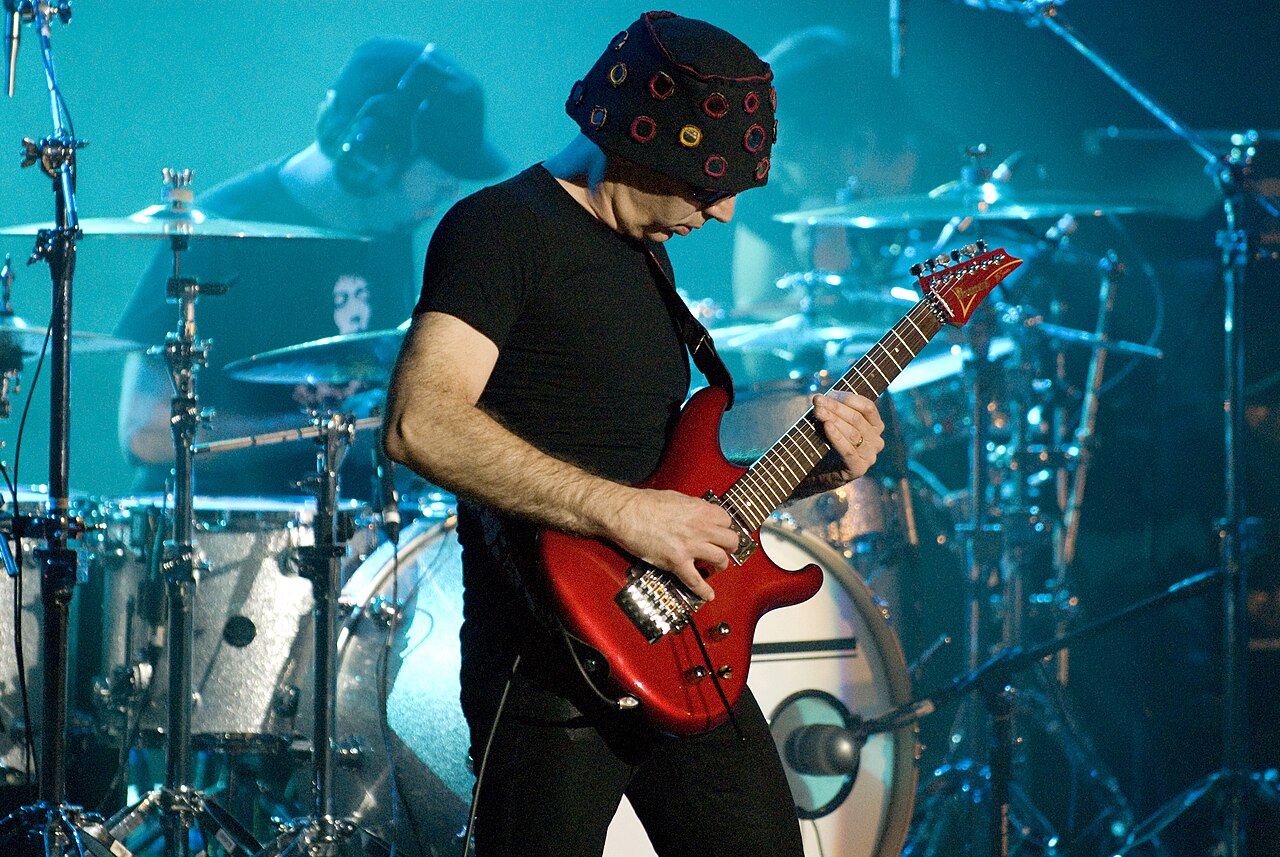
Eddie Van Halen, Wolfgang Van Halen, Misha Mansoor, Ola Englund, and Joe Satriani are routinely associated with the Peavey 6505 family. Every one of those associations is real — for the 6505 family. None of them are specifically documented players of the 6505 MH mini head, and the distinction matters when you are evaluating an instrument rather than a brand. Here is the honest breakdown.
Eddie Van Halen is the originator of the circuit. He co-designed the 5150 with James Brown, toured on it from 1992 through his final years with Van Halen, and remained associated with the design even after the brand dispute that renamed it the 6505 in 2005. That connection is real and should be honoured. The 6505 MH launched in 2015; Eddie Van Halen was by then in declining health and no longer actively developing new gear relationships. He died in October 2020. There is no documented instance of Van Halen using or endorsing the MH. What he contributed was the preamp architecture that the MH inherited — and that is significant, but it is a lineage claim, not a usage claim.
Wolfgang Van Halen is documented on the EVH 5150 III — a product of Fender/EVH, not Peavey. His live and studio rig has not included Peavey 6505-family amplifiers in any rig rundown or primary source we could locate. The association circulates because the Van Halen name is attached to the 5150/6505 legend, but Wolfgang did not grow up playing the Peavey. No 6505 MH connection, none claimed here.
Misha Mansoor of Periphery used a Peavey 5150 as a power amplifier for his Axe-Fx II during the Periphery II era, running the signal into the 5150’s effects return to bypass the preamp. That is a specific use case and a documented one — but it was a full-size head, not the MH, and it was used exclusively as a power amp. It later informed the development of Peavey’s Invective signature amp with Mansoor. No documented MH connection.
Ola Englund is documented on the Peavey 5150 II (= 6505+) via his own A/B shootout video on YouTube. He has compared 5150-circuit amps extensively in his online content and is a genuine advocate for the circuit. Again: specific to the full-size head variants, not the MH. Joe Satriani’s signature Peavey relationship is the JSX, not the 6505 family.
The most clearly documented player on the 6505 MH specifically is Brandon Ellis, guitarist for The Black Dahlia Murder. In documented recording notes, Ellis ran a Maxon OD808 into his 6505 MH for rhythm parts — the classic “tight overdrive pedal into the clean input of a high-gain amp” approach that has been a death metal studio staple since the late 1990s. He also slaved the 6505 MH’s preamp into the power amp section of a Baron K2 KT88 head to add mass and reduce sag on recordings, using the MH as a preamp stage for a larger and differently voiced power section. That is a sophisticated use: it gets the 6505 preamp character while bypassing the EL84 output stage and substituting a KT88 power section with different headroom and harmonic content. The connection to the 6505 MH is specific and credible.
Cattle Decapitation’s recording history involves Peavey 6505 amplifiers — producer Dave Otero has confirmed their use across multiple albums including 2019’s Death Atlas, where a 6505 was paired with a Hi-Watt Custom Super-Hi 50. Guitarist Josh Elmore appears on Equipboard in connection with 6505-family gear. Whether that specific credit extends to the MH mini head or refers to the full-size 6505 head is not clearly pinned in primary sources, so the Elmore/Cattle Decapitation connection is noted here as a 6505-family association rather than an MH-specific one.
Ryan “Fluff” Bruce (Riffs Beards & Gear on YouTube) has created content with the 6505 MH following an arrangement with Peavey — a manufacturer-supplied demo relationship rather than an independently documented touring rig. Worth knowing if you have seen his demo and are using it as a purchase trigger; the content is useful, the framing is commercial.
Tone Recipes and Settings
Classic 6505 High-Gain Rhythm at 20 Watts
Lead channel. Pre-Gain at 6.5, Post-Gain at 4.5. Low: 5, Mid: 4, High: 6. Resonance 6, Presence 6. A Boss DS-1 or Ibanez TS9 in front with the drive at zero and the level at unity adds low-end tightness by passively filtering the lower frequencies before they hit the preamp — the pedal-as-filter trick. At 20 watts you will need a cab to hear the full character. This setting gives open-string chugs with a slightly compressed, articulate pick attack. Very much in the death metal and groove metal zone.
Power-Amp Saturation at 1 Watt
Drop the slider to 1 watt. Lead channel. Pre-Gain at 5 (back it off from where you’d run it at 20W — the power stage adds gain of its own at 1W). Post-Gain at 7. Low: 5, Mid: 5, High: 6. The EL84s are clipping hard at this power level and adding their own harmonic saturation on top of the preamp. The result is a compressed, singing quality that can be recorded via the USB output or MSDI at surprisingly useful levels. This is the Brandon Ellis approach in miniature: letting the power stage work rather than asking the preamp to do everything.
Rhythm Channel Crunch — Classic British Flavour
Rhythm channel with Crunch engaged. Pre-Gain at 5, Post-Gain at 5. Bright switch off. Low: 5, Mid: 5.5, High: 5.5. Resonance 5, Presence 5.5. This setting sits in bluesy classic-rock territory and is genuinely useful for anyone who plays multiple styles but wants one amp for everything. The Premier Guitar review noted that with Pre-Gain at 5 you get “a hint of dirt” and at 6 and beyond “a distinct shift to the dirty side” with “stinging blues-rock lead” character. The shared EQ is not a problem here because you are using a single channel.
Studio DI Direct Recording
Any preferred drive setting. Enable speaker defeat (rear panel). Output via MSDI to your DAW or console. Engage the ground lift if you hear hum from ground loops. Run at 20 watts for maximum transformer headroom, which gives the tightest transient response through the MSDI. The USB output at the same time gives you a second capture with slightly different cab simulation character — record both and blend in post. The Premier Guitar review confirmed that macOS recognises the USB output as a class-compliant audio device with no driver installation, which makes this a genuine zero-hassle late-night recording solution.
Silent Rehearsal / Practice at 1 Watt into Headphones
Speaker defeat engaged. Headphone output. Lead channel, Pre-Gain at 4, Post-Gain at 6. The headphone output runs through the same MSDI cab simulation circuit as the XLR, so you get a filtered, speaker-emulated signal rather than raw direct output. 1-watt setting keeps the power tubes doing something rather than idling at full standby. Useful for learning parts in a flat or hotel room.
Comparisons
The natural comparisons for the 6505 MH are both within the Peavey family and in the broader mini-head market.
Against the full-size 6505 head: the preamp character is very similar but the power section is fundamentally different. The big 6505 runs four 6L6GC tubes at 120 watts and has more low-end mass, more output transformer headroom, and a heavier physical impact at gig volumes. The MH gets you closer to the 6505 sound than any modeller or pedal, but it will not reproduce the 6505 head’s room-pressurising low-end authority. On the used market, a full-size 6505 head can be had for less money than a new MH, which is the principal argument against buying the MH new. Used MH prices on Reverb have been running in the $250–$400 range; used full-size 6505 heads in good condition are similar or cheaper, with more output power and 6L6GC tubes for a more authoritative low end.
Against the 6505+ head: same caveat as above, plus the 6505+ has per-channel independent EQ — the single most significant feature the MH lacks. If you need different EQ settings for clean rhythm and lead, the MH requires compromises that the 6505+ does not. The 6505+ also runs at 120 watts with 6L6GCs. The MH wins on portability, recording features, and price (new and used). Different tools.
Against the Orange OR15H: the OR15H is also an all-tube mini head with EL84 power tubes (at 15 watts), but it is a single-channel class-A design voiced explicitly in the Orange/British tradition — warm, thick, midrange-forward. The 6505 MH is American high-gain. If you need British clean-to-crunch in a box, the OR15 is the answer. If you need the 6505 preamp architecture with two distinct gain channels, the MH wins easily. The OR15H has no USB output, no MSDI, and no wattage switching.
Against the Orange Terror Stamp: the Terror Stamp is a hybrid (one ECC83/12AX7 valve preamp, solid-state Class A/B power amp) in a pedal format at £149/~$175–$219. It is cheaper, smaller, and genuinely useful for single-channel mid-gain and classic-rock tones. It cannot compete with the 6505 MH’s preamp gain depth, does not offer switchable wattage across a genuine all-tube signal path, and has no USB recording output. The Terror Stamp is a pedalboard tool; the 6505 MH is an actual amp head that happens to be small.
Against the Mesa Boogie Dual Rectifier: no lunchbox comparison is fair against a Rectifier, but it is the amp the 6505 MH is most often stacked up against in forum discussions because both are high-gain two-channel designs with broadly similar applications. The Rectifier has more tonal diversity (Vintage/Modern/Raw modes, rectifier switching), more weight in the low end via 6L6 tubes at full power, and a fundamentally different voicing in the midrange. It costs dramatically more. The 6505 MH is more of a precision tool: one very well-defined tonal character executed across a useful power range. The Rectifier does more things. The 6505 MH does one thing very, very well.
Buying Guide
The 6505 MH launched at $499 in 2015. By mid-2026, peavey.com lists it at $899.99, which is a considerable inflation-adjusted increase. This changes the used market calculus. A used 6505 MH in good condition on Reverb in mid-2026 typically runs $250–$400 — roughly half to a third of the new price, and this is genuinely where the value proposition lives. At $300 used, you are buying a two-channel, all-tube, award-winning mini head with USB recording and MSDI DI for the price of a decent overdrive pedal. At $899 new, you are comparing against used full-size 6505 heads and other small-format competitors that have entered the market since 2015.
If buying used, the TSI circuit is your friend: power it up, let it warm up for two minutes, and confirm both LEDs are green. Red means a power tube needs attention. Ask the seller to photograph the rear panel before shipping — MSDI and USB jacks take some abuse on units that have been used heavily for recording. Check the effects loop send and return jacks with a patch cable and a pedal; dodgy loop jacks are a common fault mode on frequently used amp heads. The front panel switches (Crunch, Bright, Channel) should click cleanly without intermittent behaviour — spray with contact cleaner if they are scratchy, but persistent intermittency suggests a worse problem.
The footswitch is included new; used units are often sold without it. A replacement Peavey dual footswitch is inexpensive but worth confirming before finalising a purchase if you plan to use the amp live.
The 6505 MH is a current-production amplifier available directly from peavey.com and authorised dealers. There are no variants to navigate — the model has not been revised since launch and there is no MH+ (the per-channel EQ upgrade equivalent does not exist in the MH form factor). What you see is what you get.
Owning the 6505 MH
EL84 tubes are widely available and inexpensive — this is good news given that a 20-watt amp running two EL84s is going to push them harder than a 120-watt amp with four 6L6GCs in terms of relative load. Under heavy touring use, expect to re-tube every twelve to eighteen months. The TSI circuit tells you when you are there. Most players buy a matched pair of JJ EL84s or Tung-Sol EL84s and keep them on hand; a set costs $20–$40. The amp does not have a user-accessible bias control — re-biasing after tube replacement should be done by a tech, though it is a ten-minute job for anyone with basic amp experience. The TSI circuit monitors the tubes continuously and will indicate if bias drift becomes a problem between services.
The USB output is class-compliant, meaning it requires no driver installation on macOS and modern versions of Windows. On older Windows versions (pre-10 build 1703), driver installation may be required. The output is mono, not stereo, which occasionally surprises recording engineers expecting a stereo direct feed. Run the MSDI XLR and USB simultaneously to capture two mono takes with subtly different signal paths; blend them in post for a richer direct tone.
The 1-watt mode is genuinely quiet: Premier Guitar confirmed “useable bedroom volume levels up to about 7 on the post-gain knob” on the Rhythm channel at 1W. The Lead channel is somewhat louder at 1W — “barks pretty fiercely” back to around 2 on the post-gain at 1W in PG’s words. Do not interpret “1 watt” as silent. If you need truly silent operation, engage the speaker defeat and use headphones or the MSDI/USB path.
The cabinet impedance switch on the rear must match whatever external cabinet you use. 8Ω for an 8Ω cabinet, 16Ω for a 16Ω cabinet. Running a mismatched impedance stresses the output transformer and accelerates wear. With the speaker defeat engaged for direct/headphone use, impedance mismatch is a non-issue since the internal load is handling it. If you plan to use the amp exclusively for direct recording, the speaker defeat protects the output stage correctly and you do not need to worry about connecting a cabinet at all.
Frequently Asked Questions
Is the 6505 MH the same circuit as the 6505 head?
The preamp section follows the same gain architecture and channel voicing — same Pre-Gain/Post-Gain structure, same Rhythm and Lead channel configuration, same shared EQ approach (as in the original 6505 head, not the 6505+). The power section is different: two EL84 tubes at 20 watts in the MH vs four 6L6GC tubes at 120 watts in the full-size 6505. The character is recognisable but not identical.
Why does the 6505 MH have EL84 tubes when the original has 6L6GC?
Fitting two 6L6GC tubes into a mini head form factor and running them efficiently at 20 watts is possible but creates design compromises around heat management and power supply scaling. EL84s are physically smaller, run at lower plate voltages, and deliver 20 watts cleanly from a compact circuit. The EL84 character is harmonically different from 6L6GC — slightly leaner low end, more compression at clip, airier upper midrange. Peavey designed the preamp voicing to compensate, and the result is close enough to the full-size that reviewers from both Premier Guitar and Guitar World described the relationship as authentic.
Can I use the 6505 MH without a speaker cabinet?
Yes. Engage the speaker defeat switch on the rear panel. This connects an internal dummy load and protects the output transformer. The amp then routes signal through the MSDI XLR, USB output, and headphone jack. Never run a tube amp into a live speaker output without a connected cabinet unless the speaker defeat is engaged — the resulting impedance mismatch can damage the output transformer within seconds.
Does the USB output work without additional software?
On macOS it appears automatically as a class-compliant audio interface with no driver installation. On Windows 10 build 1703 and later it should also work class-compliant. Older Windows versions may need drivers. The output is mono. In GarageBand, Logic, Ableton, Reaper and other major DAWs, it appears as an input device named “Peavey 6505 MH” or similar. Premier Guitar confirmed zero-driver macOS operation during their 2015 review.
What is the T.S.I. circuit?
Tube Status Indicator. Two LEDs on the front panel glow green when the power tubes are within optimal operating parameters. If a tube degrades or fails, the corresponding LED turns red and the TSI circuit removes that tube from the signal path to prevent damage to the output transformer. The amp continues operating on the remaining tube at reduced power. It is a practical feature on a touring amp where you may not notice a tube fault until you are mid-set.
Is the shared EQ a significant limitation?
For players who stay in one gain range and use the two channels as “less distorted” and “more distorted” variants of the same tonal character, the shared EQ works fine. For players who want genuinely different tonal profiles on their clean/crunch and lead channels — different mid presence, different bass weight — the shared EQ limits flexibility. The 6505+ head solves this with per-channel independent EQ; the MH does not. Guitar World’s Gold Award review noted this is manageable because “the rhythm and lead channels are voiced similarly enough that it’s easy to dial in EQ settings that sound great on both.”
At 20 watts, can the 6505 MH keep up with a drummer?
At 20 watts into an efficient 4×12 or 2×12 cabinet, yes — with some caveats. The Lead channel at 20 watts can reach very loud levels. Guitar World confirmed “the 6505 MH can reach ear-frying levels” and “gig-worthy volume output.” What it will not do is fill a large unreinforced room the way a 120-watt head can. For small to medium venues with PA support for guitar, 20 watts is entirely adequate. For stadium-style stage monitoring volumes without PA support, you are into full-size head territory. The 5-watt setting is appropriate for small rehearsal rooms; 1 watt for bedroom/apartment use.
How does the 6505 MH compare to the Orange OR15H?
Both are all-tube mini heads with EL84 power sections in the 15–20 watt range. The similarities end there. The OR15H is single-channel, class-A, British-voiced, dark and midrange-heavy — it does clean-to-crunch beautifully. The 6505 MH is two-channel, American high-gain, articulate and punchy on heavy distortion. The OR15H has no USB output, no wattage switching, no MSDI DI. The 6505 MH has no class-A warmth in its clean voice. They are aimed at different players and both execute their respective briefs well.
Image credits
- A Peavey Rage 158 guitar amplifier: Picasa: Tim Russell, Wikimedia Commons, CC BY 3.0.
- Joe Satriani: livepict.com, Wikimedia Commons, CC BY-SA 3.0.
- Eddie Van Halen: Anirudh Koul, Wikimedia Commons, CC BY 2.0.
Latest News
Related
On This Day
Tuesday 10 November
From this week: