The Pics-Only Monster: Inside Orange’s OR15H Lunchbox Head
Orange OR15H guide: full specs, Pics Only history, circuit analysis vs Tiny Terror, verified famous players, tone recipes, buying advice and ownership notes.
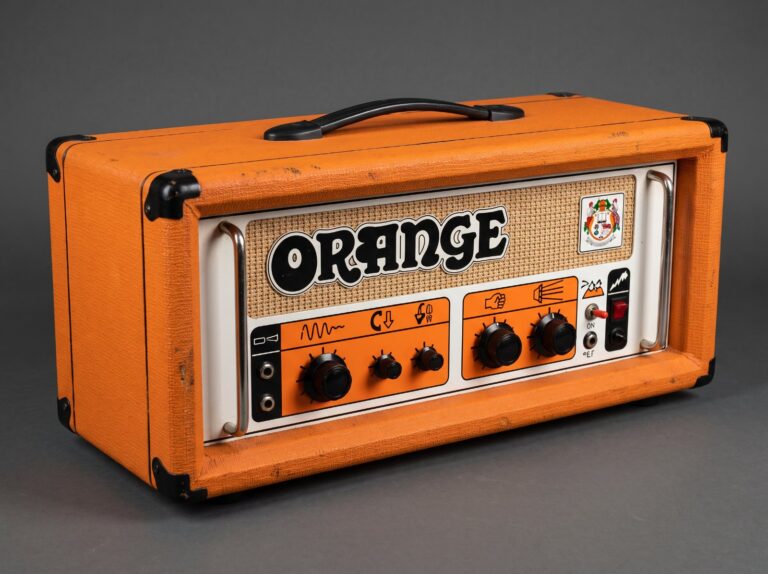
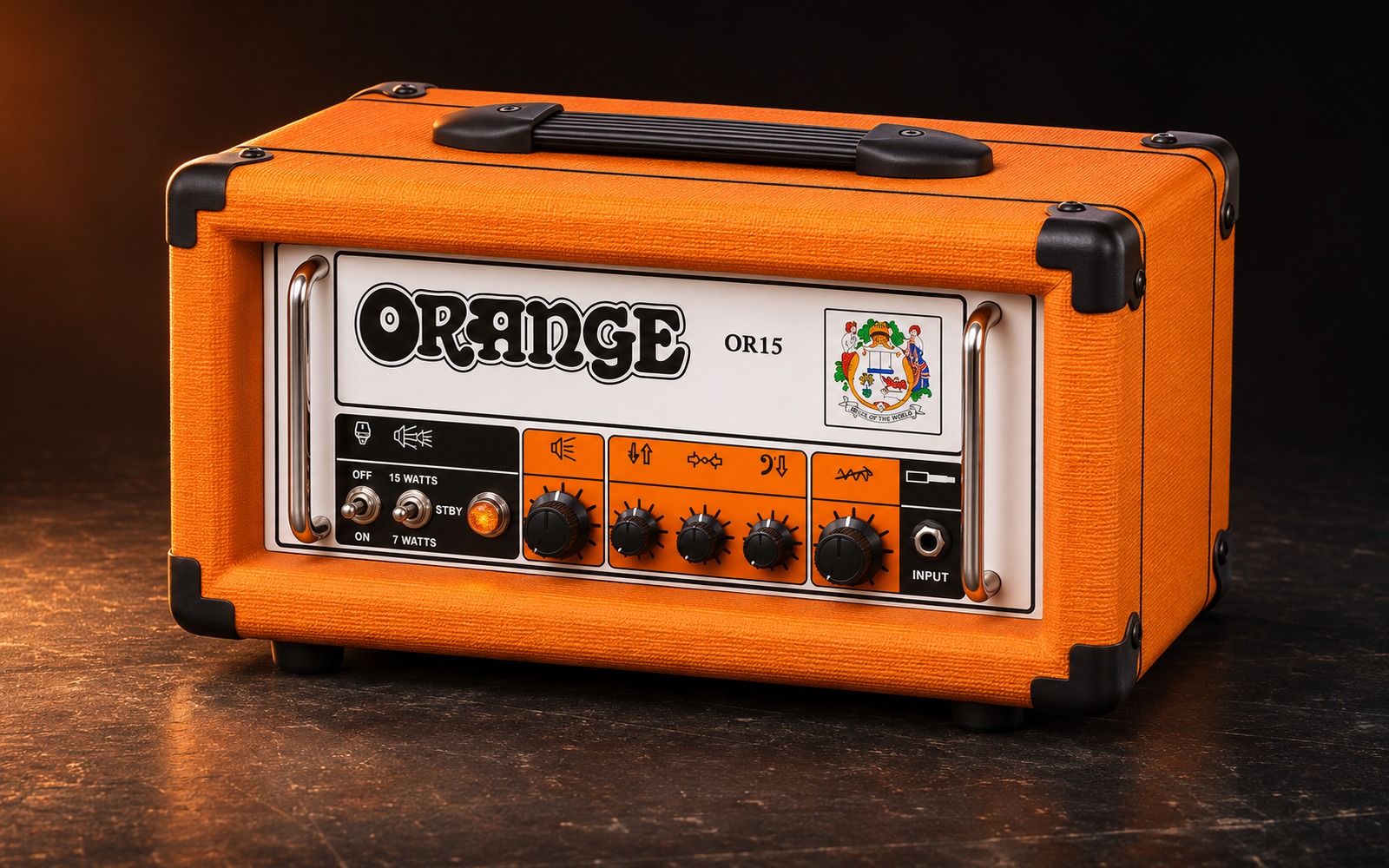
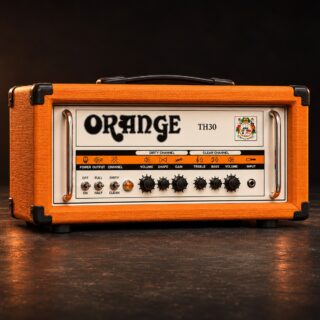
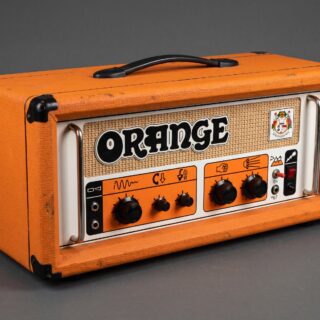
There are guitar amplifiers that announce themselves with control panels full of switches, channel labels, and marketing copy. And then there is the Orange OR15H, which says nothing at all — just a row of arcane pictograms on a slab of orange-stained wood, the same hieroglyphic language that the original 1972 Orange amps used before anyone thought to add text. No “Bass.” No “Volume.” No “FX Loop.” Just symbols, because if you need the word spelled out, perhaps you’re in the wrong room.
That defiant eccentricity is not nostalgia for its own sake. The OR15H, launched in 2012, was Orange’s deliberate answer to a specific question: what if you took the dirty, aggressive preamp from the flagship Rockerverb — the amp that defines the modern Orange sound — and put it in a wooden lunchbox head with a pair of EL84 output tubes and a switchable 15/7-watt power section? The result is an amp that sounds nothing like a beginner’s practice tool and everything like a cranked British classic, at volumes that won’t get you evicted.
This is not the Tiny Terror. The Tiny Terror (2004) was a revelation for different reasons: a 7W/15W single-stage clean-to-crunch wonder with a post-phase-inverter master volume that lets the entire output stage bloom even at low levels. The OR15H is a different machine entirely — a four-stage cascaded gain preamp with a cathode follower feeding the tonestack, closer in DNA to the OR50H and the Rockerverb than to the Terror family. It can do filthy, and filthy is where it lives.
The “Pics Only” Legacy: A Brief History of Orange’s Graphic Language
To understand why the OR15H wears pictograms instead of labels, you have to go back to 1972 and Cliff Cooper’s factory in Bexleyheath, Kent. Orange had launched in 1968 from Cooper’s West End shop on New Compton Street, built early amps in collaboration with Huddersfield’s Matamp (which explains the deep tonal kinship between the two brands), then moved production in-house as demand grew. By 1972, Orange was making the OR120 — the same circuit-descended 120-watt head that articles at Ranks 490, 491, 492, and 493 cover in detail — and decided, apparently on the grounds of sheer British individualism, to replace every text label on the front panel with a small symbolic drawing.
The sun symbol meant “Volume.” The wavy lines meant “Treble,” “Middle,” and “Bass.” A treble clef meant something about tone. These became known as “Pics Only” panels, and they’re as recognizable to anyone who has spent time around British valve amps as the Marshall script or the Vox diamond badge. They’re also genuinely functional: a guitarist who can’t read English can still operate the amp correctly by remembering that the sun is the big knob.
The OR120 that introduced this language was discontinued in 1979. When Orange revived its OR-series numbering in 2012 with the OR15H and OR50H, it brought back the pictogram panel as an explicit reference — “Pics Only” is printed in the product literature, with a capital P and a capital O, like a proper noun. The wooden chassis (birch plywood under the tolex-style wrap) also echoes the original constructions. The symbolism is deliberate. This is Orange saying: we know what we were, and we’re still it.
Specs: What Lives Under That Panel
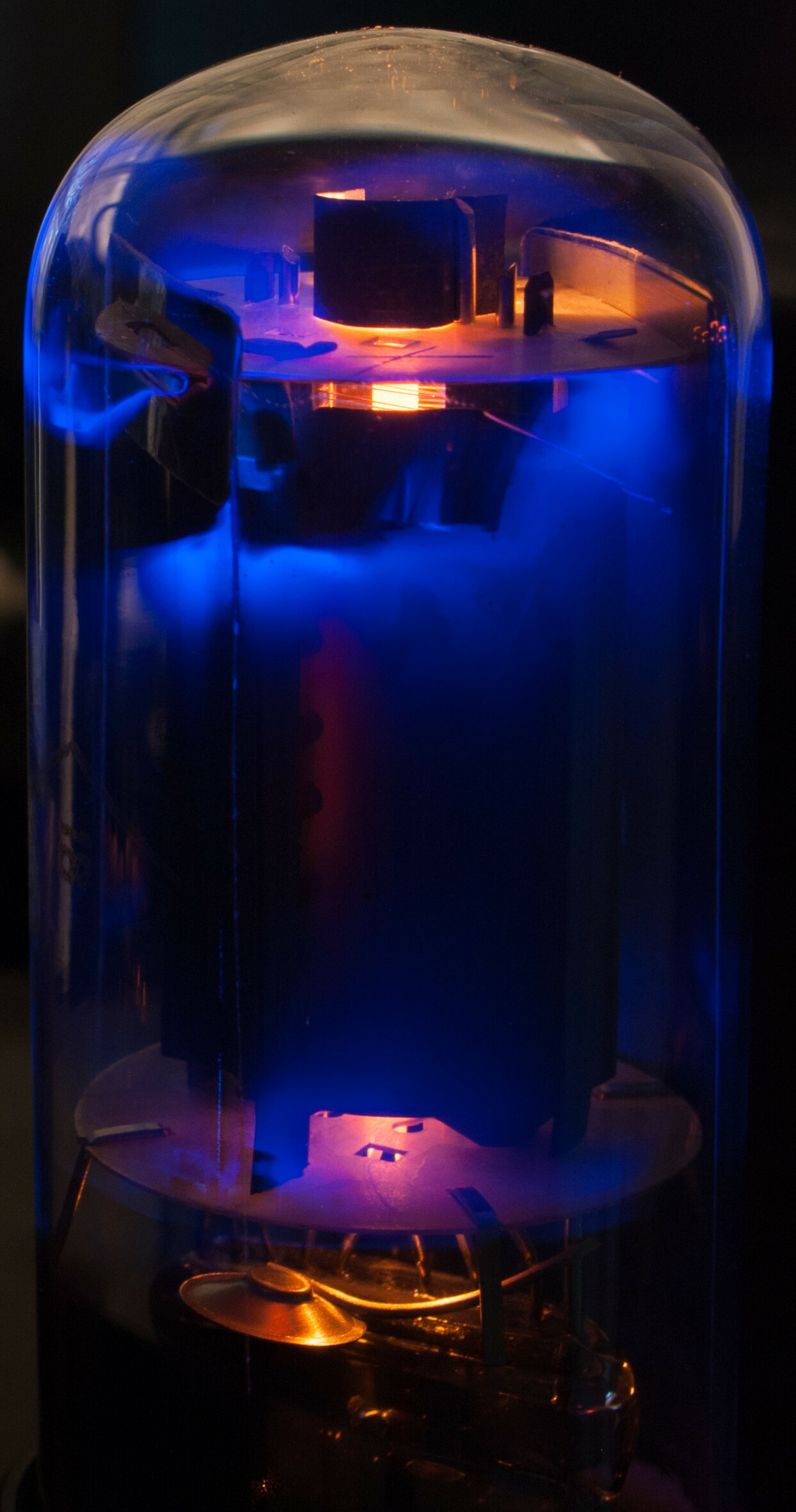
The preamp architecture is worth unpacking because it’s the key reason the OR15H sounds like a bigger, angrier amp than its 15-watt rating suggests. Where the Tiny Terror uses a relatively simple preamp and relies on the output stage for its character, the OR15H runs four cascaded gain stages through 12AX7 tubes, with a cathode follower between the gain stages and the tonestack. That cathode follower reduces the insertion loss into the passive EQ section, allowing the tone controls to remain interactive and musical at high gain settings rather than becoming dead weight. It’s the same principle used in the Orange OR50H and, crucially, in the Rockerverb’s dirty channel — which is exactly what the OR15H’s preamp is derived from.
The Master volume is post-tonestack, which means you can dial in your EQ at low volumes and it stays accurate as you push the master up. The 7-watt half-power mode actually does what it says: it doesn’t drastically change the character, it just reduces headroom so the EL84s reach their natural compression and breakup point at a lower output level. Bedroom practice at 7W with the Master pushed is a real and useful option. At 15W into a sensitive 1×12, you’ll need hearing protection outdoors.
The EL84 power section is worth noting because it’s not self-evident. EL84 tubes are the defining voice of the Vox AC30 — bright, chiming, responsive to pick attack, with a singing compressed quality when pushed. Orange’s OR15H uses them in a different topology than Vox does, but the EL84 character threads through: there’s a sweetness on the top end and a musical compression under sustained chords that 6L6- and EL34-based amps don’t quite produce. The OR15H’s gain staging makes it harder, more aggressive, and less clean than a Vox AC15, but the harmonic texture of EL84 tubes is audible throughout the gain spectrum.
No reverb. No tremolo. No attenuator built in. Just the essentials, a series FX loop on the back, and the knowledge that what comes out of the speaker is tubes, iron, and wood working together without digital shortcuts.
The OR15H vs the Orange Lunchbox Family: Critical Distinctions
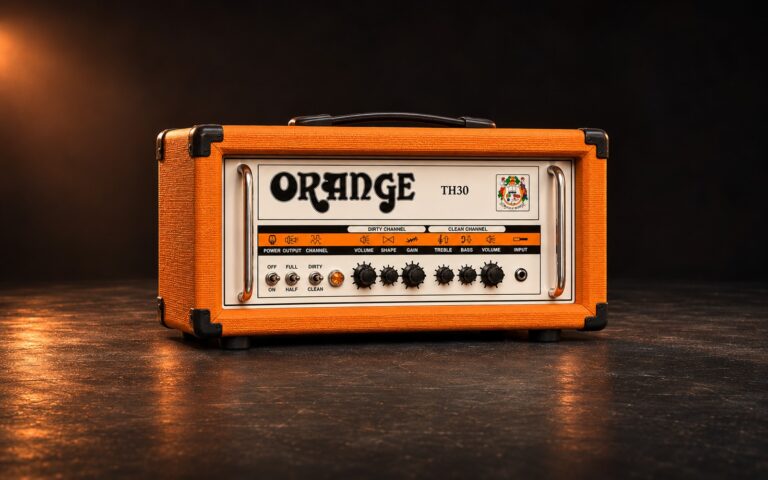
Orange makes several compact heads, and the distinctions matter more than the branding suggests.
The Rocker 15 Terror is a completely different circuit. It has two channels (Natural and Dirty), a 4-step power-level selector (0.5W/1W/7W/15W), and was designed by Ade Emsley as a half-powered Rocker 30 — not as a direct OR-series descendant. Its Natural channel stays cleaner, its Dirty channel is more midrange-focused at moderate gain. The Rocker 15 Terror is more modern; the OR15H is more raw.
The AD30HTC uses a GZ34 rectifier and runs in Class A — adding a softness, sag, and bloom to the attack that the OR15H, with its silicon rectifier and Class AB operation, doesn’t produce. The AD30 is more complex and interactive under your fingers; the OR15H is more immediate and direct.
The OR50H is the OR15H’s direct sibling — the same preamp philosophy, the same pictogram panel, but 50 watts of push-pull EL84 power. More headroom, more punch, louder, still no reverb. If you play stages where 15 watts runs out, the OR50H is the obvious next step. If you’re recording, playing pubs, or using an attenuator into a big rig, the OR15H is the more practical choice.
The Tiny Terror (7/15W, single EL84 pair, different preamp topology, post-PI master volume) remains in a separate tonal universe: cleaner, sweeter, with a bloom in the power section that the OR15H’s gain-staged preamp doesn’t replicate. Neither is better; they’re different tools that happen to share a silkscreen artist.
Famous Players
Jimmy Page used Orange OR200 heads in the 1971–1973 period and Orange AD30 family heads in the 1999–2007 period. No primary source places him near an OR15H, which was introduced in 2012 when Page’s public musical activity was minimal. Brent Hinds has a signature Orange called the Brent Hinds Terror — a separate product from the OR15H, same chassis vintage as the Rocker 15 Terror, different voicing, different circuit. Omar Rodríguez-López is an AD140HTC and Rockerverb player. Jim Root’s Orange amps are the Rockerverb 100 and the #4 Jim Root Terror. Matt Pike plays Dual Dark, Thunderverb, and the OR50/OR80 format — he’s not an OR15H player by any documented evidence.
Who actually plays the OR15H?
Scott Holiday (Rival Sons) is the most significant documented player. Holiday is a signed Orange Amplifiers artist, and Orange has published a dedicated artist page in his name — that’s a manufacturer-level relationship, not merely a search result. His documented live rigs have used the OR50H as a primary head, but Equipboard’s community database places him among the OR15H’s documented users, and his Orange artist page aligns that association. The Rival Sons’ sound — raw, wiry Southern rock with a British valve crunch — is exactly the tonal territory the OR15H occupies.
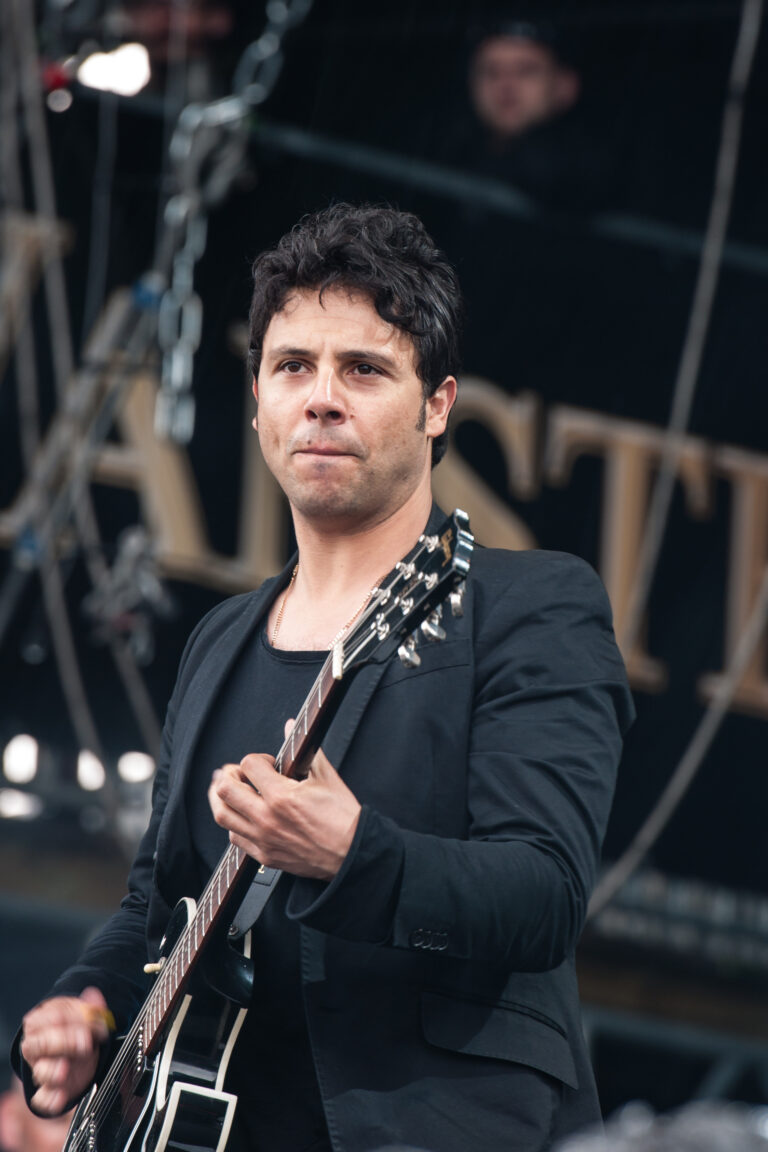
Adam Zindani (Stereophonics) is the most clearly photo-verified. Zindani is the lead guitarist and co-writer in the Welsh rock band Stereophonics, active since 1992 and responsible for songs including “Have a Nice Day,” “Dakota,” and “Maybe Tomorrow.” An Instagram post documented on Equipboard shows him using the Orange OR15H in its black finish. He runs two amps in his setup, with the OR15H documented as one of them.
Tom May (The Menzingers) is listed on Equipboard and described on Orange’s own website as an OR15H user. The caveat is important: his Premier Guitar Rig Rundown from January 2024, filmed during the Some of It Was True US tour, documents a different setup entirely — a Fender ’65 Deluxe Reverb paired with a handwired Vox AC30HWH running into an Orange 4×12 cabinet. The OR15H is absent from that rundown. This makes the OR15H more likely a studio, rehearsal, or earlier-touring tool rather than his current primary live amp.
For the record: these are honest, primary-sourced findings. The OR15H does not have the same famous-player pedigree as the Tiny Terror or the Rockerverb, and that’s fine. It’s an amp that gets chosen by working guitarists who want a specific kind of British gain without the weight of a full-size head.
Tone Character: What the OR15H Actually Does
The OR15H’s gain is high and its range is wide, but its tonal address is distinct: mid-forward, with a compressed top end from the EL84 output section and a woolly warmth in the low mids that makes single notes sustain longer than the output wattage implies. It is not a pristine clean amplifier. At low gain settings with the Volume pushed and the Master pulled back, you get a crunch that sits somewhere between the crispness of a pushed AC30 and the harder grind of a Marshall — the orange territory between those two poles that the brand has always owned. Push the Volume further and it gets muscular and compressed, with harmonics that pile up in the midrange.
The 3-band EQ is more interactive than most people expect. The Middle control, in particular, is voiced to cover a wide range: rolled back toward 9 o’clock, it gets scooped enough to push palm mutes forward; pushed toward 3 o’clock, it produces the nasal, compressed howl associated with the heaviest British valve sounds. The Bass control at excessive levels will fart in smaller cabinets, but at sensible settings — noon or slightly below — it fills out the fundamental without clouding the attack. Treble above 2 o’clock starts to produce pick noise, and most players find the sweet spot between 11 o’clock and 2 o’clock.
Into a 4×12 with Celestion Vintage 30s, the OR15H sounds bigger than it has any right to. Into a compact 1×12 with a Celestion G12H-75, it’s punchy and immediate. Into an open-back 1×12 with a Greenback, it acquires a vintage warmth that can back up to a gentle crunch at moderate volume. The amp responds to cabinet choice more than most because the preamp provides the character and the cabinet provides the body.
Tone Recipes and Settings
Classic British Crunch — Power Chords in a Pub
Volume 11 o’clock, Bass noon, Middle 1 o’clock, Treble noon, Master 1–2 o’clock (adjust to room). 15W mode. This is the OR15H in its primary tonal home: grinding chords that sustain cleanly at the note and break up naturally when you dig in. Les Paul or SG with humbuckers will add fatness; a Telecaster with the bridge pickup will add bite. Aim into a 2×12 with a Greenback and a V30 in mixed loading for the widest frequency spread.
Bedroom Metal — High Gain at Low Volume
Volume 2–3 o’clock, Bass 10 o’clock, Middle noon, Treble 11 o’clock, Master 8–9 o’clock. 7W mode. The four-stage preamp means there’s ample distortion before the Master does much work. In 7W mode with the Master low, you’re driving the EL84s gently and getting the gain entirely from the cascaded preamp stages. Tight, not flabby — a noise gate (in the FX loop) will tame any hum from hot pickups.
Recording Grind — Close-Mic’d Vintage Texture
Volume 2 o’clock, Bass 9 o’clock, Middle 2 o’clock, Treble 10 o’clock, Master 11 o’clock. 7W mode. Pull the bass way back because a close-mic on a small cabinet accumulates low-end proximity effect; the amp’s natural warmth does the rest. A Shure SM57 at the edge of the speaker cone, 45 degrees off-axis, will pick up less fizz from the dust cap and more of the cone’s mid character. Blend with a room mic if the room sounds good.
Crunchy Indie Clean — Jangle and Bite
Volume 9–10 o’clock, Bass 11 o’clock, Middle noon, Treble 2 o’clock, Master 2–3 o’clock. 15W mode. The OR15H at genuinely low gain settings (Volume near minimum, Master doing the work) produces a more textured clean than the label suggests. It’s not the crystalline clean of a Fender; it’s a British clean — slightly compressed, slightly warm, with an edge that responds to pick attack. Strat or Telecaster with single-coils gets the most from this setting.
Adam Zindani Style — Mid-Pushed Arena Rock
Volume 1 o’clock, Bass 11 o’clock, Middle 2 o’clock, Treble noon, Master noon. 15W mode. Stereophonics’ tone is built around a Les Paul or Telecaster pushed into a British valve amp with the midrange forward. The OR15H in this setting produces a wide, muscular rhythm tone that handles both the clean dynamics of “Dakota” and the crunch of “Have a Nice Day” depending on guitar volume. Run a transparent overdrive (Klon-type) in the FX loop return if you need an extra push for leads.
Comparing the OR15H to Similar Amps
Against the Vox AC15C1: both use EL84 output tubes, but the family resemblance stops there. The AC15’s EF86 preamp tube option, cathode-biased Class A output stage, and Celestion Alnico Blue or G12M speaker define the classic British chime. The OR15H is significantly higher gain, more compressed and aggressive, with less of the open, airy quality that makes the AC15 essential for chimey clean/crunch sounds. If you want Hendrix’s “Little Wing,” buy a Vox. If you want the heavier British valve grind, buy the Orange.
Against the Vox AC30 Top Boost: the OR15H is louder in practice (more efficient preamp into a tighter output stage), more compressed, and more forward in the mids. The AC30 is wider, cleaner, more bell-like. They’re both EL84 amps from Britain, and that’s roughly where the comparison ends.
Against the Rockerverb 50 MKIII: the OR15H is essentially a single-channel, stripped-down, EL84-powered version of the Rockerverb’s dirty channel. The Rockerverb adds a clean channel, 50/25W switchable power, 6L6 or EL34 output tubes (depending on variant), and a genuine spring reverb. The OR15H gives you the same preamp DNA with EL84 warmth/compression. If you need a clean channel for live work, the Rockerverb is the right tool. If you record or play in a context where a single channel covers everything, the OR15H saves you money, weight, and complexity.
Against the Rocker 15 Terror: different circuits, different voicing intentions, same wattage. The Rocker 15 Terror’s Natural channel is actually cleaner; its Dirty channel is more focused on mid-gain modern rock. The OR15H is angrier and more gain-forward. Players who want two distinct channels lean toward the Rocker 15 Terror; players who want maximum tonal purity from a single voice lean toward the OR15H.
Against a Marshall JCM800 2203 at equivalent volume: the OR15H’s EL84 midrange warmth and compression feels different under your fingers than the EL34 power section of a JCM800, but both amps are built around the same tonal principle — cascaded gain stages into a passive EQ. The JCM800 has more low-end authority and a harder, more scooped character at similar gain settings. The OR15H is warmer in the upper mids and more compressed. Many recordings use both for exactly this reason: layer them and you get a full frequency portrait.
Buying Guide: New, Used, and What to Watch
New, the OR15H lists at around $799 USD in 2026 from major US retailers. The black finish variant carries the same price as the orange. Used market on Reverb shows a healthy supply from $450 to $600, which is strong value for what the amp does.
There are no meaningful production variants to sort through — the OR15H’s circuit has remained consistent since 2012. The primary variable is the output transformer, which Orange has sourced from its own proprietary transformer supplier (the same transformers used in the Terror series). If a used unit has been gigged heavily, the output transformer is the first item to check by a tech. EL84 tubes should be replaced every 1,000–2,000 hours of playing time, though the cathode-biased design means you don’t need to re-bias when swapping a matched pair. The preamp 12AX7 and 12AT7 tubes are long-life and rarely need replacement under normal use.
Cabinet matching matters. The OR15H’s 8Ω and 16Ω outputs cover all common single and paired cabinet impedances. Running into a mismatched impedance won’t instantly destroy the amp (Orange’s output transformers are forgiving), but consistent impedance mismatch shortens transformer life. Check the back panel of your cabinet before plugging in.
The FX loop is series and runs at instrument-level signal — not studio/line-level. Rack gear designed for a +4dBu loop will be too hot and may add noise. Pedals in the loop (reverb, delay, modulation) work excellently here; time-domain effects after the preamp’s gain stages is an ideal signal chain for any high-gain amp.
Ownership Notes
The wooden chassis requires the same care as any vintage-style amp: keep it out of sustained humidity extremes and don’t store it against damp walls. The cabinet covering is durable but not indestructible; road cases or soft cases pay dividends over repeated transport.
At 15W, the OR15H will not keep up with a heavy-hitting drummer without a PA. 15 watts of valve power is louder than 15 watts of solid-state, but it’s still 15 watts. The 7-watt mode is genuinely useful for home practice with the master dimed or close to it; 15W is for rehearsal rooms, small stages, and recording studios. Anyone telling you 15W can fill a 500-person room without PA support is selling something.
The single channel is a feature, not a limitation, if you know how to use your guitar’s volume knob. Rolling the guitar volume from 10 to 6 cleans up the OR15H significantly — this is the classic British amp interaction where the preamp responds to input level. A humbucker-equipped guitar at volume 10 gives you the amp’s top-end gain; the same guitar at 6 gives you something approaching a jangly crunch. A Strat at full volume may not saturate the preamp as fully as a Les Paul; that’s fine. You’re not limited to one tone. You’re limited to one channel, which is a different thing.
FAQ
Is the Orange OR15H the same as the Tiny Terror?
No — they share EL84 output tubes and an Orange brand badge, but the circuits are entirely different. The Tiny Terror uses a simpler preamp and a post-phase-inverter master volume that saturates the output stage. The OR15H has a four-stage cascaded gain preamp derived from the Rockerverb’s dirty channel, with a more aggressive and tonally consistent gain structure.
Can the OR15H produce a clean tone?
Yes, with caveats. With the Volume pulled back below 9 o’clock and the Master doing the work, you get something approaching a British clean — textured, slightly compressed, with an edge. It won’t produce the glassy Fender clean or the bell-like Vox clean. If a pure clean channel is a requirement, the OR15H is the wrong tool; look at the Rocker 15 Terror with its Natural channel, or any two-channel design.
What cabinet should I pair with the OR15H?
The OR15H is versatile with cabinet choice. A 1×12 with a Celestion V30 gives a tight, punchy result with scooped mids that makes gain tones sit well in a mix. A 1×12 with a Celestion G12M Greenback gives a warmer, rounder sound with more low-mid warmth. A 2×12 in closed-back configuration gives the amp more low-end weight. Orange’s own PPC112 (1×12, closed back, 60W Celestion) is the designed companion and a legitimate option.
Does the OR15H sound like the Rockerverb?
Its dirty-channel preamp is derived from the Rockerverb, so there’s a genuine family resemblance in the gain structure and tone-stack voicing. However, the Rockerverb runs higher-wattage EL34 or 6L6 output tubes and produces a harder, tighter, more authoritative low end. The OR15H’s EL84 power section gives it a warmer, slightly softer character that’s less like a freight train and more like a very fast, very aggressive sports car.
What does the “Pics Only” panel mean in practice?
The pictograms label each control: a sun represents Volume, wavy lines represent the EQ bands, a lightning bolt means the Master. There is no functional difference from a standard text-labelled panel — the controls do exactly what you expect. The value is that the panel signals something about the amp’s character and heritage. It is genuinely a conversation piece, but it is also a functional amplifier.
Is 15 watts enough for gigging?
For small-to-medium venues with PA support, yes. For large stages without PA, no. The OR15H runs loud enough to mic and send to a PA system, and a close-mic’d 1×12 feeding a decent PA will fill any room. Without PA support, 15 watts covers coffee-shop gigs, small rehearsal rooms, and medium rehearsal studios comfortably. It will be drowned out by a hard-hitting drummer in a large space without PA reinforcement.
What is the OR15H’s impedance and which output should I use?
The OR15H has 8Ω and 16Ω speaker outputs. Match the output impedance to your cabinet’s rated impedance: 8Ω cabinet to the 8Ω output, 16Ω cabinet (or two 8Ω cabinets wired in series) to the 16Ω output. Two 16Ω cabinets wired in parallel = 8Ω total, use the 8Ω output. Running into a mismatched impedance repeatedly shortens transformer life; occasional mismatches are not catastrophic.
How does the OR15H compare to the OR50H?
Same preamp philosophy, same pictogram panel, different output sections. The OR50H runs 50W of EL84 power from more output tubes, giving it more headroom, more punch, and a different compression character at stage volumes. The OR15H saturates its output section earlier and produces a warmer, more compressed breakup. If you play loud stages regularly, the OR50H gives you more range. For recording and small gigs, the OR15H’s lower power is an asset.
Image credits
- Top image: GuitarGangsters AI-generated reference illustration, not a photograph.
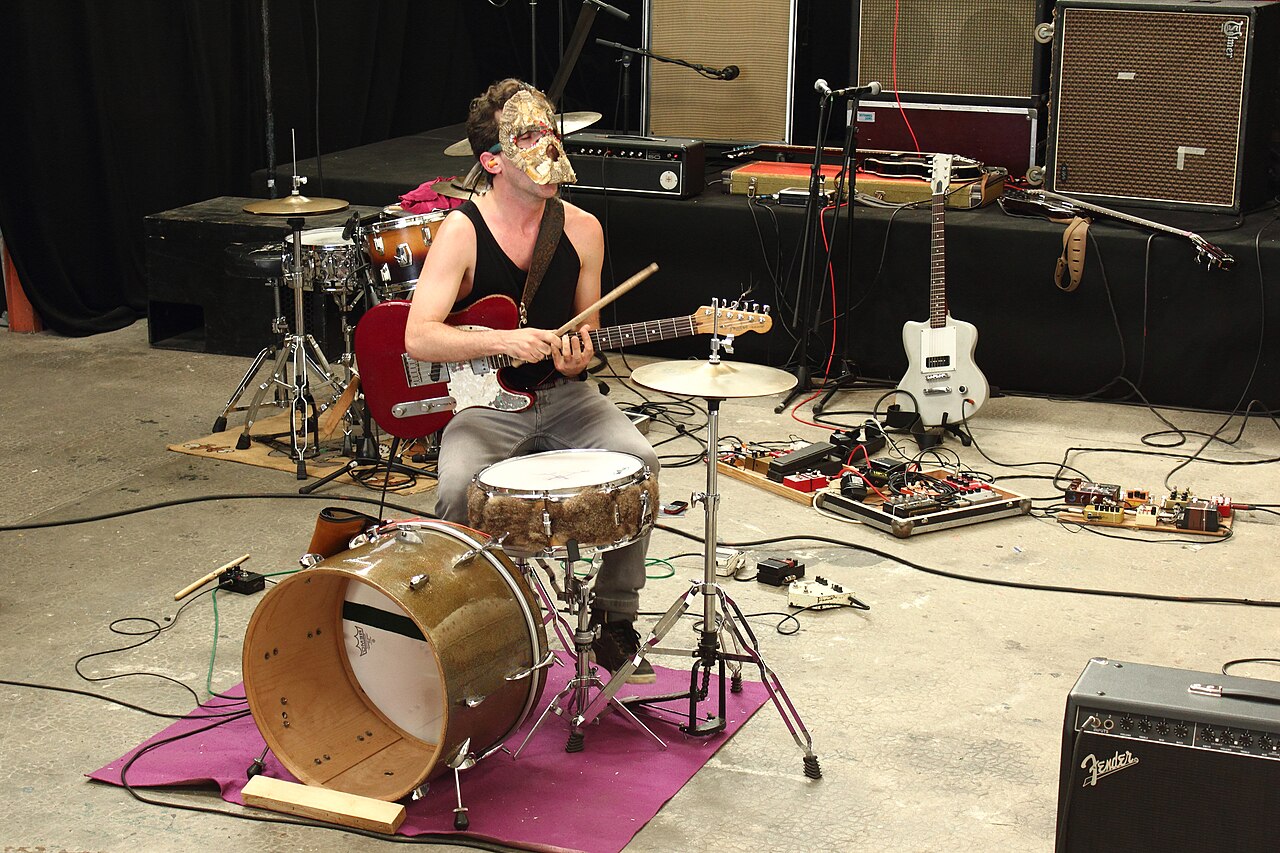
- A drummer and guitarist on a small stage: Xi WEG from Poitiers, France, Wikimedia Commons, CC BY 2.0.
- A glowing power tube: Rob Robinette, Wikimedia Commons, CC BY-SA 4.0.
- Adam Zindani: Alice Wiegand, Wikimedia Commons, CC BY-SA 3.0.
Latest News
Related
On This Day
Monday 9 November
From this week: