The Amp Eddie Built for His Own Ghost: EVH 5150IIIS 100W EL34 Head
EVH 5150IIIS 100W EL34 Head: EL34 vs 6L6 tone explained, specs, verified Famous Players, 5 tone recipes, and buying guide for the British-voiced 5150.
Every amplifier in the 5150 family traces its bloodline to a single obsession: Edward Van Halen’s refusal to accept that the sound in his head couldn’t be built from scratch. The Peavey EVH 5150 of 1992 was one answer. The EVH 5150III of 2007 was another. But there was a tone neither of those amps could fully reproduce — the snarl and sag of his 1968 Marshall Super Lead, cranked to eleven and draped in the harmonic richness that only four EL34 power tubes can generate. That was the tone of “Eruption.” That was the tone of “Runnin’ with the Devil.” That was the tone that defined rock guitar for a generation.
Eddie spent years trying to bottle it. He ran his Plexi through a Variac, stepped the voltage down from 120V to roughly 90V, and in doing so stumbled onto the sagging, singing quality that makes early Van Halen recordings sound like nothing else before or since. The Peavey 5150 circuit was designed by engineer James Brown around 6L6 power tubes — a deliberately American choice that delivered the tight, focused attack that made it a metal standard. But 6L6s, for all their virtues, don’t sag that way. They don’t have that upper-midrange chime that makes a single note sound like it’s multiplying itself in the air.
So Eddie went back to the drawing board. Announced at Summer NAMM in Nashville on June 23, 2016, the EVH 5150IIIS 100S EL34 Head is his answer to that question — a three-channel, 100-watt tube head built around four JJ EL34 power tubes, tuned from the ground up to capture the feeling of a cranked plexi while retaining all the control and versatility of the modern 5150III architecture. It is not a reissue. It is not a modded version of the 6L6 head. It is a separate circuit, reviewed separately by Guitar World in March 2017, and awarded the Platinum Award for the simple reason that it works.
Guitar World’s Chris Gill — co-author of Eruption: Conversations with Eddie Van Halen — wrote at the time: “While the 6L6 tubes in the 5150 deliver an incredible variety of great tones, there’s just something unique about an EL34 amp that 6L6s can’t duplicate. Realizing this, Ed has worked fervently for the last few years to develop an EL34 version of the 5150 IIIS head.” That framing matters. This is not marketing copy. It is an observation from the journalist who probably knew Eddie’s amp philosophy better than anyone outside Fender’s Ensenada facility.
The Road Test That Came Before the Amp Existed
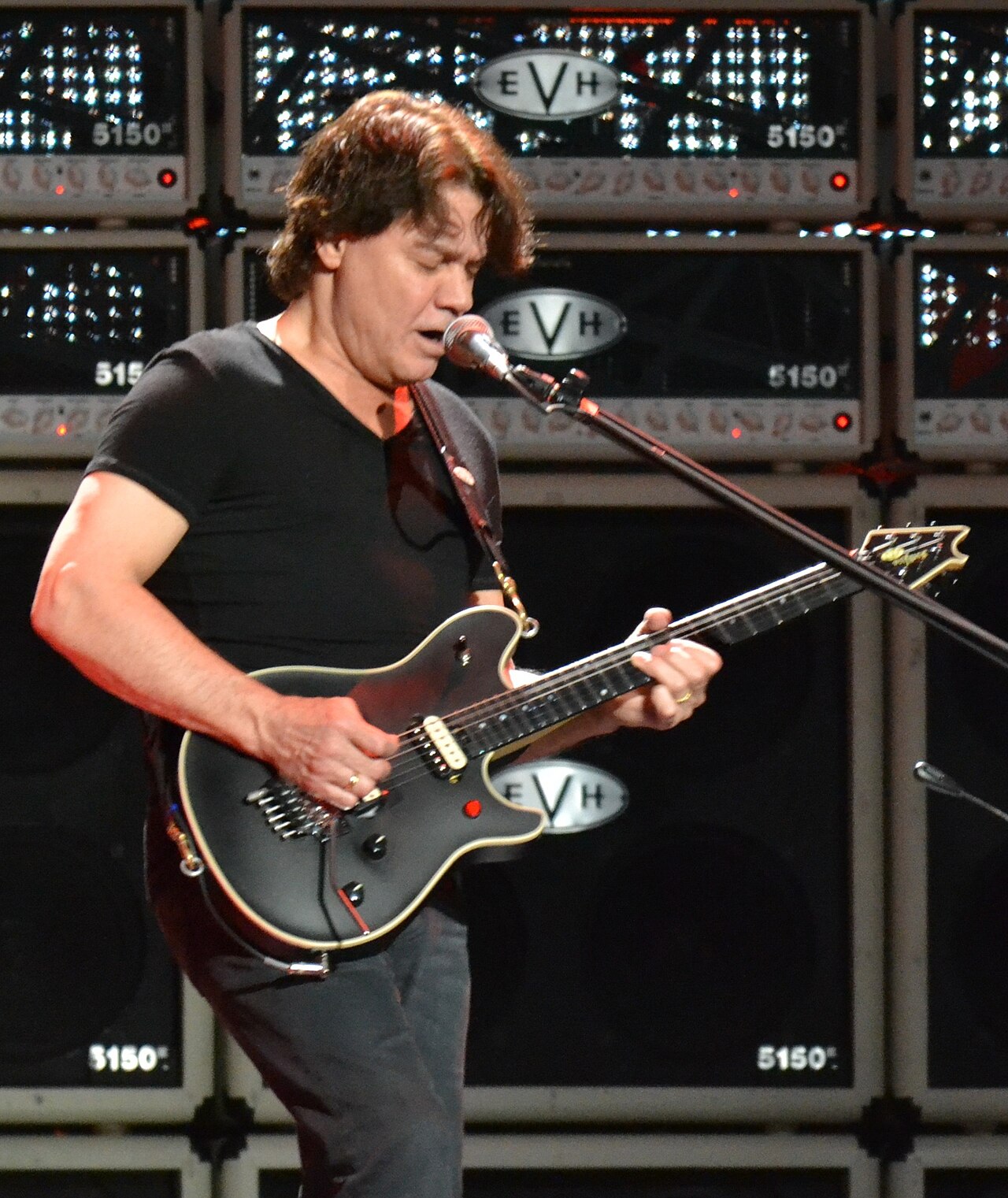
In September 2015, Guitar World was invited backstage at Van Halen’s concert at Bethel Woods Center for the Arts — the site of Woodstock 1969, now the location of Edward Van Halen’s final ever public performances. It was the last stop of what would become the band’s final tour. Among the amps photographed backstage was a piece of equipment labeled simply “EVH 5150 III EL34 Prototype.” Eddie’s own words, as reported by Gill in his March 2021 rig rundown piece: “I plug into it every couple of shows to see how it’s holding up in its first road test, to see how it’s maintaining its tone. The sound is very vintage Van Halen, but it also has the capability of achieving modern high-gain tones.”
Those words contain the entire design brief. “Vintage Van Halen” means plexi tones, EL34 harmonics, natural sag. “Modern high-gain tones” means three channels, per-channel EQ, a usable clean channel, a footswitch. The prototype was being tested against the rigours of a real arena tour before a single production unit had been built. Eddie’s main amp on that tour was the 5150 III 100S — the premium stealth version of the 6L6-based 100W head, with his custom modifications built in as standard production features. The EL34 was a research prototype running in parallel. Less than a year later the design had been refined into a production-ready instrument, available from October 2016. Eddie died on October 6, 2020, which means he had roughly four years with the completed version of an amp he’d been developing for at least three years before that.
From Plexi to 5150: The EL34 Tube in Van Halen’s History
Understanding why this amp exists requires a brief history lesson in power tube politics. The Marshall Super Lead of the late 1960s — the amplifier that gave the first six Van Halen albums their foundational character — used four EL34 power tubes. The EL34 is a European design, developed by Mullard in the UK, and its sonic fingerprint is inseparable from British rock. It produces a pronounced upper-midrange emphasis with a bloom-like harmonic complexity; when pushed hard, it generates a distinctive sag as the power supply droops under demand, creating a musical compression that compresses the attack and sustains the note differently than an amp running at full voltage.
Eddie’s Variac modification exploited exactly this behaviour. At lower voltage, the EL34s sag more readily and more dramatically. The guitar note attacks, the amp compresses, the harmonic content blossoms. It is the reason “Eruption” sounds the way it does. It is the reason the solo on “Ain’t Talkin’ ‘Bout Love” has that particular vocal quality. The plexi into the Variac into the cabinet was Eddie’s rig, and its character is fundamentally an EL34 character.
When Peavey engineer James Brown designed the 5150 circuit in 1992 in collaboration with Eddie, the decision was made to use 6L6GC power tubes — tighter, brighter, more American-voiced, better headroom at moderate volumes, more focused low end. They were a practical choice for a high-gain metal amplifier, and the 5150 circuit around them became one of the most influential amplifier designs in the history of heavy music. But 6L6s could not fully replicate what an EL34 does. The 5150IIIS EL34 Head is Eddie’s acknowledgement that both things can be true simultaneously: the 6L6 5150 is the correct tool for modern metal; the EL34 5150IIIS is the correct tool for everything from classic Van Halen to contemporary high-gain playing that wants a British edge.
The EVH brand has been managed by Fender Musical Instruments Corporation since its 2007 launch. All 5150III production takes place at the Fender facility in Ensenada, Baja California, Mexico. The gold-and-black aesthetic of the EL34 head — distinguishing it visually from the standard black-and-white 5150III line — reflects both the premium positioning of the IIIS platform and a deliberate nod to vintage Marshall aesthetics.
Full Specifications
One architectural detail worth flagging: the 5150IIIS 100W EL34 Head gives every channel fully independent EQ — Gain, Low, Mid, High, Volume, and Presence per channel, plus individual rear-panel Resonance controls. This is distinct from the original 5150 head (shared EQ for channels 1 and 2) and from the 5150III 50W EL34 variant (which also has some shared controls between channels 1 and 2 on the 50W platform). If you need the maximum per-channel independence — clean voiced differently from crunch, crunch voiced differently from lead — this 100W version delivers it in full.
Famous Players: Verified and Honest
Two names are associated with this amp: Eddie Van Halen and Wolfgang Van Halen. Both connections are real, but the specifics are worth unpacking carefully.
Eddie Van Halen — primary designer and verified user. The Guitar World Rig Rundown from the 2015 Van Halen tour (published March 2021, written by Chris Gill, who was present backstage at Bethel Woods on September 6, 2015) documents the EL34 prototype on the stage rig with Eddie’s own statement: “The sound is very vintage Van Halen, but it also has the capability of achieving modern high-gain tones.” Guitar World’s 2017 production review confirms “Ed has worked fervently for the last few years to develop an EL34 version of the 5150 IIIS head.” The EL34 version is not an amp released after Eddie’s death to monetise his legacy — it is an amp he was actively developing during the final years of his performing life, and the production version launched four years before he died. His main live amp on the 2015 tour was the 5150 III 100S (the premium 6L6 version); the EL34 was a prototype in active development alongside it.
Wolfgang Van Halen — documented on the 5150III platform, format not SKU-pinned. Wolfgang uses 5150 IIIs live and in the studio with Mammoth WVH. Guitar World’s December 2025 interview with Wolfgang documented his own words: “I certainly have no problem representing and using it at every opportunity. The amp is really Matt and my dad’s baby.” That statement applies to the 5150III platform broadly. Primary documentation of Wolfgang’s live rig places him on 5150 III heads consistent with the family, but without a photo or interview specifically identifying the gold-and-black EL34 finish, the honest framing is: family-level confirmed, EL34-specific not independently pinned.
John 5 (Rob Zombie) — PG Rig Rundown confirmed. Premier Guitar’s 2026 Rig Rundown documents John 5 running the EVH 5150IIIS EL34 as his touring head into a matching EVH cab. The connection has additional historical resonance: Eddie Van Halen reportedly gifted John 5 one of his personal 5150s, reflecting a genuine personal relationship between the two guitarists. John 5’s playing range — from clean Telecaster fingerpicking to extreme high-gain shred — makes the EL34’s versatility across all three channels well-suited to his work.
Jason Hook (Five Finger Death Punch) — reported player, sourcing caveat. Jason Hook is cited in gear forums as having A/B tested the 5150IIIS EL34 against comparable heads and selected it for touring use. Without a direct primary source — PG Rig Rundown, manufacturer interview, or Hook’s own published statement specifying this model — this is industry-level rather than per-SKU verified, and is framed accordingly.
The EL34 Difference: What This Amp Does That the 6L6 Can’t
The question every player who already owns or is considering a 5150 family amp will ask is: how different is the EL34 version, really? The short, honest answer is: more different than you expect on channels one and two, less different than you expect on channel three.
Guitar World’s Chris Gill described the EL34 version as producing “midrange that is throatier, with enhanced upper midrange sparkle and beefier lower midrange punch” compared to the 6L6. The green channel is “more inherently ‘British’ than ‘American,’ with a glassy treble shimmer, bell-like midrange chime, and condensed, focused bass.” This is exactly the language you would use to describe a good Marshall-voiced amplifier. The clean tone has a quality that 6L6-based amplifiers — including the standard 5150III — don’t easily reach: a chime and shimmer in the upper mids that breaks up musically, harmonically rich, rather than harsh or stiff.
The blue channel is “where the classic Van Halen guitar tone lurks,” per Gill. The 6L6’s blue channel is tighter and more aggressive at low-to-medium gain settings; the EL34’s blue channel blooms earlier, has more upper-midrange character in its distortion, and responds more dynamically to pick attack and guitar volume. Players who use the guitar’s volume pot to clean up — a technique central to Eddie’s own playing style — will find the EL34 blue channel noticeably more responsive to that technique than the 6L6 version.
The red channel is where the two versions converge most closely. Both push into extreme high-gain territory; both have massive bass and violin-like sustain. The EL34’s red channel retains its characteristic upper-midrange presence, but at the gain levels the red channel requires, the differences between EL34 and 6L6 are less dramatic than on channels one and two. Gill noted that the red channel “is voiced to perfectly complement and transition from the blue channel” — the saturation increases progressively across all three channels rather than jumping to a completely different character on channel three.
One architectural advantage the 100W EL34 has over its 50W EL34 sibling is per-channel EQ independence. The 50W EL34 shares EQ controls between channels 1 and 2. The 100W gives every channel fully independent Gain, Low, Mid, High, Volume, Presence, and rear-panel Resonance. For players who need a genuinely different clean and crunch voice — say, a warm chimey clean on channel one and a mid-forward crunch on channel two — the 100W is the correct format to buy.
Tone Recipes and Settings
Recipe 1: Early Van Halen “Plexi” Clean Crunch (Green Channel)
This is the amp’s defining sweet spot — the tone that justifies its existence. Set Gain at 4, Low at 5, Mid at 7, High at 6, Volume at 5–6, Presence at 5–6, Resonance at 5. The result should be a clean-to-crunch edge that cleans up fully when the guitar’s volume is rolled back to 6–7 and breaks into a singing crunch at guitar volume 10. This is the tone of the early Van Halen records: not fully clean, not fully distorted, but singing and on the edge. Use a hotter humbucker-equipped guitar — a Wolfgang USA is the manufacturer’s own recommendation, but a Les Paul or a humbucker-equipped Strat with medium-output pickups also works. Roll the rear Resonance down slightly (to 4) for a more focused, articulate low end; bring it up (to 6–7) for a more resonant, open-feeling low end. Compared to reaching this tone on the 6L6 version, the EL34 achieves the “singing edge” quality at lower gain settings and with less work — it is where this amp lives naturally.
Recipe 2: “Atomic Punk” High-Energy Crunch (Blue Channel)
Blue channel, Gain at 6–7, Low at 5, Mid at 6, High at 5, Volume to match, Presence at 6, Resonance at 6. This is the meat of the amp — the channel where Eddie’s specific EL34 philosophy is most audible. The gain is high enough for a genuine rock crunch with full sustain, but the EL34 character keeps the upper mids alive and the harmonic content complex. Pick hard and fast and it pushes into saturation; roll the attack back slightly and individual notes breathe. Use the neck pickup and roll the guitar tone slightly back for a rounded, vocal quality; bridge pickup and guitar at full for the sharpest articulation. The response to guitar volume on this channel is the feature that distinguishes the EL34 from the 6L6: the EL34 blue channel opens up and clarifies when the guitar volume drops by 20–30 percent, making it possible to shade between crunchy and clean within a song by touch alone, without touching the footswitch.
Recipe 3: Modern High-Gain Lead (Red Channel)
Red channel, Gain at 7–8, Low at 4 (restrain the bass), Mid at 6, High at 6, Volume to taste, Presence at 7, Resonance at 4–5. This is the channel for modern metal lead work — extended-range string clarity, violin-like sustain on single notes, and the ability to cut through a dense mix. Keep the bass lower than instinct suggests on a 100W amp; the combination of four EL34s, massive transformers, and a 4×12 cabinet generates significant low-end mass even at moderate bass settings. Add a tubescreamer-style pedal (Ibanez TS9, Boss SD-1, or MXR Badass Modified OD) into the front end with the drive turned all the way off and the level raised, for tighter string-to-string definition on the low strings. This is the classic front-end-boost approach for modern metal and works on the 5150IIIS EL34 as reliably as on any 6L6-based amp.
Recipe 4: British Blues-Rock Clean (Green Channel)
Green channel, Gain at 2–3, Low at 6, Mid at 5, High at 7, Presence at 7, Resonance at 5, Volume to taste. This setting exploits the EL34 green channel’s British character for single-coil playing — Stratocaster or Telecaster in the neck or middle position. The low gain keeps it genuinely clean; the elevated Presence and High bring out the glassy upper-register chime that EL34s produce naturally. The clean channel of the 5150IIIS EL34 is significantly more useful for clean tone work than the equivalent channel on the 6L6 version — Gill described it as having “sparkly cleans and compressed tone” that the 6L6 version cannot match in the same EQ register. Use the amp at lower volume for true sparkle; push the volume up and the EL34s will start to generate power section warmth even on the clean channel, a pleasant bonus that the clean-headroom-heavy 6L6 doesn’t offer at comparable volumes.
Recipe 5: Two-Guitar Rhythm Orchestration (Blue Channel)
Blue channel, Gain at 5–6, Low at 5, Mid at 5, High at 5, Presence at 5, Resonance at 5 — the flat setting as a starting point. The EL34 blue channel at moderate gain, through a 4×12 with Celestion G12EVH speakers, produces a rhythm tone that sits in the 1–5kHz range with a broad upper-midrange push. In a two-guitar context, one player can run this setting flat with the bridge pickup; the other can drop the High slightly (to 4) and raise the Mid (to 6) for a darker, rounder complementary voice. The EL34’s natural upper-midrange emphasis means the two guitars can sit side by side without hard panning and without losing separation — they occupy slightly different bands of the same character. This is the tonal logic behind Van Halen’s layered rhythm approach on tracks like “Panama” and “Hot for Teacher,” even when he was using a plexi rather than a 5150.

How It Compares: The 5150 Family and Beyond
vs. EVH 5150IIIS 100W 6L6 Head
The 5150IIIS 100W 6L6 Head is the closest possible comparison and the most important one. Same chassis, same control layout, same per-channel architecture. The differences are entirely in the power section and its interaction with the preamp voicing. The 6L6 version is tighter, more American, more compressed in the midrange, and has brighter cleans with a more aggressive red channel character. The EL34 is warmer, more British, more dynamic in its response to pick attack, and has a green channel that genuinely sounds like a well-set Marshall-style amp rather than a modified high-gain head’s clean channel. If your primary use case is classic rock and early hard rock through modern classic rock, the EL34 version is the logical choice. If your primary use case is modern metal with occasional cleans, the 6L6 makes the stronger case. Both are correct — they answer different questions.
vs. EVH 5150III 50W EL34 Head
The 50W 6L6 sibling occupies a different power-class bracket; the 50W EL34 version is its own model and not yet covered in this series. The core comparison with any 50W EL34 variant: the 50W reaches power-section saturation at lower volumes and is preferred by players gigging smaller venues or needing more power-amp character at achievable volumes. The 100W is the studio and large-stage solution: more headroom, more definition at loud volumes, and — critically — the per-channel EQ independence the 50W EL34 lacks. If you mostly record or play rooms that don’t require full 100W output, the 50W EL34 is worth considering. If you play stages where the PA doesn’t always have full monitor support and your amp volume is part of how you hear yourself, the 100W wins.
vs. Peavey EVH 5150 (Original)
The Peavey EVH 5150 (1992–2004) is the circuit ancestor — two channels, 6L6 power section, co-designed with Eddie and James Brown. The original 5150 has no independent EQ between its two channels and no Presence on the rhythm channel. The 5150IIIS EL34 is three generations of refinement: three channels, fully independent EQ, rear-panel Resonance per channel, and an EL34 power section the original 5150 never had. Players who associate “the 5150 sound” with the original Peavey are thinking of 6L6 tones; the EL34 version is deliberately distinct from that lineage while sharing the family architecture.
vs. Peavey 6505 Head
The Peavey 6505 (the renamed 5150 after Eddie left Peavey in 2004) is the budget-adjacent alternative for players who want the 5150 circuit without the EVH premium. It is 6L6-based, two channels with shared EQ, and costs considerably less. It does not have three channels, does not have EL34 character, and does not have per-channel control flexibility. The 5150IIIS EL34 earns its premium through additional architecture, not a nameplate surcharge.
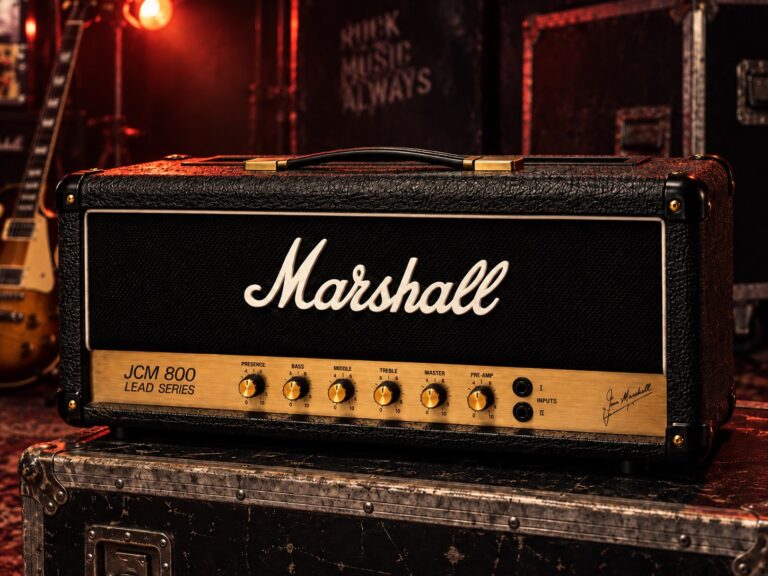
vs. Marshall JCM800 2203
The Marshall JCM800 2203 is the high-gain EL34 reference point for a generation of British rock. The JCM800 is a single-channel amp — shaped primarily by your guitar’s volume, your pedals, and the amp’s fixed control set. The 5150IIIS EL34 gives you three channels of EL34 character with independent EQ for each. Both use EL34 power tubes and share a family of upper-midrange character, but the 5150IIIS EL34’s preamp gain stages and channel architecture are modern high-gain, not 1980s British hard rock. The JCM800 has a simpler signal path and a different kind of mid-stack presence. They are not in competition; they answer different questions about EL34 tone.
vs. Mesa/Boogie Dual Rectifier Solo Head
The Mesa/Boogie Dual Rectifier uses silicon and tube rectifiers rather than a straightforward EL34 topology to generate its famous sag, available in both 6L6 and EL34 power tube variants. The Dual Rec’s sag is of a different character than the 5150IIIS EL34’s — heavier, more rounded, more pronounced in the low end, with the characteristic scooped-mid aesthetic that defines modern metal. The 5150IIIS EL34 is more upper-midrange forward and more articulate at extreme high-gain settings. Both are legitimate choices for players who want British-influenced sag with multi-channel flexibility; the Dual Rec excels at the scooped midrange of contemporary metal, while the 5150IIIS EL34 is better suited to players who want midrange presence alongside the saturation.
Buying Guide: New vs. Used
The 5150IIIS 100W EL34 Head is available new from authorised EVH dealers at the current MSRP of approximately $2,799.99, down from the $3,294.43 launch list price of 2017 — an actual price decrease over nine years, which is unusual in the premium amp market and reflects both production efficiencies and competitive pressure from the used market. Used examples appear on Reverb in the $1,200–$1,800 range depending on condition, included accessories, and seller location.
When buying used, the single most important check is the tube complement. The original JJ EL34s are high-quality components, but a heavily gigged amp may have had its tubes replaced with whatever the previous owner preferred. The EVH lineup uses a top-panel accessible bias terminal — one of the amp’s genuinely practical features, allowing bias adjustment without removing panels or the chassis. Confirm the current tube complement, confirm a recent bias check, and factor the cost of fresh JJ EL34s (four required) into your offer if the tubes are original and the amp has seen significant use.
The 4-button footswitch (7-pin DIN) should be included. If it is missing, replacement footswitches are available from EVH and compatible third-party manufacturers but add to the effective cost. Verify the effects loop is functional: send a signal through the loop and confirm both send and return are passing signal cleanly. The series loop is clean and transparent in normal use, but the jacks are a common failure point on any heavily toured amp.
The gold-and-black color scheme is the correct and original finish on all production EL34 versions. If you encounter a 5150IIIS in standard black-and-white finish with EL34 tubes installed, it may be a retaped 6L6 version. The circuit voicing is different and the two amps are not interchangeable by a tube swap. Verify the correct model number (2250260000 for the Black EL34 version) against the rear panel before purchasing.
Ownership Notes
The 5150IIIS EL34 at 100 watts is genuinely loud. At full output through a 4×12 cabinet, it generates stage volumes that exceed most smaller venues’ needs without microphones. The amp’s character at bedroom volumes is different from its character at stage volumes — the power section of a 100W EL34 amp does not come alive until it is pushed. Players who primarily play at home or in a rehearsal room should consider the 50W EL34 variant, or plan to use the preamp output into a load box or recording interface. The preamp output is on the rear panel and carries the three-channel preamp character without the power amp’s contribution — a useful recording tool that bypasses the volume requirement entirely.
EL34 power tubes run hotter than 6L6s under comparable conditions. This is a characteristic, not a fault, but it means the rear panel and surrounding area will be warmer during and after a session. Ensure adequate ventilation; do not store the head in an enclosed case immediately after use. The top-panel bias terminal makes routine tube maintenance straightforward. Check bias every six to twelve months under heavy use, or after any tube replacement. The probe test points are designed to use a standard multimeter — no specialist equipment required.
The per-channel Resonance controls on the rear panel are among the most useful and least-used controls on the amp. Resonance shapes the low-frequency damping — high settings (7–10) produce a looser, more open low-end character; low settings (1–4) tighten the bass significantly. For a 4×12 closed-back cabinet, running Resonance at 4–5 on all channels is a reasonable starting point, then adjust per channel: the clean channel benefits from slightly more Resonance (5–6, warmer bass) than the high-gain red channel (4, tighter and more defined).
The footswitch communication runs over the 7-pin DIN cable rather than a standard ¼” instrument cable. Do not attempt to connect a standard footswitch via a ¼” adapter. The pin assignments and control voltage requirements are specific to EVH’s footswitch design. If the included footswitch develops a fault, source an EVH replacement or a documented-compatible third-party unit rather than attempting to substitute a generic footswitch.

Frequently Asked Questions
Is the 5150IIIS EL34 the same amp as the 5150III 100W 6L6 with EL34 tubes swapped in?
No. The EL34 and 6L6 versions of the 5150IIIS 100W are separate circuits designed around their respective power tube types. The preamp voicing, transformer specifications, and power section topology are all designed for the EL34 in the EL34 version. Dropping EL34 tubes into a 6L6 version would produce an incorrectly biased, tonally compromised amp and risks damaging the transformers. The gold-and-black color scheme of the EL34 version is a visual marker of this distinction and is not merely cosmetic branding.
Did Eddie Van Halen actually use the EL34 version live?
He developed it and road-tested the prototype during the 2015 Van Halen tour — the band’s final public performances. His main amp on that tour was the 5150 III 100S (6L6-based). The EL34 prototype was a secondary research tool, tested alongside it. The production version launched in October 2016, giving Eddie approximately four years with the completed amp before his death in October 2020. Documentation of specific production-version concert use is less detailed than the 2015 prototype road test, but the amp was built to his specification and bore his active involvement throughout its development.
What’s the practical difference between the 100W EL34 and the 50W EL34?
Two significant differences: the 100W reaches power-section saturation at higher volumes and is the correct choice for large stages and loud band contexts; and the 100W gives every channel fully independent EQ, while the 50W EL34 shares EQ between channels 1 and 2. If you primarily use one or two channels and play smaller venues, the 50W EL34 may be the better fit. If you need three genuinely different preset voices and play stages where 50 watts isn’t enough, the 100W is the answer.
How is this different from a Marshall JCM800 with EL34 tubes?
Architecturally: three independent channels with per-channel EQ, Presence, and Resonance versus a single channel. The JCM800 is shaped primarily by your guitar’s volume, your pedals, and the amp’s single set of controls. The 5150IIIS EL34 lets you preset three completely different voices and switch between them with a footswitch. Both use EL34 power tubes and share a family of upper-midrange character, but the gain architecture and channel flexibility are categorically different. They are not competing products — they are different tools with different design philosophies.
Can I install 6L6 tubes in the EL34 version to get the 6L6 sound?
No. The EL34 and 6L6 versions are separate circuits biased and transformer-matched for their respective tube types. Installing 6L6 tubes in the EL34 version without a full circuit redesign would produce incorrect bias conditions and potentially damage the transformers. If you want the 6L6 sound, buy the 6L6 version — they are sold separately precisely because the circuit differences are real and intentional.
Is the gold-and-black color scheme purely cosmetic?
Functionally, yes — it does not affect the circuit or tone. But it serves as the definitive visual identifier of the EL34 version: on stage in dim lighting, the gold-and-black finish is the quickest way to confirm which amp is running. It also visually references vintage Marshall aesthetics — a deliberate nod to the British character the EL34 power section is designed to evoke.
What cabinet should this head be paired with?
EVH produces the matching 5150IIIS EL34 412ST Cabinet — straight-front, birch construction, four Celestion G12EVH 12″ speakers, 16Ω, with the gold EVH logo and matching aesthetic. The standard EVH 5150III 4×12 (black finish, same Celestion speakers) is electrically compatible and tonally near-identical. Non-EVH alternatives that pair well with EL34 character include the Marshall 1960A and 1960B (angled and straight), Mesa/Boogie 4×12 with Celestion V30s, and Orange PPC412. The Celestion V30 is the most commonly installed third-party speaker upgrade in EVH cabs and accentuates the EL34’s upper-midrange push rather than smoothing it — a complementary choice rather than a corrective one.
How do you manage the EL34’s upper-midrange emphasis if it reads as harsh?
The EL34’s upper-midrange emphasis is a feature rather than a defect, but at high gain with hot pickups it can read as harsh in the 2–4kHz range. Two amp-side approaches: pull the Mid down one step (6 to 5) and the High down one step on the offending channel; or pull Presence down from 6 to 4, which reduces the upper-mid presence peak without softening the fundamental tone as much. If the issue persists, an active EQ in the effects loop with a gentle 2–3dB cut at 2.5kHz on a broad Q can smooth the response. Finally, verify pickup height — an EMG or high-output passive set too close to the strings will generate upper-midrange content that reads as amp harshness but is actually a pickup-guitar interaction issue. Lower the pickup height by half a turn and recheck before adjusting the amp.
Image credits
- Eddie Van Halen: Anirudh Koul, Wikimedia Commons, CC BY 2.0.
- A band playing outdoors with an orange amp: Fekist, Wikimedia Commons, CC BY-SA 4.0.
- Control knobs and switches on an amplifier: Shixart1985, Wikimedia Commons, CC BY 2.0.
- Eddie Van Halen: Joe Bielawa, Wikimedia Commons, CC BY 2.0.
- Marshall JCM800 2203: GuitarGangsters AI-generated reference illustration, not a photograph.
Latest News
Related
On This Day
Tuesday 10 November
From this week: