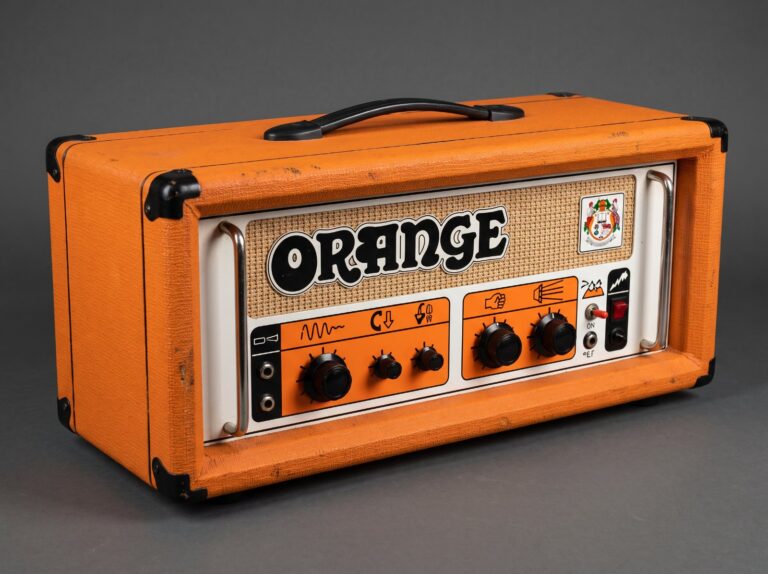
The Forgotten Giant: Orange AD140HTC and the 140-Watt British Monster That Powered the Post-Millennium Underground
Orange AD140HTC — 140-watt twin-channel EL34 head, 2001–2006. Specs, verified players, tone recipes and buying guide for this rare British monster.
There is a short list of amplifiers that feel genuinely dangerous the moment you plug in. Not dangerous in the marketing sense — not “aggressive” or “ferocious” or whatever adjective copywriters reach for when they mean “has a gain knob” — but dangerous in the physical sense: the sense that the room might not survive your soundcheck. The Orange AD140HTC belongs on that list. At 140 watts through four EL34s, running plate voltages that most manufacturers would call irresponsible, this twin-channel British head existed in production from 2001 to 2006 and then quietly disappeared. No fanfare, no farewell run, no reissue campaign. Just a five-year window during which it became the chosen instrument of a particular strain of post-millennial heavy music — and then the window closed.
Understanding the AD140HTC means understanding a specific moment in Orange’s history. By 1999, Cliff Cooper’s company had rebuilt itself from the wreckage of the 1970s bankruptcy through careful reissues and the extraordinary AD series, developed under Technical Director Ade Emsley. The AD series had already produced the hand-wired AD30 and its twin-channel HTC successor. What it had not yet produced was something for the player who found 30 watts insufficient. The AD140HTC was the answer to that problem, and it solved it in characteristically uncompromising fashion.
History: From Bass Amp to Guitar Monster
The AD140HTC’s origin is stranger than most amplifier histories. It does not begin with a guitarist. It begins with Cliff Cooper asking Ade Emsley to build a bass amp.
“The AD140 actually started as a Custom Shop bass amp, the AD140B,” Emsley recounts on Orange’s own website. “Cliff asked me to make a 120-Watt bass amp to fill the gap left by the Super Bass reissues. It ran as a Class AB amp using 6L6 valves, which gave it a cleaner, punchier sound.” The AD140B was a custom shop instrument — hand-wired, expensive, intended for professional bass players who needed volume and articulation. It was not, by any stretch, a guitar amp.
The transition happened in 2001. That year, Orange’s Custom Shop built a limited run of AD140 Lead heads — guitar-voiced, hand-wired, aimed at players who wanted “classic tone with modern muscle,” as Emsley puts it. Around seventy were made. These hand-built Lead heads are among the rarest Orange instruments of the modern era, occasionally surfacing on Reverb with documentation and commanding prices well above their original retail. The circuit departed from the AD140B’s 6L6/Class AB foundation: EL34 output tubes were selected for the guitar version, traded the American-flavored bottom-heavy punch of the 6L6 for British midrange authority.
Simultaneously with the hand-built Lead, Orange introduced the AD140HTC — a twin-channel version built on a high-quality PCB that became the production model. Where the hand-wired Lead was a Custom Shop artefact aimed at collectors and professionals with bespoke budgets, the HTC was the amp ordinary touring musicians could actually buy. It proved, in Emsley’s understated words, “incredibly popular.” Production ran through 2006, after which Orange moved its attention to the Rockerverb series and the AD140 was retired without replacement.
The timing placed the AD140HTC squarely in the first decade of the 2000s, when post-hardcore, progressive metal, and noise rock were flowering into forms that demanded exactly what this amp delivered: raw headroom, articulate overdrive, massive dynamic range, and enough volume to fill a festival stage without a DI box. The artists who found it were not the kind of players who showed up in major-label amplifier advertisements. They were the underground, the avant-garde, the relentlessly touring and instrumentally serious. And they used it accordingly.
Specifications
The voltage figures demand attention. Most four-EL34 amplifiers — including many benchmark British heads — run plate voltages in the 420–480Vdc range. The AD140HTC runs significantly higher: approximately 550Vdc on the plates, with screen voltage drawn from a separate secondary winding on the output transformer at approximately 380Vdc. This is not incidental. High plate voltage means more headroom before the power amp compresses, more dynamic range, and a sharper, more immediate response to pick attack. The separate screen supply prevents sag coupling between the two voltage rails — the sag characteristic that gives some lower-voltage amps their chewy, compressed feel under high-gain conditions. The AD140HTC is explicitly built to resist that sag. It wants to be pushed by the preamp, not compressed at the power stage.
This also explains the amp’s weight. The transformers required to deliver and stabilise those voltages are not small. At 55 lbs, the AD140HTC belongs to the category of amplifiers that punish inadequate roadcases and reward good backline crew. It is not a fly-date amplifier. It is a tour amp.
Circuit Character: Brighter Than the OR, Drier Than the Plexi
Players who come to the AD140HTC from the Orange OR120 often remark on how different it sounds despite carrying the same badge. The OR series amplifiers — from the original 1972 OR120 to the more recent reissues — are characterised by a warm, slightly dark voicing with a broad, open low-midrange. They sound British in the way a Stones or Zeppelin record sounds British: thick, slightly smoky, with rolled-off high frequencies. The basket-weave grille of original OR120s was acoustically functional precisely because it reduced high-end harshness; the amp was already voiced to lean dark.
The AD140HTC sounds different. Forum consensus, user reviews, and the amp’s own measured character place it as brighter and more forward in the upper midrange than the OR series. Multiple sources describe it as having characteristics reminiscent of a “hot-rodded Vox AC30” or a “JTM45 with more presence.” Both comparisons point to the same frequency territory: the 2–5kHz range where string attack lives, where pick articulation registers, where chords become intelligible. Where the OR series lets that range recede behind a warm low-midrange, the AD140HTC puts it front and centre.
This is not a subtle difference. It means the AD140HTC is fundamentally a different tool than its predecessor. The OR120 excels for players who want texture, warmth, and that slightly loose feel of a vintage British rock rig. The AD140HTC is better suited to players who need articulation at volume — who need a D chord to remain a D chord at 140 watts rather than becoming a low-mid smear. For post-hardcore rhythm playing, for complex progressive textures, for anything where chord definition under high gain is essential, the AD140HTC’s forward voicing is an asset. For players who find that same voicing harsh or brittle, the OR series remains the answer.
The AD30HTC shares the AD series naming and some design philosophy but is a fundamentally different circuit. The AD30 uses EL84 output tubes running in Class A — a lower-voltage, lower-power configuration that produces a specific compressed, harmonically rich character associated with Vox-derived tones. The AD140HTC runs EL34s in Class AB at much higher voltage. Same family, completely different power section behaviour. The AD30 saturates gently from the output stage; the AD140HTC’s output stage stays clean up to extreme drive levels, putting most of the tonal work on the preamp. This is not a value judgment — it is an architectural distinction that determines which amp belongs in which context.
Famous Players: Who Actually Used It
Five artists are commonly listed for the AD140HTC: Jimmy Page, Jim Root, Brent Hinds, Omar Rodríguez-López, and Matt Pike. This roster requires careful correction. As with the AD30HTC article, four of the five names represent Orange-the-brand associations rather than AD140HTC-the-model connections. One name is correct. That one happens to be the most interesting.
Omar Rodríguez-López (At the Drive-In / The Mars Volta) is the central verified AD140HTC player, and his documentation is thorough. Equipboard’s sourced entry — cross-referenced against photo documentation and consistent reporting from the Mars Volta touring years — establishes that Rodríguez-López used the AD140HTC as his primary live amplifier from the band’s early 2000s peak through 2011. By 2007, he was running four AD140HTC heads on stage simultaneously. The full wall of white-painted Orange heads and matching cabs that characterised the Mars Volta’s live rig in that period — an immediately recognisable visual signature — was an AD140HTC wall. By 2009 he had reduced to a single head, and by 2011 had transitioned to a smaller combo format. In the studio, the amp was central to his primary overdrive and rhythm guitar sounds. This is not a “used Orange amps” association — it is a documented, extended, primary-instrument relationship with this specific model. Linked in this series via our Omar Rodríguez-López gear guide. Note: the OR120 article in this series documented his later use of AD140 heads and Rockerverbs as a transition from the Mars Volta peak period; the AD140HTC was the foundation that preceded and overlapped those later choices.
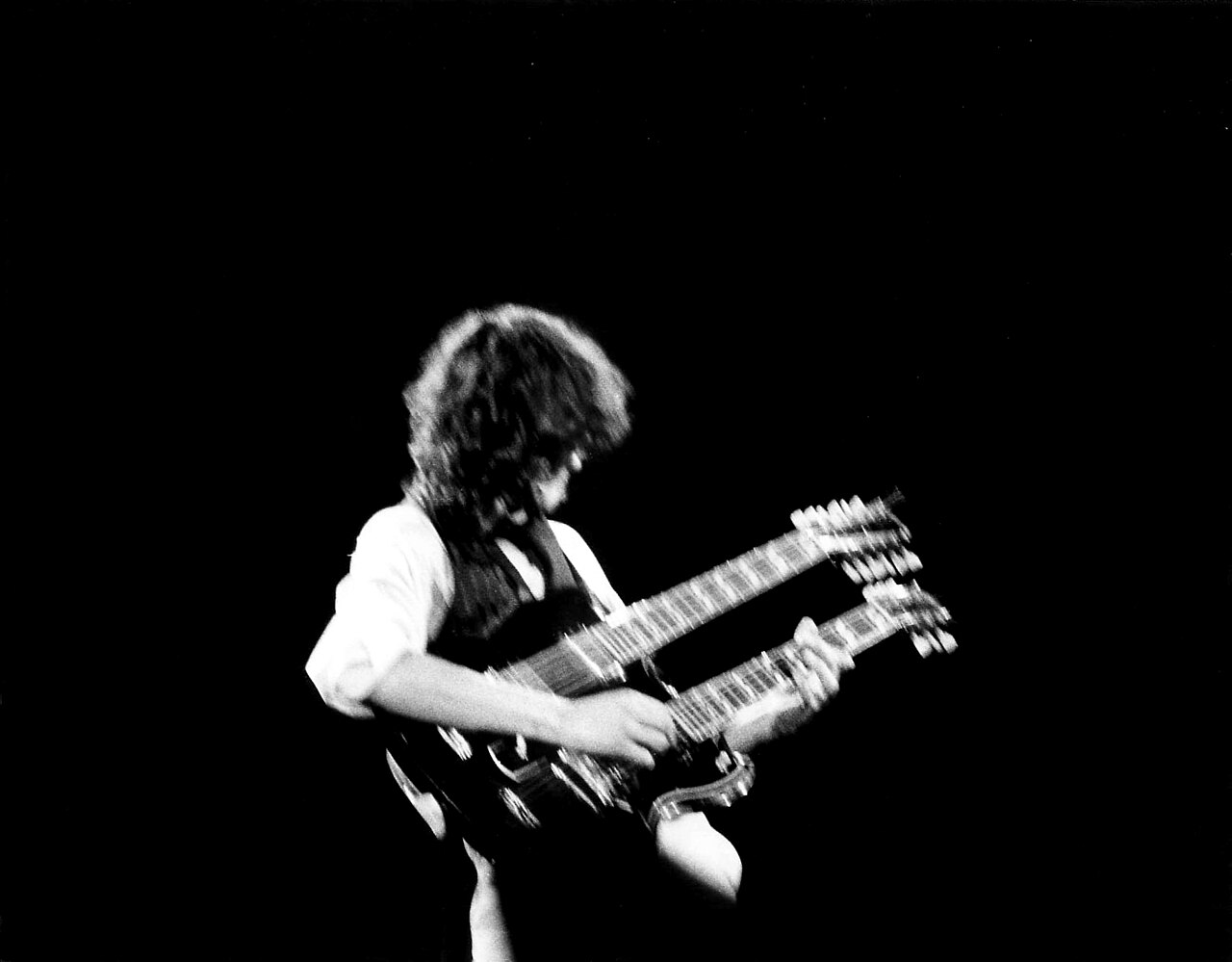
.Page’s documented Orange history is detailed and specific: a custom 200-watt Orange-Matamp OR200 was built for him in 1971, first used live on August 7, 1971 in Montreux, Switzerland, and visible on stage with Led Zeppelin through the 1973 US tour. At the 2007 O2 Arena Led Zeppelin reunion — “Celebration Day” — two AD30-family heads were documented on stage with him. No primary source — manufacturer page, rig rundown, interview, or confirmed photograph — places Page on an AD140HTC. His Orange relationship predates the AD140HTC by three decades and involves different models entirely. See the Jimmy Page gear guide for his full documented rig.
Jim Root (Slipknot) is a genuine Orange endorser, but his signature instruments with the brand are the Rockerverb 100 head and the #4 Jim Root Terror signature lunchbox — both documented in detail on Orange’s own artist page and in multiple rig rundowns. No primary source places him on an AD140HTC. The AD140HTC predates Root’s rise to major-label prominence, and his documented gear list does not include it. See the Rockerverb 50 MKIII article for context on the series Root actually uses.
Brent Hinds (Mastodon) has a genuine Orange signature amplifier — the Brent Hinds Terror, released in 2018 — and his earlier documented Orange use centred on the Thunderverb series. A signature amp is a well-documented primary-source connection. An AD140HTC connection is not documented anywhere in Orange’s own material, Hinds’ rig rundowns, or primary gear sources. The claim appears to be the same brand-level conflation encountered in the AD30HTC article. See the Brent Hinds gear guide for his verified Orange instruments.
Matt Pike (High on Fire / Sleep) is an Orange endorser whose documented amp history — his own words in interviews, including a Desertfest interview quoted on orangeamps.com — involves the Dual Dark, the Thunderverb, and the OR50/OR80 formats. His 2010 Premier Guitar rig rundown lists Marshall JCM800 Kerry King signature and Soldano SLO-100, which predates his Orange endorsement. No primary source places Pike on an AD140HTC. The amp’s production window (2001–2006) partially overlaps with Pike’s early High on Fire period but his documented gear list for that era does not include it.
Prince deserves a separate note. Equipboard lists Prince among AD140HTC users, sourced to Proguitarshop — a gear documentation resource known for detailed artist equipment cataloguing. Prince’s gear roster was vast and eclectic; he was documented on an extraordinary range of amplifiers and used different equipment for recording versus performance versus rehearsal contexts. The Proguitarshop source for the AD140 connection cannot be independently confirmed against a primary-source interview or manufacturer endorsement page, but Proguitarshop’s documentation standards are generally regarded as photo-based. This is stated honestly: the connection is Equipboard-reported with a reputable secondary source, not confirmed to the primary-source standard of the Rodríguez-López documentation. Linked via our Prince gear guide.
Chino Moreno (Deftones) is listed on Equipboard among AD140HTC users, and there is a YouTube video documenting the Deftones’ relationship with Orange amplifiers. Moreno’s documented Orange use also includes the Dual Terror and the Thunderverb 50, making the AD140HTC a plausible early-era instrument in a broader Orange relationship. The connection is Equipboard-listed and consistent with the band’s documented Orange history, but lacks the depth of documentation surrounding the Rodríguez-López use.
Wata (Boris) is also Equipboard-listed as an AD140HTC user. Boris’s guitar player is documented across multiple gear sources as an Orange user, and the AD140HTC fits the sonic territory of the band’s more amplifier-saturated material.
The pattern is worth naming explicitly: the artists who actually used the AD140HTC were predominantly figures in the post-hardcore, progressive metal, noise rock, and experimental underground — not the classic rock establishment that Orange marketing typically invokes. The amp’s articulate overdrive, its extraordinary headroom, and its willingness to stay clean at stage volumes that would have destroyed lesser circuits made it exactly right for players doing complicated things at high volumes. That its most documented champion is Omar Rodríguez-López — one of the most technically demanding and idiosyncratic guitarists in post-millennial rock — is entirely appropriate.
Tone Recipes and Settings
Tone Recipe 1: Mars Volta Rhythm Monster
Channel B. G: 7, V: 6, B: 6, M: 7, T: 5. This approximates the dense, forward-mids overdrive that characterised Rodríguez-López’s rhythm work on early Mars Volta records. The middle control is the critical variable — the AD140HTC’s forward upper midrange means the Middle knob has real authority; boost it and the amp gets aggressive and cutting, pull it back and it smooths. A TS-style overdrive in front sharpens the attack further. 4×12 cabinet with Celestion V30s for full effect.
Tone Recipe 2: Big Clean with Headroom to Spare
Channel A. G: 3, V: 7, B: 5, M: 5, T: 6. At 140 watts with this gain setting, Channel A will stay clean at genuinely dangerous stage volumes. This is the working professional clean platform: articulate, chimey, not quite Fender-warm but not cold either. Compressor pedal optional; the amp’s own dynamic response is already interesting. At these settings, pick attack comes through with unusual clarity — the high plate voltage keeps the power section out of compression even when the channel is pushed hard.
Tone Recipe 3: Post-Hardcore Lead
Channel B. G: 8, V: 5, B: 4, M: 6, T: 4. Reduce the Treble relative to Recipe 1 to manage the amp’s forward upper-mid character under high gain — at Gain 8, the treble can become aggressive with a bright guitar. The result is a saturated lead voice with enough low-mid weight for sustain and enough definition for single-note runs. This is the territory where the AD140HTC distinguishes itself from a Mesa Dual Rectifier: where the Recto tends toward a scooped, thick midrange saturation, the AD140HTC keeps the note attack present.
Tone Recipe 4: Noise Rock Excursion
Channel B into Channel B (both channels active if your footswitch configuration allows, or channel B throughout). G: 9, V: 4, B: 7, M: 5, T: 3. Maximum gain with treble pulled back to prevent shrieking, bass boosted for physicality. A significant fuzz pedal in front elevates this to genuine noise rock territory. Reference: Boris’s wall-of-sound approach, where the amp’s high voltage means the power section never collapses under the load even when pushing extreme saturation.
Tone Recipe 5: Studio Tracking, Medium Overdrive
Channel A at G: 5, V: 5, B: 5, M: 6, T: 5 into a 2×12 with Celestion Greenbacks, miked with an SM57 at the dust cap and a ribbon at distance. The AD140HTC takes well to close-miking with an offset ribbon — the amp’s natural brightness benefits from the ribbon’s high-frequency rolloff, while the SM57 captures the attack. Middle at 6 gives the mix engineer something to work with rather than requiring corrective EQ. The amp’s lack of a built-in effects loop is irrelevant for this application; a hardware FX loop between the amp and the cabinet return (speaker level) is the appropriate solution for time-based effects in a studio context.
All settings assume the standard five-control layout per channel: Gain (G), Volume (V), Bass (B), Middle (M), Treble (T), scaled 0–10.
Comparisons
The natural comparison is the Orange OR120. Both are 100+ watt EL34 British heads, both vintage Orange, both capable of enormous volume. The key difference is the one already described: the OR120 is warmer and darker, the AD140HTC brighter and more forward in the upper midrange. At the same gain settings, the OR120 gives you a smoother, thicker saturation; the AD140HTC gives you more pick definition. Which is better depends entirely on what you’re playing. For classic rock, blues rock, and vintage-informed heavy rock, the OR120’s character is more appropriate. For post-hardcore, progressive metal, and anything requiring articulate chord voicing under high gain, the AD140HTC wins.
Against the Orange Rockerverb 50 MKIII — the amp that effectively succeeded the AD series in Orange’s touring-professional lineup — the differences are more about modernity than voicing. The Rockerverb has an effects loop, switchable wattage, and a more refined gain structure. The AD140HTC is rawer and more direct. Many players who started on Rockerverbs and tried an AD140HTC describe the older amp as more “alive” or “responsive”; whether that is a feature or a liability depends on how much control you want versus how much feel.
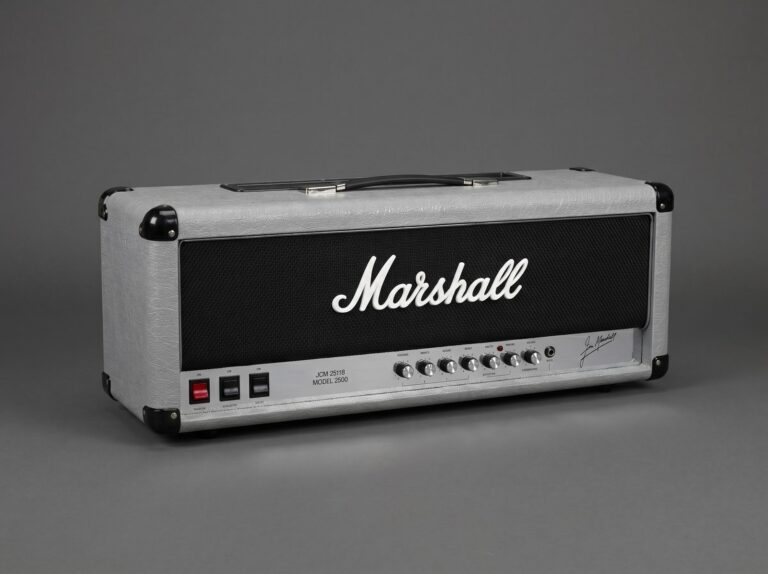
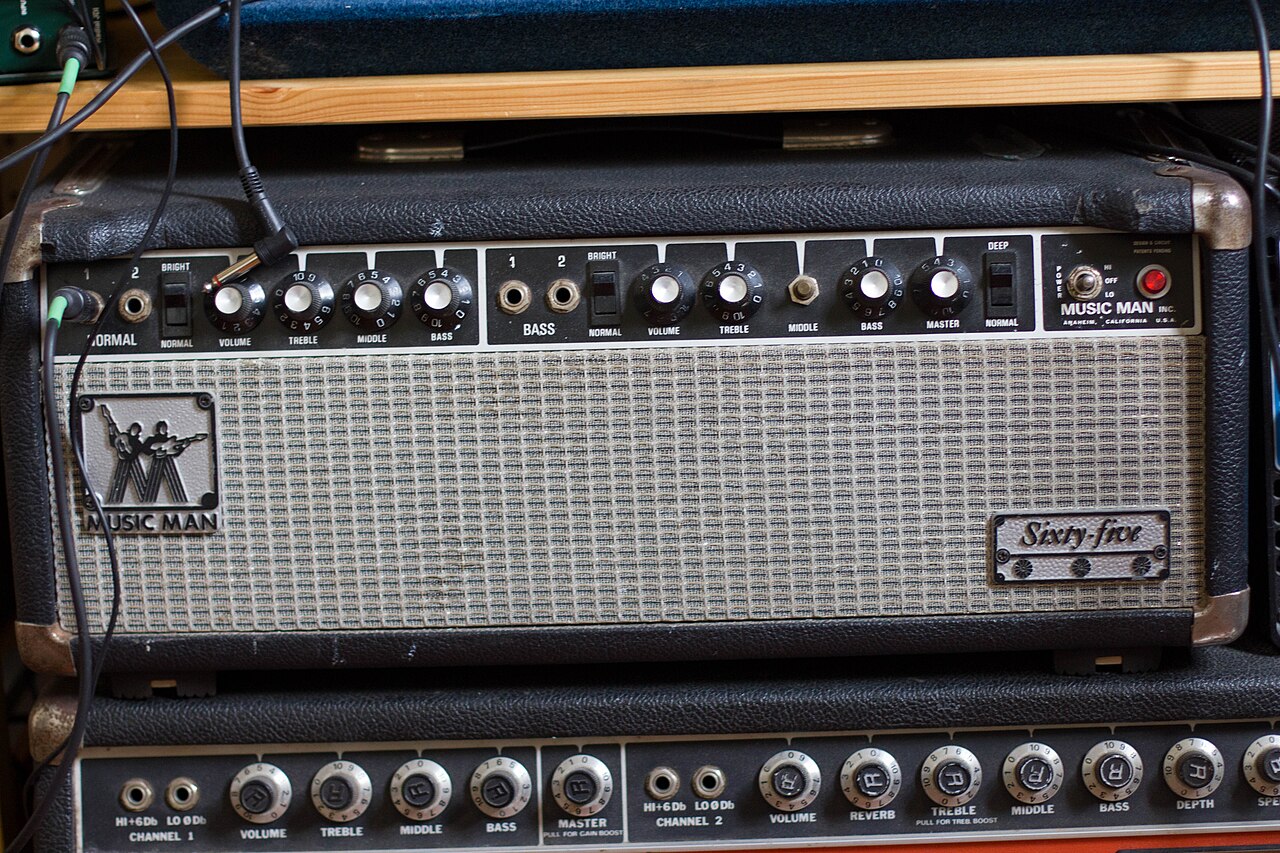
The Marshall JCM800 2203 is the closest non-Orange comparison in terms of power, voicing territory, and era. Both run EL34 tubes, both have strong upper-midrange presence, and both reward high-gain preamp driving without flabby low-end. The JCM800 is slightly more scooped through the lower mids; the AD140HTC is more forward and punchy. Used examples of both occupy similar price territory. If you can try them back to back, the AD140HTC’s higher plate voltage will make itself known in the low-end tightness and dynamic attack.
The Hiwatt DR103 Custom 100 is perhaps the most instructive comparison for understanding what the AD140HTC’s high plate voltage actually does. Hiwatts also run elevated plate voltages and are known for an almost alarming degree of headroom and dynamic response. The two amps occupy similar territory in terms of power-stage transparency: both rely heavily on preamp voicing rather than power-stage saturation for their overdrive character. The Hiwatt is cleaner and more linear; the AD140HTC has more preamp gain available. But the underlying philosophy — high voltage, transparent power stage, preamp-led overdrive — is shared.
The Marshall 1959 Super Lead Plexi provides historical context. The Plexi’s EL34 output stage runs lower plate voltages than the AD140HTC and is known for its power-stage compression and sag when driven hard. Many of the most celebrated Plexi tones come from exactly that sag: the way the output stage softens and warms as it’s pushed. The AD140HTC explicitly does not do this. Its high voltage keeps the power stage firm even at extreme volumes. Players who love cranked Plexi tones may find the AD140HTC feels oddly stiff in comparison; players who find cranked Plexis too compressed or indistinct will find the AD140HTC a revelation.
Buying Guide
The AD140HTC is a genuinely scarce amplifier. Only five years of production (2001–2006), no reissue, and a profile that kept it largely in the professional-touring underground rather than the general market means used inventory is thin. When units surface — primarily on Reverb, occasionally on eBay — pricing as of recent years has sat in the $1,300–$1,800 USD range depending on condition, included footswitch, and provenance. This is roughly in line with a good JCM800 2203, which is the appropriate comparison bracket.
Distinguishing the hand-built AD140 Lead (circa 70 units, 2001) from the PCB AD140HTC production amp is important. The hand-built Lead is a Custom Shop instrument with distinct collector value — CME (Chicago Music Exchange) has documented at least one Emsley-custom version separately. If a seller is offering an “AD140” without the “HTC” designation, establish exactly which version it is before proceeding. A hand-built Lead is worth more; an HTC with a misremembered designation is worth the standard HTC price.
Condition checks specific to this amp:
- EL34 tube condition is the single most important service item. Four EL34s running at 550Vdc plate voltage are under stress. A dead or failing output tube is not just a tone issue — it can damage the output transformer if the impedance balance is disrupted significantly. Request evidence of recent retube or price accordingly.
- Output transformer health. The OT is expensive to replace and must handle sustained high-voltage high-current operation. Signs of transformer failure include hum that doesn’t track 60Hz/50Hz mains (which is normal), audible distortion on clean settings at moderate volumes, or burning smell under load. These are deal-breakers.
- PCB condition. As a PCB-constructed amp, the AD140HTC is susceptible to the standard PCB aging issues: cold solder joints, capacitor drift, resistor drift. A professional tech inspection before purchase is strongly recommended. Ask specifically about the reservoir and coupling capacitors — these age with voltage stress and may need replacement on a 20-year-old unit.
- Footswitch. The original Orange footswitch for channel switching should be included; aftermarket footswitches with the correct connection work, but verify the channel-switching circuit responds correctly before assuming the issue is the cable rather than the relay.
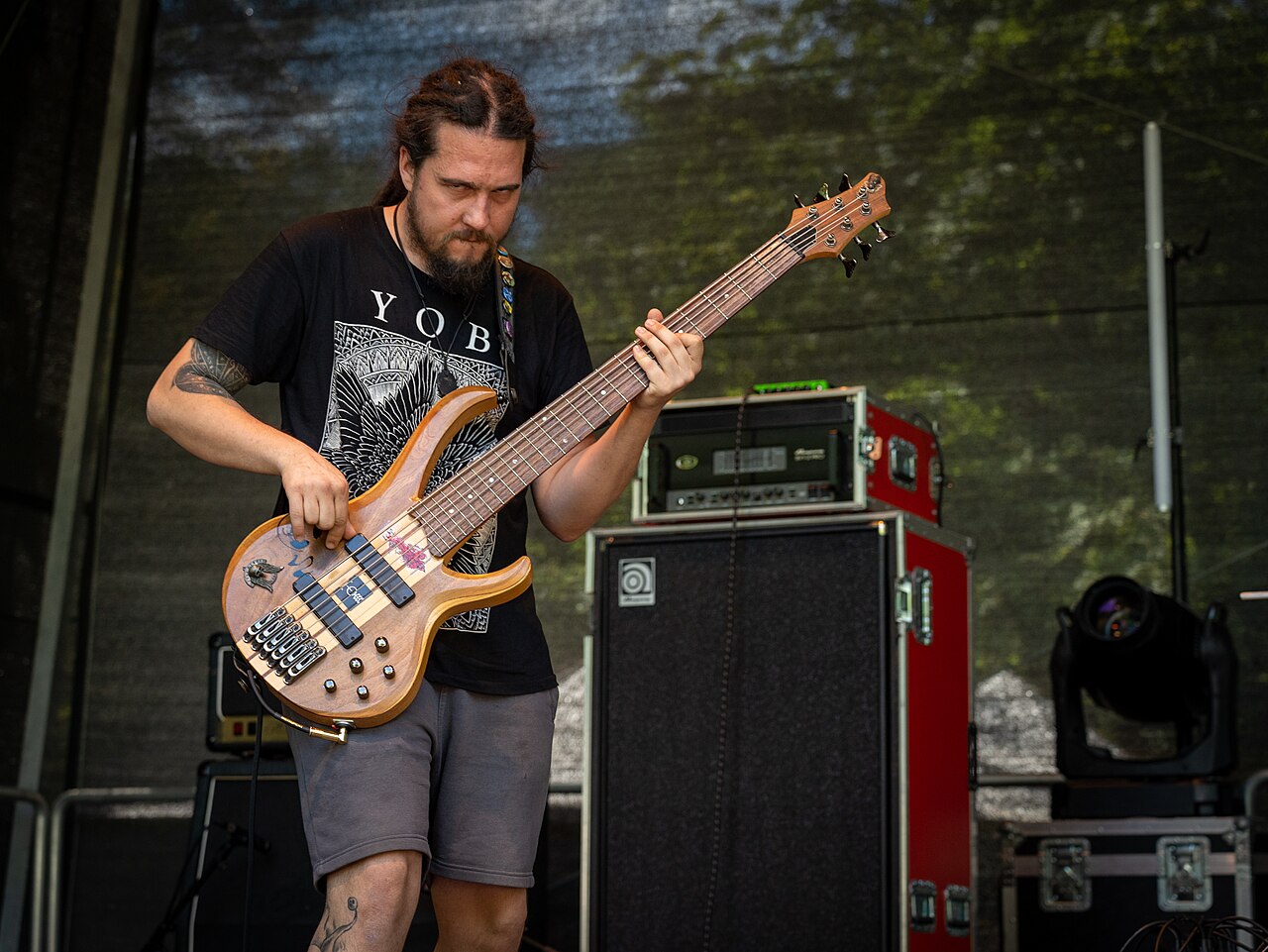
There is no effects loop, no reverb, and no master volume. Know this going in. The AD140HTC’s volume architecture means that to access its best tones at manageable stage volumes you will need either an efficient speaker cabinet (high sensitivity rating), an external load box/attenuator rated for 140 watts minimum (the Torpedo Captor X at 100W handling is frequently discussed in forums as a limit-case solution; verify with the manufacturer), or a room large enough that 140 watts at working volume is appropriate. This amp is not a bedroom amplifier. It never pretended to be.
Ownership Notes
The most important practical point for AD140HTC owners is impedance discipline. At 140 watts, an impedance mismatch is a more serious event than on a 50-watt head. The output transformer will tolerate some mismatch — a 16Ω cab on an 8Ω tap is usually survivable — but operating severely mismatched (4Ω cab on 16Ω tap, or open-circuit speaker load) risks transformer failure, which is a several-hundred-dollar repair and potentially terminal on an amp whose replacement parts are no longer in production. Label your speaker cables. Label your cabinet impedance taps. Match them.
Tube bias: the EL34 complement will need periodic checking and readjustment. With high plate voltage, the bias point is critical — bias too cold and the amp sounds thin and harsh; bias too hot and you shorten tube life significantly and risk grid current distortion. This is not an owner-adjustable parameter without appropriate equipment. A tech with a bias probe and knowledge of the AD140HTC’s bias specification is the correct person for this job. Budget for this as regular maintenance, not as a fault condition.
Heat management matters. Four EL34s at high plate voltage generate substantial heat. The amp needs at least several inches of clearance above and behind in a rack or road case. A heavily loaded amp run in a poorly ventilated case will fail prematurely — either tube failure, which is recoverable, or PCB component failure, which may not be, depending on which component fails. Transport the amp cooled down; power it up and let it warm through before driving it hard.
Speaker cabinet matching: the AD140HTC’s forward, bright voicing responds well to darker-voiced cabinets. A 4×12 loaded with Celestion G12H-30s or Vintage 30s smooths the upper-mid emphasis and produces a fuller, less aggressive sound. Bright cabinets — anything loaded with G12T-75s or equivalent — can push the amp’s high frequency forward into harshness territory under high gain. This is not a rule, but it is a general pattern. The Mars Volta’s documented AD140HTC rig used large Orange cabinets, which tend toward a balanced, moderately bright voicing; the combination produced the forward, articulate saturation that defined their live sound.
FAQ
What does “HTC” stand for in AD140HTC?
The HTC designation has not been definitively explained in any official Orange documentation in the public domain. The most commonly cited interpretation is “High Treble Cut” — referring to a tone-shaping circuit element in the preamp — though this is not confirmed by Orange’s own published materials. What is clear is that “HTC” distinguishes the PCB twin-channel production model from the single-channel and hand-built variants of the AD140 produced in the same period.
Is the AD140HTC Class A or Class AB?
Class AB. This is a significant distinction from the AD30HTC, which runs EL84s in Class A. At 140 watts, Class A operation is not practical — the heat and power supply demands would be extraordinary. The AD140HTC runs four EL34s in a conventional Class AB push-pull configuration but at unusually high plate voltages that give it an unusually firm, high-headroom character.
Does the AD140HTC have an effects loop?
No. Like the AD30HTC and the OR series amps, the AD140HTC has no built-in effects loop and no built-in reverb. Time-based effects (delay, reverb, modulation) must go either in front of the amp or through an external speaker-level loop using a device like an effects loop switcher. Many players who use this amp run delay and modulation in front without complaint — the preamp’s response to light-to-moderate gain effects pedals is generally described as cooperative.
How does the AD140HTC differ from the OR120?
Both are high-wattage EL34 Orange heads, but their voicing is fundamentally different. The OR120 is warmer, darker, and slightly looser in the low end — a 1970s British rock machine. The AD140HTC is brighter, more forward in the upper midrange, and tighter in the low end due to its higher plate voltage and the associated reduction in power-stage sag. Think of the OR120 as the amp that made a Zeppelin record sound like it does; think of the AD140HTC as the amp that makes a 2005 Mars Volta record sound like it does.
Can the AD140HTC be used at lower volumes?
With effort. At bedroom volumes the amp will not produce its characteristic tone — the preamp will be below its optimal operating point and the output section will be largely idle. At rehearsal room volumes with a 4×12, it starts to come alive. At genuine stage volumes with an efficient cabinet, it is extraordinary. If you need the AD140HTC’s tonal character at lower volumes, a quality load box rated for 140 watts is the correct solution — units from Two Notes (the Torpedo range), Rivera, or Universal Audio can attenuate the output and allow speaker simulation at any volume.
What speakers should I pair with an AD140HTC?
The amp’s bright, forward voicing pairs best with cabinets that lean neutral to slightly warm. Celestion Vintage 30s (rated 60W each, so a 4×12 handles 240W — well above the amp’s output) are the most common recommendation and were used in the Mars Volta’s documented rig. G12H-30s offer a darker, more vintage alternative. Avoid speaker combinations that emphasise high frequencies aggressively — G12T-75 cabinets, for example — unless you are running the amp at moderate gain settings where treble emphasis is an asset rather than a liability.
Why was the AD140HTC discontinued?
Orange has not published a formal explanation. The most likely factors are: the rising popularity of the Rockerverb series (which offered greater flexibility, an effects loop, and switchable wattage), the relatively specialised market for a 140-watt no-loop head, and the general industry shift toward lower-wattage and attenuator-compatible amplifiers in the mid-2000s. The hand-built AD140 Lead edition had already demonstrated that the market for a full-sized, maximum-wattage head was limited. The HTC sold well during its run — Ade Emsley calls it “incredibly popular” — but “incredibly popular” for a 140-watt professional head is a different number than “incredibly popular” for a 50-watt or 100-watt head.
Is the AD140HTC worth the current asking price?
For the right player, yes. If you need 140 watts of British EL34 headroom with a forward, articulate voicing, an absence of effects loops (which concentrates the signal path and removes components that can colour tone), and genuine scarcity value in a used-market amplifier, the AD140HTC is difficult to replicate at any price. The comparable amps — a Hiwatt DR103, a vintage Marshall Super Lead, a rare Matamp — are all similarly priced or considerably more expensive. As a purely practical working amplifier for large stages and studio work, it earns its current price. As a casual practice or low-volume instrument, it does not — and its designers never intended it to be.
Image credits
- A bass player on stage with an amp stack: Stéphane Gallay from Laconnex, Switzerland, Wikimedia Commons, CC BY 2.0.
- A tube amp head: David Hilowitz from San Antonio, USA, Wikimedia Commons, CC BY 2.0.
- Jimmy Page: Andrew Smith, Wikimedia Commons, CC BY-SA 4.0.
Latest News
Related
On This Day
Tuesday 10 November
From this week: