West Texas Thunder in a 1×12: Why the Mesa/Boogie Lone Star Special Became a Sleeper Classic
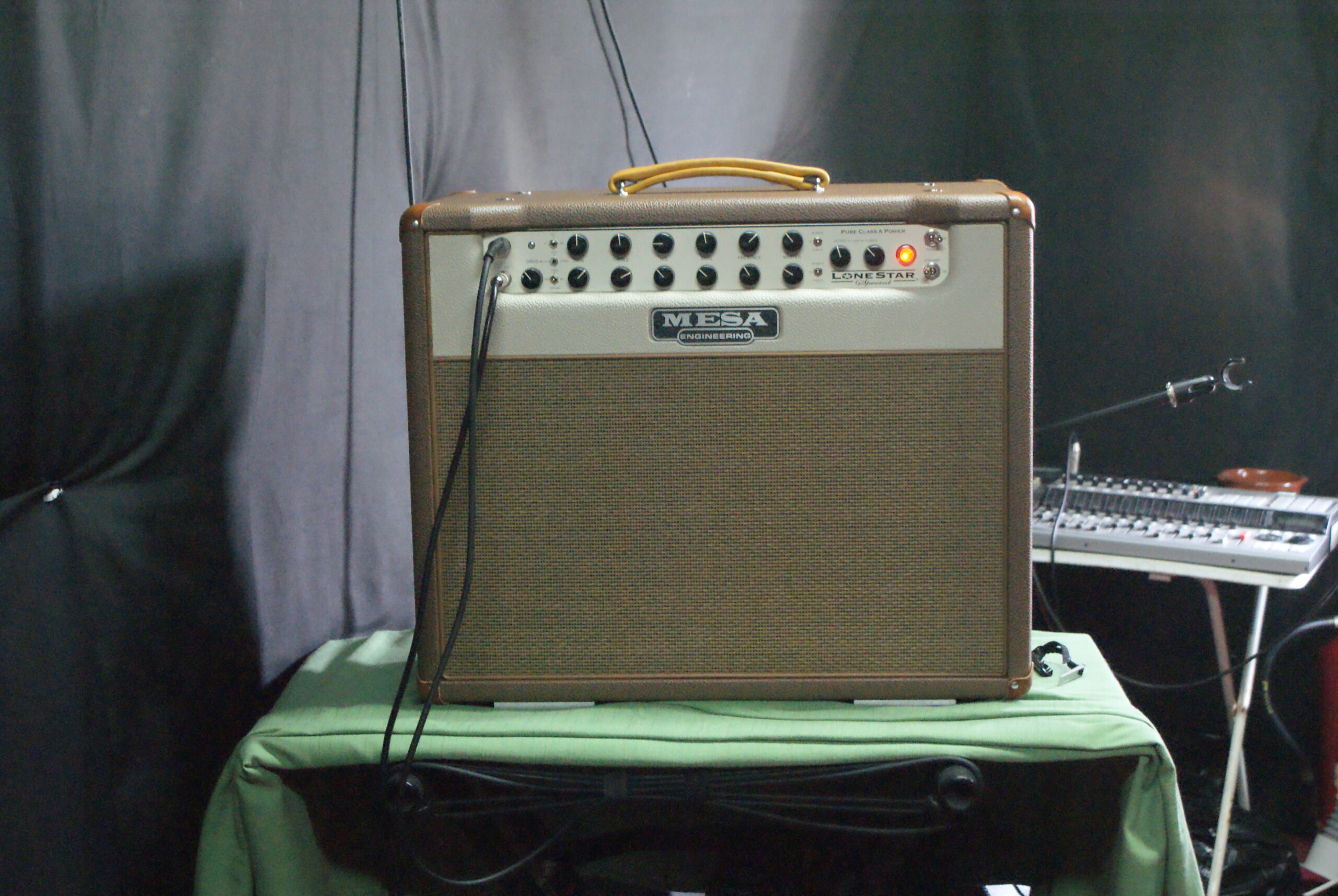
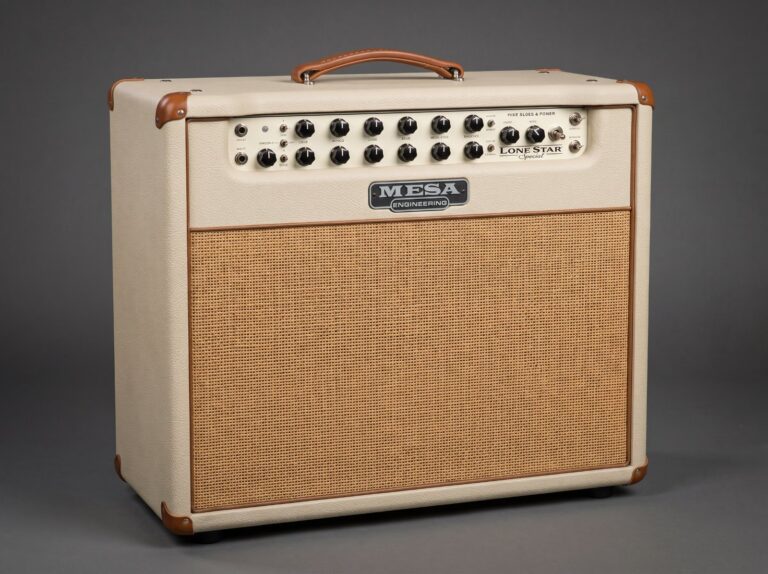
Mesa Boogie: a Lone Star Special combo. Photo: Elías Gómez, 8 May 2009. CC BY-SA 2.0.
Mesa/Boogie Lone Star Special delivers pure Class A EL84 tone with 5/15/30W flexibility. Full specs, verified players, tone recipes and buying guide inside.
Mesa/Boogie made its reputation on big, authoritative amplifiers — the cascading gain of the Mark series, the silicon-and-steel wallop of the Rectifier. By the early 2000s, a different kind of player was asking a different kind of question: could Randall Smith build something with that same hand-crafted Petaluma pedigree, but one that breathed? Something elastic, touch-sensitive, and genuinely useful at living-room volumes without sounding like a tamed animal?
The answer was the Lone Star series, and its most character-rich sibling was the Lone Star Special. Where the standard Lone Star leaned on the warmth and headroom of 6L6 power tubes, the Special swapped the entire output stage for four EL84s running Pure Class A — the same nine-pin bottles that define the snap and sparkle of classic British combos. The result was something nobody expected from a company known for wall-of-Mesa gain rigs: one of the most versatile, touch-responsive, studio-friendly amplifiers Randall Smith ever signed off on.
This is not a review. It is a complete guide — specs, history, honest player documentation, tone recipes, and a buying guide for a genuinely excellent used-market find — for the Mesa/Boogie Lone Star Special.
The Lone Star Series: Texas by Way of Petaluma
The Lone Star name arrived in the mid-2000s, representing Mesa’s first serious swing at the boutique-clean segment. The brief was explicit: build a two-channel amp that could do everything the boutique market was chasing — stunning cleans, dynamic breakup, touch-sensitive gain — without compromising on the hand-crafted build quality that Petaluma had delivered since the first Mark I in 1969. Mesa positioned the series as the Cadillac of its lineup, describing it with characteristically Texan hyperbole as “a sonic flood of Texas-sized proportions.”
The Lone Star Classic launched first, running four 6L6 power tubes with 10/50/100W per-channel switching. It earned serious praise — platinum awards and editor’s picks across the trade press. But some players found the 6L6 headroom and mid-range mass overwhelming for smaller venues and studio work. The EL84 power stage had been sitting in Randall Smith’s back pocket as an idea for years. In the Lone Star Special he finally brought it to market, pairing the same acclaimed preamp with a completely reimagined Class A output section capable of running at 5, 15, or 30 watts from a single chassis.
MusicRadar called the result “one of the best Boogies ever” in their November 2007 review, and “one of the ultimate guitar amps at any price.” Vintage Guitar’s Bob Tekippe described it as “an exceptionally sweet-sounding amp that covers all frequency ranges… ‘exceptional’ pretty much defines this amp in an all-around sense.” Guitar Player’s Art Thompson noted it pushed “the envelope of forward-thinking design.” That is three independent trade reviews landing in the same territory: genuinely outstanding, full stop.
The EL84 Difference: What “Special” Actually Means
The word “Special” has a complicated history in musical instrument naming. On guitars it usually means stripped-down or budget. On the Lone Star it means something richer and more deliberate — Mesa used it to signal a specific power-stage character that is genuinely different from the 6L6 Lone Star, not simply a lower-powered derivative.
EL84 power tubes run in a fundamentally different mode from 6L6s. They are lower-output, more easily driven into overload, and they generate a characteristic second-harmonic softness that 6L6 designs tend to suppress. At full power (30W, push-pull, all four EL84s active), the Lone Star Special has enough output to hold its own unmic’d against a medium-loud drum kit, but the tonal character is already doing something the big Lone Star cannot: the mid-range is compressed rather than expansive, the bass is balanced rather than fat, and the treble has a chiming, airy quality that works particularly well with single-coil guitars.
At 15W — one pair of EL84s, still push-pull, still Class A — the attack softens further and the tonal window moves toward what MusicRadar called “stinging blues leads.” At 5W, the Special does something most multi-watt amps never manage: it switches to single-ended operation, changing the circuit topology rather than simply reducing voltage. In single-ended mode, even-order harmonics are preserved instead of being cancelled by the push-pull configuration. The result, as Mesa’s product copy accurately describes it, is “a subtle coating of warm distortion (an octave above the note you’re playing) [that] glazes the entire spectrum with a purring, golden halo.” MusicRadar’s reviewer found the 5W single-ended voice “one of the sweetest and most gratifying sounds we’ve heard in a very long time” and reported using it constantly for solo work.
The automatic Rectifier Tracking system manages the rectifier circuit without any player input: the 30W setting uses silicon diodes (tight, immediate response), while the 15W and 5W settings automatically engage the 5Y3 tube rectifier (softer attack, classic sag). The tonal shift between power settings is therefore not just about output level — it is about attack, compression, and rectifier response all changing simultaneously. Few amps at any price point deliver that level of tonal variation from a single control.
Full Specifications
Who Actually Played It: Verified Artists
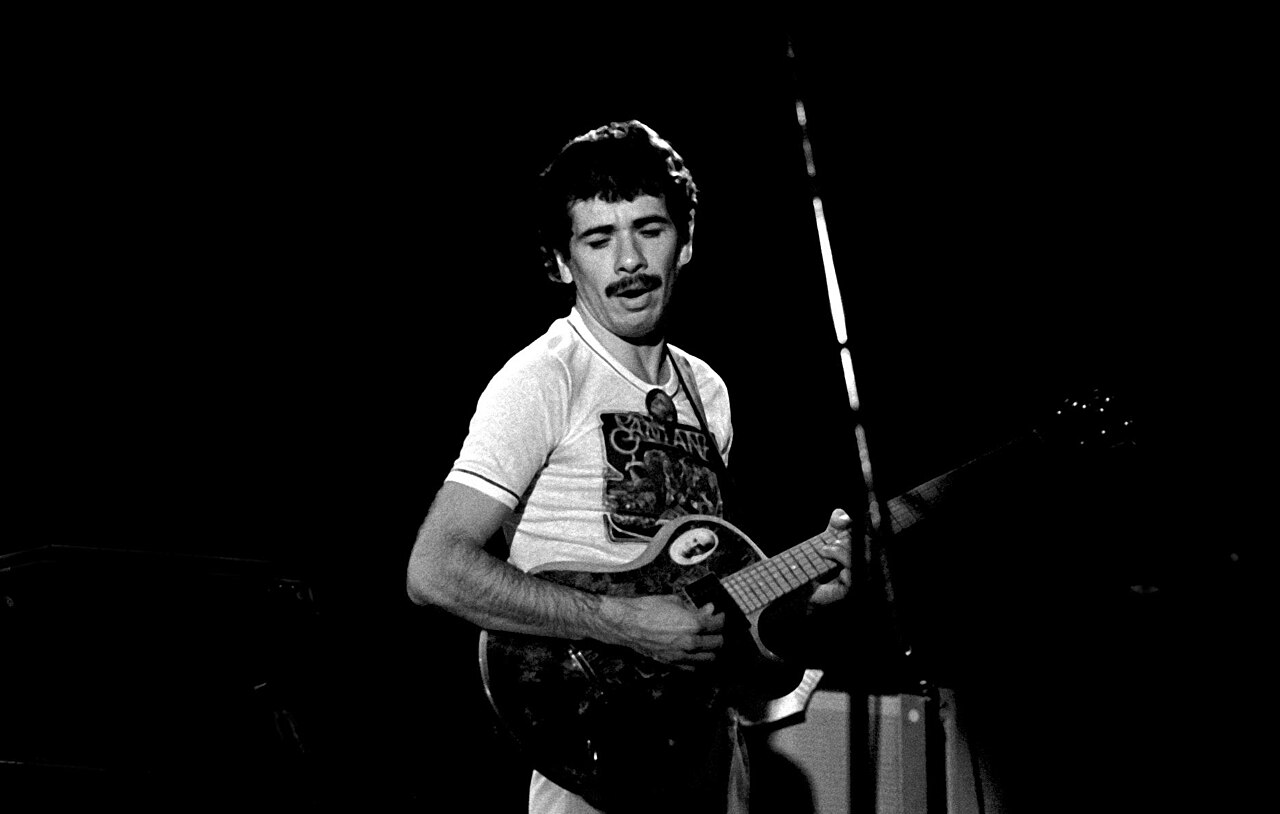
The spreadsheet entry for the Lone Star Special lists Carlos Santana, John Petrucci, James Hetfield, and Larry Carlton. This is the same recycled Mesa marketing roster that has been debunked in eight consecutive articles in this series. The summary is brief: Santana’s amp is the Mark I — documented on camera by his guitar tech. Petrucci uses the JP-2C and the Triaxis (see Rank 475 and Rank 476). Hetfield and Metallica use the Triaxis and the Triple Rectifier (Rank 478). Carlton made his name on the Mark I and later Dumble amplifiers. None is documented on a Lone Star Special. The pattern is now well-established: Mesa’s pan-brand artist roster gets copy-pasted across product pages without regard for which specific models those players actually touched.
The Lone Star Special has real, documented players — they are just not the ones on that list.
Andy Timmons is the most thoroughly verified. Mesa’s own Amplitudes blog published an April 2015 entry titled “Andy Timmons Lone Star Special Protocol III ‘Amrita’ Playthrough” — Mesa’s own words, on Mesa’s own platform. The post documents Andy recording a track from the Simon Phillips Protocol III album directly through a Lone Star Special Head and matching 2×12 Lone Star extension cabinet loaded with Celestion Vintage 30s, mic’d with a Shure SM57, a Shure KSM 313 ribbon, and the CabClone in Open Back Mode (mixed 40% SM57 / 35% ribbon / 25% CabClone). His guitar was an Ibanez AT-10 with DiMarzio AT1 bridge and Cruiser neck/middle pickups; he also used a JHS prototype AT drive pedal for the high-gain passages. Mesa published his clean and lead settings as reference material alongside the article. The Lone Star Special product page itself lists a “Tone Sessions: Andy Timmons & Protocol III” video. This is a textbook primary-source confirmation: the manufacturer published it, the artist played it in their facility, and the settings are documented.
Timmons’s main touring amp is the regular Lone Star (the 6L6 version, usually twin heads, one fitted with EL34s for tonal variety). The Lone Star Special in the Amplitudes session was not a one-off introduction — Mesa maintains a dedicated playlist of Timmons Lone Star content on their YouTube channel — but the Studio Special specifically is where the recording use is most precisely confirmed. For recording and demonstration work at Mesa’s facility, it was the Lone Star Special. That distinction matters and the article states it plainly.
Nick McCabe (The Verve) documented his experience with the Lone Star Special on Facebook in terms that go beyond casual mention: he described it as delivering the best recorded tone he had ever achieved with a DPA omni microphone placed on his guitar. A musician of McCabe’s standing — responsible for the layered shimmer of “Bitter Sweet Symphony,” “The Drugs Don’t Work,” and “Sonnet” — using those words about a specific piece of equipment is worth noting. McCabe is not a Mesa endorser and has no commercial relationship with the brand; this was an unprompted personal recommendation. The source is the artist’s own public statement.
Dave Wallace, touring guitarist for country star Jake Owen, is documented directly on Mesa’s own Lone Star Special product page with a photo and the caption: “Dave Wallace, guitarist for Country Music star Jake Owen, stands behind (or on top of) his MESA Lone Star Special amps!” Mesa placed this photograph on the Lone Star Special product page specifically, making it a primary-source confirmation for the amp’s use in a professional touring context — which matters for a guitar whose sweet spot is medium-wattage club and studio work rather than arena-scale stacks.
Jake Snider is documented on Mesa’s own artist pages as a Lone Star Special 1×12 Combo user, per independent Equipboard research cross-referencing the manufacturer’s own pages.
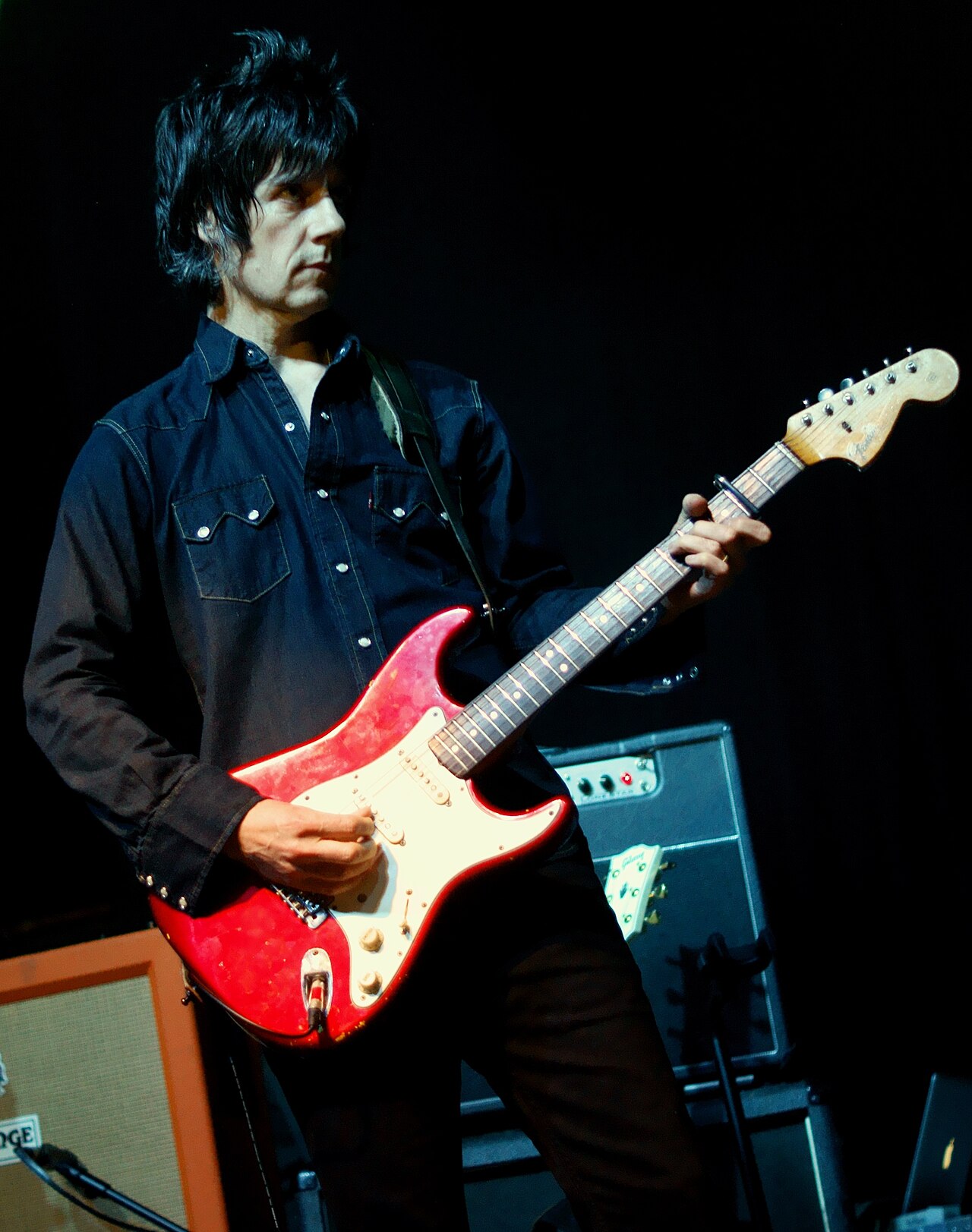
A note on John Squire: he is one of the most discussed players in the context of the Lone Star series overall, because UK Mesa/Boogie distributor Westside posted exclusive photographs of The Stone Roses’ 2012 Heaton Park reunion backline — and MusicRadar published the story on 29 June 2012 (Chris Vinnicombe). The Westside caption reads: “John has chosen a colossal four Lone Star 2×12 combos (yes FOUR! — including the only Lonestars ever to be wrapped in tweed, created especially for him by the Mesa/Boogie custom shop!).” The Westside link in that article goes to the regular Lone Star product page, not the Lone Star Special. Squire’s Heaton Park rig was the 6L6 Lone Star — a significant distinction given the completely different power-tube character of the two amps. Some sources conflate the two models; the primary source does not. As a confirmed Lone Star (not Special) user, John Squire’s Heaton Park story belongs to the Lone Star Classic, not this article — though it illustrates exactly how compelling the Lone Star series concept was at the highest level of live performance.
Tone Recipes and Settings
Recipe 1: Classic Clean, 30W — Pedal Platform
Channel 1 with the Drive switch off. Gain at 9 o’clock, Treble at 1 o’clock, Mid at 12, Bass at 11, Presence at 10, Reverb at 9-10. Both masters matched. Wattage set to 30W (silicon diode rectifier, tight response). This is the Fender-derived clean voice — MusicRadar called it “classic Fender” in the Normal voicing position. Run your pedalboard into this channel and the EL84 compression will add a natural softness to overdrive pedals that 6L6 amps often fight. A Tube Screamer into this setting produces the blues-guitar standard without the midrange scoop that can make clean Mesa channels feel scooped. Best with single coils; with humbuckers, the Thick voicing option on Ch.2 at low gain brings more warmth into the equation.
Recipe 2: 15W Blues Push — Solo EL84 Breakup
Channel 2, Drive switch off, wattage at 15W. Gain at 11 o’clock, Treble at 1, Mid at 12, Bass at 10, Presence at 9. Three-position voicing at Thick. Reverb at 10-11 o’clock, warm setting. At 15W the amp engages the 5Y3 tube rectifier automatically, adding a subtle sag and softening the attack. Push the gain up another notch and play hard — the EL84 push-pull pair will begin to compress and bloom in a way that is audibly different from 30W clean operation. This is the “cries the blues with sinful passion” setting Mesa describes, and for once the marketing copy is not overselling it. Back your guitar volume off to 7 and the channel cleans up completely; crank to 10 for the pushed version.
Recipe 3: 5W Single-Ended Studio Lead
Channel 2, Drive switch on (adds one 12AX7 preamp stage), wattage at 5W, voicing at Thicker. Gain at 1 o’clock, Treble at 12, Mid at 1, Bass at 10, Presence at 9. This is the amp at its most unique and least reproducible by any other amplifier in the Mesa range. The single-ended 5W topology preserves even harmonics rather than cancelling them, coating everything in a warm octave shimmer that flatters sustained leads. Andy Timmons’s documented settings from the Protocol III session show a similar approach: bone-stock amp controls with the dual delay (dotted 8th/quarter note, 375ms one side, 500ms other) added in the loop, expression pedal on the echo volume. At 5W on a 1×12 cab this is genuinely loud enough to record directly in front of the speaker; no attenuation needed. Mesa’s own recording formula adds a ribbon mic alongside an SM57 for the harmonic content of the top-end.
Recipe 4: Country Sparkle — Cleaner EL84 Chime
Channel 1, wattage at 30W. Gain at 8-9 o’clock (lowest clean sweep), Treble at 2 o’clock, Mid at 10, Bass at 12, Presence at 11. Reverb at 12, Bright switch. Use a Telecaster or Stratocaster. This maps directly to the kind of rig Dave Wallace runs for Jake Owen’s touring shows — a Lone Star Special as a country-clean foundation, giving the single-coils room to pop against the EL84 chime. The low gain plus raised Treble produces the string-separation and note-definition that telecaster country playing needs. Slide a compressor in front and the sustain extends without losing the percussive attack. The Bright reverb setting at 12 o’clock adds a touch of room without washing the transients.
Recipe 5: Pushed Rock Lead — Full 30W with Drive
Channel 2, Drive switch on, wattage at 30W, voicing at Thicker. Gain at 2 o’clock, Treble at 11, Mid at 2, Bass at 10, Presence at 11. This is the “archetypal Boogie lead sound” MusicRadar described — “long, sweet sustain and a very vocal quality.” The EL84 power stage makes this voice richer in the upper harmonics and slightly less midrange-scooped than a comparable gain setting on a Rectifier. The Thicker voicing adds “even more meat to single-coil guitars” and keeps humbuckers from going flabby on the lower strings. This is not the same gain density as a Dual Rectifier in Modern mode; it is a singing, harmonically complex lead tone that responds to pick attack rather than compressing it flat.
How It Compares
The Lone Star Special is sometimes misfiled alongside Mesa’s high-gain amps because it shares the Petaluma address and the hand-crafted build. In practice it occupies a completely different segment.
The most obvious comparison is the Dual Rectifier, which is the Mesa guitar players most associate with the brand. The Dual Rectifier runs 6L6 or EL34 power tubes at 50 or 100 watts and is designed around a high-gain architecture where Channel 2 and Channel 3 are optimised for modern metal and hard rock. The Lone Star Special tops out at 30 watts, runs EL84s, and is optimised around clean-to-crunch dynamics with a gain channel that supplements the clean voice rather than replacing it. These are genuinely different instruments for genuinely different players. A player who needs the Lone Star Special’s 5W studio voice and EL84 chime will find the Dual Rectifier’s architecture frustrating; the reverse is equally true.
The Mark IV is a closer relative because both amps prioritise versatility and touch sensitivity. The Mark IV is significantly more complex — five channels (in effect), graphic EQ, Simul-Class power section — and is optimised for fusion-inflected lead playing at higher wattage. The Lone Star Special is simpler, lighter, and more immediately responsive: two channels, three power levels, and a preamp that rewards dynamic playing rather than complexity of architecture. For a studio player or a gigging musician who works in the 30W-and-below range, the Lone Star Special is the better tool. The Mark IV is the better choice when the venue demands more headroom and the player wants graphic EQ on the stage.
The Recto-Verb 25 is architecturally the closest Mesa alternative: also EL84, also 10W/25W switching, also a combo with spring reverb. The differences are meaningful. The Recto-Verb 25 has two Rectifier-voiced channels (Clean/Pushed on Ch.1, Vintage/Modern on Ch.2) and is designed around the Rectifier preamp DNA. The Lone Star Special has the Lone Star preamp, which is a different circuit with different voicing priorities — more Fender-adjacent on the clean side, more boutique-expressive on the gain side. The Lone Star Special also has more flexibility in the power section (5W single-ended vs only dual modes on the Recto-Verb 25’s Dyna-Watt) and adds the dual-channel independent reverb controls and slave output. On the used market the Lone Star Special typically commands a premium over the Recto-Verb 25, and the premium is justified.
The Trem-O-Verb shares the “Mesa combo with spring reverb” concept but runs 100W through four 6L6s and includes the Blues mode and an assignable tremolo. It is a larger, louder, and heavier amplifier designed for players who need the headroom of a full-wattage Rectifier in a combo format. The Lone Star Special is lighter, quieter at full power, and more flexible at bedroom-to-club volumes. They do not compete for the same buyer.
Outside the Mesa range, the EL84 comparison market includes the Vox AC30, the Matchless DC30, and the Bad Cat Cub. All run EL84s in Class A configurations. The Vox AC30 is brighter, more jangly, and has no master volume (or in the reissue versions, a less precise master than the Lone Star Special’s dual-master system). The Matchless DC30 is genuinely boutique at three to four times the used price. The Bad Cat Cub is single-channel and aimed at a different tonal zone. The Lone Star Special offers more channel versatility and more wattage control than any of these at a used-market price that often undercuts them significantly.
Buying Guide
The Lone Star Special was discontinued around 2020, placing it firmly on the used market. Formats to know: the 1×12 combo is the most common; the 2×12 combo provides more low-end mass and cabinet resonance but is significantly heavier; the head was less commonly produced and commands a premium; the 4×10 combo was the rarest format and was discontinued earlier than the others.
Used prices on Reverb and the Gear Exchange in 2026 run from approximately $800 for cosmetically worn 1×12 combos to $1,400 or more for clean 2×12 combos and heads. The amp is hand-built and Mesa’s quality control is excellent, so cosmetic condition is a more useful proxy for care history than it is on mass-market amps — a beat-up cabinet suggests a gigged instrument that may have been through more wear cycles on the tubes and reverb tank.
Three things to check before purchasing. First, play the reverb at medium depth and move the amp slightly — a microphonic spring tank will audibly ring or clank; a healthy one adds a smooth tail. Second, test the channel switching and the Dyna-Watt power selector: the footswitch jacks and the rear-panel assignable power switches are mechanical components that can develop intermittent contact issues. Third, pull the power tubes and look for darkening or getter flash on the EL84s — original tubes in a used amp may be approaching the end of their service life, which is not a problem if you factor a set of matched EL84s (~$40-80 for a matched quad) into the price negotiation.
The manual is essential reading on the Lone Star Special — this is one amp where the rear-panel controls (dual reverb levels, FX loop bypass, slave output level, external switching jacks) are not obvious from playing and genuinely change what the amp can do in a recording context. Mesa has made the PDF available through their legacy site.
Living With the Lone Star Special
The EL84 power section means the Lone Star Special rewards conservative tube care in specific ways. EL84s are generally considered to have a shorter service life than 6L6s when run hard and hot — the single-ended 5W mode is actually easier on the tubes than 30W push-pull operation. If you run the amp mostly at 5W and 15W, tube life will be long; sustained sessions at 30W will consume EL84s faster. Matched quads from reputable suppliers (TAD, Electro-Harmonix, JJ) are readily available and inexpensive relative to the cost of matched power sections in higher-wattage amps.
The long spring reverb tank is fragile in transport. Always use the rear-panel reverb bypass when carrying or shipping the combo, and stand the amp upright rather than laying it face-down during transport. A microphonic tank is a mechanical problem, not an electrical one, and replacement tanks are available; but prevention is straightforward.
The aluminium chassis and plywood cabinet are both Mesa’s standard — the construction quality is notably above the European mid-market competition at similar price points, and above most North American competition outside the genuine boutique tier. Corner reinforcements on the vinyl, snap-in castors on the larger formats, and the weight of the aluminium chassis give the amp a physical confidence that is apparent before you plug in.
The Lone Star Special runs quiet enough to use in a home studio without apologising to neighbours at 5W into a 1×12. At 15W into a 2×12 it is full band-rehearsal loud. At 30W into a 2×12 it is a medium club amp that does not need to be mic’d. The multi-watt system is one of the most practically thought-out implementations in the entire Mesa range, precisely because the tonal shift between settings is real rather than cosmetic.
FAQ
What is the difference between the Lone Star and the Lone Star Special?
The Lone Star runs four 6L6 power tubes with 10/50/100W per-channel switching — the full-headroom, warm-mid character of American power tube design. The Lone Star Special runs four EL84 tubes at 5/15/30W in Pure Class A, delivering a compressed, chimey, more British-influenced character. Same preamp circuit; completely different output stage, wattage range, and tonal character. They are genuinely different amplifiers that happen to share a series name and a preamp DNA.
Is the Lone Star Special a “Class A” amp in the strict sense?
Mesa says Pure Class A throughout, and this is accurate. Both the push-pull 30W and 15W configurations run Class A — meaning each output tube conducts current through the entire audio cycle, not just half of it as in the more common Class AB design. The 5W single-ended mode is Class A by definition. True Class A operation at the output stage is what gives the amp its characteristic warmth, compression, and even-harmonic saturation.
Can the Lone Star Special handle modern high-gain styles?
The Drive channel with the Drive switch engaged and the voicing at Thicker delivers what Mesa calls “that archetypal Boogie lead sound — a long, sweet sustain and a very vocal quality.” It is a genuinely expressive high-gain voice. It is not, however, the wall-of-gain architecture of a Triple Rectifier or a modern metal amp. The Lone Star Special is an outstanding lead amp for blues-rock, classic rock, and country — it is not the right tool for death metal or djent.
What speakers can I run with the Lone Star Special?
The 1×12 combo ships with the Mesa Black Shadow C90-30 (a Celestion-made 30W driver). The head and the extension cabinet application allows any 8Ω or 16Ω speaker. Andy Timmons ran the Special into a matching Mesa 2×12 cab loaded with Celestion Vintage 30s for his Protocol III recording. The extra speaker jack on the rear panel can boost output to approximately 35W with a second cabinet, at the cost of slightly accelerated tube wear. Vintage 30s and Celestion G12H-30s are common choices; Alnico-loaded speakers (Blue, Gold) accent the EL84 character but reduce the headroom before speaker breakup.
Was the Lone Star Special used by Carlos Santana, John Petrucci, or James Hetfield?
No. These names appear on Mesa marketing material across the company’s product range. None is documented on a Lone Star Special by primary sources. Santana’s amp is the Mark I (confirmed by his guitar tech on camera). Petrucci’s touring amps are the JP-2C and the Triaxis. Hetfield’s touring rig centres on the Triaxis and the Triple Rectifier. The Lone Star Special’s documented players are Andy Timmons (Mesa’s own Amplitudes blog, April 2015), Nick McCabe (his own Facebook post), Dave Wallace (Mesa’s own product page photo), and Jake Snider (Mesa’s own artist pages).
What did John Squire play at the 2012 Stone Roses reunion?
John Squire played four custom tweed Lone Star 2×12 combos — the regular 6L6 Lone Star, not the EL84 Lone Star Special. UK Mesa distributor Westside confirmed this in their Facebook post, reproduced by MusicRadar on 29 June 2012. The Westside link goes to the Lone Star (not Special) product page. Some online sources conflate the two models; the primary source from the manufacturer’s distributor is unambiguous. They were, however, the only Lonestars ever wrapped in tweed, built by the Mesa custom shop specifically for Squire — a detail that illustrates both the quality of the Lone Star series and the reason musicians of that standing chose it for the most high-profile rock reunion of 2012.
Is the Lone Star Special hard to dial in?
Not inherently, but the rear-panel controls are counter-intuitive without the manual. The assignable power settings are physical slide switches (one per channel) rather than front-panel knobs, which surprises players accustomed to simpler combos. The dual master volume system (rhythm/solo levels separately preset) requires one decision — whether you want preset level shifts — that is easy to miss. Read the manual before gigging. Multiple forum users specifically note the manual as the key to unlocking the amp’s full range.
What should I pay for a Lone Star Special in 2026?
In good used condition on the open market: approximately $800–$1,000 for a 1×12 combo; $1,000–$1,400 for a 2×12 combo or a head. Clean examples in near-mint cosmetic condition command a premium of 10–15%. Factor in a matched EL84 quad ($40–80) if the seller cannot document tube age. The 4×10 combo is the rarest format and prices are less predictable. The 2×12 combo is considered by most players to be the definitive format — the cabinet adds the low-end body that makes the 30W output feel genuinely complete.
Image credits
- Carlos Santana: Heinrich Klaffs, Wikimedia Commons, CC BY-SA 2.0.
- John Squire: Man Alive!, Wikimedia Commons, CC BY 2.0.
- Top image: Mesa Boogie: a Lone Star Special combo. Photo: Elías Gómez, 8 May 2009. Source photograph, CC BY-SA 2.0. Full source frame retained; proportionally resized for display. Adaptations remain under the same license.
- Mesa/Boogie Lone Star Special: GuitarGangsters AI-generated reference illustration, not a photograph.
Latest News
Related
On This Day
Monday 9 November
From this week: