Death By Audio Fuzz War: The Underground’s Wall-of-Fuzz Standard Issue
Death By Audio Fuzz War: 2010 origins, Supa Tone Bender roots, full specs, verified players like Ty Segall, plus tone recipes and buying advice.
There is a specific sound that shows up on records made in basements, in rehearsal rooms with damp carpet on the walls, and on stages where the monitor mix is a suggestion rather than a service. It is not a polite fuzz. It does not “add harmonic content.” It arrives like weather. And for the last decade and a half, an unreasonable proportion of that sound has come out of a big, hand-spray-painted steel box built in New York City by a man who also fronts one of the loudest bands in the five boroughs.
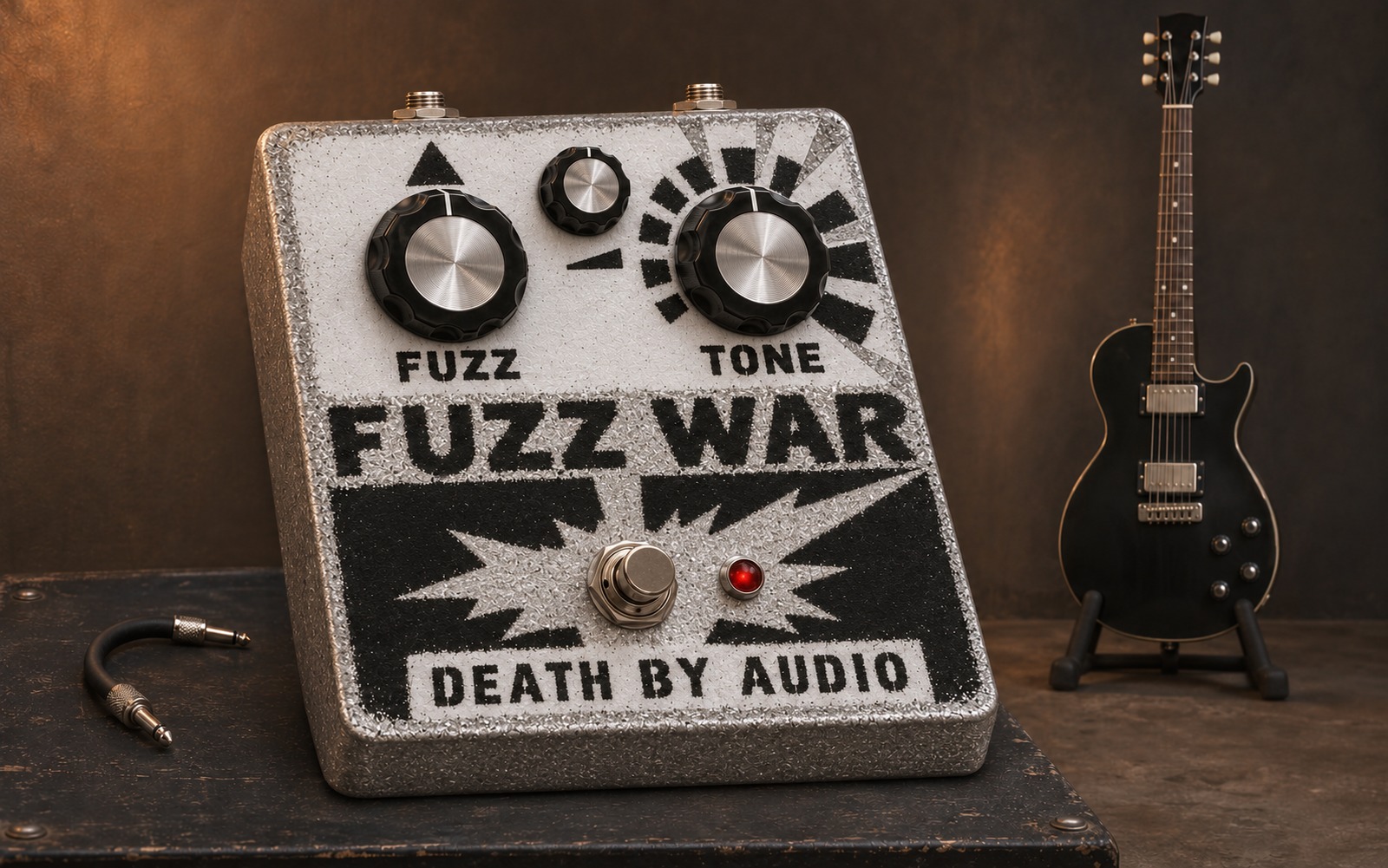
The Death By Audio Fuzz War is not a subtle pedal, and it has never pretended otherwise. Death By Audio’s own copy for it opens with the line “Call in the Army, the Navy, Scotland Yard, your mom, and the Mario Brothers!” — which tells you roughly everything about the company’s relationship with restraint. But underneath the graffiti and the shouting there is a genuinely well-considered circuit, one specific and unusual control that no other fuzz on the market has in quite this form, and a lineage that runs back through a very particular and very British corner of late-’60s fuzz history.
This is not a review. This is a feature on what the Fuzz War actually is, where it came from, who is genuinely documented using one, what it does inside a signal chain, and how to make it behave.
Death By Audio: The Warehouse, The Venue, The Workshop
Death By Audio was founded in 2002 by Oliver Ackermann, singer and guitarist of A Place To Bury Strangers — a band whose entire live reputation is built on volume, strobe lights and the constant threat of equipment failure as an artistic choice. Ackermann trained at the Rhode Island School of Design, and the company started life not as a pedal brand at all but as a web-based effects customisation service: you told Ackermann what impossible noise you wanted, and he built the circuit to make it.
The company’s early years were, in its own words, spent “warehouse-jumping from Virginia to Brooklyn.” What followed was the part everyone in the New York underground remembers: nine years in the Williamsburg building that was simultaneously a pedal factory, a venue, a recording studio and a live-work space, all under the Death By Audio name. When that venue closed its doors in 2014 — an event mourned in its own photo book and in an entire archive of show flyers — the pedal workshop moved to Queens, where the company still hand-builds everything. The current address on the Fuzz War’s own manual reads 18-71 Greene Ave, Ridgewood, NY 11385.
The house design philosophy is stated plainly on the company’s about page, and it is worth quoting because it explains the Fuzz War better than any spec sheet could: Death By Audio pushes “bizarre technologies like medical-grade IC chips, obsolete transistors, and military surplus electronics” past their limits, and frequently replaces conventional knobs with “intuitive arrays of sliders, dip-, and toggle-switches” to break players out of “the same old set-it-and-forget-it sounds.”
The Fuzz War is the exception that proves the rule. It has three knobs. It is the most conventional-looking pedal the company makes. It is also, by a distance, its best-seller — the one Death By Audio pedal that turns up on boards belonging to people who own no other Death By Audio pedals.
Where The Circuit Actually Comes From
Here is the part that gets misreported constantly, so it is worth being precise about the sourcing. In Premier Guitar’s September 2013 review of a Fuzz War derivative, gear editor Charles Saufley laid out the lineage directly: the sonic point of departure for the Fuzz War is the Colorsound Supa Tone Bender — which, despite the Tone Bender name on the box, is a Colorsound-branded Big Muff design, and in practice a louder and nastier take on the legendary “ram’s head” Muff. Saufley also confirms the architecture: like most Muff-type pedals, it runs a four-transistor gain structure with a three-knob level / gain / tone layout.
That single paragraph resolves a lot of internet argument. The Fuzz War is a Muff-family pedal. It is not a Fuzz Face derivative, not a Tone Bender MkII derivative in the germanium sense, and not an op-amp design. If you want the family it belongs to, start with our features on the Electro-Harmonix Big Muff Pi and the Ram’s Head Big Muff Pi reissue, because those are the direct ancestors — and then note that Death By Audio took the template and, in Saufley’s phrasing, twisted it “into an even more muscular machine.”
The naming confusion is understandable. “Supa Tone Bender” sounds like it should be a Tone Bender. It is not. This is a recurring hazard in fuzz genealogy, and it is the same class of trap that makes people assume every three-knob dirt box with a mid-scoop is a Muff clone and every two-knob one is a Fuzz Face. Circuit topology, not the name silkscreened on the enclosure, is what decides.
Premier Guitar dates the Fuzz War’s introduction to 2010. That makes it a relatively late arrival in Death By Audio’s catalogue — eight years after the company started — and it landed at exactly the right moment, as the American garage-rock underground was entering a very loud decade.
Specifications
Two numbers on that table deserve a second look. The first is 1 mA. That is a rounding error on any power supply made in the last twenty years — you could run a dozen Fuzz Wars off a single isolated output and never notice. It is the signature of a simple, all-discrete, no-charge-pump, no-digital-anything circuit, and it sits in pointed contrast to modern boutique dirt boxes that need 100 mA or more because of internal voltage doubling. If you have been reading our features on Strymon’s Riverside or the Chase Bliss Generation Loss MkII, the gulf is instructive: same pedalboard, wildly different electrical citizenship.
The second is the enclosure size. At nearly six inches by nearly five, the Fuzz War is a genuinely large pedal — closer to a Big Muff footprint than to anything in a 1590B box, and physically wider than most. This is a real planning consideration, not a footnote, and we come back to it in the buying section.
The Controls, And The One That Matters
Volume
Output level, and there is a lot of it. Death By Audio’s own product copy is characteristically blunt: it “wouldn’t be a Death By Audio fuzz pedal without enough output to make even the highest headroom amp beg for reinforcements.” In practice this means unity gain arrives well below noon on most rigs, and everything past that is available as a deliberate amp-shoving weapon. If you intend to use the Fuzz War partly as a boost into an already-cooking amp, this is the control that does the work.
Fuzz
The gain control, and it is a genuinely wide sweep rather than a fuzz-amount trim. The manufacturer describes the arc precisely: at its lowest setting “the pedal acts as a tone shifter,” and as the knob comes up it “sweeps from a booster to an overdrive to a thick distortion to a full-on blown-out war of fuzz.”
Take that seriously, because most owners do not. The overwhelming majority of Fuzz War users park this knob at maximum and treat the pedal as a one-sound device. That is a legitimate way to use it — it is very good at that one sound — but it throws away roughly two-thirds of the pedal. The 9 o’clock-to-noon region is a usable, thick, slightly compressed overdrive with far more character than the price suggests, and it is the setting almost nobody demos on YouTube.
Tone — and the hidden mode
This is the control that separates the Fuzz War from the field. It is not a passive tilt or a simple treble roll-off. Death By Audio call it “a specially designed multi-curve shaping filter,” and it is an active circuit, which is why it can travel from “super deep bass sludge to screaming highs” rather than just subtracting top end the way a stock Muff tone stack does.
And then there is the trick, which Death By Audio put in their own product notes rather than leaving for owners to discover:
“When the Fuzz is turned all the way down, the Tone control acts as a frequency shifter — try it for parked-wah and sick filtered effects!”
That is the single most under-used feature on this pedal. With Fuzz at zero, the Fuzz War stops being a fuzz box and becomes a manual sweepable filter — a cocked-wah machine with no rocker to stand on. Set it there, ride the Tone knob with your picking hand between phrases, and you get a vocal, formant-shifting effect that most players buy an entire separate pedal to achieve. It also means the Fuzz War can sit in a chain doing tone-shaping duty at low gain and then be kicked into total annihilation with a single knob turn.
Premier Guitar noticed the same behaviour on the derivative model and described it as having “the effect of slow-sweeping or cocking a wah pedal,” with the added observation that aggressive Tone settings “focus the EQ emphasis rather than just adding or subtracting squealing top end.” That is the honest technical read: this is an EQ-focusing control, not a brightness control.
Famous Players: What Is Actually Verified
This is the section where most gear writing goes wrong, so we are going to be explicit about the evidence bar. A player counts here if there is a first-party manufacturer statement naming the specific pedal, a dated photographed board in a published rig feature, or a direct interview quote. Social-media board shots, aggregator databases and “artists who use this” listicles do not count.
Ty Segall — first-party, and corroborated in print
Death By Audio name Ty Segall by name in the Fuzz War’s own operation manual, alongside Thee Oh Sees, as artists whose tones the pedal delivers. That is a manufacturer claim, so on its own it would be worth a raised eyebrow. But it is independently corroborated: Premier Guitar’s 2013 write-up states that Segall — described there as “the prince prolific of the S.F./L.A. garage axis” — used the Fuzz War “with cruel effectiveness” on his Slaughterhouse and Twins albums, and in the live shows that followed. Two independent sources, one of them a magazine with no commercial interest in the claim, naming specific records.

That is as clean a verification as this kind of research gets, and it matters historically: Premier Guitar credits Segall’s use as the reason “fuzz fanatics with subterranean music proclivities were quick to take notice.” The Fuzz War’s reputation was not built by advertising. It was built by two records.
John Dwyer / Thee Oh Sees — verified, and he got his own version
Thee Oh Sees are the other act named in the manual, and the documentation here is unusually strong because Dwyer did not merely use a Fuzz War — he had Death By Audio build him a bigger one. When the company offered to build a Fuzz War for Dwyer, described by Premier Guitar as the “de-facto Frisco garage-scene mayor,” he came back asking for something more brutal. The result was Thee Ffuzz Warr Overload: the Fuzz War circuit with a second footswitch and a single-knob treble-boost section bolted on, plus an oversized, outboard-mounted Tone knob positioned specifically to make on-the-fly sweeping easy.
It reviewed at $225 street in 2013 and picked up a Premier Guitar gear award that year. Saufley’s verdict placed it in “the Muff zone” on a sonic Venn diagram but praised it for also “inhabiting Tone Bender and Fuzz Face zones,” with a midrange that is “almost never strident or overpowering.” The reviewer’s most quotable line about the standard Fuzz War circuit underneath: “You might make a I-V power chord sound as nasty with another fuzz or distortion, but no pedal will top this thing for attitude.”
The Ffuzz Warr Overload is not the pedal this article is about, and you cannot walk into a shop and buy one today. But it is direct, dated, published evidence of Dwyer’s relationship with the circuit, and it is the reason the pedal’s giant Tone knob became a signature idea.
Jon Samuels (MJ Lenderman & the Wind) — dated, photographed, 2025
The most recent hard verification comes from a Premier Guitar Rig Rundown filmed at Saturn in Birmingham, Alabama on 1 February 2025 and published on 19 February 2025 by Chris Kies, covering MJ Lenderman’s touring band on the road behind Manning Fireworks. Guitarist Jon Samuels’ board is documented in full, and the Death By Audio Fuzz War is on it, sitting between a Hardwire HT-6 polyphonic tuner and a JHS Double Barrel, with a Dunlop wah, a J. Rockett Archer clean boost, a Joyo tremolo, an EHX Nano Small Stone and a TC Electronic Flashback 2 filling out the rest.
The editorial point here is the company the Fuzz War is keeping. This is not a noise-rock board. It is an indie-rock touring board with a tuner, a transparent boost and a phaser on it, and the Fuzz War is doing duty as the big-dirt option in a rig otherwise built for songs. Note also that bandleader Jake Lenderman’s own board runs a Death By Audio Interstellar Overdriver Deluxe rather than a Fuzz War — two Death By Audio pedals in one band, doing different jobs. Lenderman is a documented J Mascis obsessive, plays a Squier J Mascis Signature Jazzmaster, and by his own account is assembling a full Mascis Hiwatt setup “one cab at a time,” which is useful context for why this band wants that much gain on tap in the first place.
What we could not verify — and a warning about the artist page
Death By Audio maintains a public artist roster listing Lou Reed, The Flaming Lips, U2, Radiohead, My Bloody Valentine, Nine Inch Nails, St. Vincent, Wilco, Mogwai, Pearl Jam, the Red Hot Chili Peppers, Slipknot, The Strokes, Arctic Monkeys, Wire, Foals and dozens more. That is a genuinely extraordinary list and there is no reason to doubt it as a brand roster — Death By Audio makes around forty different pedals, and the Total Sonic Annihilation, the Interstellar Overdriver, the Reverberation Machine and the Fuzz War are entirely different propositions.
But a brand-level artist page is not evidence that any of those players uses this specific pedal, and we are not going to pretend otherwise. If you have seen a listicle claiming Kevin Shields, The Edge, Jonny Greenwood, St. Vincent or Nels Cline as Fuzz War players, it is almost certainly derived from that roster page rather than from a board photograph. Those artists are documented Death By Audio customers. That is a different claim.
There is a nice piece of evidence for the distinction, too: Ackermann himself, in published interviews about his A Place To Bury Strangers rig, is documented running the enormous dual-fuzz DBA Armageddon rather than a Fuzz War. The man who designed the pedal does not lead with it live. That is not a criticism of the Fuzz War — it is a reminder that a catalogue is not a monolith.
Tone Recipes and Settings
1. The Wall (the sound everybody buys it for)
Volume 11 o’clock · Fuzz maximum · Tone noon. This is the default. Fuzz all the way up, Tone at noon where the multi-curve filter is most even, Volume set for a clear jump over your clean sound. Play open chords in a low tuning and let them ring; the sustain is the point. If it sounds like mud rather than a wall, your Tone is too far counter-clockwise — the low end on this pedal is enormous and it will swallow itself.
2. Garage Rock Rhythm
Volume noon · Fuzz 2 o’clock · Tone 1 o’clock. Back the Fuzz off just enough that individual strings survive inside a chord, and push the Tone slightly clockwise so the attack cuts. This is the Slaughterhouse-adjacent territory: still obviously a fuzz, but with enough definition that riffs read as riffs. A bridge single-coil helps enormously here.
3. Sludge / Doom Chord
Volume 1 o’clock · Fuzz maximum · Tone 9 o’clock. Winding the Tone counter-clockwise takes you into what Death By Audio call “super deep bass sludge.” Drop tunings, heavy strings, slow. Be aware that this setting will fight your bass player for the same frequency band, and the bass player will lose, which may or may not be the desired outcome.
4. Screaming Lead
Volume 2 o’clock · Fuzz 3 o’clock · Tone 3 o’clock. Push the Tone well clockwise and the pedal gets narrow and piercing in the best way — the “screaming highs” end of the multi-curve filter. Because the Volume control has so much on tap, this doubles as a lead-boost setting that will genuinely raise you over a loud band.
5. The Overdrive Nobody Uses
Volume noon · Fuzz 10 o’clock · Tone noon. The manufacturer’s own description of the low end of the Fuzz sweep is “a booster to an overdrive.” At this setting the Fuzz War is a thick, slightly compressed, midrange-forward drive that stacks beautifully in front of an already-breaking-up amp. It is not a transparent overdrive and it is not trying to be one — for that, look at our features on the MXR Timmy or the Greer Lightspeed. But as a character drive it is far better than its reputation, mostly because its reputation was written by people who never turned that knob down.
6. The Parked-Wah Filter (first-party trick)
Volume 1 o’clock · Fuzz fully counter-clockwise · Tone: ride it. Fuzz at zero turns the Tone control into a frequency shifter, per Death By Audio’s own notes. Use it as a cocked-wah for a verse, sweep it slowly across a sustained chord for a filter effect, or set it hard one way for a thin, telephone-like clean sound. This costs you nothing, requires no extra pedal, and is on a pedal you already own.
7. Fuzz War Into Fuzz War Territory: Stacking
Fuzz War (Fuzz 10 o’clock) → your other fuzz. Because the low-gain end behaves like a boost with an active EQ attached, the Fuzz War makes an unusually good front end for a second dirt pedal. Running it at low fuzz into a Hoof or a Swollen Pickle lets you use the Fuzz War’s Tone control as a pre-EQ for the whole stack. The reverse order — big fuzz into Fuzz War — mostly produces gated chaos, which is also a valid artistic position.
All settings assume a clock face, knobs from left to right as Volume / Fuzz / Tone, into a clean-ish amp at gig volume. The Fuzz War interacts hard with what is in front of it and with your guitar’s volume control, so treat these as starting coordinates rather than destinations.
How It Compares
Versus the Big Muff family
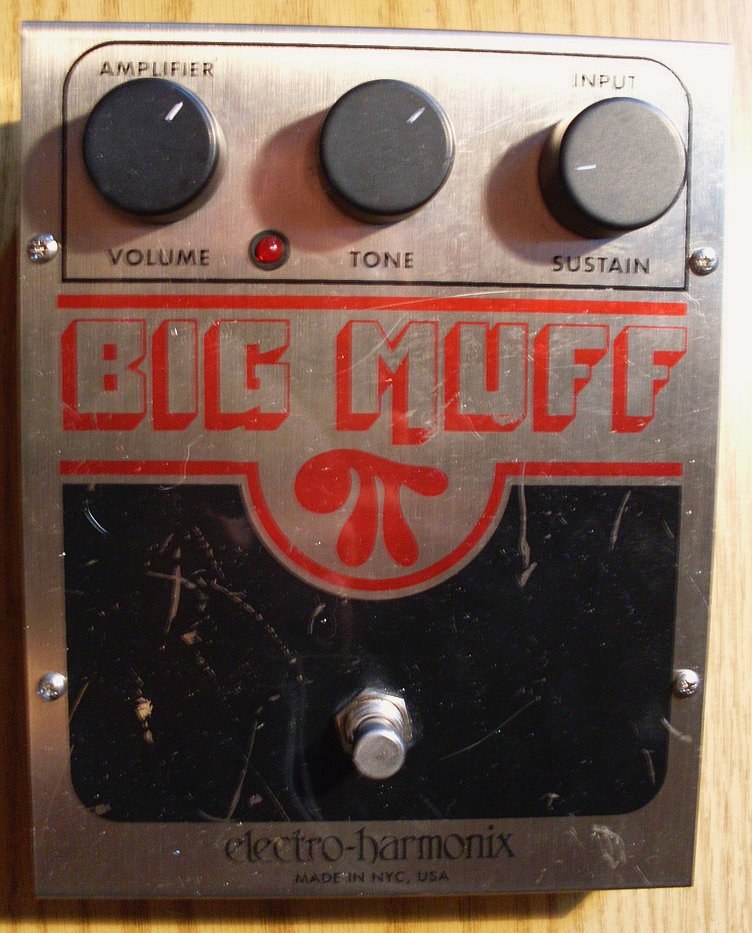
This is the honest comparison, because it is the same family. A standard Big Muff Pi has a scooped midrange and a passive tone stack that mostly trades bass for treble. The Fuzz War, coming from the Supa Tone Bender end of the family, is louder, more aggressive, and has an active tone circuit that can push the midrange rather than only cut it. If the Muff is a wall, the Fuzz War is a wall that leans towards you. Within the Muff lineage specifically, the Green Russian is the closest in low-end weight, the Op-Amp Big Muff is the closest in raw abrasiveness, and the Triangle is the one to reach for if you actually wanted something more polite.
Versus boutique Muff variants
The EarthQuaker Devices Hoof is the obvious cross-shop: a germanium-hybrid Muff variant with a dedicated Shift control for moving the midrange. The Hoof is the more controllable pedal and the better band-mix citizen. The Fuzz War is the more extreme one, with more output and a filter that goes further in both directions. The Way Huge Swollen Pickle MkII is the other comparison worth making, and it goes the opposite way: internal trimmers, scoop control, a pedal designed to be tuned. The Fuzz War has no trimmers and no internal adjustments. What is on the panel is what you get.
Versus Fuzz Face and Tone Bender designs
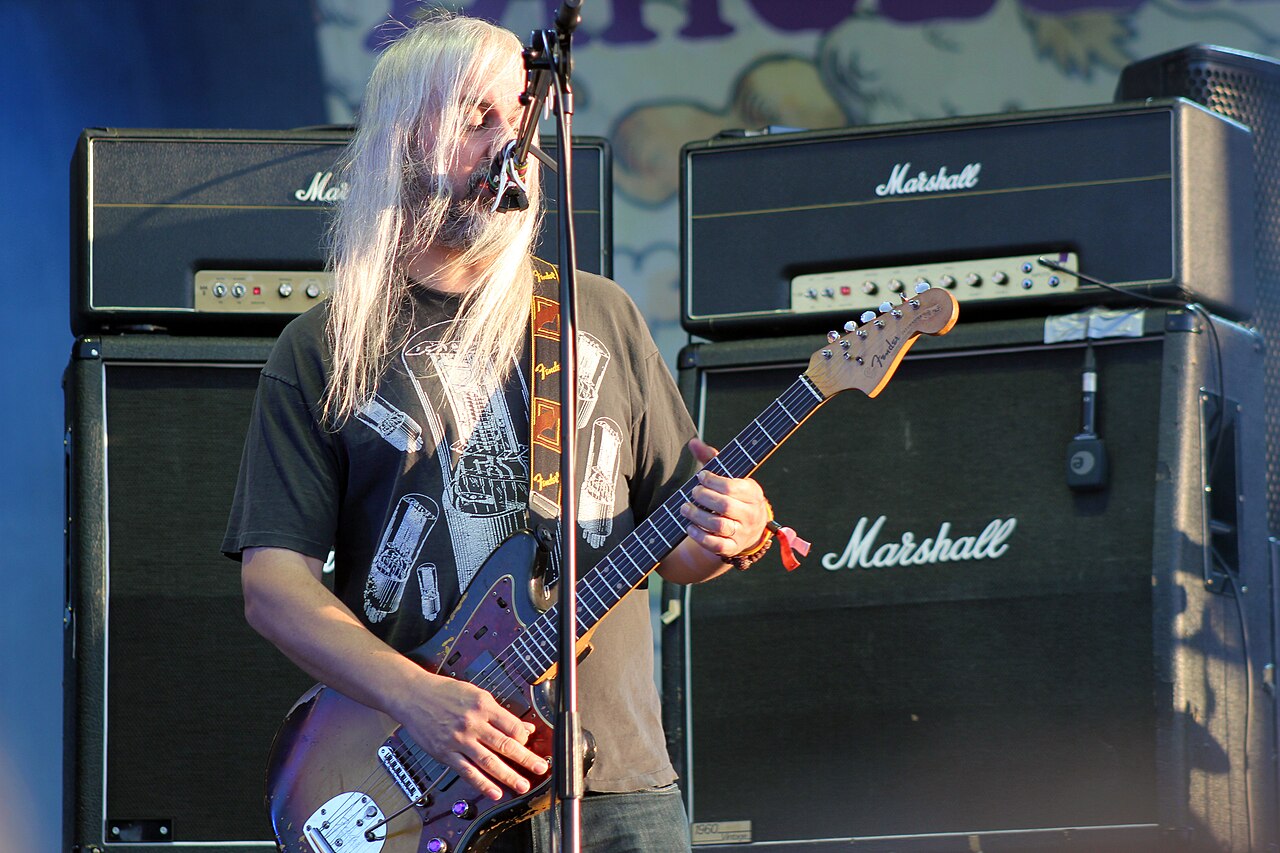
Different animals entirely. A Fuzz Face-type circuit cleans up dramatically with the guitar’s volume knob and lives or dies on pickup interaction; the Analog Man Sun Face is the connoisseur’s version of that idea. The Keeley Fuzz Bender covers the Tone Bender end. None of these will give you the Fuzz War’s sustain or its output. Equally, the Fuzz War will not give you the touch sensitivity of a good germanium two-transistor circuit. If your reference points are Jimi Hendrix or early Jimmy Page, you want the other pedals. If your reference points are Thurston Moore, Lee Ranaldo or J Mascis, you are in the right place.
Versus modern high-gain distortion
Worth stating clearly: the Fuzz War is not a metal distortion. A MXR Super Badass or a Metal Muff has a proper EQ section and a tighter, faster attack designed for palm-muted precision. The Fuzz War is loose, saggy and long-decaying by design. Fast riffing turns into porridge. That is not a fault; it is a genre boundary.
Versus the ProCo RAT
The other great “one box, many jobs” dirt pedal. The RAT 2 has a filter control that only ever removes treble, and a clipping character defined by its op-amp and diode pair. It is tighter, more focused and far more mix-friendly. The Fuzz War is bigger, ruder and less obedient. Many boards run both, for exactly that reason. The JHS PackRat is the fast way to explore the whole RAT side of that question.
Versus other hand-built American boutique fuzz
The Fuzz War’s closest philosophical relatives are small-shop pedals that pick one extreme idea and commit to it — the Caroline Shigeharu, the Mythos Golden Fleece, the ZVEX Fuzz Factory. Of those, the Fuzz Factory is the only one that competes on sheer unpredictability, and it does so by being far harder to use. Against the current wave of considered boutique dirt — the Fairfield Barbershop being a good example of the opposite temperament — the Fuzz War’s pitch is simplicity plus violence at a price that is not boutique at all.
Buying Guide
Who it is for
Buy a Fuzz War if you want one very large sound and you want it to be genuinely large. It is the right pedal for garage rock, noise rock, shoegaze, psych, sludge, stoner, and any situation where the guitar is supposed to be an event rather than a texture. It is also, quietly, an excellent bass fuzz — Death By Audio publish bass sound samples on the product page alongside the guitar ones, and there is a dedicated Bass War variant in the catalogue if that is your primary instrument.
Who it is not for
If you need a fuzz that sits politely in a dense mix, that cleans up smoothly from the guitar’s volume knob, or that can be dialled back to a transparent boost, this is not it. If your board is already tight on space, read the next paragraph before ordering.
The enclosure problem
At 5.87″ x 4.72″, the Fuzz War occupies roughly the footprint of two standard compact pedals side by side, and it is 2.5″ tall including hardware. On a small board this is a serious commitment. Measure before you order. There is no mini version, and given that the hand-painted enclosure is part of the product’s identity, there is unlikely to be one.
Power
Use compatible 9 V DC, 2.1 mm centre negative power; specified current draw is 1 mA. DBA recommends its Raw Power supply. Its older manual also lists a 9V battery; the current manual does not discuss batteries. Check your particular unit.
New versus used
At $180 direct, the Fuzz War is one of the least expensive hand-built American boutique pedals on the market, and the used market reflects that — the gap between new and used is often small enough that buying new for the lifetime warranty is the better arithmetic. The circuit has been stable since 2010, so there is no “which version” anxiety of the kind that plagues, say, the Muff reissue market.
The graphics thing
Every Fuzz War is hand spray-painted, which means every single one looks different. If you are buying online sight-unseen, you will not get the one in the product photograph. Some players consider this a feature; a smaller number have been genuinely surprised. It is worth knowing in advance.
Living With One
A few practical notes from the way this pedal behaves in the real world.
Placement. Put it early — first or second in the chain, after a tuner and before everything else. Muff-type circuits have a relatively low input impedance and want to see the guitar directly; putting a buffered pedal in front changes the character, occasionally for the better but usually not. If you run a wah, experiment with both orders; wah-into-fuzz and fuzz-into-wah are different instruments.
It will be loud. Set the Volume knob with the pedal engaged before you set anything else, and set it in the room rather than in the bedroom. The available output is far beyond unity and it is very easy to build a patch that is unusable at gig volume.
Noise. This is a high-gain analogue fuzz with an active tone stage. It will hiss when it is on and you are not playing. That is the circuit doing what it does, not a fault. A noise gate after it, if you must, but most players simply accept it as part of the sound — the alternative is a pedal that does not do this, which is a different pedal.
Tuning stability of the sound. Because the low-end content is so large, the Fuzz War’s character shifts noticeably with tuning. What sounds enormous in standard can sound formless in drop C, and the fix is almost always the Tone knob rather than the Fuzz knob. Get in the habit of re-setting Tone when you change tuning.
The lifetime warranty is real. Death By Audio’s stated position is unambiguous: “all Death By Audio effect pedals are guaranteed for life. If you can possibly break it, we will fix it. We guarantee it.” Repairs go through repairs@deathbyaudio.com. For a pedal that costs $180 and is designed to be stomped on angrily, that is a meaningful part of the value proposition.
Frequently Asked Questions
Is the Death By Audio Fuzz War a Big Muff clone?
Not a clone, but it is in the family. Premier Guitar’s reporting identifies the Fuzz War’s point of departure as the Colorsound Supa Tone Bender — which, despite the name, is a Colorsound-branded Big Muff design and effectively a louder, nastier ram’s head variant. Like most Muff-type pedals it uses a four-transistor gain structure with level, gain and tone controls. Death By Audio took that template somewhere considerably more aggressive, and added an active multi-curve tone circuit that a stock Muff does not have.
When did the Fuzz War come out?
Premier Guitar dates its introduction to 2010, eight years after Oliver Ackermann founded Death By Audio in 2002. It is still in production and still hand-built in New York.
Which famous guitarists actually use one?
Three players are verifiable to our evidence standard. Ty Segall is named in Death By Audio’s own manual and independently credited by Premier Guitar with using the Fuzz War on Slaughterhouse and Twins. Thee Oh Sees’ John Dwyer is named in the manual and had Death By Audio build him a custom two-footswitch derivative, Thee Ffuzz Warr Overload, reviewed in 2013. Jon Samuels of MJ Lenderman & the Wind has one documented on his board in a Premier Guitar Rig Rundown filmed 1 February 2025. Death By Audio’s brand-wide artist roster lists many more famous names, but that page covers the whole catalogue and is not evidence about this specific pedal.
Why does my Tone knob do something strange when the Fuzz is off?
That is intentional and documented by the manufacturer. With the Fuzz control fully counter-clockwise, the Tone knob stops behaving like a tone control and acts as a frequency shifter — Death By Audio’s own suggestion is to use it for “parked-wah and sick filtered effects.” It is the pedal’s best hidden feature and almost nobody uses it.
Does the Fuzz War take a battery?
Death By Audio’s older Fuzz War manual explicitly supports a 9V battery. Its current manual lists external power without describing a battery connection. Battery support should therefore be checked on the particular unit—not dismissed with a blanket adapter-only claim.
How much power does it need, and will it fit my supply?
1 mA at 9 V DC, centre negative, 2.1 mm. That is one of the lowest draws of any pedal you are likely to own — for comparison, many modern digital pedals need 100 to 500 times as much. It will never be the reason your power supply runs out of headroom.
Is it too big for my pedalboard?
Possibly. It measures 5.87″ x 4.72″ x 2.5″ including hardware and weighs 18 oz, which is roughly two standard compact pedals’ worth of real estate. Measure your board before ordering. There is no smaller version.
Can I use it on bass?
Yes, and it is genuinely good at it — Death By Audio publish bass sound samples alongside the guitar demos on the product page. If bass is your main instrument, the company also builds a dedicated Bass War variant, which Premier Guitar has reviewed separately.
Why does every Fuzz War look different?
Each enclosure is hand spray-painted, so no two units are identical. The one that arrives will not match the product photo. This is deliberate and part of the pedal’s identity.
Is it noisy?
Yes, when engaged and idle. It is a high-gain analogue fuzz with an active tone stage; hiss comes with the territory. Nothing about that indicates a fault. Rolling the Tone control back from its most clockwise settings reduces it noticeably.
Image credits
- Top image: GuitarGangsters AI-generated reference illustration, not a photograph.
- J Mascis: Bene Riobó, Wikimedia Commons, CC BY-SA 3.0.
- Electro-Harmonix NY Big Muff Pi: Roadside Guitars, Flickr, CC BY-SA 2.0.
- Ty Segall: FranzForever, Wikimedia Commons, CC BY-SA 3.0.
Latest News
Related
On This Day
Tuesday 10 November
From this week: