Boss RC-500 Loop Station: Two Tracks, One Pedal, Unlimited Musical Architecture
The Boss RC-500 Loop Station delivers two independent tracks, XLR mic input, Loop FX, and 99 phrase memories — Boss's most capable compact looper.
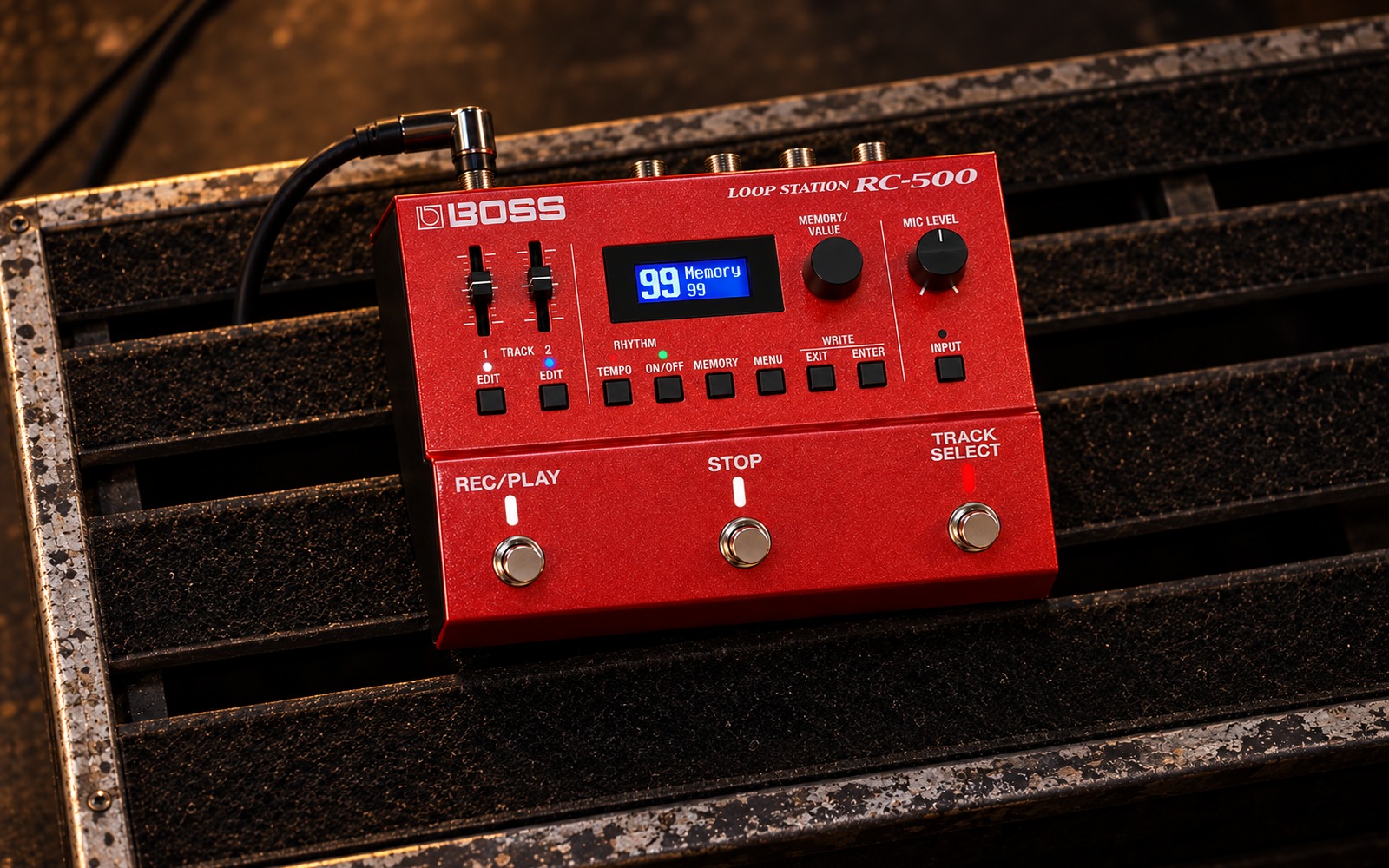
There is a specific kind of paralysis that hits a solo performer mid-set: the loop you just built is the wrong loop, but stopping it means losing everything you’ve stacked on top. The Boss RC-500 Loop Station was designed to dissolve that panic. Where every compact looper before it gave you one track to work with—one foundation, one shot—the RC-500 splits the timeline in two. Track 1 runs your chord bed. Track 2 holds your melody line. They live independently, punch in and out independently, and you conduct the whole performance from three metallic footswitches and a pair of level sliders without ever needing to tear the architecture down and start again.
Released in October 2020 alongside the streamlined RC-5, the RC-500 occupies a deliberate position in Boss’s Loop Station hierarchy: above the single-track compact family, below the multi-track tabletop RC-505 Mk2, and precisely where a gigging musician needs it. It is not trying to be a studio workstation. It is trying to be the most capable looper you can put on a pedalboard without sacrificing the stage-ready durability and five-year warranty that Boss has built into every unit it ships.
A Loop Station Built on Forty Years of Looping History
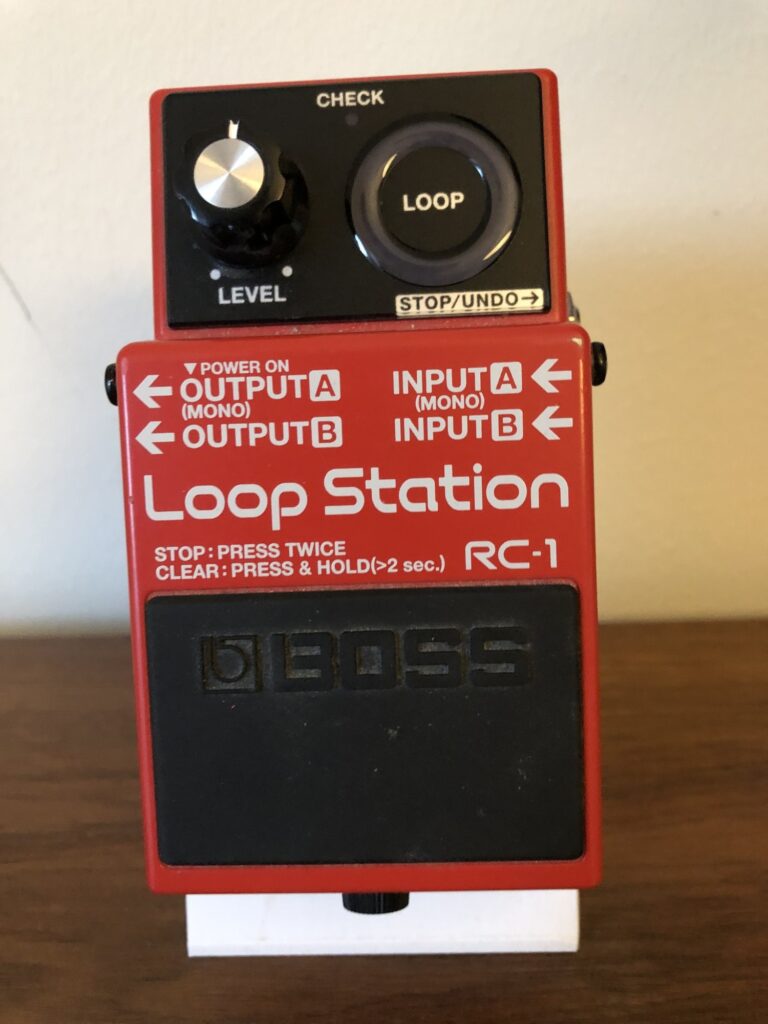
Boss introduced the concept of the compact phrase recorder with the RC-20 in 2001, a chunky unit that gave guitarists their first taste of real-time loop construction without a rack. The RC-20XL followed in 2004 with expanded memory, and a generation of looping artists—Ed Sheeran famously bought one at age fourteen—built their entire performing identity on that platform. The RC-3 arrived in 2011 and pushed the memory capacity further; the RC-1 in 2014 stripped everything back to the essentials; the RC-5 in 2020 brought 32-bit audio, an RGB LCD, and MIDI into the compact footprint.
But through all of it, the compact Loop Stations shared one fundamental constraint: a single loop track. Sophisticated performers wanting to manage two independent loops—a rhythm foundation and a melodic layer that could be muted, soloed, or rebuilt without affecting the other—had to move up to the RC-505 tabletop or work around the limitation with two pedals. The RC-500 eliminates that workaround within a form factor that, at 170mm wide, still fits on most pedalboards without consuming the whole row.
The name signals the positioning cleanly. The RC-5 is the compact flagship. The RC-500 is the expanded compact flagship. They share the same core audio engine—32-bit AD/DA, 32-bit floating-point processing, 44.1kHz sampling, the same 13 hours of total recording time, the same 57 rhythm pattern families with A/B variations, the same BOSS Tone Studio USB integration for WAV import. Where they diverge is in everything that touches how you perform: the number of tracks, the interface controls, the Loop FX engine, and the presence of an XLR microphone input that turns the RC-500 into a genuine all-in-one instrument for singer-songwriters.
Specifications: What You Are Actually Getting
| Released | October 2020 (alongside RC-5) |
| Tracks | 2 independent loop tracks (unlimited overdubs per track) |
| Total recording time | ~13 hours across 99 Phrase Memories |
| Max single track length | ~1.5 hours |
| Phrase Memories | 99 (each stores loops, overdubs, Loop FX, rhythm settings) |
| Audio quality | 32-bit AD/DA, 32-bit floating-point processing, 44.1kHz |
| Rhythm patterns | 57 patterns × 2 variations (A/B) |
| Drum kits | 16 (vs 7 on the RC-5) |
| Loop FX | Beat, Repeat, Shift, Scatter, Vinyl |
| Inputs | INPUT A (MONO), INPUT B (1/4″); XLR mic input with phantom power |
| Outputs | OUTPUT A (MONO), OUTPUT B (1/4″) |
| Footswitches | 3 × metallic (Track 1, Track 2, Rhythm/Stop) |
| Track controls | Independent level sliders + buttons for each track |
| MIDI | IN/OUT via mini TRS jacks (BMIDI-5-35 adaptor, sold separately) |
| USB | Type B — BOSS Tone Studio for WAV import/backup |
| External control | CTL/EXP jack (1/4″ TRS) — external footswitch or expression pedal |
| Power | 4×AA batteries or PSA-series AC adaptor |
| Current draw | 240mA (no phantom power) / 330mA (phantom power on) |
| Dimensions | 170mm W × 138mm D × 62mm H |
| Weight | 950g with batteries |
| Warranty | Boss 5-year |
| Price new | ~$351.99 USD |
| Price used excellent | ~$200–265 USD |
The current draw deserves direct attention. At 240mA without phantom power and 330mA with the XLR phantom power engaged, the RC-500 is firmly in the category of pedals that require an isolated power supply output of at least 350mA. Daisy-chaining this unit off a shared supply is a reliable way to introduce noise. The Strymon Zuma, Cioks DC7, and similar isolated brick supplies will handle it cleanly; budget your pedalboard power accordingly before the pedal arrives.
The Two-Track Architecture: What Changes in Practice
The single most significant feature of the RC-500—and the one that justifies its position above the RC-5 in price and footprint—is the independent two-track engine. Understanding what this means in a live context is worth time before the purchase decision.
On a single-track looper like the RC-1 or RC-5, your entire loop is one object. You record it, you overdub onto it, and when you stop it, you stop everything you’ve built. If you want to mute the chord layer while keeping the melody, there is no mechanism for doing so. You can fade the loop level with your volume knob, but that affects everything together.
On the RC-500, Track 1 and Track 2 are genuinely independent objects. You can record a chord progression on Track 1, start playback, then move to Track 2 and build a separate melody layer. During the performance, you can stop Track 2 while Track 1 keeps running, or vice versa. You can rebuild Track 2 entirely while Track 1 continues underneath. The two sliders let you balance the mix in real time. The result is a fundamentally different relationship between performer and looper: you are conducting sections of a composition rather than managing a single accumulating stack.
The Loop FX add another layer of live texture manipulation that the RC-5 does not offer. Beat chops the loop rhythmically. Repeat isolates and repeats a specific phrase fragment. Shift alters the loop pitch. Scatter creates unpredictable time-sliced variations. Vinyl introduces the physical character of a slowing or wobbling record. Applied to Track 1 while Track 2 runs clean, or triggered momentarily during a transition, these FX turn what would otherwise be a static playback loop into a dynamic performance element. They are not studio effects for recording; they are live tools for making a repetitive loop feel like it is breathing.
Famous Players: Verified RC-500 Use
The RC-500’s position in the market—advanced enough to justify the price, compact enough for real touring pedalboards—means its verified user list skews toward working professionals who use two-track looping as an active compositional tool rather than a practice device.
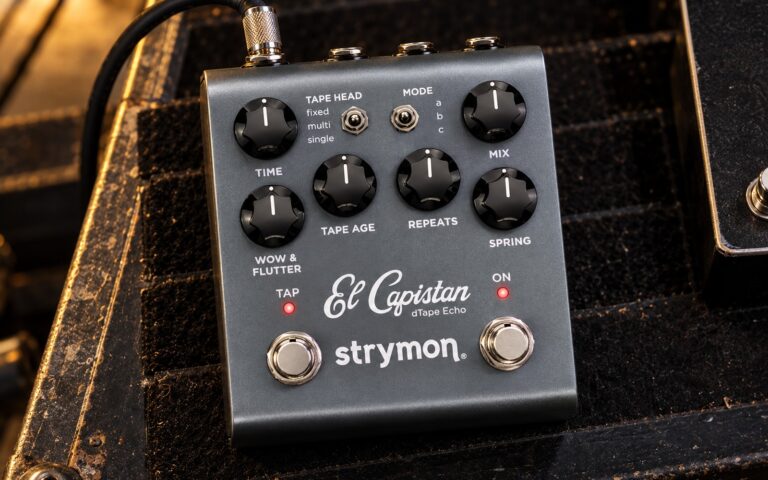
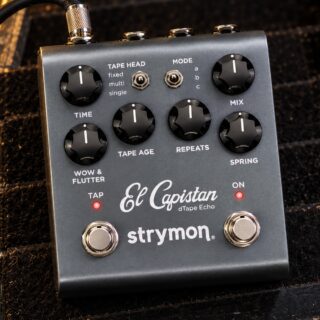
Estevan Gutiérrez (Hermanos Gutiérrez) is the most prominent confirmed RC-500 user in current circulation. Hermanos Gutiérrez, the Ecuadorian-Swiss guitar duo of brothers Alejandro and Estevan, have built one of contemporary instrumental guitar’s most distinctive voices from exactly the kind of sparse, hypnotic architecture the RC-500 is designed to serve. Premier Guitar’s Rig Rundown, filmed following a sold-out performance at Nashville’s Basement East, documented Estevan’s use of the RC-500 as part of a deliberately minimal signal chain. Where Alejandro travels with a compact board anchored by a Strymon Flint and El Capistan, Estevan’s looping work on the RC-500 provides the rhythmic and textural foundation that makes the duo’s cinematic sound feel larger than two guitars. The RC-500 is not a gimmick in this context; it is the structural backbone of how the band performs as a duo without a rhythm section.
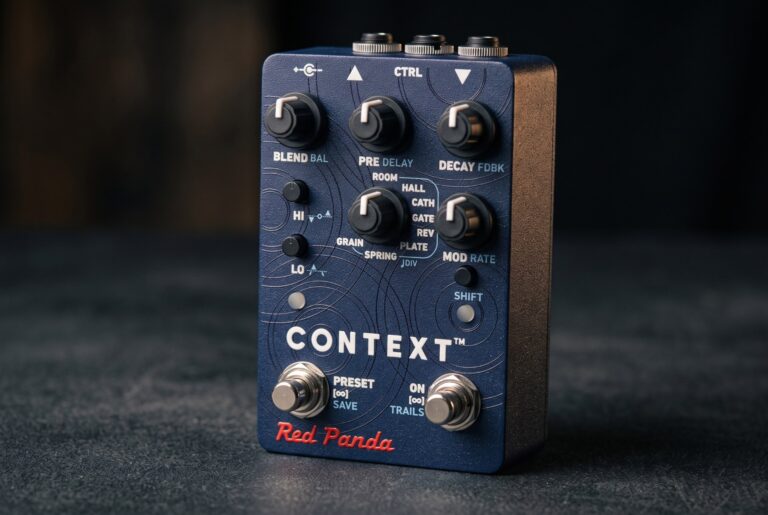
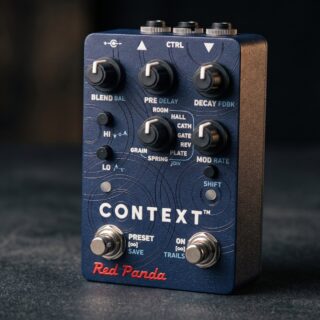
Nicholas Huft (This Will Destroy You) is confirmed as an RC-500 user via Premier Guitar’s This Will Destroy You Rig Rundown. Huft’s signal chain in that rundown includes the Boss RC-500 alongside a Boss DD-200 digital delay, Boss DD-3T, Red Panda Context reverb, Walrus Slo, and Beautiful Noise Exploder—a post-rock arsenal where the RC-500 handles the foundation-building looping work underneath layered delay and reverb textures. This Will Destroy You has always operated in the space where guitar becomes atmosphere rather than melody, and the RC-500’s two-track engine gives Huft the ability to manage distinct textural layers that the single-track approach cannot sustain.
Equipboard documents 8 pro artists using the RC-500, including the two confirmed above plus community-documented users. John Mayer appears in the Equipboard listing for this pedal; however, no primary-source Rig Rundown, manufacturer artist page, or verified interview places Mayer specifically on the RC-500. His documented live setups across multiple Premier Guitar Rig Rundowns feature different looping and delay solutions, and the RC-500 attribution on Equipboard appears to be community-level documentation without the photo or video evidence that would confirm it. He is excluded from confirmed RC-500 users here.
The RC-500 is also documented by Equipboard as used by Liz Harris of ambient project Grouper, which aligns with the pedal’s strength in long-form ambient and drone construction—though this connection is Equipboard-documented at community level rather than primary-source confirmed.
Tone Recipes: Seven Ways to Play the RC-500
1. The Singer-Songwriter Full Arrangement
Connect an acoustic guitar to INPUT A and a microphone to the XLR input. Record a chord progression to Track 1 and set its level to roughly 60% via the slider. Record a harmony vocal line or melodic guitar phrase to Track 2. Select a gentle 6/8 or 3/4 rhythm pattern from the built-in drum kit set at low level. You now have a complete arrangement—rhythm section, harmony, and lead—from one performer and one pedal. The XLR’s phantom power capability means condenser microphones work without an external preamp, which changes the practical setup overhead dramatically for solo performers.
2. The Hermanos Gutiérrez Cinematic Desert Ambient
Use a hollowbody guitar through a reverb pedal before the RC-500. Record a slow, sparse picking pattern to Track 1 with the loop length set long—eight bars or more. While it plays, build a second melodic countermelody on Track 2 and set Track 2’s level slightly lower than Track 1. Engage no rhythm track. The resulting loop plays as a layered tableau rather than a rhythm-driven groove. Apply the Repeat Loop FX selectively to isolate a phrase fragment for textural variation, then release it. This approach requires the two-track architecture; there is no equivalent workflow on the RC-5.
3. The Post-Rock Texture Builder
Run the RC-500 in the effects chain between your delay pedals and reverb. Record a heavily reverb-saturated guitar wash to Track 1—the kind of sustained chord that a delay pedal has already smeared across several seconds. While it loops, add a feedback-heavy picked phrase to Track 2. Apply the Scatter Loop FX to Track 1 momentarily during a peak intensity moment. This is the workflow Nicholas Huft’s setup is built for: the RC-500 generates the compositional foundation while the DD-200 and Context reverb color the individual layers above it.
4. Live Arrangement Rebuilding Mid-Set
Build a two-track arrangement in the first half of a song. At the bridge, stop Track 2 and keep Track 1 running. While the audience hears only Track 1, use Track 2’s footswitch to overdub an entirely new melodic phrase for the second half. When you’re ready, bring Track 2 back up on the slider. This live composition-in-performance technique is possible only when the two tracks are genuinely independent objects; it creates the impression of spontaneous arrangement change in front of an audience when it is actually a controlled performance move.
5. Drum-Led Loop Composition with MIDI Clock
Connect the RC-500 via MIDI to a drum machine or MIDI controller (using the BMIDI-5-35 adaptor to convert the mini TRS MIDI output to a standard 5-pin DIN). Run the RC-500 as the MIDI master clock, not the slave. Important practical note: the RC-500 has documented MIDI clock timing drift when operating as a MIDI slave device, a known issue discussed across multiple user forums and Reddit threads. Running it as master and syncing other devices to it produces far more stable results. Set the tempo, engage the rhythm track, and build loops in perfect sync with externally connected hardware.
6. The Vinyl FX Performance Outro
With a full two-track loop running, engage the Vinyl Loop FX during the final bars of a song. The loop behaves as if the record player is losing power—the pitch drags and the texture degrades in a way that signals to an audience, instinctively and without any announcement, that the performance is concluding. Release the FX before the loop stops completely. It is a theatrical tool with immediate communicative value in a live setting, and it requires no external pedal or effect to execute.
7. WAV Backing Track Playback with Live Overdubs
Use BOSS Tone Studio to import a pre-recorded WAV file—a produced backing track, a drum loop, an orchestral sample—into a Phrase Memory on Track 1. In performance, call up that memory and play the backing track from Track 1 while using Track 2 for live improvisation and layering. The RC-500 becomes a hybrid playback and live-looping device simultaneously. This is a fundamentally different use case from any compact looper without WAV import capability, and it significantly expands the RC-500’s performance versatility beyond pure loop construction.
How the RC-500 Compares: Honest Competition
The natural first comparison is the Boss RC-5 Loop Station, and the difference is the one we’ve been discussing throughout this article. The RC-5 costs approximately $200 versus the RC-500’s $352, weighs half as much, fits in the standard compact enclosure, and has a single loop track. If you are a straightforward solo looping performer who layers overdubs on one foundation and does not need two independent track objects, the RC-5 delivers the same audio quality and MIDI capability for significantly less money and footprint. The RC-500 is not a better version of the RC-5; it is a different tool designed for a different use case. When that use case is yours—two independent tracks, XLR mic input, Loop FX, larger interface—the RC-500 is worth every dollar of the difference.
The Boss RC-1 Loop Station sits at the other end of the family and barely registers as a comparison in feature terms—12 minutes stereo, single track, no LCD, no rhythm, no MIDI, one knob—but it serves as useful context for how far the Loop Station line has traveled. The RC-1 at $93 is a practice and simplicity tool; the RC-500 at $352 is a performance instrument.
The TC Electronic Ditto X4 offers two tracks at a slightly lower price point, with true bypass and a minimal interface. Where the Ditto X4 wins is footprint—it is considerably more compact than the RC-500—and in environments where true bypass matters. The RC-500 counters with 99 Phrase Memories (the Ditto X4 has none—every power cycle is a blank slate), 57 rhythm patterns, 16 drum kits, Loop FX, XLR mic input, MIDI, and WAV import via Tone Studio. For players who need the recall capability and the full feature set, the RC-500 is the more capable tool. For players who genuinely want zero-overhead simplicity with two tracks, the Ditto X4 has an argument.
The Aeros Loop Studio by Singular Sound represents the alternative approach at the high end: a touchscreen-driven multi-track looper with 2×2 and 6×6 track modes, WiFi updates, a large community of MIDI integration users, and a track record of responsive firmware development. The Aeros’s MIDI sync as a slave device is documented as more stable than the RC-500’s in many player reports. The RC-500 answers with the Boss build quality, five-year warranty, 950g chassis built to survive touring life, and the BOSS Tone Studio ecosystem. The Aeros retails near $499 and above; the RC-500 at $352 is the more accessible entry. Neither pedal is definitively superior; they represent different design philosophies about what a high-end compact looper is for.
The Boss RC-10R is occasionally mentioned alongside the RC-500, but the comparison reveals a very different design priority: the RC-10R is built around its rhythm section, with an onboard beatbox and a workflow centered on drum-locked looping. The RC-500 is built around its two-track looping architecture with rhythm as a supporting element. Players whose primary interest is drum-loop composition may prefer the RC-10R; players whose primary interest is independent multi-track performance will almost always prefer the RC-500.
Buying the RC-500: New vs. Used, What to Look For
New RC-500 units retail at approximately $351.99 USD from major retailers including Sweetwater, with bundle options including power supply available around $371.99. Boss’s five-year warranty covers manufacturing defects from the original retail purchase date, which is a meaningful factor when buying new—no comparable used warranty protection exists, and the higher current draw means the power supply choice is a real downstream cost consideration. Budget an additional $25-40 for an isolated power supply if your current pedalboard brick does not have a 350mA+ isolated output available.
Used RC-500 units in excellent condition trade for approximately $200-265 USD on Reverb and Guitar Center used listings. The RC-500 is mechanically durable and does not have the moving parts or tube degradation that causes vintage gear to deteriorate; a well-maintained used unit purchased from a reputable platform with return policy carries low risk. Check that the sliders move smoothly without crackle, that all three footswitches engage and release cleanly, that the LCD is legible in all brightness conditions, and that the USB port is undamaged before completing any used purchase.
The BMIDI-5-35 adaptor cable, required to connect the RC-500’s mini TRS MIDI ports to standard 5-pin DIN MIDI gear, is sold separately. Budget approximately $15-25 per adaptor; two are required for full MIDI IN and OUT connectivity with standard hardware. TRS-native MIDI controllers can connect directly without adaptors.
Ownership Notes: Realities of the RC-500 in Use
The MIDI clock timing drift issue when using RC-500 as a MIDI slave is well-documented and worth stating plainly: multiple forum threads and subreddit reports confirm that the RC-500 can experience loop dropouts and audio distortion when slaved to an external MIDI clock, particularly in Loop Sync or Tempo Sync modes with tight timing. The practical workaround—running the RC-500 as MIDI master and syncing other devices to it—works consistently, but it requires arranging your MIDI chain accordingly. If your specific use case demands that the RC-500 follow an external DAW or drum machine clock precisely, test thoroughly before committing the pedal to a critical live performance context. An unofficial RC-500 editor is available that some users report helps with troubleshooting and patch management.
The RC-500 is not powered by a standard 9V adapter alone in the most demanding configuration. Without phantom power active, the 240mA draw is within reach of many high-current pedalboard supplies. With phantom power engaged for a condenser microphone, the 330mA draw is at the limit of most single-output isolated supplies. Check your power supply’s specifications against your intended configuration before assuming the RC-500 will run cleanly from whatever port is available on your existing board.
BOSS Tone Studio’s WAV import capability transforms the RC-500’s practical versatility in a way that no amount of feature-list reading fully communicates until you experience it. Playing a produced backing track from Track 1 while building live overdubs on Track 2 is a completely different performance relationship from recording everything live in the moment. Solo performers who work with arranged backing tracks—whether pre-produced drum loops, orchestral beds, or rhythm section recordings—gain a legitimate performance tool rather than a compromise.
The Phrase Memory system retains loop content, overdubs, Loop FX assignments, and rhythm settings together as a single stored snapshot. Calling up Memory 47 in the middle of a set brings back not just the loop you recorded but the entire performance context you programmed for that song. For performers who play the same set list regularly, this recall capability eliminates the need to rebuild loops from scratch each night.
Frequently Asked Questions: Boss RC-500 Loop Station
What is the main difference between the RC-500 and the RC-5?
The RC-500 has two independent loop tracks; the RC-5 has one. The RC-500 also adds an XLR microphone input with phantom power, Loop FX (Beat, Repeat, Shift, Scatter, Vinyl), 16 drum kits vs the RC-5’s 7, a larger form factor with dedicated sliders and more buttons, and a higher current draw. They share the same core audio engine—32-bit floating point, 44.1kHz, 13 hours total recording time, 99 Phrase Memories, 57 rhythm patterns, MIDI via mini TRS, and BOSS Tone Studio WAV import. The RC-5 costs approximately $200 and weighs 450g; the RC-500 costs approximately $352 and weighs 950g.
Does the RC-500 have an XLR microphone input?
Yes. The RC-500 includes an XLR microphone input with phantom power for condenser microphones, in addition to the standard stereo 1/4″ instrument inputs. This makes it genuinely useful for vocalist-guitarists who want to loop vocal harmonies alongside instrumental loops without a separate DI or preamp in the chain.
Can you import backing tracks into the RC-500?
Yes. BOSS Tone Studio (free software for Windows and Mac) allows you to import WAV files into any of the 99 Phrase Memories. The imported audio plays back on Track 1 or Track 2 as if it had been recorded live, and you can overdub on top of it or run the other track independently alongside it.
How do the two tracks work independently?
Track 1 and Track 2 each have a dedicated footswitch for record/play/stop control and an independent level slider. They can run simultaneously, stop independently, be muted separately, and be overdubbed separately while the other track continues playing. They share the same tempo and time signature, but their content, play state, and level are entirely independent of each other.
What are the Loop FX, and when should I use them?
Loop FX are real-time processing modes applied to an already-playing loop. Beat chops the loop rhythmically in sync with the tempo. Repeat isolates a short phrase fragment and loops it. Shift alters the playback pitch up or down. Scatter time-slices the loop randomly for glitch-style variation. Vinyl emulates a slowing or stopping record with corresponding pitch drop and texture degradation. They are performance tools rather than studio effects—designed to introduce motion and variation into a static loop during live play rather than recorded processing.
Does the RC-500 work better as a MIDI master or slave?
As a MIDI master—sending clock to other devices—the RC-500 operates stably and consistently. As a MIDI slave—receiving clock from an external device—it is documented to experience timing drift and occasional loop dropouts in Loop Sync and Tempo Sync modes. The practical recommendation from the player community is to run the RC-500 as the master clock and sync other hardware to it rather than the reverse.
What power supply does the RC-500 need?
The RC-500 draws 240mA at 9V DC without phantom power, and 330mA with phantom power engaged for a condenser microphone. An isolated power supply output of at least 350mA is required for phantom power use; a 250mA isolated output is the safe minimum without phantom power. The pedal can also run on 4×AA batteries, which is useful for busking and situations without mains power, though battery life under active use is shorter than a mains supply.
Is there any reason to choose the RC-500 over a multi-track looper like the Aeros Loop Studio?
Yes, several. The RC-500 offers Boss’s five-year warranty, a proven mechanical durability record across touring conditions, a more compact footprint than many multi-track alternatives, and a lower price point than the Aeros at $352 vs $499 and above. The Aeros Loop Studio offers more tracks (up to 6×6), a touchscreen interface, and reportedly better MIDI slave clock stability. The RC-500 is the better choice for players who want two tracks, proven build quality, and Boss ecosystem integration. The Aeros is worth considering for players who need more tracks and are willing to manage the higher price and different workflow.
Image credits
- Top image: GuitarGangsters AI-generated reference illustration, not a photograph.
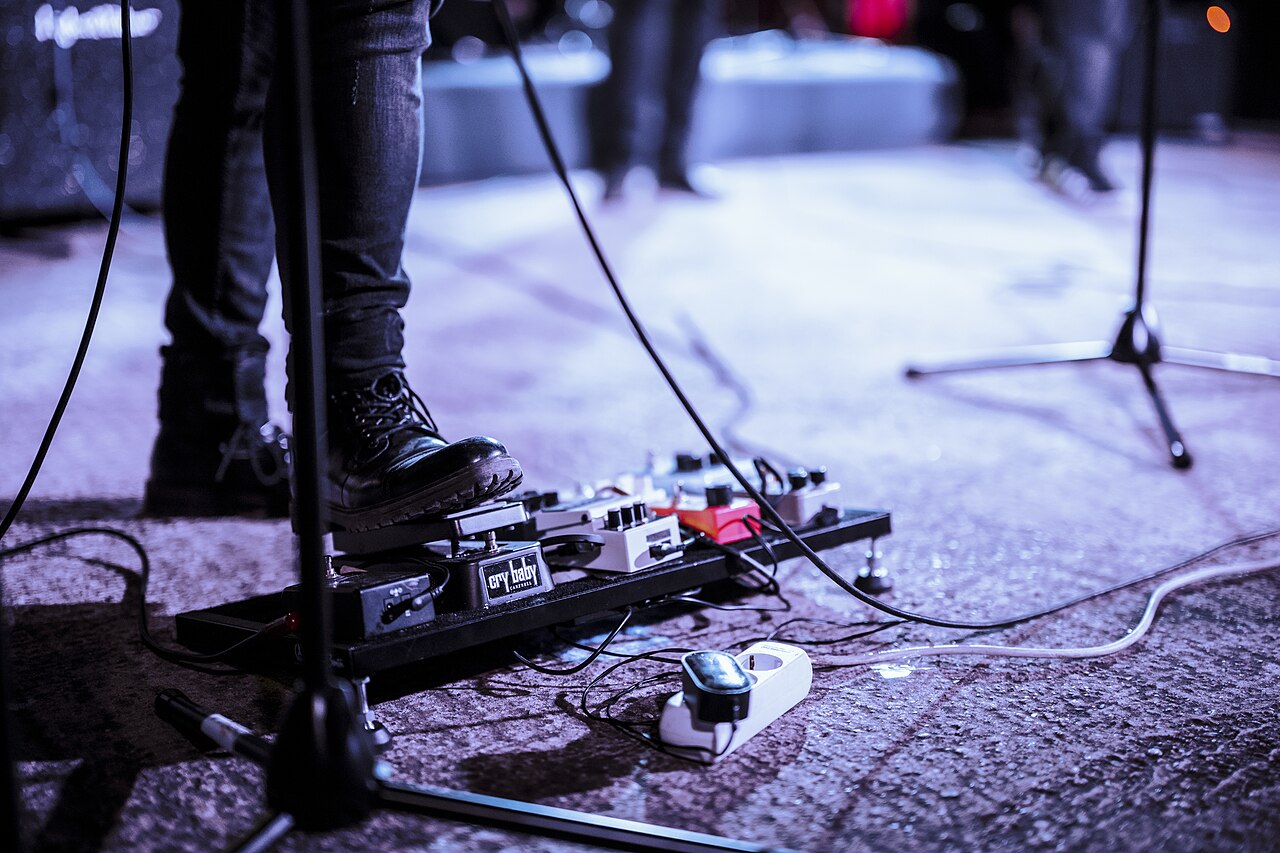
- A guitarist using an effects pedal on stage: Shixart1985, Wikimedia Commons, CC BY 2.0.
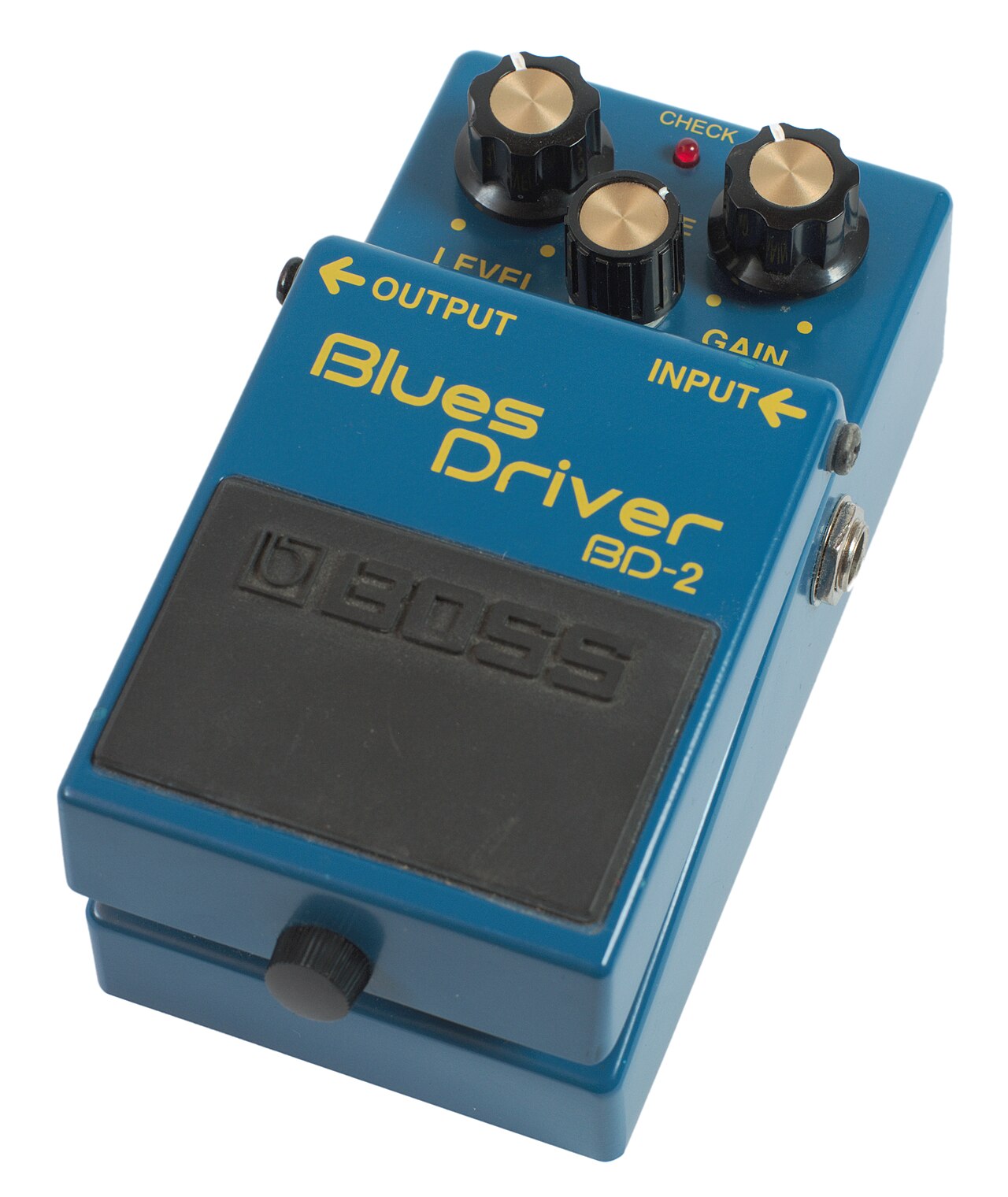
- A Boss Blues Driver BD-2 pedal: El Grafo, Wikimedia Commons, CC BY-SA 4.0.
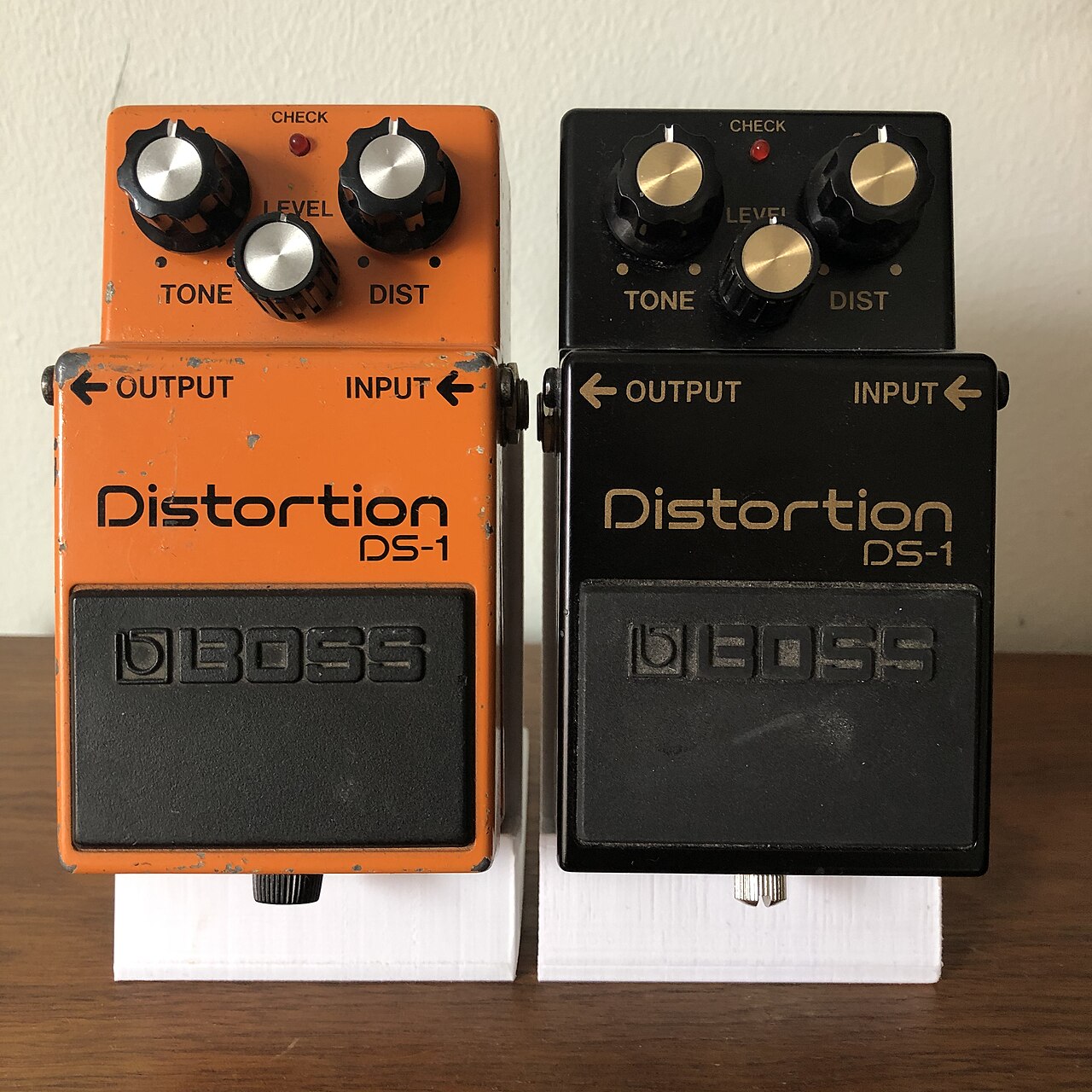
- A Boss DS-1 distortion pedal beside a DS-1-4A: Kuriosatempel, Wikimedia Commons, CC BY-SA 4.0.
Latest News
Related
On This Day
Monday 9 November
From this week: