The Original Cry: How the Dunlop GCB95 Became the Wah Pedal Every Guitar Player Knows
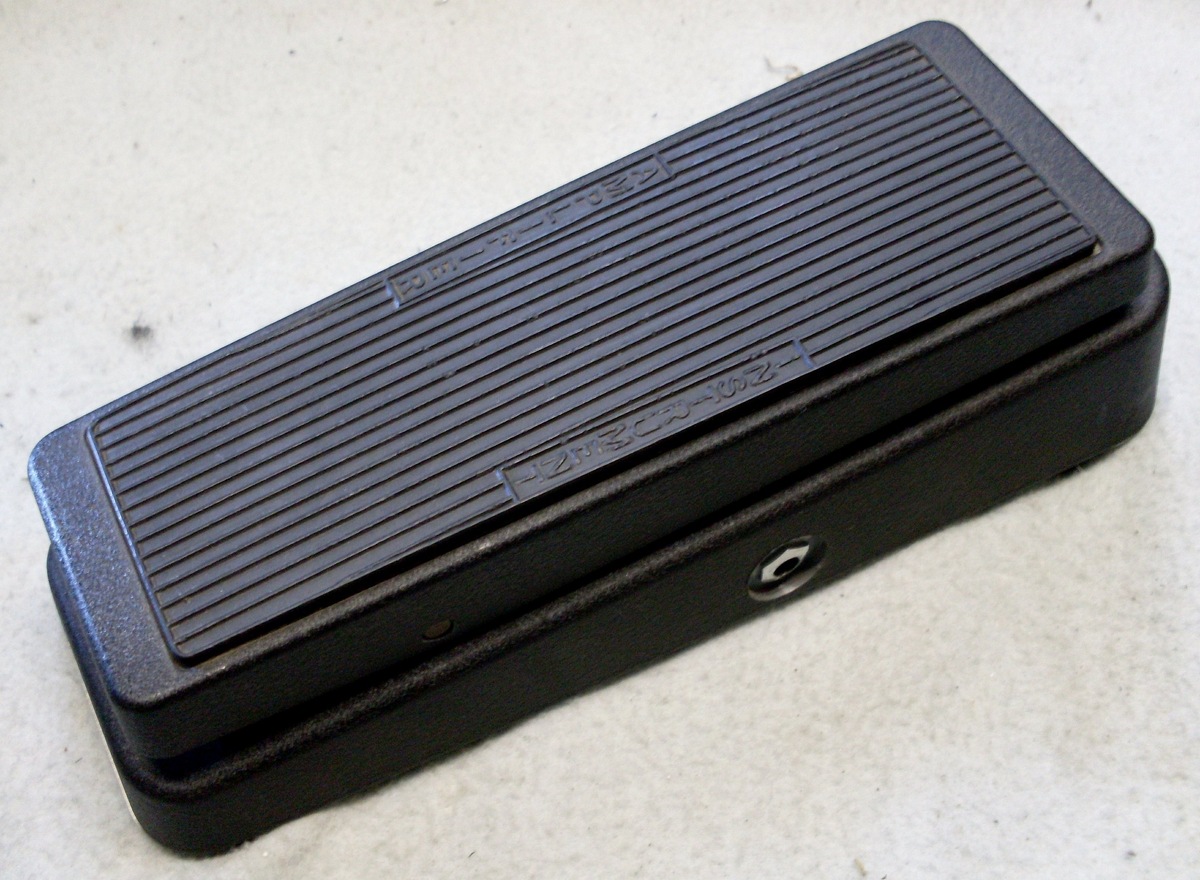
Dunlop Crybaby GCB-95, identified in the photographer’s description. Photo: “Dunlop Crybaby Wah” by Roadside Guitars, CC BY-SA 2.0 (https://creativecommons.org/licenses/by-sa/2.0/). Original copyright notice: COPYRIGHT, 2007. Complete source frame proportionally resized and JPEG re-encoded; this derivative is CC BY-SA 2.0. Source: https://www.flickr.com/photos/roadsideguitars/3198471128/
History, circuit analysis, famous players, tone settings, and buying advice for the Dunlop GCB95 Cry Baby — the world's best-selling wah pedal.
There is a moment in “Voodoo Child (Slight Return)” — around the eight-second mark — where Jimi Hendrix sweeps his foot forward and the guitar comes alive with a human-like vocal cry that no one who heard it had ever experienced before. That sound was the wah pedal announcing its arrival to the world, and it changed guitar playing forever. The specific pedal Hendrix used that night in 1967 was a Thomas Organ Cry Baby, a device that barely existed yet, manufactured in Italy with wobbly quality control and enough unit-to-unit variation that players had to audition six or seven before finding one that sang right.
Thomas Organ went out of business in 1981. The Cry Baby name, the design, the legacy — it could all have vanished into obscurity. Instead, Dunlop Manufacturing acquired the brand the following year and built the GCB95 Cry Baby Standard Wah: a precision-engineered successor that brought consistency, reliability, and modern quality control to a circuit that had defined a generation of guitar heroes. The GCB95 has been in continuous production since 1982, and it remains the benchmark against which every other wah pedal — including Dunlop’s own expanding lineup of signature models — is measured.
This is the story of the GCB95: how it works, who plays it, and why nearly forty-five years after its introduction it still sits at the center of rock guitar’s most expressive effect.
The Wah Pedal Before Dunlop: A Messy, Glorious Invention
The wah-wah effect was invented in November 1966 by Lester Kushner and Brad Plunkett, engineers working at Warwick Electronics — a division of Whirlpool that owned both the Thomas Organ Company and the Vox name in the United States. Plunkett was tasked with developing a tone circuit. What he accidentally discovered during testing was something far more dynamic: a bandpass filter whose center frequency could be swept up and down by mechanical foot movement, creating a sound that mimicked the human voice in a way no other guitar effect had managed.
Plunkett housed the circuit in a volume pedal shell, and the device was dubbed the Cry Baby — named for the crying, vocal quality of its effect. Thomas Organ patented the circuit design, but by the time the patent was granted, the wah effect had already spread across Europe, manufactured under various names by the Italian firm JEN Cinematografica. These Italian-made units, marketed under the Cry Baby and Vox V846 names, were the pedals that reached the hands of Jimi Hendrix, Eric Clapton, Jeff Beck, and Jimmy Page in 1967 and 1968.
The problem was consistency. Early Thomas Organ and Italian JEN Cry Baby units varied enormously from unit to unit — different component tolerances, different inductors, different potentiometers — which is why Hendrix reportedly had to test half a dozen pedals before finding the one that sounded right. The magic was real, but the manufacturing was chaotic.
When Thomas Organ Company folded in 1981, Dunlop Manufacturing founder Jim Dunlop recognized what the world was about to lose. He acquired the Cry Baby brand and set his engineers to work. Their mandate: keep everything that made the original great, fix everything that made it unreliable. The result, introduced in 1982, was the GCB95.
From Italian Chaos to California Consistency: The GCB95 Circuit
The GCB95’s circuit is a direct descendant of the original Thomas Organ/VOX design, with two meaningful improvements that Dunlop’s engineers implemented to correct the original’s weaknesses. The core wah effect — an active bandpass filter built around a fixed inductor and variable resistor — is functionally identical to the vintage circuit. What Dunlop changed was the input stage and component quality.
The original Vox V846 design suffered from a low input impedance of approximately 69.5kΩ, which caused significant “tone sucking” — the pedal would steal brightness and high-frequency content from the guitar signal even when the wah effect wasn’t being actively swept. Dunlop added an input buffer stage using an emitter-follower transistor configuration that raises the input impedance to approximately 1MΩ (800kΩ as measured at the jack). This preserves the guitar’s original tone and prevents loading from preceding pickups.
The heart of the GCB95 is the active filter stage, built around three cascaded transistor stages. A 500mH Fasel inductor — the legendary red Fasel, housed inside the rocker mechanism — forms a resonant circuit with a fixed capacitor. As you rock the pedal forward and back, a 100kΩ potentiometer (the Hot Potz, tested to one million operational cycles) changes the gain of the feedback loop, which in turn shifts the apparent capacitance of the resonant circuit. The result is a bandpass peak that sweeps from approximately 450Hz at heel position up to 1.6kHz at toe position, centered at 750Hz at midpoint.
The sweep generates a gain increase of up to +19.5dB at the resonant frequency while attenuating frequencies above and below. This frequency-selective boosting is what creates the vocal, human-sounding quality of the wah effect — the pedal is essentially mimicking the way the human vocal tract shapes resonant frequencies when we form vowel sounds.
The Fasel inductor deserves special mention. It is the single most discussed component in all of wah pedal culture. The original “halo” inductor used in vintage Thomas Organ/Vox units is the most sought-after, but the red Fasel in the GCB95 — produced by an Italian manufacturer following similar specifications — is widely considered the closest modern approximation to the vintage tone, with a characteristic smoothness and vocal quality that inductors made from other materials don’t quite replicate.
GCB95 Specifications
Famous Players: Who Has Ridden the Cry Baby
The GCB95 didn’t become the world’s best-selling guitar pedal by accident — it got there because the players who mattered most found it on their stages and in their studios and never left. A critical honest distinction: Jimi Hendrix, whose name is inseparable from the Cry Baby legacy, used original Thomas Organ/Italian JEN Cry Baby units manufactured before 1970, more than a decade before the GCB95 existed. Dunlop’s JH-1D Jimi Hendrix Signature Wah was designed to recreate the sonic character of those specific vintage units. The GCB95 carries the same circuit lineage forward, but the Hendrix connection is historical rather than direct. With that understood, the roster of players who have used the GCB95 is still extraordinary.
Slash — Guns N’ Roses, Solo Career
Slash is perhaps the GCB95’s most famous practitioner. Throughout the Guns N’ Roses era and into his solo career, the standard black Cry Baby was at his feet whenever the song called for wah. You can hear it on “Mr. Brownstone,” “Civil War,” and across his solo work including tracks from Apocalyptic Love. Slash’s approach is classic rock wah — wide, theatrical sweeps that add drama and punctuation to lead lines rather than the rhythmic funk wah technique. In 2006, Dunlop collaborated with Slash to create the SW95 Slash Signature Wah, equipped with a three-band EQ and distortion boost, and more recently the SC95 Slash Cry Baby Classic with a custom lower-frequency voicing. Both signature models grew from Slash’s years of GCB95 use and represent his refinements on the standard circuit.
Tom Morello — Rage Against the Machine, Audioslave
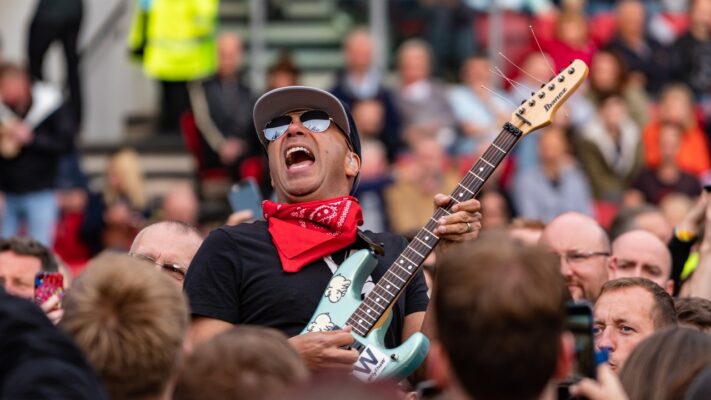
Tom Morello’s relationship with the GCB95 is one of the most documented and unconventional in rock history. According to Ground Guitar’s research into his rig, Morello has used the GCB95 on every album and every tour throughout his career — but not to create the standard wah sweep most players think of. Morello uses the pedal’s frequency-filtering properties as a tonal sculpting tool, engaging the wah at fixed positions to alter his guitar’s frequency character, or using it in combination with his killswitch technique to create the scratching and stuttering sounds that became Rage Against the Machine’s sonic signature. Lines like the guitar break in “Bulls on Parade” and the synthesizer-like textures across The Battle of Los Angeles run through the GCB95. Dunlop later worked with Morello to develop the TBM95 Tom Morello Signature Cry Baby, which adds a switchable frequency range. But the foundation of his sound was built on the standard GCB95.
Jerry Cantrell — Alice in Chains
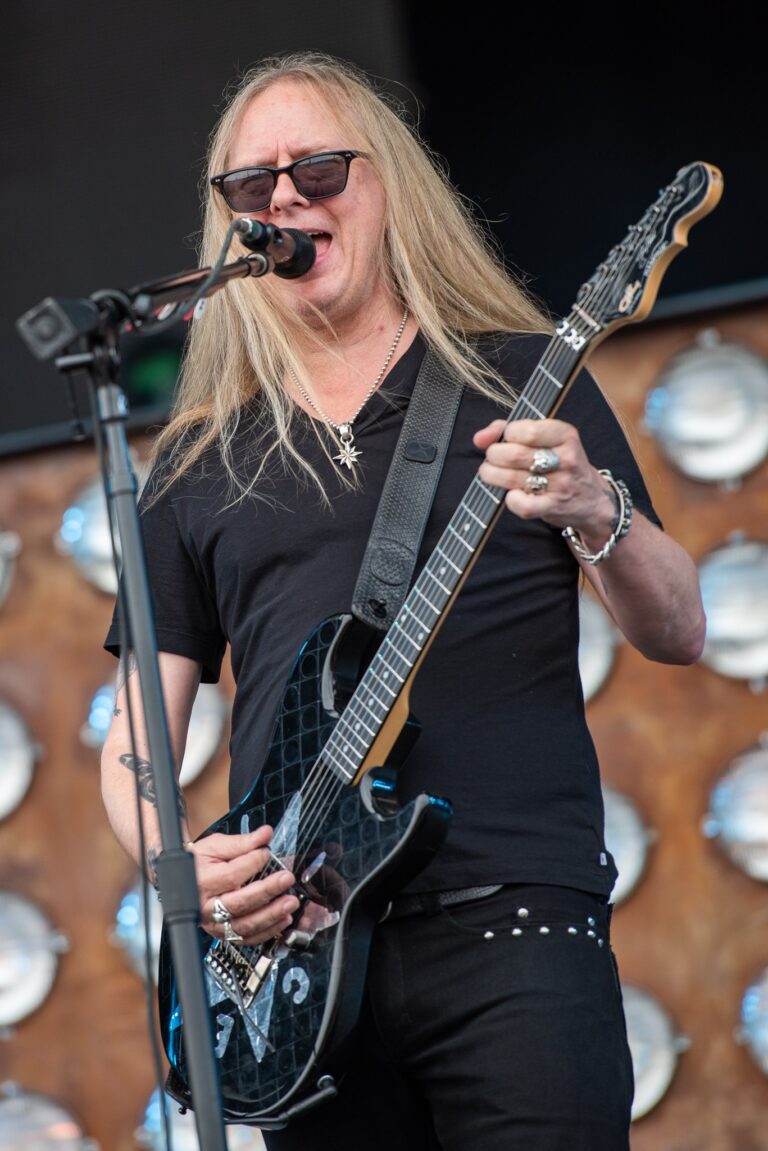
Jerry Cantrell is among the handful of guitarists who have made the wah pedal into something distinctly their own. His approach — slow, deliberate sweeps that add a queasy, psychedelic quality to Alice in Chains’ already heavy riffing — can be heard across the band’s catalog from Dirt through Black Gives Way to Blue and beyond. Cantrell favored a wider, darker sweep range than the stock GCB95 provides, which eventually led Dunlop to develop the JC95 Jerry Cantrell Signature Cry Baby Wah: a custom-voiced circuit with a wide, dark response, a tight punchy heel-down tone, and a frequency center tailored to cut through dense Alice in Chains arrangements. The JC95 signature is a departure from GCB95 standard voicing, and Cantrell’s endorsement is the story of how an artist’s specific requirements pushed the Cry Baby line in a new direction.
Kirk Hammett — Metallica
Kirk Hammett’s wah playing is among the most recognizable in metal history. The opening of “Enter Sandman,” the solo in “One,” the rhythm work in “Master of Puppets” — wah is central to Hammett’s vocabulary in a way it is for almost no other metal guitarist at his level. He began his Dunlop relationship with the standard GCB95, then worked with the company to develop the KH95 Kirk Hammett Signature Cry Baby: a pedal voiced specifically to his preferences, with tailored EQ, volume, and tone settings that Dunlop’s engineers reproduced with exacting precision. The KH95X followed, a second signature design in a distinctive purple finish. Hammett’s role in the Cry Baby story is impossible to ignore — no metal guitarist has done more to normalize wah as a lead technique in heavy music.
Jimi Hendrix — Historical Lineage
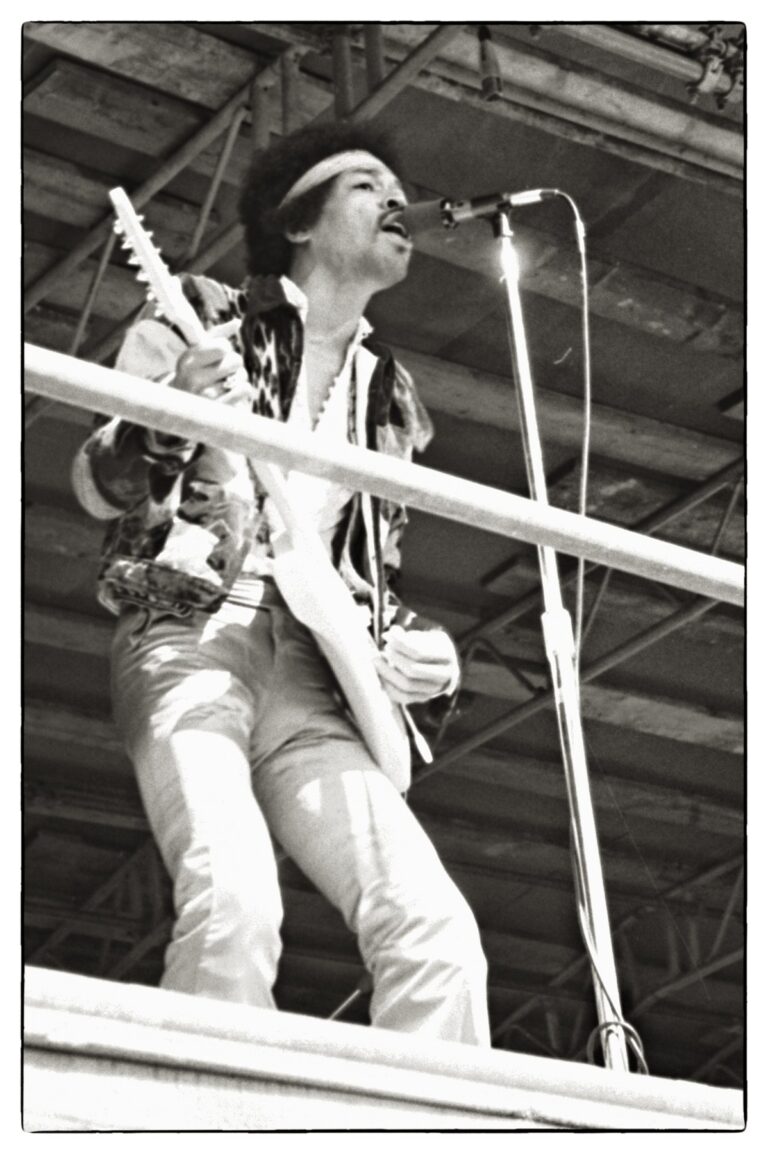
As noted above, Hendrix used original Thomas Organ Cry Baby units produced before his death in 1970 — the direct ancestors of the GCB95 but not the GCB95 itself. His playing on “Voodoo Child (Slight Return),” “Little Wing,” and across the Electric Ladyland sessions established what a wah pedal could do in rock music. When Dunlop built the GCB95 in 1982, they were explicitly trying to preserve what made those vintage units great. The circuit lineage is direct and intentional. Dunlop has since developed the JH-1D Jimi Hendrix Signature Wah and the Jimi Hendrix Cry Baby Mini Wah, both crafted to replicate the dynamic tonal sweep of the original Italian-made Thomas Organ unit. The GCB95 is the foundation of that entire lineage — the production pedal that kept the circuit alive long enough to eventually build the signature.
Jeff Beck — Solos and Sessions
Jeff Beck was among the first British players to adopt the Cry Baby after encountering it in 1967, and his use on early Jeff Beck Group recordings helped cement the wah’s place in rock guitar vocabulary. Beck’s touch-sensitive, violin-like approach to the instrument translated naturally to the wah pedal’s expressive sweep. His use of wah on tracks like “Bolero” and across his Beck-Ola album era established the pedal as a legitimate expressive tool rather than just a novelty effect. Dunlop developed the BBA Signature Wah model in collaboration with Beck in later years.
Jimmy Page — Led Zeppelin
Jimmy Page used a Cry Baby wah on several of Led Zeppelin’s most celebrated recordings. The wah appears in “Dazed and Confused” and across various live performances, where Page deployed it sparingly but with maximum theatrical impact — a single well-placed sweep in the middle of a solo could shift the emotional temperature of an entire passage. Page’s use reinforced the Cry Baby’s credibility as a tool for players with serious musical intentions rather than a gimmick.
Buddy Guy — Blues and Beyond
Buddy Guy represents the wah pedal’s deep roots in blues playing, and his Dunlop relationship eventually produced the BG95 Buddy Guy Signature Wah. Guy’s approach is rhythmic and conversational — the wah becomes a second voice in a blues call-and-response, answering his vocal phrases with equal expressiveness. His use of the Cry Baby through the 1970s and onward helped prove that the wah pedal belonged in blues and soul contexts as naturally as in rock and metal.
Tone Recipes: Settings That Work
Classic Rock Wah (Slash Approach)
Place the GCB95 first in your chain, before any overdrive. Use a moderate to high-gain amp setting — the Les Paul/Marshall combination Slash favors. Rock the pedal slowly and deliberately through lead lines, emphasizing the heel-down position at the start of phrases and sweeping toward toe-down for accent. Keep the sweep wide and theatrical. The GCB95’s focused, aggressive high end (compared to vintage Vox units) cuts through dense band mixes beautifully.
Metal Wah (Hammett Approach)
High gain, drop-tuned or standard tuning, aggressive picking attack. The GCB95 responds dynamically to picking velocity — harder attacks emphasize the resonant peak more aggressively. Use quick, decisive toe-down accents at the beginning of lead phrases to add punch and definition. With high gain behind it, the GCB95’s resonant peak cuts through even heavy rhythm guitar frequencies. Try the pedal after your overdrive in the chain for a tighter, more controlled wah voice in high-gain contexts.
Tom Morello Fixed-Filter Technique
Set the pedal at approximately 30-40% toe-down position and lock it there. Don’t sweep it at all. Instead, use it as a fixed highpass filter that alters your guitar’s frequency character before it hits your amp or effects chain. Combined with delay and chorus, this creates a synthesizer-like quality. Combine with a killswitch (a kill button on your guitar or an on/off bypass pedal) to create the rhythmic scratching effect Morello uses on “Bulls on Parade.”
Jerry Cantrell Slow Doom Sweep
Place wah after your primary overdrive or distortion. Set your amp to a heavy, bass-heavy crunch tone. Rock the pedal extremely slowly — think four to eight counts per full sweep rather than one or two. The GCB95’s sweep range emphasizes the queasy, psychedelic quality of slow wah motion when there’s significant gain behind it. Cantrell’s approach treats the wah less as a solo effect and more as an ambient texture that shifts over riff cycles.
Blues Wah (Buddy Guy Approach)
Moderate clean-to-crunch amp tone, single coil or humbucker pickup in the neck position. Use the wah rhythmically in a call-and-response pattern with your vocal phrases — heel down when the vocal is carrying the melody, sweep toward toe as you answer with guitar. Slow, deliberate sweeps that mimic vowel sounds. The key is treating the pedal as a second voice rather than a lead accent. Light to moderate touch on the strings lets the wah’s resonant peak define the note rather than the pick attack.
Signal Chain Placement: Where the GCB95 Lives
Wah pedal placement in a signal chain significantly affects the sound. Most players place the GCB95 first in the chain — between guitar and all other pedals — which gives the wah the cleanest, most dynamic response. The pedal sees the guitar’s full frequency content and responds to picking dynamics without coloration from downstream effects.
Placing the GCB95 after overdrive or distortion creates a tighter, more compressed wah sound — the distortion clips the signal before the wah filters it, resulting in a more controlled resonant peak that’s useful in high-gain contexts. This is sometimes called the “after-fuzz” placement and is useful when you want the wah to add texture to a distorted tone without the explosive dynamics of placing it before dirt.
One important note for players using vintage-style fuzz pedals like the Fuzz Face: the GCB95’s output buffer can cause impedance-related issues with early Fuzz Face designs that expect to see the high impedance of a guitar pickup directly at their input. If you experience a loss of fuzz character or a thin, thin tone with GCB95 before fuzz, try placing the fuzz first and the wah second — or use a Fuzz Face designed with a buffered input (later Germanium/Silicon designs are more tolerant).
The GCB95 is also non-true-bypass — it has a buffered bypass circuit that remains in the signal path even when the effect is disengaged. This buffer actually benefits most signal chains by maintaining signal integrity across long cable runs, but it’s worth knowing that you’re always running through the pedal’s input stage even when the wah effect is off.
GCB95 vs. The Cry Baby Family: How It Compares
The GCB95 is the foundation of Dunlop’s massive Cry Baby product line, but understanding where it sits relative to its siblings helps clarify what you’re getting — and what you might be missing.
The Cry Baby 535Q Multi-Wah adds six selectable frequency ranges (adjustable with a boost knob) and a variable Q control, making it the most flexible standard Cry Baby. Jimmy Dunlop designed the 535Q based on direct feedback from artists who wanted more tonal control. The trade-off is complexity — the 535Q requires more setup time and has more controls to manage in a live setting.
The Cry Baby Mini CBM95 packs the GCB95’s circuit into a housing roughly half the physical size, preserving the full sweep range while saving significant pedalboard real estate. The compression of the mechanism slightly changes the feel of the foot sweep — some players prefer the longer throw of the standard GCB95, others find the compact version more natural.
The Vox V847 is the GCB95’s closest circuit cousin — both derive from the same Thomas Organ design. The key difference is the GCB95’s input buffer, which the V847 lacks. This makes the V847 slightly more reactive to changes in pickup impedance and slightly darker/fatter in the low end (the buffer in the GCB95 filters some low-frequency content). Vox V847 players often describe a slightly warmer, more vintage quality; GCB95 players describe a more focused, aggressive high end.
The Ibanez TS9 Tube Screamer is a natural comparison point for any workhorse effects pedal — both the GCB95 and the TS9 occupy similar positions as the definitive standard version of their respective effect types. The TS9 is placed before the wah in most classic signal chains, with the TS9’s mid-boosted drive feeding the GCB95’s expressive sweep for the full classic rock lead tone combination. The two pedals have a natural synergy: the TS9 adds harmonic content that the GCB95’s resonant peak then sculpts expressively.
The Cry Baby Signature World: What the GCB95 Spawned
No wah pedal in history has generated more signature variants than the Cry Baby. The roster of artists who worked with Dunlop to develop custom voicings reads like a hall of fame shortlist: Jimi Hendrix (JH-1D), Kirk Hammett (KH95), Slash (SW95/SC95), Jerry Cantrell (JC95), Tom Morello (TBM95), Zakk Wylde (ZW-45), Dimebag Darrell (DB-01), Eddie Van Halen (EVH95), Buddy Guy (BG95), John Petrucci (JP95), Joe Bonamassa (JB95).
Every one of these signature models begins with the GCB95 as its reference point — even when the modifications are extensive. This matters because it tells you something important about the GCB95’s own character: it’s balanced enough that artists with radically different tonal requirements all started from it and then refined toward their specific preferences. It’s not a pedal designed for any one style; it’s a pedal designed to be the complete, neutral implementation of the wah effect, leaving personalization to the player’s technique.
Buying Guide: New, Vintage, and Everything Between
The GCB95 at $99.99 USD is one of the most straightforward buying decisions in guitar gear. For that price you get a genuinely professional piece of equipment with a circuit that has been refined over more than forty years, a Fasel inductor, a Hot Potz potentiometer rated to one million cycles, and a die-cast metal enclosure that will survive decades of stage use. The value proposition is exceptional.
Used GCB95 units sell in the $40-70 range on Reverb and eBay, making them among the best value-for-money used pedal purchases in the market. The only things that wear out are the potentiometer (which the Hot Potz is rated to handle) and occasionally the rubber footpad on the heel. Both are easily replaceable with standard components.
Be aware that pre-1991 GCB95 units do not have the input buffer (introduced in mid-1991, marked on the PCB as “Rev F” or higher). Vintage pre-buffer GCB95s are tonally closer to the original Vox V846 — slightly warmer, more vintage-sounding — but they lose the high-frequency preservation benefit of the buffer in long cable runs. For most players, a Rev F or later unit is preferable. If you’re buying used, check the PCB revision.
The current production GCB95 is made in the USA, using the same fundamental circuit topology since the buffer addition in 1991. Unlike many “budget” effects pedals whose circuit quality has declined as manufacturing moved offshore, Dunlop has maintained the GCB95’s USA production and component quality throughout its life.
Ownership Notes: Getting the Most from Your GCB95
The GCB95 needs a 9V DC adapter or battery. Current draw is under 1mA (900µA), which means even a modest pedalboard power supply can run multiple GCB95s from a single output. Battery life is exceptional by pedal standards — months of typical use from a single 9V. That said, a dying battery will cause the resonant peak to soften and the overall level to drop before the battery dies completely, so if your wah is sounding softer than usual, check the battery first.
The Hot Potz potentiometer rarely fails in normal use, but if the wah develops a scratchy or inconsistent sound as you rock the pedal, the pot may need cleaning or replacement. This is a common repair that any tech can handle and costs less than $20 in parts and labor.
True bypass modification is the most common GCB95 modification. The stock buffered bypass circuit means your signal runs through the input buffer even when the effect is disengaged. For most rigs this is a benefit (consistent impedance, no level changes when bypassed), but if you’re running a fuzz pedal that requires direct pickup impedance, the mod matters. The true bypass modification uses a 3PDT stomp switch and can be done before or after the input buffer stage — most techs do it before the buffer since it’s the simpler implementation and easier to reverse.
If you find the stock GCB95 too bright or harsh, the most straightforward tonal modification is a resistor swap at R7 (33kΩ stock) — increasing this value to 39kΩ, 47kΩ, or 68kΩ narrows the resonant peak (higher Q factor) for a more vocal, singing quality. This is sometimes called the “Vocal Mod” and is widely documented in the modding community. Decreasing R7’s value spreads the peak for a more gradual, less dramatic sweep.
FAQ: Dunlop GCB95 Cry Baby Standard Wah
Is the GCB95 true bypass?
No. The GCB95 has a buffered bypass circuit — your signal runs through the pedal’s input buffer even when the effect is disengaged. This is actually beneficial for most rigs, as the buffer maintains signal integrity and prevents high-frequency loss in long cable runs. The buffer can, however, cause issues with certain vintage-style fuzz pedals that are designed to see direct pickup impedance. True bypass modification is a straightforward and reversible mod if you need it.
What is the red Fasel inductor and why does it matter?
The Fasel inductor (a 500mH toroidal coil made in Italy) is the single component most responsible for the GCB95’s tonal character. The inductor’s physical properties — its resistance, inductance, and the way it responds to current changes — determine the shape and quality of the wah’s resonant peak. The red Fasel in the current GCB95 is widely regarded as the best modern approximation of the vintage “halo” inductors used in early Thomas Organ and Vox units. Different inductors produce audibly different wah characters; the Fasel is specifically responsible for the smooth, vocal quality that distinguishes a great wah from a mediocre one.
How does the GCB95 differ from the Vox V847?
Both pedals use the same fundamental Thomas Organ circuit design. The key difference is the GCB95’s input buffer, which the V847 lacks. The buffer raises the GCB95’s input impedance to approximately 1MΩ (vs. the V847’s ~69kΩ), preventing tone loss and signal loading. As a sonic side effect, the buffer slightly filters some low-frequency content, giving the GCB95 a more focused, slightly brighter high end compared to the V847’s darker, fatter character. Players who prefer warmer vintage tone often prefer the V847; players who want clarity and aggression often prefer the GCB95.
Did Jimi Hendrix actually use the GCB95?
No — Hendrix died in September 1970, more than twelve years before Dunlop introduced the GCB95 in 1982. Hendrix used original Thomas Organ Cry Baby and Italian JEN-manufactured Vox wah units from the 1967-1969 era. The GCB95 carries the same circuit DNA forward and is the direct commercial descendant of those units, but Hendrix never played one. Dunlop’s JH-1D Jimi Hendrix Signature Wah was specifically designed to recreate the sonic character of Hendrix’s actual vintage units. The GCB95 is the standard version that preserved the circuit while Hendrix’s name was developed into its own product line.
Can I use the GCB95 with a bass guitar?
Yes, though the stock GCB95’s sweep range is optimized for guitar frequencies (450Hz-1.6kHz center), which means it will filter out much of the bass guitar’s fundamental frequency content. For bass, Dunlop makes the 105Q Bass Wah and the CBM105Q Bass Mini Wah, which use a sweep range shifted significantly lower to preserve bass fundamentals while still creating an audible wah effect. The modification community documents a capacitor swap (increasing C2 from 0.01µF to 0.068µF) that shifts the GCB95’s sweep range toward bass frequencies.
Where in my signal chain should the GCB95 go?
The most common placement is first in the chain, between guitar and all other effects. This gives the wah the cleanest, most dynamic response and the greatest sensitivity to picking dynamics. After overdrive/distortion creates a tighter, more controlled wah effect useful in high-gain contexts. Avoid placing the GCB95 after modulation effects — the wah’s resonant peak interacts with chorus/flanger/phaser in ways that can sound cluttered and undefined. If you’re using a vintage silicon Fuzz Face, try placing it before the GCB95 rather than after, as the GCB95’s output buffer can reduce the fuzz’s sensitivity to impedance changes that give it its character.
What’s the difference between the GCB95 and the GCB95F?
The GCB95F is the “Classic” version of the Cry Baby Standard Wah. The key difference is the inductor: where the standard GCB95 uses the red Fasel inductor, the GCB95F uses a yellow Fasel inductor. The yellow Fasel has a slightly different inductance and DC resistance, producing a wah character that players describe as warmer and more vintage-like compared to the more focused, aggressive red Fasel. The yellow Fasel is closer in character to the original “halo” inductors in vintage Vox and Thomas Organ units. Both pedals are otherwise identical in circuit design and construction.
How long will the Hot Potz potentiometer last?
Dunlop tests the Hot Potz to one million operational cycles — one full forward-and-back rock of the pedal counts as one cycle. At a rate of ten wah rocks per minute during a one-hour rehearsal, you’d accumulate roughly 600 cycles per session. At that rate, hitting one million cycles would take approximately 1,667 sessions. For most working musicians, the Hot Potz should outlast the rest of the pedal’s mechanical life. Professional touring players who use wah extensively in long shows may see the pot wear more quickly, but replacement is straightforward and the part is inexpensive.
Image credits
- Top image: Dunlop Crybaby Wah by Roadside Guitars (source notice: COPYRIGHT, 2007). CC BY-SA 2.0. Complete source frame resized and JPEG re-encoded; this derivative is licensed under CC BY-SA 2.0.
- Tom Morello: Tom Morello – MuseBristol 050619-10, Wikimedia Commons, CC BY 2.0.
- Jerry Cantrell: Stefan Brending (2eight), Wikimedia Commons, CC BY-SA 4.0.
- Jimi Hendrix: Detlef Hansen, Wikimedia Commons, CC BY-SA 4.0.
Latest News
Related
On This Day
Monday 9 November
From this week: