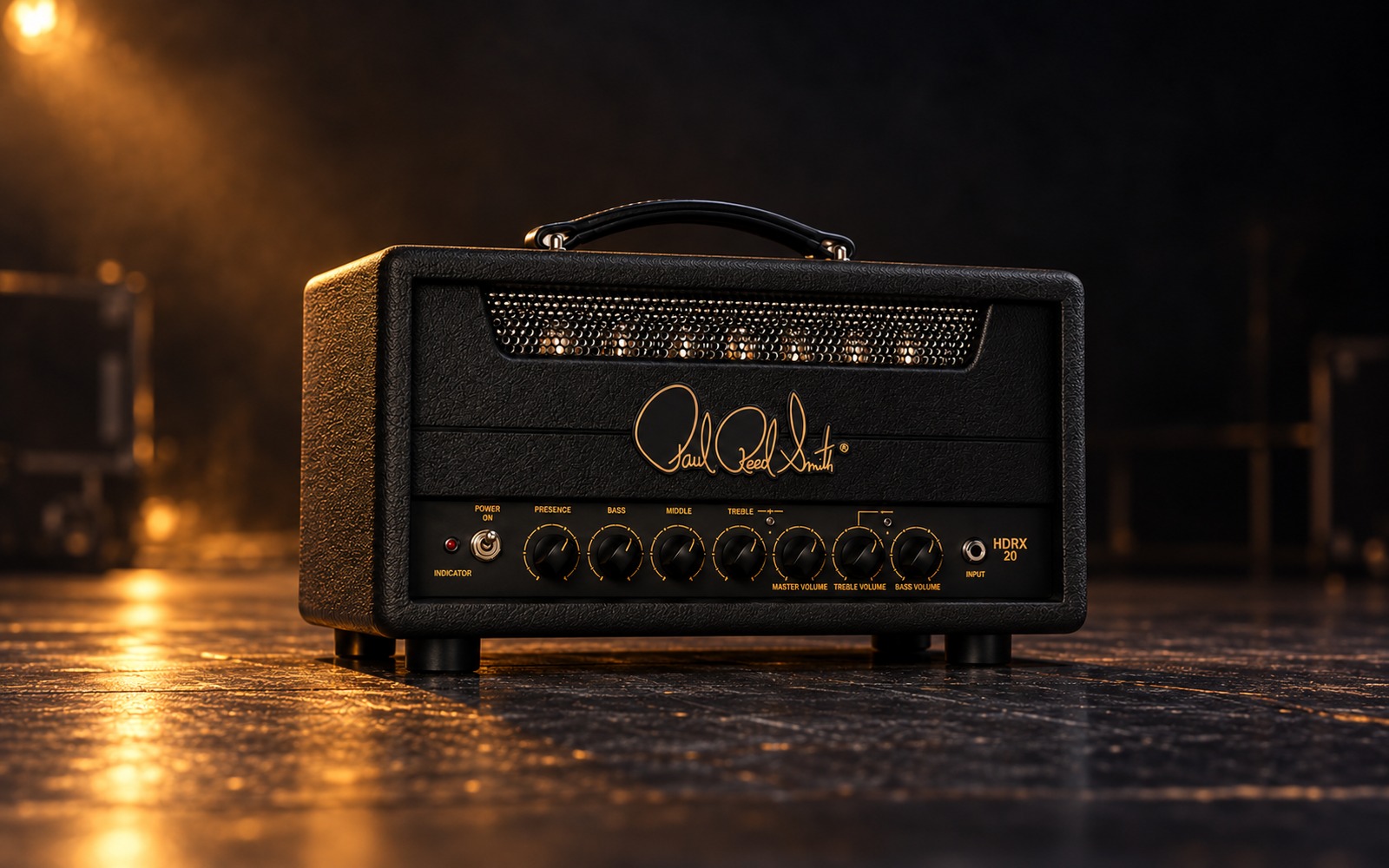
The Woodstock Circuit in a 20-Watt Box: Why the PRS HDRX 20 Is the Most Usable Amp in the HDRX Family
PRS HDRX 20 reviewed: the 20-watt Hendrix-circuit tube head. Specs, tone recipes, honest player guide, and how it compares to Marshall SV20H and HDRX 50.
In 2018, Paul Reed Smith and PRS amp designer Doug Sewell walked into Seattle’s Museum of Pop Culture with measuring tools, notebooks, and a specific mission: document the Marshall Super Lead that Jimi Hendrix purportedly used at Woodstock in August 1969. The circuit was well-known territory, but what mattered was the detail — the modifications West Coast Organ and Amp Service had hardwired into that specific amplifier, including a cap added to the circuit to push upper-midrange bite. Smith and Sewell photographed everything, measured everything, and spent the next four years turning what they found into a production amplifier.
The result was the PRS HDRX 100, launched in fall 2021 — a hand-wired, American-made 100-watt monster designed for big stages and brave FOH engineers. The HDRX 50 followed alongside it. Both were faithful to the Plexi philosophy: no master volume, no effects loop, just a pair of internally jumpered channels and enough voltage to rattle your ribcage. Beautiful amps. Extremely loud. Not something you could realistically use at a club gig without a power soak and a religious commitment to hearing loss.
The HDRX 20, introduced in 2022, is what happened when PRS asked a different question: what does this circuit sound like when a working musician can actually turn it up? At 20 watts with an on-board master volume, built in PRS’s Indonesia facility rather than in Maryland, and priced at around $899 new, it brings the Hendrix-derived Plexi voicing into reach for players who gig small rooms, record at home, and own ears they’d like to keep. Guitar Player gave it an Editors’ Pick Award. Players on forums routinely describe it as punching like a $1,500 amp. The used market consistently prices it at $500 to $700 — one of the cleaner value propositions in boutique-adjacent tube heads.
This is not a review of whether the HDRX 20 is better than a vintage Marshall. It is a feature on what it is, how it works, who actually plays one, and what you can do with it.
From a Museum in Seattle to a Factory in Indonesia
PRS entered the amplifier business in 2007, bringing Texas-based amp designer Doug Sewell into the fold to build a line that complemented the company’s guitars without simply copying the classics everyone else was already imitating. The original Archon (high gain), the Sonzera (vintage-voiced), the MT 15 (Mark Tremonti’s signature high-gain head), and the DG Custom 30 (David Grissom’s signature EL84 combo) all followed Sewell’s approach: use premium components, understand the circuit history, then make something that works for today’s players rather than functioning as a museum piece.
The HDRX was the exception in that it began, deliberately, as a museum piece — or at least as a thorough archaeological study of one. The Hendrix Super Lead at MoPop is a documented artifact. Smith and Sewell’s 2018 visit showed them not just the standard Marshall JTM-era and Super Lead circuit topology, but the specific modifications that had been made to this particular amplifier. West Coast Organ and Amp Service — Hendrix’s Southern California amp shop — had hardwired a capacitor into the circuit to accentuate upper-midrange response, and replaced the power transformer with a custom-specified unit. That mod is what PRS built into the HDRX as a switchable high-mid gain option, rather than leaving it hardwired. They also adapted the circuit for modern power supplies and safety requirements without, in Smith’s words, “over-engineering” it.
“Studying Hendrix’s amp not only showed us the circuit, which is well documented, but also what had been modified,” Smith told Guitar Player in 2022. “We had to take what we were seeing and consider the guitars and pedals that were being used with it, as well as the fact that this amp was significantly modified, in part to work on American power without blowing up and in part to further dial-in the sound. Still, designing the HDRX was not an exercise in over-engineering. It’s a fairly straightforward build.”
The HDRX 100 at $3,199 sold to players with the budget and stage volume to justify it. The HDRX 20, arriving roughly a year later, targeted everyone else. It was manufactured in PRS’s newer Indonesia facility rather than the Maryland workshop, which is how the price landed at $899. The circuit philosophy is the same. The build tier, the wattage, and the power tubes are different.
Specifications
The 5881 Question: American Tubes in a British Blueprint
The first thing that throws Hendrix-heads when they open the HDRX 20 is the power section. Hendrix’s actual Marshall Super Lead ran EL34 British valves — the tube that defines the bite and mid-forward push of classic ’60s and ’70s Marshall tone. The HDRX 100 and HDRX 50 stay faithful to this: the 100 runs four Electro-Harmonix EL34s, the 50 runs EL34s as well. The HDRX 20 breaks from this and uses a pair of Tung-Sol 5881s instead.
The 5881 is a ruggedized variant of the 6L6, an American tube. The 6L6 family and the EL34 family are not interchangeable in most amps and have meaningfully different characteristics. The 6L6/5881 has a larger plate, more headroom, tighter bass, and a slightly scooped midrange relative to the EL34’s more compressed, mid-forward character. EL34s break up earlier and with more harmonic density in the midrange. 5881s stay cleaner longer, push harder before saturating, and have a more muscular low-end punch. This is not a minor tonal difference; it is the distinction between a British amp character and an American one.
PRS made this choice deliberately, and Art Thompson’s Guitar Player review unpacks the probable logic: headroom, resistance to compression at lower wattages, and a “more muscular presentation.” At 20 watts running EL34s, the amp could easily go soft and woolly at moderate volume. The 5881s — each rated at 25 watts — give the HDRX 20 a firmer, more defined character that holds together under a loud strummed chord or a hard pick attack. The result is an amp that does not strictly replicate what Hendrix had, but one that captures the feel and voicing philosophy while being genuinely useful at 20 watts. Guitar Player’s reviewer described it as a “majestic sound” when both volumes and presence are pushed, with “that low-end thump and crunching upper-midrange bite.”
The two-channel layout — internally jumpered Treble and Bass channels — mirrors what a vintage Marshall owner would do by plugging a cable from one channel’s output into the other channel’s input, blending the different voicings of each channel simultaneously. PRS does this internally. You can run either channel individually (plug into the single input jack and use only Treble Volume or only Bass Volume), or run them together by turning both up. The latter gets you more gain, a blended character, and a more complex harmonic texture that is genuinely the heart of Plexi tone.
The high-mid gain switch adds a capacitor to the circuit, accentuating upper-midrange response. This is the modification PRS documented on Hendrix’s specific amp at MoPop — West Coast Organ and Amp Service had hardwired it, PRS made it switchable. Engage it for bite and cut; disengage for a slightly more rounded, open clean. The bright switch on the Treble channel similarly affects the high-end sheen, most useful with single-coil guitars. Run both switches engaged with humbuckers and the result can get spiky — dial the Treble Volume back in that case and let the Bass channel do the heavy lifting.
The master volume is the key feature that separates the HDRX 20 from its bigger siblings. The HDRX 50 and HDRX 100 are vintage stock: there is no master volume, and the only way to get power-amp saturation is to play extremely loud. The HDRX 20 includes a master volume that controls the power amp section’s output independently of the preamp gain structure. This means you can set the Treble and Bass volumes — and therefore the preamp gain — for the sound you want, then use the master to bring the overall volume down to a level that works for the room. You will not get deep, saturated power-amp compression at low volumes (a load box or attenuator is still the tool for that), but you can get good preamp breakup and mid-range crunch at club volumes without an external device.
Famous Players: The Honest Count
Four famous players are listed for the PRS HDRX 20: Mark Tremonti, John Mayer, David Grissom, and Carlos Santana. All four are confirmed PRS artists in the sense that they play PRS guitars and maintain endorsement relationships with the company. None of them, based on available primary sources, is documented using the HDRX 20 specifically. The distinction matters.
Mark Tremonti (Alter Bridge, Creed) is a PRS artist whose signature guitar — the PRS Tremonti — is one of the company’s longest-running models. His signature amplifier, however, is the PRS MT 15: a 15-watt, two-channel high-gain head developed around his metal and hard rock live needs. The MT 15 has switchable Class A/B operation and a different voicing entirely from the Hendrix-derived HDRX circuit. No Rig Rundown, Equipboard entry, or interview places Tremonti on an HDRX 20.
John Mayer is associated with PRS guitars — most notably the Silver Sky — but his amplifier history runs through Dumble (his primary clean reference), Two Rock (his long-term boutique partner), and PRS’s J-MOD 100, a signature amp he co-developed with Paul Reed Smith and Doug Sewell specifically for his Dead & Company live work. The J-MOD 100 runs four 6L6 power tubes and was built around Mayer’s live clean-to-crunch needs, a substantially different brief from the raw Plexi voicing of the HDRX. No source documents him on an HDRX 20.
David Grissom has two PRS signature amps — the DGT 15 (a 15-watt EL84 single-channel combo with reverb and tremolo) and the DG Custom 30 and Custom 50 (voiced around his Texas-flavored clean-to-crunch character). These are very different animals from the HDRX circuit. Grissom’s involvement with PRS on amplifier design is extensive and documented, but it produced his own signature line rather than an HDRX connection. No primary source places him on an HDRX 20.
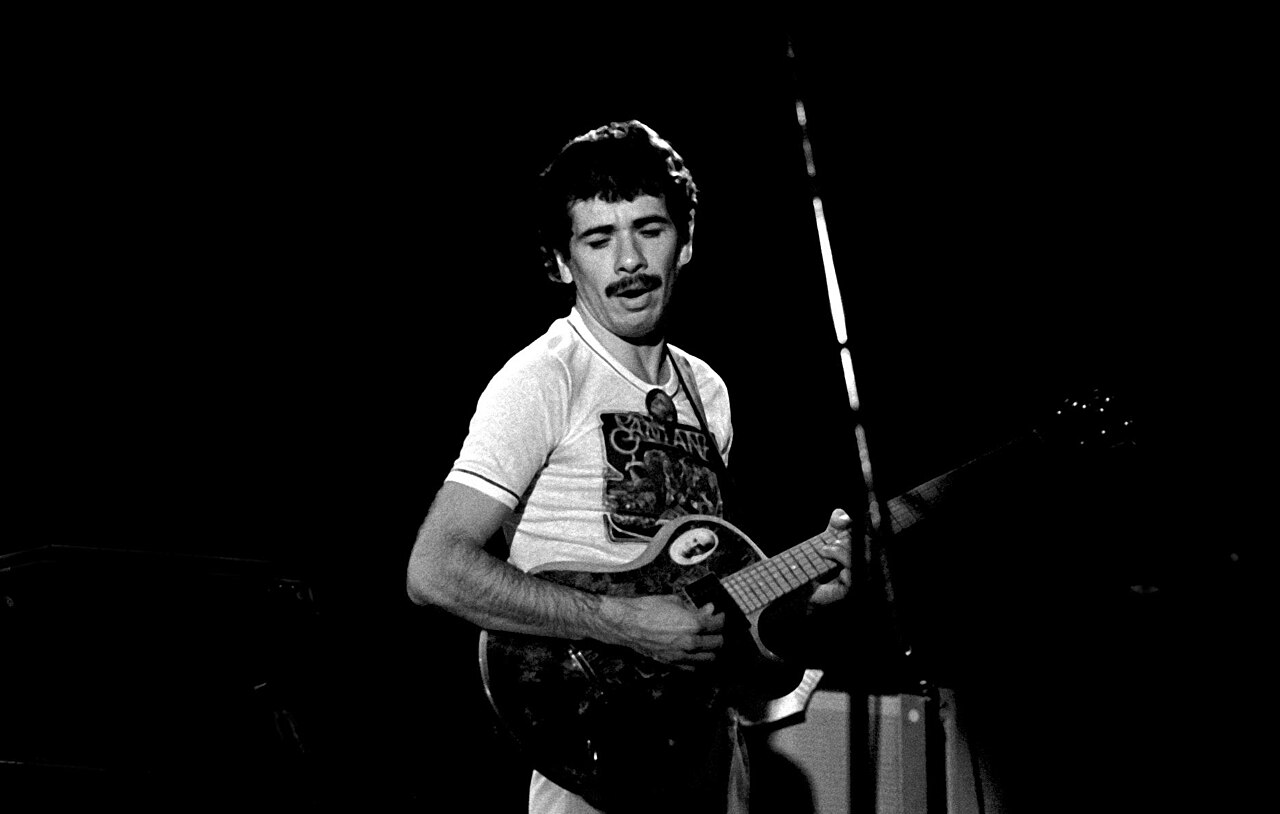
Carlos Santana has a decades-documented relationship with Mesa/Boogie amplifiers — the Santana Boogie, a modified Mark I, is one of the most storied amp connections in rock. He is a PRS guitar endorser, but his amp history is Mesa-centric. No primary source documents him using any PRS amplifier, HDRX 20 or otherwise.
The pattern here is the same one documented across PRS’s artist-facing pages: brand artists endorsing guitars are listed adjacent to amplifiers as though the connection extends across product lines. It often does not. The honest conclusion: the HDRX 20 is sold on the strength of the Hendrix circuit connection, not on a roster of verified touring users. Jimi Hendrix himself is the player the amp was built to honor — and the most appropriate comparison point is the 1969 Super Lead that sits behind glass in Seattle, not any current artist’s touring rig. For Plexi-based tones in the HDRX tradition, the documented analog is Jimmy Page‘s use of 1959 Super Lead stacks through the Zeppelin years and Jeff Beck‘s Oxblood and Plexi rig from the late ’60s — neither of whom uses a PRS amp, but both of whom illustrate where this circuit’s tone lives historically.
Tone Recipes
Recipe 1: Hendrix Clean-Crunch (Strat into a Nearly-Wide-Open Room)
Plug a Fender Stratocaster into the HDRX 20. Set both volumes to around 7, Master Volume to 5. Treble, Middle, Bass all at 6. Presence at 5. High-Mid Gain switch: ON. Bright switch: ON. This is where the amp’s Strat-and-Plexi character lives — sparkly clean notes that begin to break up when you dig in, fully saturated on bent lead lines, crystal clear when you roll the guitar volume back to 6. This is “Little Wing” territory: the note that starts clean and ends with harmonic bloom. Turn the Master Volume down for practice; push it to 7 or above to feel the power section warm up.
Recipe 2: Classic Blues Crunch (Les Paul, Edge of Breakup)
With a Gibson Les Paul Standard, set both volumes to 6, Master to 6. Presence at 6, Treble at 5, Mid at 7, Bass at 6. High-Mid Gain switch: OFF. Bright switch: OFF. The Les Paul’s output will naturally push the HDRX 20 harder; with the high-mid gain switch disengaged, the character softens slightly and leans warmer. This is the sound of Clapton’s Beano sessions translated into a smaller, more manageable package — compressed, saturated, with a singing sustain on single notes that responds directly to your pick attack. Back off the guitar’s volume to 6 for rhythm, push to 10 for leads.
Recipe 3: Boosted Plexi Lead (TS9 in Front)
Add an Ibanez TS9 Tube Screamer in front of the HDRX 20 with the TS9’s level at maximum, tone at noon, and drive at minimum (the classic “hitting the front end harder” move). Set the amp’s volumes to 6, Master to 6, all EQ controls at 6. High-Mid Gain: ON. The TS9 compresses the signal slightly, pushes the amp into earlier saturation, and adds a subtle mid-emphasis that keeps high-gain lead lines from thinning out. This is the stock approach for players who want sustain and harmonic complexity without turning the amp into a noise machine. Adjust the TS9’s tone control to compensate for guitar and room brightness.
Recipe 4: Full Jumper Blend (Both Channels Wide Open, Classic Rock Rhythm)
This uses the HDRX 20’s internally-jumped two-channel architecture intentionally. Set Treble Volume to 7, Bass Volume to 8, Master Volume to 5. Presence at 7, Treble at 5, Mid at 6, Bass at 7. High-Mid Gain: OFF. Bright: OFF. The blend of both channel voicings simultaneously — Treble channel’s cut and Bass channel’s weight — produces the thick, harmonically dense rhythm tone that made early Zeppelin records sound so enormous even at moderate volumes. A humbucker guitar is the right tool here; a Strat will get slightly wild with both channels up.
Recipe 5: Pedal-Platform Clean (Master Low, Everything Else at the Pedal)
Set both volumes to 4, Master Volume to 4. Presence at 4, all EQ controls at 5. High-Mid Gain: OFF. Bright: OFF. This keeps the HDRX 20 clean and dynamically responsive — a high-headroom pedal platform rather than a saturating amp. All your drive, modulation, and reverb comes from in front of the amp (note: there is no effects loop, so modulation pedals will sit in the preamp signal path, which changes their character slightly). This setting works well for players who build their sound from a pedal chain and want an amp that translates rather than colors.
Comparisons
PRS HDRX 20 vs Marshall SV20H (Studio Vintage)
The Marshall Studio Vintage SV20H is the most direct head-to-head: a 20-watt (switchable to 5W) hand-wired Plexi-derived head at around $1,499. It runs EL34 tubes, which gives it the more traditional British midrange character that the HDRX 20’s 5881s don’t fully replicate. The SV20H includes a pentode/triode power switch, making it more flexible for bedroom volumes; the HDRX 20’s master volume performs a similar function but differently. The Marshall is hand-wired in the UK, the PRS is PCB-built in Indonesia. At $600 less, the HDRX 20 is a significant value proposition; whether the EL34 vs 5881 distinction matters to you determines which to choose.
PRS HDRX 20 vs PRS HDRX 50
Same circuit philosophy, very different build tier and practical application. The HDRX 50 is hand-wired in the USA, runs EL34 tubes, produces 50 watts, and has no master volume. It costs approximately $2,799. The HDRX 20 is PCB-built in Indonesia, runs 5881 tubes, produces 20 watts, and has a master volume. For players who want to gig small-to-medium venues without a power soak, the HDRX 20 is the more practical choice. For players who want the closest approximation to the original Hendrix circuit and are willing to manage the volume externally, the HDRX 50 stays more faithful to the brief.
PRS HDRX 20 vs Marshall Origin 20H
The Marshall Origin 20H is a budget-tier Plexi-inspired head at around $549, with a power-reduction switch (20W / 10W / 5W / 1W), a tilt EQ, and a different preamp topology. It is not a close circuit relative of the Super Lead; it is a modern Marshall that evokes the vintage character without replicating it. The HDRX 20’s Plexi-derived circuit is a more direct descendant of the Super Lead architecture. The Origin is cheaper and more versatile in power scaling. The HDRX 20 sounds more authoritative and feels more like the real thing at volume.
PRS HDRX 20 vs Bad Cat Hot Cat
The Bad Cat Hot Cat occupies adjacent territory — American boutique, Vox and Marshall-influenced, premium components — but is a fundamentally different circuit. The original Hot Cat ran Class A cathode bias (30W with EL34s), emphasising the compression and harmonic bloom of true Class A operation. The HDRX 20 is Class AB, which means firmer, more defined response and less natural compression. The Hot Cat’s character is warmer, more reactive, and more prone to dynamic compression; the HDRX 20 is tighter, more present, and better at staying focused when you hit it hard. At similar price points ($899 HDRX 20 new vs $800–$1,400 for a used Class A Hot Cat), the choice is circuit philosophy rather than quality.
PRS HDRX 20 vs Fender Deluxe Reverb
A 22-watt Class AB Fender amp compared to a 20-watt Class AB Marshall-derived amp — similar wattage, completely different character. The Fender Deluxe Reverb has spring reverb (the HDRX 20 has none), uses 6V6 power tubes (warmer, softer, less aggressive than the 5881), and produces a scooped American clean with chimey high-end. The HDRX 20 has a British-influenced midrange push and responds to gain with more aggression and grit. The Deluxe Reverb is the better clean platform; the HDRX 20 is the better rock/blues crunch machine. Both are giggable at real volume without external management.
Buying Guide
The HDRX 20 head lists at around $899 new (Sweetwater, Sweetwater dealers, international equivalents). This positions it in a competitive space between budget Plexi-inspired heads (Marshall Origin, Blackstar Studio 10) and the mid-tier boutique market (Marshall SV20H, Victory Sheriff 22). On the used market, it consistently appears in the $500 to $700 range, making it arguably the strongest value Plexi-voiced head at that price point.
What the HDRX 20 does not include: reverb, an effects loop, a standby switch, or any channel-switching footswitch capability. If you want reverb, it needs to come from a pedal in front of the amp. If you want to run time-based effects in a serial effects loop after the preamp, the HDRX 20 is not the amp for you. If your workflow requires a standby switch between sets, you will need to develop the habit of simply turning the amp off and back on — PRS’s position is that the high-value filter caps ramp the voltage up slowly enough to protect the tubes, and the engineering evidence supports this.
Cabinet pairing matters significantly. The HDRX 20 comes as a head only. PRS offers a matched closed-back 1×12 with a Celestion G12H-75 at around $999, which is genuinely the well-matched choice — the G12H-75 handles the amp’s output comfortably and voices well with its character. Players testing the HDRX 20 consistently report that the PRS cab is a meaningful upgrade over generic enclosures. An open-back 1×12 with a vintage-voiced Alnico speaker (Blue, Gold, or equivalent) will soften and spread the sound if the closed-back focused tone feels too present for your application. A 4×12 will make it considerably louder and tighter in the low end — appropriate for the right room, overwhelming in a small club.
The bias adjustment is accessible and straightforward. PRS provides external bias test points (V4, V5, common) on the rear panel and a screwdriver-adjustable bias pot. The target range is 25 to 30mV per tube; a cheap digital multimeter in mV mode is all you need. Set a new pair of 5881s when you install them — don’t assume they’re in spec from the factory. The procedure takes five minutes and adds years to tube life.
Ownership Notes
The HDRX 20 has no effects loop, which means all modulation (chorus, phaser, tremolo) and time-based effects (delay, reverb) run in the preamp signal path. Running modulation before a high-gain preamp produces a slightly different character than post-preamp routing — the preamp processes the modulated signal, which can make chorus or phaser sound thicker and more saturated. Players who prefer pristine, studio-style modulation in the traditional post-preamp position will need an external load box with a built-in effects loop (Universal Audio OX is a popular choice with this amp, as Art Thompson used it for the HDRX 100 review).
The bright switch and high-mid gain switch interact with the rest of the EQ in ways that are not always intuitive. With single-coil guitars, engaging both creates significant high-frequency emphasis — start with only one switch at a time until you understand how the amp responds to your specific guitar. With humbuckers and both switches off, the character softens considerably and the HDRX 20 begins to feel more like a vintage-voiced American amp than a Marshall-derived British one.
The absence of a standby switch will concern players trained on older amps with standby as standard. PRS’s engineering rationale is sound: the high-value filter caps in the power supply provide a natural charging ramp that prevents the tubes from being hit with full high voltage at startup. Simply flip the power switch on, wait thirty seconds before playing, and proceed normally. At shutdown, muting the signal (pulling the cable slightly from the input jack, or using a guitar volume at zero) before switching off is good practice.
The HDRX 20’s PCB construction, while a step down from the HDRX 50/100’s hand-wired tag-board, is described by Art Thompson in his Guitar Player review as a “large PCB” with chassis-mounted power-tube sockets and transformers hand-wired to the board. This is not point-to-point construction, but it is also not a cost-cut bargain chassis — PRS used double-sided through-hole PCBs across the HDRX line specifically because they argued this improved consistency and reliability over vintage tag-board approaches.
Frequently Asked Questions
Does the PRS HDRX 20 use EL34 tubes like Hendrix’s actual Marshall?
No. The HDRX 20 uses Tung-Sol 5881 tubes, which are a ruggedized variant of the American 6L6. The HDRX 50 and HDRX 100 use EL34s, which are the British tubes in Hendrix’s actual amp. PRS chose 5881s for the HDRX 20 to maintain headroom and definition at the lower wattage. The tonal character is different from an EL34 amp — tighter bass, slightly less mid-compression, more muscular in the low end.
Why is there no standby switch?
PRS’s position — applied across the entire HDRX range — is that the high-value electrolytic filter capacitors in the power supply provide sufficient voltage ramp-up to protect the output tubes when the amp is switched on. A standby switch’s primary purpose is to allow the heaters to warm before high voltage is applied; the HDRX’s filter cap design accomplishes the same end through a different means. The manual recommends pulling the guitar cable partially out of the input jack to mute the signal rather than using a standby position.
Can I use the HDRX 20 as a pedal platform without engaging the amp’s gain?
Yes. With both channel volumes set low (around 4), Master Volume at 4, and the High-Mid Gain switch and Bright switch both off, the HDRX 20 operates as a relatively clean, linear pedal platform. It lacks an effects loop, so your drive, modulation, and reverb pedals all run in the preamp signal path — but at these settings, the amp itself is not adding significant coloration, and the result is a clean and dynamically responsive base.
What is the difference between the HDRX 20 and HDRX 50?
The HDRX 50 uses EL34 tubes (British character), is hand-wired in the USA, produces 50 watts, and has no master volume. The HDRX 20 uses 5881 tubes (American character), is PCB-built in Indonesia, produces 20 watts, and includes a master volume. The HDRX 50 is a closer circuit replica of the Hendrix Woodstock amp but requires a power soak or a very large room to find its sweet spot. The HDRX 20 is more practical for working musicians at small-to-medium venues.
Is there a way to get reverb from the HDRX 20 without an external pedal?
No. The HDRX 20 has no built-in reverb, and no effects loop for a rack-mounted reverb unit. All reverb must come from a pedal placed between your guitar and the amp’s input. Spring reverb pedals (Boss FRV-1, Strymon Flint, EHX Holy Grail) work well in front of Plexi-voiced amps and maintain the vintage character of the amp without conflicting with its preamp response.
How loud is 20 watts in practice?
Considerably louder than the wattage number suggests. A 20-watt tube amp is approximately 1/5 the power of a 100-watt amp in electrical terms, but the human ear perceives loudness logarithmically — halving the wattage costs only about 3dB of perceived volume. The HDRX 20 at full tilt with a 1×12 is more than sufficient for a 200-seat club; at full tilt with a 4×12, it covers medium-sized rooms. The master volume makes it meaningfully controllable, which is the key feature the HDRX 50 and 100 lack.
Can I substitute other 6L6 or 5881 tubes in the HDRX 20?
The 5881 is a ruggedized 6L6 variant, and standard 6L6GC tubes can be run in the HDRX 20 with a rebias. The rear-panel bias pot and test points make this straightforward: target 25 to 30mV per tube. Different 6L6 and 5881 brands (Tung-Sol, JJ, Svetlana, Sylvania NOS) produce audible tonal differences; this amp rewards tube rolling for players who want to fine-tune the character. Do not attempt to substitute EL34s without a thorough amp-tech evaluation — the HDRX 20’s bias circuit is designed around 6L6/5881 operating points, not EL34s.
What speakers work well with the HDRX 20?
PRS’s matched 1×12 cabinet with a Celestion G12H-75 (16Ω) is the engineered choice and receives consistent praise from players as the right pairing. For alternatives: Celestion Vintage 30 adds mid-forward complexity that suits the amp’s upper-midrange character; Weber Thames (Alnico) or Blue (Alnico) will soften the tone and spread it for a more vintage feel. Eminence Governor pairs well if you want more low-end weight for a heavier application. At 20 watts, a 25-watt speaker is the practical minimum; any modern 12″ rated 30W or above will handle the amp comfortably.
Image credits
- Top image: GuitarGangsters AI-generated reference illustration, not a photograph.
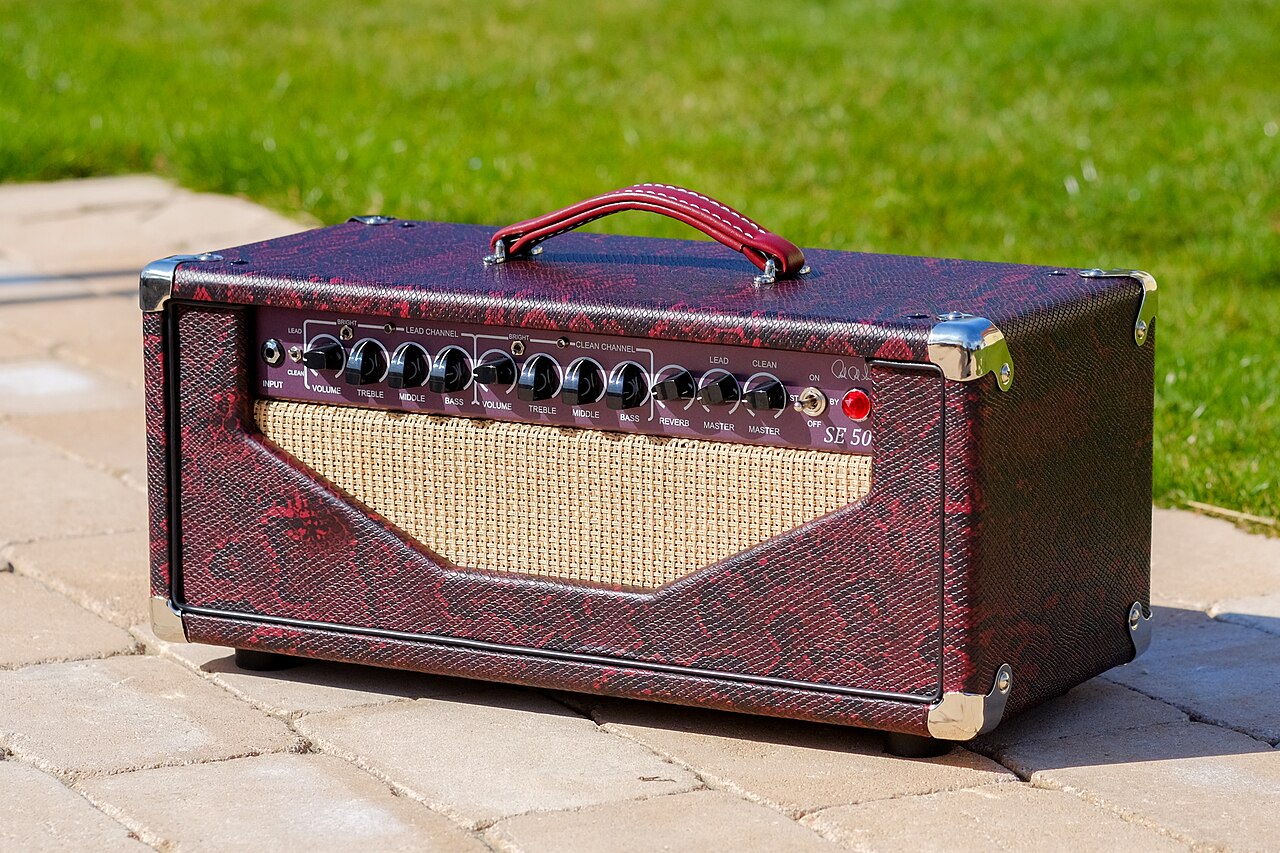
- A PRS SE50 guitar head amplifier: Dieter Karner from Roggendorf (Schollach), Austria, Wikimedia Commons, CC BY 2.0.
- A PRS SE50 guitar head amplifier on a paved surface: Dieter Karner from Roggendorf (Schollach), Austria, Wikimedia Commons, CC BY 2.0.
- Carlos Santana: Heinrich Klaffs, Wikimedia Commons, CC BY-SA 2.0.
Latest News
Related
On This Day
Monday 9 November
From this week: