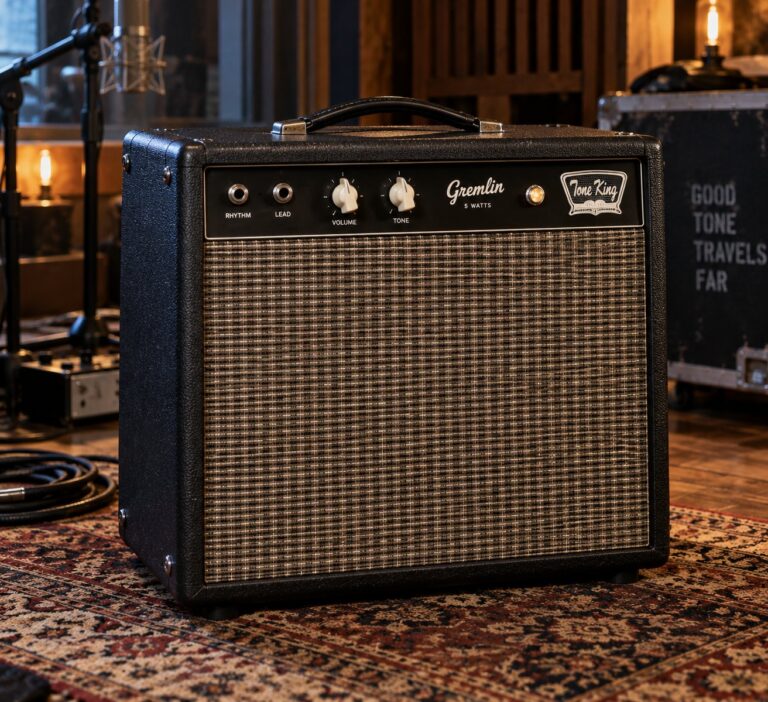
The Marshall DSL5CR Is the Sweet Spot Nobody Argues About
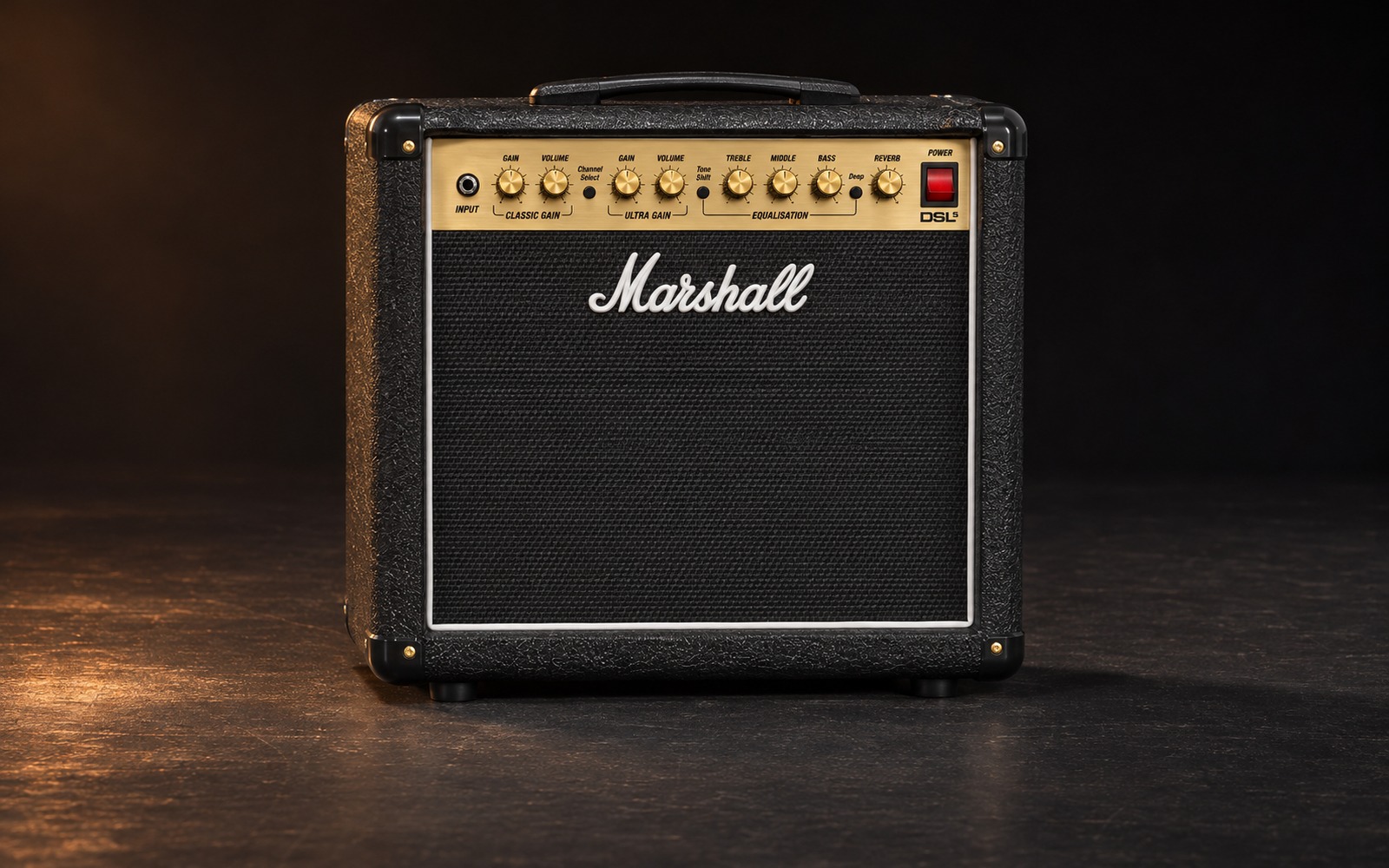
Marshall DSL5CR: 5-watt tube combo with Celestion Ten-30, Classic and Ultra Gain channels, Softube emulated out, and real JCM-lineage tone.
Walk into any gear conversation about Marshall’s DSL range and somebody will tell you the DSL1CR is enough for a bedroom and the DSL20CR is the one for gigging. The DSL5CR, sitting between them at five watts and a 10-inch Celestion Ten-30, rarely gets that kind of advocacy — which is strange, because it’s arguably the most convincing of the three at the thing most of its owners actually need from it.
Five watts is a real number. Not a hedged marketing claim, not a “vintage” number applied to an amp that sounds strangled at anything below nine o’clock. With a 12BH7 power tube running at moderate voltage rather than the hair-trigger dissipation of an EL34 stage, the DSL5CR builds tube saturation progressively across a useful range of its master volume. Turn the low-power switch on and that range compresses to half a watt, giving you the same texture at a conversational level. The result is an amp that makes sense in two different rooms and in a home recording setup, without asking you to buy an attenuator, a re-amping rig, or a second amp for the studio.
This article covers what the DSL5CR actually is — its circuit lineage, what the controls do and why, the 12BH7 power tube and what it means for ownership, tone recipes across the full gain range, and honest comparisons with the siblings and direct rivals. What it will not do is repeat the marketing claim that Slash or Zakk Wylde play one. They don’t. That story deserves its own section.

Where the DSL5CR Comes From
The letters DSL have meant two different things in Marshall’s history. The original JCM2000 DSL — Dual Super Lead — launched in the summer of 1997 as a pair of all-tube heads: the DSL50 at 50 watts and the DSL100 at 100 watts, each built around a pair or quartet of EL34 power tubes in a fixed-bias Class AB topology. Combos followed in 1998 (the DSL201 and DSL401). That generation was discontinued around 2012 after fifteen years of production.
The modern DSL series — which includes the DSL1CR, DSL5CR, DSL20CR, and DSL40CR — is an entirely different circuit family despite sharing the name and some of the ergonomic DNA. It arrived roughly 2017–2018 as Marshall’s attempt to put recognisable DSL character into a compact, affordable, Vietnam-built range. The CR suffix stands for Combo with Reverb, distinguishing these models from earlier DSL combos that lacked the digital reverb unit.
The key practical differences from the JCM2000 generation: these amps are PCB-built rather than point-to-point, they use ECC83 (12AX7) preamp tubes throughout, and the power stages move away from EL34 push-pull designs toward lower-dissipation alternatives that suit the wattage goals. The DSL1CR uses a single ECC82 (12AU7) in its power stage. The DSL5CR uses a 12BH7 — an unusual choice that has real-world implications for tone character and tube availability alike.
None of this makes the modern DSL a lesser amp. It makes it a different amp, designed for a different context: practising at home, recording directly, gigging small venues where five or twenty watts into a closed-back 12-inch cab is the practical ceiling. The JCM2000 DSL50 is a different tool for a different job. People who understand that tend to be happy with the DSL5CR. People who buy it hoping it will feel like a 50-watt point-to-point head tend not to be.
The 12BH7: What It Is and Why It Matters
The 12BH7A is a miniature dual-triode tube — the same pin configuration as a standard ECC83, but a different electrical character. Where ECC83 has very high gain and high plate resistance (useful for voltage amplification), the 12BH7 has lower gain and lower plate resistance, which makes it capable of driving a load directly and producing usable power output without the high voltages that EL34 or 6L6 stages need. It was widely used in the 1950s and 1960s in television vertical deflection circuits, which required a tube that could swing current cleanly without the weight of a full transmitter tube.
In the DSL5CR’s output stage, the 12BH7 delivers approximately five watts cleanly into the 16-ohm Celestion Ten-30, with the low-power mode switching in a resistor network that drops it to approximately half a watt. Because the 12BH7 runs at relatively low plate voltage in this application, it is not the most transparent or dynamically explosive output device in the world — it tends toward a slightly compressed, warm character that suits the amp’s role as a practice and home-studio tool rather than a raw stage-feel instrument.
The ownership implication that matters most: the 12BH7A does not need biasing when replaced. The circuit is self-adjusting. Drop in a new 12BH7A, screw it back, done. Standard brands (JJ, Electro-Harmonix, Groove Tubes) carry the tube, and new-old-stock Phillips, GE, and RCA 12BH7As appear regularly on the used market. Availability is slightly more limited than EL34 or EL84, but not an obstacle in practice. The preamp ECC83s degrade faster in most typical-use scenarios — replace the first position preamp tube first if tonal clarity starts to soften.
Specifications
| Feature | Specification |
|---|---|
| Output power | 5W (low-power mode: ~1W) |
| Channels | 2 — Classic Gain / Ultra Gain |
| Preamp tubes | 2× ECC83 (one per channel) |
| Power amp tube | 1× 12BH7 |
| Speaker | 10″ Celestion Ten-30 (16 ohm, 30W) |
| Speaker output | 1× 1/4″ (16 ohm load only) |
| Emulated output | 3.5mm Softube-designed, silent recording capable |
| Aux input | 3.5mm (play along to a track) |
| Effects loop | Series Send/Return (1/4″) |
| Channel controls | Classic: Gain, Volume / Ultra: Gain, Volume |
| Shared EQ | Treble, Middle, Bass + Tone Shift (mid scoop), Deep (bass shift) |
| Reverb | Digital (single knob, both channels) |
| Footswitch | PEDL-90012 (included) |
| Low-power mode | Rear-panel switch |
| Dimensions (WxHxD) | 455 × 420 × 240 mm |
| Weight | 12.7 kg (28 lbs) |
| Price (current) | $559.99 USD (Sweetwater) |
| Manufactured | Vietnam (designed in England) |
The Ten-30 vs the Eight-15. The step from the DSL1CR’s 8″ Celestion Eight-15 to the DSL5CR’s 10″ Celestion Ten-30 is a meaningful one. The Ten-30 has more cone area, a 30W power handling rating (versus 15W), a warmer character in the midrange, and genuinely better low-end extension. The Eight-15 in the DSL1CR is technically adequate but its low-end starts rolling off where a 10″ cone still has authority. For anything involving palm muting or full chords under gain, the Ten-30 is materially better. This alone is a serious argument for the DSL5CR over its smaller sibling.
Reverb is global. One reverb knob controls both channels. Set it for the clean channel and it will wash over the Ultra Gain channel at the same level. In practice most players keep reverb subtle (7–9 o’clock) and use a separate reverb pedal in the FX loop if they want ambient tones on clean. This is documented as the main usability compromise across all CR-series reviews.
Tone Shift and Deep switches. Tone Shift is a mid-scoop EQ toggle, similar to the “Contour” control on Mesa/Boogie and other American-voiced amps. Engaging it scoops the upper midrange and flattens the response — good for modern high-gain, less useful for blues or classic rock where midrange presence is the whole point. Deep adds low-frequency weight to the bottom end. Useful in a small room where the 10″ speaker may feel thin on the low E; counterproductive when miked close in a studio, where the room reinforces the bass naturally.
Famous Players: The Honest Account
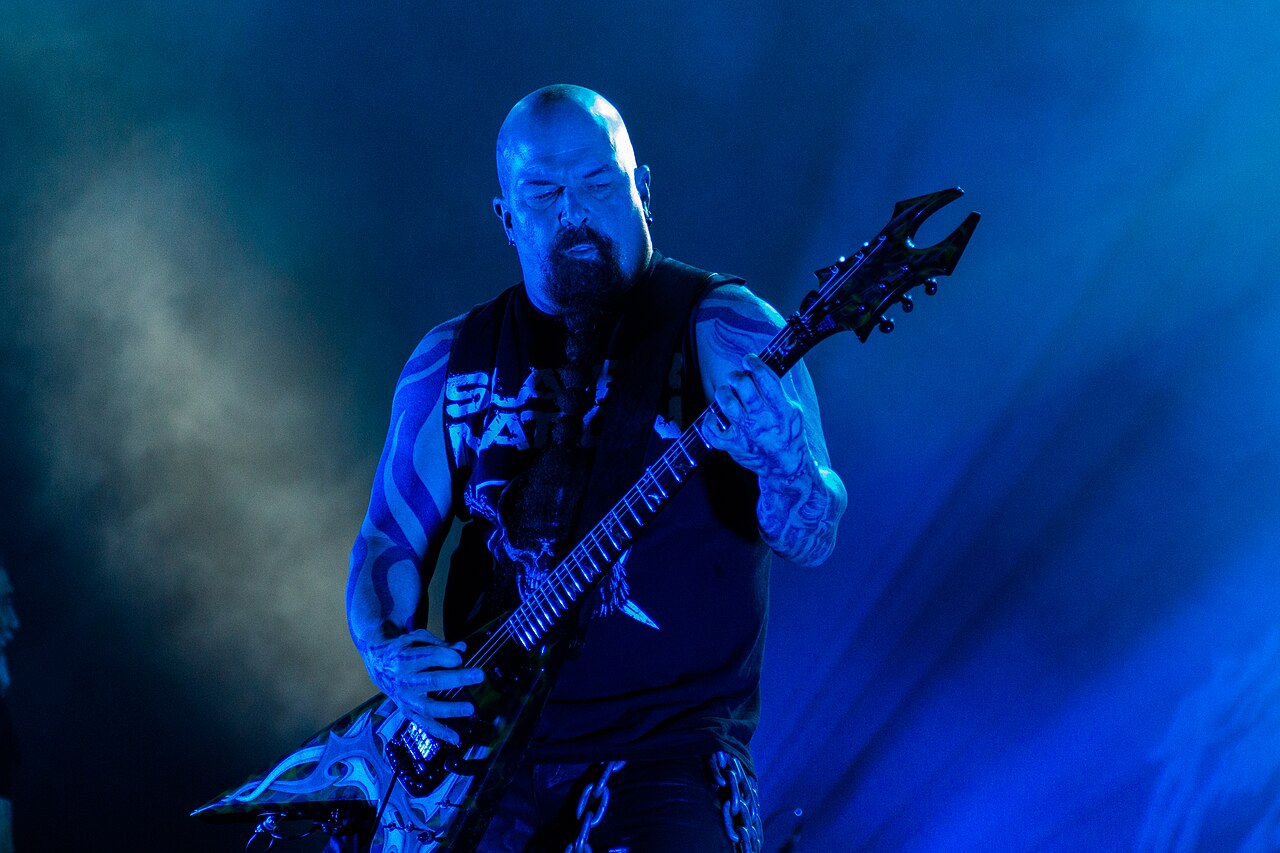
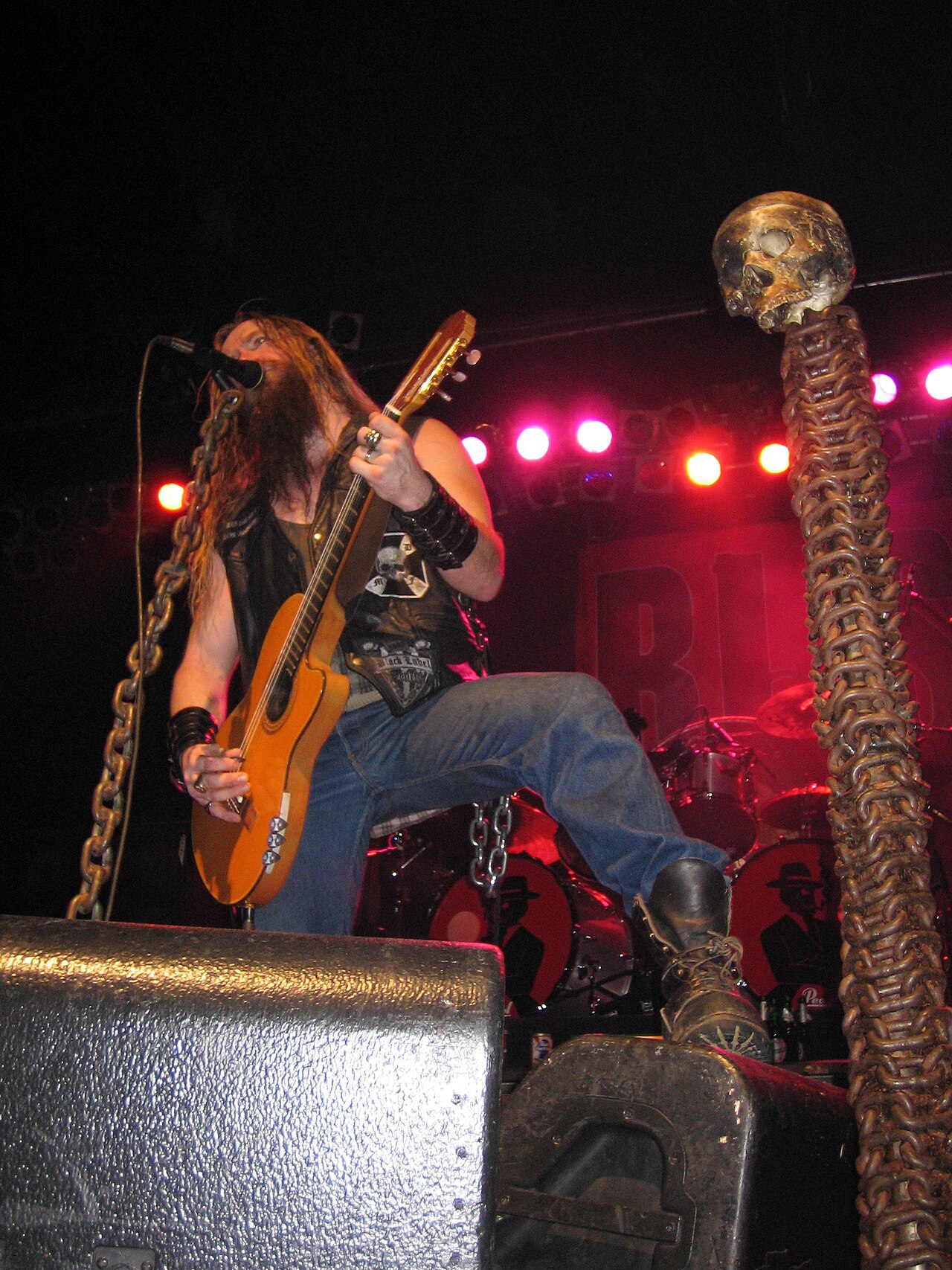
The standard roster attached to Marshall DSL marketing — Slash, Zakk Wylde, Kerry King, Tom Morello, Gary Moore — is real in the sense that all five have had genuine, documented relationships with Marshall amplification. It is fictional in the sense that none of them play a DSL5CR. They are brand-level endorsements, not model-specific connections, and in every case their primary Marshall rigs are higher-wattage point-to-point instruments from different eras of the company.
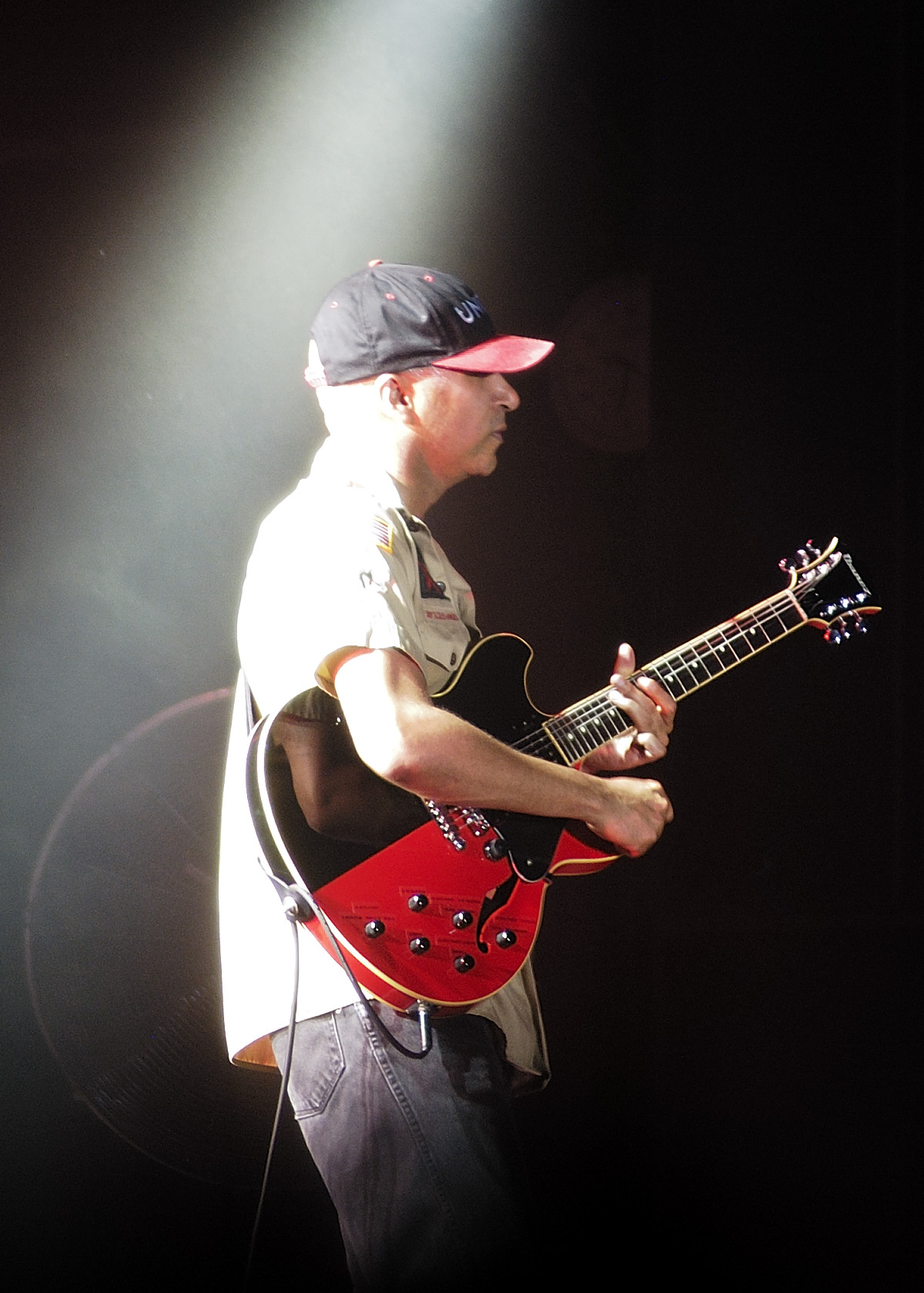
Slash built his sound on Marshall Silver Jubilee heads and later AFD100s. Zakk Wylde and Kerry King are JCM800 men. Tom Morello‘s primary Marshalls through Rage Against the Machine were also JCM800s. Gary Moore — the most plausible DSL connection in the group — used DSL50 and DSL100 heads in his later blues-rock period (the Back to the Blues 2001 era and subsequent tours). But Gary Moore died in February 2011. The DSL5CR did not reach production until approximately 2017. Calendar falsification test: Moore could not have played an amp that didn’t exist yet. Use his DSL50 connection as the honest family link; do not extend it to a specific model he never owned.
Equipboard lists two pro artists documented on the DSL5CR as of mid-2026: Demir Demirkan, a Turkish metal guitarist and Mezarkabul alumnus who is an Ibanez endorsee, and Konrad Schmidt. Demir Demirkan’s connection to the DSL5CR comes via his own gear page, and his use of a Marshall DSL5 in live contexts is noted on Equipboard — this is the most credible specific connection found. It is included in the spirit of honesty: two artists, neither a household name in mainstream rock.
What this tells you about the DSL5CR is not that it’s obscure. It is that it’s a bedroom and studio amp used by serious musicians who are not touring at a scale where gear appearance on a major stage constitutes documentation. The amp competes in a market where most of its users are never photographed with it. That is the honest Famous Players section for a 5-watt practice combo in 2026.
What the Two Channels Actually Do
Classic Gain Channel
The Classic Gain channel spans clean to overdriven crunch depending entirely on where you set the Gain knob and how hard you pick. With Gain at two or three o’clock you get a clean-ish foundation with bloom and warmth — not an American clean, not a Fender-glassy tone, but a British open-headroom clean with presence. Gain at seven or eight o’clock moves into crunchy territory with the attack of your pick clearly defined in the breakup. Classic rock, power pop, blues-rock — this is the channel that covers that territory.
One technical note: the Classic Gain channel is exactly what JCM800 territory used to require a boost pedal to access. Running an Ibanez TS9 or Boss SD-1 into Classic Gain with moderate gain settings gives you essentially the tones that defined the early-80s British hard rock canon, at a volume your neighbours will tolerate.
Ultra Gain Channel
Ultra Gain is the high-gain channel and it behaves differently from Classic Gain in a way that some players find abrupt. The gain structure jumps sharply between low and high settings — there’s a relatively narrow band in the middle of the Gain knob where useful crunch lives before it transitions into saturated lead territory. This is the most common criticism across Sweetwater reviews and zZounds user feedback: the clean-to-crunch transition on Ultra Gain is less gradual than some players want.
At full saturation, Ultra Gain will push into modern metal territory — Swedish melodic death metal chainsaw riffing, to quote Guitar World’s description of the DSL1CR’s Ultra Gain, and the DSL5CR is in the same circuit family. The larger Ten-30 speaker compared to the DSL1CR’s Eight-15 adds a shade more warmth and bottom to the saturation, making it feel slightly less compressed. High-gain players will note that the Ten-30’s 30W rating also means it never reaches the point of speaker compression the Eight-15 does at comparable volume settings on the DSL1CR.
Five Tone Recipes
1. Bluesbreaker Crunch (Classic Gain)
Channel: Classic Gain. Gain: 6/10. Volume: 5/10 (or to taste in low-power mode). Treble: 6, Middle: 7, Bass: 5. Tone Shift: off. Deep: off. Reverb: 3/10. Boost: optional TS9 in front with Tone at noon, Level at max, Drive at zero. This is the late-1960s British crunch sound — defined midrange bark, pick attack that pops through, breakup that cleans up when you roll off the guitar volume. Works with single-coils and humbuckers alike; with single-coils the midrange shove is exceptional.
2. Classic Rock Rhythm (Classic Gain + boost)
Channel: Classic Gain. Gain: 7/10. Volume: 4/10. Treble: 7, Middle: 6, Bass: 6. Tone Shift: off. Deep: off. Reverb: 2/10. Pedal: Boss SD-1 with Drive at minimum, Level at unity or slightly above. This gives you the thick, harmonically rich rhythm tone associated with the late-70s / early-80s Marshall era — tight enough for precise power chord patterns, with enough sag to feel alive under full strumming. Slash‘s published settings for his JCM800 rig (Treble at 8, Middle at 6, Bass at 7) translate reasonably well here for comparison, adjusted for the 5-watt circuit’s tighter frequency response.
3. Modern High-Gain Lead (Ultra Gain)
Channel: Ultra Gain. Gain: 8/10. Volume: 5/10 (low-power mode if practising). Treble: 6, Middle: 5, Bass: 7. Tone Shift: on (mid scoop). Deep: on. Reverb: 1/10. Noise gate in FX loop recommended at high gain. This is the amp with its full bandwidth open for modern metal, djent-adjacent, and hard rock lead work. The Ten-30 holds the low end without flubbing at these settings. Note that the mid scoop removes the frequency range where guitar cuts through a band mix — useful for isolated practice and recording, less useful when you need to be heard.
4. Direct Recording (Softube Emulated Out)
Speaker cab: disconnected (or amp running in silent-record mode via emulated out). Channel: Classic Gain or Ultra Gain per preference. Emulated output into audio interface. The Softube-designed output models a Marshall 1960A 4×12 cabinet’s frequency response, which is sonically richer than anything the Ten-30 can physically produce. Gain staging: set the amp as you would for a normal take, set interface input to avoid clipping, and don’t add additional EQ until you’ve heard the raw output. The emulated signal has significant low-mid weight around 200–250Hz that may need a gentle cut before sitting in a dense mix.
5. Low-Power Bedroom Practice (Low-Power Mode)
Low-power mode engaged (rear panel). Channel: Classic Gain. Gain: 7/10. Volume: 6/10. Treble: 6, Middle: 7, Bass: 6. Tone Shift: off. Deep: off. Reverb: 4/10. At half a watt the amp is genuinely quiet — below conversation level — while still maintaining tube saturation in the gain stage. This is the most practical everyday tone for most DSL5CR owners. The reverb level that sounds right at bedroom volume tends to be higher than at performance volume; this is normal and expected from a digital reverb unit with a fixed return level.
How It Compares
vs. Marshall DSL1CR
The DSL1CR at $399.99 is $160 cheaper and 4.5 kg lighter. It uses an ECC82 instead of a 12BH7, runs at 1W/0.1W instead of 5W/1W, and carries an 8″ Celestion Eight-15 instead of the Ten-30. For pure bedroom practice at low volumes, the DSL1CR is arguably sufficient. The meaningful differences start when you need more headroom before saturation, better bass response from the larger speaker, and a tone that holds together when you push the master higher. The DSL5CR is not a boutique upgrade on the DSL1CR — it’s a different application. If you’ll only ever play alone in a bedroom at 11pm, the DSL1CR is fine. If you want the amp to work at moderate volumes in a home studio, the DSL5CR is the more useful tool.
vs. Blackstar HT-5R MkII (closest direct competitor)
Blackstar’s HT-5R and its successors have been the DSL5CR’s most direct competitor since the 5-watt tube combo category solidified around 2010. The HT-5R uses an ECC83 preamp and an ECC82 power stage in a Class A arrangement, compared to the DSL5CR’s ECC83 + 12BH7. In tonal character, the Blackstar tends toward a darker, more compressed British overdrive — similar to a VOX-informed character — while the DSL5CR has more Marshall presence in the midrange, more gain available on the Ultra Gain channel, and the more recognisable control layout for players coming from a Marshall background. The Blackstar HT Club 40 MkII at the 40W level is a different conversation, but at 5W, the DSL5CR wins on gain range and brand authenticity; the Blackstar wins on clean headroom per watt.
vs. Fender Pro Junior IV
The Fender Pro Junior IV is also a 15-watt (not 5-watt) single-channel EL84 combo, making this an imprecise comparison. However it occupies the same “small studio and practice” market. The Pro Junior’s single-channel EL84 voice is warmer and less high-gain by design — it breaks up earlier and sweeter. The DSL5CR is for players who specifically want Marshall’s gain structure and two-channel flexibility. These amps don’t overlap much in practice; they represent a style choice more than a price/performance trade-off.
vs. Boss Katana 50 Gen 3
The Boss Katana 50 Gen 3 is a digital modelling amp that competes with the DSL5CR for the same bedroom-to-small-gig buyer at a similar price point. What the Katana offers: five amp models, five power levels from 0.5 to 50 watts, built-in effects, USB recording, and a speaker that works above 5 watts at gigs. What the DSL5CR offers: genuine tube gain staging, the tactile feel of tube saturation under your fingers, and the direct lineage to the Marshall voice. If you need one amp for multiple genre contexts and a range of volumes, the Katana is more versatile. If you specifically want tube character and Marshall tone, the DSL5CR is not replaceable by a digital model regardless of how good the algorithm is.
Buying Guide
New, the DSL5CR lists at $559.99 at Sweetwater. Thomann carries it in Europe at comparable pricing adjusted for regional taxes. The amp is still in active production as of 2026 and is readily available new.
Used examples appear regularly on Reverb and Guitar Center used. Pricing runs $270–$380 depending on condition, included footswitch, and age of the unit. The DSL5CR is a reliable used buy because of what can and can’t go wrong: the PCB construction is more tolerant of transport vibration than point-to-point wiring, the 12BH7 power tube is not stressed in this application and tends to last, and the digital reverb unit has no moving parts. The FX loop send/return jacks are the most common point of intermittent contact in used units — wiggle them with a cable inserted before buying, and budget $10 for DeoxIT if the contacts need cleaning.
One detail worth knowing: the DSL5CR’s speaker output is 16 ohm only. It does not have an 8-ohm tap. If you want to run an external cab, it must be 16 ohm. This is not a limitation for typical use — the Ten-30 is a 16-ohm driver and almost all 1×12 extension cabs carry an 8- or 16-ohm option — but it’s worth checking before buying a used cab to pair with it.
The PEDL-90012 footswitch (channel selector) ships with new units and is worth confirming is included with any used purchase. It’s a simple two-button pedal — not expensive to replace if missing, but annoying to discover it’s absent when you first set up.
Ownership Notes
Tubes. The preamp ECC83s (2×) are the standard starting point for a tube swap. Replace V1 (the first preamp position, typically closest to the input) first if tone softens or noise increases. JJ ECC83S and Mullard reissue ECC83s are the most commonly recommended upgrades in online forums. The 12BH7 power tube needs no biasing — drop in a replacement and you’re done. New 12BH7A from JJ, Electro-Harmonix, or new-old-stock are all acceptable.
Speaker. The Ten-30 is a legitimate speaker that doesn’t embarrass the amplifier. However, the DSL5CR’s cabinet is designed for a 10-inch driver, and the speaker output is fixed at 16 ohm, which limits aftermarket options slightly. Players who want more warmth report good results with a Celestion Gold 10 if budget allows. Players who want more brightness can experiment with a Celestion G10 Greenback (vintage profile, 16 ohm). Neither swap is necessary for most users — it’s a direction for those who have lived with the amp and know exactly what they want to change.
The reverb global-control situation. The single reverb knob is the most commonly cited usability limitation in user reviews. The practical solution used by experienced DSL5CR owners: set the reverb knob to a level that works for clean playing (usually 9–11 o’clock), and use an external reverb pedal in the FX loop for Ultra Gain tones where you want independent control. This also gives you stereo reverb on the way to your interface if you run a stereo reverb pedal.
Noise at high gain. The Ultra Gain channel at high gain settings produces noise that is audible between notes. This is normal for a high-gain valve circuit without a gate. A noise gate pedal (Boss NS-2, ISP Decimator) in the FX loop is the standard fix. Threshold settings of 20–25% on the NS-2 are typical starting points for the DSL5CR’s noise floor.
Break-in period. New tube amps often sound stiff until the tubes have run a few hours. The DSL5CR is no exception. Play the amp for 10–15 hours before making definitive judgements on its tone character. The Ten-30 also benefits from being played in, particularly in the lower midrange.
FAQ
Is the Marshall DSL5CR loud enough to gig with?
At five watts into a 10-inch speaker, the DSL5CR can be miked for small venues and function well in that context. Unmiked, it will struggle to compete with a drummer at anything approaching a comfortable volume for the drummer. It is not a gigging amp by default, but it is a legitimate studio amp and home amp, and miked through a PA it performs well on stage. If you need an unmiked amp to fill a rehearsal room or small venue, consider the DSL20CR or DSL40CR instead.
What is the difference between the DSL5CR and DSL5C?
The DSL5C was an earlier production variant without the Softube emulated output that was added in the CR revision. CR = Combo with Reverb (the reverb was already present) plus the emulated out upgrade. Current production is the DSL5CR. If buying used, confirm whether the unit has the 3.5mm emulated output on the rear — a DSL5C without it has no direct recording output.
Does the low-power mode change the tone?
Yes, but subtly. The low-power mode switches in a resistor network that reduces plate voltage on the 12BH7, which lowers output to approximately 1 watt and introduces slightly more compression in the power stage. At low gain settings on Classic Gain you’ll notice less headroom before the power stage contributes to the character. At high gain settings on Ultra Gain the difference is minimal because the preamp stage is doing most of the work. Most players find low-power mode useful for late-night bedroom sessions without compromising the core tone.
Can I use the DSL5CR with headphones?
The DSL5CR has no headphone output directly. The 3.5mm Softube emulated out is a line-level signal intended for interface or desk input, not headphone amplification. You can run it into an audio interface and monitor through headphones from the interface’s headphone out. Some players run it through a small headphone amp. The signal from the emulated out is good enough to justify the extra step.
What is the Softube emulated output?
Softube is a Swedish audio software company specialising in amp and effects simulation. The emulated output in Marshall’s CR-series amps uses Softube’s modelling to simulate the frequency response of a Marshall 1960A 4×12 cabinet loaded with Celestion G12T-75 speakers. The output is a balanced-ish signal at line level, suitable for recording directly without a cab or microphone. The modelled cabinet response is more full-range than the actual 10-inch Ten-30, particularly in the low end, which can make direct recordings sound more convincing than miked recordings of the combo itself.
Does the DSL5CR need to be rebiased when replacing the power tube?
No. The 12BH7 power stage in the DSL5CR is configured so that rebias is not required when replacing the power tube. A standard 12BH7A from any reputable manufacturer drops straight in. This is a practical ownership advantage over fixed-bias EL34 designs, which require a technician visit and bias adjustment every time the power tubes are replaced.
How does the DSL5CR compare to the older Marshall DSL5 and DSL5C?
The original Marshall DSL5 (circa 2013–2014) was part of an earlier updated DSL range, and the DSL5C was a slightly revised version. The DSL5CR represents a further refinement: the Softube emulated output was added, the reverb circuitry was updated, and production moved to Vietnam for cost efficiency while maintaining the same core circuit topology. For players buying used, the DSL5CR is the preferred version because of the emulated out. The earlier DSL5 and DSL5C are still capable amps if the price difference on the used market is significant.
What pedals work well with the Marshall DSL5CR?
The Classic Gain channel responds well to transparent boosts (Xotic EP Booster, MXR Micro Amp) and mild overdrive pedals (TS9, Boss SD-1) in front. These tighten the low end and push the preamp harder without muddying the character. The Ultra Gain channel is usually already saturated enough to not need additional drive; EQ pedals (Boss GE-7) and noise gates (Boss NS-2) in the FX loop are more useful than dirt pedals in the front end at high gain settings. For modulation, delay, and reverb, the FX loop is the correct placement to keep those effects clean in the signal chain after the amp’s gain stages.
Image credits
- Top image: GuitarGangsters AI-generated reference illustration, not a photograph.
- Zakk Wylde: Joanna Corwin, Wikimedia Commons, CC BY-SA 3.0.
- Kerry King: Alfred Nitsch, Wikimedia Commons, CC BY-SA 3.0 AT.
- Tom Morello: deep ghosh, Wikimedia Commons, CC BY 2.0.
- Zakk Wylde: Joanna Corwin, Wikimedia Commons, CC BY-SA 3.0.
Latest News
Related
On This Day
Monday 9 November
From this week: