Marshall DSL20HR: When Twenty Watts of EL34 Fury Stopped Being a Compromise and Started Being the Point
The Marshall DSL20HR packs EL34 tube tone into a 20-watt head with Softube emulation, power reduction, and full channel switching for bedroom to stage.
For most of Marshall’s history, the question of how much power you needed was barely a question at all. You needed a lot. The golden era of British tube amp design was built on 50-watt and 100-watt heads that sounded best — really best, speaker-cone-moving, harmonically-loaded best — when they were pushed hard into a 4×12 cabinet in a room big enough to justify the effort. That was the deal. You wanted Marshall tone, you paid the volume tax.
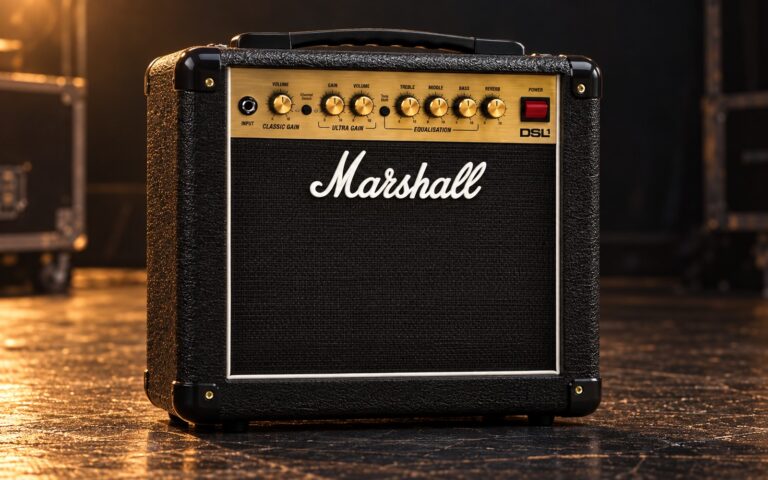
The Marshall DSL20HR, unveiled at NAMM 2018 as part of a ground-up redesign of the DSL series, changes the terms of that deal. Twenty watts of all-tube output from a pair of EL34s. Two genuine channels with independent gain and volume. A Softube-engineered speaker-emulated output that models the company’s legendary 1960 Series 4×12 cabinet accurately enough to record direct with confidence. A rear-panel power reduction switch that drops the output to ten watts for even more manageable levels. And a headphone output that lets you play completely silently without sacrificing the feel of a real valve amplifier under your fingers.
None of this is a compromise. It is a redefinition — not of what Marshall means, but of where Marshall tone can live. The DSL20HR sounds like a Marshall. It responds like a Marshall. It has the same Classic Gain and Ultra Gain channel architecture as its bigger siblings, the DSL100 and the DSL40CR. What it doesn’t do is level the building next door. In 2018, and especially in 2026, that isn’t a weakness. For an enormous proportion of guitar players — home studio builders, apartment dwellers, recording musicians, small-room rehearsers, working guitarists who need a reliable, portable head for varied gigs — that is precisely the point.
This is the Marshall DSL20HR. It isn’t trying to be a JCM800 2203, a JCM900 4100, or a TSL100. It is something those amps could never be: genuinely useful at nine in the evening in a house with neighbours.
Origin Story: The DSL Series Grows Up for 2018
To understand what the DSL20HR represents, you need to understand what the original DSL series was trying to do — and where it fell short. The DSL concept launched in 1997 as the Dual Super Lead: two channels (Classic Gain and Ultra Gain), independent gain and volume per channel, but a shared three-band EQ across both. Compared to the JCM800 that preceded it, the original DSL100 was warmer, more flexible, and more capable of modern gain tones without the solid-state diode-clipping that had earned the JCM900 some legitimate criticism.
But the original DSL series had real limitations. No built-in reverb. No effects loop on the smaller models. No way to play quietly without genuinely playing quietly. And the shared EQ across both channels — while workable — meant that if you EQ’d the Classic channel for sparkling cleans, the Ultra channel inherited those same settings, requiring compromises on both ends. For the 100-watt version, this wasn’t a dealbreaker; players who toured with the DSL100 adapted their technique. For a home or studio-oriented amplifier, it was a genuine inconvenience.
Marshall’s 2018 redesign addressed all of it. The new DSL series brought dedicated Resonance and Presence controls, proper digital reverb, a series effects loop, power reduction options, and — most significantly for the recording world — the Softube emulated output. The redesign also introduced two entirely new lower-wattage models: the DSL5CR (five-watt combo) and the DSL20HR (twenty-watt head) alongside the DSL20CR combo equivalent.
The DSL20HR head was Marshall’s answer to a question players had been asking for years: what if the DSL architecture lived in a format that didn’t require a van, a roadie, and the goodwill of every neighbour within three blocks? At launch, the amp retailed alongside the DSL40CR and DSL100HR as a legitimate performance instrument rather than a practice-room footnote. And Marshall made sure it had the features to back that up.
The DSL20HR was designed and engineered at Marshall’s facility in Bletchley, England — the same address that has produced Marshall heads since the 1960s. It entered production in 2018 and remains in production today, a testament to how thoroughly it addressed its market.
Inside the DSL20HR: Architecture and Preamp Design
Open up the DSL20HR and the tube complement tells the essential story: three ECC83s (12AX7s in American parlance) in the preamp and two EL34 power tubes in the output stage. That EL34 pairing is the backbone of the amplifier’s identity. EL34s have a character that 6L6s don’t — a particular compression in the upper midrange, a harmonic bloom when pushed into saturation, a kind of elastic responsiveness that 6L6-based American amps, for all their clarity and punch, simply don’t replicate. Two EL34s running push-pull in Class AB is the mechanism behind twenty watts of Marshall-voiced output. Drop the power reduction switch to ten watts and the amp’s headroom margin shrinks — you hit power tube saturation sooner, the output stage starts contributing its own harmonic compression to the signal, and the character thickens. Twenty watts is where the DSL20HR sounds most balanced and authoritative; ten watts is where it gets interesting for recording and home use.

The preamp architecture of the DSL20HR is simpler than its larger siblings, and understanding this simplicity explains both the amp’s character and its limitations. The Classic Gain channel uses two preamp gain stages. The Ultra Gain channel uses four. By comparison, the DSL40CR and DSL100HR use four gain stages (plus cathode follower) on Classic Gain and five stages (plus cathode follower) on Ultra Gain. This difference in preamp complexity is not trivial. The DSL20HR has a more open, transparent preamp — it takes pedals exceptionally well because there is less accumulated preamp gain muddying the input signal. But it also means the Ultra Gain channel, while genuinely high-gain by any reasonable standard, doesn’t achieve the saturated compression of the larger models’ Ultra channels. If you’re playing tight modern metal rhythms, the DSL40CR will serve you better. If you want responsive Marshall overdrive with natural dynamics and excellent pedal compatibility, the DSL20HR is the right tool.
The controls on the face of the DSL20HR are clean and logical. Each channel has its own Gain and Volume knobs — this is the key improvement over early DSL designs where channels shared a single EQ section. Both channels share the global Treble, Middle, and Bass controls along with Presence and the separate Resonance control (new to the 2018 redesign). Resonance shapes low-frequency response in the power stage — less a bass-boost than a tightening or loosening of the amp’s bottom end. At zero, the DSL20HR has a firm, controlled low end. Pushed up, it adds low-frequency warmth and bloom that makes chord voicings ring with more air and weight.
The Tone Shift switch is the DSL series’ signature EQ weapon. Engaging it reconfigures the preamp’s EQ network into a V-curve — scooped mids, emphasised highs and lows. On the Classic channel, Tone Shift opens the amp up and makes the clean tone feel roomier and more modern. On the Ultra Gain channel, it’s the difference between a British hard rock voice and something closer to American metal territory. Many players run the Classic channel without Tone Shift (for that warm, midrange-present Marshall crunch) and the Ultra Gain channel with Tone Shift engaged (for tight, scooped modern gain). The combination is effective and the footswitchability of both channels makes it practical in performance.
The Deep switch is a more global tool — a low-frequency resonant boost that operates across both channels. Useful in rooms where the amp sounds thin, or when playing through a 1×12 cabinet that needs low-end reinforcement. Heavy-handed use makes the DSL20HR sound boomy and uncontrolled; used with restraint it adds useful weight to rhythm playing.
The effects loop is series — a clean send and return in the channel path, before the power stage. This is standard practice for time-based effects (reverb, delay, chorus) that need to sit in the amplifier’s signal chain rather than in front of the preamp. The loop behaves cleanly on the DSL20HR without the tonal impact that some owners of the original TSL100 reported. The onboard digital reverb is a genuine usability improvement over the original DSL series — it covers the basic application well, offering enough ambience for live use without requiring a separate reverb pedal in the chain for standard applications.
Specifications
Famous Players: The Honest Assessment
Slash, Zakk Wylde, Kerry King, Gary Moore, and Tom Morello are all legitimate Marshall names and genuine legends of the instrument. But none of them are documented DSL20HR users on primary sources, and given the nature of the amp, that’s worth understanding rather than papering over.

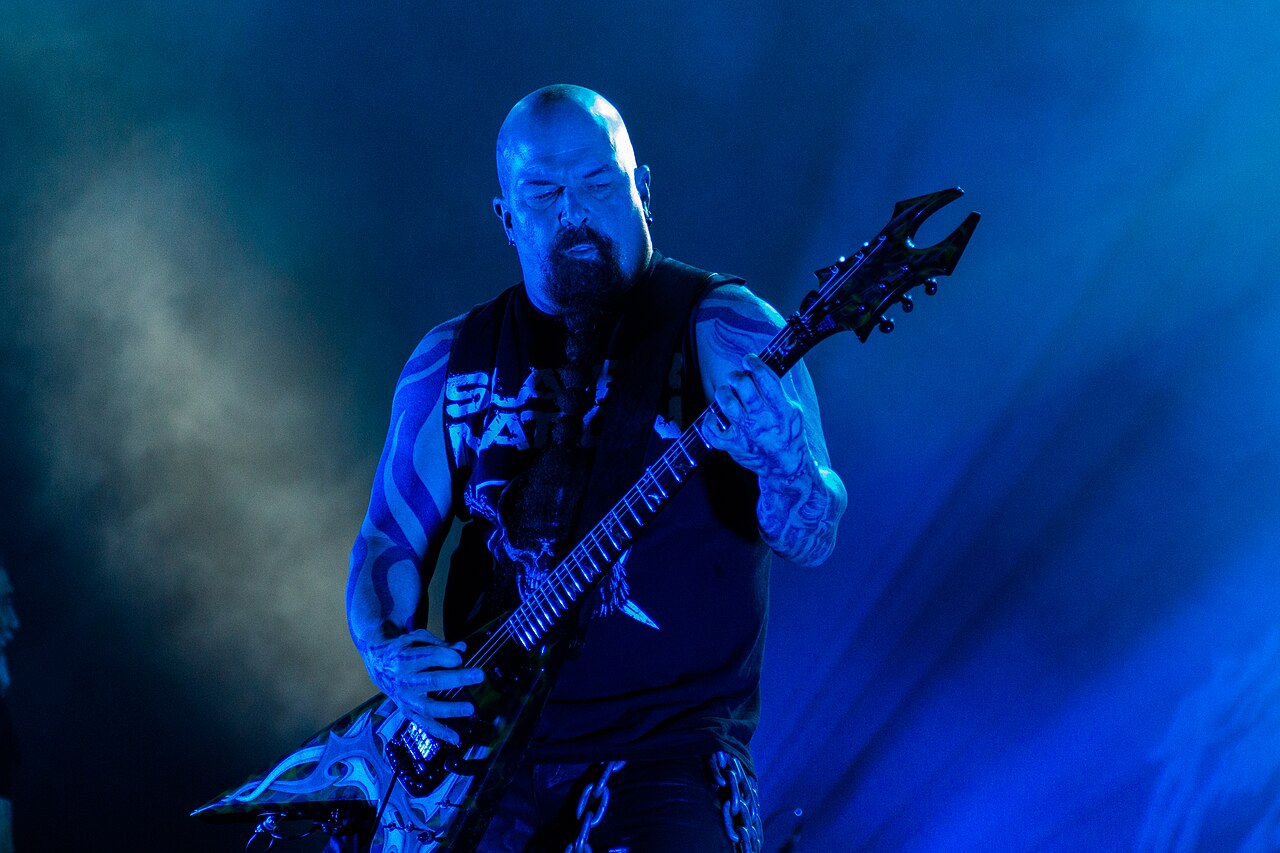
The DSL20HR is a twenty-watt home, studio, and small-venue amplifier introduced in 2018. The artists listed above came to prominence in eras when this architecture didn’t exist. Slash‘s Marshall lineage runs through the Silver Jubilee 2555, the Silver Jubilee SL signature, and the AFD100 — not the modern DSL series. Zakk Wylde and Kerry King are JCM800 2203KK players through to the serial number. Gary Moore‘s documented DSL ownership is a 1997 DSL100 (serial M-1997-37-1416-A, verified by the Bonhams auction record); there is no primary source placing him on a DSL20HR. Tom Morello‘s Marshall history is the JCM800 2205 fifty-watt head, exclusively. No amount of genre association changes those facts.
What is true is that the DSL20HR is played by an enormous number of working musicians, home studio builders, and guitarists who are serious about their tone without requiring arena-level volume. That demographic doesn’t generate the same rig rundowns and backstage documentaries as touring professionals — but it’s the demographic the amp was explicitly designed for, and it’s doing its job well.
The broader DSL series — in its original DSL100 incarnation — has legitimate ties to professional use. Joe Bonamassa used a JCM2000 DSL100 as his primary amp during the Black Country Communion recording sessions, calling it “the secret” in a Premier Guitar Rig Rundown. Doug Aldrich has been associated with DSL amplifiers during his time with Whitesnake. But those are different amplifiers with different circuits and different use cases from the DSL20HR. Reporting them as DSL20HR users would be dishonest.
The DSL20HR is not a professional touring amp in the traditional sense. It is a professional recording amp, a high-quality practice amp, and a compact live rig for smaller venues. In those contexts, it is exceptional. The honest story of who plays it — serious home musicians, working recording guitarists, and compact-rig-seeking live players — is not a weakness of the amplifier. It is a description of its actual design intent, successfully executed.
Tone Recipes: Seven Voices from Twenty Watts
Recipe 1: Classic British Crunch (Classic Gain, Tone Shift Off)
Classic Gain channel. Gain at 5, Volume at 5. Treble at 6, Middle at 6, Bass at 5. Presence at 5, Resonance at 3. Reverb light (2–3). Tone Shift off, Deep off. This is the DSL20HR’s native British voice — warm, mid-forward, touch-sensitive. At these settings the channel delivers classic rock crunch in the JCM800 register: harmonically rich, responsive to pick attack, cleaning up when you roll back the guitar volume. A Les Paul through this setting and you are in the same territory as countless rock records from the late ’70s through the ’90s. An Ibanez TS9 in front — gain minimal, level boosted — tightens the low end and adds harmonic complexity to the sustain. Highly recommended pairing.
Recipe 2: Pushed JCM800-Style Overdrive (Classic Gain, High Gain)
Classic Gain, Gain at 7–8, Volume at 4. Treble at 7, Middle at 5, Bass at 4. Presence at 6, Resonance at 2. Tone Shift off. This is asking the Classic channel to do heavier lifting than its two-stage preamp strictly prefers, and the result is a compressed, slightly ragged overdrive that has more character than clinical precision. Not the most articulate high-gain sound in the DSL catalogue — for that, use the Ultra Gain channel — but genuinely enjoyable for classic rock and heavy blues. The lower Resonance keeps the bottom end from muddying as the gain climbs. A Gibson Les Paul Standard with the neck pickup selected gives this setting a meaty, sustain-heavy character that works beautifully for slow-burn lead playing.
Recipe 3: Vintage Rock Lead (Ultra Gain, Moderate Gain, Tone Shift Off)
Ultra Gain, Gain at 4–5, Volume at 4. Treble at 6, Middle at 6, Bass at 5. Presence at 5, Resonance at 3. Tone Shift off. The Ultra channel with gain in moderate territory produces a saturated, singing lead sound with the mid-forward character that old-school British rock demands. This is not a modern metal sound — it is more ’70s and ’80s in character, with enough sustain for melodic soloing and enough definition in the pick attack to articulate fast passages cleanly. A Boss SD-1 in front as a mid-boost — gain at zero, tone at noon, level at 2 o’clock — elevates this setting further. Classic single-coil guitars including Stratocasters give a slightly brighter but equally convincing result.
Recipe 4: Modern Hard Rock / Heavy Gain (Ultra Gain, Tone Shift On)
Ultra Gain, Gain at 6–7, Volume at 3. Treble at 7, Middle at 5, Bass at 5. Presence at 6, Resonance at 4. Tone Shift engaged. This is the DSL20HR’s closest approach to modern American-style gain — the Tone Shift mid-scoop opens up the highs and lows while cutting the mid hump that defines the British voicing. The result is a broader, more scooped gain character suited to modern hard rock, metalcore, and alternative metal. Down-tuned guitars through the 10W power reduction mode, straight into a 2×12 cabinet, and this setting delivers percussive, authoritative heavy rhythm tone. A Pro Co RAT 2 pushed in front — filter at noon — adds harmonic bite without obscuring the amp’s character. A Gibson SG Standard gives this setting a particularly aggressive, almost overbite quality in the upper midrange that suits hard rock rhythm work very well.
Recipe 5: Blues Breakup and Dynamics (Classic Gain, Low Gain)
Classic Gain, Gain at 3, Volume at 6–7. Treble at 6, Middle at 7, Bass at 5. Presence at 4, Resonance at 3. Reverb at 4. Tone Shift off, Deep off. Power on 20W. This setting uses the Classic channel as the blues-rock player it quietly is when the gain is backed off and the volume pushed. The touch sensitivity of the two-stage Classic preamp becomes an asset here: dig in hard and the amp breaks up organically; ease off and it cleans up. Ride the guitar’s volume control between 5 and 10 to explore the whole dynamic range. A semi-hollow or single-coil guitar adds even more responsiveness. The EL34 power tubes contribute a natural compression that translates beautifully in this dynamic territory — one of the DSL20HR’s most musically rewarding sweet spots.
Recipe 6: Silent Recording via Softube Emulated Out
Ultra Gain, Gain at 6, Volume at 5. Treble at 6, Middle at 5, Bass at 5. Presence at 5, Resonance at 3. Tone Shift on. Power reduction to 10W. Run the 3.5mm emulated output into your audio interface — pad the input if needed to avoid clipping. The Softube emulation targets the Marshall 1960 4×12 cabinet character, capturing the particular low-mid warmth and high-frequency spread that makes the 1960 cab iconic. Used this way, the DSL20HR functions as a fully featured, zero-volume recording amplifier. No load box required, no microphone positioning required, no sound escaping the room. The emulated output is not perfect — it lacks the three-dimensional quality of a well-miked cabinet in a good room — but it is genuinely good, and it makes the DSL20HR one of the most practical Marshall-toned recording tools available at its price point.
Recipe 7: Clean to Edge-of-Breakup (Classic Gain, Minimum Gain)
Classic Gain, Gain at 2–3, Volume at 6. Treble at 6, Middle at 6, Bass at 5. Presence at 4, Resonance at 3. Reverb at 3–4. Tone Shift off, Deep on lightly. This is the DSL20HR’s cleanest voice — not a crystal-clean Fender-style tone (the Classic channel has more grit and warmth than that), but a convincingly open, non-breaking-up sound with genuine body and the signature Marshall harmonic richness. Arpeggiated chords ring with sustain; single-note lines have presence and note separation. The light Deep switch engagement adds low-frequency weight that makes the clean tone feel more substantial through smaller cabinets. This setting works for indie, alternative, ambient, and post-rock applications where the British warmth of the clean tone is an asset.
The DSL20HR’s two-channel architecture and shared EQ design mean that smart settings involve optimising for one primary playing context, then adjusting with Tone Shift and channel gain to differentiate. These seven tone recipes reflect the amp’s actual range — from warm and open to saturated and aggressive.
Comparisons: Where the DSL20HR Sits in the Landscape
The most important comparison for the DSL20HR is with its own larger siblings. The DSL100 has significantly more preamp gain depth on both channels — four stages on Classic, five on Ultra — along with a Master Volume control that the DSL20HR lacks. That Master Volume is the DSL40/100’s key advantage for low-volume use: you can push the preamp into saturation and use the master to pull back the overall level. Without a master volume, the DSL20HR relies on the power reduction switch and the emulated output for domestic-level operation. Both are effective solutions, but they are not identical to having a master volume in the circuit.
The DSL40CR combo is the most directly comparable amp in the current Marshall catalogue — same 2018 redesign, same channel architecture, but 40 watts of EL34 power and the more complex preamp gain structure. The DSL40CR sounds more commanding in a room, has more headroom before it breaks up, and achieves a fuller low-end response through its integrated speaker. The DSL20HR’s advantages are size, weight, portability, and the same Softube emulated output for direct recording. For a gigging musician who needs a head and cabinet rig, the DSL20HR is a compelling choice over the DSL40CR; for someone whose amp life is primarily home and rehearsal room, the DSL40CR’s extra power and master volume may be worth the larger footprint.
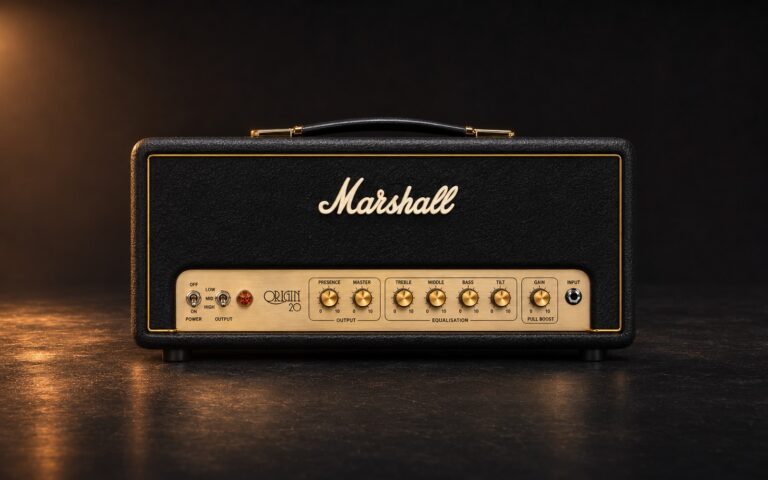
Against the Marshall Origin 20H — another 20-watt head in the current lineup — the DSL20HR is a higher-gain, more feature-laden amplifier. The Origin series is voiced for vintage tone, single-channel simplicity, and power-stage saturation at manageable volumes. The DSL20HR is a two-channel modern amp with digital reverb, effects loop, and Softube emulation. They are genuinely different tools. If your reference tones are pre-1970 British rock played at the edge of a cranked output stage, the Origin; if you want classic and modern gain flexibility with studio-ready features in one chassis, the DSL20HR.
Outside the Marshall family, the closest competitor is the Blackstar HT-20R MkII — another 20-watt, two-channel, EL34-based head with reverb and a speaker-emulated output. The Blackstar is brighter and more scooped in its gain character, less inherently “British” in voicing, and its ISF control gives more tonal flexibility across both channels than the DSL20HR’s shared EQ can offer. Players who find the DSL20HR’s gain voicing slightly dark may prefer the Blackstar’s clarity. Players who want the specific Marshall midrange and EL34 character should stay with the DSL20HR.
For studio-focused players, the DSL20HR also competes conceptually with load box solutions — a Two Notes Torpedo Captor combined with a larger amplifier, for instance. That approach gives more tonal flexibility and more wattage headroom but adds cost, complexity, and extra gear to manage. The DSL20HR is a self-contained, single-unit solution requiring nothing but a cable into your interface. For beginners and intermediate home studio builders, that simplicity is genuinely valuable.
Buying Guide: What to Know Before You Buy
The DSL20HR is available new as of 2026 at approximately $599–$649 USD from major retailers. Used examples in good condition run $350–$450 on Reverb and eBay, making this one of the more affordable legitimate Marshall tube heads on the secondhand market. Unlike the original DSL100 and TSL100 — which have documented PCB revision issues in early units — the 2018-era DSL20HR has not developed a reputation for systemic reliability problems. Used examples from 2018 onward should be considered straightforwardly safe purchases provided the tubes have been maintained.
The standard advice applies to tubes: ECC83s and EL34s in a twenty-watt head running at moderate volumes should last three to five years before any significant tonal degradation. If you’re buying used, ask the seller when the tubes were last replaced and factor a fresh set into your purchase price if the answer is unknown. A matched pair of EL34s (JJ, Electro-Harmonix, or Tung-Sol are all sensible choices) and a trio of ECC83s will run $60–$90 and restore a tired DSL20HR to factory specification. Re-biasing is required after a power tube change — this is not a self-biasing design.
The footswitch is sold separately. The DSL20HR ships without one. A two-button Marshall footswitch for channel switching and reverb toggle costs approximately $25–$40 and is the first accessory purchase anyone serious about using both channels in performance should make. Without it, you’re switching channels from the front panel, which is not a live-performance workflow.
Cabinet matching is worth a brief note. The DSL20HR outputs at sixteen ohms or eight ohms. Most Marshall 1×12 extension cabinets are rated at sixteen ohms; most 4×12 cabs with four sixteen-ohm speakers wired in series are also sixteen ohms. Check your cabinet’s impedance rating and match it to the amp’s output tap. Mismatching by one step is tolerable for short periods but degrades output transformer life over time.
Cabinet choice significantly influences the DSL20HR’s character. Through a 1×12 with a Celestion Vintage 30, the amp sounds punchy and focused, the V30’s characteristic upper-midrange peak complementing the DSL20HR’s British voicing well. Through a 2×12 with a Greenback and Heritage mix, the sound opens up and becomes warmer in the low-mid region. Through a proper 4×12, the DSL20HR sounds like a legitimate Marshall stack — compact but genuine. The Softube emulated output bypasses all of this and delivers the modelled 1960 4×12 character directly, regardless of what cabinet is connected.
Living with the DSL20HR: Real-World Ownership Notes
The DSL20HR’s shared EQ is the one design decision that consistently comes up in long-term owner discussions. Because Treble, Middle, and Bass are shared between Classic and Ultra channels, players must find an EQ balance that works across both — or accept that switching channels involves a tonal shift in EQ character as well as gain character. In practice, most players find a mid-range EQ position (Treble 6, Middle 5–6, Bass 5) that serves both channels acceptably, and then use the Tone Shift to differentiate voicings further. The Presence and Resonance controls operate globally and don’t change between channels. If you find the Classic channel too dark and the Ultra too bright with the same EQ settings, the per-channel Tone Shift is the primary tool for correcting this relationship.
The 10-watt power reduction mode is genuinely useful, but it is not a simple volume-halving switch. The difference between 20 and 10 watts is approximately 3dB — audible but not dramatic. What changes more noticeably is the character: at ten watts, the power tubes saturate sooner, adding a natural compression and harmonic richness to everything played. For recording and home use, this compression is an asset. For live use in a larger room, 10 watts through an efficient 4×12 is still more than enough volume. For genuinely silent recording or late-night practice, the emulated output and headphone jack are the proper tools — 10 watts is still too loud for most domestic environments after hours.
The aux input is a feature that doesn’t make the specification sheet headlines but earns consistent appreciation in real-world use: plug in a phone or laptop playing a backing track, and the DSL20HR becomes a self-contained practice station. Headphone out for monitoring, guitar in the amp’s input, backing track through the 3.5mm aux. No mixer, no interface, no extra gear. For practicing scales over a track at midnight, this is unexpectedly valuable.
The digital reverb is competent but not revelatory. It covers the basic ambient options that live applications require. For recording, most players will bypass the onboard reverb and use a DAW plugin instead — the flexibility of software reverb is superior for studio applications. For live use, the onboard reverb saves a reverb pedal in the chain, which is a genuine convenience.
Tube rolling is a popular modification for DSL20HR owners looking to refine the amp’s character. Swapping the stock ECC83s for lower-gain alternatives — a 12AT7 in the first preamp position is a common approach — reduces the overall gain structure and opens up more clean headroom on the Classic channel. This is reversible, inexpensive, and worthwhile for players who find the stock Classic Gain channel breaks up earlier than they want. For power tubes, the EL34 is the defining choice; substituting alternative octal power tubes changes the amp’s character substantially and requires careful bias work — an experiment for the adventurous, not standard practice.
The DSL20HR and Its Place in the Marshall Lineage
The Marshall DSL20HR represents something genuinely new in the company’s design philosophy — not the most powerful, most prestigious, or most storied amplifier Marshall has ever made, but arguably the most practically useful one for the largest proportion of contemporary guitar players. In an era when home recording has become the norm, when apartment living has replaced garage culture for many musicians, and when the ability to get a great guitar tone at eleven in the evening matters as much as the ability to fill an arena, the DSL20HR delivers.
It does this while retaining the core of what makes a Marshall a Marshall: the EL34 power tubes, the Classic and Ultra Gain channel architecture, the specific mid-forward British voicing that has defined rock guitar tone for six decades. The Softube emulated output is not a compromise or a shortcut — it is a thoughtfully engineered solution to a real problem, built in collaboration with a company that provides software amp modeling to some of the world’s most respected studios.
The big names of earlier decades didn’t build their reputations on this amp. The JCM800 2203 is a legend. The Silver Jubilee is an icon. The DSL100 is a touring workhorse. The DSL20HR is something different: an amplifier whose users are building their own reputations, on their own terms, in their own studios. That is not a lesser legacy. It is a different one — and in 2026, it may well be the more relevant one.
FAQ: Marshall DSL20HR
What is the Marshall DSL20HR?
The Marshall DSL20HR is a twenty-watt, two-channel, all-tube guitar amplifier head introduced at NAMM 2018 as part of Marshall’s redesigned DSL series. It features two EL34 power tubes and three ECC83 preamp tubes, Classic Gain and Ultra Gain channels with independent gain and volume, a Softube-engineered emulated speaker output, digital reverb, a series effects loop, a ten-watt power reduction mode, and a headphone output for silent practice.
Is the Marshall DSL20HR a good amp for home use?
Yes — arguably the best Marshall for home use at this price point. The ten-watt power reduction, Softube emulated output for direct recording, and headphone jack make it genuinely usable at low volumes and completely silent for late-night practice. The onboard digital reverb and series effects loop mean you don’t need an extensive pedalboard for basic home studio applications. It retains genuine Marshall EL34 character at any volume setting, which is the key difference from lower-wattage solid-state alternatives.
How does the DSL20HR compare to the DSL40CR?
The DSL40CR has more preamp gain depth (four stages on Classic Gain and five on Ultra Gain, versus two and four respectively on the DSL20HR), a master volume control that allows more flexible gain staging, and forty watts of output power with a more authoritative low-end response. The DSL20HR is lighter, more compact, and better suited to home and studio use where the Softube emulated output and headphone capability are the primary low-volume tools. For live performance at small to medium venues, both amps are capable; for home recording, the DSL20HR’s package is arguably more complete.
What is the Tone Shift button on the DSL20HR?
The Tone Shift switch reconfigures the preamp’s EQ network into a mid-scoop V-curve, emphasising highs and lows while cutting the midrange. On the Classic Gain channel it opens up the tone and makes cleans feel roomier and more modern. On the Ultra Gain channel it pushes the amp toward American-style scooped gain territory rather than traditional British mid-forward voicing. It operates per-channel (each channel has its own Tone Shift button) and is footswitchable between channels.
What does the 10-watt power reduction mode do?
The ten-watt power reduction mode is activated via a rear-panel switch. It reduces the output stage’s operating parameters, dropping output from twenty to ten watts and reducing the amplifier’s clean headroom. Power tube saturation and compression happen sooner — at lower volume levels — than in twenty-watt mode. For home recording and low-volume practice, this shifts the amp’s sweet spot to more manageable levels. It is not a master volume (the overall output still needs the emulated output or headphone jack to reach truly silent levels) but it is a meaningful step toward practical home use.
Can I record silently with the Marshall DSL20HR?
Yes. The DSL20HR has a Softube-engineered emulated output on a 3.5mm jack that models the Marshall 1960 Series 4×12 cabinet. Connect this to your audio interface input and you can record at zero volume — no speaker, no microphone, no sound in the room. The emulated output also feeds the headphone jack, so you can monitor your tone silently through headphones. This makes the DSL20HR a genuinely capable direct recording tool without requiring a separate load box or cab simulator.
What tubes does the Marshall DSL20HR use and how long do they last?
Three ECC83 tubes in the preamp (equivalent to 12AX7) and two EL34 tubes in the power stage. The EL34s are the defining tonal component, producing the characteristic upper-midrange compression and harmonic bloom that gives Marshall amplifiers their distinctive voice. At moderate home-studio volumes, ECC83s typically last five or more years; EL34s three to five years. The amp requires manual re-biasing after power tube replacement. A matched pair of EL34s from JJ, Electro-Harmonix, or Tung-Sol are the most commonly recommended replacements, running $30–$60 for a matched pair.
Does the Marshall DSL20HR need a cabinet?
For full-volume playing through speakers, yes — the DSL20HR head must be connected to a speaker cabinet whenever the amp is powered and the emulated output is not in use. Running the amp without a speaker load will damage the output transformer. For silent recording or headphone practice, the emulated output and headphone jack allow completely speaker-free use without risk to the amp. Always confirm your cabinet’s impedance matches the amp’s output tap (sixteen or eight ohms) before powering up.
Image credits
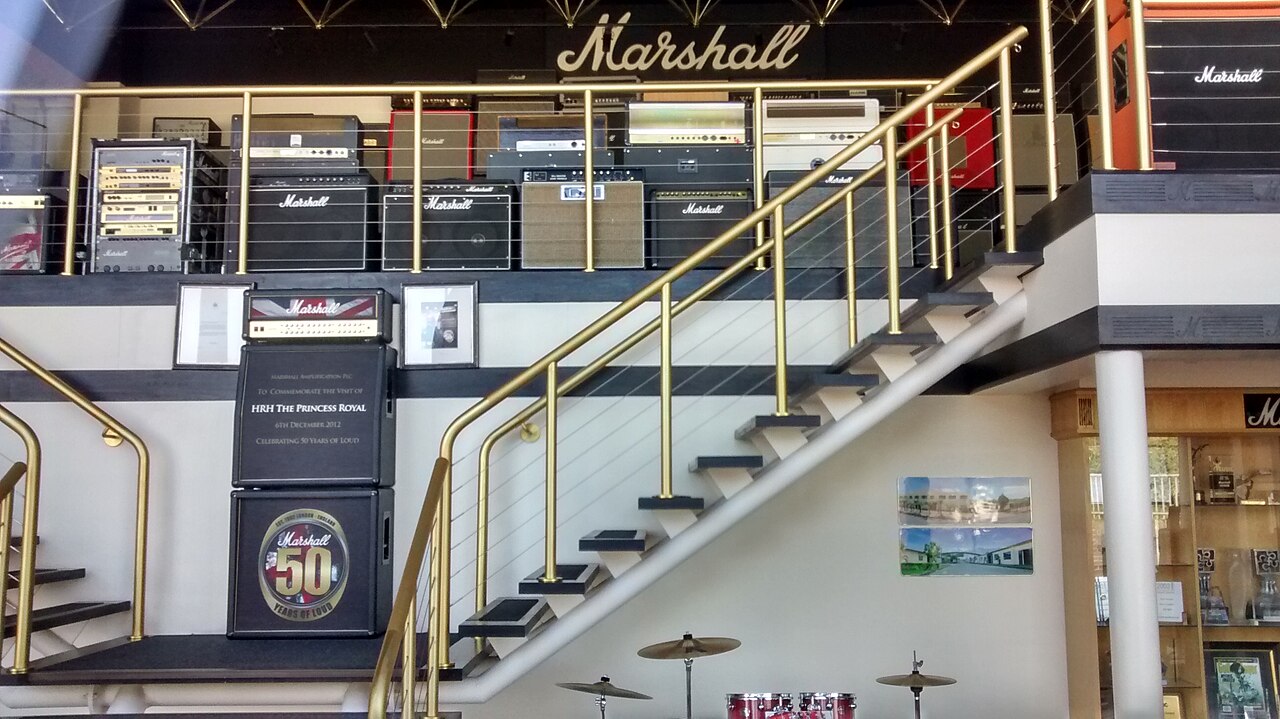
- The Marshall Amplification showroom with a staircase and amplifier stacks: Kris1973, Wikimedia Commons, CC BY-SA 4.0.
- Kerry King: Alfred Nitsch, Wikimedia Commons, CC BY-SA 3.0 AT.
- Tom Morello: deep ghosh, Wikimedia Commons, CC BY 2.0.
- Zakk Wylde: Joanna Corwin, Wikimedia Commons, CC BY-SA 3.0.
Latest News
Related
On This Day
Monday 9 November
From this week: