The Amp That Fits Between Your Tuner and Your Delay: Quilter SuperBlock US
Quilter SuperBlock US: three American amp voices in a 1.35-lb pedal with 25W, XLR direct, and built-in reverb. Specs, tone recipes & comparisons.
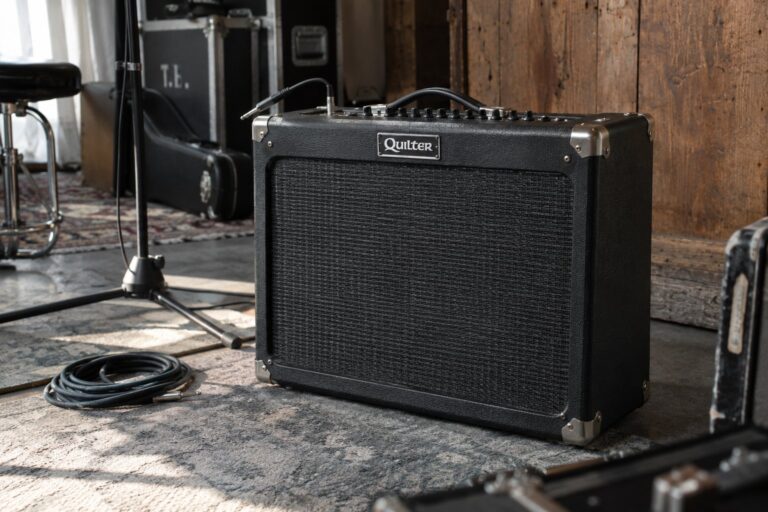
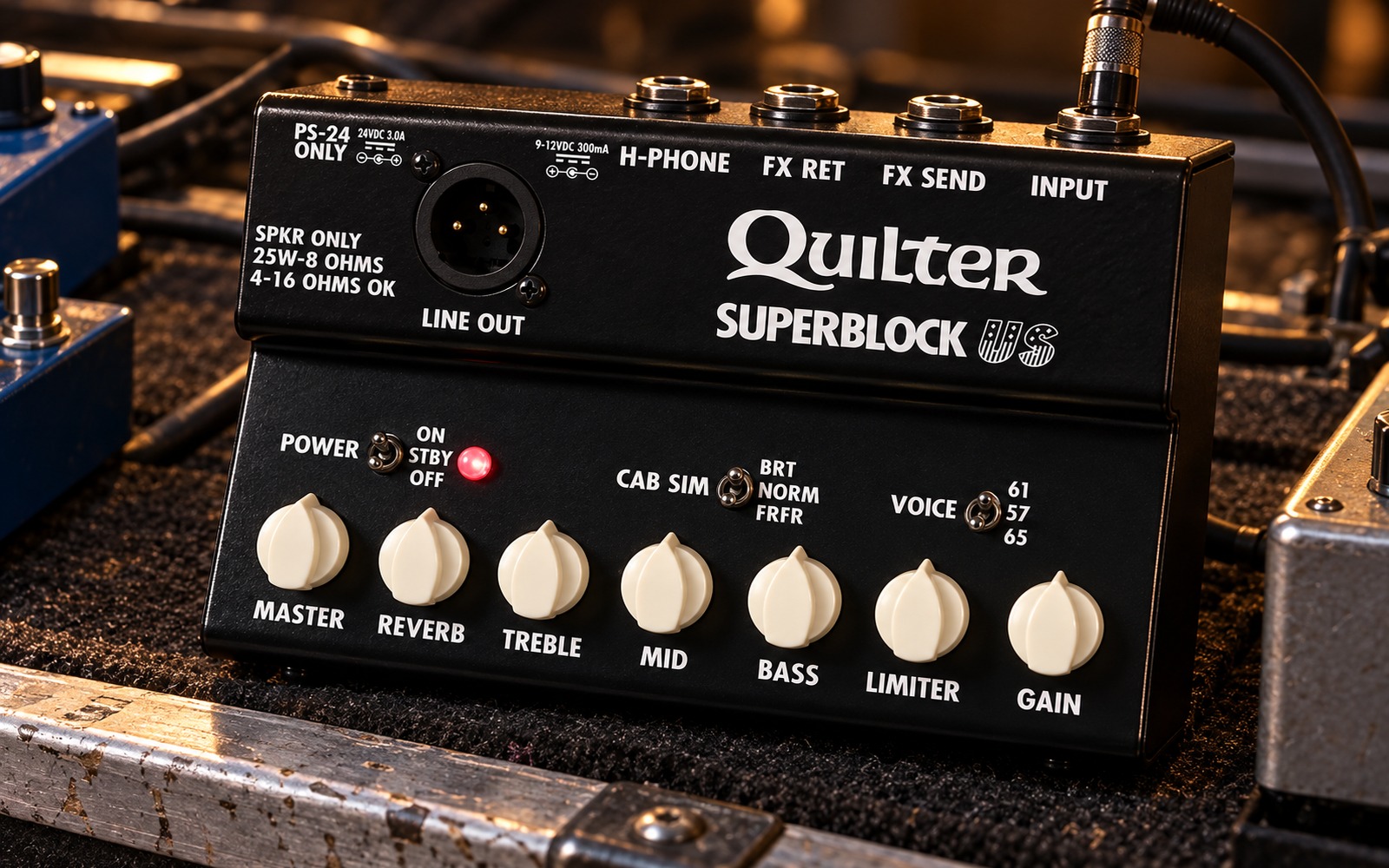
Somewhere between the third time you had a loaded-in backline cancel on you and the second time a sound engineer asked you to “just turn it down a bit,” you started wondering if there was a better way. The Quilter SuperBlock US is the answer to that question — a 1.35-pound pedal that puts three eras of American amplifier tone on your board, pushes 25 watts into any speaker cab from 4 to 16 ohms, sends a balanced XLR signal directly to the PA, and runs off the same 9V supply as your tuner when you just need bedroom volume. It is, in Quilter’s own words, “your amp on your pedalboard.” The evidence suggests they’re right.
This is not a modeler. It is not a profiler. The SuperBlock US uses analog Q-Circuit technology derived from the same solid-state platform that drives the larger Mach 3 and Tone Block 202 heads — scaled to pedal format through a design breakthrough by Patrick Quilter, the engineer whose name is literally the “Q” in QSC Audio. Understanding what that means, and what it doesn’t, is the whole story of why this pedal has earned the devoted following it has among working musicians who are done hauling tube amps across town.
Patrick Quilter and the Road from QSC to the SuperBlock
The SuperBlock US didn’t come from nowhere. It came from more than five decades of amplifier engineering by one of the most consequential figures in professional audio.
Patrick Quilter co-founded the Quilter Sound Company in 1968 alongside Barry Andrews and John Andrews — building power amplifiers and guitar amplifiers for local musicians in Southern California. The company incorporated as QSC in 1973 and grew into one of the world’s leading manufacturers of professional audio amplification equipment, with hundreds of employees and offices worldwide. Pat Quilter served as Chief Technology Officer, driving the solid-state amplifier research that made QSC’s power amps the go-to choice for large-scale live sound.
After retiring from QSC, Quilter launched Quilter Labs on January 1, 2011, based in Irvine, California. The premise was direct: take the Class-D and analog power amp technology refined over decades of professional audio work and apply it specifically to guitar amplification. The result was a line of amplifiers — Tone Block, MicroPro, BlockDock, Aviator, Mach 3 — that consistently drew attention for their combination of light weight, high power output, and what players described as an unusually responsive, dynamic feel for solid-state instruments.
The SuperBlock US was announced on April 27, 2021, and represented a significant milestone in the Quilter line: for the first time, all of Quilter’s tonal architecture was available in a pedal-format unit. The three voices — ’57 Tweed, ’61 Blonde, ’65 Blackface — are the same ones used in the Aviator Cub combo, now scaled to fit a double-width slot on a standard pedalboard. Pat Quilter described it as a breakthrough in his pedal-format technology; the result was a unit that could deliver legitimate gigging power and go-direct capability in a form factor that weighs less than most overdrive pedals.
What “Q-Circuit Analog” Actually Means
The most important thing to understand about the SuperBlock US is what it isn’t. It isn’t a digital modeler, which means there are no IRs to load, no presets to navigate, no screen, no firmware update that changes how the amp sounds, and no latency introduced by analog-to-digital conversion. It isn’t a profiler, which means you’re not capturing and replaying the behavior of a specific tube amplifier. The Quilter Q-Circuit is an analog power amplifier circuit designed to behave like the amplifiers whose voices it references — the gain structure, the EQ interaction, the way the power section responds to pick attack — without any digital processing in the signal chain.
The practical consequence is that the SuperBlock US responds to playing dynamics the way an analog amplifier does. Roll your guitar volume back and the clean-up is natural. Dig in and the voice character shifts with you. The Limiter — Quilter’s proprietary tone-shaping circuit — reduces gain just enough to prevent harsh digital-style clipping, then restores gain as the note decays. The result is sustained notes that trail off cleanly rather than the hard-edged square-wave breakup that characterizes pushed digital gain stages. It’s a subtle but audible distinction that explains why the SuperBlock consistently draws comparisons to how a pushed tube amp feels rather than how a pedal amp sounds.
None of this means the SuperBlock US sounds exactly like a vintage Fender or Bassman. It sounds like itself — an analog circuit built to reference those eras without pretending to be a perfect replica. The important distinction is that the reference is behavioural, not convolved. For players used to tube amps, that distinction matters enormously. For players coming from digital rigs, it means a learning curve in the opposite direction — fewer menus, more playing.
Specifications

The Three Voices: An Era Assigned to Each Knob Position
The Voice switch on the SuperBlock US doesn’t just apply a filter on top of a shared circuit. Quilter’s own description is that each position “changes how the entire amplifier circuit behaves — gain structure, midrange response, the way the power section reacts to your pick.” The three positions are built from the DNA of three distinct periods of American amplifier design.
’57 Tweed
The first position references the mid-1950s tweed-era Fender — the small combo that put rock and roll on the map by pushing its output transformer into compression before the signal ever got to a speaker. The SuperBlock’s Tweed voice is mid-forward, with a warm, slightly compressed clean tone that turns woody and fat when you back the volume off and raw and grinding when you push the Gain past noon. It’s the voice for blues, roots rock, and anything that needs to cut through a full band mix without polish. Plug in a Telecaster and the bridge pickup’s natural brightness combines with the Tweed’s midrange push to produce the kind of snapping, punchy tone that made ’50s session recordings sound alive even through a phone speaker. Country pickers and Chicago-style blues players will live here.
’61 Blonde
The second position references the transitional period when Fender was moving from tweed to the later blackface styling — the Bassman and Concert series with their brighter, cleaner character that began to growl at the edge rather than break up broadly. The Blonde voice delivers bell-like cleans at lower Gain settings and a throaty, compressed growl as you push it, with a character that hovers between clean and dirty rather than committing to either. Jazz guitarists running a single-coil guitar at moderate Gain will find a usable rhythm tone with articulation and body. Intermediate-gain country and Western swing styles — the players who need clean chords and slightly dirty single-note leads from the same setting — will also find their natural home here. Pair it with a medium-output humbucker and Gain at around ten o’clock and the Blonde voice approximates the clean-but-slightly-rude quality of a Vibroverb pushed past its comfort zone.
’65 Blackface
The third position is the one most players reach for first, and for good reason. The blackface era Fender — the 1965-spec Deluxe Reverb, Twin Reverb, and Super Reverb — defined a sound that appears on more studio recordings than any other single amplifier type in popular music. The slightly scooped midrange, the velvety high-frequency response, and the piano-like note separation that characterises the blackface voice made it the instrument of choice for sessions at Muscle Shoals, Sound City, and Abbey Road because it sat in a full mix without being asked to. The SuperBlock’s Blackface voice does the same thing — it gets out of the way of the song and lets the guitar be a guitar. It’s also the best pedal platform of the three voices, because the scooped mids give overdrive and distortion pedals more room to define their own character on top of the amp’s clean foundation. Players who run boutique drives into a blackface-voiced amp will find familiar territory here.
The Limiter: Quilter’s Signature Control
The Limiter control on the SuperBlock US deserves more attention than it typically gets in demo videos, because it’s the primary mechanism by which Quilter achieves the dynamic feel that distinguishes the amp from conventional solid-state circuits. At its minimum setting, the Limiter is effectively out of the circuit and the SuperBlock behaves like a conventional clean amplifier — what you put in, you get out, with whatever gain the Gain knob has set. As you advance the Limiter, it begins compressing the signal at the onset of overdrive, catching the harsh transients that make solid-state distortion sound brittle, and releasing them as the note decays so that sustain is maintained rather than cut off with the compression.
The practical result is that you can run the Gain into what would normally be hard-clipping territory and still get a singing, sustained lead tone rather than a buzzy digital mess. More importantly, the Limiter interacts with the Gain knob in a way that rewards experimentation — high Gain with low Limiter gives a more conventional driven tone, while moderate Gain with high Limiter gives the compressed, bloom quality associated with a tube amp running at the edge of its clean headroom. Dial the two together and you can position the SuperBlock US anywhere between pristine clean and full-on crunch.
Famous Players: Honest Assessment
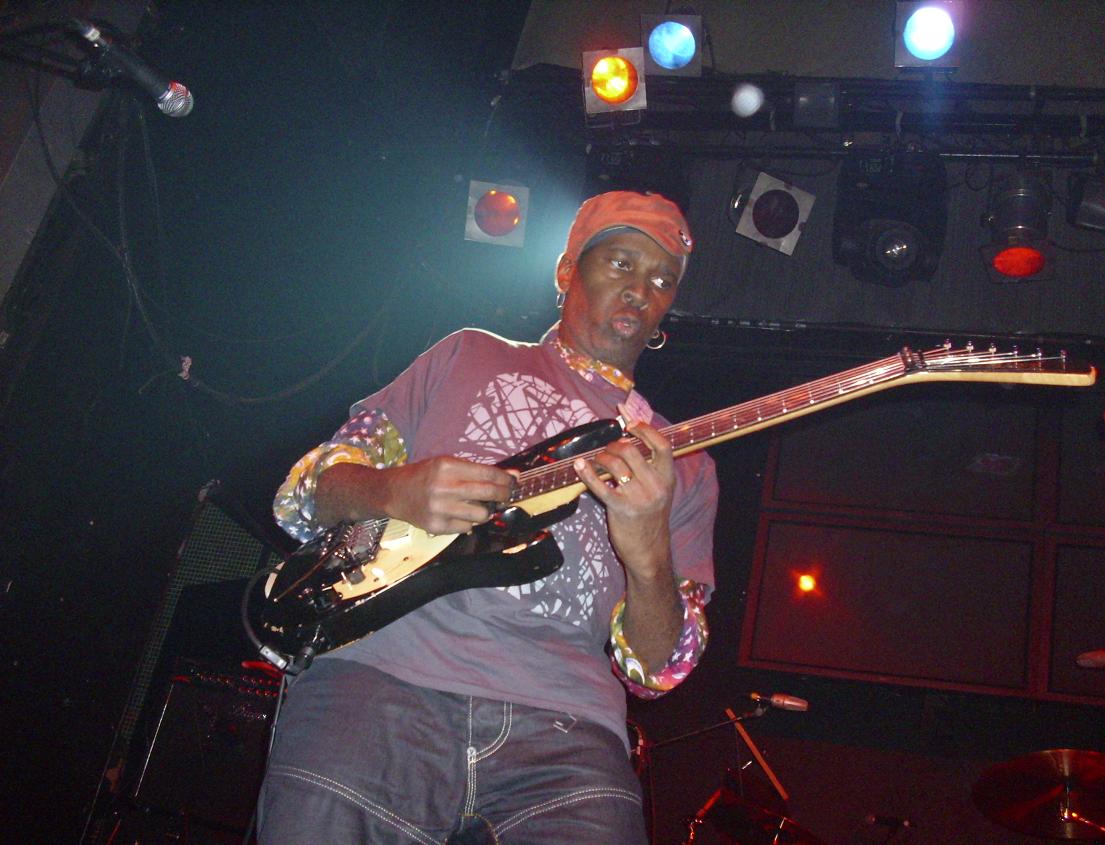
The Quilter Labs artists page lists a roster that includes some genuinely impressive players — Albert Lee, Vernon Reid, Jonny Lang, Mateus Asato, Devin Townsend, Doyle Bramhall II (Eric Clapton’s touring guitarist), Kim Wilson of The Fabulous Thunderbirds, Elvin Bishop, and more. The issue is that the Quilter artist page categorises almost all of them under the generic header “Quilter Guitar Amplifiers” with no specific model attribution. Kurt Ballou (Converge) is explicitly listed as a Tone Block 202 user. Mason Stoops (Jackson Browne, Phoebe Bridgers) is also listed as Tone Block 202. Seal’s rig is documented as Mach 3 and Tone Block 202. Allan Holdsworth, in the In Memoriam section, is listed as a Tone Block Series user — the FullQ voice was designed with his playing in mind specifically, and he switched to Quilter before his death in 2017.
The one player on the Quilter roster explicitly confirmed as a SuperBlock US user in Quilter’s own documentation is Des Vega, listed in the Extended Family section with the specific credit “Guitar · Saint Tone · Mach 3 · SuperBlock US.” Des Vega is a working guitarist and Quilter ambassador, not a household name — which is entirely consistent with who actually uses the SuperBlock US. This is a working musician’s tool, adopted most heavily by touring session players, fly-date specialists, and gigging musicians who have done the math on what hauling a 40-pound tube combo actually costs over five years of gigs.
The broader Quilter roster — Albert Lee’s country-jazz precision, Vernon Reid’s genre-spanning complexity, Jonny Lang’s blues fire — represents what the brand sounds like at its best, but attributing any specific Quilter model to any of these players without a primary source would be inaccurate. Use their presence on the artist page as evidence that the Q-Circuit platform is trusted by world-class players. Use Des Vega’s explicit SuperBlock US credit as the honest primary source for who uses this specific pedal.
It’s also worth noting what kind of music the SuperBlock US is structurally suited for: it doesn’t have MIDI, doesn’t load third-party IRs, and doesn’t have a screen. Players whose workflow requires preset recall via MIDI, IR libraries, or deep parameter control over multiple channels will gravitate toward the Neural DSP Quad Cortex or Kemper Profiler instead. The SuperBlock US is for players who have decided that seven knobs and a voice switch is enough — and who want analog behavior rather than digital convenience.
Five Tone Recipes
Blackface Clean — Pedal Platform
Voice: ’65 Blackface. Gain: 9 o’clock. Limiter: 8 o’clock (minimal). Bass: noon. Mid: 10 o’clock (slight scoop). Treble: 2 o’clock. Reverb: 11 o’clock. Master: to taste. This is the SuperBlock US in its most studio-ready mode — a slightly scooped, glassy clean that sits in a full-band mix the way a 1965 Deluxe Reverb used to. Run your overdrive and fuzz pedals in front of this signal path and let the circuit handle the cab character. The XLR out with cab sim engaged gives FOH a shaped signal that sounds like a studio mic’d blackface combo without a single microphone in the chain.
Tweed Blues Crunch
Voice: ’57 Tweed. Gain: 2 o’clock. Limiter: 1 o’clock. Bass: 11 o’clock. Mid: 2 o’clock. Treble: noon. Reverb: 9 o’clock. Master: to gig volume. This is the SuperBlock US pushing into its native territory — the mid-forward, compressed breakup of a small tweed combo running hard. Roll back your guitar’s volume to 7 for clean rhythm, push to 10 for edge-of-breakup leads, slam it full for grinding single-note work. A Telecaster bridge pickup here is a primary colour. Keep the bass restrained to prevent the natural boxiness of the Tweed voice from accumulating in the low mids.
Blonde Edge-of-Breakup — Country and Jazz
Voice: ’61 Blonde. Gain: 11 o’clock. Limiter: noon. Bass: noon. Mid: 1 o’clock. Treble: 1 o’clock. Reverb: noon. Master: to taste. This is the country/jazz sweet spot — a clean tone that has just enough compression and warmth to sustain naturally without breaking up under hard chords. A Telecaster in the neck position will produce chord work with body and warmth. A semi-hollow or thinline with a P-90 produces the kind of medium-jazz tone that doesn’t require any pedals. For Western swing players: back the Treble off a half-turn and push the Reverb to 1 o’clock for the full honky-tonk texture.
Silent Recording — Direct to DAW
Power: 9V (1-watt mode, or PS-24 with Master at minimum and headphone out in use). Voice: ’65 Blackface or ’57 Tweed depending on part. Gain: up to taste. Cab Sim: on (choose sim 1 or 2 based on preference). Into headphone output: monitor while tracking. Into DAW: run from XLR out balanced into your interface’s line input. The built-in cab simulation shapes the tone so no additional convolution is needed for tracking — the recorded track is ready to mix without further processing. For high-gain parts: push Gain to 3 o’clock, Limiter to 2 o’clock, run a TS-style overdrive in the FX loop return for additional density.
Live Direct — XLR to PA, No Backline
Power: PS-24 (25W). Voice: to taste. XLR Balanced Out: to FOH snake. Cab Sim: on. Reverb: slightly lower than bedroom setting (room wash from the PA adds perceived reverb). Master: moderate — let FOH control your overall level from the console. Monitor: via IEM or stage monitor fed from mix. This is the SuperBlock US’s defining use case: no speaker cab, no microphone, no cable snake running to an amp corner. The balanced XLR eliminates ground loop issues that plague unbalanced direct sends. Your tone is consistent from room to room because it’s not affected by mic placement, room acoustics behind the stage, or the distance between your cabinet and the microphone. Sound engineers consistently report that a properly dialled SuperBlock US XLR send is easier to mix than a mic’d cabinet in a live room with stage bleed.
How the SuperBlock US Compares
The SuperBlock US sits in a genuinely unusual market position — not a modeler, not a traditional head, not a preamp-only unit. Here is where it stands against the alternatives most players consider alongside it.
Versus the Strymon Iridium: The Iridium is a preamp and cab simulator with no power amplifier — it cannot drive a speaker cabinet. The SuperBlock US can. This is the fundamental difference. If you never want a stage cab and will always go direct, the Iridium’s nine IRs and DSP processing give you more tonal variety. If you want the option of a physical cab for stage monitoring or rehearsal, only the SuperBlock US can provide it. The Iridium also runs on 9V pedalboard power; the SuperBlock US needs the PS-24 for full power (though it runs on 9V for the 1-watt mode).
Versus the Orange Terror Stamp: The Terror Stamp at $199 is lighter and cheaper but gives you one voice (Orange’s own character), no XLR balanced out, and a single Shape control instead of a 3-band active EQ. The SuperBlock US’s three voices, onboard reverb, built-in Limiter, and XLR direct capability justify the extra $120 for players who need versatility. The Terror Stamp is the right choice for players who specifically want Orange tone and nothing else.
Versus the Neural DSP Quad Cortex: These are different instruments solving different problems. The Quad Cortex at roughly $1,699 is a full profiling and modeling platform with a touchscreen, preset recall via MIDI, and hundreds of amp models. The SuperBlock US at $319 is seven knobs and two switches with no screen. Players who need deep editing, complex signal chains with multiple amp models, or A/B switching between radically different tones on the same gig will need the Quad Cortex. Players who have found their sound and want to deliver it reliably without fuss will reach for the SuperBlock US.
Versus the Kemper Profiler: The Kemper’s proposition is the ability to capture a specific tube amplifier’s response via profiling and replay it with high fidelity. It’s a fundamentally different approach from the SuperBlock’s analog circuit design. The Kemper costs several times as much, requires a significant learning curve to profile effectively, and doesn’t have the SuperBlock’s dual power mode or pedalboard footprint. For players who have a specific vintage amp they need to capture and reproduce exactly, the Kemper wins. For players who want an analog circuit that references vintage American tones without profiling overhead, the SuperBlock US wins.
Versus the Fractal Audio Axe-FX III: The Axe-FX III is a professional rackmount DSP modeler that competes at a completely different price and complexity tier. No meaningful comparison is possible at the feature level — these tools serve different players with different priorities entirely. The SuperBlock US’s advantage is simplicity and analog behavior. The Axe-FX III’s advantage is virtually unlimited tonal depth and professional-grade DSP. Many working players use both: a Fractal rig for complex sessions that require DSP power, a SuperBlock US on a grab-and-go board for rehearsal, fly dates, and simple club gigs.

Buying Guide
The SuperBlock US sells new for $319 and includes the PS-24 power supply — do not buy it without the supply if you find a listing where it’s been separated. A SuperBlock without the PS-24 is a 1-watt headphone practice tool; with it, it’s a 25-watt gigging head. Used units in good condition typically sell for $220–$260 depending on cosmetics and whether the PS-24 is included. The SuperBlock US is a robust unit that travels well and has no tubes to fail, so used examples are generally reliable.
The companion SuperBlock UK ($319 new) uses three British voices — AC Norm, AC Top Boost, and 1979 JMP — covering the other side of the Atlantic with the same Q-Circuit architecture. Some players own both; the two together cover the majority of amplifier voices used in popular music from the 1950s to the 1990s, fit in a backpack, and together weigh less than a single tube amp’s output transformer.
If you play through a cab, bring your own. The SuperBlock US is compatible with any standard 4Ω, 8Ω, or 16Ω speaker cabinet. A 1×12 cabinet with an efficient speaker — Celestion Alnico Gold, Jensen C12K, Eminence Legend — will produce the most amp-like response from the 25 watts available. The SuperBlock US’s 25 watts into a sensitive speaker will push a small room without issues; it is not a stadium backline, but neither does it need to be when you have an XLR going to FOH.
Ownership Notes
No tubes means no bias checks, no retubing appointments, no microphonic preamp tubes introducing unwanted noise, and no catastrophic failure mode at the venue. The SuperBlock US turns on instantly — no warm-up time. It draws no standby current and doesn’t need a cool-down period before you pack it up. These are small things that compound into significant quality-of-life improvements over years of gigging.
The dual power mode is genuinely useful. On a standard 9V pedalboard supply (minimum 200mA), the SuperBlock US delivers 1 watt — enough for headphone practice, quiet home recording, and dialling in sounds at a volume that doesn’t disturb anyone. Switch to the PS-24 and you have a full 25-watt gigging head with no other changes to your signal chain. This means you can build a rig, dial in your sounds at home at 1 watt, and trust that the tonal character will be the same when you’re running 25 watts at a gig.
The FX loop sits post-preamp and pre-power section, which is the correct placement for time-based effects. Your reverb and delay stay clean regardless of how much Gain you’re running. If you run reverb and delay in the loop and a drive pedal in front of the amp’s input, the signal flow exactly replicates the traditional amp setup: drive into preamp, then time-based effects after. The built-in reverb is a digital unit that sounds good and obviates the need for a separate reverb pedal in many contexts.
The SuperBlock US does not have MIDI control, cannot load external IRs, and has no USB connection for firmware updates or editor software. These are not oversights — they are design decisions. The product’s value proposition is a fully analog, completely hands-on workflow with no software dependencies. If any of those omitted features are non-negotiable for your rig, the SuperBlock US is not your product.
Frequently Asked Questions
Can the SuperBlock US drive a 4×12 cabinet?
Yes, if the cabinet is rated at 4Ω, 8Ω, or 16Ω (or presents a parallel impedance within that range). At 25 watts, you won’t saturate a large cabinet the way a 100-watt Marshall would, but the output is louder than the wattage suggests — most reviewers compare the stage volume to a tweed Deluxe or a Princeton, which is adequate for medium-sized venues and any PA-supported gig.
Is the 1-watt mode actually useful?
For practice and recording, absolutely. The character of the voices is preserved at 1 watt; the only thing lost is headroom. For a cab in a band rehearsal room, 1 watt will not cut through. Use 1-watt mode with the headphone output (cab sim engaged) or the XLR direct to a monitor, and it’s a genuinely functional practice tool at bedroom volumes.
Can I run the XLR and a speaker cab simultaneously?
Yes. The XLR balanced output and the speaker output can be used simultaneously. This is useful for FOH direct plus stage monitor through a small cab, or for recording direct while monitoring through a speaker.
Does the FX loop accept standard pedal levels?
Yes. The SuperBlock US FX loop is designed for instrument-level pedals, not line-level rack gear. Standard delay, reverb, chorus, and modulation pedals work correctly in the loop without level-matching. Rack processors that output at line level (+4dBu) may need an attenuator to match levels.
What’s the difference between the two cab simulations?
Quilter doesn’t publish detailed specifications of the two cabinet simulation voicings, but user reports consistently describe one as a tighter, more forward-sounding simulation (suited to the Tweed and Blonde voices) and one as a smoother, more open-back character (suited to the Blackface voice). FRFR mode bypasses both simulations and delivers a flat-response signal — useful if you’re running into an FRFR speaker or if you want to apply your own IR processing downstream.
Does the SuperBlock US need to be isolated on a board or can it share a power supply?
For the 1-watt mode, any standard isolated 9V output of at least 200mA works. For 25-watt mode, you must use the included PS-24 (24V DC) supply — no standard pedalboard supply delivers 24V. The PS-24 is a standard external supply that you can velcro to the underside of your board. Some players velcro the SuperBlock itself to the board and run the PS-24 offboard.
Can I use the headphone output with studio headphones?
Yes. The headphone output has cab simulation engaged and is designed for standard headphone impedances (32–300Ω covers most consumer and studio headphones). At 1-watt mode, the output level is moderate; at 25-watt mode, use caution with the Master knob and keep it low when monitoring through headphones.
Is there a version with more than three voices?
Within the SuperBlock family, no. For British voices (AC Norm, AC Top Boost, 1979 JMP), the companion SuperBlock UK at the same $319 price point covers the other side of the tonal map. Within the broader Quilter lineup, the larger Mach 3, Tone Block 202, and Aviator heads offer additional voicing options and higher power output, but in larger and heavier form factors.
Image credits
- Top image: GuitarGangsters AI-generated reference illustration, not a photograph.
- Albert Lee: Andreas Lawen (Fotandi), Wikimedia Commons, CC BY-SA 4.0.
- Jonny Lang: alaina buzas, Wikimedia Commons, CC BY 2.0.
- Vernon Reid: Mario, Wikimedia Commons, CC BY 2.0.
Latest News
Related
On This Day
Monday 9 November
From this week: