Fifty-Five and Still Feral: Universal Audio Shrinks the Tweed Deluxe Into a Stompbox You Can Actually Afford to Own
UA's UAFX Woodrow '55 packs the legendary 1955 Fender tweed Deluxe into a stompbox. Here's everything you need to know before you buy.
There are amps that sound good and then there are amps that change the way you think about electric guitar. The 1955 Fender narrow-panel tweed Deluxe is squarely in the second category. It is the sound of early rock ‘n’ roll being invented in real time at Sun Studio in Memphis. It is Neil Young cranking a battered box in a barn in Northern California while the tape rolled. It is the sound — sweet, complex, barely-held-together, harmonically saturated — that producers still chase seventy years after Leo Fender first put two channels, one tone knob, and a pair of 6V6 tubes into a tweed-covered cabinet and called it done.
The problem, of course, is that a genuine 1955 5E3 Fender tweed Deluxe now costs between $8,000 and $25,000 depending on condition, and even a well-made modern clone will run you $3,000 or more before you factor in a proper attenuator to run it at volume in a home studio. Universal Audio’s UAFX Woodrow ’55 Instrument Amplifier is a direct answer to that problem: the same modeling engine that powers UA’s acclaimed OX Amp Top Box and their legendary UAD studio plug-ins, packed into a single stompbox running off a 9V supply, for $499. Whether that trade is worth making is a serious question — one that deserves a serious answer.

Leo Fender’s Masterpiece: The 5E3 Narrow-Panel Tweed Deluxe
To understand what Universal Audio built, you need to understand what they were trying to capture. The Fender Deluxe went through multiple circuit revisions in the 1950s, each designated by a code. The 5E3 — fifth circuit family, E for Deluxe, third revision — was finalized in 1955 and produced with minor variations until 1960. Those five years of production left behind arguably the most influential small amplifier in the history of the electric guitar.
The 5E3’s circuit is almost comically simple by modern standards: two input channels (labeled “Instrument” and “Microphone”), a shared tone control, volume knobs for each channel, and an output stage running two 6V6 power tubes in a Class A/B push-pull configuration driven close to Class A operation. Total output: around 15 watts into a single 12-inch speaker — originally a Jensen P12Q, later a P12R. That is the entire circuit. There is no reverb, no tremolo, no effects loop, no channel switching. It is a thermionic voltage amplifier with a speaker on the end.
What makes the 5E3 special is not what it has but what happens when you push it. The output transformer is deliberately undersized for the output tubes, which means the amp begins to compress and saturate at volumes well below what a more conservatively designed circuit would consider “loud.” The two channels interact acoustically through the shared tone stack, which means a guitar signal bleeds between them even when only one is in use — a phenomenon that adds harmonic complexity to the clean sound long before anyone has touched the Volume knob. Players discovered in the late 1950s that running a patch cable between the two inputs (the “jumpered” mod) amplified this interaction dramatically, producing a thick, vocal, harmonically rich overdrive unlike anything else available.
The resulting sound — complex low-mids, generous second and third harmonic overtones, a bloom and sag to the attack, clean tones that bloom into crunch as pick pressure increases — became the defining tone of a generation of American music. From the rockabilly sessions at Sun in 1954-1958 to Neil Young’s Rust Never Sleeps in 1979 to Mike Campbell’s work on nearly every Tom Petty record, the 5E3’s character runs like a spine through five decades of recorded guitar music.
Universal Audio Enters the Pedal Market
Universal Audio made its reputation in studio infrastructure: the 1176 and LA-2A compressors, the Apollo interfaces, and the UAD platform that brought those processor-hungry plug-in emulations within reach of professional studios. The company’s first guitar pedals, a set of delay, reverb, and modulation units released in 2021, demonstrated that the same modeling expertise could translate to the pedalboard. A year later, in June 2022, UA released three amp emulator pedals simultaneously: the Woodrow ’55 (tweed Deluxe), the Ruby ’63 (Vox AC30 Top Boost), and the Dream ’65 (Fender Blackface Deluxe Reverb).
Each pedal targets one specific amplifier model rather than offering a library of choices. This is a deliberate design philosophy: depth over breadth. Where a Line 6 Helix or Neural DSP Quad Cortex might offer hundreds of amp models across multiple eras and manufacturers, the Woodrow ’55 does exactly one thing — but commits to doing it at a level of fidelity that UA argues is genuinely beyond what multi-model platforms can achieve per individual amp.
The cabinet and mic models in every UAFX amp pedal are derived from the same technology used in the OX Amp Top Box, a standalone load box and speaker simulator that retails for $899 and is regarded as among the most accurate available. Getting that technology into a $499 stompbox represented a significant engineering achievement — and it is one of the central claims the Woodrow ’55 makes on your wallet.
Specifications
The Controls: A 5E3 by Another Name
Part of what makes the UAFX amp pedals interesting as a concept is that each pedal’s physical controls mirror those of the original amplifier it models. The Woodrow ’55’s Instrument and Mic Channel volumes correspond directly to the 5E3’s two input channels. The shared Tone control corresponds to the original’s single tone knob. This is not cosmetic: it means that players who understand the 5E3’s behavior can apply that knowledge directly to the pedal, and players who learn the pedal are effectively learning the original circuit’s personality.
The Instrument channel is the primary gain stage — equivalent to the 5E3’s Channel One. The Mic Channel adds low-end warmth and a secondary gain layer; turning both up simultaneously recreates the interaction you would get by jumpering the real amp’s inputs. The degree to which UA’s DSP successfully models that channel interaction is one of the most technically interesting claims the pedal makes. MusicRadar noted during their review that with both channels turned up, the resulting bloom on the attack and the harmonic density “is of a Tweed amp” — a statement they found notable enough to call out explicitly.
The three Boost options deserve particular attention because they represent three genuinely different tonal directions. The stock setting keeps the Woodrow as a clean tweed platform. The EP-III boost, based on the preamp circuit of the Maestro Echoplex EP-3 tape delay (a unit beloved for the warm compression it added to a guitar signal even before the delay kicked in), brings toasty saturation to the low-mid region and responds especially well to overdrive pedals stacked in front. The KP-3K, based on the preamp of the Korg SDD-3000 delay processor (best known as the unit that defined The Edge‘s U2 tone), leans into the upper mids and adds a harder, more aggressive character. Running any of those three into full-cranked Instrument and Mic volumes gets you into what MusicRadar described as “fuzzy extremes where the Woodrow sounds like it’s just about holding together — a glorious sound.”
The Room knob adds reverb ambience derived from the same room modeling technology used in the OX Amp Top Box. It works best kept below noon; past that it drifts into territory better handled by a dedicated reverb pedal on your board. The Output knob controls the final signal level independently of the gain staging — critical for balancing levels when switching between the Woodrow and other signal paths.
The November 2025 Firmware 2.0 Update: What Changed and Why It Matters
Universal Audio released a significant firmware update in November 2025 that addressed the most widely criticized limitation of the original UAFX amp pedal lineup. The update added MIDI over USB-C to the Woodrow ’55, Dream ’65, Ruby ’63, and newer UAFX models, along with the ability to store four presets on the hardware rather than one. Bluetooth connectivity was also improved, and a hardwired USB-to-mobile connection option was added as an alternative to Bluetooth for app control.
This matters for anyone buying the Woodrow ’55 in 2026 because it resolves two issues that attracted genuine criticism in earlier reviews. First, the inability to integrate the pedal into a MIDI-controlled rig was a meaningful limitation for players using programmable switchers or MIDI loopers. Second, multiple early user reviews across UA’s own website and third-party retailers documented frustrating Bluetooth connectivity problems — the app would connect intermittently or refuse to pair — which made accessing artist presets and advanced features unreliable. The firmware 2.0 update’s hardwired alternative is a practical fix for the Bluetooth problem rather than just a software patch.
Any Woodrow ’55 you buy new in 2026 ships with firmware 2.0 already installed or installable via the free UA Connect desktop application. For used units bought on the secondary market, check the firmware version before purchase and budget 15 minutes to update if needed.
Famous Players: What UA Claims vs. What the Evidence Shows
Universal Audio’s product page for the Woodrow ’55 states that the tweed Deluxe’s sound has been “used by artists and producers for decades, from The Eagles to Chuck Berry to Neil Young.” This statement is accurate — and it is also, if read carefully, a statement about the original 1955 Fender tweed Deluxe amplifier, not about the UAFX Woodrow ’55 pedal. The distinction matters.
Neil Young owns and uses multiple vintage tweed Deluxes, including an instrument he calls “Woman King” that has appeared on recordings dating back to the early 1970s. His tweed tone — raw, nasal, barely controlled — is one of the most documented guitar sounds in American rock, audible across Harvest, Tonight’s the Night, Rust Never Sleeps, and Decade. MusicRadar’s reviewer noted explicitly that “for anyone who wants the ragged glory of Neil Young, this is the pedal to hone in on.” Neil Young is not a UAFX endorser and there is no documentation of him using the pedal. He is the historical artist whose sound the pedal is built to evoke.
Chuck Berry is referenced in UA’s marketing as part of the historical tweed Deluxe lineage. Berry’s early Chess Records recordings in the mid-1950s used Fender amplifiers — he was among the first artists to push a small Fender combo into power-amp saturation as a deliberate musical choice, and those recordings (Johnny B. Goode, Maybellene, Roll Over Beethoven) are among the earliest documented examples of what we now recognize as rock ‘n’ roll electric guitar tone. Again: this is about the real amp, not about Berry endorsing the UAFX pedal.
Scotty Moore recorded the early Elvis Presley Sun Sessions through Echo amp setups and later Fender combos in the 1954-1956 period. Carl Perkins recorded Blue Suede Shoes in January 1956 through similar equipment at Sun Studio in Memphis. These are the foundational recordings the 5E3 circuit was part of creating. Neither artist endorses the UAFX Woodrow.
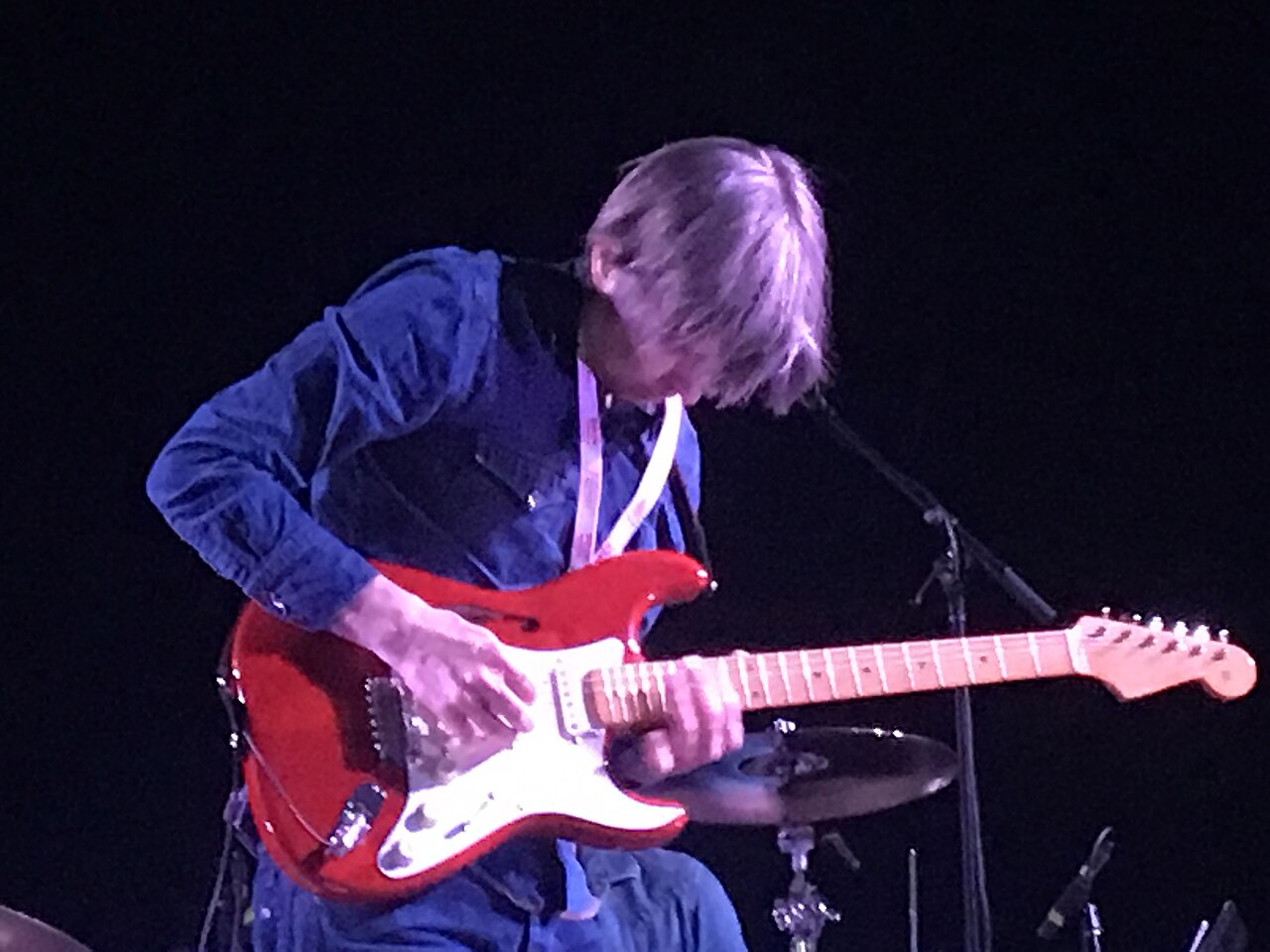
Mike Campbell, Daniel Lanois, Robben Ford, Eric Johnson, and Joe Bonamassa are all documented vintage tweed Deluxe collectors and players. Eric Johnson is particularly well known for his meticulous attention to original tweed amp circuitry and his ability to articulate exactly what makes specific vintage units behave differently from one another. Robben Ford has used tweed amps throughout his career in blues and jazz contexts. None of these artists are UAFX Woodrow endorsers; all of them represent the tonal tradition the pedal draws on.

Ariel Posen is the clearest genuine connection between a working artist and the UAFX Woodrow ’55. UA produced a “UAFX Pedal Sessions” video featuring Posen — titled “Ariel Posen Doesn’t Need a ‘Real’ Amp to Melt Faces” — filmed at UA’s headquarters in California, in which he demonstrates all three UAFX amp pedals with no real amplifier in the signal chain. This is genuine UA-produced promotional content featuring Posen’s own playing and endorsement. Posen is one of the more technically credible players to endorse any product: a Canadian guitarist and producer whose work with The Bros. Landreth and as a solo artist has earned widespread respect in the fingerpicking and blues communities.
David Ryan Harris (John Mayer’s band, Dave Matthews Band, Santana touring guitarist) and Butch Walker (producer for Green Day, Weezer, Taylor Swift) are quoted on UA’s product page saying they use the UAFX pedals and that they “truly recreated classic analog effects of the past.” These quotes appear on multiple UAFX product pages and represent endorsement of the overall UAFX platform rather than the Woodrow specifically.
Jim James (My Morning Jacket) and Danish Pete (Peter Honoré) have created artist presets available through the UAFX Control app — a real but limited form of connection, indicating those players found the Woodrow’s tones worth building around but falling short of the full endorsement documentation you would expect from a primary touring setup.
Finally: the Myles Kennedy story that MusicRadar documented in their Woodrow review is specifically about the UAD software plug-in version of the 5E3, not the UAFX hardware pedal. Kennedy was so impressed by the UAD “Fender ’55 Tweed Deluxe” plug-in while recording with his Apollo interface that he bought a vintage original tweed Deluxe as a result. It is a compelling story about UA’s modeling quality, and it is entirely about the plug-in.
How the Woodrow ’55 Sounds: Five Tone Recipes
Tone Recipe 1: Classic Tweed Clean (Single-Coil Platform)
Cabinet: Jensen P12R. Boost: Stock. Instrument Vol: 1 o’clock. Mic Channel Vol: fully off. Tone: noon. Boost: 7 o’clock (off). Output: set to unity with your normal signal level. Room: 8 o’clock (very light). This is the Woodrow as a clean platform for a Stratocaster or Telecaster neck pickup. The P12R model’s slight high-end roll-off keeps single-coil brightness from becoming harsh. Roll your guitar’s volume back to 7 or 8 and you get a pristine, touch-sensitive clean that responds to picking dynamics the way a good old amp responds to tube saturation. The moment you dig in harder, you hear the first harmonic bloom. This is the setting for Scotty Moore’s clean passages on the Sun Records sessions — chicken-pickin’ twang at low-medium levels, authority without aggression.
Tone Recipe 2: Edge-of-Breakup Blues (Humbucker, Both Channels)
Cabinet: Celestion Greenback. Boost: Stock. Instrument Vol: 2 o’clock. Mic Channel Vol: 10 o’clock. Tone: 2 o’clock (bright). Boost: 9 o’clock (low). Output: unity. Room: 9 o’clock. This replicates the jumpered-channel behavior of the real 5E3: the Instrument channel provides the primary gain while the Mic channel adds low-mid density and secondary harmonic content. A Les Paul or 335 through this setting delivers the sound of a cooking tweed at the point just before it becomes distorted — where chords bloom on the attack and sustain forever, where pinch harmonics appear without effort, and where the pick attack gives you clear transient definition against a warm, saturated note underneath. Back the guitar volume down slightly for a cleaner, more complex clean. Push it for growling, harmonically rich overdrive.
Tone Recipe 3: Neil Young Ragged Fuzz Mode
Cabinet: Celestion Blue. Boost: EP-III. Instrument Vol: 3 o’clock. Mic Channel Vol: 2 o’clock. Tone: 10 o’clock. Boost: 1 o’clock. Output: set carefully — this is loud. Room: off. This is the Woodrow pushed into saturation territory that starts to blur the line between overdrive and fuzz. The EP-III boost adds compressed low-mid warmth that thickens the already-saturated signal, and with both volumes near maximum the pedal’s model starts to exhibit the barely-controlled character MusicRadar described as “just about holding together.” The Tone control backed off reduces high-frequency harshness and pushes the voice into the ragged, nasal midrange that defines Young’s solo sound on Rust Never Sleeps. This is the setting where the Celestion Blue’s low-end authority and rolled-off top works best — the Greenback would get harsh at these levels.
Tone Recipe 4: Country-Pickin’ Twang (Telecaster Bridge, KP-3K Boost)
Cabinet: Jensen P12R. Boost: KP-3K. Instrument Vol: 12 o’clock. Mic Channel Vol: off. Tone: 2 o’clock. Boost: 10 o’clock. Output: unity. Room: 8 o’clock (very dry). The KP-3K’s upper-mid emphasis works beautifully with a Telecaster bridge pickup for the cutting, nasal twang that Merle Travis and Chet Atkins established as the sound of country guitar. The P12R’s slightly warmer response keeps the combined brightness from being abrasive. At moderate Instrument volume, the attack is clean and percussive with defined string separation; notes pop with authority rather than just sustaining. Add a touch of slap-back delay from a separate pedal and this setting covers a lot of Nashville and Bakersfield territory convincingly.
Tone Recipe 5: Recording Studio Direct-In (Blues Lead)
Cabinet: JBL D120F (unlocked via app registration). Boost: EP-III. Instrument Vol: 1 o’clock. Mic Channel Vol: 1 o’clock. Tone: noon. Boost: 11 o’clock. Output: set for your interface input level. Room: 10 o’clock (subtle). This is the Woodrow optimized for direct recording into a USB interface without any FRFR speaker — using studio monitors to hear the result. The JBL D120F cabinet model provides a slightly more open, extended frequency response than the Celestion options, which translates better to flat studio monitor listening where you need to hear clearly into the note rather than feel the speaker in the room. The equal-blend of both channels at moderate levels gives you a complex, layered tone that reads well in a mix: there is enough mid-range presence to sit above bass and drums, enough harmonic complexity to occupy space without cluttering it. Robben Ford‘s direct-in studio approach with vintage tweed amps is the closest real-world reference for what this setting is aiming at.
These settings assume you are running the Woodrow ’55 directly into an FRFR speaker, a studio monitor, or a USB interface. If running four-cable method into a real amp’s effects return, reduce the Output level accordingly and bypass the cabinet model in the app if your power amp and speaker are doing that work.
Comparisons: What Else Could You Buy?
The Woodrow ’55 occupies an interesting position in the amp-sim pedal market because it competes simultaneously against single-model amp pedals, multi-model modelers, and the dedicated tube amps it emulates.
The Walrus Audio ACS1 Amp + Cab Simulator ($449.99) offers six amp models — including Fender Deluxe Reverb, Marshall Bluesbreaker, Vox AC30, Peavey 5150, Orange Rockerverb, and Mesa Dual Rectifier — plus 512 IR slots for third-party cabinet loading. The ACS1 is the obvious choice if you need more than one amp model on your pedalboard; the Woodrow is the choice if you specifically need one model done at the highest possible level of fidelity. These are fundamentally different value propositions rather than direct substitutes.
The Universal Audio UAFX Ruby ’63 Top Boost Amplifier is the sibling that critics slightly preferred in head-to-head comparisons. MusicRadar noted that the Ruby’s “wider appeal” was the Vox AC30’s more immediately distinctive character — it is harder to mistake a well-modeled AC30 for anything else, which makes the Ruby’s success easier to hear. The Woodrow’s reference amp is so widely cloned that listeners need to know tweed Deluxe tones well to fully appreciate how close UA has gotten. The two pedals are complementary rather than competing within the UAFX line.
The Line 6 Helix Floor ($1,599) offers a Fender tweed model among its library of over 100 amp simulations, along with a full multi-effects processor. If you need a tweed sound occasionally as part of a broader sound palette, the Helix is more economical per model. If the tweed sound is your primary or only amp tone, the Woodrow’s depth of modeling per single amp is meaningfully better.
The Neural DSP Quad Cortex ($1,599) similarly includes tweed-era Fender models with the option to capture your own rig. For players who want to profile their own actual vintage tweed Deluxe alongside using a modeled version, the Quad Cortex offers capabilities the Woodrow cannot match. The Woodrow’s advantage is simplicity and depth on a single amp.
The real Fender Deluxe Reverb (if “Deluxe” is what you need rather than specifically the tweed 5E3) offers a different circuit — the Blackface-era 6G3 circuit is cleaner and more modern than the tweed — but at $999-1,100 new with the advantage of genuine tube response. If volume is not a constraint and you need the physical amp for recording, a real Deluxe Reverb is a different product category rather than a direct alternative.

Buying Guide: New vs. Used, and What to Look For
The Woodrow ’55 has been in production since June 2022 with no hardware revisions. The significant changes have all been firmware-based, which means any unit — new or used — can be updated to the current spec via USB-C and UA Connect. When evaluating a used unit, confirm it can be updated (requires a valid UA account, but the update itself is free), check for physical damage to the USB-C port (a common weak point on gigging pedalboard units), and confirm the Bluetooth connectivity works before purchase.
The launch price was $399/£345/€399. The current price is $499 in the US market, representing a 25% increase since launch with no hardware change. On the used market, Reverb shows typical prices of $280-$360 for clean units, making the used market compelling if firmware 2.0’s MIDI and four-preset features are not essential to your workflow. Pre-firmware-2.0 units are fully functional for core amp modeling use; the update adds programmability and MIDI integration but doesn’t change the fundamental amp emulation.
Register your pedal through the UA Connect desktop app or the UAFX Control mobile app immediately on purchase. Registration unlocks three additional cabinet models (JBL D120F, 4×10 Bassman, Marshall 4×12 — shown as green LEDs) that are otherwise inaccessible, as well as the full library of factory and artist presets. These are permanent, account-linked unlocks, so registration of a used pedal by the new owner works.
The 400mA power requirement is non-negotiable: the Woodrow ’55’s dual-engine DSP draws too much current for most budget daisy-chain power supplies to handle cleanly. Use an isolated power supply with at least one 400mA output per UAFX pedal. The Strymon Zuma, Cioks DC7, Walrus Audio Aetos, and similar purpose-built supplies all work correctly. Attempting to power from an inadequate supply typically results in digital artifacts in the audio and potential instability rather than total silence, which makes the problem harder to diagnose than a dead unit.
Ownership Notes: Living with the Woodrow ’55
The Woodrow ’55 is designed primarily as a direct recording and PA-direct device, not as a conventional effects pedal running into a guitar amp’s input. It can be used as a stompbox into an amp, and some players find specific applications (particularly into a clean-voiced amp’s power amp via the four-cable method) genuinely useful. But the cabinet modeling and Room reverb are designed for flat-response playback — FRFR speakers, studio monitors, USB interfaces into a DAW — and the pedal sounds its best in those contexts.
The lack of a dedicated headphone output is the most-criticized omission on the UAFX amp pedal range. Running headphones from a 1/4″ adapter into the mono output works but bypasses the level protection that a proper headphone output would provide. For practice at home through headphones, a separate headphone amplifier or an interface with a headphone output is preferable. Some players run the Woodrow into a small FRFR practice speaker (Positive Grid Spark GO, Boss Katana Go) instead, which neatly solves the problem and adds the physical speaker interaction that desktop monitoring lacks.
The Woodrow pairs naturally with overdrives and distortions placed in front of it rather than with modulation or delay placed after. This mirrors the real 5E3’s behavior: the amp responds to input signal level and dynamics rather than processing what comes out. A Klon-style overdrive or a Tube Screamer into the Woodrow replicates the way a studio guitarist would drive the front end of a real tweed Deluxe to push it further into saturation. Modulation (chorus, phaser, tremolo) and delay work best placed after the Woodrow, either through a separate loop or into the stereo output.
The UAFX Control app requires iOS 14 or later / Android 8 or later for Bluetooth functionality. The firmware 2.0 update added a hardwired USB-to-mobile option, which is more reliable than Bluetooth for loading presets in a studio setting. Artist presets from the app library range from useful starting points to idiosyncratic voice-of-one configurations; the David Ryan Harris and Ariel Posen presets are among the more practically transferable starting points in the library.
Frequently Asked Questions
What amp does the UAFX Woodrow ’55 actually model?
The 1955 Fender 5E3 narrow-panel tweed Deluxe, produced from 1955 to 1960. The 5E3 designation refers to the circuit version: fifth Fender circuit family, Deluxe model, third revision. It is a 15W single-12″ combo with two input channels, one shared tone control, and a pair of 6V6 output tubes — one of the most influential and widely cloned amplifier circuits in the history of the electric guitar.
What is the difference between the Instrument Volume and Mic Channel Volume on the Woodrow?
They correspond directly to the two input channels on the original 5E3 circuit. The Instrument channel is the primary gain stage and provides the main drive character. The Mic Channel adds low-end warmth, density, and a secondary harmonic layer. Running both simultaneously replicates the effect of the real amp’s “jumpered” configuration (running a cable between the two input jacks to blend both channels), which produces a more complex, thicker overdrive than either channel alone. Turning the Mic Channel up while reducing the Instrument channel shifts the voicing toward a warmer, rounder sound with less aggressive attack.
Do Neil Young, Chuck Berry, and The Eagles endorse the UAFX Woodrow ’55?
No. Those names appear in Universal Audio’s product marketing as examples of artists who made their sound using the original 1955 Fender tweed Deluxe amplifier — which the Woodrow ’55 is built to emulate. They are cited as evidence of the original amp’s musical significance, not as endorsers of the UAFX pedal. Ariel Posen, who appeared in a UA-produced “UAFX Pedal Sessions” video filmed at UA headquarters, is the documented working artist most closely associated with the Woodrow as an UAFX product specifically.
What does the November 2025 firmware 2.0 update add?
MIDI over USB-C (preset recall and real-time parameter control from MIDI controllers and programmable switchers), expanded onboard preset storage from one to four presets, improved Bluetooth connectivity, and a new hardwired USB-to-mobile connection option as an alternative to Bluetooth for app control. The MIDI addition was the most significant change for professional users integrating the Woodrow into programmable rigs.
Can I load third-party impulse responses into the Woodrow ’55?
No. The UAFX Woodrow uses UA’s proprietary cabinet and mic models derived from the OX Amp Top Box, not user-loadable IR slots. You get three stock cabinets (Blue, Greenback, Jensen P12R) plus three additional models unlocked via app registration (JBL D120F, 4×10 Bassman-style, Marshall 4×12). If third-party IR loading is important to your workflow, the Walrus Audio ACS1 or Two Notes Torpedo Captor X offer that capability at comparable price points.
What power supply does the Woodrow ’55 need?
9VDC center-negative, 400mA minimum, isolated supply, 2.1×5.5mm barrel connector — the same standard connector as Boss pedals, but the 400mA current draw rules out most budget daisy-chain supplies that provide 100-200mA per output. Use an isolated supply with a dedicated 400mA or higher output for each UAFX pedal. Sharing current from an inadequate supply produces digital noise artifacts and instability.
How does the Woodrow ’55 compare to the UAD Fender ’55 Tweed Deluxe software plug-in?
They share modeling heritage — UA’s UAD plug-in platform established the 5E3 emulation that the hardware pedal draws on — but they are not identical products. The UAD plug-in requires a UAD-compatible device (Apollo interface or UAD accelerator) to run, operates inside a DAW with no physical controls, and processes at studio sample rates with no real-time latency constraint. The UAFX Woodrow runs standalone with physical controls, an onboard speaker emulator, and operates at the 400mA power draw of a pedalboard device with real-time low-latency signal processing. They are complementary tools for different contexts, not alternatives to each other.
What is the best use case for the Woodrow ’55 vs. a multi-model modeler like the Helix or Quad Cortex?
The Woodrow’s advantage is depth on one amp at a price point well below full-featured modelers. If the tweed Deluxe sound is your primary or exclusive amp tone, the Woodrow’s single-model focus allows UA to push the modeling quality higher than a platform spreading its engineering across hundreds of models. The Helix and Quad Cortex are better choices if you regularly use multiple amp types, need built-in effects processing, or want the ability to profile your own real amps. They are different products serving different workflows rather than direct substitutes at different quality levels.
Image credits
- Eric Johnson: Ejmerch, Wikimedia Commons, CC BY-SA 4.0.
- Mike Campbell: Brian R. Grubb, Wikimedia Commons, CC BY-SA 3.0.
- Robben Ford: Eckhard Henkel, Wikimedia Commons, CC BY-SA 3.0 DE.
- Neil Young: Matthew Harris, Wikimedia Commons, CC BY-SA 2.0.
Latest News
Related
On This Day
Monday 9 November
From this week: