Nine Synths in One Stomp: The Electro-Harmonix Synth9 Synthesizer Machine
Nine vintage synth presets — OBX, Moog, ARP, Prophet — one guitar pedal, no MIDI. The EHX Synth9: specs, presets, and signal chain guide.
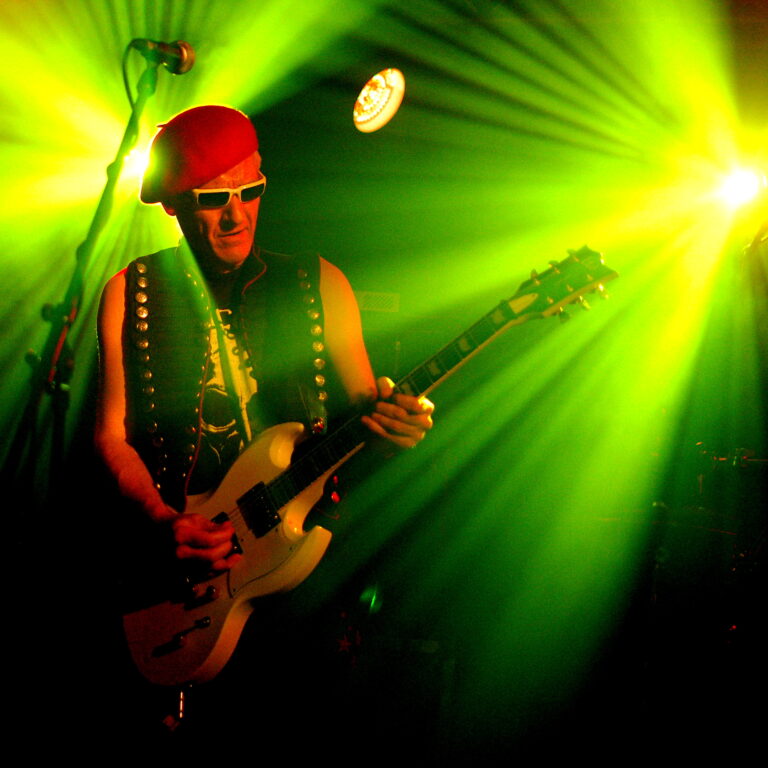
There is a moment, somewhere around 1977, when the synthesizer stops being a curiosity and becomes a central instrument of rock music. Keith Emerson is wrestling a modular Moog on stage. Giorgio Moroder is building a wall of sequenced Moog basslines under Donna Summer’s voice. Joy Division’s Bernard Sumner is running a Korg through a guitar amp in a damp Manchester rehearsal room, and the result sounds like the color grey given rhythm. The synthesizer, it turns out, is not the enemy of the guitar. It is its strange, voltage-controlled sibling.
The Electro-Harmonix Synth9 Synthesizer Machine is EHX’s attempt to put nine of the greatest vintage synthesizers of that era at a guitarist’s feet — no keyboard required, no MIDI interface, no special pickups, no learning curve beyond what your right hand already knows. Released in 2017 as the culmination of the company’s acclaimed 9-series keyboard emulation line, the Synth9 follows the organ emulations of the B9 and C9, the electric piano voices of the Key9, and the Mellotron orchestra of the Mel9. Where those pedals raided the jazz club and the orchestral pit, the Synth9 raids the studio: nine polyphonic synthesizer presets drawn from the Oberheim, the Moog, the Sequential Circuits Prophet, the ARP, the Korg Polysix, and EHX’s own Mini Synth.
This is not a review. Guitar Gangsters does not do reviews. This is a field report on what the Synth9 actually is, what it actually does, and how it actually sounds — drawn from primary sources, verified player connections, and real-world signal chain experience. No hype. No asterisks.
Origin: The 9-Series Machine That Synthesizes
The 9-series concept began with the B9 Organ Machine, which EHX developed to answer a question every guitarist in a three-piece band eventually asks: how do I get a Hammond sound without carting a Leslie cabinet? The answer was a dedicated DSP engine that listened to the guitar’s input and generated organ tones in response. The B9 and C9 were followed by the Key9 (Wurlitzer, Rhodes, and electric piano emulations) and the Mel9 (Mellotron orchestral voices). By the time the Synth9 arrived, EHX had refined the approach considerably.
One meaningful technical difference sets the Synth9 apart from its siblings: it includes a built-in compressor. The B9, C9, Key9, and Mel9 all benefit from an external compressor placed before them in the signal chain. The Synth9 eliminates that requirement. The built-in compressor makes the Synth9 highly sensitive to pick attack without needing a separate dynamics stage. The trade-off: placing an additional compressor before the Synth9 will make it too sensitive, causing unwanted triggering. One compressor, internal, built in. Nothing more before it in the chain.
EHX describes the Synth9’s ambitions plainly: “If you dig the kind of classic synth sounds made famous on recordings by groups like ELP, EVH, Kraftwerk, Joy Division, P-Funk, Peter Gabriel and more, we think you’ll love the SYNTH9.” That is a deliberately broad brief — from Emerson Lake & Palmer’s progressive cathedral to Funkadelic’s bass-locked groove to Peter Gabriel’s textured ambient work. The Synth9 does not try to nail one era. It raids five decades of synthesizer history and puts them on a single rotary knob.
Specifications
Controls and Layout
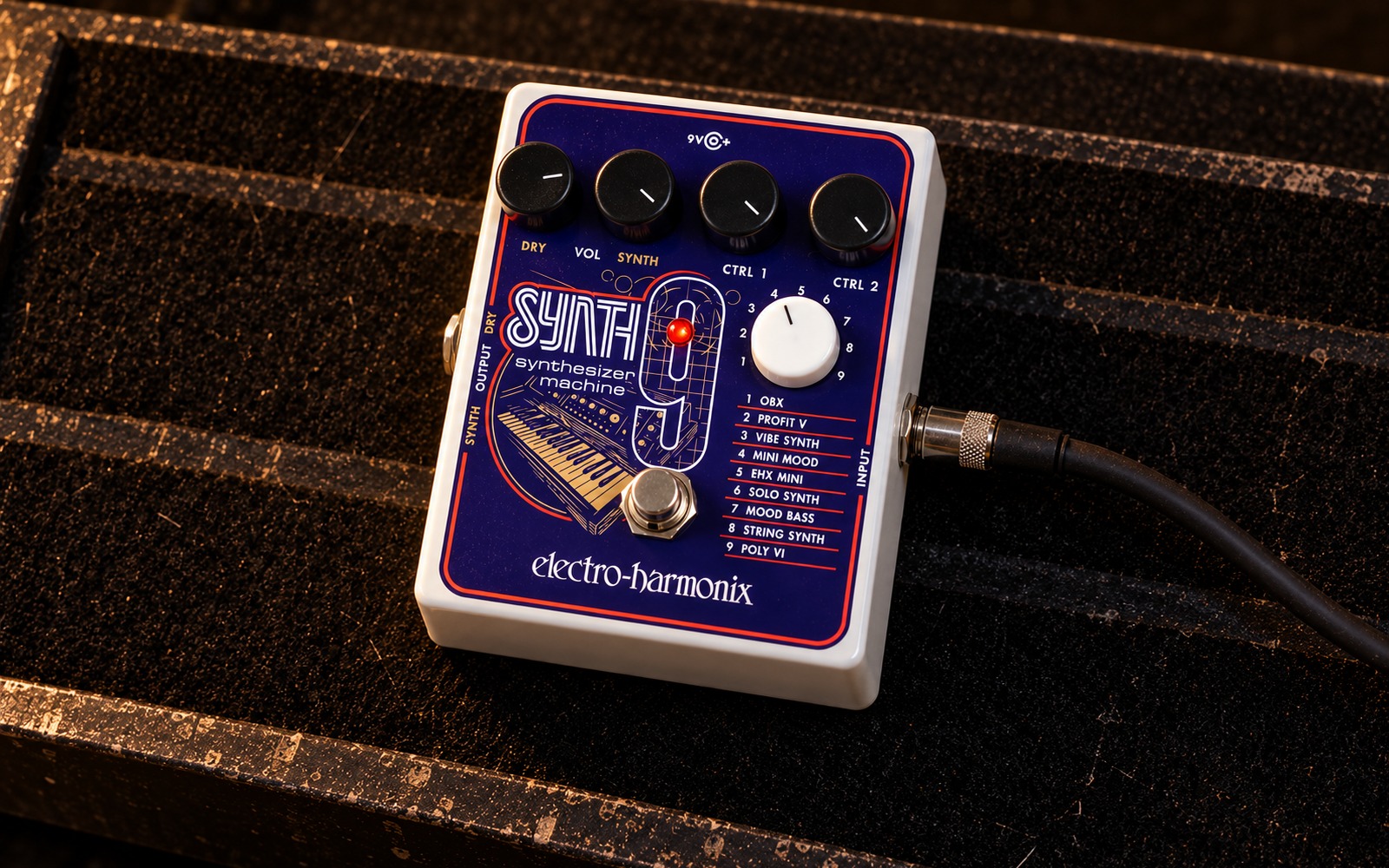
The Synth9 uses the same four-knob architecture as every other EHX 9-series pedal. The DRY VOL knob controls the volume of the untreated instrument signal at the Synth Output jack. The SYNTH VOL knob controls the overall volume of the selected preset (with one exception: on the Mini Mood preset, Synth Vol controls the non-portamento synthesizer layer only). CTRL 1 and CTRL 2 adjust per-preset parameters — these are not fixed functions, they change meaning depending on which preset is selected. The white PRESET knob selects among the nine voices. A single BYPASS FOOTSWITCH toggles between effect and buffered bypass.
Jacks: one INPUT, one SYNTH OUTPUT (the wet/dry blend controlled by the two volume knobs), and one DRY OUTPUT (buffered dry signal, always active regardless of bypass state). The Dry Output is a critical feature for live use: it allows the guitarist to send the dry signal to one amp and the synth signal to a full-range reference monitor or second amp, keeping the two signals separate and processing them independently. This is the same dual-output architecture used throughout the 9-series.
The Nine Presets: What They Are and What They Do
The Synth9’s rotary preset selector is the heart of the pedal. Each position addresses a different vintage synthesizer, with CTRL 1 and CTRL 2 providing hands-on access to the two most musically useful parameters of that preset’s algorithm.
1. OBX — Oberheim OB-X
The Oberheim OB-X was a polyphonic synthesizer with one of the fattest, warmest filter sounds in analog synthesis history. Van Halen used it on “Jump.” The Synth9’s OBX preset captures that rich, wide-filter character. CTRL 1 adjusts filter brightness — clockwise opens the filter, counterclockwise darkens it. CTRL 2 operates as an octave selector across a four-octave range, making OBX the most harmonically flexible preset on the pedal. It tracks chords cleanly, produces stacked synth pad textures, and handles single-note leads with equal credibility. This is the starting point for most guitarists who have never played a Synth9.
2. PROFIT V — Sequential Circuits Prophet-5
The Prophet-5 was the first commercially available polyphonic synthesizer with patch memory — it changed recording studios in 1978 and never really left. The Synth9’s Profit V preset captures its characteristic dynamic envelope: CTRL 1 adjusts the rate of a downward-sweeping filter envelope, and CTRL 2 scrolls through eight octave or fifth intervals. This is the most compositionally useful preset for guitarists who want chord-triggered synth textures — the filter envelope adds rhythmic movement without requiring additional modulation effects in the chain.
3. VIBE SYNTH — Polyphonic Vibrato Voice
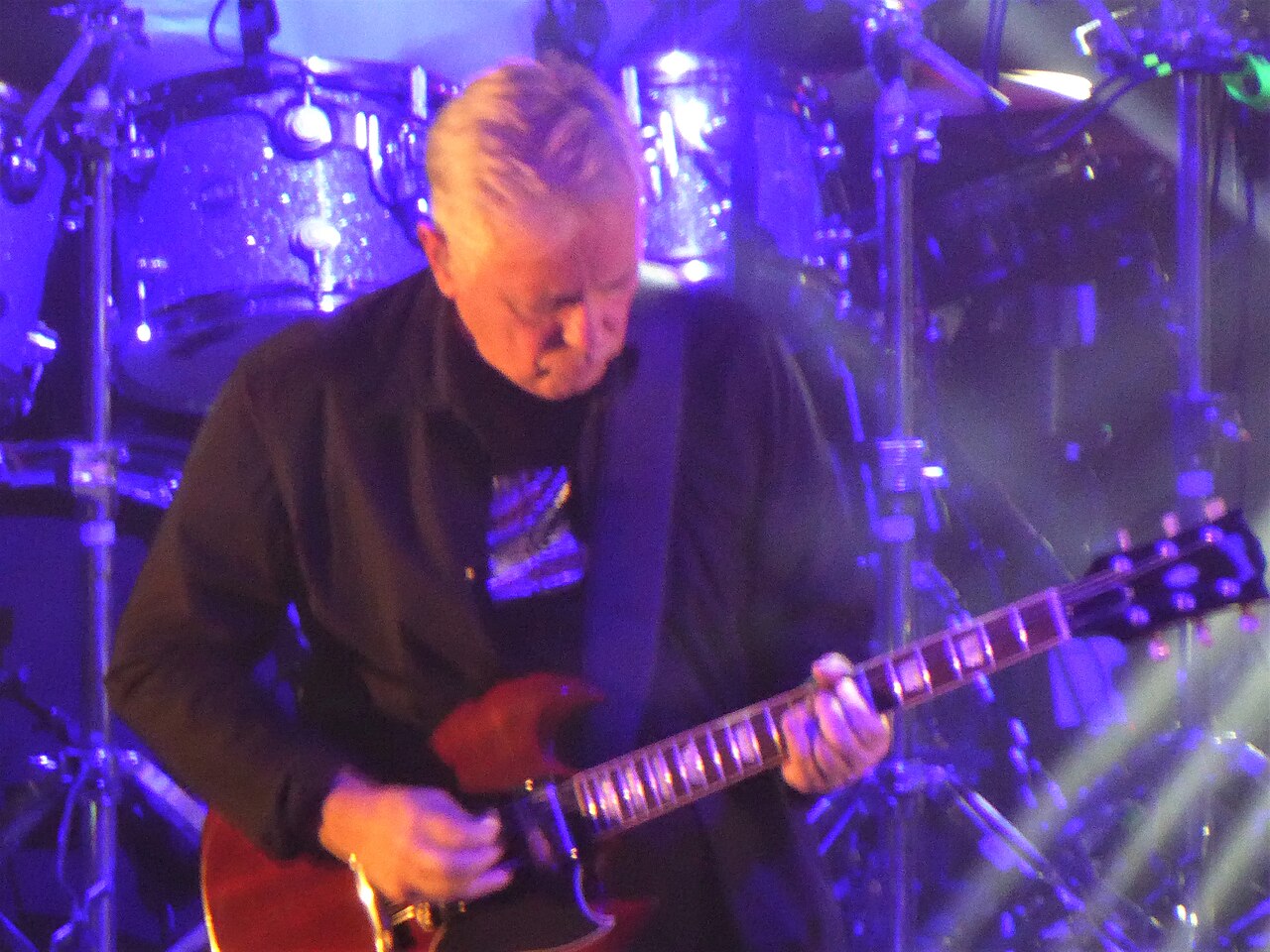
Not tied to a specific vintage instrument, the Vibe Synth preset generates a polyphonic synthesizer with decaying harmonic content and vibrato. CTRL 1 controls the filter sweep, CTRL 2 adjusts both vibrato rate and depth simultaneously. This is the most immediately “electronic” preset on the pedal — useful for new-wave textures, post-punk pads, and anything in the vein of New Order’s Bernard Sumner, who built guitar-synth hybrid textures throughout the 1980s. The vibrato adds movement without requiring a separate modulation pedal.
4. MINI MOOD — Moog Minimoog
The Mini Mood preset is the Synth9’s most complex and most demanding voice. It blends two separate synthesizer engines: a monophonic engine with portamento (pitch glide between notes) and a polyphonic engine without portamento. CTRL 1 adjusts the output volume of the portamento voice, and CTRL 2 sets the portamento glide time. The two-engine blend allows the guitarist to dial in classic Moog lead lines (slow glide, single notes held through phrases) while the polyphonic layer handles chord backing.
Sound on Sound’s Paul White, reviewing the Synth9 at launch in June 2017, noted directly that the portamento voice “uses a more traditional form of pitch tracking and as such is the most susceptible to tracking problems if the playing isn’t clean,” adding that “occasional pops and thumps at the starts of notes” appear on the portamento voice. This is an honest limitation worth understanding before performance. For clean single-note leads played with some deliberateness, Mini Mood is impressive. For fast runs and messy rhythm parts, it requires care.
5. EHX MINI — Electro-Harmonix Mini Synth
EHX’s own Mini Synth from the 1970s was a guitar-mounted synthesizer that used the instrument’s string vibrations to generate synth tones — an early, eccentric approach to guitar synthesis. The Synth9’s EHX Mini preset is a tribute to those sweeping, filter-envelope-driven tones. CTRL 1 sets both the filter envelope sweep time and direction (clockwise = sweep up, counterclockwise = sweep down), and CTRL 2 selects between four octaves. Sound on Sound described it memorably: “If you need a synth that goes ‘Zweeee’, this is the one.” High CTRL 2 settings with a single sustained note produce theatrical, wide-arc filter sweeps useful for transitions, dramatic swells, and film-scoring textures.
6. SOLO SYNTH — Fuzz/Synth Hybrid
The Solo Synth preset references the Roland GR-500, a 1977 guitar synthesizer that generated polyphonic synth sounds by using a dedicated fuzz circuit for each string. The Synth9’s version combines oscillator waveforms with fuzz-guitar character. CTRL 1 handles tone, CTRL 2 selects between four octaves. This is the most guitar-like preset on the pedal — it sounds less like a keyboard and more like a guitar through a synthesizer-inflected fuzz, making it the most immediately accessible voice for players who want synth texture without losing their pick attack and string presence.
7. MOOD BASS — Moog Taurus
The Moog Taurus was a foot-controlled bass synthesizer widely used for dramatic low-end in progressive rock. Rush’s Geddy Lee played Taurus pedals throughout their classic period. The Synth9’s Mood Bass preset emulates the Taurus’s deep, filter-swept bass character. CTRL 1 adjusts the sweep-down time of the filter, CTRL 2 selects between three octaves. With the guitar in a low register and CTRL 2 at its lowest octave setting, the Synth9 generates convincing synth bass that transforms a standard guitar into an instrument with a genuinely different bottom-end authority. This preset is particularly effective into a full-range amplifier or DI into a PA.
8. STRING SYNTH — ARP Strings
The ARP String Ensemble synthesizer was released in 1974 and became a fixture of 1970s recording, producing warm, chorus-rich string pad textures that appear on recordings from Yes to ABBA to Pink Floyd. The Synth9’s String Synth preset is Paul White’s personal favourite in the lineup: “I like a lot, as it produces a very credible string pad.” CTRL 1 handles brightness, CTRL 2 adjusts filter sweep attack time. Slow CTRL 2 settings with a bright CTRL 1 position produce long, orchestral swells — combine with a volume swell on the guitar’s volume knob for attack-free string pads that behave like a real ARP. This preset rewards patience and slow playing.
9. POLY VI — Korg Polysix
The Korg Polysix (1981) was one of the defining affordable polyphonic synthesizers of the early 1980s — warm, chorus-inflected, with a characteristic smooth attack and bloom. Bands from The Cars to Talk Talk used Polysix sounds throughout the decade. The Synth9’s Poly VI preset captures that ensemble-chorus character. CTRL 1 is a tone control, CTRL 2 adjusts modulation depth. At moderate CTRL 2 settings with a warm CTRL 1 position, Poly VI delivers the most immediately recognizable “vintage synth pad” sound on the pedal — full chords become immediate, with that slightly liquid chorus shimmer the Polysix was known for.
Famous Players: Who Actually Uses It
Johnny Marr
The Smiths guitarist is among the most credibly documented Synth9 users, and his application is revealing. In a November 2022 MusicRadar feature (reporter Rob Laing), Marr documented a dedicated all-EHX studio board at his Crazy Face Factory recording studio. The board’s full complement, as published in the interview: “Stereo Memory Man with Hazarai, Cathedral Reverb, EHX Tortion, C9 Organ Machine, B9 Organ Machine, Synth9, MEL9, Mod Rex Polyrhythmic Modulator and the Superego+.” The Marr studio board is a 9-series showcase — B9 and C9 for organ, Mel9 for Mellotron, and the Synth9 for the synthesizer voices. This is not a live rig. This is a purpose-built studio instrument collection for generating keyboard textures from guitar. For a guitarist whose career has consistently explored the border between guitar and keyboard sonics — from The Smiths’ chiming Telecaster to his synthesizer-influenced solo work — the Synth9 makes complete sense as a studio resource.
Billy Howerdel (A Perfect Circle)
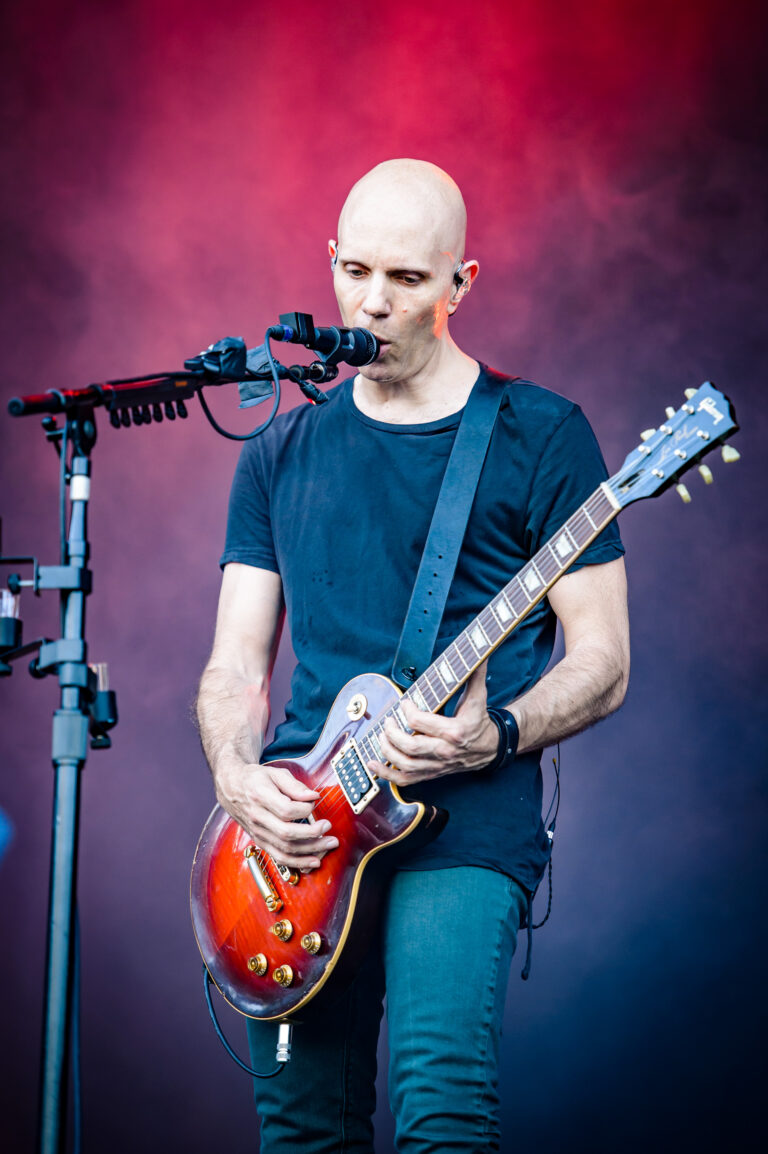
Billy Howerdel, guitarist and primary instrumentalist of A Perfect Circle, built his debut solo album What Normal Was (released June 10, 2022) around an explicit interest in the synthesizer and guitar hybrid. In a Guitar World interview discussing the album, Howerdel confirmed that the EHX Synth9 and Mel9 were used together for the track “Stars,” describing the combination as “a pretty amazing combo.” The Synth9’s synth texture layered against the Mel9’s orchestral Mellotron voice — two pedals from the same 9-series family, both triggered from a guitar — captures exactly the dual-keyboard setup that EHX designed the series to enable. Howerdel’s influences for the album were explicitly stated as Pink Floyd, The Cure, and Echo and the Bunnymen: all bands that centralized synthesizer texture alongside guitar. The Synth9 and Mel9 together give a guitarist access to two of the central sounds of that lineage without requiring a keyboard player.
Josh Klinghoffer (Red Hot Chili Peppers / Pluralone)
Klinghoffer’s mega-board approach to EHX’s 9-series is well documented across multiple sources: his Premier Guitar rig rundown with tech Ian Sheppard confirmed the Freeze, Canyon, Key9, and Mel9 as “the cornerstones” of his ambient board. Klinghoffer’s own description — “In my drive to build the mega-board I have now, I started with the Freeze first” — frames the project as a deliberate instrument-building exercise using EHX pedals as component voices. Equipboard documents him as a Synth9 user, consistent with his pattern of deploying the entire 9-series family as a combined keyboard instrument. Primary-source direct documentation for the Synth9 specifically is Equipboard-level rather than a dedicated rig rundown quote, so this connection is noted as documented but not independently confirmed with a first-person quote.
Signal Chain Placement
The Synth9 has a specific place in a signal chain and it is not negotiable. EHX’s own guidance and the Sound on Sound review both confirm the same principle: the Synth9 works best coming before any delay, modulation, or distortion pedals. The DSP engine reads the raw input signal to generate its synthesizer voices. If that input signal is already harmonically saturated, pitch-shifted, or time-delayed, the tracking deteriorates.
The practical chain for most Synth9 applications: guitar → [tuner] → Synth9 → [overdrive/distortion if needed] → [modulation] → [delay] → [reverb] → amp. If you want driven synth tones, place the overdrive after the Synth9, not before. If you want to process the synth voice with modulation — chorus, flanger, tremolo — place those effects downstream. Running the Synth9’s Dry Output to a guitar amp and the Synth Output to a full-range reference monitor (or a clean second amp) is the recommended live setup for maximum clarity between the two voices.
One additional consideration: because the Synth9 uses buffered bypass, the pedal is always in the signal path even when bypassed, presenting a low-impedance buffer to any downstream pedal. This is generally beneficial — it protects the guitar’s high-impedance output from long cable capacitance — but players using germanium fuzz pedals (which prefer to see a high-impedance source) should place those fuzzes before the Synth9 in the chain.
EHX also recommends using the guitar’s treble pickup and keeping the volume up fairly high for the most reliable tracking. Humbucker-equipped guitars may find the Synth9 very sensitive to light string contact — the built-in compressor that makes light picking responsive also makes accidental string touches audible. Back the guitar volume off slightly if unwanted triggering occurs.
Tone Recipes
Oberheim Pad — Classic Synth Chord
Select OBX. Set CTRL 1 to roughly 10 o’clock (filter slightly rolled off, warm character). Set CTRL 2 to position 2 (one octave up from your guitar pitch). Bring DRY VOL down to zero and SYNTH VOL to taste. Play open-voiced guitar chords slowly, allowing the synth voice to develop between changes. This is the sound of Van Halen’s “Jump” keyboard intro applied to a guitar — a wide, fat, warm pad that fills space without crowding.
Moog Bass Line — Deep Register
Select MOOD BASS. Set CTRL 2 to position 1 (lowest octave). CTRL 1 at 12 o’clock for moderate filter sweep. Blend DRY VOL to about 30% and SYNTH VOL to taste. Play single-note root-position bass lines on the low E and A strings. Run the Synth Output to a full-range monitor or direct out — the Mood Bass voice loses its weight through a standard guitar cab’s high-pass response. Best with a clean guitar amp for the DRY Output alongside a PA-fed Synth Output.
ARP String Swell
Select STRING SYNTH. CTRL 1 to about 2 o’clock (bright). CTRL 2 to 7–9 o’clock (slow filter attack). Use your guitar’s volume knob to execute a volume swell on each chord — roll volume down before picking, strike the chord, then roll up. The String Synth’s slow filter attack combines with the volume swell to produce a completely attack-free orchestral string entrance. Stack this with a reverb after the Synth9 and the result is indistinguishable from a string section in a full-range monitoring context.
Prophet-5 Rhythm Texture
Select PROFIT V. CTRL 1 to about 11 o’clock (moderate filter envelope rate — fast enough to add rhythmic texture, slow enough not to sweep completely). CTRL 2 to a fifth-interval position. Play repetitive chord stabs. The filter envelope creates a rhythmic pulse on each pick attack, turning a static chord into a dynamic, breathing synth texture. This is the technique behind most 1980s new-wave keyboard accompaniment, now available from a single guitar stomp.
EHX Mini Filter Sweep
Select EHX MINI. CTRL 1 fully clockwise (maximum sweep upward). CTRL 2 to middle octave position. Play a single sustained note on the high E string. The result is a long, upward filter sweep — the “Zweeee” the Sound on Sound review described. Use this for song transitions, cinematic builds, or any moment that needs a programmatic synthesizer statement rather than a guitar texture.
Comparisons and Context
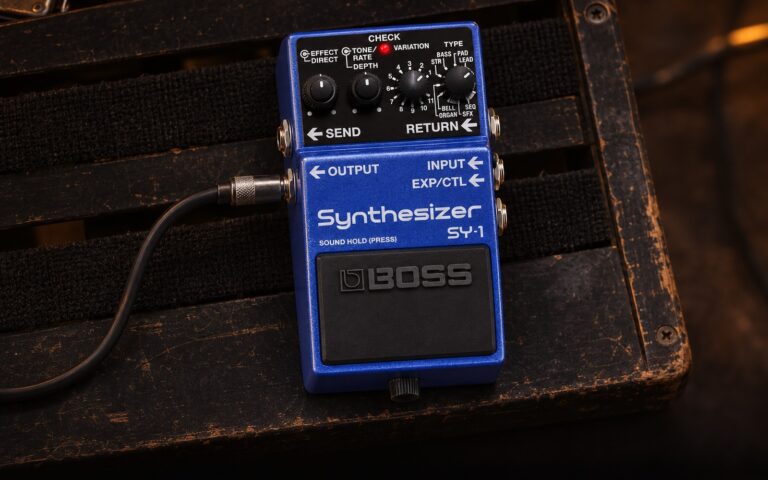
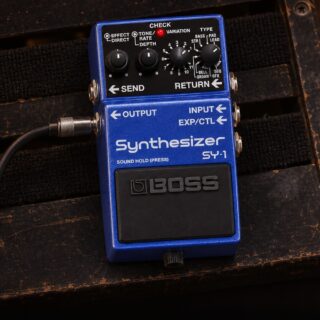
The Synth9’s closest competitor at launch was the Boss SY-300, a full guitar synthesizer processor with built-in effects and deep programmability. The SY-300 retailed at roughly twice the Synth9’s price and required considerably more setup time. Sound on Sound’s Paul White noted the comparison directly: “A Boss SY300 can serve up a similar range of sounds with the added benefit of in-built effects and programmability, but at less than half the price of that, and with absolutely no learning curve to climb, the Synth9 offers rather more instant gratification.” The Boss SY-1 (released 2019) occupies a lower price point than either, with 121 synth sounds but a single-knob interface that trades the Synth9’s preset depth for simplicity.
Within the EHX family, the Micro Synthesizer and Micro Synthesizer XL are the obvious internal comparisons. The Micro Synthesizer is an analog synthesizer that uses envelope following and filter processing on the guitar’s actual waveform — it has a different character, a different learning curve, and a more overtly “guitar synth” sound rather than a specific vintage instrument emulation. The Synth9’s nine preset approach gives access to more specifically voiced sounds at the cost of the Micro Synthesizer’s real-time filter and oscillator control.
The Synth9 also operates entirely in mono. There is no stereo output. Players who want stereo synthesizer voicing from a guitar pedal need to look at the Strymon Ola or dedicated stereo processing after the Synth9. This is a practical constraint worth acknowledging — the OBX and Poly VI presets in particular would benefit from a stereo field, which the pedal cannot provide internally.
One note on power: the Synth9 draws 100mA — the same as the Pitch Fork is efficient (30mA) and far friendlier than the Canyon or Oceans 11 (both 150mA). Most standard isolated power supplies provide 100mA per output, so the Synth9 fits into the majority of pedalboard power schemes without requiring a dedicated high-current output. Use the included adapter or any clean, regulated 9V 100mA isolated output.
Buying Guide and Ownership Notes
The Synth9 is currently listed as NOT AVAILABLE at EHX’s own online store, consistent with the wider 9-series availability pattern — the Mel9, Key9, and other members of the family have similarly moved to secondary market channels. Equipboard lists street price from $171 new; used units in excellent condition trade in the $110–$160 range. The Synth9 is a digital pedal and has not been revised since its 2017 release — used units perform identically to new ones.
When purchasing used, the key inspection points are: the white preset knob (it is a standard rotary pot but gets handled frequently), the CTRL 1 and CTRL 2 pots (check for scratchy response by rotating slowly while monitoring output), and the bypass footswitch. The Dry Output jack is sometimes overlooked by sellers — test it specifically, as it is the key feature for dual-amp setups.
If the Synth9 is unavailable and you need a guitar synthesizer in this format, the Boss SY-1 is the most direct alternative at a lower price. If you want more 9-series voices from EHX, the Mel9, Key9, B9, and C9 are separate pedals from the same family — EHX’s own documentation describes using them together with the Synth9 to “create your own mega-keyboard setup.”
FAQ
Does the Synth9 track chords or only single notes?
Most presets are polyphonic and track chords cleanly, provided the guitar is in tune. The exception is the Mini Mood preset’s portamento voice, which uses traditional monophonic pitch tracking and works best with single, deliberate notes. The OBX, String Synth, Poly VI, and Profit V presets are genuinely polyphonic and handle chord voicings without audible tracking artifacts in normal playing.
Do I need a special pickup or MIDI interface?
No. The Synth9 reads your guitar’s standard audio signal from a quarter-inch instrument output — no hex pickups, no Roland GK-compatible pickups, no MIDI interface. Plug in the same way you would plug into any other pedal.
Can I put a compressor before the Synth9?
No. The Synth9 has an internal compressor that is always active. Adding an additional compressor before it makes the pedal too sensitive and causes unwanted triggering. If you want compression elsewhere in your chain, place it after the Synth9.
What does the Dry Output do?
The Dry Output outputs the buffered dry guitar signal independently of the Synth Output, and it is always active regardless of whether the pedal is engaged or bypassed. This allows dual-amp routing: guitar amp from the Dry Output, full-range monitor or second amp from the Synth Output. In bypass mode, the Synth Output carries whatever DRY VOL and SYNTH VOL are set to; the Dry Output is always unity-gain dry.
Which preset tracks the fastest and most reliably?
The OBX, Solo Synth, and Poly VI presets are the most forgiving in terms of tracking speed and accuracy. The Mini Mood portamento voice is the most demanding. The String Synth sounds best with deliberate, slower playing that allows the filter attack (CTRL 2) to develop. For fast leads, the Solo Synth or OBX with a shorter filter response are the most responsive choices.
Is the Synth9 suitable for bass guitar?
Yes, down to the open A string (approximately 55Hz). This is the same range stated for the Mel9 and other 9-series pedals. The Mood Bass preset is the most useful for bass applications — it was specifically designed around the Moog Taurus, a bass-register synthesizer. The other presets can also work with bass, though the tracking range limitation means the lower registers below A2 will not trigger reliably.
Does the Synth9 work through a standard guitar amp?
Yes, and many presets sound excellent through a guitar amplifier. However, Paul White’s Sound on Sound review notes that the synth voices “work best through a full-range amp but most are quite acceptable played via a guitar amp if that’s your only option.” The Mood Bass preset loses the most through a standard guitar cab, since its fundamental frequencies often fall below the speaker’s useful range. For the most accurate representation of all nine presets, run the Synth Output through a full-range monitoring system or direct to a PA, and keep the DRY Output feeding the guitar amp.
How does the Synth9 compare to the EHX Micro Synthesizer?
These are different tools with different philosophies. The Micro Synthesizer is an analog synthesizer that processes the guitar’s actual waveform through oscillators, filters, and envelope followers — its sound is more overtly “guitar synth” with hands-on real-time filter control. The Synth9 is a polyphonic DSP emulator with nine preset voices, each modeled on a specific vintage synthesizer. The Micro Synthesizer is more expressive and more characterful. The Synth9 is more immediately recognizable as specific vintage instruments and significantly easier to dial in. Many players who own both use them for different purposes.
Image credits
- Top image: GuitarGangsters AI-generated reference illustration, not a photograph.
- A Dunlop Fuzz Face and an Electro-Harmonix Big Muff pedal: Roadside Guitars, Wikimedia Commons, CC BY-SA 2.0.
- Bernard Sumner: Ardfern, Wikimedia Commons, CC BY-SA 4.0.
- Billy Howerdel: Markus Felix, Wikimedia Commons, CC BY-SA 4.0.
Latest News
Related
On This Day
Monday 9 November
From this week: