The Mesa/Boogie Studio Preamp: Clean Enough to Let Kurt Cobain Destroy You
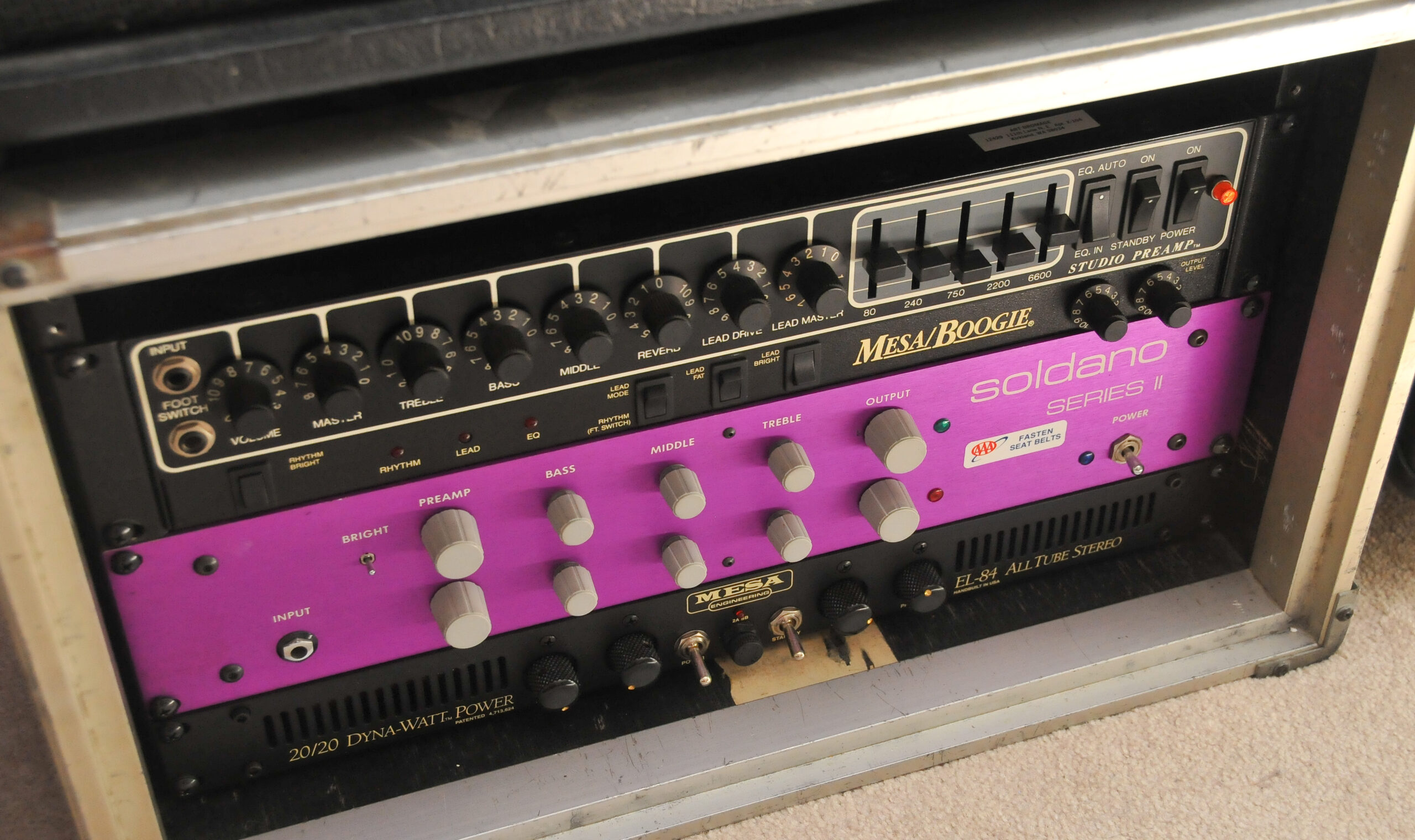
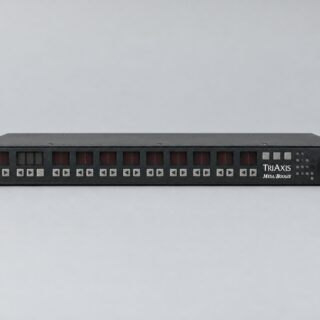
Mesa/Boogie Studio Preamp, top rack unit, photographed in 2008.
The Mesa/Boogie Studio Preamp powered Nirvana's tours, Pete Townshend's stage, and AC/DC's Razors Edge era. The story of a forgotten rack legend.
In 1991, Kurt Cobain walked onto some of the biggest stages in rock history with an amp rig that barely made sense on paper. The signal chain started with a Mesa/Boogie Studio Preamp — a rack unit famous for warm, sophisticated, Fender-adjacent cleans — ran into a Crown power amp, and then into banks of Marshall 8×12 cabinets. Between the Boogie’s clean output and the speaker wall, Cobain had a Boss DS-2 and a Tech 21 SansAmp Classic doing most of the actual distortion work. The preamp was not driving the grunge. It was providing a stable, punchy platform for the pedals to annihilate.
That counterintuitive setup became the sonic foundation of Nevermind and In Utero live, and it is one reason the Mesa/Boogie Studio Preamp has a reputation permanently tangled up with the 1990s while the unit itself dates to 1987. In that same era, Pete Townshend was running four of them simultaneously into Demeter direct boxes, going straight to the PA with no power amp at all. David Gilmour had one in his rack at Knebworth. Angus and Malcolm Young carried them on the Razors Edge tour. James Hetfield and Kirk Hammett were using them for …And Justice for All.
One two-rack-space box, made in Petaluma, California, discontinued by 2002, and quietly present in some of the most important rigs of the late 1980s and early 1990s. It deserves more than a footnote.
History: The Rack Era and the Mark Series Condensed
Mesa/Boogie’s story begins with Randall Smith modifying a Fender Princeton in a San Francisco bicycle shop in 1969, cramming it with enough tubes and gain stages to produce what we now recognize as high-gain guitar amplification. The Mark I, released in 1971, essentially invented the genre. By the time the Mark IIC+ arrived in the early-to-mid 1980s, Mesa had refined that cascading gain structure into what James Hetfield and Joe Satriani would call the holy grail of high-gain tone. The Mark series were complete amplifiers — head or combo — and they were heavy, complex, and built for players who wanted everything in one box on a stage.
The late 1980s belonged to the rack. Outboard effects were multiplying faster than guitarists could wire them onto a pedalboard. MIDI switching systems were making it possible to call up any combination of settings with a single footpedal press. Concert stages were going in-ear. The practical argument for a compact rackmount preamp — separate from a power amp, wired into a larger signal chain — was overwhelming, and Mesa moved with the times.
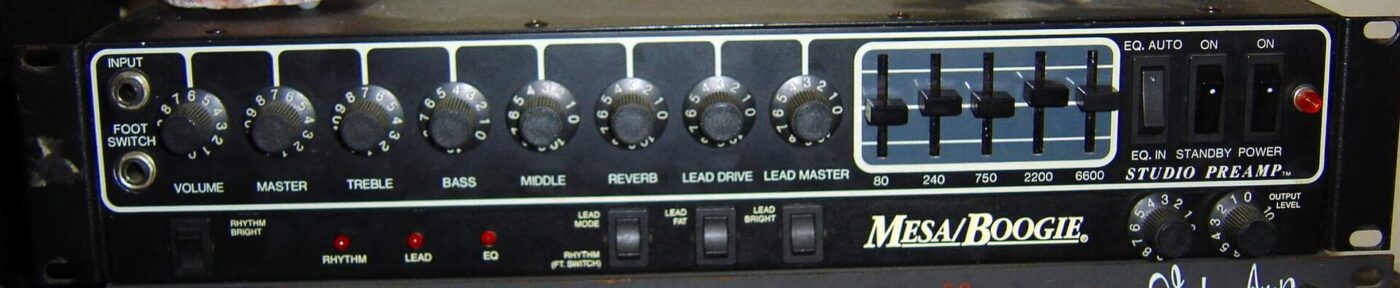
The Studio Preamp, introduced in 1987, was Mesa’s answer to that shift. It distilled the company’s preamp philosophy — the two-channel clean/lead structure, the 5-band graphic EQ, the interactive tone controls that behaved like the Mark series — into a two-rack-unit format. The circuit sits closest in character to the Mark II/IIC+ lineage, closer to those roots than the later Mark IV or V designs, which is why players who owned a Mark III or earlier respond immediately to the Studio Preamp’s control layout. Multiple Audiofanzine users with Mark III experience describe the Studio Preamp as immediately familiar, a preamp that rewards Mark-series knowledge rather than demanding a new learning curve.
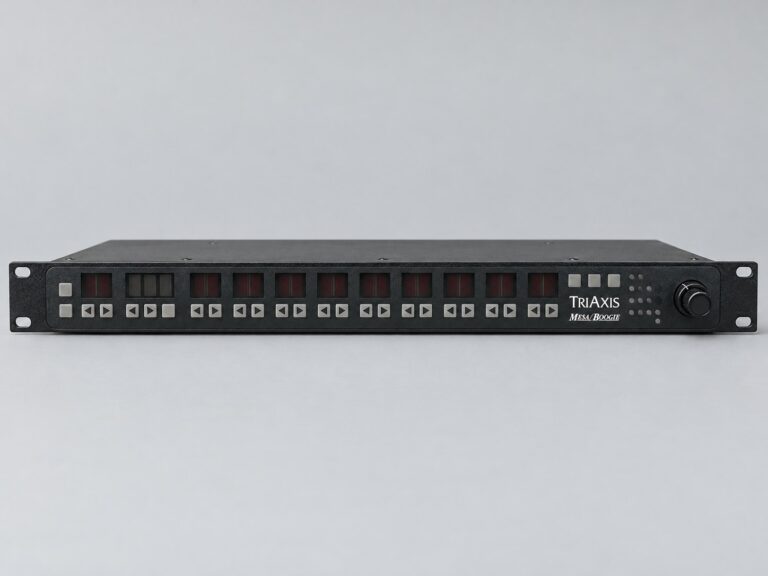
One important distinction: the Studio Preamp is not the same unit as the Triaxis Programmable Preamp, which Mesa introduced in October 1991 specifically to archive the IIC+, Mark I, Mark III, and Mark IV circuits under MIDI control. The Triaxis is more complex, more circuit-diverse, and carries MIDI addressing for 128 program locations. The Studio Preamp predates it by four years and represents a simpler proposition: the early Mark-lineage preamp character in a two-channel, non-MIDI, sonically unpretentious frame. What you hear is what you get.
Mesa built the Studio Preamp through approximately 2002, after which it was discontinued without a direct replacement. The Quad Preamp, built alongside it, was essentially two Studio Preamp circuits in a single chassis — four channels, the same controls doubled. If you want to understand the Studio Preamp, the Quad Preamp is simply more of it.
Specifications
Famous Players: Who Actually Used It (and Who Did Not)
Carlos Santana is the reason Mesa/Boogie exists at all. Randall Smith built him a modified Princeton in 1969, and Smith used the audience’s reaction at Fillmore West to prove the concept for high-gain amplification. But Santana’s documented amp relationship is with the Mark I — the original instrument Mesa later condensed into the IIC+ circuit. He has never been documented on a Studio Preamp. Larry Carlton built his career on Mark I tones and Dumble Overdrive Reverbs; the Studio Preamp falls entirely outside his documented rig history. John Petrucci’s rack story belongs to the Triaxis — he used it from the Images and Words tour in 1992 through 2014 — and then to the JP-2C for everything after. The Studio Preamp predates his pro touring career. Andy Timmons is similarly misattributed: his documented amps are the Lone Star and Stiletto, both later Mesa designs, and no primary source places him on a Studio Preamp. Metallica is the one correct entry in the list, though only for a specific and relatively short period of their career.
Here is who actually used the Studio Preamp, with sources.
Kurt Cobain — Fully Verified
Kurt Cobain purchased his Mesa/Boogie Studio Preamp on May 2, 1990, at the Milestone in Charlotte, North Carolina. He had destroyed his Sunn amp rig the previous night at Cat’s Cradle in Chapel Hill and walked into the Charlotte show with entirely new gear: the Studio Preamp, a Crown Power Base 2 power amp, and an Aria Pro II Cardinal Series guitar. From that show forward, the Studio Preamp was his primary amplification for the rest of his career.
The initial rig ran into the Crown Power Base 2, driving anything from a single stack to four 8×12 Marshall cabinets scaled to venue size. The Crown proved chronically unreliable. As Nevermind tour tech Nick Close documented, the Boogie’s output was so hot that the Crown power amp blew up regularly and required continuous repair. Around January 1992, Cobain kept the Mesa but switched to a pair of Crest 4801 power amps, which roadie Earnie Bailey later described as “the amp that wouldn’t die.” The Crest rig finished the Nevermind tour and ran the entire In Utero tour.
The critical detail about Cobain’s tone is what the Studio Preamp was not doing. It was set fairly clean — Cobain reportedly turned all the midrange up and left the preamp relatively tame. The grunge came from the pedals: a Tech 21 SansAmp Classic (his main distortion source) and a Boss DS-2 Turbo Distortion, both running before the Boogie’s input. The Studio Preamp was a tone platform, not a distortion engine. Understanding this is essential for anyone trying to replicate Cobain’s sound with this unit: you are looking for a clean, mid-forward signal with good transient response that gives the DS-2 something stable to chew on, not a high-gain Mesa roar.
By the In Utero tour, Earnie Bailey had ordered three Studio Preamps — two for Cobain and one spare that went to Pat Smear, who used the same Crown rig from his Nirvana days in early Foo Fighters shows. The Marshall cabs during the In Utero era were loaded with Celestion Vintage 30s; Cobain’s earlier cabs had used Celestion G12-75s. The switch from 75s to V30s is audible in the later tour recordings — tighter low end, more pronounced upper mids.
Pete Townshend — Fully Verified
Pete Townshend made his Studio Preamp endorsement explicit in the October 1989 issue of Guitar Player Magazine. The quote is direct: “MESA/Boogie have made a very good front-end tube preamp, and I’m using four of those. It’s the best I’ve ever tried; I’ve tried literally everything on the market.” The Whotabs documentation expands the picture: Townshend ran four Studio Preamps simultaneously — one for electric guitars, one for acoustic guitars, two kept as spares — feeding them through Demeter direct boxes into an onstage mixing console that went to front-of-house PA and wedge monitors. No power amp. No speaker cabinet on stage. Entirely direct to the PA.
Four Studio Preamps, and not one of them pushing air through a box. This is the most radical documented Studio Preamp rig in the unit’s history. Townshend’s conviction that it was “the best he’d ever tried” — after explicitly stating he had tried everything on the market — is a primary-source endorsement that places the Studio Preamp among the most respected preamps of its era.
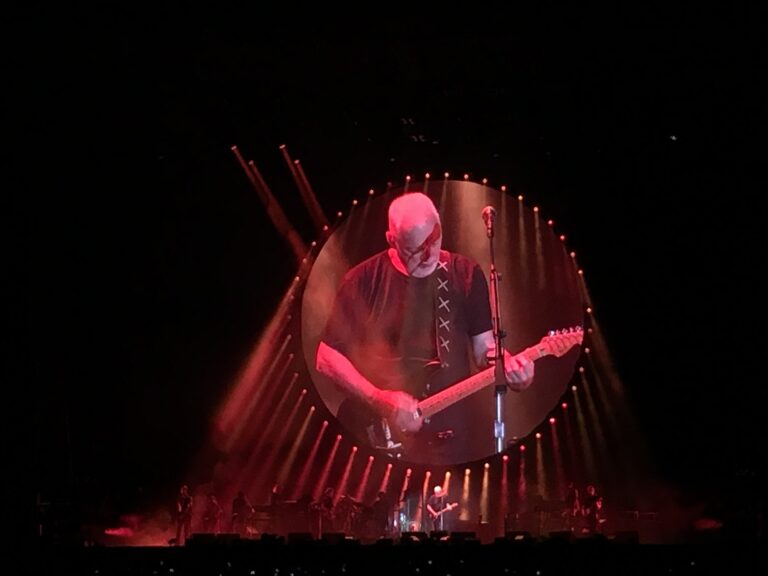
David Gilmour — Documented
David Gilmour’s use of the Studio Preamp is documented by Kit Rae on his David Gilmour Tone Building site, with photographic evidence from the Knebworth concert on June 30, 1990. The unit is visible in Gilmour’s rack. He had previously carried Mark I and Mark III heads in his touring rack and appears to have moved to the Studio Preamp around 1989, after the Venice concert that bookended the Momentary Lapse of Reason / Delicate Sound of Thunder touring cycle. This connects the Studio Preamp directly to the live Pink Floyd rig captured on Delicate Sound of Thunder — one of the most extensively documented guitar tones in rock history.
James Hetfield and Kirk Hammett (Metallica) — Documented
James Hetfield used Studio Preamps alongside the Mesa/Boogie Quad Preamp during the …And Justice for All (1988) and early Black Album era. Kirk Hammett’s use is documented photographically from the Damaged Justice tour (1988–1989), where the unit appears in live rig photos. This is the period immediately before Hetfield moved his distortion channel to the Triaxis for the Black Album touring cycle — a direct chronological succession from Studio Preamp to Triaxis within the same band, the same player, over roughly a four-year window. The Studio Preamp’s lead channel contributed to the specific sonic character of Metallica’s live sound during their most technically demanding and commercially expansive period.
Angus Young (AC/DC) — Documented
Angus Young carried the Studio Preamp live during the Razors Edge era (1990–1991), documented photographically in AC/DC tour gear records. Malcolm Young used the same setup, per touring documentation from 1991. The album The Razors Edge (1990) — containing “Thunderstruck” and “Moneytalks,” AC/DC’s commercial comeback — maps to this touring period.
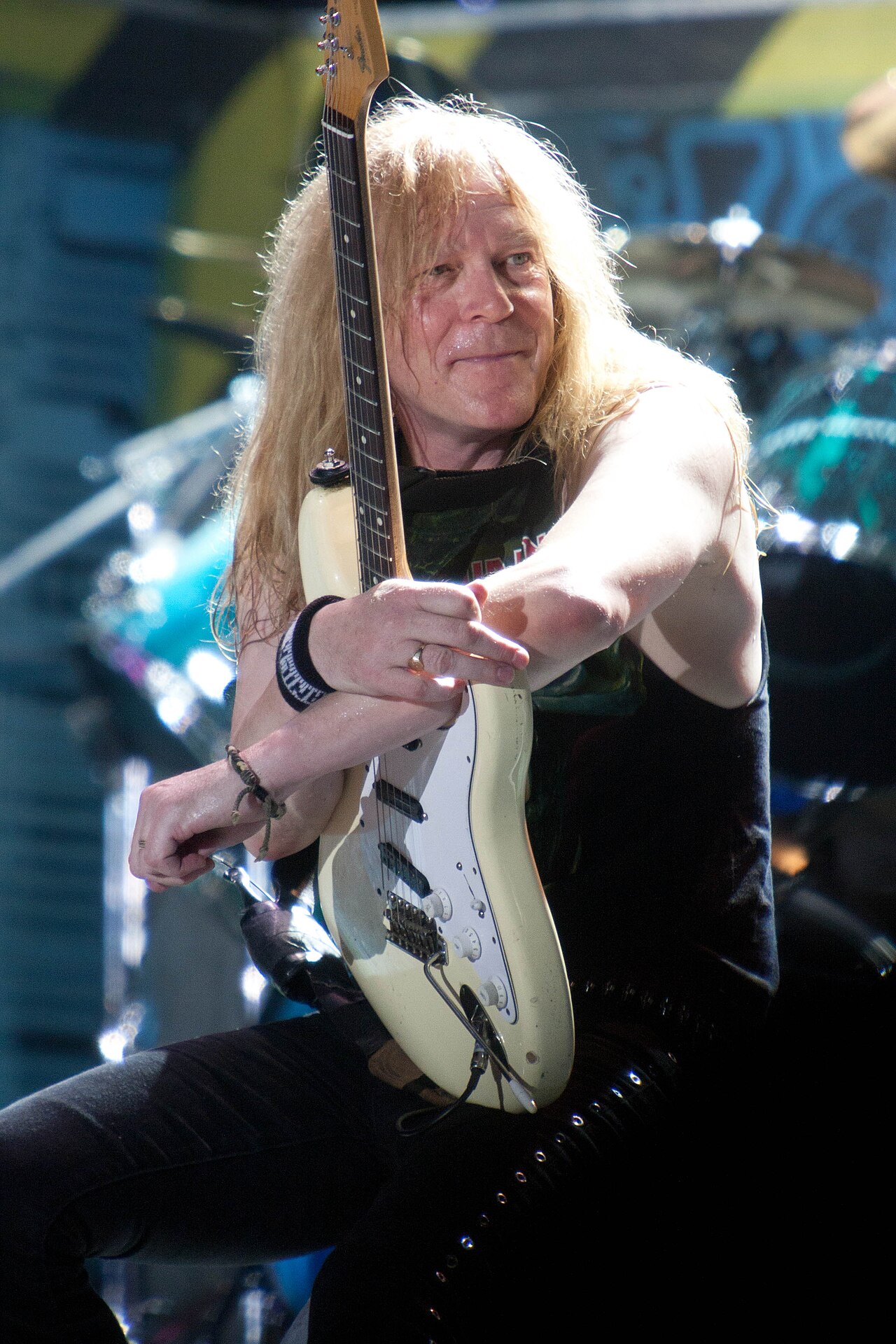
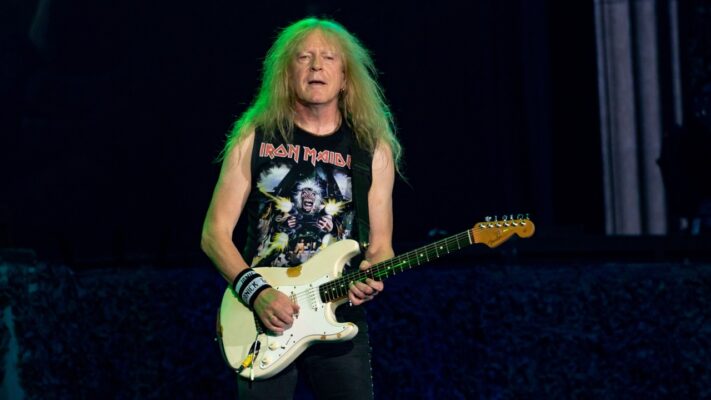
Janick Gers (Iron Maiden) — Documented
Janick Gers of Iron Maiden appears using the Studio Preamp in the Premier Guitar article “Iron Maiden’s 2010 Touring Gear,” a documented gallery piece with photographic evidence. The Studio Preamp’s longevity in professional rigs — Iron Maiden was still touring it nearly twenty years after its 1987 introduction, a full eight years after it was discontinued — says something specific about how difficult it is to replace a unit whose core circuit sounds right for what it does.
Tone Character: What It Actually Sounds Like
The Studio Preamp sits in specific tonal territory that Mark III and earlier Boogie owners recognize immediately. The clean channel is blackface-adjacent, producing shimmery, warm tones that multiple users across Audiofanzine and the Equipboard community describe as the best clean available from any preamp in this category. It has genuine depth and dynamic range at medium Volume settings, and it does not compress the attack the way that some high-headroom clean channels do. A Strat single coil gets dynamic response. A PAF humbucker warms the edges without losing articulation. The Equipboard review community notes that at lower Output settings, the clean channel is particularly suited to recording straight through the Recording Outputs, which provide speaker-sim EQ that makes the direct signal usable without a cabinet microphone — a significant practical advantage for any recording application.
The lead channel is where the Mark lineage becomes explicit. The interaction between Volume (which governs overall gain feeding the lead circuit), Lead Drive (which sets saturation amount), and Lead Master (which sets lead channel output level) creates a three-variable gain structure that rewards patience. Small adjustments to Volume change the character more than their numbers suggest — this is the interactive EQ and gain behavior that has defined Mesa Mark-series amps since the 1970s. At lower Volume settings with higher Lead Drive, you get a more open, dynamic crunch. At higher Volume with moderate Lead Drive, the lead channel focuses and tightens. The manual’s identified sweet spots (Lead Drive at 2–3 or 5–6) are genuine; the midrange gain range on this unit is particularly musical, and the transition between clean-edged crunch and focused sustain happens gradually rather than abruptly.
The 5-band graphic EQ in AUTO mode is the key feature for separating rhythm and lead tones without MIDI. Rhythm clean dialed in on the rotaries; GEQ AUTO engages only in Lead mode, allowing a completely independent lead-channel frequency shape. This is how Townshend and others ran it before MIDI switching was standard — the EQ AUTO was a two-preset system in a single set of controls. The “V” curve that the manual identifies as appearing on “every coliseum stage at one time or another” — boosting 80Hz and 6600Hz while pulling down the 750Hz pivot — remains the most famous Studio Preamp GEQ setting, the scooped-mid late-’80s metal character that defined a generation of records.
Lead Fat shifts the Treble control’s effective range downward into the upper midrange, adding fatness and sustain. Lead Bright and Rhythm Bright add high-frequency sheen — useful at lower gain settings, potentially noisy at maximum drive, best used tactically. One Audiofanzine reviewer describes the lead channel as “smooth and fluid, even more so than the newer Mark IV and V models” — a characterization that points toward the unit’s primary strength: it does not have the modern edge-of-breakup precision of later Mesa designs, but it has a musical warmth in the mid-gain range that players who grew up on IIC+ tones find more immediately comfortable.
Tone Recipes
1. Cobain Platform Clean (Nevermind Live Reference)
Rhythm channel. Volume at 7, Master at 5, Treble at 6, Bass at 5, Middle at 7. Rhythm Bright off. EQ out of circuit. This gives you the mid-forward, punchy clean that Cobain reportedly favored — all the midrange up, no high-frequency sizzle. Run a Boss DS-2 in front with Turbo mode 2, Drive at 9 o’clock, Level to taste. The Boogie is your tone shaper; the pedal is your distortion. Push into a 4×12 cabinet. The physical weight of the Nirvana live sound came from the Crest 4801 power section driving multiple Marshall cabs — in a smaller rig, adding a mild boost at 80Hz through the GEQ compensates somewhat for the reduced air movement.
2. Hetfield Justice Crunch
Lead channel, EQ AUTO engaged. Volume at 7, Master at 5, Treble at 7, Bass at 4, Middle at 4, Lead Drive at 5, Lead Master at 4. Lead Fat on. Lead Bright off. GEQ in AUTO mode: mild V-shape — 80Hz at +3, 240Hz flat, 750Hz at −2, 2200Hz flat, 6600Hz at +2. This approximates the tight, focused palm-mute chug of the Justice era. Hetfield’s live tone from this period is darker and more compressed than his later Triaxis character — the Studio Preamp’s lead channel has more hair and less clinical precision than the Triaxis’s IIC+ mode, which suits the rawer, drier production of that record.
3. Pete Townshend Stadium Direct
Rhythm channel only, running Recording Outputs directly to a DI or interface. Volume at 6, Master at 6, Treble at 7, Bass at 5, Middle at 5. Rhythm Bright on. Reverb at 3. EQ out. No power amp, no cabinet. This is the Townshend approach — tube warmth and dynamics delivered transparently to front-of-house, trusting the PA system to provide scale and volume. The Recording Outputs’ speaker-simulation adds enough cabinet character to avoid the brittle quality that plagued direct guitar signals in this era. Works best with clean fingerpicked parts or jangly rhythm playing with moderate pick attack. At louder FOH volumes, the tube character of the Boogie contributes a warmth that solid-state DIs did not provide in the same period.
4. Classic V-Curve High Gain
Lead channel, EQ AUTO. Volume at 7.5, Master at 5, Treble at 6, Bass at 3, Middle at 4, Lead Drive at 6, Lead Master at 3. Lead Bright on. Lead Fat on. GEQ in AUTO, extended V-curve: 80Hz at +4, 240Hz at +1, 750Hz at −3, 2200Hz at +1, 6600Hz at +3. This is the configuration the owner’s manual specifically identifies as found “on every coliseum stage at one time or another.” With a humbucker-equipped guitar, you get the scooped-mid late-’80s metal character that defined the Razors Edge and Justice era rigs. Tight, focused, slightly fizzy at the high end, substantial low end. Increase Lead Drive toward 8 for more sustain; expect higher noise floor and some loss of palm-mute definition above Drive 7.
5. Blues Crunch and Sustain
Based on the owner’s manual Blues preset with modification. Volume at 8, Master at 5, Treble at 6, Bass at 3, Middle at 3, Lead Drive at 5, Lead Master at 1.5, Reverb at 3. Lead Bright on, Lead Fat on. The high Volume with low Lead Master is the key: it pushes more signal into the lead drive stage and then controls it with the master, creating a saturated but dynamic blues-lead character that opens up when you dig in and cleans up when you back off. The 2–3 and 5–6 Lead Drive sweet spots identified in the manual are both accessible from this setting with minor Drive adjustments. Run into a 1×12 with a Celestion Vintage 30 for the most responsive interaction between the preamp’s dynamics and the cabinet’s compression.
Comparisons
vs. Mesa/Boogie Triaxis Programmable Preamp
The Triaxis, launched October 1991, is the Studio Preamp’s historical successor in Mesa’s rack lineup. Where the Studio Preamp offers two channels and one tonal character, the Triaxis has three channels and eight modes — IIC+ High Gain, IIC+ OD, Mark I Lead, Mark I Gain Boost, Classic Brit Lead, Mark IV OD, Mark III High Gain, and Mark IV Hyper Clean — all MIDI-addressable with 128 program locations. The Triaxis is more versatile, more precise, and substantially more complex. The Studio Preamp, by comparison, does one thing well: the early Mark-lineage character in a simple two-channel frame. Players who want the exact Cobain or Townshend signal chain stay with the Studio Preamp; neither used a Triaxis. Both are discontinued, and used prices are close enough — $800–$1,100 Studio Preamp versus $800–$1,400 Triaxis — that the choice is tonal, not economic.
vs. Mesa/Boogie Mark IIC+
The Mark IIC+ is the complete amplifier whose preamp circuit most directly informs the Studio Preamp’s design. The IIC+ adds a power amp section (Simul-Class, EL34 or 6L6 depending on version), a physical speaker cabinet in the combo form, and the interaction between power tubes and speakers that defines the sag and compression of the amp’s lead tone under load. The Studio Preamp running into a solid-state power amp will sound cleaner, tighter, and less compressed than the IIC+ into its original Simul-Class output section. Running the Studio Preamp into a Mesa Stereo Simul-Class 295 or Strategy 400 recovers some of that interaction. Used IIC+ units run $2,500–$4,500 or above; the Studio Preamp at $800–$1,100 is the accessible entry into the same tonal tradition.
vs. A/DA MP-1 MIDI Programmable Tube Preamp
The A/DA MP-1 was the Studio Preamp’s closest competitor during the rack era — cheaper, MIDI-programmable from launch, and associated with the Smashing Pumpkins and a wide range of 1990s alternative players. The Equipboard community note on the comparison is pointed: “The Studio Preamp is more 90s sounding” while the MP-1 suits 80s rock better and may be a better and cheaper option for players prioritizing that decade’s character. Used A/DA MP-1 units run $400–$600, roughly half the Studio Preamp’s current used price. If you want MIDI switching and 80s hard rock territory, the MP-1 is worth auditioning. If you want the Mesa clean channel and the more dynamic Mark-lineage lead voicing, the Studio Preamp is the unit.
vs. Mesa/Boogie Mark IV
The Mark IV is the direct successor to the Mark-lineage as a complete Mesa amplifier, introduced in 1990 with three channels, five modes, and a modernized voicing compared to the Mark II/IIC+ era. The Mark IV’s lead channel is often described as darker and woolier in the upper frequencies compared to the Studio Preamp’s crisper, brighter lead voice. Players transitioning from a Studio Preamp to a Mark IV find the bottom end heavier and the high-frequency character somewhat softened. The Mark IV is a head or combo requiring no separate power amp and is the better choice for straightforward stage use where simplicity matters. The Studio Preamp wins for rack integration, stereo operation, and direct studio recording via its separate recording outputs.
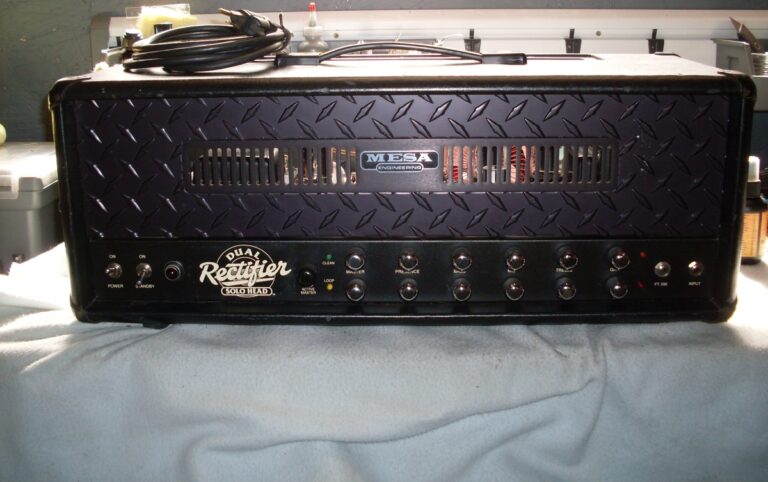
vs. Mesa/Boogie Dual Rectifier Solo Head
The Dual Rectifier is a different world: rectifier-based sag, modern high-gain voicing, enormous low-end mass, lower midrange emphasis. Where the Studio Preamp’s lead channel has Mark-lineage articulation and dynamic response, the Dual Rectifier trades some of that precision for sheer size and sustain. The Dual Rectifier was introduced in 1992, after the Studio Preamp’s most visible touring period, and became the defining Mesa sound for alternative metal and nu-metal through the mid-1990s. Players who describe the Studio Preamp as “90s sounding” are thinking of the Cobain application — the Studio Preamp’s circuit predates rectifier-circuit Mesa by five years and belongs to a cleaner, more articulate sonic tradition. They do not compete for the same tonal territory.
Buying Guide
The Studio Preamp is a two-rack-space unit and runs entirely on its own power supply — it needs nothing but a guitar and a power amp to function. The power amp pairing is the most consequential purchase decision in a Studio Preamp rig. Mesa’s own manual recommends the Stereo Simul-Class 295 or the Strategy 400 as preferred partners, and this is correct: an all-tube Mesa power amp recovers the interaction between Mesa’s preamp circuit and power tubes that makes the Mark-series sound most coherent. Solid-state power amps (Crown, Crest 4801, QSC) work well and sound cleaner, tighter, and more hi-fi — which is exactly what Cobain and Townshend were using, deliberately. The solid-state path is not wrong; it is a different character. The Mesa 20/20 (lightweight, tube, lower wattage) is the community’s current recommendation as a practical middle ground: tube warmth without the weight of the 295 or Strategy 400.
When inspecting a used unit, check the EQ AUTO function by switching into and out of Lead mode — the GEQ should engage and disengage cleanly without a click or a level jump if the sliders are set flat. Test the Ground Isolation switch; if left in the wrong position outside a rack installation, it causes oscillation and noise that is easily misdiagnosed as a tube problem. Check the reverb tank — spring reverbs in thirty-plus-year-old units can develop loose connections, producing intermittent boing or silence. The Boogie’s output is genuinely hot and will push a power amp harder than expected at moderate Output Level settings; if the unit seems unusually loud or causes power amp clipping at low Output settings, that is normal behavior, not a fault.
Tube rolling affects the Studio Preamp significantly. Audiofanzine community experience specifically notes that tube choice makes a substantial difference in this unit, and early examples shipped with RFT ECC83 and ECC81 tubes that were highly regarded. The 12AT7 position — likely handling reverb driver duty — is less tonally critical than the four 12AX7 gain stage positions. Start with quality 12AX7s in the gain positions and leave the 12AT7 as-is initially.
Ownership Notes
The Ground Isolation switch on the rear panel is the first thing to set correctly when integrating the Studio Preamp into a rack installation. Mesa’s manual is explicit: in a multi-component rack, exactly one unit should have its circuit ground connected to its chassis ground; all others should be in the lifted position. Getting this wrong generates hum and buzz that is easily misdiagnosed as a tube failure or a cable fault. If the Studio Preamp is used outside a rack as a standalone unit, the switch should be in Normal (grounded), not lifted — lifted position outside a rack causes oscillation.
The effects loop level switch (LOW vs. LINE) must match the output level of whatever is in the loop. Floor pedals go in LOW; studio-quality rack effects go in LINE. A mismatch produces either a thin quiet loop return or a noisy overdriven return. If effects in the loop sound worse than running them in front of the preamp, check this switch before assuming anything else is wrong.
For home or bedroom use without a power amp and cabinet, the Recording Outputs into a load box with cabinet simulation provide the most practical path. The community specifically endorses the Two Notes Torpedo Captor for this application: the Studio Preamp’s speaker-sim EQ on the Recording Outs helps, but a proper impulse response-based cabinet simulator substantially improves the result for any DAW recording application. Running the Recording Outputs directly into an interface without cab simulation produces a tonally thin result — the speaker-sim EQ compensates but does not replace a full IR-based system.
The manual’s recommended starting settings — Master at 5, Lead Master at 4, Lead Drive at 6, Volume at 7 — are genuinely useful. Start there, bring up Output A to listening level, match Output B to it, then adjust Volume and Lead Drive from that baseline. The temptation to start everything at 10 and work down produces noise and frustration; starting at the manual’s settings and working outward saves significant time and avoids the interactive EQ confusion that catches first-time Mesa users.
Frequently Asked Questions
Is the Studio Preamp the same circuit as the Mark IIC+?
It draws from the same preamp tradition and shares design DNA with the IIC+ lineage, but it is not a direct IIC+ rack clone. The Triaxis, launched October 1991, is Mesa’s explicit attempt to archive the Mark I, IIC+, Mark III, and Mark IV circuits under MIDI control. The Studio Preamp sits closest to the Mark II/IIC+ character but represents its own voicing — players with Mark III experience respond to it immediately, while those expecting a precise IIC+ replica should compare before committing.
Can you get Kurt Cobain’s tone from a Studio Preamp alone?
No, and this is the most important thing to understand about Cobain’s rig. The Studio Preamp was set clean — midrange up, but not producing significant distortion on its own. Cobain’s grunge character came from a Boss DS-2 Turbo Distortion and a Tech 21 SansAmp Classic, both running before the Boogie’s input. The Studio Preamp provided a stable, punchy, mid-forward platform for those pedals to work against. Without the pedals, the Studio Preamp sounds like an excellent clean preamp with a capable lead channel — which is exactly what it is.
What power amps pair best with it?
Mesa’s recommendation is the Stereo Simul-Class 295 or the Strategy 400, which recover tube-power-amp interaction that makes the Mark-lineage preamp circuit feel most alive. For clean, high-headroom operation — the Cobain and Townshend approach — solid-state power amps (Crown, Crest, QSC) work well and provide consistent, predictable output. The Mesa 20/20 is currently endorsed by the community as a practical middle ground: tube warmth without the considerable weight of the 295 or Strategy 400.
What is the difference between the Main Outputs and the Recording Outputs?
The Main Outputs are line-level outputs intended to drive a power amplifier. The Recording Outputs are EQ’d to simulate the frequency response of a power amp loaded by a speaker cabinet, making them suitable for plugging directly into a mixing console, DAW interface, or the front input of a guitar amplifier. Mesa explicitly voices them differently — the Recording Outputs have a presence roll-off and low-frequency shaping that approximates a cabinet’s transfer function. They are not the same signal with different connectors.
How does EQ AUTO work in practice?
When the EQ switch is set to AUTO, the 5-band graphic EQ engages automatically in Lead mode and disengages when the unit switches to Rhythm. This means you can dial in your rhythm tone on the three rotary EQ controls (Treble, Bass, Middle) and then set a completely independent lead tone on the graphic EQ sliders — the GEQ settings only apply when you are in Lead mode. It is a two-preset system in a pre-MIDI frame. The standard application is to set the rhythm channel clean and relatively flat, then dial in a V-curve or mid-boost on the GEQ that activates only on the lead channel.
Is the unit reliable after thirty-plus years?
Generally yes, with the standard caveats that apply to any thirty-year-old tube electronics. The most common issues are spring reverb tank connections producing intermittent boing or silence, noisy pots responding well to contact spray cleaning, and power supply capacitors in very early examples that may be approaching end-of-life. The unit is hand-wired in Petaluma to professional touring standards — the same construction that allowed Janick Gers to tour his unit into 2010, more than two decades after production. A service inspection before purchase is worthwhile; a cap job on very early examples is sometimes advisable.
Why does a discontinued preamp still cost over a thousand dollars used?
The Studio Preamp’s used price reflects the absence of a direct current-production equivalent. The Triaxis is more complex and more expensive. The Quad Preamp is the same circuit doubled and costs more. Modern preamps approximating Mesa’s Mark-lineage character in a 2U rackmount format do not exist as current production items. Players who want this specific circuit in this specific format are buying used, which creates a stable demand floor. The Equipboard community specifically notes the unit as a way to access authentic Boogie Mark-series tones without purchasing a complete IIC+ head at $2,500–$4,500 or above.
Should I buy a Studio Preamp or a Quad Preamp?
The Quad Preamp is essentially two Studio Preamps in a single chassis — four channels, the same control set doubled. If you need independently pre-set rhythm and lead tones that do not share EQ settings, or if you want a stereo wet/dry rig with independent left and right lead channels, the Quad Preamp is the more capable unit, currently running $1,400–$1,800 used. If you play in a straightforward two-channel configuration and do not need independent dual-amp capability, the Studio Preamp does everything required at lower cost and in fewer rack spaces.
Image credits
- Janick Gers: Scott Penner (iDoShows.ca), Wikimedia Commons, CC BY-SA 2.0.
- Top image: Mesa/Boogie Studio Preamp (top rack unit), with Soldano SP-77 Preamp and Mesa 20/20 Power Amp. Photo: Art Bromage (ArtBrom), 6 September 2008. (C)Art Bromage. Source photograph, CC BY-SA 2.0. Full source frame retained and proportionally resized for display. Adaptations remain under the same license.
- Mesa/Boogie Studio Preamp: photo by Sebastian Maier, via Wikimedia Commons, CC BY-SA 3.0.
- David Gilmour: Jan Hagelskamp, Wikimedia Commons, CC BY 4.0.
- Janick Gers: IronMaidO2110818-19 by Raph_PH, Wikimedia Commons, CC BY 2.0.
- Mesa/Boogie Dual Rectifier Solo Head: Roadside Guitars, Flickr, CC BY-SA 2.0.
Latest News
Related

On This Day
Monday 9 November
From this week: