Three Tens, Sixty Watts, and Zero Compromise: The Fender Vibro-King Is Still Fender’s Most Dangerous Amp
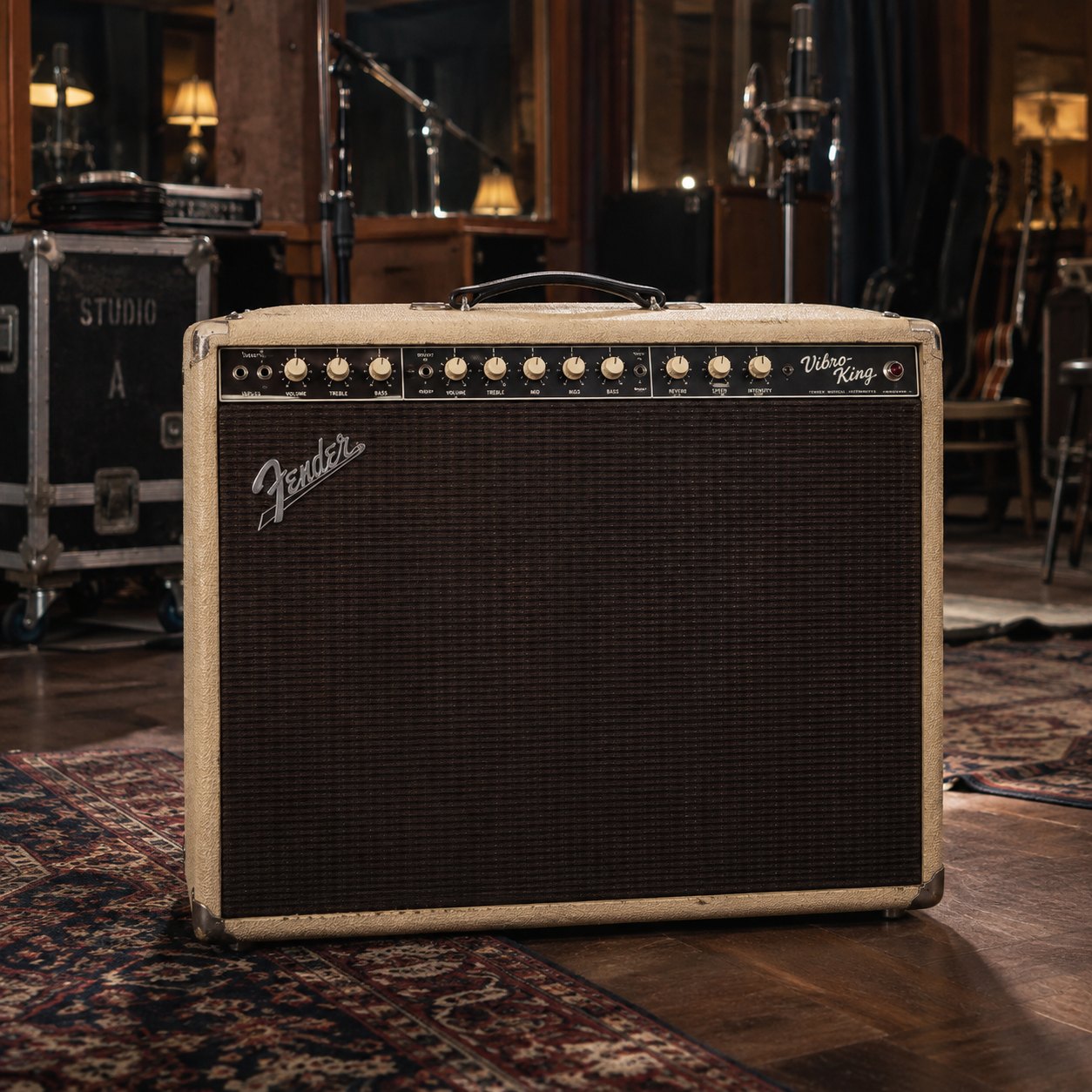
Fender Vibro-King Combo. AI-generated reference illustration, not a photograph.
The Fender Vibro-King is Fender's hand-wired Custom Shop masterpiece — 60W, 3×10" alnico, pre-preamp reverb, and Pete Townshend's go-to amp on stage.
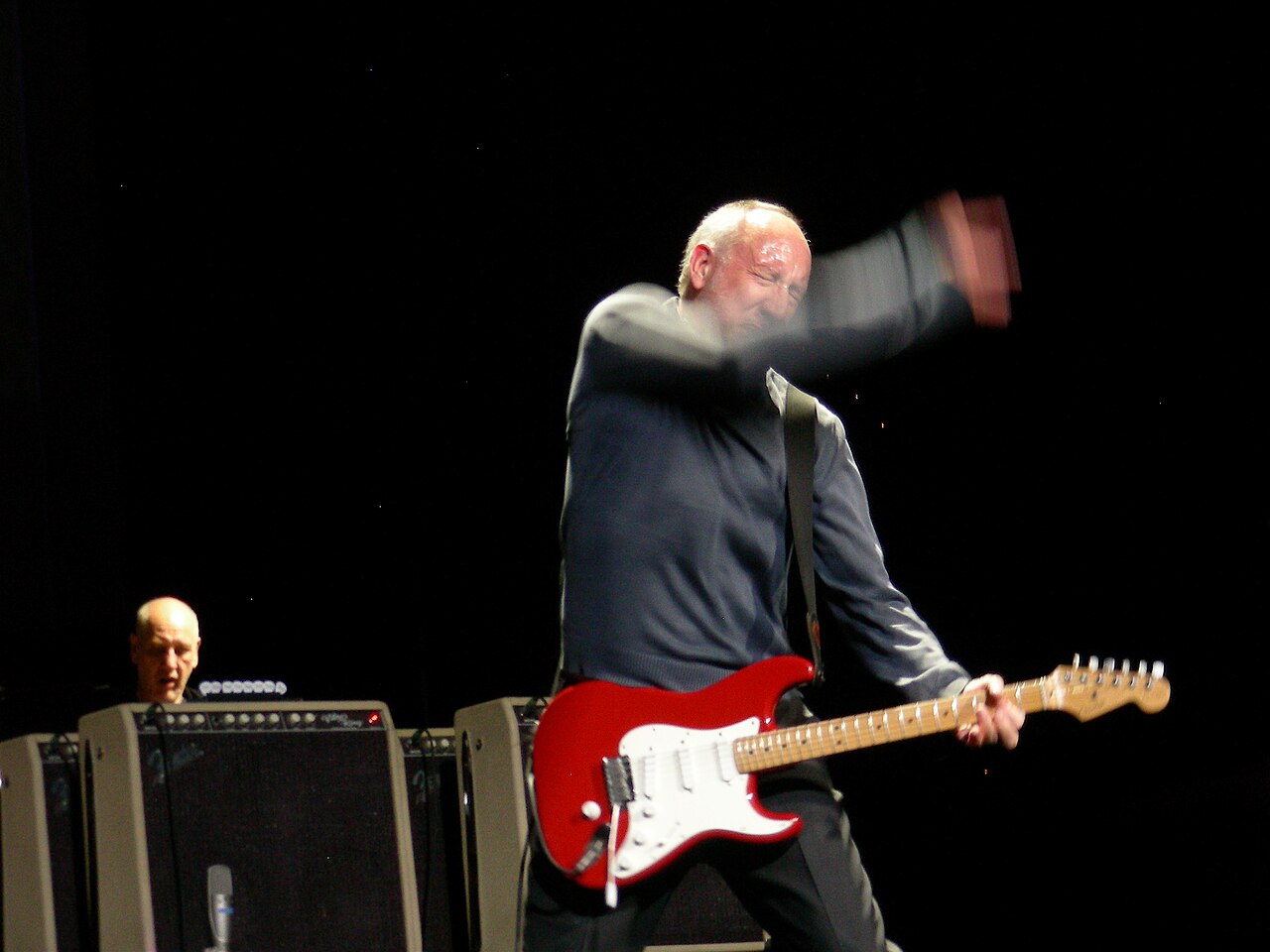
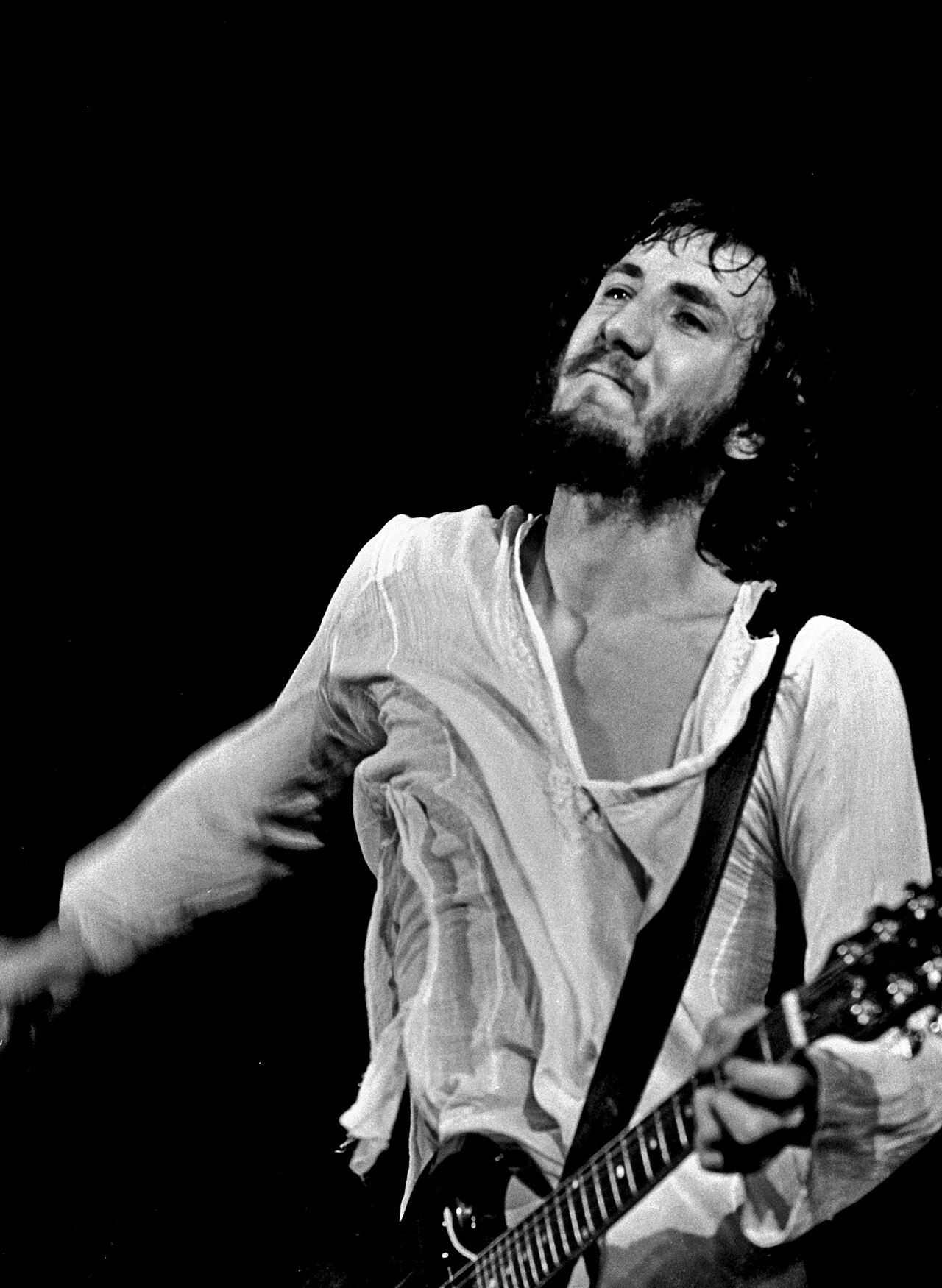
Pete Townshend doesn’t reach for a Super Reverb when The Who takes the stage. He doesn’t reach for a Twin, a Hot Rod Deluxe, or any of the reissue amps that most working guitarists consider the sensible choice. He reaches for a Fender Vibro-King — three of them, stacked in a row, with two running as hot backups in case the front-line unit goes sideways during a windmill. That’s not the behavior of a man who thinks this amp is adequate. That’s the behavior of a man who thinks it’s irreplaceable.
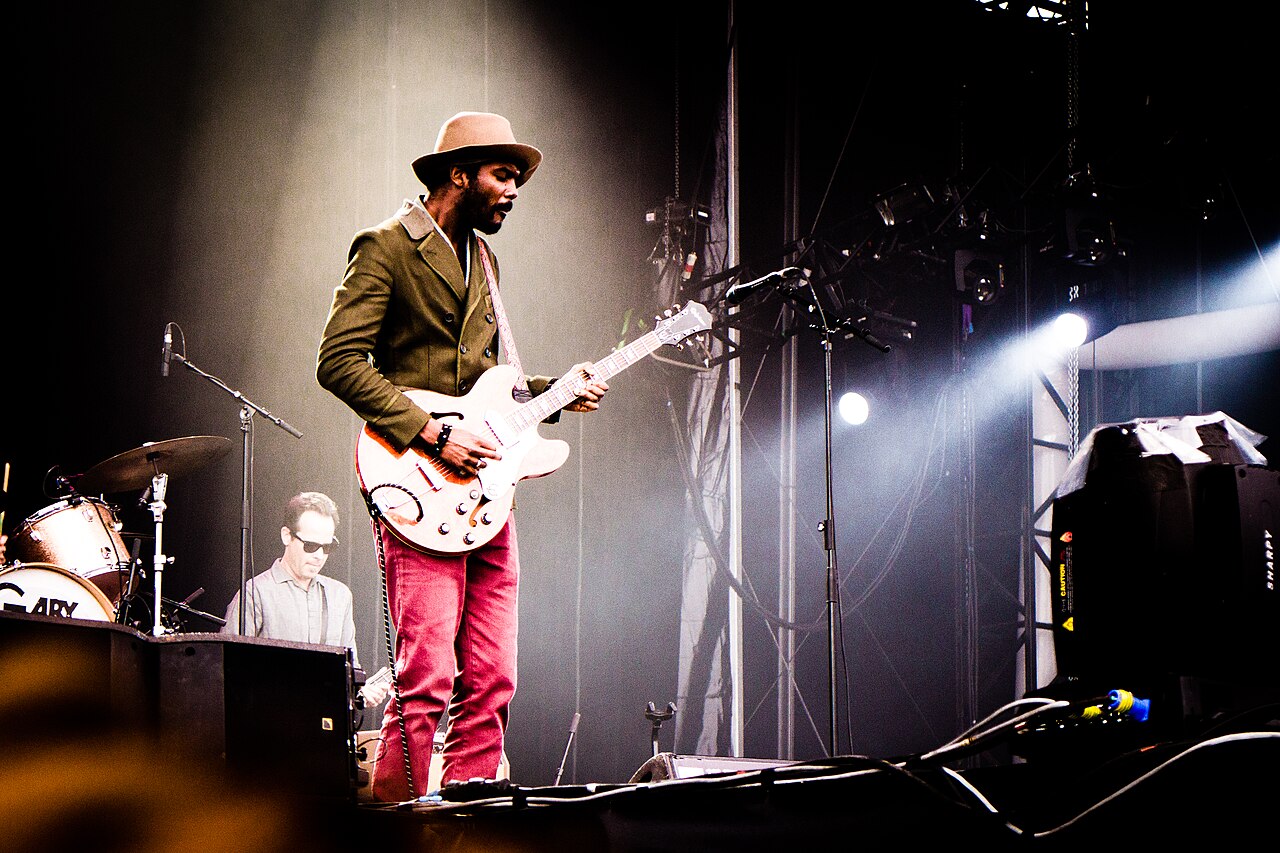
Gary Clark Jr. used one to record “Gotta Get into Something” on This Land. Brad Paisley has it listed by name on his official website, with four specific songs credited to it. Waddy Wachtel — who has played behind Stevie Nicks, Keith Richards, and James Taylor — says flatly that he uses two Vibro-Kings with his own band and that they are “very loud.” Russell Marsden of Band of Skulls put it differently: “I just got a Fender Vibro-King, and I think I’m probably going to go to Hell for using it because it sounds so good.”
The Vibro-King is not a reissue. It was never a vintage amp that got brought back. It was designed from scratch in 1993 by Bruce Zinky as a Custom Shop original — a new amp built from the DNA of Fender’s greatest design eras, assembled point-to-point by hand, and immediately adopted by some of the most particular ears in guitar. This is the amp’s story, and the reasons it still commands serious attention more than three decades later.
Origin: A Custom Shop Gamble That Paid Off
By 1993, Fender’s Custom Shop had established itself as the place where the company’s most ambitious work happened. Standard production amps were manufactured efficiently in Ensenada, Mexico. The Custom Shop was different — it was where craftspeople built things by hand that production lines couldn’t justify economically. The Vibro-King was that kind of project.
Bruce Zinky’s brief was essentially this: take the DNA of Fender’s greatest amp achievements and cook up something new rather than replicate something old. The result drew from several distinct eras. The power stage borrowed from the classic AB763 blackface circuit topology. The voicing nodded toward the tweed Bassman era — that 5F6-A circuit that Marshall famously used as the foundation for the JTM45. The reverb circuit was essentially the standalone 6G15 outboard reverb unit that Fender had sold separately in the early 1960s, wired directly into the signal path before the preamp. The three-speaker array recalled the tweed Bassman’s 4×10 configuration, scaled down to 3×10 in a more portable (by relative standards) package.
None of this was a copy of anything that already existed. The Vibro-King was something genuinely new — a Fender amp that fell tonally between the tweed and blackface eras, with its own character that neither period quite produced. When it was introduced at NAMM in early 1993, it landed as a Custom Shop offering at a price well above the production line. It attracted immediate professional attention.
The earliest production units — 1993 through approximately the mid-1990s — used an EL84 tube to drive the reverb circuit. That tube gave the reverb a particular character, but it also proved temperamental: the EL84 reverb tube was known to occasionally cause problems, including waves of overwhelming reverb and burnt tubes. Fender addressed this by switching the reverb driver to a 6V6, which proved more durable while slightly changing the reverb’s sonic character. Circuit purists sometimes seek out early EL84 units for the reverb sound, but the 6V6 versions are more reliable day-to-day. Both variants share the same fundamental voicing.
The original production run lasted from 1993 to approximately 2002. Fender returned with a 20th Anniversary Edition in 2013 — a limited reissue that the Premier Guitar review of January 2013 (Jason Shadrick, street price $3,499) called “a modern-day classic.” That anniversary model was discontinued in 2014. The “Vibro-King Custom” has continued as an available Custom Shop offering in the years since, though production is limited and availability varies significantly by region and year. Street prices for new examples have held in the $3,499–$3,999 range depending on configuration; used market examples in excellent condition typically trade in the $1,500–$2,500 range.
What Makes This Circuit Different
A schematic comparison between the Vibro-King and a standard blackface Fender reveals why the amp sounds the way it does. Three structural choices separate it from everything in Fender’s production catalog.
First, the reverb circuit is placed before the preamp — exactly as the 1963 6G15 standalone reverb unit was designed to be used. In a standard blackface Fender, reverb is added after the preamp stage. In the Vibro-King, the reverb runs into the preamp, which means the preamp compresses and colors the reverb tail at higher volumes. When you push the amp, the reverb becomes part of the character of the overdrive rather than sitting cleanly on top of it. This is why the Vibro-King’s reverb sounds distinctly different from a standard Deluxe Reverb or Twin Reverb: it’s not just a wet-dry blend, it’s baked into the signal at the gain stage. The three-knob reverb control section — Dwell, Mix, and Tone — gives genuinely wide control over the effect, from a barely-perceptible shimmer to what Shadrick described as “chaotic and organic crashing sounds that few reverbs apart from a Fender can provide.”
Second, there is no negative feedback loop in the power section. Most Fender production amps use negative feedback to tighten the power amp’s response — it reduces distortion and makes the amp feel firm and immediate. Removing it means the power section has a looser, more organic response to transients. Notes bloom differently. The attack has give. This is a significant part of why the Vibro-King is consistently described as the most “touch-sensitive” Fender amp available.
Third, the point-to-point hand-wiring itself matters tonally. PCB construction — used in every Fender Hot Rod, Blues Junior, Blues Deluxe, and most production amps — has the components mounted to a board with signal paths running through etched copper traces. Hand-wiring connects components directly, often with shorter signal paths and different capacitance characteristics. The difference is difficult to quantify on a spec sheet but easily heard in side-by-side comparison: hand-wired amps tend to have more dynamic range, more harmonic complexity in the breakup, and more response to playing dynamics. The Vibro-King is one of the very few Fender amps that has always been hand-wired from birth — not as a premium upgrade, but as its fundamental construction method.
The fat switch deserves separate mention. It’s a footswitchable preamp boost — essentially a second gain stage that switches in. With the amp dialed for a clean rhythm tone, engaging the fat switch adds enough girth and drive to cover lead lines without requiring a pedal at all. PG’s reviewer found he almost always preferred the tone with the fat switch engaged: it “gave the pickups in my Stratocaster a pronounced girth and tamed the gnarlier treble output.” For players who want to cover rhythm-to-lead transitions with one footswitch press rather than a pedalboard, this is genuinely useful.
Full Specifications
Famous Players: What Is Claimed vs. What the Evidence Shows
Five artists are commonly associated with the Vibro-King: Stevie Ray Vaughan, John Mayer, Eric Johnson, Mike Campbell, and Paul Gilbert. All five need serious scrutiny, and the scrutiny is worth doing carefully because the Vibro-King actually has an excellent and well-documented real player roster — it doesn’t need padded claims.
Stevie Ray Vaughan — calendar impossibility. SRV died on August 27, 1990. The Fender Vibro-King was introduced in 1993. There is a minimum three-year gap between his death and the amp’s existence. No amount of “influence” framing resolves this: he could not have played a Vibro-King. SRV played Dumble Steel String Singers, Fender Vibroverb reissues, and Super Reverbs — pre-CBS vintage instruments amplified by amps that predated the Vibro-King by decades. He belongs nowhere near a Vibro-King spec sheet.
Eric Johnson — wrong amp family. Johnson’s studio and live tone is built around vintage 1966 Fender Twin Reverbs, as documented by Sweetwater, Premier Guitar, and Johnson himself across multiple interviews. The Twin Reverb and the Vibro-King share a brand name and some design DNA, but they are fundamentally different amplifiers in circuit topology, speaker configuration, and character. Johnson has never been documented on a Vibro-King in a primary source reviewed for this article.
Mike Campbell — 1963 Princeton Brownface. Campbell’s primary stage amplifier is a 1963 Fender Princeton Brownface, a 15-watt, single 12″ speaker, fixed-bias amp from a completely different design era. The Vibro-King uses 6L6 power tubes and 60 watts into three 10″ speakers; the Princeton Brownface uses 6V6 power tubes and 15 watts into a single Oxford speaker. They sound nothing alike.
Paul Gilbert — Marshalls. Paul Gilbert plays high-gain Marshall amplifiers and has done so consistently throughout his career. A recent Guitar World feature (mid-2026) noted his current use of a Fender Tone Master Pro for direct recording, but his live rig has never featured a Vibro-King in any documented primary source. The Vibro-King is built for clean tones, edge-of-breakup sensitivity, and luxurious reverb — it is approximately the opposite of what Gilbert requires from an amplifier. His name on this list is pure brand-association filler.
John Mayer — unverified on the Vibro-King specifically. Mayer appears at a 2012 Rolling Stones concert where Gary Clark Jr. also performed — both are mentioned in a Premier Guitar article about that show. But the Vibro-King attribution in that article is Clark’s, not Mayer’s. Mayer’s documented amplifiers include the Two-Rock Coral, Dumble Steel String Singer, and various vintage Fenders; no primary source reviewed for this article places Mayer on a Vibro-King. If evidence surfaces — an interview, a confirmed rig rundown — this can be updated.
Verified Artists: Who Actually Plays a Vibro-King
Pete Townshend is the most extensively documented Vibro-King player alive. Guitar.com’s 2015 deep-dive into his live rig confirms: “Pete’s main amp is a Fender Vibro-King 60-watt combo in blonde with an Oxblood grille cloth, with a trio of 10-inch Eminence blue frame Alnico speakers fitted, and it sits on top of a Fender 2×12 cabinet. Townshend has been relying on Fender Vibro-Kings since the ’90s, and this one’s been treated to new filter caps, speakers, pots, and tubes.” What makes this commitment particularly notable is that Townshend runs two additional Vibro-Kings as hot backups behind the front-line unit, identical settings, ready to switch to instantly. The Whotabs guitar gear archive also specifically lists the Fender Vibro-King among his confirmed instruments, and Premier Guitar’s 2013 anniversary review names him as one of the amp’s “very high-profile players.” His signal chain feeds through a Pete Cornish AC-powered three-way split box into a Cornish-built pedalboard running a T-Rex Replica delay, Boss OD-1 overdrive, and Demeter Compulator — the Vibro-King sits at the end of that chain and provides the clean-to-dirty tonal range across the set. Volume is typically set at about 3, with the amp’s natural overdrive character providing what other players would get from a gain pedal.
Gary Clark Jr. is documented on the Vibro-King in two distinct primary sources. A 2019 Guitar World interview confirms he used “a Gibson SG and a Fender Vibro-King to record the song ‘Gotta Get into Something'” on his album This Land — a specific SKU-to-recording connection of exactly the kind that actually means something. Clark was also filmed using a Vibro-King at the 2012 Rolling Stones concert in London (the Jens Mosbergvik Premier Guitar piece specifically references “Gary Clark Jr. onstage with the Rolling Stones and John Mayer” performing “Going Down,” with Clark’s Vibro-King visually confirmed). The combination of ES-335 humbuckers and Vibro-King clean-to-dirty breakup gives Clark’s tone the thick, syrupy quality that cuts through band mixes without sounding brittle — the 3×10 alnico configuration handling the midrange authority that 10″ speakers excel at.
Brad Paisley — rare case: confirmed directly from his own official website. The “Brad’s Gear | Amps” section specifically lists the Fender Vibro-King, with four songs attributed to it: “Come On In,” “All I Wanted Was A Car,” “Bigger Fish To Fry,” and “She’s Her Own Woman.” Paisley’s tone is famously complex — multiple Telecasters through a rack of pedals and multiple amplifiers — but the Vibro-King earns a slot in the rig on its own merits. The amp’s touch sensitivity suits his pick dynamics; the fat switch serves as an amp-level boost for lead tones without requiring another pedal stage.

Waddy Wachtel provided the most quotable confirmation: “I use two different rigs on stage. With Stevie I use my old 50 watt Marshall, but with the Waddy Wachtel Band I use two Fender Vibro Kings. Very loud they are!!!” This quote is documented at waddywachtelinfo.com and cited by Equipboard. Wachtel — who has played on records by Stevie Nicks, James Taylor, Keith Richards, and Jackson Browne — chose the Vibro-King as the centerpiece of his personal touring rig. Two of them, stereo, for maximum width. His context matters: when you have a 50-watt Marshall for rock context, you choose something else for different reasons. Wachtel chose Vibro-Kings.
Ronnie Wood (Rolling Stones) used a “new Fender Vibro-King” on his solo album, documented in a Vintage Guitar magazine interview. This is sourced from Equipboard’s verified submission. Wood’s history with Fender amps goes back decades; the Vibro-King’s sweet-spot character between clean and dirt suits his rhythm-and-slide approach.
Russell Marsden (Band of Skulls) is documented via the Equipboard source quote above. Worth noting for new buyers: Marsden was already using a Fender Hot Rod DeVille 212 — a fine amp — before switching. His framing (“I think I’m probably going to go to Hell for using it because it sounds so good”) is the hyperbole of someone who has found the right tool and is slightly stunned by how obvious the upgrade was.
Lee Ranaldo (Sonic Youth) appears on Equipboard as a Vibro-King user, though without a quoted primary source in the reviewed data. Given Ranaldo’s documented career-long use of Fender amplifiers as extended-technique feedback instruments, the connection is plausible and consistent with his known approach, but it should be understood as Equipboard-sourced rather than primary-interview-confirmed.
Tone Recipes and Settings
Recipe 1: Townshend Rhythm — Clean Power with Muscle
Volume 3, Treble 6, Middle 5, Bass 5, Fat switch OFF. Reverb: Dwell 3, Mix 3, Tone 5. Vibrato OFF. This approximates Townshend’s documented front-line setting: volume low enough for clean headroom, EQ balanced toward warmth. With a Stratocaster in the neck or middle position, you get the clean backbone of The Who’s post-Quadrophenia live sound — present, slightly forward in the upper mids, with that characteristic Fender clarity. The amp’s no-negative-feedback power stage gives single notes a bloom that a Twin Reverb doesn’t have.
Recipe 2: Clark Jr. Recording — Breakup on Demand
Volume 5, Treble 6, Middle 5, Bass 5, Fat switch available via footswitch. Reverb: Dwell 4, Mix 4, Tone 6. With humbuckers — an ES-335 or similar — the amp is sitting right at the edge of breakup at Volume 5. Playing lightly gives a clean, slightly compressed tone; digging in pushes the amp over the edge into warm, natural overdrive. Engaging the fat switch provides the lead boost for lines that need to stand above the chord texture. This is essentially the “Gotta Get into Something” approach: the amp is the gain source, the guitar’s volume knob and pick attack handle the dynamics.
Recipe 3: Surf and Reverb — Maximum Dwell
Volume 2, Treble 7, Middle 4, Bass 5. Reverb: Dwell 8, Mix 6, Tone 7. Vibrato Speed 4, Intensity 3. Fat switch OFF. This is where the pre-preamp reverb placement becomes the whole point: cranking the Dwell and Mix sends the reverb through the preamp, and at low volume the result is clean surf shimmer with that chaotic reverb bloom that a standalone tank can’t replicate. The Tone knob on the reverb adds sparkle at high settings — essential for Dick Dale-style surf runs. The vibrato adds period-correct wobble. Bright bridge pickup on a Stratocaster.
Recipe 4: Paisley Country-Tele — Fat Switch as Lead Boost
Volume 4, Treble 7, Middle 5, Bass 4, Fat switch rhythm position. Reverb: Dwell 3, Mix 3, Tone 5. With a Telecaster bridge pickup, the amp runs clean with a slightly spanky upper-mid presence at these EQ settings. Engaging the Fat switch for lead lines adds girth and harmonic weight without turning to mud — the Tele bridge pickup + Fat switch is a legitimate substitute for an overdrive pedal in lower-volume settings. This matches Brad Paisley’s documented approach to using the amp on studio recordings.
Recipe 5: Dark Blues — Tweed Mode Low-Volume Strategy
Volume 2, Treble 8, Middle 8, Bass 6, Fat switch ON. Reverb: Dwell 5, Mix 4, Tone 4. Using the PG-documented strategy for low-volume tweed character: high EQ settings combined with the fat switch engaged at low volume pushes the preamp into soft saturation that approximates the tweed Bassman’s compressed warmth without stage-shaking volume. With a Les Paul Standard and neck pickup, you access the thick, woolly low-end bloom that the three-speaker array handles better than most 1×12 or 2×12 configurations. The lack of negative feedback in the power stage makes the overdrive feel elastic rather than clipped.
The Vibro-King’s tone controls are more sensitive than those on standard blackface Fenders — Jens Mosbergvik’s Premier Guitar piece (September 2021) specifically warns that “taking time to find sweet spots for the mid and treble is worth the effort” and notes the controls are “quite sensitive and differently biased than black-panel and silver-panel Fenders.” That warning is meant to encourage patience, not to discourage exploration. Once you find your settings, the amp is remarkably consistent.
How the Vibro-King Compares to Other Fender Amps
Fender has built dozens of amplifiers across its history. Understanding where the Vibro-King sits relative to its siblings clarifies who it’s for and who should look elsewhere.
vs. Fender ’65 Deluxe Reverb Reissue: The Deluxe Reverb is the entry point into Fender’s vintage-circuit world — 22 watts, 1×12″ Jensen C-12K, printed circuit board, ~$1,099 street. The Vibro-King costs roughly three times as much and weighs three times as much. What you gain is hand-wiring, three 10″ alnico speakers, the pre-preamp reverb, the fat switch, the no-negative-feedback power stage, and 60 watts for stage headroom. The Deluxe Reverb is the smarter choice for most players; the Vibro-King is the right choice for players who need its specific character badly enough to move 70 pounds.
vs. Fender ’65 Twin Reverb Reissue: The Twin Reverb is also 85 watts, also expensive, also favored by high-profile players — but its circuit has a negative feedback loop, its reverb is placed after the preamp, and it uses a PCB. The Twin sounds “tighter” and cleaner at high volumes; the Vibro-King sounds more organic and responsive at lower volumes. Eric Johnson plays Twin Reverbs. Pete Townshend plays Vibro-Kings. Both amps are correct for their respective purposes.
vs. Fender ’57 Custom Twin-Amp: The ’57 Custom Twin is Fender’s other hand-wired, made-in-USA, premium-tier offering — but it’s a pure tweed design, fixed-bias or cathode-bias depending on power setting, and it’s unambiguously a tweed sound. The Vibro-King sits between tweed and blackface tonally; the ’57 Custom Twin sits squarely in tweed territory. If you want the “tweed Fender” sound, the ’57 Custom is cleaner-sourced historically. If you want the hybrid character that only the Vibro-King delivers, it’s not replaceable by a tweed reissue.
vs. Fender Blues Deluxe Reissue: The Blues Deluxe ($1,149) is a PCB-constructed, Bassman-derived 40-watt combo made in Mexico. It has two channels where the Vibro-King has one, but it uses a solid-state rectifier, printed circuit board, and particle board cabinet. The Blues Deluxe is a fine amp for the money. The Vibro-King is a completely different conversation — hand-wired, boutique construction quality, and a reverb system that the Blues Deluxe cannot approximate. Price difference of approximately $2,350 separates a very good workhorse from one of Fender’s singular achievements.
vs. Fender Super-Sonic 22: The Super-Sonic 22 ($1,784.99) is a PCB-constructed, solid-state-rectified, two-channel amp with a Burn channel capable of sustained high-gain tones that the Vibro-King cannot approach. If you need a clean channel plus a genuine gain channel in a manageable form factor, the Super-Sonic 22 makes much more sense economically. The Vibro-King is a single-channel amp that expects the player to manage dynamics through technique, guitar controls, and the fat switch — no high-gain territory available at any price point.
Buying Guide: New vs. Used, and What to Look For
The Vibro-King’s availability as a new instrument is genuinely inconsistent. The “Vibro-King Custom” appears in Fender’s catalog as a hand-built Custom Shop item, but it’s not stocked in volume at most retailers — some dealers have units on hand, others will quote multi-month lead times. Musician’s Friend lists the standard version at $3,499.99; boutique dealers and some international retailers have charged more for FSR (Factory Special Run) variants with unusual cabinet materials or finishes, including a Birdseye Maple FSR that has appeared at specialty stores at premium pricing.
For most buyers, the used market is the realistic path. Here’s what to look for:
EL84 vs. 6V6 reverb driver: Early units (roughly 1993–mid-1990s, some 1994–1995 examples) use an EL84 reverb driver tube. These can develop reverb problems — overwhelming reverb onset, tube failure — but many have been converted to 6V6 by previous owners. A working EL84 unit that hasn’t been modified commands a small premium from tone enthusiasts. Check whether the reverb behaves normally across the full Dwell range; if it’s crashing or behaving erratically, budget for either an EL84 replacement or a tech’s attention.

Speaker condition: Jensen P10Rs are the factory speaker for most standard production examples. These are good speakers, but used Vibro-Kings may have had their speakers swapped — sometimes up (Eminence Swamp Thangs, Weber 10A150s) and sometimes just sideways (cheaper no-name replacements). Confirm the speakers before completing a purchase; the 3×10 configuration means replacing all three is a meaningful cost (~$150–$300 for quality 10″ alnico speakers).
Point-to-point wiring integrity: The hand-wired construction is a feature, but hand-wired amps can accumulate cold solder joints, loose connections, and fatigue failures over 30 years of service. Ask about recent service history. A tech inspection ($50–$80) before purchase is worth it on a $1,500–$2,000 used amp. Filter cap replacement is a common maintenance item on amps this age (~$100–$200 parts and labor); tube retube is standard (~$100–$150 for a matched pair of JJ or Tung-Sol 6L6 + a complement of 12AX7s).
Cabinet condition: At 70+ pounds, this amp moves on stage. Check the corners, the speaker baffle, and the grille cloth frame for impact damage. Blonde Tolex shows road wear more readily than black — surface scuffs are cosmetic, but a cracked baffle or damaged cabinet joint affects resonance. Light road wear on a working amp is normal; structural damage is a price-reduction negotiation point.
20th Anniversary Edition (2013–2014): These were the “reissue” run — Jensen P-10R-F alnico speakers, similar circuit to the late-production original. They command a premium over mid-period original production ($1,800–$2,500 for excellent examples) because they’re newer and were built to a documented spec. Sonically, they’re very close to the 1997–2002 production range; the main difference is age-related (filter caps still fresh, tubes have less history).
Living with a Vibro-King
Seventy pounds is the honest starting point for any Vibro-King ownership discussion. This is not an amp you toss in the back seat of a hatchback. It’s an amp you load carefully, move with a hand truck when possible, and either dedicate to a rehearsal space or accept as the most physically demanding tool in your rig. Pete Townshend has road crew. Brad Paisley has road crew. Russell Marsden apparently has road crew — and even he noted the sheer quality of the amp before committing to hauling it around. Know what you’re getting into.
The tonal controls require patience on first encounter. The mid and treble knobs respond differently from any standard blackface Fender — more aggressively, with bigger swings across their range. Give yourself a full session of experimentation before concluding the amp “doesn’t work” for your sound. The PG reviewer spent time finding tone control sweet spots; Mosbergvik’s 2021 retrospective acknowledges players either “love or hate the Vibro-King” and suspects that some haters “haven’t experimented enough with speakers and EQ settings.”
Reverb sensitivity follows the same learning curve. Five of the nine faceplate controls are dedicated to reverb and vibrato. If you don’t use reverb or tremolo in your playing, a significant portion of the Vibro-King’s design purpose is irrelevant to you — and the amp’s character without reverb is good but not singular. This is an honest caveat: the Vibro-King’s identity is built around its reverb. Players who leave reverb at zero and use pedals should seriously consider whether the Blues Deluxe or a ’65 Deluxe Reverb reissue makes more practical sense for their money.
For players who do use reverb, the pre-preamp placement changes what’s possible. Cranking the Dwell knob while pushing the amp’s volume creates reverb-into-overdrive sounds that no standard Fender reverb-after-preamp circuit replicates. The interaction between reverb saturation and preamp compression is the Vibro-King’s single most distinctive character, and no direct-recording simulation — including Fractal’s Axe-Fx Vibra-King model, which Fractal explicitly notes is “custom Fender Vibro-King” — fully captures what a real unit does in a room.
Tube maintenance schedule: matched pair of 6L6GC every 18–24 months of regular gigging; five 12AX7s every 4–6 years; one 6V6 (reverb driver) at the same interval. The 6V6 reverb driver can be diagnosed separately if reverb behavior changes — it’s the first thing to check if the reverb starts sounding off.
The extension cabinet (Fender VK-212 matching 2×12″) is discontinued and hard to find. Players who want more cabinet can use any well-matched 8-ohm 2×12″ — the Vibro-King’s output section handles it without modification. Running the 3×10″ plus a 2×12″ creates the “Vibro-King stack” configuration that Townshend uses, adding low-end authority and projection for arena-scale applications.
FAQ
Is the Fender Vibro-King still in production?
The “Vibro-King Custom” remains in Fender’s Custom Shop lineup, but production is limited and availability varies significantly. It is not a stocked commodity item at most dealers — expect to wait, or search used markets. The original production run ended around 2002; the 20th Anniversary Edition ran 2013–2014. Current Custom Shop examples exist but are not universally available.
What’s the difference between the EL84 and 6V6 reverb driver versions?
Early production Vibro-Kings (approximately 1993–mid-1990s) used an EL84 tube as the reverb driver. These have a slightly different reverb character — some players prefer it — but the EL84 was replaced with a 6V6 for improved durability and reliability. The 6V6 reverb driver is less prone to failure and is found in all post-mid-1990s examples. Many early EL84 units have been converted by previous owners. The fundamental circuit is otherwise the same across both versions.
Why does the Vibro-King weigh so much?
Three primary factors: a large 100-watt iron transformer (oversized relative to the 60-watt output rating, contributing to clean bass response and headroom), a solid birch plywood cabinet (heavier than the pine used in ’57 Custom amps but more rigid and supportive of three drivers), and three 10″ speakers. With heavy aftermarket speakers like Weber 10A150s or Eminence Swamp Thangs, total weight can reach 88 pounds. This is not an amp for solo travel — it requires a hand truck or a willing bandmate.
Why does the reverb sound different from a Deluxe Reverb?
The Vibro-King’s reverb circuit is placed before the preamp, as in the vintage Fender 6G15 standalone outboard reverb unit. The Deluxe Reverb and most other Fender production amps place the reverb after the preamp. When the reverb feeds into the preamp rather than sitting downstream of it, the preamp processes and compresses the reverb tail — especially at higher volumes. The result is that reverb becomes part of the amp’s character at louder settings rather than a cleanly separated effect. This is the single biggest tonal difference between the Vibro-King and everything else in the Fender lineup.
Can the Vibro-King do high-gain tones?
Not in the conventional sense. The amp breaks up naturally when pushed — the fat switch adds preamp gain and helps access harmonic overdrive at lower volumes — but it is emphatically not a high-gain amplifier. Its design intent is clean-to-edge-of-breakup, with the breakup character being organic and amp-driven rather than distortion-pedal-shaped. Players who need sustained high-gain tones should look elsewhere; the Vibro-King excels in the terrain between clean and mildly overdriven, where its touch sensitivity and reverb integration are most effective.
Is the fat switch the same as an overdrive channel?
No. The fat switch engages an additional preamp gain stage — it adds girth, midrange presence, and harmonic weight, and it can push the amp into mild overdrive at appropriate volume settings. But it’s not a separate overdrive circuit with independent EQ or gain staging. The entire amp shares one EQ and one control set. Think of the fat switch as an amp-level boost rather than a channel switch: it changes the character of the single channel rather than switching to a different one.
How does the Vibro-King handle pedals?
Very well in the clean-to-mild-dirt range. Townshend’s front-line chain — T-Rex Replica delay, Boss OD-1, Demeter Compulator — represents one approach: a light drive, a compressor, and time-based modulation, all feeding into the Vibro-King’s clean-leaning volume setting. The effects loop allows time-based effects (delay, reverb supplements) to be inserted post-preamp. The amp’s open-back birch cabinet adds a dimensional quality to delay trails that closed-back designs don’t produce. High-gain distortion pedals are somewhat wasted here — the amp doesn’t have the tight, percussive response that makes a high-gain pedal punchy; it’s designed to absorb and bloom, not to tighten and clip.
Is a $1,500–$2,000 used Vibro-King worth it compared to a new ’57 Custom Twin?
Different amps, different use cases. The ’57 Custom Twin ($4,499 new, ~$2,800–$3,200 used) is a pure-tweed fixed-bias circuit with 2×12″ speakers and a very specific narrow-panel Bassman character. The Vibro-King is a hybrid character amp with 3×10″ alnico speakers and a pre-preamp reverb system that is genuinely irreplaceable. If you want the “tweed Fender” sound, the ’57 Custom Twin is the more historically correct choice. If you want the Vibro-King’s unique sound — and particularly its reverb character — nothing else does exactly what it does. They’re not in direct competition.
Image credits
- Pete Townshend: Heinrich Klaffs, Wikimedia Commons, CC BY-SA 2.0.
- Paul Gilbert: matt barsden, Wikimedia Commons, CC BY-SA 2.0.
- Brad Paisley: U.S. Navy, Toiete Jackson, Wikimedia Commons, Public domain.
- Gary Clark Jr.: Eddy BERTHIER, Wikimedia Commons, CC0.
- Pete Townshend: Kubacheck, Wikimedia Commons, CC BY 2.0.
- Top image: GuitarGangsters AI-generated reference illustration, not a photograph.
Latest News
Related
On This Day
Monday 9 November
From this week: