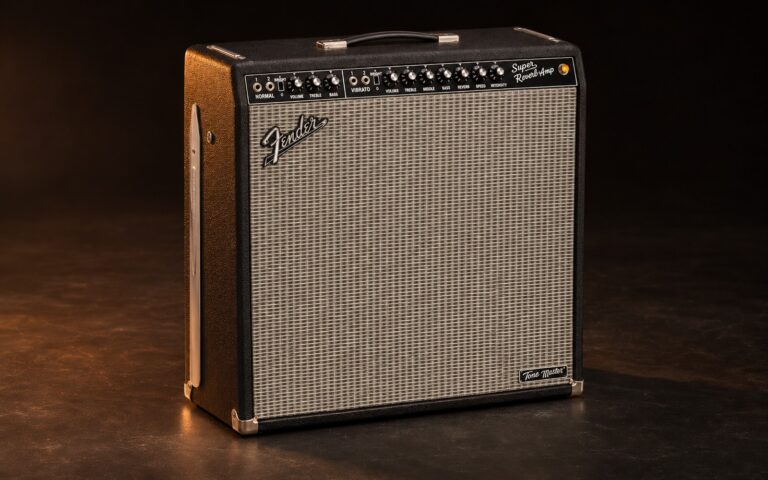
The 4×10 That Weighs Like a Feather and Roars Like a Legend: Fender Tone Master Super Reverb
Fender Tone Master Super Reverb: specs, history, verified players, 5 tone recipes, comparisons to tube Super Reverb and other Tone Masters, buying guide.
There is a specific sound in the DNA of American blues and rock that no other amplifier quite replicates. It is the sound of four ten-inch alnico speakers pressurizing a large plywood box, of a mid-powered tube circuit running near its limit, of spring reverb that drips like slow molasses and tremolo that can shake the walls or barely flutter. That is the sound of the Fender Super Reverb — a combo that has appeared on more great recordings than its fame might suggest, and that remained in continuous production from 1963 until Fender axed its entire amplifier line in 1982. When it came back as a tube reissue in 2001 guitarists celebrated. When Fender announced the Tone Master version in July 2021, the response was part excitement and part skepticism: could a digital circuit and a class-D power amp really replicate what four 6L6s in a birch box do? After thousands of hours of field use and multiple independent reviews, the consensus is unsettling for tube purists. It mostly can.
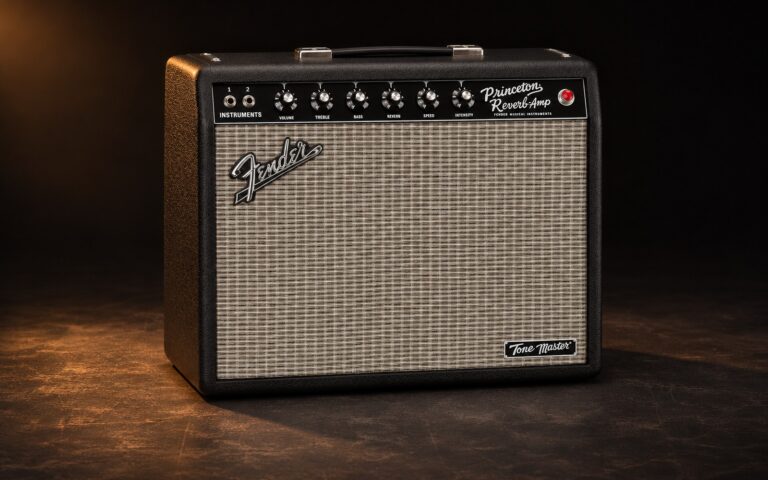
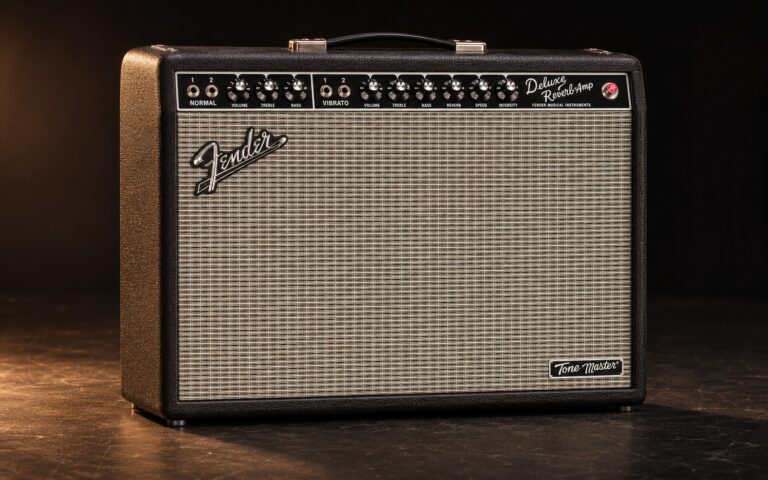
The Fender Tone Master Super Reverb is the fourth amp to join the digital Tone Master series that began with the Deluxe Reverb and Twin Reverb at Summer NAMM Nashville in July 2019, followed by the Princeton Reverb in September 2022. It is, by most measures, the most complex of the four: the largest cabinet, the most speakers, the most acoustically demanding emulation. The fact that it largely succeeds is a testament to both the processing power Fender threw at the problem and the inherent character of the 4×10 format, which turns out to be surprisingly forgiving of digital reconstruction.
How the Super Reverb Became the Blues Combo of Record
Fender introduced the Super Reverb in 1963 as part of the landmark blackface amplifier lineup — a family of products whose black anodized panels, white-skirted knobs, and silver sparkle grille cloth defined the look of American amplification for the next decade. The circuit was a thorough evolution of the earlier brownface Super, retaining the four-speaker configuration and medium-power output but adding onboard reverb and the optical tremolo circuit that Fender (bafflingly, endearingly) continued to label “Vibrato” on every blackface amp it ever made. The reverb was a revelation — a long-decay spring tank fed by a valve reverb driver, capable of everything from a thin surf splash to a cavernous swell that nearly swallowed the dry signal. Paired with the tremolo’s smooth optical pulse, the Super Reverb had a built-in sound design toolkit that few amps of any era have matched.
The key to the Super’s character was its unusual middle ground on the power spectrum. At 45 watts it had considerably more headroom than a 22-watt Deluxe Reverb but less clean volume than an 85-watt Twin. This placed it in a tonal sweet spot: louder than a pub could comfortably hear, but able to produce natural power-tube saturation at volumes a drummer could actually play over. The 4×10 cabinet amplified this character. Four ten-inch speakers share the load, each one operating well within its thermal limits at medium volume, producing a coherence and mid-range density that two twelves cannot quite replicate. The alnico Jensen P10Rs that Fender specified — and that both the ’65 reissue and the Tone Master version retain — add a particular glassy chime to the high-mid range that became, through endless use on classic recordings, the sound of a certain kind of American guitar playing.
When CBS purchased Fender in January 1965, the Super Reverb survived the transition intact, though the inevitable silverface cosmetic changes and circuit revisions of the late 1960s and 1970s gradually altered the amp’s character. The GZ34 tube rectifier was replaced first by a 5U4GB and then by silicon diodes, removing the elastic sag that tube rectifiers impart. A midrange control was added to the Normal channel. A pull-boost feature appeared. A master volume arrived. Each of these changes addressed real user complaints while making the amp slightly less the thing it had been in 1964. By the early 1970s Fender was offering some models with black-panel cosmetics again but without the original circuits underneath — a confusing period that culminated in 1982 when CBS discontinued Fender’s entire amplification line to make way for the acclaimed Rivera-designed amps, a family of hand-wired products that shipped from the Fullerton factory until CBS sold Fender to its employees in 1985.
The Super Reverb spent almost two decades in retirement before Fender brought it back in 2001 as the ’65 Super Reverb Reissue — a faithful recreation of the blackface AB763 circuit with the Jensen P10R speakers and correct cosmetics restored. That tube reissue is still in production today, priced considerably higher than the Tone Master version. It is the benchmark against which the Tone Master was measured when it arrived in August 2021.
Tone Master Technology: What Fender Actually Built
The Tone Master concept is straightforward to describe and technically demanding to execute: use a sufficiently powerful digital signal processor to model one specific tube circuit with enough fidelity that the difference is imperceptible in real playing conditions, then feed the modeled signal to a class-D solid-state power amplifier capable of delivering the headroom and dynamic response of the original tube output stage. The processing is dedicated — unlike a multi-amp modeler that splits its resources across dozens of models, each Tone Master amp devotes its entire DSP to a single circuit. The result, as Guitar World’s Nick Guppy noted in his February 2022 review, is “massive digital processing power” focused on “a single remarkable feat.”
For the Super Reverb specifically, that feat involves modeling the AB763 blackface circuit at 45 watts, four 10-inch Jensen P10R alnico speakers in a large open-back cabinet, and the original spring reverb and optical tremolo circuits. The class-D power section is rated at 200 watts into 2 ohms — a figure that looks alarming until you understand that it is the raw capacity of the power stage, not its output under normal operating conditions. The 200-watt rating is what the power amp can deliver when pushed to drive the speaker array to its limits under the simulated-45-watt model. In practice the amp sounds and behaves like a 45-watt tube combo.
The real Jensen P10R alnico speakers in the cabinet are not an afterthought. Fender retained the same drivers found in the tube ’65 Super Reverb Reissue, and they contribute materially to the amp’s sound — the Tone Master is not feeding a generic speaker array but the historically correct transducers through which Super Reverb tone was defined. This is part of why the Tone Master reviews as convincingly as it does: however good the DSP modeling is, four real alnico Jensens in a real meranti-ply box do things to the sound that no IR simulation can fully capture at the listening position.
Specs at a Glance
One spec difference from the other Tone Master combos deserves immediate attention: the cabinet material. The Deluxe Reverb, Twin Reverb, and Princeton Reverb Tone Masters all use solid pine cabinets; the Super Reverb uses meranti plywood. Guitar World’s Nick Guppy flagged this as a minor disappointment, and it is worth stating clearly. Meranti is a durable and acoustically competent material — it is what many original vintage Fenders were actually made from, and it is not a cheap substitute — but the departure from the solid pine used in the other Tone Masters is a real difference, and buyers who care about materials should know it going in. In practice the sonic difference is subtle: the meranti cabinet gives the Super a slightly different internal resonance profile than solid pine would, though with four 10-inch speakers in an open-back design the cabinet contribution to the room sound is less dominant than in a smaller 1×12 combo.
How It Sounds: The Super Reverb Voice Reconstructed
The Super Reverb voice is not subtle. Where a Deluxe Reverb can be coaxed into a refined, studio-controlled tone at any volume, the Super tends to announce itself. The four-speaker array creates a wall of sound that the Tone Master faithfully reproduces — wide, dense, and capable of filling a stage without a PA if circumstances demand. The Normal channel’s absence of a midrange control is not an oversight; it is a voice. The channel has a midrange peak baked into its EQ curve that gives single-note lines a particular emphasis in the 800Hz–2kHz range, exactly where guitar cuts through a drum kit and a rhythm section.
Guitar World’s Guppy documented the characteristic settings precisely: bass typically stays around 3 because the four 10-inch speakers and large cabinet naturally emphasize the low end, and adding more from the EQ just gets muddy. Treble and middle sit at 6 or 7 for the natural midrange scoop the amp generates. The Bright switches are useful to compensate when swapping to a darker humbucker guitar. These are not arbitrary settings — they are the shape of the Super Reverb’s personality expressed through its EQ, and the Tone Master version responds identically because the EQ curves are part of what the DSP is modeling.
The drive character of the amp arrives above the halfway mark on the volume control. MusicRadar described it as “an overdrive that’s got an unmistakable US accent” — hot, vocal, and mid-forward rather than the compressed crunch of a British amp. Guppy wrote that the amp begins “chewing up notes and spitting them out with a fiery vocal distortion that’s very much USA-centred and ideal for blues and classic rock, especially using a beefy humbucker with the Volume control on 10.” This is not a high-gain amp by modern standards; it is a medium-power amp that earns its breakup through speaker cone physics and output-transformer saturation, and the DSP emulates that characteristic faithfully.
Both reviews flag the spring reverb as one of the Tone Master’s strongest arguments. Guppy noted that “the incredible detail makes it possible to pick out individual spring oscillations as the reverb level is increased” — a level of physical fidelity that no reverb pedal quite achieves. MusicRadar called it a “digital spring reverb that’s forensically detailed.” The single caution both reviewers share: it may be a touch bright for some ears at higher reverb levels. The fix is simple — back the reverb level off slightly and roll down the Treble control by a notch. The tremolo is the other highlight: a smooth optical pulse that Guppy called capable of “slow atmospheric pulses to stuttering psychobilly on maximum speed and intensity.” One historical quirk worth knowing: on the original Super Reverb and on this Tone Master, the tremolo cuts off the reverb tail when engaged rather than allowing the two effects to overlap. This is how the original circuit was wired, and the Tone Master preserves it.
The noise floor is essentially zero. This is the most immediately jarring difference from a tube amp for anyone who has spent years listening to the ambient hiss of a tube circuit at idle. MusicRadar noted “nary a hiss or a noise coming out of the speaker” before a note is played. For recording this is a significant advantage — background noise is one of the primary constraints when close-miking a cranked tube amp. For live use the silence reads as uncanny for the first few gigs, then simply as a feature.
Famous Players: The Super Reverb Legacy and the Tone Master Question
The original Fender Super Reverb has a documented lineage of users that stretches through the essential periods of American blues and rock. Understanding that legacy is part of what makes this amp worth owning — and understanding the difference between who played the original and who plays the Tone Master is where the honest journalism begins.
Michael Bloomfield — the Electric Flag’s explosive lead guitarist — is among the most thoroughly documented Super Reverb players in rock history. Guitar Player magazine’s “10 Ways to Play Like Mike Bloomfield” specifically identifies the 1960s Fender Super Reverb as his amp of choice during the Electric Flag period and beyond, and multiple contemporary accounts confirm that he used Super Reverbs on Strat and Les Paul alike, favoring the clean-to-edge-of-breakup dynamic range that the four-speaker 40-45W format makes possible. When Bloomfield played through a Super Reverb he was not using a vintage artifact; he was using a current production amp. His tone is part of what made that amp famous.
Freddie King used a Super Reverb during key periods of his career. The Texas blues master favored the amp’s ability to deliver clean power at stage volumes — a practical requirement for a player whose style depended on clarity at volume rather than saturation. His use of the Super Reverb alongside various other amps through the 1960s and early 1970s placed it in the blues-rock vocabulary that a generation of British guitarists would decode and import.
Muddy Waters ran Super Reverbs during periods of his career when the amp’s blend of moderate power and spring reverb suited his electric Chicago style. The architect of electric blues was never precious about amplification — he used what was available and sounded good — and the Super Reverb was in his hands often enough to matter to the amp’s historical profile.
Robert Cray built his entire clean-blues aesthetic around the Super Reverb, running two of them live and a Super Reverb with a Twin Reverb in the studio. His documented settings — volume on five, treble and middle on ten, bass at around four, Bright switch on, reverb at three — are the most specific and reproducible Super Reverb recipe in the literature. Cray has since transitioned to Matchless Clubman 35 heads as his primary touring amp but has kept Super Reverbs for studio work. His settings, however, are fully verifiable and are reproduced in the tone recipes section below. Robert Cray is the player who, more than any other, defined what a Super Reverb sounds like in a clean-blues professional context.
Now for the claims that require correction.
Stevie Ray Vaughan is associated with this amp in the Guitar World review text — mentioned alongside Ford and Cray as players “the original Super Reverb earned its reputation in the hands of.” SRV did indeed use Vibroverbs, Super Reverbs, and various other large Fender combos at different points in his career, and the Super Reverb’s voice was part of the Texas blues sound he inherited and transformed. But SRV died on August 27, 1990. The Fender Tone Master Super Reverb was announced on July 8, 2021 — thirty-one years after his death. He cannot have used it. The implication for any buyer trusting “as played by” lists: if you see SRV’s name associated with an amp released after 1990, the marketing team is borrowing his legacy, not documenting his equipment.
Robben Ford’s primary amplifier since 1983 has been a Dumble Overdrive Special, serial number 002 — one of the most documented player-amp relationships in American blues-jazz. Ford’s Dumble is not an occasional choice; it is his essential tool, paired with a Hermida Zendrive into a Matchless 1×12 Vintage 30 cabinet. Ford has historical associations with the Super Reverb and it appears in various accounts of his earlier career, but his documented touring and recording rig for the past four decades is built around the Dumble ODS, not a Super Reverb. No primary source places him on the Tone Master version specifically, and the Dumble association makes the Super Reverb claim implausible regardless.
Mike Campbell’s amplifier is a 1963 Fender Princeton Brownface — not a Princeton Reverb, not a Super Reverb, not a Tone Master of any kind. The brownface Princeton is a pre-reverb, pre-blackface amp from the 1961–1963 transition period that shares only the Princeton name and small-combo format with anything Fender has built since. It is not a Tone Master, and the family connection to the Super Reverb is non-existent at the circuit level.
Eric Johnson’s documented amplification consists of paired vintage 1966 Fender Twin Reverbs, both cut down to heads, supplemented by a Two-Rock Traditional Clean and Marshall cabinets. His relationship with the Super Reverb is not documented in primary sources. The Twin Reverb and Super Reverb share the blackface AB763 topology but differ significantly in power output, speaker configuration, and tonal character. Johnson’s meticulous approach to tone — the specific brand of battery in every effect, the tube brands in every socket — makes an undocumented amp substitution extremely unlikely.
The honest conclusion: no famous player has been confirmed on the Fender Tone Master Super Reverb specifically, as of July 2026. The amp has been available only since August 2021, which is not long enough for many touring professionals to have built a documented relationship with it. The vintage Super Reverb players who define the amp’s legacy played the tube original — their sound is what the Tone Master is attempting to re-create, not what any Tone Master user has yet produced at the level of documented professional recording. The amp earns its place on this list through the quality of its emulation and the endurance of the original’s reputation, not through a roster of celebrity endorsers.
Five Tone Recipes for the Tone Master Super Reverb
Recipe 1: Robert Cray Clean Blues (Verified Settings)
Channel: Vibrato. Volume: 5. Treble: 10. Middle: 10. Bass: 4. Bright switch: On. Reverb: 3. Speed and Intensity off. Power setting: 45W. Guitar: Stratocaster, middle or neck pickup, tone knob at 8. This is Cray’s documented live setup, the one that produced the crystalline, politely restrained blues tone of records like Strong Persuader. The extreme treble and middle settings sound alarming on paper but produce a natural, slightly scooped midrange with the Jensen alnicos at volume. The bass at 4 keeps the four 10-inch speakers from getting muddy. The Bright switch on tightens the attack without adding edginess because the high treble settings have already tilted the EQ. At 45 watts this is a loud, stage-filling clean tone. Power-scale to 12W or 5W for smaller rooms.
Recipe 2: Bloomfield-Era Electric Flag Drive
Channel: Vibrato. Volume: 7–8. Treble: 6. Middle: 7. Bass: 3. Bright switch: Off. Reverb: 2. Speed: off, Intensity: off. Power setting: 45W. Guitar: Les Paul, bridge pickup, volume at 10. This is the clean-to-breaking-up zone where Bloomfield operated on Super Session and with the Electric Flag — the amp beginning to saturate at the top of each note but returning to clean between them. The Bright switch off with humbuckers prevents harshness. At lower power settings the saturation appears earlier; 12W or 5W gets you into this territory at rehearsal volumes.
Recipe 3: Surf and Reverb Drenching
Channel: Vibrato. Volume: 4. Treble: 7. Middle: 5. Bass: 4. Bright switch: On. Reverb: 7–8. Speed: 3, Intensity: 5. Power setting: 22W or 12W. Guitar: Stratocaster or Telecaster, bridge pickup, tone at 7. The Super Reverb’s reverb tank was longer than most Fender reverb implementations and the Tone Master preserves this — at levels of 7 or above it becomes drenched and spacious in a way that sounds genuinely wet rather than digitally computed. The tremolo at these moderate settings produces the classic surf pulse. Back the reverb above 8 and the spring oscillations become audible as individual springs, a physical behavior that Guitar World’s reviewer documented as one of the Tone Master’s particular achievements.
Recipe 4: Psychobilly Tremolo and Tweed Grit
Channel: Normal. Volume: 8. Treble: 5. Bass: 5. Bright switch: On. Channel Vibrato: Volume: 3. Reverb: 4. Speed: 8–9. Intensity: 8–9. Power setting: 5W or 12W. Guitar: Telecaster, bridge pickup, volume at 10. The Normal channel at high volume with power scaled down delivers a slightly grittier, less refined breakup than the Vibrato channel — more tweed than blackface in character. The Vibrato channel running in parallel at low volume adds the reverb and tremolo without competing with the Normal channel’s drive. The tremolo at Speed 9 and Intensity 9 stutters aggressively, producing the sound that Guitar World described as “stuttering psychobilly on maximum speed.” The two-button footswitch lets you kill the tremolo for clean passages without touching the amp.
Recipe 5: Direct Recording — Balanced XLR to DAW
Channel: Vibrato. Volume: 6. Treble: 6. Middle: 7. Bass: 3. Bright switch: Off. Reverb: 3. Power setting: 5W or 1W. Rear panel: XLR output at -10dBV, IR switch to position 1 (SM57 capture). Guitar: any. Mute switch engaged (standby). This is the silent-recording approach: the Tone Master generates a convincing 4×10 cabinet emulation through the XLR output using the factory impulse responses, with the physical speaker array muted. The Shure SM57 IR in position 1 is the classic close-mic position. Position 2 adds a Royer ribbon character, warmer and rounder. Position 3 is a bypass that sends the raw modeled signal without cabinet coloration, useful for re-amping workflows. Firmware v2.0.42 (July 2026) adds 45 factory IRs and 9 microphone positions via the Tone Master IR Manager App.
How It Compares: Five Alternatives
vs. Fender ’65 Super Reverb Reissue
The tube ’65 Super Reverb Reissue is the direct ancestor the Tone Master is emulating. The reissue uses the AB763 circuit with real 6L6GC power tubes, a tube rectifier for elastic sag, and the same Jensen P10R alnico speakers. It costs considerably more, weighs considerably more — the tube version runs to approximately 65 lbs against the Tone Master’s 36 — requires periodic tube replacement and bias setting, and does things at the attack and note decay level that remain subtly different from what the Tone Master delivers. For recording, the gap narrows substantially. For live use, the Tone Master wins on practicality by a significant margin. Both produce convincing Super Reverb tone; the question is how much the margin of physical authenticity matters to you against the real-world cost in weight, maintenance, and price.
vs. Fender Tone Master Deluxe Reverb
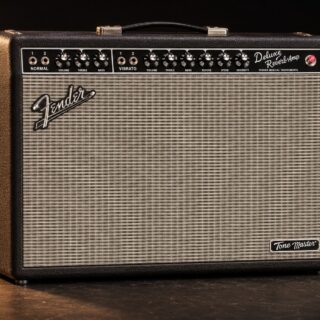
The Tone Master Deluxe Reverb shares the same DSP technology and firmware ecosystem as the Super Reverb but simulates a 22-watt 1×12 circuit rather than a 45-watt 4×10. The Deluxe Reverb is lighter, more portable, easier to mic, and inherently quieter at the threshold where power-tube saturation appears — making it more accessible for bedroom and studio use. The Super Reverb’s four 10-inch speakers produce a qualitatively different sound: wider, fuller in the bass, more physically imposing in a room. Both are excellent for recording via XLR. The Deluxe is the better choice for sessions and smaller venues; the Super is the choice when you need the full 4×10 experience or when the stage demands volume without PA support.
vs. Fender Tone Master Twin Reverb
The Tone Master Twin Reverb simulates an 85-watt blackface circuit with two 12-inch Jensen neodymium speakers. It has more headroom, a more assertive clean sound, and a harder drive character when pushed. The Super Reverb’s 45-watt simulation and four 10-inch alnicos produce a warmer, more immediately saturating response — the Super breaks up more readily and sounds more vintage at medium volumes. The Twin stays cleaner longer and handles high-volume gigs with more authority. The Super is the better choice for blues and roots players who want power-tube character at manageable volumes; the Twin is the choice for players who need maximum clean headroom. Paul Gilbert’s adoption of dual Tone Master Twin Reverbs for his 2026 WROC tour makes clear which register the Twin occupies professionally.
vs. Fender Tone Master Princeton Reverb
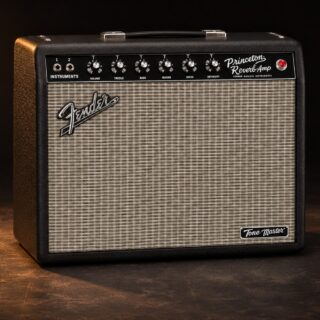
The Tone Master Princeton Reverb simulates a 12-watt 1×10 blackface circuit — smaller, lighter, and considerably more intimate than the Super Reverb. The Princeton’s smaller speaker and lower simulated power mean it saturates earlier and more easily, making it the Tone Master series choice for recording situations where a cranked-up amp character is needed at low absolute volume. The Super Reverb’s 4×10 format produces a physically larger, more room-filling sound that a single 10-inch Princeton Reverb cannot replicate, regardless of how the power attenuator is used. They are complementary rather than directly competitive: one is a recording and small-gig tool, the other is a medium-to-large venue workhorse.
vs. Fender ’65 Twin Reverb Reissue
The ’65 Twin Reverb Reissue — the tube version — weighs 65-68 lbs, requires routine maintenance, and costs substantially more than the Tone Master Super Reverb. The Super Reverb Tone Master at 36 lbs, with no tubes to replace and a firmware ecosystem that is actively updated, makes a compelling practical argument against any tube amp in this power range. The sonic argument is more nuanced: the Twin’s 85 watts and 2×12 configuration produces a different room presence than the Super’s 45-watt 4×10. Neither is objectively superior; they are different tools with different voice profiles and different practical requirements.
Buying Guide
The Tone Master Super Reverb retails at $1,599.99 new as of July 2026, unchanged from the fender.com list price. Street pricing has typically tracked list price for this model, with occasional discounts at authorized dealers. The launch price in August 2021 was $1,100, which means the amp has increased by roughly $500 over its production run — a pattern consistent with other Tone Master models during the same period. Used pricing as of mid-2026 runs approximately $950–$1,200 for examples in excellent condition, with no meaningful difference between early and late production units. The firmware is the only variable between production years, and all units can be updated to v2.0.42 via the free Tone Master IR Manager process.
Before buying used, verify the firmware version via the USB port and the Fender firmware page. Early production units shipped before the v2.0.42 update that added the full IR Manager App and the 45 factory impulse responses. The update is free and straightforward, but you want to confirm it has been applied before the sale rather than discovering afterward that the previous owner never updated the firmware. Also confirm the 2-button footswitch is included — it toggles both the reverb and vibrato channels’ effects on/off, and genuine replacements are Fender-proprietary parts.
The Tone Master Super Reverb competes directly with the tube ’65 Super Reverb Reissue. The case for the Tone Master is compelling on weight alone: 36 lbs against 65 lbs is not a minor difference for anyone loading out after a late gig. Add the maintenance cost savings on tubes, the consistency advantage across temperature variations (digital circuits do not drift with temperature the way tube circuits do), and the current price differential between the two versions, and the Tone Master makes a strong practical argument. The case for the tube version is more subjective: there are real physical differences at the level of touch, attack, and decay that experienced players detect in A/B testing, and if those differences matter to your playing they are worth the weight and cost premium.
No speaker modification is necessary or recommended — the Jensen P10R alnicos are historically correct and contribute substantially to the amp’s authentic character. Unlike the Tone Master Twin Reverb (which uses Jensen neodymium speakers that some users swap), the P10R alnicos in the Super Reverb are the correct period-specific driver and any substitution would compromise the authenticity of the emulation at the speaker level.
Ownership Notes
The meranti plywood cabinet is structurally solid and road-worthy but requires reasonable care in transport. The open-back design makes the rear speaker surfaces vulnerable to damage if the amp is placed face-up on a hard surface while loading. A padded slip cover (not included) is a worthwhile purchase for any amp that gets moved regularly.
The power attenuator switch on the rear panel changes not just the volume but the character of the overdrive. At 45W the amp’s saturation is fuller and more complex; at 12W the drive is slightly compressed and more aggressive; at 5W the overdrive becomes more immediately accessible at lower absolute volume but loses some of the power-stage dynamics that make the 45W setting feel most authentic to a real Super Reverb. For live use, 22W or 45W are the most useful settings. For recording via speaker, 5W or 1W allow a close-mic setup without triggering complaints from neighbors. For silent recording via XLR, the power setting is largely irrelevant to the output signal.
The Tone Master Super Reverb has no effects loop — neither did the original. Pedals go in front. The high-gain input on each channel (Input 1) is specified at unity; the low-gain input (Input 2) is at −6dB. The original Super Reverb convention was to daisy-chain the two channels by connecting a short cable between the unused inputs — a technique that produces a blended tone from both channels simultaneously. The Tone Master retains this functionality as a nod to vintage practice, though the result with digital emulation is different from the tube interaction this technique exploited on the original.
Firmware updates require a USB-A to USB-B cable (Type B, the square connector — not USB-C). This is a non-standard cable for most current users and typically needs to be sourced separately. The firmware update process itself is straightforward once the cable is obtained. The Tone Master IR Manager App runs on Mac and Windows, not iOS or Android, so the process requires a computer rather than a phone.

Frequently Asked Questions
Is the Tone Master Super Reverb the same as the ’65 Super Reverb Reissue?
No. They simulate or recreate the same historical circuit — the 1965 blackface Super Reverb AB763 — but they do so through completely different physical means. The ’65 Super Reverb Reissue is an all-tube amp with real 6L6GC power tubes, a tube reverb driver, a tube phase inverter, and a weight of approximately 65 lbs. The Tone Master uses digital signal processing and a class-D solid-state power amp to replicate the original’s behavior, resulting in an amp that weighs 36 lbs, produces no heat from output tubes, and requires no tube maintenance. Both use the same Jensen P10R alnico speakers and the same blackface cosmetics. The sonic difference is subtle but present; the practical difference in weight and maintenance is significant.
What does the three-position IR switch on the rear panel do?
The IR switch selects between three impulse responses that are applied to the balanced XLR line output, affecting only the direct signal, not the speaker output. Position 1 captures the cabinet with a Shure SM57 dynamic microphone in close-mic position, the standard electric guitar recording approach. Position 2 uses a Royer R-121 ribbon microphone at the same position, producing a warmer, less transient-forward result. Position 3 bypasses cabinet simulation entirely, sending the raw modeled signal without speaker coloring — useful for re-amping and for running the Tone Master into a separate cab simulator or FRFR speaker. Firmware v2.0.42 (July 2026) adds the full Tone Master IR Manager App, which expands this to 45 factory IRs with 9 microphone positions and allows loading of third-party IRs.
Can I run the Tone Master Super Reverb silently through headphones?
The Tone Master Super Reverb does not have a headphone output. Silent operation is possible via the balanced XLR line output with the amp’s power attenuator at 0.5W and the mute switch engaged (which turns the jewel amber and disconnects the speaker output while keeping the XLR active). To hear the output in headphones you need an interface, mixer, or headphone amplifier connected to the XLR. The Princeton Reverb Tone Master, by contrast, is similarly limited — none of the Tone Master combo series offer direct headphone monitoring.
Why does the tremolo cut off the reverb tail?
This is historically correct behavior from the original Super Reverb circuit. On the AB763 blackface schematic, the tremolo and reverb share a signal path in which the tremolo modulation occurs after the reverb return — the result is that when the tremolo pulses down to silence, the reverb tail is also silenced, then restored when the tremolo pulses back up. This creates a distinctive stuttering, rhythmic quality to the reverb-plus-tremolo combination that is very different from what you hear when both effects are independent. Players unfamiliar with vintage Fender behavior sometimes assume the tremolo is malfunctioning when they first encounter this. It is not. The Tone Master preserves this behavior as part of the authentic circuit emulation.
Is the meranti plywood cabinet a quality compromise?
Meranti is a Southeast Asian hardwood used in aircraft construction, marine applications, and cabinet-making — it is a durable, acoustically competent material that many original vintage Fenders actually used in non-pine-era production. The choice of meranti over solid pine (used in the Deluxe Reverb, Twin Reverb, and Princeton Reverb Tone Masters) is a genuine difference that Guitar World’s Nick Guppy noted as a minor disappointment. Whether it represents a quality compromise depends on what you are comparing it to: relative to solid pine it is a cost- and weight-related material choice; relative to cheap MDF or particleboard it is robust and appropriate. The sonic impact in an open-back 4×10 cabinet is modest — the speakers dominate the room sound more than cabinet material resonance in this format.
How does the power attenuator differ from a load box or real power attenuation?
It does not attenuate at all in the conventional sense. The “power attenuator” on the Tone Master is a digital parameter that changes the modeled output level of the simulated tube circuit. It is not a reactive load or resistor network dissipating power from a tube output transformer — there is no tube output transformer. What the switch actually does is adjust both the modeled power level and the character of the simulated drive: at 45W the emulation includes the headroom and dynamics of a 45-watt tube stage running at full power; at 5W it emulates the compression and earlier saturation of the same circuit operating at reduced headroom. This is more sophisticated than a simple volume reduction and more closely approximates the actual tonal behavior of a tube amp at different power levels than a conventional load-box attenuator produces.
Does the Tone Master Super Reverb need servicing?
There are no tubes to replace, no bias to adjust, and no capacitors that will drift in the way that vintage filter caps do. The Jensen P10R alnico speakers are the only component that can wear out under sustained hard use — speaker cone failure or voice coil damage requires driver replacement, which any competent amp technician can handle with a direct replacement P10R. The PCB electronics are designed for modular servicing with Molex connectors and ribbon cables connecting the boards. Fender recommends authorized service for warranty repairs. Beyond speaker replacement the amp has no routine maintenance requirements, which is one of its significant practical advantages over tube alternatives.
Can I use third-party impulse responses?
Yes, via the Tone Master IR Manager App introduced with firmware v2.0.42 (July 2026). The App runs on Mac and Windows and allows loading of third-party WAV-format IRs into the amp’s memory alongside the 45 factory IRs. The IR selection is then available through the amp’s rear-panel three-position switch or via the IR Manager interface on a connected computer. This substantially extends the amp’s flexibility as a direct recording tool and allows users to dial in cab simulations that match specific microphone placements, room treatments, or vintage cabinet configurations that the factory IRs do not include.
Image credits
- A guitarist playing on stage in front of an amp: Bex.Walton, Wikimedia Commons, CC BY 2.0.
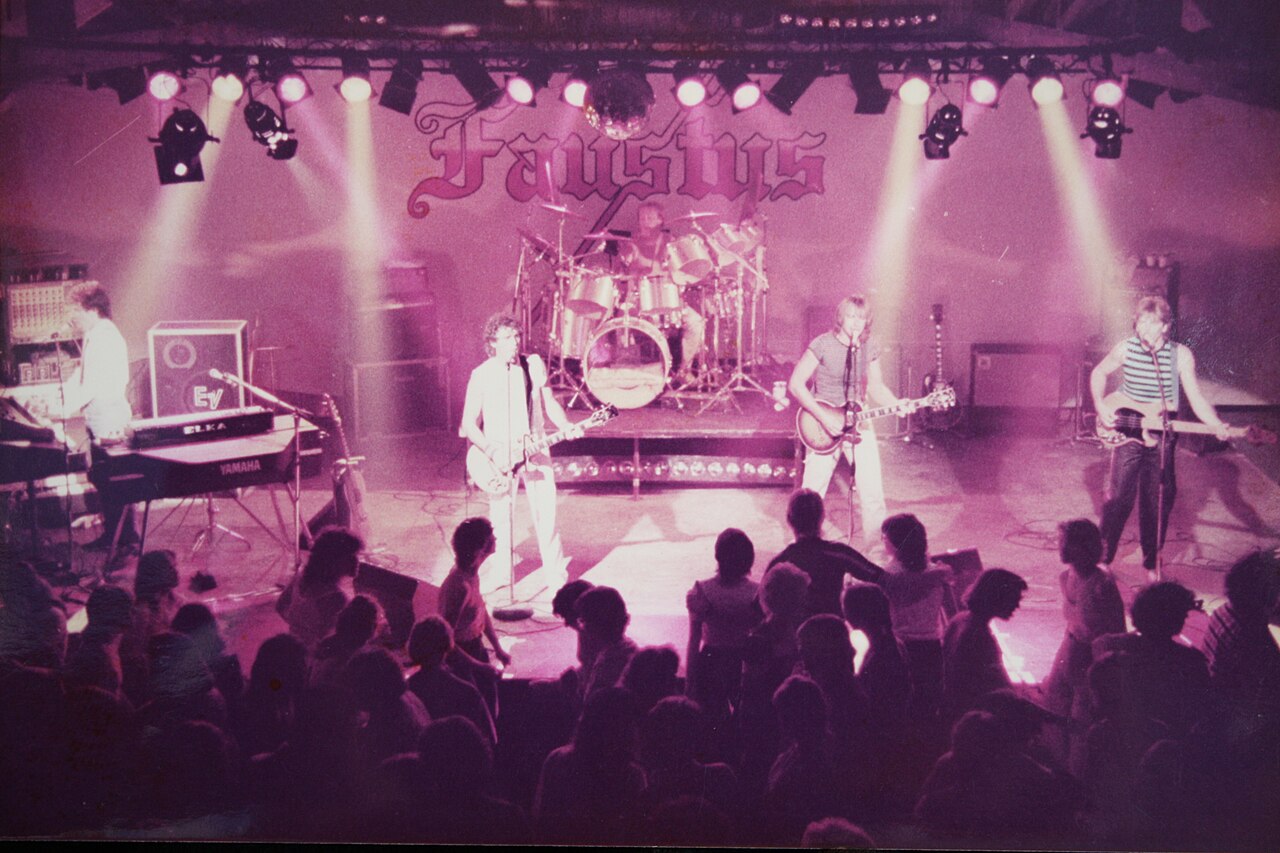
- A band on a lit stage in front of a crowd: Dhagely, Wikimedia Commons, CC BY-SA 4.0.
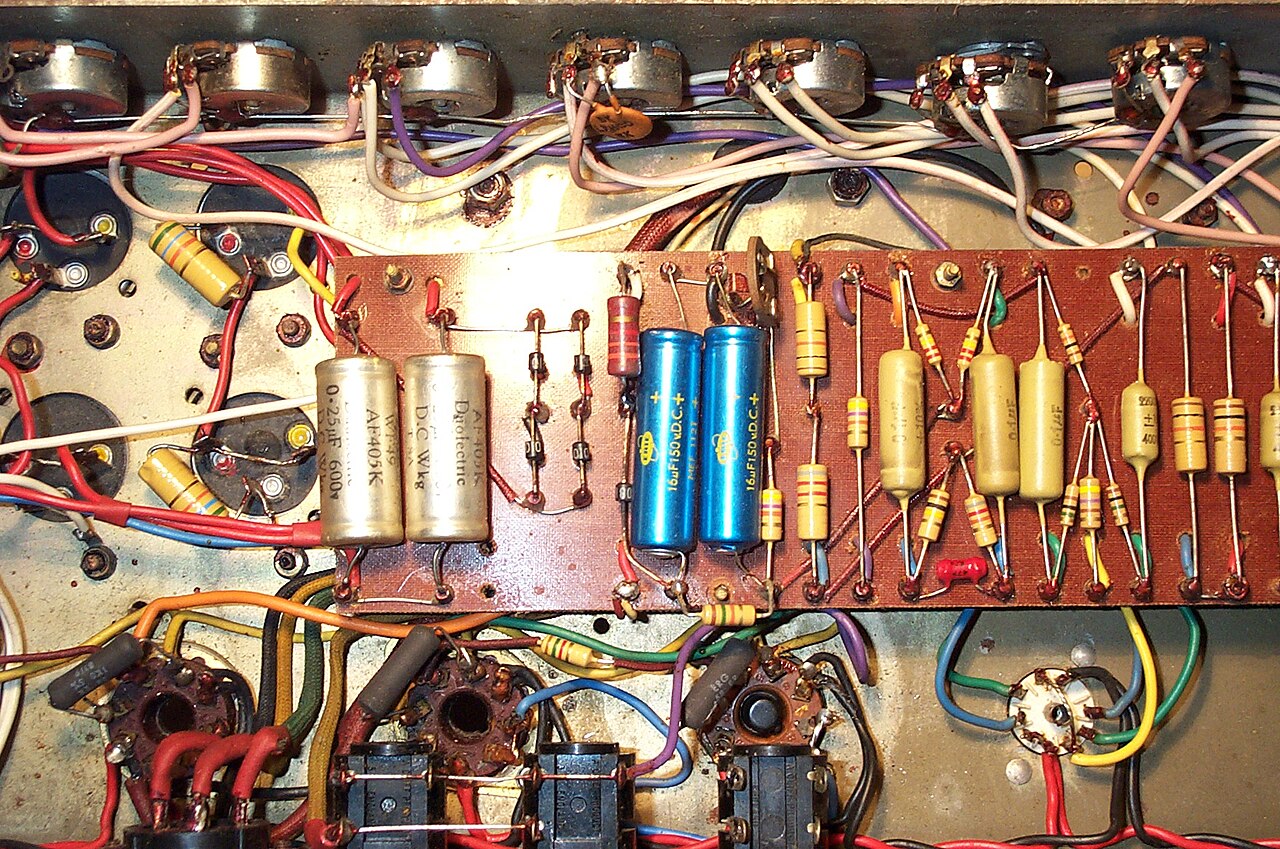
- Inside a tube guitar amplifier: germanium from Eichwalde, Germany, Wikimedia Commons, CC BY 2.0.
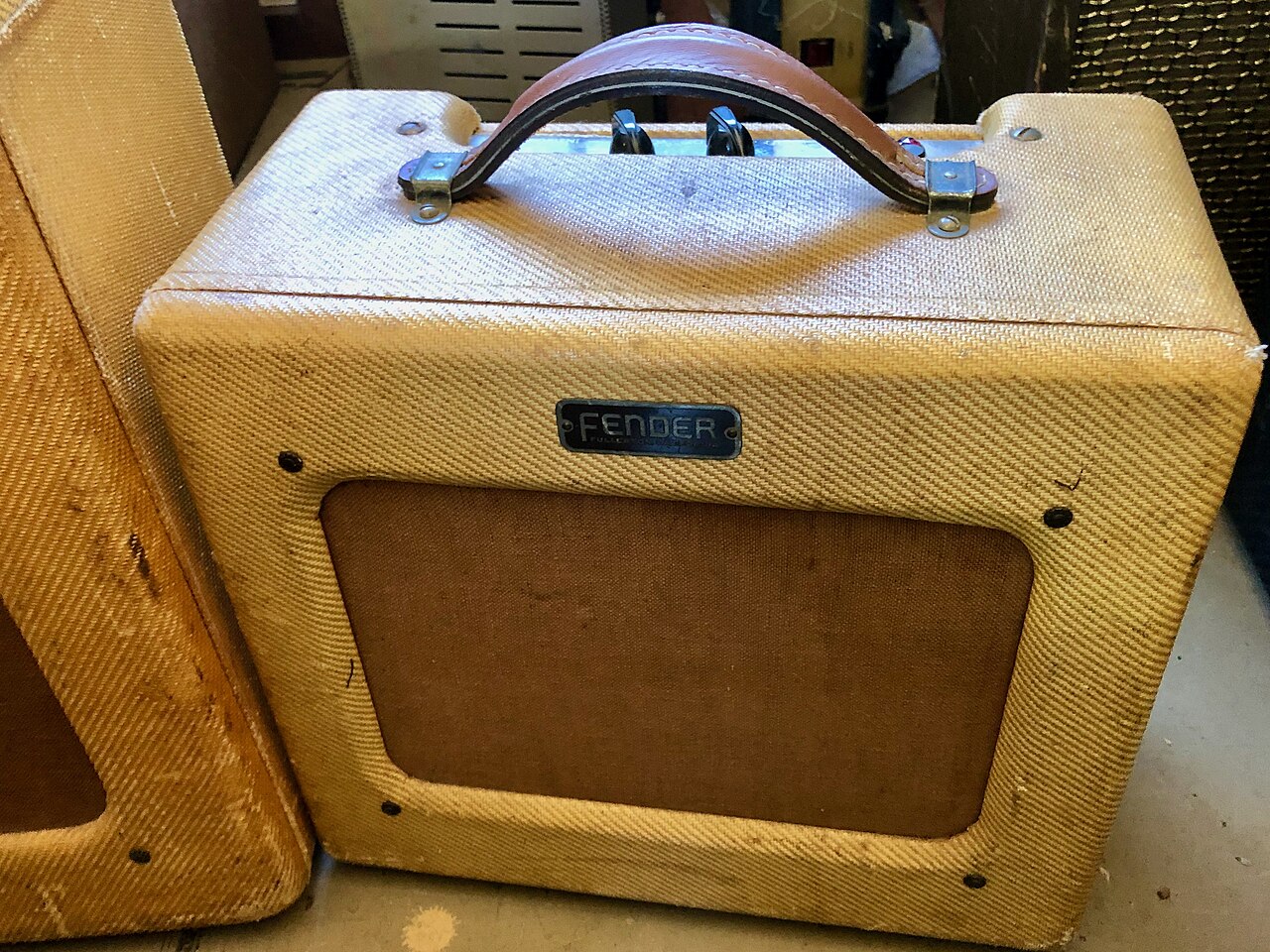
- A tweed Fender guitar amplifier: Bill Abbott, Wikimedia Commons, CC BY-SA 2.0.
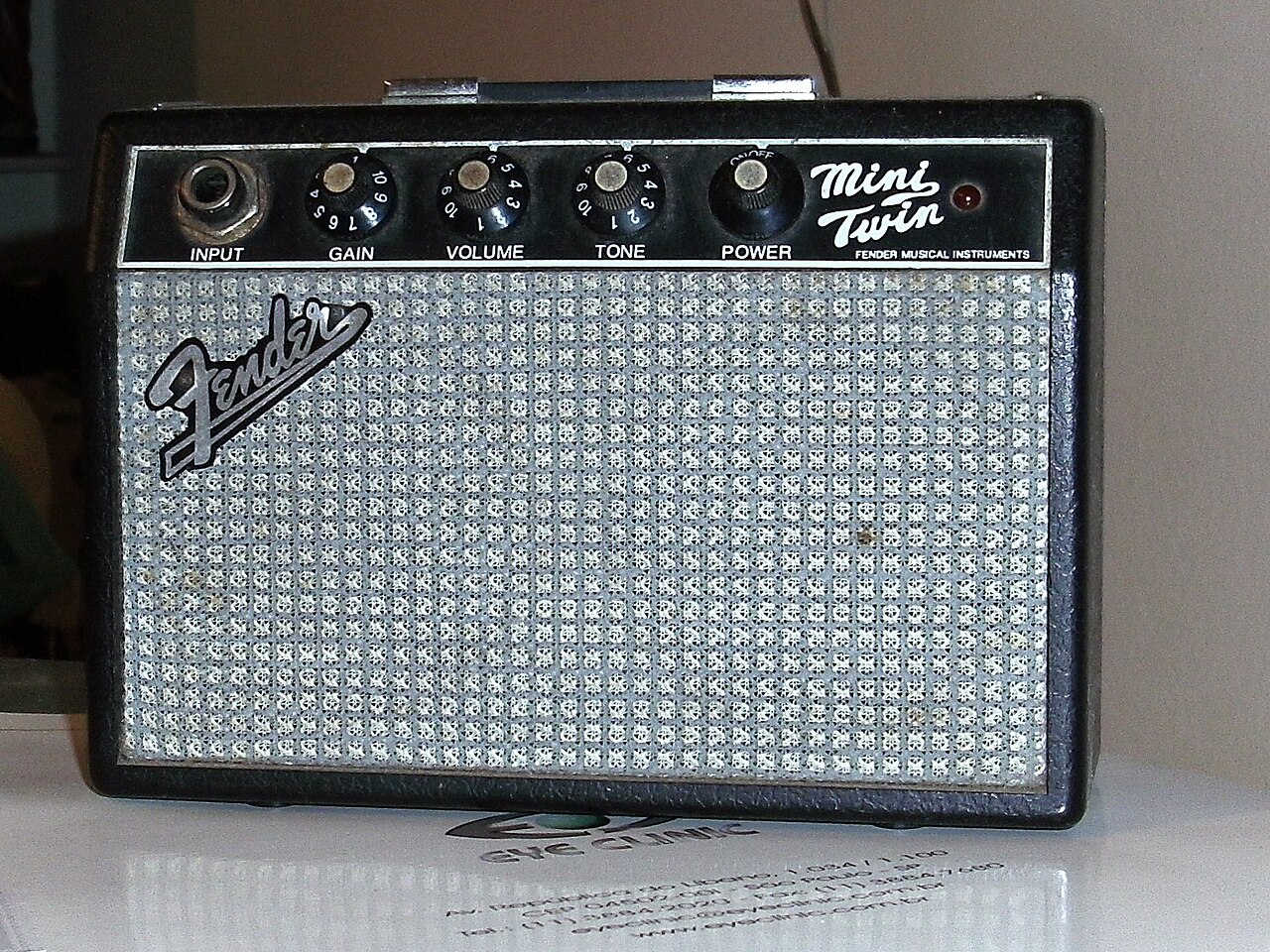
- A Fender Mini Twin amplifier: Onjacktallcuca, Wikimedia Commons, Public domain.
Latest News
Related
On This Day
Wednesday 11 November
From this week: