Marshall Silver Jubilee 2555X: The 1987 Legend That Rewrote Hard Rock’s Tonal Bible
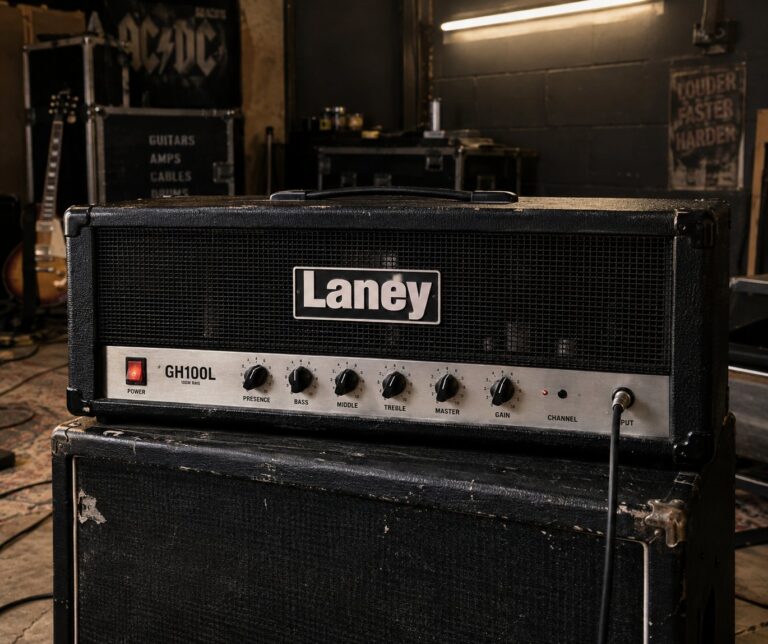
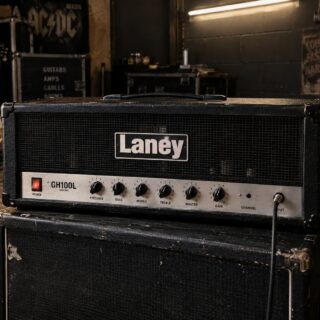
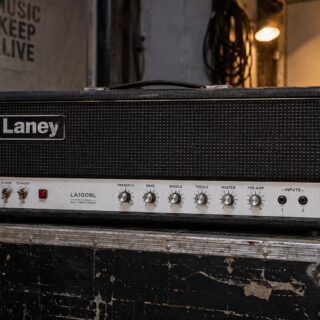
Reference illustration of the model, not a photograph of the player’s equipment.
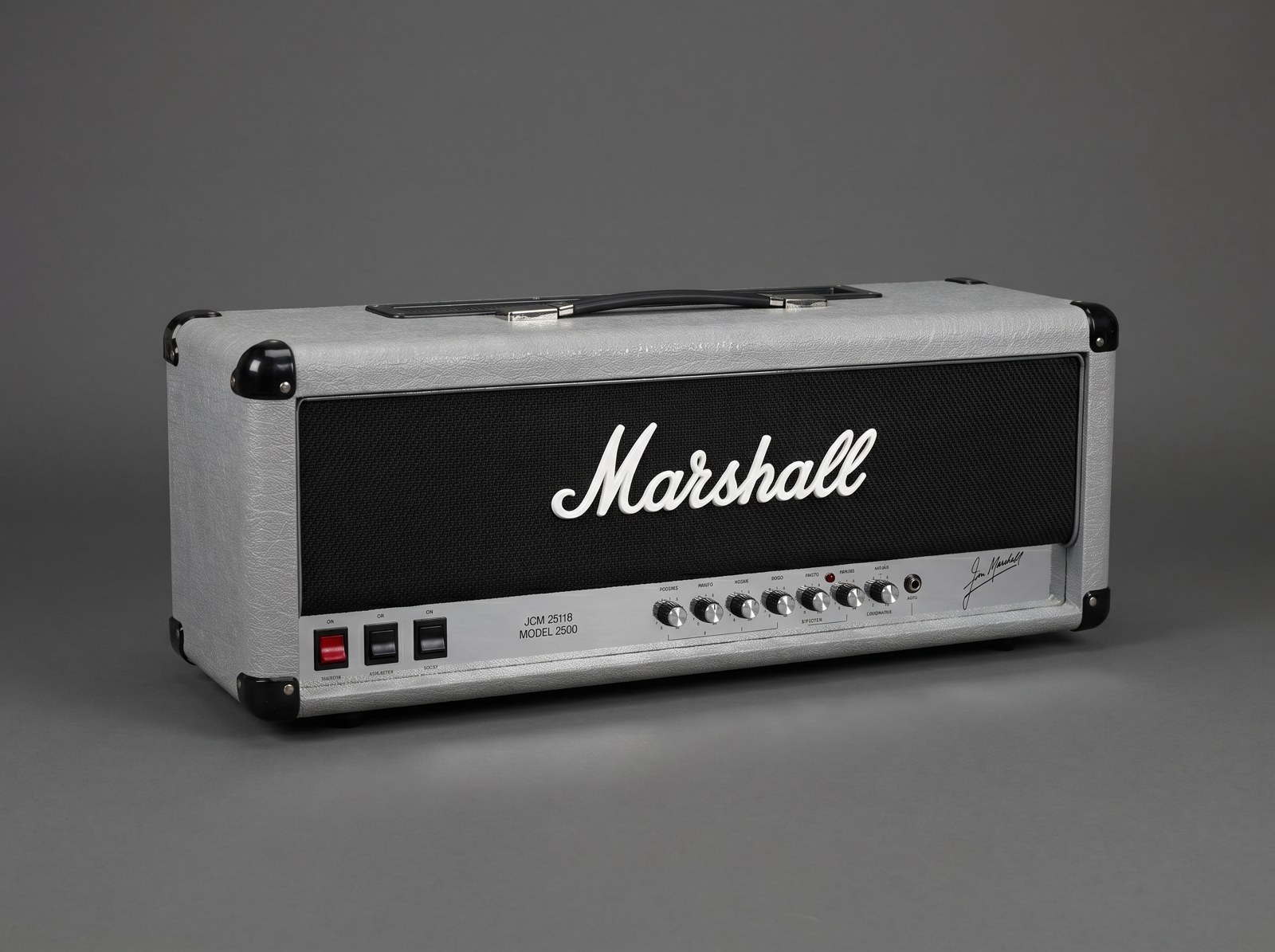
The Marshall Silver Jubilee 2555X reissues the iconic 1987 100W head: diode-clipped lead, rhythm clip, 50/100W switching — as used by Slash and Bonamassa.
In 1987, the music industry threw a party for Jim Marshall, and he handed out gifts in return. The occasion was a double anniversary: twenty-five years since the first Marshall amp rolled off the Hanwell workshop bench in 1962, and fifty years since Jim Marshall first stepped behind a music shop counter. The gift — silver-clad, chrome-panelled, and named the Jubilee — arrived at exactly the right cultural moment. That year, a young guitarist named Slash was trawling through rental amps at Sound Image Rehearsal in Los Angeles, preparing to take a debut album called Appetite for Destruction out on the road. He found a 1987 Silver Jubilee 2555. He didn’t let go of it for years. The rest is legend inscribed in every bar of “Welcome to the Jungle.”
That original 2555 — silver-tolex, chrome-faced, 100 watts of compressed, diode-clipped British fury — ceased production around 1989 and promptly became one of the most obsessively collected Marshall variants in existence. Prices for clean originals climbed past four figures, then past five. Players who couldn’t afford or find the vintage unit had to make do with approximations. Then Marshall did what it eventually does with its most beloved designs: they reissued it. The 2555X Silver Jubilee Vintage Reissue Head brings the original circuit back, built in the same Bletchley, England factory, with the same silver aesthetic and the same pushing-pulling dual-function controls. Whether you want to retrace Slash’s live rig, channel Bonamassa’s tour-battle-tested tone, or simply understand what separates the Silver Jubilee from every other Marshall head, this is where that story starts.
The Anniversary Amp: 1987 in Context
Marshall’s twenty-fifth anniversary had plenty to celebrate. Between 1962 and 1987, the company’s amps had defined the sound of rock at nearly every significant juncture: Townshend’s Fender stacks replaced by Marshalls around 1965, Hendrix’s 100-watt Super Leads at Woodstock 1969, Page’s Super Lead on “Whole Lotta Love,” Angus Young on Highway to Hell, Kerry King and Jeff Hanneman’s JCM800 2203 twin-stack on Reign in Blood. By 1987, the JCM800 was the defining hard-rock amp of the decade — but the genre was evolving. Hair metal and the emergent speed-metal scene wanted more gain, more compression, smoother leads that sustained without fizzing at the top. The JCM800’s preamp, brilliant as it was, was a single-gain-stage-into-EQ design. You had to crank the master volume into the power tubes to get it singing; at lower volumes it could be stiff.
Enter Steve Grindrod, Marshall’s amp designer, tasked with building something special for the anniversary year. The result retained the fundamentally British EL34 power stage — four 6L6-style glass bottles, loose and warm and harmonically complex — but added a diode clipping stage to the lead channel that nobody else at the time was doing in quite the same way. Where the JCM800 relied on preamp tube saturation for its gain, the Jubilee used semiconductor diodes to clip the signal before it hit the phase splitter, producing a softer, more compressed overdrive that saturated at lower volumes and tracked the pick attack differently. The character that emerged was tighter on the low end than a Plexi, smoother on the top than the JCM800, and fundamentally easier to manage at stage volumes — a guitarist’s amp rather than a technician’s compromise.
The production run ran 1987 to approximately 1989, with a small number of units made in a “small box” configuration the following year. The model lineup comprised the 2553 (50W head, switchable to 25W), the 2555 (100W head, switchable to 50W), the 2550 (combo version), and the 2554 (1×12 combo). The model numbering reflects the dual anniversary: JCM25/50, for 25 years of Marshall amps and 50 years of Jim Marshall in the music industry. The silver vinyl cladding and chrome-finished control panel were chosen deliberately to evoke the precious metal of the occasion.
When the production run ended, the secondary market absorbed the units slowly at first, then voraciously as the Slash connection solidified throughout the 1990s. Marshall attempted a partial bridge with the limited-edition 2555SL Slash Signature in 1996 — a run of exactly 3,000 units, not widely available outside the US, and long since sold out and appreciating. The 2555X, the current reissue, arrived in the second decade of the 2000s as part of Marshall’s broader “X” vintage-reissue programme alongside the 1959X Plexi and 1987X 50-watt reissue, built from the original schematics with modern noise and safety standards accommodated.
Specifications
The Circuit: What Actually Makes It Sound Different
To understand the Silver Jubilee’s tonal identity, you need to understand its pull-knob control scheme, because everything about the amp’s character flows from it. There are two pull functions on the 2555X, and neither is cosmetic.
Pull Input Gain — Rhythm Clip: When the Input Gain knob is pushed down (normal position), you’re running through the standard Rhythm channel, which is a clean-to-crunch voice with EL34 power-amp saturation governing how dirty it gets at volume. When you pull the Input Gain knob outward, you engage the Rhythm Clip circuit — a set of silicon diodes inserted into the signal path that add soft-clipping compression and extra gain. This is not the high-gain Lead channel; it’s the Rhythm channel with a personality transplant, producing a tighter, crunchier tone that cleans up beautifully when you roll back the guitar’s volume control.
Pull Output Master — Lead Channel: The Lead channel is disengaged by default. Pulling the Output Master knob outward switches the amp to its Lead voice, which runs higher preamp gain and uses the Lead Master control to set the Lead channel’s independent output level. This means you can set the Lead Master for a boost relative to the Rhythm channel, or a cut if you need the lead to sit in rather than leap out.
The result is a three-voice amplifier from a one-input, minimal-control front panel. Rhythm clean (Input Gain pushed), Rhythm Clip (Input Gain pulled), and Lead (Output Master pulled with Lead Master controlling level). The footswitch toggles between Rhythm and Lead channels, and the Rhythm Clip can be engaged before or after the switch — which is why the Silver Jubilee’s user interface, once understood, feels more flexible than its sparse controls suggest.
The EQ stack — Treble, Middle, Bass, Presence — is shared between both channels, which matters for how you approach the amp. You’re not dialling in separate clean and dirty EQs; you’re finding a single EQ position that works across all three voices, then compensating with the guitar’s volume and tone controls. Players who fought with the Jubilee often fought this constraint. Players who embraced it — Slash being the paradigm case — found that a Les Paul’s volume knob became an expressive tool rather than a level control.
The diode clipping in the Lead channel produces a softer, more compressed overdrive character than the JCM800 2203’s tube-only preamp, which some players love (smooth, sustaining, singing) and others find slightly sterile above a certain gain level. The 100-watt EL34 output stage runs loose and harmonically rich, which gives the top end of the clipping a warmer sheen than you’d get from a modelling amp or a solid-state stage trying to replicate it. The power-reduction switch to 50W keeps the output section slightly warmer and more saturated at lower stage volumes — useful for anything short of a large venue.
Famous Players: What the Sources Actually Show
Slash (Guns N’ Roses / Solo) — VERIFIED, with an important studio nuance
The Silver Jubilee 2555 and Slash are so inseparably linked in popular understanding that it requires some care to separate the verified from the mythologised. The essential fact is this: the original 1987 Silver Jubilee 2555 was Slash’s primary live touring amp from 1987 onward, through the Appetite for Destruction, Use Your Illusion, and Illusion II tours. The association is photographically documented, witnessed by countless stagehands and crew, and confirmed by Marshall themselves in historical retrospectives. The 1996 2555SL signature model (3,000 units, US-limited) was built to the exact specifications of his original 1987 2555, a further formal confirmation of the relationship.
The nuance — and it matters for anyone trying to sonically reproduce the Appetite for Destruction album — is that Slash’s studio recording amp for AFD was not the Silver Jubilee. He went to Sound Image Rehearsal (S.I.R.) in Los Angeles before tracking to audition amplifiers and landed on a modified Marshall Model 1959T Super Lead, stock #36 from S.I.R.’s rental inventory. That amp, running through a 4×12, is the primary recorded guitar tone on “Welcome to the Jungle,” “Paradise City,” and the rest of the album. The Jubilee was what he took out on the road when the album came out — and because the touring amp was what audiences and television cameras saw, the association solidified in public perception as the record amp too.
This is not a trivial distinction for players trying to dial in the AFD sound. A modified 1959T Super Lead and a diode-clipping Silver Jubilee sound related but different. The 1959T has more open, harmonic touch-sensitivity at the edge of breakup; the Jubilee compresses slightly more and sustains slightly longer. Both are exceptional amplifiers. They are not the same amplifier.
Joe Bonamassa — VERIFIED, extensively
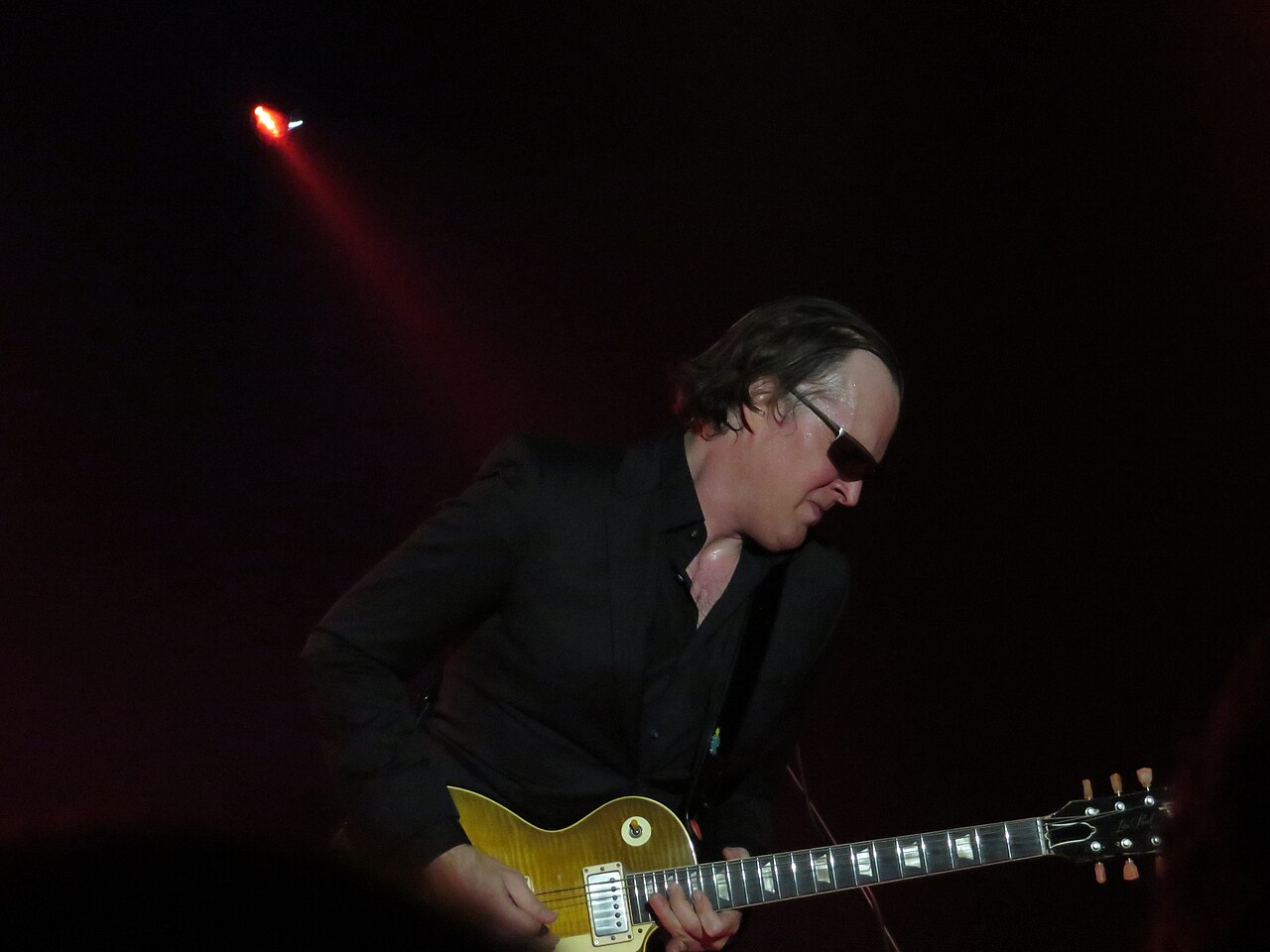
Joe Bonamassa’s relationship with the original 1987 Silver Jubilee heads is among the most thoroughly documented of any modern player’s attachment to a vintage amp. He owns four original 1987 2555 Silver Jubilee 100W heads and typically runs two simultaneously in a complex wet/dry touring rig, sending them into a Van Weelden 4×12 cabinet split internally to function as two 2×12 sections loaded with Electro-Voice EVM12L speakers. His public statements on the choice of speakers are explicit: with a Marshall that already has strong midrange character — especially the Jubilee’s compressed lead channel — he prefers EV speakers for their lack of colouration, letting the amp’s own frequency balance come through undistorted by Celestion’s characteristic upper-midrange push.
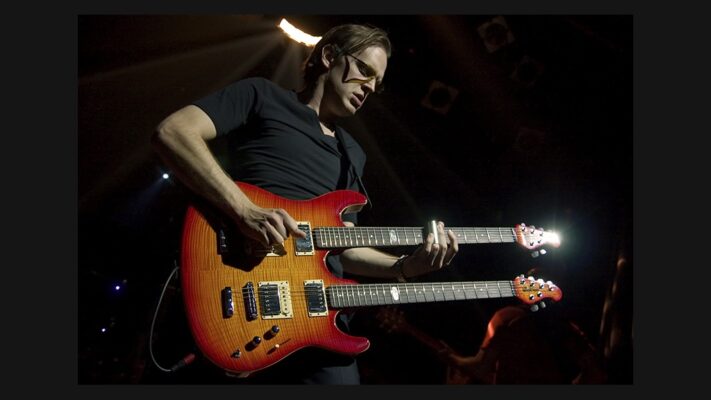
Bonamassa has noted publicly that his Silver Jubilee has been on tour with him for fifteen years “and it’s never broken down” — a significant reliability endorsement for a thirty-five-year-old amplifier. His touring rig is not a single-amp setup; the Jubilee anchors a multi-amp configuration with other heads providing different textures. But the Jubilee has been a cornerstone of his live blues-rock tone across a long touring career, which places it in more verified live miles than almost any other amp of the same vintage.
John Frusciante (Red Hot Chili Peppers) — VERIFIED, from the Californication tour onward
John Frusciante’s Silver Jubilee connection is real and documented, but it begins later than is often assumed. The Californication studio sessions (recorded 1998) were tracked through a JTM-45, a Marshall Super Bass 200W head, and a Fender Showman — photographs from the sessions confirm this, and Frusciante himself referenced “a real old ’65 Marshall” as his studio amp. The Silver Jubilee entered his setup during the subsequent Californication tour (1999–2000) and remained a fixture through all subsequent RHCP albums and tours. Frusciante himself confirmed this in Vintage Guitar (April 2009): “In the Chili Peppers, I always have a Marshall Major, Marshall Jubilee, and my old Fender Stratocasters.”
His guitar tech Dave Lee has provided the most illuminating account of how Frusciante used the Jubilee on stage. For certain parts of the set, he deployed a second Silver Jubilee — run independently, with no effects, dialled into a standalone overdriven tone — specifically for passages he played through a Gibson Les Paul. Lee described this second rig as “the Slash rig,” and added: “I remember during a show in LA, John playing that rig, and Slash standing right in front of him in the audience watching. I remember thinking: ‘I wonder if Slash realises he inspired that rig?'” The Slane Castle concert footage from 2003 shows the configuration clearly: two Silver Jubilees with a Marshall Super Bass between them.
The honest note: Frusciante’s primary Jubilee was an original 1987 2555, not a 2555X reissue, and there is no verified account of him playing a 2555X specifically. The musical connection to the Silver Jubilee platform is genuine and extensively documented; the specific reissue is a separate question.
Alex Lifeson (Rush) — VERIFIED on the 50W 2553, with an important variant note
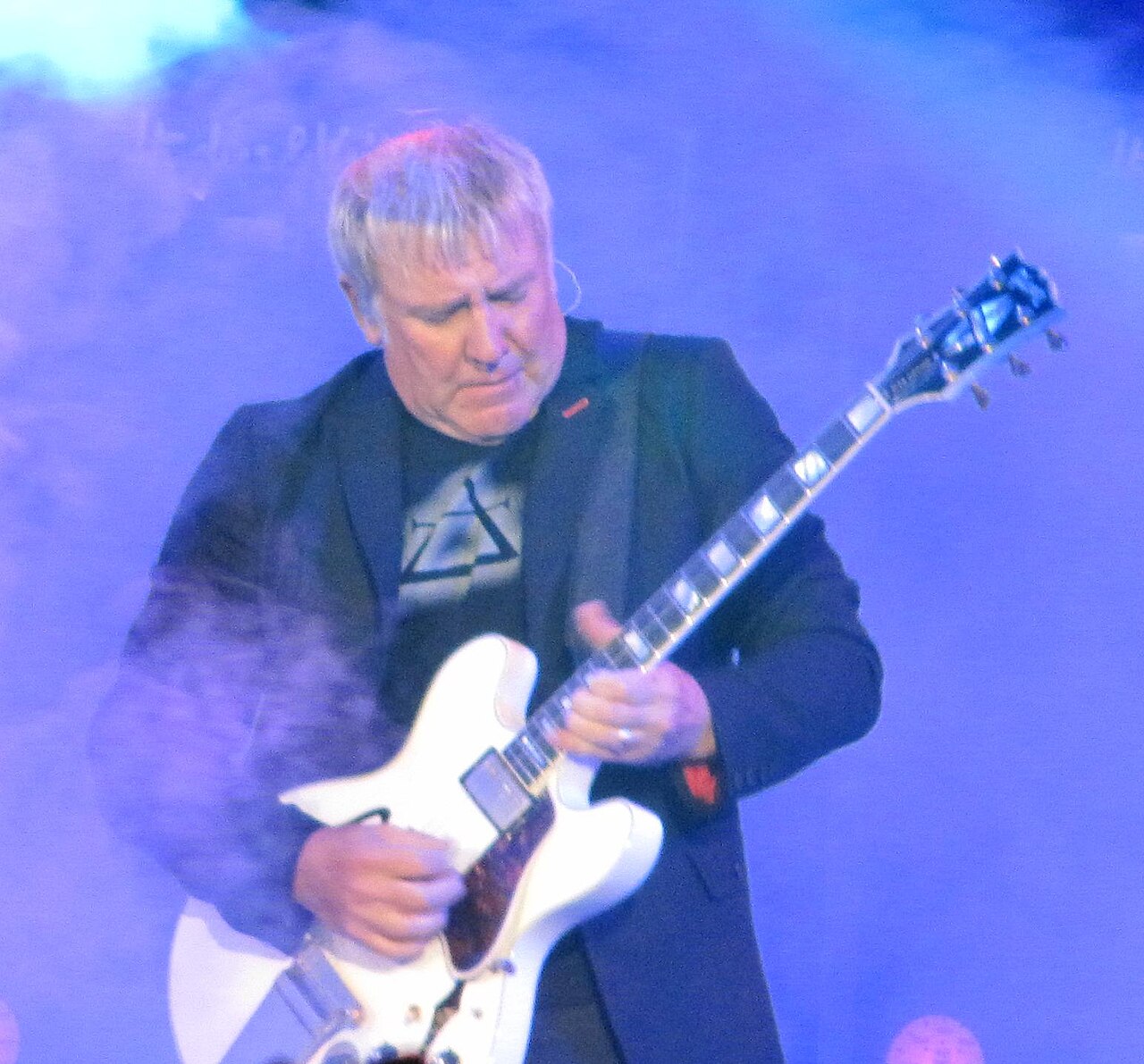
Alex Lifeson’s Silver Jubilee connection is genuine but requires a model-number clarification. For the Clockwork Angels album (2012) and subsequent tour, Lifeson used a Marshall Silver Jubilee 2553 — the 50-watt version, switchable to 25W — paired with a Mesa/Boogie Mark Five for his clean tones, and a Fractal Audio AxeFX II for effects routing. The Jubilee ran into his dirty/overdriven tones; the Boogie handled the clean architecture. He noted in Guitar Player (November 2012) that the setup represented a deliberate departure from the Hughes & Kettner rig he’d used for many years, and that he loved the Silver Jubilee’s character for overdriven rhythm and lead work on the record’s heavier material.
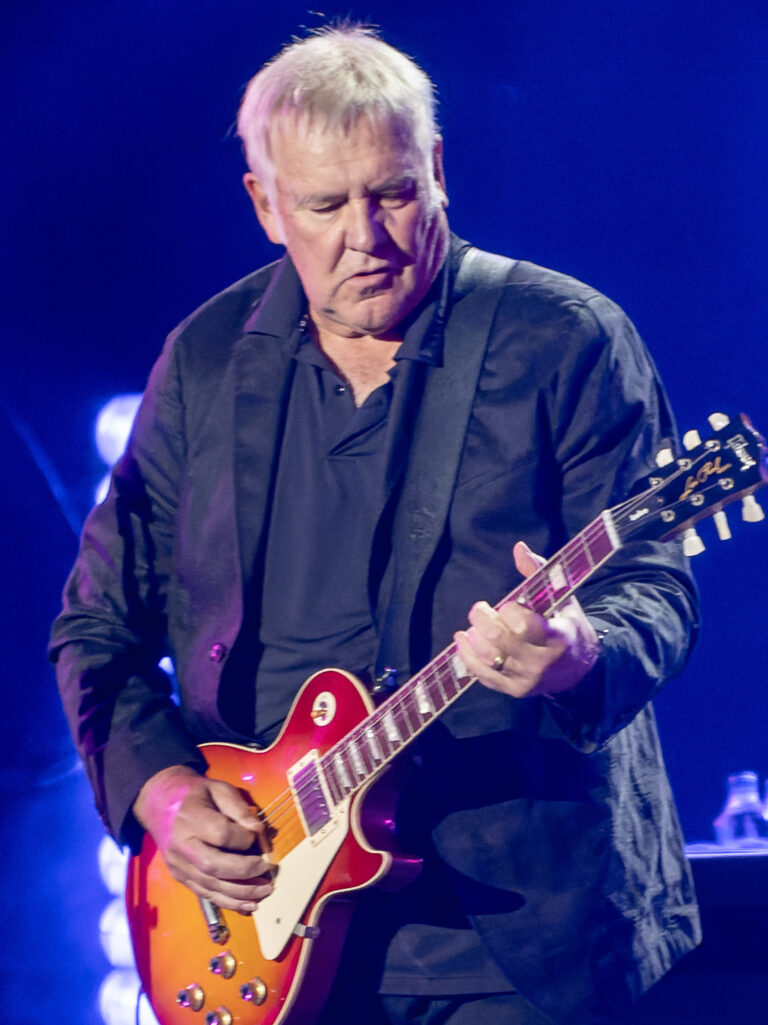
The 2555X is the 100W reissue of the 2555, not the 50W 2553. These are the same circuit family and the same tonal DNA — the difference is the output section (4×EL34 at 100W vs 2×EL34 at 50W), which affects headroom, power-section saturation, and how the amp responds at lower stage volumes. Lifeson’s preference for the 50W variant aligns with the observation that the 50W’s output-stage saturation is slightly earlier and warmer. His subsequent Lerxst Omega signature amplifier, built by Mojotone, was explicitly based on the Silver Jubilee 2553 circuit — a formal documentation of how central the amp was to his thinking in his later career. The musical connection to the Silver Jubilee family is fully verified; the specific 100W 2555/2555X is the variant he didn’t use.
Tone Recipes and Settings
1. The Appetite Live Tone — Classic Slash Jubilee Lead
Based on the clean vintage touring rig, tuned for Les Paul with PAF-style humbuckers.
Channel: Lead (Output Master pulled)
Input Gain: 7–8
Lead Master: 4–5 (set for balanced output vs Rhythm channel)
Output Master: 6–7
Treble: 6
Middle: 5
Bass: 6
Presence: 7
Guitar: Les Paul, both pickups full up. The Jubilee’s diode clipping does the heavy lifting — avoid adding a gain pedal in front unless you want to compress further. A Tube Screamer (TS9) at unity gain but with the tone set to 11 o’clock can add punch without muddying the low end.
2. Bonamassa Blues Lead — EL34 Power-Tube Saturation
For single-note blues lines through the 50W mode; suits humbuckers or P90s.
Power mode: 50W (engaged)
Channel: Lead (Output Master pulled)
Input Gain: 6
Lead Master: 6–7
Output Master: 7
Treble: 7
Middle: 6
Bass: 7
Presence: 6
Guitar: Volume at 7, tone at full. Use the guitar’s volume to transition between clean and edge-of-breakup. The 50W mode brings power-tube saturation earlier — push the Lead Master to 7 or 8 to let the EL34s contribute their own harmonic weight to the gain structure.
3. Frusciante-Style Dual-Amp Overdrive — Rhythm Clip Mode
Rhythm Clip for crunchy chord work; pairs well with a second amp running clean.
Channel: Rhythm (Output Master pushed down)
Input Gain: Pulled (Rhythm Clip engaged), set to 7
Output Master: 6–7
Treble: 5
Middle: 6
Bass: 6
Presence: 5
Guitar: Stratocaster or Tele, neck-to-middle pickup selection. Add MXR Phase 90 for modulation. The Rhythm Clip’s diode compression tightens strummed chords and rolls off fizz — it’s a distinctly different texture from the Lead channel, more aggressive in the mids and less scooped.
4. Hard Rock Crunch — Clean-ish Rhythm for Big Chords
Rhythm channel clean/crunch for powerful chord work in hard rock and metal contexts.
Channel: Rhythm
Input Gain: 5–6 (pushed, no Rhythm Clip)
Output Master: 7
Treble: 7
Middle: 4
Bass: 7
Presence: 8
Guitar: Humbucker in bridge position. The shared EQ means this setting may require Lead Master adjustment to level-match when switching. Middle at 4 on the Jubilee gives a scooped rock character that sits under vocals without fighting them in the 1kHz range.
5. Lifeson-Style Saturated Lead — Hi-Gain with Amp Compression
For complex chord voicings and legato lead work; inspired by the Clockwork Angels rig.
Power mode: 50W
Channel: Lead (Output Master pulled)
Input Gain: 9–10
Lead Master: 5
Output Master: 5
Treble: 8
Middle: 5
Bass: 5
Presence: 6
Guitar: Les Paul or semi-hollow. Fractal/MIDI effects in the loop post-gain. The Jubilee’s diode Lead channel at high gain input levels compresses notes into a singing sustain that’s cleaner and more predictable than a cranked-to-10 tube amp — useful for the wide intervallic chord extensions Lifeson favoured.
How It Compares: Internal Links and Context
The Marshall family context matters here, because the 2555X occupies a specific position in a lineage that spans six decades of British valve design.
vs. Marshall JCM800 2203 (original) and 2203X reissue: The JCM800 2203 is the single-channel predecessor — one input, one master volume, all gain from the preamp tubes. The Jubilee adds a second channel, diode clipping, and the pull-knob switching architecture. The JCM800 has more of a raw, tube-only character at the edge of breakup; the Jubilee is smoother and more compressed in the Lead channel. At high gain settings, the JCM800 has slightly more harmonic complexity in the pick attack; the Jubilee has slightly more sustain and bloom. They are different tools, not just different decades.
vs. Marshall 1959 Super Lead Plexi and 1987X reissue: The Plexi-family amps have no gain stage beyond the input — they get their overdrive entirely from power-tube saturation, which requires volume. The Jubilee has a dedicated gain structure on the Lead channel that produces its distortion character at lower overall volumes. The Plexi’s overdrive is looser and more dynamically responsive at the volume required; the Jubilee’s diode Lead channel is tighter and more consistent from note to note. If you need to gig at mid volumes with a vintage British character, the Jubilee wins. If you need Plexi dynamics and you can push the volume, the 1959X wins.
vs. Marshall JTM45: The JTM45 is the KT66/GZ34-era progenitor — low-wattage, sag-heavy, warm and saggy with a pronounced low-end bloom. The Jubilee shares the EL34 output stage with the JCM800 but adds preamp gain stages and diode clipping. These are different tonal worlds: the JTM45 excels for blues, roots, and vintage rock; the Silver Jubilee is built for the harder-edged application. A player who loves the JTM45’s touch sensitivity may find the Jubilee’s compressed diode channel a step too far; a player who needs more sustain and predictability will find the opposite.
vs. Mesa/Boogie Dual Rectifier: The perennial comparison, because both amps defined 1990s hard rock and metal tones. The Dual Rectifier uses rectifier-tube and silicon-diode options with its own multi-stage preamp for a heavier, more scooped character. The Jubilee is articulate where the Rectifier is dense; the Jubilee has more useable clean and crunch range; the Rectifier has more raw gain headroom. Frusciante’s routing — Jubilee for dirty, other amps for clean — mirrors how many players use the two together rather than choosing between them.
vs. Marshall DSL40CR: The practical modern Marshall for players who can’t justify the vintage-reissue price. The DSL40CR has a similar gain architecture in its Ultra Gain channel, a series effects loop, reverb, and digital footswitching — at less than half the price. The 2555X wins on tube character, EL34 power-stage feel, and the specific Silver Jubilee voicing that no modern amp perfectly replicates. The DSL is a working professional’s tool; the 2555X is a piece of living history.
Buying Guide: 2555X vs. Vintage 2555 vs. 2555SL
The Silver Jubilee’s legacy creates a three-way market dynamic that any buyer needs to understand before spending a significant sum.
Original 1987–1989 Marshall 2555: The most coveted. Clean examples in original condition fetch $3,500–6,000 on the vintage market (Reverb, dealer). Player-grade examples with cap replacements, re-tubes, and small cosmetic wear run $2,500–3,500. The original has the vintage EL34 voicing and the specific circuit characteristics of late-1980s Marshall construction — filter caps, transformers, board layout — that devotees argue the reissue doesn’t fully replicate. Against this: a 35-year-old amp needs maintenance. Electrolytics age. Output transformers have years of running hours on them. Buy blind from a photo-only listing and you may own an amp that needs $400–600 in service before it performs reliably. Have any prospective purchase assessed by a qualified technician before purchase, or factor service cost into your offer.
2555SL Slash Signature (1996): 3,000 units produced, never reissued. These are now collector items in their own right, selling $3,000–5,000 depending on condition and paperwork. They were built to the specification of Slash’s own 2555, with standard Marshall build quality of the mid-1990s. Many remain in excellent condition because buyers purchased them as investments; others were played hard. The same service-cost caveat applies. These do not sound appreciably different from a well-maintained original 2555 — the value premium is collectibility and provenance, not tonal advantage.
2555X Reissue (current production): Street price approximately $2,000–2,350 new, depending on retailer. Used examples (2018–present) sell $1,400–1,900 in excellent condition. The 2555X is built at Bletchley to the original schematics with updated noise performance and modern safety compliance. It comes with warranty coverage, a factory-fresh set of EL34s, and no mystery about its maintenance history. Players who want the Silver Jubilee sound reliably without the vintage-market risk and service cost will find the 2555X the most defensible purchase. The gap between a 2555X and a serviced original 2555 is narrower than the price gap; the gap between a 2555X and a neglected original is wider in the 2555X’s favour.
The Black Tolex 2555X (Sweetwater exclusive) offers the same circuit in a black rather than silver vinyl enclosure — purely cosmetic, not a circuit change. If you need the silver aesthetic for the full Jubilee experience, buy the standard. If you just want the tone in a more stage-anonymous package, the black version is identical otherwise.
Ownership Notes
The 2555X is a 100W all-valve head weighing 22.1 kg / 49 lbs — bring a roadie, or at least decent wheels on your amp trolley. The silver tolex is attractive but shows wear more visibly than black; minor scuffs read as silver flashing from a distance. A fitted cover is a worthwhile first accessory.
The 4×EL34 complement runs warm. Expect a tube replacement cycle of two to three years under regular gigging. Budget approximately $80–120 for a matched quad of EL34s (JJ, TAD, Electro-Harmonix are all reliable choices), and factor in a bias adjustment by a qualified technician each time — the 2555X does not have a user-accessible bias trim in the same sense as some amps, and bias affects both tone and tube longevity. Keep a spare set of ECC83 preamp tubes on hand; they last longer but occasionally fail at inconvenient moments.
The push-pull controls take initial adjustment. The Output Master’s pull function — which switches to the Lead channel — can feel odd at first because you’re essentially engaging channel A or B by pulling a knob rather than hitting a button. Once you internalise it, it’s faster than reaching for a stomp box. The included PEDL-90003 footswitch handles channel switching more conventionally.
The effects loop is series — signal goes out, through your effects, and back in. A high-quality buffer pedal at the loop send is recommended if your effects chain includes vintage units that don’t play well with long cable runs. The DI output allows direct-to-desk recording or front-of-house feed without microphones, though most players prefer miking the cabinet for the physical interaction between the EL34s and the speaker.
At 100W into a 4×12 loaded with Celestion Vintage 30s or G12M Greenbacks, the 2555X is unambiguously a large venue amp. It produces useable tones at lower volumes — the 50W mode helps — but its full character requires the output section to work. In rehearsal spaces, expect to run the Output Master between 3 and 5 and compensate with the Lead Master and Input Gain. In medium venues, 5–7 on the Output Master brings the power tubes into the picture. In large rooms, you will have no trouble filling the space.
Frequently Asked Questions
What is the difference between the original 1987 Marshall 2555 and the 2555X reissue?
The 2555X is built from the original 1987 schematics at Marshall’s Bletchley, England factory, with updated noise performance and modern safety compliance. The original 2555 used components sourced in the late 1980s — original filter caps, transformers of that era, and production techniques of the time. Most players report the 2555X as an accurate circuit reproduction, with the practical advantages of warranty coverage and a known maintenance history. The subtle tonal differences that vintage devotees describe are real but not dramatic; they matter to a collector, less so to a professional player who needs a reliable gigging amp.
Did Slash record Appetite for Destruction with a Silver Jubilee?
No. Slash’s studio amp for the Appetite for Destruction recording sessions was a modified Marshall Model 1959T Super Lead found at S.I.R. rehearsal studios in Los Angeles (stock #36). The Silver Jubilee 2555 was his live touring amp from 1987 onward, which is why the public association with the album is so strong — the Jubilee is what audiences saw on stage throughout the supporting tour. The 2555SL Slash Signature (1996) was built to his live 2555’s specifications, not the studio amp’s circuit.
What is the “Pull Rhythm Clip” and when should I use it?
Pulling the Input Gain knob outward engages a diode clipping circuit in the Rhythm channel. This adds compression and extra gain, producing a crunchier, more aggressive tone than the standard Rhythm channel at the same Input Gain setting. It’s useful when you need a dirty rhythm tone without engaging the full Lead channel — for example, in a live situation where you want three distinct voices: clean Rhythm, Rhythm Clip crunch, and Lead channel saturation. It cleans up well when you reduce the guitar’s volume, making it a versatile intermediate gain stage.
Should I buy a vintage 1987 2555 or the 2555X reissue?
It depends on your priorities. The vintage 2555 costs $2,500–6,000 on the open market and may require service before performing reliably. The 2555X costs approximately $2,000–2,350 new, comes with warranty coverage, and has a known history. For a player who gigs regularly and needs reliability, the 2555X is the more defensible purchase. For a collector, or for someone who has found and tested a specific vintage 2555 in known good condition, the original has appeal the reissue can’t replicate. Never buy a vintage Marshall sight-unseen or without a technical assessment.
Why does Alex Lifeson’s Lerxst Omega signature amp say it’s based on the Silver Jubilee?
Lifeson used a Marshall Silver Jubilee 2553 (50W version) as his dirty-channel amp for the Clockwork Angels album and tour. When he later developed the Lerxst Omega with Mojotone, he used the Silver Jubilee 2553’s circuit as the foundation — the Omega is a modified, Lifeson-voiced evolution of the 50W Jubilee circuit. The 2555X is the 100W reissue, not the 50W 2553 Lifeson used, but both are from the same Silver Jubilee family and share the core circuit architecture.
What cabinets pair best with the Marshall 2555X?
Marshall’s own 2551AV and 2551BV 4×12 Angled cabinets are the historically correct pairing and work excellently — they’re loaded with Celestion Vintage 30s. The G12M Greenback-loaded 1960X angled cab is another strong pairing, producing slightly less upper-midrange sheen and more vintage warmth. Joe Bonamassa favours Electro-Voice EVM12L speakers for his Jubilee rig, arguing that EVs don’t colour the amp’s own frequency character. For a 1×12 or 2×12 pairing in rehearsal or smaller venues, a Celestion Vintage 30 remains the default; G12H-30s produce a slightly heavier low end.
Can the Marshall 2555X be used for metal, or is it primarily a hard rock amp?
The 2555X has significant gain on tap in its Lead channel, and the diode clipping’s compression character makes it usable for 1980s and early 1990s metal in the Slash/Guns N’ Roses or Skid Row territory. For the tighter, more gain-saturated sound of modern thrash or djent, it falls short without modification — its Lead channel isn’t as extreme in gain structure as the JCM900 or the Peavey 5150. A ProCo RAT or Boss SD-1 in front of the Rhythm channel can push the 2555X into territory its stock circuit doesn’t reach. If your primary genre is modern extreme metal, a Mesa/Boogie Rectifier or an EVH 5150 is a more direct tool. If your primary genre is anything in the classic hard rock spectrum — from AC/DC to GN’R to Whitesnake — the 2555X is a first-rate choice.
What year was the 2555X reissue introduced?
The 2555X was introduced as part of Marshall’s “X” vintage reissue programme, which also included the 1959X (100W Super Lead Plexi reissue) and the 1987X (50W Super Lead reissue). The X-series reissues were launched in the late 2010s. If you’re buying used, check the serial number against Marshall’s database or contact Marshall support to confirm the production year — earlier reissue batches had very minor component differences from later production that won’t affect most players but matter to specification enthusiasts.
Image credits
- Alex Lifeson: Clalansingh, Wikimedia Commons, CC BY 3.0.
- Joe Bonamassa: Steve, Wikimedia Commons, CC BY 2.0.
- Top image: GuitarGangsters AI-generated reference illustration, not a photograph.
- Joe Bonamassa: Raúl Ranz, Wikimedia Commons, CC BY 2.0.
- Alex Lifeson: by Raph_PH, Wikimedia Commons, CC BY 2.0.
Latest News
Related
On This Day
Monday 9 November
From this week: