Echoes That Breathe: The Boss DM-2W and the Analog Delay That Refused to Die
The Boss DM-2W Waza Craft revives the classic DM-2 analog delay with BBD circuitry, dual modes, and wet/dry outputs. Complete guide with settings and history.
There is a specific kind of delay sound that no amount of digital engineering has quite managed to replicate — not for lack of trying. It is warm the way an old tube amp is warm, not merely measured as warm. The repeats don’t trail off cleanly; they degrade, soften, and dissolve into the surrounding air as though the sound itself is breathing. That sound has a name: the Boss DM-2. And for the forty-plus years since the original was discontinued in 1984, players have chased it, cloned it, paid collector prices for beat-up originals, and called it one of the finest analog delays ever produced at any price.
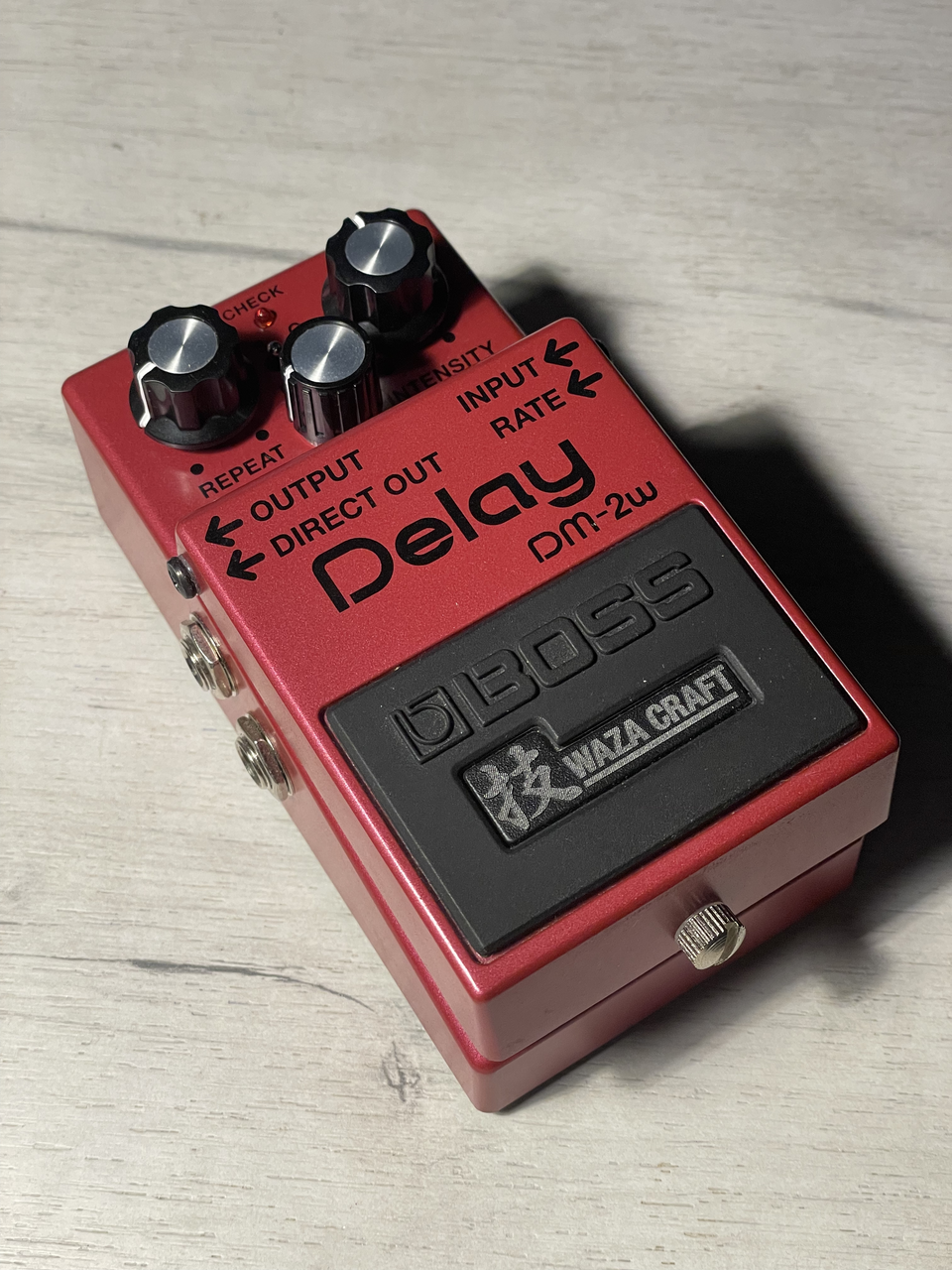
The Boss DM-2W Waza Craft is the answer to all that longing. Released in 2015 as part of Boss’s premium Waza Craft series — “Waza” being the Japanese concept of refined craft and technique — the DM-2W is not a boutique approximation of the DM-2 or a digital model of one. It is a faithful, all-analog reconstruction of the original circuit using carefully selected bucket-brigade components, built to the same standards as the Waza Craft CE-2W, BF-2, SD-1W, and BD-2W that preceded it. And then it goes further. The DM-2W adds a Custom mode that doubles the available delay time, a DIRECT OUT jack that enables true wet/dry signal splitting, and an expression pedal input for real-time control of delay time — features the 1981 original never had and couldn’t have, given the technological constraints of the era.
This is not nostalgia for its own sake. It is a genuinely useful delay pedal that happens to have an extraordinary sonic lineage.
From DM-1 to DM-2: Boss Shrinks the Universe
The history of the DM-2 begins with a limitation that its engineers turned into a feature. In 1981, Boss released the DM-2 as the successor to their earlier DM-1 — a less compact, costlier delay unit — and as part of their ambition to put genuine analog delay capability into a standard compact Boss enclosure for the first time. The challenge was physics: bucket-brigade delay (BBD) chips of the early 1980s had a finite number of sample-and-hold stages, and squeezing 300 milliseconds of delay time out of available hardware meant running the MN3005 chip’s 4,096 stages at the absolute edge of its engineering envelope.
The way Boss engineers achieved that 300ms ceiling mattered enormously to the sound. To maximize the available delay time from the chip, they had to limit the high-frequency content of the effected signal — effectively rolling off the top end of the delayed sound. The result was a characteristic warmth and darkness in the repeats that made the DM-2 immediately distinguishable from digital alternatives. Where digital delay preserved every harmonic detail of the original signal in each repeat, the DM-2’s repeats were softer, rounder, and increasingly dark with each iteration. They didn’t mirror the input; they transformed it. In 1982, Boss updated the circuit to use the MN3205 BBD chip instead of the original MN3005, but the sonic character remained essentially the same — the DM-2 sound was baked into the topology of the circuit, not just the specific chip used.
The DM-2 ran in production from 1981 to 1984 — just three years — before being discontinued when Boss’s own digital delays, the DD-2 and DD-3, arrived and redefined the category. Digital delay offered longer times, pristine repeats, and features the analog circuit simply couldn’t match. Players bought the digital units in enormous numbers, and the DM-2 became a footnote. Or so it seemed.
What happened instead was that the DM-2 became a legend. Players who kept their units through the 1990s and 2000s discovered that the “limitations” of the analog circuit — the darkening repeats, the slightly woozy self-oscillation under high feedback, the way the wet signal blended organically with the dry — were not flaws to be corrected but characteristics to be prized. Prices on the used market rose steadily. By the time Boss announced the DM-2W, pristine original DM-2 units were trading for $200-400 or more, with early MN3005-chip examples commanding even higher premiums among collectors.
Boss launched the DM-2W in 2015 as a flagship of the Waza Craft program. The internal circuit uses three CoolAudio MN3205SD bucket-brigade chips — modern components that maintain the character of the original MN3205 circuit — along with carefully selected analog components assembled in Japan. The result is a Standard mode that Boss describes as “true reproduction of the vintage DM-2 Delay sound,” paired with a Custom mode that extends capabilities without abandoning the analog character that defines the pedal.
Circuit Architecture and Controls
The DM-2W is a 100% analog design throughout. There is no digital processing in the audio path — the bucket-brigade delay line handles all signal storage and retrieval using charge-coupled analog stages. This is the fundamental reason the DM-2W sounds the way it does: the physics of BBD delay, including the high-frequency rolloff that defines the sonic character, is inherent to the circuit rather than a digital approximation of one.
The controls are elegantly minimal. Three knobs — REPEAT RATE, INTENSITY, and ECHO — handle the core parameters. REPEAT RATE sets the delay time, ranging from 20ms to 300ms in Standard mode. INTENSITY controls feedback: the amount of the effected signal that is fed back into the delay line, determining the number of repeats. At low settings you get a single echo; as INTENSITY increases you build layers of repeats; at maximum you approach self-oscillation, where the delay feeds back into itself and generates the swirling, escalating wash that defines one of analog delay’s most expressive and chaotic capabilities. ECHO controls the wet/dry mix of the effected signal relative to the direct sound.
The Mode switch toggles between Standard and Custom. Standard mode replicates the original DM-2 circuit and delay range (20-300ms). Custom mode shifts the available delay range to 40-800ms while also subtly changing the character of the repeats — Custom mode is, as Premier Guitar’s Charles Saufley noted in his 2015 review, “just a touch clearer and brighter — and in a good way that doesn’t undo the delicious, dark essence of the analog repeats.” Custom mode also responds differently to high-INTENSITY settings: the self-oscillation in Custom mode is particularly expressive and, in Saufley’s words, generates “organically swelling self-oscillation and ringing overtones.” The two modes are genuinely different voices, not just different time ranges.
Beyond the three knobs and Mode switch, the DM-2W adds two connectivity features the original lacked entirely. The DIRECT OUT jack outputs the dry signal independently of the main OUTPUT jack, which carries the wet (effected) signal. This enables a true wet/dry rig setup: feed the direct signal to one amplifier and the effected signal to another, keeping the original dry guitar tone completely unprocessed while the delay signal occupies a separate sonic space. Many experienced players consider this the DM-2W’s most practically significant addition — wet/dry rigs have long been the province of expensive racks, and the DM-2W puts the capability in a standard Boss compact. The RATE jack accepts a TRS expression pedal (Boss EV-5 recommended) and maps to delay time, allowing real-time continuous control of the REPEAT RATE with your foot. Sweeping delay time while notes are sustaining produces pitch-bending effects as the BBD circuit responds to the changing time parameter.
Full Specifications
| Parameter | Specification |
|---|---|
| Type | Analog BBD Delay (Waza Craft) |
| Delay Time — Standard Mode | 20 ms to 300 ms |
| Delay Time — Custom Mode | 40 ms to 800 ms |
| Controls | REPEAT RATE, INTENSITY, ECHO, Mode switch (Standard/Custom) |
| Connectors | INPUT (1/4″), OUTPUT (1/4″), DIRECT OUT (1/4″), RATE (1/4″ TRS expression), DC IN |
| Input Impedance | 1 MΩ |
| Output Impedance | 1 kΩ |
| Nominal Input/Output Level | –20 dBu |
| Recommended Load Impedance | 10 kΩ or greater |
| Current Draw | 35 mA at 9V DC |
| Battery Life (Alkaline) | Approx. 15 hours |
| Power | 9V battery or PSA series adapter |
| Bypass Type | Buffered bypass |
| Dimensions | 73 mm W × 129 mm D × 59 mm H (standard Boss compact) |
| Weight | 460 g (1 lb 1 oz) with battery |
| Manufacture | Japan (Waza Craft) |
| Warranty | Boss 5-year |
| Street Price (new) | ~$149–176 USD |
| Street Price (used excellent) | ~$100–140 USD |
Famous Players: Honest Accounting
Of The Edge, David Gilmour, John Frusciante, Andy Summers, and Steve Vai, only one holds up to primary-source verification for the original DM-2, and none are confirmed DM-2W users in a primary-source documented live or studio rig.

The Edge’s documented delays are the Electro-Harmonix Deluxe Memory Man and the Korg SDD-3000 digital delay, along with various other rack units he has used across U2’s career. His layered, rhythmically synchronized delay sound is almost entirely a product of digital delay architecture. No primary source — Premier Guitar Rig Rundowns, interviews, gear documentation — places a Boss DM-2 or DM-2W in his rig.
David Gilmour’s primary delay tools across his Pink Floyd and solo career are tape-based units — the Binson Echorec, the Roland RE-201 Space Echo — and in the digital domain, the Boss DD-2. A Boss DM-2 does not appear in any primary-source documentation of his signal chain.
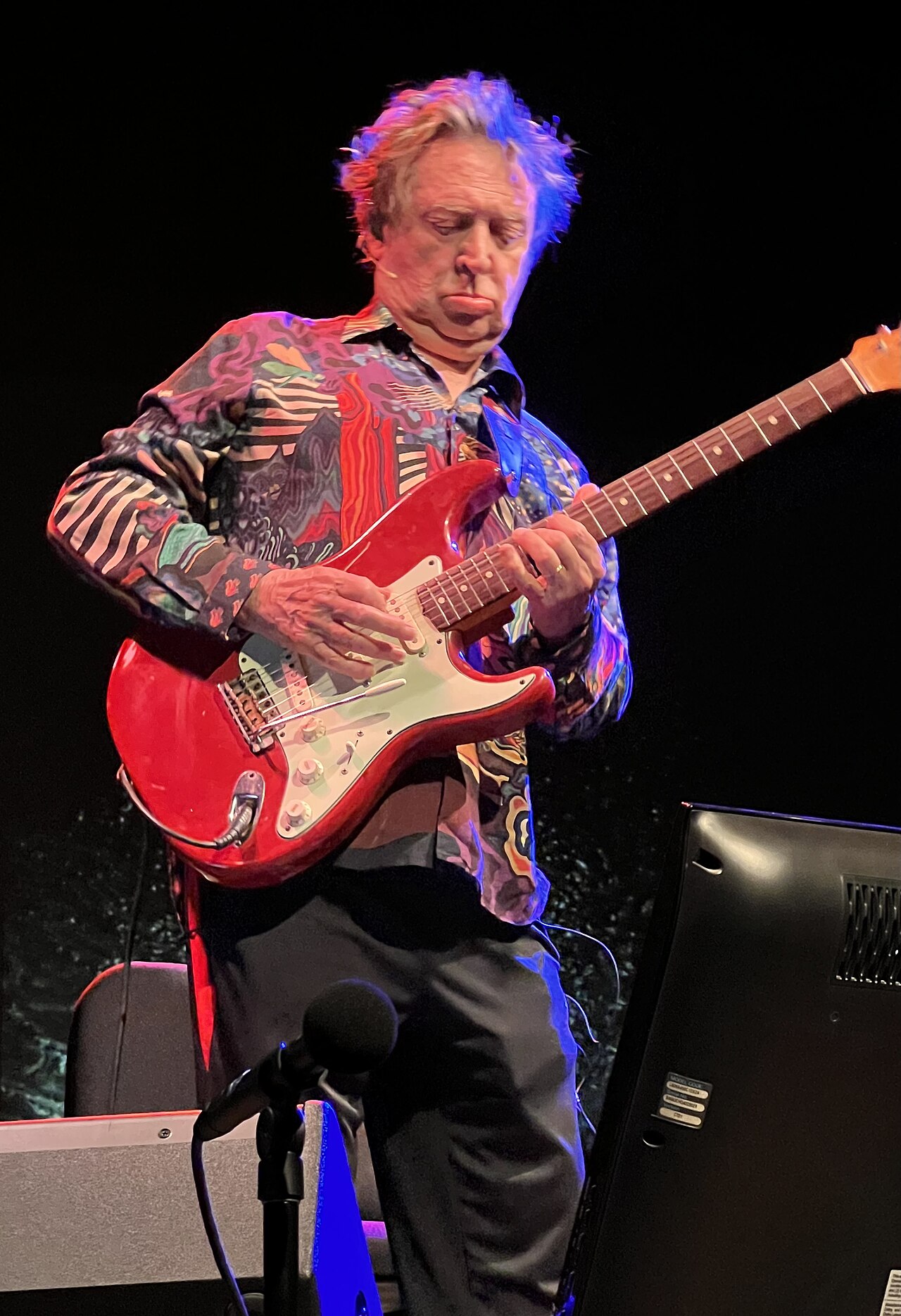
Andy Summers’s iconic Police-era delay sound came primarily from a Maestro Echoplex EP-2 tape echo, which was a constant fixture on his stage rig. His Pete Cornish-built pedalboard was well-documented and included no DM-2.
Steve Vai has demonstrated the DM-2W in Boss-related video content and has publicly spoken positively about analog delay. However, no primary-source Rig Rundown or confirmed live documentation places the DM-2W as part of his active touring rig.
John Frusciante — Boss DM-2 Confirmed
The one solid connection among the suggested artists belongs to John Frusciante. During the Stadium Arcadium World Tour in 2007, Frusciante replaced his DigiTech PDS-1002 delay with a vintage Boss DM-2 — the original 1981-1984 version, not the DM-2W (which would not exist for another eight years). This is documented via Equipboard’s community records and multiple fan and gear documentation sources from that tour. His use of the DM-2 was consistent with his approach to analog signal chains throughout his career: dense, harmonically rich textures built from vintage components rather than pristine digital clarity. The DM-2’s dark, softly degrading repeats suited the psychedelic elements of Stadium Arcadium’s guitar work, particularly the studio and live layering on tracks that required delay to blend rather than assert itself distinctly in the mix.
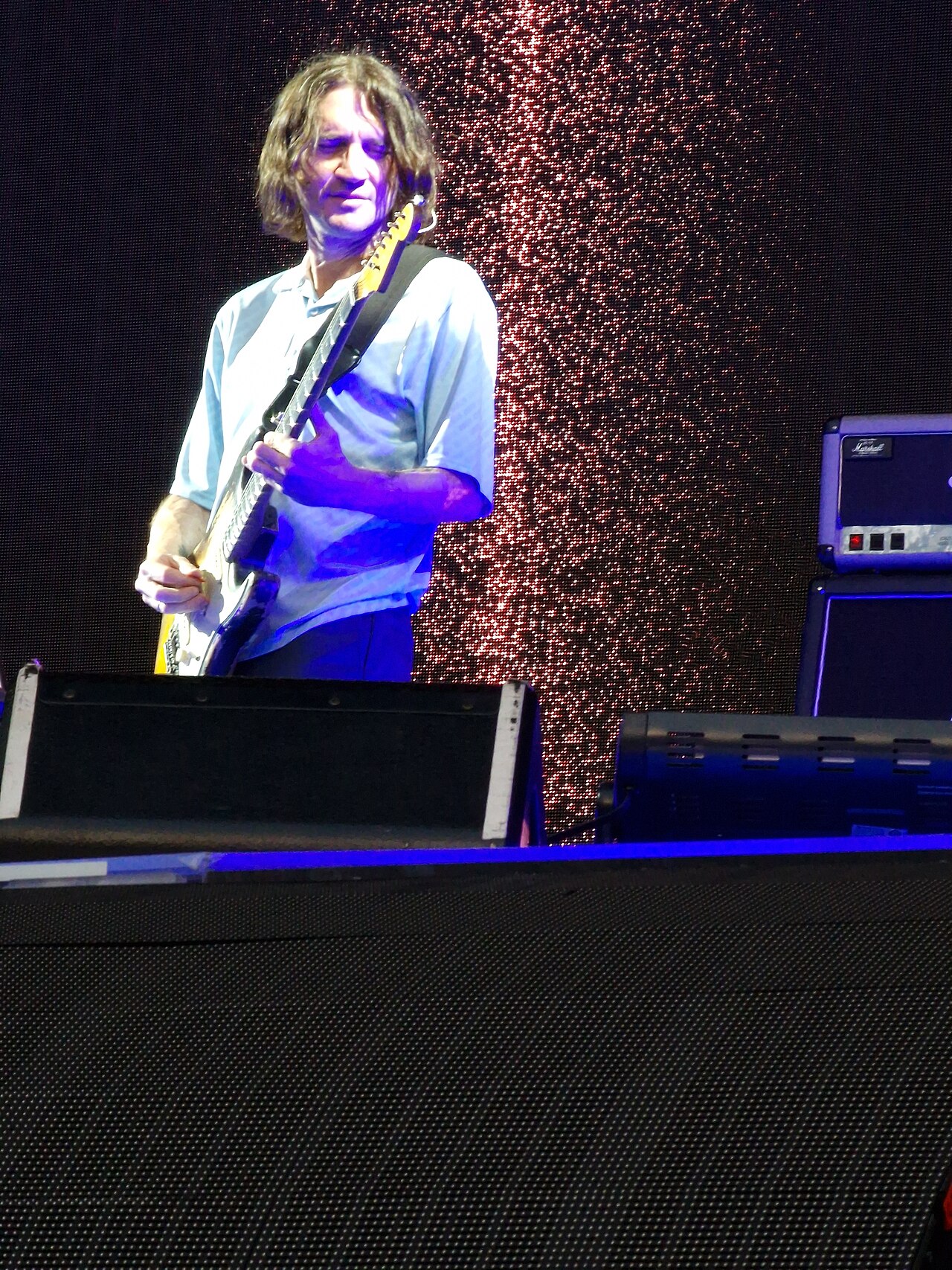
It’s worth noting that the DM-2W was designed specifically to capture what Frusciante and thousands of other players were chasing in original DM-2 units. That he was actively using an original DM-2 in 2007 — three decades after the pedal’s discontinuation — speaks directly to the gap the DM-2W was built to fill.
The Broader DM-2 Community
The Equipboard database documents over 60 professional artists using the DM-2W, and roughly an equivalent number using original DM-2 units. Without individually verifying each per primary source, the community documentation gives a picture of the DM-2’s broad footprint across indie, alternative, post-rock, and experimental guitar. The DM-2’s characteristic warmth makes it particularly popular in contexts where delay should serve the song rather than perform — where echoes should feel like part of the room rather than a separately processed effect laid on top.
The Sound: What Makes BBD Delay Different
Understanding why the DM-2W sounds the way it does requires a brief note on how bucket-brigade delay physically works. A BBD chip is a series of capacitors arranged like stages in a pipeline — audio samples flow through them one step at a time, controlled by a clock signal. The delay time is determined by how fast the clock runs: faster clock, shorter delay; slower clock, longer delay.
The critical consequence is that the audio in a BBD circuit has bandwidth limitations — the high frequencies that a digital delay would faithfully capture and reproduce at every stage are instead gradually filtered by the analog circuit. Each pass through the chain adds a subtle low-pass filtering effect, which is why DM-2 repeats grow progressively darker and warmer with each successive echo. It is not a flaw the designers were unable to eliminate. It is physics, and the particular physics of the MN3005 and MN3205 chips — with their 4,096 stages running at the edge of their capabilities to achieve 300ms — produced a specific character that players found musically superior to digital clarity for many applications.
In Standard mode, the DM-2W reproduces this character faithfully. The first repeat is noticeably warmer and slightly darker than the dry signal. By the third or fourth repeat, the echoes have softened considerably and begin to blend into the overall sound rather than competing with it. This is the organic decay behavior that analog delay advocates describe as “breathing” — the delay feels like part of the performance rather than a separate layer of processing.
Custom mode shifts the operating parameters to achieve 800ms, with a somewhat cleaner and brighter repeat character. The high-frequency content in Custom mode repeats is better preserved, producing echoes that are more intelligible at longer delay times and more useful for applications where definition matters — long ambient trails, complex melodic delay lines — without abandoning the fundamental warmth of the analog circuit.
Tone Recipes and Settings
1. Slapback Rockabilly — Standard Mode, Short and Punchy
REPEAT RATE: 9 o’clock (20-60ms range). INTENSITY: 8-9 o’clock (single repeat, minimal feedback). ECHO: 11 o’clock (moderate wet presence). Standard mode. A single dark slap that sits just behind the pick attack, adding perceived space and dimension without cluttering single-note lines. Works beautifully into a clean Fender-style amp. The DM-2W’s warmth prevents this setting from sounding clinical — the repeat falls away naturally rather than cutting off abruptly.
2. Classic Analog Wash — Standard Mode, Mid-Range Depth
REPEAT RATE: noon (150-180ms). INTENSITY: 11 o’clock (3-4 audible repeats). ECHO: noon. Standard mode. The foundational DM-2 sound. Clean, warm echoes with progressive darkening that sit organically behind the dry signal. Set the ECHO level so the repeats are present but not competing — the DM-2W works best when the delay is felt as much as heard. This setting suits rhythm work, arpeggiated playing, and most melodic contexts where delay should add space without asserting its own rhythmic identity.
3. Frusciante-Style Psychedelic Texture — Standard Mode, Long and Dense
REPEAT RATE: 2-3 o’clock (250-290ms). INTENSITY: 2-3 o’clock (high feedback, approaching buildup). ECHO: 1-2 o’clock (prominent in mix). Standard mode. Multiple layered repeats that build on each other and progressively darken, creating a dense cloud of analog echo. At these settings the DM-2W produces the kind of textural layering that made the original DM-2 valuable for psychedelic and experimental players. Works best when played into a slightly saturated amp tone so the individual repeats blur into each other. Avoid picking too densely — the DM-2W rewards patience and space.
4. Ambient Trails — Custom Mode, Long Decay
REPEAT RATE: 2-3 o’clock (500-700ms). INTENSITY: 11-noon (4-6 repeats). ECHO: 10-11 o’clock (low-moderate presence). Custom mode. Long trailing echoes with more preserved high-frequency content than Standard mode at equivalent settings. Useful for building ambient textures behind sustained chords or single-note lines. The 800ms ceiling in Custom mode enables rhythmic delay applications at tempos below approximately 72 BPM — set REPEAT RATE to match dotted eighth or quarter note values at your song’s tempo.
5. Self-Oscillation Dive — Custom Mode, Maximum Feedback
REPEAT RATE: noon. INTENSITY: fully clockwise. ECHO: noon. Custom mode. Push INTENSITY to maximum and the DM-2W enters self-oscillation — the delay feeds back into itself, building in intensity with each cycle. In Custom mode this process is more controllable and longer-sustaining than Standard mode’s self-oscillation, which tends to escalate more rapidly. Sweep REPEAT RATE during sustained self-oscillation to shift the pitch of the oscillating feedback. This is a performance technique — approach it with intention and kill the signal before it overwhelms your amp. Use a volume pedal in the signal chain if you plan to deploy this effect live.
6. Wet/Dry Two-Amp Setup — Using DIRECT OUT
Connect your guitar to the DM-2W INPUT. Run the OUTPUT to your “wet” amplifier and the DIRECT OUT to your “dry” amplifier. Set ECHO to 3 o’clock on the wet amp (prominent effect). Set your dry amp to your preferred clean tone. The dry signal passes through the DIRECT OUT unprocessed — no buffering artifacts, no wet signal bleed. The two amplifiers then reproduce the complete guitar signal with delay occupying a physically separate acoustic space. This setup, previously achievable only with dedicated true wet/dry switching systems or expensive rack rigs, is now built into the DM-2W at the hardware level.
Comparisons: How the DM-2W Fits in the Delay Landscape
The DM-2W’s closest natural competition is the MXR M169 Carbon Copy Analog Delay. The Carbon Copy is also a 100% analog BBD delay, similarly priced, and similarly revered for warm, organic repeats. The primary differences are practical: the Carbon Copy offers a single mode with delay times up to 600ms and includes a modulation setting that adds subtle pitch wobble to the repeats (vibrato-like modulation that can suggest tape flutter). The DM-2W matches the Carbon Copy’s warmth in Standard mode but offers the expanded Custom mode, the DIRECT OUT wet/dry capability, and the expression pedal input for real-time time control. The Carbon Copy includes a true bypass option; the DM-2W uses buffered bypass. Players who want modulation on their analog delay repeats should consider the Carbon Copy or a separate modulation pedal after the DM-2W; players who want wet/dry splitting or expression control should look at the DM-2W.
The Electro-Harmonix Deluxe Memory Man is a different animal — larger, more expensive, and considerably more featureful, with an onboard chorus/vibrato modulation section and delay times that can extend beyond a second depending on the version. The Memory Man’s BBD character is distinct from the DM-2W’s: warmer and slightly murkier in the low end, with modulation as a core feature rather than an option. The DM-2W is more compact, less expensive, and more focused. For players who want the pure analog delay experience without modulation complexity, the DM-2W is often the better choice. For players who want the modulated shimmer that defines The Edge’s early U2 tone, the Memory Man addresses that requirement directly.
Against Boss’s own DD-3 Digital Delay, the DM-2W represents a fundamental sonic philosophy, not just a feature comparison. The DD-3 offers pristine, transparent repeats with delay times extending to 800ms and a more comprehensive feature set at a comparable price. Players who need precise, rhythmically locked delay — tempo-synced to a setlist, repeats that maintain exact clarity through many iterations — will find the DD-3 more useful. Players who want the organic warmth of analog repeats and the progressive darkening that gives BBD delay its distinctive character will find the DM-2W irreplaceable. Many players own both: DD-3 for rhythmic precision, DM-2W for tonal texture.
Compared to the vintage Boss DM-2 itself, the DM-2W competes remarkably well on price. Good condition original DM-2 units have traded at $200-400 or higher, with premium examples exceeding that range. The DM-2W at $149-176 new is cheaper than a pristine original and adds Custom mode, DIRECT OUT, and expression input that the original never had. For players whose primary goal is the DM-2 sound rather than the DM-2 artifact, the DM-2W is the logical choice.
Buying Guide and Ownership Notes
The DM-2W is in production as of 2026 and available new from authorized Boss dealers. Street prices have settled in the $149-176 range — significantly below the original $229 launch price — making this one of the more accessible Waza Craft pedals. Used examples in excellent condition typically sell in the $100-140 range, having depreciated predictably from the original retail price. Unlike some vintage pedals where specific manufacturing variants carry meaningful sonic differences, the DM-2W is a single-circuit design with no known variants worth premium pricing.
The 35mA current draw is moderate and compatible with most power supplies, including daisy-chain setups — far less demanding than the 60-65mA required by the BF-3 and DC-2W. The 15-hour alkaline battery life is generous for a BBD circuit.
One practical consideration: the DM-2W uses buffered bypass, not true bypass. For most signal chains this is irrelevant or beneficial — the Boss buffer maintains signal integrity over long cable runs and is transparent enough to be imperceptible in most contexts. However, players running germanium fuzz pedals should place those pedals before the DM-2W in the signal chain. Germanium fuzzes (including some vintage Big Muffs, Fuzz Faces, and similar designs) interact with the impedance characteristics of the input stage they see, and the DM-2W’s 1MΩ input impedance — while standard for Boss compacts — presents a different loading characteristic than plugging directly into an amp. Running germanium fuzz after the DM-2W in the chain avoids this issue entirely.
For wet/dry rig users: note that the DM-2W’s DIRECT OUT outputs the dry signal without passing through the delay circuit at all. This is not simply a mix-to-zero bypass — it is a genuine dry output independent of the main OUTPUT. The OUTPUT jack carries the wet signal. In a wet/dry configuration, the signal on DIRECT OUT is processed by the DM-2W’s input buffer but is otherwise untouched. This is the cleanest implementation possible short of true bypass with a hardware Y-split.
Signal chain placement: delay pedals generally go late in the chain — after distortion, overdrive, compression, modulation, and wah — so that the repeats carry the full processed sound rather than repeating a dry signal that then gets processed differently on each iteration. Some players deliberately place delay before distortion for ambient swell effects, but the standard position is near the end of the chain, before reverb if reverb is present.
Frequently Asked Questions
What is the difference between Standard and Custom mode?
Standard mode replicates the original DM-2’s circuit and delay range (20-300ms), with the warmer, darker repeat character that made the original famous. Custom mode extends the delay time to 800ms and produces slightly clearer, brighter repeats while maintaining the fundamentally analog character. Custom mode also responds differently to high-feedback settings — the self-oscillation behavior is more gradual and controllable in Custom mode. Both modes use the same three-knob interface; only the Mode switch changes.
Is the DM-2W an exact replica of the original DM-2?
In Standard mode, yes — Boss designed Standard mode to faithfully reproduce the DM-2’s original sound. The internal circuit uses modern CoolAudio MN3205SD BBD chips rather than the original MN3005 or MN3205, but the circuit topology and character are preserved. The DM-2W adds Custom mode, DIRECT OUT, and the expression input as additions over the original, not replacements for its core sound.
Does the DM-2W have true bypass?
No. The DM-2W uses buffered bypass, which is standard across the Waza Craft delay lineup and consistent with the original DM-2’s design. The Boss buffer is transparent and maintains signal integrity over long cable runs. For players using germanium fuzz pedals, place those before the DM-2W in the signal chain.
What does the DIRECT OUT jack do?
The DIRECT OUT jack outputs the dry (uneffected) signal, while the OUTPUT jack carries the wet (effected) signal. Using both jacks enables a wet/dry two-amplifier setup: one amp receives the pure dry signal, the other receives the delay-processed signal. The OUTPUT jack used alone gives the standard wet/dry mix controlled by the ECHO knob. The DIRECT OUT alone gives you a clean, buffered dry signal with no delay effect whatsoever.
Can I use the DM-2W for bass guitar?
Yes. The DM-2W’s 1MΩ input impedance and analog circuit handle bass frequencies cleanly. The DM-2 was used on bass in various studio contexts, and the DM-2W extends this capability. The DIRECT OUT is particularly useful for bass wet/dry rigs — keep the bottom end clean on the dry amp and let the delay sit in the top portion of the spectrum on the wet amp. Standard mode’s warmth and Custom mode’s extended range both suit bass applications.
What’s the difference between the DM-2W and a vintage DM-2?
Sonically, Standard mode closely replicates the vintage DM-2 character. The DM-2W adds Custom mode (40-800ms), DIRECT OUT (wet/dry splitting), and the RATE expression pedal input — none of which exist on the original. Practically, original DM-2 units in good condition now trade at $200-400+, while the DM-2W is available new for $149-176. For players who want the sound rather than the vintage artifact, the DM-2W is the rational choice. For collectors, the original’s MN3005 chip (first production run) represents a specific piece of electronics history with its own appeal.
How does the DM-2W compare to the Boss DD-3?
Fundamentally different tools. The DD-3 is a digital delay with transparent, pristine repeats, precise delay timing, and extended delay times (up to 800ms). It excels at rhythmically locked applications and situations where repeat clarity is essential. The DM-2W is an analog delay with warm, organically degrading repeats that become progressively darker. It excels at tonal texture, ambient application, and situations where delay should blend rather than assert. Many professional players use both — a digital delay for precise rhythm applications and an analog delay for texture and character.
Does the DM-2W work well for self-oscillation effects?
Yes, and it is one of the DM-2W’s notable strengths. Setting INTENSITY to maximum causes the delay to feed back into itself, building escalating washes of analog echo. Custom mode’s self-oscillation is more gradual and controllable than Standard mode’s. Sweeping the REPEAT RATE knob or using an expression pedal on the RATE input during self-oscillation produces pitch-shifting in the feedback — a performance technique that ranges from subtle pitch-bending echo to extreme noise. This effect cannot be turned off once initiated without either reducing INTENSITY or cutting the signal at a volume pedal; plan accordingly.
The Boss DM-2W occupies a specific and irreplaceable place in the delay landscape. It is not the most versatile delay on the market — the DD-3 offers more features, and boutique digital delays offer tap tempo, modulation, multiple modes, and MIDI. It is not the cheapest — the MXR Carbon Copy competes directly at a similar price point. What the DM-2W offers, specifically and without compromise, is the analog BBD delay sound that defined an era of guitar playing, rebuilt with modern manufacturing quality and practical modern features, made in Japan to the standards that Waza Craft implies. For players who have chased this sound through digital approximations and found them wanting, or who have paid collector prices for original DM-2 units, or who simply want a single great analog delay that will spend decades on their pedalboard, the DM-2W is exactly what it needs to be.
Image credits
- Andy Summers: Drussel1, Wikimedia Commons, CC BY-SA 4.0.
- John Frusciante: Hel Davies, Wikimedia Commons, CC BY-SA 2.0.
- The Edge: iinchicore, Wikimedia Commons, CC BY-SA 4.0.
- Top image: Boss DM-2W, photographed 4 November 2023. Photo: AliceVinnik. Source photograph · CC BY-SA 4.0. Full source frame resized by Wikimedia Commons to 960 × 1280; no cropping or retouching by GuitarGangsters. Web version: CC BY-SA 4.0.
Latest News
Related
On This Day
Monday 9 November
From this week: