
Tal Farlow Guitars & Gear: The Complete Guide to The Octopus of Jazz Guitar
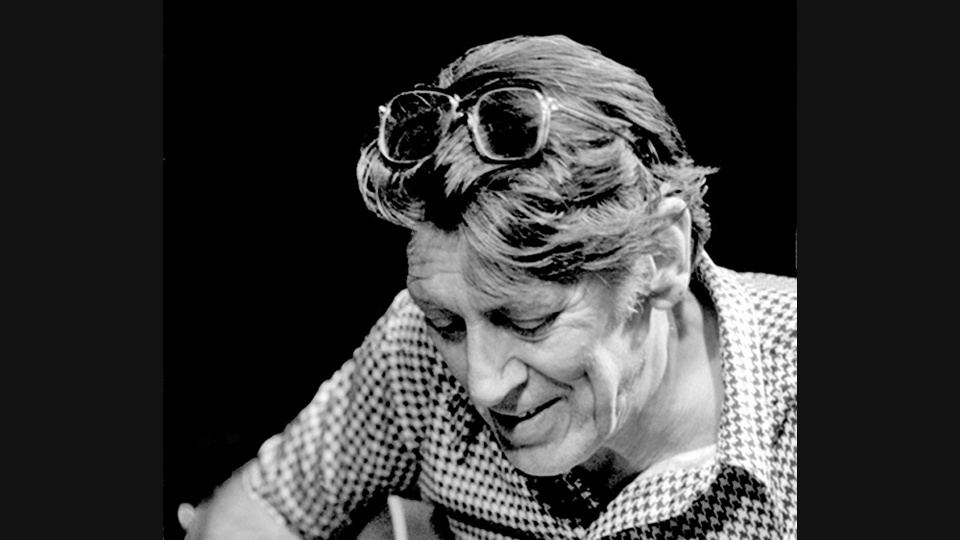
He taught himself guitar at twenty-two by learning every Charlie Christian solo by ear.
Talmage Holt Farlow was born June 7, 1921, in Greensboro, North Carolina. He had trained as a sign painter — his only professional training, requested specifically on the night shift so he could listen to big band standards on the shop radio. He heard Charlie Christian on a Benny Goodman broadcast and picked up the guitar. A year later he was playing professionally. A year after that, musicians were talking about him as one of the most extraordinary jazz guitarists alive.
His hands were the first thing anyone noticed. Large, with an enormous span — he could reach intervals that most guitarists could not approximate. His nickname was “The Octopus.” Jim Hall said of him: “When I hear him play, my whole life flashes in front of me. He once told me that being a professional musician wasn’t a job for him — it was fun. But I could never practice enough hours to do what he does. He’s the most complete musician on guitar I know.”
Jim Hall was also the person who called Joe Pass “the most complete jazz guitarist ever.” Hall’s two most complete assessments point to the two guitarists who bracket the development of jazz guitar solo vocabulary: Pass for harmonic and architectural completeness, Farlow for improvisational speed, technical innovation, and the specific quality that music historian Stuart Nicholson captured precisely: “In terms of guitar prowess, it was the equivalent of Roger Bannister breaking the four-minute mile.”
He retired in 1958. He became a sign painter again, in Sea Bright, New Jersey. He played occasional local gigs. He came back occasionally. He was better than ever each time he came back.
His primary guitar was the Gibson ES-350 — he was known as “The Gibson Boy” as he became famous. Gibson approached him in 1960 to be one of three jazz guitarists for whom signature models would be designed. The Gibson Tal Farlow model appeared in 1962. He used one prototype for nearly thirty years. The neck was so worn when students came for lessons in the 1980s and 1990s that it looked like it had scooped frets.
Background: Greensboro, Red Norvo, Sign Painting, and Returns
Talmage Holt Farlow grew up in Greensboro, North Carolina, and trained as a sign painter. His musical life began in earnest when he heard Charlie Christian’s electric guitar work on Benny Goodman recordings — the same recordings that launched a generation of jazz guitarists. He taught himself to play by learning Christian’s solos note for note, and by his own account was playing professionally within a year of picking up the guitar, at the age of twenty-three.
His early career developed on the East Coast, absorbing the bebop innovations of Charlie Parker and Dizzy Gillespie at New York City nightclubs in the late 1940s. In 1945, while gigging with pianist Dardanelle Hadley’s trio, he bought his first significant instrument: a 1939 Gibson ES-250 with a Charlie Christian bar pickup. This guitar — the same model and pickup type that Christian had made famous — became the instrument on which Farlow developed his approach.
The Red Norvo Trio (1949-1953) with bassist Charles Mingus brought Farlow to wide attention. He caught the public’s attention in 1949 when he was in a trio with Red Norvo and Charles Mingus. The trio format — vibraphone, guitar, bass — placed Farlow’s guitar in a melodic and harmonic role without a chord-playing piano to provide harmonic context, demanding complete harmonic self-sufficiency. This environment developed the chord-melody and harmonic vocabulary that would define his approach.
He worked with Artie Shaw’s Gramercy Five in 1953, then led his own trio in New York. In 1958 he married and moved to Sea Bright, New Jersey, effectively retiring from professional music to return to sign painting. He played local gigs, taught students, and maintained a private musical life separate from the jazz world’s attention.
Gibson approached him in 1960 to design a signature model — one of only three jazz guitarists approached at that time (alongside Johnny Smith and Barney Kessel). The Gibson Tal Farlow appeared in 1962 and was in production through 1967. He returned to recording in 1976. A documentary film was released in 1981. He continued to perform occasionally through the 1990s, each return demonstrating undiminished technical capacity.
He died July 25, 1998, in Sea Bright, New Jersey, at seventy-seven years old.
Tone note: He retired to paint signs. He was already one of the most celebrated jazz guitarists in the world when he retired. He preferred the quiet life, the local gigs, the students. He kept playing at home — not practicing, playing. “He plays a lot at home,” Jim Hall said. “Plays, not practices.” The distinction is everything: not rehearsing a vocabulary but inhabiting a musical world. The practice produces the technique; the playing produces the music. Farlow was, according to everyone who knew him, continuously playing music in his house in Sea Bright even during his “retirement.” The music was always happening; the public presentation of it was intermittent by choice.
The Rig: Tal Farlow’s Guitars, Amps & Gear
Guitars: From ES-250 to Signature Model
1939 Gibson ES-250 (Charlie Christian Pickup) — The First Great Guitar
In 1945, when he was gigging around the East Coast with pianist Dardanelle Hadley’s trio — absorbing the bebop innovations of Charlie Parker and Dizzy Gillespie at New York City nightclubs — Farlow bought his first of many Gibson guitars, a 1939 ES-250 with a chocolate brown/golden sunburst finish and one Charlie Christian–style bar pickup in the neck position.
This was the guitar that Farlow would play on all the hallowed trio recordings he cut in 1950 and 1951 with Red Norvo and Charles Mingus. Before those recordings happened, though, the ES-250 underwent significant alterations by Los Angeles luthier Milt Owen at its owner’s request — the specific nature of these alterations reflecting Farlow’s lifelong habit of tinkering with and modifying his instruments to suit his specific needs.
The ES-250’s specific qualities that suited Farlow’s developing approach: the Charlie Christian-style bar pickup’s warm, rounded tone (the same quality that Christian had found so saxophone-like); the large 17-inch archtop body’s natural resonance; and the full-body size’s sustain that supported the long, flowing bebop lines Farlow was developing. This was, effectively, the same instrument Charlie Christian had used — with the same pickup type — used to extend the Charlie Christian vocabulary into bebop territory.
Gibson ES-350 — “The Gibson Boy” Guitar
A short while after the last Red Norvo recordings, Farlow received a brand-new ES-350 directly from Gibson, initiating a relationship with the company that would last the rest of his life.
Tal Farlow was a Gibson ES-350 player during the fifties, and was referred to as “The Gibson Boy” as he became better known on the music scene. The ES-350 — Gibson’s higher-specification full-body archtop of the era — was the guitar on which Farlow built his reputation as the most technically extraordinary bebop guitarist of his generation.
The ES-350’s specifications that suited Farlow’s approach: a full 17-inch archtop body with a single rounded cutaway providing access to the upper register; the specific neck profile of the 1950s ES-350; and the 25.5-inch scale length (longer than Gibson’s standard 24.75-inch scale) that provided the string tension appropriate to Farlow’s specific picking and voicing approach.
The Gibson Tal Farlow signature model (1962) was based directly on the ES-350, maintaining the same body dimensions and scale length while introducing the unique visual features — the faux-scroll rounded cutaway, the distinctive four-point pickguard — that distinguished the signature model from its source.
Gibson Tal Farlow Signature Model (1962) — The Prototype He Used for Thirty Years
He had gained enough acclaim that in 1960 he was approached by Gibson to be one of the three important jazz performers for whom signature artist models would be designed.
The Gibson Tal Farlow appeared in 1962 — one of only three Gibson artist models of the era (alongside the Johnny Smith and Barney Kessel models). Its specific design features:
- Body: 17-inch full archtop, same dimensions as ES-350; laminated maple top reinforced with two parallel braces; laminated maple back and sides
- The faux-scroll cutaway: The most visually distinctive feature — the rounded cutaway horn is shaped to suggest a scroll (like a violin or cello scroll), a unique visual design that gives the guitar its immediate recognizability. This was one of the design elements Farlow contributed specifically
- Scale length: 25.5 inches — the longer scale that distinguished both the ES-350 and the Tal Farlow model from Gibson’s standard 24.75-inch scale
- Pickups: Gibson humbuckers — the PU-490N model in the production guitar, providing the warm, rounded tone of the jazz tradition
- Four-point pickguard: A distinctive pickguard design unique to this model
- Neck: Three-piece maple with rosewood fingerboard
Production was limited: the peak year was 1965 with only 77 instruments shipped. The total production run through 1967 was extremely small, making vintage examples exceptionally rare. Despite its mild commercial success due to the changing era of guitar preferences and Tal Farlow’s retirement, it remains a prized collector’s item today as the rarest of Gibson’s ’60s archtop models.
The prototype that Gibson made for Farlow’s own use — one of the earliest examples — became his primary guitar for nearly thirty years. A student who studied with him in the 1980s and 1990s described the condition: “He used that one prototype for near thirty years. The neck was so worn when I was with him it looked like it had scooped frets.” The wearing of the prototype neck — through continuous playing rather than display — is the most vivid testimony to how seriously Farlow played at home during his apparent “retirement.”
Farlow also developed a modified version using a Boss OC-2 Octave pedal: Jazz guitarist Tal Farlow utilized a Boss OC-2 Octaver, as highlighted in GuitarPlayer.com’s feature on his innovative gear choices. The article mentions the circuit board of the OC-2 being powered by the middle pickup of his 1960 Gibson Tal Farlow prototype. He had modified the guitar to internally power the OC-2 from the pickup circuit — a characteristic Farlow tinkering solution. The Boss OC-2 Octave provided the octave-doubling effect that artificial harmonics could produce acoustically but with electronic consistency.
Gibson ES-140 (1951, Custom Red Finish) — The Smaller Body
Farlow’s 1951 Gibson ES-140 with one-of-a-kind custom red finish is documented in Equipboard. The ES-140 is a smaller 3/4-size archtop — unusual for a professional jazz guitarist’s main instrument, but consistent with Farlow’s experimental approach to instruments. The custom red finish indicates he had it specifically finished to his preference.
The “Amp You Can Sit On” Invention
Beyond his guitars, Farlow’s tinkering extended to amplifier furniture: Another example of his ceaseless tinkering is the cushioned bar stool that he customized in the early Seventies by fitting it with a small Walter Woods amplifier and volume pedal. Farlow pitched a slightly more complex version of this “amp you can sit on” design to Gibson in the Sixties, but they passed on it. He went ahead and built one anyway, using it frequently at local New Jersey gigs.
A bar stool with an amplifier built into it. Gibson passed. He built it anyway and used it for local gigs. This is the definitive Farlow approach to every problem: if the commercial world won’t build what you need, build it yourself.
Complete Guitar List (Key Instruments)
- 1939 Gibson ES-250 (Charlie Christian bar pickup, modified by Milt Owen) — First significant guitar; Red Norvo trio recordings 1950-1951
- Gibson ES-350 (new, from Gibson directly) — Primary 1950s guitar; “The Gibson Boy” era; basis for signature model
- Gibson Tal Farlow prototype (1960) — Primary guitar for approximately thirty years; neck worn to near-scooped condition from continuous playing; Boss OC-2 internally powered from middle pickup
- Gibson Tal Farlow production model (1962-1967) — Limited production; rare vintage collector item; reissued 1993, 1996, 2015
- 1951 Gibson ES-140 (custom red finish) — Smaller 3/4-size archtop; custom finish
Amps: Gibson GA and Fender Deluxe, No Reverb
Gibson GA Series and Fender Deluxe/Twin — The Complete Amp Setup
His amps were a Gibson GA and a Fender Deluxe or Twin — all tube amps. He did not use reverb.
This minimalist statement — Gibson GA for warmth, Fender Deluxe or Twin for clean headroom, no reverb at all — is the complete Farlow amplification philosophy. No reverb. No processing. The dry, immediate quality of the guitar’s acoustic character translated directly to the speakers. In this respect his approach is identical to Charlie Christian’s foundational signal chain: guitar → amplifier, nothing added.
The Gibson GA amplifiers were tube combos produced in various configurations — the GA-20, GA-40, and similar models provided warm, slightly compressed tube character appropriate to archtop jazz guitar. Alongside or alternatively, Fender Deluxe or Twin Reverb combos provided the clean headroom and transparency that suited the full-body archtop’s natural resonance.
The “no reverb” specification is notable. Where most guitarists in this series use at least some reverb, Farlow’s dry approach emphasizes the natural acoustics of the instrument and the room. The full-body archtop’s own resonance provides spatial depth; artificial reverb would obscure the instrument’s specific acoustic character.
The customized bar stool with Walter Woods amplifier: the Walter Woods is a small, high-powered solid-state amplifier known for exceptional clarity and portability — a favorite of jazz double bassists. Farlow’s use of it in the custom stool for local New Jersey gigs reflects his practical approach: bring the amp inside the seat, solve the setup problem entirely.
No Effects (Except the Internally-Powered Boss OC-2)
Farlow’s effects use was minimal by any era’s standard. He did not use reverb. The only documented effect is the Boss OC-2 Octave pedal he had internally installed in his signature model prototype — powered directly from the guitar’s middle pickup rather than by an external power supply. This modification produced the electronic octave effect without the inconvenience of a floor pedal, and without disconnecting his preference for a simple guitar-to-amp signal chain.
He also employed artificial harmonics acoustically — touch harmonics produced by lightly touching the string with one finger while picking with another at a precise distance, producing harmonics without the OC-2. His use of the OC-2 may have been a more reliable alternative to the demanding physical technique of natural harmonics when speed or consistency was required.
Strings, Picks & Setup
The enormous hands: His large, quick hands earned him the nickname “The Octopus.” The physical reality of Farlow’s hand span — larger than typical — allowed him to reach voicings and intervals that required multiple fingering positions from most players. This physical capability was not irrelevant to his gear: the ES-350 and Tal Farlow’s 25.5-inch scale length provided the string spacing that his large hands could exploit fully, while a shorter scale or narrower fingerboard would have reduced the advantage.
The ukulele-mandolin origin: He learned chord melodies by playing a mandolin tuned like a ukulele. He said playing the ukulele was the reason he used the higher four strings on the guitar for the melody and chord structure, with the two bottom strings for bass counterpoint, which he played with his thumb.
This mandolin/ukulele origin for his guitar architecture is one of the most specific and revealing technical insights in his gear story. By instinct, he divided the guitar into two functional zones: the four treble strings (1-4) for melody and chords, the two bass strings (5-6) for bass counterpoint. This functional division — different from the standard approach of treating all six strings equally — produced the specific bass-plus-chord-melody voice independence that characterizes his playing.
Artificial harmonics technique: My personal favorite Tal Farlow sound is the use of artificial harmonics to play entire melodies. Years before Lenny Breau used plenty of special techniques with harmonics, Farlow pioneered that kind of sound in jazz guitar. Lenny Breau also stated in an interview that Tal Farlow was one of his main influences on guitar.
Touch harmonics — playing entire melodies in the bell-like harmonic register — is a technically demanding approach that most guitarists use sparingly. Farlow developed it as a primary melodic tool, not an occasional effect. The harmonic register’s specific quality — bright, clean, with a piano-like attack and quick decay — provides a completely different tonal color from normal fretting and was entirely Farlow’s own in the jazz context.
Percussion technique: Farlow employed artificial harmonics and tapped his guitar for percussion, creating a flat, snare drum sound or a hollow backbeat like the bongos. Body percussion on the guitar — tapping the body for drum sounds within a solo performance — anticipated the modern technique (Eddie Van Halen, tapping innovators of the 1980s) by decades, though in a completely different musical context and with a completely different musical purpose.
Playing Style & Tone Philosophy: The Roger Bannister of Jazz Guitar
Tal Farlow’s playing philosophy is the most technically innovative in the jazz guitar tradition before the electric guitar era’s full development. Music historian Stuart Nicholson captured it: “In terms of guitar prowess, it was the equivalent of Roger Bannister breaking the four-minute mile.” He did things on the guitar that musicians had not believed were possible.
The Charlie Christian Foundation Extended
Like Joe Pass, Farlow built directly on Charlie Christian’s foundation — he literally learned Christian’s solos note for note and used Christian’s guitar type (the ES-250 with Charlie Christian bar pickup) for his first significant recordings. But where Christian had established the single-string jazz guitar solo, Farlow extended the vocabulary into bebop’s more complex and faster harmonic territory.
Where guitarists of his day combined rhythmic chords with linear melodies, Farlow placed single notes together in clusters, varying between harmonically enriched tones. This “cluster” approach — placing multiple single notes in close temporal proximity to create a dense, harmonically complex effect — was a new vocabulary in jazz guitar improvisation.
The Speed and the Reach
Farlow’s large hands and the resulting reach allowed him to play voicings and runs at speeds that most guitarists of his era could not replicate. The nickname “The Octopus” was entirely earned: his hands spread across the fretboard in configurations that appeared physically impossible.
But speed for its own sake was not the point. His “edge” came from his unique approach and enormous hands (which both allowed for smooth lines and very unorthodox techniques.) Also heard on his recordings: some very unusual voicings and chord melody abilities for the time.
The “unorthodox techniques” reflect his origin as a self-taught musician: not trained in the conventional ways, he developed approaches that trained musicians would not have considered because they had been taught alternative methods. The large-hand voicings — intervals too wide for standard hand position — emerged naturally from his physical capability combined with his self-taught freedom from conventional technique constraints.
The Harmonic Innovation
Farlow’s artificial harmonics approach — playing entire melodies in the harmonic register — was genuinely novel in jazz guitar. Years before Lenny Breau used plenty of special techniques with harmonics, Farlow pioneered that kind of sound in jazz guitar. Lenny Breau also stated in an interview that Tal Farlow was one of his main influences on guitar.
The harmonic register’s specific qualities — the bell-like, pure tone, the piano-like attack with quick decay — provided a different tonal color from normal playing and created melodic lines with a specific character unavailable from standard technique. Before Farlow, harmonics were an occasional ornamentation; after him, they were a complete melodic approach.
The Retirement Philosophy
His decision to retire in 1958 — when he was already one of the most celebrated jazz guitarists alive — and become a sign painter again in New Jersey reflects a specific life philosophy: the music was always for the love of it, never primarily for commercial success or public recognition. When the commercial pressures became more than the pleasure, he retired. He continued playing at home, continued teaching, continued enjoying the music privately.
His student’s observation — “He used that one prototype for near thirty years. The neck was so worn it looked like it had scooped frets” — documents what retirement actually meant: not cessation but private continuance. He played every day. The worn neck is the evidence.
How to Approach Tal Farlow’s Style
The Guitar
A full-body Gibson archtop with the 25.5-inch scale length — the ES-350 or Gibson Tal Farlow signature model are the authentic choices.
- Gibson Tal Farlow (vintage, 1962-1967) — Extremely rare; the authentic instrument; reissues in 1993, 1996, and 2015 are more accessible
- Gibson ES-350 (vintage 1947-1956) — The guitar on which he built his reputation; same scale and similar construction
- Any large-body Gibson archtop with 25.5-inch scale — The scale length is specific to the Tal Farlow/ES-350 format and distinguishes it from the more common 24.75-inch Gibson scale
The Amp
Gibson GA series combo or Fender Deluxe/Twin — clean, tube-driven, no reverb.
| Control | Setting | Notes |
|---|---|---|
| Volume | Ensemble-appropriate clean | Farlow’s dry approach requires clean headroom; no reverb to mask articulation |
| Treble | 5–6 | The full-body archtop’s brightness naturally balanced; moderate treble preserves warmth |
| Bass | 5 | Natural response; the large archtop body has inherent bass extension |
| Reverb | None | “He did not use reverb” — the dry, immediate quality was fundamental to his approach |
Budget vs Authentic
Budget:
- Guitar: Any large-body hollow archtop with humbucker pickups; the ES-175 or Epiphone Sheraton provides comparable character at accessible price
- Amp: Fender Blues Junior or any clean tube combo; no reverb
- No effects pedals
Authentic:
- Guitar: Gibson Tal Farlow signature (vintage or reissue) with 25.5-inch scale
- Amp: Gibson GA series combo or Fender Deluxe Reverb (reverb off)
- No effects; if Boss OC-2 is desired for the harmonic octave effect, use it sparingly
The Technical Foundation
The mandolin/ukulele voice division: train yourself to think of strings 1-4 as melody/chord territory and strings 5-6 as bass counterpoint. This functional division — unusual in conventional guitar pedagogy — is the architectural basis of Farlow’s independent bass-plus-chord-melody approach.
The artificial harmonics: practice producing clean touch harmonics at the 12th and 7th fret positions above any fretted note. Develop the ability to play melodic phrases entirely in the harmonic register — not occasional harmonic touches but sustained harmonic melodies. This technique takes time to develop consistency but produces the specific “bell” quality that distinguishes Farlow’s sound from every other jazz guitarist.
The body percussion: tap the guitar body to produce light percussive sounds between melodic phrases in solo contexts. This technique provides rhythmic momentum in unaccompanied playing without distracting from the melodic line.
Influence & Legacy: The Reluctant Guitar God
Tal Farlow’s influence on jazz guitar is the influence of someone who demonstrated that the technical limit of the instrument had not yet been reached — and then retired to paint signs. Every jazz guitarist who worked in bebop after 1950 was influenced by what Farlow had demonstrated was possible.
The documented connections:
- Lenny Breau — Lenny Breau stated in an interview that Tal Farlow was one of his main influences on guitar; Breau’s signature artificial harmonics approach built directly on the Farlow foundation
- Jim Hall — “He’s the most complete musician on guitar I know”; Hall’s assessment from a peer and near-contemporary represents the highest available endorsement
- Attila Zoller — “When I first heard Tal Farlow — wow! I flipped. I had to listen very hard to figure out how he harmonized his lines. One night he showed me so much that I had to work for a year on it”
- The Gibson Tal Farlow signature model — One of three Gibson Artist Series models introduced in the early 1960s; the specific scroll-cutaway design remains visually distinctive
- Every bebop guitarist who absorbed the Red Norvo Trio recordings — The 1950-1951 Norvo-Farlow-Mingus recordings are foundational documents of bebop guitar in the trio format
- Ryan Adams — According to the booklet of his 2005 album “Cold Roses” and a BBC article, Adams used a Gibson Tal Farlow on that record. The signature model transcended the jazz context entirely
He retired to paint signs. He played at home every day until the neck wore to the scooped condition of thirty years of continuous playing. He came back occasionally. Each time he was better than the time before.
“He’s the most complete musician on guitar I know,” Jim Hall said.
The Octopus, in Sea Bright, New Jersey, painting signs and playing guitar at home, being the most complete musician Jim Hall knew. The prototype worn down to its wood. No reverb. No practice. Just playing.
Tone note: “He plays a lot at home. Plays, not practices.” Jim Hall’s distinction between playing and practicing is the most important piece of musical philosophy in this entire series. Practice is repetition in service of improvement. Playing is music for its own sake. Farlow’s decades of apparent “retirement” were decades of playing, not practicing. The worn frets are the evidence. The neck that looked scooped from use is the proof. He wasn’t maintaining a technique; he was living inside the music. There is no better gear story than that.
He taught himself guitar at twenty-two by learning every Charlie Christian solo by ear. A year later he was playing professionally. He used a Gibson ES-250 with a Charlie Christian bar pickup — the same guitar type and pickup type as his model.
Gibson gave him an ES-350. He became “The Gibson Boy.” In 1960 they approached him for a signature model. The Gibson Tal Farlow appeared in 1962 with the unique scroll cutaway and the four-point pickguard. He used one prototype for nearly thirty years until the neck looked like it had scooped frets.
He retired in 1958 to paint signs. He played at home every day. Jim Hall said he was the most complete musician on guitar Jim Hall knew. He came back occasionally and was better each time.
His amps were a Gibson GA and a Fender Deluxe or Twin. He did not use reverb. He invented the artificial harmonic melody before anyone else in jazz guitar. He built an amplifier into a bar stool. Gibson passed on the design. He built it anyway and used it for local gigs.
His nickname was The Octopus. It was exactly right.
If Tal Farlow’s Gibson archtop approach — the ES-350 and signature model, the no-reverb philosophy, the artificial harmonics innovation, the enormous-handed bebop vocabulary — has you exploring the jazz guitar tradition, check our complete guide to Joe Pass’s guitars and gear — whose chord-melody solo guitar architecture developed within the same tradition that Farlow’s bebop vocabulary established.
And for the next guitarist in this series — whose bebop vocabulary developed from a completely different personal narrative but within the same Charlie Christian foundation — don’t miss our breakdown of Pat Martino’s complete gear guide.
FAQ: Tal Farlow Guitars & Gear
- What guitars did Tal Farlow play?
- His guitar progression: a 1939 Gibson ES-250 with a Charlie Christian-style bar pickup (1945, used on the Red Norvo trio recordings 1950-1951, modified by LA luthier Milt Owen); a Gibson ES-350 received directly from Gibson (which made him known as “The Gibson Boy” in the 1950s); and the Gibson Tal Farlow signature model prototype (from approximately 1960, used for nearly thirty years until the neck was worn to near-scooped condition). He also owned a 1951 Gibson ES-140 with a custom red finish. The signature model was in commercial production from 1962-1967 with only 77 examples shipped at peak; it has been reissued in 1993, 1996, and 2015.
- What makes the Gibson Tal Farlow signature model distinctive?
- Several design elements unique to the model: the faux-scroll rounded cutaway (the cutaway horn is shaped to suggest a violin/cello scroll, visually unique among archtops); a distinctive four-point pickguard; the 25.5-inch scale length (longer than Gibson’s standard 24.75-inch scale, inherited from the ES-350); 17-inch full archtop body dimensions; Gibson humbucking pickups; and a five-piece curly maple neck. The production model was based on the ES-350 with these specific visual and specification changes that Farlow contributed. It remains one of the rarest Gibson archtop models from the 1960s Artist Series.
- What amplifiers did Tal Farlow use?
- Gibson GA series tube combos and Fender Deluxe or Twin Reverb combos. He did not use reverb — the dry, immediate signal chain was fundamental to his approach. He also built a custom “amp you can sit on” — a bar stool fitted with a small Walter Woods solid-state amplifier and a volume pedal — which he pitched to Gibson (they passed) and then built himself, using it at local New Jersey gigs.
- What was Tal Farlow’s artificial harmonics technique?
- Touch harmonics — lightly touching the string with one finger while picking with another at a precise distance to produce the harmonic frequency rather than the fundamental. Where most guitarists use this technique occasionally for decoration, Farlow developed it as a primary melodic approach, playing entire melodies in the harmonic register. The technique produces a bell-like, piano-like tone — pure, clear, with a quick attack and clean decay — entirely different from standard fretting. He pioneered this in jazz guitar before Lenny Breau, who cited Farlow as his primary influence for the harmonic approach. He also had a Boss OC-2 Octave pedal internally powered by the middle pickup of his signature model prototype for electronic octave effects.
- Why did Tal Farlow retire to paint signs?
- Because being a professional musician was, to him, supposed to be fun — and when it became more than he wanted it to be, he chose a quieter life. He married in 1958 and settled in Sea Bright, New Jersey, returning to sign painting. He continued playing at home every day, teaching students, and performing occasional local gigs. His student David described his condition: “He used that one prototype for near thirty years. The neck was so worn when I was with him it looked like it had scooped frets.” The worn neck is the evidence that “retirement” meant only the cessation of public performance, not of music. Jim Hall said of him: “He plays a lot at home. Plays, not practices.”
- What was Tal Farlow’s connection to Charlie Christian?
- Charlie Christian was Farlow’s primary inspiration for picking up the guitar. He heard Christian on Benny Goodman radio broadcasts and taught himself to play by learning every Christian solo by ear — the same approach documented for Wes Montgomery. For his first significant recordings (the Red Norvo Trio, 1950-1951), he used a Gibson ES-250 with a Charlie Christian-style bar pickup — the same guitar model and pickup type that Christian had used. He extended Christian’s single-string jazz guitar vocabulary into bebop territory, building directly on the foundation Christian had established rather than developing an alternative approach.
- How do I approach Tal Farlow’s guitar technique?
- A full-body Gibson archtop with 25.5-inch scale (Tal Farlow signature or ES-350); Gibson GA or Fender Deluxe amp; no reverb. The key technical foundations: (1) The mandolin/ukulele voice division — treat strings 1-4 as melody/chord territory and strings 5-6 as bass counterpoint (Farlow’s specific architectural approach derived from his early mandolin-tuned-like-ukulele experience). (2) Artificial harmonics as melody — practice producing touch harmonics at the 12th fret above any fretted note, then extend to melodic phrases entirely in the harmonic register. (3) Body percussion — tap the guitar body for light percussive effects in solo contexts. (4) The bebop vocabulary — learn the Charlie Christian solos by ear as Farlow did, then extend into bebop harmonic territory. Practice Lenny Breau’s recordings alongside Farlow’s to hear how the harmonic technique developed.