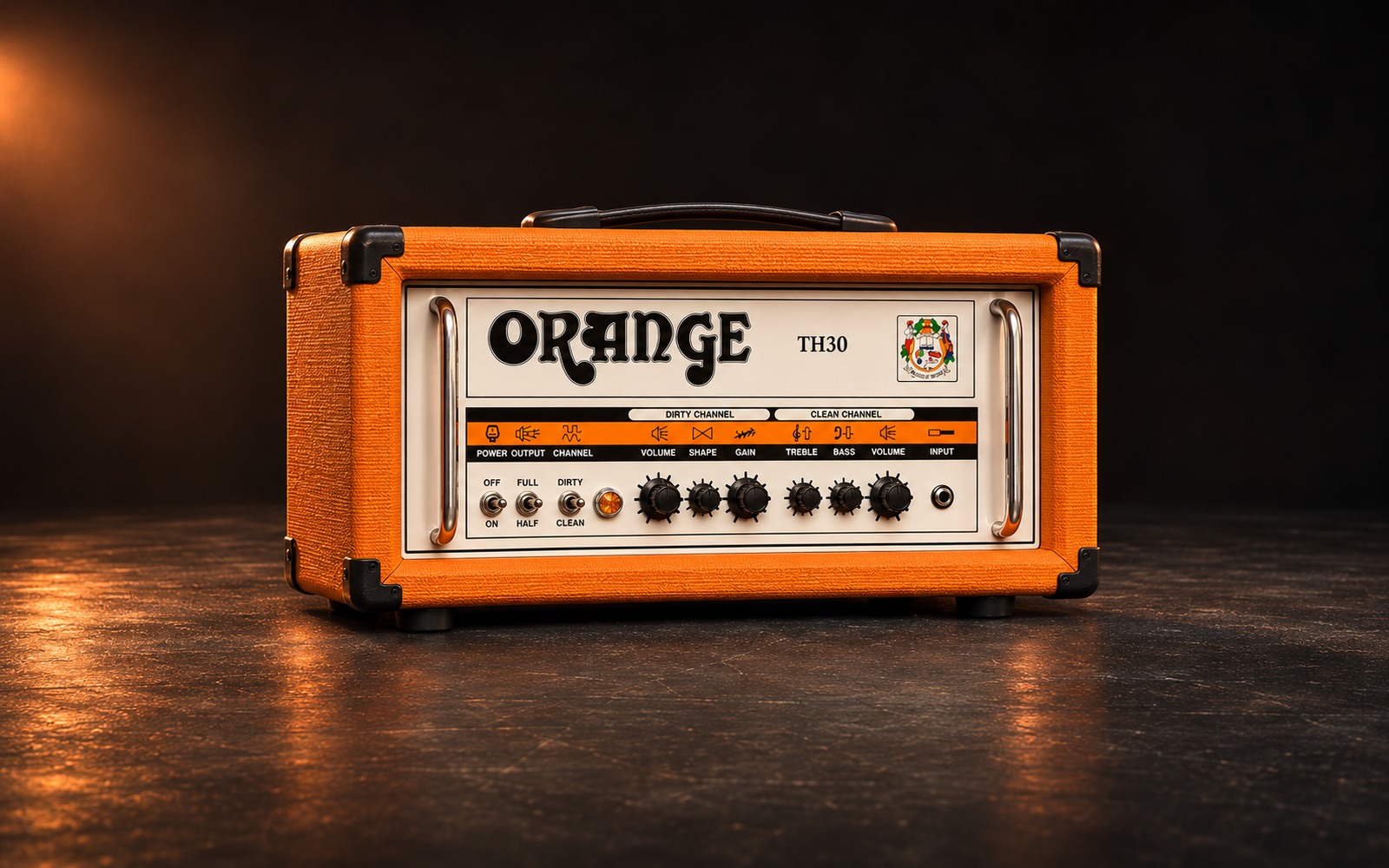
Orange TH30H: The Thunder Head That Does It All — From Sparkling Cleans to Stoner Metal in a Lunchbox
Orange TH30H: a 30W two-channel EL84 tube head with switchable power, Thunderverb Shape control, and range from sparkling cleans to stoner metal.
Most amplifier makers draw a line somewhere. Low-watt heads get clean headroom or they get gain — rarely both in useful quantities at gig-ready volumes. The Orange TH30H is the amp that broke that bargain. When Premier Guitar’s Jordan Wagner plugged in and ran the TH30 through its paces back in late 2010, he came away surprised: “I can’t think of too many amps with an EL84 power section that kick out vintage and modern stoner metal tones with equal aplomb, but the TH30 is certainly one of them.” That was the story then, and it’s the story now. Sixteen years in production, the TH30H has outlasted half a dozen Orange head launches, held its price remarkably steady, and built a quiet cult following among players who want an all-valve workhorse that doesn’t ask for a back injury to load it out.
The “TH” stands for Thunder — Orange’s naming nod to the company’s Thunderverb series. That lineage matters: the TH30H shares the Thunderverb’s signature Shape control on its Dirty channel, the most versatile single-knob EQ lever Orange has ever put in a production head. It also inherits the Thunderverb’s four-stage gain philosophy, crammed into a cabinet that you can lift with one hand. The result is an amp that can handle a single-coil Strat on clean duties in the first half of a set, then switch channels for a humbucker-into-overdrive crunch that sits in a full band mix without needing a graphic EQ to make it work.
This is not a Tiny Terror with more power. It’s not an OR15H with a second channel grafted on. It’s the amp that completed Orange’s moderate-wattage lineup and gave players who wanted more tonal flexibility somewhere to land after the single-channel offerings ran out. If you’re sizing up the TH30H in 2026 — new, used, or trying to decide whether it fits your rig — this is the guide that gives you the full picture, with honest answers about who actually plays one.
Where the TH30H Came From: Orange’s Low-Wattage Renaissance
The modern Orange story is really two stories. The first runs from Cliff Cooper’s 1968 West End shop through the glorious chaos of early-1970s British hard rock — the OR120s, the Matamp collaboration, the OR80s, the bands who made an orange cabinet with a woven basket-weave grille synonymous with volume and attitude. That chapter closed by the early 1980s, when Orange went quiet for nearly two decades.
The second story began in 1998 when Cooper relaunched the company with Ade Emsley designing a new circuit — the AD30, a 30W Class A EL84 head that found its way onto Jimmy Page’s 1999 Black Crowes tour stage and into the 2007 O2 Arena LED Zeppelin reunion. But the watershed moment was the Tiny Terror: a single-channel, 15W, two-EL84 lunchbox that debuted in 2005 and became one of Orange’s all-time bestsellers. Players discovered that small-box EL84 amplifiers from Orange had a character all their own — that compressed, bloom-heavy, harmonically saturated response that big-power EL34 heads simply couldn’t replicate at manageable volumes.
By 2009 and 2010, Orange had expanded the low-wattage line with the Rocker 30 and the AD30HTC, and Emsley had been working on a different problem: how do you give that EL84 character to a player who also needs a dedicated clean channel with real headroom? The existing options all compromised somewhere. The TH30 was Emsley’s solution, launching in late 2010 in both head and combo formats. It borrowed the Thunderverb’s Shape control, built a four-stage preamp into its Dirty channel, and added a genuine 2-band EQ to its Clean channel — all while keeping the control panel down to six knobs total. Orange’s genius has always been restraint, and the TH30 is a masterclass in it.
The “Thunder” designation was a deliberate signal. The Thunderverb was — and remains — Orange’s premium high-wattage flagship, available in 50W and 200W configurations. Putting “TH” on the 30-watt head wasn’t just marketing; it told players that the Dirty channel’s preamp voicing and the Shape control were genuine Thunderverb DNA, not a stripped-down approximation. In practice, players who come from a Thunderverb background find the TH30H immediately familiar on the dirty side, with the obvious trade-off of less headroom and a simpler feature set.
Full Specifications
A few things in that table deserve unpacking. The three-power-mode system is implemented in two stages: the front-panel three-way standby switch cuts from 30W to 15W as its middle position, while a rear-panel switch bypasses two of the four EL84s to drop the amp to 7W. The 30W-to-15W cut uses a different approach from the 7W rear switch — the latter physically removes two power tubes from the circuit, which changes the amp’s character, not just its loudness. At 7W, you get what Jordan Wagner described as a “Billy Gibbons-inspired overdrive that sliced and wailed with authority” — the remaining pair of EL84s working harder, saturating earlier, producing a noticeably different feel from the full-power setting. This is not a volume knob with extra steps. It’s a genuine three-personality amp.
The valve-buffered effects loop — maintained by the ECC81 — is a detail that matters for live rigs. A buffered loop keeps your signal strong through the send/return path, which matters especially with long cable runs or complex pedalboard setups. The loop is in series, so engaged or bypassed, there’s no blending option — what goes in comes back out. For time-based effects (delay, reverb, modulation) after the preamp, this is exactly what you want.
The Shape Control: The Most Important Knob on the Amp
Every Orange amp built around the Thunderverb design has a Shape knob on its Dirty channel, and understanding what it does unlocks the TH30H’s full range. The Shape control is a mid-sweep: per Orange’s TH30 manual it runs from all midrange at its minimum to all bass and treble with no midrange at its maximum. At the low end of the dial the mids surge forward, the amp gets more aggressive in the cut-through sense, harmonics bunch up in the presence zone, and lead tones start to project like a sharp stick. Turn it toward its maximum and the midrange is scooped away — you get that cavernous, American-voiced thickness. The extremes sound genuinely different.
The Shape knob is not a tone control in the traditional treble/bass/mid sense. It’s closer to a mid contour or presence sweep, and it operates differently from a three-band EQ. You can’t independently adjust bass and treble on the Dirty channel — there are none. You get Gain, Volume, and Shape. Three knobs, total. Orange’s philosophy is that if you’ve voiced the preamp correctly (and they have), a player doesn’t need six EQ points to find their sound. The Shape control gives you the bandwidth that matters most for electric guitar — the mid territory where guitars sit, fight with each other, and define their presence in a band mix — and lets you navigate it in one gesture.
In practice: most players land somewhere between 9 and 2 o’clock on the Shape for band settings. Below 8 o’clock the mids push so hard that solos start to feel compressed and nasal. Above 3 o’clock the scoop gets so deep that the amp sounds hollow and undefined in a low-mid-heavy mix. The sweet spots are wide. For scooped-stadium crunch, turn it up past 2 o’clock. For a cranked, cutting mid-forward blues-rock voice, back it off below 10 o’clock and let the EL84s do the compression work.
How the TH30H Sounds: A Character Analysis
The EL84 power section defines both channels, and it’s important to understand what that means before you compare the TH30H to any other Orange head. EL84s break up differently from EL34s and 6L6s. They’re smaller-plate, lower-voltage tubes that reach saturation at lower power levels — which is why they compress readily and produce that bloom-into-sustain response that makes players describe them as “musical” or “forgiving.” The trade-off is that they have less headroom and less of the tight, defined low end that larger tubes produce. At 30 watts through four EL84s, the TH30H has more headroom than an AC30 and more low-end definition than a Tiny Terror, but it will never feel like a 50W EL34 head in terms of punch and mass.
The Dirty channel opens with the classic Orange voicing: a bright, extended top end that never becomes harsh, a rounded and expansive low end that gives the tone its body, and a midrange that Jordan Wagner at Premier Guitar called “barking” — a distinctly Orange characteristic that comes from the preamp stage interaction with the Thunderverb-derived four-stage gain circuit. The four-stage cascade gives the Dirty channel more gain reserve than you’d expect at 30 watts. This is not a “crunch” amp — it’s a full-gain head that happens to come in a compact chassis. At moderate Gain settings with the Shape at noon, you get the classic Orange rock tone: meaty, focused, slightly dark, capable of everything from 1970s hard rock to grunge. Push the Gain above three-quarters and the amp enters modern territory — defined but saturated, the EL84 compression rounding off the attack peaks into a smooth, sustaining lead tone.
The Clean channel is the less-discussed side of the TH30H and arguably its most impressive achievement. Premier Guitar’s reviewer was “floored” by how closely it matched the feel of vintage non-master-volume amplifiers: “The punch and clarity reminded me of a healthy, early-’70s Marshall Super Lead, but melded with Orange’s bright top end and elastic low end.” That’s a specific description of a specific feel — the way a single-volume-knob amp gets richer and more responsive the more you push it, as if the amplifier is working with your playing dynamics rather than managing them. With a Stratocaster, “every playing nuance, right down to slight pick scrapes against the low-E-string wraps, was highlighted in full harmonic color.” This is a pedal platform and a clean-tone benchmark in the same package.
The one documented weakness is the clean-to-dirty volume balance. With the Clean channel’s Volume at 10 o’clock for a working stage level, the Dirty channel’s Volume has to sit at around 2 o’clock to match — and at that Volume setting, the Gain has to come down to preserve definition. Working around this requires either accepting that your dirty tone will be slightly less aggressive than the amp’s full range, or getting comfortable with a dedicated clean boost in the FX loop or in front of the amp to push the Dirty channel without cranking its own Volume. It’s a real-world issue, not a fatal flaw, but it’s worth knowing before you gig the amp.
Famous Players: What the Evidence Shows
The TH30H’s claimed artist roster in gear databases and manufacturer materials tends to recycle the same familiar Orange names. The names circulating are Jimmy Page, Jim Root, Brent Hinds, Omar Rodríguez-López, and Matt Pike. Here is what the evidence actually shows for the TH30H specifically.
Jimmy Page has no documented connection to the TH30H. His Orange history is the OR200 in 1971–1973 and the AD30 family from 1999 onward, documented on the 1999 Black Crowes tour and at the 2007 O2 Arena reunion. The TH30H was introduced in 2010, at which point Page had minimal public performance activity. No primary source — manufacturer page, rig rundown, interview, or photograph — places him on a TH30H.
Jim Root‘s Orange amps are the Rockerverb 100 (live) and the #4 Jim Root Terror (his own signature model). No primary source places him on a TH30H.
Brent Hinds‘s signature Orange is the Brent Hinds Terror — a separate lunchbox product, launched at NAMM 2018, with a different voicing from the TH30H. His earlier Orange use has been documented on the Thunderverb. He does not have a documented connection to the TH30H.
Omar Rodríguez-López‘s primary Orange amps — four AD140HTC heads on stage as At the Drive-In’s live rig through the mid-2000s, later the Rockerverb family — are well-documented across multiple primary sources. The TH30H, introduced in 2010, doesn’t appear in any published rundown of his gear.
Matt Pike is an Orange-endorsed artist who has spoken extensively about his rigs. His documented Orange amps include the Dual Dark, the Thunderverb, and the OR50/OR80 micro heads. No primary source connects him to a TH30H.
Johnny Winter and the Matamp Misattribution
Johnny Winter appears on the Equipboard TH30H page — but the source evidence Equipboard itself provides makes the problem explicit. The citation reads: “In the late 1960s, Johnny Winter used an Orange Matamp 100W amplifier, possibly with a Fender cabinet, as seen in the YouTube video ‘Johnny Winter – Mean Town Blues (1970).'” That is a 1970 citation for a Matamp-built Orange head — the pre-Emsley era, before Orange even had an in-house electronics department. The TH30H was introduced in 2010, and while Winter did continue to perform until his death in July 2014, no primary source has been found placing him on a TH30H during that window. This is a straightforward cataloguing error: an association with vintage-era Orange hardware misattributed to a modern head of the same brand name. Winter’s real Orange story is rooted in the OR120 era sound, not the TH30H era.
Players Who Are Actually Documented
Jack Fowler (Sleeping with Sirens) is the most clearly documented TH30H user in the professional tier. Multiple published gear sources, including UberProAudio and Equipboard, confirm his use of the Orange TH30 head into an Orange 4×12 cabinet as his touring and live setup. Sleeping with Sirens is a post-hardcore/pop-punk band from Orlando, Florida — their sound is compressed mid-forward modern rock, and the TH30H’s Dirty channel with the Shape control dialed for a present mid response is exactly the kind of platform that sound requires. Fowler runs around fifteen pedals, using the amp as the gain foundation rather than the modulation or delay source.
Luke Hemmings (5 Seconds of Summer) appears on Equipboard’s TH30H artist list. The TH30H is consistent with the kind of amp that a pop-punk/pop-rock guitarist would use in a studio or rehearsal context — clean headroom plus a manageable high-gain channel, compact format, easy to set up in non-standard venue configurations. His connection is Equipboard-documented rather than primary-sourced to the interview or rig rundown level.
Monte Pittman (Madonna, Prong) appears on Equipboard’s TH30H list. Pittman is a documented Orange endorser, and his primary Madonna-tour rig — two Rockerverb 100s with KT88s into a stereo cab setup — is well-documented via Premier Guitar’s rig rundown from that era. His TH30H association is likely rehearsal, studio, or backstage use rather than primary live touring. Equipboard-documented; not confirmed to primary-source standard for TH30H specifically.
The honest picture: the TH30H’s fanbase skews toward working professionals in the pop-punk, post-hardcore, and indie rock spaces — bands who play mid-size venues, appreciate the 7W mode for soundcheck and quiet stage monitoring, and don’t need the branding visibility that comes from being associated with household names. It’s an amp built for players who use their ears, not their press clips.
Tone Recipes and Settings
1. Classic Orange Crunch (Rock / Hard Rock)
Clean channel off. Dirty channel: Gain at 11 o’clock, Shape at 12 o’clock (noon), Volume to taste. Power at 30W. This is the foundational Orange rock tone — the midrange punch that made the OR120 famous, repackaged for manageable volumes. Les Paul with bridge humbucker. Don’t add a boost; let the amp breathe. Good from Sabbath-adjacent riff work to Oasis-style strummed power chords.
2. Stoner Metal / High Gain (Shape Wide Open)
Dirty channel: Gain at 2–3 o’clock, Shape at 3 o’clock (scooped), Volume at noon. Power at 30W through a 4×12 with Celestion Vintage 30s. Push the Shape up — this is where the TH30H enters Sleep-adjacent doom territory, all low-end mass and searing high-end presence with the mids pulled back. A Les Paul or a Les Paul-style mahogany guitar with a high-output humbucker (Seymour Duncan JB, DiMarzio Super Distortion) is the right tool. Don’t palm-mute too hard at first — the amp has enough low-end that you risk mud. Let the notes breathe.
3. Glassy Strat Clean (Pedal Platform)
Clean channel: Volume at 1 o’clock, Bass at 11 o’clock, Treble at 12 o’clock. Power at 30W or 15W. Strat with the neck or middle pickup. This is where the TH30H’s Clean channel reveals its vintage non-master-volume character — the amp blooms as you play harder, compresses naturally, and rewards light picking with detail and dynamics. An overdrive at the beginning of your chain (Ibanez TS9, Boss Blues Driver at a low gain setting) pushes the clean channel into a natural crunch without switching to the Dirty channel at all.
4. Post-Punk / Indie Jangle (7W Mode)
Clean channel: Volume at 2 o’clock, Bass at 10 o’clock, Treble at 1 o’clock. Rear-panel tube bypass switch to 7W. This puts the amp in its most compressed EL84 state — two power tubes working hard, the output transformer not getting a break. Through a 1×12 or 2×12 with an Alnico speaker (Celestion Blue, Eminence Cannabis Rex), the result is a warm, chiming, touch-sensitive tone that rewards dynamic playing. Telecaster with vintage-output single-coils. If your room can’t handle 7W live, a small attenuator between the head and cabinet gets you into recording territory without changing the character.
5. Lead Singing Tone (Mid-Forward Dirty, Shape Backed Off)
Dirty channel: Gain at 12 o’clock, Shape at 10 o’clock, Volume to match your band. Power at 15W. This is the mid-pushed TH30H setting — the Shape backed off below noon, the Gain moderate. With a humbucker guitar, the result is a voice that cuts through any dense mix without needing a boost pedal. Good for solos that need to float above drums and bass without screaming. Works well into a 2×12 with one Celestion Vintage 30 and one G12H, which takes some harshness out of the upper mid push and gives you body below 300Hz.
How the TH30H Compares to Its Siblings and Rivals
The Orange OR15H (15W) and the TH30H are the two most commonly compared Orange lunchboxes, and they’re more different than their shared company and similar price bracket suggest. The OR15H is a single-channel amp — you get one voice, and it’s derived from the Rockerverb dirty channel: a four-stage cascaded preamp with a different character from the TH30H’s Thunderverb-derived circuit. The OR15H is a more aggressive, more immediately gritty amp; the TH30H is more versatile. If you need to go from clean to dirty in the same set, the TH30H wins automatically. If you only need one saturated voice and want a simpler platform, the OR15H is the more focused tool.
The Orange AD30HTC is the Class A EL84 comparison case. The AD30 runs its output stage in Class A — which means the power tubes are conducting current all the time, producing a different compression and harmonic character from the TH30H’s Class AB operation. Class A produces more even-order harmonics and a smoother saturation onset; Class AB is more dynamic, responds more directly to pick attack variations, and can feel more open at moderate volumes. The AD30 is the more “vintage” choice; the TH30H is the more contemporary one. The AD30 also lacks the Shape control and the three-power-mode flexibility.
The Orange Rocker 15 Terror is a two-channel EL84 head at half the wattage, designed by Ade Emsley as a successor to the Rocker 30. Its Natural channel is notably less clean than the TH30H’s Clean channel — Guitar.com noted it was “about as clean as a student’s bedroom on the last day of term,” crunching early with humbuckers. If you want a genuine clean-to-dirty switching amp in the small-box EL84 format, the TH30H is the cleaner choice on the first channel.
The Vox AC30 Top Boost is the other EL84 head at 30 watts that everyone eventually puts in the same sentence as the TH30H. The comparison is interesting precisely because the amps are so different despite sharing output tubes. The AC30 runs Class A with EL84s and a GZ34 valve rectifier — the sag and compression of the AC30 are built into its circuit, not just its power stage. The TH30H runs Class AB with no rectifier sag. The AC30 is a chiming, shimmering, Class A open-country instrument; the TH30H is a punchy, British, mid-forward rock amp. They don’t compete so much as they represent two philosophies about what 30 watts of EL84-powered guitar amplification should sound like.
Against non-Orange rivals, the TH30H also holds its own against Marshall’s DSL20H (EL34 rather than EL84, three-band EQ on the high-gain channel, slightly more clinical high-gain character) and the Blackstar HT-20R MkII (ISF EQ, onboard reverb, more features but more complex). The TH30H’s advantage over both is the Shape control — as a single-knob EQ statement for electric guitar, it’s more intuitive in a live context than a three-band EQ with separate treble, mid, and bass controls to balance.
Buying Guide
The TH30H has been in continuous production since 2010, which means the used market is well-supplied. Current new pricing sits at £899 in the UK; US pricing has fluctuated between $899 and $1,099 new depending on retailer and period. Used examples in good condition regularly appear between $550 and $750 USD, and the amp has few documented reliability issues that affect used-market value.
When buying used, check the EL84 tubes first. EL84s in a 30-watt application push their output sections moderately — not as hard as a 60W head with the same tubes, but not lightly either. A full-power TH30H that has been regularly gigged for two or more years may need a new matched quad. Fortunately, EL84s are among the most affordable and widely available power tubes, and re-biasing the TH30H is straightforward (it uses a fixed-bias design, not cathode-biased, so you will need a tech or bias probe to set a new matched set correctly).
The ECC83 preamp tubes are less of a concern — they last far longer than power tubes and rarely fail without warning. If you’re buying used and the amp sounds grainy or thin in a way that doesn’t improve with EQ adjustments, a preamp tube may be going soft. The V1 position (first in the signal chain) is the most tone-critical.
Check the effects loop connections. The TH30H’s FX loop is a source of discussion on Orange forums: the loop is instrument-level, not studio-level, which means some rack processors that expect +4dBu balanced inputs will either clip or mismatch sonically. For guitar pedals (delay, reverb, modulation), it works perfectly. For rack preamps or studio-level gear, match impedances carefully or run effects in front of the amp instead.
The footswitch jack accepts Orange’s FS-1 or compatible single-button footswitches. The amp does not include a footswitch — it’s sold separately. If you’re gigging the amp and need clean/dirty switching mid-song, factor this into your budget. The front-panel toggle works for setup but isn’t practical at stage distance.
Both the Orange and Black finish versions are identical electronically. The Black version tends to command a slight premium on the used market in some regions (the Black Sabbath association and the general preference among heavy players for non-orange Orange gear), but not reliably enough to chase. Buy the condition, not the color.
Ownership Notes
Impedance matching matters with any tube amp, and the TH30H is no exception. The rear panel provides 8Ω and 16Ω outputs. Running an 8Ω cab into the 16Ω tap (or vice versa) won’t immediately destroy the output transformer, but sustained mismatching stresses the output stage and shortens transformer life. Common cabinet mismatches: a single 16Ω cabinet (common in vintage Orange 4×12 configurations) should go into the 16Ω jack. Two 16Ω cabinets in parallel give 8Ω. A 4Ω mismatch — running a 4Ω cab into either tap — should be avoided.
The 7W rear-panel switch physically removes two power tubes from the circuit. The amp ships with four EL84s installed, and the 7W mode runs only two of them. This is not a hazard — the output transformer is spec’d to handle either two or four tubes — but when you’re troubleshooting, remember that only the two active EL84 positions will show the correct bias when the rear switch is in 7W mode. Set the amp to 30W for biasing.
The clean/dirty volume mismatch (described in the PG review) is a real gig consideration. The practical solution most players land on is to set both channels at roughly the same perceived loudness first, then use a boost pedal (Boss BD-2, Ibanez TS9, or clean boost like a TC Electronics Spark) in front of the amp or in the effects loop to push the Dirty channel up to lead-cutting level without needing its Volume knob at 3 o’clock. This also gives you a footswitchable volume boost mid-set, which is useful regardless of the amp you’re playing.
At 7 watts in a small room, the TH30H can be too loud for late-night home practice at the volumes where the EL84s do their best work. A power attenuator (Boss Waza Tube Amp Expander, Two-Notes Torpedo Captor, Universal Audio OX) lets you push the power stage into saturation while reducing the cabinet output. Unlike solid-state attenuation, a quality reactive load will preserve the EL84 feel even at near-silent volumes. This is the setup that turns the TH30H from a “practice or gig” head into a “record at 3am” head.
Frequently Asked Questions
What does “TH” stand for on the Orange TH30H?
TH stands for Thunder — a reference to Orange’s Thunderverb series. The TH30H shares the Thunderverb’s Shape control on its Dirty channel and the four-stage gain preamp philosophy in a compact, 30W format. The “30” is the output wattage, and “H” denotes the head version (as opposed to the TH30C combo).
What tubes does the Orange TH30H use?
The TH30H uses four ECC83 (12AX7) tubes in the preamp, one ECC81 (12AT7) tube in the effects loop buffer, and four EL84 tubes in the power amp stage. The EL84 power section is the defining character of the amp — it produces a compressed, bloom-heavy response quite different from EL34 or 6L6 heads at the same wattage.
How does the 7W mode actually work?
The 7W mode is accessed via a rear-panel switch that physically bypasses two of the four EL84 power tubes. The remaining two EL84s run hotter as a result, which changes the amp’s character: saturation onset is earlier, compression is more pronounced, and the overall feel is smoother and more compressed. This is a genuine tonal shift, not just a volume reduction — at 7W, the amp sounds different from its 30W self, not just quieter.
Is the Orange TH30H clean enough for country or funk?
Yes, with caveats. The Clean channel has genuine headroom at moderate volume settings and produces a detailed, touch-sensitive tone that PG described as reminiscent of a vintage non-master-volume Marshall Super Lead on the clean side. With a single-coil guitar (Telecaster, Stratocaster) and the Volume below noon, you get a pedal-platform clean that handles country picking and funk strumming well. Push the Volume much above noon and the EL84 power section begins to compress and contribute some colour to the signal — desirable for rock, less desirable if you need clinical neutrality.
How does the TH30H compare to the Orange OR15H?
The OR15H is a single-channel amp with a Rockerverb-derived preamp circuit; the TH30H has two channels and a Thunderverb-derived preamp on its Dirty channel. They have different gain characters. The OR15H is simpler and more immediately aggressive in its one voice; the TH30H is more versatile but requires more time to balance its two channels for a consistent live setup. If you play one type of tone all night, the OR15H is the tighter tool. If you need both clean and dirty in the same set, the TH30H is the obvious choice.
What cabinet should I use with the Orange TH30H?
Orange’s own PPC212 (2×12, 16Ω) is the natural pairing — it’s what the company uses in demos and what the amp is voiced to match. For a 4×12 setup (16Ω), the PPC412 is the obvious choice. If you’re using non-Orange cabinets: a 2×12 with mixed speakers (Celestion Vintage 30 + G12H Anniversary) gives you body and presence without the upper-mid harshness that a two-Vintage-30 cabinet can produce with a bright-voiced EL84 amp. At 7W, a 1×12 with a Celestion Blue or Eminence Alnico Gold gives you that compressed, vintage feel at room volumes.
Is the effects loop instrument-level or studio-level?
Instrument level (approximately -20dBu). This is correct for guitar effects pedals — delay, reverb, modulation, chorus, phaser — all of which expect instrument-level signals. It is not correct for studio rack gear expecting +4dBu balanced signals. If you want to use a rack processor or studio reverb unit in the loop, check the unit’s minimum input level and use a gain-matching box if necessary. Using guitar pedals in the loop works without any level matching.
Has the TH30H changed since it was introduced in 2010?
No major circuit revisions have been publicly documented by Orange. The amp has remained consistent in its essential specifications — tubes, channel layout, power modes, and control set — since its 2010 introduction. Minor component-level changes happen silently in any long-production amplifier, but no revision markers (MkII, MkIII, etc.) have been introduced for the TH30H. Used examples from early production and current new stock are functionally equivalent for buyer purposes.
Image credits
- Top image: GuitarGangsters AI-generated reference illustration, not a photograph.
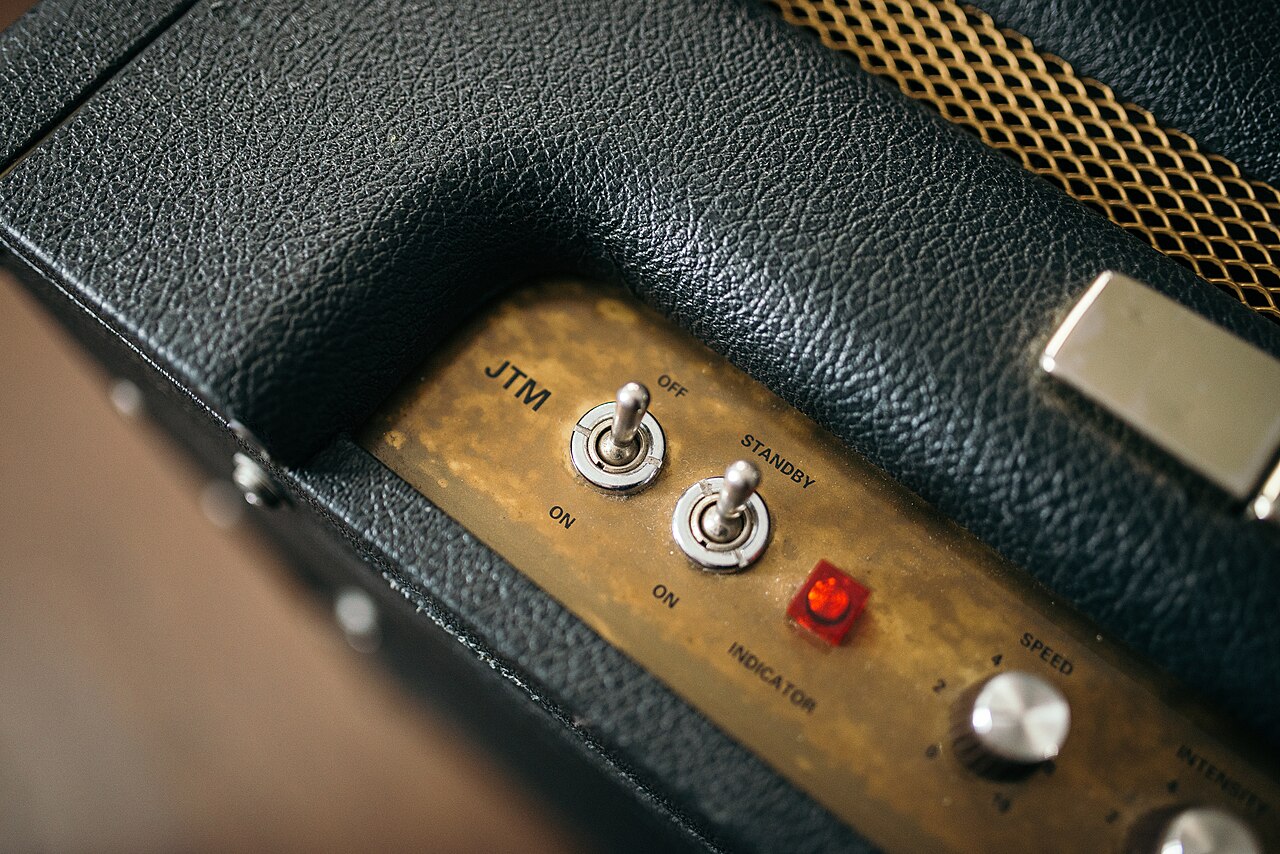
- Control knobs and switches on an amplifier: Shixart1985, Wikimedia Commons, CC BY 2.0.
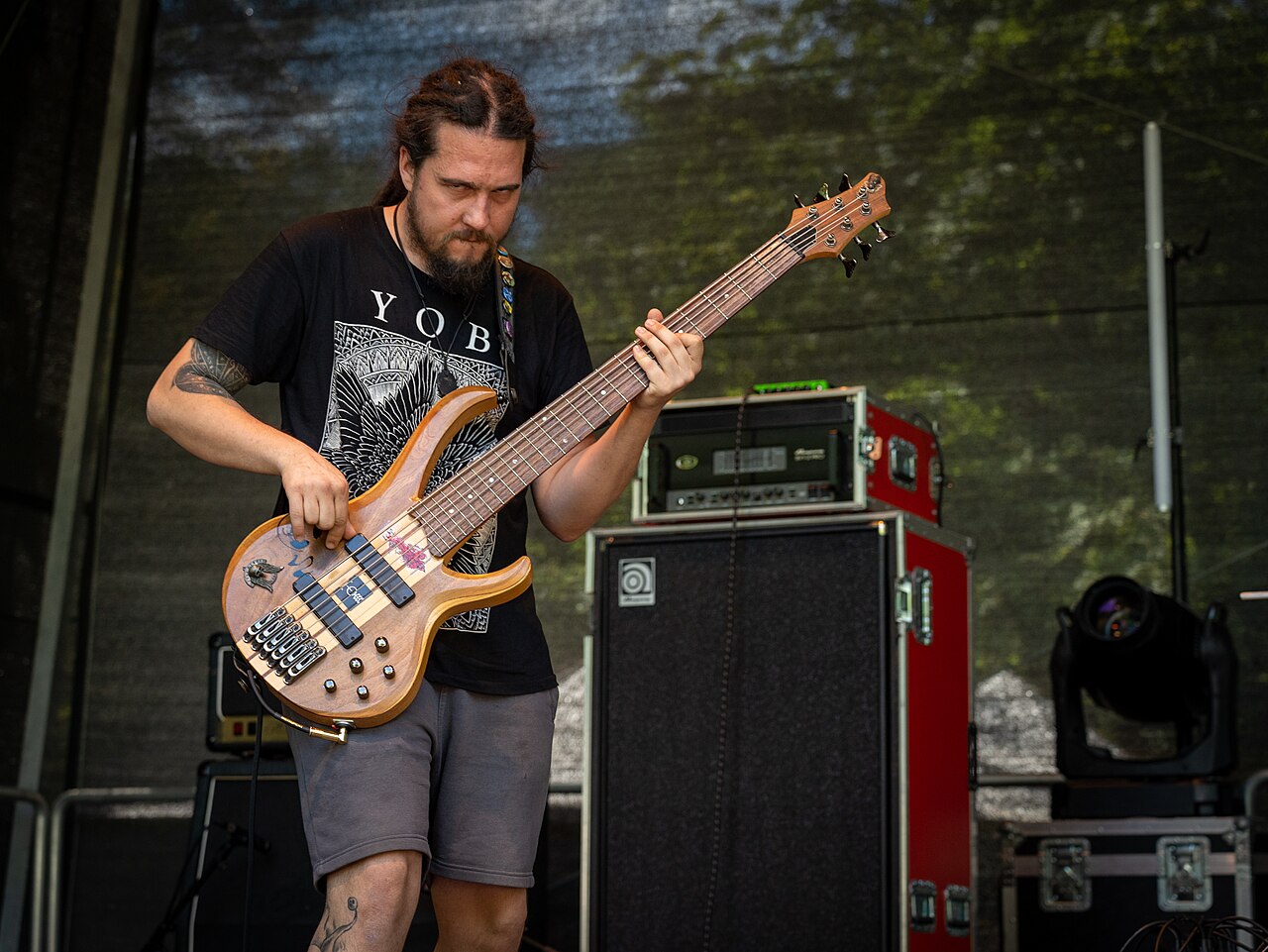
- A bass player on stage with an amp stack: Stéphane Gallay from Laconnex, Switzerland, Wikimedia Commons, CC BY 2.0.
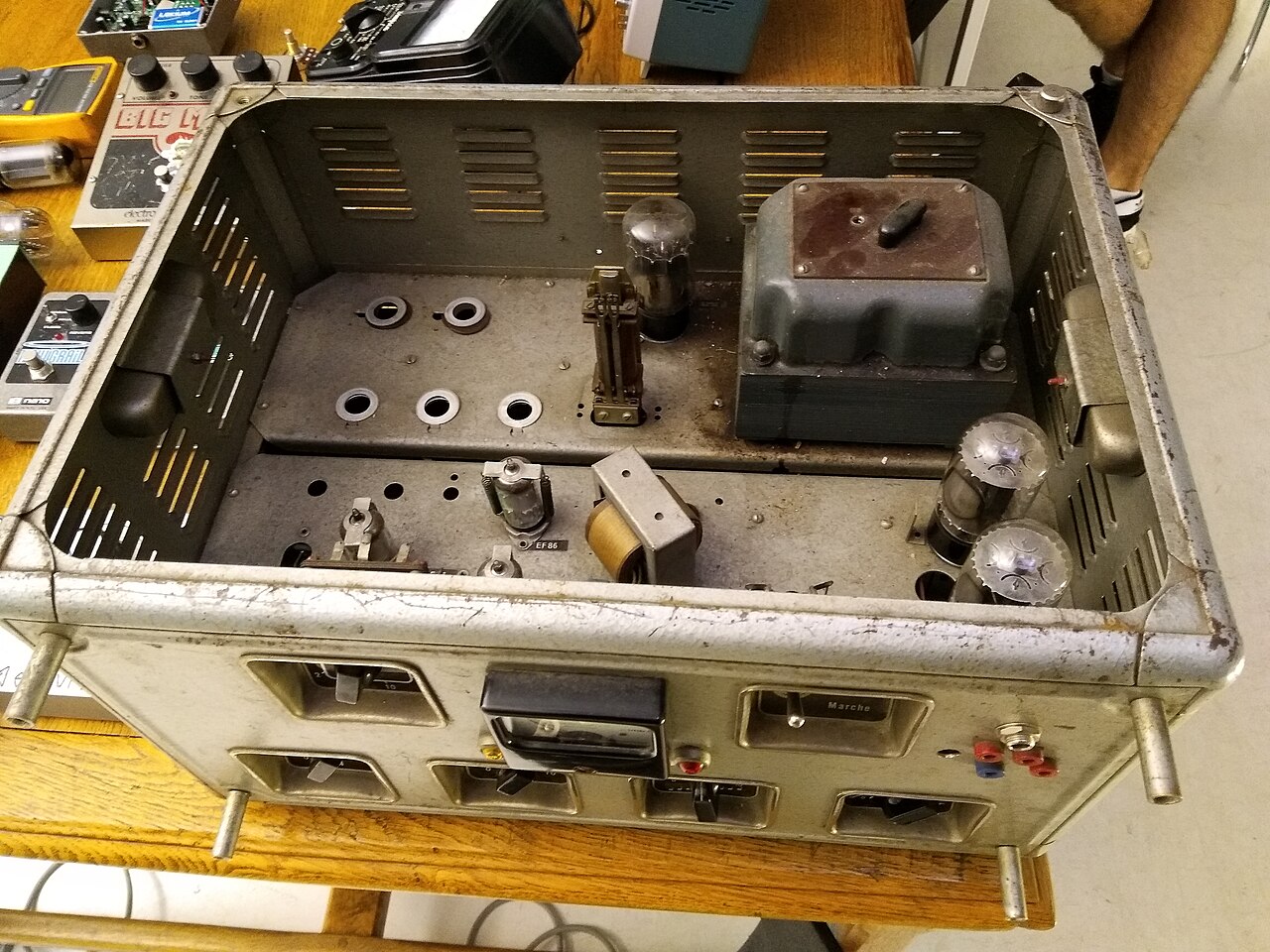
- The inside of a converted tube amp: Skimel, Wikimedia Commons, CC BY-SA 4.0.
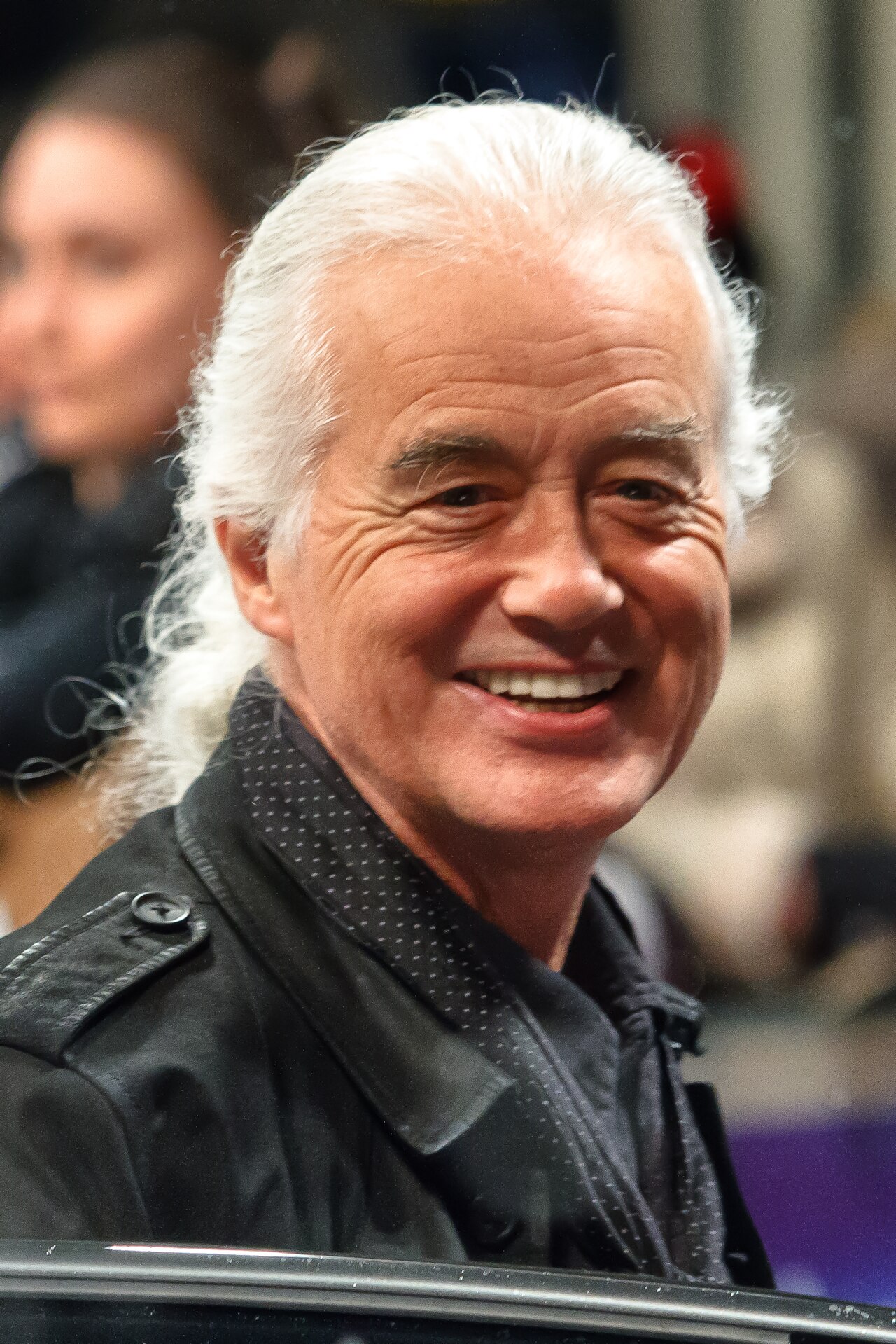
- Jimmy Page: Avda, Wikimedia Commons, CC BY-SA 3.0.


Latest News
On This Day
Monday 9 November
From this week: