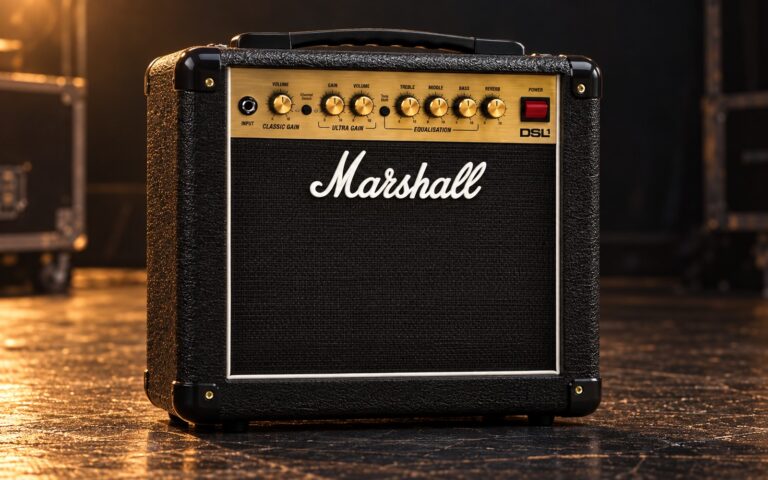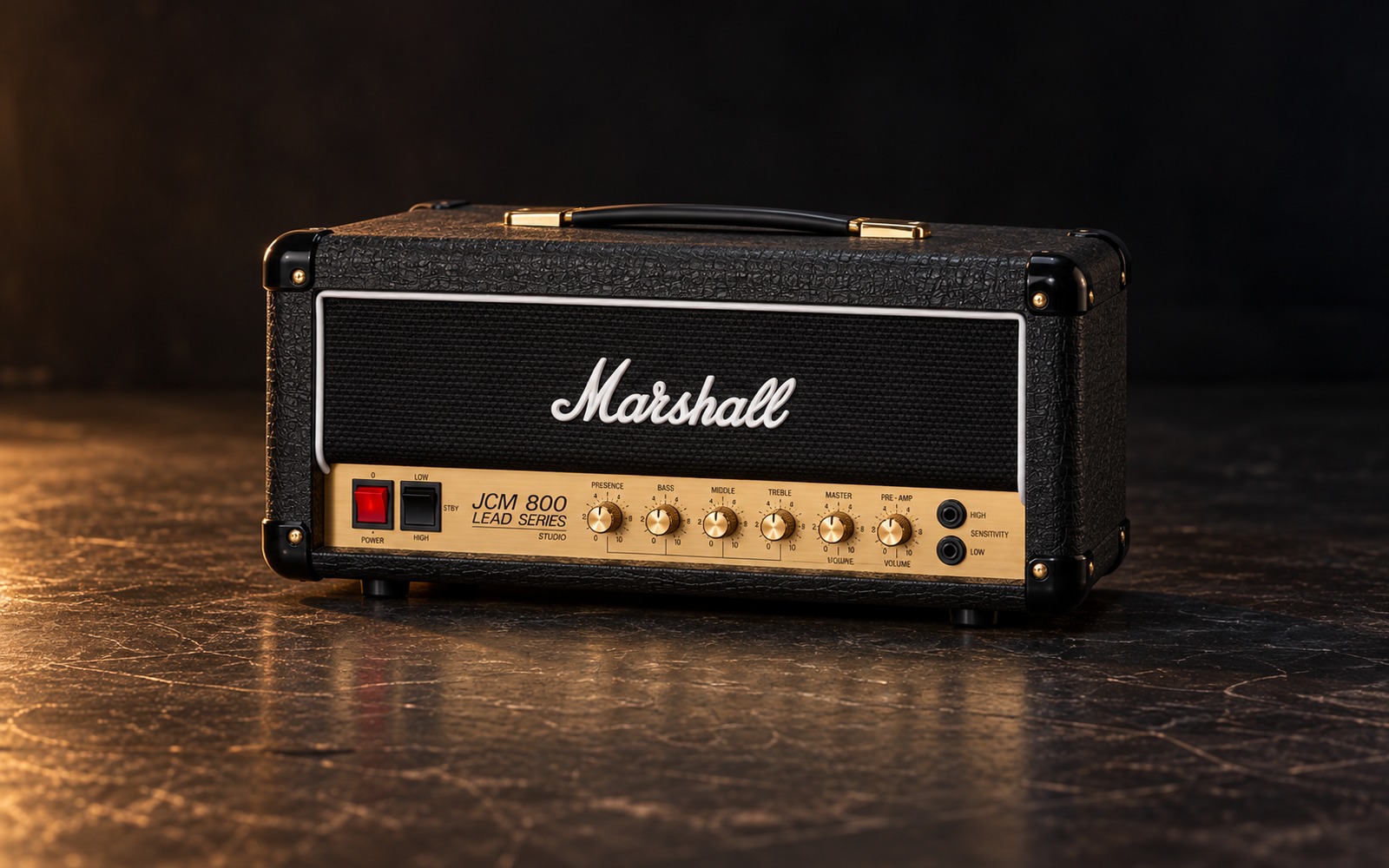
The JCM800 That Fits in Your Car: Marshall’s Studio Classic SC20H Brings the 2203 Home
Marshall Studio Classic SC20H brings full JCM800 2203 circuit to a 20/5W head with FX loop and DI. Specs, tone recipes, and verified players.
The original Marshall JCM800 2203 was never subtle. A hundred watts through four EL34s and a 4×12 Greenback cabinet doesn’t do subtle. When James Hetfield plugged into one during the making of Master of Puppets, the neighbours of every rehearsal room in the world weren’t just hearing the amp — they were feeling the wallpaper peel. That raw, muscular, single-channel aggression defined hard rock and early metal for an entire decade. And then, for forty years, anyone who wanted that sound at home had to either accept the full 100W assault or compromise with something that wasn’t really a 2203 at all.
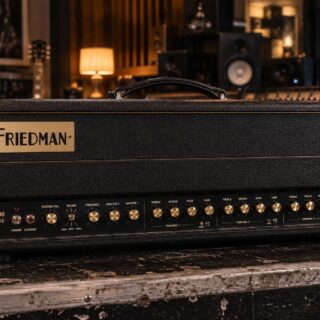
In January 2019, Marshall changed that. Announced at NAMM and shipping by March, the Studio Series brought three of the company’s most iconic circuits — the 1959 Super Lead Plexi, the Silver Jubilee 2555, and the JCM800 2203 — into a scaled 20-watt format with power reduction, an effects loop, and a DI output. The Studio Classic SC20H is the JCM800 of that trio: the same preamp topology, the same EL34 character, the same one-channel simplicity. Twenty watts instead of a hundred. Nine and a half kilograms instead of thirty. Made in the UK, the same as the original. And, as this article will demonstrate, sounding authentically like neither a toy version nor a rough approximation, but the actual thing at a volume level that won’t get you evicted.
This is not a review. GuitarGangsters doesn’t score amplifiers out of five stars. This is a full-depth feature: where the SC20H came from, what’s inside it, what it sounds like, which artists actually use it, and how to get the most out of it. Read on.
The Original: A Brief History of the JCM800 2203
Before you can understand the Studio Classic, you need to understand what it’s copying — and why that matters.
The 2203 didn’t arrive from nowhere. Jim Marshall’s company had been building Master Volume heads since the mid-1970s under the JMP banner. The JMP 2203 was a 100-watt single-channel master volume head that took the company’s existing Super Lead topology and added a second potentiometer after the preamp stage, allowing players to run the preamp hot for overdrive while keeping the overall volume controllable. That was the technical breakthrough: gain and volume now existed on separate axes. You could finally have JTM45-level power-tube saturation without threatening your hearing, or the band, or the venue.
In 1981, Jim Marshall’s distribution deal with Rose-Morris expired, and the company went direct. With the rebrand came a new name: JCM800, the letters drawn from Jim’s initials and the building number where Marshall was headquartered. Internally, the 2203 circuit was unchanged from the JMP. What changed was cosmetic: black vinyl, white piping, a full-width gold control panel, an enlarged logo. The JCM800 2203 was, at launch, exactly the same amplifier with a new suit on. The market didn’t care about the continuity. It heard the sound and bought the name.
What that sound was is best described as controlled violence. The 2203 ran a pair of ECC83 preamp stages (with a third ECC83 as a phase splitter) feeding four EL34 power tubes. The EL34 is the defining British power tube: tighter low end than the American 6L6, more pronounced upper midrange, a characteristic sag and snarl under a hard pick attack that nobody has ever quite replicated in any other technology. The 2203 used only one channel, only one tone stack, and produced what players immediately recognized as the sound that the blues had been threatening to become since Clapton played through that JTM45 at the Beano sessions: distorted, defined, muscular, and completely unsubtractable from the fabric of rock music once you’d heard it.
The amp ran in production from 1981 to 1990. In that window it appeared on records by AC/DC, Iron Maiden, Def Leppard, early Metallica, Billy Idol, and dozens of others. James Hetfield ran modded versions through a Mesa/Boogie preamp and noise gates for the Master of Puppets recording sessions. Dave Murray used early examples as part of Iron Maiden’s increasingly elaborate touring rigs. Vivian Campbell built his Dio-era tone around one. Billy Corgan famously used a 1979 JMP 2203 — the immediate ancestor of the JCM800 — as the centrepiece of the Siamese Dream sessions, layering it in stacks of three and five to build that album’s wall-of-sound guitar treatment.
In 2002, Marshall reissued the 2203 as the 2203X, a point-to-point wired version aimed at players who wanted the full-fat original. It’s still in the range today. But the 2203X costs a significant premium, weighs over 30 kilograms in a road case, requires a 4×12 cabinet to perform correctly, and puts out 100 watts — which at any serious volume requires either a reactive load box or extremely understanding neighbours. For most working players in 2019, the reissue was an aspiration more than a practical tool.
The Studio Classic SC20H exists to solve exactly that problem.
The Studio Series: Marshall’s Clever Shrinking Act
Marshall’s NAMM 2019 announcement gave the company three concurrent problems to solve. The three most beloved circuits in the Marshall catalogue were each locked inside amplifiers that were increasingly impractical: too loud, too heavy, too expensive to operate at the volume where the output stage actually comes alive.
The solution was architecturally clean: reduce power by swapping the power transformer for a smaller one, halve the EL34 count from four to two, add a tap on the standby switch for a further power reduction to 5 watts, and modernize the rear panel with a series effects loop and a DI output. The preamp circuit in each Studio model is faithful to its ancestor. The Studio Vintage SV20H replicates the 1959 Super Lead. The Studio Jubilee SJ20H captures the 2555’s two-channel silver-panel voicing. And the Studio Classic SC20H is the 2203 in miniature: same topology, same tube types, same one-channel character, same gold panel and black cloth.
What makes the SC20H worth examining in detail rather than simply calling it “the 2203 but small” is what happens when you reduce the power stage in a circuit this sensitive. The original 2203 made a lot of its character in the interaction between the preamp and four EL34s running at high plate voltages. Reducing to two EL34s changes that interaction. The Studio Classic compensates intelligently: the tone stack’s range is wider than the original’s, the preamp gain is marginally higher (reviewers consistently note it sits closer to the later JCM800 2210 two-channel model than the strictest 2203 spec), and the hum floor is dramatically lower — a concession to modern recording environments that is entirely welcome. The result is an amp that sounds faithfully like a JCM800 without sounding like a scaled-down imitation of one.
Marshall Studio Classic SC20H — Specifications
| Parameter | Specification |
|---|---|
| Type | All-valve guitar amplifier head |
| Preamp circuit | Based on Marshall JCM800 2203 |
| Channels | 1 (High and Low sensitivity inputs) |
| Power output | 20W / 5W (selectable via 3-position standby switch) |
| Preamp tubes | 2× ECC83 (12AX7) + 1× ECC83 phase splitter |
| Power amp tubes | 2× EL34 |
| Rectifier | Solid-state |
| Controls | Preamp Volume, Master Volume, Treble, Mid, Bass, Presence |
| Effects loop | Series, switchable, −10dB insert level |
| DI output | Unbalanced ¼” jack with cabinet simulation |
| Speaker outputs | 5× ¼” — supports 16Ω, 8Ω, 4Ω configurations |
| Reverb | None |
| Footswitch | None included |
| Cabinet | Plywood |
| Dimensions | 510 × 240 × 240 mm |
| Weight | 9.7 kg (21.4 lbs) |
| Made in | United Kingdom |
| Launch | NAMM January 2019; shipping March 2019 |
| Current price (2026) | $888 Thomann; ~$1,299 US independent retailers |
| Companion products | SC20C combo (1×10″); SC112 1×12 cabinet; SC212 2×12 vertical cabinet |
What’s Inside: The Circuit in Detail
The SC20H uses a steel tray chassis sitting inside a plywood cabinet. Most of the electronics live on a large central PCB that also supports the valve sockets; smaller boards handle the input jacks, knobs, and rear panel. It’s Marshall’s standard approach: not hand-wired in the traditional sense, but built to a professional standard with Molex-terminated wiring bundles. The construction is what Nick Guppy at MusicRadar described as “typically Marshall: neat, businesslike and built to handle the rough and tumble of rock ‘n’ roll.” For an amp this affordable, the build quality holds up under real-world conditions.
The tube complement — three ECC83s (two as gain stages, one as a long-tailed-pair phase splitter) and two EL34s — is identical in topology to the original 2203 but scaled to half the output transformer size. The EL34 character is faithfully preserved: that throaty upper-midrange push in the 2kHz–4kHz region, the slightly compressed low end under heavy pick attack, and the asymmetric clipping that gives British amps their distinctive overtone structure. You are not getting a simulation of EL34 behaviour — you are getting actual EL34 behaviour at a manageable wattage.
The power reduction works via the standby switch, which has three positions: off (cold), 5W (low), and 20W (full). The reduction is a genuine output reduction at the power amp stage, not an attenuator or a resistive pad after the output transformer. At 5W the amp is quieter and compresses slightly differently — some players prefer it, others find 20W at low master volume more linear. The key fact is that 5W through a 1×12 or 2×12 cabinet still produces enough SPL to wake the household. This is not a bedroom-whisper amp at either setting. If genuine living-room levels are needed, a reactive load or attenuator is still on the shopping list.
The DI output is unbalanced, which limits its practicality for longer cable runs in live PA applications. MusicRadar’s reviewer specifically flagged it as “not the best-sounding DI out” — it’s serviceable for tracking demos and direct recording but won’t replace a proper re-amping setup or a dedicated load box with cabinet simulation. The FX loop, by contrast, is well-regarded: low noise, transparent, and capable of accepting standard stompbox send/return levels without impedance mismatch problems.
One historically significant modification from the original 2203: the SC20H’s tone stack controls are more powerful than the vintage circuit. The EQ can dig deeper and boost more aggressively. Combine that with slightly elevated preamp gain (closer to the 2210 in character than a true early-80s 2203) and you have an amp that is faithful to the JCM800 sound without being a strict circuit clone. The hum and hiss floor is dramatically lower than any vintage or reissue 2203 — the modern PCB and shielding result in a near-silent background that makes the amp genuinely studio-usable without gating.
What It Sounds Like
The SC20H sounds like a JCM800 2203. That is not a marketing claim — it’s the conclusion of every independent reviewer who has played one back-to-back with an original. The character is there: the midrange grunt, the tight compressed bottom end, the upper-mid presence that cuts through a full band mix without needing EQ help, and the feel of the pick attack translating directly into the preamp’s gain structure in a way that digital modellers have spent two decades trying to replicate.
What the SC20H does is all about that 800Hz–4kHz region. The amp naturally emphasises the upper-midrange bite that the 2203 circuit is famous for. This is why it pairs so well with humbuckers in mahogany-bodied guitars — a Les Paul, an SG, any guitar where the pickup’s frequency emphasis is warm and thick. The amp compensates for that thickness with aggression rather than brightness, producing the classic British rock tone without muddiness. With single-coil guitars, you’ll need to roll the treble and presence back significantly to avoid an ice-pick top end, which also trades away some preamp gain. The amp was designed with humbuckers in mind; single-coil players should test before committing.
In the low-sensitivity input, the SC20H has significant headroom — enough to take pedals in front without the preamp immediately compressing and saturating. The low-input jack on the original 2203 was always the more versatile entry point for pedal rigs, and the same is true here. Transparent overdrives and clean boosts respond well; heavy fuzz and high-output distortion pedals can push the preamp into a less defined zone at high gain.
At higher master volume settings, the EL34 power stage begins contributing harmonics to the signal, thickening the fundamental and adding the bloom and compression that characterises power-amp saturation. This is where the amp sounds its most compelling and most like the records it’s descended from. Whether you achieve it at the 5W or 20W setting depends entirely on your room, your cabinet, and your neighbours. Either way, the character is real.
Famous Players — Honestly
The SC20H is listed with the same five-name roster as every other Marshall amplifier: Slash, Zakk Wylde, Kerry King, Gary Moore, and Tom Morello. The situation is worth examining carefully here because the SC20H’s case is nuanced.
Gary Moore died on 6 February 2011. The Studio Classic SC20H began shipping in March 2019. Calendar arithmetic settles this one instantly. Not a candidate.
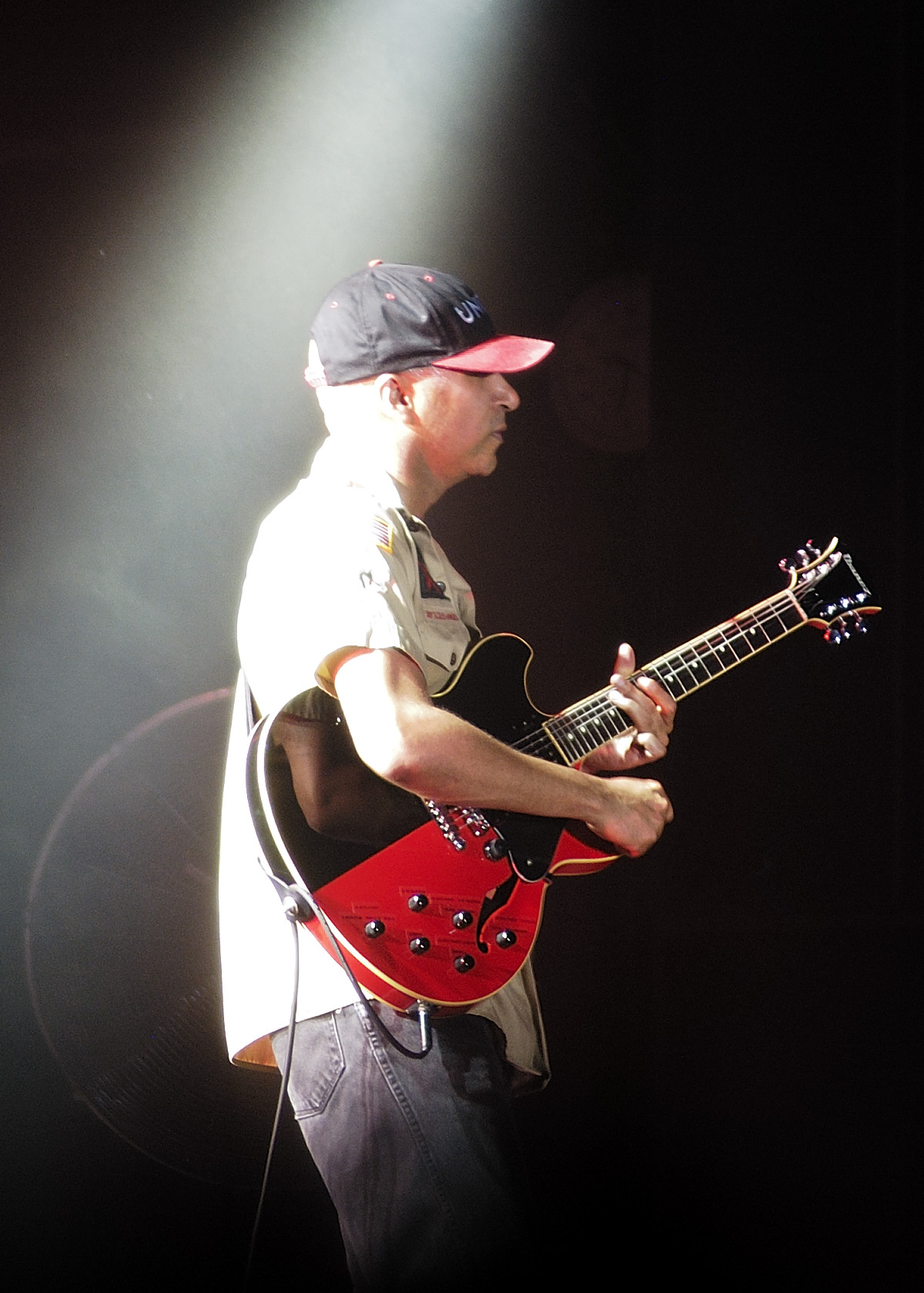
Tom Morello is documented on a JCM800 2205 — the two-channel model — not the 2203. The 2205 has a significantly different gain architecture. His SC20H use has not been documented from any primary source.
Slash is thoroughly documented on the Silver Jubilee 2555, which is covered in its own article in this series (Marshall 2555 Silver Jubilee). He has used JCM800 heads at various points in his career, but his signature sound and primary identification is with the Jubilee. Not an SC20H player.
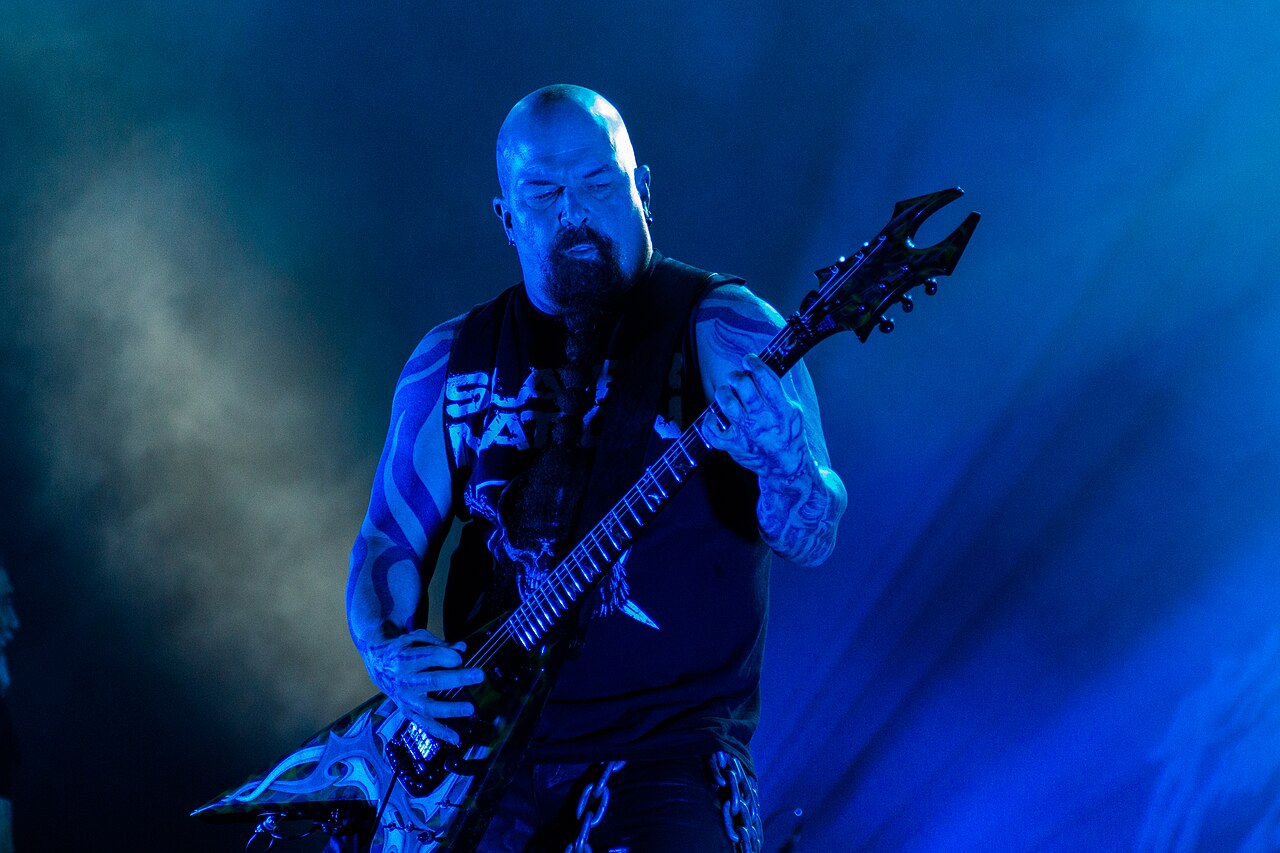
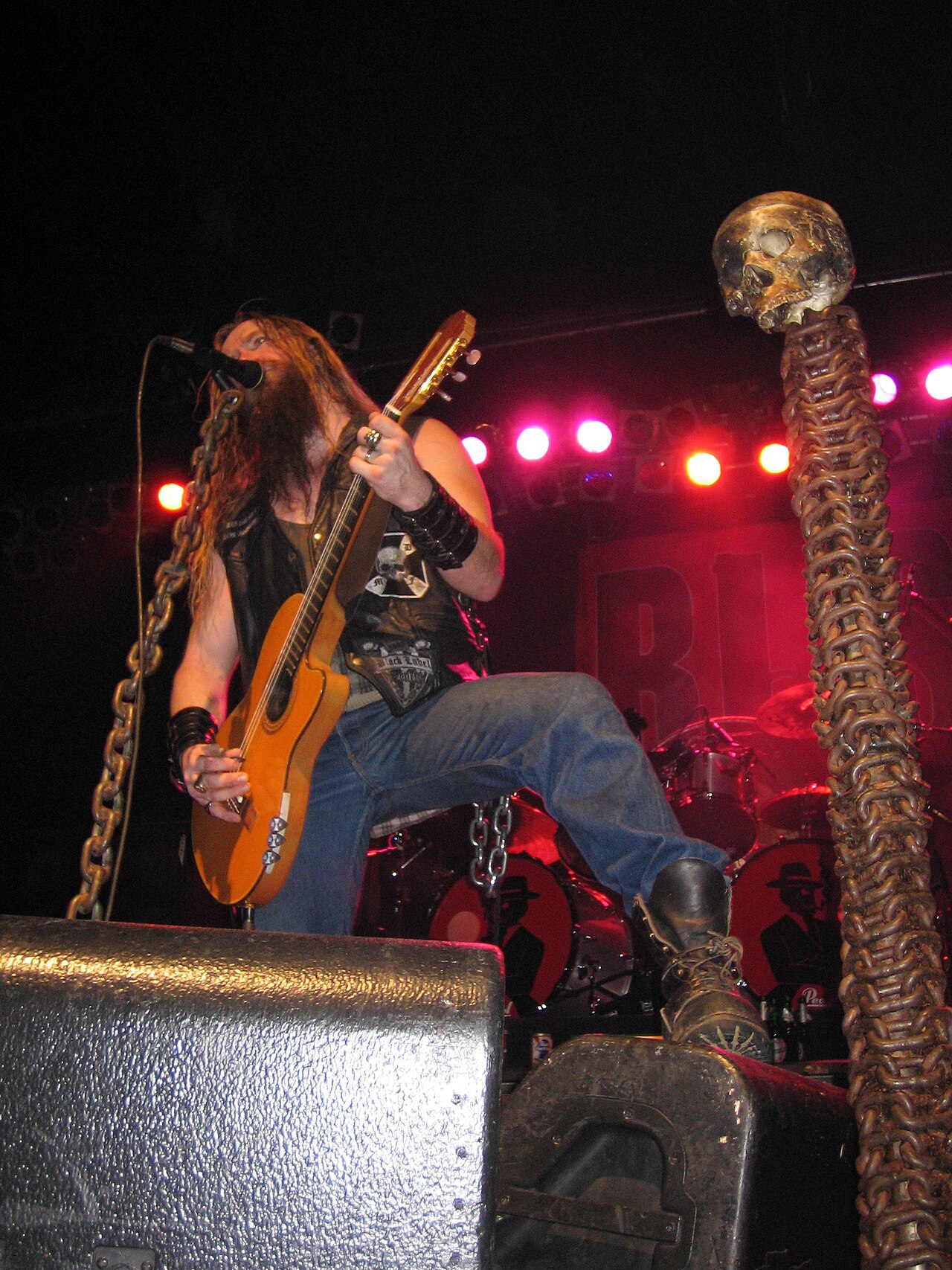
Zakk Wylde and Kerry King present the most interesting case in this series. Both players are genuine, documented JCM800 2203 users — Zakk to the point of having his own 2203KK signature model. But they use the original 100-watt circuit, not the Studio Classic. Zakk’s documented rig runs multiple full-size JCM800 heads; Kerry King’s touring rigs have been catalogued with original 2203s and Marshall custom builds. Neither has been documented on an SC20H from any primary source. The distinction matters: these men are JCM800 players, but not this JCM800.
Here is the honest list.
Doug Aldrich (Whitesnake, Dio, Dead Daisies) is the one SC20H endorser who can be cited from a primary source. Marshall published an official YouTube video in 2019 titled “Doug Aldrich | Studio Classic Playthrough | Marshall,” in which Aldrich plays through the SC20H and speaks to its character. He is a Marshall endorsee with a decades-long relationship with the company; his primary live rigs are documented on the Marshall 2555X Silver Jubilee Reissue (photographed by Marshall’s Instagram account during a Glenn Hughes tour) and a JMP 2203 Mk II Master Lead from his earlier career. The SC20H sits naturally in his kit — his playing style, built around Les Pauls and muscular classic-rock riffing, is exactly the application the circuit was designed for. The video is real, the endorsement is genuine, and the chemistry between the player and the amp is audible. What the video does not prove is that it’s Aldrich’s primary touring amp; it is more accurately his formal product demonstration and endorsement.
.They are real, and their presence on Equipboard confirms the amp reaches active players — it is not purely a collector’s item or a studio trophy.
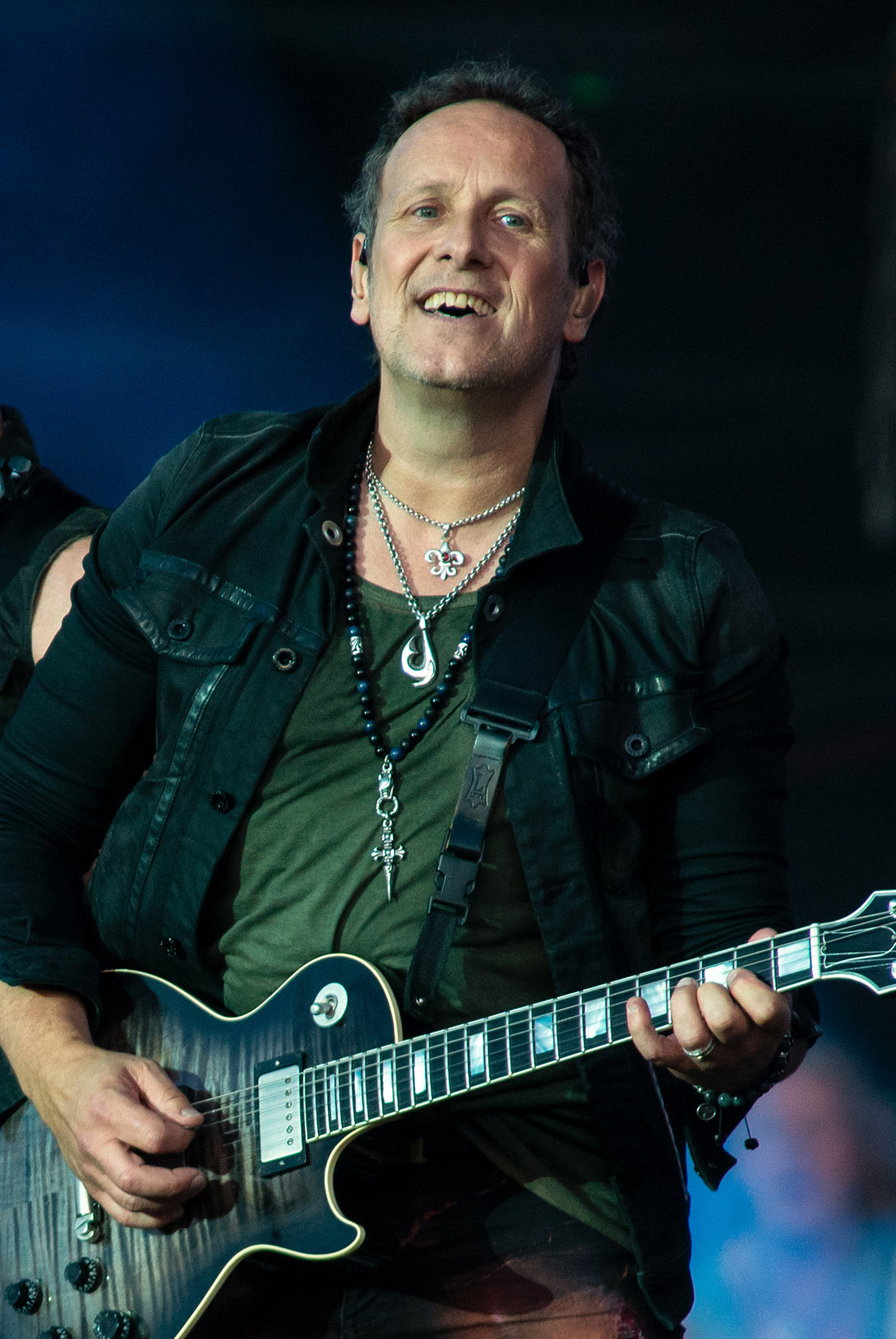
Beyond the verified SC20H user list, the amp’s context is best understood through its ancestors’ endorsers. The players who defined the JCM800 2203 sound — James Hetfield‘s modded-2203 attack on Master of Puppets, Dave Murray‘s Iron Maiden gallop, Vivian Campbell‘s Dio-era sustain, Billy Corgan’s layered JMP overdrive on Siamese Dream — were playing 100-watt heads with four EL34s and tall stacks of 4×12 cabinets. The Studio Classic offers a credible, substantially smaller path to the same frequency content. Whether it gets all the way there is a question for your cabinet choice and room acoustics. It gets close enough to matter.
Tone Recipes — Five Settings Worth Using
1. Classic 2203 Crunch (Reference Setting)
For: AC/DC-style hard rock crunch, tight rhythm playing, classic 80s rock. Les Paul or SG with humbuckers.
Preamp Volume: 7–8 | Master Volume: 3–4 (20W mode) | Bass: 4 | Mid: 5 | Treble: 6 | Presence: 4–5
Notes: No pedals in front. Let the amp’s natural character work. Power-amp saturation starts to appear above Master 4. At this setting the EL34 grunt is clear without the amp becoming overwhelming. This is where the SC20H earns its JCM800 name — there’s a specific mid-forward aggression here that no modeller has fully captured.
2. Lead Tone with Tube Screamer
For: Lead lines, singing sustain, Zakk Wylde–influenced high-gain solo tone. Les Paul into TS9 (gain at 9 o’clock, tone at noon, level up to unity).
Preamp Volume: 6 | Master Volume: 3 | Bass: 3 | Mid: 6 | Treble: 5 | Presence: 4
Notes: The TS9’s inherent mid-push stacks with the amp’s natural voicing for a thick, sustained lead sound. Don’t push the TS9 gain too high — you want it as a buffer and slight compression device, not as the primary dirt source. Keep the TS9 tone at noon or slightly below to avoid shrillness.
3. Lower-Gain Vintage Rock (Low-Sensitivity Input)
For: Classic rock clean-ish to mildly overdiven sounds. Single notes, arpeggios, band context where some note separation matters. Les Paul or Tele.
Low-Sensitivity Input | Preamp Volume: 7 | Master Volume: 3 | Bass: 5 | Mid: 5 | Treble: 5 | Presence: 4
Notes: The low-input jack drops sensitivity significantly, cleaning up the preamp at equivalent control settings. Roll guitar volume to 6–7 for a clean-ish breakup; up to 10 for moderate dirt. This is the pedalboard platform setting — the headroom lets stompboxes behave as designed rather than immediately overloading the input stage.
4. High-Gain Modern Rock (with Boost)
For: Modern hard rock, riff-based playing, Master of Puppets-adjacent territory. Les Paul or HSS guitar. Add clean boost (MXR Micro Amp or similar) before input.
Preamp Volume: 8 | Master Volume: 2 (5W mode) | Bass: 4 | Mid: 4 | Treble: 5 | Presence: 4 | Boost: Level up 3–4dB, no gain
Notes: The clean boost pushes the preamp harder without adding its own harmonic character. In 5W mode at Master 2, the power stage is contributing compression without the overall SPL becoming unmanageable. This setting produces a tighter, more aggressive response than the crunch setting — closer to the 2210-adjacent gain character the SC20H exhibits when pushed.
5. RAT in the Loop / High-Definition Grind
For: Maximum gain, near-metal territory. Pro Co RAT 2 in the FX loop return (bypassing the preamp entirely and running into the power amp only).
FX Loop engaged | RAT: Distortion 6, Filter 4, Volume matched to unity | Master Volume: 5–6 (20W) | Bass: 5 | Mid: 5 | Treble: 5 | Presence: 5
Notes: Running a distortion pedal into the power amp return gives you EL34 power-stage character without the 2203 preamp in the signal chain. The result is a tighter, more defined distortion with the Marshall cab character intact but the preamp gain removed. Warning: the FX loop return bypasses the master volume — level is controlled entirely by the RAT’s output and the amp’s standby position. Start at Master 3 and work up.
All settings are given as clock-face positions: 0 = fully counter-clockwise, 5 = noon, 10 = fully clockwise. High-sensitivity input unless noted. These are starting points — the SC20H’s response changes meaningfully with your guitar’s output level and pickup character.
Comparisons — Where the SC20H Fits
The SC20H does not exist in a vacuum. Within the Marshall range, it occupies a very specific position, and the adjacent options are worth mapping.
Marshall JCM800 2203 / 2203X Reissue: The ancestor. Four EL34s, 100 watts, point-to-point wiring on the 2203X reissue. The full-size amp has a different power-stage character when genuinely cranked — the interaction between four EL34s at high plate voltage produces something the two-tube Studio Classic cannot fully replicate. If you regularly play 500-seat venues and need the SPL without attenuation, the 2203X is the honest answer. At any other application, the SC20H makes the same sound at a fraction of the weight and cost.
Marshall Origin 20H: Also a 20W single-channel EL34 head, also made in Vietnam (not UK like the SC20H). The Origin’s voicing is different: the Tilt control blends two different circuit voices rather than presenting a fixed JCM800 topology. The Origin is more flexible and arguably more modern; the SC20H is more specific and, for those who specifically want JCM800 character, more authentic. Price is similar at around $499–599 for the Origin vs $888 for the Studio Classic.
Marshall DSL20HR: Two channels, digital reverb, MIDI, made in Vietnam. The DSL is a more feature-complete amp for players who need clean and drive on separate footswitchable channels. The SC20H is a single-channel amp, full stop. If you need channel switching, the DSL is the answer. If you want JCM800 purity with no compromises, the Studio Classic wins.
Marshall Studio Vintage SV20H: The Plexi-based sibling in the Studio Series. Same 20W/5W format, same UK manufacture, same PCB architecture — but voiced after the 1959 Super Lead, which means cleaner headroom, brighter character, and a different kind of British tone. The SV20H requires more help from pedals to achieve high-gain sounds; the SC20H has significantly more preamp gain built in. Both are valid; the choice is about which Marshall era you’re chasing.
Blackstar HT-20R MkII: A well-regarded British-voiced 20W two-channel head at a similar price point. Reverb included; ISF tone control. More versatile than the SC20H; less specifically a JCM800. For players who aren’t committed to the 2203 sound and want more tonal range, the Blackstar competes seriously. For players who specifically want JCM800, it doesn’t fully get there.
Buying Guide
New: At $888 (Thomann) or around $1,299 at US independent retailers, the SC20H sits in the high-end zone for a 20-watt single-channel head. That price reflects UK manufacture, genuine EL34/ECC83 valve complement, and a circuit that costs more to build honestly than a multi-channel PCB-based design. The street price has dropped significantly from the $1,299.99 US launch price, making it better value in 2026 than it was at NAMM 2019.
Used: Used SC20H heads typically trade in the $550–$750 range depending on condition. Cosmetic wear on the tolex is common (the black vinyl shows marks easily) but does not affect the circuit. A small number of early units had tolex finish quality issues at the corners — reported by multiple Thomann reviewers who received amps with poorly cut vinyl and visible stapling. Check photos carefully when buying used. The electronics are more consistent; the finishing quality varies more than you’d expect at this price point.
What to check on a used unit: Output transformer (any buzz, rattle, or hum from the transformer housing should be inspected by a tech), tube condition (EL34s should be checked for matching at 65mV bias when a full set replacement is due), FX loop switching (the series loop can develop crackle in the bypass switch if it hasn’t been used regularly). None of these are common failure points — just the standard checks for any used tube amp.
Cabinet pairing: The SC20H is designed for 16Ω speaker loads but runs multiple cab configurations. Marshall’s own SC112 (1×12 Celestion V-Type 16Ω) and SC212 (2×12 vertical, 8Ω, two Celestion V-Types) are the natural partners. The SC212’s vertical orientation is a deliberate ergonomic choice — it stacks under the head like a full-size combo. Third-party options: a 1×12 with a Celestion Vintage 30 (16Ω) gives a slightly warmer, more compressed character; a 2×12 with Greenbacks brings the amp closer to the classic 1982A 25-watt Greenback sound. The amp is loud enough at 20W through any of these options to fill small-to-medium venues without PA support.
Ownership Notes
The SC20H runs at mains voltage and requires a voltage converter for 110V territories if purchased from a European retailer. Check the product specification carefully — the Thomann listing explicitly notes the 230V operating voltage. US buyers should purchase from US distributors.
Tube life: EL34s typically last 1,000–2,000 hours of playing time. Given that the SC20H runs only two, a matched pair is an inexpensive maintenance cost. The stock tubes are standard OEM unmarked ECC83s and EL34s; many players replace the preamp ECC83s with name-brand equivalents (JJ, Tung-Sol, Sovtek) and report improved headroom and reduced brightness. The power tubes are reportedly standard EL34s without particular premium origin; a JJ or Mullard-replica EL34 upgrade is a popular first modification.
The effects loop carries the signal at pedal-friendly levels (−10dB insert level, standard for PCB-based FX loops). Running a rack reverb or modulation unit in the loop is straightforward. The FX loop is not footswitchable from the front panel — you engage or bypass it with a rear-panel toggle. Players who want to add spring reverb are best served by a pedal in the FX loop (a Boss RV-6 or Strymon Flint placed in the loop keeps reverb out of the preamp’s gain structure, which is correct practice on a single-channel amp).
Volume management: the 5W mode does reduce output meaningfully but does not make the amp quiet. Test in your environment before assuming it will work at bedroom levels. If genuine low-volume use is a hard requirement, pair the SC20H with a reactive load box (Two Notes Torpedo, Universal Audio OX, Boss Waza Tube Amp Expander) to absorb the speaker output while keeping the power-stage saturation intact. This is not a workaround — it’s the correct approach for any tube amp that needs to run at recording studio levels.
No footswitch is included or required, since there is only one channel to switch. The only external control point is the FX loop engage/bypass, which lives on the rear panel. Keep a standard amp cover on the head when it’s not in use — the black vinyl can mark easily and the gold panel, while anodised, can show fingerprints.
Frequently Asked Questions
Is the SC20H a true JCM800 2203 circuit or an approximation?
It is faithful to the 2203 topology — the same preamp gain stages and the same EL34 power tube type — but it is not a strict clone. The tone stack has a wider range, the preamp gain sits slightly higher (closer to the 2210 character), and the power stage uses two EL34s rather than four. It sounds like a JCM800 2203. It is not electrically identical to one.
Why does the SC20H have more gain than my vintage 2203?
The original early-80s 2203 varied considerably in preamp gain across production years. Later 2203s had more gain than earlier ones. The SC20H’s gain level is broadly consistent with a mid-to-late 80s 2203 rather than the earliest examples. It is not more aggressive than a 2210 or a pushed 2203; it is just slightly further along the gain spectrum than the most conservative 2203 specimens.
Can I use the DI output for silent recording?
The DI output requires a speaker load connected to one of the speaker outputs simultaneously. Unlike some modern amps with built-in dummy loads, the SC20H will damage its output transformer if used without a connected cabinet or load box when the DI is active. Always run a cab or a reactive load box when using the DI out.
The 5W mode — is it actually useful or just a marketing feature?
Genuinely useful in the right context, but often misunderstood. It’s not a whisper mode. At 5W through a standard 1×12, it’s still loud enough to dominate most residential spaces. What it does usefully is allow the master volume to sit higher for a given SPL target, which brings the power-stage compression and EL34 character in at lower overall volume levels. If you’re recording into a large room and want the amp at its best without full 20W output, 5W is the setting. For true silent use, add a load box regardless of the power setting.
How does it compare to the Marshall Studio Vintage SV20H?
The SV20H is voiced after the 1959 Super Lead Plexi. It has cleaner headroom, a brighter top end, and a more open-sounding character. The SC20H has significantly more preamp gain, a thicker midrange, and a more aggressive character from the moment you plug in. The SV20H rewards pedals in front for high-gain work; the SC20H produces its own distortion more readily. Neither is better — they’re two different chapters of Marshall’s history.
Does the SC20H need to be loud to sound good?
It sounds its best when the power stage is working — which means master volume at 3 or above at 20W, or 2–3 at 5W. Below those thresholds, you’re running on preamp gain only, which is perfectly functional but doesn’t produce the bloom and compression that makes JCM800s distinctive. If living-room levels are your world, invest in a reactive load box and the amp will reward you. Without one, you need some volume.
Is it worth choosing the SC20H over the DSL20HR?
Depends entirely on your needs. The DSL20HR has two channels (clean and drive), digital reverb, and an emulated output. It’s a more complete everyday tool. The SC20H has one channel, no reverb, a less capable DI, and costs more. What it has is character — specifically, the character of the 2203, which is a very particular thing. If you want a working amp that covers a range of sounds, get the DSL. If you want a JCM800, get the Studio Classic.
What cabinet should I pair it with?
The Marshall SC112 (Celestion V-Type, 16Ω) is the cleanest sonic pairing and the most compact. For more of the vintage JCM800 experience, a 2×12 or 4×12 with Celestion Greenbacks (25W, 16Ω) moves the character toward the classic records. The V-Type is a little warmer and more modern-sounding; the Greenback is more open, more aggressive in the upper midrange, and more demanding of the amp’s character. A 1×12 with a Vintage 30 (16Ω) sits between the two extremes and is a reliable all-rounder.
Image credits
- Top image: GuitarGangsters AI-generated reference illustration, not a photograph.
- Tom Morello: deep ghosh, Wikimedia Commons, CC BY 2.0.
- Vivian Campbell: Selbymay, Wikimedia Commons, CC BY-SA 4.0.
- Kerry King: Alfred Nitsch, Wikimedia Commons, CC BY-SA 3.0 AT.
- Zakk Wylde: Joanna Corwin, Wikimedia Commons, CC BY-SA 3.0.
Latest News
Related
On This Day
Monday 9 November
From this week: