The Amp That Fit in a Jacket Pocket and Still Sounded Like Orange
20-watt hybrid lunchbox amp launched NAMM 2012. Circuit breakdown, honest artist connections, tone recipes, buying tips, and FAQ for the Micro Terror.
January 2012. Winter NAMM, Anaheim. Orange Amplification unveiled what should have looked ridiculous — a guitar amplifier head measuring 5.3 inches tall and 6.5 inches wide. The thing looked like a novelty prop next to the full stacks surrounding it. And yet, within months, guitarists around the world were plugging it into 4×12 cabinets, running it through recording interfaces, and sticking it into studio rigs where space was scarce and good tone was non-negotiable. The Orange Micro Terror is the amp that proved size had almost nothing to do with character.
This is not a review. It is a gear guide — a serious look at what the Micro Terror is, where it came from, what its circuit actually does, which players have genuinely used it (and which have not), and how to get real tones out of it in the real world.
The Terror Series and Why the Micro Had to Happen
To understand the Micro Terror, you have to start with the Orange Tiny Terror TT15H. Launched in 2007, the Tiny Terror was the amp Ade Emsley sketched on a restaurant napkin at NAMM — a fully tube-powered 15-watt single-channel head that had to fit on an A4 sheet of paper. It sold 10,000 units in its first year and launched the modern lunchbox amp category as a serious proposition, not just a bedroom toy. Rival builders scrambled to match it. Orange extended the Terror family with the Dual Terror DT30H, the TH30H, and the OR15H. But by 2012, Orange had identified a gap: guitarists who wanted the Orange name, the Orange sound, and the Orange look at a price that genuinely anybody could afford.
The solution was the Micro Terror — announced via official press release on January 11, 2012, alongside the matching PPC108 1×8 cabinet. Orange’s own copy called it “its smallest Terror ever,” built on “the winning recipe of the rest of the popular Terror series” but with “a size and weight making it the most portable Terror yet.” The launch strategy was deliberate: price it low enough to be a first proper amp for a serious bedroom player, and make it good enough that pros would use it as a compact studio or travel tool.
Both objectives turned out to be achievable from the same box.
Specifications
| Feature | Specification |
|---|---|
| Power output | 20W RMS |
| Power amp type | Solid-state |
| Preamp tube | 1× 12AX7 (ECC83) |
| Controls | Volume, Tone, Gain |
| Channels | 1 |
| Speaker output | 4Ω minimum (4Ω, 8Ω, 16Ω compatible) |
| Headphone output | 1/4″ (disables speaker output when in use) |
| Auxiliary input | 1/8″ (MP3 player / CD) |
| Power supply | 15V DC external (international PSU included) |
| Dimensions | 16.5 × 13.5 × 9.2 cm (W × H × D) |
| Weight | 0.85 kg |
| Construction | High tensile steel chassis, removable top cage |
| Panel style | Pictograph (Pics Only) labels |
| Matching cabinet | PPC108 (1×8, closed-back, basketweave tolex) |
| Launch street price | $149 (2012) |
| Current street price | ~$129–159 new; used from ~$90 |
| Made in | China |
The Hybrid Heart: What That Single Tube Actually Does
This is the conversation worth having with anyone considering the Micro Terror: it is not an all-tube amplifier. The Tiny Terror TT15H is all-tube — two EL84 power valves running in cathode bias, with the power section saturation and sag you get when tubes are actually handling the current. The Micro Terror has one 12AX7 in the preamp position only. The power section is solid-state.
This matters tonally. In a fully tube amp, pushing the power valves into saturation produces a kind of compression and bloom that is physically different from preamp distortion — it’s softer, more musical, and highly responsive to pick dynamics. The Micro Terror doesn’t do that. What it does instead is run a two-stage 12AX7 preamp circuit, loosely based on the voicing of the Tiny Terror’s front end, into a clean solid-state amplifier. The tube provides real valve character in the early gain stages — warmth, harmonic density, and a voltage-dependent response to pick attack that a solid-state preamp cannot replicate. But the power section won’t sag or bloom under load.
In practice, this means the Micro Terror’s overdrive character is more focused and consistent than an all-tube amp. Premier Guitar’s Jordan Wagner, reviewing the Micro Terror in its first year (September 2012, street $149), noted that overdriven single notes are “thick and spongy and topped off by a bright but round attack that’s a hallmark of Orange amps.” Through a 4×12, the amp reveals “a really cool, razor-like edge on the midrange that works very nicely with both galloping, palm-muted riffs and clean leads.” He rated it 4/5 on Tones, 4.5/5 on Build, and 5/5 on Value.
The Gain control sweeps a wide range — from barely-dirty at 9 o’clock to what Wagner describes as “fuzzy doom distortion” near maximum. The Tone control is a broad passive filter, not a multi-band equalizer. The single Volume knob manages output level. That is the entire control set, and the simplicity is part of the point: when you own a $149 amp with three knobs, you spend your time playing, not tweaking. The amp also responds well to the guitar’s own volume control as a cleanup method — backing off the guitar’s volume produces clean tones “without much loss in tone thickness,” per the PG review, which is exactly the behavior you want from a single-channel amp.
The headphone output (1/4″ jack) cuts the speaker output when inserted, making this a genuinely practical late-night tool. The auxiliary input accepts a phone or media player for playing along to records. The 15V DC power supply is an external wall wart, meaning the amp itself is almost entirely passive mass — that 0.85kg weight figure is real. It is lighter than most multi-pedal setups.
Famous Players: What the Evidence Actually Shows
The recycled Orange brand roster of Jimmy Page, Jim Root, Brent Hinds, Omar Rodríguez-López, and Matt Pike does not hold up for the Micro Terror. Let’s be specific.
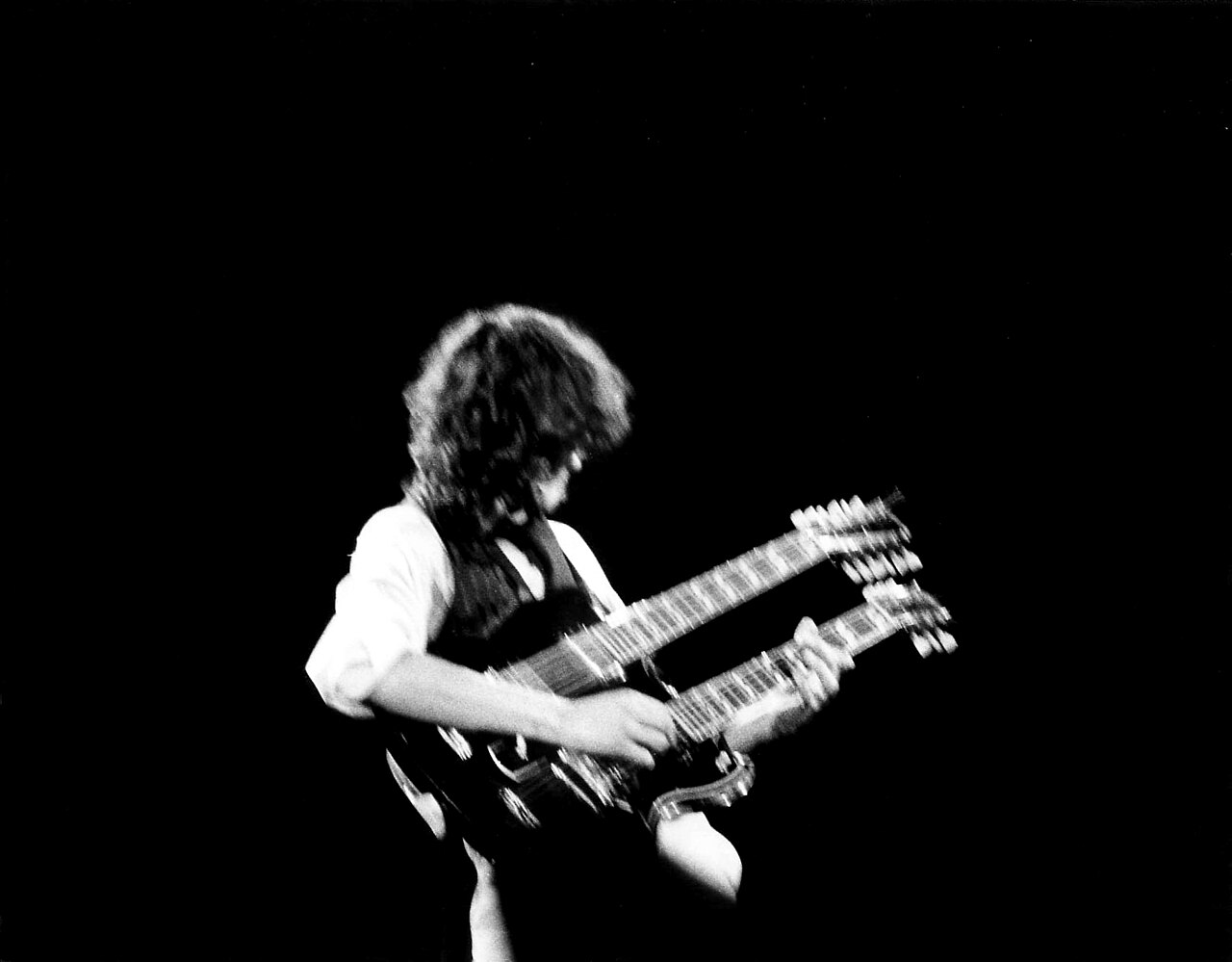
Jimmy Page‘s documented amplifiers are the Orange OR200 and the AD30 family from the 1970s — amps that predate the Micro Terror by forty years and that Page used when Orange and Matamp were deeply intertwined in the British rock scene. There is no primary source placing a Micro Terror in Page’s rig at any point. Jim Root’s touring amp is the Rockerverb 100 MKIII; his signature model is the #4 Jim Root Terror, a Rocker 15 Terror chassis variant — not the Micro Terror. Brent Hinds has his own signature amp in the Brent Hinds Terror, launched at NAMM 2018 on the same chassis as the Rocker 15 Terror — again, not the Micro Terror. Omar Rodríguez-López is documented on the AD140HTC in his primary rig. Matt Pike’s documented stage heads run to the Dual Dark and Thunderverb family.
The actual documented users are less famous but more honest.
Toru Yamashita, lead guitarist of Japanese rock band One OK Rock, posted an Instagram image of a Micro Terror captioned “New one!!!!” — documented on Equipboard, consistent with his broader relationship with Orange (his Equipboard page also lists an Orange AD30TC and matching PPC212-C cabinet). One OK Rock broke through internationally with the 2015 album 35xxxv and have sold out stadium shows across Asia and the US. Yamashita is now a PRS signature artist for guitars, but his amp story has featured Orange prominently, and the Micro Terror appears to have been a personal purchase — which is more meaningful than a manufacturer-supplied endorsement item.
Andrew Stockdale, singer-guitarist of Wolfmother, is documented on Equipboard and video evidence from an interview showing him playing through a Micro Terror connected to its matching PPC108 cabinet. A genuine confirmed connection — though Stockdale’s current live setup has migrated to the Line 6 HX Stomp running ampless, suggesting the Micro Terror played a role in an earlier or rehearsal phase rather than his current touring approach.
For players seeking the Orange voice in a genuinely compact and affordable package, the Micro Terror represents the real entry point — and the honest framing is that its users tend to be serious working guitarists who bought one because they needed a portable Orange amp, not pop-star names enrolled in a manufacturer press programme.
Tone Recipes and Settings
Classic Orange Crunch
Stratocaster, bridge or neck, Gain 6–7, Tone 7–8, Volume 5, run into a 4×12. This is the setting the PG reviewer flagged for its “razor-like edge on the midrange.” Controls articulate single notes on the bridge pickup; the neck produces that thick spongy bloom Orange is known for. Pull back guitar volume to 7 for cleaner chords, then drive back up for leads. Pedals not required.
Late-Night Headphone Practice
Any guitar, guitar volume at 60%, Gain 4, Tone 6, Volume 1 o’clock, headphone output engaged. This is the Micro Terror’s killer application for apartment dwellers. The headphone signal is a direct speaker-simulated output — not studio-quality, but musical enough for practice at midnight without waking anyone. Add a delay pedal in front for texture.
Bedroom Doom
Les Paul or similar humbucker guitar, Gain 10, Tone 4–5, Volume 3. The Micro Terror does not run out of gain before running out of headroom — it pushes into genuinely thick high-gain territory. The Tone at 4–5 controls the top-end fizz that solid-state power sections can add at high gain. Through a 1×12 closed-back cabinet, this setting produces more low-end mass than the amp’s size suggests is possible.
Studio Tool: Micro Terror into a Load Box
Les Paul bridge pickup, Gain 7, Tone 7, Volume wide open, Micro Terror into a reactive load box (e.g. Universal Audio OX or similar), then IR capture of a British 4×12. At these settings the preamp tube is working hard, and the solid-state power section delivers clean, consistent current into the load. The resulting recorded tone is tighter and more predictable than a cranked all-tube amp — which is precisely why some engineers use the Micro Terror deliberately as a studio tool rather than as a compromise.
Sparkly Clean Arpeggios
Stratocaster neck pickup at guitar volume 50%, Gain 3, Tone 8, Volume 1 o’clock. Jordan Wagner’s PG test result: “The clean tones are quite sparkly and lush for such a tiny package.” Dial back the guitar’s tone control to 7 for a warmer, jazz-adjacent sound without changing the amp’s settings. Run into a small closed-back 1×12 for maximum detail.
Comparisons
vs. Orange Tiny Terror TT15H
The Tiny Terror TT15H runs 2× EL84 in cathode bias at 15W — an all-tube circuit that produces real power-amp saturation and dynamic bloom under load. The Micro Terror is a hybrid: 12AX7 preamp, solid-state power. The TT costs significantly more, weighs more, and delivers a different character under the fingers — particularly that EL84 “bloom not break” compression that makes it feel alive when you push it. The Micro Terror is tidier, more consistent, and approximately one-third the price. If the budget allows only one, the TT is the better amp; if portability and price are the constraints, the Micro Terror wins convincingly on both.
vs. Orange OR15H
The OR15H is an all-tube 15W single-channel head (3× 12AX7 + 1× 12AT7 preamp, 2× EL84 power) with a 4-stage cascaded gain preamp and a series FX loop. It is a substantially more complex and expensive amplifier that delivers a fundamentally different circuit character — closer to a modified JCM800 front end than the simpler Tiny Terror-derived voicing of the Micro Terror. The OR15H is a performance and studio tool; the Micro Terror is a portable and budget-focused tool. They are not really competing for the same buyer.
vs. Orange Rocker 15 Terror
The Rocker 15 Terror has two channels (Natural and Dirty), a power-wattage switch (0.5/1/7/15W), and a valve-buffered FX loop. At $749 MSRP, it is roughly five times the price of the Micro Terror. The Rocker 15 Terror is the serious gigging tool; the Micro Terror is the compact practice and studio companion. A guitarist who owns one may want the other for entirely different jobs.
vs. Orange Dual Terror DT30H
The Dual Terror DT30H is a fully tube 30W two-channel head (4× ECC83 + 4× EL84) with a TT channel and a Fat channel, plus 30/15/7W power switching. It outguns the Micro Terror in every dimension except size, weight, and price. The Micro Terror remains the most portable and affordable Orange Terror by a wide margin.
vs. Vox AC15C1
The Vox AC15C1 is a full-size all-tube combo at significantly higher price. It delivers classic British Class A EL84 character, built-in spring reverb, and a 1×12 Celestion Greenback — everything the Micro Terror lacks in terms of features. The Micro Terror wins only on portability and cost. They are not competitive products; they are complementary ones for different needs.
Buying Guide
The Micro Terror has been in continuous production since its 2012 NAMM debut. It is currently priced at approximately $129–159 new, with used examples starting around $90 on the secondary market. At this price point the used market risk is low — if anything goes wrong with a used unit bought under $100, the repair may cost more than the amp. Consider buying new from an authorized dealer for the warranty, unless the used price is compelling and the amp can be inspected in person.
The matching PPC108 1×8 cabinet was designed specifically for the Micro Terror and provides the most tonally integrated result. However, the Micro Terror will happily drive any 4Ω or higher cabinet — plugging it into a 4×12 is both safe and genuinely rewarding, as the larger speaker surface reveals midrange detail that the 1×8 can’t fully express. Running the Micro Terror into a 4×12 is not absurd; it is one of the better arguments for the amp’s versatility.
Note the 4Ω minimum impedance requirement. The PPC108 is rated at 4Ω. Most standard 1×12 and 2×12 cabinets are 8Ω or 16Ω — both safe. A typical 4×12 wired in series/parallel (the most common configuration) is 16Ω — also safe. Check before connecting; a mismatch below 4Ω risks damaging the power section.
The 12AX7 preamp tube is easy to replace: remove the retaining screws securing the top cage, lift the cage, and pull the tube from its recessed socket. A matched replacement takes seconds. Unlike all-tube amps, the solid-state power section requires no re-bias, making tube maintenance minimal.
The external 15V DC power supply (the wall wart) is both the amp’s most practical feature and its most fragile point. International adapters are included. Keep a spare or note the voltage rating for replacement; third-party 15V DC power supplies at the correct amperage (check Orange’s spec sheet) will work. Losing the power supply makes the amp useless, so travel with it protected.
Ownership Notes
The single channel means there is no footswitch option for changing gain levels mid-song. The old-school approach applies: adjust the Gain knob between songs, or use the guitar’s volume control as a dynamic gain control. The latter approach actually works well with the Micro Terror because the 12AX7 preamp is genuinely responsive to input level — it is not the flat input response of a cheap solid-state front end. Rolling back guitar volume to 6 or 7 from 10 produces a noticeably cleaner signal rather than just a quieter one.
At full volume and maximum gain, the Micro Terror is not loud enough to compete with a drummer playing at full intensity. Premier Guitar’s reviewer stated this plainly. That is not a defect; it is a design reality of 20 watts into an 8-inch speaker. If you need to be heard over a loud drummer in a rehearsal room, the Micro Terror needs a larger cabinet — ideally a 4×12 — to develop enough air movement. Plugged into a 4×12, 20 watts of solid-state is more audible than 20 watts of all-tube through an 8-inch, because solid-state power tends to deliver its rated wattage more consistently at all frequencies.
The headphone output adds silent practice capability, but the speaker simulation built into the circuit is functional rather than exceptional — fine for personal practice, not a substitute for a dedicated cabinet simulation or impulse response loader in a professional recording context. For recording, running the Micro Terror into a reactive load box and then through IR cabinet simulation will yield significantly better results than the onboard headphone output.
The Micro Terror is made in China, like the majority of Orange’s current range. Build quality has been consistently reported as solid — the high tensile steel chassis is not a marketing claim; the amp survives road and travel conditions that would damage cheaper plastic-chassis mini amps.
One running note: some early units have been reported with minor component misalignment on the PCB — crooked resistors, slightly off-axis capacitors. This is cosmetic and does not affect function or reliability. The PG reviewer noted “some components that are a bit crooked or not very straight, nothing that may be a deal-breaker,” which has been echoed in community reviews since. It is an assembly artifact from contract manufacturing, not a structural concern.

Frequently Asked Questions
Is the Orange Micro Terror all-tube?
No. The Micro Terror is a hybrid amplifier: the preamp stage uses a single 12AX7 (ECC83) vacuum tube, while the power amplifier section is solid-state. This distinguishes it from Orange’s fully tube-powered Terror heads such as the Tiny Terror TT15H, TH30H, and OR15H. The tube provides genuine preamp warmth and harmonic character; the solid-state power section delivers consistent output without the sag, compression, or re-bias requirements of an all-tube power stage.
Can the Orange Micro Terror be used for live gigs?
Yes, with caveats. The Micro Terror is not loud enough to sit in a live mix against a drummer playing at full intensity through the PPC108 1×8 cabinet alone. Paired with a 4×12 cabinet, the amp’s 20 watts of solid-state power is more effective, and the midrange character cuts reasonably well in a small-room live context. For larger venues, running the Micro Terror through a reactive load box into a PA or recording system (ampless) is a more common application. It has been used in live settings by documented players — but as a studio or IEM-based touring tool, not as a traditional stage amp driven hard into a room.
What cabinet should I pair with the Orange Micro Terror?
The matching PPC108 1×8 closed-back cabinet was designed specifically for the Micro Terror and provides the most tonally consistent result at low volume. For more volume and midrange mass, any 4Ω or greater cabinet will work — the Micro Terror is particularly effective into a 1×12 or 4×12. The minimum impedance is 4Ω; do not connect a 2Ω load. A 16Ω 4×12 (the most common configuration) is safe and recommended for anyone who wants to genuinely develop the amp’s capabilities at stage-adjacent volume levels.
How does the Orange Micro Terror compare to the Tiny Terror?
The Tiny Terror TT15H is an all-tube 15W head (2× EL84 power valves) that costs significantly more and produces real power-amp saturation and dynamic bloom — the characteristic EL84 “feel” when pushed. The Micro Terror is a 12AX7 preamp into a 20W solid-state power section. The Tiny Terror has more dynamic range and authentic tube character; the Micro Terror is more affordable, lighter, and delivers more consistent saturation character across volume levels. For players on a strict budget, the Micro Terror is the genuine value buy. For players who can stretch, the Tiny Terror rewards the investment.
What is the Micro Terror’s headphone output like?
The 1/4″ headphone jack includes basic speaker simulation and cuts the amp’s 4Ω speaker output when plugged in, making it useful for silent practice. The quality is functional — adequate for personal practice at any hour, not a professional recording output. For recording through headphones at quality that holds up to scrutiny, pair the Micro Terror with a dedicated load box or DI that provides proper impulse response (IR) cabinet simulation downstream.
Can I use an attenuator with the Orange Micro Terror?
You can, but there is limited benefit in the traditional sense. Attenuators are most useful for all-tube amps where power-stage saturation is part of the desired sound — the attenuator allows the tubes to run hard while reducing the speaker output. Since the Micro Terror’s power section is solid-state, there is no power-tube saturation to preserve. Running an attenuator in line with the Micro Terror simply reduces volume without unlocking any additional character. A reactive load box for silent recording is more useful than a conventional power attenuator for this amplifier.
Is the Orange Micro Terror discontinued?
As of mid-2026, the Micro Terror remains in Orange’s current product catalogue and is in active production. It has been available continuously since its 2012 NAMM launch — an unusually long production run for a budget-tier product, reflecting genuine demand. Street prices have remained in the $129–159 range in the United States, and the PPC108 matching cabinet is also currently available. The Micro Dark (a sister model featuring a solid-state preamp rather than a 12AX7 tube, and a dedicated suboctave toggle) was launched subsequently and occupies a slightly different space.
Can I run the Orange Micro Terror on batteries or bus power?
No. The Micro Terror requires a 15V DC supply from the included external power adapter. It cannot run on batteries or standard 9V pedalboard power. The 15V requirement means standard pedalboard supplies will not work. If touring internationally, use the included international adapter set or source a compatible 15V DC supply at the correct amperage for the destination country. Loss of the power adapter renders the amp non-functional, so back up accordingly.
Image credits
- A band playing outdoors with an orange amp: Fekist, Wikimedia Commons, CC BY-SA 4.0.
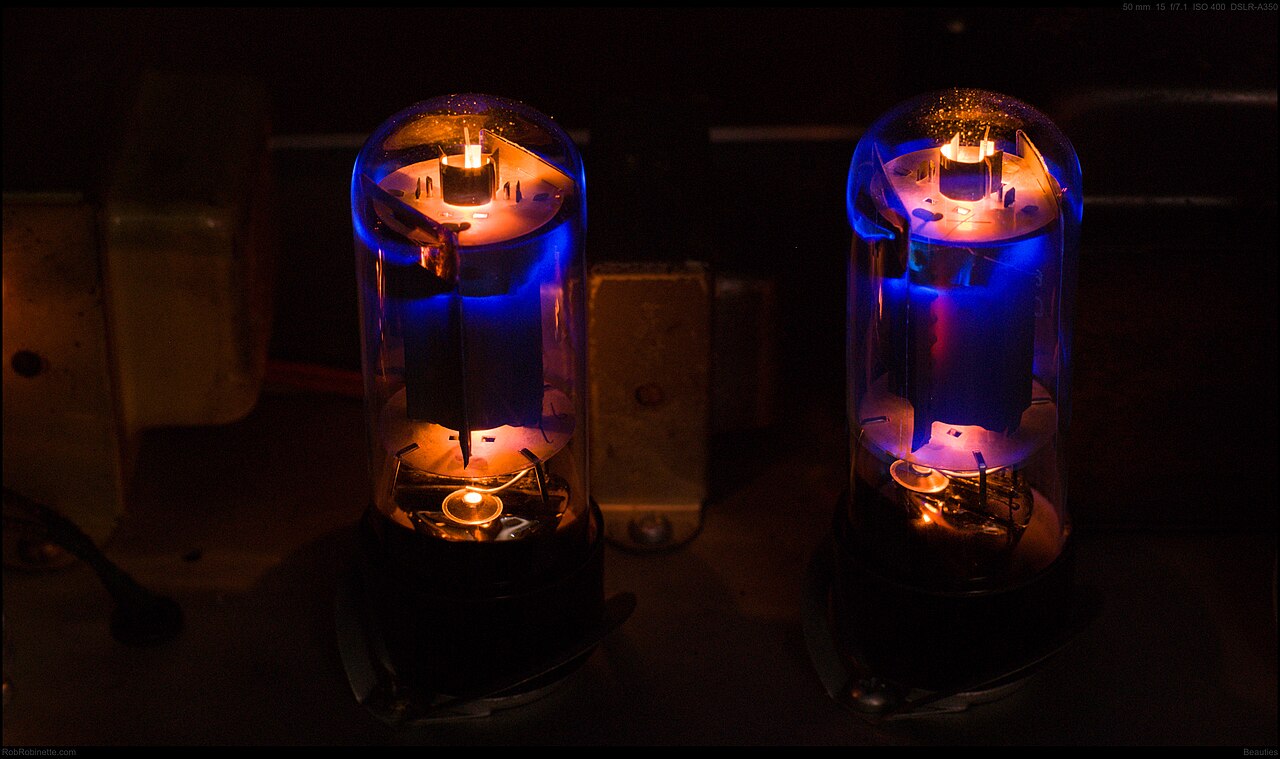
- Two glowing power tubes in an amp: Rob Robinette, Wikimedia Commons, CC BY-SA 4.0.
- Jimmy Page: Andrew Smith, Wikimedia Commons, CC BY-SA 4.0.
Latest News
Related
On This Day
Wednesday 11 November
From this week: