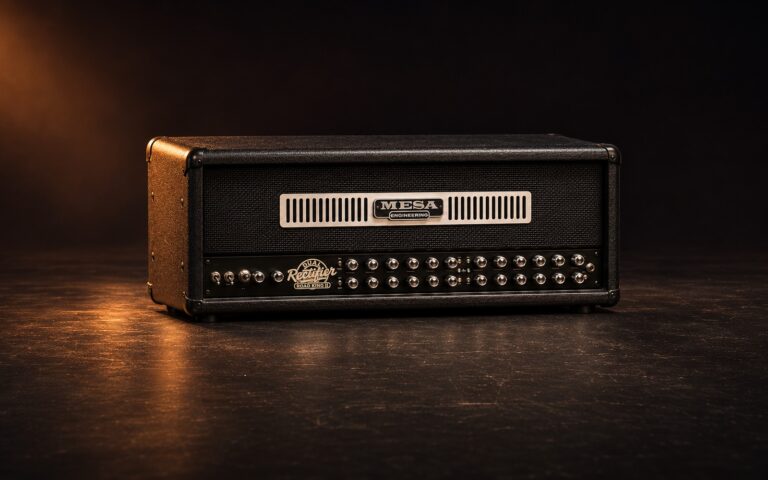
The Swiss Army Knife That Shredded Its Sheath: Inside the Mesa/Boogie Dual Rectifier Roadster
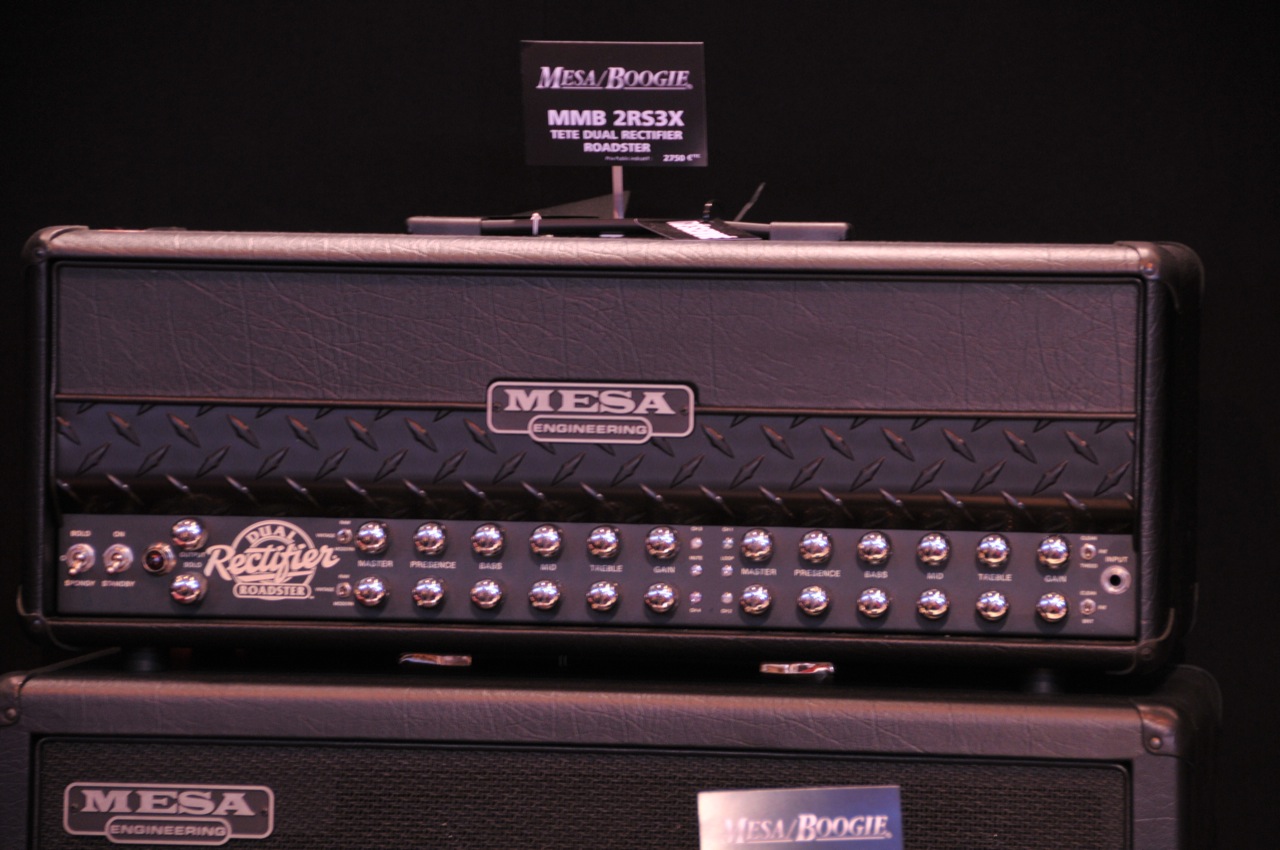
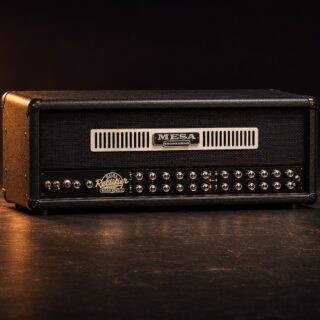
Mesa/Boogie Dual Rectifier Roadster head. Photo: fvancini, CC BY 2.0, via Wikimedia Commons (File:Dual rectifier Roadster Mesa Boogie Head.jpg).
The discontinued Mesa/Boogie Roadster packs 4 channels and 12 footswitchable modes into one head. Specs, verified players, tone recipes, and buying guide.
There is a moment in every serious gigging guitarist’s life when one amp stops being enough. Not because it sounds bad—but because the band plays three genres in one set, the front-of-house engineer wants a clean channel and a crunch channel that don’t require a pedal chain to produce, and the soundcheck window is twelve minutes. That is the problem the Mesa/Boogie Roadster was built to solve.
Released in the mid-2000s and discontinued in May 2017 when Gibson acquired the Petaluma operation, the Roadster was Mesa’s “accessible flagship”—a four-channel, twelve-mode, 50/100-watt all-tube thoroughbred that delivered more footswitchable preamp real estate than any competitor at its price point. It was not the company’s most powerful amp. It was not the most complex. It was, by Mesa’s own published description, “a Road King without Progressive Linkage”—and for a very large number of professional guitarists, that turned out to be exactly the right amount of amp.
This is its story.
Blood from the Rectifier: Origin and Context
To understand the Roadster you have to understand Mesa’s Rectifier lineage. The original Dual Rectifier Solo Head, released in 1992, redefined what a high-gain amplifier could sound like. Its three-mode channel architecture—Raw for sweet clip, Vintage for liquid lead, Modern for crushing grind—gave players a single amp that could plausibly cover an entire hard rock set. Metallica ran it. So did Tool, Alice in Chains, and Soundgarden. By the mid-1990s the Rectifier was the default touring amp for a generation of heavy players.
The problem was that the Dual Rectifier, for all its power, was fundamentally a high-gain machine with one clean channel that players either loved or learned to live with. The market wanted more. Mesa’s answer, over the years, was a cascading series of expansions: the Triple Rectifier added a third high-gain channel and more wattage; the Road King (2002) added per-channel power tube configuration and four independent channels; and the Roadster, introduced in the mid-2000s, offered four channels and twelve modes without the Road King’s more complex power management architecture.
“The Roadster now offers the plug-and-play minded guitarist a way to enjoy a myriad of footswitchable preamp choices without the power option anxiety,” Mesa wrote on its own product page. That framing is telling. The Road King’s Progressive Linkage feature—which allowed players to configure each channel to run on two or four power tubes, in pentode or triode—was genuinely powerful and genuinely intimidating. The Roadster stripped that out, kept the twelve preamp voices, and made the amp something a touring musician could hand to a tech and reasonably expect to be configured correctly by showtime.
Every Roadster was built by hand in Petaluma, California, under the supervision of the same technicians who had assembled every Mesa amp since Randall Smith’s 1969 garage modifications to a Fender Princeton. The Roadster ran in production until May 2017.
Architecture: What Twelve Modes Actually Means
Most multi-channel amplifiers use the word “channel” to mean a distinct input stage with its own gain and EQ. The Roadster uses it more precisely. Each of its four channels has three distinct modes—wiring configurations that fundamentally change the preamp circuit’s character, not just its gain level. The result is twelve genuinely different preamp voices, all independently footswitchable via the included 8-button controller.
Channels 1 and 2 share a similar mode structure with one voice different per channel. Channel 1 offers Clean, Fat, and Tweed. Clean is the sparkling, articulate American sound that has been Mesa’s calling card since the Mark series—enormous headroom, glassy top end, deep bottom that tracks without flub. Fat takes that same clean architecture and warms it toward a vintage Fender blackface character, adding lower-midrange presence and a slightly earlier breakup point that responds to pick attack and guitar volume knob position. Tweed is the departure: a mid-gain voice built on American tube-rectified tweed-era Fender architecture, with a compressed, punchy, harmonically saturated character that lives between clean and full distortion.
Channel 2 modes are Clean, Fat, and Brit. The Clean and Fat modes here are the same circuit as Channel 1—and this duplication is deliberate. It means a player can configure two independently saved sounds using the same foundational voice, arriving at the second channel with a different EQ trim, gain setting, or reverb level, or simply having a backup version of the same clean tone at a different footswitch position. The Brit mode replaces Tweed: a mid-gain voice with English rock character, more compressed and midrange-focused than the Tweed, with the kind of organic breakup that trails into harmonics when pushed. Late-1960s Marshall territory, not modern gain.
Channels 3 and 4 carry the complete Dual Rectifier high-gain arsenal—Raw, Vintage, and Modern—in both slots. Raw is the lowest-gain of the three: a sweet, articulate clip with wide dynamic range and enough open character to work for blues or early hard rock. Vintage is the classic Rectifier voice—liquid sustain, wide frequency response, the tone that defined stadium rock in the 1990s. Modern is the weapon: tight, high-gain, scooped, with a crushing low end that requires careful cabinet matching and a Tube Screamer in the front end if you want it to cut a dense mix. Channel 4 carries the same three modes voiced slightly to favour the Modern character—consistent with what players hear in use, where Channel 4 Modern delivers a marginally tighter, more immediate attack than Channel 3 Modern.
Specifications
Multi-Watt and Recto-Tracking: What They Actually Do
Two features deserve attention beyond the spec table because they are frequently misunderstood.
Multi-Watt allows each channel to be independently set to either 50 or 100 watts. This is not an attenuation feature—it is a genuine reconfiguration of the power stage. At 50 watts, Mesa engages one pair of 6L6s and the resulting response is brighter, more elastically bouncy, and reaches power-amp compression earlier. At 100 watts, all four 6L6s run and the character shifts to tighter low-end girth with more midrange authority. The practical implication is that a player can run their clean channels at 100W for maximum headroom and their high-gain channels at 50W for earlier power-section contribution at touring volumes. The feature works best when the amp is genuinely driven; at bedroom levels the difference is subtle.
Recto-Tracking is Mesa’s term for the per-channel rectifier switching. Each channel independently selects between silicon diode rectification and tube rectification via 5U4G tubes. Tube rectification introduces voltage sag—a dynamic compression in the power supply that responds to transients by allowing the voltage to drop momentarily before recovering. This translates to a looser, bouncier feel with more bloom on sustained notes: the sag and bounce that defines vintage Fender and early British amp sounds. Silicon diodes remove the sag entirely, producing a tighter, more immediate response with better low-end definition and more consistent output under heavy playing. Mesa’s Recto-Tracking implementation runs one 5U4 at 50W and both 5U4s at 100W, so the character of the sag also changes with the wattage setting—an additional variable to map before committing a channel to a sound.
The Reverb System
Mesa sourced the Roadster’s reverb circuit from the Lone Star, the company’s boutique-tier American clean platform, and fitted it to all four channels with independent depth controls on the rear panel. This is genuinely excellent reverb by amplifier standards—not a feature checkbox. The all-tube transformer-coupled long-spring design produces a warm, ambient bloom that sits behind a note rather than overwhelming it, and remains controlled even at high channel gain levels.
Each channel’s reverb level is set independently at the rear panel, which means a player can have almost no reverb on the high-gain channels—where it would smear low-end definition and chord separation—and generous ambient reverb on the clean channels, creating a dimensional sound that defeats the need for an outboard reverb pedal on those voices. This is the correct approach for a live rig, where the front-of-house engineer needs consistent and predictable channel sends rather than reverb settings adjusted mid-set. The rear-panel implementation rewards a programming session before touring and punishes players who never open the back panel.
Famous Players
The gear list tags the Roadster with five artists: Carlos Santana, John Petrucci, Metallica, Larry Carlton, and Andy Timmons. This is, by now, a fully recognisable pattern. The same five names have appeared across the Trem-O-Verb , the Recto-Verb 25 , the Road King II , the Single Rectifier , and multiple others. It is the recycled Mesa roster, and it does not hold up for the Roadster any better than it did for those amps.

Carlos Santana‘s documented Mesa history begins and ends with the Mark I—Randall Smith built one of the earliest production models for him in the early 1970s, and his guitar tech has confirmed on camera that the Mark I produced the tone on Abraxas and Caravansei. He has never been documented on a Roadster, and the Mesa family he became associated with preceded the Roadster by thirty years.
John Petrucci‘s amp history is covered in detail in the JP-2C article and the Triaxis article . His primary recording and touring amp is the Triaxis preamp into Mesa power amplifiers; the JP-2C is the two-channel Mark-series head built to his specifications. No primary source places him on a Roadster.
James Hetfield and Metallica’s documented amp history runs through the Triaxis and the Triple Rectifier . Hetfield’s touring rig uses Triaxis preamps into Mesa power sections; Kirk Hammett has used Triple Rectifiers. The Roadster does not appear in their documented touring infrastructure at any point.
Larry Carlton‘s Mesa history is the Mark I—he was an early Petaluma devotee, and his tone on Steely Dan’s “Kid Charlemagne” comes from that era. He has been documented on Dumble amplifiers for decades of his career since. The Roadster is not in his recorded or live gear history.
Andy Timmons’ documented amps are the Mesa Lone Star and Stiletto Deuce Stage II, confirmed in Premier Guitar’s 2016 Rig Rundown. The Roadster is not part of his professional rig.
Myles Kennedy — Alter Bridge / Slash
Mesa’s own editorial blog, Amplitudes, published a March 2011 Artist Spotlight on Myles Kennedy that included a photograph captioned explicitly: “Myles Kennedy/Alter Bridge 2007 with Mark IV and Roadster heads and Rectifier 4x12s.” This is a primary-source confirmation of Kennedy’s Roadster use during Alter Bridge’s 2007 touring period—the era of their second album Blackbird, one of modern hard rock’s strongest records. Kennedy’s approach of running the Roadster alongside a Mark IV is precisely the kind of sophisticated multi-amp configuration the Roadster enables: Mark IV for the clean and mid-gain sounds it was bred for; Roadster’s high-gain Channels 3 and 4 for the sustaining Rectifier leads. Mesa’s same blog documented his subsequent move to the Mark V as his primary amp by 2011.

Adam Dutkiewicz — Killswitch Engage
During the early Killswitch Engage touring period—roughly 2003 through 2012, covering the Alive or Just Breathing through Disarm the Descent era—Adam Dutkiewicz ran Mesa Roadster heads into Mesa and Hughes & Kettner 4×12 cabinets loaded with Celestion Vintage 30s, alongside Joel Stroetzel’s Triple Rectifiers. Multiple independent sources document the Roadster as Dutkiewicz’s live amp of choice during the metalcore band’s peak years. By Premier Guitar’s May 2016 Rig Rundown, he had moved to a Laney IRT120H plus Fuchs Clean Machine—a significantly leaner rig, which he explained in terms of simplification and weight management on the road. The Roadster’s complexity—eight footswitch buttons, twelve modes, rear-panel reverb controls per channel—is precisely the kind of infrastructure that gets stripped out when a touring musician decides the amp is taking more attention than the show.

Ola Englund — The Haunted / Solar Guitars
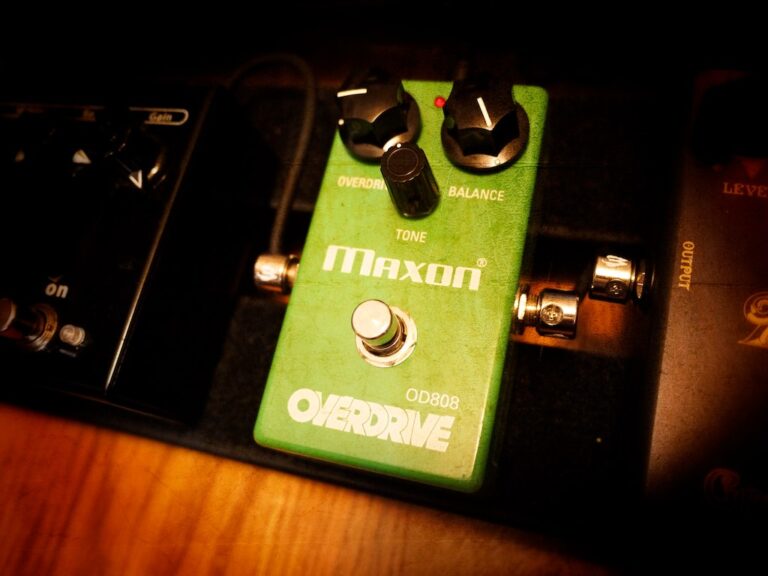
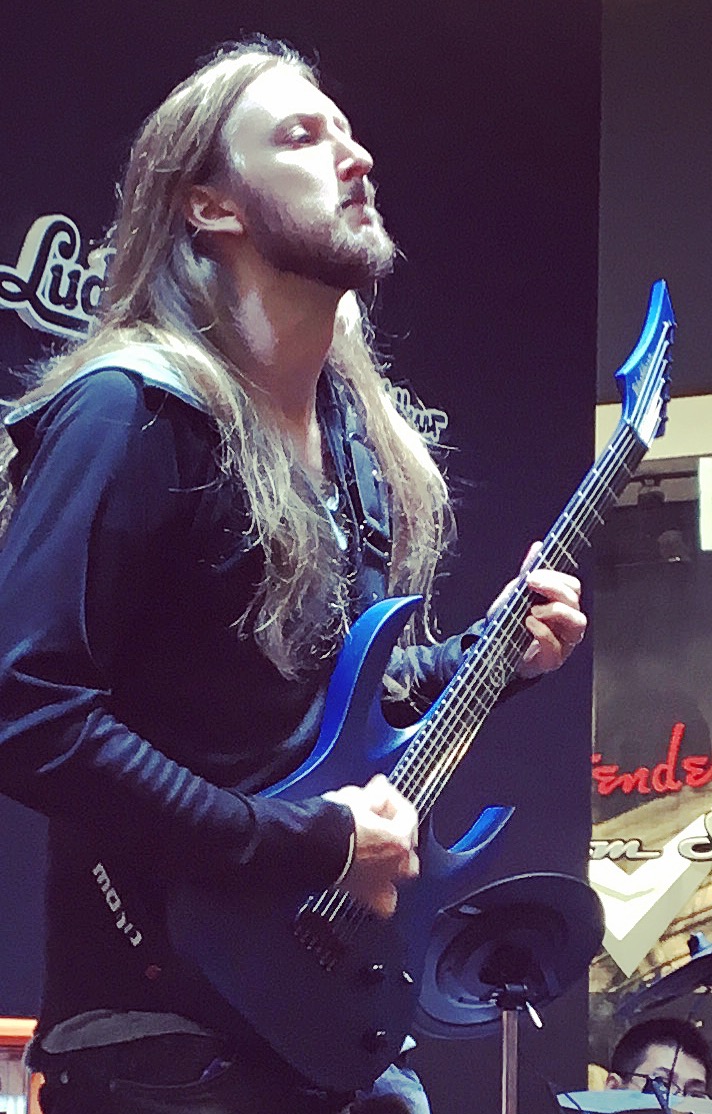
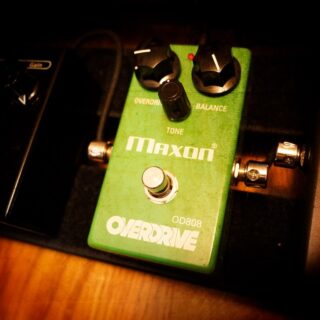
Swedish guitarist Ola Englund—The Haunted’s right-hand and founder of Solar Guitars—built much of his early YouTube presence on amplifier demonstration work. His 2011 Mesa Boogie Roadster demo, using an Ibanez RGD2120 and a Maxon OD808 overdrive, is one of the most-referenced Roadster demonstrations in circulation and remains a primary reference point for players evaluating the amp’s high-gain channels with a modern extended-range signal chain. Englund is an engineer-level amp tester who documents his settings and signal chain in detail; his Roadster work is consistent with his documented gear at that period. Equipboard lists the Roadster as part of his verified gear.
Tone Recipes and Settings
Recipe 1 — Channel 1 Clean: Stadium Crystal
Mode: Clean. Gain: 2. Treble: 6. Mid: 5. Bass: 4.5. Presence: 6.5. Master: 7. Power: 100W. Rectification: Silicon. Reverb rear panel: 4. This is the Roadster at its most pristine—maximum headroom, transparent, the kind of clean that a pedalboard chain can run into without any colouration from the preamp stage. A Tube Screamer set to maximum tone and minimum drive tightens the low end of the signal before it hits the amp. Run into a Celestion Vintage 30-loaded 4×12 at 8 ohms. The 100W setting maximises headroom and prevents any power-stage softening on loud chord attacks, which would introduce unwanted warmth into what should be a glass-clear signal.
Recipe 2 — Channel 1 Tweed: Country Blues Compression
Mode: Tweed. Gain: 4. Treble: 5. Mid: 6. Bass: 5. Presence: 5. Master: 5. Power: 50W. Rectification: Tube (5U4). Reverb: 6. At 50 watts with tube rectification, the Tweed mode delivers a dynamic compressed bloom that rewards light picking and responds to hard strumming with natural grit. Bridge pickup on a Telecaster-style guitar into this channel is the classic American road sound—the Tweed mode’s compressed character and the 5U4’s sag combine to create a responsive, musical voice that cleans up completely at guitar volume 7 and breaks with organic warmth when pushed to 10. Not a high-gain setting—a vintage response machine.
Recipe 3 — Channel 2 Brit: Classic Rock Crunch
Mode: Brit. Gain: 5. Treble: 6. Mid: 7. Bass: 4. Presence: 6. Master: 6. Power: 50W. Rectification: Tube. Reverb: 2. The Brit mode in Channel 2, paired with 50W tube rectification, covers everything from late-1960s hard rock through NWOBHM crunch. It responds dynamically to pick attack—light strumming stays clean-ish; full-hand rhythm chords break with authoritative harmonic density. This is the sound for a band that needs British-flavoured crunch without running a separate Marshall. A medium-output humbucker guitar in the bridge position drives the mode perfectly; a PAF-style pickup keeps it dynamic and open.
Recipe 4 — Channel 3 Vintage: Classic Rectifier Lead
Mode: Vintage. Gain: 7. Treble: 6.5. Mid: 4.5. Bass: 6. Presence: 7. Master: 7. Power: 100W. Rectification: Tube. Reverb: off. This is the tone that built the Rectifier’s reputation—liquid, sustaining, wide-open. The Vintage mode in Channel 3 is the same circuit as the Dual Rectifier’s Vintage voice and produces the same late-1990s hard rock sound. A Maxon OD808 at the front end (tone at max, level at 3 o’clock, drive at minimum) tightens the low end for palm mutes and adds articulation to the high-gain sustain. Four-ohm cab load for maximum low-end weight. This is the mids-scooped Myles Kennedy setting—wide, liquid, room-filling.
Recipe 5 — Channel 4 Modern: Tight Modern Metal
Mode: Modern. Gain: 6. Treble: 7. Mid: 4. Bass: 5.5. Presence: 7. Master: 6. Power: 100W. Rectification: Silicon. Reverb: off. EL34 power tubes installed via rear bias-select. Tube Screamer before the input (drive at zero, tone at max, level up). The EL34 swap tightens low-end definition and adds upper-mid presence; silicon diode rectification removes sag for precise tracking on fast riff work; the Tube Screamer gates the low end. This is the setting Ola Englund was approximating in his 2011 demo—the Modern channel’s silicon-rectified, 100W, EL34 configuration is disciplined enough to track fast articulate playing on a seven- or eight-string guitar without the loose low-end bloom that characterises the 6L6 tube-rectified version of the same mode.
How the Roadster Fits the Mesa Family
vs. Dual Rectifier Solo Head
The Dual Rectifier is the Roadster’s closest relative in the Rectifier family and the amp that the Roadster’s Channels 3 and 4 directly replicate. The Roadster adds two entire channels dedicated to clean and mid-gain sounds, Multi-Watt per-channel wattage selection, per-channel reverb, and per-channel rectifier switching—none of which the Dual Rectifier offers in the same form. The Dual Rectifier’s Channel 1 clean is a single voice with no Tweed or Fat option; its reverb is absent or limited; it cannot switch wattage per channel. If you run a simple clean/dirty two-channel setup and want the Dual Rectifier’s high-gain character, the Dual Rectifier costs less and weighs less. If you need a third and fourth clean or crunch voice that the Dual Rectifier cannot provide, the Roadster justifies its price premium and complexity.
vs. Triple Rectifier Solo Head
The Triple Rectifier is a 150W, six-6L6 dedicated high-gain machine with three channels that are all Rectifier-family high gain. Its Channel 1 is the cleanest of the three but still voiced for high-headroom rock applications—not a clean channel in the Roadster’s sense. If you are running the Triple, you are committed to the high-gain world and sourcing clean and mid-gain sounds from your pedalboard or a separate amp. The Roadster, by comparison, is the all-in-one: same high-gain Channels 3 and 4 as the Dual Rectifier, with Channels 1 and 2 providing clean and mid-gain voices that the Triple cannot approach.
vs. Road King II Head
The Road King II is the Roadster’s direct sibling and the amp that makes the Roadster look approachable. Mesa’s own copy defines the relationship: the Roadster is “a Road King without Progressive Linkage.” Progressive Linkage allows each Road King channel to independently select how many power tubes it uses—two or four—and whether they run in pentode or triode, producing five power configurations per channel rather than the Roadster’s two (50W/100W). The Road King II also features dual series effects loops per channel and was factory-spec’d at 4× 6L6 plus 2× EL34. The Roadster runs 4× 6L6 standard with EL34 as a user swap. Used pricing: Roadster roughly $1,100–$1,800; Road King II roughly $1,500–$2,500. The difference buys Progressive Linkage and the dual loop architecture. Whether that trade is worthwhile depends entirely on how deeply a player wants to explore power-section voicing as a compositional tool.
vs. Mesa/Boogie Trem-O-Verb Combo
The Trem-O-Verb is the Rectifier-platform amp whose Blues mode partially overlaps the Roadster’s Channel 2 Brit territory. The Trem-O-Verb’s Blues mode is a warm, mid-forward overdrive with a different sonic signature than any Roadster mode—more organic push, earlier saturation, closer to a pushed American clean character than a British one. The Trem-O-Verb adds a tempo-syncable tremolo and all-tube reverb in a 2×12 combo format. It is a two-channel, four-mode amp with far less footswitching real estate than the Roadster. Different tool for different jobs: the Trem-O-Verb is a character amp; the Roadster is the Swiss Army knife.
vs. Mesa/Boogie Mark IV
The Mark IV and the Roadster are often compared because both are multi-channel high-feature Mesa amps from approximately the same price tier. The Mark IV’s three channels are voiced in the Mark-series character—mid-forward, harmonically complex, with the graphic EQ available on Channel 3 as a significant tonal tool. The Roadster’s high-gain channels are Rectifier-voiced—looser, more open, with a wider frequency canvas and more low-end presence. The Mark series rewards players who want aggressive midrange push and tight note separation; the Rectifier rewards players who want a wide, powerful sound with singing sustain. Myles Kennedy ran both simultaneously in 2007 for precisely this reason: the Mark IV handled his clean and mid-gain sounds; the Roadster covered his high-gain headroom. The combination makes sense and reveals what each amp does that the other cannot.
Buying Guide
The Roadster was discontinued in May 2017 when Gibson completed its acquisition of Mesa Engineering. Used examples are the only option, and the market has settled: expect $1,100–$1,500 for a standard black vinyl example with jute or diamond plate grille in good working condition, with outliers above $1,800 for custom finishes (Antique Red King Crocodile Leather, cobra, blonde), near-mint examples with the original footswitch, or head-and-cab matched pairs.
The rear panel is the first thing to examine on any used Roadster. Each of the four channel strips has its own reverb level pot, rectifier switch, wattage switch, and effects loop engagement switch—twenty controls across the rear panel, all of which should be tested before purchase. Each pot should turn smoothly without scratching; each switch should engage cleanly without intermittency. A scratchy reverb pot is a $15 part and ten minutes of labour; a rectifier switch that intermittently drops from tube to silicon mid-set is a more involved repair with a harder-to-source original component.

Tube condition matters more on the Roadster than on simpler amps because the character differences between modes are partly driven by the interaction between 6L6 output tube condition and the preamp’s gain staging. Microphonic 12AX7s in key preamp positions will exhibit noise and instability, particularly in the high-gain modes at higher master volumes. Mesa used matched output tubes from the factory; ask the seller when the power tubes were last replaced and budget $80–$120 for a matched quad of 6L6s if the answer is uncertain.
The 5U4G rectifier tubes are increasingly hard to source in current production. JJ Electronics and Electro-Harmonix both supply them; expect $30–$40 per tube. An amp that has been run exclusively on silicon diodes will have older but lower-hours rectifier tubes, which is not a problem—it simply means the tube rectification option has been underused.
The 8-button footswitch is a specific Mesa unit and is not easily substituted with a generic controller. Confirm it is included. Replacement Mesa Roadster footswitches run $80–$150 on the used market. A third-party 8-button switching system can be wired to the external switch jacks on the rear panel if the original is missing, but the Roadster uses standard tip-to-ground latching logic and requires basic technical knowledge to implement correctly.
Living with the Roadster
Weight is the most-cited real-world complaint from Roadster owners. The head chassis is loaded with six preamp tubes, four power tubes, two rectifier tubes, multiple transformers, and a rear panel that contains more controls than many simpler amps have in total. Forum measurements consistently place the Roadster Head between 57 and 62 lbs depending on the specific variant and hardware. This is heavier than the Dual Rectifier (approximately 44 lbs) and roughly equivalent to the Road King II. For gigging, a hardshell road case, a backline tech who has read the rear panel carefully, and a matched 4×12 cabinet are the minimum sensible configuration. The 2×12 Combo version weighs more still and is a two-person lift.
The rear panel rewards study and punishes inattention. Players who work through it thoughtfully—setting reverb levels per channel, choosing rectifier type to suit each mode’s character, selecting wattage per channel for the power-stage response they want—get an amp that feels almost semi-modular in its flexibility. Players who leave the rear panel at factory defaults get a good amp that is not running at its full potential. Set aside an evening with the guitar and the rear panel before committing settings to a touring configuration.
The EL34 bias swap is worth attempting at least once. Mesa’s rear-panel bias-select switch reconfigures the bias circuit for EL34 operation without requiring a technician. The result is a distinctly different power-stage character: tighter low end, more upper-mid presence, more compressed on large chords, with a classic brown clip on Channel 2 Brit and more definition and articulation on the Modern channel. Some players—particularly rhythm-focused players and extended-range players—prefer the EL34 Roadster as a permanent configuration. Others find the 6L6 looser and more forgiving on lead work. Try both before committing to a permanent power tube choice.
The series effects loop’s hard bypass is one of the Roadster’s most useful features and one of the least used by players who don’t read the manual. In hard bypass mode, two tubes and all associated loop circuitry leave the signal path entirely, producing the shortest, most direct signal chain the amp is capable of. The sonic improvement is subtle at stage volume but consistently audible in a studio or critical listening context. Use hard bypass on any channel where no effects are being inserted—there is no reason to leave idle loop circuitry in the path.
Frequently Asked Questions
Is the Mesa/Boogie Roadster still in production?
No. Mesa officially discontinued the Roadster in May 2017, at the same time as the Road King II and several other models, following Gibson’s acquisition of Mesa Engineering. No equivalent four-channel Rectifier-series replacement has been introduced under the current Mesa lineup. The used market is the only source.
What is the difference between the Roadster and the Road King II?
Mesa’s own product page defines it precisely: the Roadster is “a Road King without Progressive Linkage.” Progressive Linkage is the Road King’s per-channel power tube configuration system—each channel can independently select two or four power tubes running in pentode or triode mode, producing five distinct power configurations per channel rather than the Roadster’s simple 50W/100W selection. The Road King II also features dual series effects loops per channel and a factory tube complement of 4× 6L6 plus 2× EL34. The Roadster runs 4× 6L6 standard, with EL34 as a user-swap option via the rear bias-select switch. The Road King II typically costs $400–$700 more on the used market.
Can I run EL34 tubes in the Roadster?
Yes. The rear-panel bias-select switch reconfigures the bias circuit for EL34 power tubes as a drop-in swap for the stock 6L6s. No technician is required. The EL34 produces a different power-stage character: tighter low end, more upper-mid presence, more British clip behaviour, and a slightly more compressed dynamic response on large chords. Some players run EL34s permanently—particularly rhythm-focused and extended-range players who want maximum articulation on the Modern channel. Others keep 6L6s and use the silicon diode rectification setting to tighten the response without changing the power tube character.
What channels have reverb on the Roadster?
All four. Each channel has an independent reverb level control on the rear panel. The circuit is all-tube, sourced from the Lone Star, and the implementation means reverb is programmed per channel rather than adjusted on the fly—the correct approach for a live rig where the front-of-house engineer needs predictable and consistent sends per channel. Set the high-gain channels’ rear-panel reverb controls low or to zero; give the clean channels generous reverb depth. That is the sound.
What is Recto-Tracking and why does it matter?
Recto-Tracking is Mesa’s name for the per-channel rectifier switching. Each channel independently selects between tube rectification (via 5U4G tubes) and silicon diode rectification. Tube rectification introduces voltage sag—dynamic compression in the power supply that creates a looser, bouncier feel with bloom on sustained notes. Silicon diodes remove the sag for a tighter, more immediate response with better low-end definition. The Recto-Tracking implementation runs one 5U4 at 50W and both at 100W, meaning sag character varies with wattage selection as well. The interaction between these two variables—wattage and rectification type—is where most of the Roadster’s per-channel tonal range lives.
Is the Roadster good for clean tones?
Genuinely, yes—and this is where it separates from the Dual Rectifier and Triple Rectifier. Channels 1 and 2 were designed with clean and mid-gain applications as their primary purpose and offer six distinct voices between them (Clean, Fat, Tweed on Channel 1; Clean, Fat, Brit on Channel 2) rather than a single clean input. The Clean voices carry exceptional headroom and transparency, and the all-tube reverb available at any depth creates dimensional clean tones without a pedal. This is the amp for the player who needs authentic clean sounds and genuine high gain from a single chassis without a separate clean amp or a complex rack system.
How does the Roadster’s Modern channel compare to the Dual Rectifier’s?
They are the same circuit. Channels 3 and 4 of the Roadster carry the identical high-gain preamp architecture as the Dual Rectifier’s Channel 2 in Modern mode. The difference is that the Roadster adds Multi-Watt power selection, per-channel rectifier switching, and per-channel reverb to the same preamp circuit. A player who already owns a Dual Rectifier and knows its Modern channel will recognise it immediately in Channels 3 and 4 of the Roadster—same voice, more context controls around it.
What speaker cabinet does the Roadster work best with?
Mesa’s own Rectifier-series 4×12 cabinets—loaded with Celestion Vintage 30s—are the design partner for the Roadster’s high-gain channels and represent the intended system. The 2×12 closed-back Combo cabinet, Mesa notes, produces “low-end spread reminiscent of a 4×12 for crunch and gain sounds while retaining a bright top-end.” For the clean channels, an open-back 1×12 or 2×12 loaded with a Celestion G12H-75 or similar speaker adds air and dimension to the clean voicing that a closed-back cabinet compresses slightly. Players who run multiple channels typically choose the 4×12 as the primary cabinet and accept a slightly closed character on the clean channels in exchange for the high-gain performance.
Image credits
- Larry Carlton: Kenneth C. Zirkel, Wikimedia Commons, CC BY-SA 4.0.
- Larry Carlton: Kenneth C. Zirkel, Wikimedia Commons, CC BY-SA 4.0.
- Top image: fvancini, Wikimedia Commons, CC BY 2.0.
- Ola Englund: Petrenko Petr, Wikimedia Commons, CC BY-SA 4.0.
- Myles Kennedy: Markus Felix, Wikimedia Commons, CC BY-SA 4.0.
- Adam Dutkiewicz: Stefan Brending ( 2eight ), Wikimedia Commons, CC BY-SA 3.0.
Latest News
Related
On This Day
Tuesday 10 November
From this week: