The Ghost in the Machine: How Xotic Bottled the Echoplex Preamp and Changed the Boost Pedal Forever
The Xotic EP Booster puts the Echoplex EP-3 preamp in a mini stompbox — how it works, who uses it, and why it lives on thousands of pro boards.
Sometime in the late 1960s, studio engineers and touring guitarists started noticing something strange about the Maestro Echoplex. Players were plugging into the front of the unit, letting their signal run through it — and then turning the echo effect completely off. What they were after wasn’t the delay. It was what the machine did to their tone just by passing through its input stage: a warmth in the low-mids, a shimmer in the upper harmonics, a certain dimensional quality that made a dry guitar sound somehow more alive, more present, more three-dimensional. Jimmy Page leaned on this trick. Eddie Van Halen built his entire rhythm guitar presence around it. Eric Johnson wouldn’t record without it. The Echoplex EP-3’s preamp circuit, never intended as a tone shaper on its own, became one of the most coveted secret weapons in rock history — and stayed a secret for almost four decades, locked inside an increasingly scarce piece of vintage gear that cost hundreds of dollars just to have running on a pedalboard, taking up space that three pedals could use.
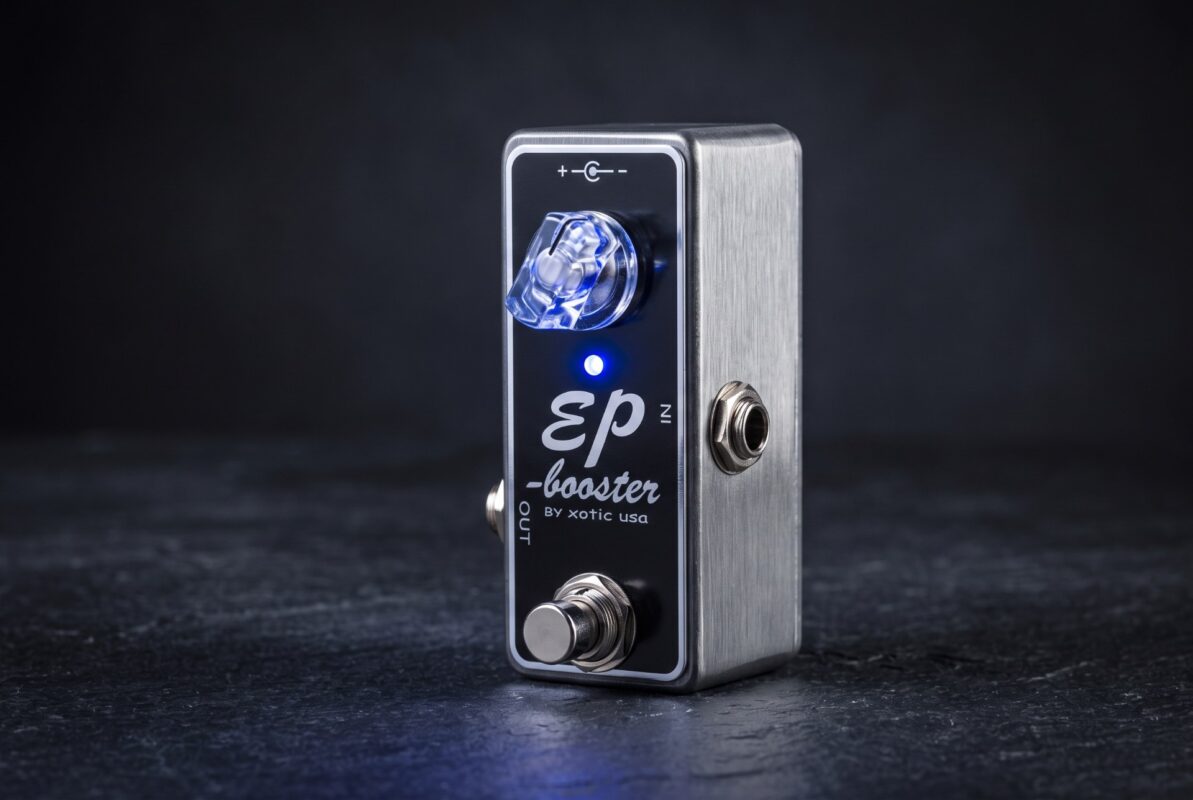
In 2009, Xotic Effects changed that equation. In a small 3.5-by-1.5-inch enclosure — barely larger than a matchbook — the Xotic EP Booster distilled the core of the EP-3’s input preamp into a modern, reliable, battery-powered stompbox that the world’s best players could afford, source, and trust on the road. The result wasn’t just the most popular boost pedal on the market. It was a paradigm shift in how guitarists think about what a boost pedal is supposed to do.
The Echoplex Preamp: A History of Happy Accidents
To understand the EP Booster you have to understand the Echoplex, and to understand the Echoplex you have to understand that it was never designed to be a preamp at all. The Maestro Echoplex was a tape delay unit — an echo machine that recorded your guitar signal to a short loop of magnetic tape and played it back with adjustable timing and decay. Introduced in the early 1960s and evolving through several generations into the EP-3 model of the early-to-mid 1970s, the Echoplex was ubiquitous on professional stages and in major studios.
What nobody fully anticipated was what the EP-3’s solid-state FET (Field-Effect Transistor) input stage would do to a guitar’s tone. The circuit was designed purely to buffer and condition the signal before feeding it to the tape mechanism. But FET transistors, when used in this kind of input gain stage, have a specific character: they tend to add a pleasant, harmonically complex warmth to the midrange, a gentle enhancement of upper-frequency shimmer, and a natural compression that tightens the dynamics in a musical way. The result was that any guitar plugged into an EP-3 came out the other side sounding bigger, warmer, and more harmonically interesting than it went in — even with the echo effect bypassed entirely.
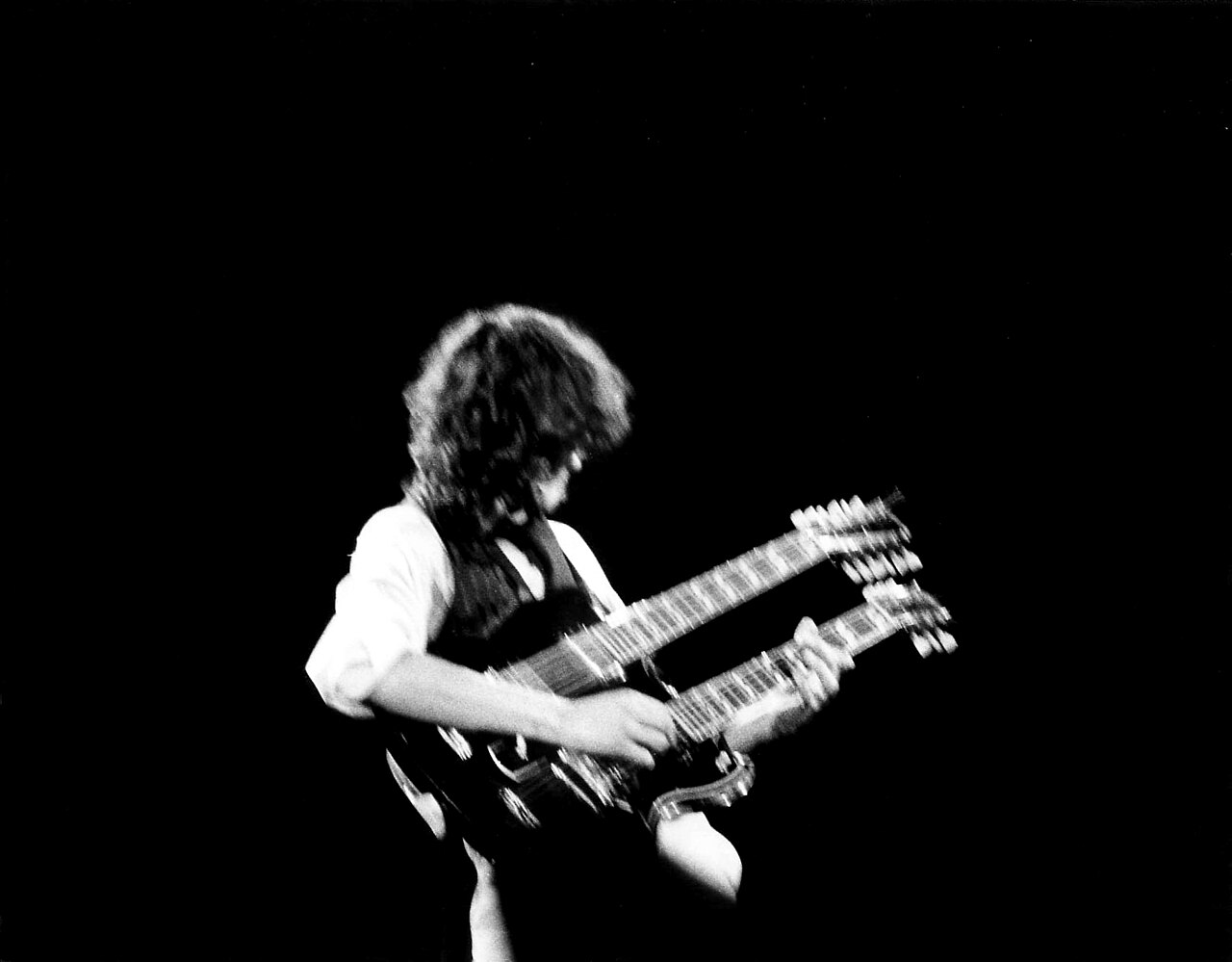
Jimmy Page of Led Zeppelin was among the first to understand this and exploit it deliberately. Rather than using the Echoplex as a delay unit, Page ran his Les Paul through it as a pure tone conditioner — a preamp stage between guitar and amplifier that added the warmth and harmonic complexity his playing required. The tone on tracks from Led Zeppelin’s run of mid-1970s albums reflects this approach: there is a roundness and dimension to Page’s rhythm and lead tones that is difficult to replicate purely through amplifier settings. Eddie Van Halen discovered the same trick, using the Echoplex’s preamp quality to fatten his brown-era tone in ways that his Marshall stacks alone couldn’t quite achieve. Eric Johnson made it part of his famously meticulous signal chain, insisting that the EP-3 preamp was essential to the three-dimensional quality of his clean and slightly-driven tones.
For decades, this knowledge was confined to top-tier players with access to vintage gear and the technical know-how to use it correctly. The Echoplex EP-3 grew expensive, the tape mechanism required maintenance, and sourcing one in reliable condition became increasingly difficult. The preamp quality that made the unit legendary was inaccessible to anyone who didn’t already have one on their rig.
Xotic Effects: From the Tremendous Trio to the Mini Pedal Revolution
Xotic Effects is a Van Nuys, California company that had already established a serious reputation in the boutique effects world before the EP Booster arrived. Their AC Booster, RC Booster, and BB Preamp — the so-called “Tremendous Trio” released between 2002 and 2005 — set a benchmark for transparent, musical pedals that enhanced a guitarist’s tone rather than imposing a character of their own. Each pedal in that trio was full-size, feature-rich, and aimed at professional players who understood the difference between a pedal that adds harmonics and one that just adds gain.
In 2009, Xotic announced the EP Booster via Premier Guitar on August 25th. The press release was straightforward: the company had designed a pedal around the specific circuit topology of the Echoplex EP-3’s preamp stage, implemented in a miniature enclosure with a single Volume knob and internal DIP switches. It was the first “mini pedal” Xotic had released, and it was priced to be accessible rather than boutique-exclusive. Where the Echoplex EP-3 demanded vintage prices and delicate handling, the EP Booster cost around $99, fit in the smallest corner of any pedalboard, and would run for months on a single 9V battery drawing only 5mA of current.
The pedal was an immediate success. Within a few years it had appeared on hundreds of professional pedalboards. By the time Xotic released a 15th Anniversary Limited Edition in 2024, the EP Booster had become a fixture in the global guitar community — one of those rare pieces of gear that crosses genre boundaries because what it does is so fundamentally useful.
Circuit Deep Dive: What the FET Actually Does
The EP Booster uses a discrete FET (Field-Effect Transistor) design with low impedance output — a deliberate architectural choice that mirrors the original EP-3’s input stage rather than the common op-amp approach used in most modern boost pedals. This distinction matters tonally.
Standard transistor-based clean boosts and op-amp boosters typically increase gain across the frequency spectrum as uniformly as their design allows. The goal is transparency — adding volume without adding color. The EP Booster takes a different approach. The FET circuit has an inherent character: it tends to enhance the harmonic overtones of the signal, particularly in the upper-mids and presence range, and adds a gentle low-mid warmth that creates the perception of a more three-dimensional sound. This is why Xotic describes the pedal as offering “multi-dimensional, shimmering highs and lows.” The boost isn’t flat; it’s characterful in a way that the original EP-3 preamp was characterful — which is precisely the point.
The low impedance output (1kΩ output impedance versus 1MΩ input impedance) is the circuit’s other key feature. High-impedance signals from passive guitar pickups are vulnerable to high-frequency loss from cable capacitance — the longer the cable run and the more pedals in the chain, the more treble rolloff accumulates. By converting the signal to low impedance at its output, the EP Booster acts as a buffer as well as a boost, driving the rest of the signal chain with authority and preserving the high-frequency content that long cable runs and complex pedalboard chains would otherwise steal.
Up to +20dB of gain is available from the single Volume knob, but the EP Booster’s unique character lies not in how much gain it provides but in what that gain sounds like. Players who use it at unity or just barely above unity report that their tone gains a dimensional quality — a sense of space and harmonic richness — without any audible volume increase. This is the “always on” application that has made the pedal famous: not as a volume boost at all, but as a permanent tone enhancer sitting at the front of the signal chain, doing to a modern guitar rig what Jimmy Page was doing with his Echoplex in 1974.
Specs
| Feature | Xotic EP Booster | Xotic RC Booster V2 | MXR MC401 Boost/Line Driver |
|---|---|---|---|
| Circuit type | Discrete FET (EP-3 preamp) | Op-amp (transparent) | JFET (clean) |
| Max gain | +20dB | +20dB | +25dB |
| EQ controls | DIP switches (internal) | Bass/Treble knobs + Gain | None |
| Tone character | Warm, harmonically rich, EP-3 voiced | Flat/transparent, neutral | Clean/flat, transparent |
| Bypass | True bypass | True bypass | True bypass |
| Power | 9–18V DC, 5mA | 9–18V DC, 20mA | 9–18V DC, 7mA |
| Size | Mini (3.5″×1.5″×1.5″) | Full-size (2.75″×4.5″×2″) | Mini (1.49″×3.63″×1.57″) |
| Output impedance | 1kΩ (buffer function) | Low | Low |
| Price (new) | ~$99 | ~$169 | ~$99 |
| Price (used) | ~$55–80 | ~$90–130 | ~$55–75 |
DIP Switches: Dialing In the Voice
The EP Booster’s single external knob controls overall boost level, but the pedal’s real voicing options live inside the enclosure on two small DIP switches accessible by removing the back plate. Xotic specifies three primary switch configurations:
Default (both switches center/default position): The base EP-3 voicing — the classic combination of low-mid warmth and upper harmonic shimmer that made the original circuit famous. This is the right starting point for the vast majority of players and applications. It works with nearly every guitar and amp combination without sounding unnatural.
Unity Gain (Switch 1 engaged): Reduces the low-frequency boost component, resulting in a tighter, more focused sound with less low-end enrichment. This setting is particularly useful for players who find the default position adds unwanted thickness — typically useful for players running heavy gauge strings into already-full-sounding amplifiers, or for players using the EP Booster as a straight clean boost rather than a tone enhancer. The “unity gain” name refers to the fact that this setting makes the pedal easier to dial in at the same volume when engaged versus bypassed.
Vintage (Switch 2 engaged): Adds additional high-frequency content and upper harmonic shimmer, pushing the EP Booster’s treble and presence emphasis further than the default setting. This is the choice for Stratocaster and Telecaster players who want the EP-3 sparkle emphasized, particularly into clean or lightly-driven amplifiers where the extended treble adds air and detail rather than harshness.
The two-switch architecture means there are effectively four possible combinations, but Xotic’s three named settings give players a practical framework. The most common professional use is Default for humbuckers and PAF-type pickups, and Vintage for single-coil players who want the full shimmer. Most players who open the back plate once to set their preferred voicing never open it again — the EP Booster isn’t designed for mid-show adjustment but for set-and-forget tone enhancement.
Famous Players: Who’s Actually Using One
The EP Booster’s Equipboard listing includes over 188 professional users — an unusually large number that reflects the pedal’s genuine cross-genre ubiquity. That number is also a warning: a pedal this cheap and this small accumulates attributions faster than anyone verifies them. What follows separates the players documented on camera or in their own words from the ones who only appear on a marketing page.
Chris Shiflett (Foo Fighters) is the single best-documented EP Booster user in rock, and the documentation comes from his own mouth. MusicRadar’s August 2021 breakdown of the Foo Fighters’ touring pedalboards — built from photos Shiflett posted himself — shows a trio of Xotic pedals on his board: an XW-1 wah feeding an SP Compressor and an EP Booster. Speaking to MusicRadar in a 2019 rig tour, he was unequivocal: “If there’s one pedal I cannot live without, it’s the EP Boost. I think that’s everybody’s go-to boost pedal.”
What makes Shiflett’s account genuinely useful is that it cuts against the pedal’s own mythology. He does not run it always-on. “I don’t always have it on, mostly for leads,” he told MusicRadar. “I’ll just kick it in here and there where I need it, if I need a little extra. I also have it set somewhere around 12 o’clock.” That is the EP Booster used as a conventional lead boost at a fairly aggressive setting — roughly the middle of its range — sitting on a board alongside a Klon KTR, a JHS Muffuletta, two Strymon Timelines and an EHX Micro POG. One of the most widely-heard rhythm guitarists of the last twenty-five years uses this pedal the plain way, and says so.
Nili Brosh uses it the other way, and represents the always-on camp with the most extreme version of that approach. Her documented rig — a Peavey JSX head into an Egnater Tourmaster 2×12, with a DigiTech Whammy, MXR Carbon Copy and TC Electronic PolyTune — is deliberately amp-forward, and the EP Booster sits at the front of it permanently, dialled all the way down. She keeps it not for gain at all but purely for the circuit’s coloration, describing it as fattening and rounding out her tone, and says it has been on every rig she’s had since the pedal came out. Guitar World named her alongside the Foo Fighters and Joe Bonamassa in its coverage of the pedal’s 15th anniversary. Brosh does not currently have a guitarist guide on this site.
These two accounts are worth reading side by side, because between them they define the pedal’s entire usable range: knob at zero for pure FET coloration, knob at noon for a genuine lead lift. Everything else is somewhere on that line.
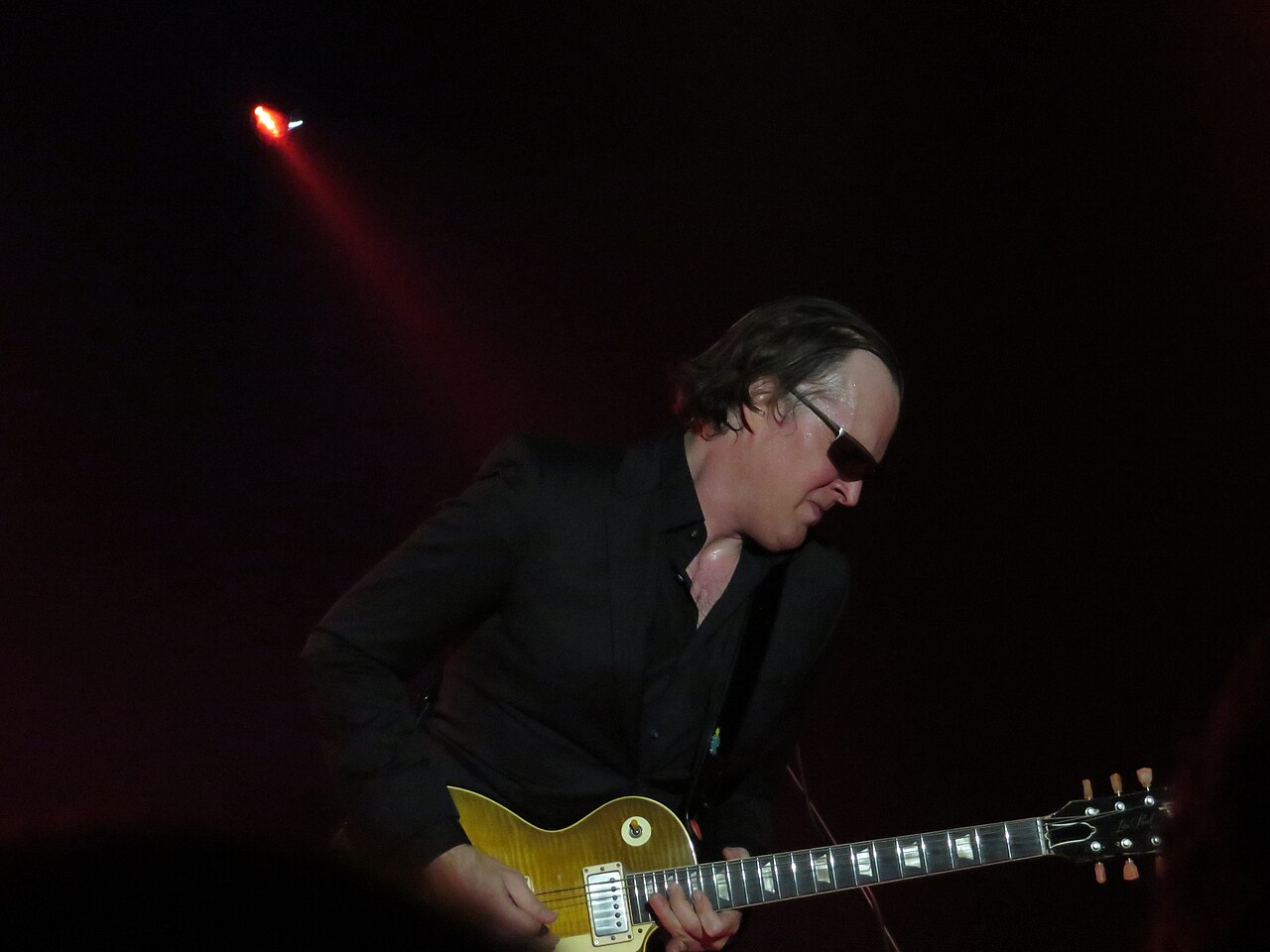
Joe Bonamassa requires an honest caveat, because his name is attached to this pedal more often than the evidence supports. The endorsement is real and it is his: Xotic’s official product page carries his quote that the EP Booster is “by far the best clean boost I have heard,” adding that “it loves vintage Gibsons,” and Guitar World repeated the endorsement in 2024. But an endorsement quote is not a pedalboard. When Bonamassa walked through his current live board for Guitarist in mid-2025 — an unusually candid rundown in which he pointed out that most of his pedals are “standard issue, I buy them out of Sweetwater” — the list he gave was an ’80 or ’81 Tube Screamer, an EHX Micro POG, a Fuzz Face into the Fender Twins, a wah, a Fulltone Supa-Trem, a Way Huge Conspiracy Theory, a Boss DD-2 and a Hughes & Kettner Rotosphere. No EP Booster. Various online sources credit Bonamassa with the same XW-1 / SP Compressor / EP Booster trio described above; that trio is documented on Shiflett’s board, not his, and the two appear to have been conflated. The fair statement is that Bonamassa has publicly praised the pedal in strong terms and it suits the vintage-Gibson tones he chases, but it is not on his documented current rig.
A related trap: Guitar World’s 2024 headline reads “used by Foo Fighters,” which is accurate but easily over-read. Within that band it is Shiflett’s pedal. Pat Smear‘s documented board runs an RJM switcher, a Boss BF-3, an EHX Neo Clone and an MXR Carbon Copy. Dave Grohl’s famously minimal board carries a pair of Boss delays, an MXR Phase 90 and — the detail that likely started the confusion — an Xotic SP Compressor, a different pedal from the same company. No primary source places an EP Booster at Grohl’s feet.
Lee Ritenour is also quoted directly on Xotic’s official product page: “The EP Booster is everything I want in this kind of small but powerful foot pedal.” That is brand-page evidence rather than rig documentation, and should be read as such — but it is a signed endorsement from a player with nothing to gain from a $99 pedal, and it reflects the EP Booster’s reach into jazz-fusion and session contexts rather than just rock. His use is consistent with the pedal’s character as a tone enhancer rather than a distortion driver — exactly what a fusion guitarist needs at the front of a clean signal chain.
Billie Joe Armstrong (Green Day) has the EP Booster documented via user-uploaded pedalboard photography on Equipboard, showing the unit as part of his live setup. Armstrong’s straightforward power-pop approach — typically a guitar direct into an amplifier with minimal processing — makes the EP Booster’s always-on tone enrichment consistent with his documented preferences.
Tosin Abasi (Animals as Leaders) has the EP Booster documented via Reddit gear discussion with photographic evidence of his pedalboard, showing the unit positioned between an Empress ParaEq and a TC Electronic Ditto Looper. Abasi’s use is interesting precisely because Animals as Leaders is an 8-string progressive metal band — not the genre most obviously associated with a vintage tape-echo preamp boost. The EP Booster on Abasi’s board underlines its utility as a general-purpose tone enhancer across genre boundaries.
It is worth being honest about two very famous names frequently associated with the EP Booster in online discussions: John Mayer and Brad Paisley. Both are reported — particularly by secondary sources like ToneStakr — to use EP Boosters “always on” as tone enhancers. In Mayer’s case, his documented signal chain at various points has featured Xotic pedals including the Super Clean Buffer and the RC Booster. A current, primary-source-confirmed EP Booster on his active rig is not documented in available Premier Guitar rig rundowns or equivalent primary sources. Brad Paisley’s 2009 Premier Guitar rig rundown — the most detailed primary documentation of his live signal chain — does not mention an Xotic EP Booster. Both associations are plausible given these players’ preferences for tone enhancement over heavy effects, but neither can be confirmed via primary documentation as of this writing.
Tone Recipes and Settings
The “Always On” Tone Enhancer (most common application)
Volume at roughly 9 o’clock to 11 o’clock — just enough to achieve unity or slight volume lift. DIP switch: Default for humbuckers, Vintage for single coils. Place first in chain, before all other pedals. Effect: the guitar gains harmonic richness and low-impedance drive without audible volume increase. The amp responds as if the guitar’s signal is more resolved and authoritative. This is the EP Booster’s primary purpose and its most widely documented use.
The Shiflett Lead Kick (documented setting)
Volume at 12 o’clock, engaged only for solos. DIP switch: Default. This is Shiflett’s own stated setting, and it is the most honestly-sourced starting point in this article — noon on the knob, kicked in “here and there where I need it, if I need a little extra.” Into a loud amp already sitting at the edge of breakup, noon produces a real lift in both level and saturation, with the FET circuit’s low-mid warmth keeping the boosted lead tone from turning thin and papery the way a flat clean boost can. If you only ever use the EP Booster one way, use it this way first, then decide whether you want it on all the time.
The Vintage Gibson Blues Push
Volume at noon to 1 o’clock — noticeable but modest gain lift. DIP switch: Default. Guitar: vintage-style humbucker or P-90 into a lightly-driven bluesy amplifier like the Fender Deluxe Reverb set just past clean. Effect: the EP Booster’s warmth and gain combine to push the amp into its first stages of breakup, producing harmonically complex, touch-sensitive drive. This is the territory Bonamassa was describing when he said the pedal “loves vintage Gibsons” — the FET circuit’s natural compression tightens the attack, making the result feel more controlled than the volume increase alone would suggest.
The Nili Brosh Zero Setting (pure coloration)
Volume all the way down, pedal always on, first in chain. DIP switch: Default. This sounds like a joke and isn’t — it is Brosh’s actual documented approach, and it isolates the one thing the EP Booster does that a volume knob cannot: the FET stage’s coloration and low-impedance drive, with no level change whatsoever. Use it when your amp is already doing all the work you want and you’re only after the fattening, the buffering and the extra dimension. It is also the fastest way to A/B whether you actually like the EP-3 voicing, since there’s no volume difference to fool your ears.
The Page Tribute (into a plexi-style amp)
Volume at noon. DIP switch: Default or Unity Gain (depending on amp’s low-end fullness). Into a Marshall-type amplifier set at moderate gain. The EP Booster in front of a British-style amp recreates the signal path that Jimmy Page was exploiting with his original Echoplex — the FET preamp’s character driving the amp’s input stage harder and more harmonically. Works especially well with a Les Paul; the combination of PAF-type pickups, FET preamp coloration, and British amp voicing produces the exact combination Page was chasing.
Strat and Wah Clarity Preserving Chain
Volume at 9-10 o’clock (unity gain), DIP switch: Vintage. Guitar → EP Booster → Cry Baby Standard Wah → drives → amp. The EP Booster’s low-impedance output before the wah prevents the wah pedal’s inductance from interacting unfavorably with the high-impedance single-coil signal, producing a cleaner wah sweep with more defined peaks and less mud. The Vintage DIP setting’s additional high-frequency content means the wah’s presence peak has more material to work with.
Clean Country Chicken-Pickin’ Platform
Volume at 10-11 o’clock, DIP switch: Vintage. Stratocaster or Telecaster → EP Booster → Ibanez TS9 at low gain → Fender-type clean amp. The EP Booster’s always-on position ensures the single-coil signal arrives at the TS9 with more authority and lower impedance, producing a tighter, more focused TS response than the pickup signal alone. Useful for Nashville chicken-pickin’ contexts where the TS9 is being used for its midrange push rather than as a full distortion device.
How It Compares to the Competition
The Xotic RC Booster V2 is the most direct comparison within the Xotic lineup. The RC Booster uses an op-amp circuit with bass and treble controls and is designed for maximum transparency — adding gain without adding color. The EP Booster adds color by design. The RC Booster is the right choice when you need clean, surgical gain without tonal modification; the EP Booster is the right choice when you want your signal to sound richer and more harmonically complex. Many professional players use both — the EP Booster as an always-on front-of-chain tone enhancer, and the RC Booster or a similar transparent boost for more conventional boost duties later in the chain.
The MXR MC401 Boost/Line Driver occupies similar territory at a similar price point. It’s a JFET-based clean boost with minimal coloration and up to +25dB of gain. Like the EP Booster, it provides a buffered, low-impedance output. Unlike the EP Booster, it doesn’t attempt to replicate the harmonic character of a specific vintage circuit — it’s as flat and transparent as Dunlop’s engineers could make it. Players who find the EP Booster “too colored” or who need more raw gain without the EP-3 character will prefer the MC401. Players who want tone enhancement along with the gain will prefer the EP Booster.

The Electro-Harmonix LPB-1 is the budget end of the always-on tone enhancer conversation — a simple transistor boost that costs half the price and does perhaps a quarter of what the EP Booster does. The LPB-1 adds gain and a modest brightness without the warmth or harmonic complexity of the FET design. For players on tight budgets it’s a starting point; for players who’ve tried both, the EP Booster’s character difference is immediately audible.
The Boss FA-1 FET Amplifier — a discontinued Japanese-made unit from the 1980s — is the historical predecessor that proves the EP Booster concept. The FA-1 used a similar FET-based preamplifier circuit and was famously used in “always on” roles by players who understood what a FET preamp stage did for a guitar’s tone. Clean examples of the FA-1 fetch premium prices on the vintage market specifically because players understand its connection to the EP-3 preamp character that the EP Booster now makes universally accessible. The EP Booster is in many ways a modern, reliable, pedalboard-friendly refinement of what the FA-1 attempted.
Buying Guide
The Xotic EP Booster has no confusing version history or collector-premium variants. The circuit has been consistent since the 2009 launch, and all standard EP Boosters perform identically. The 15th Anniversary Limited Edition, announced in May 2024, is a run of 1,500 units in Metallic Blue and Purple at a $130 street price — same circuit, same internal DIP switches, cosmetic only. Paying the roughly $30 premium over a standard unit buys you a colorway and a serial run, not a tonal difference. The only meaningful version distinction is between standard units and the EP-Pro, a full-size pedal with additional controls and an expression input that significantly expands the circuit’s capabilities at a considerably higher price point.
New EP Boosters are available from authorized dealers at approximately $99 USD. Used examples in excellent condition typically sell for $55–80 on Reverb.com and similar platforms. The pedal holds its value well because demand remains strong and the supply of new units is reliable — there’s no urgency to overpay for used examples. The ultra-low 5mA current draw means a 9V battery will last for hundreds of hours of use, making the EP Booster genuinely viable as a battery-powered pedal rather than requiring a power supply connection.
Power supply compatibility is one of the EP Booster’s strengths: it accepts 9V through 18V DC, and running it at 18V (via a Voltage Doubler or a power supply with an 18V output) increases the circuit’s headroom and dynamic range, producing a more open, less compressed feel at moderate to high gain settings. Players running high-output humbuckers who find the default 9V operation slightly compressed at higher Volume settings should try 18V operation before concluding the pedal isn’t working for them.
Ownership Notes
Place the EP Booster first in your signal chain, before all other pedals, to take full advantage of its buffer/low-impedance output function. The low-impedance output will drive everything downstream with more authority, and the EP-3 voicing will color the signal in a way that all subsequent pedals will respond to — the character becomes part of your fundamental guitar tone rather than an effect added on top.
The single Volume knob interacts directly with how your downstream pedals and amplifier respond. A small boost setting (9–10 o’clock) may produce minimal audible volume increase while still delivering measurable tonal enhancement; this is the “always on” sweet spot. A larger boost setting (noon and above) will drive amp input stages harder and can push clean amplifiers into breakup territory without adding any additional distortion circuit — the EP Booster’s gain is clean gain, but clean gain into an amp that’s already near its clip point produces natural, musical saturation.
The DIP switches require a small screwdriver or toothpick to adjust and are genuinely set-once, leave-forever features in most applications. Set them once to your preferred voicing for your guitar, dial in the Volume knob, and leave the pedal engaged for the rest of the gig. The EP Booster is one of the few pedals where “set and forget” is the documented professional practice rather than an admission of laziness.
Players using single-coil guitars in front of germanium fuzz circuits should be aware that the EP Booster’s buffered output may interact unfavorably with some germanium fuzz designs that require high-impedance input. If you’re using a germanium fuzz, place it before the EP Booster, or switch the EP Booster to true bypass mode — though the pedal’s published spec is true bypass when switched off, the buffer only engages when the unit is on, so standard operation with the EP Booster engaged then bypassed puts the buffer before the fuzz in the signal chain, which can cause tone changes specific to germanium input sensitivity.
FAQ
What’s the difference between using the EP Booster as a tone enhancer versus a traditional clean boost?
A traditional clean boost raises volume as uniformly as possible — the goal is gain without tone change. The EP Booster adds gain while simultaneously adding the harmonic character of the EP-3 preamp: warmth in the low-mids, shimmer in the upper harmonics, a gentle compression in the dynamics. Players using it as a tone enhancer are choosing that character as a permanent part of their sound; players using it as a clean boost are typically pushing their amplifier harder. Both are valid, but they’re different applications, and the EP Booster is better at the former than the latter for players who want genuinely flat gain.
Will the EP Booster add noise to my signal chain?
The EP Booster is a very quiet pedal by boost standards. Its 5mA current draw and discrete FET circuit produce minimal self-noise. The low-impedance output can actually reduce noise accumulation in a long signal chain by eliminating the high-impedance vulnerability that passive pickups have to electromagnetic interference over long cable runs. Players reporting noise from the EP Booster should investigate their power supply, cable quality, and other pedals in the chain before attributing the noise to the EP Booster itself.
Should I run the EP Booster at 9V or 18V?
9V is the standard and works well for most applications. 18V operation — achieved via the optional Xotic Voltage Doubler accessory or a power supply with an 18V output — increases headroom and reduces compression, producing a more open, dynamic feel particularly noticeable at higher Volume settings and with high-output pickups. If you play with a lot of picking attack variation and find that the EP Booster at 9V feels slightly compressed at your preferred gain level, 18V is worth trying. For always-on tone-enhancement at low Volume settings, 9V is fully adequate.
How does the EP Booster interact with my overdrive pedals?
Placed before an overdrive in the chain, the EP Booster affects the overdrive’s response in two ways: it raises the input level the overdrive receives (pushing it harder into its gain structure) and pre-colors the signal with the EP-3’s warmth and harmonic character (making the drive’s response warmer and more harmonically complex). Many players stack the EP Booster in front of a TS9 or similar mid-focused overdrive to counteract the TS9’s characteristic mid-push with the EP Booster’s low-mid warmth — the combination produces a fuller, more balanced distortion than either pedal achieves alone.
What’s the ideal Volume setting for an “always on” tone-enhancement application?
Start with the knob at roughly 8–9 o’clock. Bypass the pedal and compare the volume with the pedal engaged. Adjust until the volume with the pedal engaged matches the volume without it — this is unity gain. Your tone should be audibly richer and more dimensional with the pedal on; if you hear a volume jump before the tones match, back off slightly. Most players end up settling in the 8–10 o’clock range for pure tone enhancement without any gain boost.
Does the DIP switch setting I choose matter significantly?
Yes, particularly the distinction between Default and Vintage settings. Default is voiced for balanced warmth — it works with most guitars and amps without creating excess brightness or bass buildup. Vintage pushes the treble content harder and is specifically suited to single-coil guitars where the additional presence complements the pickup’s natural character. Using Vintage with a humbucker into an already-bright amplifier can produce an unnaturally spiky high end. If your tone sounds slightly harsh with the EP Booster engaged, switch to Default or Unity Gain. If it sounds too dark or muffled, switch to Vintage.
Can the EP Booster work as a buffer if I leave it always on even at unity gain settings?
Yes — and this is one of its documented professional uses. When engaged, the EP Booster’s 1kΩ output impedance drives the rest of the chain with far more authority than a passive guitar pickup’s high-impedance signal can manage. Players with long cable runs, many true-bypass pedals, or complex routing systems benefit from the EP Booster’s buffer function even at volume settings that produce minimal tonal enhancement. The pedal is simultaneously a buffer, a preamp, a tone shaper, and a gain boost — the specific proportion of each function you’re using depends on the Volume setting and context.
What’s the EP-Pro and should I consider it instead of the EP Booster?
The EP-Pro is a full-size Xotic pedal that expands the EP Booster’s circuit with a dedicated Treble control, additional boost modes, and an expression pedal input for real-time volume or tone control. At roughly $229 new, it’s more than twice the price and considerably larger. The EP-Pro is for players who want the EP-3 preamp character but need more control over the voicing, or who want to use an expression pedal to ride the boost level in real time. For the vast majority of players who want a set-once tone enhancer at the front of their chain, the standard EP Booster at $99 is the more practical choice.
Image credits
- Eric Johnson: Jud McCranie, Wikimedia Commons, CC BY-SA 4.0.
- Joe Bonamassa: Steve, Wikimedia Commons, CC BY 2.0.
- Jimmy Page: Andrew Smith, Wikimedia Commons, CC BY-SA 4.0.
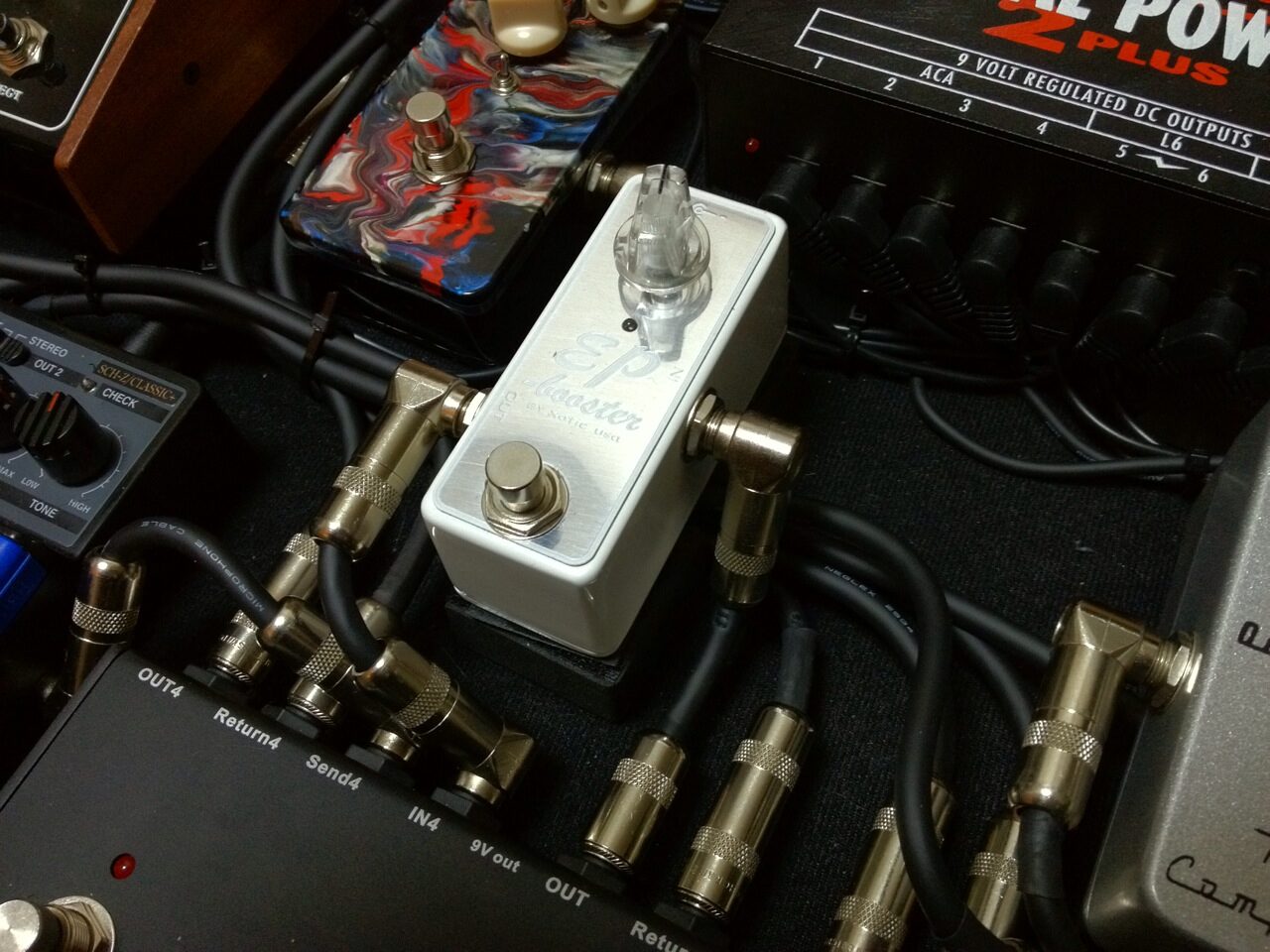
- Top image: Xotic EP Booster on a pedalboard, photographed 26 March 2012. Photo: Mekkjp. Source photograph · CC BY-SA 2.0. Full source frame shown using its stored orientation; no cropping or retouching. Web version: CC BY-SA 2.0.
- Xotic EP Booster: AI-generated illustration by GuitarGangsters, based on the manufacturer’s product design (not a photograph).
Latest News
Related
On This Day
Monday 9 November
From this week: