Walrus Audio Julianna Deluxe Chorus/Vibrato: The Chorus Pedal That Learned To Think For Itself
An AI-generated illustration of the Walrus Audio Julianna Deluxe Chorus/Vibrato.
Walrus Audio Julianna deluxe stereo chorus/vibrato: full specs, verified famous players, tone recipes, Julia comparison and 2026 buying advice.
Six years ago this week, on 7 September 2020, roughly twenty demo videos hit YouTube inside the same twenty-four hours. Walrus Audio’s own trailer. Knobs. Rabea Massaad. Chicago Music Exchange. Sweetwater. Gearmanndude. Pedal Partners running a head-to-head with the pedal’s own smaller sibling before anyone had even heard the thing in isolation. That is what a coordinated embargo drop looks like, and it is worth remembering that Walrus spent that ammunition on a chorus pedal — the effect that spent most of the 2000s as the punchline of pedalboard jokes, the thing you switched on once for the clean bit in the second verse and then forgot about.
The Julianna earned it. Where the Walrus Audio Julia had already proven that a modern boutique builder could out-think the Japanese classics on voicing alone, the Julianna did something structurally different: it bolted a digital brain onto an entirely analog modulation circuit and then used that brain to do things a bucket-brigade chorus has never been able to do. Tap tempo with note divisions. A random LFO waveform. A drift function that gently varies the modulation speed on its own, forever, without you touching anything. Stereo in and stereo out. A momentary second speed you can ramp into and out of like a Leslie spinning up.
Premier Guitar’s Charles Saufley called it “a scalpel for carving precise waveforms.” Guitar.com gave it a straight 10 out of 10 and admitted, in print, that the reviewer had trouble leaving the room. Neither of those is a small thing to say about a chorus pedal. This is the full GuitarGangsters guide to what the Julianna is, who has actually been photographed using one, what it does that nothing else does, and whether the roughly $80 gap between it and the standard Julia is money well spent.
Origins: How Julia Got A Big Sister
Oklahoma City, 2016 to 2020
Walrus Audio is a Oklahoma City company, and by the mid-2010s it had built a reputation on a particular kind of restraint: pedals that did one thing with unusual depth rather than ten things adequately. The Julia Analog Chorus/Vibrato arrived in May 2016 and was reviewed by Premier Guitar that August, where Joe Gore opened his piece with a line that has followed the pedal ever since — a “6-string litmus test” about whether you like chorus at all.
What made the Julia matter was one control. The Lag knob sets the centre delay time that the low-frequency oscillator modulates around, rather than just how fast and how far it swings. Every other analog chorus fixes that centre point at the factory. The Julia handed it to the player, and in doing so opened a whole territory between “shimmering 12-string double-track” and “seasick detuned mess” that the Boss CE-2 and its descendants simply cannot reach. The second control was the D-C-V blend: a continuous sweep from dry through chorus into pitch vibrato, replacing the two-position toggle that every competing pedal used.
Those two ideas were good enough that Walrus never had to change them. The Julianna inherits both, untouched.
The September 2020 Drop
The Julianna’s public release date is unusually easy to pin down because of that video avalanche: 7 September 2020. A couple of European reviewers jumped early — EytschPi42 posted a 22-minute review on 10 August 2020, and Dipswitch Demos filmed a session with Sam Bell at 42 Gear Street on 30 August — but the coordinated launch was 7 September, with Walrus’s own trailer, tech demo and two “Pedal Play” films going up alongside every major demo channel in the business.
Guitar.com’s Michael Watts published the first significant print review a week later, on 14 September 2020, at £225, and scored it 10 out of 10. Premier Guitar’s Charles Saufley followed on 13 January 2021, in the February 2021 issue, quoting a $249 street price. Both reviews are still the two best-written things about this pedal anywhere.
What The Name And The Artwork Mean
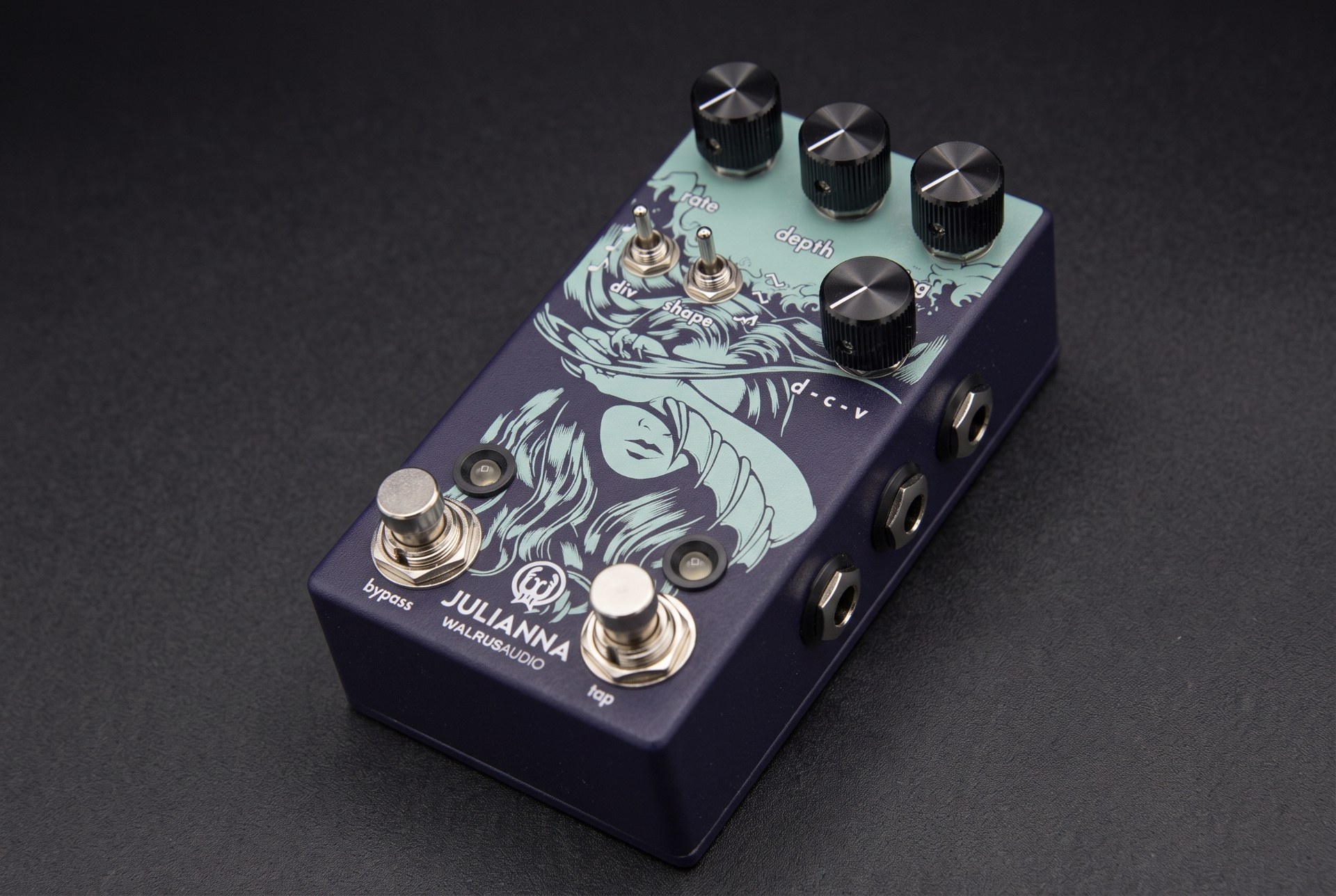
Adam Forster, who drew the original Julia enclosure, came back for the Julianna. The artwork depicts, in Walrus’s own words, “Julia’s big sister emerging from the depths that Julianna once ruled” — the same deep lavender enclosure with surf green ink, scaled up and given a more imposing figure. It is a small thing, but it tells you the design intent: not a replacement for the Julia, a larger and older relative of it. Guitar.com’s subhead called the Julianna a “demi-goddess inspired shimmer box,” which is about as accurate a five-word summary as anyone has managed.
Walrus Audio Julianna: Full Specifications
One spec discrepancy is worth flagging rather than quietly resolving. Walrus publishes the enclosure as 4.77″ x 2.9″ x 2.3″ — roughly 121 x 74 x 58 mm. Guitar.com’s review printed 64 x 52 x 120 mm. That is almost certainly a bare-enclosure-versus-with-knobs-and-jacks measurement, and the identical discrepancy appears in the same publication’s Julia coverage, so it looks like a house measuring convention rather than an error. Either way: if you are laying out a board to the millimetre, trust the manufacturer figure and add clearance for the side jacks.
What The Controls Actually Do
Lag: The Reason This Family Exists
If you only learn one control on this pedal, learn Lag. It sets the centre delay time around which the LFO sweeps. At low settings the modulation is tight and controlled and reads as sparkle rather than movement. Push it up and the effect gets progressively woozier, until at maximum you are in genuine detuned-tape territory. Saufley describes the low-Lag, low-Depth zone as producing “convincing, organic, 12-string-like sounds,” which is the single most useful thing anybody has written about how to actually dial this pedal in.
There is a documented trade-off. Owners on r/guitarpedals report that turning Lag high raises the noise floor, which is what you would expect from an analog delay line being pushed toward the long end of its usable range. It is the same physics that makes a MXR Carbon Copy get murkier as you extend the time. It is not a fault; it is a boundary.
D-C-V: A Knob Where Everyone Else Put A Switch
Dry, chorus, vibrato — continuously. In mono, noon is a conventional chorus, fully clockwise is pure pitch vibrato, and everything between is a blend that no toggle-equipped pedal can produce. Saufley’s practical note is that the drier end of the sweep is “a bonanza in the studio when you’re trying to get that just-right touch of subtle animation without sacrificing note clarity.” That is the mix engineer’s use case for chorus, and almost no other pedal gives you access to it without an external blend loop.
In stereo, the knob does something else entirely: it splits and distributes dry, chorus and vibrato signals across the two outputs. Fully counterclockwise sends dry to the mono output and vibrato to the stereo output, which is the textbook wide stereo chorus configuration. Nudge it up from there and the stereo image starts to shift as vibrato bleeds into the dry side. This is the single biggest functional gap between the Julianna and the Julia, and it is why the pedal is worth the money if you run two amps.
Shape: Sine, Triangle, Random
The Julia offers sine and triangle. The Julianna adds random, and that third option is the most genuinely new sound in the pedal. Saufley’s breakdown is the useful one: sine is “softer around the edges and sounds more expansive and airy,” triangle is “much more focused, with perceptible peaks that seem especially responsive to high-mid frequencies,” and random “adds strong hits of tape wobble that can be accentuated to very cool ends by the lag control.”
He also gives away the best trick in the manual. Put a fuzz or overdrive in front, select triangle, crank the rate and add a heavy dose of Lag, and you land on “a very cool, Leslie-fied twist on the Jimi-with-Uni-Vibe sound that will slice through a dense mix.” If that is the sound you are chasing full-time, a dedicated Fulltone Déjà Vibe or a Keeley Monterey will get you closer. But the fact that the Julianna gets in the neighbourhood at all is remarkable for a pedal sold as a chorus.
Drift: The Little Robot
Hold the bypass switch and turn the Depth knob, and you set the Drift amount. Drift slowly speeds the LFO up and slows it down again on its own, indefinitely. Walrus’s own description — “kinda like having a little robot inside your pedal moving the Rate knob up and down” — is unusually honest marketing copy, and both Guitar.com and Premier Guitar quoted it approvingly because there is no better way to say it.
What Drift is actually for is defeating the ear’s ability to lock onto a fixed modulation rate. A static chorus becomes invisible after about thirty seconds of listening. A drifting one never quite does. Combined with the random waveform and a vibrato-heavy D-C-V setting, Saufley reports that it gets “spectacularly queasy” — his words, and meant as a compliment.
Secondary LFO Rate And Ramping
Hold bypass and turn the Rate knob to store a second speed. Then, in performance, hold the Tap switch and the pedal ramps smoothly from your primary rate to that secondary rate; release it and it ramps back. This is the Leslie horn accelerating and slowing, and it is a momentary, foot-controlled gesture rather than a preset recall. Nothing else in this price class does it. Owners on Reddit consistently identify this as the feature that took them longest to find and then became indispensable.
Tap Tempo And Div
The Tap footswitch sets the LFO rate directly, and the Div mini-toggle scales the tapped tempo to quarter notes, quarter-note triplets, or eighths. Guitar.com framed this as being for “The Edge-style rhythmic pulses,” which is a fair shorthand even though there is no evidence the man himself has ever owned one. What it means in practice is that on a song where the chorus is doing rhythmic work rather than textural work — the eighth-note pulse that behaves more like a tremolo than a chorus — you can lock it to the drummer instead of guessing.
Expression And External Tap
The third jack takes either an external tap switch or an expression pedal, and the expression pedal can be assigned to Depth, Rate, or both simultaneously. Both-at-once is the interesting assignment: sweeping the treadle takes you from barely-there to seasick in one movement, which is a real performance gesture rather than a set-and-forget.
Famous Players: What Holds Up And What Doesn’t
Before anything else, a correction. The Julianna’s notable users are listed as Andy Summers, John Frusciante, Prince, Kurt Cobain and Robert Smith. Every one of those is wrong, and obviously so — Kurt Cobain died in 1994 and the pedal was released in 2020. That five-name list is a generic chorus roster that has been pasted onto chorus pedals regardless of the actual model. We flag it here for the same reason we flagged it on the Julia: readers deserve to know when the internet’s default answer is a copy-paste artefact.
The genuinely documented users are a different, smaller, and much more interesting group. Equipboard’s page for the Julianna claims 19 artists, of whom only 12 are actually visible before a “Load More” cutoff, and of those 12 several are demonstration videos rather than evidence of real-world use. Here is what survives scrutiny, ranked by how good the evidence is.
Ken (L’Arc-en-Ciel) — The Strongest Documented Case
The best-evidenced Julianna user in the world is probably not someone Western rock readers expect. Ken, guitarist in the Japanese band L’Arc-en-Ciel since 1991, has his live rig designed and built by Free The Tone — the Japanese company run by Yuki Hayashi, which also builds for Kenny Wayne Shepherd and SUGIZO. Free The Tone documents its artist rigs publicly and in detail, and the Julianna appears in Ken’s system for the band’s 30th anniversary “L’Anniversary Starting Live — L’APPY BIRTHDAY!” concerts.
That matters because it is a rig-builder’s own documentation rather than a fan photograph. Ken’s system runs custom Free The Tone Overdriveland and Crunchy Chime units as the backbone, with the Julianna and a Uni-Vibe deployed for the dreamy chorus and analog warble textures. It is a professionally specified, arena-scale deployment of this pedal, and it is the closest thing to an unimpeachable citation the Julianna has. The relevant Free The Tone artist page did not return content when we attempted to fetch it directly for this piece, so treat the specific concert attribution as strong-but-secondhand rather than first-party verified.
Raphael Saadiq — R&B, Not Rock
Raphael Saadiq — Tony! Toni! Toné!, and producer for D’Angelo, Solange and Mary J. Blige — had a studio pedalboard built by Vertex Effects, documented in a video titled “Building a Studio Pedalboard for an R&B Icon,” with the Julianna in the build. Again, this is a builder documenting their own work, which is the evidence class you want. It is also a useful corrective to the assumption that this is a shoegaze pedal: the Julianna’s dry-biased blends are exactly what a session producer wants for keys, bass and vocals as much as guitar.

Pat McCrory (Turnstile) — Photographed, Not Filmed
Pat McCrory of Turnstile is credited with a Julianna on the basis of pedalboard photographs, including a 2025 board-build post from his tech. McCrory’s touring rig otherwise runs a 2015 Gibson Les Paul Classic into an Orange Rockerverb MkIII with a Catalinbread Belle Epoch Deluxe and a Fulltone OCD on the board. We have not found McCrory naming the pedal in an interview, so this is photo-identification rather than testimony — credible, but a tier below Ken and Saadiq. If it holds, it is the best editorial contrast the pedal has: a $250 boutique stereo chorus in a Baltimore hardcore band’s rig.
Lindsey Jordan (Snail Mail) — Identified From A Crowd Photo
Equipboard places a Julianna on Lindsey Jordan’s board from an audience photograph taken at Goldfield Trading Post, Roseville, California on 19 April 2023, identified “based on colored graphics and knob layout” and positioned between a Rabbit Hole FX analog phaser and an EarthQuaker Devices Palisades, above an EarthQuaker Devices Warden. The rest of that board matches Jordan’s own filmed EarthQuaker “Board to Death” episode, which raises confidence in the photograph’s authenticity — but the Julianna identification itself is still an inference from enclosure colour and knob spacing, and Jordan is not visible in the frame. We would call this plausible rather than confirmed.
Yvette Young, Brendan Ekstrom, Daniel Kim, Bad Snacks
Four more names sit in the credible-but-thin tier, all supported by the artist’s own social media rather than by a third party.
- Yvette Young (Covet) — photographed with a Julianna live during the Catharsis tour, via her own Instagram. Young is also a documented Julia user, so the family loyalty is consistent.
- Brendan Ekstrom (Circa Survive) — posted the pedal on his own Instagram in September 2020, essentially at launch.
- Daniel Kim (wave to earth) — multiple pedalboard photographs published by the Korean musicians’ community site Mule, dated May 2023, clearly showing the pedal.
- Bad Snacks — an Instagram video of the producer running a Roland JU-06A synthesiser through the Julianna, which is worth its own mention: it is a real-world instance of the “just as sonically dangerous in the hands of keyboard players” claim Guitar.com made in its review.
The Demo-Only Names
Rabea Massaad, Cory Wong and Marty Schwartz all appear on Equipboard’s artist list for the Julianna, and all three of those entries are demonstration videos. Massaad’s is a 7 September 2020 launch-day film in which he says the pedal gave him “instant vibes to write music” — a nice quote, but a launch demo is not a rig. Wong’s entry is openly speculative on Equipboard’s own page, which hedges that “it’s possible he has used it in the studio or live.” Schwartz’s is a Marty Music demo dated 16 November 2020. We are listing them for completeness and excluding them from the verified count. Notably, Wong is a documented Julia user, which is probably how the confusion started.
Album Credits
Two records carry a Julianna credit: Oh Hiroshima’s All Things Shining (2024) and Softcult’s Heaven (2023). Both are chronologically valid — the pedal predates both by years — which is more than can be said for many of the album credits floating around this database. Both are also exactly the genre you would predict: Swedish post-rock and Canadian shoegaze respectively.
The Reference Points Who Are Not Users
Charles Saufley’s review does something unusual and useful: it names the players whose sound the Julianna evokes, explicitly as reference points rather than as endorsers. Writing about the way British folk-rock bands used chorus in the 1980s, he says he has “little doubt that Johnny Marr or the Cocteau’s Robin Guthrie would love the way the Walrus Julianna walks that line.”
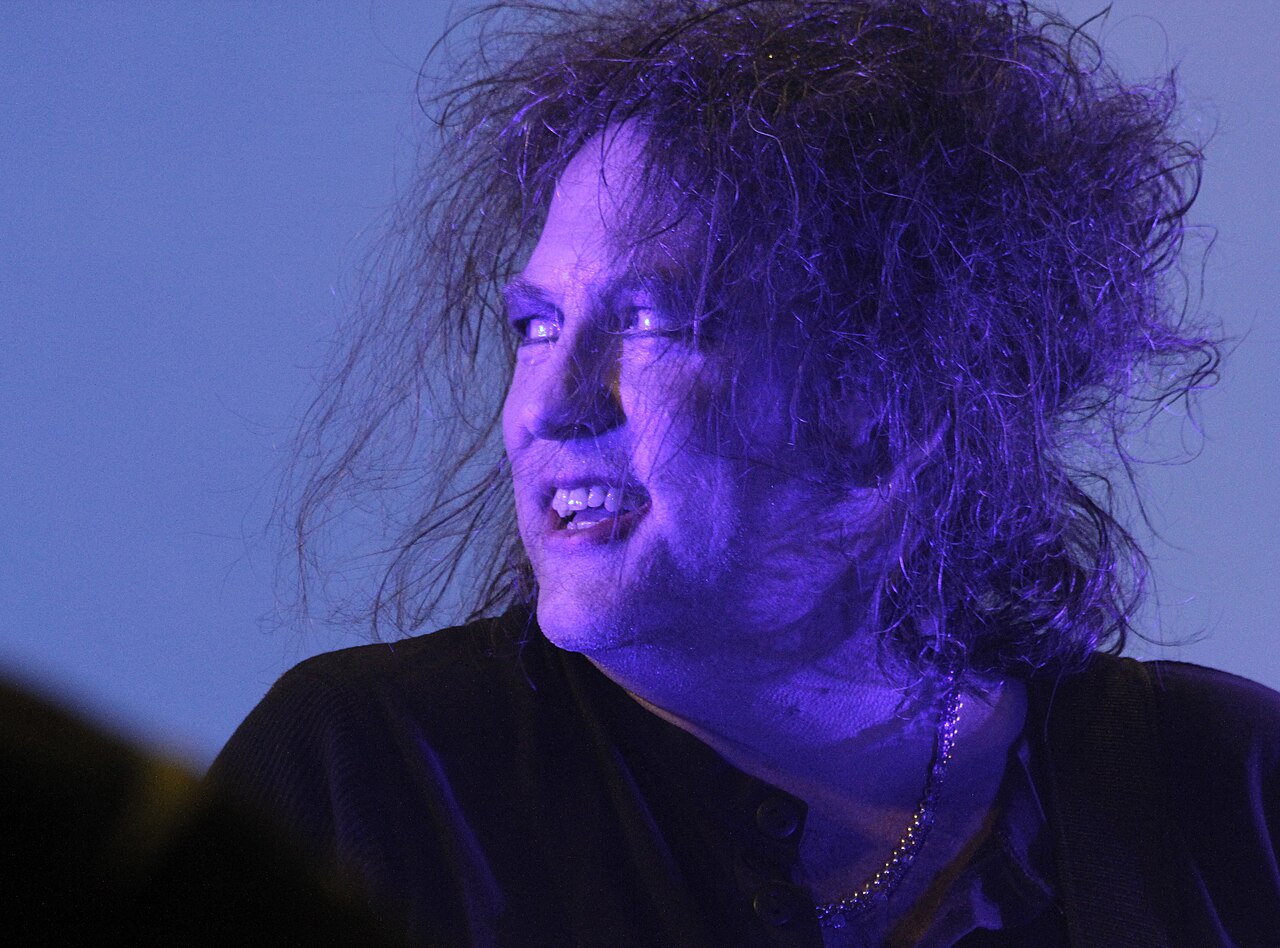
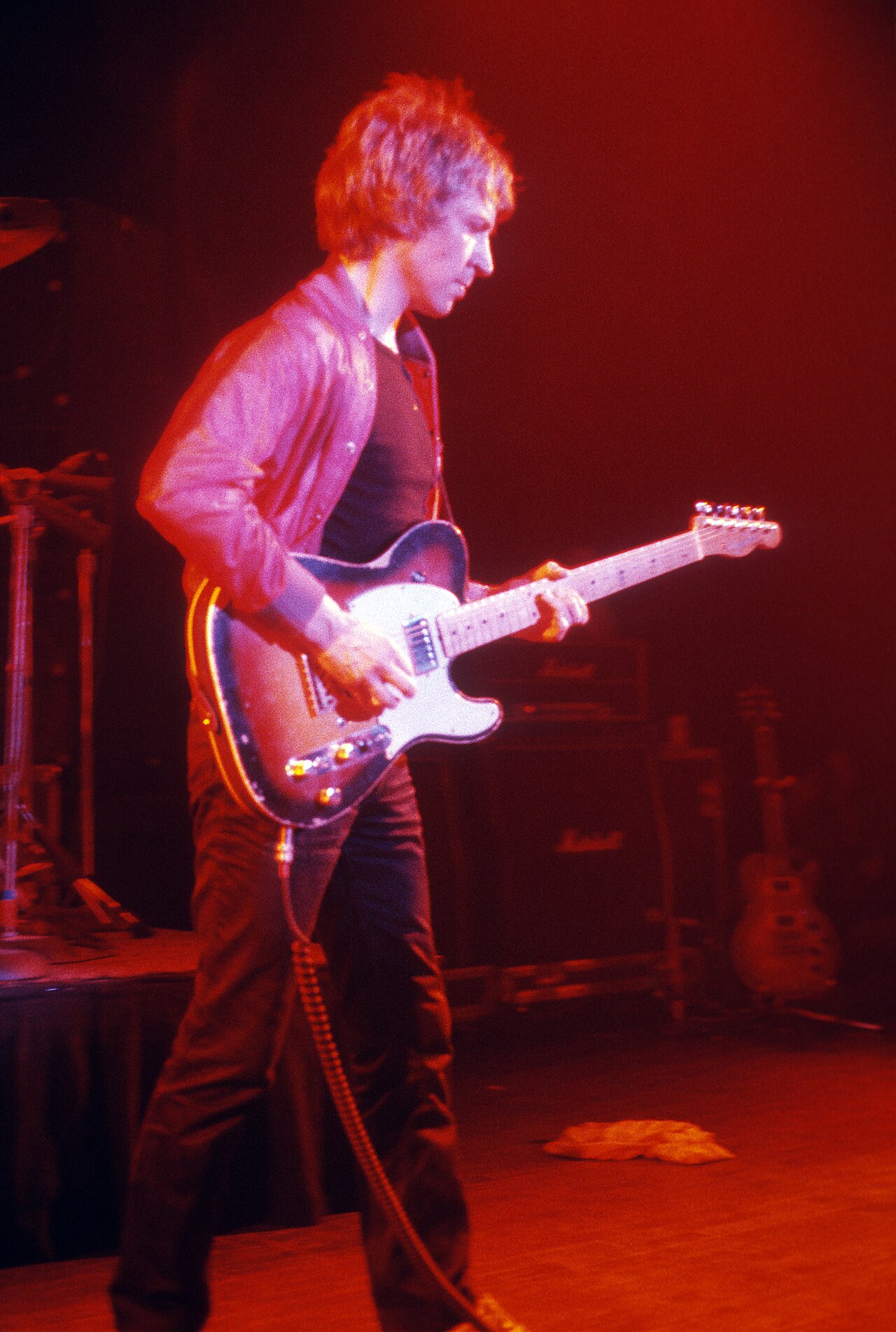
That is the correct way to invoke a famous name in gear writing, and we will follow it. If you want the sound the Julianna is aimed at, the touchstones are Marr’s ringing arpeggios, Guthrie’s cathedral of chorused reverb, Robert Smith‘s icy Cure textures, Andy Summers‘ chorused Telecaster in the Police, Kevin Shields‘ detuned wobble, Prince‘s clean funk shimmer, John Frusciante‘s 1990s clean tones and Jonny Greenwood‘s more unstable modulation work. None of them used a Julianna. All of them define the territory it is built to cover.
Tone Recipes: Ten Starting Points
1. The 12-String
Rate 10:00, Depth 9:00, Lag 8:00, D-C-V 10:00, Shape sine. Low Lag and low Depth is the combination Saufley identified as producing organic 12-string doubling. Play open chords in the first position. This is the setting that converts chorus sceptics, and it is the one to reach for when a producer says “make it bigger without making it obvious.”
2. The CE-2 Approximation
Rate 2:00, Depth 12:00, Lag 5:00 (maximum), D-C-V 11:00, Shape triangle. This is adapted from an owner’s published settings for chasing the Boss classic. Be honest with yourself about the result: it gets in the neighbourhood, but the Julianna is a brighter, more articulate circuit and it will not deliver the CE-2’s specific low-mid fatness. If that is the only sound you want, buy the Boss CE-2W and stop reading.
3. Wide Stereo Bed
Two amps. Rate 9:00, Depth 11:00, Lag 11:00, D-C-V fully counterclockwise, Shape sine. Dry to one amp, vibrato to the other. This is the configuration Walrus designed the stereo path for and it is the single most impressive thing the pedal does. Feed it into a Strymon BigSky in stereo afterwards and you have a full ambient rig in two boxes.
4. Tape Wobble
Rate 8:00, Depth 1:00, Lag 3:00, D-C-V 3:00, Shape random. The random waveform plus high Lag is the closest thing to a warped-cassette emulation in a chorus pedal. Excellent under a slow arpeggiated part, actively unpleasant under a fast one, which is the point.
5. Leslie-Fied Fuzz Lead
Fuzz or overdrive in front. Rate 3:00, Depth 1:00, Lag 2:00, D-C-V 1:00, Shape triangle. Saufley’s own recipe for the Uni-Vibe-adjacent sound. The triangle wave’s high-mid emphasis is what lets it cut through a loud band rather than disappearing under the fuzz.
6. Rhythmic Eighths
Div set to eighth notes, Tap in the song tempo. Rate is overridden by tap. Depth 2:00, Lag 9:00, D-C-V 12:00, Shape triangle. At this Depth the pedal stops reading as chorus and starts reading as pitch-tremolo locked to the kit — closer in function to a Boss TR-2 than to a modulation effect, but pitch-based rather than amplitude-based.
7. The Drift Pad
Rate 9:00, Lag 12:00, D-C-V 1:00, Shape sine. Hold bypass, turn Depth to roughly 1:00 to set a generous Drift amount. Release. Play a sustained chord and let it sit. Nothing else on your board does this. It is a texture rather than an effect and it is the reason to own the deluxe version.
8. Leslie Ramp
Primary rate slow: Rate 8:00. Hold bypass and turn Rate to roughly 3:00 to store the fast secondary. Depth 12:00, Lag 10:00, D-C-V 1:00, Shape sine. Now hold the Tap switch through the chorus of the song and release it on the downbeat of the verse. That accelerate-and-decay gesture is the pedal’s best live trick.
9. Synth Widener
Stereo out into a mixer. Rate 7:00, Depth 10:00, Lag 1:00, D-C-V 10:00, Shape sine. On a mono synth — the Roland Juno and JU-06A pairing is the documented use case — this turns a flat centre-panned patch into something that occupies the whole field. Works on bass too, if you keep D-C-V left of noon so the fundamental stays dry.
10. Barely There
Rate 11:00, Depth 8:00, Lag 7:00, D-C-V 9:00, Shape sine. Almost entirely dry, a whisper of chorus underneath. Leave it on for the whole set. This is the studio setting and the one most owners eventually settle on.
Knob positions below use clock face. Where a setting requires the hold-bypass secondary function, that is stated. Assume the amp is clean and the pedal is at the end of the chain unless noted.
Julianna vs Julia: Is The Upgrade Worth It?
They are not the same circuit with different packaging. The Julia is an analog chorus with an analog LFO. The Julianna is an analog chorus with a digital LFO driving it, and that architectural change is what unlocks everything on the feature list. The audio path stays analog in both, which is why the core voice is recognisably the same family.
What the Julianna adds over the Julia V2, concretely:
- Stereo in and out. The Julia is mono only. This is the big one.
- Tap tempo with note divisions, plus an external tap input.
- A third waveform — random, in addition to sine and triangle.
- Drift, the automatic rate variation.
- A stored secondary LFO rate with momentary foot-controlled ramping.
- Expression pedal control over Depth, Rate or both.
What the Julia keeps that the Julianna does not improve on: a smaller footprint on a crowded board, a lower price, and a simpler set of decisions. There is a genuine argument that for a player who wants one good chorus sound and nothing else, the Julia is the better purchase and the Julianna is a distraction.
The honest test is the stereo question. If you run two amps, or you record into a DAW in stereo, or you play synth, the Julianna is straightforwardly worth the roughly $50 to $80 difference and it is not close. If you play one amp on a pub stage and you want chorus for three songs a night, buy the Julia and put the difference toward a Strymon TimeLine fund.
Julianna vs The Classics
Against The Boss Lineage
The Boss CE-2 and its Waza Craft reissue the CE-2W remain the reference for fat, dark, forgiving chorus. The Julianna is brighter and more articulate, and the most persistent criticism of it in owner circles is exactly that: one long-standing Equipboard review calls the Julianna’s tone “always flangy/phasy and thin” and says flatly that “you can never make it sound as deep, smooth and dreamy like CE-2.” That reviewer also concedes the Julianna’s vibrato mode is “one of the best on the market,” which is a fair summary of the trade. Buy the Boss for the classic voice, the Walrus for range.
The Boss DC-2W Dimension C is a different animal entirely — four fixed buttons, no rate or depth control, an effect designed to be inaudible as modulation and audible only as width. Head-to-head demos between the two exist and they are not really comparable; the DC-2W does one thing perfectly and the Julianna does thirty things well. The Boss CH-1 is the cheap, bright, always-on option. The Boss VB-2W is the dedicated vibrato specialist, and if pitch vibrato is genuinely your main use case it has a rise-time control the Julianna cannot match.
Against Electro-Harmonix
The EHX Small Clone has a directness that the Julianna cannot replicate and does not try to — one knob, one voice, in your face. The Nano Clone and Neo Clone are the budget entry points to that same character. The Electric Mistress is a flanger, but its filter-matrix hold function occupies adjacent psychoacoustic territory to the Julianna’s high-Lag settings.
Against The Rest Of The Boutique Field
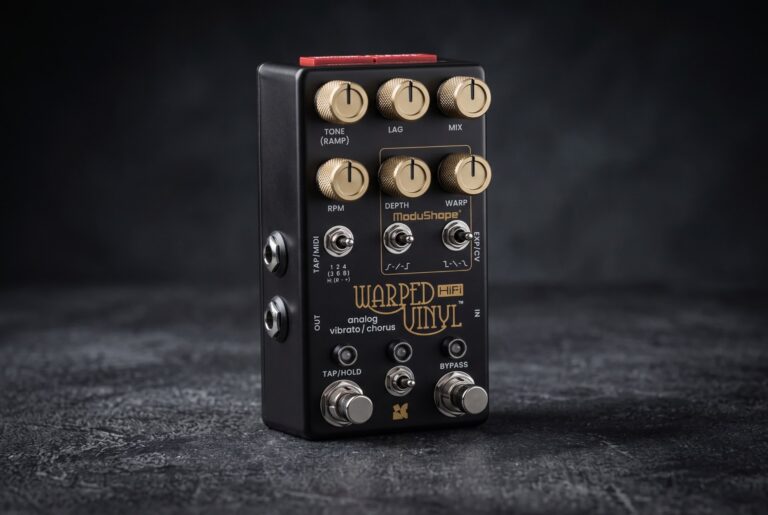
The Analog Man Mini Chorus is the CE-2-derived boutique choice for players who want the classic voice with better parts and no extra features. The JHS 3 Series Chorus is the $99 answer to “do I even like chorus.” The MXR M234 Analog Chorus adds a two-band EQ that the Julianna lacks and costs half as much. Owners comparing the Julianna against contemporary boutique rivals most often name the Eventide TriceraChorus for more focused 1980s voicings, the JAM Waterfall for a different chorus character, and Chase Bliss’s Warped Vinyl for warp-and-wobble work. Guitar.com’s own “like this, try these” list pointed at ThorpyFX’s The Deep Oggin, the Chase Bliss Warped Vinyl MkII and the Mad Professor Double Moon.
Buying Guide
Current Pricing, September 2026
List is $279.99. Street across the major US retailers — Sweetwater, Guitar Center, Musician’s Friend — has settled at $237.99, which price trackers flag as an all-time low. Reverb sits around $237 new with heavy stock. European pricing runs €249 at Thomann and £249 at Gear4Music. Used and excellent-condition examples start around $200, and the average transaction price across the market is roughly $242.
That relatively narrow used-to-new spread tells you something: people are not dumping these. A pedal that holds 80% of new price six years after launch is a pedal that owners keep.

B-Stock Is The Value Play
Walrus runs a permanent blemished-stock listing on its own site, and the Julianna appears there regularly. Multiple customer reviews on the Walrus site describe buying blemished units and being unable to find the blemish. One reviewer went further and reported that Walrus emailed after delivery to check the pedal had arrived safely and then telephoned a few days later to see how he was getting on with it — on a discounted B-stock sale. Warranty on Walrus pedals is limited lifetime. If you can live with the possibility of a scuff, this is the way to buy one.
Colourways And Limited Editions
The standard finish is Adam Forster’s deep lavender with surf green ink. A blacked-out “Minimal” version was added to the product page in early 2026 and is a current, non-limited option — the same pedal, no artwork. Beyond that, Walrus has produced a steady run of limited Juliannas: a Floral Series, Black Friday editions including a 2024 Floral variant, and a Santa Fe edition that carries its own separate catalogue entry. All of them are the same circuit. Pay a premium for a limited only if you want the look; there is no sonic difference and never has been.
What You Also Need To Budget For
There is no battery compartment, so a power supply is mandatory, and the 100 mA minimum is a real requirement rather than a suggestion — daisy chains that are already loaded will cause problems. Budget for a proper isolated supply. If you intend to use the stereo outputs you need a second amp or a stereo interface, plus two more cables. If you want the expression control you need a treadle. It is easy to turn a $238 pedal into a $500 project.
Living With It: Ownership Notes
The Footswitch Spacing Problem
This is Premier Guitar’s only listed con and it is worth taking seriously: “tap tempo switch is very close to bypass switch if you don’t use external tap switch.” On a 4.77-inch-wide enclosure with two switches, mis-stomps happen, particularly since holding the bypass switch is also how you access the secondary functions. If you gig this pedal and use tap regularly, the external tap input exists for exactly this reason. Use it.
Noise And Gain Staging
Owners consistently report two related issues. First, the Julianna can break up when it is fed a hot signal — high-output pickups, or a stack of drive and compression in front of it, will push its input. The fix is conventional gain staging: lower your pickup height, back off the drive output, or drop the level going in. Second, several owners recommend an EQ before the pedal cutting below roughly 400 Hz to clean up low-end clipping in the doubled signal, which a Boss GE-7 handles neatly. A treble boost or bass cut before an analog chorus is standard practice generally, but owners single the Julianna out as unusually responsive to it.
Volume Bump On Engagement
A slight level increase when the pedal switches on is a documented complaint, and like the Julia, the Julianna has no output level control to compensate. There is also a reported minor high-frequency roll-off. Neither is a dealbreaker, but if you need unity gain across a bypass switch you will need to solve it elsewhere in the chain.
Where To Put It
Standard placement is after drive and compression, before delay and reverb — which for most boards means between a drive block and a Keeley Caverns or Strymon time-based section. Equipboard’s own data on what the Julianna is most commonly boarded with reflects this exactly: Strymon El Capistan, Strymon Flint, Walrus Slö, Walrus Polychrome, and a Boss TU-3 or PolyTune 3 Mini at the front. If you are running the Julianna in stereo, it needs to be the point at which your chain splits, so everything after it must be stereo-capable too.
Build And Longevity
Made in Oklahoma City, diecast enclosure, limited lifetime warranty. Owner reviews six years in describe sturdy knobs and switches, and the pedal’s 5.0 average across 48 reviews on Walrus’s own site is unusually high even allowing for the obvious selection bias of a manufacturer-hosted review widget. Equipboard’s independent rating sits at 4.7 out of 5. Nobody is reporting failures.
Frequently Asked Questions
Is the Walrus Audio Julianna analog or digital?
Both, in different places. The audio path is entirely analog — a bucket-brigade delay line, the same technology as a CE-2. The low-frequency oscillator that modulates that delay line is digitally generated, which is what makes tap tempo, note divisions, the random waveform, Drift and the stored secondary rate possible. Your guitar signal never gets converted. Be aware that several gear databases describe the pedal as “100% analog circuitry” and separately as having an “analog LFO”; both of those claims are wrong and contradict Walrus’s own spec sheet.
What is the difference between the Julia and the Julianna?
The Julianna does everything the Julia does and adds stereo inputs and outputs, tap tempo with quarter, quarter-triplet and eighth-note divisions, a random LFO waveform, the Drift auto-rate function, a stored secondary LFO rate with momentary ramping, an expression pedal input and an external tap input. The core chorus and vibrato voice is the same family. If you do not need stereo or tap, the Julia is the more sensible buy.
How many waveforms does the Julianna have?
Three: sine, triangle and random. Note that some third-party listings state “sine, square and random” — there is no square wave on this pedal. The Julia, for the record, has only two, sine and triangle, and any source claiming the Julia has a random setting has imported that feature from the Julianna.
Does the Julianna have true bypass?
Yes. Walrus specifies true bypass on the Julianna. This is one point where it differs from the Julia V2, which uses a clickless soft-touch relay bypass. Some aggregator listings claim both true bypass and soft-relay switching for the Julianna simultaneously; the manufacturer spec is true bypass.
What power supply does the Julianna need?
9V DC, centre-negative, with a minimum of 100 mA available. There is no battery compartment and no battery option. A dedicated isolated output from a decent supply is strongly recommended, both for headroom and because analog chorus circuits are sensitive to supply noise.
Can I use the Julianna with a synth or bass?
Yes, and it is genuinely good at both. Guitar.com’s review specifically noted it is “just as sonically dangerous in the hands of keyboard players as guitarists,” and there is documented real-world use of the pedal on a Roland JU-06A. For bass, keep the D-C-V knob left of noon so the dry fundamental stays intact, and consider a high-pass filter in front to stop the low end clipping the doubled signal.
Is the Julianna discontinued?
No. As of September 2026 it is a current-production Walrus Audio Core Series pedal, sold direct at $237.99 with a black “Minimal” colourway added alongside the original lavender in early 2026. The pedal it replaces in some listings — the original first-generation Julia — is the one that has been superseded, by the Julia V2.
Which famous guitarists actually use a Julianna?
The best-documented user is Ken of L’Arc-en-Ciel, whose Free The Tone-built rig includes one. Raphael Saadiq has one in a Vertex Effects-built studio board. Pat McCrory of Turnstile, Lindsey Jordan of Snail Mail, Yvette Young of Covet, Brendan Ekstrom of Circa Survive and Daniel Kim of wave to earth are all photographically documented to varying standards of confidence. It has album credits on Oh Hiroshima’s All Things Shining and Softcult’s Heaven. Ignore any list that names Prince, Kurt Cobain, Andy Summers, Robert Smith or John Frusciante — those are recycled generic chorus rosters, and in Cobain’s case the pedal postdates his death by 26 years.
Is the Julianna worth $238?
If you run stereo, yes, without qualification — nothing else at this price gives you a genuinely analog stereo chorus with this much control. If you run mono and want one good chorus sound, the Julia at roughly $187 or a used CE-2W will serve you better for less. And if what you actually want is the specific fat, dark, 1980s Boss voice, no amount of tweaking the Julianna will get you all the way there; buy the Boss.
Image credits
- Andy Summers: Acroterion, Wikimedia Commons, CC BY-SA 4.0.
- John Frusciante: Hel Davies, Wikimedia Commons, CC BY-SA 2.0.
- Robert Smith: Christopher Johnson, Wikimedia Commons, CC BY-SA 2.0.
- Top image: GuitarGangsters AI-generated reference illustration, not a photograph.
- Raphael Saadiq: Dom Brady from Atlanta, Georgia, United States, Wikimedia Commons, CC BY 2.0.
Latest News
Related
On This Day
Monday 9 November
From this week: