The Shimmer That Launched a Thousand Pedalboards: Inside the JHS 3 Series Chorus
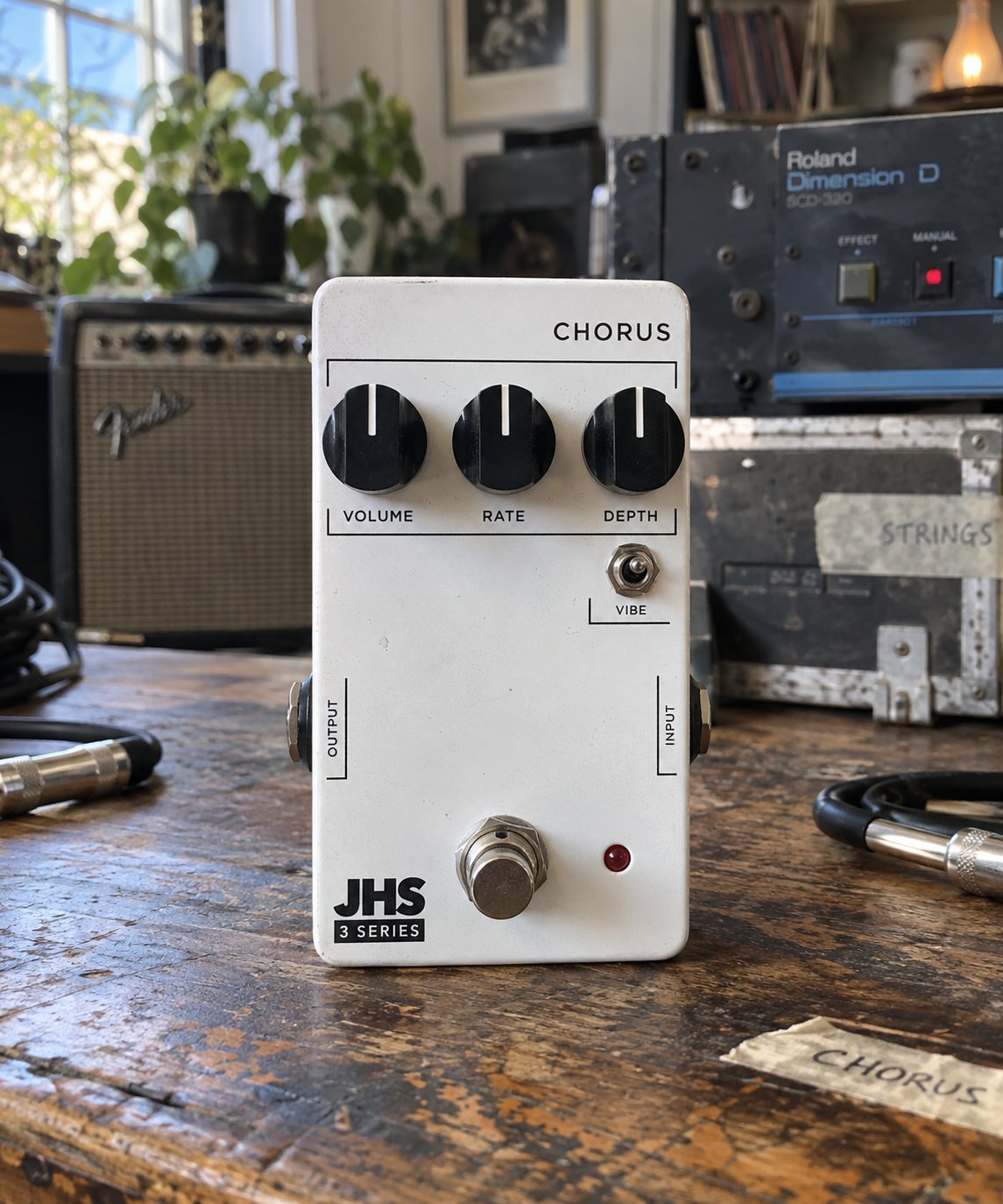
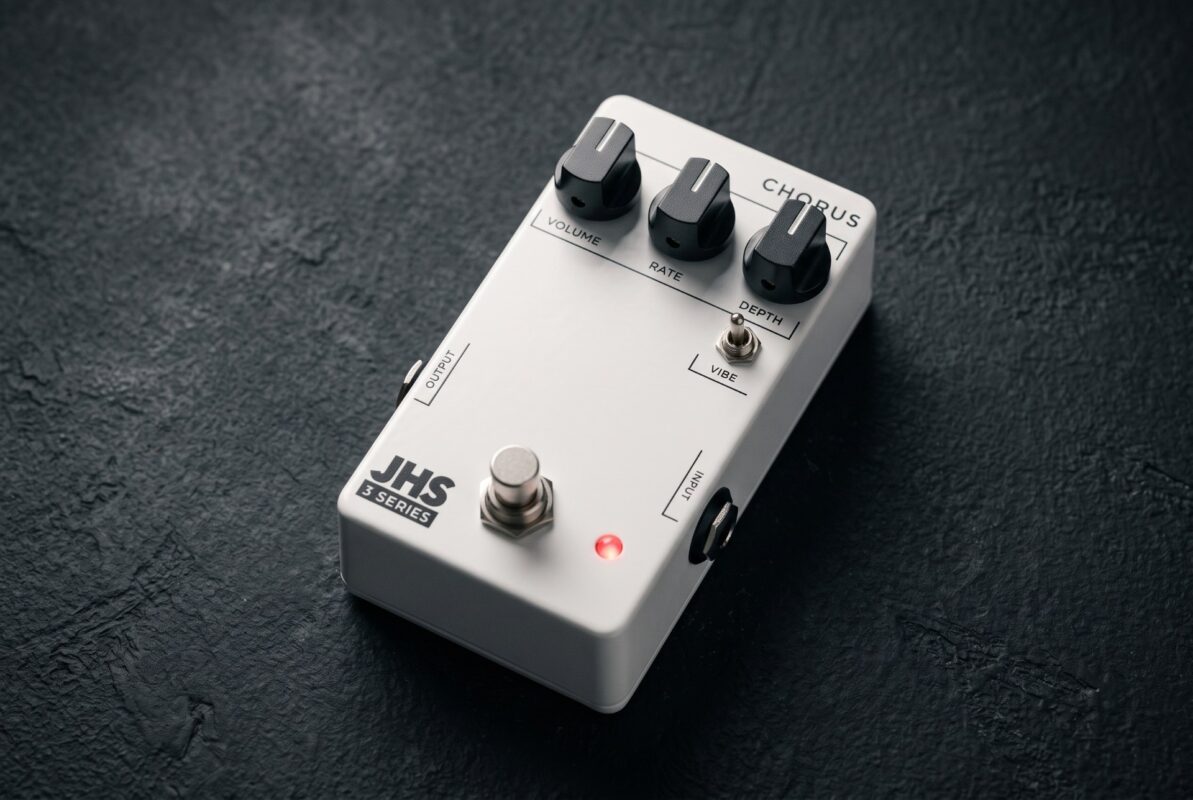
JHS 3 Series Chorus Pedal. AI-generated reference illustration, not a photograph.
The JHS 3 Series Chorus is a $99 analog BBD chorus with Vibe mode. Learn settings, tones, and how it compares to the Boss CE-2 and EHX Small Clone.
Chorus is the sound of doubt, made beautiful. It is the effect that turns a single guitar into a shimmering wall, that makes clean tones feel alive and breathe, that transforms a strummed chord into something that sounds like it is happening in a cathedral or on the surface of a still lake. It is also, historically, one of the more overcrowded corners of the effects pedal market — a space full of boutique clones, vintage originals, and digital approximations of all the above. Into this crowded field, JHS launched the 3 Series Chorus in 2020 at $99, and their pitch was simple: do one thing, do it well, make it in Kansas City, and charge less than the boutique competition.
What JHS delivered is a three-knob analog BBD chorus with a Vibe toggle that strips the dry signal entirely for pure pitch vibrato — a feature borrowed from the architecture of classic 1970s chorus circuits like the Boss CE-1. It is a pedal built around the sounds that defined the electric guitar in the 1980s: the shimmering arpeggios of The Police, the warm chorus wash behind Nirvana’s most melodic moments, the glassy vibrato textures of post-punk and new wave. If you have heard those sounds and wanted them in a box that costs less than dinner for four at a good restaurant, the JHS 3 Series Chorus is worth understanding in full.
The JHS 3 Series: Kansas City’s Answer to the Budget Chorus Question
The 3 Series launched in 2020 as JHS’s most direct statement about democratizing quality. Josh Scott and his Kansas City team had spent years building boutique pedals — the Morning Glory V4, the Bonsai 9-Way Screamer, the Angry Charlie V3 — at price points that reflected boutique manufacturing. The 3 Series was their attempt to bring the same Kansas City build quality and quality-control standards to a $99 price point by simplifying feature sets down to three knobs and one toggle per pedal.
The range launched with seven pedals: Compressor, Fuzz, Overdrive, Distortion, Chorus, Delay, and Reverb. Each sits in the same compact enclosure measuring 4.42 inches by 2.38 inches by 1.22 inches. Each uses the same aluminum housing and quality footswitch. Each is made by JHS employees in Kansas City, Missouri — not outsourced to a contract factory overseas. The 3 Series Overdrive clones the discontinued HAO Rumble Mod RM-1 boutique circuit at a fraction of the price. The 3 Series Distortion is a RAT-inspired dual-mode beast with silicon and LED clipping options. The 3 Series Fuzz is a two-transistor silicon Fuzz Face derivative with Bias voltage control. The Chorus, by contrast, is JHS’s original analog chorus design — not a clone of any specific vintage circuit schematic, but an all-analog BBD-based chorus built to cover the classic sounds of the format with its own character.
Players who have used both the JHS 3 Series Chorus and classic Boss CE-series chorus pedals consistently describe the JHS as sitting in warm, smooth Boss-adjacent territory — which tells you roughly where JHS aimed the character of the circuit. It is not a precise reproduction of the CE-2 or any other specific pedal, but it draws from the same BBD analog tradition and sounds like it belongs in that family.
Specifications
| Parameter | Specification |
|---|---|
| MSRP (2026) | $99.00 |
| Street Price New (2026) | ~$79–$99 |
| Street Price Used Excellent (2026) | ~$50–$65 |
| Power | 9V DC, center negative |
| Current Draw | 70mA |
| Dimensions | 4.42″ × 2.38″ × 1.22″ |
| Battery Operation | No |
| Controls | Volume, Rate, Depth (3 knobs) |
| Toggle | Vibe (removes dry signal for pure pitch vibrato) |
| Origin | Kansas City, MO, USA |
| Production Status | Current |
| Year Released | 2020 |
The 70mA current draw deserves immediate attention because it represents a significant step up from the other JHS 3 Series pedals. The 3 Series Fuzz draws 9mA. The Overdrive draws 12mA. The Distortion draws 9mA. The Chorus draws 70mA — nearly eight times what the simplest 3 Series circuits require — because BBD (Bucket Brigade Device) analog delay chips, which form the core of any analog chorus circuit, need clock signals and often internal charge pumps to operate. This is not unusual; the EHX Small Clone, the Boss CE-2, and the MXR Analog Chorus all draw comparable current. But it does mean you cannot throw this on a cheap daisy-chain supply shared with several high-draw pedals and expect noise-free operation. Use an isolated 9V output rated at 100mA or more, and you will have no issues whatsoever.
Controls: Simple by Design, Versatile in Practice
Three knobs and a toggle. JHS was explicit about this constraint across the 3 Series — the simplicity is intentional, the feature set deliberately constrained to hit the price point without compromising the quality of the core circuit itself.
Volume controls your output level relative to your bypassed signal. Unity gain falls roughly at noon on most clean amp settings. The control range extends above unity, which means you can use the 3 Series Chorus as a mild volume boost when engaged — useful for bringing up lead passages that incorporate the shimmering modulation without changing your drive pedal settings or losing pick-attack dynamics.
Rate controls how fast the modulation cycles — the speed of the chorus wave. At its slowest settings (fully counterclockwise), Rate produces the gentle, slow-swimming chorus texture associated with ambient, shoegaze, and new wave rhythm playing. At higher Rate settings, the effect moves into faster, more pronounced wobble territory approaching Leslie-speaker or tremolo-adjacent movement at its most extreme positions. The sweet spot for most classic chorus applications — the shimmer-under-clean-chords sound — lives between roughly eight o’clock and noon on the Rate dial, where the movement is perceptible but unhurried.
Depth controls how wide the modulation pitch shift swings — how dramatic the chorus effect is from moment to moment. Low Depth with low-to-moderate Rate produces the subtle doubling effect that makes clean chords sound slightly larger than life without obviously announcing itself as an effect to the listener. High Depth produces the thick, seasick chorus wave that defined a certain strand of 1980s guitar playing — present, slow-moving, almost overwhelming. Used with higher Rate settings, maximum Depth pushes into watery, almost pitch-unstable territory that works for experimental music and noise-adjacent applications.
The Vibe Toggle is the feature that distinguishes this pedal from a basic three-knob chorus. Engaged (up position), Vibe mode removes the dry signal entirely, leaving only the pitch-modulated wet signal. This creates pure pitch vibrato — the guitar’s pitch rises and falls continuously with the Rate setting rather than blending with a dry reference. The effect is the vintage vibrato built into Fender amplifiers’ Vibrato channel and that the original Boss CE-1 could produce through its dedicated vibrato output. Rate and Depth control the speed and intensity of the modulation in Vibe mode exactly as they do in chorus mode. Lower Rate settings produce smooth, subtle pitch vibrato with a singing, slightly warped character. Higher Rate with higher Depth produces dramatic, tape-machine-flutter effects that work for psychedelic playing, experimental textures, or extreme ambience. It is a genuinely useful second voice for the pedal, not a gimmick appended to justify a marketing claim.
Famous Players: The Honest Account
The artists listed in association with the JHS 3 Series Chorus — Andy Summers, John Frusciante, Kurt Cobain, Robert Smith, and Prince — are among the most celebrated chorus-using guitarists in rock history. None of them, to the best of any publicly available documentation, are confirmed as users of the JHS 3 Series Chorus specifically. They are the reason this type of pedal exists in the first place: the sonic architects whose work established chorus as an essential rock guitar tool, whose sounds remain the reference points for anyone buying an analog chorus in 2026. What the 3 Series Chorus allows you to do is approximate the sounds they built with different, often far more expensive instruments and effects chains. That is worth being clear about.
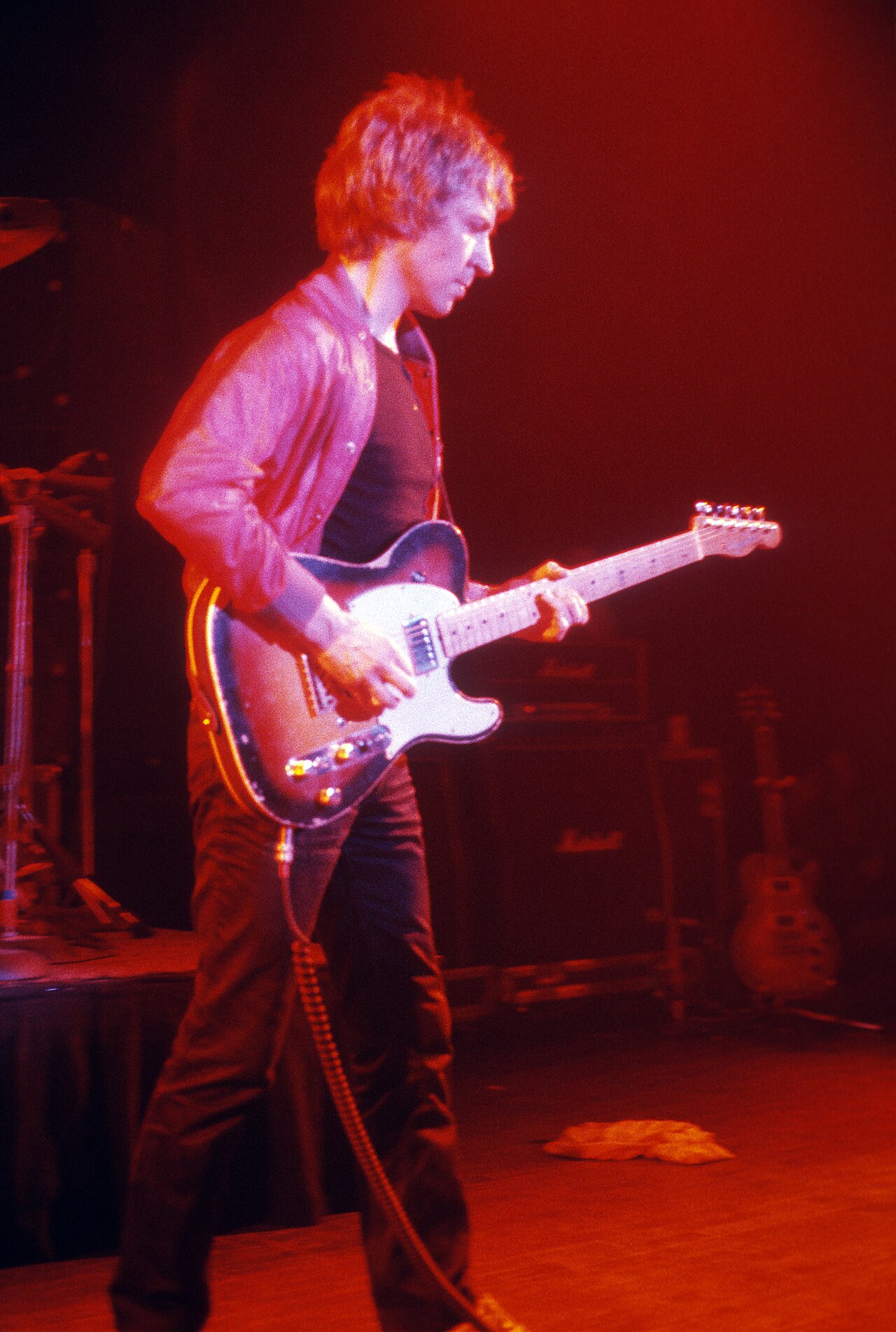
Andy Summers of The Police built his signature guitar sound on the Boss CE-1 and Boss CE-2 Chorus — two Japanese BBD chorus pedals from 1976 and 1979 respectively that transformed his clean Telecaster arpeggiated chord work into the shimmering, slightly detached textures on “Every Breath You Take,” “Message in a Bottle,” and “Roxanne.” Summers’ CE-1 and CE-2 use have been thoroughly documented in interviews, video footage from The Police years, and gear retrospectives; these are confirmed as the core of his chorus sound. The JHS 3 Series Chorus sits in the same BBD analog tradition. The tonal character is different — Summers’ CE-1 and CE-2 have their own specific warmth and low-frequency weight — but the principle of the effect is identical, and the JHS pedal approximates Summers’ less extreme chorus settings convincingly enough to be a useful tool for anyone studying his approach.
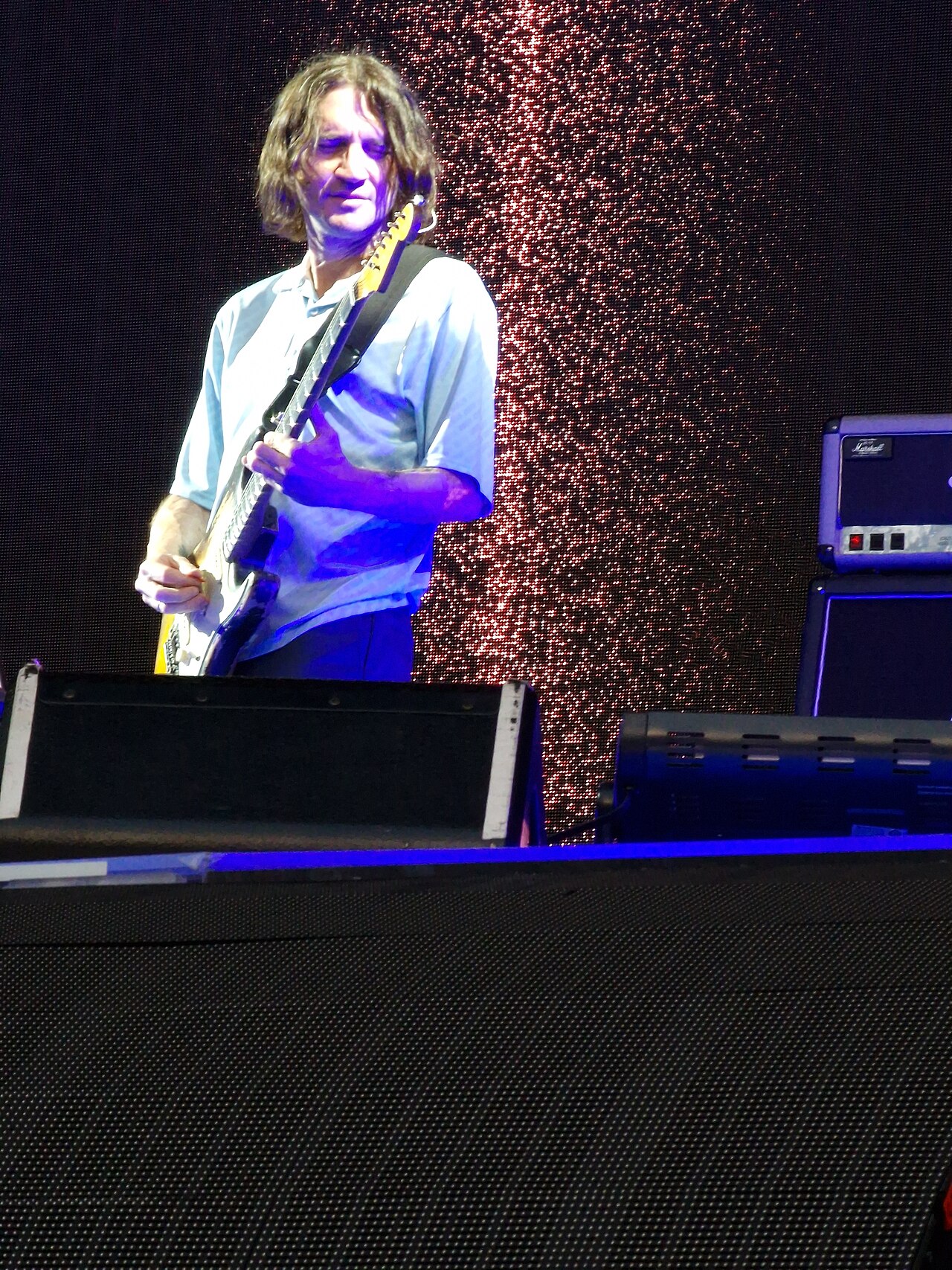
John Frusciante of the Red Hot Chili Peppers used a Boss CE-1 as a fundamental component of his tone across his RHCP career, particularly for its ability to function as a signal splitter that gave him two simultaneous amp paths. The CE-1’s chorus effect flavors his playing on “Under the Bridge,” “Californication,” and countless other moments where his Stratocaster gains an almost otherworldly shimmer. Frusciante’s tone is not something a $99 chorus pedal fully replicates — his signal chain is complex, his picking dynamics are unique, and the CE-1 is a specific piece of equipment with its own character — but the category of sound he pursued is the same territory the JHS 3 Series Chorus covers. Players learning his approach will find the JHS Chorus useful for developing the right sonic context before investing in a CE-1 reproduction or vintage original.
Kurt Cobain‘s chorus pedal of choice was the Electro-Harmonix Small Clone, confirmed as the source of the shimmering, watery riff that opens “Come as You Are” and appears throughout the verses of “Lithium.” The EHX Small Clone runs on a different circuit topology than the JHS 3 Series Chorus, and the two pedals have meaningfully different characters — the Small Clone is thicker, denser, and more enveloping, while the JHS reads as slightly more articulate and transparent. They occupy the same functional territory in terms of price point and basic purpose, however. Cobain’s Small Clone settings were typically Rate set near minimum and Depth at or near maximum — a slow, deep wave rather than a fast shimmer — and those same coordinates on the JHS 3 Series Chorus produce a comparable if not identical slow-wave chorus texture.
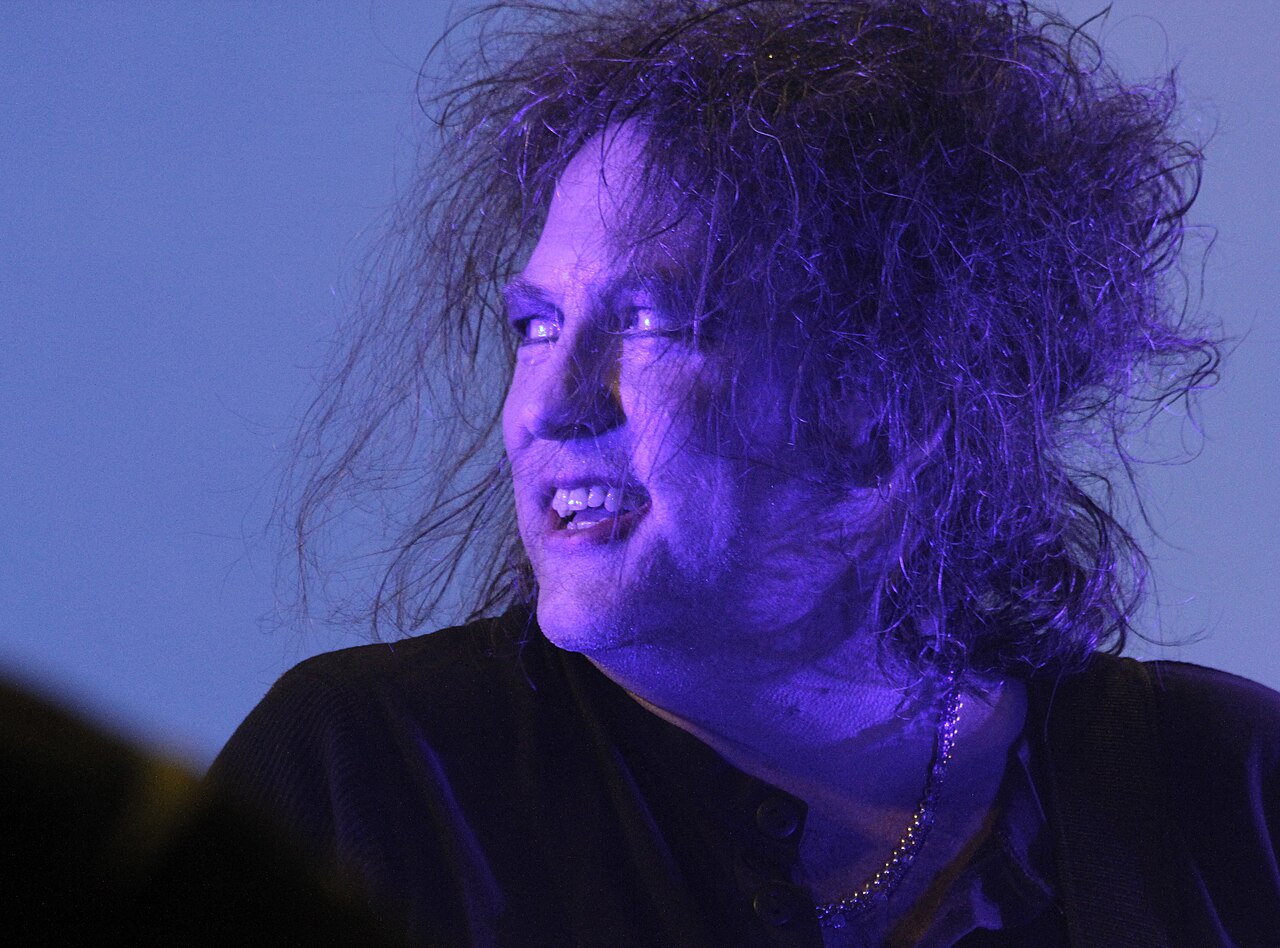
Robert Smith of The Cure built his early guitar sound on the Roland JC-120’s built-in stereo chorus and later the Boss CE-1, both contributing to the chiming, reverb-soaked guitar textures on records like “Seventeen Seconds,” “Faith,” and “Pornography.” The Boss CH-1 Super Chorus became a documented part of his later rig, and the Boss CH-1 contributes to his live tone in The Cure’s more recent touring. Smith’s approach to chorus is maximalist — he does not use it as a subtle doubling effect but as a core tonal identity component, something inseparable from the guitar sound itself. The JHS 3 Series Chorus can reach similar territory with Rate set conservatively and Depth pushed into the two-thirds range. His “Just Like Heaven” guitar sound — moderate chorus depth, slower rate, feeding into reverb — is a directly achievable reference on this pedal.
Prince‘s relationship with modulation effects spans four decades of recording and encompasses everything from subtle chorus on clean funk rhythms to lush, ambient modulation textures on ballads and jazz-influenced studio work. His signal chains were complex and evolved constantly; no primary-source documentation confirms his specific use of the JHS 3 Series Chorus, and his inclusion reflects his status as one of the broadest influences in guitar effects use rather than a confirmed equipment connection. What is documentable is that the clean chorus sounds on his recordings — the shimmering, slightly liquid quality of the guitar textures on “Purple Rain,” “When Doves Cry,” and dozens of other tracks — represent exactly the territory the JHS 3 Series Chorus is designed to cover.
The honest summary: the JHS 3 Series Chorus is for players who want to access the sounds these artists built, not because those artists use this specific pedal, but because the sound this pedal makes is directly in the sonic lineage of the pedals they did use. That distinction matters for historical accuracy. It does not change the practical value of the pedal for players pursuing those sounds.
Tone Recipes and Settings
The Andy Summers Clean Shimmer
Summers’ most recognizable chorus application is the slow, moderate-depth shimmer under clean Telecaster or Stratocaster arpeggiated chords — not deep chorus, not fast, just enough movement to make the guitar sound alive and spatial without the effect announcing itself. Set Rate at nine o’clock, Depth at ten o’clock, Volume at noon or slightly above. Vibe toggle off (chorus mode). Run into a clean amp — a Fender Deluxe Reverb, a Fender Twin Reverb, any clean platform with a touch of natural reverb. Play arpeggiated chord voicings with open strings ringing against fretted notes. The JHS 3 Series Chorus produces a convincing approximation of this texture and rewards playing lighter into the strings rather than attacking hard.
The Kurt Cobain Slow Wave
Cobain’s Small Clone setting on “Come as You Are” is a slow, deep chorus — not a shimmer but a wave. Rate near minimum (seven to eight o’clock), Depth at maximum or just below. Volume at unity. Vibe toggle off. The effect should sound like the pitch is breathing in and out slowly beneath the guitar rather than oscillating visibly. Use this on clean or lightly overdriven tones rather than high gain — the chorus needs harmonic space to move in, and high-gain distortion compresses the modulation into something closer to a tremolo effect. Single-note melodic lines benefit as much as chord work from this setting.
The Robert Smith Dense Wash
Smith’s approach is more aggressive with depth than Summers’. Set Rate between nine and ten o’clock, Depth at two o’clock, Volume slightly above unity to compensate for the thick wet signal’s perceived volume reduction at high depth settings. Vibe toggle off. Stack behind a spring reverb or hall reverb at moderate reverb depth. Strum full barre chord shapes and let them sustain without picking again. The result is the dense, chiming guitar texture characteristic of The Cure’s mid-period recordings. It is more obviously an effect than the Summers setting — less transparent, more colored — and it works best in a musical context where that density is the point.
Pure Vibrato — Vibe Mode
Engage the Vibe toggle. Set Rate at nine o’clock and Depth at noon for the most musical starting point. The guitar’s pitch will rise and fall in smooth waves with no dry reference signal underneath. This is vintage Fender vibrato territory — the pedal-steel-adjacent shimmer that works beautifully on clean chords, fingerpicked passages, and slow melodic lines. Increase Rate toward noon for a faster, more pronounced wobble. Push Depth toward maximum for something approaching a Leslie-cabinet fast-speed effect without the mechanical complexity. The Vibe mode stacks particularly well with a clean tremolo setting on the amplifier for layered vintage modulation textures; the combination of pitch vibrato and amplitude tremolo creates a compound movement that sounds expensive and complex from a simple combination of analog controls.
Subtle Doubling
For the least obviously modulated sound — the chorus setting you use when you want listeners to feel the track sounds full without consciously identifying an effect — set Rate at its minimum, Depth at eight o’clock, Volume at unity. The effect barely moves; it thickens the guitar slightly and gives it a suggestion of width and depth. This is the studio room-of-players texture rather than the live chorus wash. It sits under a lead part without interfering with the melodic line, and it gives clean chord work a subtle three-dimensionality that makes the guitar sound like more than one player working the same part from slightly different positions in the room.
Fast Shimmer for Lead Work
Set Rate at eleven o’clock, Depth at eleven o’clock, Volume above unity by a small amount. Vibe toggle off. Use this as a lead-guitar effect engaged for solos or melodic passages over a rhythm section. The slightly faster modulation and moderate depth creates a shimmering, alive quality that makes sustained notes feel like they are moving even without vibrato technique from the fretting hand. It is the modulation equivalent of a flanger at its most musical setting — obvious enough to hear, controlled enough to be musical rather than disorienting.
How the JHS 3 Series Chorus Compares
The natural reference point is the Boss CE-2 Chorus, the pedal that defined analog chorus in the 1980s and that the JHS 3 Series Chorus most frequently gets compared to by players who have used both. The CE-2 is warmer and has its own specific low-frequency character — a heaviness in the low mids that makes the chorus feel physically substantial and gives it the slightly dark quality associated with recordings from the era. The JHS 3 Series Chorus reads as slightly brighter and more articulate, sitting somewhere between the CE-2’s low-mid warmth and the Boss CH-1 Super Chorus‘s cleaner, more digitally adjacent high-end presentation. The JHS also adds the Vibe mode that the standard CE-2 lacks, though the Boss CE-2W Waza Craft adds vibrato output alongside its CE-2 circuit reproduction at $200 — twice the JHS’s price.
Against the EHX Small Clone, the JHS sounds less dense and heavy. The Small Clone has a thick, enveloping quality that is partly responsible for Cobain’s specific chorus texture — it is unmistakably itself, with a weight and slightly filtered character. The JHS 3 Series Chorus is thinner in comparison, which is not a criticism; it means it sits more transparently in a mix and works better for the subtle-shimmer applications where the Small Clone’s thickness becomes too much. Both are BBD analog chorus pedals at sub-$100 price points. They are different tools for different sounds within the same general family.
Against the MXR M234 Analog Chorus, the JHS offers simpler controls — the MXR has Bass and Treble EQ controls alongside Rate and Depth, giving it more tonal shaping flexibility — but the JHS adds Vibe mode that the MXR lacks. The MXR’s EQ controls are genuinely useful for fitting the chorus into different amp and guitar combinations; the JHS’s simpler three-knob layout sacrifices that flexibility in exchange for the Vibe toggle and a smaller footprint. For players who know exactly what tone they want and need Vibe capability, the JHS wins. For players who want maximum tonal flexibility from a chorus pedal, the MXR’s EQ controls are a meaningful advantage.
Within the JHS family, the 3 Series Chorus pairs naturally with the 3 Series Delay and 3 Series Reverb to form a complete ambient-effects chain at $297 for all three pedals — considerably less than equivalent boutique alternatives while sharing the same Kansas City manufacture and quality standards. The entire 3 Series was designed to work together, and the Chorus-Delay-Reverb combination covers the core spatial processing needs of most pedalboards without requiring individual research and comparison across multiple manufacturers. The Boss VB-2W Vibrato is the dedicated alternative for players who primarily want pure pitch vibrato from a dedicated unit rather than the 3 Series Chorus’s toggle-based Vibe mode, at $200 versus $99 for the JHS — but the 3 Series Chorus’s Vibe mode is genuinely capable for most vibrato applications and rarely leaves players feeling they need the dedicated unit.
Buying Guide: New, Used, and What to Watch For
The JHS 3 Series Chorus retails at $99 and has periodically appeared at $79 during Sweetwater promotions and holiday sales, including a $19.80 discount that ran through mid-2026. Used examples in excellent condition appear regularly in the $50–$65 range on Reverb, consistent with the general pricing pattern for 3 Series pedals on the secondary market. There is no older version or revision to navigate — the 3 Series Chorus has been in continuous production since 2020 without a redesign, so any used unit is functionally identical to a new one. No firmware, no digital components to update, no preset memory to lose. What you see is what you get.
The only meaningful condition consideration on any 3 Series pedal is footswitch wear from heavy live use — the switches are quality components but they accumulate actuations on gigged pedalboards. A footswitch that has been on the road for three years of regular live use is not the same as a studio-only unit. Listen for any scratchiness or inconsistency in the bypass when auditioning used units. Otherwise, the secondary market for 3 Series Chorus pedals is a straightforward proposition: simple circuit, no settings to store or lose, no battery compartment to deteriorate, no clock or firmware to worry about.
If your primary goal is replicating a specific vintage chorus sound with documentary accuracy — Summers’ exact CE-1 character, or Cobain’s specific Small Clone thickness — you will get closer to the source by purchasing the actual pedal or a more direct circuit reproduction. The Boss CE-2W Waza Craft reproduces the CE-2 circuit with considerable accuracy at $200; vintage CE-2 units appear used at $150–$250 depending on condition and age. The EHX Small Clone is still in production at around $75 and remains the most direct route to Cobain’s chorus sound. But if your goal is quality analog chorus with Vibe capability, versatile controls, and Kansas City build quality at $99, the JHS 3 Series Chorus is one of the strongest value propositions at that price point in the current market.
Ownership Notes: What You Need to Know Before You Buy
The 70mA current draw is the first practical consideration. Most modern multi-output power supplies provide eight or more isolated 100mA outputs, and any single one of those handles the JHS 3 Series Chorus without issue. If you are running a minimal supply with 50mA outputs, verify before purchasing. A single 100mA isolated 9V output is the reliable recommendation for this pedal. Do not daisy-chain it with several other pedals on a low-amperage unregulated supply — the BBD clock circuit will introduce noise under those conditions that the circuit itself cannot suppress.
No battery operation means no power cable means no sound. The 3 Series Chorus requires a DC power adapter; unlike some simpler analog pedals, you cannot slip a 9V battery into the enclosure as a backup if your power supply fails at a gig. Make sure your pedalboard power solution is reliable before depending on this pedal in a live context, and carry a backup 9V adapter if the gig environment is unpredictable.
True bypass status is not explicitly confirmed on the JHS 3 Series Chorus product page. This is consistent with the ambiguity noted on the 3 Series Overdrive, which also does not list bypass type explicitly. Other JHS pedals with confirmed true bypass — the Angry Charlie V3, the AT+ Andy Timmons — list it explicitly in their specifications. Players who have strong opinions about true bypass versus buffered bypass should contact JHS directly or ask their retailer to verify before purchasing. The practical impact of bypass type in a chorus pedal is modest for most players, but it is worth confirming if it matters to your signal chain.
The Vibe toggle is a physical toggle switch, not a footswitch. Changing between chorus mode and Vibe mode requires bending down to flip the toggle between songs — it is not a real-time, foot-switchable function. The pedal operates in one mode at a time. If your playing requires rapid mid-song switching between chorus and vibrato, a multi-function modulation pedal with footswitch-assignable modes is a more appropriate solution. If you primarily use one mode and occasionally the other, the toggle is perfectly practical for most live situations where mode changes happen between songs during tuning breaks.
Chorus placement in the signal chain is not incidental. Chorus before overdrive — particularly before a fuzz like the JHS 3 Series Fuzz — creates a smeared, unstable effect where the modulation itself gets processed along with the distortion, compressing and saturating the wave. This can produce genuinely interesting sounds in shoegaze, noise-rock, and experimental contexts where that smearing quality is intentional. Chorus after overdrive — the approach associated with Summers, Frusciante, and Smith — produces clean separation between the driven tone and the added modulation. The modulation sits atop the distortion character without interacting with it, which is the classic approach for most applications.
Frequently Asked Questions
Is the JHS 3 Series Chorus a clone of the Boss CE-2?
No. Unlike the 3 Series Overdrive (a HAO Rumble Mod clone) and the 3 Series Distortion (a RAT-inspired design), the 3 Series Chorus is JHS’s original analog BBD chorus design rather than a reproduction of any specific vintage schematic. It draws comparison to Boss CE-series choruses because it is warm and smooth and analog in the same tradition, but the circuit architecture is JHS’s own. Players who specifically want the CE-2 circuit should look at the Boss CE-2W Waza Craft, which is a documented reproduction of the original CE-2 design.
What does the Vibe toggle actually do?
The Vibe toggle removes the dry signal from the output, leaving only the pitch-modulated wet signal. With the dry signal present (Vibe off), the circuit produces chorus — a blend of the original pitch and a slightly delayed, pitch-modulated copy of that same signal, creating the thickening and widening effect. With the dry signal removed (Vibe on), only the pitch-modulated signal passes through, producing pure pitch vibrato where the guitar’s pitch rises and falls continuously with the Rate setting. It is a significant tonal difference — chorus sounds wide while vibrato sounds warped — and the Vibe mode is a genuinely useful second voice rather than a rarely-used extra toggle.
Can I use the JHS 3 Series Chorus to get Andy Summers’ Police sound?
You can approximate the character of Summers’ chorus settings, but his specific tone came from a Boss CE-1 and CE-2 — Japanese BBD chorus pedals with their own particular warmth and low-frequency voicing that differs from the JHS circuit. The JHS 3 Series Chorus covers the same conceptual territory with slightly different character. For the most direct approximation of the CE-2 sound specifically, the Boss CE-2W Waza Craft at $200 is a more faithful reproduction. But for the general effect — slow, moderate-depth shimmer under clean arpeggiated chords — the JHS 3 Series Chorus performs the task well and sits convincingly in the same sonic neighborhood.
Why does the JHS 3 Series Chorus draw 70mA when the other 3 Series pedals draw less than 15mA?
The 70mA draw is a consequence of the BBD (Bucket Brigade Device) analog chip at the core of any analog chorus circuit. BBD chips require clock signals and often internal charge pumps to generate the modulated delay time used for chorus, which significantly increases current draw compared to the simple transistor circuits in the 3 Series Fuzz (9mA) or Overdrive (12mA). This is completely normal for BBD-based analog chorus pedals — the EHX Small Clone, Boss CE-2, and MXR Analog Chorus all draw comparable current from their 9V supplies. Use an isolated 100mA output and the 70mA draw presents no practical issue whatsoever.
Should chorus come before or after overdrive on my pedalboard?
The canonical approach — and the placement associated with Summers, Frusciante, Smith, and most classic chorus users — is after overdrive or on a clean signal with no drive in front of it. This produces clean, well-defined chorus modulation that sits clearly atop the driven tone without the distortion processing the modulation itself. Chorus before overdrive creates smeared, compressed modulation where the effect gets saturated along with the guitar signal. Both have legitimate applications depending on the intended sound; for classic clean-shimmer chorus, after overdrive or into a clean amp is the standard approach.
How does the JHS 3 Series Chorus compare to the EHX Small Clone?
The Small Clone is thicker and more enveloping — it has a heavy, dense quality that is partly responsible for Cobain’s immediately recognizable “Come as You Are” chorus texture. The JHS 3 Series Chorus is more articulate and slightly brighter, sitting more transparently in a mix. The Small Clone is also a simpler design with only Rate and Depth controls and no Vibe mode or Volume control, while the JHS adds Volume control and the Vibe toggle. For replicating Cobain’s specific Small Clone sound, the Small Clone itself is the most direct path. For a more versatile analog chorus with Vibe capability at a comparable price, the JHS has the better feature set.
Is the JHS 3 Series Chorus true bypass?
True bypass status is not explicitly confirmed on the JHS 3 Series Chorus product page, which is consistent with the same ambiguity noted on the 3 Series Overdrive. JHS pedals with confirmed true bypass — the Angry Charlie V3, the AT+ Andy Timmons — list it explicitly in their specifications. Buyers for whom bypass type is a critical consideration should contact JHS directly or ask their retailer to confirm before purchasing. The practical impact on tone is modest for a chorus pedal in most signal chains, but it is worth clarifying if it matters to your particular setup.
Can the JHS 3 Series Chorus work for bass guitar?
Yes, with some awareness of the behavior. The analog BBD circuit handles bass frequencies adequately at moderate settings. At extreme Depth settings, the low-end pitch modulation can become diffuse and slightly muddy, which is a characteristic shared by most BBD chorus circuits when pushed hard with bass-frequency content. Conservative Rate and Depth settings — enough to add harmonic width and shimmer without extreme pitch deviation — work well for bass chorus applications and give the instrument a slightly broader, more presence-rich quality in a mix. The Vibe mode on bass is more dramatic than on guitar, producing strong pitch swoops that work in experimental contexts but may be too extreme for most standard bass applications.
Image credits
- John Frusciante: Hel Davies, Wikimedia Commons, CC BY-SA 2.0.
- Robert Smith: Christopher Johnson, Wikimedia Commons, CC BY-SA 2.0.
- Andy Summers: Acroterion, Wikimedia Commons, CC BY-SA 4.0.
- Top image: GuitarGangsters AI-generated reference illustration, not a photograph.
- JHS Pedals 3 Series Chorus: AI-generated illustration by GuitarGangsters, based on the manufacturer’s product design (not a photograph).
Latest News
Related
On This Day
Tuesday 10 November
From this week: