When Eddie Van Halen Decided the World Needed His Amp—Built His Way
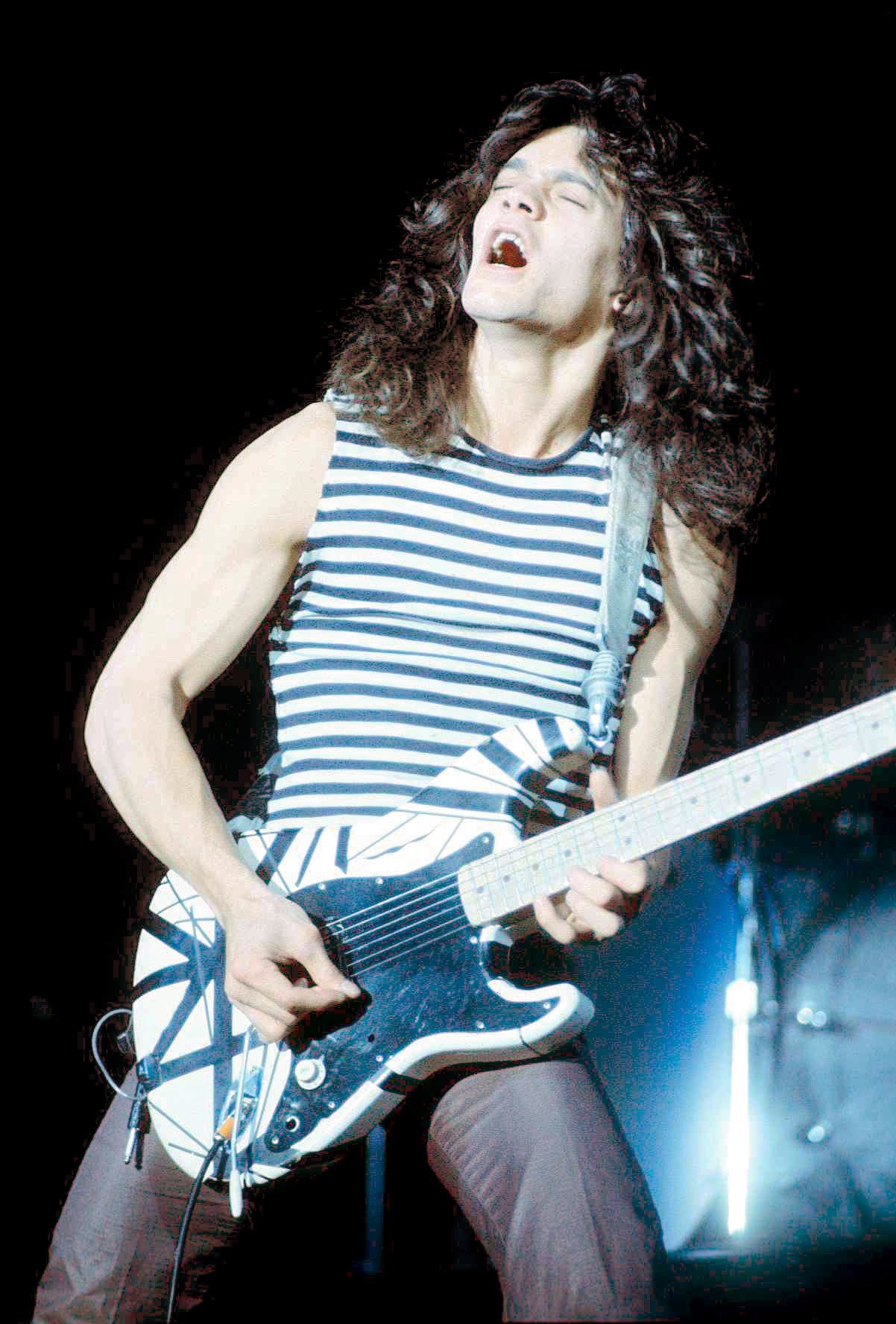
Eddie Van Halen at New Haven, Connecticut, USA (New Haven Coliseum), 1978. Photo: Carl Lender, CC BY 2.0, via Wikimedia Commons (File:Eddie Van Halen at the New Haven Coliseum.jpg).
EVH 5150III 100W 6L6 Head: three channels, eight 12AX7s, four 6L6s, Eddie Van Halen's design. Full specs, tone recipes, verified players, and buying guide.
For thirteen years, Eddie Van Halen and Peavey put out some of the most influential amplifiers in rock history. The original 5150 redefined what high-gain could sound like. The 5150 II refined it. Then in 2004, the partnership dissolved, and a peculiar power vacuum opened in the high-gain amp market: the circuit that defined a generation was still being sold—just without the man who defined it.
Eddie walked away with the one thing Peavey couldn’t keep: the 5150 name itself. And three years later, at the January 2007 NAMM show in Anaheim, California, he unveiled what that name would become in its next life. The EVH 5150III 100W Head arrived not as a tweak to what came before but as a ground-up redesign—same philosophy, same relentless pursuit of articulate high-gain tone, but with a third channel, independent presence controls on every channel, and the manufacturing muscle of Fender behind it.
Nearly two decades on, the 5150III 100W 6L6 Head is still in production, still the benchmark against which most three-channel high-gain heads are measured, and—since Eddie Van Halen’s death in October 2020—carries a weight of legacy that no other amplifier in the rock world quite matches. This is the one he chose to put his name on when he had absolute control. That means something.
From Scottsdale to Ensenada: How the 5150III Got Made
When Eddie left Peavey, he didn’t walk into Fender’s headquarters with a circuit schematic under his arm. The 5150III was genuinely built from scratch—and it took approximately a year and three-quarters to get there. The key figure bridging the two eras was James Brown, the same Peavey engineer who had been the hands-on architect of the original 5150 and the 5150 II. Brown moved to Fender and, working from Fender’s Scottsdale, Arizona R&D facility, began the process of designing the amp Eddie had been hearing in his head since the Peavey partnership ended.

Matt Bruck, who became the operational steward of the EVH Gear brand, described the process to Guitar World in December 2025: “The process was long and difficult, because the amp was reimagined from the ground up, which meant we had to establish a new foundation to build up from. This meant a new chassis and formulating the transformers, which are amazing, built like a tank, and over spec’d—the way they should be if you’re going for something great.”
The amp is built in Ensenada, Mexico at Fender’s production facility there—the same plant that produces significant portions of Fender’s Mexican Stratocaster and Telecaster lineup. This is worth stating plainly because it surprises people who expect a flagship amp to be made in the USA. The design authority is American; the construction is Mexican. In practice, build quality is consistent and tight across the range.
The final phase of development Eddie called “crash testing.” Wolfgang Van Halen recounted the method to Guitar World: “Dad testing it up in the studio. You could hear it from the bottom of the house, this slight feedback. As you went up toward the studio, it started to get louder. Then you opened the door to the first room, and it was a little louder. When you opened the door to where the guitar was, there was a guitar sitting there, with every knob pinned, feeding back. He literally kept it there for a week, just to crash test it and make sure it didn’t explode.”
Bruck was less relaxed about it: “I was saying, ‘It’s going to get hot. It’s going to explode. We’re going to have a fire.’ He was like, ‘Don’t worry about it. We’ll see how long it goes.’ After about five days, he was like, ‘Okay, it passed the test.’ That gives you insight into the uncanny genius and how much of an outside-the-box thinker Ed was.”
The result of all this—the crash testing, the year and three-quarters of development, the from-scratch chassis—was an amplifier that launched at NAMM 2007 alongside a 50W head variant and the EVH Wolfgang guitar, completing Eddie’s fully independent gear ecosystem.
Specifications at a Glance
One detail that surprised the first wave of buyers: there is no global master volume. Each channel has its own Volume control, but there is no master knob that governs all three simultaneously. This is a deliberate design choice—it forces players to set each channel’s output independently, which rewards careful setup but penalises quick soundcheck adjustments. MusicRadar‘s 2007 review flagged it as a Con; it remains a limitation worth knowing before purchase.
The six-knob-per-channel architecture (plus rear Resonance) is the most immediately apparent departure from the two-channel Peavey 5150. Independent Presence on every channel matters more than it might appear: Presence interacts heavily with Gain and Treble on a high-gain amp, and having a dirty-channel Presence setting that differs by fifteen to twenty degrees from your clean channel setting is something you only appreciate after playing a head that won’t allow it.
What the Three Channels Actually Do
Channel one is the clean channel. “Clean” is relative—MusicRadar‘s reviewer noted in 2007 that it “lacks the sparkle, open-back presence and roominess of a quality 2×12 combo,” and that assessment remains fair. The 5150III was voiced around a humbucker-loaded electric guitar hitting high-gain stages; the clean channel reflects that priority. It is voiced dry, mid-forward and tight rather than glassy and open. Backed off to four on the gain knob and with Presence elevated, it can approximate a pushed Blackface clean—but it will never be confused with a Twin Reverb or an AC30. If clean tones are your primary requirement, you are reading the wrong spec sheet.
Channel two is where many players who know this amp actually live for lead tones. It is warmer, more compressed and more focused in the upper-mid frequencies than channel three, and it responds more dynamically to your picking attack and guitar volume control. Rolling your guitar volume back on channel two delivers a recognisably cleaner tone; channel three, heavily saturated, does not clean up as readily. MusicRadar described channel two with the gain set around four as “almost Fender-y in nature—albeit akin to a Blackface fit to burst.”
Channel three is the amp’s loudest statement: full saturation, compressed sustain, and the gain structure that Eddie referred to as his “brown sound” approach translated into a three-channel format. MusicRadar‘s review described it as matching the lead tone “for rock” without needing the gain past six at gigging volume—and that the tone would “mush up” with further gain. This is important operational knowledge: the 5150III’s distortion is not a “more is better” situation. Eddie’s own recorded tones, particularly the layered rhythm work on Van Halen (1978) and Fair Warning (1981), are far less saturated than most players assume. Channel three at moderate gain, with Presence tailored and Resonance controlled, is where the amp finds its voice.
Famous Players — Verified Per SKU
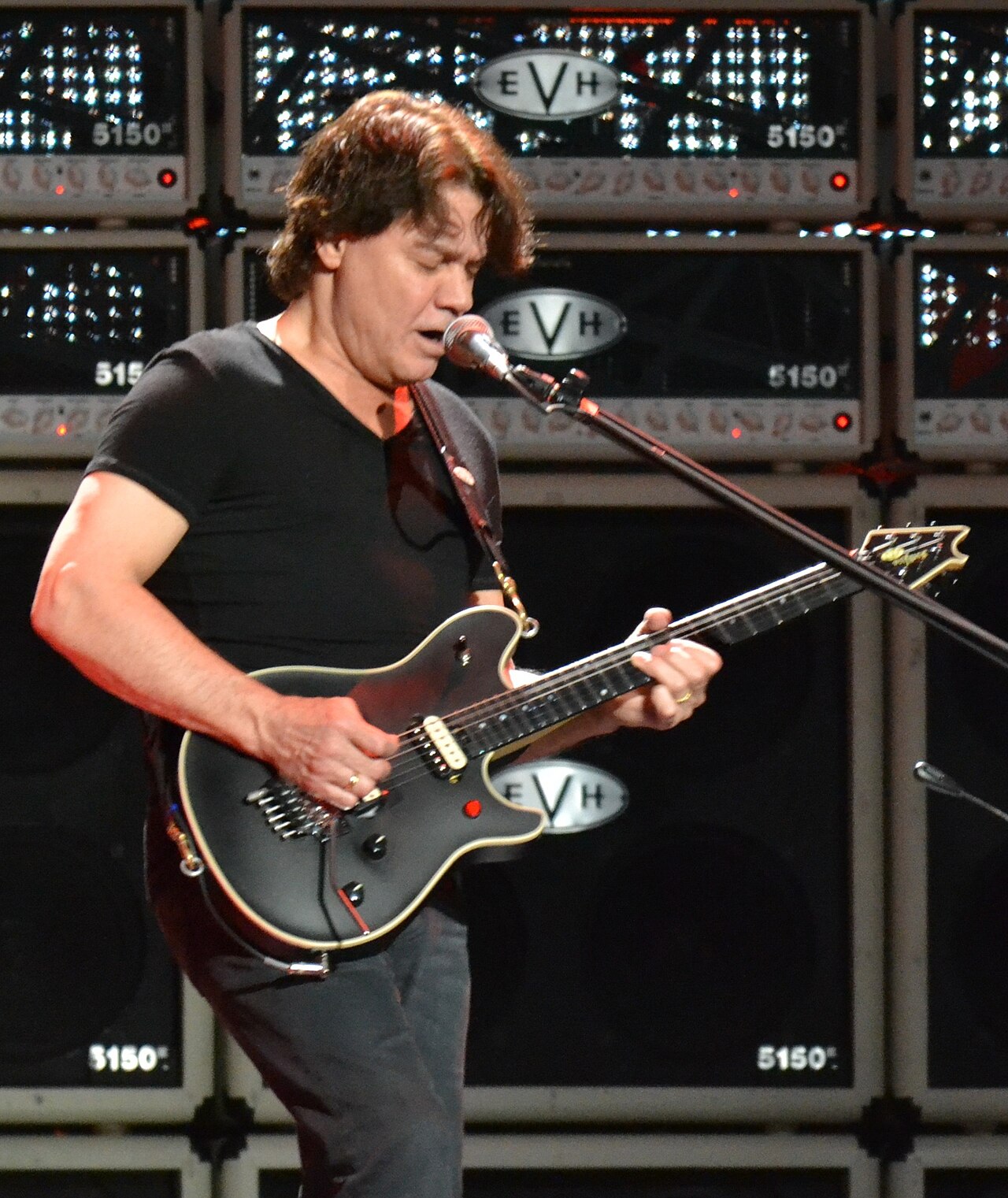
Eddie Van Halen — designer and primary inspiration, not a touring user after launch. Eddie designed this amp with James Brown and Matt Bruck. He crash-tested it personally. He approved every aspect of its voicing. But by the time the 5150III shipped in 2007, Eddie’s touring life had become increasingly limited by health complications, and the amp’s active touring use was never as documented for him as it was during the Peavey 5150 era of the 1990s. What he did do was install prototypes in his home studio at 5150—the studio complex attached to his house in Coldwater Canyon—and run them continuously. The 5150III is, in every meaningful sense, the distillation of what Eddie wanted a guitar amplifier to be. He died on 6 October 2020. The brand, the circuit, and the name he reclaimed continue under Fender’s stewardship.
Wolfgang Van Halen — primary documented touring user, confirmed in his own words. Wolfgang, who was sixteen when the amp launched, has spoken about his relationship with the 5150III directly and recently. In a December 2025 Guitar World interview, he stated: “There’s a lot of pride involved. I certainly have no problem representing and using it at every opportunity. The amp is really Matt and my dad’s baby. I’m just happy to be here and see it happen.” Wolfgang plays 5150 IIIs live and in the studio with Mammoth WVH, making him the most active and most thoroughly documented current user of the platform. The source is a first-person interview statement, not a brand claim.
Gary Holt (Exodus / Slayer) — confirmed per Equipboard, consistent with known EVH amp use. Holt has been documented on the EVH 5150III 100W Head. His primary association is with the 5150 circuit family generally, and the 100W head is consistent with his stage rig requirements. Exodus’s thrash vocabulary of locked low-E chugging and upper-register single-note runs makes the 5150III’s tightly voiced channel three a logical choice.
Jake E. Lee — first show in 20 years, confirmed primary source. Equipboard documents that Jake E. Lee used an EVH 5150III 100W Head at his first live show in approximately 20 years, as detailed in a Guitar World article (“Bent Out of Shape”). Lee’s playing history—Ozzy Osbourne’s Bark at the Moon (1983) and The Ultimate Sin (1986)—predates the amp by decades, but the choice of a 5150III for a high-profile return show reflects the amp’s status as a self-contained reference standard. A player who has been away from live performance for twenty years does not take risks with gear that requires extensive dialling-in.
Jeff Waters (Annihilator) — confirmed per Equipboard. Waters is one of the most technically documented players in thrash metal, known for scrutinising his signal chain to an almost forensic degree. His use of the 5150III 100W is consistent with his history of building rigs around high-gain platforms and has been documented on Equipboard with the amp listed in his active setup.
Dan Donegan (Disturbed) — confirmed per Equipboard. Donegan’s role in Disturbed is as the sonic architect of a sound that straddles alternative metal and straight-ahead heavy rock—a context in which the 5150III’s channel-two crunch is as relevant as its lead saturation. His use of this specific model is documented on Equipboard.
Others on Equipboard’s list for this model include El Hefe of NOFX, Alex Wade (Whitechapel), Olly Steele (Monuments), and Oli Herbert of All That Remains—a range that illustrates the amp’s spread across punk-metal, modern death metal, progressive metal, and melodic metalcore.
Tone Recipes and Recommended Settings
Recipe 1: Eddie’s Brown Sound Approximation (CH3)
Gain 5–6, Low 6, Mid 7, High 5, Volume to taste, Presence 6, Resonance 4. The key principle: moderate gain, not maximum. Most of Eddie’s recorded distortion sounds were achieved by pushing relatively moderate preamp gain into a loud, saturated power section. At bedroom volumes, the power section saturation is absent, so compensate by opening up the Mid slightly and nudging Presence to 7. Play with a humbucker-equipped guitar—Strat single-coils will not replicate this tone regardless of the settings.
Recipe 2: Modern Thrash Rhythm (CH3)
Gain 7, Low 8, Mid 4, High 6, Volume at gigging level, Presence 7, Resonance 6. This is the channel three in full operation for palm-muted low-E riffing—the gain pushed higher than Eddie’s personal setting, the mid scooped to open the low end and cut the upper-mid fizz. Resonance at 6 adds weight without muddying the attack. Essential: run a noise gate in the effects loop. At this gain level without a gate, string noise and amp hiss accumulate between riff sections.
Recipe 3: Blues-Edge Lead (CH2)
Gain 4, Low 5, Mid 7, High 5, Volume slightly above CH1, Presence 5, Resonance 3. Channel two backed off from its crunch potential becomes a surprisingly responsive lead voice—not a blues amp by instinct, but capable of serving that function with the right guitar. Back your guitar volume off to 7 and the 5150III does something that genuinely sounds like a pushed Fender. Useful for bands that need a second, warmer lead register without switching amps.
Recipe 4: Saturated Modern Lead (CH3 into CH2)
Set CH3 as your base gain tone (Gain 6–7), then use CH2 for lead sections (Gain 3–4 with Volume higher than CH3 to compensate). This was common practice among players who found that CH3’s density made note definition difficult for fast scalar lines. CH2 at lower gain with the volume boost for cut gives more pick attack articulation while the 5150III’s voicing keeps the sustain intact. The 4-button footswitch, included in the box, handles this channel switching without a separate MIDI controller.
Recipe 5: Direct Recording (Preamp Out + IR Loader)
Use the Preamp Out on the rear panel into an impulse-response loader (Torpedo Live, Two Notes Captor X, or similar). Set channel tone controls as above; the Preamp Out taps the signal before the power section, so it captures the preamp voicing without power-section saturation. For home recording where a 100W head into a live speaker cabinet is not viable, this is the correct signal path—not the effects loop Send, which is pre-power but post-effects loop insertion point and may colour the signal differently depending on your loop routing.

How It Compares to Related Heads
The most important comparison is with its own family. The Peavey EVH 5150 and Peavey 5150 II are the direct ancestors. The original 5150 is a two-channel amp; the 5150 II added independent EQ per channel. The EVH 5150III adds a third channel, more per-channel control (Presence on every channel, rear Resonance), and a cleaner power supply design. The 5150III is not “louder” or “gainier” than the 5150 II—it is more articulate, more refined, and more versatile. If your primary use case is channel-three lead saturation and nothing else, the used Peavey 6505 (the renamed 5150) offers functionally similar high-gain performance for considerably less money. The 5150III earns its price premium through the third channel and the superior per-channel flexibility.
Against the Mesa Boogie Dual Rectifier, the contrast is philosophical. The Rectifier uses silicon and tube rectification options to vary sag and compression; the 5150III uses a solid-state rectifier throughout and keeps the response tight and immediate. Rectifier tone is rounder, with more pronounced low-end bloom and a scooped midrange that cuts in a band mix but requires EQ management; the 5150III is more mid-present and more defined in its attack. Players who love the Rectifier’s “singing” sustain often find the 5150III too percussive; players who love the 5150III’s punch often find the Rectifier too compressed. Neither is objectively better—they solve different tone problems.
The Marshall JCM800 is the historical reference point for what the 5150 circuit was originally reacting against. The JCM800 is a single-channel, lower-gain head that achieves its distortion at the power section; the 5150III achieves gain at the preamp stage and keeps the power section relatively linear. JCM800 tone is dynamic, touch-sensitive, and breaks up musically under picking pressure. The 5150III at its most conservative settings can approximate some of that character, but its fundamental architecture is different.
Versus the Peavey JSX—also designed with James Brown’s involvement—the 5150III is more aggressive in its voicing and less versatile in its clean range. The JSX was engineered around Joe Satriani’s preference for running external drive pedals into a clean channel; the 5150III’s channel one was not built with that workflow in mind. For players who use a pedalboard for all their overdrive and want the amp to stay clean, the JSX is actually the more accommodating platform.
The Peavey Invective.120—designed from the ground up with Misha Mansoor—is the closest contemporary rival in the high-gain amp space to the 5150III. The Invective has independent EQ on all channels, per-channel boost circuits with independent Tone controls, a built-in noise gate with Threshold control, MIDI recall, and two remote-switchable effects loops. By objective feature count, the Invective outspecifies the 5150III. The 5150III, by most player assessments, has a more immediately satisfying organic high-gain character that the Invective’s tighter voicing trades against. These are two different interpretations of what a modern high-gain head should be.
Buying Guide: 100W 6L6 vs. the Rest of the 5150III Family
The 5150III family in 2026 spans several variants, and the 100W 6L6 Head is not always the right answer for your specific situation. Here is how the family breaks down for purchase decisions.
The 50W 6L6 Head is the most popular option in the range and, for most players, the most practical. Fifty watts of 6L6 power is enough for any venue you are likely to play without PA support, and it reaches power-section saturation at a somewhat lower stage volume than the 100W—which matters if you are running the head into its natural compression rather than pedals. The 50W 6L6 retails for less than the 100W and sees strong used market activity. Start here unless you specifically need 100W.
The 50W EL34 Head and 100W EL34 Head (5150IIIS) use a different power-tube type. EL34s produce a characteristically different harmonic spectrum: more even-order harmonics, a slightly earlier compression threshold, and a character often described as more “British” than the 6L6’s American tightness. If you associate the 5150 sound with American punch and low-end control, stay with 6L6. If you want a looser, more dynamically responsive version of the same circuit, the EL34 variant is worth comparing directly.
The 5150III 100S is described on evhgear.com as replicating the setup Eddie Van Halen most recently toured with, featuring his “exact same custom modifications.” It uses a different power tube (Shuguang 6L6 rather than JJ), a slightly different internal tuning, and is positioned as a collector/touring variant. The 100S commands a premium over the standard 100W and, unless you specifically want Eddie’s last-known personal touring spec, is not meaningfully superior for general use.
On the used market as of August 2026, the EVH 5150III 100W 6L6 Head lists from approximately $899 on Reverb, with clean units in original condition selling in the $1,100–$1,400 range. Generation is not a major quality factor the way it is with some vintage-circuit amps—the 5150III design has been consistent since 2007, and the primary differentiator is cosmetic wear and tube condition. Budget $150–$200 for a full revalve (preamp and power tubes) on a used example with unknown tube history.
Ownership Notes
At 100 watts into 4×12 cabinets, the 5150III is a loud amplifier. Not theoretically loud—physically, room-shaking loud, in a way that makes extended practice at full gain settings impossible in shared housing and inadvisable without hearing protection in any context. The amp has no power attenuator and no half-power switch. If you need to play at manageable volumes, pair it with an external load box (Two Notes Torpedo Reload, Rivera RockCrusher, or equivalent) or consider whether the 50W model better suits your actual playing environment.
The effects loop is series (not parallel), which means 100% of the signal passes through it. Equipment plugged into the loop needs to be rated for instrument-level signal or buffered appropriately. The Preamp Out on the rear panel is a dedicated output before the power section; this is the correct connection point for a power-amp-in, load-box-into-cabinet rig, or for feeding an IR loader directly.
The included 4-button footswitch uses a 7-pin cable, not a standard TRS. The cable is included; losing it means a specific replacement. Keep it.
Celestion G12EVH speakers—designed from scratch in the UK for the EVH cab—are the manufacturer-matched load. They are not interchangeable with standard G12T-75s or V30s; the EVH speaker was voiced specifically around this amp’s output characteristics. Running the 5150III through a different cabinet changes the character meaningfully, and players who find the standard setup too bright or too compressed typically find improvement through alternative cabinet loading rather than adjusting the head’s EQ further.
Tube rolling is documented extensively online. The JJ ECC83S preamp tubes are considered reliable and mid-forward. Tungsol 12AX7 preamps are the most common swap for players who find the high end slightly harsh. JJ 6L6GC power tubes are the stock choice; SED Winged-C 6L6GC (if you can find them) are widely regarded as superior but increasingly scarce. Before rolling power tubes, verify that the amp’s bias is checked and set correctly—the 5150III has internal bias trim pots that should be accessed by a technician.
Frequently Asked Questions
Is the EVH 5150III 100W the same circuit as the Peavey 5150?
No. The EVH 5150III was designed from the ground up—same designer (James Brown) and same general philosophy, but new chassis, new transformers, new circuit layout, three channels instead of two, and independent presence controls per channel. It shares DNA and a name with the Peavey amps, but it is not a rehoused or modified Peavey. Peavey retained the 5150 circuit when Eddie left and renamed it the 6505; the EVH 5150III is a separate, newer design.
What is the 5150III 100S, and is it different from the standard 100W?
The 100S is a Special Run variant described by EVH Gear as replicating Eddie’s personal touring setup with his specific custom modifications. It uses Shuguang 6L6 power tubes rather than JJ 6L6s, which changes the tonal character slightly. The 100S commands a price premium. For most players, the standard 100W 6L6 Head is the better value and the more practical purchase.
Why doesn’t the amp have a global master volume?
Because Eddie Van Halen did not want one. Each channel has its own Volume control, and the amp was designed around the expectation that each channel would be individually balanced to the player’s preference. There is no global volume control that governs all three simultaneously. This is a limitation for players who need fast overall level adjustments, and it is a deliberate design choice, not an oversight.
What is the correct cab for this head?
EVH produces the 5150III 4×12 cabinet loaded with Celestion G12EVH speakers, which were designed specifically for this amp. Running the head through other 4×12 cabs works, but the character changes—most notably with V30-loaded cabs (which shift the midrange character) and G12T-75-loaded cabs (which are tighter but thinner). The matched EVH cab is the reference configuration; deviation from it is a tone shaping choice, not an upgrade.
What is the difference between the 6L6 and EL34 versions?
The power tube type shapes the character of the output stage. 6L6s produce tight, punchy, American-voiced power with excellent low-end control and a slightly harder attack. EL34s produce rounder, more compressed power with more even-order harmonic content and a character associated with British amplifiers. The preamp circuit is the same (same channels, same gain structure); the power-stage difference is meaningful but not dramatic. Both versions exist in 50W and 100W formats.
Is the 100W version better than the 50W?
Not necessarily. More wattage means more clean headroom and a higher threshold before power-section saturation. For clean tones at high volumes, the 100W is superior. For players who want power-amp compression and bloom at lower stage volumes, the 50W reaches that character sooner. Most players who have compared both prefer the 50W for its responsiveness in real-world playing contexts; the 100W excels when paired with an attenuator or in large-stage settings where raw volume matters.
Can I run the 5150III without a cabinet using the Preamp Out?
Yes, but not through the speaker output—that requires a connected load at all times. The Preamp Out is a separate jack that taps the signal before the power section and can be run directly to a recording interface, power amp, or IR loader without a cabinet connected. If you want to run the head silently and use the full preamp and speaker simulation, the Preamp Out into an IR loader is the documented approach. The speaker output must always have a load.
Who was James Brown, and why does he matter for this amp?
James Brown was the lead design engineer at Peavey who built the original EVH 5150 and the 5150 II in collaboration with Eddie Van Halen. He later moved to Fender and co-designed the EVH 5150III with Eddie and Matt Bruck. Brown is the common engineering thread across the entire 5150 lineage, which explains why the 5150III feels like a continuation of the Peavey amps rather than a foreign departure—same design sensibility, new platform. Brown left Peavey in 2004 alongside Eddie’s departure, at which point Peavey renamed their existing circuit the 6505.
Image credits
- A guitarist on stage with an amp behind: Bex.Walton, Wikimedia Commons, CC BY 2.0.
- Eddie Van Halen: Anirudh Koul, Wikimedia Commons, CC BY 2.0.
- Eddie Van Halen: Joe Bielawa, Wikimedia Commons, CC BY 2.0.
- Top image: Eddie Van Halen at the New Haven Coliseum, Carl Lender, Wikimedia Commons, CC BY 2.0.
Latest News
Related
On This Day
Monday 9 November
From this week: