Orange PPC412: The 4×12 That Turned Orange Amps Into a Stage Religion
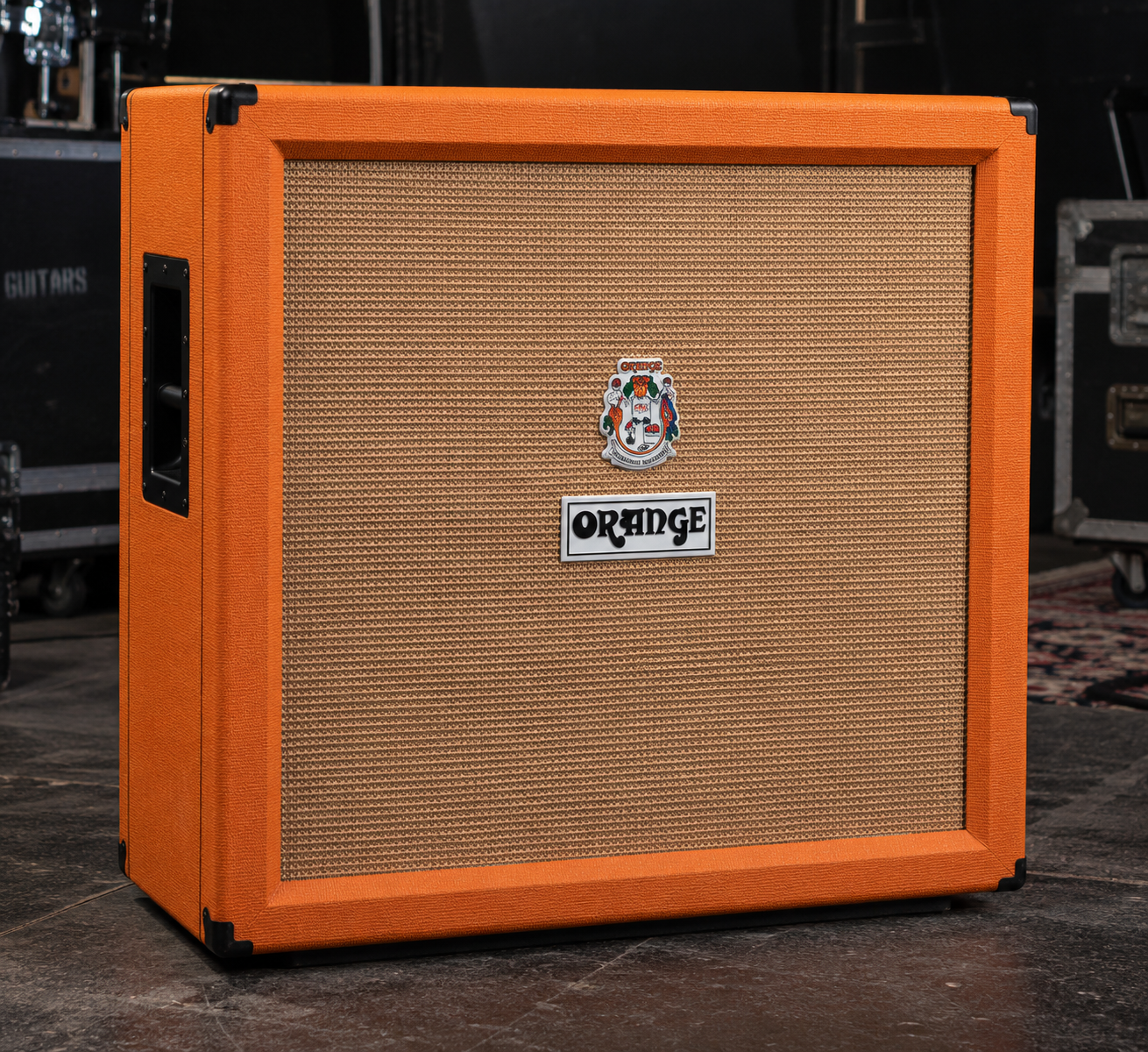
Orange PPC412 4×12 cabinet. AI-generated editorial illustration from GuitarGangsters image bank, in standard orange finish. Hinds used custom-painted cabinets.
Orange PPC412 4x12 cabinet — Celestion V30 specs, 240W birch ply construction, verified players Matt Pike, Jim Root, Frank Iero and more. Full tone guide.
You have heard the Orange PPC412 many more times than you realise. It is the wall of orange vinyl behind Matt Pike’s fourteen-amp Sleep doom ritual. It is the pair of cabs Stephen Carpenter of the Deftones runs in stereo from his Fractal Axe-Fx, shaking arenas with processed-but-pure guitar weight. It is the cabinet Frank Iero of My Chemical Romance had custom-painted for the Danger Days era and then gigged until MCR’s final 2012 show. And it is the four-deep column that Jim Root puts in an iso box backstage so that the sound engineers don’t file complaints, while still running the speaker signal through a real Celestion Vintage 30 for the feel no loadbox can replicate.
Every major Orange amp article on this site has circled back to the same point: the head gets the brand, but the cabinet gets the sound. Orange’s marketing is built around the amp — the Rockerverb, the Rockerverb, the Rockerverb — but the PPC412 is the part of that rig that converts watts into air movement, and it does it through one of the most consistent and uncompromised 4×12 designs in production. Eighteen millimetres of Baltic birch, a closed-back straight-front box, four Celestion Vintage 30 drivers, and a grille cloth that is genuinely unmistakable from the back row of a 5,000-seat room. That is the PPC412. That is, more or less, all it has ever been. And that is precisely why it works.
Orange Cabinets: A Brief History of the Box Behind the Brand
Orange Amplification was founded in 1968 by Cliff Cooper in Soho, London. The early Orange shop on Denmark Street stocked amps from across Europe, but Cooper quickly realised the margins were in manufacturing. The first in-house Orange heads — the OR50, OR80, OR100, OR120, OR200 — appeared in the late 1960s and early 1970s, and they shipped with matching Orange speaker cabinets from the start. Those vintage cabs were loaded with whatever British drivers were available at the time: Goodmans, Fane, early Celestions. They were hand-built from British birch ply and covered in the distinctive Orange vinyl that made the backlines on festival stages look like they were on fire.
The famous Orange OR120 head and its matching 4×12 cabinet defined the brand’s visual identity through the 1970s. Jimmy Page used an OR120 through matching Orange cabs during Led Zeppelin’s early 1970s touring before moving to the Marshall-dominant rig he is better known for. That connection runs deep in rock mythology, and it is genuinely documented — but it is also important to be precise: the vintage Orange 4×12 that Page used was a period instrument, not the modern PPC412. The PPC (Performance Projection Cabinet) series, with its standardised Baltic birch construction and Celestion Vintage 30 specification, came much later as Orange rebuilt its manufacturing base in the late 1990s and early 2000s.
The PPC412 in its current form has been available since approximately 2002, built in the UK and later in China for the standard production line. The name reflects Orange’s broader PPC cabinet range: PPC108 (1×8), PPC112 (1×12), PPC212 (open and closed-back 2×12s), PPC412 (straight-front 4×12), and PPC412AD (angled-top 4×12). Each shares the same core design philosophy — high-density Baltic birch ply, Celestion drivers, and a build quality that prioritises road durability over shaving grams or pounds. The PPC412 is the flagship of that range, and it has been the de facto Orange endorsee cabinet for over two decades.
Full Specification: Orange PPC412
Two points from that spec sheet deserve attention before anything else. First: the parallel ¼” jacks are not a redundant input — they are a genuine design feature. Plugging a second 16Ω PPC412 into the second jack drops the total load to 8Ω, which is valid for any head with an 8Ω tap. Matt Pike does not merely tolerate this feature; he exploits it as a core part of the Sleep and High on Fire stage architectures, where multiple heads and multiple PPC412s are run simultaneously with no dummy loads. Second: 46.5 kilograms is 102 pounds. The PPC412 is genuinely heavy, and the skid runners on the base are not decorative. They let you slide the cab across a stage rather than lift it, and they couple the bottom of the cabinet to the floor for a physical transfer of low-end energy that a cab on rubber feet cannot match.
Celestion Vintage 30: The Driver That Makes the Cabinet
The Vintage 30 is Celestion’s most successful speaker of the modern era, and its presence in the PPC412 is not accidental. Rated at 60W and voiced around a presence peak in the 1kHz region, the V30 delivers what the marketing tends to call “rich mids and smooth high-end detail” — which translates in practice to a slightly scooped low-mid response, a prominent upper-midrange bite around 1–3kHz, and a high end that rolls off gracefully rather than cutting like a razor. It is the opposite of a Celestion G12T-75 in both character and application: the G12T-75 is stiffer, more aggressive in the high mids, and more suited to tight metal rhythm work; the V30 breathes, compresses gently at the cone level, and rewards playing dynamics rather than punishing them.
Four of them in a closed-back cabinet changes the equation further. The closed back raises the air pressure inside the box, which stiffens the cone surround and extends the low-frequency response at the cost of some top-end openness. The result is a focused, forward-projecting sound with a firmer, tighter bottom end than an open-back equivalent. The PPC412’s closed-back construction is one of the reasons it works in loud, dense band contexts where an open-back 2×12 would get swallowed by the rest of the stage. The bass is there, but it is pointed at the audience, not bleeding sideways into the drum kit.
One documented quirk: the PPC412 is a tight-dispersion cabinet. It sounds best — meaning fullest, most balanced, most “there” — when you are standing directly in front of it. Off-axis, particularly in the 30–45° arc to either side, the high-mid presence narrows and the cab can take on a slightly boxy character. Professional engineers who work with it routinely close-mic the speaker cone, offset slightly from the dust cap, and add a room mic for air. That is not a flaw — it is the same acoustic behaviour as every other well-constructed closed-back cab — but it is worth knowing if you are using it for home studio tracking.
Famous Players: Who Actually Uses the PPC412?
Jimmy Page, Jim Root, Brent Hinds, Omar Rodríguez-López, and Matt Pike are the names usually listed as PPC412 players. For individual heads — the Terror Stamp, the Micro Terror, the TH30H — that list is largely inaccurate: Page used vintage 1970s Orange cabs, not the modern PPC412; Brent Hinds’s signature Brent Hinds Terror is a real product but he is not documented on the PPC412 in any primary source. For a 4×12 cabinet, however, the logic changes. The PPC412 is the standard Orange cab. If an Orange endorsee is running Orange live, they are almost certainly running PPC412s. The question is which connections can be verified per-SKU rather than just per-brand, and which have to stay at the brand-association level.
Matt Pike (Sleep / High On Fire) — Verified via Orange’s Own Content
Matt Pike is the most unambiguous PPC412 player on the list, and the verification does not come from Equipboard or search snippets. Orange Amplification has published multiple dedicated pieces documenting Pike’s rig in their own words. A Facebook post on the official OrangeAmps account states directly: “Matt Pike of Sleep and High on Fire uses all Orange amps and cabs.” An Orange article from Desertfest 2018 details his High on Fire rig (two Dual Dark amplifiers into PPC412 cabs) and his Sleep rig, which he described himself: “I’m just using massive mounds of oranges and I use all of them. I have no dummy cabs.” That last sentence is important. Pike does not pad his backline with empty boxes for visual scale — every PPC412 on that stage is live and receiving signal. He chains them using exactly the parallel jack system described in the spec sheet above. The result is one of the loudest, most physically present guitar rigs in the history of heavy music, and it is built on PPC412s from the cab forward.
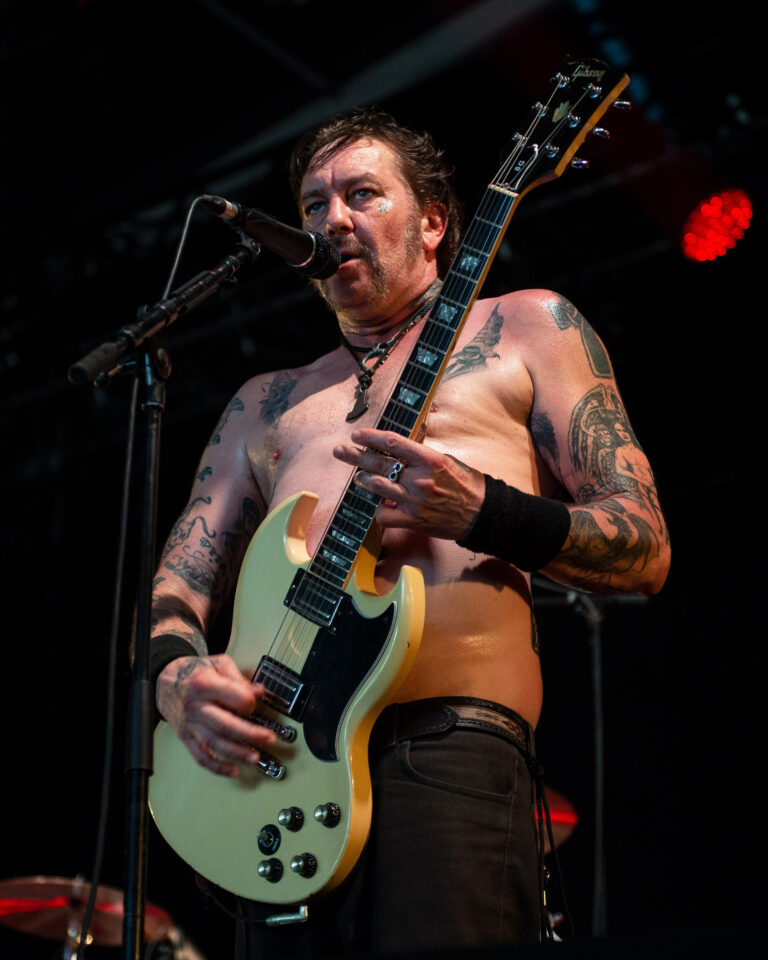
But his Orange PPC412 connection is one of the most thoroughly manufacturer-documented artist-to-product relationships in the Orange catalogue.
Jim Root (Slipknot) — Verified via Premier Guitar Rig Rundown
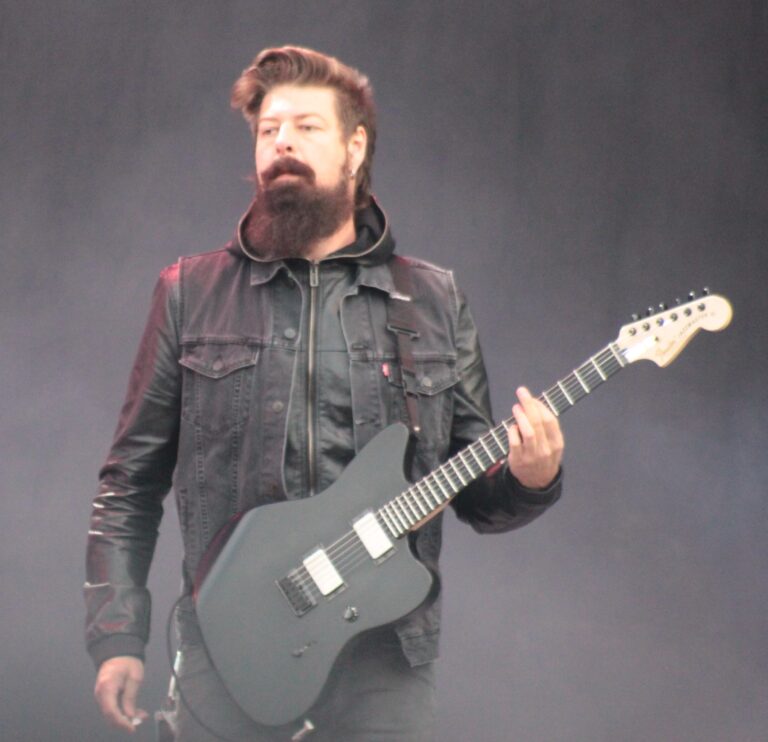
Jim Root’s connection to the PPC412 comes from a direct Premier Guitar rig rundown in which his guitar tech confirmed that Root runs Orange 4×12 cabinets live — one in an isolation box backstage (for recorded level), with others on stage for physical air movement. Root runs straight into his Orange Rockerverb 100 heads (reviewed elsewhere in this series at Rank 391) with no external distortion, using the amp’s preamp for all gain. The cabinet is, in his case, partly symbolic and partly acoustic: he has talked about the feel difference between playing through real speakers and a load box, and the PPC412 provides both the stage sound and the physical feedback that informs his picking dynamics. Root’s Slipknot rig is a case study in the PPC412 at arena scale — massive SPL, tight midrange projection, and a back-of-the-room presence that does not rely on the PA for the front rows to understand where the sound is coming from.
Frank Iero (My Chemical Romance) — Verified via Orange Artist Page and Reverb Listing
Frank Iero’s PPC412 connection is documented at a level that goes beyond mere endorsement. Orange Amplification’s portfolio page for Iero confirms he is an Orange artist. More specifically, Reverb — during Iero’s personal gear sale — listed one of his MCR Orange PPC412 cabinets as having been “custom-painted for Danger Days: The True Lives of the Fabulous Killjoys,” stage-used throughout the entire touring cycle of that record, including every stage and television appearance from the album’s launch until My Chemical Romance’s final show in 2012. That Reverb listing is traceable to a specific, identifiable cabinet with a documented performance history — about as far from “search snippet” artist attribution as it is possible to get. Iero’s current live rig also features a Rockerverb 100 MkIII through PPC412 and PPC212 cabinets, per guitar.com coverage.

Stephen Carpenter (Deftones) — Verified via Multiple Rig Rundown Sources
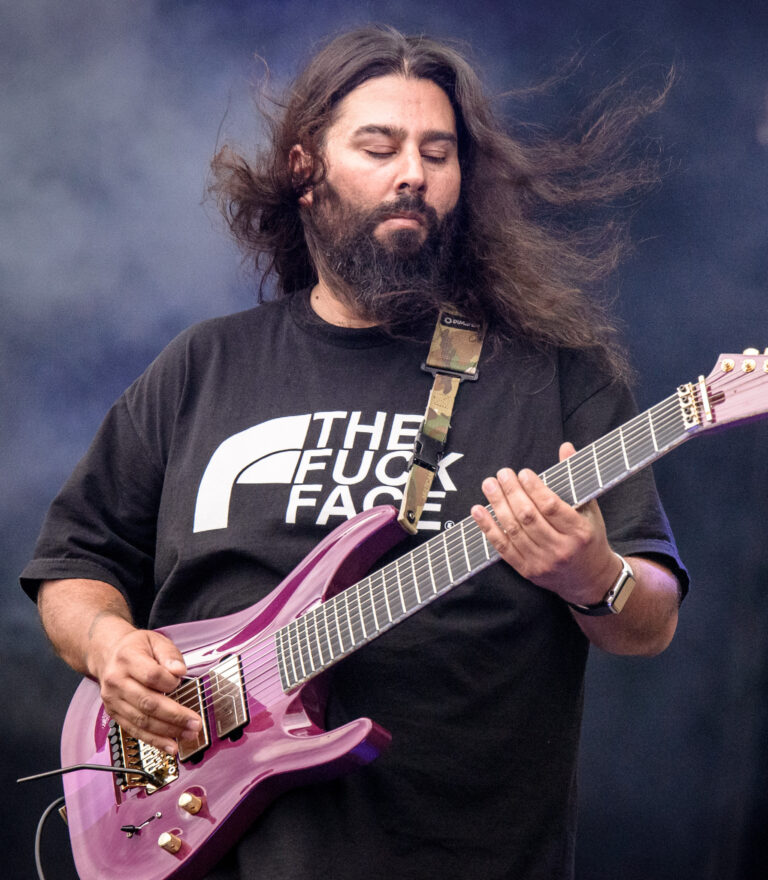
Stephen Carpenter represents a particularly interesting PPC412 use case because he does not run a conventional tube amp at all. His live rig uses a Fractal Axe-Fx processor as the signal source and two Orange PPC412 cabinets in stereo as the output stage. Multiple sources — UberProAudio, the Fractal Audio forum, and rig rundown coverage — confirm this configuration. Carpenter came to Orange cabs specifically for their stereo spreading capability: the parallel-jack daisy-chain allows two 16Ω PPC412s to run at 8Ω total, and the stereo spread of two full 4×12s in a left-right configuration produces a room-filling guitar wall that no single cabinet can replicate. His use of digital processing into analogue speakers is a modern template that many touring guitarists have adopted, and the PPC412’s ability to present that signal honestly — without colouring it in ways that conflict with the Fractal’s amp models — is part of what makes the combination work.
Brent Hinds, Omar Rodríguez-López — Brand Endorsees, Cabinet Unconfirmed
Brent Hinds of Mastodon is a confirmed Orange endorsee with a signature amp (the Brent Hinds Terror, reviewed in this series). He would logically run PPC412s as his cabinet of choice with that head, but no primary-source rig rundown has been located that specifically names the PPC412 rather than Orange cabinets generically. Omar Rodríguez-López of At the Drive-In and The Mars Volta built his celebrated all-Orange stage rig around the AD140HTC head, and photographs of his live setup show matching Orange cabs that are almost certainly PPC412s — but “almost certainly” is not a primary source. Both players are named here as context rather than verified PPC412 endorsers.
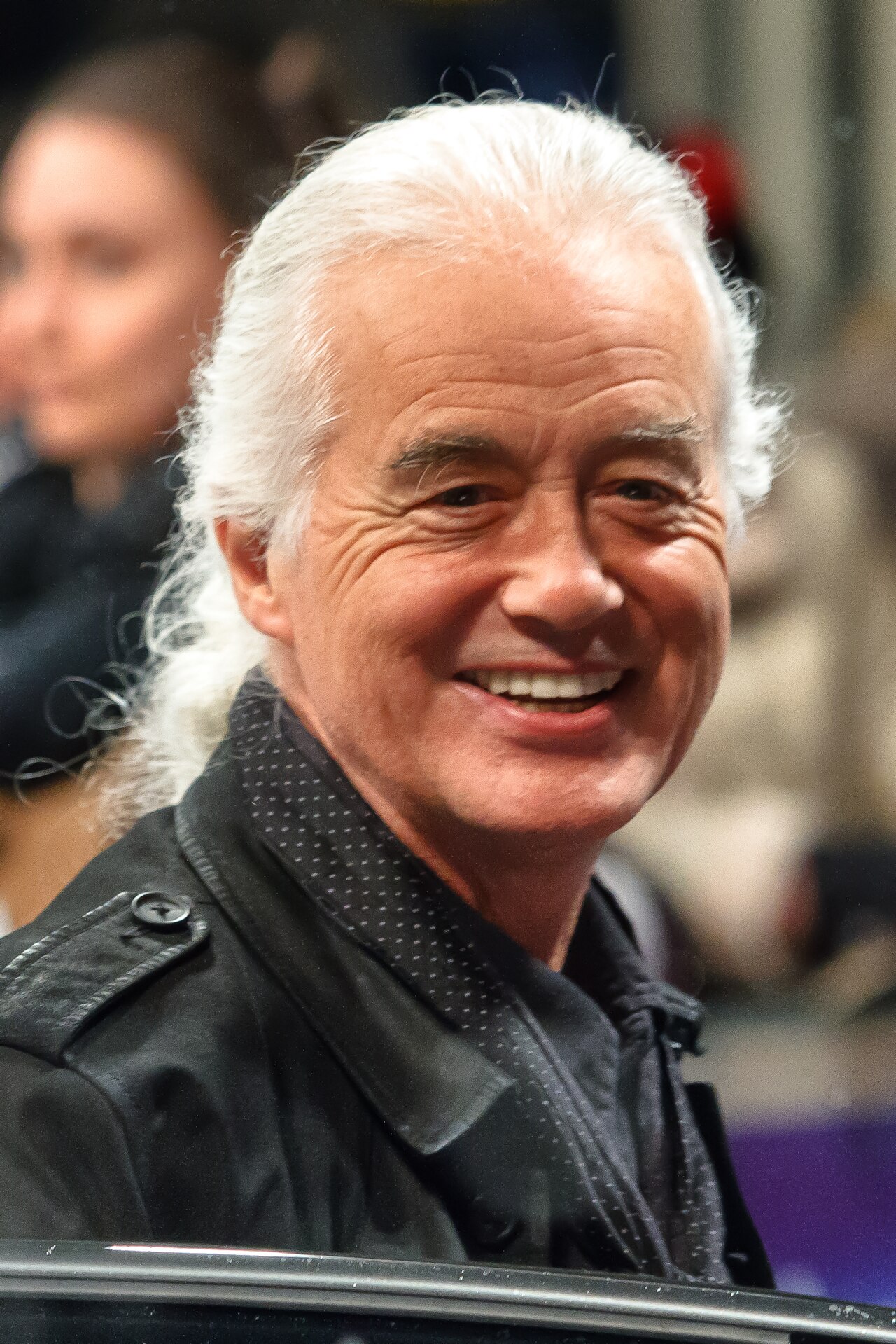
Jimmy Page — Vintage Orange Cabs, Not PPC412
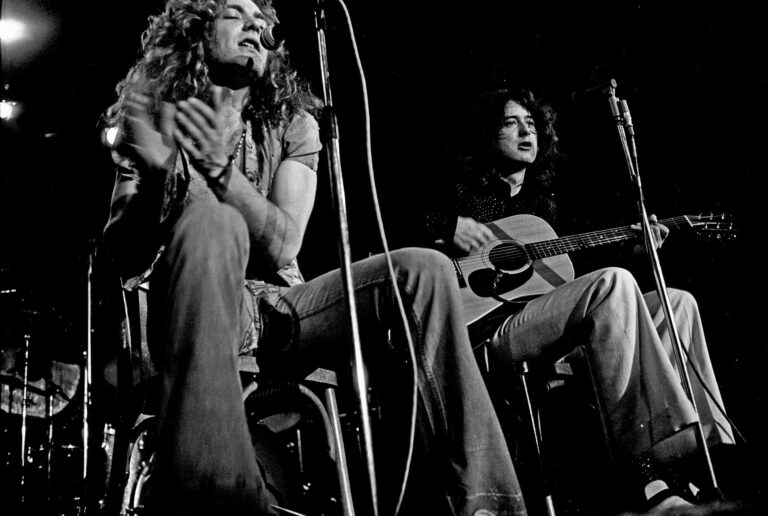
The spreadsheet lists Jimmy Page as a PPC412 player. He is not. Page’s documented Orange use centres on the OR120 head in the early 1970s, paired with the vintage Orange 4×12 cabinets of that era — instruments that predate the PPC412 by roughly three decades. The PPC412 entered production around 2002; Page’s primary use of Orange amps was over before most of the engineers who designed the PPC412 had finished school. Page’s connection to the Orange brand is real and worth knowing, but it is a connection to the vintage catalogue, not to the modern PPC series. Using it to sell current PPC412s is the same category error as selling a Fender Stratocaster on the strength of the guitars Buddy Holly played.
Tone Guide: What the PPC412 Actually Sounds Like
The PPC412’s characteristic sound is the product of three things working together: the Vintage 30’s upper-midrange presence, the closed-back box’s controlled low end, and the birch ply shell’s contribution to transient attack. Birch is stiffer than pine and more neutral than some hardwoods, meaning it reflects energy back into the speaker cone faster than a softwood box would. The effect is a tighter, more articulate low-midrange response — you can hear it in the attack of individual notes, which have a percussive quality that suits the British rock and metal genres the cab is most associated with.
Compared to a Marshall 1960A loaded with G12T-75s, the PPC412 is fuller in the low-midrange and rounder in the high-end presence. Compared to a Marshall 1960AV loaded with Vintage 30s (the same drivers), the Orange cab is notably different in the low end — fuller, with a deeper resonant characteristic that the heavier birch box produces. Forum testing with matched V30 speakers in both cabs consistently finds the Orange cab described as “fuller and bassier” where the Marshall is “more midrangy and shouty.” Neither is wrong; they are voiced differently at the cabinet level, independent of speakers.
Against a Mesa Boogie OS 4×12 (open-back/closed-back switchable), the PPC412’s all-closed-back construction produces a more focused forward projection with tighter low-end coupling. The Mesa’s switchable back gives it more room-mic usability in studio contexts, but the Orange’s consistency of tone from position to position in a live room is better suited to arena-scale work where mic placement is a luxury.
Tone Recipes
1. Orange Classic Rock Stack (with Rockerverb or OR15H)
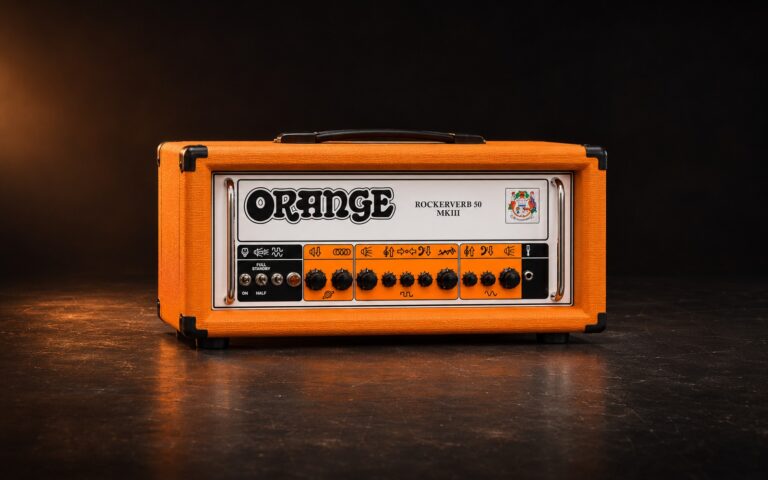
Pair with a Rockerverb 50 MkIII. Dirty channel: Gain at 10 o’clock, Bass 12 o’clock, Middle 2 o’clock, Treble 11 o’clock, Volume to taste. The PPC412 takes the Rockerverb’s warm British EL34 output and focuses it — the result is the “classic Orange crunch” that the brand’s reputation is built on. Les Paul or SG, bridge humbucker. Works equally well with the smaller OR15H at rehearsal levels. Pull back gain to 9 o’clock for a cleaner base tone that breaks up under hard picking.
2. Matt Pike Doom Ritual (Multiple Heads, Sleep-Scale)
Run two Rockerverb 100s (or any two Orange 100W heads) into separate PPC412s. First head: clean-ish, Bass maxed, Treble moderate, Gain minimal — foundation layer. Second head: Gain at 3 o’clock, Shape engaged if available (Thunderverb/TH30H), Volume matched. Downtuned guitar (C# standard or lower), heavy strings. The two-cab spread fills the room from below 100Hz without muddying the note definition. This is Pike’s architecture simplified — he runs more heads, but the principle is identical. Low-pass the cab mic at 5kHz for record, let it breathe for live.
3. Fractal/Modeller Powerhouse (Stephen Carpenter Method)
Feed a Fractal Axe-Fx, Kemper, or Neural DSP unit into two PPC412s via a clean power amp (Orange Pedal Baby 100 or similar). Set the modeller’s cab sim to OFF — you are using the real PPC412 as the cab. Use a UK Class A or Class A/B amp model in the modeller. The PPC412 adds an authenticity to the low-end response that no FRFR speaker can replicate because it is reacting to signal input in real time through a real speaker cone. Run the two cabs hard-panned L/R on stage for the maximum stereo width effect Carpenter exploits.
4. Post-Hardcore Punch (Jim Root / Frank Iero Style)
Mid-gain setting through a Rockerverb or TH30H: Gain at 1–2 o’clock, Bass at 12 o’clock, Middle at 11 o’clock, Treble at 1 o’clock, Master Volume pulled back to match stage volume. The PPC412’s upper-midrange V30 character cuts through a dense stage mix without a boost pedal in front — the 1kHz presence the Vintage 30 provides is the frequency most guitar scoops in a rock band. This is the setting that makes a guitar sound large in a thick-bass / loud-drum context. Tune down a half-step for Iero-style energy; stay at standard for Root-style riff weight.
5. Vintage Clean into Breakup (British Rock Reference)
Run a AD30HTC or a vintage-voiced head (Vox-derived or Marshall-derived): Clean channel, volume just at the point of natural amp breakup — the PPC412’s stiff cone will stay clear and articulate longer than an open-back cab, giving you a longer clean headroom window before the speakers themselves start to distort. Single-coil Strat or Tele at the bridge. When you dig in hard, the cab’s low-end coupling adds body that compensates for the brightness of the pickup. The result is the kind of controlled-clean-to-crunch gradient that British rock records of the late 1960s and 1970s were built on — the same sound that made Orange relevant in the first place.
Comparisons with Other 4×12 Cabinets
vs. Marshall 1960A (with G12T-75s)
The 1960A is stiffer, more aggressive in the upper mids, and more suited to tight high-gain rhythm work. Its lower-density ply construction is lighter (roughly 35kg vs 46.5kg) but less acoustically rigid. With identical speakers, the Orange cab sounds fuller in the low mids; the Marshall sounds more forward and compressed. If you play through a JCM800 and want a cab that complements its inherent brightness, the Marshall 1960A with G12T-75s is the better pairing. If you play through a Rockerverb and want to lean into the warmth, the PPC412 is the correct choice. Using an Orange head into a Marshall cab gives you a warmer voicing of the Orange character; using a Marshall head into a PPC412 gives you a rounder, less aggressive version of the Marshall voice. Both are valid choices, but both modify the amp’s character.
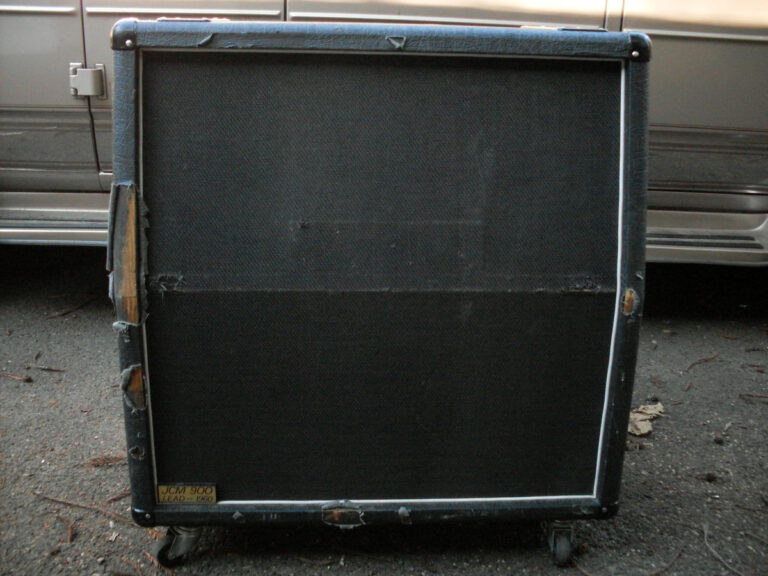
vs. Marshall 1960AV (with Vintage 30s)
The most instructive comparison: same drivers, different boxes. The 1960AV is lighter and has a slightly different internal volume that makes the low-frequency resonance peak sit slightly higher. Forum and studio testing consistently finds the Orange PPC412 “fuller and bassier” with a deeper resonant characteristic. Neither cab is clearly superior — the 1960AV with V30s is a fine, well-known quantity, and it is cheaper than the PPC412 — but if you specifically want the Orange low-end profile, the box itself is doing meaningful work that the drivers alone cannot replicate.
vs. Orange PPC212 (Closed-Back)
The PPC212 is the obvious volume-appropriate alternative for most players. At roughly half the weight and a more manageable footprint, it pairs naturally with lunchbox heads like the Tiny Terror or OR15H. The tonal character is consistent with the PPC412 — same Vintage 30s, same birch ply construction — but the smaller box produces a slightly less full low end and a narrower dispersion pattern. For rehearsal, studio, and smaller venue use, the PPC212 is arguably the better choice. The PPC412 starts to pay for itself acoustically when you are playing rooms where the stage volume needs to fill significant air without the PA doing all the work.
vs. Mesa Boogie OS 4×12
Mesa’s OS (Oversized) 4×12 is a different design philosophy: a larger internal volume, switchable open/closed back, and typically loaded with Mesa Black Shadow C-90 or Celestion V30 drivers depending on the variant. The switchable back gives the Mesa more studio versatility. The Orange’s all-closed-back design gives it more consistent front-of-house projection live. Mesa cabs work very well with Mesa’s own complex, mid-scooped amp voicings; the PPC412 works best with amps that have a more natural, flat-EQ character that lets the Vintage 30’s voicing add the frequency shaping. At similar price points, the Mesa tends to sit better with Rectifier-style high-gain amps; the PPC412 is the natural partner for British-voiced heads.
vs. Friedman 4×12
Friedman cabinets are premium American-made 4×12s that are exceptionally well-built and typically loaded with matched Celestion speakers — often V30s or G12-65s depending on the model. They are heavier than the PPC412 in some configurations, more expensive, and oriented toward the high-end boutique market. The Friedman 4×12 tends to be the cab choice of players running boutique high-gain heads who want absolute consistency and a slightly more neutral presentation than the PPC412’s birch box provides. For Orange amp users, the Friedman is an interesting experiment but not a natural pairing — the characteristic Orange low-end warmth comes partly from the PPC box itself.
Buying Guide
New PPC412s are available exclusively through authorised Orange dealers — the brand does not sell direct. In the UK, the street price is £1,199 GBP. In the US, expect to pay approximately $1,499 USD at Sweetwater or Guitar Center. The Orange PPC412AD (angled top) is the same price and spec, with the front row of two speakers angled upward for better on-stage monitoring when you are standing close to the cab. For home and small-room use, the angled variant is noticeably more useful; for large stages, the straight-front PPC412 projects better into the room.
Used PPC412s appear regularly on Reverb in the $800–$1,000 range (2026 pricing). The cabinet is mechanically simple — no electronics, no active components — so the used market is relatively low-risk. Check the grille cloth for tears or depressions (indicates past physical impact), and push each speaker cone gently with a finger to check for rubbing or scraping sounds that indicate a failed voice coil. Orange vinyl does not absorb moisture well, so look for lifted or bubbling edges on a used cab that has been kept in a damp environment. The birch ply shell itself is extremely durable and rarely fails structurally.
UK-manufactured PPC412s can be identified by an inspection sticker on the rear panel with a UK address. Chinese-manufactured units are functionally equivalent — the same drivers, the same spec — but the UK-built cabs have slightly tighter production tolerances on the birch ply joinery. For stage use, the difference is not audible. For long-term collector value, it may matter to some buyers.
Ownership Notes
Weight management: 46.5 kilograms is genuinely heavy, and the PPC412 has no integral handles on the sides — only top handles and a rear carrying bar. Two people are not optional for load-in and load-out; they are necessary. A hardware-shop furniture dolly is the cheapest solution for moving it in venues without a stage crew. The skid runners make lateral movement on smooth floors practical.
Speaker coupling and stage placement: The skid runners do more than protect the cab’s underside. They raise the cabinet fractionally off the floor and create a specific low-frequency coupling to the stage surface. The PPC412 on skids onto a wooden stage sounds different to the same cab on thick foam isolation risers — the former has more floor-borne energy transfer that the audience feels as much as hears. Elite live engineers use this deliberately; many touring guitarists have been surprised to discover that isolating the cab kills low-end that they assumed was coming from the amp settings.
Impedance management when daisy-chaining: The parallel ¼” jacks reduce total impedance: two 16Ω PPC412s in parallel = 8Ω total. Your amp head must be set to the 8Ω output tap, not the 16Ω. Running a head on a 16Ω tap into an 8Ω load is a guaranteed way to stress the output transformer and reduce tube life. Check your head’s impedance selector before connecting a second cabinet. Most current Orange heads (Rockerverb, TH30H, OR15H) offer both 8Ω and 16Ω outputs precisely for this reason.
Mic placement: The PPC412’s tight-dispersion closed-back character responds well to a Shure SM57 angled 30–45° off-axis, placed halfway between the dust cap and the cone edge. This position captures the V30’s upper-midrange presence without the harsh, spiky cone-centre sound. Add a large-diaphragm condenser 3–6 feet back in the room for air. A Royer R-121 ribbon directly on-axis at the cap, blended with the SM57, gives you the classic British studio guitar sound that the V30 is known for on record.
Vintage Orange vs modern PPC: If you are buying a used Orange 4×12 cabinet from the 1970s to pair with a vintage OR120 or OR200 head, know that the internal dimensions, speaker specification, and ply type are all different from the modern PPC412. A 1970s Orange cab is not a PPC412 with aged vinyl — it is a substantially different instrument with different tonal properties and a different collectible status. The modern PPC412 is the correct reference for current production and current players; the vintage cabs are their own subject.
FAQ
What does PPC stand for on Orange cabinets?
Orange does not publish an official expansion of the acronym in their current product documentation. The most widely referenced interpretation is “Pics Only Cabinet,” consistent with Orange’s “Pics Only” pictogram panel aesthetic on their amp heads. However, Orange has not confirmed this officially, so treat it as an accepted convention rather than a documented fact.
Can I use the PPC412 with any amp head, or only Orange?
The PPC412 works with any amp head that has a compatible impedance output (16Ω for a single cab, 8Ω for two cabs in parallel). It is not amp-brand-specific. Players commonly run Marshall JCM-series heads, Bogner Ecstasy and Shiva heads, and Peavey EVH 5150 variants through PPC412s to access the Vintage 30’s voicing in a more neutral box. The result modifies the amp’s character — slightly warmer, fuller in the low mids — which is sometimes exactly what a bright or aggressive head needs.
Is the PPC412 the same as the PPC412AD, just without the angle?
Yes, with one caveat: the angled version (PPC412AD) has the top row of two speakers tilted approximately 15° toward the listener when the cab is on the floor. This is not merely aesthetic — at close range (within two metres), you hear the upper drivers far more directly, which changes the perceived balance between the top and bottom pairs. At distance (five or more metres), the difference is minimal. The angled cab is better for on-stage self-monitoring; the straight cab is better for projecting uniformly into a large room.
How does the PPC412 compare to using a loadbox and IR for live use?
The principal difference is tactile. A loadbox captures a speaker’s impedance and routes the signal to an impulse response loader, which mathematically models what the cabinet does to the frequency response. It captures the what but not the how — the physical cone movement that feeds back through the guitar strings and changes how the player picks, bends, and vibrates harmonics is absent. Jim Root uses a real PPC412 specifically because the feel difference is audible in the performance, not because the loadbox sounds wrong. For recording-only contexts, a good IR through studio monitors is legitimate. For live performance, the PPC412 provides a physical reference that a loadbox cannot replicate.
How many PPC412s is too many for a home practice setup?
One is already excessive for a home practice setup. The PPC412 is a high-SPL, high-power cabinet designed for stages and studios with room to breathe. At living-room volumes — even through a small wattage head on its minimum power setting — the drivers will not reach their optimal operating range and the bass coupling that makes the cab special will not develop in a small room. A Tiny Terror or similar low-wattage head at minimum volume into a single PPC212 is a more practical home setup that still gives you the Vintage 30 character. The PPC412 is for when you have neighbours who live far enough away that SPL is their problem, not yours.
Does the PPC412 have a rear-panel speaker cable output for running a second cab?
No. The daisy-chain capability is via the two parallel ¼” input jacks on the front (or rear, depending on panel layout) of the cabinet. You plug your head into the first jack, then run a speaker cable from the second jack to the input of the second cabinet. Both jacks are electronically identical — parallel connections. There is no “thru” output in the sense of a separate buffered or switched path.
What is the ideal amp wattage for the PPC412?
The PPC412 is rated at 240W continuous. It is not going to be damaged by under-powering — you can run a 15-watt OR15H into it without any problems. The practical question is whether the cab reaches its optimal tone at the wattage your head produces. At 15–30W through a 240W cab, you get the speaker character of the Vintage 30 at low excursion — clean, articulate, slightly lacking in the low-end warmth that higher-wattage excursion produces. At 50–100W, the drivers are working in their designed operating range and the cab’s characteristic voice is fully present. At 200W+, you are in Sleep territory: the speakers are moving significant air, the stage is shaking, and the venue’s structural engineers are nervously eyeing the ceiling.
Are the Vintage 30s in the PPC412 replaceable with other speakers?
Yes. The Orange PPC412 is a standard 4×12 enclosure that accepts any 12-inch guitar speaker with a conventional basket mounting. Common upgrade experiments include Celestion G12-65s (brighter, more articulate high end), Celestion G12H-30s (warmer, lower presence peak), and WGS Veteran 30s (similar to V30 character at lower cost for experimentation). Changing speakers changes the cab’s entire tonal character — the internal volume and ply resonance stay the same, but the frequency response shifts with the driver. The stock Vintage 30 configuration is what Orange voices their amps against, so changing speakers effectively means you are designing your own combination rather than working with the intended system.
Image credits
- Jimmy Page: Avda, Wikimedia Commons, CC BY-SA 3.0.
- Top image: GuitarGangsters AI-generated reference illustration, not a photograph.
- Jimmy Page: Heinrich Klaffs, Wikimedia Commons, CC BY-SA 2.0.
- Marshall 1960A: Roadside Guitars, Flickr, CC BY-SA 2.0.
- Matt Pike: Selbymay, Wikimedia Commons, CC BY-SA 4.0.
- Jim Root: Llann Wé², Wikimedia Commons, CC BY-SA 3.0.
- Frank Iero: JonRHanna, Wikimedia Commons, CC BY-SA 3.0.
- Stephen Carpenter: pitpony.photography, Wikimedia Commons, CC BY-SA 3.0.
Latest News
Related
On This Day
Monday 9 November
From this week: