The Pedal That Gets Out of the Way: Inside the MXR Timmy Overdrive
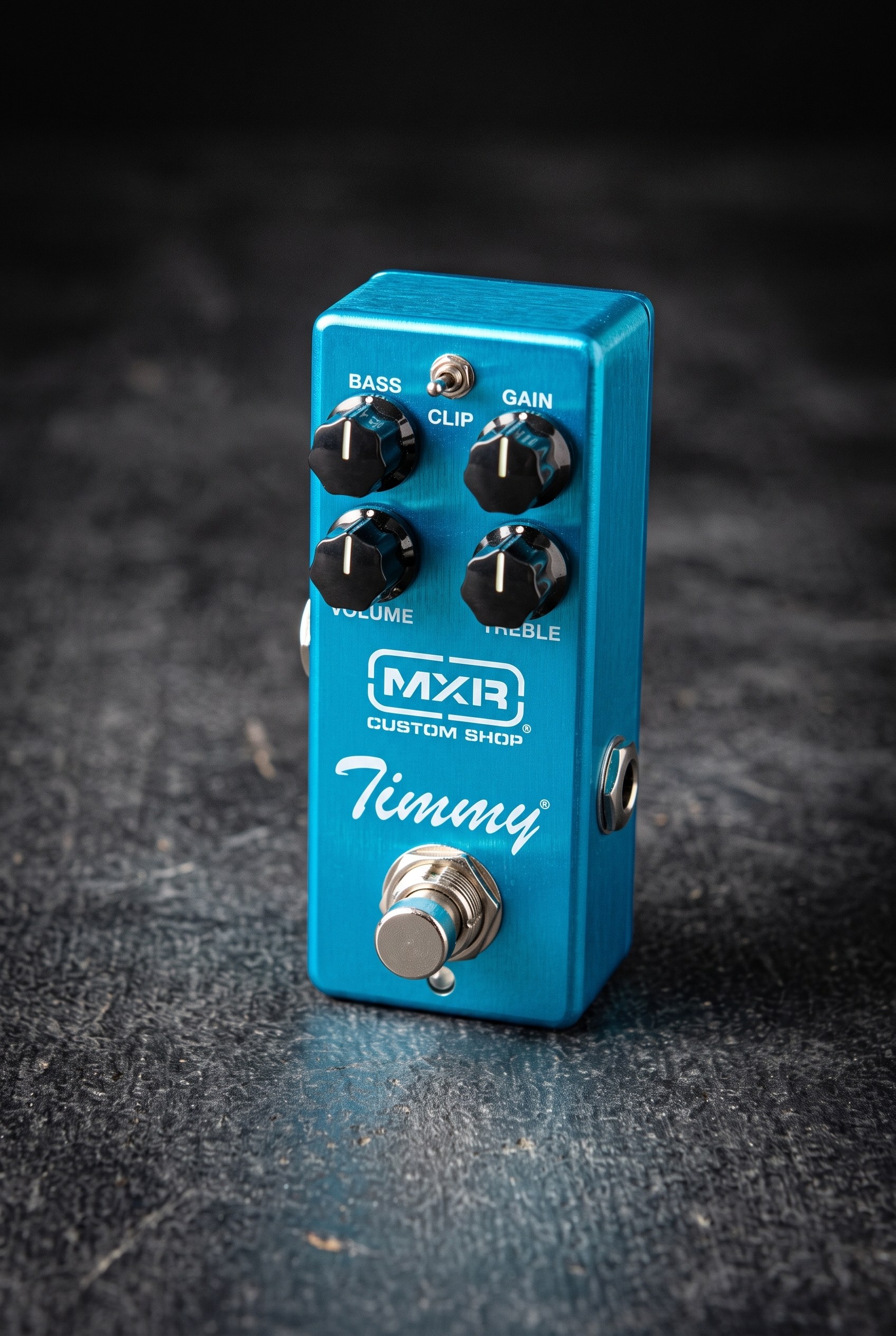
An AI-generated illustration of the MXR Timmy Overdrive (CSP027).
Paul Cochrane's legendary transparent overdrive in MXR mini format. Three clipping modes, cut-only EQ controls, and LF353 op-amp for pure amp character.
Most overdrive pedals have a personality. The Ibanez TS9 Tube Screamer pushes mids. The Boss BD-2 Blues Driver bites. The classic Silicon Fuzz Face squashes and spits. They all leave a fingerprint on your tone, and for a lot of music, that’s exactly what you want. But what if you’ve spent years and thousands of dollars building a rig that sounds exactly like you — the guitar, the amp, your hands — and what you need is a pedal that enhances that without changing it? That’s the problem the Timmy was born to solve.
Paul Cochrane is a Nashville-based pedal builder who, for years, built his Timmy overdrives one at a time by hand. No website. Minimal social media. Waiting lists that stretched for months. And yet the pedal wound up on the boards of Aerosmith’s Brad Whitford, L.A. session legend Lyle Workman, first-call Nashville guitarist Kenny Greenberg, and Alice in Chains’ Jerry Cantrell. Not because anyone was paying to put it there — because the pedal earned its place through sheer sonic integrity. When MXR brought Cochrane into their design facility to translate his circuit into mini-enclosure production format as the MXR Timmy Overdrive (CSP027), the result was one of the most celebrated OD pedals of the last decade. Here’s everything you need to know about it.
The Paul Cochrane Story: Building Cult Status One Pedal at a Time
Paul Cochrane’s path to pedal-building legend is the opposite of a marketing campaign. He built pedals because he wanted something specific and couldn’t buy it. The original Timmy — the single-channel version of his Tim pedal (which added a second channel for boost) — circulated through Nashville’s session community on reputation alone. Players who got their hands on one held onto it. Players who didn’t were on a list, waiting.
What made the Timmy different wasn’t a novel clipping topology or an exotic component. It was a design philosophy: the pedal should enhance your rig’s voice, not replace it. Where a Tube Screamer imposes its famously mid-forward, bass-rolled character onto everything you plug into it, the Timmy’s approach is additive rather than transformative. The gain structure is gentle enough that the character of your pickups — whether you’re running a Gibson Les Paul Standard‘s warm humbuckers or a Fender Stratocaster‘s glassy single-coils — remains the dominant voice. The Timmy just adds harmonic complexity, a touch of compression, and musical breakup on top of what’s already there.
When MXR approached Cochrane about a collaboration, he was selective. He’d turned down other offers. “It’s an honor to work with MXR,” Cochrane told Dunlop. “My first ever pedal was a Phase 90.” The lineage mattered to him. And critically, the collaboration went both ways: Cochrane was involved in component selection and voicing, not just licensing the circuit to be replicated cheaply. The result — released in MXR’s mini enclosure — preserves the essential soul of the original while making it accessible to players who’d never have survived a six-month waiting list.
Features and Controls: Simplicity with Hidden Depth
The MXR Timmy Overdrive ships in the same mini housing that MXR introduced with the Phase 95 — a compact footprint that fits where standard pedals won’t. The controls look straightforward: Volume, Bass, Gain, and Treble knobs, plus a three-position Clip switch and a bypass footswitch. Four knobs and a switch. But the implementation of each control is more considered than it appears at first.
Volume and Gain
Gain behaves as you’d expect an overdrive Gain control to — it increases the amount of drive applied to the signal. But the Timmy’s Gain range (3 dBV to 43 dBV according to Guitar World’s published specs) is oriented toward the low and medium gain territory. This is not a pedal for scooped metal rhythms or high-gain lead tones. It’s designed for the space between clean and mildly crunchy: edge-of-breakup, blues-weighted breakup, and everything up to a moderate rock crunch. For higher gain applications, the Timmy pairs exceptionally well in front of a driven amp or stacked with another overdrive, because its transparent character means it adds without muddying. Volume provides output level compensation, and with Gain rolled back it makes the pedal function as a clean boost — a capability that working Nashville players like Greenberg exploit constantly.
The Bass and Treble Controls: Cut-Only and Strategically Placed
This is where the Timmy earns its transparency reputation, and it’s worth understanding in detail because it’s different from almost every other overdrive’s EQ implementation. Both Bass and Treble are cut-only controls — turning them clockwise increases the cut, not the boost. They start at zero cut when fully counter-clockwise and provide progressive reduction as you turn them up. This means the Timmy’s “flat” setting is with both Bass and Treble at minimum (fully CCW), and you shape from there by subtracting frequencies you don’t need.
But the more interesting design choice is where each control sits in the signal path. The Bass control cuts low end from the pre-overdrive signal — before the gain stage processes it. This means that at low Gain settings, you can retain a full low end by leaving Bass at minimum cut, because the gain stage itself isn’t compressing or smearing the bass frequencies. As Gain increases, excessive low-end energy before the drive stage can cause muddiness and flub; the Bass control lets you dial that out without losing the body you want. At higher Gain settings, even a small amount of Bass cut cleans up the drive significantly.
The Treble control cuts high end from the post-overdrive signal — after the gain stage. This means it trims the top-end character of the breakup itself, not the input signal. If the drive is producing harsh overtones or fizzy high frequencies, the Treble control smooths them without affecting the gain character. This is the opposite of what a tone control on, say, a Boss DS-1 does; on the Timmy it’s surgical. The result of this pre/post configuration is a degree of independent tone control that most overdrives don’t offer — you’re shaping the low end of what goes into the drive and the high end of what comes out, which is a significantly more nuanced approach than a single tone knob after the gain stage.
Guitar World’s Paul Riario noted in his 2020 review that the cut-only nature “won’t be to everyone’s liking” — and he’s right that players expecting boost capability will be surprised. But the design choice is deliberate: cuts never add artifacts to the signal, and they keep the Timmy operating in the transparent register rather than coloring the tone. If you want more bass in your output, turn down the Bass cut. If you want more treble, turn down the Treble cut. The amp provides what’s already there.
The Clip Switch: Three Characters, One Pedal
The three-position Clip switch selects between different diode clipping configurations that fundamentally change how the gain stage behaves. Guitar World’s review identified one position as asymmetrical clipping and two as symmetrical, with varying degrees of saturation, compression, and headroom between them.
In practical terms: position one offers the most headroom and the least compression — the gain stage clips hard only at the extremes, producing a dynamic, open-sounding breakup that responds acutely to pick attack. Position two, the middle switch position, is the sweet spot that Guitar World’s Riario found most musical — “the most breath and body, and touch-responsiveness.” It sits between the open character of position one and the more saturated feel of position three. Position three provides the most compression and the most consistently saturated character — useful for thicker, more persistent breakup at lower Gain settings, or for adding sustain to single-note lines.
Because the Timmy’s overall gain ceiling is moderate, even position three doesn’t push into territory that sounds compressed in an unpleasant way. The switch expands the Timmy’s personality range from barely-there drive that enhances clean tone to a solid working-crunch character — all without leaving the transparent overdrive category.
The LF353 Op-Amp: Why It Matters
When Cochrane and MXR’s design team worked on the component selection for the mini format, they didn’t default to the JRC4558 (the chip that defines the TS9’s character) or the TL072. They chose the LF353, a JFET-input dual operational amplifier from Texas Instruments. The LF353 has a notably higher input impedance than bipolar input op-amps, which means it draws less current from the signal source and interacts less with the preceding signal chain. It also has a high slew rate and wide bandwidth, which contributes to its “hi-fi” character — it can process the full frequency range of the guitar signal without frequency-dependent distortion artifacts. Dunlop engineers selected it specifically for what Cochrane’s circuit required: high output capability, sufficient gain, and signal fidelity that doesn’t impose its own coloration. The chip is part of why the Timmy sounds like a transparent window on your rig rather than a colored filter.
Specifications at a Glance
The 2.2 mA current draw is one of the lowest in any overdrive in production. On a typical Iso-Brick with 100 mA outputs, you could run 45 Timmy overdrives simultaneously. This is an entirely battery-free design — the mini enclosure doesn’t physically accommodate a 9V battery — but given the draw, adapter management is painless. Any isolated 9V output on any quality power supply handles it without issue.
The −115 dBV noise floor is exceptional for an overdrive. Many drive pedals sit in the −90 to −100 dBV range; the Timmy’s quietness contributes directly to its transparent character in actual use. You don’t hear the pedal between notes.
Famous Players: Confirmed Users of the Timmy Design
The Dunlop official product page and multiple independent sources name confirmed players. The distinction worth making is that some players used Paul Cochrane’s original handbuilt Timmy before the MXR version existed; the MXR collaboration brought the same circuit to a wider audience. Here’s what the sources actually confirm.
Brad Whitford — Aerosmith
Dunlop’s official product description for the MXR Timmy names Brad Whitford directly alongside Lyle Workman and Kenny Greenberg as guitarists for whom the Timmy is “a pedalboard essential.” Guitar World’s 2020 review of the MXR Timmy cites Whitford by name as a user of the original Paul Cochrane design. The effectsbay.com documentation of Whitford’s Aerosmith-era board confirms his use of Paul Cochrane’s Tim overdrive specifically. Whitford’s playing style — understated, harmonically rich, built around the relationship between a good guitar and a good amp — is exactly the context where a transparent drive earns its place. He’s not trying to add a mid hump; he’s trying to push an already-dialed amp into slightly more complex breakup territory without losing any of its fundamental character.

Jerry Cantrell — Alice in Chains
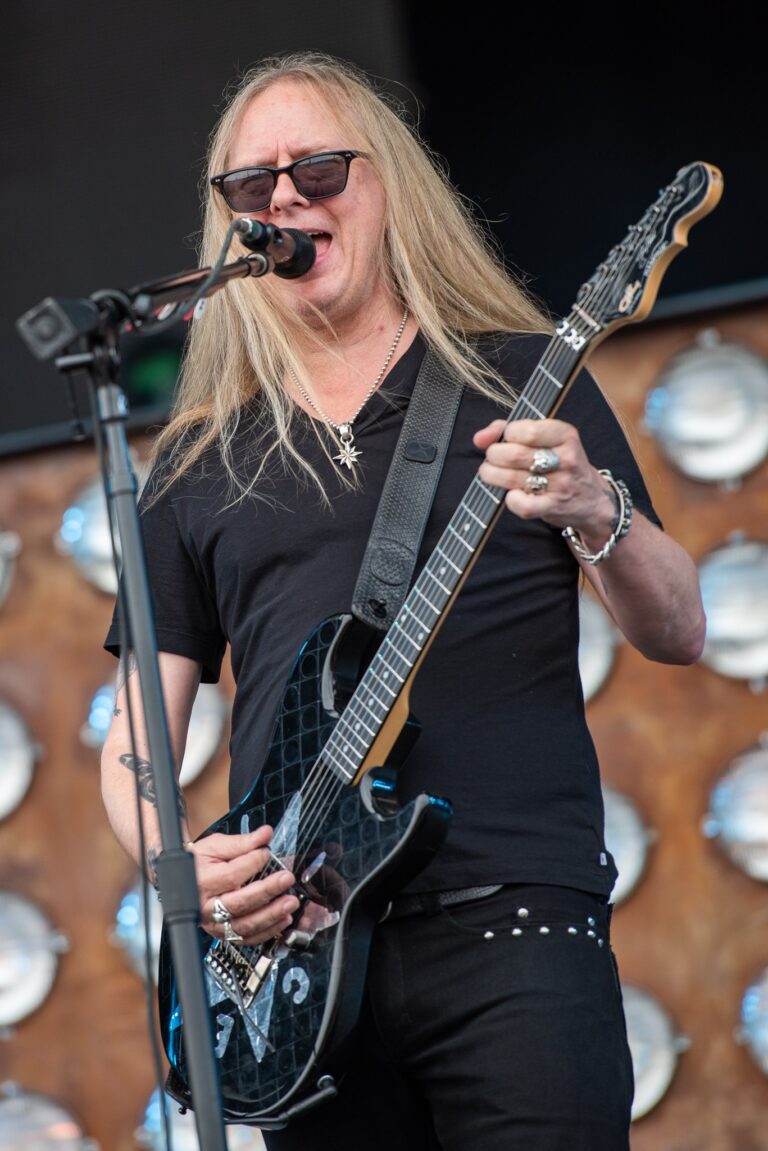
Premier Guitar’s 2024 Rig Rundown for Jerry Cantrell‘s “I Want Blood” tour captures the MXR Timmy Overdrive on his live touring rack — the same rig documented in our coverage of his MXR M300 Reverb and MXR M108S Ten Band EQ use. Cantrell’s context is high-gain Mesa/Boogie territory, and his use of the Timmy in that rig illustrates one of the pedal’s less-obvious applications: as a front-end shaping tool that influences how a high-gain amplifier responds to the guitar signal. At low-to-moderate Gain settings with the Treble cut dialed in slightly, the Timmy can smooth and focus the front end of a high-gain amp without softening the amp’s own gain character. It’s essentially a surgical tone tool that sits before the amp’s preamp stage and optimizes what the amp is receiving. This is a confirmed, primary-source documented use of the actual MXR Timmy (not just the original Paul Cochrane version).
Lyle Workman — L.A. Studio Sessions, Tenacious D
Dunlop’s official Timmy product page names Lyle Workman explicitly as a “first-call L.A. player” for whom the Timmy is a pedalboard essential. Workman is best known to rock audiences as Tenacious D’s lead guitarist and studio session contributor, though his session credits span far beyond that. Studio players have long gravitated toward transparent drives because they need a pedal that sounds like their own playing amplified, not a pedal that imposes a recognizable character on sessions.
Kenny Greenberg — Nashville First-Call Session Work
Dunlop also names Kenny Greenberg on the official product page as a “first-call Nashville player” and Timmy devotee. Greenberg is one of Nashville’s most recorded session guitarists with credits spanning country, rock, and pop. The Timmy’s ability to enhance without imposing is particularly valued in Nashville session work, where the guitar’s role is often to support rather than dominate, and where the amp’s voice needs to remain recognizable through the drive.

Tone Recipes and Settings
Classic Transparent OD (The Reference Setting)
Gain at 10 o’clock, Volume at unity (match bypassed level), Bass and Treble at minimum cut (fully counter-clockwise), Clip switch in middle position. This is the Timmy in its purest form. It adds harmonic complexity and a touch of compression without changing your amp’s fundamental character. From here, all other settings are subtractions and shifts.
Edge-of-Breakup Always-On
Gain at 9–10 o’clock, Volume slightly above unity (the slight volume boost pushes the amp front end gently), Bass cut at 10 o’clock (removing just enough low end to prevent muddiness at low gain), Treble cut at minimum, Clip switch middle position. This is an always-on tone thickener. With a Fender Deluxe Reverb or similar amp set to the edge of natural breakup, this setting enriches the harmonic content of every note without sounding like a “pedal is on.”
Clean Boost with Tone Shaping
Gain at 8 o’clock (minimum), Volume at 2–3 o’clock, Bass and Treble at minimum cut, Clip switch position 1 (most headroom). This is the Timmy as a linear clean boost — driving the amp’s input stage with a hotter signal without adding overdrive character of its own. The Bass and Treble cuts can be used here to shape the frequency content going into the amp: cutting Bass prevents low-end bloat at high Volume settings; cutting Treble smooths any harshness that comes from driving the amp input harder.
Nashville Session Crunch
Gain at 11–12 o’clock, Volume slightly above unity, Bass cut at 11 o’clock (moderate low-end trim), Treble cut at minimum, Clip switch middle position. This is the working-crunch application — enough drive to give single-note lines sustain and chords some hair, without sounding like a driven rock pedal. Suitable for country leads, blues fills, and pop/rock rhythm work where the drive needs to be musical rather than aggressive.
Stacked After a Tube Screamer
Run the Ibanez TS9 first in chain (at moderate Gain, full Volume, Tone at noon), then the Timmy after it. Set Timmy Gain at 9 o’clock, Bass cut at 10–11 o’clock (to offset TS9’s bass roll-off adding back some low end going into Timmy), Treble cut at minimum, Clip switch position 2 or 3. The TS9 provides its characteristic mid-forward color; the Timmy adds harmonic complexity on top and can be used as a solo boost (Volume up on the Timmy for the solo layer). This is a common Nashville/session two-drive stack approach.
Front-End Shaper for High-Gain Amp (Cantrell-Style)
Gain at 9–10 o’clock (low drive), Volume at unity, Bass cut at 11 o’clock (moderate, to prevent low-end buildup going into the preamp), Treble cut at 11 o’clock (removing some high-frequency energy to focus the tone), Clip switch position 1 (maximum headroom — less compression from the Timmy, more from the amp). This is the Timmy as a sculptural tool: shaping the frequency content and transient character of the guitar signal before it hits a high-gain amplifier. It changes what the amp distorts, not how much. The result is a tighter, more focused high-gain tone that still responds dynamically to pick attack.
Warm Dark Blues Drive
Gain at 11–12 o’clock, Volume at unity, Bass cut at minimum, Treble cut at 10 o’clock (moderate-heavy), Clip switch position 3 (most saturation and compression). This setting emphasizes warm mid-range breakup with the harsh high-frequency content reduced. Works well with humbuckers through a medium-powered tube amp, replicating the warm, slightly compressed character of a pushed vintage combo.
The Timmy’s controls interact more than they appear to, because Bass and Treble affect different stages. These starting points assume the amp is set clean or slightly breaking up — the Timmy works best enhancing an amp’s own voice, not correcting a bad amp sound.
Signal Chain Placement and Considerations
The Timmy is unusually flexible about chain position because its transparent character means it interacts less destructively with different impedances and levels than a more colored overdrive would.
In the standard configuration, it goes before the amp input — placed after wah and before modulation and delay. In this position it responds to the full dynamic range of the guitar and interacts with the amp’s natural gain structure. Because the Timmy’s output impedance is 1 kΩ (relatively low for a pedal), it drives long cable runs and amp inputs without high-frequency loading or signal degradation — the opposite problem from a vintage fuzz with a high-impedance output.
The 400 kΩ input impedance is lower than some drives (the MXR M133 Micro Amp, for reference, is 1 MΩ). This means the Timmy loads pickups slightly more than a purely passive cable or a high-impedance buffer. For most modern guitars and pickups this is imperceptible, but players with high-output passive humbuckers may notice a slight high-frequency roll-off compared to going direct into a true-bypass path. In practice, the difference is subtle enough that virtually no player has found it objectionable.
Because Bass cuts the pre-OD signal, the Timmy can be used after a drive that produces a boomy or muddy low end — the Bass cut cleans up the incoming tone before it enters the gain stage, producing a more articulate drive output. This makes it genuinely stackable in ways that overdrives with post-OD bass controls are not.
For effects loop use: the Timmy at very low Gain settings can function as a level boost or tone shaper in a series effects loop, but its gain range is designed for the front end of an amp. It is not optimized for loop use the way EQ pedals or dedicated boost pedals are.
Comparing the Timmy to Its Transparent Competitors
The transparent overdrive category has grown considerably since Paul Cochrane first built a Timmy in Nashville. The MXR version now competes directly with several pedals that claim similar territory.
Against the Ibanez TS9 Tube Screamer, the contrast is fundamental. The TS9’s JRC4558-based circuit imposes a well-documented mid hump and bass roll-off that defines the “Tube Screamer sound.” This is a feature for blues players and many rock contexts, but it’s the opposite of transparent. The Timmy actively avoids this coloration. Neither pedal is better in the abstract; they do different things. Players who want to preserve their amp’s personality use the Timmy. Players who want the mid-forward “singing” quality of the TS9 sound use that.
Against the Boss BD-2 Blues Driver, the Timmy is smoother and more refined. The BD-2 has more gain on tap and a more aggressive, somewhat harsh character at higher settings that many players love. The Timmy’s ceiling is lower-gain and its character more musical-breakup oriented. The BD-2 is often chosen for its distinctive character; the Timmy is chosen specifically because it doesn’t have one.
The Klon Centaur (and its production descendants) shares the most philosophical territory with the Timmy. Both are “transparent” drives that aim to add harmonic complexity without fundamentally altering the amp’s voice. The Klon has a fixed internal bass boost that fills out the low end; the Timmy’s bass is adjustable via cut. The Klon’s gain ceiling is similarly moderate. In practice, players who respond to one often respond to the other, though the Timmy’s three Clip switch positions offer variability the Klon doesn’t. The MXR Timmy at $159.99 is considerably less expensive than any genuine Klon variant.
The MXR M133 Micro Amp — the clean boost in the same MXR mini format — occupies adjacent territory for players who don’t need any overdrive character at all. The Timmy with Gain dialed to its minimum functions similarly to the M133 at low Gain settings, but the M133 has no EQ interaction and a simpler circuit path. For pure clean boost with no drive character whatsoever, the M133 is the more focused tool. For boost with tone shaping or any drive character, the Timmy covers more ground.
Buying Guide: New, Used, and What to Watch For
The MXR Timmy’s MSRP is $159.99 and it’s widely stocked — Guitar World’s 2020 review listed a street price of $129.99, and current market pricing sits roughly in the $129–145 range new depending on retailer. Sweetwater lists used examples from around $135 in excellent condition. The used market for MXR mini pedals is generally reliable — there are no known failure modes specific to the Timmy, and the circuit is simple enough that there’s little to go wrong. When buying used, the standard checks apply: footswitch function, no crackle from the knobs, LED illuminates correctly.

The one gotcha with used Timmy purchases is the power supply question. Because there’s no battery option, you need a 9V DC adapter. The ECB003 is included new but often missing with used units. Any standard 9V center-negative adapter with at least 50 mA capacity works — the 2.2 mA draw means any quality power supply handles it trivially. Avoid cheap unregulated supplies; even though the current draw is low, the Timmy’s transparent character will reveal noise from a noisy supply more readily than a colored drive would.
There are no significant variants to navigate in the MXR Timmy lineup — it’s a single SKU (CSP027). The original Paul Cochrane handbuilt Timmy pedals do appear on the used market occasionally and command significant premiums as collector items; they may sound subtly different from the MXR production version due to component tolerances and hand-assembly, but the circuit is fundamentally the same. For a player rather than a collector, the MXR version offers consistent production quality and full warranty support at a fraction of the price.
Ownership Notes: What It’s Actually Like to Play Through One
The thing players consistently report about the Timmy — and that’s difficult to communicate in a spec sheet — is how it disappears into your rig. Most overdrives, when you click them off and on repeatedly, produce a noticeable “before/after” quality. The sound changes character. With the Timmy, the transition is more like a volume and harmonic-density shift than a tone change. The pedal’s −115 dBV noise floor means the background is equally quiet with it engaged or bypassed. The true hardwire bypass means there’s no buffering effect when it’s off. The net result is a pedal that feels like it’s part of your amp’s own gain structure rather than something inserted into the signal chain.
The cut-only Bass and Treble controls reward careful listening. The temptation on first use is to set both to minimum and leave them there, which is correct as a starting point but misses the real value. Spending 10 minutes with the Bass cut — turning it up in small increments while listening to how the drive character changes — reveals how much the pre-OD EQ influences the texture of the breakup. At moderate Gain settings, even a quarter-turn of Bass cut can transform a slightly muddy chord grind into a focused, articulate crunch. This is an interactive pedal that rewards engagement.
The Clip switch is best explored with a consistent Gain and Volume setting — change nothing except the switch position, listen carefully, and find which position your amp and guitar combination responds best to. For single-coil guitars through a clean Fender-style amp, the middle position tends to shine. For humbuckers through a medium-gain amp, position one (most headroom) often produces the most dynamic, guitar-responsive character. For always-on applications where you want the drive to be consistent regardless of pick attack variation, position three (most compression) keeps the output level steady.
Finally: the Timmy is not a high-gain pedal. If your music requires sustained, compressed, fizzy drive at the edge of feedback, the Timmy is the wrong tool. It was designed by and for players who want the boundary between clean and driven to be subtle and musically responsive — not a wall of distortion. In that specific context, it is among the most refined tools in production at any price point.
Frequently Asked Questions
What’s the difference between the MXR Timmy and the original Paul Cochrane Timmy?
The circuit is fundamentally the same, designed by the same person with input from MXR’s engineers on component selection (specifically the LF353 op-amp). The MXR version is manufactured in volume with consistent production tolerances, ships in a mini enclosure with reliable quality control, and costs a fraction of what original handbuilt Paul Cochrane units command on the used market. Cochrane himself was involved in the MXR collaboration and approved the result. Some players who own both report subtle differences attributable to component tolerances and hand-assembly variability in the original, but the design philosophy and fundamental character are identical.
Why are the Bass and Treble controls cut-only instead of boost/cut?
Because boost adds artifacts and imposes character; cut only removes what isn’t needed. The Timmy’s design philosophy is to preserve your rig’s voice, and adding frequencies electronically always colors the signal in some way. By using cut-only controls, Paul Cochrane ensures that the “flat” position — both controls fully counter-clockwise — is as transparent as the circuit allows, and that any shaping is done by subtraction rather than addition. The practical effect is that the Timmy’s tonal range is narrower in terms of EQ options but more reliable in terms of remaining within the “transparent” category regardless of setting.
What do the three Clip switch positions actually do differently?
They select between different diode clipping configurations. Position one (asymmetrical clipping) produces the most headroom and the least compression — the most open, dynamic-responsive character. Position two (symmetrical, medium saturation) is the middle ground that most players find the most versatile starting point — balanced between dynamic response and consistent breakup. Position three (symmetrical, maximum saturation) produces the most compressed, consistently saturated character regardless of pick attack. These aren’t subtle differences; at the same Gain setting, switching from position one to three is a meaningfully different experience.
Is the MXR Timmy better than the TS9 Tube Screamer?
They do different things, so “better” depends on what you need. The TS9 imposes a recognizable mid hump and bass roll-off that defines its sound and works excellently for players who want that coloration — particularly for blues, classic rock, and any style where the TS9’s “singing” quality is desirable. The Timmy preserves your amp’s existing character and adds harmonic complexity without changing the tonal balance. If you want the pedal to sound like itself, choose the TS9. If you want the pedal to sound like more of you, choose the Timmy.
Can the MXR Timmy be used as a clean boost?
Yes, and it’s effective in this role. Set Gain to minimum (8 o’clock), Volume to 1–2 o’clock, Bass and Treble at minimum cut, and Clip switch to position one. At these settings the gain stage adds minimal drive character and the Volume control pushes the amp’s front end with a louder, more dynamic signal. The Bass cut can be used to trim low-end buildup if boosting causes boom; the Treble cut can smooth any brightness the amp produces when driven harder. The result is a clean boost with tone-shaping capability — more flexible than a single-knob boost like the MXR M133 Micro Amp, at the cost of slightly more menu-diving.
Does the MXR Timmy work better with humbuckers or single-coils?
Both, but they interact differently with the controls. Single-coils going into the Timmy often benefit from leaving the Bass cut at minimum — the leaner low end of single-coil pickups pairs well with the Timmy’s gain stage without muddiness. With humbuckers, particularly high-output models, the Bass cut becomes more useful: a moderate Bass cut (10–11 o’clock) prevents the thick low end of humbuckers from causing the gain stage to sound congested. The Treble cut is useful for taming the brightness that humbuckers in a high-gain context can produce after the overdrive stage. The Clip switch position matters more with humbuckers — position one (most headroom) gives humbuckers the most dynamic, guitar-volume-responsive range.
Why does the MXR Timmy need an adapter? Why no battery option?
The mini enclosure simply doesn’t have room for a 9V battery. This is a physical constraint of the format — MXR’s entire mini line (Phase 95, Carbon Copy Mini, etc.) shares this limitation. The ECB003 adapter is included new, and at 2.2 mA current draw the Timmy is negligible on any quality power supply. If you’re gigging, a Dunlop Iso-Brick, Mini Iso-Brick, or any comparable isolated power supply handles it without issue. The no-battery limitation is a mild inconvenience for players who want a backup power option but not a meaningful functional problem in practice.
What’s the LF353 op-amp and why did MXR choose it for the Timmy?
The LF353 is a JFET-input dual operational amplifier made by Texas Instruments. Its JFET input stage gives it a very high input impedance, a high slew rate (meaning it responds quickly and accurately to fast transients), and wide bandwidth — it can process the full frequency range of the guitar signal without introducing frequency-dependent coloration. By comparison, the JRC4558 used in the TS9 has a bipolar input stage with lower input impedance and a characteristic frequency response that contributes directly to the TS9’s midrange character. The LF353 was chosen specifically because it doesn’t impose that kind of character — it amplifies the signal faithfully within the Timmy’s gain structure and lets the circuit’s clipping and EQ stages define the tone rather than the op-amp itself.
Image credits
- Brad Whitford: Abog, Wikimedia Commons, CC BY-SA 4.0.
- Jerry Cantrell: Morten Jensen, Wikimedia Commons, CC BY 2.0.
- Top image: AI-generated illustration by GuitarGangsters, based on the manufacturer’s product design (not a photograph).
- Brad Whitford: Carlos Varela, Flickr, CC BY 2.0.
- Jerry Cantrell: Stefan Brending (2eight), Wikimedia Commons, CC BY-SA 4.0.
Latest News
Related
On This Day
Monday 9 November
From this week: