The Electro-Harmonix Cock Fight Plus: How One Pedal Captures the Snarl That Defined Classic Rock Guitar
The EHX Cock Fight Plus packs a cocked wah, formant filter, and analog fuzz into one expression treadle pedal. Discontinued in 2026 — here's everything.
There is a guitar tone that lives somewhere between Mick Ronson’s searing Ziggy Stardust licks and the opening honk of “Money For Nothing” — a fixed, mid-forward vowel sound that makes a guitar sound like it’s speaking rather than just playing. It’s the cocked wah: one of rock’s most immediately recognizable guitar sounds, and one of the most overlooked techniques available to any player who hasn’t yet discovered it.
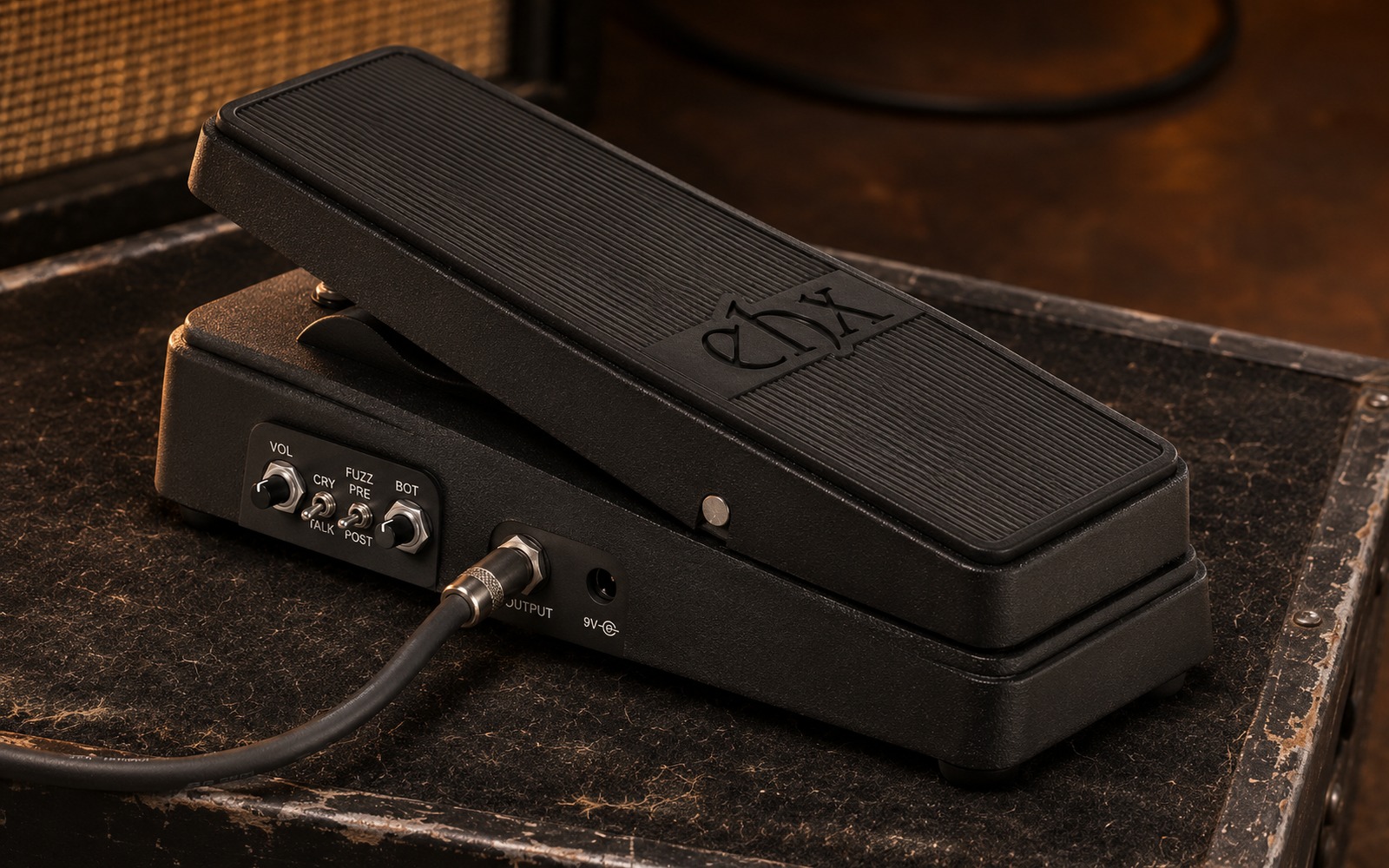
The Electro-Harmonix Cock Fight Plus is built specifically around that sound. Released in 2017 as the expression-treadle evolution of the original compact Cock Fight pedal, it packages a cocked wah filter, a formant vowel filter, and a fully featured analog fuzz circuit into a single chassis — all swept by a rack and pinion treadle mechanism that puts the full arc of the wah sweep directly under your foot in real time. It was discontinued in 2026, but it earned its place in EHX’s catalog as one of the most sonically direct statements the company ever made: here is the sound, here is how to make it.
This is the GuitarGangsters deep-dive. Not a casual demo writeup, but the full technical and historical breakdown — everything from the role of the BIAS knob in shaping the fuzz circuit’s dying-battery character to the specific signal chain placement that gets you closest to that Cream-era guitar solo tone.
The Art of the Cocked Wah: A Brief History of the Sound
A wah pedal is fundamentally a bandpass filter on a rocker. Sweep it from heel to toe and you sweep the center frequency of that filter through a range — creating the characteristic “wah” vowel sweep. But what happens when you stop sweeping and park the pedal somewhere mid-travel? The filter doesn’t bypass — it stays in the circuit at whatever frequency you’ve chosen, imposing a fixed mid-hump on your signal. That’s the cocked wah: a permanent midrange boost with a vowel-like character, named because the pedal heel is cocked upward, typically parked somewhere between fully back and the midpoint of its travel.
Players discovered relatively early in the wah pedal’s history — sometime in the late 1960s — that a parked wah could function as a kind of expressive tone control. Depending on where you parked it, you could get anywhere from a subtle upper-midrange lift that sharpened attack and cut through a dense band mix, to a heavily coloured nasal honk that made a Les Paul through a cranked Marshall sound like it was squealing rather than singing. The technique became a defining characteristic of certain classic rock guitar tones from the early 1970s: the cutting, almost vocal quality of heavy riff guitar that arrives before the solo even starts.
The Cock Fight Plus doesn’t just capture one point in that sweep. It gives you the entire range — plus a formant filter mode that goes well beyond standard wah territory — and a fuzz circuit that can be positioned before or after the filter to radically change the character of the combined sound. It’s a three-pedals-in-one stompbox that happens to be built around one of rock history’s most underappreciated tonal techniques.
From Compact to Treadle: How the Cock Fight Plus Came to Be
Electro-Harmonix introduced the original Cock Fight around 2015 as a compact, pedalboard-friendly unit. It contained the same two filter modes (CRY and TALK), the same fuzz section with BIAS control, and an expression pedal jack — but no built-in treadle. You parked the filter frequency with a knob, or plugged in an external expression pedal if you wanted live sweeping. It was a clever pedal that earned strong critical reception: MusicRadar’s Ed Mitchell called it “money for next to nothing,” and Sound on Sound’s Paul White praised the versatility of the fuzz-filter combination for soloing and riffing. The core idea was clearly right. The only missing piece was immediacy: the ability to sweep the filter with your foot without additional hardware.
The Plus, released in 2017, addressed exactly that. By integrating a full rack and pinion treadle mechanism — the same style used in traditional expression-based wah pedals — EHX gave players the ability to sweep the Cock Fight’s filters in real time with nothing extra needed. The pedal expanded slightly in dimensions compared to the original compact form, adopted EHX’s composite chassis material for a lightweight build that doesn’t sacrifice durability, and retained the core circuit intact. Guitar World’s Paul Riario, reviewing the Plus in 2018, summed it up cleanly: “you now have absolute expression with the Cock Fight Plus because you can sweep its treadle back and forth for a multitude of classic wah and garbled talk-box sounds.”
Both the original and the Plus were discontinued in 2026. The used market is now the primary channel for both.
Specs at a Glance
The 30mA current draw is genuinely pedalboard-friendly — identical to the Electro-Harmonix Pitch Fork and a fraction of what more complex EHX digital pedals demand. The Canyon Delay & Looper draws 150mA; the Freeze Sound Retainer draws 140mA. The Cock Fight Plus fits comfortably on any standard isolated 100mA output. The included 9V battery means the pedal is ready to use directly out of the box — no scrambling for a power supply on the first day.
Controls: What Does Everything Do?
The Cock Fight Plus has more controls than a traditional wah pedal, and understanding each one unlocks the full range of what the pedal can do. The layout rewards deliberate exploration — particularly the BIAS knob, which has no direct equivalent on any other wah pedal on the market.
VOL Knob
Master output volume. The cocked wah filter and fuzz circuit both add gain, so this knob frequently needs trimming back from unity to level-match with the bypassed signal — particularly when running the fuzz at high DRIVE settings. A good habit: set DRIVE and BIAS first, then adjust VOL until the engaged and bypassed volumes match at nominal playing levels.
CRY/TALK Toggle
The central character switch. CRY mode engages a traditional wah pedal filter based on EHX’s Crying Tone wah circuit — the familiar “wah” vowel sound, swept by the treadle or parked for a cocked wah effect. TALK mode engages a formant filter that imposes vowel-like qualities on the signal: at slower treadle sweeps you get articulate vowel transitions; parked at specific positions you get a fixed, talking-instrument quality that changes dramatically depending on where the treadle rests. TALK mode is where the more exotic sounds live — less “classic rock wah” and more “something between a talk box and a synthesizer filter.”
FUZZ PRE/X/POST Toggle
Three positions controlling where the fuzz circuit sits relative to the filter — or whether it’s in the circuit at all.
- PRE: Fuzz goes before the filter. The filter then processes the already-saturated fuzz signal — this is the classic fuzz-into-wah architecture, with the filter shaping the harmonics of the distorted waveform. The result is aggressive, focused, and coherent — the sound MusicRadar compared to the Tone Bender fuzz circuit used by Mick Ronson and Jimmy Page on their most iconic recordings.
- X: Fuzz is removed entirely from the circuit. The filter runs on your clean signal (or the output of whatever drives precede the Cock Fight Plus in your chain). Use this when you want a more transparent cocked wah or TALK effect, or when you’re stacking the pedal after your own fuzz or overdrive.
- POST: Filter goes before the fuzz. The fuzz saturates the already-shaped vowel sound — a more woolly, gated character, particularly useful with low BIAS settings for dying-battery textures.
DRIVE Knob
Sets the amount of fuzz saturation, from light hair through sustained smooth clipping to full-on Big Muff-style distortion. Lower DRIVE settings interact most interestingly with the BIAS knob — pulling BIAS counterclockwise at moderate DRIVE creates gated stutter effects; at high DRIVE the fuzz sustains past most biasing extremes.
TONE Knob
Sweeps the fuzz voicing from dark to bright. Fully counterclockwise is thick and woolly — lots of bass retained in the fuzz signal. Clockwise it opens into a brighter, more cutting fuzz tone that sharpens pick attack and note definition and plays well with both humbuckers and single-coils. Guitar World’s Paul Riario noted that the wah tone “works great with single coils or humbuckers” — the TONE knob is part of why that flexibility exists.
BIAS Knob
Controls the bias voltage applied to one of the two transistors in the fuzz circuit. This is the most unusual control on the pedal and the most rewarding to explore thoroughly. Fully clockwise is a well-biased fuzz — saturated and even, with full sustain and smooth decay. Rotate counterclockwise and the fuzz begins to starve: notes cut off earlier, sustain shortens, and at extreme counterclockwise settings individual notes produce a sputtering, staccato death-rattle that cuts to silence rather than decaying gracefully. This dying-battery simulation is a deliberate creative feature. Sound on Sound’s Paul White noted of the original Cock Fight: “With the fuzz bias control turned anticlockwise, the fuzz takes on a dying-battery character (the notes splutter to extinction rather than die away gracefully), but there are some useful variations to be had between the extremes.” In POST fuzz mode this produces gated filter textures that no other pedal in its class can replicate.
BOT Knob
A low-frequency boost control that operates slightly above unity gain at maximum clockwise. Fully counterclockwise removes the BOTTOM circuit from the signal path entirely. The BOT knob compensates for the naturally mid-forward character of both filter modes — boosting low end restores body and weight that the wah filtering removes, which matters most on single-coil guitars that are already lean in the low frequencies. Players running the pedal in X mode (filter only, no built-in fuzz) through a bright amp will find the BOT knob essential for tonal balance.
The Sonic Tradition: Who Defined This Sound
No confirmed primary-source documentation places a specific widely-known artist behind a Cock Fight Plus in a documented rig. But that’s the wrong frame for understanding this pedal. The Cock Fight Plus is not a celebrity-endorsed signature effect — it’s a tool for replicating and extending a specific sonic tradition, and that tradition has a clear lineage.
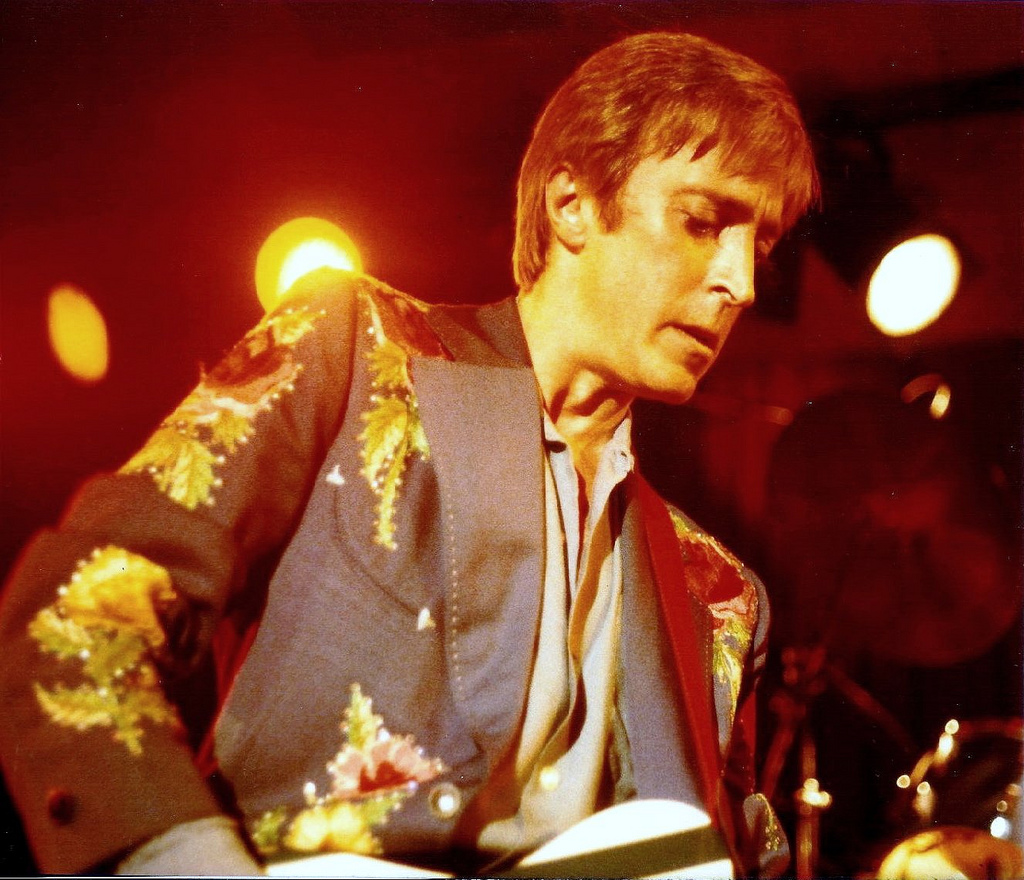
Mick Ronson is the guitarist most directly associated with the cocked wah tone as a compositional statement. The opening riff of David Bowie’s “Ziggy Stardust” is the canonical example: that nasal, cutting, vowel-shaped guitar line that arrives before anything else in the arrangement, its mid-hump projecting above the sparse mix with an almost human quality. Ronson used a Tone Bender fuzz pedal in combination with a parked wah — which is exactly the PRE fuzz routing of the Cock Fight Plus: fuzz saturates the signal, then the parked filter shapes its harmonic content. MusicRadar’s review of the original Cock Fight cited Ronson’s Bowie work explicitly as a benchmark. He didn’t use this specific pedal, but the tonal architecture the Cock Fight Plus is built on is his.
The opening of Dire Straits’ “Money For Nothing” is the other canonical cocked wah reference point — that thick, honking riff tone that kicks off one of the most recognizable guitar parts of the 1980s. Sound on Sound’s Paul White noted in his review of the original Cock Fight that the pedal could get close to recreating that sound: “you can get close to recreating that ‘Money For Nothing’ honk.” This is the CRY filter in X mode (no fuzz), treadle parked well forward in the sweep, delivering the upper-midrange hump that defines Knopfler’s cocked wah riff tone.
EHX itself, in early descriptions of the Cock Fight family, referenced Tony Iommi, Michael Schenker, Brian Robertson, and Slash as guitarists “who knew how to deploy a conventional wah as a booster for solos” — meaning they understood that a parked wah in the right position functions as a permanent lead boost with character, sharpening the upper mids and projecting the guitar voice above a loud band. None of these are confirmed Cock Fight Plus users, but their approach to the wah pedal as a fixed tonal shaper rather than a swept rhythmic effect is exactly what the CRY mode in fixed treadle position captures.
TALK mode follows a different lineage. Guitar World’s Riario described it as producing “Peter Frampton-esque talk box chatter” — a fair comparison without being a literal one. Frampton’s actual talk box reroutes guitar signal through a tube into his mouth, imposing real vocal tract resonances on the guitar sound. The TALK filter’s formant algorithm produces similar vowel shapes electronically: more controllable, less physically demanding, and capable of sounds that sit between talk box and synthesizer filter territory. For players who want that vowel character without the respiratory commitment of a real talk box, TALK mode is the practical answer.
Tone Recipes and Settings
Cocked Wah with Fuzz (Mick Ronson / Ziggy Stardust territory)
Filter: CRY. Fuzz routing: PRE. DRIVE: 2 o’clock. TONE: noon. BIAS: 3 o’clock (fully biased — even and saturated). Treadle: parked at approximately 35–40% from heel. BOT: noon. VOL: adjust to match bypass level. This gives you the nasal, fuzz-through-fixed-filter character Ronson deployed on the Ziggy recordings. For single-coils, push BOT to 1 o’clock to restore low-end body. Dial TONE clockwise to add attack clarity; counterclockwise to thicken.
Clean Cocked Wah (Money For Nothing honk)
Filter: CRY. Fuzz routing: X (fuzz off). Treadle: parked at approximately 60–70% from heel — further forward than the Ronson setting, lifting the frequency peak into the upper mids. BOT: fully CCW or very low. VOL: adjusted for level match. This is the Knopfler approach: no fuzz, just the mid-hump of a parked wah filter imposing its signature shape on a clean signal through a loud, bright amp. Works best when the amplifier itself is not yet overdriving.
Dying Battery Sputtergate
Filter: CRY or TALK. Fuzz routing: POST. DRIVE: 3 o’clock. BIAS: 7–8 o’clock (very low). TONE: noon. Treadle: parked or swept slowly. This is the most extreme Cock Fight Plus setting — individual notes stutter to silence, chords become gated and unpredictable. Slow picking and single-note lines amplify the effect. A compressor placed before the pedal tightens the gating and makes it more rhythmically precise; no compressor makes it chaotic and dynamic. The sputtergate effect gets more dramatic as notes ring out — light picking keeps notes alive longer before they cut off.
Classic Swept Wah with Fuzz
Filter: CRY. Fuzz routing: PRE. DRIVE: 1–2 o’clock. BIAS: 3 o’clock. TONE: 1 o’clock. Sweep the treadle with your playing — heel-to-toe on rhythmic stabs, toe-to-heel on sustained notes, fast sweeps on funky cuts. BOT: noon. This is the Cream-era lead guitar territory Paul White described in his Sound on Sound review: “you can get close to recreating that ‘Money For Nothing’ honk, or maybe a Cream-era guitar solo.” The filter animates the harmonics of the fuzz-saturated signal differently depending on sweep direction and speed.
TALK Mode Vowel Exploration
Filter: TALK. Fuzz routing: X or PRE at low DRIVE. Sweep the treadle rhythmically as you play, syncing the movement to phrasing — mentally voice the vowel you want to produce and let the treadle follow that instinct. BOT: fully CCW. Slow, deliberate sweeps maximize vowel articulation; faster sweeps produce a warbly filter modulation effect. Stack a B9 Organ Machine or Synth9 after the Cock Fight Plus in TALK mode for genuinely bizarre textural territory.
Signal Chain Placement
The Cock Fight Plus belongs early in the signal chain — typically after a tuner and before delay and reverb. Where it sits relative to your drives depends on the fuzz routing you choose.
If you’re using the built-in fuzz in PRE mode, place the Cock Fight Plus first in your chain after the tuner. The fuzz circuit reads the raw guitar signal before anything else has shaped it. Adding an external compressor before it in PRE mode works but flattens the dynamic interaction between pick attack and filter response — the fuzz sounds more even, the filter sweeps feel less alive. Without the compressor, the filter responds differently to hard picks versus soft touches, which is generally more expressive.
If you’re running the X (fuzz off) position and using the filter after your own external drives, place the Cock Fight Plus after those drives. Sound on Sound’s Paul White made this exact recommendation: “using the filters on their own after a more traditional overdrive as an alternative to the inbuilt fuzz can yield plenty of useful sounds that work especially well for soloing or riffing.” A Big Muff Pi or an overdrive pedal into the CRY filter in X mode is a legitimate and underexplored combination.
Delay and reverb go after the Cock Fight Plus. The filter effect should process a dry signal; reverb washing over it adds ambience without blurring the filter’s vowel character.
One important note: buffered bypass means the Cock Fight Plus presents a low-impedance output at all times, even when bypassed. Germanium fuzz pedals — which need to see a high-impedance guitar signal at their input — should be placed before the Cock Fight Plus in the chain, not after it. Standard practice for all buffered-bypass EHX pedals.
Cock Fight Plus vs. The Competition
vs. Dunlop Cry Baby Standard
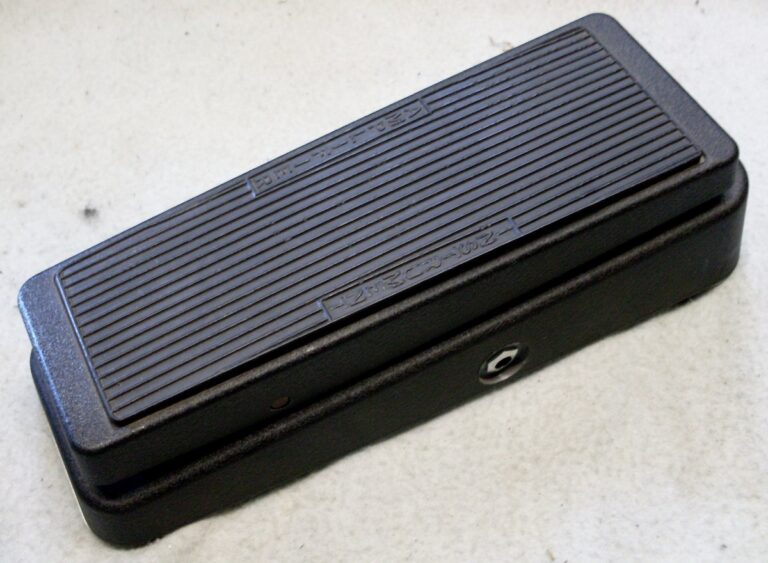
The Cry Baby is a traditional swept wah: no fuzz, no cocked wah capability beyond physically parking the pedal by hand, no formant filter. It’s the industry standard for swept wah expression, and it earns that status. But it doesn’t compete with the Cock Fight Plus in the cocked wah or TALK mode categories. These are different tools for different purposes. A player who wants a classic swept-wah pedal gets a Cry Baby; a player who wants to explore cocked wah tonality, formant filters, and fuzz-routing combinations gets the Cock Fight Plus.
vs. Electro-Harmonix Cock Fight (original compact)
The original compact Cock Fight is the same circuit with a frequency knob rather than an expression treadle. It takes up less pedalboard space and requires an external expression pedal for live sweeping. The Plus removes that external-pedal requirement by building the treadle in. For players who only ever want a fixed cocked wah with no live sweeping, the compact version is more pedalboard-efficient. For players who want to sweep live, the Plus is the correct choice — and both are discontinued, so the deciding factor may simply be which turns up on the used market first.
vs. Electro-Harmonix Pitch Fork
The Pitch Fork shifts pitch; the Cock Fight Plus shapes harmonic content via filtering. Both share the 30mA current draw; both use treadle-style expression. Mentioning them together purely for pedalboard planning: two 100mA isolated outputs power both simultaneously, with room to spare.
vs. External Fuzz + Standalone Wah Combination
A separate fuzz pedal into a separate rocking wah replicates some of what the Cock Fight Plus does — but not all of it. The Cock Fight Plus’s BIAS control for dying-battery fuzz textures, the TALK formant filter, the BOT low-end control, and the PRE/POST fuzz routing switchability are not replicated by any stock wah + fuzz pairing. The integration is the value proposition. Two pedals in a chain also means more cables, more power connections, and more footswitch events. The Cock Fight Plus does it in one box with one footswitch.
Buying Guide: Discontinued in 2026
The Cock Fight Plus was discontinued in 2026. New stock at retail is effectively gone. The used market — Reverb, eBay, local used gear shops — is the primary buying channel.
At Guitar World’s 2018 review, street price was $123.50. Used examples in excellent condition should appear in the $75–$110 range depending on condition and included accessories. The original 9V battery is obviously depleted in used units; any standard isolated 100mA output powers the pedal reliably. The adapter was not included new (it was an optional purchase), so don’t expect a used example to come with one.
What to check when buying used: the rack and pinion treadle mechanism is the mechanical heart of the Plus’s advantage over the compact version. Work the treadle through its full travel before purchase — it should move smoothly with even resistance throughout. A stiff or gritty treadle is the most common used-market issue with treadle-style wah pedals generally and is worth checking specifically. Inspect all seven knobs for pot wear — the BIAS knob in particular gets rotated frequently during experimentation. The footswitch should click cleanly. Check both the output and expression jacks for corrosion.
Both the CRY and TALK modes should be tested with fuzz in all three positions. If the dying-battery effect at low BIAS sounds more like random silence than rhythmic gating, the BIAS pot may have a dead zone — a minor issue that’s more about feel than function, but worth knowing.
Ownership Notes and Long-Term Use
The Cock Fight Plus is not an always-on pedal for most players. It occupies a specific register — one of the most characterful, most immediately recognizable guitar tones available — and it lands hardest when used deliberately. The cocked wah setting works for riffs; the swept wah works for solos; the TALK mode works for textural interludes and more experimental passages. Players who have it on their boards know exactly when they’re going to use it before they get to the show.
The BIAS control rewards extended time spent with it. Give yourself an evening with nothing else — just the pedal, a guitar, and an amp — and work through the full counterclockwise-to-clockwise range of the BIAS knob in each fuzz routing position. The dying-battery zone at low BIAS in POST mode in particular produces sounds that don’t exist anywhere else on a standard rock guitarist’s board. It’s a niche sound, but it’s completely distinctive.
One practical note on the expression jack: the Cock Fight Plus accepts a standard ¼” TS expression pedal connection. If you want to control the filter sweep from a remote expression pedal while the built-in treadle is stationary, that option exists. This is an unusual feature — most treadle wah pedals don’t offer a separate expression override — and it opens up the possibility of using the built-in treadle for quick cocked wah access while reserving an external expression pedal for more deliberate sweeping in a studio context.
Buffered bypass is a relevant ownership note for players running true-bypass loop switchers. The Cock Fight Plus inside a relay-bypass loop behaves differently from outside one — the buffer’s output impedance is always present when it’s in a non-bypassed loop. Standard practice applies: route accordingly, and place germanium fuzz pedals earlier in the chain if they need a high-impedance input.
Frequently Asked Questions
What’s the difference between the original Cock Fight and the Cock Fight Plus?
The original Cock Fight is a compact stompbox with a Frequency knob that sets the filter position and an expression pedal jack for live sweeping — but no built-in treadle. The Plus adds a full rack and pinion treadle mechanism, so you can sweep the filter in real time with your foot without any external hardware. The core circuit — both filter modes, the fuzz with BIAS control, and the fuzz routing toggle — is the same in both.
What exactly is a cocked wah sound?
A cocked wah is a wah pedal parked mid-sweep rather than swept dynamically. Instead of the moving “wah” effect, you get a fixed filter peak at a specific frequency — a permanent mid-hump that gives the guitar a nasal, forward, almost vocal quality. The Cock Fight Plus produces this effect whenever the treadle is held at a fixed position in CRY mode. Move the treadle and you get the traditional swept wah; park it and you get the cocked wah.
What does the BIAS knob do?
The BIAS knob controls the bias voltage applied to one transistor in the fuzz circuit. Fully clockwise: evenly biased fuzz with full sustain and smooth decay. Counterclockwise: the transistor starves. Sustain shortens, notes begin to stutter, and at extreme counterclockwise settings individual notes cut to silence abruptly — the dying-battery effect. Sound on Sound confirmed: “With the fuzz bias control turned anticlockwise, the fuzz takes on a dying-battery character.” This is a deliberate creative tool, not a defect.
Can I use the fuzz circuit without the filters?
No. When the pedal is engaged, the filter is always in the circuit. You can set the fuzz routing to POST, park the treadle at a position that minimizes filter colouration, and reduce its impact — but there’s no way to engage only the fuzz while bypassing both filters entirely. Sound on Sound’s Paul White confirmed this for the original Cock Fight: “I could find no way to bypass the filters if you wanted to use only the fuzz.” The same applies to the Plus. If you want fuzz only, bypass the Cock Fight Plus and run a separate fuzz pedal.
Does the Cock Fight Plus require an expression pedal?
No. The treadle is built in — the rack and pinion mechanism is the whole point of the Plus over the original compact version. The expression pedal jack is present for external control if you want to run the filter sweep from a remote expression pedal while the built-in treadle is stationary, but no external hardware is required for normal operation.
Where does the Cock Fight Plus go in the signal chain?
Typically early — after a tuner, before delay and reverb. If using the built-in fuzz in PRE mode, place it first in the chain after the tuner to let the fuzz read the raw guitar signal. If using X mode (filter only) after your own drives, place it after those drives. Buffered bypass means germanium fuzz pedals should be placed before the Cock Fight Plus to avoid impedance issues.
Is the Cock Fight Plus true bypass?
No — it uses buffered bypass. This is relevant for germanium fuzz users (place those pedals before the Cock Fight Plus in the chain) and for players building true-bypass loop systems (account for the buffer in your routing). For most standard digital and silicon pedal setups, buffered bypass has no negative effect and keeps the signal level consistent.
What’s the best guitar pickup type for the Cock Fight Plus?
Both humbuckers and single-coils work — Guitar World confirmed “the wah tone is impeccable and works great with single coils or humbuckers.” Single-coil players may want to raise the BOT knob to restore low-end body that the mid-forward filter removes, and trim DRIVE slightly for note definition to survive the filter. Humbucker players can push DRIVE harder before the fuzz becomes indistinct. The TONE knob handles brightness adjustment for either pickup type.
Image credits
- Top image: GuitarGangsters AI-generated reference illustration, not a photograph.
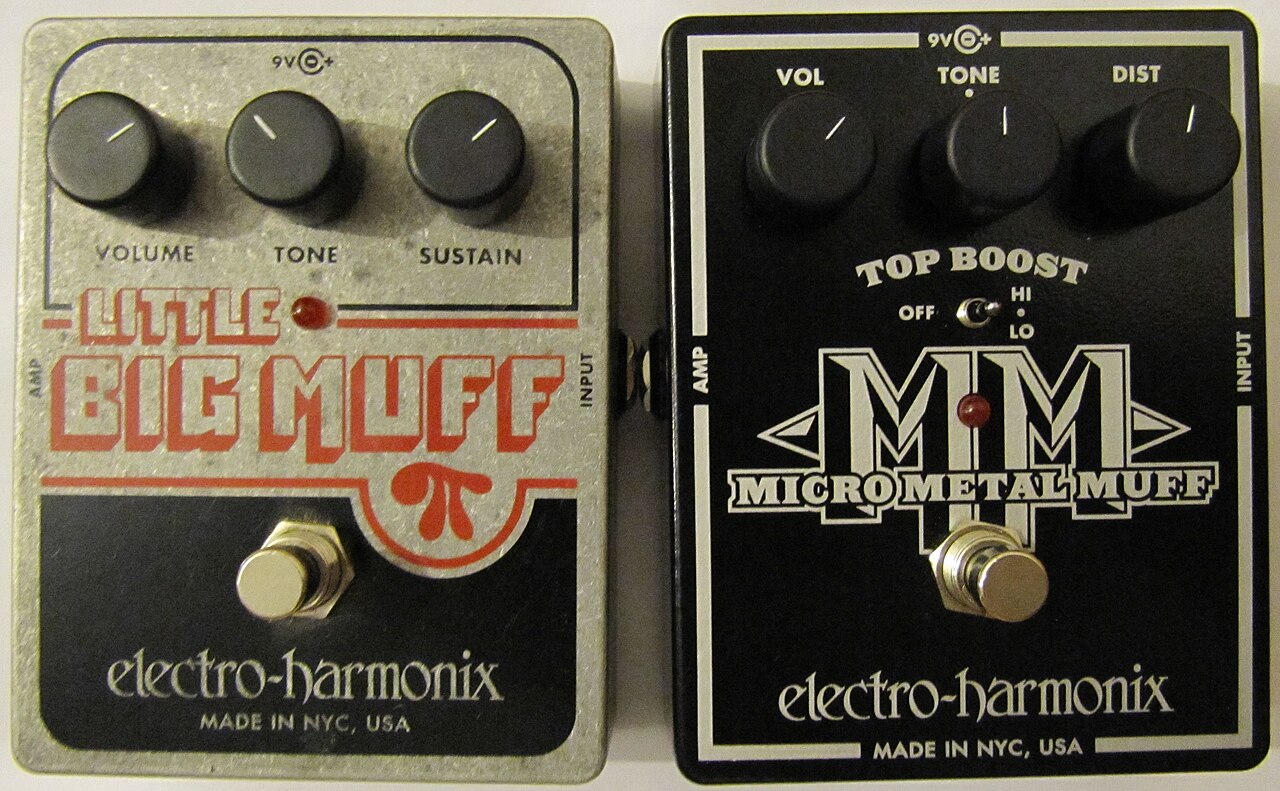
- An Electro-Harmonix Little Big Muff and a Micro Metal Muff pedal: Sky99, Wikimedia Commons, CC BY-SA 3.0.
- Mick Ronson: mickeydb, Wikimedia Commons, CC BY-SA 2.0.
- Dunlop Cry Baby GCB-95: Roadside Guitars, Flickr, CC BY-SA 2.0.
Latest News
Related
On This Day
Monday 9 November
From this week: