The $99 Secret: How JHS Cracked the Dumble Code for Every Pedalboard
The JHS 3 Series Overdrive brings Dumble-inspired boutique tone to any pedalboard at $99, made in Kansas City with three controls and a gain toggle.
There’s a certain irony buried inside the JHS 3 Series Overdrive. This plain-faced, $99 stompbox — intentionally stripped of branding flash and sold as JHS’s budget entry point — turns out to be a faithful replication of one of the most elusive and expensive boutique overdrives ever built: the discontinued HAO Rumble Mod RM-1, a handmade Japanese pedal chasing the sound of the rarest amplifiers on earth. For under a hundred dollars, you get a piece of a sonic lineage that has quietly shaped the tone of some of the most revered session guitarists and bandleaders of the last forty years. That’s the kind of thing you don’t put on the box, but it absolutely belongs in the magazine.
How the 3 Series Came to Be
JHS Pedals built its reputation on premium stompboxes: the Morning Glory, the Angry Charlie, the Bonsai, the PackRat — handcrafted in Kansas City, Missouri, with boutique components and boutique price tags to match. The problem was obvious: all that quality sat behind a financial barrier that locked out the majority of guitarists who were genuinely interested but couldn’t stretch to $199 or $249 for a single drive pedal.
Josh Scott’s solution wasn’t to outsource production to cut costs. The 3 Series, launched in 2020, stayed in the Kansas City factory with the same quality control and component standards as every other JHS pedal. What changed was everything else: the enclosure became a plain powder-coated box with minimal graphics, the feature set dropped to exactly three knobs and a single toggle switch per pedal, and the price landed at $99 across the entire line — seven pedals covering Compressor, Fuzz, Overdrive, Distortion, Chorus, Delay, and Reverb.
The simplification was radical by boutique standards, and the results were almost comically good. As Guitar Interactive’s Tom Quayle wrote in his 2020 review of the range: “Each of the 3-series pedals sounds and feels just like a regular JHS pedal — in use you’re certainly not aware that you’re playing the budget line other than the very plain look and slightly stripped-down feature set.” That’s the real story of the 3 Series: JHS decided that the expense was in the features, not in the sound, and they were right.
The HAO Rumble Mod Connection
The JHS 3 Series Overdrive is not a generic overdrive design. It is, at its circuit core, a replication of the HAO Rumble Mod RM-1 — a handmade, point-to-point wired Japanese boutique overdrive that has been discontinued for years and routinely sells on the used market for several times its original asking price when copies surface at all. HAO (a brand from the Japanese effects builder Hirase Audio Osakaworks) built the Rumble Mod to chase a specific and very particular sound: the overdrive character of an Alexander Dumble amplifier pushed by a Tube Screamer, which is itself the documented rig Robben Ford used on some of the most celebrated session recordings of the 1970s and 1980s.
The Dumble Overdrive Special is guitar mythology in amplifier form. Alexander Dumble built fewer than 300 amplifiers by hand over his lifetime, selling them only to players he personally approved of, and the waiting list was essentially a closed circle of elite session musicians and bandleaders. The amps changed hands for sums that now approach, and sometimes exceed, $100,000. What they delivered was a particular feel — a warmth and bloom in the gain structure, a touch-sensitivity and dynamic response that makes a well-dialed Dumble sound less like an overdriven amp and more like an amp that simply reflects back whatever energy you put into the strings.
The HAO Rumble Mod distilled that character into a pedal, adding buffered input and output stages for proper impedance matching. JHS’s 3 Series Overdrive takes that circuit and puts it in a $99 box made in America with genuine quality components. The heritage is real. The provenance is traceable. And at the price point, it’s one of the most significant value propositions in the current overdrive market.
Specs at a Glance
| Parameter | Spec |
|---|---|
| MSRP | $99.00 USD |
| Street Price New (2026) | ~$85–$99 |
| Street Price Used Excellent (2026) | ~$55–$75 |
| Made In | Kansas City, MO, USA |
| Year Released | 2020 |
| Production Status | Current |
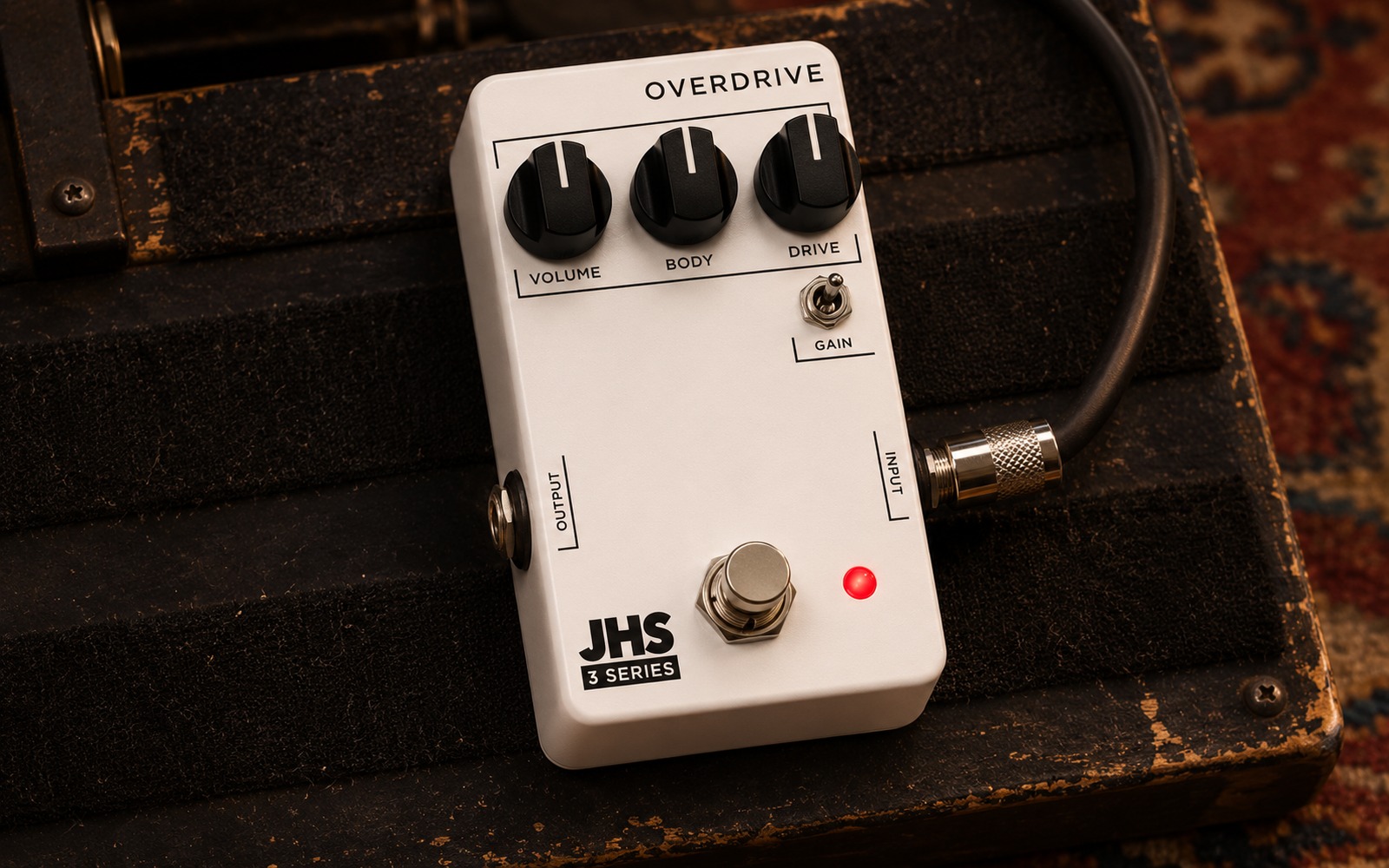
| Controls | Volume, Body (EQ), Drive + Gain Toggle |
| Gain Toggle Positions | LED Clipping (up) / Silicon Clipping (down) |
| Power | 9V DC Negative Center |
| Current Draw | 12mA |
| Dimensions | 4.42″ × 2.38″ × 1.22″ |
| Battery | No (DC adapter only) |
| Circuit Heritage | HAO Rumble Mod RM-1 (Dumble-inspired) |
Controls: Simple on the Surface, Purposeful Underneath
The three-knob layout is the 3 Series design philosophy made literal. Volume sets output level and can push higher than unity gain easily — the JHS 3 Series Overdrive has been noted by reviewers to have a robust output stage that pushes into the amp front end with authority. Drive controls gain depth in the expected way, running from a near-clean boost at minimum through to a medium-to-high overdrive at maximum. The range is more than adequate for blues, classic rock, and into southern rock and hard rock territory, though this isn’t a high-gain distortion machine — that’s what the separate 3 Series Distortion is for.
Body is the EQ control, and it behaves in a specific way that’s worth understanding before you gig with this pedal. The Body control increases both gain character and treble content simultaneously as you turn it up. At higher settings — roughly past noon — the pedal can become very bright into a clean amp with a flat EQ response. An Equipboard reviewer running it into a clean Fender Twin Reverb found everything above 9 o’clock on Body to be too bright for their taste, settling on Body at zero with Drive between 1 and 2 o’clock as their primary setting. Into an overdriven amp or a warmer-voiced combo, the Body control is considerably more forgiving and opens up the full range of the EQ sweep. The lesson: set Body carefully for your specific amp, and treat it as both a tone and a gain-character control, not a simple treble knob.
The Gain toggle is the most functionally important control on the pedal for dialing in your essential character. Toggle up engages LED clipping diodes — the same clipping type that defines the Turbo RAT V5 and certain Landgraff-style boutique designs — producing an open, less compressed response with more dynamic headroom and a slightly louder output. Toggle down engages silicon diodes: softer clipping, more compression and saturation, a slightly darker character, and less volume. The LED position is generally preferred for low-to-medium gain applications where you want dynamic pick attack to translate clearly. The silicon position rewards higher Drive settings where the additional compression and saturation smooth out the gain structure and fatten up sustained notes.
The interaction between the Gain toggle and the Drive knob is the real creative engine of this pedal. LED clipping at medium Drive gives you an open, amp-like crunch that reacts to pick attack in a way that feels alive. Silicon clipping at medium Drive is a more traditional pushed-overdrive feel with predictable, consistent output. Neither is better in absolute terms — they define two genuinely different sounds that suit different musical contexts.
Famous Players: The Sonic Lineage
In terms of independently confirmed, primary-source documented users of the JHS 3 Series Overdrive specifically, the picture is honest and modest. Equipboard lists one pro artist — Magnus Forbord — as a documented user, though no Premier Guitar rig rundown or published interview confirmation has been found to corroborate this at primary-source level. The 3 Series Overdrive is simply too new (2020), too modestly priced, and too plain-faced to attract the kind of high-visibility artist marketing that surrounds flagship JHS pedals. That’s not a weakness of the pedal — it’s a feature of the line’s deliberate positioning as a working guitarist’s tool rather than a celebrity endorsement platform.
What the pedal’s circuit heritage connects you to is considerably more interesting. The HAO Rumble Mod sonic lineage runs directly through the Dumble Overdrive Special and its most celebrated users — a circle of session guitarists whose playing defines a certain standard of musical sophistication that most players have been trying to approach for decades.
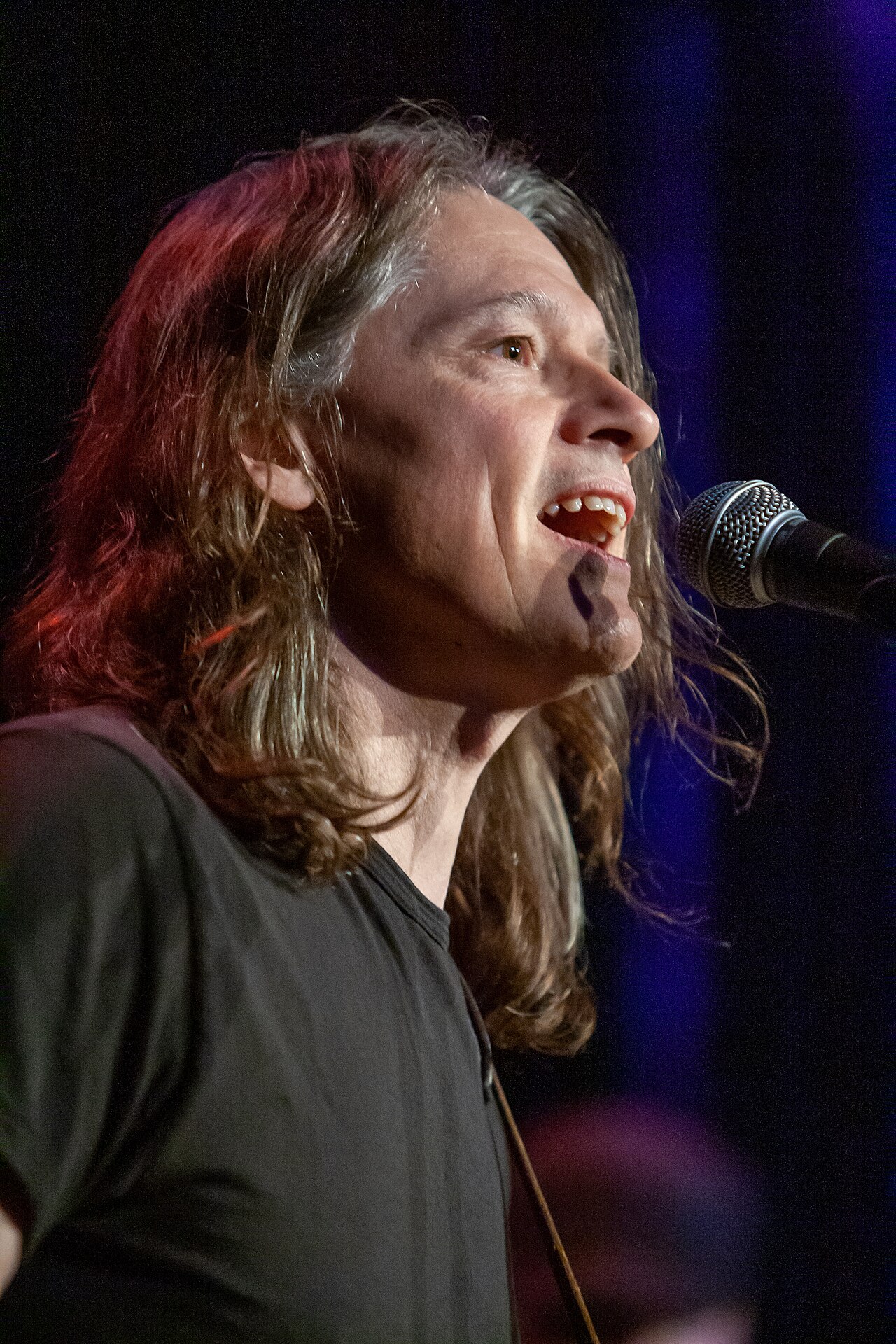
Robben Ford is ground zero for the Dumble amp mythology. His early 1970s session work, his playing with Miles Davis’s touring band, and his foundational recordings with the L.A. Express put a particular brand of warm, singing overdrive into the cultural bloodstream of guitar. Ford’s documented rig of a Dumble Overdrive Special pushed by a Tube Screamer is the specific tonal territory the HAO Rumble Mod was designed to chase — and by extension, the territory the JHS 3 Series Overdrive inhabits. Ford’s full gear history is covered in the Robben Ford Gear Guide.
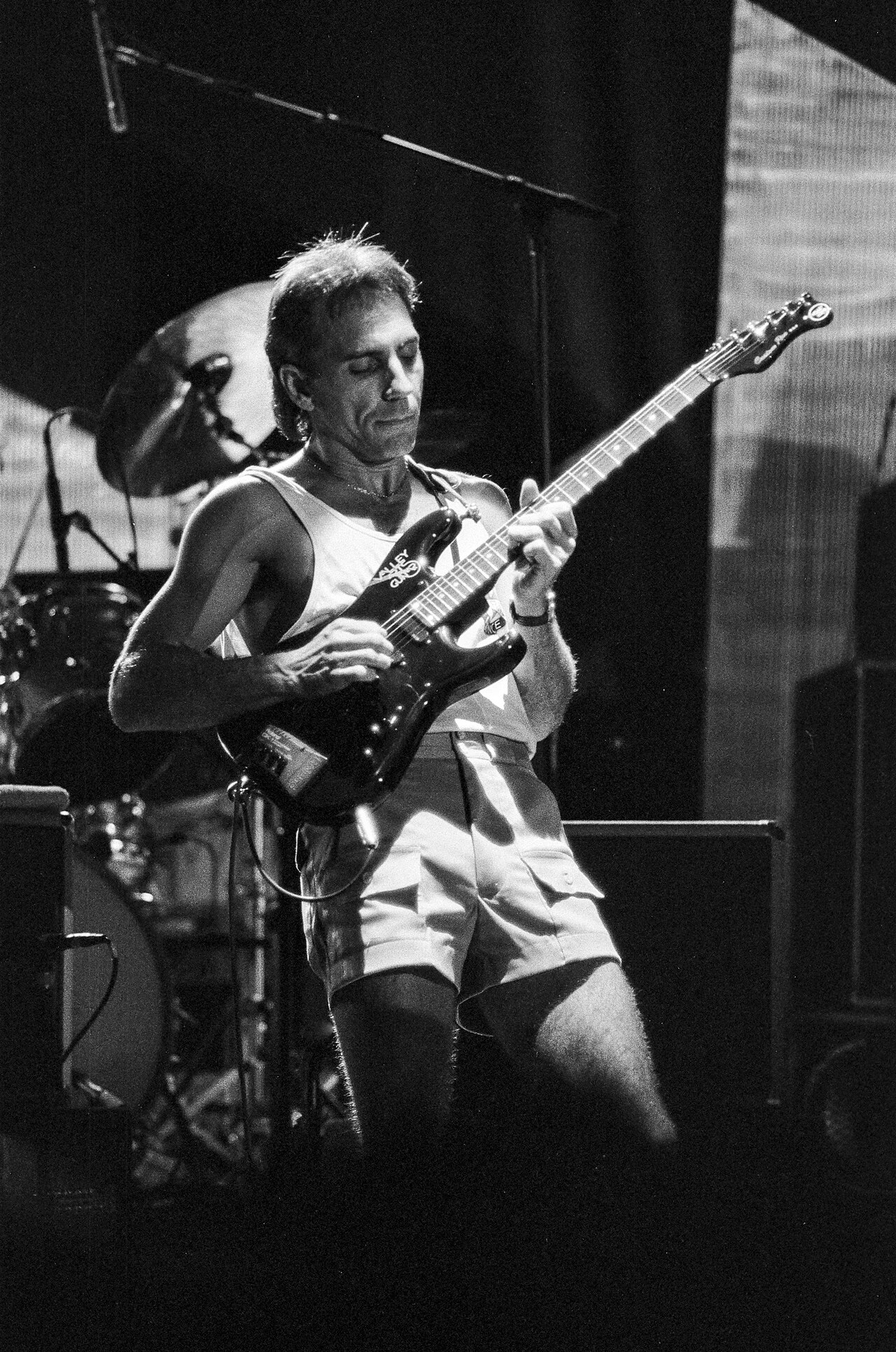
Larry Carlton — “Mr. 335” — is the other primary figure in the Dumble amp canon. His studio work throughout the 1970s and 1980s, from Steely Dan records to his own recordings on Warner Bros., defined the sound of a certain clean-into-slightly-overdriven guitar tone that has been endlessly imitated but rarely matched. Carlton’s Dumble amps and the touch-sensitivity they rewarded are central to understanding what the HAO Rumble Mod was trying to encode in a pedal circuit.
Mike Landau rounds out the Dumble inner circle as one of the most widely recorded session guitarists in history and a longtime owner of Dumble amplifiers. His guitar work on Michael Jackson records, James Taylor sessions, and countless other major label productions of the 1980s and 1990s gave the Dumble sound a commercial footprint that most listeners absorbed without knowing it. Steve Lukather of Toto, another Los Angeles session giant, operated in the same tonal universe — warm, articulate overdrive that allowed complex chord voicings to breathe and remain defined under gain.
None of these guitarists are confirmed users of the JHS 3 Series Overdrive. They define the tradition the pedal serves, and the through-line from their Dumble amps to the HAO Rumble Mod to this $99 JHS box is real and traceable. When you dial in the 3 Series Overdrive at medium Drive with Body set conservatively and the Gain toggle in LED position, you’re reaching toward the same sonic destination those players spent careers exploring in studios and arenas.
Tone Recipes and Settings
Clean Boost / Amp Enhancer
Drive: 7 o’clock (minimum). Body: 7 o’clock (minimum). Volume: 1–2 o’clock (above unity). Gain Toggle: LED (up). This configuration uses the 3 Series Overdrive as a pure signal enhancer — adding output level and a subtle harmonic warmth without adding perceptible gain. Push your amp’s front end and let its own character do the clipping work. Particularly effective with a moderately driven tube amp in the clean-to-crunch range.
Dumble-Territory Mid-Gain
Drive: 11 o’clock to noon. Body: 8–9 o’clock (conservative). Volume: 11 o’clock (near unity or slight cut to account for output boost). Gain Toggle: LED (up). This is the primary Rumble Mod reference setting — warm, open gain with clear pick attack and dynamic response to picking velocity. Back off your guitar volume to 7 and the pedal cleans up toward a gritty near-clean; max your guitar volume and sustain opens up fully. Chord voicings stay defined and don’t compress into mud.
Classic Silicon Crunch
Drive: noon to 1 o’clock. Body: 9 o’clock. Volume: noon. Gain Toggle: Silicon (down). The silicon position gives a more traditional overdrive compression that works well for rhythm playing where you want consistent, predictable saturation. String attack is softer, sustain is fuller, and the dynamic variance between picking hard and soft is tighter. This is a good setting for busy ensemble arrangements where your overdrive needs to sit in a specific volume and density window without blooming or jumping forward on hard attacks.
Stacked with a Tube Screamer
Run the JHS 3 Series Overdrive after a Tube Screamer in your signal chain (TS9 first, 3 Series second). Keep the TS9’s Drive low and Volume above unity — using it as a mid-frequency push with a gain structure that fattens the front end of the 3 Series. The 3 Series then provides the Dumble-character gain character on top. This is the historical Robben Ford approach inverted into pedal form: Tube Screamer pushing a Dumble-style front end. The combination is historically grounded and tonally coherent.
Low-Drive Grit for Blues
Drive: 9 o’clock. Body: 8 o’clock. Volume: noon to 1 o’clock. Gain Toggle: Silicon (down). A low-gain silicon configuration that produces just enough grit to add hair to single notes on a bridge pickup without losing the open, chimey quality of a good single-coil. Roll the guitar volume back to 6 for a nearly clean tone that retains the Body control’s subtle harmonic coloring. Bring it back to 10 for medium grit. This is a classic blues-register setting that works well with a Strat or Tele into a slightly compressed clean amp.
How the 3 Series Overdrive Fits the JHS Lineup
Understanding where the 3 Series Overdrive sits within JHS’s full overdrive catalog helps clarify when it’s the right choice and when you want something else.
The JHS Morning Glory V4 ($199) is the premium transparent overdrive in the JHS line — a modification of the Boss Blues Driver circuit with a distinctly British, Marshall Bluesbreaker-adjacent character. The Morning Glory is more explicitly “transparent” in the sense of passing your guitar and amp’s fundamental character through with minimal coloring, adding smooth gain without strong tonal shaping. The 3 Series Overdrive, by contrast, has a more pronounced character of its own — the Dumble voicing adds warmth and a particular mid-frequency texture that the Morning Glory intentionally avoids. If you want a utility transparent drive that disappears behind your instrument and amp, the Morning Glory is the choice. If you want a pedal with a specific sonic identity — warm, bloom-y, Rumble Mod territory — the 3 Series Overdrive is the pick, at half the price.
The JHS Angry Charlie V3 ($199) is a Marshall JCM800 voice — tighter, more aggressive, more explicitly “British distortion” than anything the 3 Series Overdrive aims for. The Angry Charlie runs hotter and harder and responds to pick attack with a more compressed, authoritative clipping character. These are different tools for different purposes; a direct comparison between them would be like comparing a Strat to a Les Paul. If you’re chasing warm American Dumble territory, the Angry Charlie is the wrong pedal. If you want the classic British rock distortion, it’s the right one.
The JHS Bonsai ($249) deserves mention here because the Tube Screamer and the Rumble Mod/Dumble circuit are historically intertwined — as described above, the Robben Ford Dumble + Tube Screamer combination is the origin story of the HAO Rumble Mod. They do not compete directly; they stack. Running the Bonsai in TS808 or TS9 mode into the 3 Series Overdrive is one of the most historically authentic stacking combinations available at any price point today.
Buying Guide: New vs. Used
The JHS 3 Series Overdrive is currently in production and widely stocked at authorized JHS retailers at $99 MSRP. Street prices new run from approximately $85 to $99 depending on the retailer, with no significant discount pressure on this price point given the already-budget positioning. Used market examples in excellent condition typically sell for $55 to $75, reflecting the accessibility of the new price; there’s no significant scarcity premium on used units since the pedal is readily available new.
The case for buying new is straightforward at this price point: a new unit comes with JHS’s warranty coverage and you’re not saving more than $25 to $40 by going used. The case for buying used is simply that it’s cheaper and the 3 Series pedals are built to JHS’s usual quality standard — they hold up well. Either way, this is a risk-free purchase at a price level where even an experiment is financially reasonable.
There are no version differences to navigate on the 3 Series Overdrive — it was released in 2020 and has not been revised since. Used units are consistent with the current spec.
Ownership Notes
At 12mA, the 3 Series Overdrive is one of the lowest-current-draw pedals in any discussion of overdrive quality at any price. A standard 100mA isolated output handles it without any concern, and the Guitar Interactive review noted that the 3 Series pedals play nicely with a simple daisy-chained power supply if needed — unusual for boutique-grade builds and practically significant for players building their first pedalboard on a tight power supply budget.
No battery compartment is included, which is consistent with the 3 Series line. This is a small inconvenience if you ever need to power the pedal away from a power supply, but at 12mA the practical impact is minimal since any 9V center-negative supply handles this with room to spare.
The Body control’s brightness at higher settings is worth building into your initial dial-in process, particularly into clean Fender-style amps. Start with Body at minimum and add carefully rather than starting at noon and backing off. The sweet spot for most clean amp applications is Body between 7 and 10 o’clock — the lower third of the knob’s range.
The 3 Series Overdrive works well with guitar volume rolloff as a dynamic technique, particularly in LED clipping mode. Rolling back to 6 or 7 gives a nearly clean tone with the pedal’s characteristic harmonic texture; bringing it back to 10 restores full drive without requiring any pedal adjustment. This is an interaction that rewards players who use their guitar’s volume knob as a live performance tool rather than a one-time setup control.
Comparisons with Competitors
At $99, the JHS 3 Series Overdrive competes against the Ibanez TS9 Tube Screamer ($109 MSRP) and the Boss BD-2 Blues Driver (~$99 MSRP) in terms of price positioning. The three pedals represent genuinely different approaches. The TS9 is mid-forward with a bass rolloff — its circuit compresses lows and pushes mids in a way that fattens single-coil notes and cuts through a band mix. The BD-2 is an asymmetric clipping design with a forward treble character and a light, splatty quality that rewards aggressive picking dynamics. The 3 Series Overdrive is the warmest and most amp-like of the three, with the least pronounced tonal coloring in the mids and bass, and the most direct analog to the Dumble warm-gain character.
The HAO Rumble Mod RM-1 that the 3 Series Overdrive is based on now sells for $300 to $500 on the used market when copies surface at all. The argument for the JHS version writes itself.
Frequently Asked Questions
What circuit is the JHS 3 Series Overdrive based on?
The JHS 3 Series Overdrive is a replication of the HAO Rumble Mod RM-1, a discontinued Japanese boutique overdrive designed to capture the tonal character of a Dumble Overdrive Special amplifier. The circuit heritage traces through the specific rig of Robben Ford — a Fender Bassman or Dumble amp pushed by a Tube Screamer — which was the inspiration for the original HAO design.
What does the Gain toggle switch do?
The Gain toggle selects between two clipping configurations. Toggle up engages LED clipping diodes: louder, more open, less compressed, with more pick-attack transient definition. Toggle down engages silicon clipping diodes: more saturated, more compressed, softer on pick attack, and slightly darker in character. LED is generally preferred for lower Drive settings where dynamic response is the priority; silicon works better at higher Drive where compression is musically useful.
Is the Body knob just a tone control?
Not exactly. The Body control increases both treble content and gain character simultaneously as you turn it up. At higher settings it can become quite bright, particularly into clean, full-range amps like a Fender Twin Reverb. Treat it as both a tonal shaping and a gain-texture control, and dial it in carefully for your specific amp. Most players find their ideal Body setting in the lower third of the knob’s range — below 9 o’clock — for clean-to-crunch applications.
How does the 3 Series Overdrive compare to the JHS Morning Glory V4?
The Morning Glory V4 is a transparent overdrive based on the Boss Blues Driver with a Marshall Bluesbreaker character. It passes your guitar and amp’s tonal identity through with minimal coloring. The 3 Series Overdrive has a more distinct sonic personality — the Dumble-influenced warmth and bloom of the HAO Rumble Mod circuit. The Morning Glory is the utility transparent drive; the 3 Series Overdrive is the character drive. The Morning Glory also costs $199 versus $99 for the 3 Series.
Can it run on a daisy-chained power supply?
At 12mA, yes. The 3 Series Overdrive has one of the lowest current draws of any quality overdrive pedal and has been documented playing well with daisy-chained power supplies. Isolated power is always the cleaner option for noise performance, but the 3 Series is notably forgiving in power supply requirements.
Is the 3 Series Overdrive true bypass?
JHS has not made an explicit true bypass or buffered bypass statement for the 3 Series line in the product documentation. JHS’s standard practice across the main line is true bypass, and the 3 Series is built to the same quality standard in the Kansas City factory. If bypass switching type is critical for your rig, confirm with JHS directly or through an authorized retailer before purchasing.
What famous guitarists use it?
No primary-source confirmed users — via Premier Guitar rig rundowns or published interviews — have been documented for the JHS 3 Series Overdrive specifically. Equipboard lists one pro artist (Magnus Forbord) as a user based on equipment documentation. The pedal’s circuit lineage connects to the sonic tradition of Robben Ford, Larry Carlton, and Mike Landau through its HAO Rumble Mod heritage, but those artists are confirmed Dumble amp users, not confirmed users of this specific pedal.
How does it stack with other pedals?
The 3 Series Overdrive stacks particularly well with a Tube Screamer in front (low Drive, boosted Volume on the TS) — the historically grounded Robben Ford approach translated into pedal form. It also works well as an always-on low-Drive foundation for a second, higher-gain drive pedal placed after it in the signal chain. Running it into a slightly overdriven amp rather than a clean amp unlocks additional gain texture and smooths the Body control’s sometimes-bright treble character.
Image credits
- Top image: GuitarGangsters AI-generated reference illustration, not a photograph.
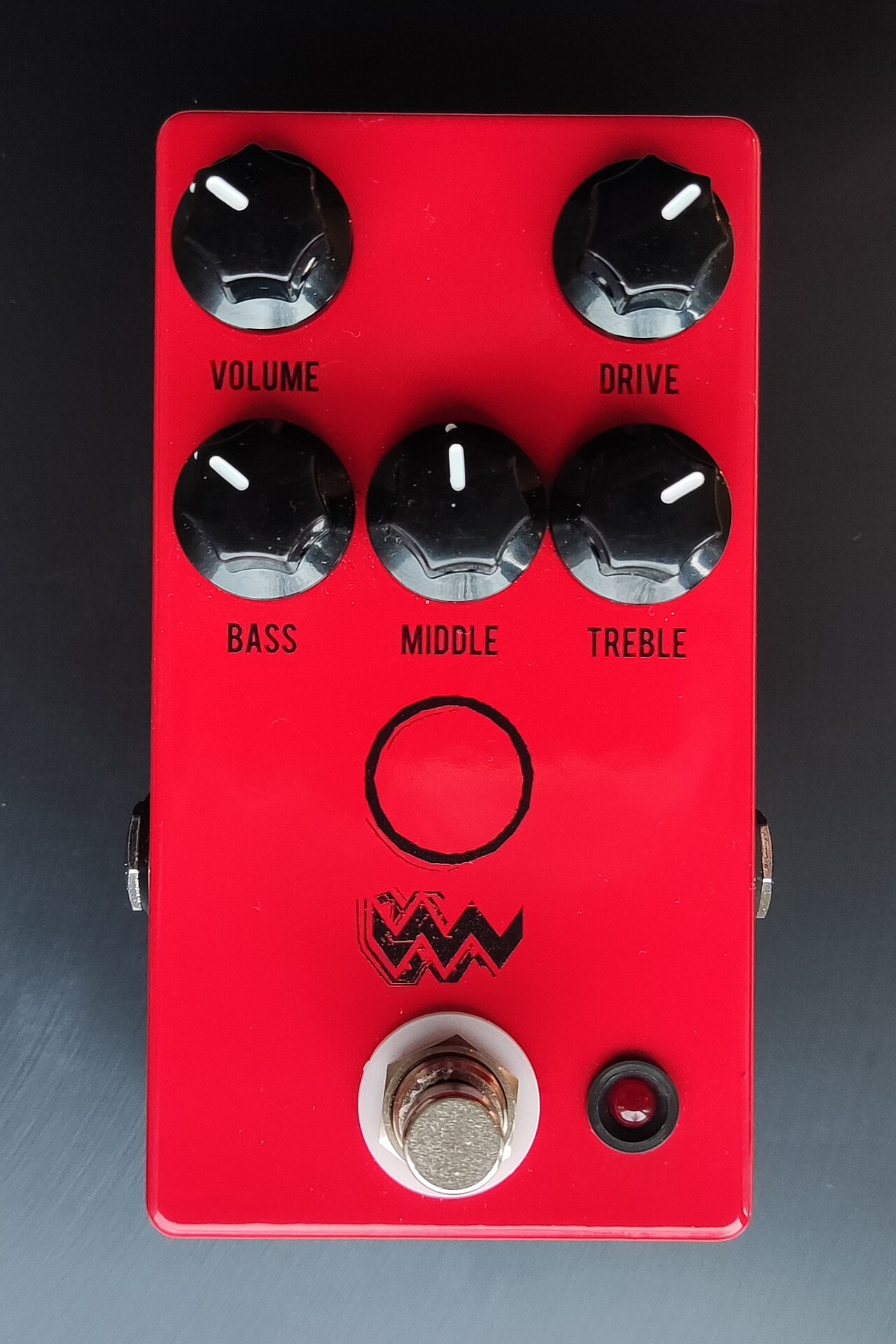
- A JHS Angry Charlie pedal: El Grafo, Wikimedia Commons, CC BY-SA 4.0.
- Larry Carlton: Kenneth C. Zirkel, Wikimedia Commons, CC BY-SA 4.0.
- Robben Ford: Eckhard Henkel, Wikimedia Commons, CC BY-SA 3.0 DE.
Latest News
Related
On This Day
Monday 9 November
From this week: