Sixty Seconds to RAT: The JHS 3 Series Distortion Puts Forty Years of Distortion History in Your Pocket for $99
The JHS 3 Series Distortion packs two RAT-inspired modes into a $99 Kansas City-built pedal. Silicon crunch or LED bite — one toggle switches it all.
The Pro Co RAT has been wrecking amps and shaping rock guitar tone since 1978. It has appeared on records by Jeff Beck, Kurt Cobain, James Hetfield, Jonny Greenwood, Thurston Moore, Nuno Bettencourt, Joe Perry, and Graham Coxon — a whose-who of players who needed a dirt box that didn’t flinch. Somewhere along the way, the RAT became one of the most copied, modded, and obsessed-over distortion circuits in guitar history.
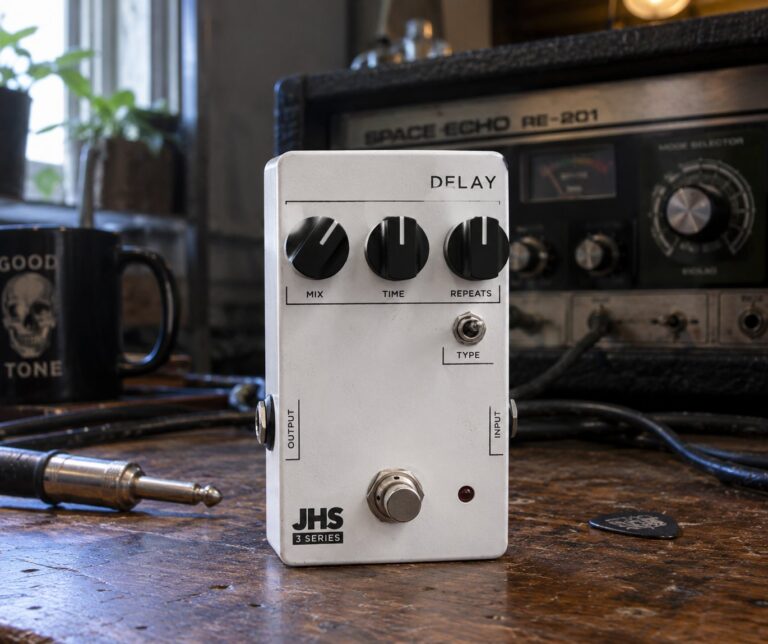
The JHS 3 Series Distortion doesn’t try to hide what it is. It’s a RAT-inspired circuit, built in Kansas City with JHS’s own manufacturing standards, trimmed to three knobs and a single toggle, and priced at $99. No special switches, no nine-position rotary, no boutique mythology. Just the circuit that made the RAT the RAT, with one meaningful choice baked in: silicon clipping for the stock sound, or LED clipping for the Turbo upgrade — both in the same compact enclosure.

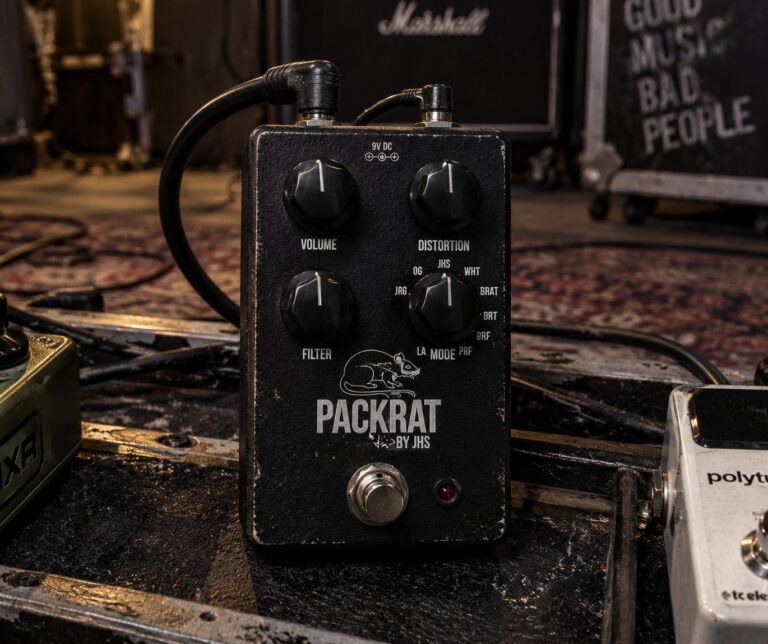
If you want all nine historical RAT variants in one box, JHS builds the PackRat for $249. The 3 Series Distortion is the answer to a different question: what if you just want to plug in and get to work?
The Circuit Behind the RAT: A Brief History of Destruction
The Pro Co RAT was designed in Kalamazoo, Michigan in the late 1970s by Steve Kiraly and Tom Schultz. Where most distortion circuits of the era used transistors or op-amps in relatively conventional ways, the RAT took a different approach: a single LM308 op-amp running at unusually high gain, with silicon diodes clipping the signal hard. The result was a distortion with a unique combination of tightness, sustain, and what players described as a kind of controlled aggression — not fuzz, not smooth overdrive, but a grinding, focused crunch that sat perfectly in a rock mix.
The Filter control was another departure. Where most pedals use a tone knob that adds treble as you turn it clockwise, the RAT’s Filter works in reverse — turning it clockwise rolls off high frequencies, making the pedal darker and smoother. Turned fully counterclockwise, the filter is wide open and the pedal can sound almost harsh in a clean amp. Turned clockwise, it thickens into a warm, compressed grind. This inverted behavior trips up players who pick up a RAT without reading the instructions.
In 1989, Pro Co introduced the Turbo RAT variant. The change was straightforward: swap the silicon clipping diodes for LEDs. LED diodes have a higher forward voltage than silicon, which means the signal clips at a higher level before distorting. The practical effect is a pedal that feels more open and touch-sensitive, compresses less, and has a brighter overall character — still recognizably a RAT, but with more headroom and dynamic range. The Turbo RAT became its own classic alongside the original.
The JHS 3 Series Distortion carries both voices in a single pedal. Gain toggle down is the silicon-clipped, compressed, original-RAT character. Gain toggle up adds the LED-clipped openness and brightness of the Turbo. One toggle, two generations of the same essential circuit.
JHS builds its 3 Series line at its Kansas City, Missouri factory — the same production facility that builds the $249 PackRat and the $199 Angry Charlie V3. The 3 Series was launched in 2020 as a deliberate simplification: seven effect types — Compressor, Chorus, Delay, Distortion, Fuzz, Overdrive, and Reverb — each reduced to three knobs and a toggle, each priced at $99. The philosophy was the same quality control and manufacturing discipline applied to a pared-down feature set. As Josh Scott described it at launch, the 3 Series celebrates the humble, simplified pedal — effective, direct, and not trying to impress you with options you’ll never use.
Specifications
| Parameter | Specification |
|---|---|
| Controls | Volume, Filter, Distort (3 knobs) + Gain Toggle |
| Gain Toggle | DOWN = Silicon clipping (stock RAT); UP = LED clipping (Turbo RAT) |
| Filter Control | Inverted — clockwise = darker (cuts highs); counterclockwise = brighter (open) |
| Power | 9V DC center negative, 9mA |
| No Battery | DC adapter required |
| Bypass | True Bypass |
| I/O | 1/4″ input, 1/4″ output |
| Dimensions | 4.42″ × 2.38″ × 1.22″ |
| Enclosure | Tough grade aluminum, removable baseplate (4-screw access) |
| Made In | Kansas City, Missouri, USA |
| Year Released | 2020 |
| Status | Current production |
| MSRP | $99 |
| Street New 2026 | ~$85–$99 |
| Street Used Excellent 2026 | ~$55–$70 |
Famous Players: The RAT Sonic Lineage
Let’s be honest upfront: no confirmed primary-source rig rundown or verified interview places a professional artist specifically on a JHS 3 Series Distortion. Equipboard shows listings but without the independent verification — Premier Guitar rig rundowns, magazine interviews, manufacturer artist pages — that would confirm primary use. The pedal launched in 2020 and the 3 Series line tends to attract working players rather than the arena-level touring artists who end up in gear documentation.
What the JHS 3 Series Distortion absolutely has is a direct lineage connection to one of the most artist-rich circuits in rock history. The following players are confirmed Pro Co RAT family users — these are the shoulders the JHS 3 Series Distortion stands on.
Jeff Beck
Jeff Beck used the Pro Co RAT in his mid-1990s touring rig, running it into a Marshall and Bassman A/B switching setup. Beck was the kind of player who didn’t care about brand loyalty — he used whatever made the sound he was hearing in his head, and the RAT gave him the compressed, aggressive edge his instrumental rock tone needed in that period. His use was documented by Guitar Player and Equipboard forum discussion.
Kurt Cobain
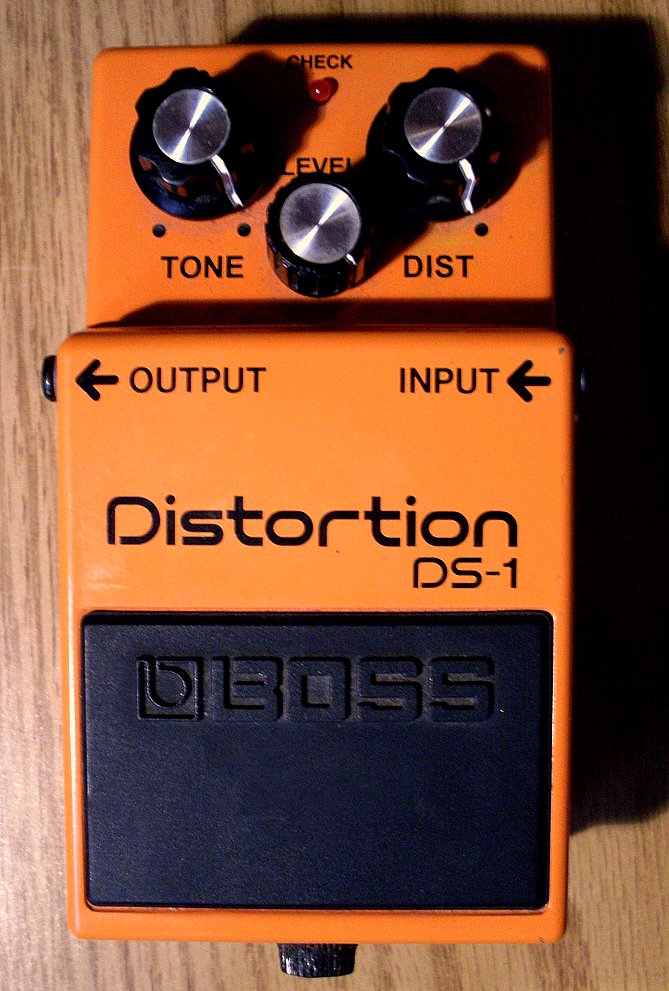
Kurt Cobain used the Pro Co RAT alongside a Boss DS-1, often running both simultaneously for layered distortion textures. For Cobain, the RAT was part of a deliberately brutal, high-gain combination — the DS-1 providing one kind of compressed grit, the RAT adding a second layer of focused destruction. Guitar Player documented his RAT use in 2022.
James Hetfield
James Hetfield ran the Pro Co RAT into a Marshall in the early years of Metallica. The RAT’s tight low-end and focused midrange worked with Hetfield’s aggressive right-hand picking technique, providing the articulation that would define thrash metal rhythm guitar. The RAT-into-Marshall combination is historically grounded for heavy music — and it’s exactly what the JHS 3 Series Distortion can replicate at a fraction of the cost of vintage or boutique versions.
Nuno Bettencourt
Nuno Bettencourt of Extreme used the Pro Co RAT in an unusual way: with the Distortion control turned all the way down and the pedal used essentially as a signal tightener and EQ shaping tool. “I tried playing without one and f***in’ hated it!” he told Guitar World. Bettencourt’s technique of using a high-gain distortion with minimal gain for low-end tightening is one of the more instructive examples of using a RAT-circuit pedal unconventionally — and it works equally well on the JHS 3 Series with the Distort knob pulled back and the Filter set conservatively.
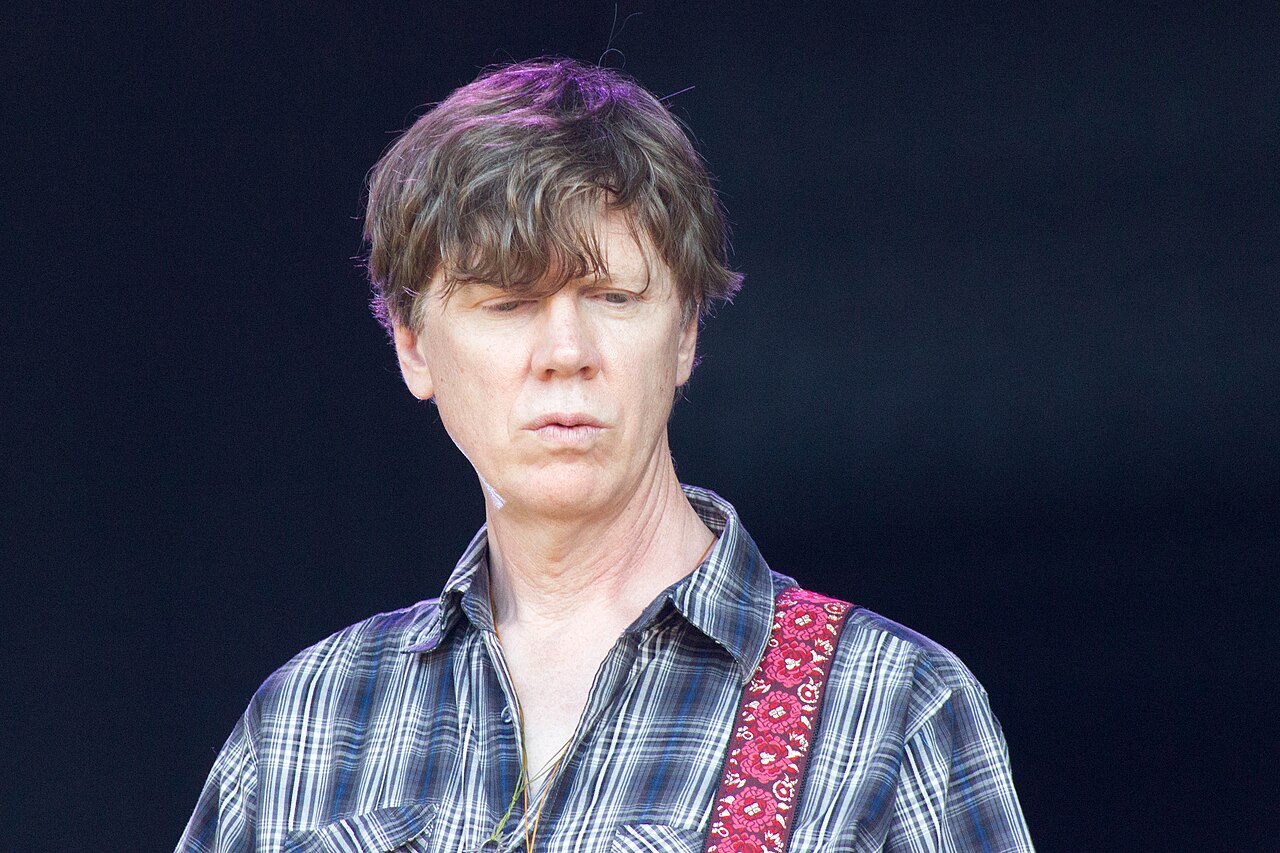
Jonny Greenwood and Thurston Moore
Jonny Greenwood of Radiohead and Thurston Moore of Sonic Youth both used Pro Co RATs as part of their guitar arsenals. For Greenwood, the RAT provided controlled aggression in an experimental context. For Moore, it was part of a broader toolkit for noise and extended technique — the RAT being one of the few pedals that could be pushed into quasi-fuzz territory while retaining enough articulation to work in compositionally complex situations.
Joe Perry
Joe Perry of Aerosmith used the Pro Co RAT as a foundation tone tool, its focused midrange working naturally with his humbucker-equipped guitars and Marshall-style amplification. Guitar Player documented his RAT use as part of the comprehensive survey of RAT-circuit users across genres.
Graham Coxon
Graham Coxon of Blur has the closest documented connection to JHS’s version of the RAT — he had a JHS mod applied to his Pro Co RAT2, per Guitar World documentation. That mod is directly related to the JHS Mode in the PackRat. The JHS 3 Series Distortion draws from the same circuit tradition, making Coxon’s use one of the more relevant historical data points for this specific pedal manufacturer’s approach to the RAT circuit.
Tone Recipes and Settings
The One Thing You Must Know First: The Filter Control Is Inverted
Before anything else, internalize this: the Filter control on the JHS 3 Series Distortion works opposite to what you expect from a standard tone knob. Turn it clockwise and the pedal gets darker. Turn it counterclockwise and the pedal opens up and gets brighter — potentially harsh in a clean amp at extreme positions. This matches the Pro Co RAT’s original Filter behavior, and it’s the number-one source of confusion for players trying the pedal for the first time. Set the Filter at noon as a starting point, not counterclockwise for “brightest.”
Classic Crunch (Gain Toggle Down — Silicon Mode)
Start with Gain toggle DOWN (silicon clipping, stock RAT character). Set Distort at 9 o’clock, Volume at unity or slightly above, Filter at 10-11 o’clock (slightly open). This gives a compressed, medium-gain crunch that works with single-coils and humbuckers alike. Add more Distort for heavier saturation; pull the Filter clockwise slightly if it feels harsh in your amp. This is the classic RAT voice — controlled, focused, sitting in a band mix without overwhelming the frequency spectrum.
Turbo Lead Tone (Gain Toggle Up — LED Mode)
With Gain toggle UP (LED clipping), the pedal opens up significantly. The compression backs off, the attack becomes more pronounced, and there’s a notable brightness to the top end. Set Distort at noon, Filter at 9-10 o’clock (slightly darker to compensate for the added brightness), Volume at unity. This mode responds better to guitar volume rolloff — backing the guitar volume from 10 to 7 or 8 cleans up the LED mode meaningfully, giving you a natural overdrive that retains articulation. Use LED mode for solos, cleaner single-note passages, or anywhere you want the pedal to feel more amp-like.
Heavy Rhythm (James Hetfield Approach)
Gain toggle DOWN, Distort at 1-2 o’clock, Filter at noon, Volume matched to your clean amp level or slightly above for presence. This pushes the silicon clipping into high-gain territory while the Filter at noon maintains enough midrange presence for rhythm guitar to cut. Into a slightly cranked Marshall-style amp, this becomes genuinely heavy — the RAT circuit’s inherent midrange focus working with amp harmonic content rather than fighting it.
Tight Signal Shaper (Nuno Bettencourt Approach)
Distort at 7-8 o’clock (barely engaged), Filter at 11 o’clock, Volume above unity. Both toggle positions work here — silicon for a tighter, darker shaping effect; LED for a slightly brighter, more present boost. This technique uses the JHS 3 Series Distortion less as a distortion and more as an EQ and dynamic shaping tool, tightening the low-end and adding presence without dramatically changing the amplifier’s fundamental character. Useful before a relatively clean amp when you want more authority from the guitar without pushing into actual distortion territory.
Stacking Into Another Drive
The JHS 3 Series Distortion stacks well in two primary configurations. Running a JHS 3 Series Overdrive before it (Drive low, Volume boosted) produces a mid-forward overdrive hitting the distortion’s front end — a simplified version of the Tube Screamer-into-Marshall stack that defined 1980s arena rock lead tones. Alternatively, placing the distortion before a light overdrive or amp-in-a-box like the JHS Charlie Brown V4 produces a distortion-into-amp sound that mimics a player pushing a hot amp into saturation — less frequency shaping, more raw gain stacking.
JHS 3 Series Distortion vs the Competition
vs Pro Co RAT2 (~$100 street new)
The Pro Co RAT2 is the current production version of the original circuit, still using a standard Filter control and silicon diode clipping. It has the LM308 or equivalent op-amp depending on production run, and costs similar money on the street. The JHS 3 Series Distortion adds the LED clipping toggle (giving the Turbo RAT mode), builds to JHS’s manufacturing standards, and uses a slightly different Filter pot taper. The practical difference is minimal in silicon mode — both are fundamentally the same circuit. The toggle is the upgrade the JHS version offers. If you want a dead-stock Pro Co RAT, buy the RAT2. If you want both silicon and LED modes in one box at similar money, the JHS 3 Series makes sense.
vs Boss DS-1 (~$60 street new)
The Boss DS-1 is a different circuit entirely — JFET input, different gain topology, different clipping architecture — and has a different character. The DS-1 sounds slightly more abrasive and less controlled than the RAT-circuit JHS 3 Series; the RAT tends to be tighter in the low-mids and more sustain-forward. The DS-1 is $40 cheaper and runs on battery or 9V. For players choosing between these two: the DS-1 for more aggressive, punky gain with Strat-style guitars; the JHS 3 Series Distortion for more controlled, sustain-heavy crunch with humbuckers or into a Marshall-style amp.
vs JHS PackRat ($249 MSRP)
The JHS PackRat costs $150 more and gives you nine individually researched historical RAT variants — from the original 1979 OG through the Turbo, BRAT, Dirty (germanium), LA Metal, Landgraff MO’D, Caroline Wave Cannon, and JHS’s own Strong Mod. The PackRat is the pedal for players who want to study the RAT’s history, need multiple distinct voices, or specifically want the boutique-clone modes. The 3 Series Distortion is for players who want a RAT that works tonight without thinking about nine positions or rotary clicks. Same factory, same quality bar, radically different scope. If you’re not sure which RAT voice you want, the PackRat lets you find it. If you already know you want stock or Turbo, the 3 Series Distortion saves you $150.
vs JHS Angry Charlie V3 ($199 MSRP)
The Angry Charlie V3 is a Marshall JCM800-voiced circuit — a completely different architecture designed to sound like a cranked British amplifier. The 3 Series Distortion is RAT-voiced — American design, different op-amp gain structure, different frequency profile. The Angry Charlie has significantly more tonal shaping with its three-band EQ; the 3 Series Distortion is simpler and more focused. Cost difference is $100. Choose the Angry Charlie if you want Marshall tone specifically; choose the 3 Series Distortion if you want the RAT’s tighter, more scooped midrange character.
Buying Guide
The JHS 3 Series Distortion is current production and readily available at authorized JHS dealers including Sweetwater, B&H, Guitar Center, and direct from JHS. Street price new is typically $85–$99, often at the full $99 MSRP. Used market on Reverb shows excellent-condition units moving in the $55–$70 range, which is remarkably close to the new price given how recently the pedal launched.
The pedal ships without a power supply. You need a 9V DC center-negative adapter — any standard 100mA or higher isolated output will comfortably handle the 9mA draw. Because 9mA is one of the lowest current draws of any quality distortion, the JHS 3 Series Distortion is one of the most power-supply-friendly high-gain pedals available. It runs on any isolated 9V output without concern, including daisy-chained supplies with other low-draw pedals.
There are no versions or variants to navigate in the used market — the 3 Series Distortion has been produced in a single form since 2020. All-white enclosure, three silver knobs, white toggle. The enclosure uses a removable baseplate via four screws, which allows access to the PCB if needed. Identification is straightforward: if it says “3 SERIES DISTORTION” in JHS’s clean sans-serif typography, it’s the correct pedal.
Ownership Notes
The first practical note: there is no battery compartment. The 3 Series Distortion requires a DC adapter at all times, which is standard for JHS’s main line but worth knowing before the first rehearsal.
The second practical note: the Filter control’s inverted behavior is not a flaw or quirk — it’s the authentic RAT behavior preserved. But it does mean that your intuition about tone knob direction doesn’t apply here. When you’re dialing in the pedal for the first time, start with the Filter at 11-12 o’clock and adjust from there, rather than using the standard “counterclockwise for warm, clockwise for bright” assumption.
The Gain toggle functions differently from the similar toggle on the JHS 3 Series Overdrive. On the Overdrive, the toggle selects between LED and silicon clipping, with LED being the more open and louder position. On the Distortion, the same physical behavior (toggle UP = brighter/louder/more open) applies, but the context is RAT-circuit operation rather than Dumble/HAO Rumble Mod operation. Both pedals use the clipping toggle as the primary character switch between a compressed, darker voice and an open, brighter one — but the underlying circuits are completely different.
At 9mA, the JHS 3 Series Distortion is exceptionally kind to power supplies. It draws less current than many op-amp overdrive pedals and far less than digital effects. If your board is power-supply-constrained, the 3 Series Distortion is one of the few distortion pedals you can fit into a tight current budget without making compromises elsewhere.
True bypass means there’s no buffer in the signal path when the pedal is bypassed. This is relevant for longer cable runs: if you’re running significant cable lengths before the pedal, you’ll want a buffer somewhere earlier in your chain (a Boss-style pedal left in bypass, a dedicated buffer, or a powered tuner) to preserve high-end clarity. For typical rehearsal and club setups, true bypass at this position in a signal chain is not a problem.
Guitar volume rolloff behavior is notably different between the two modes. In silicon mode (toggle DOWN), the pedal behaves predictably — rolling back the guitar volume cleans up the gain in a linear, compressed way. In LED mode (toggle UP), the higher clipping threshold means guitar volume rolloff produces a more amp-like response with a cleaner, more articulate transition from light grit to near-clean. Players who use guitar volume as a dynamic control will find LED mode significantly more expressive.
Frequently Asked Questions
Is the JHS 3 Series Distortion actually a Pro Co RAT clone?
It’s RAT-inspired and RAT-circuit in character, with confirmed silicon and LED clipping modes that directly correspond to the original RAT and Turbo RAT. JHS makes slight component differences — notably using an anti-log-taper 100K potentiometer for the Filter control instead of the RAT’s standard log-taper, which affects the midrange frequency response in the sweep but not the overall character. It’s close enough to be accurately described as a RAT-family pedal, built to JHS’s manufacturing standards.
What’s the difference between Gain toggle DOWN and Gain toggle UP?
Toggle DOWN = silicon diode clipping. More compressed, more saturated, darker character, softer attack. This is the stock RAT voice. Toggle UP = LED diode clipping. Less compressed, more open, brighter top end, more touch-sensitive attack. This is the Turbo RAT voice. LED mode is louder at the same Volume knob position — compensate by pulling the Volume down slightly when switching modes.
Why does the Filter control get darker when I turn it clockwise?
Because the Filter control on a RAT-circuit pedal is an inverted high-frequency roll-off, not a standard tone control. Turning it clockwise increases the low-pass filtering, cutting more of the high frequencies. This is authentic RAT behavior dating back to the original 1978/1979 circuit. The JHS 3 Series Distortion preserves this behavior faithfully. Once you internalize the inverse relationship, the Filter becomes a very intuitive control — it’s effectively a “brightness” knob where counterclockwise means more bright.
Does the JHS 3 Series Distortion need an isolated power supply?
At 9mA, it can technically work on a daisy-chain supply alongside other low-draw analog pedals. There is no internal charge pump or digital processing that would introduce noise through a shared power connection. For best results, an isolated 9V output is still recommended, but the 3 Series Distortion is one of the more daisy-chain-compatible quality distortion pedals available. Any standard 9V 100mA output — isolated or not — will handle it comfortably.
How does the 3 Series Distortion compare to the JHS PackRat if I already own one?
The PackRat’s silicon mode (OG v1 or White Face v3) and LED mode (Turbo v5) correspond roughly to the two modes in the 3 Series Distortion. If you already own a PackRat, you don’t need the 3 Series Distortion — they share the same essential voices. The 3 Series is for players who don’t own a PackRat and want the two most useful RAT voices without the nine-mode complexity or the $249 price tag.
Can I use the JHS 3 Series Distortion for metal?
The RAT circuit has legitimate metal credentials — James Hetfield used the Pro Co RAT in early Metallica. In silicon mode with the Distort at 2 o’clock or higher and the Filter at noon, the JHS 3 Series Distortion generates serious gain with focused, aggressive midrange. It won’t match the tight, modern low-end response of a high-gain amp-sim or a purpose-built metal distortion, but for classic metal and hard rock — thrash, power metal, 1980s heavy — the RAT circuit is historically grounded and the JHS 3 Series delivers it accurately. For modern djent or extreme down-tuned metal, look elsewhere.
Does the JHS 3 Series Distortion work well with humbuckers?
Very well. Humbuckers’ inherently warmer, fuller output works naturally with the RAT circuit, whose midrange focus and tight low-end complement the humbucker frequency profile. Into a Marshall-style amp in silicon mode with Distort at noon and Filter at 11 o’clock, the combination of humbucker guitar and RAT distortion is sonically grounded in forty years of rock history. Humbuckers also respond cleanly in LED mode — the extra headroom from the LED clipping means the pedal doesn’t compress the humbucker’s natural dynamics the way silicon mode does.
Is the JHS 3 Series Distortion worth buying if I can get a Pro Co RAT2 for the same price?
The deciding factor is the Gain toggle. If you want a dead-stock, historically accurate Pro Co RAT experience, buy the RAT2 — it’s the real thing and it costs similar money. If you want both silicon and LED modes in a single compact enclosure, built in Kansas City with JHS’s quality control, the 3 Series Distortion offers genuine additional value at the same price point. The JHS version is not a superior distortion to the RAT2 in either individual mode — it’s a convenient consolidation of both modes in one package, with JHS’s manufacturing pedigree applied to an accessible price point.
Image credits
- Thurston Moore: Bene Riobó, Wikimedia Commons, CC BY-SA 4.0.
- Nuno Bettencourt: SebastyneNet, Wikimedia Commons, CC BY-SA 4.0.
- Boss DS-1 Distortion: Roadside Guitars, Flickr, CC BY-SA 2.0.
Latest News
Related

On This Day
Monday 9 November
From this week: