Walrus Audio Slärp: The Sold-Out CME Exclusive That Bolted a Slö to an ARP-87
Walrus Audio Slärp guide: the sold-out CME exclusive combining Slö reverb and ARP-87 delay. Specs, hidden routing, settings, prices and honest buying advice.
Chicago Music Exchange announced this pedal with the word “Gesundheit!” and they were not wrong to. Say it out loud — slärp — and it lands somewhere between a sneeze and a slurp, which is presumably why CME’s own launch copy opened with “Bless you!” and closed with “Say it with us now: SLÄRP it to me, baby!” It is one of the few pedal names in the boutique era that is genuinely funny on purpose.
Underneath the joke is a much more interesting object. The Slärp is a Walrus Audio Slö Multi Texture Reverb and a Walrus Audio ARP-87 Multi-Function Delay bolted into one double-wide enclosure, sold only through one shop in Chicago, in strictly limited numbers, and now gone. No Walrus product page survives for it. No manual was ever written for it. Premier Guitar, Guitar World, MusicRadar and Guitar.com never reviewed it — not once, not in either of its two production runs. Equipboard’s page for it lists zero artists, zero reviews and zero ratings, and then confidently states four specifications that are wrong.
What it does have is a small, devoted owner base who all say roughly the same thing: this is the best-sounding piece of Walrus Audio hardware most people have never seen. Here is what it actually is, what it actually costs, and the one design decision inside it that even the manufacturer forgot to document.
A Sneeze, a Portmanteau, and a Shop in Chicago
Walrus Audio’s Swedish-adjacent naming streak is real. Slö is an actual Swedish word, and Walrus leaned on it deliberately — their own copy notes that calling someone slö “may be considered an insult to some,” carrying the sense of sleepy, drowsy and lazy. The Slötvå that followed is literally “Slö two”; the Slöer is a comparative form.
Slärp is not a Swedish word at all. It is a portmanteau — Slö plus ARP, with an umlaut welded on for family resemblance — and nobody in Stockholm would recognise it. That matters only because plenty of secondary listings file it as another entry in the Scandinavian sleep-vocabulary series. It isn’t: it is a mash-up name for a mash-up pedal, and the sneeze is a happy accident CME milked for all it was worth.
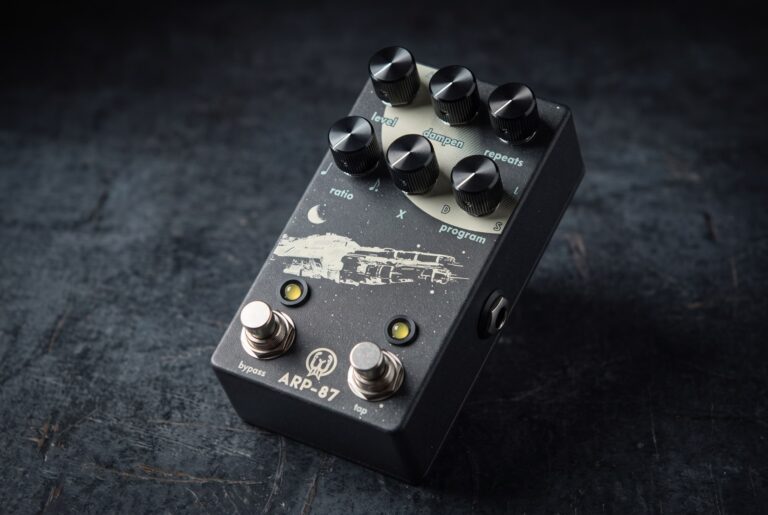
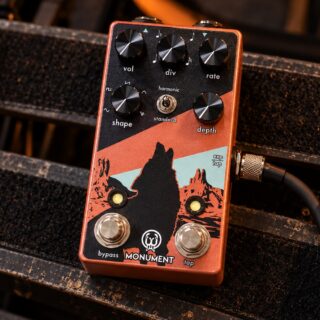
The ARP half of the name is astronomical, not Swedish. Walrus’s original ARP-87 press material described its artwork as “a lone ship lost in the Arp Galaxy” — a reference to Halton Arp’s catalogue of peculiar galaxies. The Slärp got its own CME-exclusive graphic instead of either parent pedal’s artwork: Synth Anatomy, one of the only outlets ever to have a Slärp in hand, described it as carrying a “space explorer” and called it “even more exciting in appearance” than the standard Slö.
Two Runs, Two Prices, and a Confusing Paper Trail
Run one: the “Slö + ARP-87 Combo,” late 2020, $349
The first version was not called Slärp. It was listed by CME under the flatly descriptive name “Walrus Audio Slö + ARP-87 Combo Reverb/Delay Pedal,” carried the SKU 900-1055CME, and sold as a pre-order at $349.00. A ModularGrid entry for the pedal was submitted on 11 October 2020 listing that same $349 figure, and a long-sold Reverb listing titled “Walrus Audio SLARP – Slö + Arp-87 Combo Limited Edition!” is timestamped roughly six years old, which puts it in the same window. It sold out.
Run two: the “SLÄRP,” 2021–22, $259
The second run is the one people remember. CME rebranded it SLÄRP, gave it the sneeze-joke marketing campaign, and dropped the price to $259.00 under a new SKU, 900-1060CME. CME’s launch blog photography carries filenames beginning 051821, dating that campaign’s asset creation to 18 May 2021 — although, amusingly, those same filenames still contain the run-one SKU 900-1055CME, which suggests CME reused the original shoot. Europe got the pedal considerably later: Belgian distributor FACE announced Slärp availability in the EU on 16 May 2022. Both CME listings now read “Sold out,” with a “Notify Me When Available” button that has been decorative for years.
So: a $90 price cut between runs for what is, as far as any source shows, the same circuit in the same box. If someone tells you the Slärp “listed at $349,” they are describing run one. If someone tells you it “listed at $259,” they are describing run two. Both are correct.
The “100 units” number, and why to treat it carefully
Russo Music’s description calls it plainly “a limited run pedal.” CME never published a quantity. The only hard number anywhere comes from Norwegian dealer DLX Music, whose listing states the Slärp was “strengt begrenset til 100 stk. i Europa” — strictly limited to 100 units in Europe. Juno Records in the UK echoed the same figure.
Read that carefully: it is a European allocation, not a global production total. No source states how many Slärps were built in total, or how many CME received across the two runs. If you see “only 100 ever made” in a resale listing, that is a misreading of a regional distributor’s stock note. The honest position is that the total is unknown and small.
Walrus Audio Slärp Specifications
Two entries in that table deserve flagging because they are the most commonly misreported facts about this pedal. It has four footswitches, not two — confirmed both by Synth Anatomy’s hands-on time with the unit and by an owner review complaining specifically about the spacing between all four. And it is buffered, not true bypass. Russo Music’s spec sheet says “Buffered Bypass” in plain text, Walrus’s own copy calls it “smart bypass switching,” and the pedal has a Trails mode — which is the tell, because trails require the signal to keep passing through the circuit after you disengage it, something a true-bypass switch physically cannot do. Any listing claiming true bypass on a pedal with trails is wrong, and Equipboard’s Slärp FAQ makes exactly that claim.
The Left Half: What the Slö Brings
The reverb side is a complete Slö, not a reduced version of one. Five knobs — Decay, Filter, Mix on the top row, X and Depth beneath — plus the three-way algorithm toggle, a Bypass switch and the Sustain switch. Nothing was cut.
Dark feeds a pitch-shifted lower octave into the reverb, with X setting how much arrives — a usable everyday reverb at minimum, what Guitarist’s Trevor Curwen called “a unison guitar/bass sound with ambience” in the middle, and “weighty and doom-laden” maxed. Rise is a swell mode where X sets the swell time, delaying the note attack in the manner of the old Boss SG-1 Slow Gear. Dream is the party trick: hit the Sustain switch and the current wash latches indefinitely while you play over the top of it, with X controlling the vibrato depth on the held trail.
There is a layer beneath that. The modulation on the reverb trail has three selectable wave shapes — Sine, Warp and Sink — reached by holding Bypass and moving the algorithm toggle, while holding Bypass and turning Depth sets the modulation rate. Both are stored per algorithm, so Dark, Rise and Dream each keep their own. On a pedal with no presets that is the closest thing to a saved state you get, and almost no Slärp owner knows it is there — they never received a manual that explained it in the context of this enclosure.
The Right Half: What the ARP-87 Brings
The delay side is likewise a complete ARP-87: Level, Dampen, Repeats, Ratio, X and Program, plus Bypass and Tap footswitches and the external tap jack. Maximum delay time is 1000 ms — an architectural ceiling imposed by the FV-1 chip, not an arbitrary choice.
Four algorithms, and a fifth one Walrus didn’t mention
Digital gives pristine, crystal-clear repeats. Analog adds warmth and dimension without crowding the dry signal. Lo-Fi runs from warm and warped to what Walrus’s own copy calls “strait AM radio,” with the X knob becoming a filter-width control rather than modulation depth. Slap does slapback, and does it well enough that one reviewer specifically recommended it for vocals.
Then there is the fifth mode. Lock the Program knob fully left, hold Tap, and sweep Program fully right, and you land in an undocumented tremolo-delay hybrid hiding inside Slap mode. Guitar.com memorably called it a “stompbox Konami code.” Slärp owners found it too — one Reverb reviewer’s first substantive observation about the pedal was “The ARP-87 has 5 programs (one hidden: nice tremolo delay).” If you buy a Slärp and nobody tells you about it, you will never find it by accident.
The workflow problem to know about before buying
The ARP-87 has no delay time knob. Time is set exclusively by tap tempo, with Ratio acting as a tempo multiplier — it only sets time directly in Slap mode. Two consequences follow, both of them real owner complaints rather than reviewer nitpicks: changing algorithm loads a new program and wipes the tempo, which Walrus documents themselves, and there is no tempo memory across power cycles. Standalone ARP-87 owners have also been vocal about the tap switch occasionally needing several hits to register, which on a pedal with no time knob is not a small thing. Slärp owners call it manageable — but walk in knowing. If you want a delay you set with a knob and forget, buy an MXR Carbon Copy and be happy.
The Routing Trick Nobody Wrote Down
This is the most interesting thing about the Slärp and the single reason it is more than a shelf-space convenience.
The two halves each have their own input and their own output. They are joined internally, so a single cable in and a single cable out gets you both effects in series, exactly as you would expect from a combo pedal. But because both pairs of jacks are physically exposed, you can also break that internal path — Synth Anatomy confirmed it directly, noting that “the independent test is possible because both pedals are freely accessible. They are internally linked, but you can break the signal path by assigning the input and output cables to a single pedal.”
That gives you three configurations from one enclosure. Run either effect entirely on its own. Run them in series as shipped. Or — and this is the good one — patch other pedals between the reverb and the delay, or use an extra cable to reverse the order of the two effects. Russo Music’s listing spells it out: “Two separate pedals that you can run alone, in series, or with an extra cable and some special routing you can change the order of the pedals.” CME’s quick-spec sheet advertised it as “versatile input/output allows for addition of pedals in between reverb and delay.”
Reverb-into-delay and delay-into-reverb are genuinely different sounds. Delay first, reverb second is the conventional order and produces a coherent wash. Reverb first, delay second smears the reverb tail itself into rhythmic repeats — the sound that a lot of ambient players chase and most compact multi-effects will not let them build. The Slärp does it with one extra patch cable.
And here is the part that says everything about this pedal’s obscurity: no manual explains any of it. A Slärp shipped with the standard Slö booklet and the standard ARP-87 booklet, neither of which mentions the other pedal. One owner’s summary, preserved in a Reddit thread, is that each effect “has its own In and Out, connected internally, simplifying setup but lacking a manual to explain this feature.” The Slärp’s best feature was undocumented for its entire commercial life.
Famous Players: The Honest Answer Is Nobody
We are going to be direct, because the alternative is the kind of invented roster that circulates around obscure pedals. There is no documented professional player of a Walrus Audio Slärp. None. We checked Equipboard, RigShare, Premier Guitar’s entire Rig Rundown archive, ModularGrid’s public boards and Reverb, and the result is a clean negative.
Equipboard’s Slärp page renders no artist section at all — not an empty one, none — alongside zero reviews, zero ratings, zero wishlists and exactly one community setup belonging to a hobbyist user. RigShare has zero rigs and zero comments. ModularGrid shows the pedal in ten pedalboards, four of them public, all anonymous. Premier Guitar has covered the Slö, the Slötvå, the Slöer, the ARP-87, the Lore, the Highpoint and the Polychrome — and has never mentioned the Slärp in any form.
Equipboard does publish a “Genre usage” block for the pedal claiming Rock 3, Alternative Rock 2, Pop 2 and single hits in Metal, Electronic, Jazz, Indie Rock, Punk and Folk — introduced with the words “based on how artists on Equipboard use this gear.” The page has no artists. Those numbers cannot be derived from anything, and they are a good illustration of why aggregator data on rare gear should be treated as decoration.
The Mateus Asato near-miss, which is as close as it gets
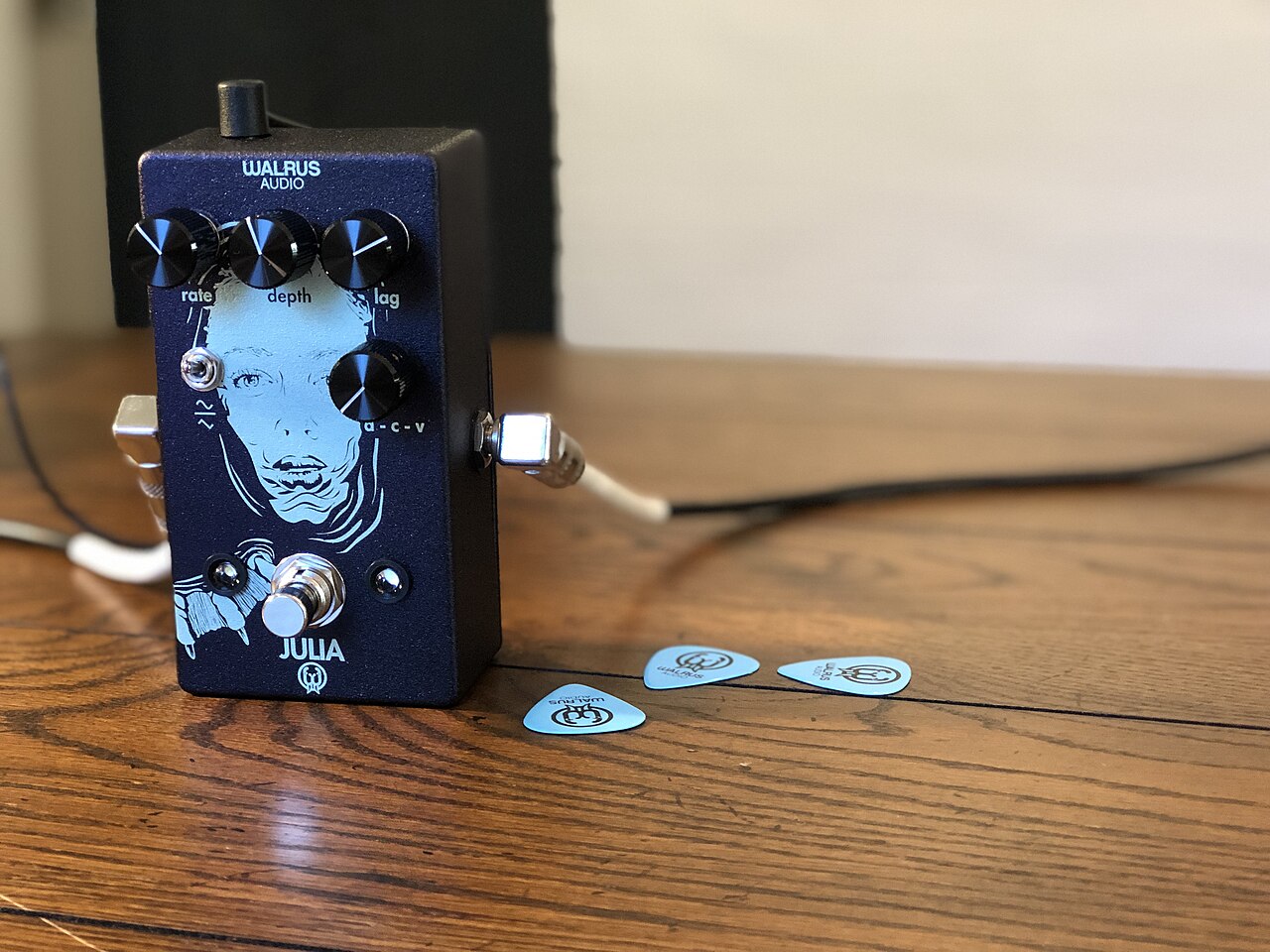
There is exactly one player whose rig comes close, and the distinction is worth drawing precisely because it is the kind of thing that gets flattened into a false claim. Mateus Asato is documented — in his own filmed pedalboard walkthrough — running a Walrus ARP-87, a Walrus Slö and a Walrus Julia in the same chain. That is the Slärp’s exact recipe, assembled from separate boxes.
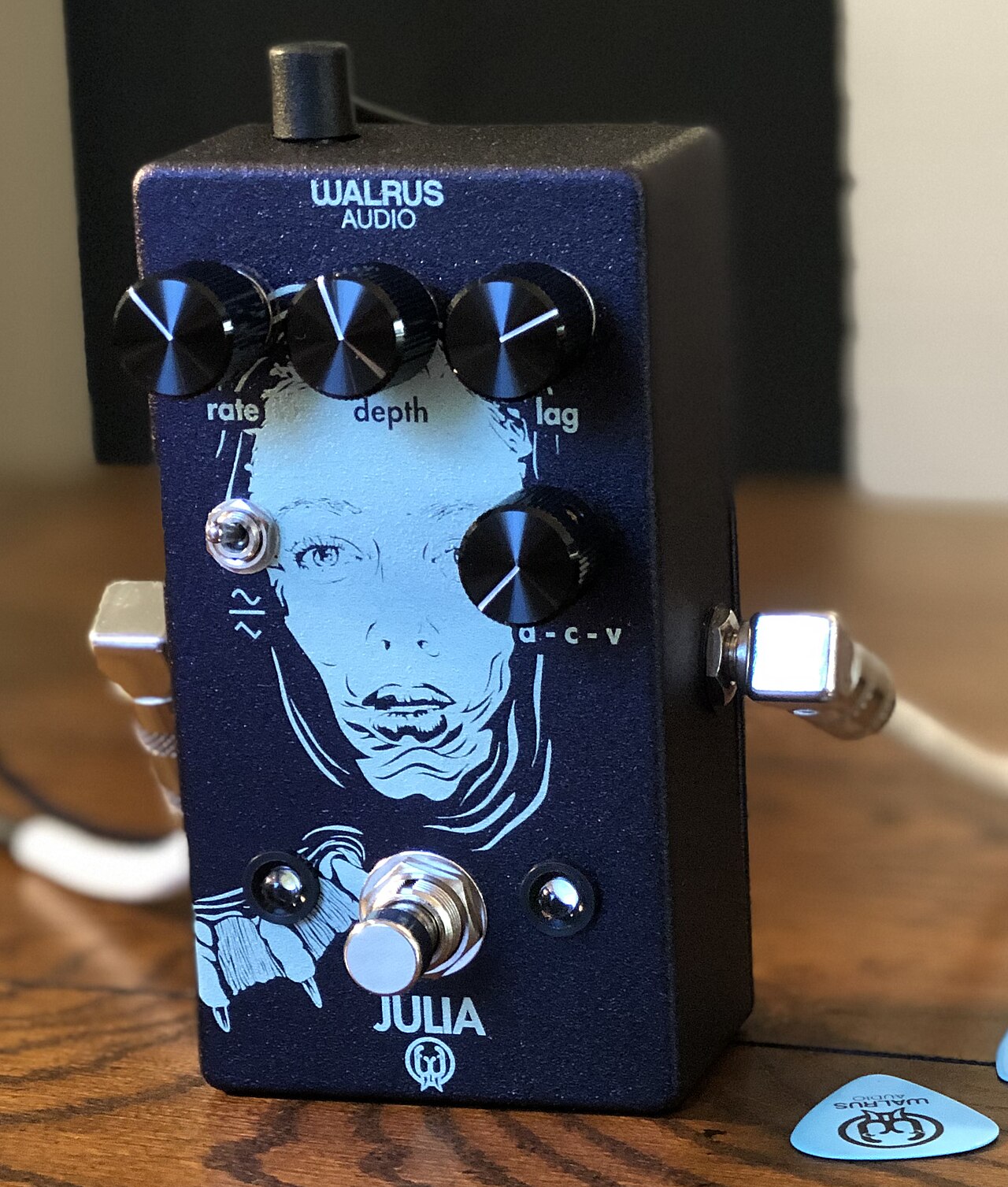
He is not a Slärp user. He is a Slö-and-ARP-87 user, which is a different sentence — but it is also the strongest available evidence that the combination is a real, working, professional-grade signal chain rather than a marketing conceit. Somebody at CME evidently noticed the same thing.
Where the Slärp sound actually lives
Lo-Fi delay under the Rise reverb is the combination owners repeatedly single out, and it is pure shoegaze — the territory mapped out by Robin Guthrie, Kevin Shields and Neil Halstead. For drone and texture the reference points are Vini Reilly, Lee Ranaldo and Thurston Moore; for the melodic end of ambience, Bill Frisell. Reference points, not users — that is the honest way to place a pedal nobody famous has been photographed with.
Seven Slärp Settings Worth Stealing
Knob positions below are clock-face. The Slärp’s Mix knob on the reverb side has its 50/50 point marked at roughly two o’clock rather than noon — a deliberate design choice to give more travel in the subtle range — so treat anything past two o’clock as genuinely wet.
| Sound | Reverb side | Delay side |
|---|---|---|
| Shoegaze wall | Rise, Mix 2:00, Decay 3:00, Filter 11:00, X 1:00, Depth 1:00 | Lo-Fi, Repeats 2:00, Dampen 10:00, X 12:00, eighth notes |
| Everyday hall (the reverb-sceptic setting) | Dream, Mix 11:00, Decay 11:00, Filter 1:00, X 8:00, Depth 8:00 | Analog, Repeats 9:00, Dampen 11:00, quarter notes |
| Doom unison | Dark, Mix 1:00, Decay 3:00, Filter 9:00, X max, Depth 10:00 | Analog, Repeats 10:00, Dampen 9:00, dotted eighths |
| Slapback with a basement underneath | Dark, Mix 10:00, Decay 9:00, X 10:00 | Slap, Level 12:00, Repeats 8:00, Dampen 1:00 |
| Held pad, play over the top | Dream + Sustain latched, Mix 3:00, Decay max, X 2:00, Depth 2:00 | Digital, Repeats 1:00, X 10:00, dotted eighths |
| Metallic sci-fi clang | Rise, Mix 12:00, Decay 2:00, Filter 2:00 | Slap, triplets, X max modulation |
| Synth and drum-machine duty | Dark, Mix 2:00, Decay 2:00, Filter 12:00, X 11:00 | Lo-Fi, Repeats 12:00, X 9:00 for narrow filter |
Two notes on the above. The “everyday hall” row exists because of a genuinely useful owner discovery: one Reverb reviewer found that pulling the Mix down on the Dream setting yields “a really nice workable hall reverb,” which is not what any of these algorithms were designed for and is the setting that makes the Slärp survivable in a covers band. And the Lo-Fi filter trick is the best signal-chain tip on the delay half — narrowing the filter until the repeats sound like an old television lets you run lo-fi delay and a big reverb simultaneously without the low end turning to mush.
Placement is worth a thought too. The conventional home for the Slärp is last in the chain after dirt and modulation. But the strongest tip from the wider Slö community runs the other way: putting a modulated reverb before your dirt eliminates the overlap between the two and unlocks a considerable amount of shoegaze and post-metal texture. On a Slärp you can do both at once — reverb before the fuzz through one pair of jacks, delay after it through the other.
How the Slärp Compares
Versus buying a Slö and an ARP-87 separately. This is the comparison that matters most, and owners have been blunt: buying both used is frequently cheaper than a Slärp, and gives you the freedom to space the footswitches out on your board. The Slärp’s advantages are one power supply instead of two, top-mounted jacks, a single footprint, exclusive artwork, and rarity. Its disadvantages are the tight footswitch spacing and the fact that you cannot sell half of it. If you are buying for sound alone, buy the two pedals. If you are buying for the object, buy the Slärp.
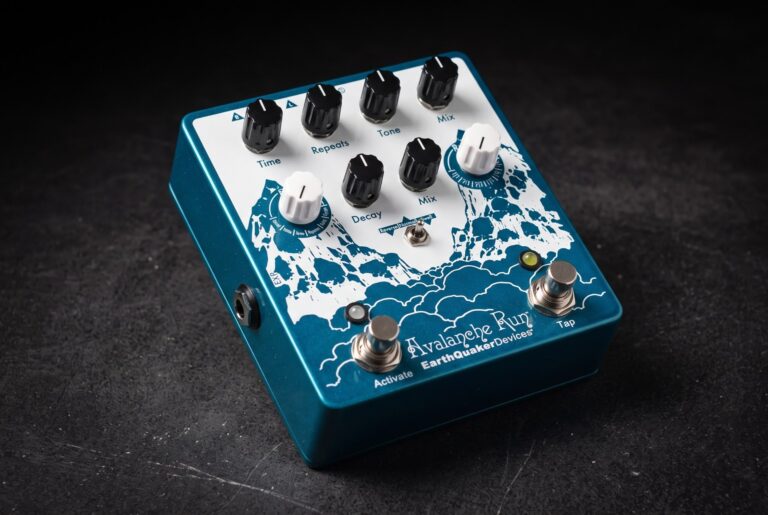
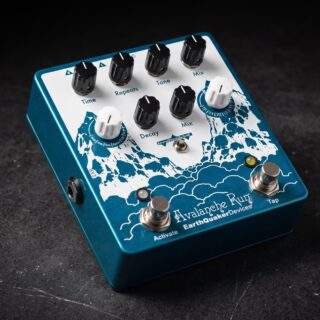
Versus the EarthQuaker Devices Avalanche Run. This is the comparison Slärp owners themselves reach for, and the Avalanche Run wins on two counts: it has an actual delay time knob, and it has expression control. The Slärp wins on reverb character — the Dark and Rise algorithms have no equivalent in the EQD, and Avalanche Run’s reverb is deliberately the supporting act.
Versus the Keeley Caverns V2. The Caverns is the practical answer to the same question in a standard enclosure at a fraction of the money, and it is the one to buy if you want delay-and-reverb-in-one as a utility. It does not do latching pads or lower-octave reverb.
Versus the big-box digital platforms. A Boss RV-500, a Boss DD-500, a Strymon TimeLine or a Strymon BigSky will each beat half the Slärp comprehensively on depth, presets, stereo and MIDI. One owner explicitly replaced a Boss MS-3 with a Slärp and said he did not regret it for a moment — which is a statement about character, not capability. The Slärp has three reverb sounds and four-and-a-half delay sounds and no way to save any of them.
Versus the classics it is not trying to be. If you want a warm analog echo, an EHX Deluxe Memory Man does it with more character and less menu-diving; if you want a spring, buy a Boss RV-6 or a TC Hall of Fame 2. As one owner put it, the reverb half “will not sound like a spring but this is not the purpose.” Where the Slärp does belong is alongside the ambient end of the catalogue — pair it with an EQD Afterneath for two very different unusual reverbs, or put an EQD Hizumitas or a Big Muff in front of it and a Julianna before that for the full wall-of-noise build.
Buying a Slärp in 2026
What it costs, and why nobody agrees
Pricing this pedal is genuinely difficult, and you should know why before you negotiate. Reverb’s Price Guide has no estimate for it at all — the page reads “Used estimate unavailable” and shows zero live listings, because there have never been enough transactions to build a trend line. That is the single most important fact for a buyer: there is no consensus market price, so the asking price you see is whatever one seller decided.
The data points that do exist, dated:
| Price | Context | When |
|---|---|---|
| $349.00 | CME new, run one, SKU 900-1055CME | ~late 2020 |
| $259.00 | CME new, run two, SKU 900-1060CME | 2021–22 |
| $300.00 | CME used trade-in, “in great shape and working condition” | May 2022 |
| $249.99 | Russo Music, Very Good with velcro, original box and both manuals — sold | ~July 2023 |
| $249.00 | Reverb, Excellent condition — listing ended | recent |
| $220.00 | Reverb’s internal price recommendation midpoint | Sept 2026 |
| NOK 4,100 | DLX Music Norway, backorder | current |
Equipboard claims an average of $229 and asserts three used units available on Reverb at that price. Those listings do not exist — Reverb shows zero. Aggregator stock data on a discontinued limited run is stale by definition.
The workable conclusion: $220 to $260 is a fair band for a clean example, with $220 the number to anchor on because it is Reverb’s own suggestion to sellers. Above $300 you are paying a collector premium for a pedal with no collector market to support it, and below $200 you should ask why. And run the arithmetic on the alternative first — a used Slö at around $150 and a used ARP-87 at around $135 gets you the same two circuits for roughly $285 with better footswitch spacing, or you could put the money toward a Keeley Halo and a separate reverb.
What to check before you pay
Confirm all four footswitches work independently, and specifically test the two momentary functions — holding the delay’s Tap ramps feedback to maximum, and holding a Bypass switch ramps the X parameter. These are the pedal’s best performance features and the most likely thing to have worn. Confirm the Sustain switch latches the Dream pad and holds it. Check that both pairs of jacks work independently, since that is the feature you are paying the premium for. Ask whether the seller has both original manuals — a Slärp shipped with two separate booklets and they are frequently missing, which matters more than usual here because the secondary functions are undocumented anywhere else. And expect velcro on the base; every surviving example has been on somebody’s board.
Living With a Slärp
Four ownership realities, all from owners rather than reviewers.
The footswitch spacing is tight. This is the most consistent complaint and it comes with a memorable data point — one owner with size 14 feet noted that “if I had bought these separately and spaced them out on my board a bit, my size 14s might have an easier time,” while adding that the switches themselves “feel excellent” and the momentaries “have a great throw to them.” Four switches on a double-wide enclosure is four switches in the space that would normally hold two.
The reverb side has a noise floor. The standalone Slö has a well-documented hiss that Walrus have reportedly attributed to the FV-1 chip itself, and it carries over — Slärp owners report a noticeable noise floor on the Slö half that persists even when bypassed, depending on the amp. It is real, it is a minority complaint, and both of those things are true at once. If a dead-quiet board is non-negotiable for you, this is the wrong pedal. An isolated power supply helps; daisy chains are explicitly discouraged by Walrus.
You will re-tap the tempo constantly. No tempo memory across power cycles, and every algorithm change wipes it. Owners describe this as annoying but manageable because tapping is fast. Plan on it as part of your between-songs routine.
It is very good with synths. Synth Anatomy’s entire published test of the Slö was conducted on a borrowed Slärp, specifically to run it with synthesizers, and the reverb half came out of it as a recommendation. One owner reports the Slärp at its best with an ARP Odyssey — a pleasing coincidence given where the ARP-87’s name comes from. There is no line-level switch, so watch your input levels, but keyboard players should not dismiss it.
Walrus Audio Slärp FAQ
What is the Walrus Audio Slärp?
A limited-run Chicago Music Exchange exclusive that combines a complete Walrus Audio Slö Multi Texture Reverb (left side) and a complete Walrus Audio ARP-87 Multi-Function Delay (right side) in one double-wide enclosure, sharing a single power connection. It ran twice — once in late 2020 as the “Slö + ARP-87 Combo” at $349, then again in 2021–22 rebranded “SLÄRP” at $259 — and is now discontinued and sold out.
How do you pronounce Slärp, and what does it mean?
Roughly “slairp.” It is not a Swedish word, unlike Slö, which genuinely means sleepy or lazy. Slärp is a portmanteau of Slö and ARP with an umlaut added for family resemblance, and CME leaned hard into the fact that it sounds like a sneeze — their launch copy opened with “Bless you!” and signed off “Gesundheit!”
Is the Slärp just a Slö and an ARP-87 in one box?
Circuit-for-circuit, yes — both halves are complete, with every knob, toggle and secondary function intact. What is added is one power connection instead of two, top-mounted jacks, exclusive artwork, and the independent input/output pairs that let you reorder the two effects or insert other pedals between them. What is lost is footswitch spacing and the ability to sell one half.
Can you change the order of the reverb and delay?
Yes, and this is the pedal’s best and least-documented feature. Each half has its own input and output, joined internally. One cable in and one out runs them in series; using both pairs of jacks with an extra cable lets you reverse the order or patch other pedals between them. No manual ever explained this, because no Slärp manual was ever written.
Is the Slärp true bypass?
No. It is buffered — Walrus call it “smart bypass switching” — with a switchable Trails mode that lets the delay and reverb decay naturally after you disengage. Any listing claiming true bypass, including Equipboard’s own FAQ, is wrong, and the presence of trails is the proof: trails require the signal to keep running through the circuit after bypass, which true bypass cannot do.
How many footswitches does the Slärp have?
Four: Bypass and Sustain on the reverb side, Bypass and Tap on the delay side, all with momentary secondary functions. Several databases claim two, including Equipboard, which also invents “delay time,” “reverb depth” and “modulation rate” knobs that do not exist on either half.
Did any famous guitarists use a Walrus Audio Slärp?
No documented professional player has ever been photographed or filmed with one. Equipboard lists zero artists, RigShare zero rigs, and Premier Guitar — which has reviewed the Slö, Slötvå, Slöer and ARP-87 — has never covered the Slärp at all. The closest thing is Mateus Asato, who runs a Slö and an ARP-87 as separate pedals in the same chain, which is the Slärp’s recipe assembled the hard way.
Is a Slärp worth buying in 2026?
If you want the sound, buy a used Slö and a used ARP-87 separately — it is usually cheaper and the footswitches will be easier to hit. Buy the Slärp if you want the object: the rarity, the artwork, the single power connection, the top jacks, and the reordering trick. Around $220 to $260 for a clean, boxed example with both manuals is fair, bearing in mind that Reverb’s Price Guide has no estimate for this pedal at all and there is no consensus market price to appeal to.
The Verdict
The Slärp is the best-documented case in the Walrus catalogue of a pedal that deserved more attention than it got. It got no reviews from any major outlet in either of its two runs. It got no manual. It got no artist roster. It got no page on its own manufacturer’s website. What it got was two owner reviews on Reverb, both five stars, one of which describes the delay half as “like having a Carbon Copy, DD-5, Echoplex and a great lofi sound in one box” and signs off with “Fantastic pedal overall. Nice work Walrus!”
That is thin evidence by the standards of anything else in this ranking, and it is why the Slärp sits where it sits rather than higher. But the two circuits inside it are proven — the Slö is still in Walrus’s Core Series seven years on and the ARP-87 has held its place for nine — and the routing flexibility is something no comparable combo pedal offers. It is a rare and slightly absurd object with genuinely good sounds inside it and a name that makes people laugh in shops. Gesundheit.
Image credits
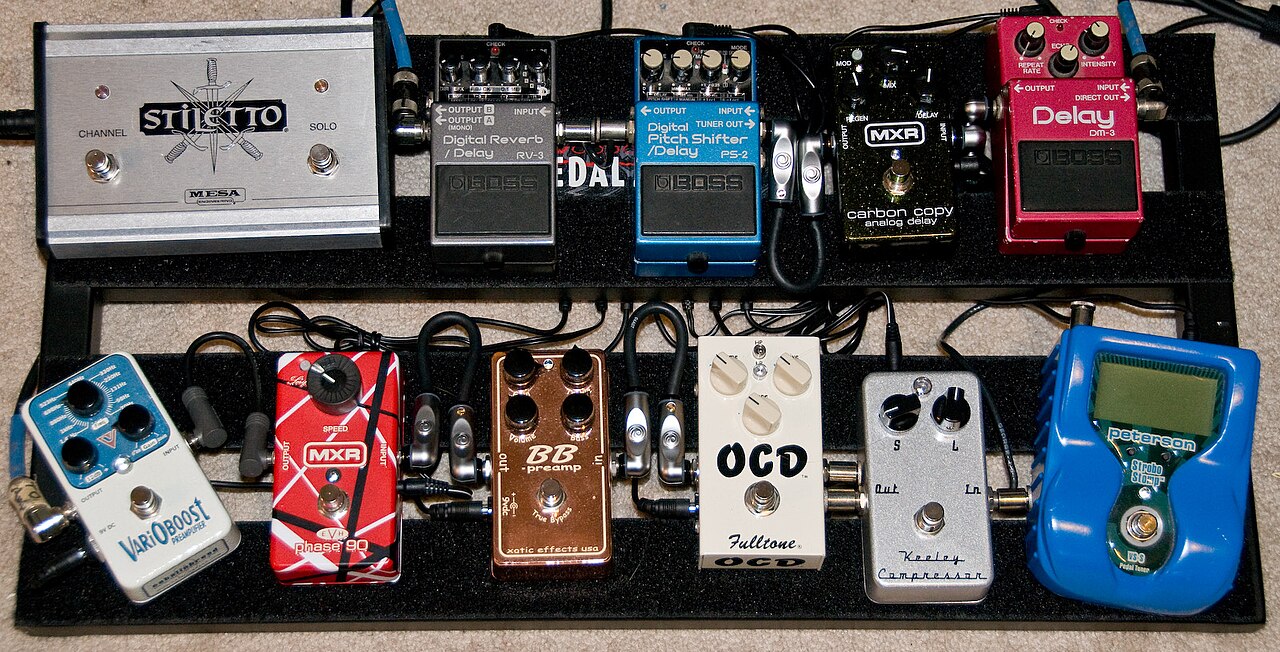
- A pedalboard with a mix of effects pedals: ArtBrom, Wikimedia Commons, CC BY-SA 2.0.
- Effects pedals piled together with a guitar behind them: Alessio Bragadini from Milan, Italy, Wikimedia Commons, CC BY-SA 2.0.
- A Walrus Audio Julia chorus and vibrato pedal: Guitar Chalk, Wikimedia Commons, CC BY 2.0.
- A Walrus Audio Julia chorus and vibrato pedal, close up: Guitar Chalk, Wikimedia Commons, CC BY 2.0.
Latest News
Related
On This Day
Monday 9 November
From this week: