Walrus Audio Monument V2 Harmonic Tap Tremolo: The Coyote That Outlived Its Own Discontinuation
Walrus Audio Monument V2 tremolo guide: harmonic vs standard modes, waveforms, verified famous players, tone settings, used-market buying advice and FAQ.
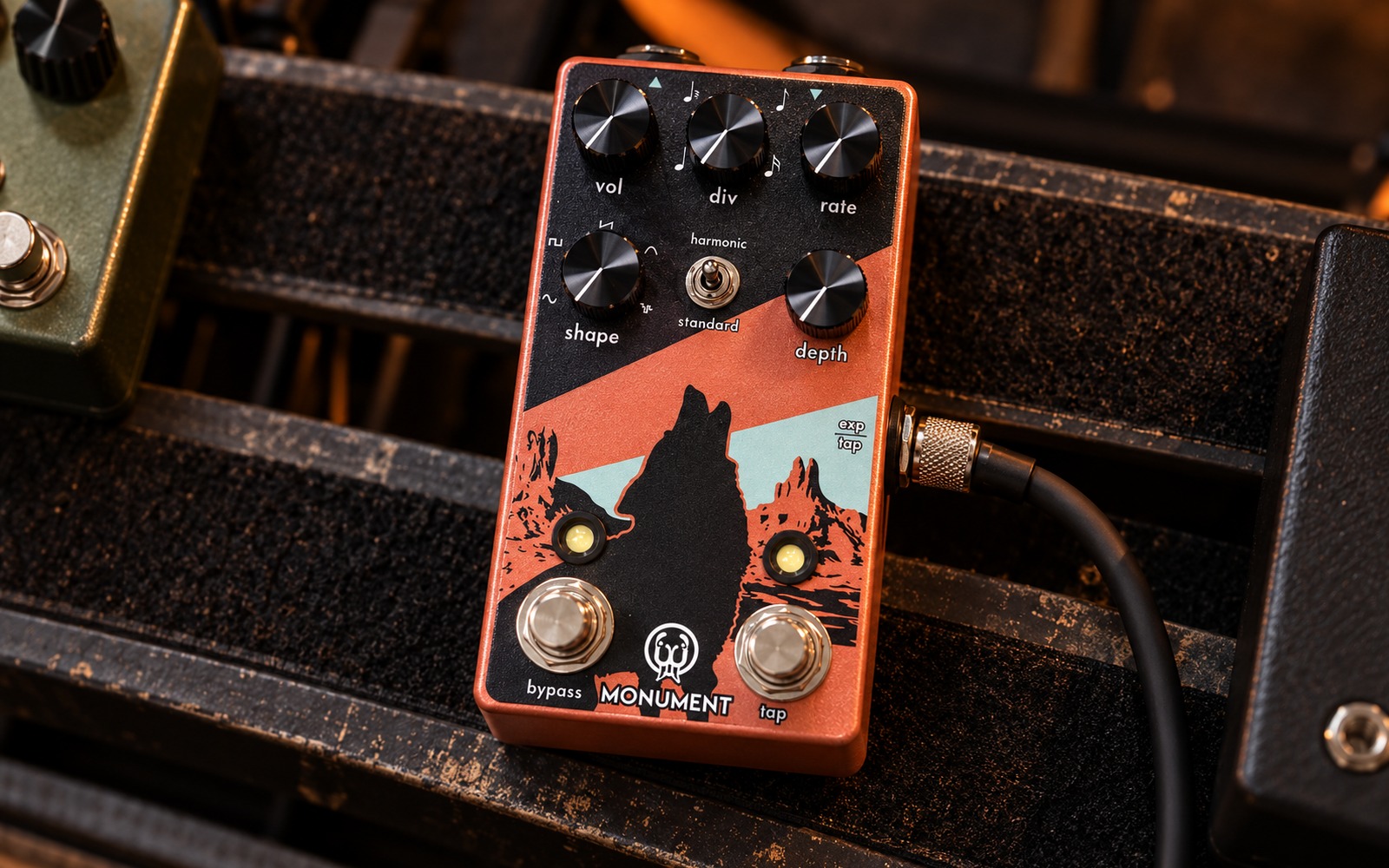
There is a coyote on the original Monument. It is standing on a ridge in Monument Valley, silhouetted against a sky the colour of a cheap postcard, and it is the kind of artwork that tells you exactly what a pedal is supposed to sound like before you plug it in. Wide. Dusty. Slightly haunted. The sound of a Fender amp left running in a room with the windows open.
The Walrus Audio Monument V2 Harmonic Tap Tremolo is what happened when Oklahoma City took that idea, shrank it, dropped fifty dollars off the price and gave it an expression jack. It ran from March 2019 until Walrus quietly retired it, and in those years it did something most tremolo pedals never manage: it turned up on the boards of players who had absolutely no stylistic reason to be in the same sentence as each other. A Periphery guitarist. A Snarky Puppy guitarist. A City and Colour guitarist. A Darkside guitarist. Tremolo is supposed to be a genre pedal. The Monument refused to behave like one.
As of September 2026 the Monument V2’s product page on walrusaudio.com carries four words that end the story: this product is discontinued and no longer available. Its replacement, the Monumental Harmonic Stereo Tremolo, arrived in April 2024 and costs roughly two and a half times what the Monument did at the end. Which makes this a guide to a used pedal — and, as it turns out, one of the better used-pedal arguments in the whole tremolo category.
Between the two generations of Monument there are roughly nineteen documented professional users on Equipboard alone, several of them backed by photographs of specific pedalboards on specific dates, and one of them confirmed on camera in a Premier Guitar Rig Rundown. The Famous Players section below names them, tiers them by how solid the evidence actually is, and flags where the sourcing is crowd-submitted rather than first-party. A pedal being unglamorous is not the same as a pedal being unused.
Origins: From A $249 Coyote To A $199 Shrink
Walrus Audio launched the original Monument Harmonic Tap Tremolo in 2017. Premier Guitar’s Joe Gore reviewed it in the August 2017 issue at a $249 street price and came away impressed enough to call its wobble world-class, with exactly one complaint in the Cons column: no stereo output. That single criticism would take Walrus seven years to answer, and when they finally did it cost them the Monument’s name.
The V1 was a standard B-sized enclosure, four waveforms — sine, triangle, square and a chaotic random mode — plus a division knob, a dedicated tap switch with a rate-indicating LED, a jack for external tap or expression, and, importantly, a volume control. Gore’s note on that last point is the most useful sentence anyone has written about tremolo pedals: because tremolo works by cutting your signal rather than boosting it, a level knob that can add roughly 3 dB back is what gives the effect its “gushing” quality instead of making your rig sound like it just lost a fight.
On 19 March 2019, Walrus announced the V2. The changes were short and unusually practical:
- A smaller enclosure, down from the B-sized original.
- Top-mounted jacks.
- An expanded side jack — external tap tempo, or expression control assignable on the fly over Rate, Depth, Shape or Tap Multiplier.
- Improved tremolo response across all rates.
And the RRP went down, from $249 to $199. A boutique American pedal getting smaller, gaining features and losing fifty dollars in the same revision is rare enough to be worth flagging. By the time Walrus retired it, the listed price had drifted down again to $119.99.
What Harmonic Tremolo Actually Is, And Why Fender Gave Up On It
This is the part most product copy skips, and it is the reason the Monument exists.
Vintage Fender amps carried several different tremolo circuits. The famous one — the one everybody means when they say “blackface trem” — is the photocell or opto circuit found across blackface and silverface models. Earlier amps used bias tremolo, wobbling the voltage at the power tubes or the preamp tubes. The Monument’s standard mode covers the opto sound.
Harmonic tremolo is the odd one out. It appeared briefly in early-’60s brownface and blond Fenders and then vanished, and the reason it vanished is that it was expensive. The circuit splits your signal into a low band and a high band, modulates each one separately, and offsets them by 180 degrees — as the lows swell, the highs duck, and vice versa. The phase cancellation between the two bands produces a swirl that sits somewhere between tremolo and a phase shifter set to minimum feedback. Fender needed three preamp tubes to do it. They dropped it for the cheaper opto scheme and never looked back.
The word players reach for to describe it is “chewy,” and it is a better description than it sounds. Where standard tremolo chops amplitude up and down, harmonic tremolo makes the tone itself move. It is the sound on a hundred desert-noir soundtracks, and it is a lot harder to find in pedal form than you would expect. If you want to hear the same family of trick in a different circuit, the Fulltone Déjà Vibe gets to a related place from the photocell side, and the Keeley Monterey Rotary Fuzz Vibe stacks a rotary-style wobble on top of fuzz. Neither is a harmonic tremolo, but both live in the same neighbourhood of moving-tone effects.
Specifications
The Control Surface, Knob By Knob
Five knobs and one toggle sounds thin for a pedal with this much range. It isn’t, because three of those knobs are doing more work than their labels suggest.
Har / Std Toggle
The whole pedal in one switch. Standard gives you the blackface opto pulse — clean amplitude modulation, tight and percussive at speed, gentle and rolling when slow. Harmonic gives you the brownface swirl. Gore’s verdict on the V1 was that the harmonic mode is less overtly phasey than some rival harmonic trems, which is a compliment: it reads as an amp effect rather than as a modulation pedal doing an impression of one.
One honest caveat, reported consistently by owners: harmonic mode brightens the signal. On a bright single-coil guitar with the tone already open, that can tip over into glassy. It is the single most common complaint about the V2 and it is worth knowing before you buy.
Shape
The V2 sweeps between five waveforms — Sine, Square, Ramp, Lumps and Monument Mode. The V1’s set was smaller and differently named, which is a detail worth having if you are cross-shopping the two generations on the used market.
Sine is the default civilised wobble. Square is the hard chop, and it is the setting that made the V2 famous in forum threads: at high rate with depth maxed it produces what owners call the helicopter chop, and several report preferring it to competing pedals specifically for that. Ramp is a sawtooth that gives each pulse a rising or falling shove rather than a symmetrical swell — the closest thing to a synth-style trem in the box. Lumps is the strange one, an asymmetric shape that produces uneven pulses. Monument Mode is random, and it is genuinely random: it will not repeat, it will not lock to your tapped tempo in a predictable way, and it is either the best or the worst thing on the pedal depending on what you are doing with it.
Division
Quarter, triplet, eighth and sixteenth, applied against whatever you tap in. This is the feature that converts the Monument from a texture pedal into a rhythm-section pedal. Tap quarter notes with the drummer, set division to eighths or sixteenths, and the trem is now locked to the song rather than approximately near it. If you have ever tried to tap a sixteenth-note trem in real time, you understand why this knob matters.
Rate And Depth
Rate’s range on the original was described as unusually wide, running all the way to a flicker so fast it stops sounding like tremolo and starts sounding like ring modulation. Gore flagged that this makes an expression pedal twitchy — small foot movements cause big rate jumps. That is still true on the V2, and it is the argument for assigning expression to Depth or Shape instead if you want controllable real-time movement.
Depth at zero is the secret door. With Depth fully off and Volume above unity, the Monument stops being a tremolo and becomes a clean boost. Walrus documents this deliberately. It means a Monument sitting dormant on your board is still earning its space.
Volume
Compensates for the level loss inherent to tremolo. Push it a few dB past unity and the effect gains the swelling quality that makes tremolo feel like an amp rather than a gate.
The Two Hidden Footswitch Behaviours
These are the features owners tend to discover a month in, and they are the best things about the pedal.
Momentary: with the pedal bypassed, press and hold the bypass switch. The tremolo engages for exactly as long as your foot is down and disappears when you release. One held chord, one bar of wobble, gone. No engaging and disengaging around a phrase.
Ramp: with the pedal on, press and hold the bypass switch and the rate ramps up. Release it and the rate falls back to your set tempo. That is a tape-machine acceleration effect, on demand, without touching a knob — the sort of thing that used to require a second player or a mix engineer.
Famous Players: What The Evidence Actually Supports
Every name below was checked against a specific documented source rather than a search snippet. Users are split by evidence quality, and the Monument V1 and V2 are tracked separately because they are different pedals.
Tier 1: Confirmed On Camera
Dave Harrington (Darkside) — the strongest single piece of evidence for the V2. In Premier Guitar’s Rig Rundown with Darkside, Harrington confirms the Monument V2 on his board on camera. Darkside is a project built on slow-motion textural improvisation over Nicolás Jaar’s electronics, which is close to a perfect use case: harmonic tremolo with a random waveform and a tapped division sits in that music as rhythm and atmosphere simultaneously.
Tier 1: Dated Photographic Evidence
Mark Lettieri (Snarky Puppy, The Fearless Flyers) — a Monument V2 appears in a photograph of his pedalboard for the Snarky Puppy show in Glasgow on 16 November 2019, roughly eight months after the V2 shipped. Lettieri also appears on the V1 list from an earlier board photo, making him one of the few players documented on both generations. His playing is a useful argument against tremolo being a genre effect: this is a session-grade funk and fusion player using harmonic trem as a tone colour inside dense arrangements, not as a spaghetti-western signifier.
Ariel Posen — documented on both generations: a V2 on his mini pedalboard in a photo, and the V1 confirmed via video. Posen’s slide-heavy, warm, extremely melodic approach is the other end of the Monument’s range from Harrington’s, and the fact that both men landed on the same box says something about how neutral it is.
Misha Mansoor (Periphery) — documented with the original Monument via photo. Mansoor is the least predictable name on the list, and worth reading as evidence rather than trivia: modern progressive metal is a genre obsessed with rhythmic subdivision, and a tremolo with tap tempo and a division knob is a rhythm tool. See our Misha Mansoor gear guide for the wider context of that rig.
Tier 1: First-Party Social Posts
Dallas Green (City and Colour, Alexisonfire) — shown using the Monument in a post on the official City and Colour Instagram account. First-party artist channel, which puts it above crowd-sourced sightings.
Tier 2: Crowd-Sourced Sightings
The following are logged on Equipboard against photos or video but without first-party confirmation, and should be read as likely rather than certain: Andrew Huang and Danny Rolph on the V2; Joey Landreth (The Bros. Landreth), Drew Shirley (Switchfoot), Jake Luppen (Hippo Campus), Tyler Larson, Daniel Steinhardt, Peter “Danish Pete” Honoré, Cathal Roper (The Murder Capital) and Dustin Nadler (Hopesfall) on the original Monument.
The pattern across both lists is the interesting part. Canadian roots-rock, Texas fusion, Welsh-adjacent post-punk, Minnesota indie, American post-hardcore, Brooklyn electronic improvisation and Washington DC prog metal. There is no Monument scene. There is just a pedal that a lot of unrelated people independently decided was the right tremolo.
Reference Points, Not Users
To be explicit, because this is where gear writing usually cheats: the players below are not documented Monument owners. They are named here only as tonal reference points for what the pedal does.
Duane Eddy is the origin story for amp tremolo as a lead-guitar identity rather than an effect. Neil Young‘s desolate soundtrack work is the reference for slow, deep, sine-wave trem sitting under a single sustained note. The Edge is the reference for tempo-locked rhythmic modulation as a compositional device — the reason the Division knob exists. Jonny Greenwood is the reference for treating a modulation pedal as an unstable instrument rather than a sweetener, which is what Monument Mode is for. None of these four has any documented connection to this pedal.
Tone Recipes
1. Brownface Chew
Toggle: Harmonic. Shape: Sine. Rate: 10 o’clock. Depth: 1 o’clock. Division: quarter. Volume: slightly above unity.
The core sound of the pedal and the reason to own it. Slow enough that individual pulses are felt rather than counted. Put it after your drive and into a clean amp with plenty of headroom — something in the Fender Pro Junior IV class works, as does a Supro Black Magick Reverb if you want the amp’s own valve character underneath. If your rig is digital, the Walrus Audio ACS1 gives you the same house voicing to land on.
2. Helicopter Chop
Toggle: Standard. Shape: Square. Rate: 2 o’clock. Depth: maximum. Division: eighth. Volume: 1 o’clock.
Hard-gated stutter. Tap in the song tempo first, then let the division do the subdividing. This is the setting that gets compared favourably to other boutique trems in owner threads, and it is unforgiving of sloppy right-hand muting — every gap in the waveform exposes whatever noise your rig is making.
3. Ring-Mod Flicker
Toggle: Standard. Shape: Square. Rate: maximum. Depth: 3 o’clock. Volume: 1 o’clock.
Push Rate past the point where the ear resolves individual pulses and the tremolo stops being rhythm and becomes timbre — a metallic, buzzing edge on sustained notes. Best in short doses, ideally via the momentary switch so it stabs in and vanishes.
4. Broken Tape Machine
Toggle: Harmonic. Shape: Monument Mode. Rate: 11 o’clock. Depth: 12 o’clock.
Random waveform, moderate depth, harmonic mode. The result is a signal that will not sit still and will not repeat itself. Feed it into a long reverb — a Walrus Audio Slö or a Strymon BigSky — and the randomness smears into the tail rather than sitting on top of it.
5. The Ramp Ending
Toggle: Standard. Shape: Ramp. Rate: 11 o’clock. Depth: 2 o’clock. Division: quarter.
Hold a final chord, hold the bypass switch, and let the rate climb until the note dissolves into flutter. Release and it settles back. This is the single most theatrical thing the Monument does and it costs nothing but a foot.
6. Invisible Movement
Toggle: Harmonic. Shape: Sine. Rate: 9 o’clock. Depth: 9 o’clock. Volume: unity.
Barely there. Depth low enough that nobody in the room identifies a tremolo — they just notice the guitar sounds three-dimensional. Leave it on for a whole song. This is how the pedal earns its place on funk and session boards rather than surf ones.
7. Clean Boost
Depth: zero. Volume: 2 o’clock.
Documented by Walrus. No modulation, just level. Useful for solo lifts if you would otherwise have to give up a board slot to a dedicated boost.
Settings are given as clock positions. Every one of these was built around the V2’s control set; the V1 will get close on all but the Ramp and Lumps shapes.
Where It Goes In The Chain
Traditional placement puts tremolo late — after drive, after modulation, before or after time-based effects depending on taste. Running it before delay and reverb means the wobble gets repeated and washed; running it after means it chops the tails themselves, which is a much more aggressive, more rhythmic sound.
The Monument is mono in and mono out, and that is the one real structural limitation. If you run a stereo rig with a Strymon TimeLine or a stereo reverb at the end, a mono tremolo has to sit upstream of the split. Gore identified this as the pedal’s only genuine flaw in 2017, and it is precisely the flaw the stereo Monumental exists to fix.
Practical warning from owners: some players found the pedal darkened their tone in certain positions and solved it by moving the Monument to the very end of the chain, after reverb. If the pedal sounds duller than expected in your rig, move it before you write it off.
How It Compares
Versus The Boss TR-2
The Boss TR-2 is the default tremolo, it has been on more stages than every boutique trem combined, and it costs a fraction of what a used Monument does. It has three knobs, one waveform character, no tap tempo, no harmonic mode and no momentary switch. If you want a tremolo for one song, buy the TR-2 and don’t think about it again. If you want tremolo to be a working part of your vocabulary, the Monument is a different category of tool.
Versus The MXR M305 Tremolo
The MXR M305 also offers multiple trem voicings in a small enclosure and is the closest modern like-for-like at a lower price. The Monument’s advantages are the division knob, the momentary and ramp footswitch behaviours and the assignable expression jack. Its disadvantage is that it is discontinued and you are buying blind on the used market.
Versus The Monumental
The successor, launched 23 April 2024, adds true stereo I/O, a Pan control that sweeps the tremolo across the stereo field, six waveshapes including a new Ramp, five tap divisions including eighth-note triplets, three saveable presets plus a live mode, expression over every parameter, momentary ramp up and down, and an S-B-H knob that blends continuously between standard and harmonic instead of toggling between them. That blend control is the genuinely new musical idea; everything else is expansion.
It is also roughly €315 against a used Monument at a fraction of that. If you run mono into one amp and you want the sound rather than the routing, the older pedal gives you most of the music for much less money. If you run stereo, there is no argument — the Monumental exists because the Monument couldn’t.
Versus Vibrato And Chorus
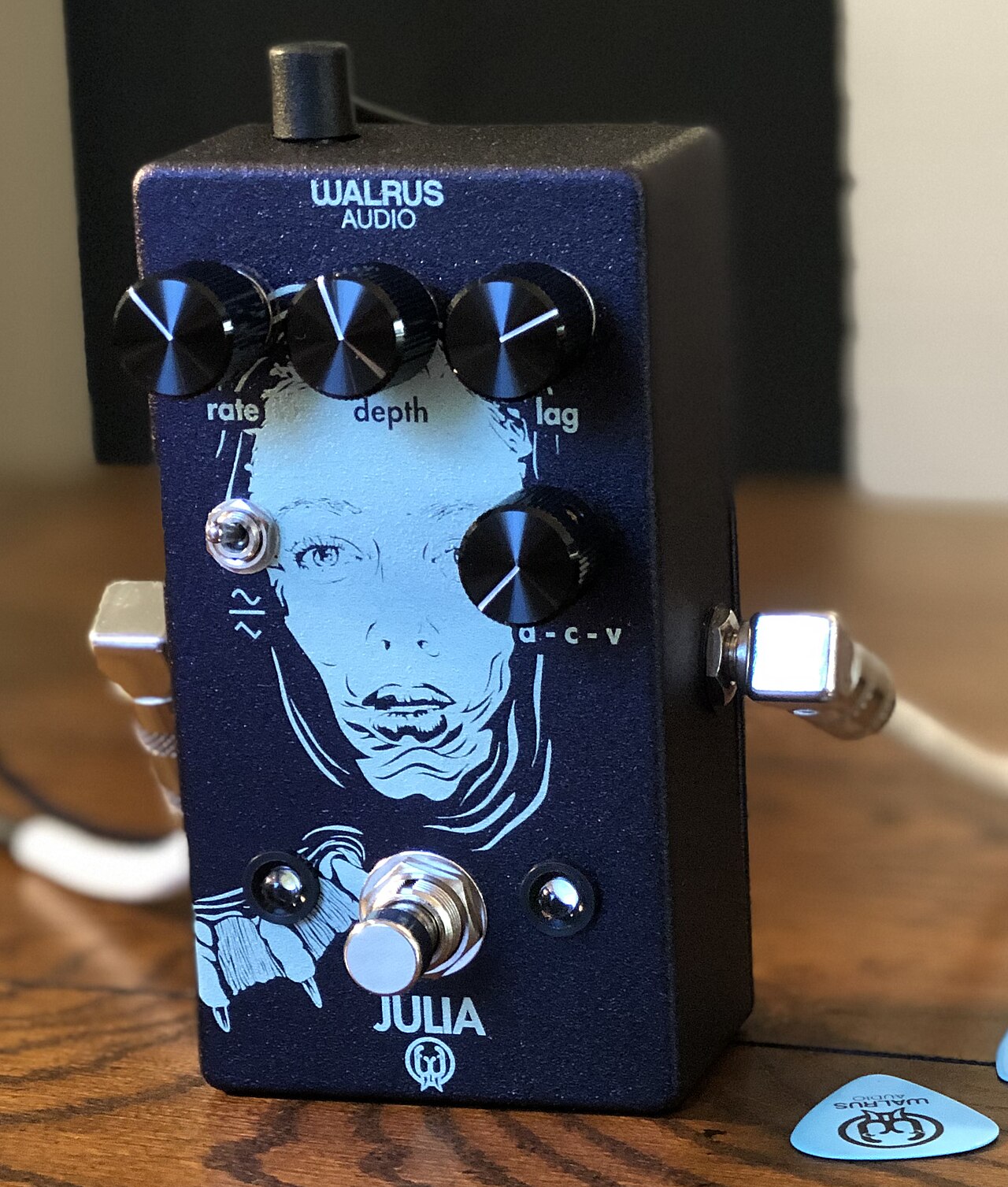
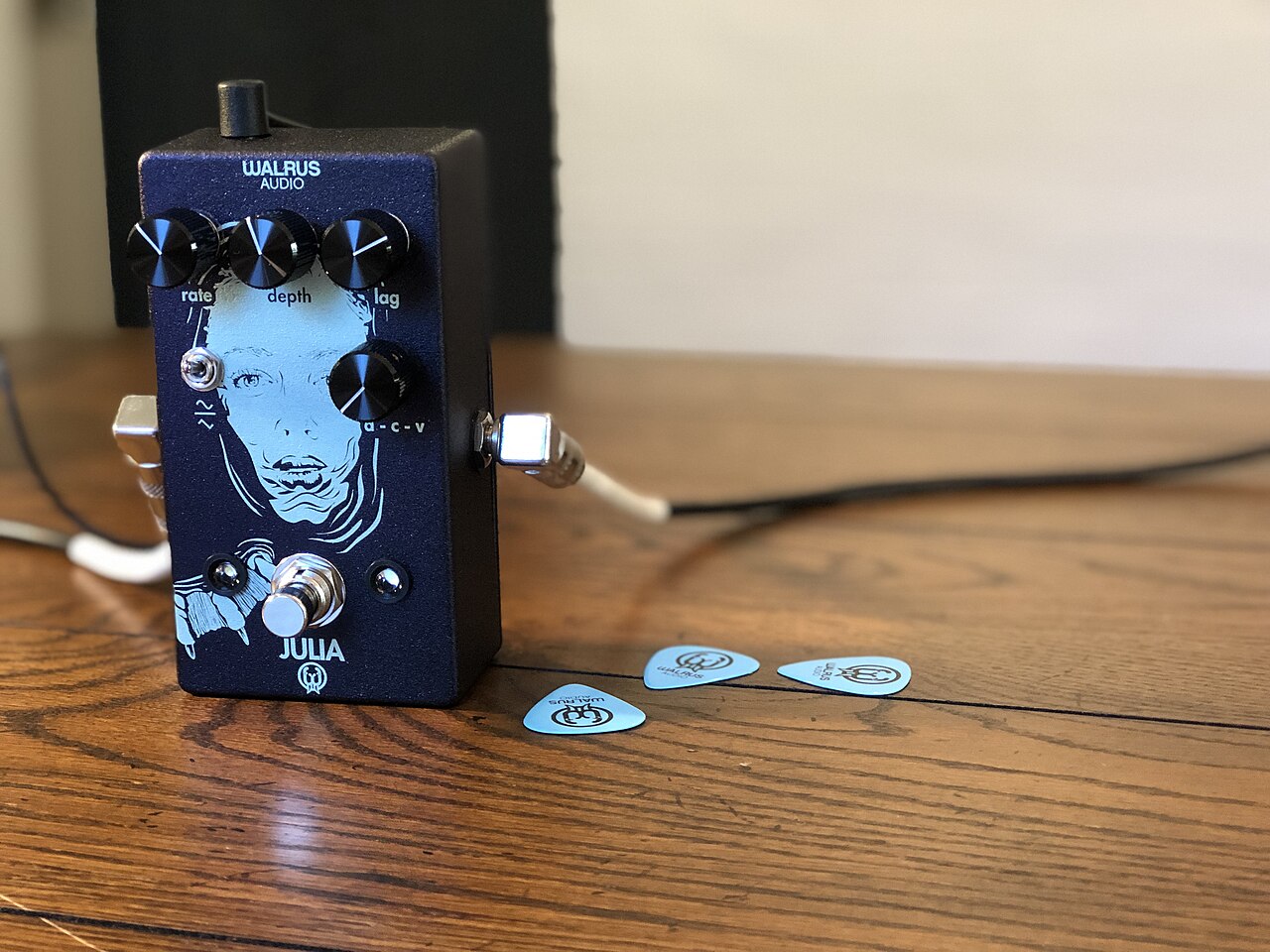
Worth clarifying because the terms have been abused since Leo Fender mislabelled a knob. Tremolo modulates volume; vibrato modulates pitch. The Boss VB-2W is true pitch vibrato and does something completely different. Chorus — the Boss CE-2, or Walrus’s own Julia V2 and Julianna — mixes a delayed, detuned copy against the dry signal. Harmonic tremolo sits closest of the three to a phaser, which is why a MXR Phase 90 or a Boss PH-3 can occupy overlapping space on a board. If you already run one of those in a slow, subtle setting, be honest about whether you need both.
Inside The Walrus Line
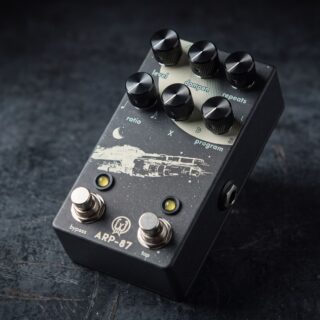
The Monument is the modulation corner of a house sound that also produced the ARP-87 delay, the Fathom reverb and the limited-run SLARP. That entire generation of Core Series pedals is now discontinued, which tells you where Walrus’s attention went: bigger, stereo, preset-capable boxes at higher prices. Whether that is progress depends on whether you needed presets.
Buying Guide: The Discontinued Market
The Monument V2 is out of production and Walrus is not making more. The B-stock channel is empty. Everything from here is second-hand.
What to expect on price. Aggregators have listed the V2 from around $187 as a low; European retail before discontinuation ran roughly $191 / £182 / €209, and the final Walrus list was $119.99. Realistically, a clean used V2 in 2026 sits in the $130–190 range depending on finish and box, with limited editions above that. The original V1 typically goes for less, sometimes considerably, because it is bigger and lacks the expression assignments.
V1 or V2? The V2 is smaller, has top-mounted jacks, a broader waveform set and a far more useful side jack. But there is a persistent minority report from owners that the V1 retains bass and volume better, with the V2 sounding slightly thinner despite a more convincing harmonic mode. If you play a dark humbucker rig into a dark amp, the V2’s brightness may be a feature. If you already play bright, hunt down a V1 or budget for an EQ move.
Limited editions. Walrus ran the Monument in several special finishes, including a Floral edition and the Santa Fe series colourways, plus a Platinum edition of the V2. These carry a premium and sound identical. Buy one because you like it, not as an investment.
What to check before you pay. Both footswitches are relay-based soft-touch, not mechanical stomps — press each one and confirm it engages cleanly and that the tap LED is tracking. Confirm the side jack works with both a tap switch and an expression pedal. Confirm the momentary hold and the ramp hold both behave. And ask specifically whether the pedal has been run at 18V, because it should not have been.
Ownership Notes
Power. 9V DC, centre negative, 100 mA minimum. There is no battery compartment and no battery operation. Walrus recommends an isolated supply for all their pedals and explicitly warns against daisy chains.
Do not run it at 18V. This one is worth repeating because it comes up constantly. Asked directly by an owner whether 18V was safe, Walrus answered on their own product page that they encourage 9V and that anything more could damage the pedal. Plenty of boutique pedals take higher voltage happily. This is not one of them.
The LED is bright. Genuinely, distractingly bright, and it stays lit in bypass. This is the second most common owner complaint after the treble lift, and the standard fix is a strip of insulation tape or gaffer over the LED. Not elegant, entirely effective.
Relay switching means no signal without power. True bypass here is relay-implemented, so an unpowered Monument does not pass signal. On a board with a power failure, this pedal is a wall. Worth knowing if you gig without a backup supply.
Internal switches. Guitar.com’s review of the V2 was broadly positive — boutique quality, an impressive range of sounds — with one structural gripe: some functionality lives on internal switches rather than the top panel, so changing it means opening the enclosure. Fine at home, useless mid-set.
Board footprint. Top-mounted jacks and the reduced V2 enclosure make this an easy fit. If you are running a tuner-first chain off a TC Electronic PolyTune 3 Mini and squeezing a full board onto a small pedaltrain, the V2 costs you meaningfully less real estate than the V1.
Frequently Asked Questions
Is the Walrus Audio Monument V2 still in production?
No. As of September 2026 the Monument V2’s page on walrusaudio.com states plainly that the product is discontinued and no longer available, and the B-stock listing is gone. It was replaced by the Monumental Harmonic Stereo Tremolo in April 2024. Everything available now is used.
What is the difference between harmonic and standard tremolo?
Standard tremolo modulates the whole signal’s volume up and down — the blackface Fender opto sound. Harmonic tremolo splits the signal into high and low frequency bands and modulates them 180 degrees out of phase with each other, so the highs duck as the lows swell. The resulting phase cancellation produces a swirling, chewy, phaser-adjacent sound. Fender used it briefly in early-’60s brownface and blond amps and abandoned it because it required three preamp tubes and was expensive to build.
Does the Monument V2 work in stereo?
No. It is mono in, mono out. This was Premier Guitar’s single criticism of the original in 2017 and it remained true of the V2. It is the specific limitation the Monumental was built to solve, adding true stereo I/O and a Pan control that sweeps the tremolo across the stereo field.
Can I run the Monument V2 at 18 volts?
No. Walrus Audio answered this directly on their own product page: they encourage 9V, and anything more could damage the pedal. Use a 9V DC centre-negative supply delivering at least 100 mA, ideally isolated.
Which waveforms does the V2 have?
Five, swept via the Shape knob: Sine, Square, Ramp, Lumps and Monument Mode, which is random. The Division knob then sets quarter, triplet, eighth or sixteenth against your tapped tempo. The earlier V1 had a smaller, differently named set — sine, triangle, square and random.
Who actually uses the Monument?
Documented users of the V2 include Dave Harrington of Darkside, confirmed on camera in a Premier Guitar Rig Rundown, and Mark Lettieri, whose V2 appears in a photo of his board for a Snarky Puppy show in Glasgow on 16 November 2019. Ariel Posen is documented on both generations. The original Monument is documented with Misha Mansoor of Periphery and Dallas Green of City and Colour, the latter via the official City and Colour Instagram account. A further ten or so players are logged on crowd-sourced sightings of varying strength.
Should I buy a used Monument or the new Monumental?
If you play mono into one amp, the used Monument gives you the same two core tremolo voices, tap with divisions, expression control and the momentary and ramp switch tricks for roughly a third to a half of the Monumental’s price. If you run stereo, or you need saveable presets, or you want the S-B-H knob that blends continuously between standard and harmonic rather than toggling, the Monumental is the only one of the two that can do it.
Does it colour your tone when bypassed?
Bypass is true bypass via relay switching, so there should be no tone loss when it is off — but the relay implementation means the pedal passes no signal at all without power, unlike a mechanical true-bypass switch. When engaged, harmonic mode measurably brightens the signal, which is the most frequently reported characteristic of the V2 and something to account for on an already bright rig.
The Verdict That Isn’t A Review
The Monument’s problem was never the sound. Joe Gore called its wobble world-class in 2017 and nobody has seriously argued since. Its problem was that it was a mono pedal in a decade when everybody’s board grew a second output, and Walrus solved that by building a bigger, better, considerably more expensive pedal and retiring the coyote.
What is left behind is one of the more honest bargains in the used modulation market: a made-in-Oklahoma harmonic tremolo with tap tempo, subdivisions, five waveforms, two hidden footswitch tricks and a clean-boost mode, at a price that undercuts most new boutique trems. It brightens your top end, its LED is obnoxious, it will not take 18 volts and it will never go stereo. It also turned up independently on the boards of a prog-metal architect, a fusion session player, a Canadian folk-rock singer and a Brooklyn electronic improviser, which is not a thing genre pedals do.
If you want tremolo to be an effect you switch on for one song, buy something cheaper. If you want it to be part of how you play, the coyote still has a ridge to stand on.
Image credits
- Top image: GuitarGangsters AI-generated reference illustration, not a photograph.
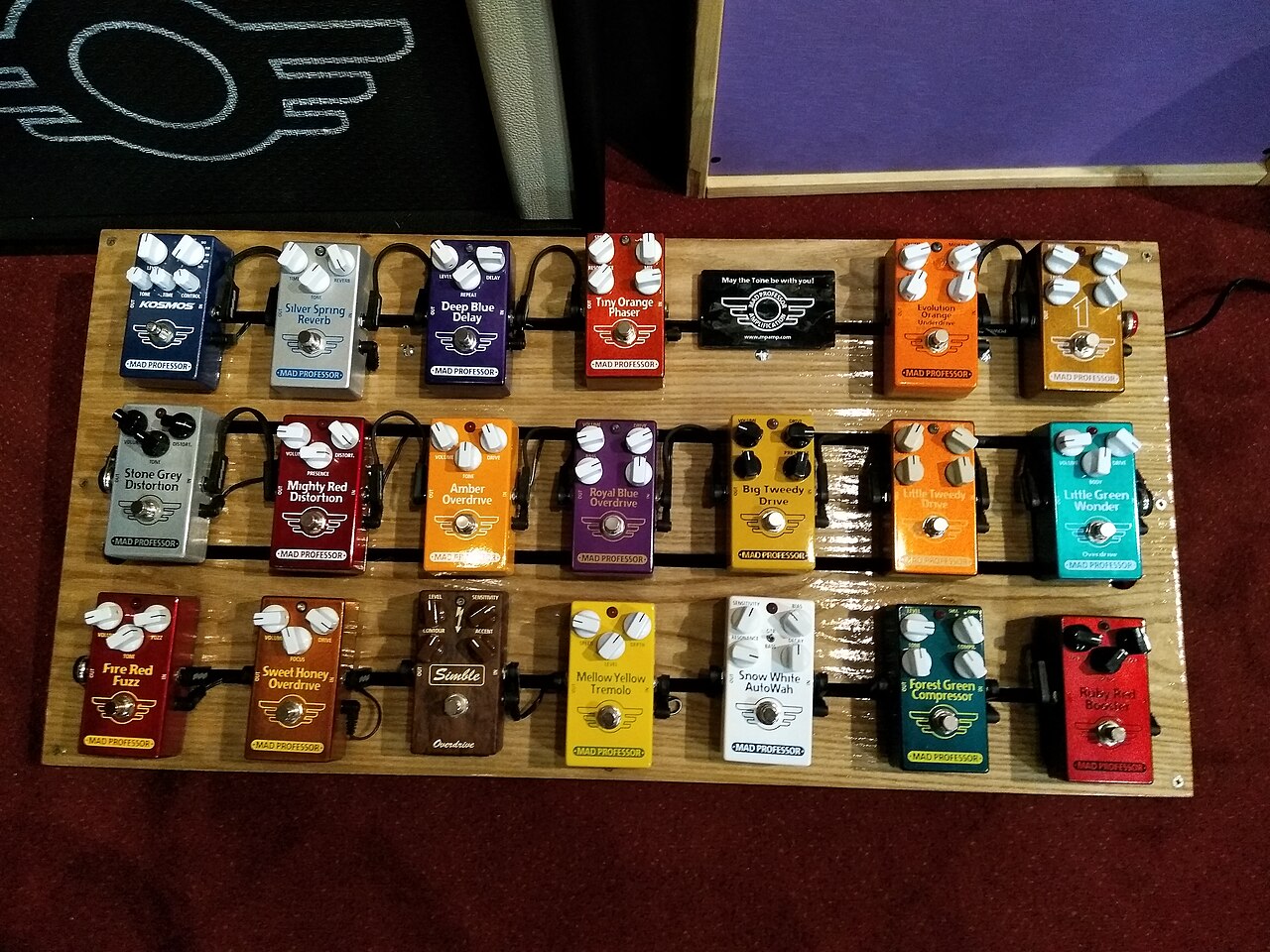
- A pedalboard full of colourful pedals: Skimel, Wikimedia Commons, CC BY-SA 4.0.
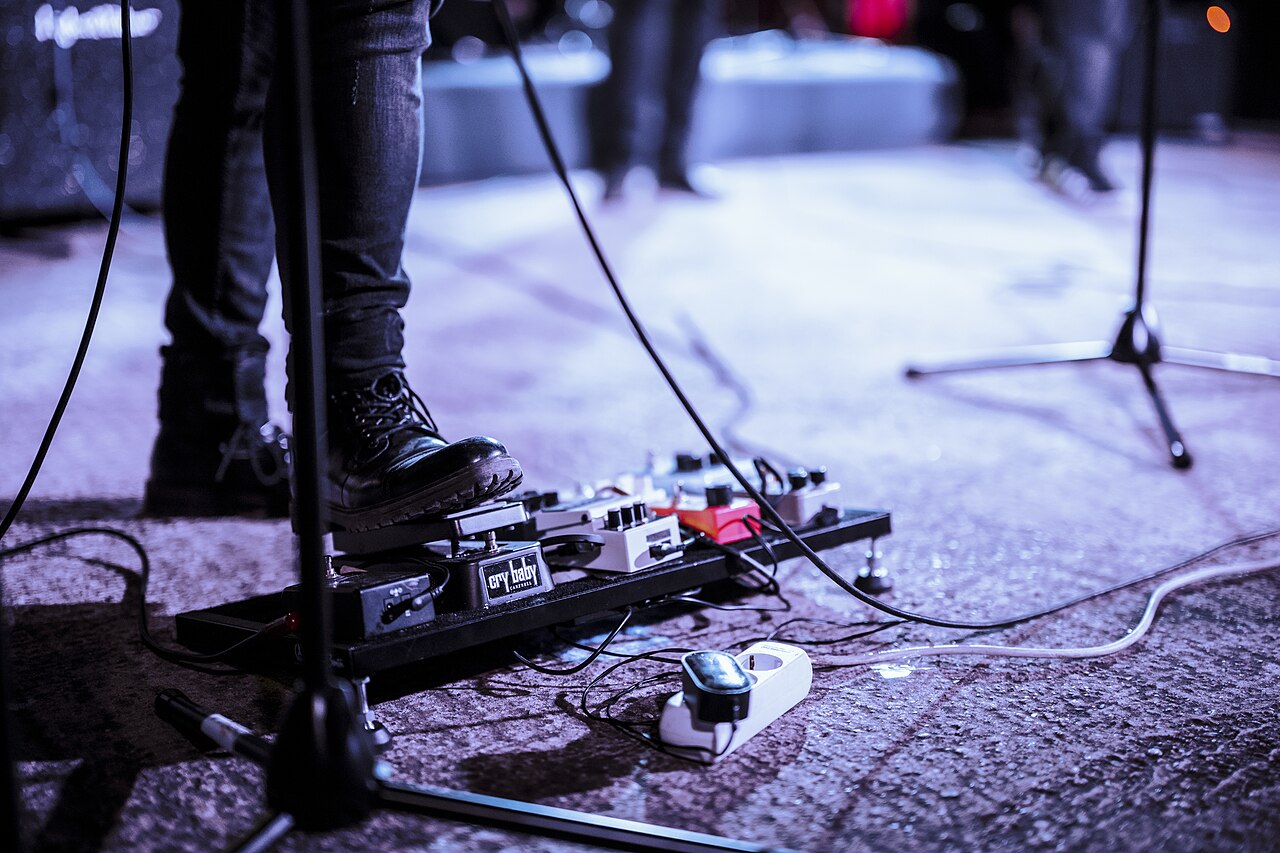
- A guitarist using an effects pedal on stage: Shixart1985, Wikimedia Commons, CC BY 2.0.
- A Walrus Audio Julia chorus and vibrato pedal: Guitar Chalk, Wikimedia Commons, CC BY 2.0.
- A Walrus Audio Julia chorus and vibrato pedal, close up: Guitar Chalk, Wikimedia Commons, CC BY 2.0.
Latest News
Related
On This Day
Monday 9 November
From this week: