The Secret He Kept For Thirty Years: Inside the Keeley Halo Andy Timmons Dual Echo
Keeley Halo Andy Timmons Dual Echo guide: full specs, five rhythm modes, verified players, tone settings, Halo Core comparison and honest buying advice.
For most of his career, Andy Timmons carried his delay sound around in a suitcase. Two Electro-Harmonix Deluxe Memory Mans running one into the other, enormous boxes with foot-operable levers bolted to their mix knobs so he could ride the effect level mid-solo. Before that, a pair of Echoplex EP-3 tape units. It was heavy, it was fragile, it ate an absurd amount of pedalboard, and it produced a sound that other guitarists spent years trying to reverse-engineer and mostly failed to.
In June 2022, he stopped hiding it. The Keeley Halo Andy Timmons Dual Echo is that thirty-year experiment reduced to a compact stereo enclosure with two footswitches, and the sound that took two vintage delays and a great deal of foot choreography to produce is now factory preset 1A.
This is a guide to what the Halo actually is, how its deceptively deep interface works, what independent reviewers found when they put it on the bench, which working guitarists have one on a documented pedalboard, and — importantly — the one thing about the name “Dual Echo” that almost every buyer misunderstands before they open the box.
Origin: The Problem Timmons Was Actually Trying To Solve
Andy Timmons is not a guitarist you would predict as the face of an ambient delay pedal. Born in 1963, he came to public attention in the late-1980s glam-rock band Danger Danger — a million albums, MTV rotation, arena support slots — before leaving to build a solo career and a parallel life as one of the most respected session and clinic players in America. He spent years as Olivia Newton-John’s musical director, cut sessions with Kip Winger, Paul Stanley, Paula Abdul and Simon Phillips, and has shared stages with Steve Vai, Joe Satriani, Eric Johnson, Mike Stern and Ace Frehley. His long-running Ibanez signature series traces back to an AT100 prototype from 1994 that he still plays.
What connects all of that is a very particular obsession: making a single sustained note sound enormous without burying it. Timmons is a melodic player. His signature pieces are essentially instrumental songs rather than solos, and they live or die on how much air surrounds a held note. Delay is not decoration in his rig — it is the thing that makes the melody read as a melody.
Two Memory Mans, Two Echoplexes, One Timeline
Timmons has been unusually straightforward about the chain of failed and partial solutions that led to the Halo. Speaking to Guitar World around the launch, he described wanting “the ultimate dual echo sound,” and listed the stops along the way: a pair of Echoplex EP-3 tape units; then two Electro-Harmonix Deluxe Memory Man pedals running into each other; then the Strymon Timeline, which he credited with replicating those sounds.
The Timeline is where the story gets interesting, because by any objective measure it does more than the Halo. It has vastly more algorithms, deeper editing, MIDI, and a preset architecture built for players who want a different delay on every song. Timmons walked away from it on purpose. His stated reason was simplicity: he described himself as a simpler player now, someone who does not need a thousand presets or that much flexibility.
That is the design brief for the Halo, and it explains almost every decision inside it. This is not a delay workstation aiming to out-feature the Timeline or the Boss DD-500. It is a pedal built to get one specific, hard-won sound instantly right, and then to offer a modest, well-chosen set of alternatives around it.
What “Halo” Actually Describes
The name is not marketing abstraction. Timmons explained it as a visual image of the tone: the centre of the note stays put while the echoes gently feather away from it and start to detune at the tail end. That detuning at the end of the repeat tail is the whole trick. It is why the effect reads as a glow around the note rather than as a series of discrete repeats behind it.
Keeley’s own description leans on the same idea — notes that dance rhythmically until the repeats almost become reverb diffusion, held together by tape-style modulation, saturation and compression. Guitar Player‘s Jude Gold, reviewing it in September 2022, described the dovetailing echoes gradually diffusing into a reverb-like wash, and noted the specific reason it does not sound like a conventional stereo delay: the modulated repeats do not ping-pong hard left and right, they drift in time on each side of the mix while the dry signal stays untouched in the middle.
That is worth reading twice, because it is the single most useful sentence anyone has written about this pedal. The Halo is not a wide stereo delay. It is a delay that decorrelates its two sides in time rather than in position, which produces width without the seasick left-right bouncing that makes ping-pong delays hard to sing over.
Launch, Price and Positioning
Keeley Electronics announced the Halo on 10 June 2022, with availability at dealers worldwide the same day at 12pm CST, street price $299. The instruction manual is dated 28 June 2022. Premier Guitar carried the launch release on 10 June; Guitar World‘s news piece followed on 13 June.
Robert Keeley founded the company in Oklahoma in 1998 — the brand marked its 25th anniversary in September of the year the Halo’s sibling products were rolling out — and built its early reputation on compressor and Tube Screamer modifications before moving into original designs. By 2022 the company had a settled format for its digital pedals: a compact enclosure, two soft-touch footswitches, five knobs with a press-and-hold alternate layer, a mini toggle, stereo I/O and preset storage. The Halo shares that chassis and control layout with the Keeley Eccos delay/looper and the Hydra stereo reverb and tremolo, and Robert Keeley stated at launch that a new circuit board gave the Halo an even lower noise floor than those siblings.
At $299 the Halo landed in an awkward but defensible spot — well above the Boss DD-8 and TC Electronic Flashback 2 tier, roughly level with the DD-500, and comfortably below the Timeline. What it sells at that price is not feature count. It is one sound that nobody else has.
Specifications
How the Interface Actually Works
The Halo looks like a five-knob delay. It is closer to a nine-parameter delay with a preset manager, and the learning curve is real. Premier Guitar’s Charles Saufley, reviewing it on 21 September 2022 and scoring it 4.2, was direct about the trade-off: he flagged the abundance of delay tones and shaping power as the pedal’s strength and the close quarters of the switches and dual-function controls as its cost, noting they are tricky to change on the fly.
The Two Control Layers
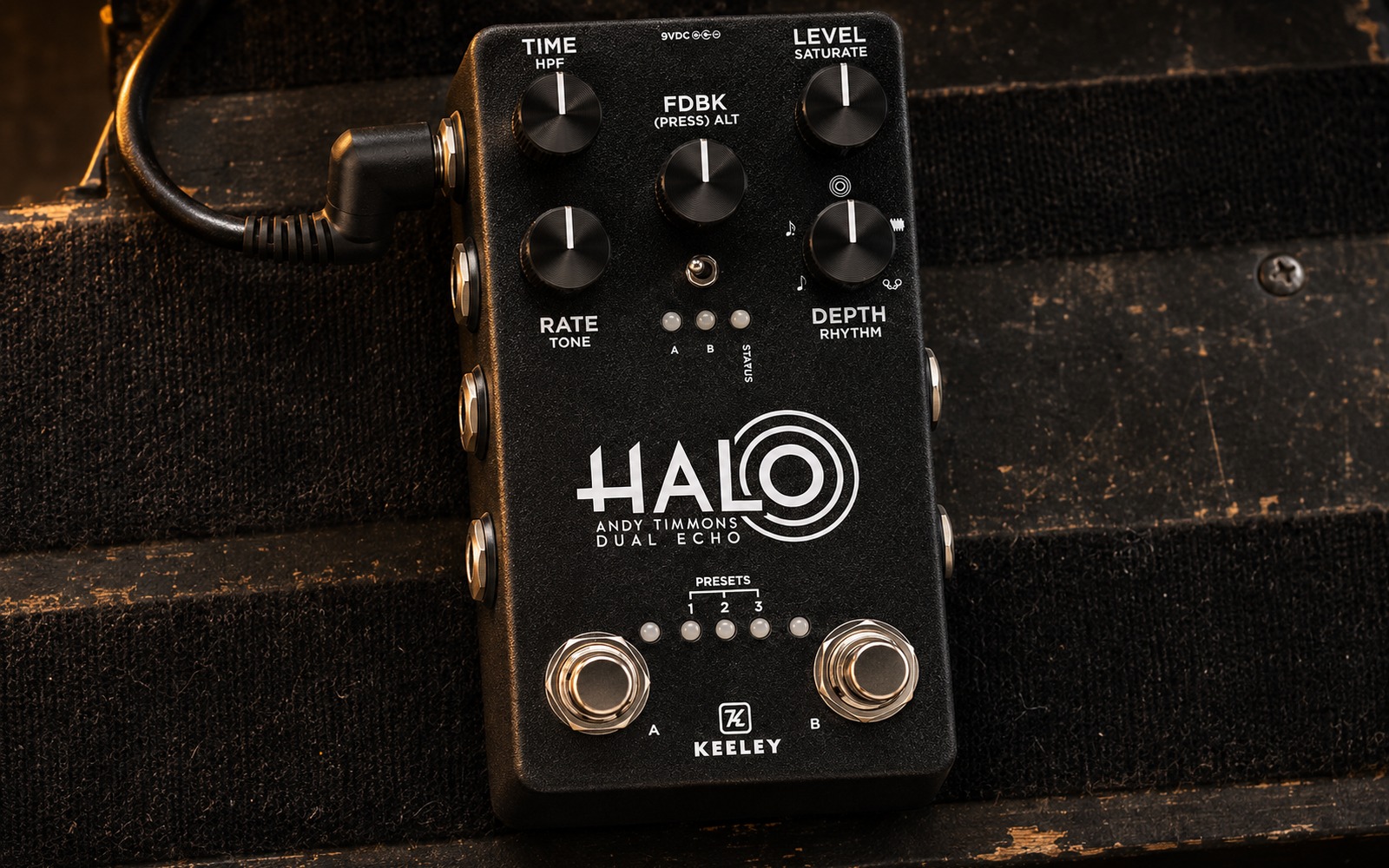
The top layer is conventional. Time sets delay length. Level sets how loud the repeats are. FDBK sets how many there are. Rate and Depth set the modulation.
Press and hold the FDBK knob — which sits slightly proud of the others, deliberately, so you can hold it with a toe — and the same five knobs become a second set of controls. Time becomes the High Pass Filter. Level becomes Saturate. Rate becomes Tone. Depth becomes the Rhythm selector.
That second layer is where the Halo separates itself from ordinary digital delays. The high pass filter sits in the feedback loop, so raising it progressively strips low end out of each successive repeat rather than just from the first one — the classic trick for keeping long delays out of the way of a bass player. Saturate emulates tape compression and rolls off highs as it increases. Tone is a straightforward low-pass on the delayed signal. Between the two filters you can go from a glassy digital repeat to something convincingly dark and worn without touching the dry signal at all.
The Five Rhythm Modes
Turning counter-clockwise to clockwise, the Rhythm control moves through Quarter, Dotted Eighth, Halo, Bucket Brigade and Multi-Tap Tape Delay. Halo sits at the twelve o’clock position and is marked on the enclosure with a circular halo graphic.
Quarter and Dotted Eighth are exactly what they say — the two subdivisions that account for the overwhelming majority of rhythmic delay use in rock. Bucket Brigade emulates a stereo rackmount analog delay of the sort that filled 1980s studio racks. Multi-Tap Tape emulates a vintage multi-head tape echo, in the tradition the Boss RE-2 Space Echo works from.
Halo mode is the compound one. Keeley’s own description of the simplified Halo Core states it plainly: Halo mode is the combination of the quarter-note and dotted-eighth modes. Jude Gold at Guitar Player described it as a “golden ratio” — quarter-note plus dotted-eighth-note stacked echoes — and identified that stacking as the key part of the Timmons sound. Two rhythmic grids running against each other is why the repeats stop reading as repeats and start reading as diffusion.
Footswitch Grammar
Keeley calls the footswitch behaviour the Smart Stomp System, and it packs a lot into two switches. Tap either switch to engage that side. Press and hold the active side’s switch to enter tap tempo; the bypass LED flashes the tempo back at you and tap mode times out after five seconds. Press and hold the inactive side’s switch for maximum feedback — the infinite hold or freeze function — which drops back to your set feedback level as soon as you release it. Hold both switches for a third of a second to advance the preset bank. Tap the FDBK knob to enter preset mode, cursor with the footswitches, then hold A or B to write.
Two power-up combinations set global behaviour. Hold both footswitches while connecting power to toggle trails on or off; trails, which give you spillover when you switch from Side A to Side B within a bank, are on by default. Hold the Side A footswitch and the FDBK knob while connecting power to toggle the dry signal on or off, which is how you set the pedal up for a parallel effects loop.
The Eight Factory Presets
| Bank | Side A | Side B |
|---|---|---|
| 1 | Andy’s Halo | Dotted Eighth |
| 2 | Quarter | Slapback |
| 3 | Vintage Multi Tap | Halo Reverb |
| 4 | Rackman BBD | Long Quarter |
All eight are overwritable. Gold’s observation about this is the funniest true thing anyone has said about the Halo: you technically have eight slots, but realistically seven, because nobody is ever going to overwrite 1A.
Honest Correction: “Dual Echo” Does Not Mean Two Delays At Once
This is the most important paragraph in this article, and it is the thing the marketing copy genuinely obscures.
The name is “Dual Echo.” Keeley’s copy says the Halo “functions as 2 delay pedals” and describes two delays that “work in tandem.” Reasonable people read that and conclude they can run Side A and Side B simultaneously, stacking two independent delays the way Timmons stacked two Memory Mans.
You cannot. Keeley’s own manual states it flatly: only one side of each preset bank can be active at a time. Side A and Side B are two saved sounds you switch between, not two engines you run together. Trails mode lets the outgoing side spill over as the new one takes hold, which softens the transition beautifully, but at no point are both delays processing your signal in parallel.
One buyer on Keeley’s own product page documented exactly this disappointment in August 2023 — he had hoped to run two clean delays into each other for a Queen “Brighton Rock” style effect, and reported that the pedal cannot do it. He gave it five stars anyway, which tells you something about how good the rest of it is, but he was right to flag it.
So where is the “dual” in Dual Echo? It is inside the Halo algorithm. Halo mode itself is two subdivisions stacked — quarter plus dotted eighth — running as one compound rhythm. That is the dual echo Timmons chased with two Memory Mans, and Keeley put it inside a single mode rather than across two footswitches. The A/B architecture is a separate, additional convenience.
If you specifically need two independent delay lines running in parallel, the Halo is the wrong pedal and no firmware update will change that. Look at a Line 6 DL4-lineage multi, a DD-500 in dual mode, or two separate pedals.
What Independent Reviewers Found
Premier Guitar — Charles Saufley, 21 September 2022
Saufley scored the Halo 4.2 at $299 street. His praise centred on the range and power of the tone-shaping tools rather than on any single sound, and his criticism was ergonomic: a lot of functionality in a small box means cramped switches and dual-function controls that are awkward to change mid-song.
Two of his observations are practically useful. First, he advised new owners to start in quarter-note mode and get their bearings there before exploring the subdivision-based presets — good advice, because the compound modes make it genuinely hard to tell what the Time knob is doing. Second, and more importantly, he found the bucket brigade and tape voices became his favourites specifically because the virtual tape saturation and the darkening available from the high pass filter and tone control let them sit fat and dusky without collapsing into mush under overdrive or fuzz. He described the balance of headroom and personality as a difficult tightrope that Keeley walked well.
That last point deserves emphasis for anyone shopping. Ambient delays that sound gorgeous on a clean amp frequently turn to porridge in front of a distorted one. The Halo’s repeats sit tastefully behind the note even at fairly wet mixes, which is exactly why it works in a high-gain rig.
Guitar Player — Jude Gold, 23 September 2022
Gold’s review is the more evangelical of the two and the more useful on the Timmons angle specifically, since he had heard the original Memory Man rig. His verdict called the pedal versatile across digital delay, chorus and slapback through to what he termed heavenly modulated echo treatments. His one substantive complaint was aimed squarely at a specific buyer: hard-core ping-pong fans should note that although the Halo produces beautifully stereophonic echoes, true left/right stereo repeats are not on offer.
He also confirmed something the spec sheet does not: running the Halo in mono, the way Timmons ran his Memory Mans, still works. It is not a pedal that only makes sense in stereo. Stereo through two amps expands it geometrically, in his description, but the mono sound stands on its own.
Rabea Massaad — video demonstration
Rabea Massaad (Dorje, Toska) produced one of the more widely-viewed independent demonstrations. He praised the tone-shaping depth for a delay — specifically the high-pass, the modulation depth and the range of the Rhythm control — and called the A/B side arrangement his favourite feature beyond the raw sound, on the grounds that it is compact and packed with features.
One correction: in that demonstration he refers to three presets with two sides each. The pedal actually has four banks with two sides, for eight slots. It is a trivial slip in a live demo, but it has been transcribed and repeated, and if you are counting storage before you buy, the manual’s figure of four banks is the correct one.
Famous Players: Who Actually Has One
Signature pedals present a specific evidence problem. The named artist obviously uses it — that is the deal — but the pedal’s reputation depends on whether anyone else does. Below, the evidence is separated into tiers and the weaknesses are stated.
Tier 1: Andy Timmons Himself
Trivially confirmed, but the details matter. Timmons brought his full pedalboard to Sweetwater Sound for a filmed walkthrough with Don Carr — his second visit that year — and the Halo is on it alongside his JHS signature drive, Keeley overdrives, an Ibanez Tube Screamer-lineage circuit, a Xotic SP Compressor and a Dunlop Cry Baby feeding a GigRig G2 switching system. The board is notably small for a player of his standing; his stated design philosophy is subtraction.
Equipboard also credits the Halo on Timmons’ albums Electric Truth (2022), Our Requiem (2024) and Recovery (2025). Treat the Electric Truth credit with mild caution on timing grounds — the album was released 1 April 2022 and the pedal shipped 10 June 2022, so any use would have been of a pre-production unit or of the underlying rig the pedal was modelled on. That is entirely plausible given he co-designed it, but it is not the same claim as “recorded with the production pedal.”
One reported detail is worth knowing because it explains a common complaint. Timmons is said to keep an expression pedal on his board riding the delay level in real time, which is why the factory 1A preset has a wetter, louder repeat balance than most players would leave permanently engaged. That is consistent with Guitar Player‘s account of the foot levers he bolted to his Memory Man mix knobs. If preset 1A feels too wet to you out of the box, you are not doing it wrong — you are hearing a setting designed to be ridden.
Tier 2: Rig-Documented Users (Photo or Video Evidence)
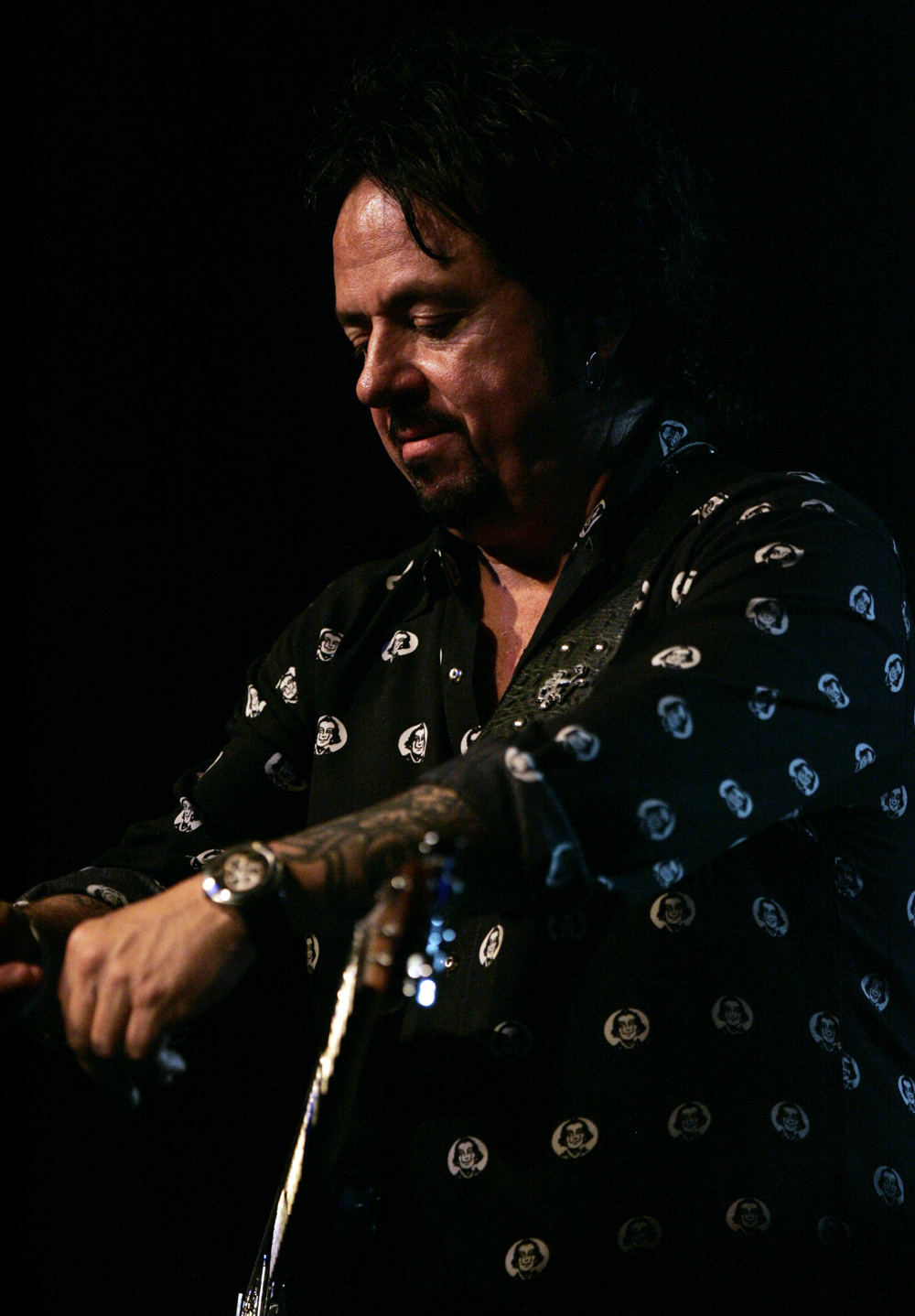
Steve Lukather is the headline. The Halo appears on Lukather’s pedalboard in an Instagram post by Ulrich Rodenberg documenting Toto’s 2025 Dogz of Oz tour. Caveat stated plainly: this is a third-party board photograph, not a filmed rundown or a statement from Lukather, and one photo documents one board at one point in a tour. But a session guitarist with Lukather’s discography putting a signature delay on a working arena board is meaningful.
Tim Pierce — the Halo is visible on his pedalboard at the 22:45 mark of his Premier Guitar Rig Rundown and studio tour. Pierce is one of the most-recorded session guitarists in Los Angeles, and his rundown is unusually thorough, showing both a mobile session board and a separate studio effects rack. Strong evidence.
Fredrik Åkesson of Opeth can be seen using the Halo at the 2:25 mark of the official “Paragraph One” playthrough video. This is the most interesting entry on the list, because it is the furthest from the pedal’s assumed audience. Opeth’s guitar sound is built on dense clean passages and heavy riffing in equal measure, and a delay that stays articulate under gain is exactly the tool for it.
Lincoln Brewster — photographed with an Andy Apple Red Halo on his live board at a Worship on the Water launch event in Zeeland, Michigan on 10 May 2025. Brewster is one of the most influential guitarists in the contemporary worship world, a scene where big, singing, melodic lead lines are the whole idiom. If any genre was engineered for the Halo sound, it is that one.
John Bohlinger — the Nashville session player and long-time Premier Guitar Rig Rundown host has the full Halo on his pedalboard in a Premier Guitar Instagram post, and a Halo Core at the 5:38 mark of his own “Ideal Nashville Gigging Pedalboard” video. Two separate sightings of two different models is a decent indicator of genuine preference rather than a one-off loan.
Andy Wood demonstrates the Halo as one of three pedals in his own “Tres Andres” video (Woodshed Ep. 102), a three-pedal minimal-rig exercise. Note that Equipboard tags Wood as a Rascal Flatts member; that band association is unverified here, and he is more accurately described as a Nashville-based guitarist and mandolinist known for his clinic and education work.
Josh Meader — the Halo appears on his live pedalboard in a photograph by Massimiliano Laconi circulated on Facebook.
Tim Lerch discusses using the Halo in his interview on the Ask Zac podcast (episode 220). Lerch is a jazz and Telecaster player of considerable reputation, which widens the pedal’s demographic in an unexpected direction.
Elliot Easton of The Cars is documented with a Halo Core — not the full Halo — in Plasmaetic Purple on a studio board. Honest caveat, and it is a significant one: the board was assembled by Sean Spears of Keeley Electronics and the photo surfaced in Keeley’s own users’ forum. It is a genuine photograph of a genuine board, but the manufacturer built it, which places it somewhere between a customer sighting and a brand endorsement.
Brett Papa has a Halo Core on his pedalboard per an Instagram post by pedalboard builders XAct Tone Solutions.
Tier 3: Demonstrators and Commercially-Linked Sightings
Two names on the aggregated lists need a label rather than a credit.
Rabea Massaad demonstrated the Halo on video with genuine enthusiasm, but a demonstration video is not rig evidence. Demo work is a professional relationship with a retailer or brand, and the pedal appearing in a video does not establish that it lives on his board.
R.J. Ronquillo is shown with a Halo at the 17:07 mark of his amp video — and the same video carries a retailer affiliate link for the pedal in its description. That commercial relationship does not make the sighting false, but it does mean the pedal’s presence and the video’s monetisation are not independent of each other. Stated here rather than laundered into a clean credit. Equipboard additionally tags Ronquillo as a Stone Sour member; that is not verified here, and he is better described as a session, demo and clinic guitarist.
Jarmo Hynninen confirms Halo use in his own YouTube description, on a video that is an Andy Timmons cover. Honest and self-declared, but a hobbyist-tier credit rather than a professional one.
A Note On Band Attributions
Gear databases attach band tags to artists with roughly the same reliability as they attach gear to artists, which is to say inconsistently. On the Halo’s aggregated artist list, Steve Lukather is tagged under a 2024 charity project rather than Toto, Andy Timmons is tagged under a guitar-festival jam rather than the Andy Timmons Band or Danger Danger, and both Ronquillo and Wood carry band tags that could not be independently confirmed. If you are researching a pedal by scanning artist lists, verify the band as carefully as you verify the pedal.
Tone Recipes and Settings
1. The Timmons Default, Tamed
Start at preset 1A. Leave Rhythm on Halo. Then pull the Level knob down by roughly a third. That is the single adjustment most players need, because 1A is voiced for a guitarist who is riding the delay level with his foot. Everything else in that preset — the modulation depth, the saturation, the filter positions — is the sound you bought the pedal for. Do not touch it until you have played through it for an hour.
2. Full Stereo Halo
Two amps, Halo mode, dry signal left intact. This is where the pedal justifies its price. The width comes from the two sides drifting in time rather than bouncing in position, so it stays stable under a vocal and does not smear when you play fast. If you have never run a delay in true stereo, this is the pedal to do it with.
3. Halo As Reverb
Preset 3B is labelled Halo Reverb and it is the template. Short Time, high Feedback, Level moderate, modulation on, both filters pulling brightness out. The repeats arrive too close together to be heard individually and the result functions as an ambience rather than an echo. Useful if you want space but already have a reverb doing something else — or if you want to run this and a Strymon BigSky-class reverb without the two fighting.
4. Dotted-Eighth Rhythmic
Preset 1B, Rhythm on Dotted Eighth, tap the tempo in with the active footswitch. Pull Feedback back to two or three repeats and keep Level well under the dry signal. This is the arpeggio-multiplier sound and it needs to be quieter than you think — the effect works because the ear only half-registers it.
5. Dark Tape Slapback
Preset 2B as a starting point, Rhythm to Multi-Tap Tape. Time short, Feedback low, Saturate up past two o’clock and Tone rolled down toward the 1000 Hz end. Add a touch of Depth for tape wobble. This is the setting that gets closest to the Boss DM-2W and MXR Carbon Copy territory, and Saufley singled out this general voicing as one of the pedal’s best.
6. High-Gain Long Delay
Rhythm on Quarter or Halo. Time long, Feedback moderate, and — this is the important part — High Pass Filter up toward the 300 Hz end. Cutting bass out of the feedback loop is what stops long repeats turning into mud under distortion. Add Saturate to taste. This is how you get the Halo to work in front of a genuinely aggressive amp, and it is the technique that explains why an Opeth guitarist has one.
7. Ambient Chorus and Flanger
Keeley’s own tip: set Time and Feedback both very low and turn the modulation up. At very short delay times with modulation, a delay becomes a chorus, and shorter still with feedback becomes a flanger. The Halo does both convincingly, which is a genuine bonus effect rather than a marketing claim.
8. The Freeze Pad
Engage a side, play a chord, then press and hold the opposite footswitch. Maximum feedback holds the sound as a pad for as long as your foot stays down, and you can play over it. Release and it decays back to your set feedback. It is the most immediately impressive party trick the pedal has, and unlike a looper it requires no arming or timing.
All of these assume you start from a factory preset and adjust, which is the fastest way to work with this pedal. Remember that the status LED lights when a knob has been moved off its stored position, and that turning the knob until the LED goes out returns you to the saved value — a genuinely excellent feature for finding your way home.
The Halo Family: Variants and Siblings
Andy Apple Red (Sweetwater Exclusive)
A retailer-exclusive colourway of the standard Halo at the same $299, electronically identical to the black version. Keeley subsequently offered the matching Remote Switcher in the same finish. The Lincoln Brewster board photograph shows an Andy Apple Red unit.
HALO Light Bending Edition (2023)
A Keeley Custom Shop run with a clear acrylic top, CNC-machined and engraved by Ray Gerhart, limited to 100 units because of the engraving time involved. Keeley’s own SKU for it is CLEAR-TOP-HALO and the product page is now filed under Archive — this one genuinely is discontinued. The electronics are unchanged from the standard Halo; one owner reviewing both on Keeley’s site put it succinctly, noting that the internal organs are the same. Buy it for the object, not for the sound.
HALO Core (2024) and “New Halo Core”
The Halo Core is the simplification, and for a lot of players it is the smarter purchase. Keeley’s current product page is titled “New Halo Core” at $249 and describes three modes selected by a mini toggle: Halo, Quarter Note and Dotted Eighth. It drops the preset banks and the A/B architecture entirely in favour of a dedicated tap tempo footswitch, keeps true stereo I/O, keeps the alternate High Pass Filter, Tone and Saturate controls, keeps switchable trails or true bypass, and adds all-wet and all-dry modes designed around effects-loop use. Physical size is 3.9 in / 99 mm wide, 2.6 in / 66 mm high and 4.9 in / 124.5 mm deep, and it runs on 9–18V DC at 130 mA with no battery.
Buying caution — there appear to be two generations of Core. Keeley’s page is titled “New” Halo Core; Timmons’ own comment on that page states that “this new version has a third mode with the dotted eighth setting,” which he calls the ultimate subdivision for tap tempo textures, and describes it as the best-sounding Halo yet. Customer reviews on the same page independently refer to a “Halo Core V2” and to the product going back into production. Taken together, the strong implication is that an earlier two-mode Core existed and the current one adds dotted eighth. Keeley has not published a formal version-change document, so the safe check when buying used is simple: count the positions on the mini toggle. Three modes means current-generation.
Eccos and Hydra
The Halo shares its enclosure, control layout and footswitch grammar with two other Keeley pedals: the Eccos delay/looper and the Hydra stereo reverb and tremolo. If you already own one of those, the Halo will feel immediately familiar. Keeley also sells a Remote Switcher that works across all three. Robert Keeley’s claim at launch was that the Halo’s revised circuit board pushed its noise floor below both siblings.
How the Halo Compares
Versus the Strymon Timeline
The most instructive comparison, because Timmons made it himself. The Timeline has more algorithms, deeper editing, MIDI, and a preset system built for players managing dozens of song-specific sounds. The Halo has one sound the Timeline does not, a fraction of the menu depth, and no MIDI at all. If you are a touring player with a MIDI switching system and a per-song patch list, the Timeline is the right tool and the Halo will frustrate you. If you want one sound instantly and three or four alternatives around it, the Halo wins on ergonomics and on that one sound.
Versus the Boss DD-500
The DD-500 is the feature-count champion at roughly the same money: twelve modes, 297 memories, MIDI, a display, deep parameter editing, and genuine dual-delay routing. It will do everything the Halo does, technically, and considerably more. What it will not do is get you to Timmons’ sound without an editing session, and it asks you to interact with a screen. This is a philosophy choice more than a spec comparison.
Versus the Boss DD-8 and DD-3
The DD-8 and the venerable DD-3 are the practical baseline the Halo has to justify itself against. Both are excellent, both are far cheaper, both are compact-board friendly, and neither has anything resembling the Halo’s compound rhythm mode or its filter-and-saturation layer. If you want a delay, buy a DD-8. If you want this delay, that substitution does not work.
Versus the Keeley Caverns V2
Keeley’s own Caverns Delay + Reverb V2 is the in-house alternative and a very different proposition: delay and reverb together in one compact box at a much lower price, with far less delay depth. The Caverns is the pedal for a player who wants both ambience types handled adequately in one enclosure. The Halo is for a player who wants delay handled exceptionally.
Versus Analog Delays
Against the MXR Carbon Copy, the Maxon AD999 or the EHX Deluxe Memory Man — the actual pedal Timmons was trying to replace — the Halo trades genuine bucket-brigade behaviour for control, repeatability and stereo. Its BBD mode is a good emulation, not a replacement, and purists will hear the difference. What the Halo offers instead is the ability to store that sound, recall it, and put a second one on the other footswitch. Timmons himself chose that trade, having owned the real thing for decades, which is about as strong an endorsement of the compromise as exists.
Versus the TC Flashback 2 and JHS 3 Series Delay
The TC Flashback 2 brings TonePrint programmability and MASH pressure sensitivity at a much lower price; the JHS 3 Series Delay brings three-knob simplicity at lower price still. Both are sensible buys. Neither is trying to do what the Halo does, and neither has stereo of this quality.
Buying Guide
Current Availability
As of September 2026, Keeley’s own store lists both the standard Halo at $299 and the New Halo Core at $249 as out of stock. Read that carefully before concluding anything: neither is filed under the site’s Archive category, and the Halo still carries an Active product tag with a live listing under Multi-Effects and Reverb & Delay. This is a supply situation, not a discontinuation. That distinction matters because a genuinely archived Keeley pedal — the Light Bending Edition, for example — is filed differently, and pricing behaves differently for the two cases.
Practically: the pedal is widely stocked at dealers even when direct is dry, and used prices reported by aggregators start around the $200 mark. There is no scarcity premium on the standard Halo and there should not be one. If a seller is asking above $299 for a used standard black or Andy Apple Red unit, walk away.
Halo Or Halo Core?
Buy the full Halo if you want stored presets, five rhythm modes including BBD and tape, A/B switching with spillover, expression pedal control over any parameter, and remote switching. Buy the Halo Core if you want the Halo sound and the two everyday subdivisions with a dedicated tap tempo switch, less to learn, a slightly smaller footprint, more flexible power, and $50 back.
The honest read is that a majority of Halo owners use preset 1A and very little else. Several of Keeley’s own customer reviewers say exactly that. If you recognise yourself in that description, the Core is the better buy and the tap tempo footswitch alone may justify it.
Who Should Not Buy This
Three groups. Players who need two delays running simultaneously — the pedal cannot do it. Players running a MIDI-controlled rig who need program changes from a central controller — there is no MIDI, and the TRS remote jack is not a substitute for it. And players who genuinely want ping-pong stereo, which Guitar Player flagged explicitly as absent.
Ownership Notes
The 160 mA Problem
This is the practical issue most likely to spoil your first evening. The Halo draws 160 mA at 9V. That is more than three times a typical analog overdrive and more than many isolated power supply outputs deliver. It is 9V only — no 18V operation, no battery compartment. Check your supply before you buy: you need an output rated for at least 160 mA, and if you are running a daisy chain, you almost certainly need to stop. Note also that the Halo Core is a different animal at 9–18V and 130 mA; do not assume specs carry across.
Expression Pedal Requirements
The expression jack needs a TRS stereo expression pedal, not a volume pedal or a TS cable. Plugged in, it defaults to controlling Level, which is the setting Timmons uses. You can reassign it to any parameter, assign several parameters at once, set partial ranges, or reverse the heel and toe positions, and expression assignments save per preset. Plugging a mono cable into the same jack turns it into an external tap tempo and hold switch for the active side instead — a genuinely clever piece of jack sharing, and worth knowing so you do not buy hardware you do not need.
The Latching Remote Quirk
The remote jack uses TRS, with the tip controlling Side B and the ring controlling Side A. It defaults to momentary switches; you can put it into latching mode by holding the Side A bypass switch while applying power. Read Keeley’s manual note before you do, because latching mode changes the on-pedal behaviour in a non-obvious way: the on-unit A switch stops turning the preset on and off, and because the on-unit B switch is tied directly to the remote jack’s tip, it behaves as though it has been pressed twice for each single press. If your Halo has suddenly started acting strangely, check whether it is in latching mode. Repeating the power-up combination returns it to momentary.
Factory Reset
Unplug power, hold the FDBK knob plus both footswitches, reconnect power, release. All the lights cycle to confirm. Worth knowing before you start overwriting presets, because it is the only way back to the shipped versions of banks 2 through 4 — and to 1A, if you do the unthinkable.
Learning Curve
Both major reviews flagged it and both were right. There is no display, four of the nine parameters live under a press-and-hold, and preset management is done with your feet. Keeley’s manual is clear and short; read it once properly rather than discovering the footswitch grammar by accident on a gig. Saufley’s advice bears repeating: start in quarter-note mode.
Frequently Asked Questions
Can the Keeley Halo run two delays at the same time?
No. Despite the “Dual Echo” name, Keeley’s manual states that only one side of each preset bank can be active at a time. Side A and Side B are two saved settings you switch between, with optional trails spillover during the transition. The “dual” refers to the Halo algorithm itself, which stacks quarter-note and dotted-eighth subdivisions inside one mode.
How many presets does the Halo have?
Eight — four banks with a Side A and a Side B each, all user-writable. Some demonstrations mistakenly say three banks; the manual says four.
What exactly is “Halo” mode?
A compound rhythm that combines the quarter-note and dotted-eighth subdivisions, running with modulation, tape-style saturation and compression. Timmons describes the resulting sound as the note’s centre staying put while the echoes feather away and detune at their tails. It sits at twelve o’clock on the Rhythm control, marked with a halo graphic.
How much power does the Keeley Halo need?
9V DC negative tip at 160 mA. There is no battery option and it does not run at 18V. Many isolated supply outputs and virtually all daisy chains will not deliver enough current, so verify your supply’s rating before purchase.
Is the Keeley Halo discontinued?
No. As of September 2026 it shows as out of stock on Keeley’s own store but remains listed as an active product under Multi-Effects and Reverb & Delay, unlike genuinely archived models such as the Light Bending Edition. It is available through dealers and on the used market.
Halo or Halo Core — which should I buy?
The Core at $249 gives you the Halo sound plus quarter and dotted-eighth modes, a dedicated tap tempo footswitch, true stereo and the same alternate tone controls, without presets or A/B switching. The full Halo at $299 adds eight presets, BBD and tape modes, A/B with spillover, expression control and remote switching. If you expect to live on preset 1A, buy the Core.
Does the Halo work in mono?
Yes, and well. Timmons ran his original two-Memory-Man rig in mono for years. Guitar Player found the mono sound inspiring in its own right, with stereo through two amps expanding it substantially rather than being a requirement.
Does the Halo have MIDI?
No. Preset changes are made with the footswitches, the mini toggle, or an external switch through the TRS remote jack. If you need MIDI program change from a central controller, look at the Boss DD-500 or the Strymon Timeline instead.
Will it get lost or muddy under high gain?
Less than most. Premier Guitar specifically praised the Halo’s ability to stay clear under overdrive and fuzz, and the high pass filter in the feedback loop is the tool for it — raise it toward 300 Hz and each successive repeat loses more low end, which keeps long delays out of the way of the riff.
What is the infinite hold and how do I use it?
With one side engaged, press and hold the opposite footswitch. Feedback jumps to maximum and holds the current sound as a pad until you release, at which point it returns to your stored feedback level. You can play over the held sound. Keeley redesigned this feature for the Halo Core.
The Verdict
The Halo is an unusual signature pedal because the signature is not a distortion voicing or a paint job — it is a piece of rhythmic architecture that one guitarist worked out over thirty years using equipment that was never designed to do it. Two Echoplexes, then two Memory Mans with levers on them, then a Timeline programmed to imitate the arrangement. What Keeley and Timmons did was skip the imitation stage and build the compound rhythm directly into an algorithm.
Judged as a general-purpose delay, it is very good and slightly overpriced: the DD-500 and Timeline do more, the DD-8 does enough for less, and the interface will cost you an evening. Judged as a delivery mechanism for one specific sound that has no substitute, it is a bargain, and the fact that Steve Lukather, Tim Pierce, Fredrik Åkesson, John Bohlinger and Lincoln Brewster all found a use for it across genres that have almost nothing else in common suggests the sound travels further than the signature name implies.
The honest caveats are worth restating: it is not two delays at once, it is not ping-pong stereo, it has no MIDI, and it wants a serious power supply. Get past those and preset 1A does something no other pedal on the market does. Jude Gold reported losing two hours to it on the first evening. That is not a review cliché — it is what the pedal is for.
Image credits
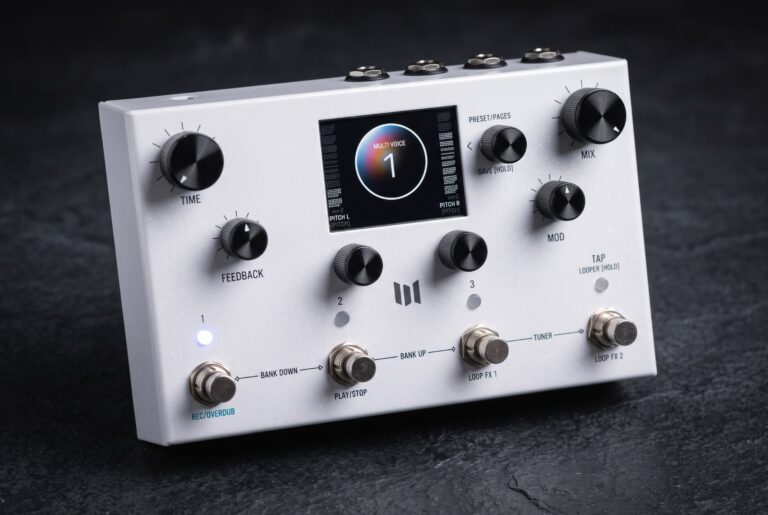
- Top image: GuitarGangsters AI-generated reference illustration, not a photograph.
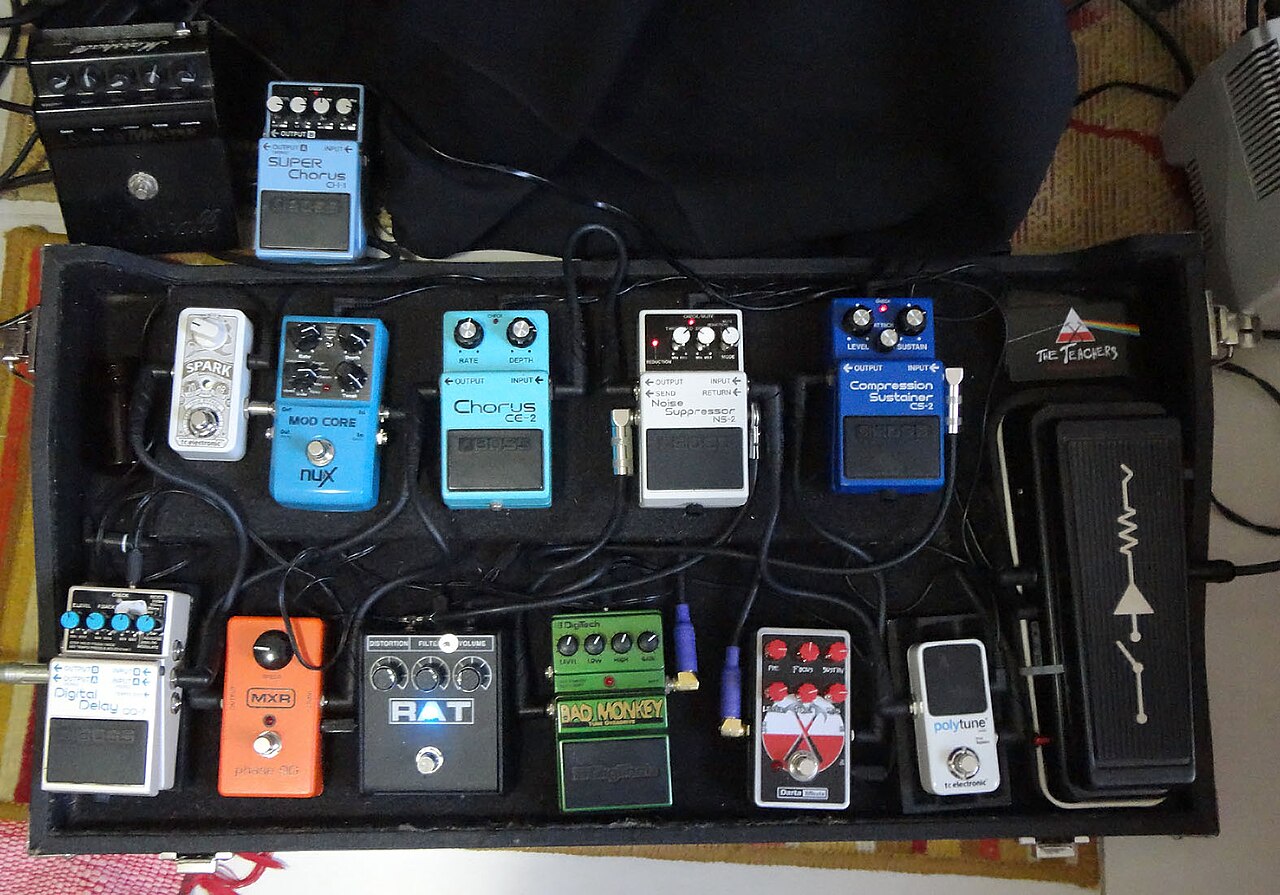
- A pedalboard with a mix of pedals: marcelodonati, Wikimedia Commons, CC BY 2.0.
- A pedalboard with overdrive, wah and fuzz pedals: Michael Morel from Barcelona, Spain, Wikimedia Commons, CC BY 2.0.
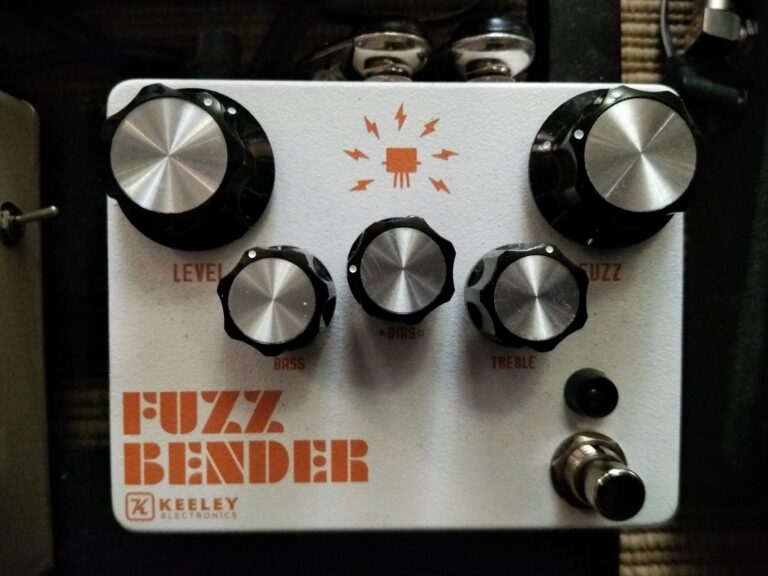
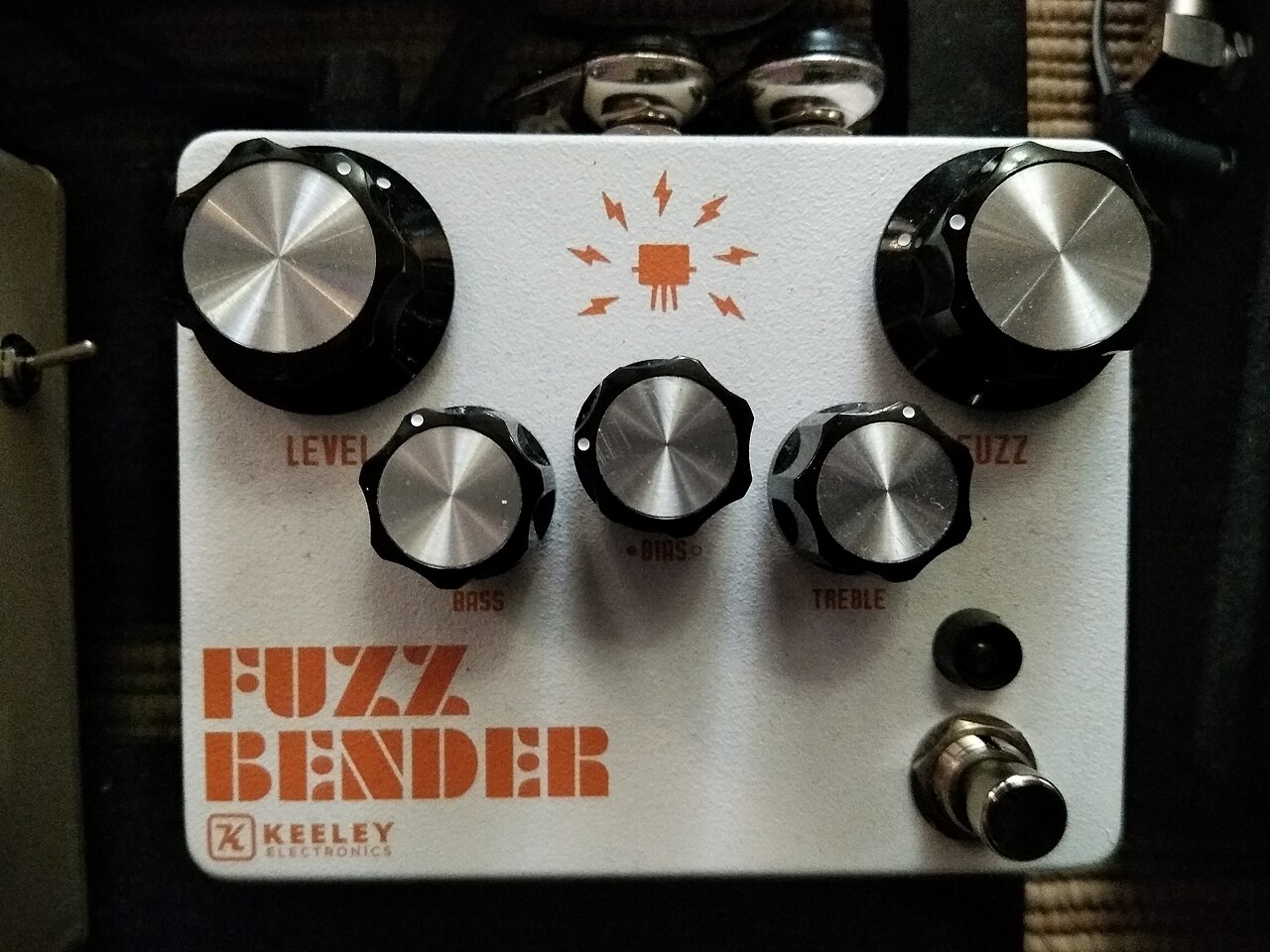
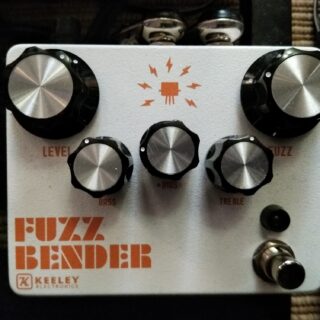
- A Keeley Fuzz Bender pedal: Skimel, Wikimedia Commons, CC BY-SA 4.0.
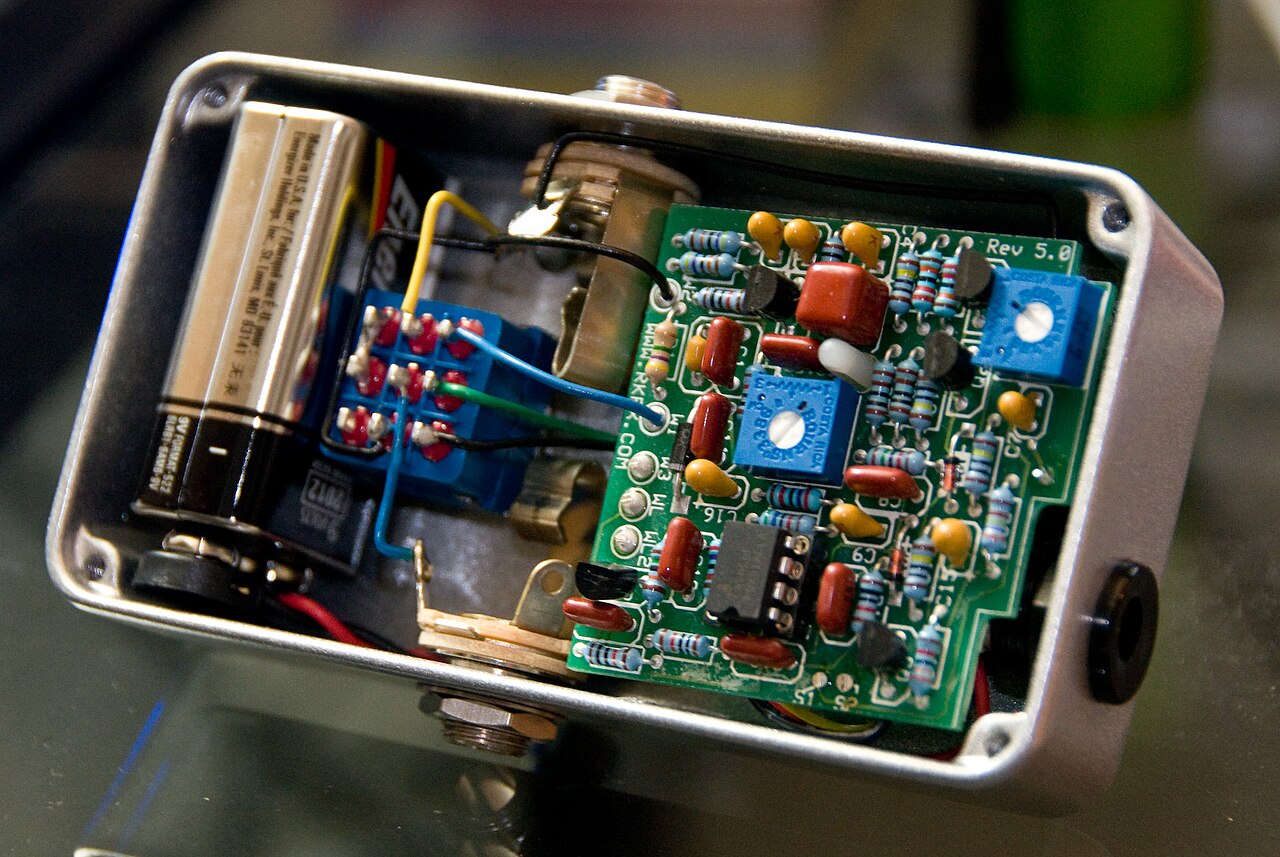
- Inside a Keeley compressor pedal: ArtBrom from Seattle, Wikimedia Commons, CC BY-SA 2.0.
- Steve Lukather: Eva Rinaldi, Wikimedia Commons, CC BY-SA 2.0.
Latest News
Related
On This Day
Monday 9 November
From this week: