When Hindu Mythology Met KT88 Tubes: The Bogner Shiva 20th Anniversary
Bogner Shiva 20th Anniversary: KT88 specs, verified player history, five tone recipes, used buying guide, and FAQ for this discontinued boutique head.
By 2009, Reinhold Bogner had been building hand-wired amplifiers in Los Angeles for two decades. In the boutique amp world, twenty years of survival in Southern California — where gear fashions pivot faster than a whammy bar — meant something. So Bogner did what any self-respecting German-born amp obsessive would do: he celebrated by redesigning two of his most beloved circuits from the ground up. The Bogner Helios 100 and Bogner Ecstasy 101B already existed as expressions of his thinking about raw Marshall-derived dynamics and high-gain virtuosity. The Shiva had always been the third pillar — the versatile middle child that could deliver pristine, room-filling cleans and a smooth, British-flavoured overdrive without the Ecstasy’s complexity or the Helios’s raw Plexi aggression.
For the 20th Anniversary edition, Bogner didn’t simply polish the original Shiva’s chrome and slap a commemorative badge on it. He replaced the power tube section entirely — swapping out the original EL34s for a pair of KT88s — rewrote both the Clean and Dirty preamp circuits, redesigned the boost to work differently than any previous Shiva, and added two new voicing switches to the gain channel. The result was an amplifier that shared the Shiva’s philosophical DNA while departing from the standard version in ways that audiophile tube amp enthusiasts spend years arguing about on forum threads.
The amp was also beautiful in a way that no previous Bogner had been. White Tolex, a plexiglass front panel, and salt-and-pepper grille cloth gave it the look of a bespoke piece of studio furniture rather than a roadworthy working tool — and that turned out to be exactly what it was. The Shiva 20th Anniversary was a short-production run of a two-channel 90-watt hand-wired tube head that has since been discontinued, leaving the used market as the only avenue for players who want one. Given what these amps do in the studio, that scarcity has made them collectible.
To understand why the 20th Anniversary Shiva matters, it helps to understand what the Shiva originally was, why the KT88 tube changes everything about the amplifier’s feel, and which players actually used this specific model — rather than the brand-level artist rosters that typically get recycled across Bogner’s product pages without regard for which amplifier a given guitarist actually plugged into.
A Brief History: The Shiva Lineage
Reinhold Bogner arrived in Los Angeles from Germany in 1989 and quickly developed a reputation for modifying Marshall amplifiers for recording professionals, beginning with Steve Stevens and subsequently working with Michael Landau, Jerry Cantrell (who used a Bogner-modified Marshall with the Fish preamp on Alice in Chains’ early recordings), and others in the high-wattage LA session and hard rock scene. His first production amplifier, the Triple Giant preamp (approximately 25 units, 1989–1990), established his design sensibility: meticulous handwiring, voiced for high-sensitivity application, built as if the circuit were a precision instrument rather than a consumer product.

The Ecstasy followed in 1992 as his flagship, and by the mid-1990s Bogner needed a second production amplifier that could serve players who found the Ecstasy’s three channels and fourteen front-panel controls intimidating. The Shiva, introduced in 1995, was his answer: a two-channel hand-wired head running four EL34 power tubes at approximately 80 watts, with a simple but effective layout — a clean channel with Bass, Treble, Volume, and Bright controls, a gain channel with Bass, Mid, Treble, Gain, Volume, and Bright, and a boost function accessible by footswitch. It was, by Bogner standards, approachable. By anyone else’s standards, it was a meticulously voiced boutique amplifier that cost several times what a Marshall JCM800 commanded on the used market.
Over the years, the Shiva received incremental revisions — different tube configurations became available (the standard EL34 version remains in current production as of this writing), and the circuit received quiet refinements in the way that Bogner’s designs always do. The 20th Anniversary version, released in September 2009, was not a quiet refinement. It was an explicitly differentiated version designed to stand apart from the production model in three significant ways: the power tubes, the boost circuit, and the preamp character.
The KT88: Why It Changes Everything
Most guitar amplifiers run EL34 or 6L6 power tubes — the two axes of the classic British/American tonal divide. EL34s, used in Marshalls and virtually every other British-voiced amp from the 1960s onward, push aggressive upper mids and compressed saturation that bloom into singing harmonic overtones when driven hard. 6L6s, the American standard, contribute warmth, headroom, and a rounder, warmer low end that cleans up more clearly and breaks up with a different character.
The KT88 is neither. It’s an octal power pentode that was developed primarily for high-fidelity audio amplification and has found its main guitar application in high-headroom scenarios where the player wants the warmth and dynamics of a tube power section without the early compression and harmonic bloom characteristic of EL34s in particular. KT88s appear in tube bass amplifiers, audiophile stereo power stages, and, occasionally, in guitar amplifiers built by designers who want a genuinely different power-section character.
In the Shiva 20th Anniversary, the KT88s contribute three things: immense headroom (Premier Guitar’s Jordan Wagner noted in his September 2009 review that “the KT88s already provided a solid foundation — enough to shake the room”), a wide, three-dimensional low-end response that makes the clean channel feel bigger than its wattage rating would suggest, and a “hi-fi” quality to the top end that is distinctly different from the EL34’s focused, forward-mid personality. When the amp’s clean channel is pushed, the KT88s give it a bouncy, dynamic feel — the notes breathe differently than they would through an EL34, with more of the attack preserved rather than compressed into the overtone structure.
This matters practically: players who found the standard Shiva’s cleans beautiful but limited in headroom discovered that the 20th Anniversary could serve the clean channel into genuinely large-stage applications, where the KT88’s low-end width filled the room without requiring additional amplification. Wagner’s test rig used a 2008 Fender American Stratocaster and noted the clean tone as “three-dimensional” in a way that exceeded the standard Shiva’s already considerable reputation in this department.
What’s Actually New: Clean Channel, Boost, Gain Channel
The boost circuit redesign is arguably more consequential than the tube change. On the standard Shiva, engaging the boost function bypasses the tone stack — the EQ controls effectively come out of the circuit, giving the amp a more direct, aggressive character but removing the player’s ability to shape the boosted tone. On the 20th Anniversary, Bogner designed a separate gain stage for the boost function that keeps the tone controls active and in circuit. The practical result is that the boosted clean channel is still shaped by whatever EQ settings the player has dialled in, so the boost adds gain and pushes the midrange without stripping the player of tonal control.
Wagner described the effect as taking the Shiva’s “chimey, pristine, clean sound” and giving it “enough gain available to take it into overdriven Super Lead territory, complete with a nice boost in the mids that kicked hard.” The reference to the Super Lead — Marshall’s flagship Plexi circuit — is telling: the 20th Anniversary’s boosted clean doesn’t sound like an EL34-powered British amp, but it achieves a comparable dynamic of clean-to-saturated transition that the Plexi made famous. Different DNA, similar emotional impact.
The gain channel received two new switches. The Shift button shifts the EQ spectrum toward a Fender-type voicing with less midrange presence — useful for players who want the Shiva’s high-gain characteristics without the inherent British mid-push. The Mode button adds aggression to the gain channel’s character without changing the EQ curve, described in the PG review as producing “a more aggressive, in-your-face feel.” These two switches in combination give the gain channel four effective voices rather than the standard Shiva’s single gain character, expanding the 20th Anniversary’s range considerably at the cost of panel simplicity.
The rear-panel Excursion knob provides a cabinet-matching tool that adjusts the bass response and speaker damping. In practice, this means the 20th Anniversary can be tuned to different cabinet sizes without losing its low-end control — a thoughtful engineering choice that matters more than it sounds, particularly when the amp’s KT88-powered low-end width is running through a 2×12 instead of the larger driver area of a 4×12. Building reverb mix controls are separate for each channel, allowing the spring reverb to function as a true per-channel effect rather than a global wash. The reverb, according to the PG review, is deep and generous enough to require restraint: Wagner noted he kept it below 9 o’clock for most applications.
Specs at a Glance
Famous Players: What the Brand Roster Actually Tells You
Bogner’s marketing materials and the gear aggregator databases tend to present the same roster of names for every amplifier in the Bogner lineup: Steve Lukather, Jerry Cantrell, Eddie Van Halen, Steve Vai. For the Shiva 20th Anniversary specifically, the situation looks like this when each player’s documented gear history is traced to primary sources.
Steve Lukather is the most thoroughly documented Bogner user in Toto’s touring history: his own official website confirmed two Bogner Ecstasy 101B halfstacks as “the heart” of his studio equipment, and a Premier Guitar Rig Rundown from August 31, 2016, confirmed three Bogner Helios 100 heads in a wet/dry/wet configuration on the Toto road. A Guitar World interview from July 2021 published his exact Helios 100 settings verbatim. The Shiva 20th Anniversary does not appear in any primary source documentation for Lukather’s studio or touring work.
Jerry Cantrell‘s own published account of the Facelift and Dirt recording sessions names a Bogner-modified Marshall and the Bogner Fish preamp as his gear from that era — not any production Bogner amp. His current touring rig, confirmed in a Premier Guitar Rig Rundown from October 2, 2024, centres on the Bogner Fish All Tube Preamp combined with Fryette power amps. His signature amplifier is the Friedman JJ-100 and its junior version, a different company altogether. The Shiva 20th Anniversary does not appear in any primary source for Cantrell.
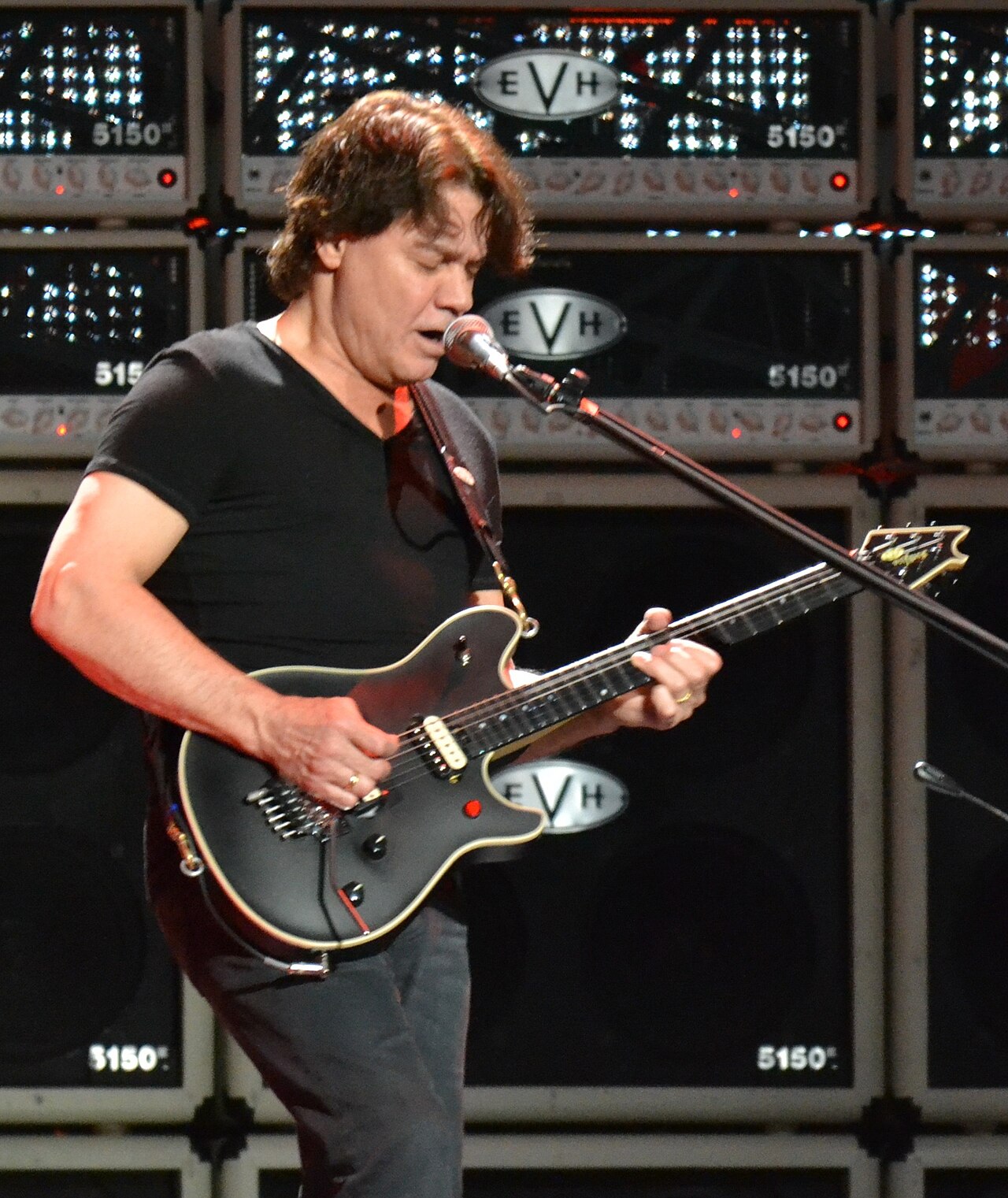
Eddie Van Halen‘s connection to Bogner is the earliest of the four: he purchased a Bogner-modified Marshall (and reportedly a custom Showman-derived build) around 1989–1991, before Reinhold Bogner’s first production amplifier existed. The Ecstasy launched in 1992, the Shiva in 1995 — both after Van Halen’s documented engagement with Bogner had concluded, as his touring and recording sound from the mid-1990s onward was defined by the Peavey 5150. Eddie Van Halen died in October 2020. The Shiva 20th Anniversary has no connection to him beyond the brand name.
Steve Vai‘s Bogner usage, also covered in the Ecstasy 101B article, is a mid-1990s connection to the Ecstasy 100A — the 6L6-powered original version — which he ran through its preamp section only into a VHT 2150 power amp for the Sex & Religion and Alien Love Secrets recording sessions. That is a single SKU, a single era, and a preamp-only configuration. The Shiva 20th Anniversary postdates that usage by roughly fifteen years and is not documented in any Vai primary source.

The one confirmed primary-source connection to the Shiva 20th Anniversary comes from a musician who does not appear on any Bogner marketing material: Eric Friedman, Mark Tremonti’s collaborator and rhythm guitarist on the Tremonti solo debut All I Was (Fret12 Records, July 2012). In a MusicRadar interview published June 14, 2012, Tremonti described the recording setup in his own words: “As for amps, I used a Mesa Boogie Triple Rectifier and a Cornford RK100. Eric Friedman, who did the rhythm guitars, used two Bogner Shiva models, one of them was the 20th anniversary model with the KT88s. The Shivas blended really well with what I was doing.” This is as clean a primary source as exists for any amplifier in this series: the artist describing his collaborator’s specific gear in a contemporaneous interview, naming the model variant, noting the distinguishing feature (the KT88s), and commenting on how it sat in the mix.
Mark Tremonti himself was not playing through the Shiva 20th Anniversary on that record — he was on the Triple Rectifier and the Cornford — but his testimony makes Eric Friedman the one verifiable Shiva 20th Anniversary player documented against a primary source. A Premier Guitar Rig Rundown from June 2012 documented a Bogner amplifier in Tremonti’s Creed touring rack with the note that it was “not being used at the time” — further supporting that the Shiva was adjacent to his professional work rather than central to it. He has described himself as an “admitted amp fanatic” who has owned approximately fifty amplifiers over his career, which makes the Shiva’s presence in his collection plausible without making him a documented Shiva player.
What It Actually Sounds Like: Five Tone Recipes
Recipe 1: Studio Clean with Depth
Channel 1, Bright off, Bass around noon, Treble at 10 o’clock. Volume at 3/4 of full-rated power to get the KT88s contributing some warmth. Reverb at 8–9 o’clock on the channel mix. With a Stratocaster or Telecaster, this produces the textbook Shiva clean — full, cutting, with the three-dimensionality the KT88 tubes add at the frequency extremes. For recording, place a dynamic mic (SM57) and a ribbon in a mid-side configuration about eight inches from the Celestion Vintage 30’s dustcap: the ribbon’s figure-8 picks up room ambience without adding artificial reverb to what the amp’s spring already contributes.
Recipe 2: Boosted Clean into Plexi Territory
Channel 1, Bright engaged, Bass at noon, Treble at 1 o’clock, Volume pushing into higher headroom. Engage the Boost footswitch. Because the 20th Anniversary’s boost keeps the tone controls active — unlike the standard Shiva’s tone-stack bypass — the resulting mid-pushed overdrive is still shaped by where the Bass and Treble are set. Wagner’s PG review described this as “overdriven Super Lead territory.” Think Faces-era Rod Stewart rhythm work or early Tom Petty — American riffs through a technically British-voiced boost that doesn’t behave quite like a real Plexi but arrives somewhere adjacent.
Recipe 3: Classic Rock Gain with Shift Off, Mode Off
Channel 2, both Shift and Mode disengaged, Gain at 11 o’clock, Mid at noon, Bass at 10 o’clock, Treble at 2 o’clock, Presence (Excursion on the rear panel) adjusted to taste for the cabinet. A Les Paul or SG here gives you 1970s hard rock rhythm — not thrash, not metal, but the organic mid-push of classic Bogner gain that PG’s review described as “spongy midrange” in the best sense, the kind that sits in the mix without fighting the bass or the high-hat. Note the reviewer’s explicit point: “its natural organic nature prevents it from achieving thrashier, modern American-voiced metal tones, à la Exodus and Testament.” If that’s what you need, this is not your amplifier.
Recipe 4: Fender-Adjacent High Gain (Shift On)
Channel 2, Shift engaged, Gain at 1 o’clock, Mid at 9 o’clock (the Shift pulls it back anyway), Bass at 11 o’clock, Treble at 2–3 o’clock. Mode off. The Shift voicing’s “less mids” character takes the Bogner’s inherent British flavour and moves it toward a wider, less midrange-centric voice without losing the KT88’s harmonic richness. Useful for rhythm parts that need to sit underneath a singer’s midrange frequency range rather than fight it — exactly what Friedman was solving for in the All I Was sessions, blending with Tremonti’s Triple Rectifier (whose scooped American character occupies a different frequency range).
Recipe 5: Aggressive Attack (Shift Off, Mode On)
Channel 2, Mode engaged, Shift off, Gain at 12–1 o’clock, Mid at 1 o’clock, Treble at noon, Bass at 10 o’clock. This is the Shiva 20th Anniversary at its most aggressive — the Mode adds forward urgency and attack without increasing the fundamental gain structure. Lead guitar work, single-note lines, pick attack that needs to cut through a dense mix. A humbucker guitar is the natural choice here; the Mode’s character responds to transients in a way that can make a single-coil sound brittle rather than incisive at higher Gain settings.
The Shiva 20th Anniversary’s character divides cleanly between its two channels, with the KT88 power section’s headroom and low-end width providing the common foundation. Working through it practically:
How It Compares: The Boutique Landscape
The Bogner Ecstasy 101B is the natural first comparison — same builder, same era, same hand-wired philosophy. The Ecstasy is a three-channel amplifier with fourteen front-panel controls and a near-infinite palette of tonal options. The Shiva 20th Anniversary is a two-channel amplifier where each decision has been made for you at the factory level; the Shift and Mode switches expand the range, but the fundamental voicing is less configurable than the Ecstasy’s per-channel Pre-EQ switches and assignable Presence controls. If you want the most options from a single Bogner amplifier, the Ecstasy 101B is the instrument. If you want the Bogner house sound at its most distilled and musically focused, the Shiva 20th Anniversary is arguably the more coherent amplifier.
The Bogner Helios 100 also shares floor space in the Bogner lineup comparison, but is a fundamentally different-feeling amp. The Helios is explicitly Marshall-derived in its gain channel’s voicing — the Plexi topology, the JMP vs. JTM power-section options, the focus on raw British rock attack. The Shiva 20th Anniversary’s gain channel is smoother, more refined, with less compression saturation and more note separation at equivalent Gain settings. They are not competing for the same tonal territory despite sharing a builder.
Against the Marshall JCM800 2203, the Shiva 20th Anniversary’s clean channel comparison is almost unfair: the JCM800 has limited clean headroom before it begins compressing, while the KT88 Shiva stays cleaner longer and produces a fundamentally different power-section character. The JCM800’s gain channel is dirtier and more compressed at comparable settings. The JCM800 costs a fraction of the Shiva’s used price, which matters if you don’t need the KT88’s headroom or the Shiva’s engineering refinement.
The Mesa/Boogie Dual Rectifier is what Tremonti was actually playing for rhythm on All I Was while Friedman used the Shiva — and the two amps’ tonal contrast explains why they blended: the Rectifier’s scooped American aggression and the Shiva’s mid-present British organic warmth occupy different frequency ranges and sum together rather than competing. As a direct comparison, the Rectifier has more gain on tap and a more immediately aggressive character; the Shiva has better note separation and a more harmonically transparent gain structure. Metal players tend toward the Rectifier; recording players who want definition in a dense arrangement often prefer the Shiva.
The Soldano SLO-100 is the third boutique American competitor worth addressing. The SLO-100’s overdrive channel has more sustain and higher saturation ceiling than the Shiva 20th Anniversary; the Shiva’s overdrive is more dynamically transparent and pick-responsive at equivalent overall volume. SLO-100 players who find they want more note separation under their overdrive often end up at a Shiva variant; Shiva players who want more aggressive saturation for metal applications often look at the SLO.
Buying a Used Shiva 20th Anniversary: What to Know
Production is over. Sweetwater listed the amplifier as no longer available as of late 2021; no new units have appeared in authorized dealer inventory since. This means the used market — Reverb, Guitar Center used listings, independent boutique dealers — is the only source, and prices reflect the amp’s collectibility. Expect to pay $2,295–$3,200 for a head in clean condition; combos (1×12 and 2×12 versions were produced) command similar premiums.
KT88 tubes should be your first conversation point with any seller. Unlike EL34s or 6L6s, KT88 retubes are a more specialized and more expensive proposition. A fresh set of quality KT88s (Shuguang, Gold Lion, or Genalex are the commonly recommended current-production options) costs significantly more than EL34 equivalents, and the amp must be rebiased after any tube change. Ask when the tubes were last replaced and by whom; a correctly biased set should last several years under normal studio use, but a set that has been running hot due to improper biasing will show it in reduced headroom and increased noise.

The white Tolex is a cosmetic liability on a used unit: it shows every mark and stain more visibly than the standard Bogner black finish. Minor cosmetic wear on the Tolex does not affect the circuit; significant damage near the chassis corners can indicate impact that may have affected internal components. The plexiglass front panel can develop hairline scratches — this is cosmetic only. The reverb tank is more vulnerable to physical shock than the rest of the circuit; test the reverb at low, medium, and high mix settings for crackling or drop-out before buying.
The Excursion control and the FX loop are the two additional variables to test thoroughly. Plug a pedal into the loop send and return; a dirty, noisy loop return contact is a common wear issue that can usually be resolved with contact cleaner but indicates a unit that has seen heavy use. Turn the Excursion from minimum to maximum while playing single notes; any crackling indicates a dirty pot, again usually cleanable. Both channels should produce clean, quiet operation at all gain and volume settings when nothing is plugged into the FX loop.
The matching Bogner 2×12 cabinet, loaded with Celestion Vintage 30s, is the designed-for speaker choice and sounds noticeably better with the amp than generic 2×12s loaded with different drivers in A/B tests conducted by multiple owners in the forum record. If the seller has the matching cabinet, the bundle is worth the premium — it was priced at $3,889 as a head/cabinet set in 2009, and paired units stay together on the used market less often than they should.
Owning a Shiva 20th Anniversary
The amp runs a tube-buffered series FX loop, which handles time-based effects (delay, reverb, chorus, modulation) cleanly without the tone loss that passive loops can introduce. Most players with a Shiva 20th Anniversary front-load overdrive pedals — a Tube Screamer or equivalent pushing the Gain channel’s input — and run all time-based effects through the loop. The separate reverb mix controls per channel mean you can run the amp’s own spring reverb on the clean channel and dry on the gain channel (or vice versa) without engaging the loop at all.
At 90 watts from KT88s, the amplifier is genuinely loud, and the Shiva’s gain channel does not achieve its character at bedroom volumes. The KT88 power section begins contributing its tonal personality at higher power tube excursion levels — which requires more volume than a 6L6 or EL34 equivalent at similar output levels. This is a recording-studio and stage amplifier; players who primarily need a living-room practice amp should not approach a 90-watt KT88 head expecting satisfying performance at low volume. The Excursion knob helps by adjusting bass response at lower volumes, but it does not simulate the power-tube saturation that the KT88 delivers at full excursion.
Reverb is spring-based and genuine — not digital. At high reverb mix settings on the clean channel, it adds a surf-rock wash that is deeply atmospheric and completely impractical for any music that requires definition. At conservative settings (below 9 o’clock), it adds depth without wash. Spring reverb is also susceptible to mechanical shock: dropping the amp or exposing it to significant vibration can cause the tank to produce unpleasant clanging. Transport the amp upright and avoid stacking other items on top of the chassis.
FAQ
What makes the Shiva 20th Anniversary different from the standard Bogner Shiva?
Three things: KT88 power tubes instead of EL34s (which changes the headroom, low-end character, and feel of both channels significantly), a redesigned boost circuit that keeps the tone controls active when engaged (the standard Shiva’s boost bypasses the tone stack), and completely rewritten Clean and Dirty preamp circuits plus two new voicing switches (Shift and Mode) on the gain channel. Cosmetically, it uses white Tolex and a plexiglass front panel in place of the standard Bogner black finish.
Is the Shiva 20th Anniversary still in production?
No. Sweetwater’s listing for the amplifier was marked as no longer available by late 2021, and no new production has been confirmed since. The standard Bogner Shiva in EL34 and 6L6 configurations remains available as a current production model, but the 20th Anniversary is a used-market-only purchase in 2024 and beyond.
What are KT88 tubes, and why does Bogner use them here?
The KT88 is an octal power pentode developed primarily for high-fidelity audio amplification and tube bass amps. Compared to EL34s, KT88s have substantially more headroom, a wider and more “hi-fi” character, a bouncy low-end response, and a three-dimensional clean tone that EL34s simply don’t produce at equivalent power levels. Bogner chose KT88s for the 20th Anniversary to differentiate it from the standard EL34 Shiva and to produce a cleaner, more studio-viable amplifier character — particularly in the clean channel, where the KT88’s headroom allows the amp to fill a room cleanly at volumes where an EL34 equivalent would begin compressing.
Is it good for metal?
Not really, and Premier Guitar’s review says so plainly: “its natural organic nature prevents it from achieving thrashier, modern American-voiced metal tones, à la Exodus and Testament.” The gain channel produces a smooth, organic British-flavoured overdrive with excellent note separation, but the high-frequency aggression and gain saturation ceiling that extreme metal genres demand is not available in this circuit. The Mode switch adds forward attack, but it is not a substitute for the kind of tight, scooped, high-saturation character a Mesa/Boogie Dual Rectifier or dedicated modern metal amp provides. Players who primarily play hard rock and classic rock will find it outstanding; players whose standard reference is djent or death metal should look elsewhere.
Which famous players actually used this specific amplifier?
The confirmed primary-source user is Eric Friedman, the rhythm guitarist on Mark Tremonti’s solo debut All I Was (2012). Tremonti confirmed this in his own words in a MusicRadar interview (June 14, 2012): “Eric Friedman, who did the rhythm guitars, used two Bogner Shiva models, one of them was the 20th anniversary model with the KT88s. The Shivas blended really well with what I was doing.” The four artists most frequently associated with Bogner — Steve Lukather, Jerry Cantrell, Steve Vai, and Eddie Van Halen — are documented on other Bogner models: Lukather on the Ecstasy 101B and Helios 100, Cantrell on the Fish preamp, Vai on the Ecstasy 100A, and Van Halen on early custom modified Marshalls predating any Bogner production amp. None appear in primary sources on the Shiva 20th Anniversary.
How does the reverb work, and can it be bypassed?
The reverb is spring-based with separate mix controls for each channel, accessible on the rear panel. This means the clean channel can have generous reverb while the gain channel runs dry, or vice versa, without requiring a footswitch. The spring tank is genuine — not digital — and responds to the amp’s own dynamics as the tubes push and relax. It cannot be fully bypassed in the traditional sense (turning the mix to minimum is the practical solution); players who want no reverb whatsoever in their signal chain should keep the channel mix controls at their minimum positions and, if the FX loop is engaged, ensure the loop does not introduce additional latency or colour from the spring tank’s mechanical resonance.
What pedals work well with the Shiva 20th Anniversary?
The clean channel’s KT88-driven headroom makes it an excellent pedal platform. Transparent boost pedals (Klon-style circuits, clean boost) work well into the clean channel for adding output-stage push without altering the preamp’s character. Classic tube-screamer-style mid-push pedals into the gain channel can tighten and focus the Shiva’s organic overdrive without overcompressing it — the key is keeping the Screamer’s gain relatively low and using it primarily for frequency shaping rather than additional distortion. Time-based effects (delay, reverb, chorus) belong in the FX loop. Modulation pedals (phaser, vibe, tremolo) can go either before the amp or in the loop depending on whether the player wants them to interact with the preamp gain.
What’s the used market price range, and what should I look for?
Budget $2,295–$3,200 for a clean head on the used market, with combos commanding similar premiums. Priority checks: ask for the tube replacement history (KT88 retubes are expensive; fresh tubes add value and peace of mind), test both channels for noise, test the FX loop send/return contacts for crackling or signal drop, and test the reverb at all three mix positions. White Tolex cosmetics are a known issue — expect minor wear; significant impact damage near the chassis is a red flag. If the seller has the matching Bogner 2×12 cabinet with Vintage 30s, the paired set is the preferred option and often worth a reasonable premium over cabinet-only or head-only purchases.
Image credits
- Steve Lukather: Eva Rinaldi, Wikimedia Commons, CC BY-SA 2.0.
- Steve Vai: Wojciech Pędzich, Wikimedia Commons, CC BY 4.0.
- Eddie Van Halen: Joe Bielawa, Wikimedia Commons, CC BY 2.0.
- Jerry Cantrell: Morten Jensen, Wikimedia Commons, CC BY 2.0.
Latest News
Related
On This Day
Tuesday 10 November
From this week: