Six Modes, One Stomp Box: The MXR M305 Tremolo Does It All
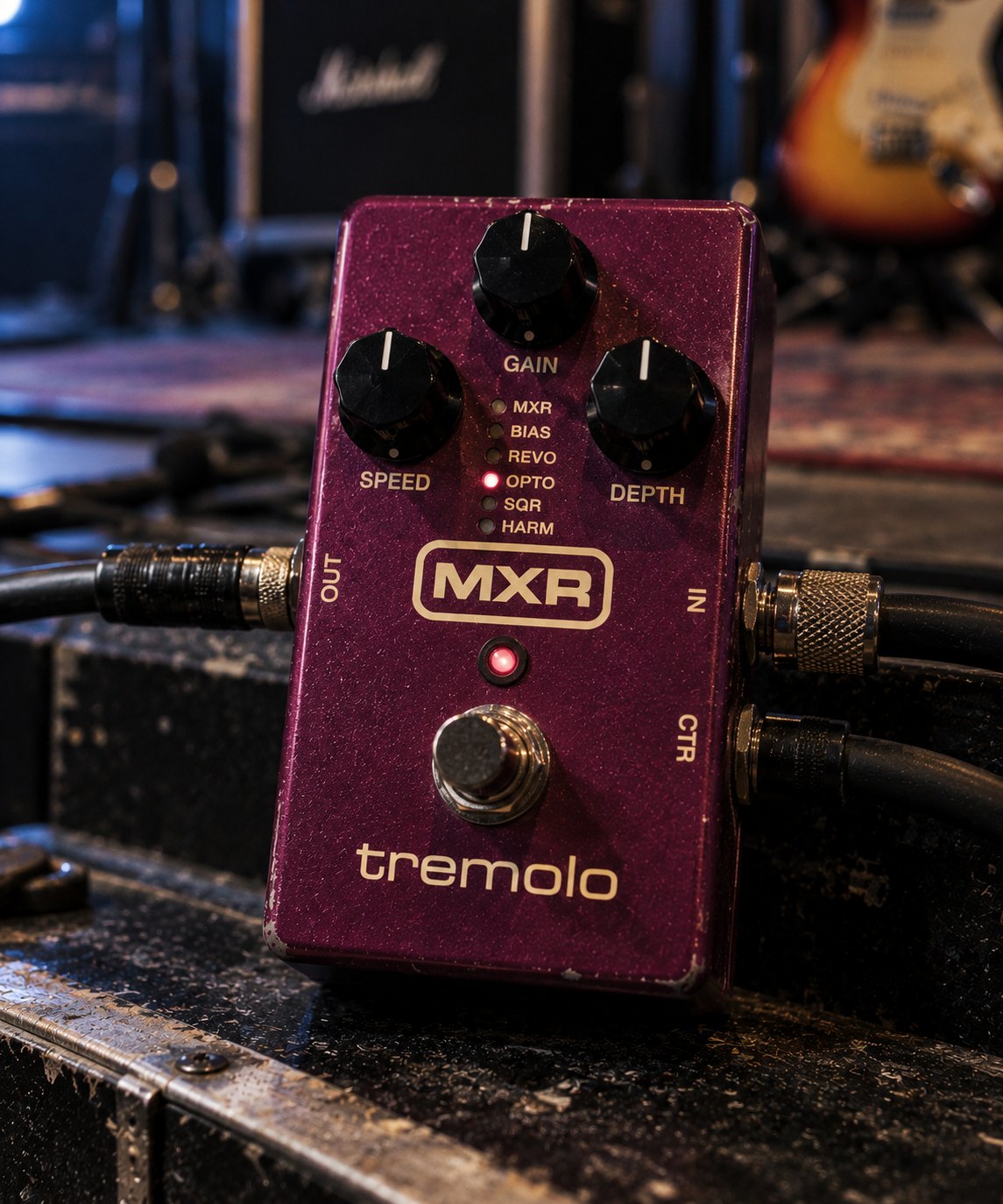
MXR M305 Tremolo. AI-generated reference illustration, not a photograph.
MXR M305 Tremolo: six circuits (optical, bias, harmonic, reverse, square, classic MXR) with tap tempo, envelope mode, and true bypass. Full guide.
Tremolo is the oldest electronic guitar effect in existence — baked into Fender amplifiers before overdrive was even a concept, hardwired into the DNA of surf, country, psychedelia, and classic rock. Yet for decades, the tremolo pedal category stayed stubbornly simple: one waveform, a rate knob, a depth knob, done. The MXR M305 Tremolo decided that wasn’t enough.
Launched in October 2020, the M305 packs six distinct tremolo circuits into a single compact housing, spanning the full sweep of the effect’s history — from the smooth optical pulse of vintage amps to choppy square-wave chop to the phase-like shimmer of harmonic tremolo found in rare mid-century gear. Tap tempo, expression pedal control, envelope mode, stereo outputs, and switchable true/buffered bypass round out a feature set that would have seemed absurd on a tremolo pedal just a few years ago.
This is not a simple stomp box. But it’s not complicated either. Once you understand what each of those six modes actually does — and why they sound so radically different from each other — the M305 becomes one of the most versatile tools on any pedalboard. Here’s everything you need to know.
The History Behind the Box: Why Tremolo Has Six Faces
Tremolo works by rapidly cycling the volume of your guitar signal up and down, creating a pulsing, throbbing effect. Simple concept. But over seven decades of amplifier design, engineers found radically different ways to achieve that basic pulsation — and each method produced a distinct sonic personality.
The first commercially available amp tremolo circuits in the 1950s used a photocell (or optocoupler) — a light-dependent resistor whose resistance varied as an internal lamp flickered. This optical tremolo has a characteristically smooth, rounded waveform: the transitions between loud and soft are gentle, almost sinewave-shaped, producing a warm, lush pulsation. It’s what you hear on Fender’s early blackface amps, on vintage Magnatone and Gibson tremolo circuits, and in the surf and rockabilly sounds of the era.
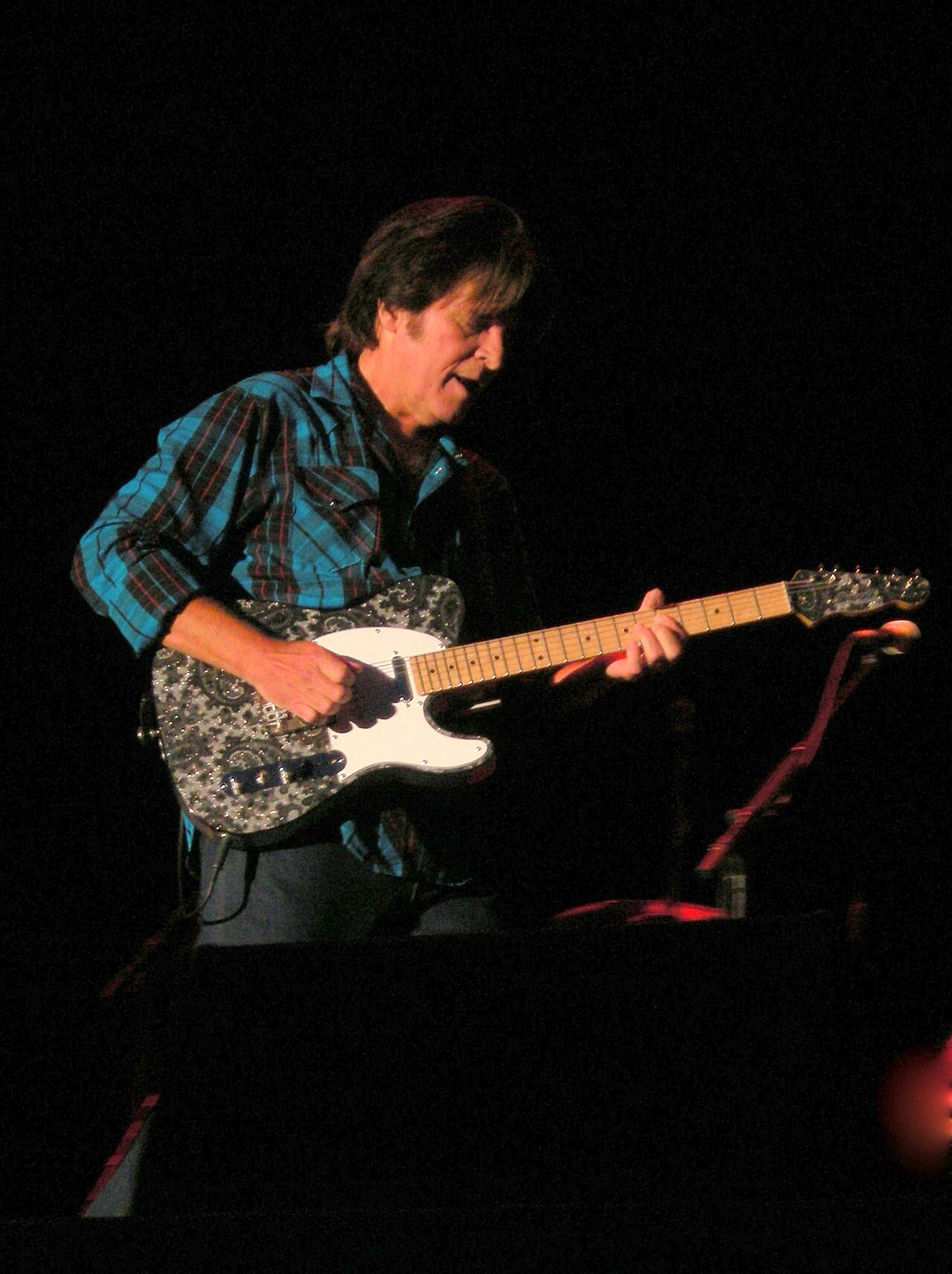
Chet Atkins made careers out of clean, articulate guitar with exactly this kind of subtle optical pulse underneath. Bo Diddley weaponized the choppy, square-edged version for his signature rhythmic attack. John Fogerty and Creedence Clearwater Revival used amp tremolo as atmospheric glue on records that still sound timeless. Neil Young ran amp tremolo throughout his career as an always-on textural element, not an effect but a mood. The point is: tremolo isn’t one sound. It’s a family of sounds defined by circuit topology.
The M305 honors that entire family. Its six modes aren’t just variations on a theme — they’re reconstructions of fundamentally different circuit architectures, each named for what it emulates.
MXR itself has deep tremolo history. The original MXR M159 Stereo Tremolo was a sought-after boutique-tier stompbox that commanded high used prices and satisfied a dedicated fanbase. The M305 supersedes it with greater feature depth in a more compact, road-worthy housing — and brings the tremolo experience forward into the modern gigging era.
Six Tremolo Styles: What Each Mode Actually Does
Push the Gain knob on the M305 to cycle through styles. A column of LEDs — alternating red and green — indicates which mode is active.
MXR (Classic)
This mode reconstructs the sound of the original MXR M159 Stereo Tremolo — MXR’s own classic circuit. Expect a smooth, full-bodied sinusoidal pulse with a slightly warmer, more musical character than a standard optical circuit. It’s the M305’s comfort zone: a premium tremolo that sounds expensive, plays well at any rate, and sits beautifully in a mix without calling too much attention to itself. If you want one mode that covers 80% of situations, this is it.
BIAS
Bias tremolo emulates what happens in a tube amplifier when its bias voltage is periodically cut — the output tubes momentarily starve of current, producing a slightly different tonal character with each pulse. It’s the lush, compressed, slightly warm-dark tremolo associated with brownface-era Fender circuits and certain vintage Gibson amplifiers. Where optical tremolo is glassy and clear, bias tremolo has a gentle harmonic softening to each cut. The volume dips feel rounder, less clinical. This is the mode for country and Americana, for clean chord work where you want the effect to feel like it’s coming from inside the amplifier rather than from a box in front of it.
REVO (Reverse Optical)
REVO flips the standard optical waveform: instead of the volume gently dipping down and recovering, it sharply attacks upward and decays. The result is a more exaggerated, lurching character — peaks and valleys are more pronounced, giving the tremolo a more dramatic, rhythmic personality. Where standard OPTO is smooth and polite, REVO is assertive and slightly unhinged. It’s the mode for tremolo as texture rather than tremolo as groove — excellent on sustained single notes where that rising attack character adds unpredictable movement to a held tone.
OPTO (Optical)
The purest optical simulation: smooth, sinusoidal, classic. This is the sound of vintage Fender amp tremolo circuits — the surf-era pulsation heard on a thousand recordings from the late 1950s through the mid-1960s. Unlike MXR mode (which recreates MXR’s own circuit character), OPTO aims squarely at the photocell amp tremolo archetype. Slow rates on a clean Strat or Tele will take you straight to Dick Dale territory. Medium rates into a slightly driven amp give you the David Gilmour tremolo-at-the-edge-of-overdrive sound — think the bridge of “Money.” This mode pairs particularly well with single-coil guitars.
SQR (Square Wave)
Square wave tremolo is the aggressive one. Rather than gradually cycling volume up and down, SQR cuts hard: on, off, on, off. The transitions are abrupt, producing the choppy, rhythmically precise chop associated with aggressive surf, math rock, and post-punk playing. At slower rates, SQR creates an almost gating effect — your signal stutters rhythmically in a way that’s completely different from the smooth modes. Jack White famously explored choppy tremolo textures; Josh Homme baked tremolo aggression into Queens of the Stone Age’s most hypnotic riff structures. SQR is the mode where tremolo becomes a rhythmic weapon rather than an atmospheric tool. At faster rates with depth near maximum, it produces an almost ring-modulator-like warble.

HARM (Harmonic Tremolo)
Harmonic tremolo is the rarest and most sought-after circuit type in the vintage amp world — found primarily in certain Magnatone and Supro amplifiers from the 1950s and early 1960s. Rather than cutting overall volume, harmonic tremolo splits the signal into low and high frequency bands and modulates them out of phase with each other. The result is a frequency-shifting shimmer that sounds distinctly different from standard amplitude tremolo — more alive, more complex, with a slight vibe/vibrato quality to it despite being technically a tremolo circuit. Ed O’Brien of Radiohead has explored harmonic tremolo-adjacent textures extensively; The Edge‘s obsession with modulation places him in this sonic territory. HARM mode is the M305’s most distinctive offering — if you’ve never heard harmonic tremolo, this mode alone is worth the price of the pedal.
Controls and Features Explained
| Control/Feature | Function | Range / Notes |
|---|---|---|
| Speed | LFO rate | 0.7 Hz to 15 Hz |
| Gain | Output level / style selector (press to cycle modes) | Compensates for perceived volume drop; press to select from 6 modes |
| Depth | Effect intensity | 0 to 100% |
| CTR Jack | Tap tempo switch, expression pedal, or stereo output | Configured via CTR slide switch (left = tap/expression; right = stereo CTR out) |
| CTR Slide Switch | Toggles CTR jack function | Left = tap tempo/expression; Right = audio output |
| Internal Stereo/Mono Switch | Configures input for stereo or mono signal | Left = stereo TRS input; Right = mono (factory default) |
| Envelope Mode | Speed and Depth respond dynamically to your attack | Activated by holding Gain knob 3 seconds |
| Bypass | Default: true bypass relay. Can switch to buffered bypass. | Toggle via knob-hold sequence (all CCW + hold Gain 5 sec) |
| Power | 9V DC only — no battery | 190mA current draw; ECB003, DC Brick, Iso-Brick, Mini Iso-Brick |
Technical Specifications
| Specification | Value |
|---|---|
| Input Impedance | 600 kΩ |
| Output Impedance | <140 Ω |
| Maximum Input Level | +2 dBV |
| Maximum Output Level | +4 dBV |
| Speed Control | 0.7 Hz to 15 Hz |
| Depth Control | 0 to 100% |
| Noise Floor | −100 dBV (A-weighted) |
| Current Draw | 190 mA @ 9V DC |
| Power Supply | 9V DC (no battery) |
| MSRP | ~$229 USD |
| Street (new, 2026) | ~$169–180 USD |
| Street (used, excellent) | ~$110–150 USD |
Famous Players and the Tremolo Tradition
The MXR M305 doesn’t have a confirmed roster of primary-source celebrity users — the pedal launched in 2020 and hasn’t yet accumulated the kind of documented Rig Rundown documentation that older MXR standbys like the Phase 90 or Carbon Copy carry. No primary-source verification of specific pro players building a pedalboard around the M305 has emerged from PG Rig Rundowns, manufacturer artist pages, or verified Equipboard entries with photo/video confirmation.
What’s abundantly clear is that tremolo itself — the effect the M305 executes across six circuit archetypes — is woven through the fabric of rock guitar history. The OPTO and BIAS modes reproduce the exact circuit character that Chet Atkins and Bo Diddley exploited on their original Fender and Gibson amplifiers. The harmonic tremolo that HARM mode reconstructs is the same shimmer that made certain Magnatone amps objects of near-religious devotion among collectors.
Neil Young‘s studio and live tones have featured amp tremolo continuously across his career — the same gentle pulsation that OPTO and MXR modes reconstruct. John Fogerty and CCR used amp tremolo on records like “Run Through the Jungle” and “Green River” to create that distinctive mid-tempo, sun-baked Americana pulse. David Gilmour deployed tremolo across Pink Floyd’s catalog as one of his signature textural tools.
In the modern era, Jack White has consistently used tremolo — often aggressive, SQR-adjacent chop — to build rhythmic tension in White Stripes and solo material. Josh Homme‘s use of tremolo in Queens of the Stone Age frequently pushed into hypnotic, driving pulse territory. Ed O’Brien of Radiohead explored harmonic tremolo and vibrato-tremolo hybrid textures across the band’s middle and later records. The Edge, for his part, approaches modulation effects as central composition tools rather than afterthoughts — exactly the mindset the M305 rewards.
The M305 won’t give you a celebrity endorsement. It will give you access to every tremolo sound any of those players ever used, in one box, on demand.
Tone Recipes: Seven Settings to Try First
1. Classic Country Pulse (BIAS mode)
Mode: BIAS. Speed: 9 o’clock (slow, ~1–2 Hz). Depth: 10 o’clock (moderate). Gain: noon (unity). Place after your drive pedals in a clean amp context. This is the thumping, warm heartbeat of vintage country amp tremolo — the kind of tone that sits underneath Chet Atkins fingerpicking without drawing attention away from the notes. Works equally well with a Telecaster or a semi-hollow.
2. Surf Attack (OPTO mode)
Mode: OPTO. Speed: 1 o’clock (medium-fast, ~5–7 Hz). Depth: 2 o’clock (pronounced). Gain: 12 o’clock. Guitar: Strat with bridge or middle pickup. Clean amp. This is classic surf tremolo: glassy, rhythmically charged, unmistakable. Push Speed toward 2 o’clock and Depth to max for more aggressive throb. Standard tremolo placement is after overdrive but before reverb and delay.
3. Harmonic Shimmer (HARM mode)
Mode: HARM. Speed: 10–11 o’clock (slow-to-medium). Depth: 1–2 o’clock (fairly deep). Gain: noon. Guitar: single-coil with a touch of reverb. This mode sounds like no other tremolo on the market — the frequency-split modulation creates a dimensional shimmer that’s closer to vibe-territory than conventional amplitude tremolo. Keep Speed slow to let the harmonic movement breathe. Phenomenal for clean, spacious chord work. Pair with a light spring reverb for maximum vintage depth.
4. Radiohead Texture (HARM mode, envelope)
Mode: HARM. Engage Envelope Mode (hold Gain 3 seconds). Speed: maximum available. Depth: 3 o’clock. Gain: noon. Use with a clean-to-lightly-driven amp. In envelope mode, your picking attack controls speed and depth — harder playing pushes the harmonic modulation into more intense territory; lighter picking retreats to gentle shimmer. This is the kind of dynamic-responsive tremolo texture that makes a repeated arpeggio pattern evolve across its duration. Exactly the territory Ed O’Brien has explored.
5. Stutter Machine (SQR mode)
Mode: SQR. Speed: use tap tempo to lock to your song’s BPM (connect MXR Tap Tempo Switch via CTR jack). Depth: maximum (3 o’clock or above). Gain: noon to 1 o’clock (may need slight boost to compensate for perceived volume reduction at max depth). This is the aggressive, Jack White school of tremolo — choppy, rhythmically precise, almost gating in character. Lock the speed to eighth-note or quarter-note divisions of your song tempo. At eighth-note rate with a clean tone it produces a sequencer-like rhythmic stutter. At quarter-note with overdrive it’s pure rock and roll aggression.
6. Neil Young Always-On Thickener (MXR mode)
Mode: MXR. Speed: 8–9 o’clock (very slow, ~0.7–1 Hz). Depth: 9 o’clock (extremely subtle). Gain: noon. This is tremolo not as an effect but as a gentle breathing quality underneath your tone — perceptible mainly as a slow, barely-there pulse that makes clean chords feel more alive. At these settings, the M305 stays on all night without ever demanding attention. The MXR mode’s smooth character makes it ideal for this always-on approach. Reference: Neil Young’s live clean tones throughout his electric career.
7. Stereo Wide-Field Pulse (OPTO or MXR mode, stereo)
Mode: OPTO or MXR. Speed: 11 o’clock (medium-slow). Depth: 1–2 o’clock. Connect TRS splitter cable from M305 output to two amplifiers (or two inputs on your interface). The tremolo pans between left and right outputs in stereo — as the left amp swells, the right recedes, creating a three-dimensional spatial movement that no mono tremolo can replicate. This technique is the province of anyone running a two-amp rig, and the M305 does it without any additional gear beyond a TRS splitter cable. Devastating through a clean stereo chorus/delay chain.
How the M305 Compares
MXR M305 vs. Boss TR-2 Tremolo
The Boss TR-2 is the industry-standard budget tremolo: one mode (sinusoidal), three knobs, built-in boss buffer, reliable and simple. The M305 is everything the TR-2 isn’t: six modes, tap tempo, stereo outputs, expression pedal control, envelope mode, and true bypass option. The TR-2 wins on price (~$80 street), simplicity, and the universal availability of Boss service. The M305 wins on virtually every feature dimension and sonic flexibility. If you’ve outgrown the TR-2 or want something the TR-2 simply cannot do (harmonic tremolo, envelope response, stereo panning), the M305 is the clear upgrade. If you need one mode and don’t gig tremolo-heavy material, the TR-2 remains a perfectly capable workhorse.
MXR M305 vs. Strymon Flint
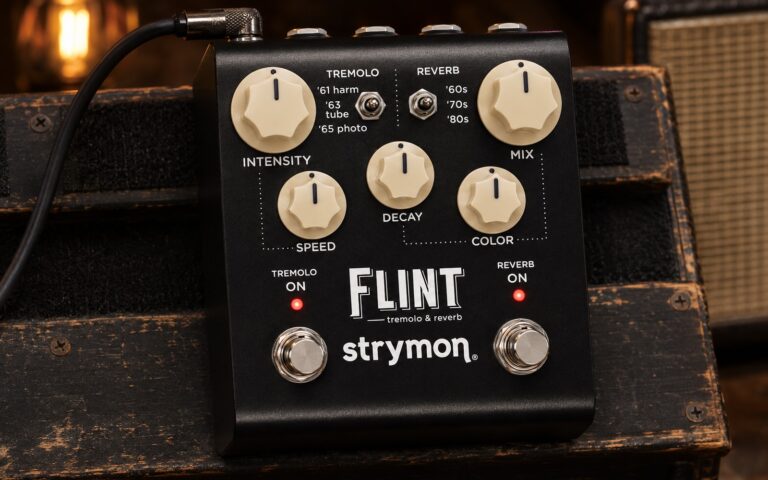
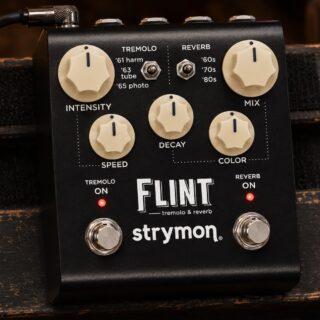
The Strymon Flint combines three tremolo circuits (photocell, harmonic, and tube) with three reverb algorithms in one premium pedal. The Flint is genuinely excellent — its harmonic tremolo in particular rivals the M305’s HARM mode, and the built-in reverb integration is a unique proposition. Where the M305 wins: it has six tremolo circuits versus Flint’s three, offers tap tempo and expression pedal control, and costs significantly less ($169–180 vs. ~$200+). Where the Flint wins: it has world-class reverb built in, a cleaner interface for quick mode selection, and the Strymon pedigree. For tremolo-and-reverb together, the Flint is a serious contender. For tremolo depth alone, the M305’s six-mode spread is wider.
MXR M305 vs. Empress Tremolo
The Empress Tremolo is the boutique competitor in this category — excellent feature set, tap tempo, stereo, multiple modes. The M305 competes directly at a lower price point. The M305 wins on value, the MXR build quality and brand track record, and the addition of envelope mode as a dedicated feature. The choice between them often comes down to preference for interface design and which specific modes resonate with your playing style.
MXR M305 vs. Using Your Amp’s Built-In Tremolo
If you’re running a Tube Screamer or similar drive pedal into a Fender Deluxe Reverb or similar amp with built-in tremolo, you already have one excellent tremolo circuit — your amp’s. The case for the M305 is when you want: (a) tremolo in a clean path while your amp is on a dirty channel, (b) more than one tremolo character, (c) tap tempo synced to a click track, (d) stereo output, or (e) to use tremolo at a venue where you can’t bring your own amp. As a pedalboard-first tremolo solution, the M305 is categorically more flexible than any built-in amp circuit.
The Gain Knob: The Underrated Feature
Tremolo is famously a volume-thief. At deep Depth settings, the perceived average loudness of your signal drops — the peaks and troughs of the modulation can leave you feeling like your tone has been cut. Classic tremolo pedals without a volume compensator force you to choose between effect depth and stage volume.

The M305’s Gain knob solves this directly. Dial up a few clicks clockwise from noon and you restore unity — or push it above noon for a slight boost that makes engaged tremolo louder than your bypassed tone. This is especially valuable in live contexts where you need tremolo on a specific song but can’t afford a perceived level drop when you kick it in. The Gain knob alone justifies the M305 over many simpler designs.
Tap Tempo and Expression Pedal: How to Use Them
Connect an MXR Tap Tempo Switch (sold separately) to the CTR jack with the CTR slide switch set to the left position. While the M305 is active, tap your desired rate — the pedal locks tremolo speed to your tapping rhythm. This is essential for gigging players who need tremolo speed to track the actual BPM of a song, especially in a live band context where freeform speed-knob dialing isn’t feasible.
Expression pedal control works via the same CTR jack and left CTR slide switch position, using a TRS cable. Move the expression pedal toe-down, set your GAIN/SPEED/DEPTH for setting A. Move heel-down, set them for setting B. The expression pedal then morphs continuously between those two full configurations — not just a single parameter. This is significant: you can morph from “slow and subtle” to “fast and extreme” in a single foot sweep, or from HARM mode settings to SQR mode settings, or from unity gain to boosted. The DVP3 Volume (X) Pedal is Dunlop’s recommended expression option.
Envelope Mode: Tremolo That Responds to How You Play
Envelope mode is the M305’s most sophisticated feature and the one most guitarists discover last. Hold the Gain knob for three seconds to engage — the blue LED starts flashing at the tremolo rate and the style LED goes solid. In this mode, Speed and Depth are no longer fixed values: they respond to your attack. Play harder and the tremolo becomes faster and more intense; play lightly and it softens into a gentle throb. Your dynamics control the effect in real time.
In Envelope Mode’s settings sub-menu (accessed by holding Gain in envelope mode), the Speed knob controls maximum rate and the Depth knob controls sensitivity. A high sensitivity setting means even light playing triggers strong tremolo; low sensitivity reserves the effect for your hardest attacks. This configuration is saved between sessions — the M305 remembers your envelope settings even after power-off.
Practically, envelope mode rewards fingerpicking styles more than flat-pick playing. The articulation of a fingerstyle attack — variable pressure, soft pull, hard strum — gives the envelope detector more to respond to. Try it with HARM mode for a tremolo effect that feels genuinely alive and responsive, changing character as you change your touch.
Signal Chain Placement
Tremolo conventionally goes after your drive pedals and before time-based effects (delay, reverb). This is the standard approach and it works: the tremolo’s volume cycling is then echoed by the delay tails, giving each repetition the same pulsing character as the dry signal. However, placing tremolo after reverb creates a distinctly different, denser texture — the reverb’s room tone pulses with the effect, producing a more diffuse, washy character that some genres prefer.
For the M305 specifically: its default true bypass means it doesn’t buffer your signal when off, so it won’t interfere with vintage germanium fuzz pedals that prefer to see an unbuffered signal. If you need the M305 to feed a stereo output when bypassed (for stereo rig continuity), switch to buffered bypass mode. The internal stereo/mono switch configures whether the M305 accepts a stereo TRS input or a standard mono signal — most players will leave it in the factory-default mono position.
The MXR Carbon Copy Analog Delay is a natural partner for the M305 in an MXR-centric pedalboard — place the M305 before the Carbon Copy for classic tremolo-with-echoed-tails, or reverse them for the washy, denser approach.
Power: Don’t Get Caught Without It
The M305 draws 190mA at 9V DC. That’s a meaningful current draw — not enormous by modern multi-mode pedal standards, but enough to require an isolated power output rather than a daisy chain. The Dunlop ECB003 adapter is the standard solution; the DC Brick, Iso-Brick, and Mini Iso-Brick all handle this comfortably on a dedicated isolated output. Note that the M305 cannot run on a 9V battery — there’s no battery compartment. Budget for a proper power supply if you’re adding this to an existing pedalboard.
Buying Guide: New, Used, and What to Watch For
The M305 launched at an MSRP of approximately $229. Street pricing in 2026 sits around $169–180 USD new from major retailers like Sweetwater, Guitar Center, and B&H. Used examples in excellent condition — fully functional, original box where possible — trade in the $110–150 range on Reverb. Because the M305 is a recent pedal (launched 2020) with no production variations or early vs. late revision distinctions, there’s no used vintage premium to chase. The used market is simply price-sensitive: condition is everything. Inspect that all six LED modes cycle correctly, that the Gain knob both rotates and depresses properly, and that the CTR jack accepts a cable without looseness. The relay bypass mechanism should click cleanly on activation.
Sweetwater customers rate the M305 at 4.5/5 across 17 reviews — strong for a pedalboard-tier effect at this price point. No common failure modes have been reported in the user community; MXR build quality is consistent.
Ownership Notes: What Users Discover After the Honeymoon
The M305’s mode-selection interface has a learning curve. Cycling through six modes by repeatedly pressing the Gain knob during a gig is not intuitive at first — most players memorize the LED color/position combinations for their two or three go-to modes and then rely on muscle memory. Red LED at position 1 = MXR; red at position 2 = BIAS; green at position 1 = REVO; green at position 2 = OPTO; red at position 3 = SQR; green at position 3 = HARM. A few minutes with the manual to internalize these correspondences saves frustration on stage.
The 190mA current draw occasionally surprises players who add the M305 to a pedalboard where all isolated outputs are already occupied. Check your power supply before assuming you have a free slot — most compact isolators have at least one 9V output rated at 200mA or above, which will handle the M305 comfortably.
Envelope mode’s interaction with pick attack varies considerably between pickups. Humbuckers deliver a more consistent attack signal, producing predictable envelope response. Single-coils — especially at the bridge position — can be more erratic, with high transient peaks from aggressive picking triggering the tremolo more forcefully than intended. Adjust sensitivity accordingly for your guitar.
Finally: the M305 is larger than the current generation of MXR mini pedals. It occupies a standard MXR footprint — not huge, but not a nano box either. Factor this into pedalboard layout planning.
Frequently Asked Questions
Can the M305 run on a 9V battery?
No. The M305 requires a 9V DC power adapter and has no battery compartment. Its 190mA current draw is standard for a modern feature-rich pedal. The Dunlop ECB003 adapter, DC Brick, Iso-Brick, and Mini Iso-Brick all work. Any quality isolated pedalboard power supply with a 9V output rated at 200mA or above will handle it.
Does the M305 have true bypass?
Yes, by default. The M305 ships with true bypass via a relay mechanism — the signal hardwires through when the pedal is off. It can be switched to buffered bypass mode using a knob-hold sequence (rotate all knobs fully counterclockwise, hold Gain for 5 seconds — all three red LEDs flash to confirm buffered mode). Buffered bypass is needed if you’re using the TRS ring connection for stereo output in bypass, or if you prefer a driven signal path.
What’s the difference between OPTO and MXR modes?
Both use a fundamentally sinusoidal waveform — smooth, rounded volume cycling. The difference is the circuit archetype being emulated. OPTO recreates vintage photocell amp tremolo (Fender-style, the classic surf and rock ‘n’ roll circuit). MXR mode recreates the original M159 Stereo Tremolo’s specific circuit character, which has a slightly warmer, more modern voicing. In practice they’re the two most similar modes on the pedal; the difference is subtle and becomes clearer at slower speeds.
Can I use the M305 in stereo?
Yes, in two ways. First: connect a TRS splitter cable from the OUTPUT jack to two amplifiers or two DI inputs — the M305 pans the tremolo effect between the two outputs in stereo. Second: set the CTR slide switch to the right position and run an instrument cable from the CTR jack to a second amp — the stereo panning then uses the main output and the CTR output as the two channels. For stereo output when bypassed, switch to buffered bypass mode.
How does Envelope Mode work?
Hold the Gain knob for three seconds to enter Envelope Mode. The blue LED starts flashing at the current tremolo rate; the mode LED goes solid. In this state, Speed and Depth respond to the intensity of your picking attack rather than the fixed knob positions. Hard attack = faster, deeper tremolo. Light touch = slower, subtler tremolo. Use the settings sub-menu (hold Gain while in envelope mode) to set maximum rate and sensitivity. Settings are saved on power-off. Exit envelope mode by holding Gain for three seconds again.
What tap tempo switch should I use?
MXR’s own Tap Tempo Switch (sold separately) is the recommended option, connected to the CTR jack via a standard instrument cable with the CTR slide switch in the left position. Any momentary-contact footswitch that transmits a tip-to-sleeve signal will also work. Set Speed knob to roughly your target range before tapping — the pedal locks to the tapped rate, but the Speed knob position still affects behavior. Expression pedals use a TRS cable, not a standard instrument cable; the MXR DVP3 Volume (X) is Dunlop’s recommended expression option for the M305.
Is the M305 worth buying if I already have an amp with built-in tremolo?
Depends on what you need. If your amp’s tremolo is a single sinusoidal circuit and you’re satisfied with one speed and one sound per song, your amp may be sufficient. The M305 adds value when you need: multiple tremolo characters on one board, tap tempo synced to a click track or bandmates, stereo tremolo output, dynamic envelope response, or tremolo on a channel where your amp’s circuit doesn’t apply (e.g., using a high-gain channel while needing clean tremolo). It’s also essential when you play multiple rigs or backline-only shows where your amp’s built-in tremolo isn’t available.
How does HARM mode compare to a vibrato pedal?
They’re related but different. Harmonic tremolo splits your signal into frequency bands and modulates them out of phase — the result has a pitch-shifting quality because different frequency components of your guitar signal peak and dip at different times, creating a rippling effect. True vibrato modulates actual pitch uniformly. HARM mode sounds like a hybrid — more dimensional than standard amplitude tremolo, but without the pitch wobble of a true vibrato. It’s the sound most players describe as “vibe-like” or “Leslie-adjacent” without being either of those things. Think of HARM as tremolo that moves in more than one dimension simultaneously.
Image credits
- John Fogerty: Edaen, Wikimedia Commons, CC BY 3.0.
- Josh Homme: Bill Ebbesen, Wikimedia Commons, CC BY 3.0.
- Neil Young: Matthew Harris, Wikimedia Commons, CC BY-SA 2.0.
- Top image: GuitarGangsters AI-generated reference illustration, not a photograph.
Latest News
Related
On This Day
Monday 9 November
From this week: