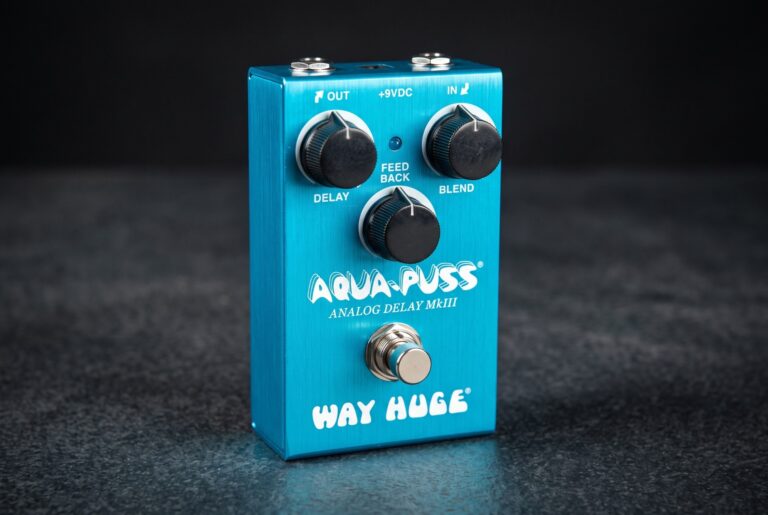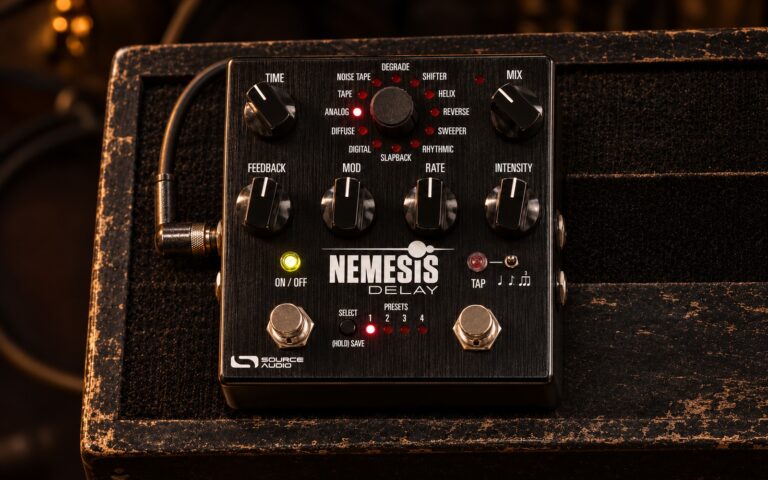
Three Knobs, Two Worlds: The JHS 3 Series Delay Does Everything Echo Should
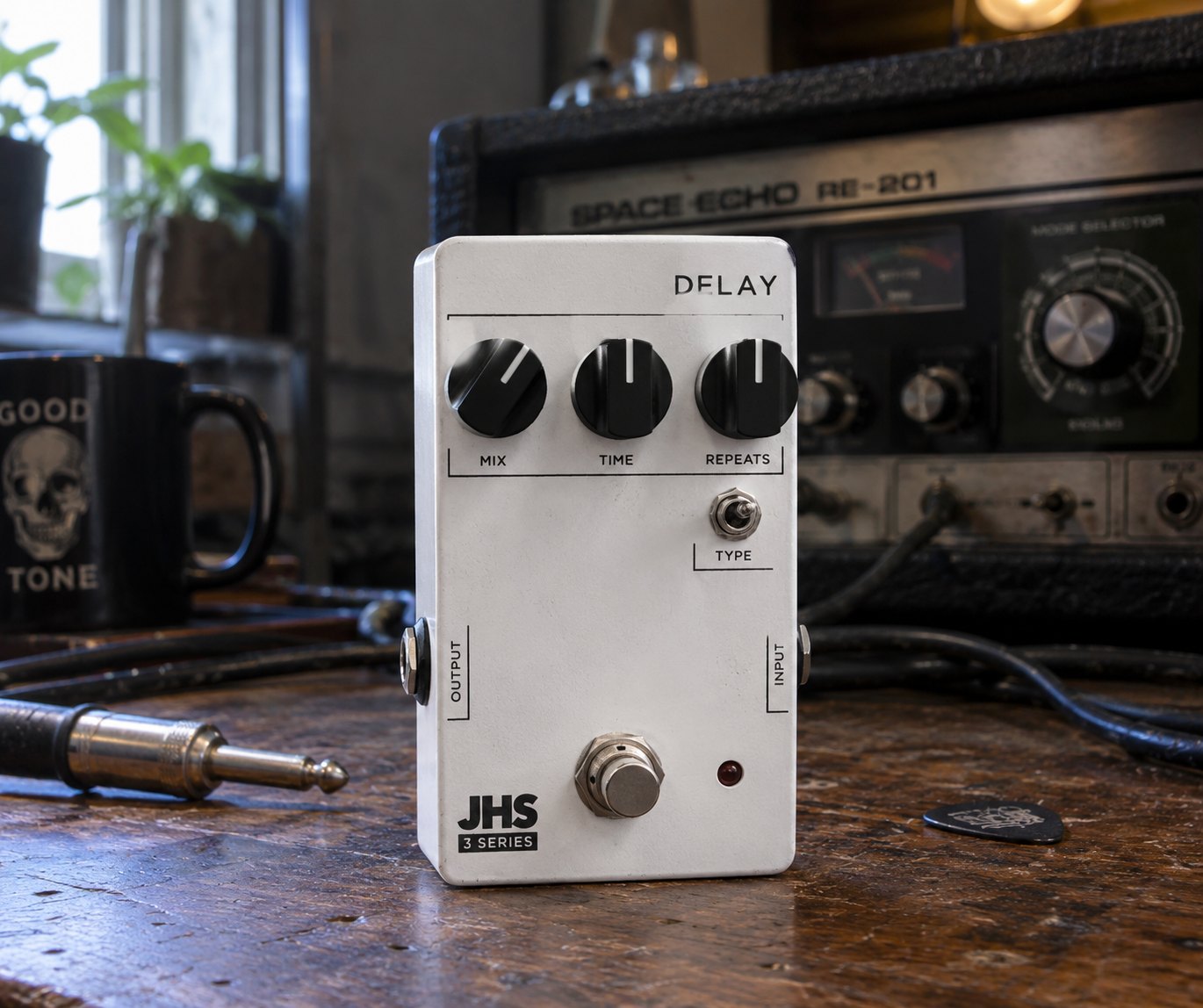
JHS 3 Series Delay Pedal. AI-generated reference illustration, not a photograph.
The JHS 3 Series Delay packs digital and analog-voiced echo into a $99 Kansas City-made pedal. Full specs, tone recipes, and honest player notes.
Delay pedals have a way of making otherwise decisive guitarists spend forty minutes in a guitar shop doing nothing but turning the Repeats knob up while playing a single note. It’s a beautiful problem. The JHS 3 Series Delay exists to end that particular crisis — not by limiting your options, but by presenting all the important ones in the most efficient possible format. Three knobs. One toggle. Eighty milliseconds of crisp slapback or eight hundred milliseconds of cavernous ambience, with a character toggle that switches between crystalline digital clarity and warm, slightly degraded analog depth. This is what you get for ninety-nine dollars, hand-built in Kansas City, Missouri, at the same factory that produces JHS’s $300 boutique pedals.
The 3 Series launched in 2020 as JHS’s answer to a question players had been asking for years: can a pedal be this affordable and still be this good? The answer, in the case of the Delay, is a confident yes — with a few practical notes worth knowing before you set your Time knob and leave it there forever.
The 3 Series Philosophy: Simplicity as a Feature, Not a Limitation
Josh Scott built the JHS 3 Series around a deliberate constraint: three controls, one toggle, ninety-nine dollars. The lineup launched with seven pedals — Compressor, Fuzz, Overdrive, Distortion, Chorus, Delay, and Reverb — each made in the same Kansas City facility using the same component standards as the full-price JHS line. The simplification was in knob count and price, not in circuit quality or manufacturing care.
For the Delay specifically, that simplification turns out to be well-matched to what most players actually need. The vast majority of delay use cases reduce to three questions: how loud is the effect? How far apart are the repeats? How many repeats before the signal fades? Mix, Time, Repeats. JHS answered all three with dedicated controls and left the single remaining decision — digital or analog character — to a toggle. That’s it. That’s the whole interface, and for the overwhelming majority of situations, it’s exactly enough.
The 3 Series Delay lives in excellent company within the JHS catalog. The JHS 3 Series Chorus uses its toggle for a Vibe mode; the 3 Series Fuzz deploys it for a Fat bass boost; the 3 Series Distortion toggles between silicon and LED clipping; the 3 Series Overdrive switches between gain characters. In the Delay, the toggle adds something more fundamental: a complete sonic personality transplant between two different philosophies of what echo should sound like.
Controls Explained: What Each Knob Actually Does
Three knobs. Let’s be specific about each one, because the JHS 3 Series Delay rewards understanding exactly what’s happening when you turn them.
Mix controls the wet/dry balance — how loud the delayed signal is relative to your dry guitar. At noon, the echo sits noticeably behind the direct sound. Maxed out, the repeats play back at the same level as the input signal, which is where ambient, shoegaze, and self-oscillation textures live. One important ownership note documented by multiple players: the JHS 3 Series Delay can produce a slight volume bump when engaged, most noticeable at lower Mix settings. This isn’t a defect — it’s a characteristic of the circuit — but it means you should set your Mix level with the pedal running into your amp at stage volume before locking in a position. What sounds balanced at low volume in the bedroom may push slightly louder than your dry signal in the room.
Time sets the delay length between 80ms and 800ms. That range is remarkably well-chosen. 80ms gets you into genuine slapback country — the tight, single-repeat echo that defined early rock and roll and country guitar, the vocal-thick-guitar sound of Elvis’s Sun Sessions filtered through amplifier iron. Move up toward 200–400ms and you’re in rhythmic delay territory: the quarter-note and dotted eighth-note divisions that U2 made foundational to rock guitar from the 1980s onward. Beyond 500ms, the Delay starts painting with longer brushstrokes — reverberant tails, ambient washes, and the wide-open echo spaces that the shoegaze and post-rock idioms turned into a compositional language. 800ms is long enough to create looping-adjacent textures without requiring you to buy an actual looper.
Repeats controls feedback — how many times the delayed signal regenerates before it dies out. Low settings give you a single shadow behind each note. Medium settings produce the classic three-to-five-repeat vocal echo. Maxed out, the Repeats control crosses into self-oscillation: the delay signal feeds back into itself continuously, growing rather than decaying, eventually becoming a sustained wall of sound. In analog mode, this behavior specifically mimics what happens when a real bucket brigade device overloads — the repeats become increasingly warm and degraded as they pile up, not just louder. This is the “bucket brigade runaway” JHS describes, and it’s genuinely musical, not a technical accident.
Type toggle (Digital vs. Analog-voiced): Up position engages the digital mode — bright, clear repeats with accurate pitch tracking and no degradation from repeat to repeat. Each echo is an essentially identical copy of the previous one. This precision is exactly right for parts where the delay needs to sit rhythmically accurate in a band context without smearing the frequency response of the guitar. Down position switches to the analog-voiced mode, which darkens the repeats and adds gentle modulation and degradation. The highs soften. The repeats feel warmer, slightly compressed, more vintage. This is the mode that sounds like tape or oil-can echo rather than a digital mirror of your guitar signal.
Specifications
The 71mA current draw is the single most important specification on this table for pedalboard planning purposes. It’s the highest draw in the entire 3 Series family — the Fuzz draws 9mA, the Distortion 9mA, the Overdrive 12mA, the Chorus 70mA. At 71mA, the Delay comfortably sits within the output range of any standard isolated 100mA power supply output, but it’s not the type of pedal you want to stick on a 50mA output or lump into a daisy chain with several other pedals. Use a dedicated isolated 100mA outlet and you’ll have no issues.
Famous Players: Honest Notes on Who Actually Uses This
The JHS 3 Series Delay is a relatively recent and modestly-priced pedal in a world where major-label guitarists often have sponsorship deals, custom rigs, and multi-thousand-dollar alternatives. The honest assessment is that confirmed primary-source users are limited.
Equipboard lists two pro artists as documented users of the JHS 3 Series Delay: Blake Schwarzenbach and Eirik Stordrange. Blake Schwarzenbach, the founding guitarist and vocalist of Jawbreaker and Jets to Brazil, is one of the most influential figures in American punk and post-punk songwriting. Jawbreaker’s mid-1990s run — particularly the albums Bivouac and Dear You — shaped an entire generation of emotionally direct guitar music. His guitar work favors economy over flash: simple chord work with significant rhythmic push, where delay plays a supporting role in depth and dimension rather than a featured effect. His Equipboard listing links him to the JHS 3 Series Delay, though no Premier Guitar Rig Rundown or primary-source interview has independently confirmed this in print or video as of 2026. He is listed here as Equipboard-documented; treat it as likely rather than certain.
Eirik Stordrange is similarly documented via Equipboard without an independent rig rundown verification available.
The Edge, David Gilmour, John Frusciante, Andy Summers, and Steve Vai are associated with this pedal. None of them are confirmed JHS 3 Series Delay users. They are, however, the five most important delay guitarists in rock history, and they define the sonic tradition that the JHS 3 Series Delay serves. That’s worth understanding clearly.

The Edge turned the Korg SDD-3000 rack delay and the TC Electronic 2290 into compositional instruments on par with his guitar itself. His dotted eighth-note delay arpeggios on songs like “Where The Streets Have No Name” and “Pride (In the Name of Love)” redefined how delay could function in rock music — not as a polish effect after the fact, but as an intrinsic part of the arrangement that locks with the rhythm section. He’s used the Electro-Harmonix Memory Man, the Roland Space Echo, and various other units; he has not been documented using the JHS 3 Series Delay. But if you want to understand what the Time knob at dotted eighth-note positions sounds like in practice, The Edge is the tutorial.
David Gilmour’s delay work is more atmospheric and expressive than rhythmic. His use of the Binson Echorec on early Pink Floyd records — a rotating-drum magnetic echo unit with multiple playback heads — created the cavernous, slightly degraded echo character on songs like “Echoes.” Later he moved through Pete Cornish custom loops and various studio gear. Gilmour’s application is analog-mode JHS territory: warm, slightly imprecise, harmonically rich. He has not been documented using the JHS 3 Series Delay specifically.
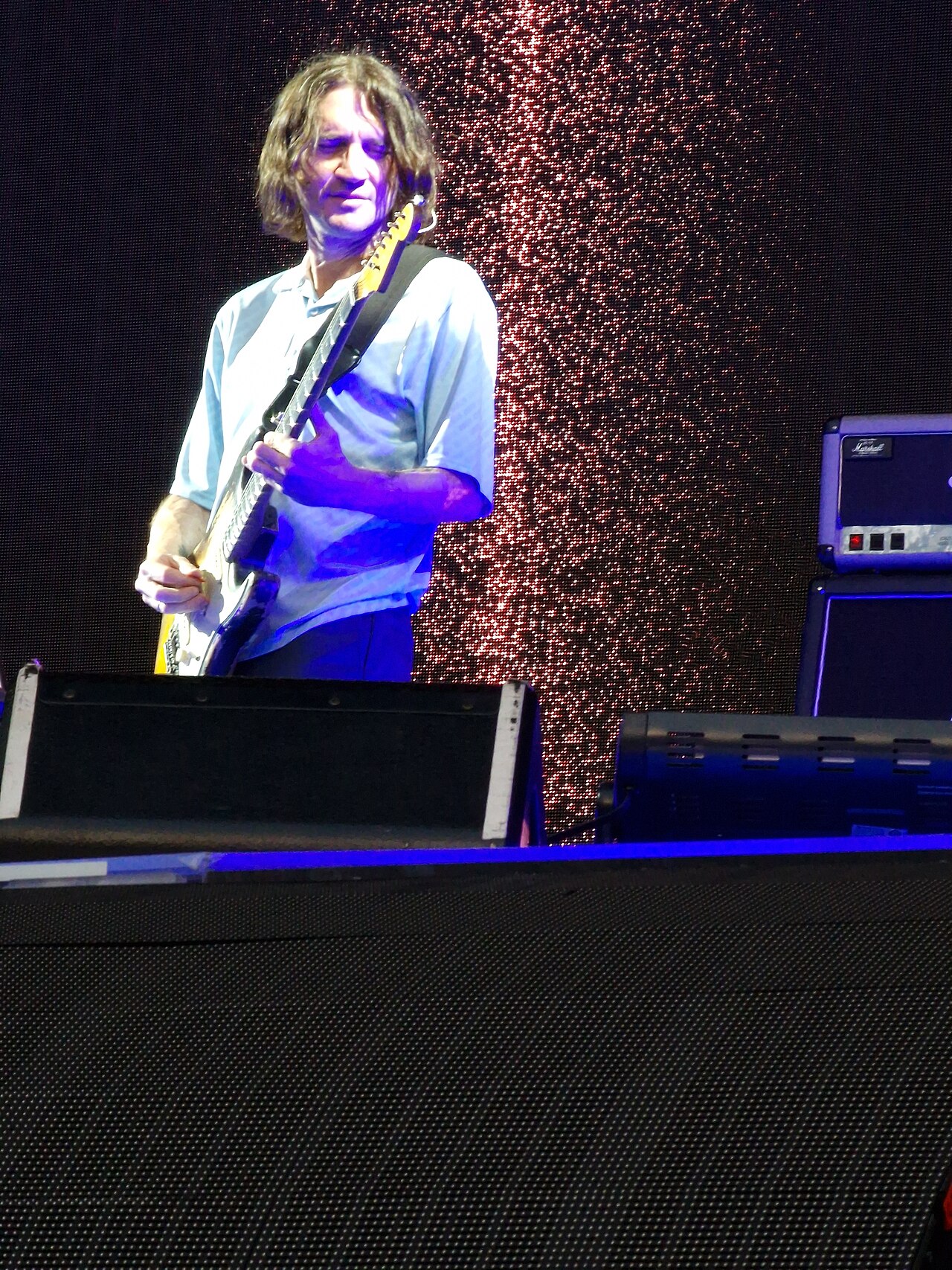
John Frusciante is one of the most creative delay users in rock — his use of the Boss DD-20 on late-period RHCP material and his solo records creates layered textures that blur the line between delay effect and composition. His sense of how repeats interact with melody is exceptional. He’s a digital delay player in character, despite many analog-voiced applications. Not a confirmed JHS 3 Series Delay user, but the digital mode of the 3 Series Delay occupies his creative territory.
Andy Summers of The Police used the Maestro Echoplex and Electro-Harmonix Memory Man to create the echo-drenched reggae-adjacent guitar parts that defined The Police’s early records. His delay is always musical in function, never decorative — it creates rhythm and space simultaneously. Not a confirmed JHS 3 Series Delay user.
Steve Vai’s delay use runs from transparent doubling on rhythm parts to the massive, swimming ambience of his DiMarzio-meets-Eventide lead sound. His precision and expressiveness make delay an extension of his phrasing. Not a confirmed JHS 3 Series Delay user.
These five guitarists represent the complete vocabulary of delay — rhythmic, atmospheric, textural, expressive, harmonic — and the JHS 3 Series Delay can address all of it with three knobs and a toggle. The artists themselves chose their own more complex, expensive, or vintage tools for their own reasons. But the sonic tradition they created is fully accessible here at a fraction of the cost.
Tone Recipes and Settings
Classic Country Slapback
Set Time at roughly 8 o’clock (the lowest end of the range, around 80–100ms). Repeats at 8–9 o’clock, just enough for a single tight echo. Mix at 10–11 o’clock — present but subordinate to the dry signal. Type toggle to digital for precise, bright repetition. The result is the warm single-echo slap that defined Scotty Moore, James Burton, and the Sun Records guitar sound. Works best with single-coil pickups and a clean amp.
Dotted Eighth-Note Rhythmic Delay (Edge-Style)
Use a tuner or metronome to set the tempo, then calculate your dotted eighth-note subdivision. For 120bpm, a quarter note = 500ms, so dotted eighth = 375ms. Set Time accordingly. Repeats at 10–11 o’clock for three-to-four repeats. Mix at noon. Type toggle to digital. With a clean Fender-style tone and single-coil pickups, the rhythmic interplay between your playing and the repeats creates the stacked, arpeggiated effect The Edge made famous on “Pride” and “Where The Streets Have No Name.” The key is playing in rhythm — the pedal multiplies rhythmic precision, not sloppiness.
Warm Vintage Echo (Analog Mode)
Toggle to analog-voiced. Set Time at 11 o’clock (approximately 300–400ms). Repeats at 10 o’clock. Mix at 10–11 o’clock. The darker, slightly modulated repeats created by the analog mode sit differently in a mix than the digital setting — they occupy less frequency space and feel more vintage. Excellent for blues lead playing, country lead work, or any context where you want the echo to feel part of the amp rather than bolted onto it.
Self-Oscillation and Controlled Chaos
Switch to analog mode. Set Repeats to maximum (full clockwise). Set Time wherever feels interesting — medium positions give you a looping texture with a clear pitch; extreme positions give you an enveloping wash. Bring Mix up slowly. The bucket brigade-style runaway begins: the delay regenerates into itself, building into a sustained wall of pitched, filtered echo that takes on a life of its own. This is not a practical sound for most gigs, but it’s genuinely musical in experimental contexts. Moderate your guitar volume to manage the buildup, and your guitar’s volume knob becomes the expression control for the entire effect.
Ambient Shoegaze Wash
Analog mode. Time at 2–3 o’clock (600–800ms). Repeats at noon to 2 o’clock (moderately regenerating). Mix at 2 o’clock (delay louder in the mix). Play slowly, use the neck pickup, and let each note breathe before adding another. The long, modulated repeats create the floating, verb-adjacent texture that shoegaze deployed as a primary aesthetic tool. Works excellently after a fuzz or light overdrive — try it after the JHS 3 Series Fuzz with both Fat toggle and Bias dialed back for a smooth fuzz into a wide, dark delay.
Comparisons: How It Stands Against the Competition
The natural first comparison is with the MXR M169 Carbon Copy Analog Delay. The Carbon Copy uses actual bucket brigade circuitry — a real analog signal chain — for its delay effect, giving it an inherently organic warmth and modulation character that no digital circuit fully replicates. The JHS 3 Series Delay’s analog-voiced mode approximates this character convincingly at similar price points, but the Carbon Copy remains the reference for true BBD texture. The JHS advantage is the Type toggle: you get both digital precision and analog warmth in one box. Equipboard forum discussion specifically notes that the JHS 3 Series Delay is often recommended over the Carbon Copy for beginners precisely because the dual-mode toggle makes it more versatile without adding complexity.
The Electro-Harmonix Deluxe Memory Man is in a different league entirely — a genuine BBD analog delay with built-in chorus and vibrato modulation, a richer tonal character, and a price that reflects its status as a classic. Andy Summers used the Memory Man to define echo for a generation of players. If that specifically analog, specifically vintage, specifically rich delay character is what you need, the Memory Man remains the benchmark. If you need a reliable, versatile, lightweight, budget-friendly delay that can credibly serve both digital and analog applications, the JHS 3 Series Delay is the more practical choice by a significant margin.
The TC Electronic Flashback 2 costs slightly more and offers significantly more algorithmic variety — tape, analog, lofi, reverse, shimmer, and others — via its MASH footswitch and TonePrint technology. If you want to sculpt your delay character with granular control over algorithm and modulation depth, the Flashback 2 wins on features. But feature count is not always a virtue. The JHS 3 Series Delay asks you to make one character decision — digital or analog — and then go play. The Flashback 2 asks you to also decide which algorithm, which TonePrint, whether to use MASH, and how much the subdivision modes affect your workflow. For players who want to focus on playing rather than menu navigation, the JHS is the better experience.
The Boss DD-3 has decades of professional track record and a feature set comparable to the JHS 3 Series Delay’s digital mode. It’s been on more professional pedalboards than almost any other delay pedal in history. The JHS 3 Series Delay has the toggle advantage — the Boss DD-3 doesn’t switch between digital and analog-voiced modes. Otherwise, in the digital mode specifically, the JHS and the Boss occupy similar sonic territory, and the Boss’s buffered bypass may actually be an advantage in certain long signal chain applications.
The Boss DD-8 and EHX Canyon are feature-rich, multi-mode delays that include looping, reverse, shimmer, and modulated delay types. Against them, the JHS 3 Series Delay is the minimalist option — deliberately, and that’s not a disadvantage if your use case doesn’t require those additional modes. The Strymon Timeline offers eleven delay types and a full parameter set for each; it’s also $469. The JHS is $99. The comparison itself makes the point.
Buying Guide: Is the JHS 3 Series Delay Right for You?
The JHS 3 Series Delay is the right choice in a clear set of circumstances. You want a reliable, straightforward delay pedal that covers the most essential echo applications without demanding menu navigation or multi-mode complexity. You want American-made build quality at a price point usually occupied by overseas-manufactured alternatives. You play clean or lightly overdriven guitar and need a delay that enhances your natural tone rather than adding algorithmic color. You occasionally want analog-voiced warmth but don’t want to own a second delay pedal for it. You’re building a pedalboard on a budget and need a delay that’s genuinely good rather than simply passable at a low price.
The JHS 3 Series Delay may not be the right choice if you need subdivided rhythmic delay with tap tempo (the Delay has no tap tempo feature — Time is set by knob, not by foot), multiple simultaneous delay modes, looping capability, or the specific character of a real vintage bucket brigade unit. For tap tempo at this price point, the TC Electronic Flashback 2 is the clearer choice. For true BBD character, the Carbon Copy or Deluxe Memory Man earn the investment. For complex multi-mode delay, the Boss DD-8 or EHX Canyon cover considerably more ground.
The absence of tap tempo is worth dwelling on for a moment, because it’s the single most significant practical limitation of the JHS 3 Series Delay for live gigging. If your music involves songs at fixed tempos where delay needs to subdivide precisely against a drummer or click track, you’ll either need to pre-set your Time knob before each song or accept that the delay won’t track the tempo perfectly. Some players find this liberating — pre-set ambient settings that don’t require real-time tempo matching. Others find it genuinely limiting. Know your own use case before committing.
The volume bump issue worth noting is real. Multiple players document a slight increase in signal level when the JHS 3 Series Delay is engaged. This is manageable — reduce the Mix knob slightly, dial back the output from the pedal before it reaches your amp, and you can level-match without compromise. But it means the pedal should be set up in context, with the amp on, at playing volume, before your settings are finalized.
Ownership Notes: Practical Tips for Getting the Most Out of This Pedal
Power with an isolated 9V output rated at 100mA or more. The 71mA draw is the highest in the 3 Series family and exceeds what some budget power supplies offer on a single output. A Strymon Ojai, Cioks DC10, or Truetone 1 Spot Pro will handle it cleanly. Daisy-chaining with multiple other pedals risks noise and inconsistent behavior — isolated power is the correct answer for any delay pedal, but especially one this power-hungry relative to its size.
No battery operation is available. This is true of most JHS 3 Series pedals. If you’re the kind of player who uses a 9V battery as your emergency backup power option, the 3 Series requires a different approach — always have a power supply on the board.
The analog-voiced mode rewards patient exploration of the Repeats control across its range. Unlike the digital mode where Repeats is fairly predictable from zero to maximum, the analog mode changes character significantly as Repeats approaches maximum — the onset of self-oscillation and runaway is nonlinear, and finding the edge of that zone (where the delay regenerates almost but not quite into full runaway) is where the most expressive playing happens. Treat that transition zone as a performance parameter.
Place the 3 Series Delay after your drive pedals but before any modulation effects that have their own temporal character (vibrato, tremolo). Standard delay placement is: guitar → tuner → drives → compressor → delay → modulation → reverb → amp. The JHS 3 Series Chorus pairs naturally before or after the Delay depending on the effect you want — Chorus before Delay modulates the signal before the repeats, creating repeats that each contain the full chorus effect. Chorus after Delay modulates the entire delay texture, creating a softer, more unified wash.
If you’re stacking drives before the Delay, the JHS 3 Series Overdrive or 3 Series Distortion before the Delay with analog mode engaged creates a cohesive “all JHS” pedalboard voice that tracks well across a range of styles. Keep your Repeats moderate to prevent the already-driven signal from becoming muddled in the repeats.
Frequently Asked Questions
Is the JHS 3 Series Delay a true analog delay or a digital pedal?
The JHS 3 Series Delay is best described as a digital delay with two distinct voicing modes. The “digital mode” produces clear, accurate, pristine repeats. The “analog-voiced mode” darkens the repeats and adds warmth and degradation that mimics the character of a bucket brigade delay circuit. The JHS product page specifically mentions “bucket brigade runaway” in the analog mode, which suggests the analog voicing is a close emulation of that behavior rather than an actual BBD circuit. The 71mA current draw is consistent with a digital processor handling both modes. If you need a true BBD analog circuit, the MXR Carbon Copy Analog Delay or EHX Deluxe Memory Man are the correct tools; both use actual bucket brigade chips.
Does the JHS 3 Series Delay have tap tempo?
No. The JHS 3 Series Delay sets delay time via the Time knob only — there is no tap tempo footswitch. This is the most significant practical limitation of the pedal for live performance contexts where you need the delay to subdivide against a drummer or click track at precise tempos. If tap tempo is essential to your workflow, the TC Electronic Flashback 2, Boss DD-8, or similar pedals at comparable or slightly higher price points include this feature. The JHS 3 Series Delay is excellent for pre-set ambient or textural delay applications where tap tempo isn’t required.
What’s causing the volume bump when I engage the pedal?
The JHS 3 Series Delay adds a slight volume increase when the effect is engaged, independent of the Mix knob position. This is a documented characteristic of the circuit rather than a defect. To compensate, dial back your Mix knob slightly from its target position, or adjust your amp’s input sensitivity relative to the pedal’s output level. Set your final settings at playing volume in context — the volume bump is more audible at some settings than others.
Can I use the JHS 3 Series Delay with bass guitar?
Yes. The JHS 3 Series Delay handles bass guitar signal without issue. The analog-voiced mode in particular works well with bass — the darker, warmer repeat character complements bass frequencies rather than fighting them. Use moderate Mix and Repeats settings to avoid frequency buildup in the low end, which can muddy bass-in-band contexts. Short Time settings (80–200ms) are most useful for bass applications.
What happens when you max out the Repeats knob in analog mode?
The delay enters self-oscillation — the repeats regenerate into themselves rather than decaying, creating a continuously building echo wall that takes on a life of its own. In analog-voiced mode, this runaway has the bucket brigade character that makes it musically interesting: the repeats warm and degrade as they pile up, creating a pitched, filtered wash rather than a harsh digital loop. This is the “bucket brigade runaway” JHS describes on the product page. It’s genuinely expressive in the right context — ambient pieces, experimental passages, or set-ending feedback buildups. Control it with your guitar’s volume knob to bring the effect in and out.
How does the JHS 3 Series Delay compare to other JHS delay options?
JHS also produces the Panther Cub V2 (an analog delay with tap tempo), the Emperor V2 Analog Chorus/Vibrato/Echo, and various other delay-adjacent circuits. The 3 Series Delay is the entry point of the JHS delay family: simplest interface, lowest price, most broadly useful. The Panther Cub adds tap tempo and true analog circuitry; it costs more and is discontinued, making used-market sourcing the primary option. The 3 Series Delay is the right starting point for most players and a permanent fixture on boards where maximum function-per-dollar is the priority.
Is the JHS 3 Series Delay true bypass?
JHS does not explicitly state true bypass on the 3 Series Delay product page, which is the same ambiguity found in several other 3 Series pedals including the Overdrive and Chorus. If buffered versus true bypass status is critical to your signal chain design — particularly if you’re running very long cable runs or have a large number of true-bypass pedals — confirm with your retailer or JHS directly before purchasing.
Will the JHS 3 Series Delay work without a pedalboard power supply?
No — the 3 Series Delay does not accept battery power. DC adapter only, 9V negative center, minimum 71mA available on the output. This is a consistent design decision across the entire 3 Series line; all complex circuit 3 Series pedals require DC power. If you need a self-contained delay option that runs on 9V battery, look at battery-compatible alternatives. For any pedalboard context, the DC-only requirement is not a limitation — just make sure your power supply has a 100mA isolated output available.
Image credits
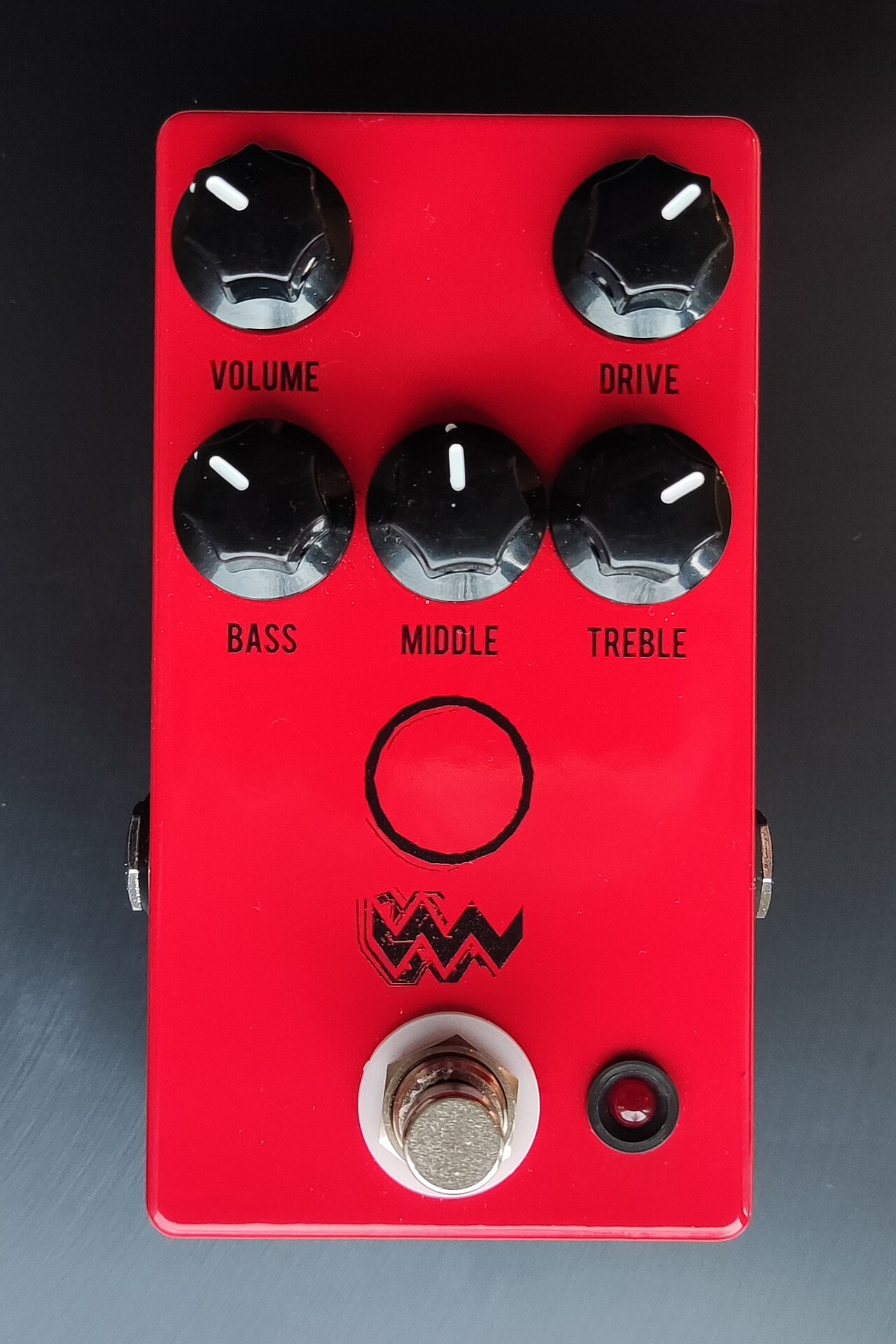
- A JHS Angry Charlie pedal: El Grafo, Wikimedia Commons, CC BY-SA 4.0.
- John Frusciante: Hel Davies, Wikimedia Commons, CC BY-SA 2.0.
- Andy Summers: Drussel1, Wikimedia Commons, CC BY-SA 4.0.
- Top image: GuitarGangsters AI-generated reference illustration, not a photograph.
Latest News
Related
On This Day
Monday 9 November
From this week: