King Tone Duellist: The Two-Pedal Pedal That Quietly Took Over Professional Pedalboards
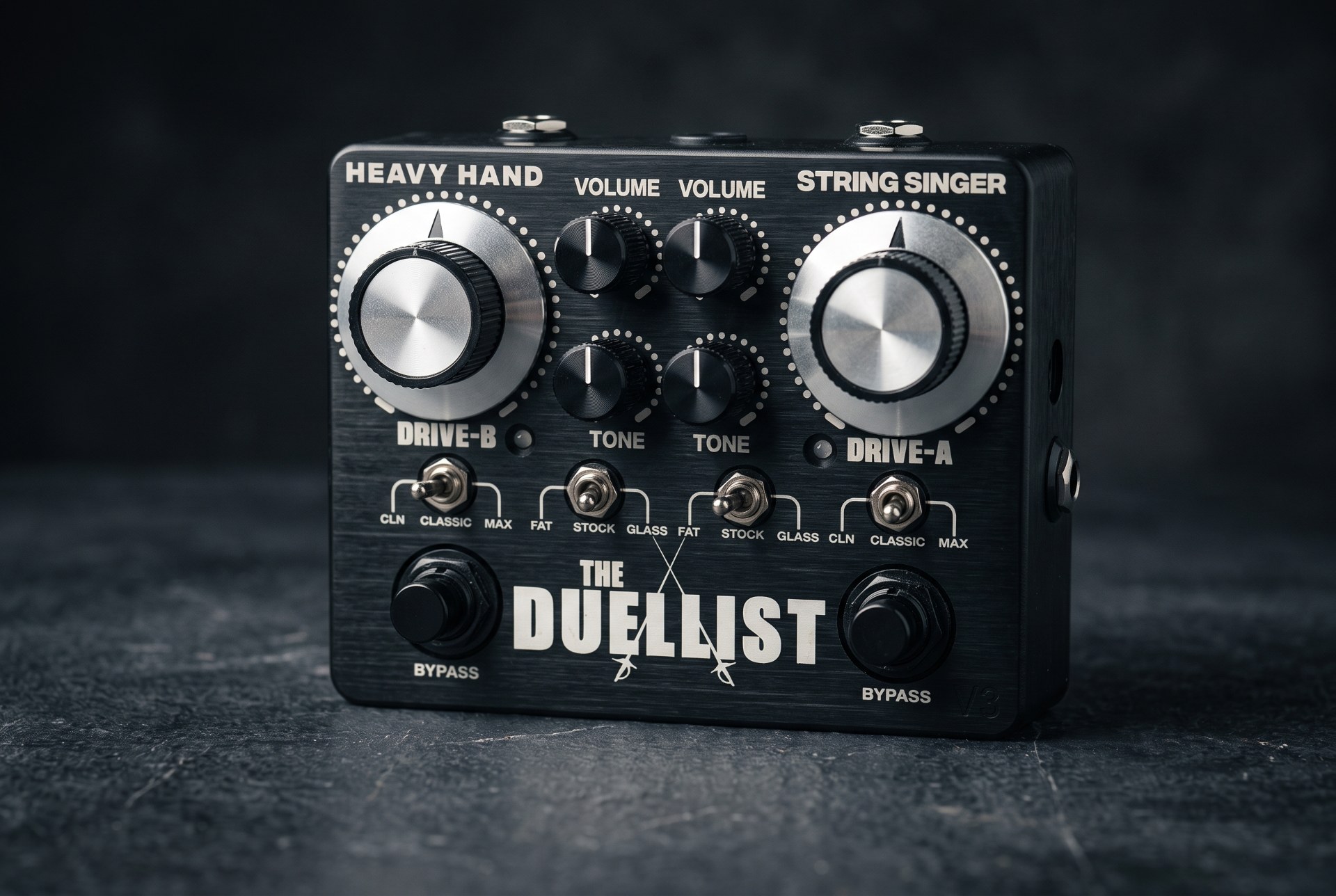
An AI-generated illustration of the King Tone Guitar The Duellist.
King Tone Duellist guide: String-Singer and Heavy-Hand decoded, the V3 six-circuit rebuild, verified players, settings and 2026 buying advice.
Somewhere around 2019, a certain kind of pedalboard photograph started to look suspiciously similar. Big black rectangle, two footswitches, laser-etched panel, six knobs arranged in two mirrored clusters, sitting in the drive row where two separate pedals used to live. Blues players had it. Session players had it. A Belgian post-metal guitarist had it. It kept turning up in Rig Rundowns and That Pedal Show episodes and grainy stage photos posted at two in the morning by people who should have been loading out.
That rectangle is the King Tone Duellist, and the reason it spread is not mysterious. It is a Tube Screamer and a Bluesbreaker in one box, built by a man who spent a decade on tour modifying his own band’s gear between soundcheck and downbeat, and it does the single most useful thing a drive pedal can do for a working guitarist: it removes a decision from the pedalboard and adds one to the foot.
It also costs $349.99, which is roughly four Tube Screamers, and there is a loud minority of players who bought one, played it through a modelling amp at bedroom volume, and could not understand what the fuss was about. Both of those facts are relevant. What follows is the whole picture — where the pedal came from, what each side actually is, what the V3 rebuild changed, who is documented using one and who merely gets claimed, how it stacks against the other dual drives in its price bracket, and whether it deserves the real estate.
The short version
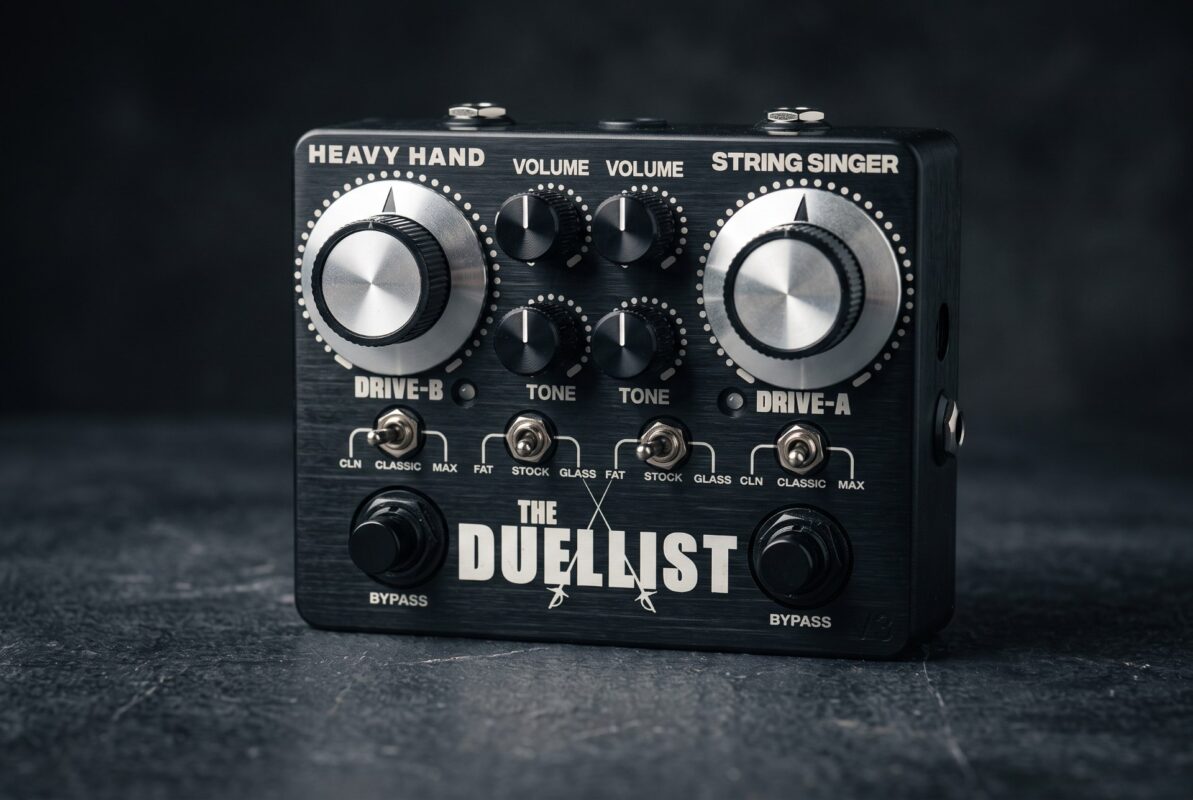
The Duellist is a hand-wired, true-bypass dual overdrive built in California by KingTone. Side A — historically badged the String-Singer — is Jesse Davey’s reworking of an Ibanez TS808-style circuit, voiced around his own vintage 808. Side B — the Heavy-Hand — is his reworking of the 1990s Marshall Bluesbreaker. Each side gets its own Volume, Tone and Drive, plus a three-position Fat / Stock / Glass switch that shapes the signal going into the clipping stage rather than coming out of it.
The sides run independently or stacked (A into B), and on the current V3 they can also be split apart entirely with TRS cables and dropped into two different points in a signal chain. The V3 adds silent soft switching, a Clean / Classic / MAX voicing toggle per side, and an eight-position DIP switch, which is how KingTone arrives at the claim of six analogue drive circuits in one enclosure. Current direct price is $349.99; UK retail sits around £379.99.
The one-line verdict: this is not a subtle pedal for people who want one perfect overdrive. It is a workhorse for people who need two very good, very different overdrives and a third sound made by stacking them, and who will actually use all three.
Jesse Davey: the soldering iron in the wings
KingTone exists because a British blues band broke up.
Jesse Davey formed The Hoax in 1991 with a group of school friends — a raw, award-winning British blues outfit that toured hard through the nineties. Davey’s other obsession started much earlier. He was building circuits in his father’s workshop at eight years old, and once he picked up a guitar a few years later, the two interests collapsed into one habit: if the band could not buy the sound it wanted, he built it. At sixteen he fell into the orbit of British amplifier builder Brian Jefferys, who let him hang around the workshop and occasionally handed over the iron with a curt “you fix that one.”
That apprenticeship never really ended. Photographs of The Hoax on stage in the nineties routinely show amplifiers with their chassis out of the cabinets, because Davey had been modifying them minutes before the downbeat and there was no time to reassemble. When The Hoax folded in 1999, he formed KingTone the same year, and eventually relocated to California. The company is still small and still family-run — Jesse and his wife Krystal — with everything hand-built in the USA.
This matters more than the usual boutique origin story, because it explains the Duellist’s design brief in Davey’s own words: “On tour, I would normally use two overdrive pedals. This would give me two different overdrive tones. I’d then use them together for the full-on moments. To have these tone options in one pedal was something I had wanted for years.”
That is not a marketing angle. That is a touring guitarist describing his own pedalboard and then building the thing that fixes it. The Duellist is a solution to a logistics problem that happens to sound very good.
Side A: the String-Singer
The String-Singer is the Tube Screamer side, and it is worth being precise about what that means, because “based on a TS808” covers an enormous amount of ground in 2026.
Davey did not clone the circuit. He revoiced it around a specific vintage 808 he owns, opened up the low end that the stock circuit famously scoops, and gave it far more available output than the original — enough to slam the front of a stubborn tube amp rather than merely tickle it. The result is a screamer that keeps the midrange push and the compression-under-the-fingers feel, but loses the boxiness that makes stock 808s a love-it-or-leave-it proposition on humbuckers.
Guitar.com’s 2019 review described it as a more versatile, polished, grown-up cousin of the classic Tube Screamer — the familiar Texas-rooted tone in a better suit. The name is a hint about the intended pairing: single coils into a higher-headroom Fender-voiced amp, where it moves from a near-clean boost to smooth, harmonically dense lead tones without ever getting brittle.
If you want to hear how far it has travelled from the source, the honest comparison points are our features on the Ibanez TS808 Tube Screamer and the Ibanez TS9. The Duellist’s A side is recognisably in that family and would not survive a blind test as a stock unit.
Side B: the Heavy-Hand
Side B is Davey’s take on the 1990s Marshall Bluesbreaker pedal — the light blue box that spawned an entire modern sub-genre of “transparent” overdrive, and whose descendants include the JHS Morning Glory V4, the Analog Man King of Tone and the Wampler Belle.
Where the String-Singer has an obvious midrange character, the Heavy-Hand runs a much flatter EQ curve. At low gain it does the thing the original Bluesbreaker is loved for — a touch-sensitive, slightly compressed breakup that cleans up completely when you back off the volume knob. Wound up, with an internal switch flipped, it goes considerably further than any nineties Marshall pedal ever did: a genuinely aggressive distortion mode that KingTone now describes, in the V3, as sitting in DS and dirty-Rat territory.
Guitar.com’s reviewer put the reference points bluntly when running a PAF-loaded Les Paul: Beano at lower settings, then Kossoff, Young and Cream as you turn it up. That is a fair map. If you want to hear where those tones originally came from, our features on Paul Kossoff, Angus Young and Eric Clapton cover the amps and guitars that made them.
One honest caveat, and it comes from owners rather than reviewers: the Heavy-Hand is dark. Multiple players report it does not suit every guitar, particularly darker humbucker-loaded instruments into darker amps. The Glass setting and the DIP-switch high-end options exist precisely because of this, and on the V3 they are considerably more effective than they were on earlier versions. But if you already find Bluesbreaker-style pedals a little muffled, this is the side you should audition first, not second.
Fat, Stock and Glass: the switch nobody explains properly
The three-way toggle on each channel is the Duellist’s signature control, and it is routinely misunderstood as a tone knob with three positions. It is not.
South African blues player Dan Patlansky gave the clearest public explanation of it in an Anderton’s interview, and it is worth quoting because it is a player’s description rather than a spec sheet: the switch affects the tone going into the pedal, not coming out. The Tone knob shapes the top end on the way out. Fat boosts a lot of the bottom end going in, Stock is the classic voicing, and Glass acts as a brightness switch. Patlansky adds the practical part that no spec sheet will tell you: he likes the Glass setting, but it depends on the room.
That is the whole logic of the pedal in miniature. Because the filtering happens before the clipping stage, changing the switch changes what gets distorted, not just what the distortion sounds like afterwards. Fat with high gain gives you a genuinely thicker, fatter saturation rather than the same saturation with more bass EQ’d on top. Glass with a Les Paul gives you a single-coil-ish edge that a post-clipping tone control cannot produce. It is a small design decision with an outsized effect on how the pedal responds.
What the V3 changed
The Duellist has been through three generations, and the 2026 V3 is the largest rewrite of the platform since launch. The headline change is that the internal DIP switches — the ones you previously had to unscrew the back plate to reach — are now an eight-position switch you can get at without a screwdriver, alongside a new Clean / Classic / MAX voicing toggle for each side.
Those three voicings are not EQ presets. Each one switches in a different analogue circuit:
- Clean removes the clipping path entirely and re-voices the EQ, producing an actual clean boost with extended lows and highs. This is the setting that turns the Duellist from a two-drive pedal into a drive-plus-boost pedal, and it is the single most useful addition in the V3.
- Classic is the original Duellist voicing, unchanged. If you owned a V1 or V2 and liked it, this is where you live.
- MAX adds an extra clipping stage, reshapes the EQ and adds post-filtering. On Side A it heads toward Nobels-style grit — worth comparing against our feature on the Nobels ODR-1. On Side B it gets into ProCo Rat and Boss DS territory with a great deal more sustain than either.
Two voicings × two sides × three modes is where the “six analogue drive circuits” claim comes from, and unusually for boutique marketing maths, it holds up: these are genuinely different signal paths, not the same path with different resistors in the tone stack.
The other V3 changes are ergonomic and, for gigging players, arguably more important than the tone options. Switching is now silent soft-switching rather than mechanical stomp. There is an A/B mode that makes the pedal behave like a two-channel amp — one press moves you from one side to the other rather than requiring two presses — alongside the standard independent mode. The pedal can be set to power up in any state, which matters enormously if you fly with a board and want it configured identically every night. And TRS in/out on each side means you can physically split the two circuits and place them at different points in a chain, or run B into A instead of A into B.
That last feature is the one that makes the Duellist genuinely unusual. Almost every dual drive on the market hard-wires the stacking order. This one does not.
Specifications
Famous players: what the evidence actually shows
Boutique pedal artist rosters are one of the least reliable categories of information in the gear world, so here is what can be independently confirmed for this specific pedal, in order of evidence strength, along with what cannot.
Documented on video or in photographs
Joey Landreth (The Bros. Landreth) demonstrated the Duellist on his board during a That Pedal Show episode, walking through it on camera at around the 9:40 mark. That is about as clean as pedal verification gets: the player, the board, the pedal, and an explanation in his own voice.
Dan Patlansky is the most detailed public source on the pedal by some margin. In an Anderton’s interview (visible at 59:38) he talks through the whole thing — the Jesse Davey connection, the vintage-808 basis for the String-Singer, the pre-clipping logic of the Fat/Stock/Glass switch, and his own use of the Heavy-Hand’s internal gain boost for riffing. His summary of the A side: “one of the best tube screamers I’ve heard.” He is also candid that he is a Davey fan generally, which is useful context rather than a disqualifier.
Josh Smith — the Los Angeles session and blues guitarist whose name turns up on an implausible number of boutique rosters — is confirmed here with a Duellist visible in a video where he walks through his own pedalboard. Smith is a genuinely reliable datapoint precisely because he changes pedals constantly and talks about why.
Nick Zinner of the Yeah Yeah Yeahs has one on his main board, documented photographically, sitting above a Strymon Zuma power supply. This is the most interesting entry on the list, because it is the furthest from the pedal’s blues-rock centre of gravity — Zinner’s playing is angular, textural, art-rock, and the Duellist evidently earns its place there too.
Stijn Vanhoegaerden of the Belgian post-metal trio Brutus is visible using one during the band’s Rock Hard Festival 2024 set, broadcast by WDR Rockpalast, at around 12:08. That is a long way from Texas blues, and it says something about the Heavy-Hand’s MAX-adjacent capability.
Artur Menezes — Gibson’s Blues Guitarist of the Year — uses one, captured in the Brazilian video series Ao Vivo Lá em Casa.
Eric “King” Zapata (Gary Clark Jr’s longtime guitarist) has a Duellist on his board, visible at 9:59 in a Vertex Effects pedalboard breakdown.
Jesse Davey himself, obviously, in his own demonstration videos — which is worth listing not as an artist endorsement but because his demos are the most reliable reference for what the pedal is supposed to sound like.
Claimed but not independently confirmed
Kirk Fletcher was named alongside Josh Smith and Joey Landreth in Guitar.com’s 2019 review as one of the “luminaries” whose boards the Duellist was gracing. Fletcher is an entirely plausible user — he is a Los Angeles blues player operating in exactly Davey’s world — but we could not locate a photograph, video timestamp or interview quote confirming it independently of that one sentence in a review. Treat it as likely rather than documented.
The wider pattern is worth naming, since it recurs across boutique brands: a magazine review lists three names, every dealer page then quotes the magazine, and within a year the same three names are circulating as established fact with no primary source underneath any of them. Two of those three check out here. The third does not, yet.
Genre spread
Equipboard’s aggregated genre data for confirmed Duellist users, based on a small sample of eight artists, runs: Rock 13, Blues 9, Metal 4, Blues Rock 4, Modern Blues 4, Jazz 3, Alternative Rock 3, Pop 3, Funk/Soul 3, Folk/World/Country 2. The metal and alternative entries are not noise — they are Brutus and the Yeah Yeah Yeahs, and they are a fair signal that this pedal is less blues-restricted than its marketing suggests.
Eight settings that actually work
All positions are given clock-face. Start with the amp at edge-of-breakup unless stated otherwise.
1. Texas rhythm (Side A only)
Drive 9:00, Tone 12:00, Volume 1:00, Stock. Single coils into a blackface-voiced amp. This is the sound the String-Singer was built for — a clean-ish push with just enough midrange to make a Stratocaster’s bridge pickup sound intentional. For context on where this vocabulary originates, see our feature on Stevie Ray Vaughan.
2. Grown-up screamer lead (Side A only)
Drive 1:00, Tone 11:00, Volume 12:00, Fat. The Fat position is doing the heavy lifting: it feeds low end into the clipping stage that a stock 808 removes before clipping, which is why this sounds thick rather than nasal at high gain. Roll the guitar volume to 7 and it turns into a rhythm sound.
3. Beano breakup (Side B only)
Drive 10:00, Tone 12:00, Volume 1:00, Stock. Humbuckers, amp already working. This is the low-gain Bluesbreaker sound: touch-sensitive, slightly compressed, and completely responsive to picking dynamics. It should clean up almost entirely when you back the guitar volume off. If it does not, your amp is too clean.
4. Heavy-Hand riff mode (Side B only)
Drive 2:00, Tone 1:00, Volume 12:00, Glass, internal gain switch engaged. Patlansky’s approach — the darker side pushed into genuine riff territory, with Glass compensating for the extra low-mid weight the gain brings in. On a V3, engage MAX instead for a considerably more aggressive version.
5. The stack (A into B)
Side A: Drive 10:00, Volume 2:00, Tone 12:00, Stock. Side B: Drive 11:00, Volume 12:00, Tone 12:00, Stock. This is the “full-on moment” Davey designed the pedal around, and the reason to buy it over two separate cheaper pedals. Side A is functioning as a hot, midrange-focused boost into an already-driven Side B, which produces a sustaining lead voice neither side reaches alone. Owners frequently describe the result as reminiscent of John Mayer’s stacked lead tones, which is a reasonable landmark even if it is not literally his rig.
6. Germanium-adjacent grit (Side A, asymmetric)
Drive 3:00, Tone 10:00, Volume 11:00, Stock, asymmetrical clipping selected. Wound-up asymmetric clipping on this circuit gets surprisingly close to a good germanium fuzz’s ragged edge without the impedance headaches. Not a fuzz substitute, but a genuinely distinct fourth sound.
7. Clean boost into a loud amp (V3 only)
Side A: Clean mode, Drive 12:00, Volume 2:00, Tone 12:00, Glass. The V3’s Clean mode bypasses the clipping path entirely, so this is a wide-bandwidth boost with extended lows and highs — for pushing a cranked amp rather than making distortion in a box. Compare with our feature on the Xotic EP Booster if you want a dedicated single-purpose alternative.
8. Split-mode utility (V3 only)
TRS cables out of each side, Side A placed before a fuzz or wah, Side B placed after a compressor. This is the configuration nobody talks about and the one that justifies the footprint on a crowded board: two independent overdrives at two different points in the chain, in one enclosure, at one power draw.
How it compares
Versus the Analog Man King of Tone
The obvious rival, and the one most cross-shopped. The King of Tone is two Bluesbreaker-derived circuits rather than one Bluesbreaker and one Screamer, and it is voiced more conservatively. The practical differences are availability and range: the King of Tone has a legendary waiting list, while the Duellist ships from dealers today, and the Duellist covers substantially more sonic ground because its two sides are genuinely different circuits rather than two variations on one. If you want the single most transparent low-gain drive available, the King of Tone — or the single-channel Prince of Tone — is arguably still it. If you want two different jobs done, the Duellist is the answer.
Versus the Browne Amplification Protein
The closest structural competitor, and one we cover separately. Player consensus on forums is fairly consistent: the Duellist’s TS side is more aggressive and biting, while the Protein’s blue side is smoother and more forgiving. The Duellist is also widely reported to hold low-end integrity better in a mix. Which one you want depends on whether you need the drive row to cut or to blend.
Versus the Keeley D&M Drive
The Keeley D&M Drive is the other famous two-in-one, designed with That Pedal Show’s Dan and Mick, and it is meaningfully cheaper. It is also simpler by design — a boost plus a drive with a fixed relationship — where the Duellist is two full drives with reversible order and independent placement. The D&M is the better buy if you want one specific stacked sound. The Duellist is the better buy if you want a system.
Versus the Wampler Pantheon Deluxe
The Pantheon Deluxe is a dual Bluesbreaker with deeper EQ per side, and it is a serious rival for the Heavy-Hand’s job specifically. Owners comparing them directly tend to give the Duellist the nod on low-end retention and mid-range weight, and the Pantheon the nod on EQ flexibility and price.
Versus two separate pedals
This is the comparison that actually matters, and it deserves an honest answer. A TS9 and a Morning Glory will cost you roughly half as much, cover the same two territories in broad strokes, and take up more board space and one more power output. What you buy with the extra money is the Fat/Stock/Glass pre-clipping switches, the extended gain and output range on both sides, the reversible stacking order, the split routing, and a build that is genuinely intended to outlast you. That is a real value proposition, but it is a professional’s value proposition. If you gig twice a year, two cheaper pedals are the rational choice and nobody should make you feel otherwise.
Buying guide, September 2026
Version matters more than usual here. There are three generations in circulation and they are not equivalent. V1 has all switching internal, requiring a screwdriver and a back plate. V2 (the 2022 revision) moved the dip switches externally, added TRS split mode and an A|B order switch. V3 (2026) adds the Clean/Classic/MAX voicing toggles, silent soft switching, the eight-position DIP array and power-on state memory. If a used listing does not specify, ask for a photograph of the right-hand edge and the top panel before you commit.
Current pricing. $349.99 direct from KingTone with free US shipping, £379.99 at UK retail. The direct listing at the time of writing carries a pre-sale notice and low stock, which is normal for this brand — production is small and batches sell through. There is a 30-day money-back guarantee on direct orders, which is a genuinely meaningful de-risking given the Heavy-Hand’s darkness caveat.
Used market. V1 and V2 units turn up regularly and hold value well. A V2 at a significant discount is a sensible buy if you do not need Clean mode; a V1 should be priced considerably lower to account for the screwdriver-only switching.
Who should not buy this. If your only amp is a small modelling combo used at conversational volume, the most common owner complaint on record applies to you: the pedal is voiced to push a real power section and it underwhelms when there is nothing to push. Several owners have said exactly this in public, and it is a fair warning rather than gatekeeping. If you already own a Bluesbreaker-style pedal you love and only want a screamer, buy a screamer.
Who should. Players who currently run two drives and stack them, players who need channel-switching drive tones on a board without a MIDI controller, and anyone who has been buying and reselling overdrives for three years without landing. The Duellist ends that search for a lot of people, which is the actual reason it spread the way it did.
Ownership notes
Power. It runs on anything from 9V to 18V DC centre-negative and pulls about 10 mA, so it will sit happily on any isolated supply. The higher voltage gives noticeably more headroom on both sides; if your supply offers 18V, try it. There is also an internal battery compartment, which at that current draw will last an implausibly long time.
Failure behaviour. If power is lost mid-set, the V3 reverts to bypass automatically rather than killing your signal. This is a small detail that only matters once, and when it matters it matters enormously.
Board space. At 120 × 94 mm it is roughly the footprint of two standard pedals side by side, so you are not saving space in absolute terms — you are saving a patch cable, a power output, and one gap. On a small board that is still a meaningful win.
The learning curve. There is one, and it is real. Between two Fat/Stock/Glass switches, two voicing toggles and eight DIP positions, the V3 has a genuinely large configuration space. The intended workflow is to treat the DIP switches and voicing toggles as set-and-forget — dial them in once for your rig, then never touch them again and use only the knobs and footswitches. Owners who try to treat every switch as a live performance control tend to be the ones who report the pedal as confusing.
Resale. Strong. KingTone builds in small batches, demand consistently outruns supply, and the brand has never discounted its way out of a slow quarter. Used Duellists tend to sell in days rather than weeks.
Frequently asked questions
Is the King Tone Duellist just a Tube Screamer and a Bluesbreaker in one box?
Those are the starting points, not the destinations. Side A is derived from a TS808 circuit but revoiced around Jesse Davey’s own vintage unit, with far more low-end retention and considerably more output. Side B is derived from the 1990s Marshall Bluesbreaker but with a much wider gain range that extends into distortion territory the original could not reach. Both sides also have the pre-clipping Fat/Stock/Glass switching, which neither original pedal has in any form. Calling it two clones understates it substantially.
What do Fat, Stock and Glass actually do?
They filter the signal before it hits the clipping stage, unlike the Tone knob which shapes the output. Fat pushes low end into the clipping, producing thicker saturation rather than just more bass. Stock is the neutral, classic voicing. Glass adds high end going in, which brightens the character of the distortion itself. Because the change happens pre-clipping, the effect is on the texture of the drive, not just its EQ.
Can I run the two sides in the other order?
On V2 and V3, yes. There is an A|B order switch, and TRS in/out on each side lets you route A into B or B into A, or split them apart entirely and place them at different points in your signal chain. On the original V1, the stacking is fixed at String-Singer into Heavy-Hand.
Is the V3 worth upgrading to from a V2?
If you want a clean boost mode, yes — the V3’s Clean setting removes the clipping path and gives you a genuine wide-bandwidth boost, which is a function the V2 simply does not have. If you only ever used Classic voicings and the internal switches you set once, the upgrade is mostly ergonomic: silent soft switching, power-on state memory, and easier access to the DIP array. Meaningful for touring players, marginal for everyone else.
Why do some players say the Heavy-Hand side is too dark?
Because it is dark, by design — the Bluesbreaker lineage it comes from is a rolled-off, mid-forward voice, and Davey’s version leans into that. It is a poor match for already-dark humbuckers into already-dark amps. The Glass switch and the Edge/Glass DIP options are the intended fix and they work, but if your rig’s problem is a lack of top end, this is not the side that will solve it. Audition before buying if you play a darker instrument.
Does the Duellist work for metal or heavier styles?
More than its blues-brand image implies. Stijn Vanhoegaerden of Brutus uses one live in a post-metal context, and the V3’s MAX mode on Side B is explicitly voiced toward Rat and DS-style grind with extended sustain. It will not replace a high-gain amp channel or a dedicated metal distortion, but as a tight, articulate mid-gain voice in a heavy rig it is more capable than most people expect.
What power supply does it need?
Standard 2.1 mm centre-negative DC, anywhere from 9V to 18V, drawing roughly 10 mA. It will run from any isolated supply output without issue, and 18V gives noticeably more headroom. There is also an internal battery option, and the current draw is low enough that a battery lasts a very long time.
Is it worth $349.99 when a Tube Screamer costs under $100?
Only if you will use all of it. You are paying for two independent hand-wired circuits with more gain and output range than the originals, pre-clipping voicing on both, reversible and splittable routing, and a build intended to last decades. For a player who currently runs two drives and stacks them, the maths is straightforward. For a player who wants one screamer sound, it is not — buy the TS808 or the TS808HW and spend the difference on strings.
Which artists definitely use one?
Documented on video or in photographs: Joey Landreth, Dan Patlansky, Josh Smith, Nick Zinner, Stijn Vanhoegaerden, Artur Menezes and Eric “King” Zapata. Kirk Fletcher was named in a 2019 magazine review but we could not confirm it independently, so treat that one as plausible rather than established.
Image credits
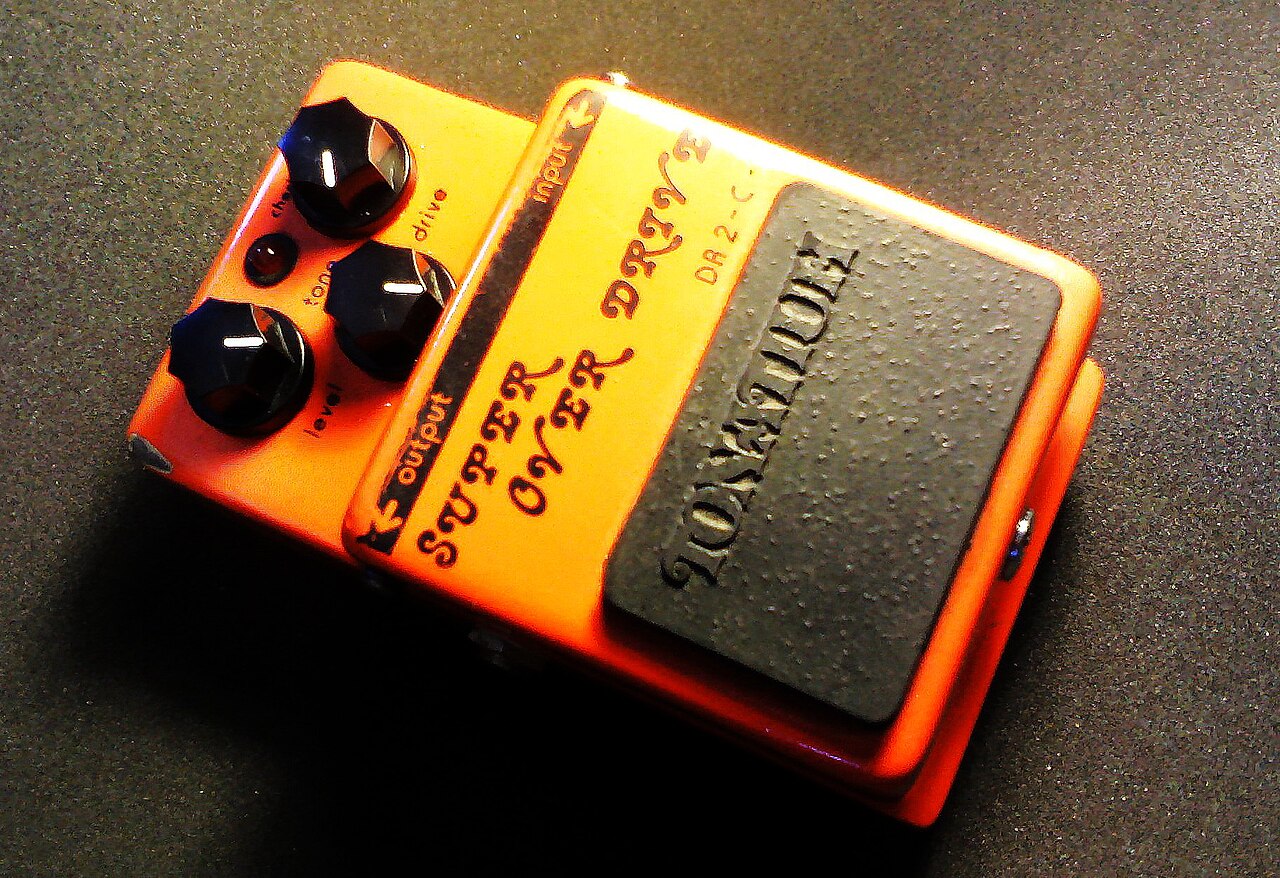
- An orange overdrive pedal: Andrés Galeotti, Wikimedia Commons, CC BY 2.0.
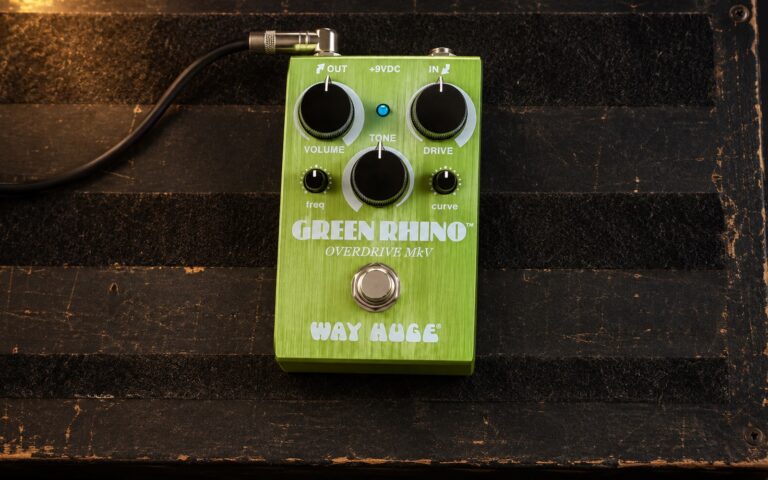
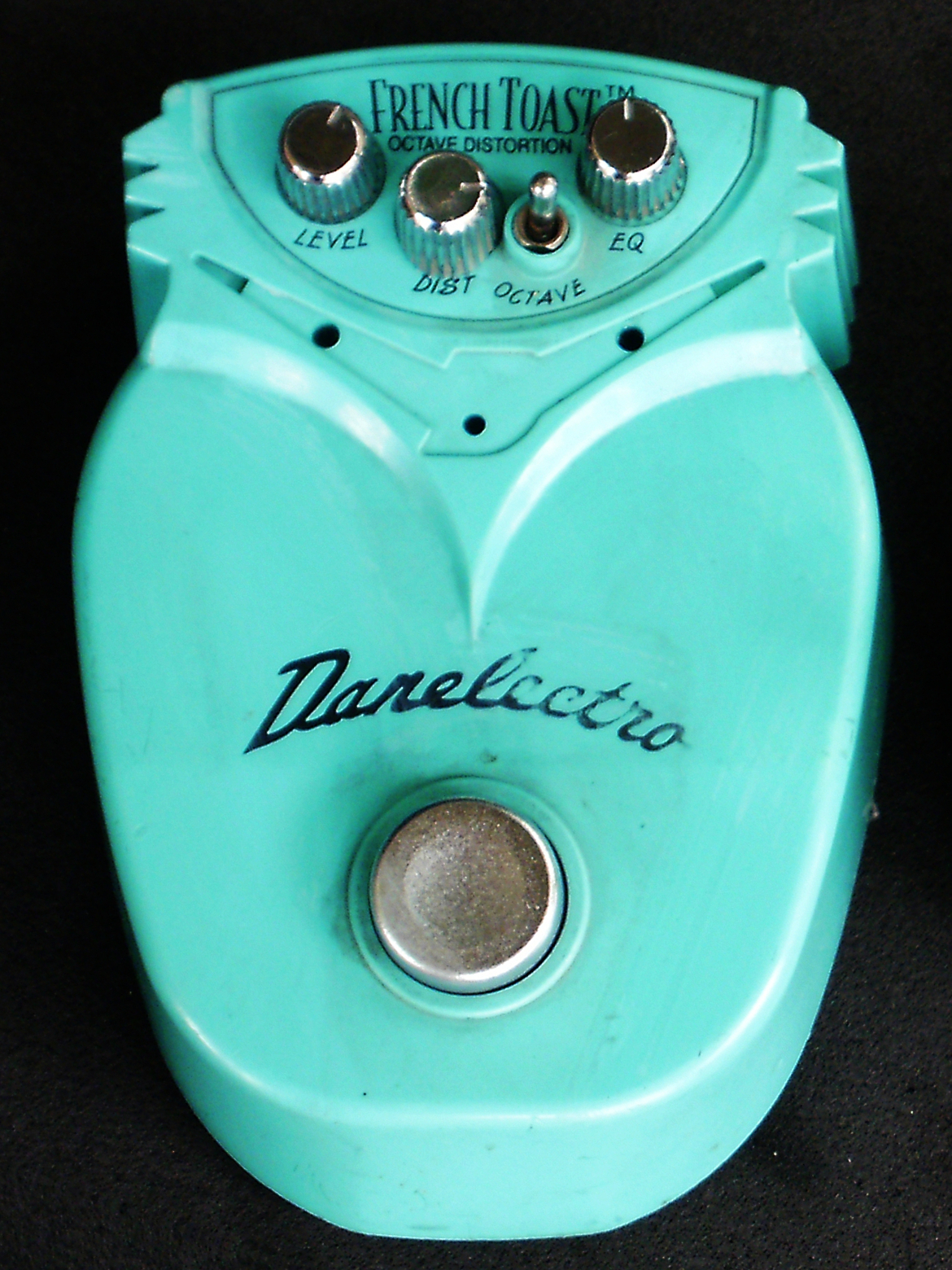
- A mint green distortion pedal: Danelectro French Toast octave distortion rehouse on metal case (2011-10-03 by Andrés Galeotti).jpg: Andrés Galeotti fro, Wikimedia Commons, CC BY 3.0.
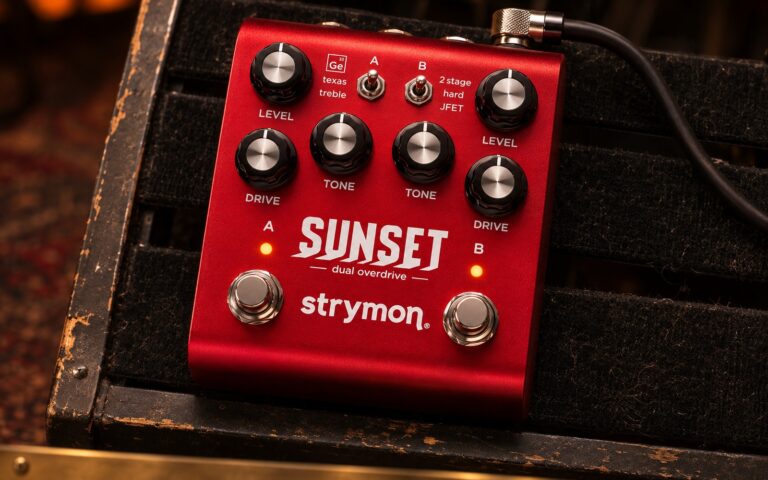
- Top image: GuitarGangsters AI-generated reference illustration, not a photograph.
- King Tone Guitar The Duellist: AI-generated illustration by GuitarGangsters, based on the manufacturer’s product design (not a photograph).
Latest News
Related
On This Day
Monday 9 November
From this week: