Fulltone Fulldrive 2 MOSFET: The Boutique Era in a Box
Fulltone Fulldrive 2 MOSFET explained: all 12 voicings decoded, MOSFET mode corrected, verified players, Fulltone's collapse and honest used-buying advice.
There is a specific kind of pedal that stops being a product and becomes a marker. You can date a pedalboard photograph by it. Somewhere between 1996 and about 2015, if you opened a gig bag belonging to a working guitarist in America — a bar-band lead player, a church guy, a session hand, a touring sideman who owned two guitars and one amp — there was a fair chance you would find a heavy steel box with two footswitches, two mini-toggles and four knobs, and it said Fulltone on it.
The Fulldrive 2 MOSFET is the version of that box that most people actually bought. Not the mid-Nineties silver-box original that collectors chase, not the Fulldrive 3 that came later, not the compact v2 that Fulltone sells today. The MOSFET is the one that sat in the middle of the run, sold in enormous numbers, and got photographed on more boards than any other Fulltone except the OCD.
It is also a pedal with an unusually strange afterlife. The company that made it detonated in public, closed its factory, and then came back from the dead under new ownership — and the pedal itself was quietly retired along the way. What is left is a used-market object with a reputation to check, a manual full of details nearly every article about it gets wrong, and a famous-player list that mostly does not survive contact with primary sources.
This is not a review. This is a field guide: what the two toggles genuinely do (including one that is described backwards almost everywhere), which of the twelve available voicings are worth your time, who is actually documented using one, what happened to Fulltone, and whether the thing is worth buying second-hand in 2026.
First, the Naming Problem: Which Fulldrive Is This?
Almost every argument about this pedal online is really an argument about which pedal the two people are talking about. The Full-Drive line ran for roughly thirty years and Michael Fuller revised it repeatedly without always renaming it. Here is the map.
Full-Drive (1) — the original, mid-Nineties, a single-channel overdrive. Fuller himself has demoed one on camera for Guitar.com. Rare, collectible, not the subject of this article.
Full-Drive 2 (non-MOSFET) — the pedal that made the brand. Reverb’s product database gives its production run as roughly 1995 to 2013, and dated units from January 1996 are common on the used market. Blue enclosure, two footswitches, Overdrive channel plus a footswitchable Boost channel with its own gain knob. Early examples had Comp-Cut on a pull-switch built into the Volume pot.
Full-Drive 2 10th Anniversary MOSFET — a limited edition in burnt orange metallic with white lettering, celebrating ten years of the Fulldrive 2. Fulltone’s own launch copy for it survives: “To celebrate 10 years of the Fulldrive2 I’ve come up with a special MOSFET switchable version.” The manual for the resulting production model carries a 2006 copyright, which places the anniversary edition at around 2005–2006 and dates the Fulldrive 2 itself to the mid-Nineties.
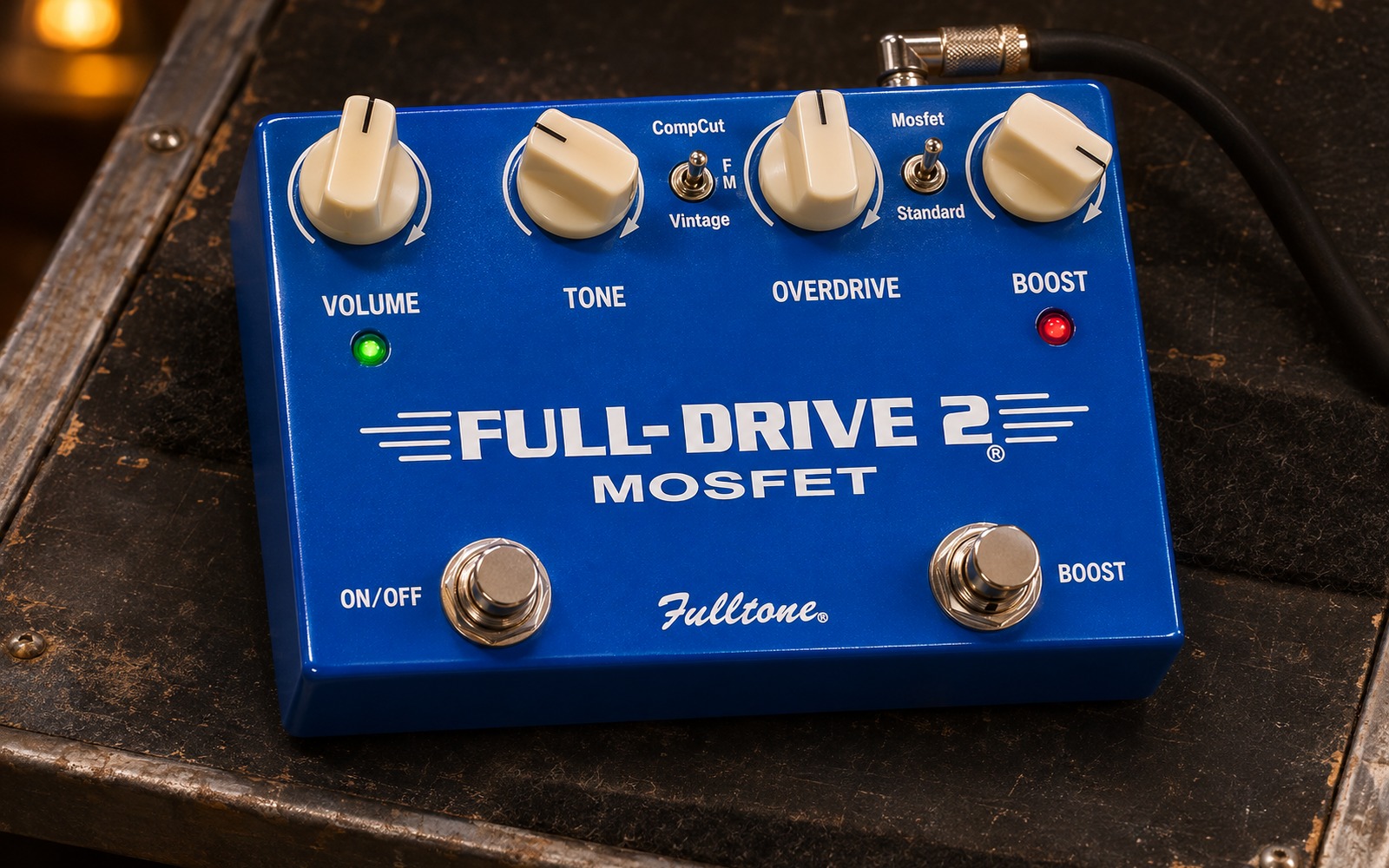
Full-Drive 2 MOSFET (FD2-MOS) — the standard-production blue version that followed the anniversary run and became the default Fulldrive for the rest of the pedal’s life. This is the pedal in this article. Volume, Tone, Overdrive, Boost; a three-way left mini-toggle for Comp-Cut / FM / Vintage; a two-way right mini-toggle for MOSFET / Standard.
Fulldrive 3 — a later, separate model with its own manual, generally reported as the warmest and darkest of the family.
Full-Drive 2 v2 — the current pedal, and the one still in the Fulltone USA catalogue. It is 30% smaller than the FD2-MOS, adds a second independently-adjustable Volume for the boost channel, and replaces the two-way MOSFET toggle with a three-way switch offering Wide / Standard / Half-Clipped. Fulltone USA lists it at $199.
The practical consequence: the Fulldrive 2 MOSFET is discontinued. Equipboard flags it as “Vintage or Discontinued,” and Fulltone USA’s current line-up has no FD2-MOS in it. Anything you buy is used. That is not a problem — it is a 16-gauge steel box with a five-year warranty history and almost nothing inside it that wears out — but it does change how you shop.
Where It Came From: Culver City, Print Ads, and the Invention of Boutique
Fulltone is one of the founding companies of the boutique pedal industry, and the Full-Drive is the reason.
Michael Fuller and the founding-date question
Michael Fuller was a session guitarist and composer — Guitar Player ran a piece on him and he took first place in that magazine’s Ultimate Guitarist Competition in the blues category — before he was a pedal builder. Sources disagree on when Fulltone began, and it is worth showing the disagreement rather than picking one silently. Wikipedia and Fulltone’s own corporate history give 1991 as the founding year. Other Fulltone materials describe the company as founded in 1993, and at least one account splits the difference: incorporated 1991, manufacturing commencing 1993. Guitar World’s NAMM 2024 piece on the brand’s return simply says “Founded in 1991.”
The 1991–1993 spread is the kind of ambiguity that recurs across boutique brands, and it usually reflects the gap between a name existing and a product shipping. Take it as: early Nineties, Southern California, one guy.
The mail-order era
Fulltone’s rise in the 1990s came, as Wikipedia’s account puts it, “largely through print marketing.” That detail matters more than it sounds. Before YouTube demos, a boutique pedal lived or died on a quarter-page ad in the back of a guitar magazine and word of mouth on early internet forums. The Full-Drive 2’s advertising leaned hard on a specific pitch — that this was a Tube Screamer you could actually control, with a second gain channel built in — and Fulltone claimed, correctly, to be first to market with a footswitchable Boost channel inside an overdrive.
By the time the MOSFET version arrived, the pedal had already been named by Guitar Player as one of the all-time top 50 effects ever made, per Fulltone’s own copy, and the MOSFET version went on to take a Guitar Player Best Stompbox nod in 2006.
The company operated from 11018 Washington Blvd, Culver City, California — an address printed on the back page of every Fulldrive manual, and one that will come up again at the end of this article for less happy reasons.
Specifications
What the Circuit Actually Does — and the One Thing Everybody Gets Backwards
The Full-Drive’s design premise is easy to state: take the Tube Screamer architecture that everyone already understood, then give the player switches for the two things about it that annoy people — the midrange hump and the compression.
The lineage: a Tube Screamer with an SD-1 accent
The circuit is openly Tube-Screamer-derived. Fulltone’s own materials and the wider consensus put it in that family, and the current v2 is still described by the company as “based around the desirable JRC4558 chip and 1990’s Full-Drive circuit” — the JRC4558 being the same op-amp that made the Ibanez TS808 a fetish object.

The twist is the clipping. Where a TS9 uses symmetrical clipping, the Full-Drive in its standard mode uses asymmetrical clipping — the same basic idea as the Boss SD-1 Super Overdrive. Fulltone’s own description of the effect: “This pedal gets its natural sound through the use of Asymmetrical Clipping and ‘Feedback Loop’ circuit… a way of creating distortion high in even ordered harmonics like a Class A tube amp!” Whether you accept the tube-amp framing or not, the audible result is a slightly softer, less symmetrical crunch with more even-order content than a straight Screamer.
Fulltone USA’s current spec sheet for the v2 is more precise about the family, and is worth quoting because it retroactively explains the older pedal: Vintage is “traditional 90’s Full-Drive slightly asymmetrical clipping,” Flat Mids is “a late 1990’s Fulltone invention that feeds signal back on to the clipping diodes removing the Mid-hump,” and Comp-Cut “removes clipping diodes, not a clean boost because it can distort the opamp.”
MOSFET mode: symmetrical, not asymmetrical
Here is the correction that matters most, because a large share of the retail copy and blog writing about this pedal has it inverted.
You will read, on multiple sites, that the MOSFET toggle “switches between asymmetrical clipping for a more open, harmonic sound and tighter clipping sent through a MOSFET.” That framing implies the MOSFET side is the tight, restrained one. The manual says something different and more specific. Fuller’s own text: the pedal “(Standard Mode only) has my proprietary ‘Flat Mids’ circuit, (FM mode) and also a Symmetrically Clipped MOSFET mode (Metal Oxide Field Effect Transistor) that offers rougher, stinging Marshall/Ampeg/Fender-style distortions.”
And in the control-by-control section: “MOSFET Mode: this new Mode applies Mosfet Clipping, which has more bottom-end, more growl, and more aggressive attack & overtones.”
So: Standard = asymmetrical, softer, more classic Full-Drive. MOSFET = symmetrical, more bottom end, more growl, more aggressive attack. MOSFET is the rowdier setting, not the politer one. If you have been avoiding MOSFET mode because you read that it was the “tighter” option and you wanted openness, you have been avoiding the wrong side of the switch.
There is a second, subtler misdescription in circulation. At least one widely-syndicated review describes the mode selection as being on “footswitches for selecting vintage/compcut modes and MosFET/standard.” They are mini-toggles. The pedal has exactly two footswitches — On/Off and Boost — and nothing else is foot-selectable. This matters for anyone planning a live set around it: you cannot change voicing with your foot on this pedal. You get one voicing per song unless you reach down.
Comp-Cut is not a clean boost, whatever you have been told
Comp-Cut is the single most misunderstood feature on the pedal, and Fulltone’s two generations of documentation disagree with each other about how to describe it.
The FD2-MOS manual calls it “the Clean boost mode for both channels” and warns that “this mode can give a huge gain increase at higher OD and Boost settings so back-off on the Volume level at first.” The current v2 page is blunter and, honestly, more accurate: Comp-Cut “removes clipping diodes, not a clean boost because it can distort the opamp.”
Both are describing the same behaviour from different angles. Lifting the clipping diodes out of the path removes the compression and the soft limiting; what is left is the op-amp gain stage running open. At low Overdrive and Boost settings that reads as clean and fast. Crank it and the op-amp itself starts to clip, which is a harder, less forgiving distortion than diode clipping.
The manual’s own advice on how to hear it is the best thing in the document: “When ‘Overdrive’ and ‘Boost’ levels are below 10 O’clock, this change is heard as a quicker and firmer attack with less softness. Because there is little compression at lower OD settings, you may have difficulty hearing the subtle difference when using Comp-Cut….listen for the attack and more immediate transients.”
In other words, Comp-Cut is a feel control before it is a tone control. If you A/B it on a single sustained chord you will conclude it does nothing. Play staccato and it is obvious.
One period detail: on earlier Full-Drive 2s, Comp-Cut lived on a pull-switch on the Volume pot. Fulltone moved it onto the three-way toggle for a stated reason — “so you won’t accidentally kick it while on stage.” That is a real-world design fix from a company that clearly got the phone calls.
FM versus Vintage: the mid-hump switch
FM stands for Flat Mids. The manual: it “makes the ‘Overdrive Mode’ (channel A) very transparent, with less Mids than ‘Vintage Mode,’ and you’ll notice that the FD2-Mos cleans up much better when your guitars’ volume knob is turned down as well.”
Vintage does the opposite: it “takes the ‘Overdrive Channel (channel A) back to the Midrange heavy beast it was in the ’90’s.” Fulltone’s marketing put it more bluntly — Vintage is for “those old mid-heavy, thick mid-’90’s FD2 tones that the Ebayers pay so much for.”
The under-reported part is that the toggle affects the Boost channel differently from the Overdrive channel. Per the manual: in FM mode, switching to Boost “gets you more midrange and offers more Distortion with a bit more high-end (frequency @5Khz).” In Vintage mode, the Boost channel has “a little Less treble (more mids) than the ‘FM mode’ Boost channel.”
Read that carefully and it inverts your intuition: FM makes the clean side flatter but the boost side brighter and more aggressive. Vintage makes the clean side middy but the boost side comparatively darker. If you set the toggle by ear on the Overdrive channel alone and then stomp the Boost, you may be surprised — the relationship between the two channels flips depending on the toggle.
The Tone knob is a Presence control
Fuller was explicit that this is not a Tube Screamer tone stack: “Since this pedal stays true to your original sound, I made this a Presence control for rolling-off or accentuating both the hi-end and the upper Harmonics. Turning this clockwise increases brightness. Turning counter-clockwise smoothes out sound without changing either the Midrange or the Bass content.” Fulltone’s shorter marketing line gives the neutral position: 12 o’clock is roughly flat.
Practically: this knob will not fix a muddy amp, because it does not touch bass or mids. It will tame fizz and it will add air. Treat it as the last 10% of the dial-in, not the first.
The full voicing matrix
Three positions on the left toggle × two on the right × two channels = twelve distinct voicings, all reachable without a soldering iron. That is a lot for a four-knob pedal, and it is the reason the Fulldrive 2 kept selling long after the market filled up with simpler transparent drives.
| Left toggle | Right toggle | Overdrive channel character | Boost channel character |
|---|---|---|---|
| Vintage | Standard | The classic mid-Nineties FD2: mid-forward, asymmetrical, thick | Middy lead voice, slightly darker than the FM boost |
| Vintage | MOSFET | Mid-heavy with added bottom end and growl; the most “rock” combination | Aggressive, dense, Marshall-leaning |
| FM | Standard | Most transparent setting; cleans up best with guitar volume | Brighter, more distorted lead sound with 5kHz emphasis |
| FM | MOSFET | Open and chimey with extended lows; the “Texas blues” setting | Bright and stinging |
| Comp-Cut | Standard | Uncompressed, fast attack; near-clean at low drive | Loud, immediate, op-amp-flavoured when pushed |
| Comp-Cut | MOSFET | Uncompressed with MOSFET bottom end; the most amp-like combination | The loudest and least polite thing the pedal does |
Famous Players: What Survives the Check
This is the section where most Fulldrive articles go wrong, and the failure is structural rather than malicious. The Full-Drive 2 ran for roughly two decades across at least four meaningfully different versions. Almost every artist attribution you will find is to “a Fulltone Full-Drive 2” with no version specified, and a great many of them predate the MOSFET version entirely. Aggregator sites then attach the whole roster to whichever product page you happen to land on.
So the honest way to handle this is in tiers.
Tier 1: Fulltone’s own list — circuit-level, not SKU-level
Fulltone’s marketing copy for the Full-Drive 2 named its “devotees” as: the Rolling Stones, Robin Trower, the Black Crowes, Robben Ford, Ian Moore, Steve Stevens, Drew Zingg, Pete Anderson and John Abercrombie.

Two observations. First, that is a genuinely interesting and specific list — it is not the usual lazy roll-call of Hendrix and Slash. Robben Ford, Pete Anderson (Dwight Yoakam’s guitarist and a serious tone obsessive) and the late John Abercrombie are exactly the sort of players whose endorsement means something technically. Drew Zingg is a Steely Dan sideman. This reads like a list assembled from actual dealer and artist-relations contact rather than invented.
Second, and decisively: this list was published for the Full-Drive 2, and predates or coincides with the MOSFET version’s launch. It appears in Fulltone copy archived in early 2006, alongside separate copy introducing the 10th Anniversary MOSFET edition as a new thing. These are Full-Drive 2 users. Whether any of them ever put a MOSFET-equipped unit on a board is undocumented. Anyone presenting this roster as “famous Fulldrive 2 MOSFET players” has quietly changed the claim.
Where the Rolling Stones are concerned, note also that the credit is to a band, not a player. Keith Richards and Ronnie Wood have very different rigs, and brand copy naming a band rather than a guitarist is the weakest form of the weakest evidence tier.
Tier 2: the aggregator roster, treated with suspicion
Equipboard’s Full-Drive2 MOSFET page claims 121 professional artists and surfaces, among others: Keith Urban, John Mayer, Thom Yorke, John Petrucci, Gary Clark Jr., Tom DeLonge, Chris Shiflett, Pat Smear, Caleb Followill, Tom Petty, Bruce Springsteen, Stone Gossard and Lenny Kravitz.
A roster that broad, spanning Radiohead to Dream Theater to Blink-182, should set off alarms. It is the signature of version-conflation: any sighting of any Full-Drive anywhere, attached to the MOSFET item page. We checked two of the biggest names properly, and the results are instructive in opposite directions.
Keith Urban — the claim does not hold up. Fulltone’s site has listed the Fulldrive2 MOSFET among Urban’s pedals, which is about as strong as brand-page evidence gets. But the most detailed published inventory of Urban’s rig is Premier Guitar‘s Rig Rundown with his guitar tech Chris Miller, and the pedal-by-pedal breakdown of all three of his switching-system trays contains no Fulltone at all. Tray 1: Demeter Compulator, Wampler Ego, Analogman Juicer, Boss GE-7, Boss CS-2, Suhr Koko Boost. Tray 2: MXR Distortion III, T-Rex Alberta, Klon Centaur. Tray 3: ProCo Rat, Boss CE-2, XTS Precision Overdrive, MXR GT-OD, MXR Bass Octave Deluxe. Plus a Wampler Pinnacle with the Marshalls. Not one Fulldrive.
That does not prove Urban never owned one — rigs change, and a pedal can be a studio tool rather than a touring one. It does mean that the most thorough documentation available of his actual signal chain contradicts the brand claim, and any article listing Keith Urban as a Fulldrive 2 MOSFET player without that caveat is repeating marketing.
John Mayer — real, but weaker and older than advertised. Mayer is genuinely associated with the Fulldrive 2, and the dedicated fan-documentation site johnmayergear.com includes it in his overdrive section. But read the wording: “Not only has Mayer used this pedal in the past” — past tense, no version, no date. The same page’s account of his actually-documented overdrive rig is the Ibanez TS10 (his repeated favourite), the TS808 and TS9, the original Nineties Marshall Bluesbreaker, a Klon Centaur, a Keeley-modded Boss BD-2 and a Keeley Katana. The Fulldrive is mentioned as a Tube Screamer alternative rather than as a fixture. Honest summary: Mayer has used one, it was not central, and nothing ties it to the MOSFET revision specifically.
Tier 3: the honest conclusion
We could not find a single first-person quote, dated photograph or filmed rig walkthrough placing a named marquee guitarist on a Fulldrive 2 MOSFET specifically, as opposed to “a Fulldrive 2.”
That is not a knock on the pedal. It is a consequence of how the product line was managed: Fuller revised the circuit repeatedly under the same name and colour, so even a clear photograph of a blue Fulltone on a board frequently cannot tell you which version it is without a close look at the toggles. A two-way toggle on the right means MOSFET; a pull-knob on the Volume means an early unit. Most rig photography is not that good.
The honest framing for a buyer: the Fulldrive 2 is a circuit with a deep and verifiable professional history, and the MOSFET is one revision of it. Buy it for the twelve voicings and the build, not because a poster told you a famous person owned this exact box.
Tone Recipes
1. Fulltone’s “SRV style” (from the manual)
Volume 1 o’clock, Tone 3 o’clock, Overdrive 3 o’clock, Boost 1 o’clock, Vintage on the left toggle, Standard on the right.
High drive, bright presence, the mid-heavy Nineties voice, softer asymmetrical clipping. Into a blackface-style amp with single coils this is the closest the pedal comes to Texas-flood territory. Compare the mid-hump behaviour against a real TS808HW and you will hear that the Fulldrive is fatter underneath. See also Stevie Ray Vaughan‘s actual rig, which was a TS10 and later TS808 rather than anything boutique.
2. Fulltone’s “Pristine Fat and Single Note” (from the manual)
Volume 10 o’clock, Tone 2 o’clock, Overdrive 1 o’clock, Boost 9 o’clock, FM left, MOSFET right.
Fuller’s note: “You get Sparkling tones in Overdrive Mode (left LED only lit) and the ability to toggle between two Incredibly useful, yet vastly different sounds by kicking On and Off the Boost Mode via the right footswitch.” This is the setting that exploits the FM/Boost interaction described earlier — the flat-mid rhythm sound and the brighter, more distorted boost sound are genuinely far apart.
3. Fulltone’s “Rock” (from the manual)
Volume 11 o’clock, Tone 2 o’clock, Overdrive 9 o’clock, Boost 5 o’clock, Vintage left, MOSFET right.
Note the inversion: Overdrive almost off, Boost maxed. The Boost channel’s gain is independent of the Overdrive knob — the manual is explicit that you control boost distortion “regardless of where OD knob is set” — so this gives you a near-clean rhythm channel and a wall of gain on the right footswitch. This is the single most useful architectural trick in the pedal and the reason it outsold single-channel rivals.
4. The Comp-Cut country picking setting (ours)
Volume 12, Tone 1 o’clock, Overdrive 8 o’clock, Boost 8 o’clock, Comp-Cut left, Standard right.
Barely any gain, no diode compression, fast transients. Hybrid-picked Telecaster chicken pickin’ with the amp doing the work. This is the closest the Fulldrive gets to the territory owned by the Nobels ODR-1 in Nashville, and it is a fairer fight than the internet assumes.
5. The always-on thickener (ours)
Volume 1 o’clock, Tone 11 o’clock, Overdrive 9 o’clock, Boost off, FM left, Standard right.
Flat mids, presence rolled slightly back, minimal gain, unity-plus volume. Leave it on all night in front of a slightly dirty amp. This is the Timmy/King of Tone use case, and the FD2-MOS does it competently without being quite as invisible as either.
6. Humbuckers into a small amp (ours)
Volume 11 o’clock, Tone 2 o’clock, Overdrive 11 o’clock, Boost 2 o’clock, FM left, MOSFET right.
MOSFET adds bottom end, which is normally the last thing a Les Paul needs — but FM’s mid-scoop makes room for it. The combination stops humbuckers turning to soup while keeping the low-end authority. Reverse the toggles (Vintage + Standard) with single coils for the opposite problem.
7. The stacked lead (ours)
FD2-MOS in FM/Standard with Overdrive at 10 o’clock, feeding a Wampler Tumnus or Klon-style clean boost after it, both on.
The Fulldrive’s own Boost channel is a gain boost, not a level boost — the Volume knob is shared across both channels. If you want more volume without more gain, you need something after it. This is the pedal’s one genuine architectural weakness, and it is exactly what the Full-Drive 2 v2 fixed by giving the second channel its own Volume mini-knob.
8. The 18-volt experiment (ours)
Any of the above, but run from 18V DC.
Fuller’s own promise in the manual: “You may run this pedal anywhere between 9 and 18 Volts DC as long as the center Pin is Negative…You’ll be amazed at the sonic differences!” Expect more headroom, less compression, a stiffer feel and slightly more available clean volume. It is free and reversible. Read the power-supply warnings in the ownership section first.
Fulltone printed three suggested settings in the manual. They are reproduced here first, verbatim, because manufacturer settings are the most under-used resource in guitar journalism — and Fuller was a working player, so his are better than most. Then five of ours.
How It Compares
Versus the Tube Screamer family
This is the comparison the pedal was built for. Against a TS9 or TS808, the Fulldrive 2 MOSFET offers: a second footswitchable gain channel, a defeatable mid-hump, defeatable compression, a switchable clipping topology, true bypass, and 9–18V operation. The Screamer offers: three knobs, one sound, and a fifty-year consensus that the sound is correct.
The reviewer at Effects Bay put the tonal difference plainly: “The Ibanez Tube Screamer TS9 is a little brighter and thinner in the low mids than the Fulldrive 2.” That is the durable summary. The Fulldrive is the fatter pedal, and the FM switch is the only way to get it close to Screamer-flat, not past it.
If you want the Screamer voice in a smaller box, the Tube Screamer Mini does it for a fraction of the used Fulldrive price. If you want the Screamer voice with better parts, the TS808HW.
Versus the Boss SD-1
The SD-1 is the other asymmetrical-clipping overdrive that everybody owns, and it costs about a fifth of a used Fulldrive. In Vintage/Standard mode the two are cousins. What you are paying the difference for is the second channel, the toggles, true bypass and the steel enclosure — not for a fundamentally better clipping stage.

Versus the Fulltone OCD
Fulltone’s own two most famous pedals are not really competitors. The OCD is a higher-gain, more amp-like distortion with a Hi/Lo peak switch; the Fulldrive 2 is a lower-gain overdrive with an EQ and compression philosophy. If you only buy one Fulltone and you play rock, the OCD. If you play blues, country or anything where the amp is already doing most of the work, the Fulldrive.
Versus the transparent-drive generation that replaced it
The Fulldrive’s commercial decline had less to do with Fulltone’s problems than with the market’s taste changing. Analog Man King of Tone, Timmy, JHS Morning Glory and the whole low-gain transparent school offered a simpler proposition: fewer switches, flatter response, get out of the way. The Fulldrive answers that with FM mode, but it was never designed to be invisible — its default posture is coloured.
Meanwhile the BD-2 took the crunchy, less-compressed end and the Boss OD-3 took the thick-and-cheap end. The Fulldrive’s remaining unique selling point is the twelve-voicing matrix plus the second channel, which nothing on that list offers in one box.
Fulldrive 2 MOSFET vs the Rest of the Family
| FD2 (non-MOSFET) | FD2 MOSFET | Fulldrive 3 | Full-Drive 2 v2 | |
|---|---|---|---|---|
| Era | c. 1995–2013 | c. 2005/06 onward | Later, separate model | Current; sold by Fulltone USA |
| Left toggle | Comp-Cut / FM / Vintage (Comp-Cut on Volume pull-switch on early units) | Comp-Cut / FM / Vintage | Own scheme | Comp-Cut / Flat Mids / Vintage |
| Right toggle | None | MOSFET / Standard | — | Wide / Standard / Half-Clipped |
| Boost channel volume | Shared master Volume | Shared master Volume | — | Independent Drive 2 Volume mini-knob |
| Size | Full-size | Full-size | ~15% larger than the v2 | 4.45″W × 4.2″D × 2.5″H; 30% smaller than FD2-MOS |
| Battery access | Four rubber feet | Four rubber feet | — | Two thumbscrews |
| Current draw | Not published | Not published | — | 10mA |
| Reported voice | Warmest and fattest of the FD2s | Slightly less warm; more range | Warmest of all; too dark for some | Most flexible; adds Half-Clipped mode |
| Price (Sept 2026) | Used | Used, from ~$74 | Used | $199 new |
Two things worth flagging in that table.
First, the MOSFET version is not universally considered an upgrade. The recurring criticism on forums is that “the mosfet versions lost some of the warmth and fatness the FD2 was always known for,” and that both the non-MOSFET FD2 and the FD3 are warmer. There is also credible reporting that Fuller made circuit changes across versions other than adding the MOSFET stage. If you have played an early Fulldrive 2 and loved its thickness, do not assume the MOSFET will give you that plus extras. It gives you range, and possibly slightly less of the thing you liked.
Second, the v2’s Half-Clipped mode — “only clips the top waveform for extreme clarity, feel, and touch,” in Fulltone’s words — is a genuinely new voicing that the MOSFET version cannot produce. Alongside the independent boost volume, this makes a strong case that a $199 v2 is better value than a $174 clean used MOSFET, if buying new matters to you.
What Happened to Fulltone — and Why Used Prices Went Strange
You cannot write honestly about buying this pedal in 2026 without the company’s story, because it is the single biggest factor in what one costs.
In June 2020, during the George Floyd protests, Michael Fuller posted a series of comments on social media about looting that generated an immediate and severe industry backlash. Guitar Center announced it would stop selling Fulltone products in stores and online. Reverb.com suspended sales of all new and B-stock Fulltone pedals. Artists including Mark Hoppus publicly pledged to sell their Fulltone gear; Jason Isbell called the pedals “overpriced junk” while recommending a Black-owned pedal builder instead. The brand’s own fan page condemned the comments. Fuller apologised, describing himself as a “privileged white guy” and saying his anger had been aimed at officials rather than protesters, then later deleted the apology.
In 2022, after roughly thirty years, Fulltone closed its Culver City production shop. Fuller’s stated reason was economic rather than reputational: he would not put personal money into a business that no longer turned a profit, and “this four year climate makes 100 per cent made in the USA impossible.” The Washington Boulevard premises went up for sale on commercial property listings.
Josh Scott of JHS Pedals read it as the end of a period: “I think that Fulltone signifies the ending of this era. There’s really nothing left.”
Then the market did what markets do with a dead brand that everyone respected the products of. Used Fulltone prices rose sharply — by as much as 500% on some models — in the immediate aftermath of the closure reports.
The story has a third act. In January 2024, Fulltone relaunched as Fulltone USA in partnership with Jackson Audio, operating from Nashville. Brad Jackson is CEO; Fuller is Chief Design Officer with final sign-off on products. Jackson’s framing in the announcement documentary: “Fulltone USA is not Jackson Audio 2.0, it is its own entirely different thing that we have started with Mike Fuller… these will always be his products.” Fuller, on Jackson: “I was blown away by what they were doing with such a small shop.” The OCD returned, and the Full-Drive 2 v2 is in the current catalogue at $199, made in the USA.
Guitar World noted at the time that it was unclear whether Reverb would reinstate Fulltone products following the relaunch.
The practical upshot for a buyer: the 2022 price spike has largely normalised. Equipboard currently shows the FD2-MOSFET from around $74 with roughly 90 units available, an average around $74 and a range of about $50 to $176. That is a normal used-pedal market, not a panic. If you were quoted $200 for a used MOSFET on the basis that “Fulltone is gone,” that reasoning expired in January 2024.
Buying Guide
Identifying what you are looking at
Ask the seller for a clear photo of the top panel. Two mini-toggles means MOSFET. One mini-toggle plus a pull-switch on the Volume knob means an earlier Full-Drive 2. Burnt orange metallic with white lettering means the 10th Anniversary edition, which is the same circuit in a limited-run finish and typically carries a premium. Blue with two toggles is the standard-production MOSFET.
What to check
The 3PDT footswitches are the most likely wear point on any two-switch pedal of this age; ask the seller to confirm both switch cleanly with no dropouts and that both LEDs light. Remember the Boost footswitch does nothing unless the pedal is on — the manual is explicit that “Boost Mode will not operate unless the pedal is turned on with the Left LED lit,” so a seller who reports “the boost doesn’t work” may simply not have read the instructions.
Check the four rubber feet are present. They are also the screws.
Ask whether the pedal has been modified. Fulltone’s original warranty was void if any mod or repair was carried out by anyone other than Fulltone — and with the original company gone and the new entity under different management, warranty support on a twenty-year-old discontinued unit should be assumed to be zero regardless.
What it is worth
At $50–90 the FD2-MOSFET is a straightforwardly good buy: a USA-made steel two-channel overdrive with twelve voicings for less than a new mid-tier Boss compact. At $120–176 it is competing against a lot of new pedals and you should want it specifically. Above $176 you are paying a collector premium for a version that collectors do not actually prefer — the early non-MOSFET units are the ones with the mythology.
Who should skip it
Three groups. Anyone who wants a genuinely transparent drive should buy a Timmy-style pedal instead; FM mode is flatter than Vintage but the Fulldrive still has a voice. Anyone with a crowded pedalboard should note this is a full-size enclosure that Fulltone themselves describe as 30% larger than the current v2. And anyone who needs a clean volume boost for solos should understand the architecture first: the Boost channel adds gain, not level.
Living With It
Power supplies — read this part
Fuller’s power warnings in the manual are unusually emphatic, and there is a reason. The FD2-MOS wants a regulated 9–18V DC supply, centre-negative, on a 2.1mm × 5.5mm barrel. The manual’s exact language: “Most adapters are noisy and supply poor DC power so choose only a regulated one,” and then, in capitals, “WARNING! Damage resulting from the use of ANY power supply other than Fulltone FPS-1 is not covered by warranty…period! We are seeing many pedals (not just Fulltones) burnt up by people using the wrong power supplies…..AC=Alternating Current, DC=Direct Current!”
The specific hazard Fuller names is plugging an AC adapter — he calls out Line 6-type units by name — into a pedal expecting DC. That will destroy it. Voodoo Labs Pedal Power is named in the manual as an acceptable alternative to Fulltone’s own FPS-1.
The battery trick most owners never learn
From the manual: “Cool feature! You can leave a battery hooked up inside your pedal without any draining of its power AS LONG AS you have an adapter plugged in to the DC power jack your battery won’t die.” The DC jack disconnects the battery. So you can carry a permanently-installed emergency battery for the night the power supply fails, at zero cost. Very few pedals of that era did this.
The corollary, also from the manual: unplug your guitar cable from the input when not playing, because the input jack is what completes the battery circuit.
Battery access
Four rubber feet, hand-tightened, no tool needed. Fuller’s instruction is to reinstall them finger-tight only: “never over-tighten the rubber feet, only use your fingers to tighten and you won’t even need a screwdriver.” If a used unit arrives with the feet cranked down hard, someone has been at it with a driver and may have chewed the threads.
Where to put it in the chain
Standard overdrive placement: after wah and compression, before modulation and delay. Its true bypass means it is not buffering anything for you, so if you have a long cable run and a board full of true-bypass pedals, put a buffer somewhere ahead of the whole thing.
Frequently Asked Questions
Is the Fulltone Fulldrive 2 MOSFET still made?
No. It is discontinued and is listed as vintage or discontinued by aggregators. Fulltone closed its Culver City factory in 2022; the brand relaunched in 2024 as Fulltone USA in Nashville with Jackson Audio, and its current catalogue offers the smaller Full-Drive 2 v2 at $199 rather than the MOSFET version. Any FD2-MOS you buy is second-hand.
What does the MOSFET switch actually do?
It swaps the pedal’s clipping topology. Standard mode uses asymmetrical clipping — the classic Nineties Full-Drive voice. MOSFET mode applies symmetrical MOSFET clipping which, per Fulltone’s manual, gives “more bottom-end, more growl, and more aggressive attack & overtones.” MOSFET is the more aggressive setting, not the tighter or more restrained one, despite a lot of retail copy implying the opposite.
Is Comp-Cut a clean boost?
Not really, and Fulltone’s own two generations of documentation disagree about it. The FD2-MOS manual calls it a clean boost mode; the current Full-Drive 2 v2 page is more accurate, describing Comp-Cut as removing the clipping diodes and adding “not a clean boost because it can distort the opamp.” At low Overdrive and Boost settings it reads as clean and fast; wound up, the op-amp itself clips. The manual advises listening for attack and transients rather than tone.
What is the difference between FM and Vintage mode?
FM stands for Flat Mids and removes the midrange hump, making the Overdrive channel more transparent and improving how it cleans up when you roll back your guitar volume. Vintage restores the mid-heavy voice of Nineties Full-Drive 2s. The less-known part is that the toggle affects the Boost channel in the opposite direction: the FM Boost channel is brighter and more distorted with emphasis around 5kHz, while the Vintage Boost channel is comparatively darker and middier.
Can I run the Fulldrive 2 MOSFET at 18 volts?
Yes. Fulltone’s manual explicitly supports anything from 9 to 18V DC provided the centre pin is negative and the supply is regulated. Expect more headroom, less compression and a stiffer feel at 18V. The manual is emphatic that using an unregulated or AC adapter can destroy the pedal and voids the original warranty.
Which famous guitarists actually used one?
Honestly: the well-documented names belong to the Full-Drive 2 as a circuit, not to the MOSFET revision specifically. Fulltone’s own list named the Rolling Stones, Robin Trower, the Black Crowes, Robben Ford, Ian Moore, Steve Stevens, Drew Zingg, Pete Anderson and John Abercrombie — published for the Full-Drive 2 and predating or coinciding with the MOSFET’s launch. Aggregator sites attach a much larger roster to the MOSFET page, but the two biggest names do not check out cleanly: Premier Guitar‘s full Rig Rundown breakdown of Keith Urban’s pedal trays contains no Fulltone at all, and John Mayer’s documented overdrive rig is Tube Screamers, a Bluesbreaker, a Klon and a modded BD-2, with the Fulldrive noted only as something he “has used in the past.”
Is the MOSFET version better than the older Full-Drive 2?
More versatile, not necessarily better. The MOSFET adds a second clipping topology and therefore doubles the available voicings. But the persistent player criticism is that the MOSFET versions lost some of the warmth and fatness the original was known for, and there is credible reporting that Fuller made other circuit changes across versions besides adding the MOSFET stage. If thickness is what you want from a Fulldrive, the earlier non-MOSFET units and the Fulldrive 3 are the warmer choices.
Should I buy a used FD2-MOSFET or a new Full-Drive 2 v2?
At $50–90 used, the MOSFET is excellent value and does most of what the v2 does. At $150 or above, the $199 v2 becomes the better buy: it is 30% smaller, adds an independent volume for the boost channel — fixing the older pedal’s one real design limitation — draws only 10mA, has thumbscrew battery access, and offers a Half-Clipped mode the MOSFET cannot produce. It is also new, in warranty and made in the USA.
Why is it called a Tube Screamer clone?
Because the architecture is openly Tube-Screamer-derived, right down to the JRC4558 op-amp that Fulltone still advertises in the current v2. What makes it a different pedal is the clipping — slightly asymmetrical rather than symmetrical, in the manner of a Boss SD-1 — plus the switchable mid-hump, the switchable compression and the second footswitchable gain channel. Calling it a clone undersells roughly two-thirds of the feature set.
Image credits
- Top image: GuitarGangsters AI-generated reference illustration, not a photograph.
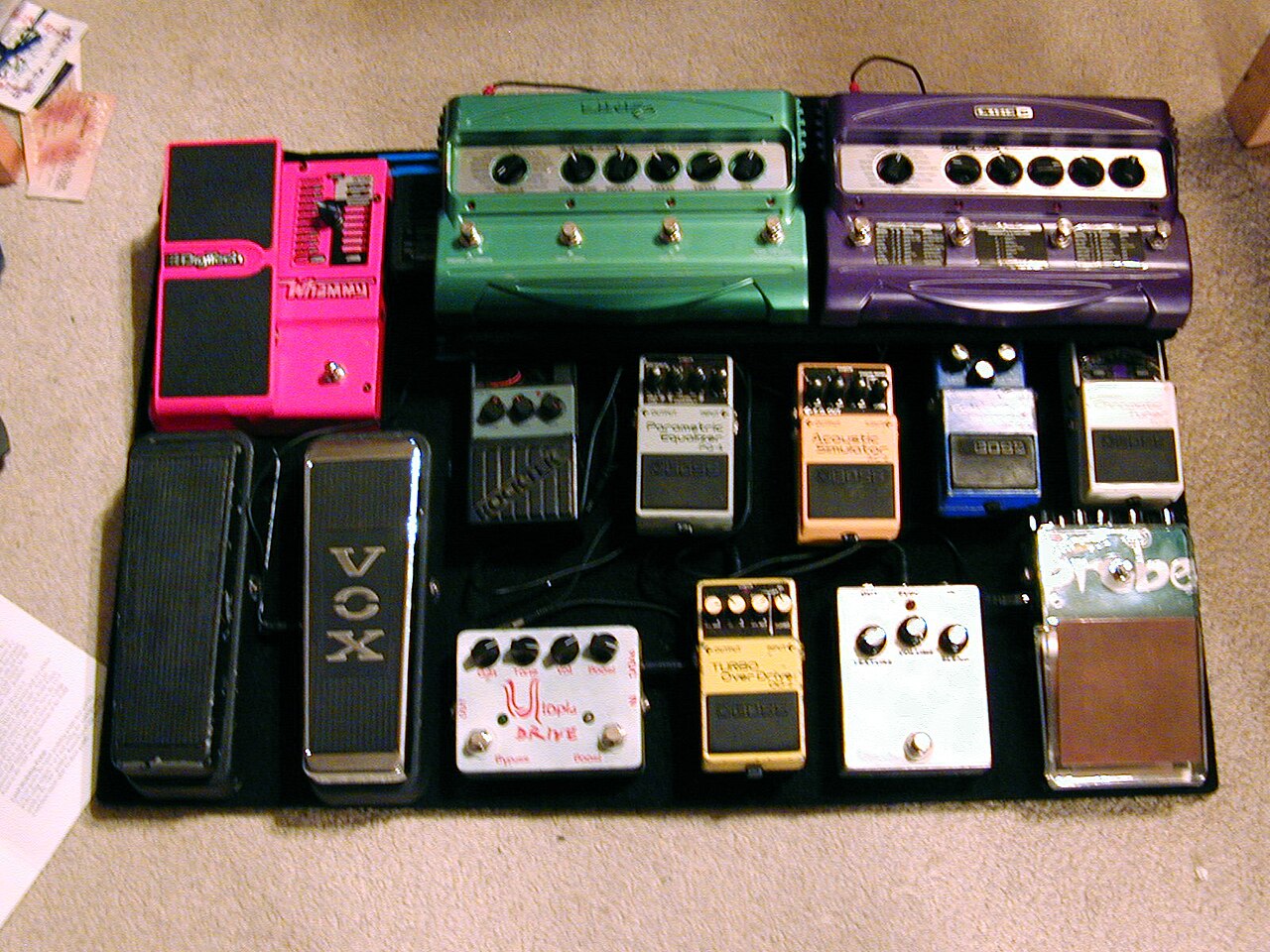
- A pedalboard with wah and effects pedals: John Athayde, Wikimedia Commons, CC BY 2.0.
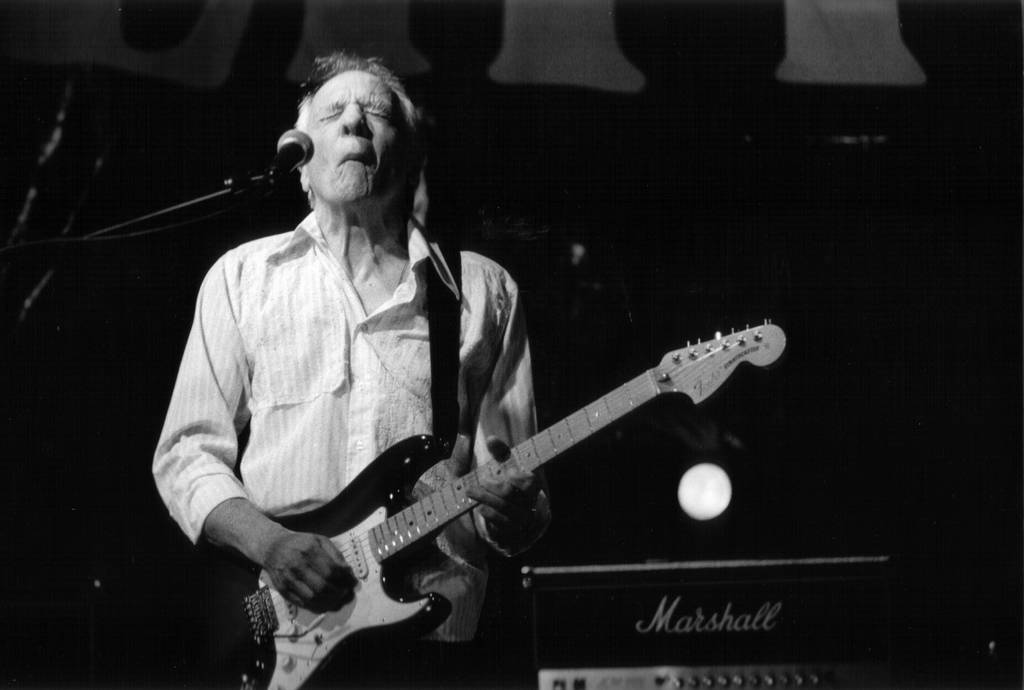
- Robin Trower: Sardognunu, Wikimedia Commons, CC BY-SA 3.0.
- Steve Stevens: Stefan Brending (2eight), Wikimedia Commons, CC BY-SA 4.0.
- Robben Ford: Eckhard Henkel, Wikimedia Commons, CC BY-SA 3.0 DE.
- Boss SD-1 Super OverDrive: GuitarGangsters AI-generated reference illustration, not a photograph.
Latest News
Related
On This Day
Monday 9 November
From this week: