Greer Lightspeed Organic Overdrive: The Pedal That Wins By Not Being Noticed
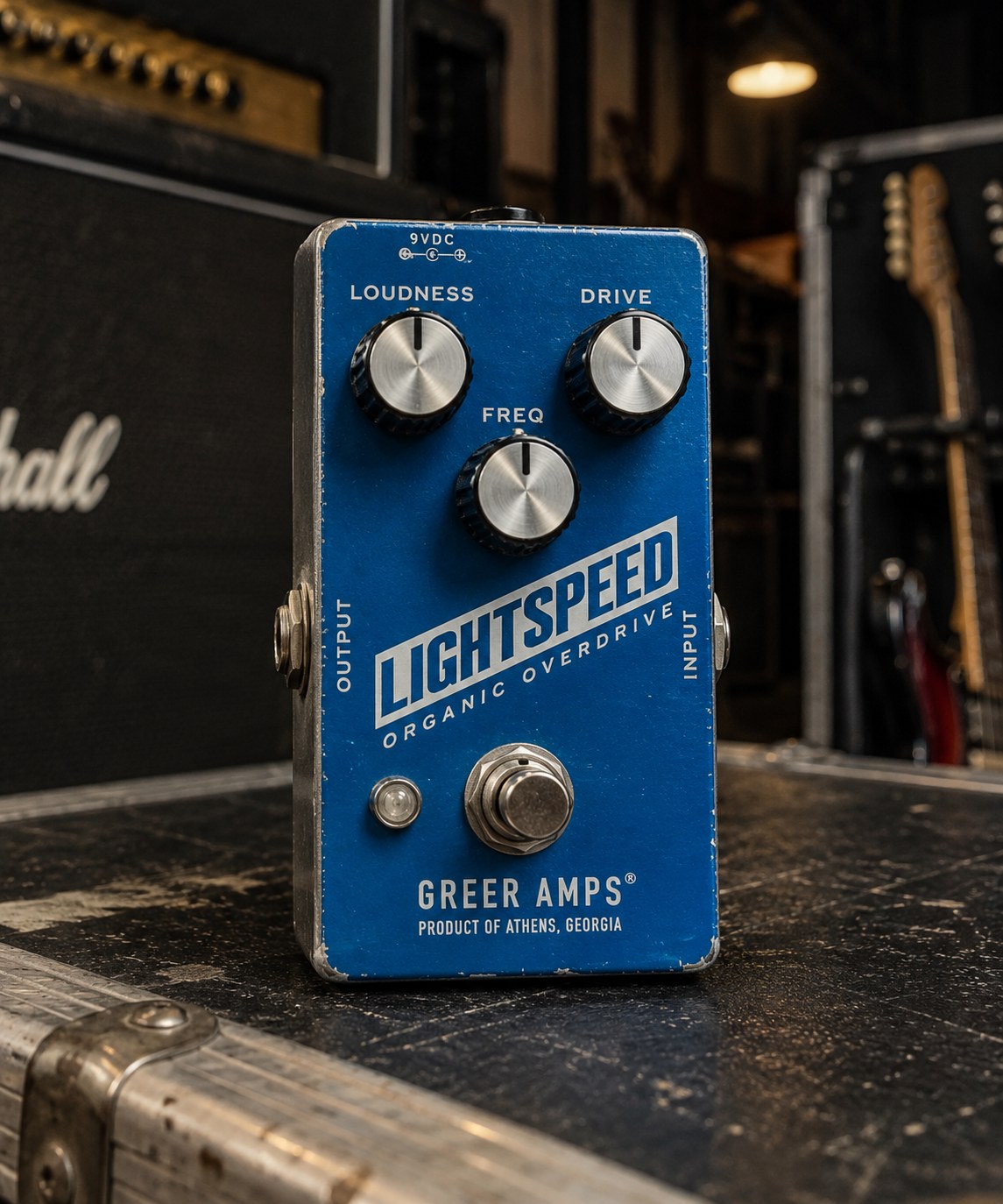
Reference illustration of the model, not a photograph of the player’s equipment.
Greer Lightspeed Organic Overdrive guide: the epoxy-potted circuit, the Freq knob explained, verified players, tone recipes and 2026 buying advice.
Every boutique overdrive on earth claims to be transparent. Almost none of them are, and the ones that come closest tend to be the ones that talk about it least.
The Greer Lightspeed talks about it least. It has no toggles, no internal trimmers, no clipping-diode menu, no boutique origin myth involving a rediscovered NOS transistor. It has three knobs, a bare aluminium box with an engraved faceplate, and a circuit board deliberately buried in epoxy so nobody can copy it. That is the entire proposition. And somehow this is the pedal that ends up permanently switched on under the feet of Jason Isbell, Tom Bukovac, Daniel Donato, Dweezil Zappa and half of Nashville’s session floor.
Ask an owner what it does and you will usually get some version of the same answer: nothing you can point at, and everything you’d miss. That is a strange thing to spend $249 on. It is also, twelve years after Premier Guitar handed it a Gear Award, why the Lightspeed has not been discontinued, redesigned or superseded — because there is nothing in it to fix.
The short version
The Greer Amps Lightspeed Organic Overdrive is a low-to-medium-gain overdrive built by hand in Athens, Georgia. Three controls: Loudness (output), Drive (gain) and Freq (a single sweeping EQ control that adds bass presence below noon and upper mids above it). True bypass. 9V battery or 9–18V DC external supply. 11 mA current draw at 9 volts.
Its gain range starts at genuinely clean and tops out somewhere in mild crunch. It will not do distortion, it will not do metal, and it is a poor choice for stacking into an already-saturated high-gain rig. What it does instead is thicken, sustain and slightly sweeten whatever is already there — which is why the phrase that keeps recurring in owner discussions is not “boost” or “drive” but “channel 2”: a second voice for a single-channel amp that costs nothing in character.
Price as of September 2026: $249 direct from Greer, typically $229 at US dealers, with used units on Reverb starting around $210. That is expensive for three knobs, and it was the only complaint Premier Guitar could find in 2014. It is still the only real complaint now.
Athens, Georgia, and a grandfather’s advice
Greer Amplification began in 1998, building pedals for friends out of Athens — a college town with a music scene disproportionate to its size, the sort of place where a guy soldering boxes in a back room gets found by working musicians before he gets found by a magazine. Nick Greer did not set out to build a company. By his own account the word simply got out and demand followed.
What shaped the catalogue was something his grandfather told him. Asked how you know what you are supposed to do with your life, Allen Greer gave an answer his grandson has been quoting ever since: “Pick one thing — do that really well, and you’ll go far.” Nick picked distortion. Overdrive, fuzz and everything between, and essentially nothing else.
This is why the Greer catalogue looks so lopsided from the outside. Fifteen pedals currently in production and almost all of them are gain devices, which in an era of everything-boxes and multi-effect flagships reads as either stubbornness or clarity depending on your temperament. Greer’s own framing is that grandpa never said you had to do the one thing only one way — so there are fifteen different ideas about what a dirty signal should feel like, hand-wired one at a time, all true bypass, all made in the USA.
The Lightspeed is the one that made the name. It is not the loudest or the most complicated pedal Greer builds; it is the one that ended up on the most pedalboards, and the one people mean when they say “the Greer.”
What “organic” was supposed to mean
The word looks like marketing and Greer has never pretended otherwise, but the company’s own explanation is at least plain-spoken: it is “the clearest, most natural feeling, and best overdrive we’ve heard for the player looking for a natural drive tone.” Not the most characterful. Not the most vintage. The one that gets between the guitar and the amp with the smallest possible footprint.
Development was done by ear rather than by scope. Nick reportedly listened through a long sequence of small circuit changes, kept the ones that improved the feel, and only committed the design to production once the accumulated modifications added up to something he wanted to keep. That is a fairly ordinary way to build a boutique pedal. What is not ordinary is what happened to the finished board.
The epoxy
Undo the four screws on a Lightspeed and you will find the 9V battery compartment and, underneath it, a circuit board sunk in opaque epoxy. Premier Guitar’s Matthew Holliman found exactly this in August 2014 and described it as a bummer for circuit nerds — which it is — while also noting that it makes the pedal considerably more intriguing than a naked board would.
Potting the board is a real decision with real costs. It makes component-level repair effectively impossible; a failed part means a replaced board rather than a replaced resistor. Greer offsets this with a five-year warranty to the original owner, which is longer than most boutique builders offer and is the only sane way to sell a sealed product.
The reason for it is obvious enough. A simple, hugely successful three-knob overdrive is exactly the sort of thing that gets reverse-engineered and cloned within months. There is no way to know what is under the muck, and after more than a decade of speculation nobody has published a confirmed schematic. Whether the secret is genuinely exotic or simply a well-chosen op-amp and a clever EQ network is a question the pedal declines to answer, and it has been declining for twelve years.
Specifications
| Specification | Greer Amps Lightspeed Organic Overdrive |
|---|---|
| Type | Low-to-medium-gain overdrive / transparent boost |
| Controls | Loudness (output), Drive (gain), Freq (sweeping EQ) |
| Bypass | True bypass, mechanical footswitch |
| Power | 9V battery, or 9–18V DC centre-negative 2.1 mm external supply — see spec note below |
| Current draw | 11 mA at 9V |
| Enclosure | 4.77″ x 2.6″ x 1.39″ (121 x 66 x 35 mm) |
| Finish | Raw, unpainted enclosure with engraved faceplate; side-mounted screws on current production |
| Jacks | Side-mounted (no top-jack option) |
| Circuit | Epoxy-potted; no published schematic |
| Build | Hand-wired one at a time in Athens, Georgia, USA |
| Warranty | 5 years to the original owner |
| Lead time | Built to order; ships 1–2 weeks from payment |
| Direct price (Sept 2026) | $249 |
| Introduced | 2014 or earlier — see dating note below |
Two published spec conflicts worth knowing about
Power. Greer’s own product page manages to contradict itself inside a single block of copy. One line reads “Power: 9–18 volt neg. center pin ONLY.” A bullet three lines further down reads “Uses 9-Volt battery or standard neg. center, 2.1mm power supply.” Both are true and the confusion is one of scope: the word ONLY governs polarity and voltage range for an external supply, not the existence of the battery compartment. There is a battery compartment; Premier Guitar photographed it. Run the pedal on a battery if you want, though at 11 mA you will be changing it more often than you will enjoy.
Release date. Equipboard’s product-spec block lists the Lightspeed as “Available since November 2019.” That is demonstrably wrong — Premier Guitar reviewed the pedal in August 2014 and gave it a 2014 Gear Award. The 2019 date most likely reflects when the item record was created, not when the pedal shipped. Treat aggregator “available since” fields as database metadata rather than history; this is not the only place they go astray, as the artist section below shows.
The Freq knob, and why one EQ control beats two
Loudness and Drive need no explanation. Freq is the whole design.
Rather than a conventional treble-cut tone control, Freq is a single sweeping emphasis control centred at noon. Turn it clockwise and the pedal pushes upper mids, progressively and quite politely. Turn it counter-clockwise and it emphasises low-end presence instead. It is not a shelf and it is not a scoop — it is a tilt, and it is voiced widely enough that Premier Guitar singled out its “expansive sweep” as the thing that makes the pedal work with any pickup configuration you plug into it.
The practical consequence is that the Lightspeed adapts to the guitar rather than the other way round. A Telecaster with low-output single coils into a blackface-style amp wants Freq somewhere past one o’clock. A Les Paul into a Vox-voiced amp wants it at or below noon. The one genuine trap: humbuckers plus the lowest Freq settings can get muddy, which is the closest this pedal comes to sounding bad.
Everything else is dynamics. The Lightspeed is unusually sensitive to pick attack and to the guitar’s volume knob, to the point where owners describe rolling back to 7 as a real second sound rather than a quieter version of the first. Holliman’s review made the same point in 2014 and it remains the single most consistent thing said about the pedal by anyone who has owned one.
Famous players — and what is actually documented
This is where the Lightspeed needs careful handling, because there are two lists in circulation and they are not the same list.
List one is Greer’s brand-wide artist roster: Dweezil Zappa, Jason Isbell and effectively his entire 400 Unit, Neal Casal, Devin Townsend, Charlie Starr of Blackberry Smoke, Ariel Posen, Laur Joamets, Dregen of Backyard Babies and the Hellacopters, Alicia Bognanno of Bully, Rick Holmstrom, Coy Bowles of Zac Brown Band, Ben Haggard, Eli Maiman of Walk the Moon, Sadler Vaden, Paul Sukeena of Angel Olsen’s band, most of Modest Mouse, and Tim Smith of Noel Gallagher‘s High Flying Birds. That roster covers Greer products in general. It is not evidence that any given name uses a Lightspeed specifically, and reading it as such is exactly the mistake this series keeps having to correct.
List two is the Lightspeed product page’s own touring list, which is narrower and more useful: Peter Stroud (Sheryl Crow), Alex Weeden (Miranda Lambert), Drew Shirley (Switchfoot), J.B. Brisendine (Brother Hawk), Casey Meyer, Jason “JJ Boogie” Reichert (Arrested Development), James Duke, Matt Goldman of Glow in the Dark Studios, JR Mead (Kutless) and Jordan Peters (Lauryn Hill). Stroud’s association is the best-evidenced of the lot, because Greer hosts photographs of him at the Greer shop with a Lightspeed and a Burning Goat on the product page itself.
Independently sourced sightings
Setting the brand’s own copy aside, these are the Lightspeed appearances with a citable source attached:
- Jason Isbell — cited by Premier Guitar in his 2015 Rig Rundown coverage.
- Dweezil Zappa — cited by Premier Guitar, 2015. (Aggregators file Dweezil under a band affiliation that has nothing to do with his own catalogue, which is a reminder to check metadata even when the gear citation is sound. His relevant context is Zappa Plays Zappa and the Frank Zappa repertoire.)
- Jim Fairchild of Modest Mouse — Premier Guitar Rig Rundown, 2016.
- Tom Bukovac — visible on the board at 13:26 of his Premier Guitar Rig Rundown. For a Nashville first-call session player whose entire job is sounding like the record, an always-on transparent drive is close to a professional necessity.
- Daniel Donato — visible at the 12:00 mark of his Premier Guitar Rig Rundown, and credited on his 2025 album Horizons.
- Ariel Posen — photographed among his pedals, and on record calling the Lightspeed “amazing.”
- Drew Shirley (Switchfoot) — photographed on his rig, and named on Greer’s own touring list.
- Rhett Shull — held up to camera at 7:35 in his pedalboard video.
- Peter “Danish Pete” Honoré — Instagram, in a black/red finish.
- James Duke — Instagram.
- Charlie Starr — shows a Greer overdrive at 10:32 of a 2015 video interview. Worth a small caveat: the video establishes a Greer drive on Starr’s board; the attribution to the Lightspeed specifically comes from the aggregator rather than from Starr naming it.
The Mark Morton case, in full
Mark Morton of Lamb of God is routinely listed as a Lightspeed user, and this is one of those claims that is true, but not in the way the listing implies.

The source is an Instagram post by Morton showing a Lightspeed in Moonshot Silver, captioned as a “cool little rig” put together after returning from Australian shows, with the explicit note that he was playing some blues that morning. That is a home rig, assembled for a completely different kind of playing than the one he is famous for.
His actual Lamb of God touring rig contains no Lightspeed. Premier Guitar’s 2026 Rig Rundown documents a floor holding only a tuner and a wah, with the gain work handled backstage by a rack shelf carrying a Maxon OD808, an MXR chorus, a Carbon Copy Deluxe, a noise suppressor and a hum eliminator. Which is entirely logical: the Lightspeed is an amp-flattering low-gain device, and a low-gain device in front of a modern metal amp is at best redundant and at worst destructive to the low end.
So: Morton owns one and plays it, at home, for blues. He does not tour with it. Both halves of that sentence matter, and lists that print only the first half are selling you an association the evidence does not support.
The same caution applies to Devin Townsend, who appears on Greer’s brand roster with no Lightspeed-specific documentation attached. He uses Greer gear. Which Greer gear is not established, and this article is not going to guess.
One name collision to avoid
“Moonshot” appears twice in the Greer world and they are unrelated. Moonshot Silver is a Lightspeed colourway — one of seventeen currently offered. The Moonshot Germanium Pre is an entirely separate $199 pedal, a germanium treble-and-mid preamp. Morton’s pedal is the former. Secondhand listings occasionally conflate them.
Tone recipes
1. Always-on “channel 2”
Drive 8 o’clock, Freq 12–1 o’clock, Loudness set so that switching the pedal on and off produces no jump in level — usually 1 to 2 o’clock. This is the setting most Lightspeeds live at permanently. The amp stays clean, the note thickens, sustain lengthens slightly, and the pedal effectively disappears. Kick it off and the amp sounds hollow, which is the entire trick.
2. Clean boost into a cranked amp
Drive fully counter-clockwise, Loudness 3 o’clock, Freq 12 o’clock. With Drive at minimum you need Loudness up around three o’clock to reach unity — that is Premier Guitar’s measurement, not a guess — and above unity it simply pushes the amp. Useful in front of a loud, already-breaking-up amp where you want more of what the amp is doing rather than a different flavour of dirt.
3. Telecaster twang, thickened
Drive 9 o’clock, Freq 1:30, Loudness 12 o’clock. The upper-mid emphasis fattens low-output single coils without adding low end, which is why owners repeatedly recommend this pedal for Fender-amp-plus-Fender-guitar setups that sound thin at low volume.
4. Stones / Faces swagger
Drive 4 o’clock, Freq 12 o’clock, Loudness 11 o’clock, neck humbucker on a Les Paul. This is Holliman’s own recipe from the 2014 review and it is a good one — maximum Drive on a Lightspeed is not much gain by modern standards, but it has a rasp to it that suits open-tuned riffing better than a smoother circuit would.
5. Voxish chime, pushed
Drive 10–11 o’clock, Freq 11 o’clock, Loudness 12–1 o’clock. Owners consistently report the Lightspeed as a good match for AC-style amps because it adds grit without flattening the top-end sparkle those amps are bought for. Keep Freq below noon to avoid stacking upper mids on an amp that already has them.
6. Stacked in front of a second drive
Lightspeed first, set as in recipe 1, feeding a Tube Screamer-family pedal. The Lightspeed’s job here is to warm and thicken the signal entering the second pedal rather than to add gain of its own. Owners describe it as making everything downstream sound better, which is a suspiciously vague claim until you try removing it. It does not work well as a boost in front of high-gain amp channels — there is not enough EQ control to fix the low-end mush that results.
Knob positions are given as clock positions. All assume a reasonably clean amp unless stated otherwise.
How it compares
Lightspeed vs MXR Timmy
The most common cross-shop, and the clearest difference. The Timmy gives you independent bass and treble cuts and a brighter, more aggressive top end. The Lightspeed gives you one Freq control, a smoother and fuller midrange, and less bite. Timmy owners who move to a Lightspeed usually cite the smoothness; Lightspeed owners who move the other way usually want the two-band EQ. The Timmy is also roughly a third of the price, which is not nothing.
Lightspeed vs Browne Carbon
These two get described as nearly interchangeable at low gain, which is high praise for both. The Browne Carbon is a modified Bluesbreaker with more available output and a genuinely useful tone control across its full range, and owners give it the edge on delicately overdriven blues tones. The Lightspeed is the more transparent of the two — a point made by Carbon owners themselves, who report the Carbon V2 offering a distinct character rather than invisibility. If you want the pedal to have an opinion, buy the Carbon; if you want it to have none, buy the Lightspeed.
Lightspeed vs King of Tone / Prince of Tone
The Analog Man King of Tone is the other pedal that gets called an always-on essential, and it is also a Bluesbreaker derivative with a multi-year waiting list. The Prince of Tone is the single-channel version you can actually buy. Against either, the Lightspeed is simpler, more immediately transparent and available in one to two weeks. The King of Tone has more gain on tap and internal clipping options. If the appeal of the KOT is the mystique, note that the Lightspeed offers a functionally similar always-on role without the queue.
Lightspeed vs Nobels ODR-1 and the Nashville school
The Nobels ODR-1 is the other pedal beloved of Nashville session players, and its Spectrum control is a conceptual cousin of Freq — one knob that reshapes the whole voicing rather than cutting one band. The ODR-1 is mid-forward and unmistakably itself; the Lightspeed is flatter and less opinionated. Plenty of Nashville boards carry both. The ODR-1 costs a fraction as much, which is the honest headline.
Lightspeed vs Wampler Pantheon and Belle
The Wampler Pantheon Deluxe offers far more adjustability — multiple voicings, clipping options, a whole menu. Owners moving to the Lightspeed describe the Pantheon’s options as less intuitive than the Lightspeed’s straightforward one-shot enhancement, which is a preference rather than a verdict. The Wampler Belle is the closer comparison in spirit and, per aggregator data, the pedal most frequently found on the same boards as a Lightspeed rather than instead of it.
Lightspeed vs Klon and Tumnus
Different job. The Klon Centaur and its many descendants including the Wampler Tumnus are mid-forward, treble-boosting devices that push a mid hump into the amp. The Lightspeed’s mild mid-scoop is the opposite gesture. A Klon makes the amp sound more excited; a Lightspeed makes it sound more like itself. Boards carrying both are common and the two rarely fight.
Lightspeed vs the Tube Screamer family
Not really a comparison, but worth stating for anyone arriving from the standard starting point. The TS9 and TS808 roll off bass, bump the mids and compress. That is a strong, useful, specific character. The Lightspeed does none of those things on purpose. If you like what a Tube Screamer does to your amp, the Lightspeed will sound like nothing is happening. If you dislike what a Tube Screamer does to your amp, that is precisely the point.
Others owners bring up
The Fairfield Barbershop is cited as a more versatile alternative that can cover the Lightspeed’s transparent drive while also doing sagging-amp textures. The Strymon Deco’s tape saturation lands in similar territory but has no Freq equivalent. The EarthQuaker Special Cranker gets named as a close contender. The Boss BD-2 is the budget answer to the same question and is brighter and grainier. The EHX Soul Food is the cheapest route to a transparent-ish always-on drive if the Lightspeed’s price is the obstacle.
Buying guide, September 2026
New, direct: $249 from greeramps.com. Pedals are built to order and ship within one to two weeks of payment. Seventeen colourways are currently listed, including Standard Blue, Standard and Reverse Daphne, Snowblind, Moonshot Silver, Pine Green, Grayscale, Purpink, America and Medium Brown/White. Two of them — Gameday Black and Silver Britches, both apparent nods to the University of Georgia in Greer’s home town — ship with red LEDs rather than the standard colour.
New, dealer: around $229 at US retailers, with the broader market spanning roughly $229–$266. Dealer stock is worth checking first purely on price; the direct store’s advantage is colour choice, not cost.
Used: from about $210 on Reverb, which is a famously bad discount. The Lightspeed holds value harder than almost anything else in this price bracket, partly because production is slow and partly because owners genuinely do regret selling them — “the one I regret selling” is an actual recurring thread title. Outside the US, and Germany in particular, limited availability pushes street prices noticeably higher than the American figures above.
Three things to check on a used unit
- Enclosure generation. Current production uses updated enclosures with side-mounted screws. Older units have the four-screw backplate that Premier Guitar opened in 2014. Neither is better; it just tells you roughly how old the pedal is, since Greer does not put version numbers on the Lightspeed.
- Cosmetic marks are normal. Greer explicitly warns that the raw, unpainted enclosures may show minor tooling or manufacturing marks on the sides, and that this is consistent with both their cast and folded boxes. Do not accept a discount framed as damage for something the factory documents as standard.
- Warranty is non-transferable. Five years, original owner only. On a potted-board pedal that matters more than usual — buying used means buying without a repair path, so budget accordingly.
The honest negatives
No pedal that survives twelve years without a redesign is free of complaints, and the Lightspeed’s are consistent enough to list plainly.
It is expensive. This was Premier Guitar’s only stated con in 2014 at a $190 street price and it has not improved at $249. Three knobs, no toggles, no relay switching, no presets. You are paying for the voicing and the labour.
Some players hear a loss of dynamics. This runs directly against the pedal’s headline virtue and it comes up often enough to take seriously. Compared with the most touch-sensitive drives on the market, a minority of owners find the Lightspeed slightly flatter under the pick.
The mid-scoop is not for everyone. The Lightspeed’s subtle scoop is what makes it sit politely under an amp’s own voice. In a dense band mix, or with a guitar that is already scooped, it can be exactly the wrong gesture — and Freq alone may not be enough to claw the mids back.
The hardware is dated. Side-mounted jacks and a mechanical true-bypass footswitch in 2026, when much of the competition offers top jacks and silent relay switching. This is the most frequently requested change and Greer has not made it.
Limited EQ. One knob is elegant until you need to fix something specific. Boosting a high-gain amp channel is where this bites hardest; there is no bass control to tame the resulting mush. An external Boss GE-7 is the usual workaround and it rather undermines the simplicity argument.
Who should not buy this pedal
If you want a pedal with a recognisable voice — something that makes your rig sound like a record you love — buy something else. The Lightspeed’s entire design goal is to not do that. If you play modern high-gain and want a tightening boost, buy a Tube Screamer derivative or a dedicated clean boost. If you need distortion rather than overdrive, Greer’s own catalogue has better answers: the Gorilla Warfare MKII, the Black Mountain Crunch Drive or the Supa Cobra. And if your amp already sounds exactly the way you want it to, an always-on transparent drive is solving a problem you do not have.
Living with one
Power it from a proper isolated supply. At 11 mA it will run happily off anything, and at 18 volts it gains headroom and stiffens up slightly — worth trying if you find the pedal too compressed at 9V, though most owners stay at 9.
Position it early in the chain, before other drives and before modulation. Its most common role is first gain stage, and stacking works best with the Lightspeed feeding the other pedal rather than the reverse.
Set unity by ear with the bypass switch rather than by eye with a meter, because the mild mid-scoop makes it easy to set a level that measures flat and sounds quieter. Nudge Loudness up until switching in and out produces no perceived change on a chord, not on a single note.
And accept the lead time. Greer builds to order and always has. If a dealer has the colour you want in stock, that is the fast route; if you want Snowblind or Purpink specifically, you are waiting one to two weeks like everyone else.
Frequently asked questions
Is the Greer Lightspeed genuinely transparent?
Closer than most, but not literally. It applies a mild mid-scoop and adds grit and density; it does not rewrite your EQ curve. Owners describe it as letting the amp’s natural tone through while thickening it. “Transparent” in pedal marketing is always relative, and Greer’s own copy hedges properly by saying it can be set to sound like the original signal.
What does the Freq knob actually do?
It is a single sweeping emphasis control centred at noon. Clockwise emphasises upper mids, counter-clockwise emphasises bass presence. It is not a treble-cut tone control and it does not behave like one. Its wide sweep is the reason the pedal works with both single coils and humbuckers.
Can I run the Lightspeed at 18 volts?
Yes. Greer specifies 9–18V DC, centre-negative only. Eighteen volts gives more headroom and a slightly firmer feel. A 9V battery also works; the battery compartment is behind the backplate.
Will it do high-gain or metal?
No. It maxes out in mild crunch. Premier Guitar was explicit about this and pointed heavier players elsewhere in the Greer catalogue. Even Mark Morton, who owns one, uses a Maxon OD808 rather than a Lightspeed in his Lamb of God rig.
Why is the circuit board covered in epoxy?
To stop it being cloned. The trade-off is that component-level repair is impossible, which is why Greer backs the pedal with a five-year warranty to the original owner. No confirmed schematic has ever been published.
Does Jason Isbell really use one?
Premier Guitar has cited him as a Lightspeed user, and he appears on Greer’s artist roster along with the rest of the 400 Unit. That is about as well documented as these things get short of the player naming it on camera.
Lightspeed or Southland?
Both are $249 Greer overdrives and they do different jobs. The Lightspeed is the transparent, low-gain, always-on option. The Southland Harmonic Overdrive is the more characterful, harmonically richer voice — a pedal you turn on for a reason rather than leave on by default. If you only buy one Greer drive and you want it invisible, the Lightspeed is the one.
Is it worth $249 when a Nobels ODR-1 costs a fraction of that?
On pure tone-per-dollar, no — very little is. What you are buying is a specific voicing, a hand-built pedal from a fifteen-person-scale shop in Athens, a five-year warranty and the strongest used-value retention in its class. If the ODR-1’s mid-forward character suits you, save the money. If you have tried the cheap answers and kept finding them too coloured, this is the pedal those players end up on and stop searching.
Image credits
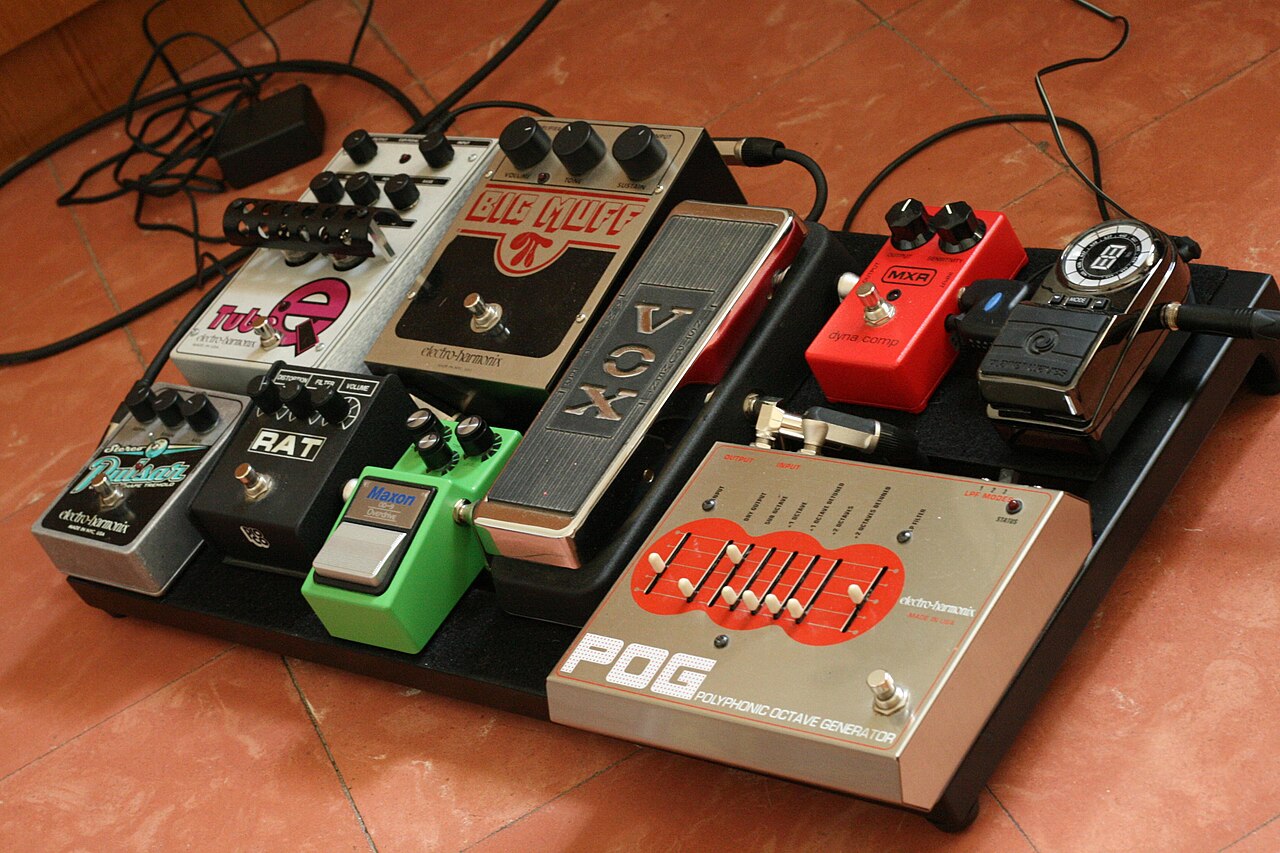
- A pedalboard with overdrive, wah and fuzz pedals: Michael Morel from Barcelona, Spain, Wikimedia Commons, CC BY 2.0.
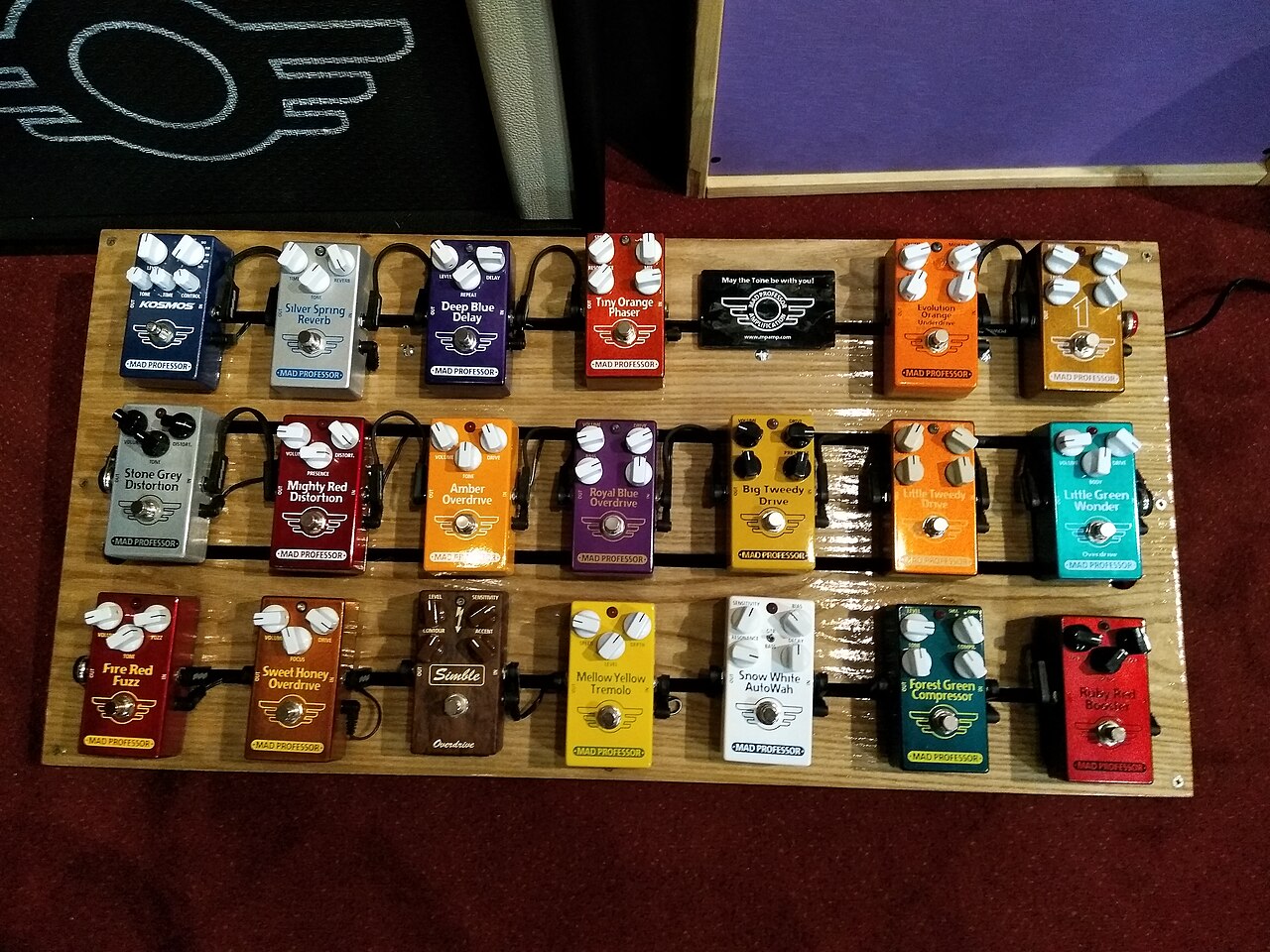
- A pedalboard full of colourful pedals: Skimel, Wikimedia Commons, CC BY-SA 4.0.
- Mark Morton: Stefan Brending (2eight), Wikimedia Commons, CC BY-SA 3.0.
- Top image: GuitarGangsters AI-generated reference illustration, not a photograph.
Latest News
Related
On This Day
Monday 9 November
From this week: