Xotic RC Booster V2: Inside the Rig Conductor Legend
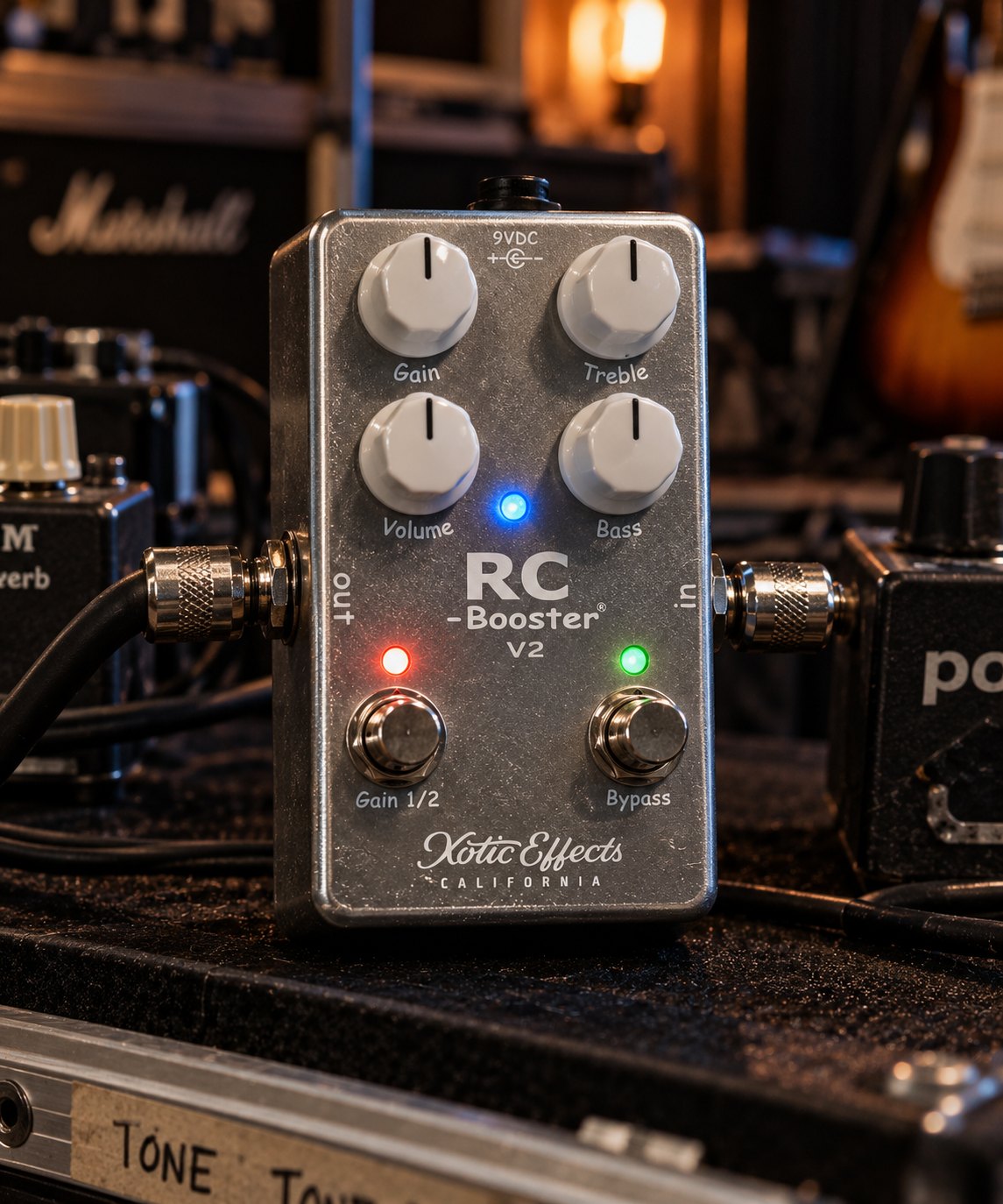
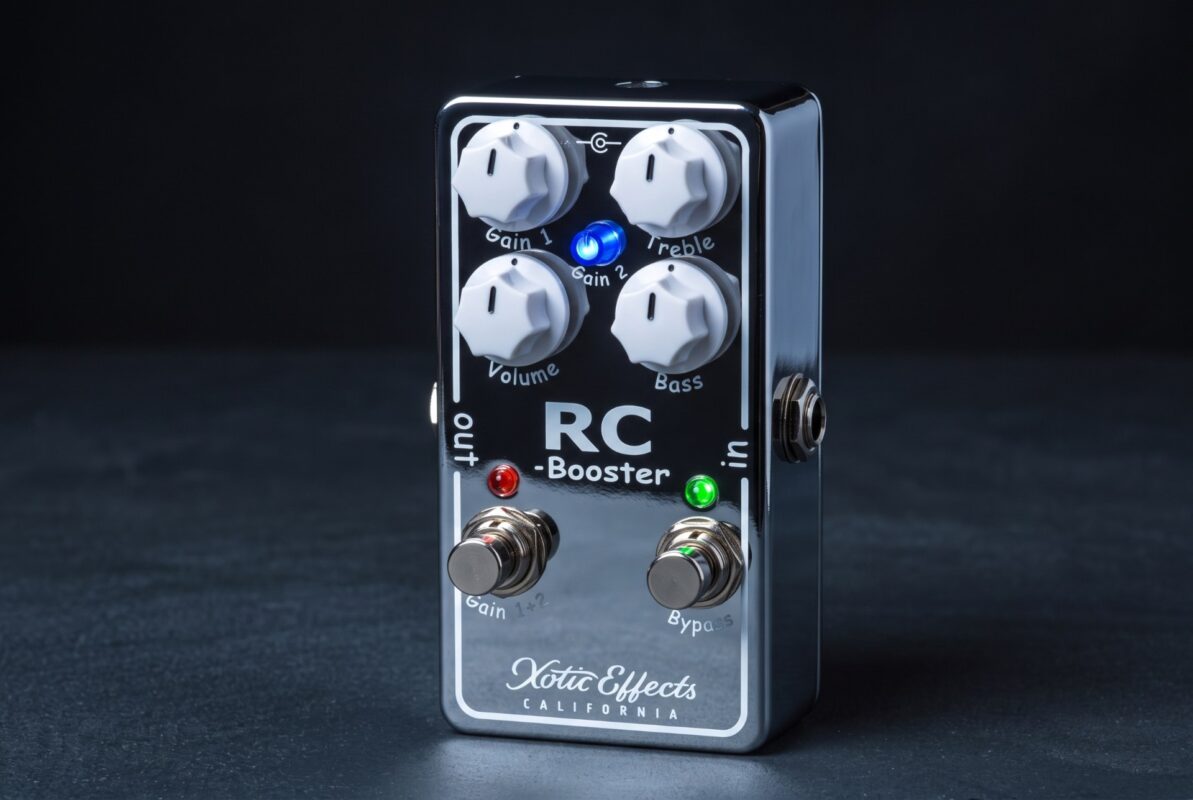
Xotic RC Booster V2. AI-generated reference illustration, not a photograph.
The full story of Xotic's RC Booster V2 — what "RC" really means, the Scott Henderson redesign, verified players, tone recipes and used-buying advice.
Somewhere in Van Nuys, California, around 2002, a Japanese engineer named Kiyoshi Sasaki built a pedal he didn’t especially believe in. He had set out to make an overdrive — the one that became the AC Booster. The other circuit, the one with the white enclosure and the Comic Sans logo, was, in his own words, a byproduct. “Because of this, there were some aspects of the ‘RC-Booster’ that I myself didn’t really see at first,” he told The Effector Book two decades later. “So, I didn’t feel so sure about the product at first.”
Twenty-four years on, the byproduct is the flagship. John Fogerty runs three of them. Scott Henderson calls it his desert-island pedal and rewrote its voicing so thoroughly that Xotic eventually made his version the standard. Oz Noy has had one on his board since the year it appeared. And the pedal you can buy today — the RC Booster V2, chrome-plated, five knobs, two footswitches, $219 direct from the factory — is the accumulated residue of every one of those arguments about what a clean boost is supposed to do.
This is not a review. This is the story of a circuit that spent twenty years being redesigned by the people who played it, and a practical guide to what the current version actually is once you strip away the marketing language and the forum folklore.
What “RC” Actually Stands For — And Why Everyone Got It Wrong
Ask ten guitarists and you’ll get “Really Clean” or “Real Clean” from at least eight of them. It is wrong, and the designer has said so on the record.
In the 20th-anniversary interview published on Xotic’s own site — originally run in The Effector Book Vol. 58 by Shinko Music Publishing in Japan — Sasaki is asked directly. His answer: “RC” comes from “Rig Conductor.” When the interviewer pushes back with “Wasn’t it short for ‘Real Clean’?”, Sasaki laughs: “Actually, it’s different. ‘Conductor’ means ‘musical conductor.’ But the customers started saying, ‘Isn’t it short for Real Clean?’ Well, that was more interesting, so we just went with it.”
That is a rare thing in pedal writing: a manufacturer correcting a two-decade-old myth in print, then admitting they let the myth run because it sold better. The DIY community had already got there independently — Aion FX’s Malacandra project documentation cites a forum user who emailed Xotic in 2015 and got the “Rig Conductor” confirmation, along with references going back to 2005.
The name matters because it tells you what the pedal is for. A conductor doesn’t play. A conductor balances what everyone else is doing. Sasaki designed the RC to sit in a chain and correct — which is why it has a two-band active EQ rather than the single tilt-tone most boosts of the era shipped with. And by the same token, “AC” is a reference to the Vox AC30, not “Almost Clean.” Our Xotic AC Booster feature flagged the AC30 reading as press-supported but unconfirmed by Xotic; the Aion documentation and this designer interview together move it from folklore to sourced fact, and we’re correcting the record here.
Twenty Years in One Enclosure: The Road to the V2
2002: The White Box With the Comic Sans Logo
Xotic’s records, per Sasaki, put the RC Booster on sale in December 2002, though he allows “it may have been circulating in the United States a little earlier.” Aion FX dates the AC and RC to September and November 2002 respectively. Premier Guitar’s 2016 press release simply says “first introduced in 2002.” Three sources, three slightly different months — take 2002 as the year and stop there.
The earliest units are identifiable at a glance: cheerful Comic Sans lettering, 16 mm pots, a gray epoxy substrate hand-potted with J-B Weld, and an engraved serial number. Sasaki did the enclosure design himself, and chose white for a reason that is almost too on-the-nose — it sounded cleaner than the yellow AC Booster, which “had an overdrive image.” After roughly the first 1,000 units the serials switched to handwritten.
Japanese gear journalist Daisuke Kokuda, who A/B’d examples from every era for the anniversary feature, describes the earliest ones as noticeably darker: “Compared to the Scott model and later models, it has weaker highs and gain, and gives the impression of a pure clean booster. The biggest difference is that the pushing of the low range is suppressed.” That is a useful sentence to carry into the used market.
2005–2007: Sealed Pots, New Cases, and the RoHS Reckoning
Around 2005 or 2006 Xotic moved to sealed pots, which forced a new circuit board and a new enclosure, and the LED indicator migrated from the bottom of the face to the top for visibility. In 2007 the company switched to its own proprietary cases.
The bigger change was regulatory. The European RoHS directive came into force in 2006, and Sasaki is blunt about the consequences: “we had to review almost all of the components.” The op-amp type survived. TDK’s capacitors did not. Lead-free solder required boards rated for it, and Sasaki notes the increased silver content “should make the sound much cleaner than before.” Somewhere in the same window the input emitter-follower transistor went out of production and was substituted, which he says also shifted the tone slightly.
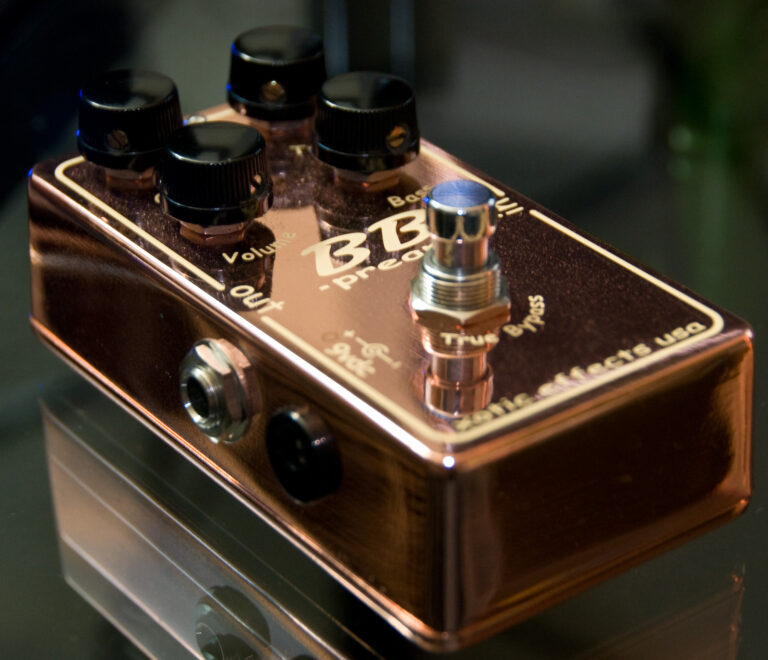
This is the single most useful thing to understand about buying a used Xotic pedal: the changes were rarely announced, rarely cosmetic, and frequently driven by parts supply rather than voicing decisions. The same pattern turned up in our Xotic BB Preamp feature, where a 2007 diode change split the model into two distinct-sounding eras.
2008: Scott Henderson Takes Over
Around 2007, Sasaki says, Scott Henderson approached him with a request. Henderson’s setting at the time was a 1972 100-watt Marshall Super Lead with the volume all the way up, pushed by an RC Booster with Gain full, Volume full, Treble at 12 o’clock and Bass at 10 o’clock. What he wanted was less high-frequency harshness and more weight on a G at the 15th fret of the first string.
Sasaki’s read on his customer is worth quoting: “I realized that Scott was a person who liked jazz, wanted to play Deep Purple, and wanted to be like Jeff Beck.” He voiced the pedal to that request, released it as a signature model in 2008 — and then made a decision that reshaped the whole product line.
From serial number 12,061 onwards, the regular production RC Booster became the Scott Henderson specification. Not a variant. The standard. Sasaki’s reasoning: “Scott’s use of the pedal was already beyond the range of usage that I knew, but I wanted to try his sense to increase the centripetal force of the pedal. Back then ‘RC-Booster’ was not a product that sells explosively.” He concedes it cost the pedal some neutrality: “It has become a slightly biased character from a versatile personality of the original, but I think the value was there.”
So if you have ever wondered why the RC Booster is described as both “completely transparent” and “the fattest sounding boost I’ve ever heard” by different people — those people are describing different pedals with the same name. Kokuda on the post-2008 units: “if the early model simply amplified the clean sound, this one gives the impression of adding distortion to the clean sound.”
2015–2016: The SH, Then the V2
Henderson came back. On a record he was making he needed to move between delicate arpeggios and a driven sound without reaching down to a knob mid-song. Xotic’s first answer, the RCB-SH, put two footswitches on the pedal for the first time. Jason Shadrick reviewed it for Premier Guitar on 1 January 2016 and gave it a gear award, calling it “a two-in-one pedal that is way more than the sum of its parts” — praising the transparency and note definition, docking it only for a bass control that “could use more definition.” Street price then was $168 direct.

The 2015 revision of the Scott model changed the concept in a way that most descriptions of the pedal still get wrong, and we’ll come back to it in a moment. Then, on 5 July 2016, Xotic announced the RC Booster V2 from Van Nuys and confirmed the original was being retired: production of Version 1 would end “as stock of current parts is exhausted.” Note a small discrepancy worth flagging — the press release said end of 2016; Xotic’s own V2 product page says the V1 was discontinued by the end of 2017. Launch pricing was MSRP $210, street $168, deliberately matched to the outgoing model.
Physically the V2 is the most changed RC in the line’s history. The knobs went MXR-style. The enclosure got thicker. The finish is a heavy three-layer plating of nickel, copper and chrome (a copper version also shipped). It gained 18-volt capability. And, uniquely among non-signature RCs, the DC jack moved to the rear — a small thing that has saved a great many pedalboard rows an inch of depth.
Specifications
A note on those conflicts. The millimetre and gram discrepancies between the web page and the printed manual are trivial in practice. The adapter range is not. The V2’s marketing explicitly says “Run it at 18v for even more headroom!” and the spec block lists 18 V current draw — but the manual’s AC adapter line says “9vdc.” The manual contradicts itself on its own page. Xotic has now done this on three consecutive SKUs we’ve documented, so treat any single Xotic spec sheet as one witness rather than the truth. For the V2 specifically, 18 V is sanctioned; the company sells its own Voltage Doubler for exactly this purpose.
What the Second Gain Switch Actually Does
Nearly every description of this pedal, including Premier Guitar’s award-winning review of the SH that preceded it, uses the language of channels — “the blue channel,” “the red channel,” “dual-channel.” Xotic’s own shop copy says “Added Gain switch for even fatter tones.”
Here is what it is, from the people who built it. The manual: “GAIN 2 SWITCH — when switch is active gain 2 is added to gain 1.” The 20th-anniversary history page, describing the SH that introduced the idea: “They are not two separate distortion channels; it’s more like two knobs on the same gain control stacking each other. When both gain controllers are active, only the gain width is simply added together without changing distortion.” And Sasaki on the 2015 revision that fed directly into the V2: “The 2015 Scott model’s feature is ‘just adding gain’ instead of switching between two boosters, and in the end, when trying to do something ‘seamlessly,’ this design is good.”
So: one gain stage, two summed control paths. This is not pedantry — it has three practical consequences.
- You cannot set a quieter lead sound than your rhythm sound. Gain 2 only adds. There is no “channel” to voice independently downward.
- There is no separate EQ or volume per state. Treble, Bass and Volume are global. If the boosted state is too bright, the unboosted state gets darker too.
- The switch is seamless by design. Because nothing is being switched in or out of the signal path, the transition has no character change — which is exactly the problem Henderson asked to have solved, and exactly why it sounds unremarkable when you do it. That is the feature.
Set Gain 1 for your always-on sound and treat Gain 2 as a solo lift. Anyone expecting the two-independent-drives behaviour of a King of Tone or a JHS Double Barrel will be disappointed, and it will be the expectation’s fault rather than the pedal’s.
Inside the Box: Tube Screamer DNA and a Baxandall Tone Stack
Aion FX traced the AC Booster, the RC Booster and the Bass RC Booster in a journal published 26 June 2020 (modified May 2021), degooping the boards and photographing the AC and RC PCBs side by side. The finding that reframes the whole product line: all three are the same PCB in Xotic’s production run, populated differently.
Aion’s assessment of the brand is unsentimental and, in context, a compliment: Xotic pedals are “massively popular despite being somewhat unoriginal, little more than Tube Screamers and Bluesbreakers with a Baxandall tone stack, and they really do sound great.”
Structurally, the RC starts with an input buffer and runs into an op-amp feedback-diode clipping stage — Tube Screamer territory. Two things differ. The clipping stage is inverting where the TS is non-inverting, and the Tube Screamer’s single tone control has been replaced wholesale by a Baxandall bass-and-treble stage. That Baxandall stack is the RC Booster’s actual identity: it is why the pedal can add 15 dB at 90 Hz or cut 15 dB at 10 kHz, and it is why the “clean boost” can be made distinctly un-clean.
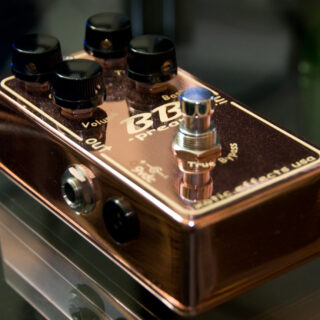
The BB Preamp, by contrast, keeps the Tube Screamer tone control hard-wired around 9 o’clock and adds the Baxandall on top — which is precisely why it has that pronounced midrange the RC doesn’t.
One specific trace note for the RC: Aion found a 1 µF input capacitor where every earlier community schematic showed 47n. Their own assessment is that it “likely won’t make a huge difference since 47n is plenty big enough for an input capacitor,” but it is another data point in a long list of unannounced Xotic part swaps. Bypass on these is a standard 3PDT true-bypass arrangement with some extra circuitry around the LED, most likely anti-pop and sonically irrelevant.
An honesty note: Aion traced a used standard RC Booster “only a couple of years old” at the time — a late V1, not a V2. Xotic has published no schematic for the V2 and nobody has publicly traced one. Everything above describes the family architecture, which the V2 inherits by the manufacturer’s own account (“it inherits the basic sound and performance of the 2015 Scott Henderson model”), but the component-level detail belongs to a V1. Anyone telling you exactly what changed inside the V2 is guessing.
Famous Players
Scott Henderson — the one who actually redesigned it
Henderson isn’t an endorser here in any ordinary sense; he is a co-author. Two signature models, a voicing that became the factory standard from serial 12,061, and a footswitch layout that became the V2’s. His quote on Xotic’s own product page: “It’s my desert island pedal. Fattest sounding boost I’ve ever heard.”
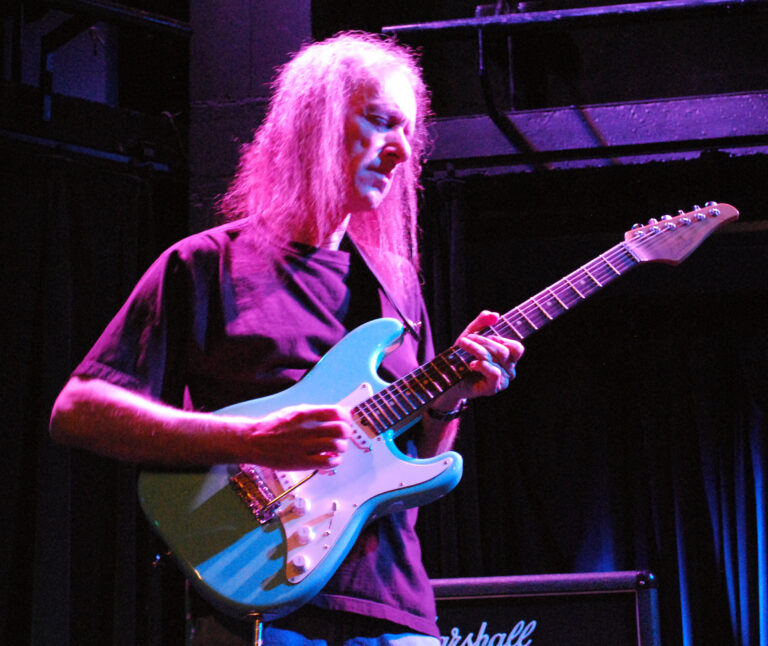
The documented rig context from Sasaki — a 1972 100-watt Marshall Super Lead, volume maxed, RC in front with everything wide open bar a 10 o’clock Bass — is a genuinely unusual use of a “clean boost,” and it explains a great deal about how the modern pedal behaves. Read our Scott Henderson gear guide for the wider picture, and note Sasaki’s read on his influences: jazz, Deep Purple, Jeff Beck. Anyone who has heard Henderson lean on a bend knows how much Ritchie Blackmore is buried in there.
John Fogerty — three of them, and one of the first ever made
Sasaki names Fogerty as possibly the very first significant user: “He received it from studio personnel, and he still seems to be using one of the earliest models today.” That is a manufacturer claim, but it is independently corroborated — Fogerty’s Premier Guitar Rig Rundown shows three RC Boosters on his board, visible around the 20:32 mark, alongside a Wampler Ego Compressor, an Analog Man-modified Boss GE-7, a Visual Sound clean boost, an Xotic BB Preamp and a Creation Audio Labs MK.4.23.
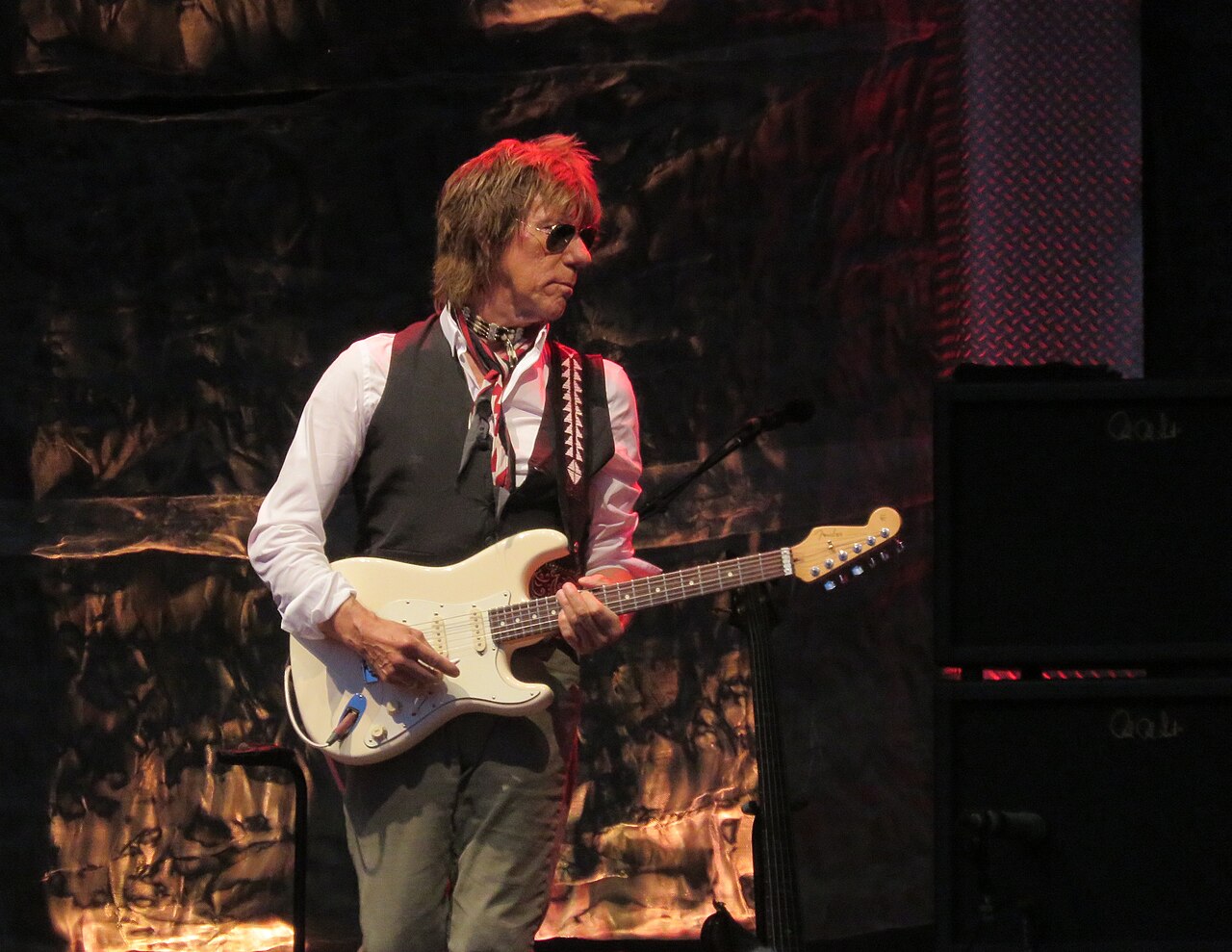
Three of the same boost on one board is the clearest possible statement of what this pedal is for. It isn’t an effect he switches on for a moment; it’s infrastructure. See the John Fogerty gear guide for the full rig.
Oz Noy — twenty-four years, and a signature box to prove it
Noy’s Premier Guitar Rig Rundown (18 June 2014, filmed at 3rd & Lindsley in Nashville) shows the chain: vintage Vox King wah into a Dunlop Octavio, then RC Booster into AC Booster, then an Analog Man Brown Mod TS808, into a custom Two-Rock. In 2017 Xotic built him the AC/RC-OZ, a limited-edition two-in-one, and the press release states plainly that Noy “has been using the AC and RC Boosters since they were first introduced to the market in 2002.”
His explanation of the order is the single most quotable line about stacking these two: “The magic really happens when you play the RC into the AC because that’s when you get a really big sound.” The AC/RC-OZ hard-wires that relationship — the RC channel drives the front of the AC channel, exactly as it sits on his board. Street price at launch was $196.
Allen Hinds — the player who taught the designer how to use it
Sasaki’s own account, and one of the better gear anecdotes in circulation. He had assumed boosters belonged in front of dirt, but was bothered by how much the RC compressed when placed early in a chain into blackface Fenders. Then he watched Hinds cascade three gain pedals in the order Fulltone OCD → AC Booster → RC Booster.
“Seeing that, I realized that ‘RC’ might be better suited as a booster for the later stage. I felt like a new door had opened, and that was when I first thought, ‘RC might work…!'” Hinds later got his own Xotic signature pedal, the AH Booster, and his testimonial appears on the AC Booster page as well.
Doyle Bramhall II, Brad Paisley, and the early adopters
Sasaki names several more from the first years. He recalls being “really happy to see my favorite Doyle Bramhall II placing an ‘RC’ at his feet during Eric Clapton‘s tour in 2004.” He says session guitarist Dean Parks liked it enough that Sasaki went to meet him, and that Parks uses it on acoustic as well. Jay Graydon and Paul Jackson Jr. both gave it early praise.
And: “around 2003, I think. Brad Paisley, who was still unknown at the time, said that he really liked it and wanted to use it, so we sent one to him.” Worth flagging carefully — Paisley circulates on crowd-sourced gear databases as an AC Booster user, a claim we could not verify for our AC Booster feature. This RC claim comes from the designer in a published interview, which is a materially better source, but it describes 2003 and says nothing about his rig today.
The manufacturer’s own roster
When Xotic reissued the original circuit as the RC Booster Classic in November 2022, the first 1,000 units shipped with actual guitar picks from the players Xotic considers the pedal’s constituency: Andy Timmons, Paul Jackson Jr., Dean Brown, Kirk Fletcher, Allen Hinds, Chris Duarte, Scott Henderson, Oz Noy, Michael Thompson, Yuya Komoguchi and Toshi Yanagi. Michael Thompson’s endorsement runs on the V2 product page: “It just enhances all of the frequencies and that’s what I love about this pedal.”
Read that list carefully. It is almost entirely session players, fusion players and first-call sidemen — the Los Angeles and Tokyo studio world, plus a couple of blues specialists. There is no arena-rock name on it. That is not a weakness; it is a description of the market this pedal actually serves, and it is consistent with what we found for the AC Booster, where the reliable player documentation came from Nashville and New York session Rig Rundowns rather than touring rosters.
The honest caveat: almost none of this is documented on a V2
Fogerty’s units are earliest-era V1s. Henderson’s documented setting is from 2007 on a V1. Noy’s filmed board is 2014, pre-V2. The Classic roster was assembled to sell a reissue of the original circuit, not the V2.
The RC Booster V2 is by some distance the best-selling RC Booster in the line’s history and is what any current buyer will actually receive — but if someone tells you a specific famous player uses “the RC Booster V2,” ask which photograph they’re looking at. The overwhelming majority of the pedal’s legend was earned by units that are no longer manufactured. That is a normal situation for a long-running product and it is not a criticism. It just isn’t the same as evidence.
Tone Recipes
1. The Always-On Correction (the Rig Conductor setting)
Volume just above unity, Gain fully counter-clockwise, Treble 1 o’clock, Bass 11 o’clock. This is the pedal doing the job it was named for: a little clarity restored after a long cable run and a crowded board, a touch of top back on a humbucker guitar, and a fraction less low-end mud. Xotic’s whole “you’ll always leave it on” pitch lives here. Kokuda’s advice from the anniversary feature applies directly: raise Treble for humbuckers that lack clarity, lower Bass for single coils that feel too wide.
2. Scott Henderson’s Documented Setting
Gain full, Volume full, Treble 12 o’clock, Bass 10 o’clock — into a cranked non-master-volume Marshall. This is not a subtle setting and it is not a clean boost. It comes straight from Sasaki’s account of the request that produced the Henderson voicing, and the design goal was to take harshness off the high strings while adding weight. If your amp is already at the edge of breakup, this pushes it into full singing saturation with the pedal supplying the body rather than the distortion.
3. The Solo Lift
Gain 1 at 9 o’clock, Volume at 1 o’clock, EQ flat, Gain 2 around 11 o’clock. Rhythm on the base setting; hit the Gain 2 switch for choruses and solos. Because Gain 2 sums rather than switches, the tonal character doesn’t change — you simply get more of what you already had. Cleanest solo boost on the pedal, and the reason many players never touch the bypass switch at all.
4. Fattening a Thin Bridge Pickup
Bass 2 o’clock, Treble 11 o’clock, Gain 10 o’clock, Volume to taste. The 90 Hz–500 Hz bass shelf is broad enough to add genuine body rather than boom. Particularly effective on a Telecaster bridge or a bright Strat into a blackface Fender, which is precisely the combination Sasaki was wrestling with when he thought the pedal compressed too much.
5. Stacked Into an AC Booster (the Oz Noy chain)
RC first, feeding the AC. RC set to modest gain and near-flat EQ, volume pushed; AC doing the drive work. Noy’s own explanation: the big sound comes from the RC hitting the front of the AC, not the reverse. If you own both, try the order in both directions on the same rig — the difference is not subtle, and everyone who has built the AC/RC-OZ chain reports the same preference.
6. Late in the Chain, After the Dirt (the Allen Hinds Position)
Put the RC after your overdrives rather than in front. OCD into AC Booster into RC Booster was the arrangement that changed the designer’s own mind about his pedal. In this position the RC stops being a gain structure device and becomes a master EQ and level control for the whole dirt section — which, given a ±15 dB two-band active stack, it is exceptionally good at.
7. Acoustic and Hollowbody Sweetening
Gain off entirely, Volume at unity, Treble 12–1 o’clock, Bass 10 o’clock. Sasaki notes Dean Parks uses an RC on acoustic. With Gain closed the pedal is essentially a buffered active EQ with a 500k input and a 10k output — useful in front of an acoustic DI, and a good way to tame the low-mid honk of a piezo without an outboard preamp.
8. The 18-Volt Setting
Any of the above, run at 18 V. Xotic’s claim for higher voltage across the range: “more dynamic, more headroom, top end and brightness, less compressed sound.” The current draw doesn’t change (6 mA either way), so this costs you nothing on a supply. Whether you prefer it is a taste question — some players find 9 V’s slight compression is the point.
Two things to know before you start. First, the EQ is active and it is powerful — ±15 dB is enough to make the pedal unusable if you treat the knobs like passive tone controls. Noon is genuinely flat; small moves do real work. Second, Volume interacts with everything, because how hard you hit the amp determines what the amp does. Set Volume last, every time.
How It Compares
vs. the Xotic AC Booster
Same PCB, different population. The AC Booster has more gain, more colour and a firmer clipping character; the RC is the more transparent of the two and the better always-on candidate. The traditional ladder across the Xotic line runs RC (cleanest) → AC (more drive and colour) → BB Preamp (most gain, most compression, most midrange). Post-2008, though, the RC’s Henderson voicing narrowed that gap considerably — the modern RC is not the neutral device the 2002 one was.
vs. the Xotic BB Preamp
The BB Preamp retains the Tube Screamer tone control in the chain, which gives it a fixed midrange bump the RC doesn’t have. If you want a pedal that sounds like an amp channel, take the BB. If you want a pedal that sounds like your amp, only more so, take the RC. They are frequently found on the same board for exactly this reason — Fogerty runs both.
vs. the Xotic EP Booster
Different animal entirely. The EP Booster is a JFET circuit derived from the Echoplex preamp, with no EQ knobs at all and an inherent top-end lift. It is a mood; the RC is a tool. Many players run both, EP for character and RC for correction.
vs. the Klon Centaur and its descendants
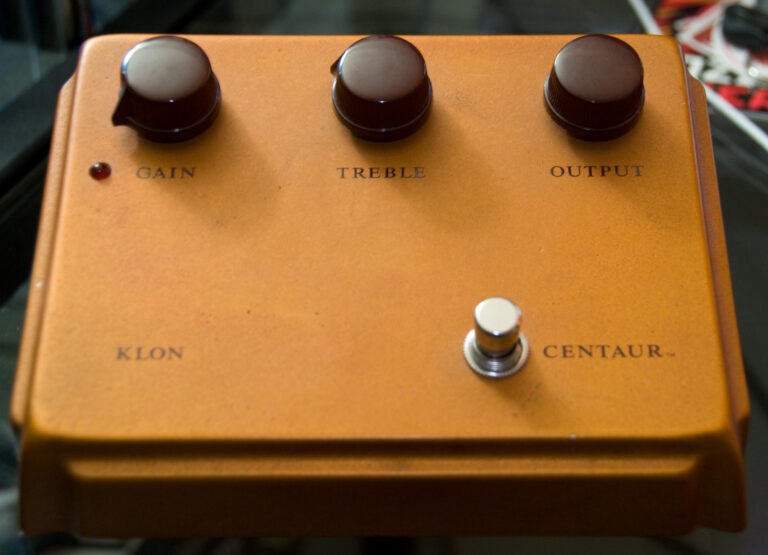
Sasaki explicitly cites the Klon Centaur as part of the landscape he was designing against, noting that it and the Fulldrive “had simple EQs and didn’t have much flexibility.” That is the whole argument: the Klon’s single tone control is a design philosophy, the RC’s two-band active stack is the opposite one. A Wampler Tumnus gives you Klon-style mid-forward push; the RC gives you the ability to place the push wherever you want it.
vs. MXR Micro Amp and Keeley Katana
Sasaki names the MXR Micro Amp and the Z.Vex Super Hard-On as the clean boosts that existed in 2002, and notes that Keeley’s Katana didn’t yet. Compared to the Keeley Katana, which is a genuinely transparent level device, the RC is not competing on purity — it is competing on control. If all you want is more of the same signal, both of those are cheaper and arguably more honest choices.
vs. a Tube Screamer used as a boost
The comparison Sasaki was actually making. “In the late 1990s and early 2000s, there were overwhelmingly more people using Tube Screamer pedals as boosters. But TS is always TS… it’s easy to play for anyone, but it only produces that specific sound.” An Ibanez TS9 in front of a cranked amp gives you one relationship between guitar and amp. The RC gives you an adjustable one — at the cost of being, in the designer’s own phrase, “a difficult-to-use pedal because it truthfully reproduces the nuances of the player’s performance.”
vs. the RC Booster Classic (20th Anniversary)
The most relevant comparison for a current buyer, because both are in the catalogue. Announced 9 November 2022 as a permanent addition to the line, the Classic is a “return to the roots” reissue of the original voicing — white powder coat, four knobs, one footswitch — but with the circuit “completely reexamined with modern components” and 18 V capability the 2002 unit never had. Street was $172 with the limited packaging.
Kokuda’s verdict, having compared it against units from every era: it “collects the best parts of all versions,” is “more lively than the initial unit,” retains the low-end weight added by the Henderson revision, and “compared to the ‘V2’, it has a mellower atmosphere, so it may be the perfect model for modern music like neo-soul.” Sasaki’s own framing: “We returned to the original roots of ‘RC’ from the place where we have been pulled by Scott for a long time.”
The practical decision: if you want two switchable gain levels and maximum output, the V2. If you want the mellower, more neutral original voicing and don’t need the second footswitch, the Classic — and it’s cheaper.
Buying Guide
New
$219 direct from Xotic’s own end-user shop (price list dated 10-1-25), which showed 55 units in stock at the time of writing. Dealer street prices sit below that. Launch street in 2016 was $168, so the V2 has taken a substantial increase over its life — worth knowing before you assume a used price is a bargain.
Used: identify what you’re actually looking at
This is the whole game with Xotic pedals. The RC Booster has had at least five materially different production states across twenty-four years, and sellers routinely list them all as “RC Booster.”
- Engraved serial, Comic Sans logo, white, LED at the bottom, 16 mm pots, gray epoxy potting. First ~1,000 units. Darkest, least gain, least low-end push. Collectible; Kokuda’s advice is that if you’re choosing between this and the handwritten-serial version, take the engraved one purely for rarity, because they sound nearly identical.
- Handwritten serial, still pre-2008. Same voicing. LED position varies.
- Serial 12,061 and above (2008 onward). Scott Henderson specification as standard. Brighter, more low-end push, more gain, more “adds distortion to the clean sound” than “amplifies the clean sound.” Most V1s on the used market are these.
- Limited colours. Copper, chrome, blue (2008, Japan — Sasaki believes this was the last limited run of the old specification), and a 2010 Sparkle Silver. Sasaki says case and paint have “unexpected effects on the sound,” which you may take as seriously as you like.
- RCB-SH. Two footswitches, signature graphics, front-mounted DC jack. The direct ancestor of the V2 and functionally very close to it.
- V2 (2016 onward). Five knobs including the LED-lit Gain 2 mini knob, MXR-style knobs, heavy chrome or copper plating, rear-mounted DC jack, 18 V capable. The rear jack is the fastest visual identifier at a distance.
What to check
Sasaki’s own account of two decades of repairs is a useful checklist: “we have had repairs for the switch, LED indicator, and knobs cracking, but I am proud to say that there have been almost no reports of damage to the circuit inside.” So — work the footswitches, confirm both LEDs light, and look at the knobs. The circuit itself is genuinely robust; Xotic built these to be durable on purpose, and it shows.
Who should not buy this pedal
If you want two independently voiced drive channels, this isn’t that. If you want a purely transparent level boost, a Micro Amp or a Katana costs less and does it more literally. And if you play at bedroom volume into a modeller, much of what makes the RC valuable — its interaction with a real power amp that’s already working hard — simply doesn’t happen.
Living With It
Power. 6 mA at either voltage is nothing; this will run off any supply. The rear-mounted DC jack is the V2’s quiet convenience feature — on a crowded board it saves the row depth that a top-mounted jack costs you, and it’s the first non-signature RC to have it.
18 volts. Xotic’s own Voltage Doubler steps 9 V up to 15 or 18 VDC with an 80 mA maximum, and is the sanctioned route if your supply doesn’t have an 18 V output. Given the manual’s contradictory 9 V-only line, use the doubler or a proper 18 V output rather than an improvised arrangement.
Battery. A 9 V 006P fits, four screws on the bottom plate get you to it, and inserting a plug in the DC jack disconnects it automatically. The manual’s reminder is the standard one: unplug the input jack when you’re not playing, because the input jack is the battery switch. At 6 mA a battery lasts an extremely long time, but nobody is running one of these on batteries in 2026.
Placement. Both canonical positions work and they do different jobs. In front of the dirt, it’s a gain-structure device that pushes your overdrives harder. After the dirt — the Hinds position that converted the designer — it’s a master EQ for your entire dirt section. Try both; the pedal is genuinely good at both and most players only ever try one.
The buffer question. The RC is true bypass, so it does nothing for your signal when off. If you’re relying on it to fix cable-run losses, it has to be engaged — which, given the always-on philosophy, is presumably the point. If you want a permanent buffer, Xotic sells the Super Clean Buffer separately.
The learning curve. Sasaki calls the RC “a difficult-to-use pedal because it truthfully reproduces the nuances of the player’s performance.” He means it as a compliment and as a warning. This is not a pedal that flatters. Give it a week before you decide.
Frequently Asked Questions
What does “RC” stand for on the Xotic RC Booster?
Rig Conductor. Designer Kiyoshi Sasaki confirmed it in an interview published on Xotic’s own site: “‘Conductor’ means ‘musical conductor.’ But the customers started saying, ‘Isn’t it short for Real Clean?’ Well, that was more interesting, so we just went with it.” The “Really Clean” or “Real Clean” reading is a customer invention that Xotic never bothered to correct. By the same token, “AC” refers to the Vox AC30, not “Almost Clean.”
Does the RC Booster V2 have two channels?
No, despite how it is usually described. It has one gain stage with two summed control paths. Xotic’s own history page states it plainly: “They are not two separate distortion channels; it’s more like two knobs on the same gain control stacking each other.” The manual agrees: “when switch is active gain 2 is added to gain 1.” Practically, this means Gain 2 can only add, there is no per-state EQ or volume, and the transition between the two states is deliberately seamless.
Can the RC Booster V2 run at 18 volts?
Yes. The product page markets it explicitly (“Run it at 18v for even more headroom!”) and the spec block lists 9 VDC/6 mA or 18 V/6 mA. Note that the printed manual’s AC adapter line says “9vdc,” contradicting the spec block on its own page — a documentation error rather than a real limitation. Xotic sells a Voltage Doubler (9 V to 15 or 18 VDC, 80 mA max) for players whose supplies lack an 18 V output.
How is the V2 different from the original RC Booster?
The V2 adds a second footswitch and an LED-lit Gain 2 mini knob, moves to MXR-style knobs and a heavier enclosure with three-layer nickel/copper/chrome plating, gains 18 V capability, and is the first non-signature RC with a rear-mounted DC jack. Xotic says it inherits the sound and performance of the 2015 Scott Henderson model. The original was discontinued in 2016 or 2017, depending on which Xotic source you read.
Should I buy the RC Booster V2 or the RC Booster Classic?
The V2 if you want two switchable gain levels and the more forward, higher-output modern voicing. The Classic if you want the original 2002 character — Japanese reviewer Daisuke Kokuda describes it as having “a mellower atmosphere” than the V2 and suggests it suits neo-soul particularly well — and don’t need the second footswitch. The Classic is also cheaper, and unlike the 2002 unit it handles 18 V.
Is the RC Booster just a Tube Screamer?
Not quite, though the family resemblance is real. Aion FX’s direct trace shows an input buffer into an op-amp feedback-diode clipping stage, which is Tube Screamer architecture, but the clipping stage is inverting where the TS is non-inverting, and the TS tone control has been replaced entirely by a two-band Baxandall stage. Aion also confirmed that the AC Booster, RC Booster and Bass RC Booster all share the same PCB in Xotic’s production line, populated differently.
Where should the RC Booster go in my signal chain?
Both classic positions work. In front of your drives it acts as a gain-structure device, pushing overdrives harder. After your drives it becomes a master EQ and level control for the whole dirt section — the arrangement Allen Hinds used (Fulltone OCD into AC Booster into RC Booster) that persuaded Sasaki his own pedal worked better late in the chain than early.
Which famous guitarists actually use the RC Booster?
Scott Henderson co-designed the voicing that became standard and calls it his desert-island pedal. John Fogerty runs three on his board. Oz Noy has used one since 2002 and has a signature AC/RC-OZ variant. Xotic’s own 20th-anniversary roster adds Andy Timmons, Paul Jackson Jr., Dean Brown, Kirk Fletcher, Allen Hinds, Chris Duarte, Michael Thompson, Yuya Komoguchi and Toshi Yanagi. Important caveat: nearly all of that documentation predates the V2 and describes Version 1 units.
Is the RC Booster V2 true bypass?
Yes — standard 3PDT true bypass, with some extra circuitry around the LED that Aion FX believes is there to prevent switching pops. Because it is true bypass, it does nothing for your signal when disengaged, so if you’re using it to compensate for long cable runs it needs to stay on. Which is, by Xotic’s own marketing, the intended use.
Image credits
- Jeff Beck: Shannon Kringen, Wikimedia Commons, CC BY-SA 2.0.
- John Fogerty: ceedub13, Wikimedia Commons, CC BY 2.0.
- Top image: GuitarGangsters AI-generated reference illustration, not a photograph.
- Xotic RC Booster V2: AI-generated illustration by GuitarGangsters, based on the manufacturer’s product design (not a photograph).
- Scott Henderson: by Svíčková, Wikimedia Commons, CC BY-SA 3.0.
- Klon Centaur: ArtBrom, Flickr, CC BY-SA 2.0.
Latest News
Related
On This Day
Monday 9 November
From this week: