Vemuram Shanks ODS-1: The $435 Brass Box Built Around One Man’s Favourite Pedal
Vemuram Shanks ODS-1 guide: the Nobels ODR-1 lineage, John Shanks' own account, verified players, Bass and SAT trimmer settings and 2026 buying advice.
Most signature pedals are a logo on someone else’s circuit. The Vemuram Shanks ODS-1 is the rarer thing: a pedal that a working professional pushed a manufacturer to build because the cheap one he already loved wasn’t quite right, and which that same professional then described, on the record, as his favourite effects pedal full stop.
The professional is John Shanks — Grammy-winning producer, Melissa Etheridge’s guitarist for most of two decades, and since 2016 the second guitarist in Bon Jovi standing next to Phil X. The manufacturer is Vemuram, the Tokyo workshop that builds every one of its pedals into a solid brass enclosure and prices them like small appliances. And the cheap one he already loved is, almost certainly, a Nobels ODR-1 — a German-designed overdrive that has been sitting in Nashville session players’ boards since 1992 and currently retails for less than a quarter of what the Shanks costs.
That gap — a hundred-dollar circuit reworked into a four-hundred-and-thirty-five-dollar object — is the entire argument about this pedal. It is also, if you talk to the people who own one, completely beside the point. This article covers both positions honestly, along with everything the ODS-1 actually is: what its three knobs and two hidden trimmers do, who has been photographed using one, what it sounds like against the pedals it gets compared to, and whether the brass is worth it.
The short version
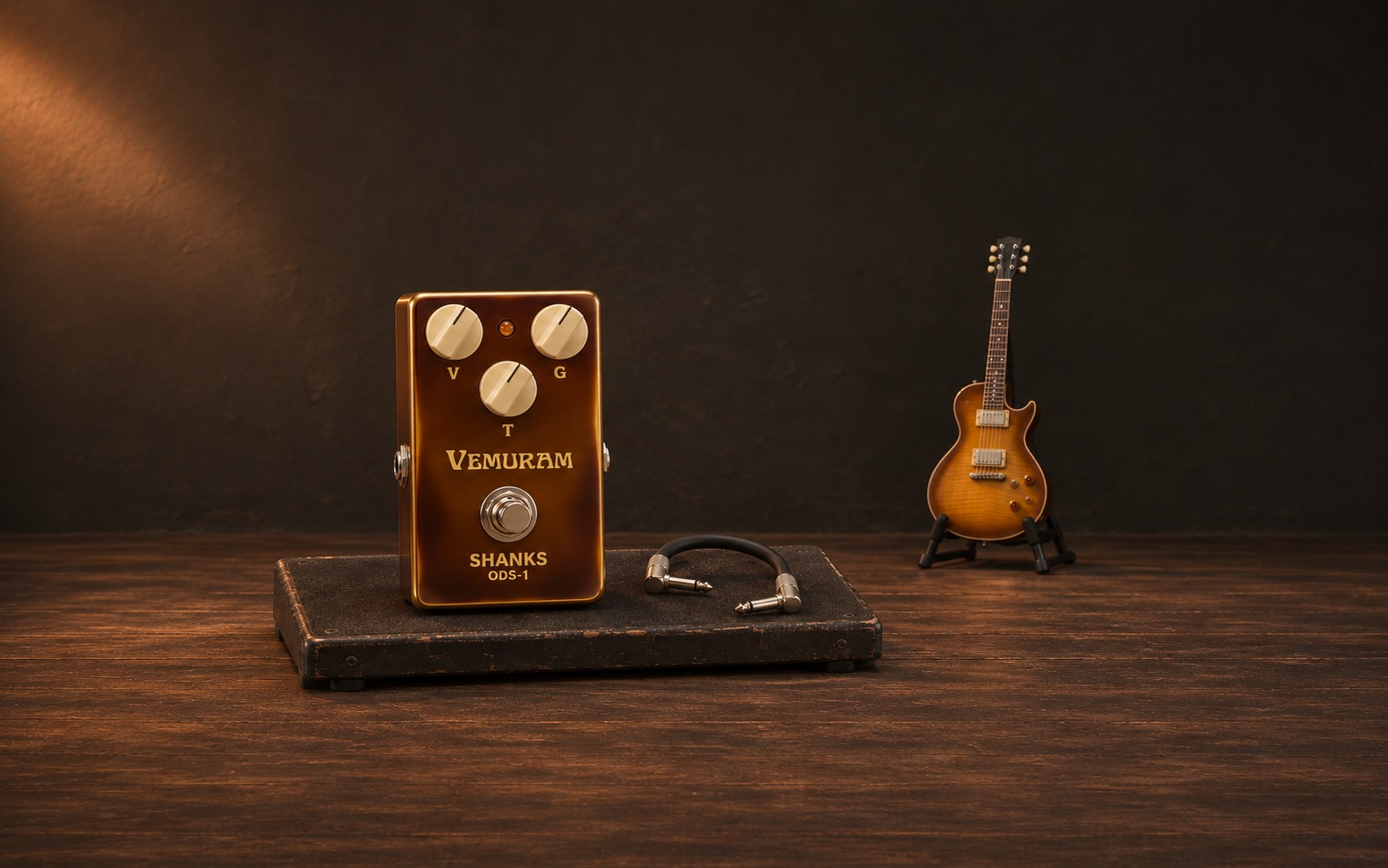
The Shanks ODS-1 is a low-to-medium-gain overdrive, hand-built in Tokyo by Vemuram in a solid brass enclosure, developed in collaboration with John Shanks. It has three external controls — Volume, Gain and Tone — plus two internal trimmers labelled Bass and SAT (saturation). It runs on a 9-volt battery or a standard centre-negative 9 V supply, measures 70 x 112 x 50 mm, and weighs 425 grams. As of September 2026 it sells for $435 at Thomann, $425 at US dealers such as Mass Street Music, and £419 in the UK at Peach Guitars.
Its voicing is the Nashville “clear and beefy” thing: it fattens the low end and adds a specific treble sparkle without the mid-hump that a Tube Screamer stamps onto everything. Vemuram’s own marketing calls it “inspired by vintage pedals” and never names one. Every dealer that has actually played it names the same one: the ODR-1.
Who John Shanks is, and why it matters here
The résumé
Shanks grew up in New York, bought a 1975 Stratocaster for $237 with the case after saving up from summer jobs, and stripped the finish off it four days later. He played early hip-hop sessions in New York — he was on Herbie Hancock’s Rockit with D.ST — moved to California in high school, joined Teena Marie’s band, and opened for Prince around the time of Controversy. He describes that gig as the thing that taught him to sit in a pocket rather than play at a record.
The pivot came through Melissa Etheridge. He was her guitar player through the late eighties and nineties, and when a record wasn’t going well, Pino Palladino told him he’d be producing it by the end of the day. He was. That album, Breakdown (1999), got him Grammy nominations and, in his words, got his credentials stamped. He has since produced or written for Sheryl Crow, the Backstreet Boys, Van Halen, the Doobie Brothers, Miley Cyrus and the Goo Goo Dolls, and has worked on eight or nine Bon Jovi records with Jon Bon Jovi and Richie Sambora. When Sambora left, Shanks played more guitar on This House Is Not For Sale, did the promo tour, and stayed. His own joke about the job: “It’s Phil X and the other guy. I’m the other guy.”
Why that CV shapes the pedal
This matters because the ODS-1 is a producer’s pedal before it is a guitarist’s pedal. Shanks’ collection — a 1958 Goldtop, a 1960 ES-355 that Joe Bonamassa has already put dibs on, a 1960 ES-335 that used to belong to Johnny Marr, a Zemaitis once owned by James Honeyman-Scott, a ’64 Shoreline Gold Strat with a Brian Setzer rumour attached, a pair of 1952 Esquires rebuilt into one road Tele after he handled Keith Richards‘ guitars — is the collection of somebody who spends his life deciding whether a guitar part sits in a mix.
A pedal built to that brief has to do one specific job: add gain and body without eating the frequency range where the vocal lives. That is the ODR-1’s whole reason for existing, and it explains why a man with a wall of platinum records ended up caring so much about a hundred-dollar German overdrive that he spent years having a Japanese workshop rebuild it.
Where the ODS-1 came from
The fuzzes came first
The ODS-1 was not Shanks’ first Vemuram product. He designed a run of fuzz boxes with the company before it — the Shanks 3K, the Shanks 4K and the Shanks II. The 4K uses germanium; the II uses two silicon transistors plus a FET and three Orange Drop capacitors, and is voiced softer than the 4K, drawing on Fuzz Face, Tone Bender and Baldwin Burns Buzzaround territory. Shanks himself calls the II “the child of the original 3 knob and the 4 knob.” All of them share the brass enclosure and the internal trimmer that is Vemuram’s house signature.
In his Guitar World gear tour, Shanks put it plainly: “I designed a few pedals with them [a range of fuzz boxes], but the last one we did was this overdrive pedal.”
A development-time conflict worth flagging
Two accounts of how long the ODS-1 took to build are in circulation, and they do not agree.
Vemuram’s own launch quote, attributed to Shanks and reproduced by dealers, says: “We and the team at Vemuram have spent the last year working and prototyping the new ODS-1 pedal. It’s a beautiful, transparent overdrive that one can use to find that perfect balance of overdrive and distortion that I can use in the studio and on stage. The one go to that can cover almost everything I need, from a mild push to full on for solos. A pedal I’ve been dreaming of for years that’s finally here.”
Shanks in Guitar World, November 2022, says: “It took us two and a half years to develop.”
Both are Shanks. The likeliest reconciliation is that the launch quote counts the final prototyping year and the interview counts the whole project from first conversation, but no source says so and we are not going to invent one. If you see “two and a half years of development” quoted as fact, note that the brand’s own copy says one.
The release-date problem
Nobody publishes a clean launch date for this pedal, and the sources you would normally trust point in different directions. Thomann’s catalogue records the ODS-1 as “available since March 2019.” Owner reviews on that same listing are dated June 2020 and January 2021, so the pedal demonstrably existed and was in players’ hands well before Shanks discussed it in late 2022.
This is worth stating because a retailer’s “available since” date is a distribution date, not a release date, and the gap between them can be years in either direction. What we can say with confidence: the ODS-1 was on the market by early 2019 at the latest. What we cannot say: exactly when Vemuram announced it.
One related claim should be treated as an error. Gear databases list the ODS-1 as heard on Pete Townshend’s Classic Quadrophenia, released in 2015. That is at minimum four years before the pedal is documented as existing. The Townshend connection is real — see below — but the album credit is an anachronism and we do not repeat it.

The ODR-1 question
What everybody says
Vemuram’s public copy describes the ODS-1 as drawing “inspiration from a rich tapestry of vintage pedals, harnessing the collective wisdom of countless iconic units.” That sentence names nothing. Every dealer and demo channel that has actually put the pedal on a board names the same thing. Mass Street Music’s product description opens with “a Nobels ODR-1 style overdrive.” Daniel Seriff’s demo video is literally titled “Nobels ODR1 Style Circuit.” Thomann’s own German-language customer reviews describe it as “vom Nobels ODR-1 inspiriert.” The Telecaster Guitar Forum thread announcing one is titled “NPD: Vemuram Shanks ODS-1 (their ODR-1).”
The widely-repeated origin story is that the ODS-1 is based on one of John Shanks’ own original ODR-1s — the early German-built version, not the current reissue — which would explain why owners consistently report that the Shanks sounds closer to a good vintage ODR-1 than a new one does.
What has and has not been established
Be careful here, because the internet has quietly promoted a plausible inference into a stated fact. As far as we can find, no published teardown, trace or schematic comparison of the ODS-1 exists. The DIY community’s working theory, discussed on the PedalPCB forums, is that the ODS-1 is an ODR-1 with the bass response and the clipping made adjustable via trimpots — which is functionally what the Aion FX Andromeda project does, and which matches exactly what the two trimmers on the Shanks are labelled. That is a good inference from the control set. It is not a gut shot.
So the honest statement is this: the ODS-1 is unambiguously an ODR-1-family overdrive, acknowledged as such by every dealer selling it, and it is very probably a refined and adjustable implementation of that topology. Whether the board inside is a modified ODR-1 circuit or a fresh design that arrives at the same tonal destination is not something anyone has publicly demonstrated.
Why this reads differently to the Jan Ray argument
If you have read our Vemuram Jan Ray piece, you will recognise the shape of this. But the two cases are not equivalent, and it would be lazy to treat them as one.
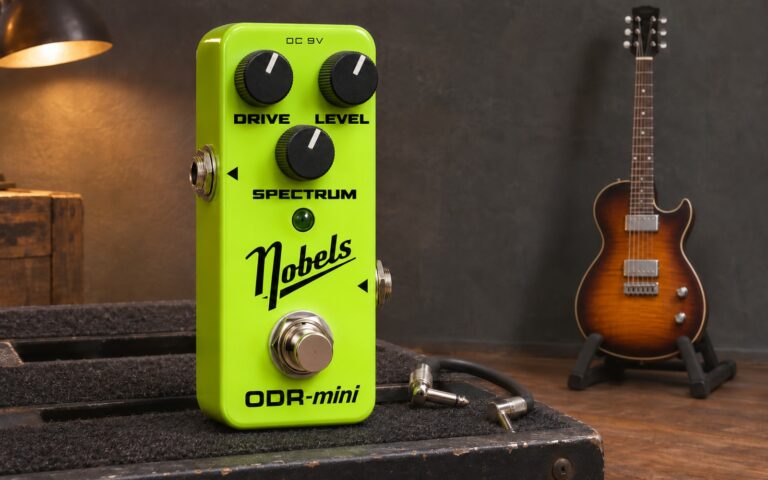
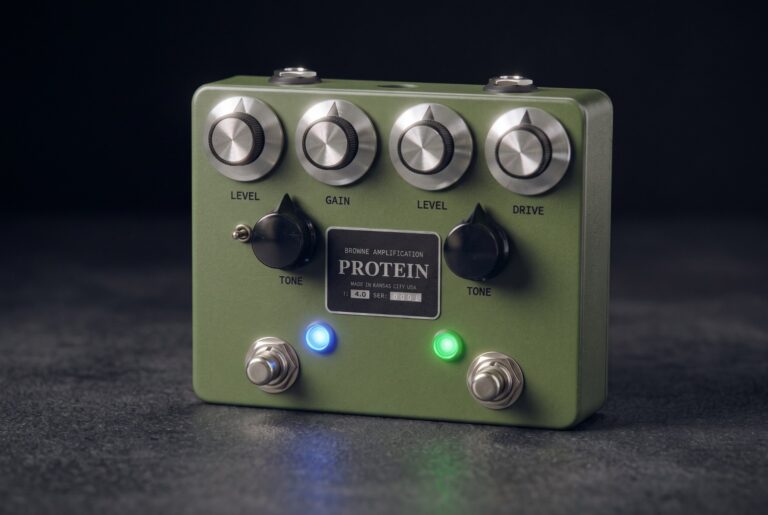
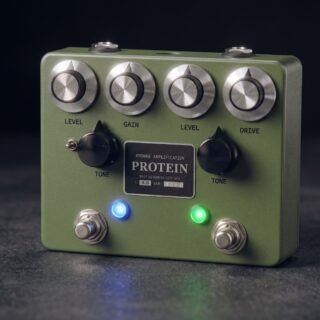
The objection to the Jan Ray is that Vemuram sold a circuit closely resembling Paul Cochrane’s Timmy at roughly three times the price, wrapped in marketing about original research into vintage Fender amplifiers, without acknowledging the original builder. The ODS-1’s situation is different in two concrete ways. First, the ODR-1 is a mass-market pedal from an established brand, not one man’s living, and the Nobels design has been openly reworked by half the industry — Wampler’s Belle, Browne Amplification’s Protein, Nordland’s ODR-C series and a dozen others all live in that lineage without controversy. Second, the ODS-1 is a named artist collaboration built around that artist’s own well-documented use of the original, which is a materially different act from quietly reissuing someone else’s schematic.
None of which makes the price automatically defensible. It does mean the ethical objection here is much weaker than it was for the Jan Ray, and that the actual question about the Shanks is a value question rather than a moral one.
How to reason about the price
Guitar Pedal X, in a round-up of ODR-1 style overdrives, was blunt about it: the ODS-1 is a good pedal whose price “raises eyebrows” next to cheaper alternatives, and for pure bang-per-dollar they preferred the Nordland ODR-C series. That is a fair verdict and we will not soften it.
The counter-argument comes from a Thomann reviewer who did the comparison properly. Having A/B’d the Shanks against the Wampler Belle at home, he concluded that the Belle wins on price-to-performance and the Shanks wins on sound — describing the Vemuram as consistently more differentiated, with more structure and more depth. His summary translates roughly as: value winner, the Belle; tone winner, the Shanks. Both things can be true.
Specifications
| Specification | Vemuram Shanks ODS-1 |
|---|---|
| Type | Low-to-medium-gain overdrive, ODR-1 lineage |
| External controls | Volume, Gain, Tone |
| Internal controls | Bass trimmer, SAT (saturation) trimmer |
| Switching | Single footswitch, effect on / bypass |
| Indicator | LED, effect on |
| Connections | Input and output, 6.3 mm (1/4″) jacks |
| Power | 9 V battery (006P) or 9 V DC regulated supply |
| Power connector | 5.5 x 2.1 mm coaxial, centre-negative |
| Current draw | 24.1 mA (per Mass Street Music’s spec listing) |
| Enclosure | Solid brass, hand-built |
| Dimensions (W x D x H) | 70 x 112 x 50 mm |
| Weight | 425 g |
| Country of manufacture | Japan (Tokyo) |
| Collaborator | John Shanks |
| Street price (Sept 2026) | $425–435 US / £419 UK |
One number in that table deserves a note. A 24.1 mA current draw is high for a three-knob overdrive — the Jan Ray from the same brand pulls about 5 mA, and a Tube Screamer sits around 8 mA. If you are running a compact isolated supply with 100 mA outputs, the Shanks will happily share a rail with a tuner but should not be daisy-chained behind anything hungry. Battery life is correspondingly short; treat the battery compartment as an emergency measure, not a plan.
What the controls actually do
Gain
The gain range is deliberately narrow by modern standards. Shanks: “It’s not a super gainy pedal; it has a lot of transparency and a lot of clarity.” Owners report three usable zones — a genuine clean boost with Gain near minimum, a convincing edge-of-breakup around ten o’clock to noon, and a full rhythm crunch past two o’clock. There is no metal setting hiding at the top of the sweep and there was never meant to be.
What separates it from a Tube Screamer at comparable gain is the absence of the mid-hump. Where a TS narrows the signal and pushes it forward, the ODS-1 keeps the low end and the top end intact, which is exactly the property that makes it useful in a dense mix and exactly why Nashville session players adopted the original ODR-1 in the first place.
Tone
The single Tone control on the ODR-1 family behaves differently to a conventional treble roll-off — it is closer to a tilt, shifting the balance between low and high content rather than simply cutting the top. On the Shanks, dealers and owners consistently describe the result as “treble zing and bass thump that feels natural and doesn’t interfere with pick attack.” In practice, small movements matter more than they do on a TS-style pedal. Set it by ear against your amp, not by matching a photograph.
Volume
Plenty of headroom on tap — well past unity, enough to drive a clean amp into its own breakup with Gain rolled back. This is the setting most owners land on for the “clean boost” role, and it is where the pedal’s transparency claim is easiest to test: bypass it, engage it, and listen for whether anything has moved that shouldn’t have.
Bass trimmer
The first of the two internal adjustments. The ODR-1 topology is known for a generous low end, which is a virtue on a Telecaster bridge pickup into a clean amp and a liability on a humbucker into a bass-heavy combo. The Bass trimmer lets you set that once and forget it. Practical protocol: set it with your usual guitar and amp at gig volume, not at bedroom level, because the bass content is the first thing that changes when a speaker starts moving air.
SAT (saturation) trimmer
The second internal adjustment, and the one that changes the pedal’s character rather than its EQ. It governs how hard and how early the clipping stage compresses. Turned down, the pedal opens up and behaves more like a boost with a little hair; turned up, it becomes denser and more compressed, with more sustain and less dynamic range.
This is worth knowing because the single most common criticism of the ODS-1 — that it compresses more than some players want, sacrificing openness — is the criticism of a pedal at its factory saturation setting. One reviewer, a Jan Ray owner, found the Shanks noticeably more compressed and less amp-like than the Jan Ray and preferred the latter. If that is your reaction on first plug-in, the trimmer is the answer before the return label is.
A note on both trimmers: as with every Vemuram, they are set-and-forget, not performance controls. Make one adjustment, play for a week, adjust again if needed. Chasing them nightly is how people end up convinced a good pedal is broken.
Famous players
The roster here is small compared with the Jan Ray’s, but it is unusually well-sourced, and it skews heavily towards people who make records for a living rather than people who play arenas.
Documented by photo, video or the player’s own words
John Shanks himself is the obvious first entry, and the strongest: he named the ODS-1 as his favourite effects pedal in Guitar World, described its development, and plays it live with Bon Jovi. He also named his other favourite — an Electro-Harmonix Deluxe Memory Man — which tells you something about the kind of board this pedal is designed to live on.
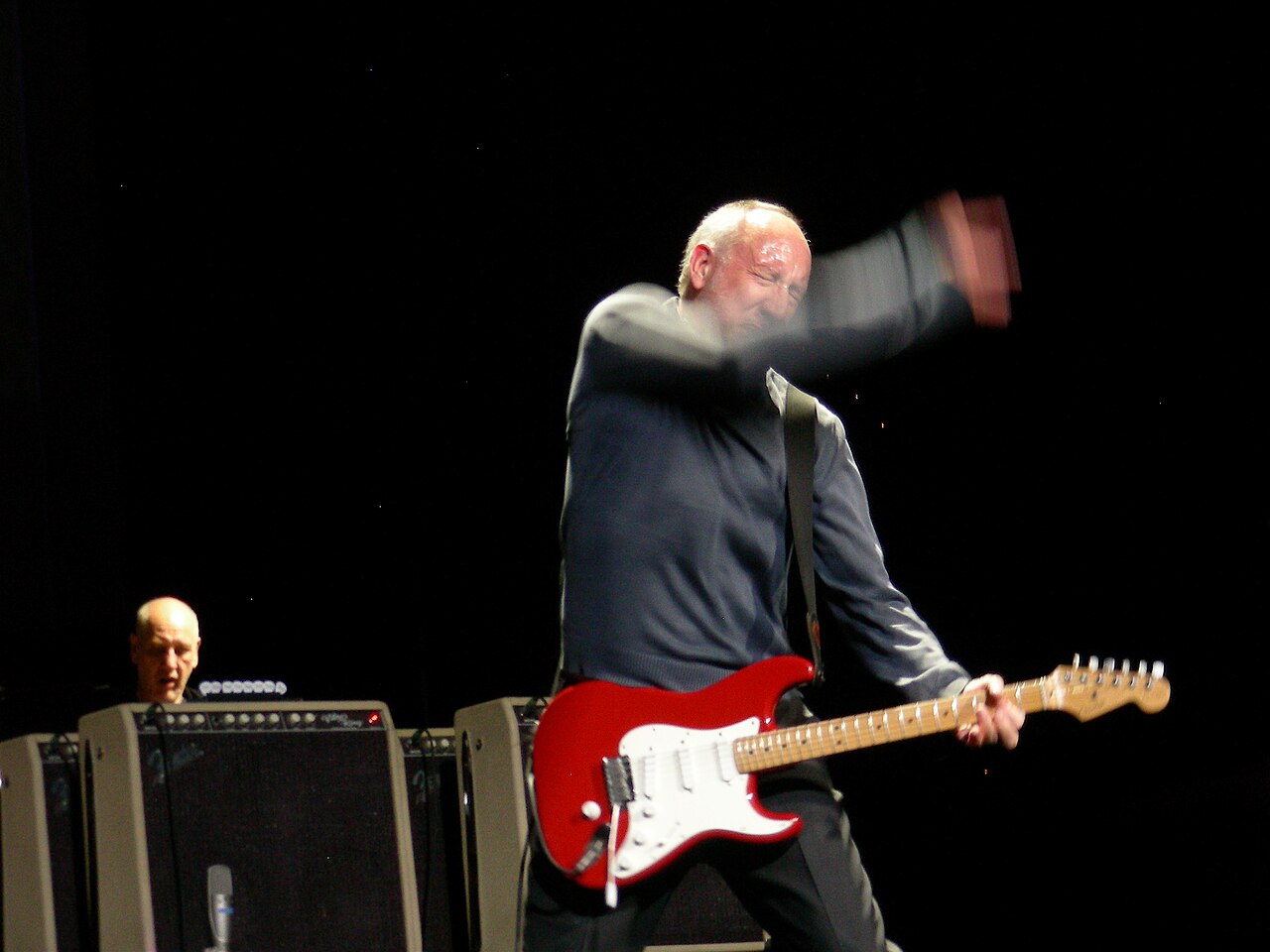
Pete Townshend has been shown with an ODS-1 on his pedalboard in an Instagram video posted by Rachel Fuller Townshend, filmed during a recording session for Pete Townshend’s Quadrophenia: A Mod Ballet. That is a dated, first-party video source and it is solid. It is also the correct version of the Townshend claim — the frequently-repeated 2015 Classic Quadrophenia album credit is, as noted above, chronologically impossible.
Tim Pierce, one of the most-recorded session guitarists in Los Angeles, walks through a board containing multiple ODS-1 units in his YouTube video “I Built A [F***ing KILLER] New Rig,” with the pedals visible from around 1:20 and in use from 4:14. Running two of a $435 pedal on one board is about as strong an endorsement as a session player can give without saying a word.
Rob Harris of Jamiroquai has shared a pedalboard photo with John Nathan Cordy showing the ODS-1 alongside a Quad Cortex, a Boss Waza Dimension C, a Waza VB-2 Vibrato and a Crazy Tube Circuits Cyclone. Harris does not have a gear guide on this site, but the photo is real and dated.
MORRIE, the singer and guitarist of the Japanese band DEAD END, has been photographed with an ODS-1 in an Instagram story. A useful reminder that Vemuram’s home market is a significant part of this pedal’s user base and is under-represented in English-language gear databases.
Sébastien Chouard, the French session guitarist, posted a studio-session board photo in which — his own caption says — the Jan Ray had been replaced by the Shanks. That single sentence is more informative than most endorsements: it is a working player choosing between two pedals from the same brand and picking this one for the session.
What we are not claiming
The ODS-1’s Equipboard entry is short and each artist on it carries a specific, checkable source, which is unusual and welcome. But the pedal’s genre spread on that site — Rock, Pop, Blues, Folk, then a long tail — reflects six or seven documented users, not a broad professional consensus. If you see the ODS-1 described as “an industry standard,” that is enthusiasm, not evidence. It is a well-regarded specialist pedal with a small, high-calibre user list.
Tone recipes
1. Nashville clean push (Telecaster into a blackface-voiced amp)
Gain 8 o’clock, Tone noon, Volume set for a clear lift above bypass. SAT trimmer down slightly from factory. This is the setting the circuit was born for: it thickens the bridge pickup and adds sparkle without moving the mids, so a country or pop rhythm part keeps its snap and still sits under a vocal.
2. Edge of breakup (Strat, small tube combo)
Gain 10 o’clock, Tone 11 o’clock, Volume just above unity. Into something like a Fender Pro Junior IV already working slightly, this gets you the sound of an amp being pushed rather than a pedal being switched on. Roll your guitar volume back and it cleans up properly — this is the setting that tests whether you like the pedal.
3. Rhythm crunch (humbuckers)
Gain 1–2 o’clock, Tone 10 o’clock, Bass trimmer reduced. The low end on this circuit is generous, and a Les Paul into an ODR-1-family drive with the Bass trimmer at factory can turn woolly fast. Pull the trimmer back and the chords tighten up considerably without losing weight.
4. Solo boost, stacked
ODS-1 set for rhythm crunch, then a clean boost after it. Owners repeatedly report that the Shanks stacks unusually well precisely because it does not carve mids — put a Xotic EP Booster or a Greer Lightspeed after it and you get level and a little more compression without the stacked pedals fighting over the same frequency band.
5. Always-on tone shaper
Gain at minimum, Volume at unity, Tone set to taste. Used this way the ODS-1 is a fixed EQ-and-a-hint-of-hair that stays engaged all night, which is how a lot of session players actually run it. If you are going to do this, spend the time on the Bass trimmer — it is doing most of the work.
6. Fuzz-adjacent density
Gain past three o’clock, SAT trimmer raised, Tone backed off. One Thomann reviewer described the Shanks at high gain as showing “clear fuzz leanings,” particularly in the bass, alternately squashed and bloated. That is a criticism in his review; used deliberately it is a usable and quite distinctive lead sound, especially on a single-coil neck pickup. Not the pedal’s core competence, but it is in there.
All settings assume a clock face, with the two trimmers left at factory unless stated. Volume is set by ear for the role; the numbers below are starting points, not destinations.
How it compares
Versus the Nobels ODR-1 family
The unavoidable comparison. The standard Nobels ODR-1 costs roughly a quarter of the Shanks and delivers the same fundamental voicing. What owners consistently say is that the current ODR-1 reissue sounds more compressed and slightly muffled next to the Shanks, and that the Vemuram sounds closer to a good early example. If you want the voicing on a budget, start at the ODR-1 or the ODR-1 Mini; if you want it with the low end and the clipping dialled to your rig, that is what the trimmers on the Shanks buy you.
The Nobels ODR-1 BC is the interesting middle option, since Nobels’ own bass-cut version addresses one of the two things the Shanks’ trimmers address, at a fraction of the price. If your only complaint about an ODR-1 is that it is too fat, buy the BC and keep the difference.
Versus the Wampler Belle
The most direct like-for-like at a sane price. The Wampler Belle is Brian Wampler’s take on the same lineage with a proper external bass control instead of an internal trimmer. The Thomann reviewer who compared them at length gave the value crown to the Belle and the tone crown to the Shanks, describing the Vemuram as more structured and more three-dimensional. If you are buying with your ears and a budget, the Belle is the sensible answer. If you have already decided you want the best version of this voicing regardless of cost, that is the argument for the Shanks.
Versus the Vemuram Jan Ray
Same brand, same brass, very different pedals — and the comparison people get wrong most often. The Jan Ray is the more open, less compressed, more amp-like of the two, with a four-knob layout including separate Bass and Treble. The Shanks has more gain on tap, more compression, and a single tilt-style Tone control. Multiple owners of both — including the Thomann reviewer who owns a Jan Ray and the session player who swapped one for the other mid-project — land on opposite sides, which tells you this is a genuine preference and not a quality gap. Rough guide: Jan Ray for transparency and cleanup, Shanks for body, thickness and a slightly more finished-sounding rhythm tone.
Versus the mid-hump school
Against a TS808 or a JHS Bonsai, the ODS-1 is doing the opposite job. A Tube Screamer narrows and focuses; the Shanks widens and fattens. Neither is better — they solve different problems. If your amp is already mid-forward and you want the guitar pushed to the front of a mix, the TS family is right. If your amp is scooped and you want body without honk, the ODS-1 is right. The same logic separates it from the Fulltone OCD, which is a harder, more aggressive clipper altogether.
Versus the transparent boutique field
The Klon Centaur and its descendants — the Wampler Tumnus most obviously — add a mid-and-treble lift over a clean blend, which is a different flavour of “transparent.” The Analog Man King of Tone and its smaller sibling the Prince of Tone are Bluesbreaker-derived and softer at the top. The MXR Timmy gives you both EQ bands externally for a fraction of the money. The JHS Morning Glory V4 is the brighter, more open option in the same price bracket as the cheaper alternatives. Against all of them, the ODS-1’s distinguishing trait is the low-end weight — it is the fattest-sounding pedal in that group, and whether that is a feature depends entirely on your amp.
Versus building it yourself
Worth saying out loud: the DIY community’s read on the ODS-1 is that it is an ODR-1 with adjustable bass and clipping, and the Aion FX Andromeda project is the closest available approximation. Builders who have made one report it is good but not identical, which is the usual honest outcome — the topology is easy to copy, the component choices and the final voicing decisions are not. If you build, build it because you enjoy building. Do not expect to save $400 and get the same pedal.
Buying guide, September 2026
New pricing
Thomann lists the ODS-1 at $435 with a 4.8 out of 5 average across 32 customer ratings and 24 written reviews, ranked 33rd in its distortion-pedals category. Mass Street Music in Lawrence, Kansas has it at $425 with free US shipping. Peach Guitars in the UK lists £419, discounted from £429. Guitar Pedal X quoted $385 in an earlier round-up, so there has been modest upward drift.
Vemuram sells through authorised dealers rather than direct, and dealer stock is genuinely sporadic — several US shops list it as “on order.” There is no waiting list in the King of Tone sense; it is just a low-volume hand-built product.
Buying used
Used examples appear on Reverb and eBay, typically at a modest discount rather than a dramatic one — boutique brass pedals hold value well and the ODS-1 has never been produced in quantity. Three checks before you buy:
- Ask about the trimmers. A previous owner may have moved both. There is no factory-reset mark, so if you buy a heavily-adjusted unit you inherit someone else’s decisions. Ask the seller directly whether they touched them and by how much.
- Check the enclosure and knobs. The brass is durable but it patinas, and several reviewers note the knobs turn very easily — a common complaint is that settings shift if you brush past the pedal. Check for a knob that has gone loose or a shaft that has been over-tightened.
- Confirm it is the ODS-1, not a Shanks fuzz. The Shanks II, 3K and 4K share the name and the enclosure and are completely different pedals. Read the faceplate, not the listing title.
Cheaper routes to the same voicing
In ascending order of cost: the Nobels ODR-1 Mini, the standard ODR-1, the ODR-1 BC if bass is your complaint, the Nordland ODR-C series, and the Wampler Belle. Any of these will get you most of the way there. Buy the Shanks because you have played it against those and preferred it, not because it is the expensive one.
Who should not buy this
Three groups, stated plainly.
Anyone chasing high gain. The ODS-1 tops out at rhythm crunch. If you need a distortion, this is the wrong catalogue entry — Vemuram’s own Las Lunas or Butter Machine sit closer to that territory.
Anyone who wants maximum openness and amp-like dynamics above all else. The most consistent criticism of this pedal, from people who like it, is that it compresses. The SAT trimmer mitigates that; it does not eliminate it. If untouched dynamics are the priority, the Jan Ray or a Keeley D&M Drive is the better fit.
Anyone buying on price-to-performance. Guitar Pedal X’s verdict stands: there are pedals in this lineage at a quarter of the price that do 85 per cent of the job. If that last 15 per cent is not worth $300 to you, it is not worth $300 to you, and no amount of brass changes the arithmetic.
Living with one
Power
Use a regulated 9 V centre-negative supply on the standard 5.5 x 2.1 mm barrel. Given the 24.1 mA draw, give it its own isolated output rather than a daisy chain. The battery compartment exists and works, but a 9 V block at that draw is a short evening.
Board space and weight
At 70 mm wide and 425 grams, this is a big, heavy pedal for the amount of function it delivers. Two of them, as on Tim Pierce’s board, is nearly a kilogram of brass. Plan the layout before you commit — and if your board uses hook-and-loop fastening, use a generous amount, because brass is heavy and the enclosure bottom is smooth.
Placement in the chain
Standard drive position: after tuner, wah and compressor, before modulation and time-based effects. It stacks well in both directions — in front of another drive it acts as a fat boost, after one it adds body. If you run a compressor, put it before the ODS-1 and be conservative with it, since the pedal already contributes compression of its own.
Setting the trimmers, once
Small screwdriver, one adjustment per session, at playing volume, with the guitar and amp you actually use. Mark the original position with a pencil dot on the enclosure floor before you start so you can find your way back. The single most useful thing most owners do is reduce the Bass trimmer with humbuckers and reduce SAT if the pedal feels squashed — and then leave it alone for a year.
Frequently asked questions
Is the Vemuram Shanks ODS-1 a Nobels ODR-1 clone?
It is unambiguously an ODR-1-family overdrive — every dealer selling it says so, and the demo videos are titled accordingly. Whether the circuit inside is a modified ODR-1 or an independent design that arrives at the same voicing has never been publicly demonstrated; no teardown or trace of the ODS-1 appears to exist. The widely-repeated story is that it was developed from one of John Shanks’ own original ODR-1s.
What do the two trimmers do?
Bass sets the low-end content, which is generous by default on this circuit and often needs reducing with humbuckers. SAT sets how hard and how early the clipping stage compresses — turn it down for a more open, boost-like character, up for density and sustain. Both are internal, set with a small screwdriver, and intended as set-and-forget adjustments.
Does ODS stand for Overdrive Special, as in Dumble?
No source we can find says what the initials stand for, and nothing about the pedal’s voicing, marketing or lineage points at Alexander Dumble. Given that this is a Shanks-branded ODR-1-family pedal, the far likelier reading is a play on the ODR-1’s own model designation. Treat any confident “it’s a Dumble-in-a-box” claim as an assumption.
How much does it cost, and where can I get one?
$435 at Thomann and $425 at US dealers such as Mass Street Music as of September 2026; £419 in the UK. Vemuram sells through authorised dealers only, and stock is intermittent because production volume is low.
Which famous players actually use one?
John Shanks himself, who called it his favourite effects pedal in Guitar World. Pete Townshend, filmed with one on his board during a Quadrophenia ballet session. Tim Pierce, who runs multiple units on his session board. Rob Harris of Jamiroquai, MORRIE of DEAD END, and French session guitarist Sébastien Chouard. The frequently-cited credit on Townshend’s 2015 Classic Quadrophenia album is chronologically impossible and should be disregarded.
Shanks ODS-1 or Vemuram Jan Ray?
The Jan Ray is more open, less compressed and more amp-like, with separate Bass and Treble knobs. The Shanks has more gain, more low-end weight, more compression and a single tilt-style Tone. Owners of both split evenly. If you want the pedal to disappear, Jan Ray. If you want it to add body and finish, Shanks.
Is it worth four times the price of a Nobels ODR-1?
Objectively, on price-to-performance, no — Guitar Pedal X’s negative verdict on value is fair, and the Wampler Belle and Nordland ODR-C get you very close for much less. Subjectively, players who have compared them at length consistently report the Shanks sounds more structured and more dimensional. It is a diminishing-returns purchase, which is a legitimate thing to buy as long as you know that is what you are buying.
Will it work with humbuckers, or is it a single-coil pedal?
Both, and this is one area where the trimmers earn their keep. Reviewers specifically praise it with Telecaster bridge pickups into valve amps, but it also works with humbuckers once the Bass trimmer is pulled back from its factory position. Leaving Bass at factory with a Les Paul is the fastest way to conclude, wrongly, that the pedal is muddy.
Can I run it on 18 volts for more headroom?
Vemuram specifies 9 V only — battery or regulated 9 V DC supply, centre-negative. Unlike some boutique overdrives, there is no published 18 V option for the ODS-1, and given the brand’s use of hand-selected components, running it outside spec is your risk alone. If you want more headroom, use the Volume control and turn the amp down.
Image credits
- Top image: GuitarGangsters AI-generated reference illustration, not a photograph.
- Pete Townshend: Kubacheck, Wikimedia Commons, CC BY 2.0.
- A pedalboard full of colourful pedals: Skimel, Wikimedia Commons, CC BY-SA 4.0.
- A guitarist using an effects pedal on stage: Shixart1985, Wikimedia Commons, CC BY 2.0.
- Pete Townshend: Heinrich Klaffs, Wikimedia Commons, CC BY-SA 2.0.
Latest News
Related
On This Day
Tuesday 10 November
From this week: