Walrus Audio Iron Horse V3: The Oklahoma Rat That Refuses To Be Called A Rat
Walrus Audio Iron Horse V3 guide: LM308 distortion explained, Si/LED blend knob, verified players, tone settings, RAT comparisons, buying advice and FAQ.
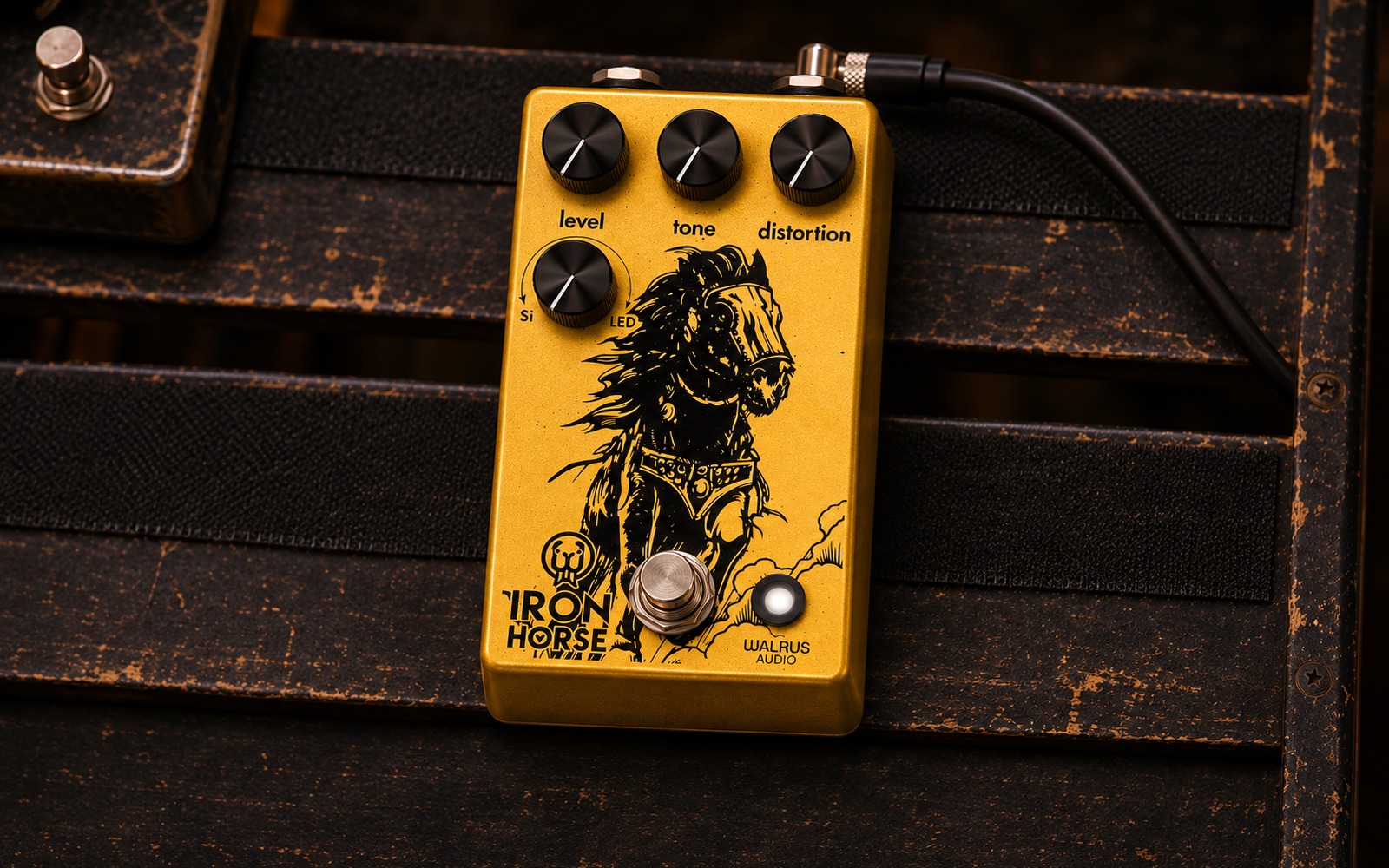
There is a horse on the front of this pedal wearing armour. Not a saddle, not a blanket — armour, plated and buckled and ready for something considerably worse than a gig. Illustrator David Hüttner drew it for the third version of a distortion box Walrus Audio has been building in Oklahoma City since 2012, and it is one of those rare pieces of pedal artwork that tells you the truth before you plug in. This thing is not subtle. It is not going to sit politely in front of your amp adding a little hair. It is a battle animal.
The Walrus Audio Iron Horse V3 is, at its heart, an LM308 distortion — which is a polite way of saying it is built around the same op-amp that made the ProCo RAT one of the four or five most important dirt pedals ever manufactured. Walrus knows this. Walrus knows you know this. At one point they quietly renamed the product page from “Iron Horse V3” to “Iron Horse LM308 Distortion,” which is about as close to a shrug and a wink as a pedal company gets. The chip is the pitch.
What makes the Iron Horse worth 3,000 words rather than a paragraph is what Walrus did around the chip — and specifically what they did in October 2021, when they took the three-position clipping toggle off the V2 and replaced it with a knob that sweeps continuously between silicon diodes and LEDs. That single change turned a very good RAT variant into something with its own personality, and it also created the pedal’s most-argued-about flaw. Both of those things are worth explaining properly.
Origins: A 2012 Pedal That Kept Getting Better Instead Of Being Replaced
Walrus Audio was founded in 2011 in Oklahoma City, and the Iron Horse arrived the following year as one of the company’s earliest products. That matters more than it sounds. Most boutique builders launch with a Tube Screamer clone and a fuzz; Walrus launched into the middle of the LM308 conversation, which at the time was a considerably less crowded room than it is now.
The V1 was a straightforward high-gain LM308 box: level, tone, distortion, and a three-way toggle selecting between clipping arrangements. Left gave you some compression, right gave you a higher amount of compression, and the middle position lifted the clipping diodes entirely for a wide-open, uncompressed signal — the same trick the RAT’s own “Turbo” and “You Dirty Rat” variants play with, and the same trick that makes a RAT circuit capable of behaving like a very loud, very rude clean boost when you want it to.
In June 2017 came the V2. The changes were small, unglamorous and exactly the kind of thing a company makes when it is listening to owners rather than reviewers: the Level control was reworked so unity gain was easier to find, and the Tone control was reworked so you could dial in more treble than before. That was it. No new artwork drama, no format change, no price hike worth mentioning. Walrus fixed two knobs and left the rest alone.
Then on 26 October 2021, the V3 landed at $199 with a genuinely different feature set:
- Top-mounted jacks, replacing the side-mounted in/out — a straightforward win for anyone who has ever tried to fit a boutique enclosure into the second row of a crowded board.
- Soft relay true bypass switching, replacing the mechanical stomp.
- A fixed volume drop-off when the distortion knob is at minimum — a real V1/V2 annoyance, finally addressed.
- The Si/LED blend knob, replacing the three-position clipping toggle with a continuous sweep between symmetrical silicon clipping and LED clipping.
New artwork came with it: the armoured stallion, gold enclosure, black ink. Fourteen years after launch the Iron Horse is still in the current Walrus Core Series line, listed at $219.99 with a limited lifetime warranty, and it has never been discontinued and reissued. It has simply been improved three times and left in the catalogue. In a category where boutique pedals routinely appear and vanish inside two years, that is the single most useful fact in this article.
What The LM308 Actually Does, And Why Everyone Cares
The LM308 is an operational amplifier, and the reason it matters to guitarists has almost nothing to do with what op-amps are supposed to be good at. It is a slow chip. Its slew rate — how fast the output can respond to a change at the input — is low compared to the modern op-amps that replaced it. In a hi-fi context that is a defect. In a distortion pedal it is the entire point: the chip’s sluggishness rounds off the very top of the harmonic content, softening what would otherwise be a brittle, fizzy clipping edge into something thicker and more musical.
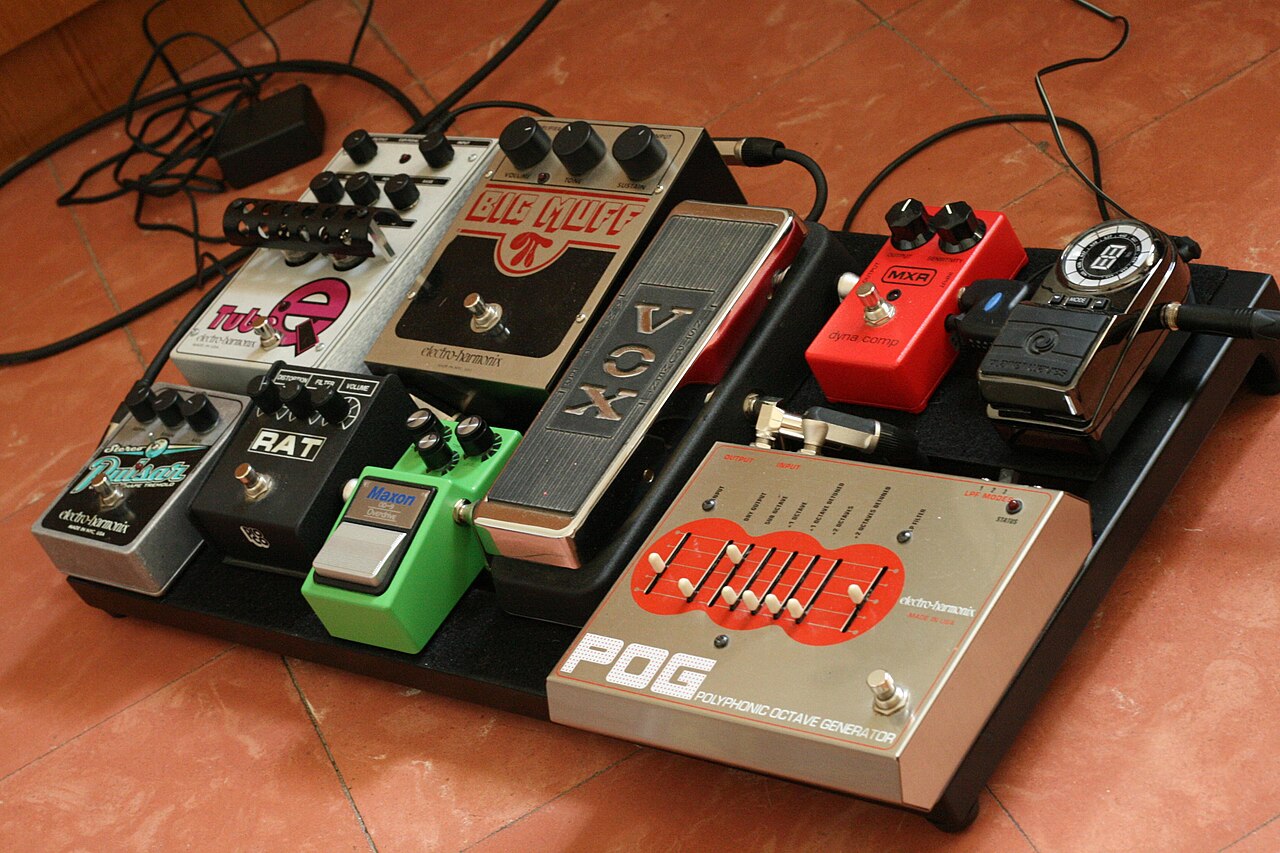
Stack that on the RAT topology’s aggressive midrange hump and its filter-style tone control, and you get the sound that has anchored an enormous amount of rock guitar since 1978: tight low end, forward and slightly nasal mids, and a treble that cuts without shredding. It is a fundamentally different proposition to a Tube Screamer, which scoops nothing and boosts a narrow midrange band into a clean amp. The RAT family generates its own gain and imposes its own EQ curve. It is a personality, not a helper.
The players who built careers on that circuit are the reason the LM308 has a mythology. Kurt Cobain ran one. Jonny Greenwood has used one for decades. Graham Coxon, Jeff Beck, David Gilmour, Nels Cline, James Hetfield, Billy Corgan, Kim Thayil, J Mascis and St. Vincent have all been documented with RAT-family distortion at some point.
To be completely clear, because this is exactly the kind of place where gear writing goes dishonest: none of those players are documented Iron Horse users. They are the reason the circuit family has cultural weight, and they are the reference points you should audition the Iron Horse against. They are not evidence that anybody famous plugged into this specific Oklahoma pedal. The genuine Iron Horse user list is further down, and it is a different and considerably less famous group of people.
Specifications
Famous Players: The Honest Version
There is no signature endorsement here, no Rig Rundown built around this pedal, no arena headliner whose sound is definitionally an Iron Horse. But there is a real, documented, crowd-sourced user list of roughly a dozen working professionals, and it clusters in an interesting and coherent way: American indie rock, post-hardcore, Southern alt-rock, and — pointedly — the Oklahoma scene that Walrus grew out of.
The clearest case: Robert McDowell, Manchester Orchestra
Manchester Orchestra’s guitarist is the closest thing the Iron Horse has to a flagship user, and he is a genuine Walrus loyalist rather than a one-pedal coincidence. Alongside the Iron Horse his board has carried the Walrus Jupiter fuzz and the Walrus Janus fuzz/tremolo, and his rig is powered by a Walrus Aetos supply. In a Premier Guitar feature on the band, McDowell singled out the Janus as the secret weapon behind the “completely blown-out and insane sounding” guitar on “The Mansion.”
His broader rig is worth noting because it explains what the Iron Horse is for: a Fender ’72 Telecaster Deluxe and a Gibson SG Standard into a Vox AC30 and an Orange OR50 through Marshall cabs. That is a bright, chimey, already-loud front end. The Iron Horse’s job there is not to add gain to a clean amp — it is to become the band’s heavy guitar sound in one stomp, over the top of an amp that is already working.
Tier two: crowd-sourced but plausible
The following players are documented on Equipboard with the Iron Horse. That is a community-submitted database, so treat this as a strong signal rather than proof — but the pattern across the list is consistent enough to be meaningful:
- Dustin Kensrue (Thrice) — the post-hardcore band whose guitar sound has always leaned on aggressive, midrange-forward distortion rather than high-gain amp saturation.
- Jenn Wasner (Wye Oak, Bon Iver, Flock of Dimes) — one of the most texturally adventurous guitarists in American indie rock, and exactly the sort of player who would want a distortion that can flip from crunch to near-fuzz on one knob.
- Kevin Devine — Brooklyn singer-songwriter with a long history of loud-quiet dynamics.
- Kryz Reid (Third Eye Blind).
- Greg Barnett (The Menzingers).
- Jess Abbott (Tancred, formerly Now, Now).
- Samantha Crain — Oklahoma singer-songwriter, and a nice piece of hometown symmetry for a pedal built in Oklahoma City.
- Andy Othling (Lowercase Noises) — better known for ambient work, which says something about the Iron Horse’s range at the lower end of the distortion knob.
- Michael Weiss, Brandon Beaver (documented as touring with it) and Eirik Stordrange round out the list.
What you should take from that: this is a working musician’s pedal. It is on boards belonging to people who tour in vans and buses and need one dirt box that covers rhythm crunch and lead saturation without swapping settings mid-set. It is not a collector’s item and it is not a status pedal. That is not a criticism.
The Si/LED Knob: What It Does And What It Gets Wrong
This is the V3’s headline feature and the thing that separates it from every other RAT variant on the shelf, so it deserves proper treatment.
Silicon end (fully counter-clockwise): symmetrical silicon clipping diodes, the highest amount of compression in the pedal. Reviewers consistently describe this side as mid-scooped, heavily saturated, and close enough to fuzz that the boundary stops being useful. It is the aggressive, squashed, wall-of-noise setting. Sustain is enormous; note definition suffers, which is exactly what you want for stoner riffs and doom chords and exactly what you do not want for anything with a chord voicing more complicated than a fifth.
LED end (fully clockwise): LED clipping, considerably less compression, higher headroom and higher output. This is the side reviewers call the “Rattiest,” which is a slight historical irony given ProCo’s early models were silicon-based. It has more midrange presence, better note separation, more perceived volume, and it responds much better to guitar volume rolls.
Noon: the two clipping types are blended in varying ratios for more complex, asymmetric-sounding results.
Now the flaw, because it is real and every honest review mentions it. The LED side is significantly louder and bigger than the silicon side, so it dominates the blend. In practice most of the meaningful mixing between the two clipping characters happens in a fairly narrow window between roughly 8 and 10 o’clock on the knob, and past that the LEDs take over. Worse, because the knob changes the internal gain structure as well as the clipping style, you have to re-adjust the Level control every time you move it — a point Walrus themselves make explicitly in the manual. This is not a knob you can sweep with your foot mid-song.
The reasonable conclusion, and one that Guitar.com’s reviewer reached, is that a three-way toggle — like the one on the V2 — would arguably have been more practical. The counter-argument is that the blend gives you access to intermediate clipping ratios that no toggle can produce, and once you have found your setting you are not going to touch it again anyway. Both positions are defensible. Set it once, set your Level to match, forget it.
Tone Recipes: Five Starting Points
1. The Rhythm Crunch (Manchester Orchestra territory)
Level 10 o’clock · Tone 11 o’clock · Distortion 10 o’clock · Si/LED fully clockwise (LED).
Low gain, LED clipping, tone slightly pulled back. This is the setting that turns a chimey amp into a rock rhythm sound without losing the amp’s character underneath. Chords stay legible, palm mutes stay tight, and single-note lines still have attack. Best into an already-bright amp — an AC30, a blackface Fender, a clean Orange.
2. Lead Boost With Bite
Level 1 o’clock · Tone 1 o’clock · Distortion 1 o’clock · Si/LED fully clockwise (LED).
LED clipping’s extra headroom and volume make it the right side of the pedal for solos. Push the Level well above unity and let the pedal shove the front of your amp. The Iron Horse’s midrange hump does the cutting-through work that a Tube Screamer would normally be hired for, with considerably more gain on tap.
3. Doom / Stoner Wall
Level 12 o’clock · Tone 9 o’clock · Distortion 3 o’clock · Si/LED fully counter-clockwise (silicon).
Maximum compression, scooped mids, tone rolled well back. This is where the Iron Horse stops being a distortion and starts being a fuzz. Play power chords and let them ring; do not expect open voicings to survive. Owners have specifically praised this setting with baritone guitars and with an EBow for drone work.
4. The Almost-Clean Boost
Level 2 o’clock · Tone 12 o’clock · Distortion fully counter-clockwise · Si/LED fully clockwise (LED).
One of the V3’s genuine improvements: because Walrus fixed the volume drop-off at minimum distortion, the pedal is finally usable as a low-dirt level lift. It is not transparent — the RAT-family EQ curve is always present — but it is a valid always-on colouring stage in front of an amp you are already driving.
5. Complex Blend For Recording
Level to taste · Tone 12 o’clock · Distortion 12 o’clock · Si/LED at 9 o’clock.
Sit in the narrow blend window where the two diode types actually mix. The result is a slightly asymmetric-feeling clipping character with more harmonic irregularity than either extreme. It records better than it sounds in a room, which is a common trait of blended-clipping circuits.
All settings assume a clock-face reading and a reasonably clean amp. Reset your Level every time you move the Si/LED knob — it is not optional.
How It Compares
Against the original
The ProCo RAT 2 is the reference and always will be. The Iron Horse is broader and slightly more transparent: smoother in the midrange, less aggressive in the presence region, and less inclined to flatten the guitar’s natural low-end bloom. Whether that is an improvement depends entirely on whether you want the RAT’s snarl or want to hear your guitar through it. Note too that the Iron Horse’s Tone control is wired conventionally — clockwise for more treble — where most RAT-derived circuits use the reverse-wired filter taper. If you have muscle memory from a real RAT, you will turn the wrong way for the first week.
Against the other rodents
The JHS PackRat takes the opposite approach: nine switchable historically accurate RAT variants in one enclosure, aimed at players who want the specific circuit from a specific year. The Iron Horse does not chase authenticity at all — it offers one voice with a continuously variable clipping character. The Wampler Ratsbane is the value proposition of the three, and Guitar.com listed it alongside the PackRat and the ProCo FatRat as the Iron Horse’s natural shopping-list rivals.
Against the cheap classics
The Boss DS-1 is a different circuit entirely and roughly a fifth of the price; it is brighter, buzzier and thinner, and it works best when it is being pushed into an amp that is doing half the work. The Boss DS-2 Turbo Distortion gets closer with its Turbo mode’s midrange push. The MXR Distortion+ is the germanium-flavoured historical alternative, and the MXR Super Badass Distortion gives you a three-band EQ for less money at the cost of the LM308 character.
Against fuzz and overdrive
At the silicon extreme the Iron Horse encroaches on Big Muff Pi territory, but it never fully arrives — a Muff’s four-transistor gain stages and mid-scoop are a fundamentally different animal, and a Muff will always be woollier. At the low end of the distortion knob, comparisons with an Ibanez TS808 or a Boss BD-2 Blues Driver break down for the opposite reason: those are transparent boosters that let your amp be the sound, and the Iron Horse is never transparent.
Inside the Walrus line
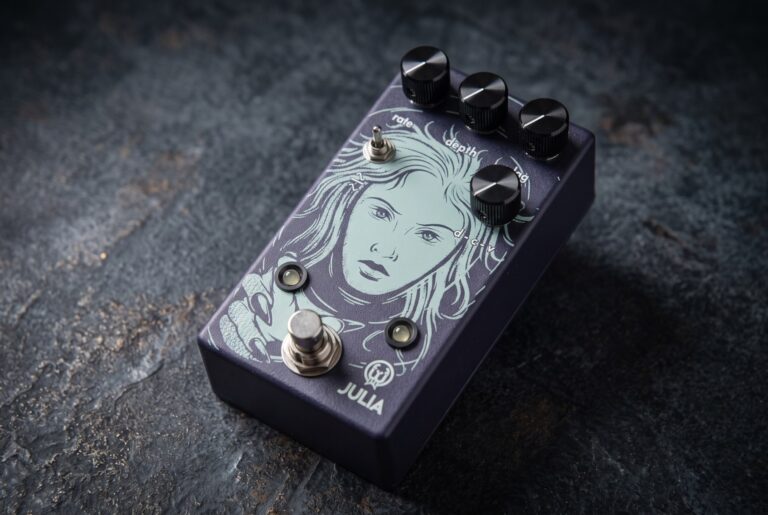
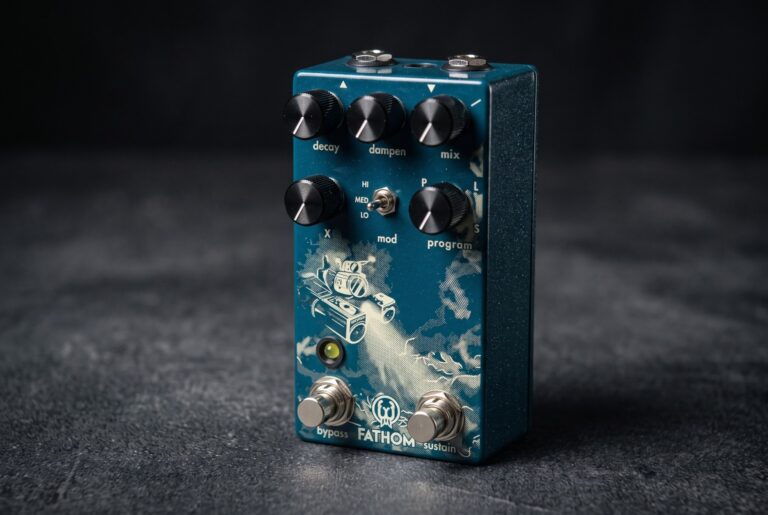
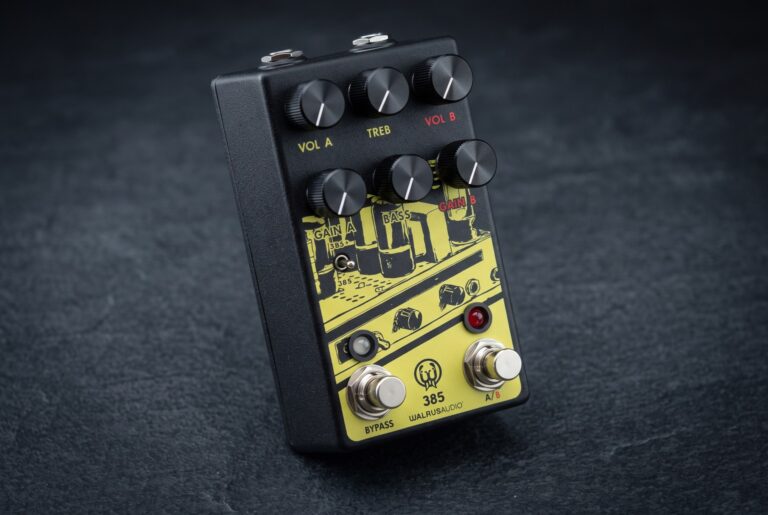
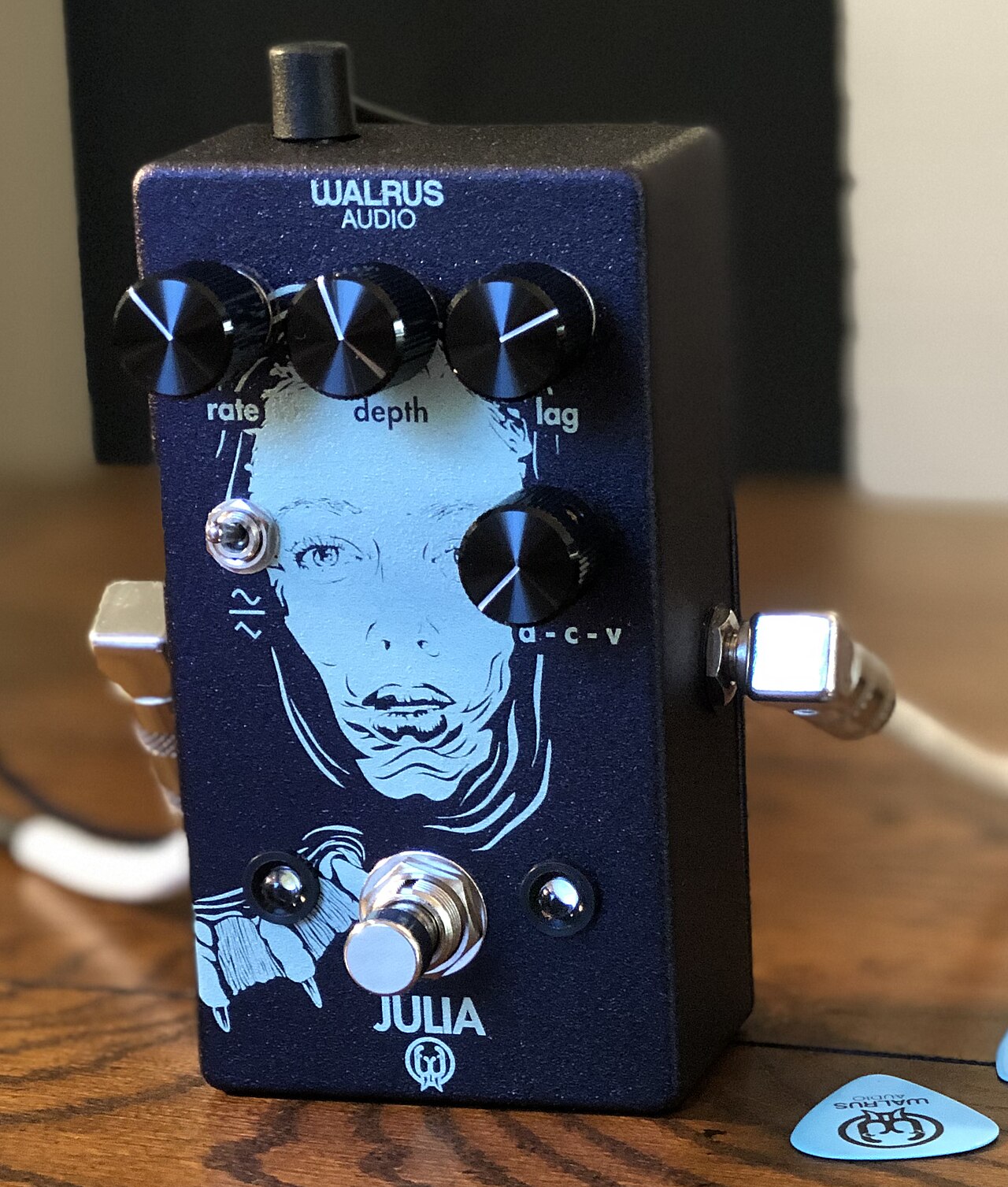
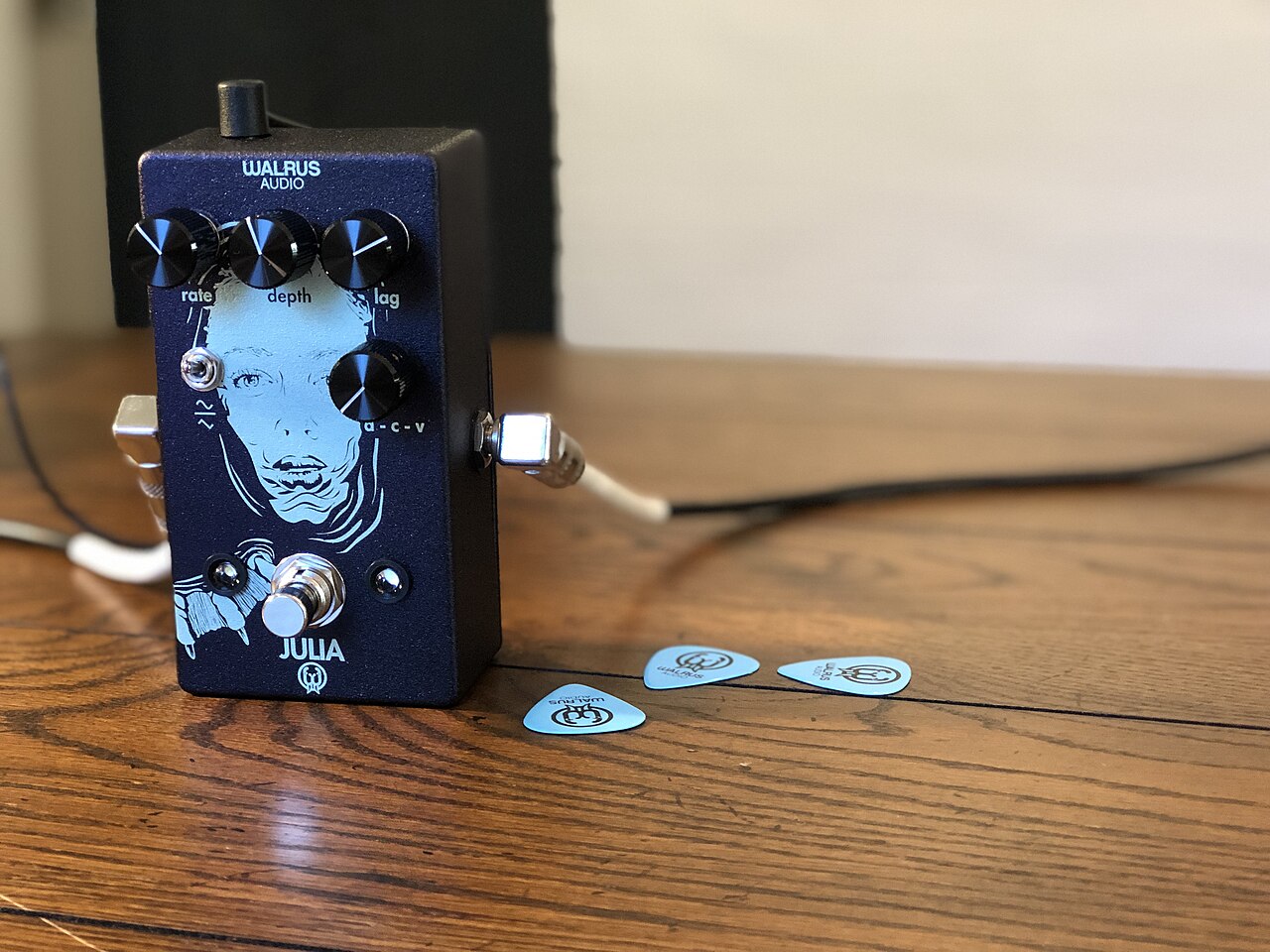
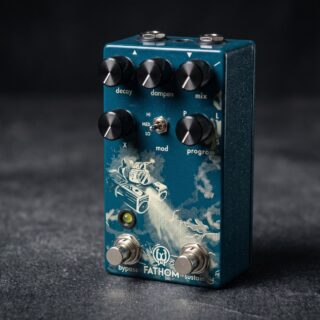
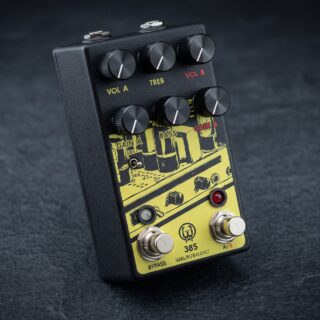
Walrus’s own dirt catalogue has grown considerably since 2012. The Eras Five-State Distortion is the modern, more configurable option; the Ages Five-State Overdrive covers the lighter end; the 385 MKII is the amp-in-a-box. The Iron Horse remains the one with a specific chip in its name. If you are building a Walrus board, the natural companions are the Julia Analog Chorus/Vibrato after it, the ARP-87 Multi-Function Delay and the Slö Multi Texture Reverb at the end of the chain — an Iron Horse into a Slö is one of the most-cited Walrus stacks going. The Fathom Reverb and Monument V2 Tremolo are the discontinued used-market alternatives, and the Mako ACS1 Amp + Cab Simulator is what you put after it if you are going direct.
Buying Guide
New: $219.99 list from Walrus Audio, frequently on sale at around $187, and stocked widely at authorised dealers. Free US shipping over $75 direct from Walrus. Every unit carries the company’s limited lifetime warranty, which is genuinely unusual at this price and is the strongest argument for buying new rather than used.
Used: the V3 turns up regularly on the used market, typically in the $120–$160 range depending on condition and packaging. Because Walrus has never discontinued the pedal, used prices track new prices closely rather than inflating.
V1 and V2: both are worth considering if you specifically prefer a toggle to a blend knob. The V2’s revised Level and Tone controls make it the better of the two older versions, and V2 units are usually cheaper than V3s. What you give up: top-mounted jacks, the fixed volume drop-off at minimum gain, and the intermediate clipping ratios. What you gain: instant, repeatable switching between three clipping modes without re-setting your volume.
Limited editions: Walrus runs periodic limited-edition Iron Horse finishes, including a well-liked 2023 Halloween run with glow-in-the-dark artwork. These are cosmetic — the circuit is unchanged — but they command a premium on the used market. Buy one because you like it, not as an investment.
Who should buy it: players who want one dirt pedal that covers rhythm crunch through to near-fuzz, who play into a clean or edge-of-breakup amp, and who like the RAT idea but find real RATs a little brittle and a little one-dimensional.
Who should not: players chasing historically accurate vintage RAT tones (buy a PackRat or an actual RAT), players who need a transparent boost (buy a Tube Screamer or a Blues Driver), and players who want to switch clipping modes with their foot mid-set.
Ownership Notes
Power. 9V DC centre-negative only, and the draw is a trivial 10 mA. There is no battery compartment. Walrus explicitly recommends an isolated supply and explicitly advises against daisy chains — worth heeding, because relay-switched pedals are more sensitive to supply noise than mechanically switched ones. Do not attempt 18V; this is not a circuit designed for it.
Relay bypass. The soft-touch switch is quiet, satisfying and mechanically more durable than a mechanical stomp — but it is a relay, which means the pedal passes no signal at all without power. If your supply dies mid-set, this pedal becomes a hole in your signal chain rather than a bypassed box. That is true across the modern relay-switched boutique market and it is worth knowing before you find out on stage.
Placement. Early in the chain, after tuner and wah, before modulation and time-based effects. It stacks fine into other drives but it is a strong personality — put it after a transparent overdrive if you are stacking, not before.
The Level knob is not optional maintenance. Every movement of the Si/LED knob changes output level. If you set the pedal at home on silicon and then swing to LED at soundcheck, you will be significantly louder. Build your presets accordingly.
Enclosure. Die-cast, top-mounted jacks, and roughly 4.77 x 2.9 x 2.3 inches — bigger than a Boss compact but standard for a Walrus Core Series box. It will not fit into a gap you sized for an MXR.
Frequently Asked Questions
Is the Walrus Audio Iron Horse V3 just a RAT clone?
No — it is a RAT-inspired circuit built around the same LM308 op-amp, but the voicing is deliberately different. It has a smoother midrange, less presence-region aggression, and less flattening of the guitar’s natural low end than a stock ProCo RAT. The Tone control is also wired conventionally rather than reverse-filtered. Think of it as a refinement of the formula rather than a replica of it.
Is the Iron Horse V3 still in production in 2026?
Yes. As of September 2026 it is listed on walrusaudio.com in the Core Series at $219.99, with no discontinuation notice, and it is stocked at authorised dealers worldwide. Some individual retailers list it as unavailable, but that reflects their own stock situation rather than the product’s status.
What is the difference between the Iron Horse V2 and V3?
Four things: the V3 has top-mounted jacks instead of side-mounted, soft relay true bypass instead of a mechanical switch, a fixed volume drop-off when the distortion knob is at minimum, and the three-way clipping toggle replaced by a continuously variable silicon-to-LED blend knob. The core circuit is otherwise the same.
Which side of the Si/LED knob should I use?
LED (clockwise) for anything requiring note definition — rhythm chords, leads, cleaner crunch. Silicon (counter-clockwise) for maximum compression and saturation, power chords and near-fuzz textures. The genuinely blended sounds live in a narrow window around 8 to 10 o’clock; past that the louder LED clipping dominates.
Do any famous guitarists actually use the Iron Horse?
There is no signature endorsement or major Rig Rundown appearance. The best-documented user is Robert McDowell of Manchester Orchestra, whose board also carries the Walrus Jupiter and Janus and a Walrus Aetos power supply. Beyond that, Equipboard documents around a dozen working professionals including Dustin Kensrue of Thrice, Jenn Wasner, Kevin Devine and Kryz Reid of Third Eye Blind — crowd-sourced data, so treat it as strong signal rather than proof. The famous RAT players you have heard of are reference points for the circuit family, not Iron Horse users.
Can I run the Iron Horse on a battery?
No. There is no battery compartment. It requires a 9V DC centre-negative supply drawing at least 10 mA, and because the bypass is relay-based it passes no signal at all when unpowered. Walrus recommends an isolated supply and advises against daisy chains.
Does the Iron Horse work for metal?
Yes, with caveats. At the silicon end with the distortion knob past three o’clock it produces enormous compressed saturation that owners specifically praise for hard rock and metal, including on baritone guitars. What it will not do is modern tight high-gain rhythm — for that you want an amp or a preamp pedal with a proper tight low-end filter. The Iron Horse is a classic-distortion voice, not a djent machine.
Is it worth upgrading from a V2 to a V3?
Only if you specifically want top-mounted jacks or the fixed volume drop-off at minimum gain. The blend knob is a lateral move rather than a straight upgrade — you gain intermediate clipping ratios, you lose instant repeatable switching between three modes. Many V2 owners prefer the toggle, and that is a defensible position rather than nostalgia.
The Verdict That Isn’t A Review
The Iron Horse has survived fourteen years and three revisions in a category where boutique pedals routinely last eighteen months, and it has done it without a signature artist, a viral demo or a mythology. It survived on the unglamorous merit of being a very good LM308 distortion that a working guitarist can afford, that comes with a lifetime warranty, and that Walrus keeps quietly improving instead of discontinuing and reissuing at a higher price.
The Si/LED knob is not the unambiguous win the press release implied — the LED side dominates the blend, and re-setting the Level every time you touch it is a real ergonomic cost. But the two extremes of that knob are two genuinely distinct and genuinely usable distortion voices, and having them in one enclosure at $219.99 with a lifetime warranty behind them is a straightforwardly good deal.
The armoured horse on the front is not overselling anything. This is a loud, thick, midrange-forward, aggressively unsubtle pedal from a company in Oklahoma City that has been making it since before most of its competitors existed. Let the reins loose, as Walrus keeps insisting. That is what it is for.
Image credits
- Top image: GuitarGangsters AI-generated reference illustration, not a photograph.
- A pedalboard with overdrive, wah and fuzz pedals: Michael Morel from Barcelona, Spain, Wikimedia Commons, CC BY 2.0.
- A Walrus Audio Julia chorus and vibrato pedal: Guitar Chalk, Wikimedia Commons, CC BY 2.0.
- A Walrus Audio Julia chorus and vibrato pedal, close up: Guitar Chalk, Wikimedia Commons, CC BY 2.0.
Latest News
Related
On This Day
Monday 9 November
From this week: